
A. Lange and Söhne Odysseus Chronograph Watch Review
The A. Lange & Söhne Odysseus Chronograph unites the German marque’s sublime take on Haute Horlogerie with an ultra-refined sporty aesthetic. Large format day and date indications sit alongside two centrally positioned chronograph hands, one for seconds and the other for minutes. The watch also features a new self-winding chronograph movement, the L.156 DATOMATIC calibre. Mark McArthur-Christie immerses himself in a world of horological refinement and succumbs to a spot of ‘Langeopihlia’ .

Odysseus Chronograph
If the Fairy Watchmother ever dropped in and offered to wave her wand my way, one of my three wishes would be a seat on the board at Lange. To be more accurate, the big, important chair at the head of the table. Towards the top of the ‘to do’ list (just after snagging myself examples of all the current production and a company Bristol 410 – why not?) would be commissioning a chronograph version of the Odysseus. It’s been crying out to be a chronograph since its launch in 2019. Just look at it; that integrated bracelet, the case shape, the small seconds at 6; it all just lends itself to being a chronograph.
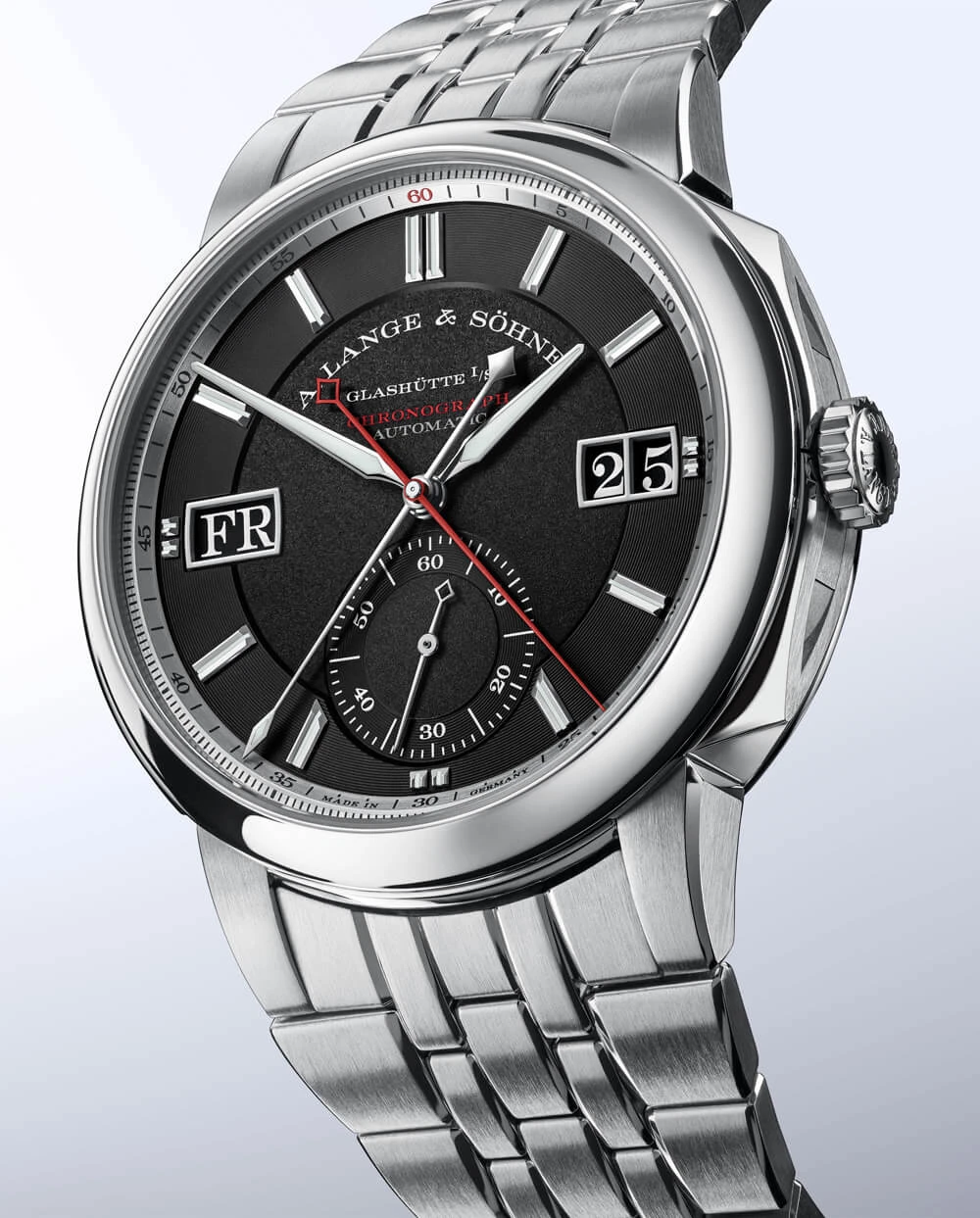
At this point, I’d summon another cup of coffee, a plate of those posh biscuits with chocolate on top and my technical director. I’d suggest we don’t make things too complicated for ourselves and couldn’t he just do something with the calibre L951, the one we’ve already got on the shelf? Y’know, gussy it up a bit and pop it in the Odysseus. It’d go a treat and we’d be home in time for tea.
I’d argue that an L951 variant would be the sensible, logical and a cost-effective choice. OK, it’s a few millimetres smaller than we might like for the Odysseus’ case, but it’d fit with a bit of persuasion. And haven’t we already demonstrated we’re happy to let evolution take its course with our movements? Look at the way we’ve tweaked and improved the L951 through the .1, the .5 and the .6 with a cam re-profile here and new, in-house free-sprung balance wheel there.
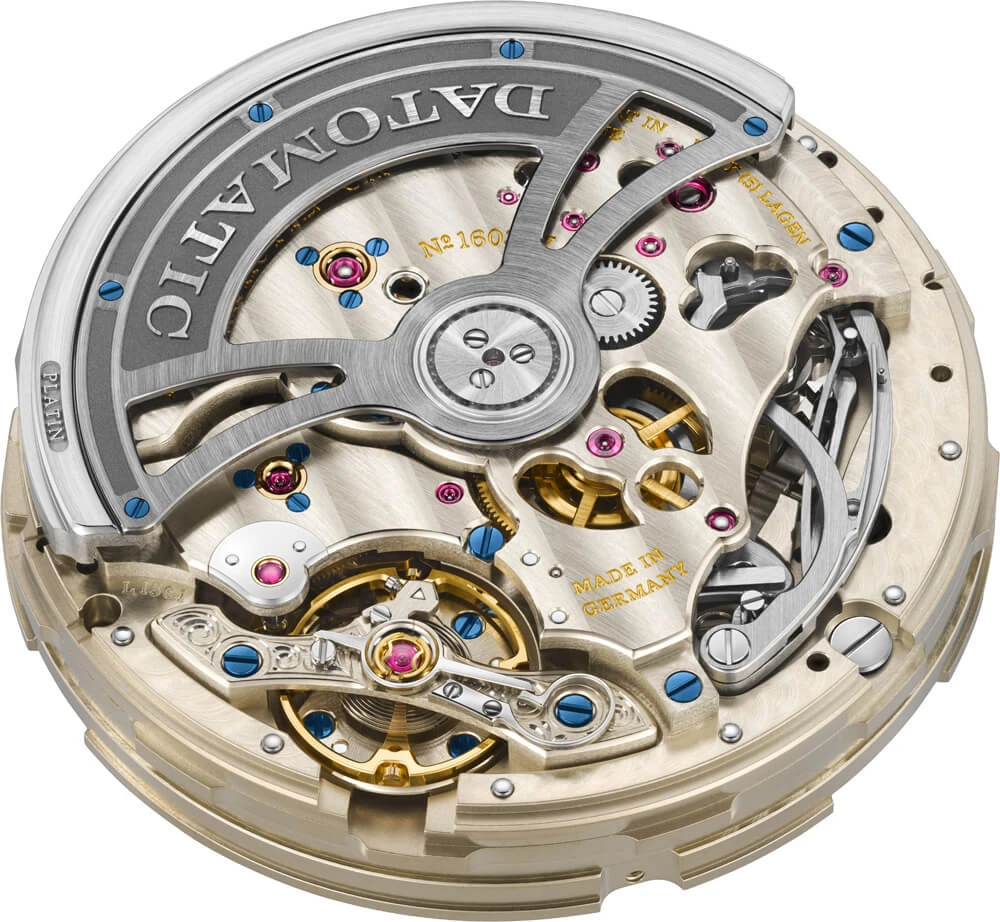
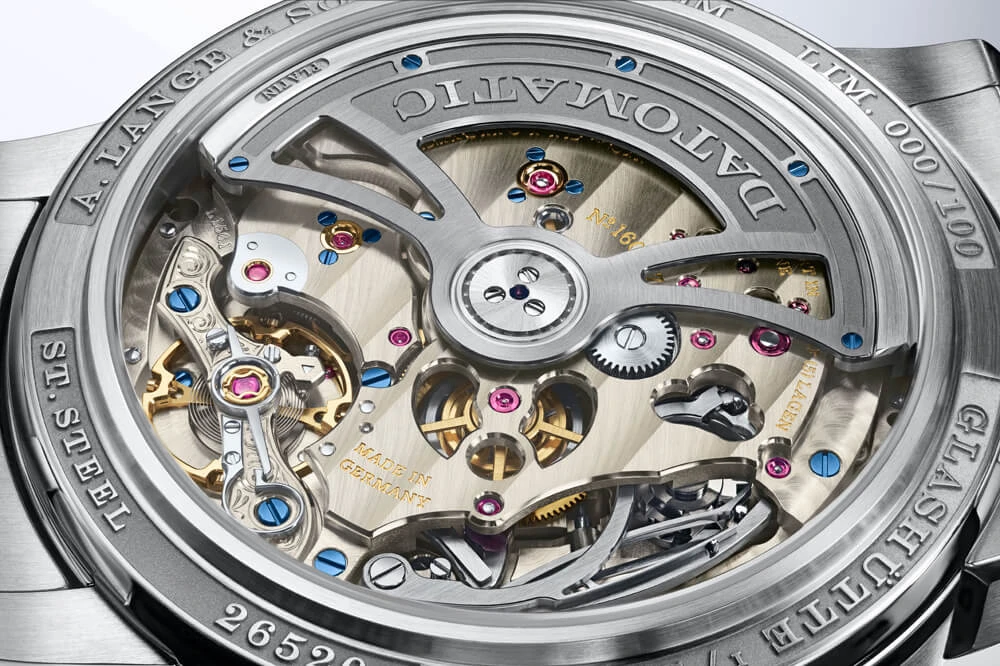
Lange L.156 DATOMATIC calibre
Fortunately for the Glashütte-based firm, the Fairy Watchmother has rather more wit than to put me in charge of anything, no matter how nicely I might ask. And look at the result of her sagacity; the new A Lange & Söhne calibre L156.1 DATOMATIC (it’s got a date and it’s automatic – you can see what they did there) in the new Odysseus Chronograph. All developed in Glashütte without me snaffling a single Choco Leibniz.
No subdials?
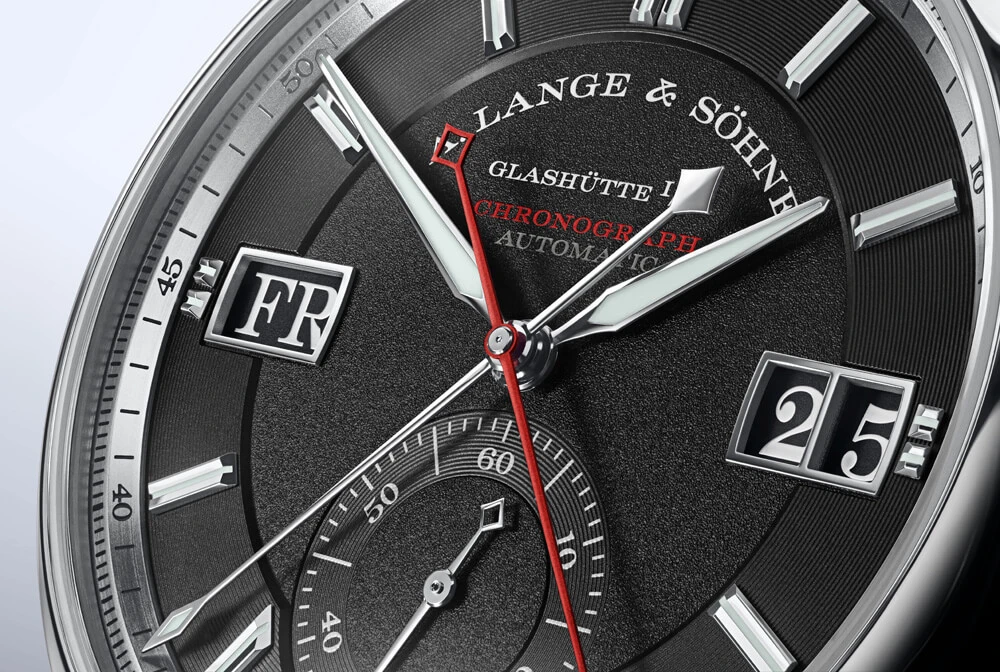
At this point, you might look at the new watch’s dial and, perfectly reasonably, ask “How is that a chrono? Where are the subdials? Where’s the minute register? The seconds counter?” Somewhat typically, Lange’s watchmakers have decided to make life more complicated for themselves whilst making it simpler and more elegant for everyone else.
Central chrono seconds and 60-minute counter
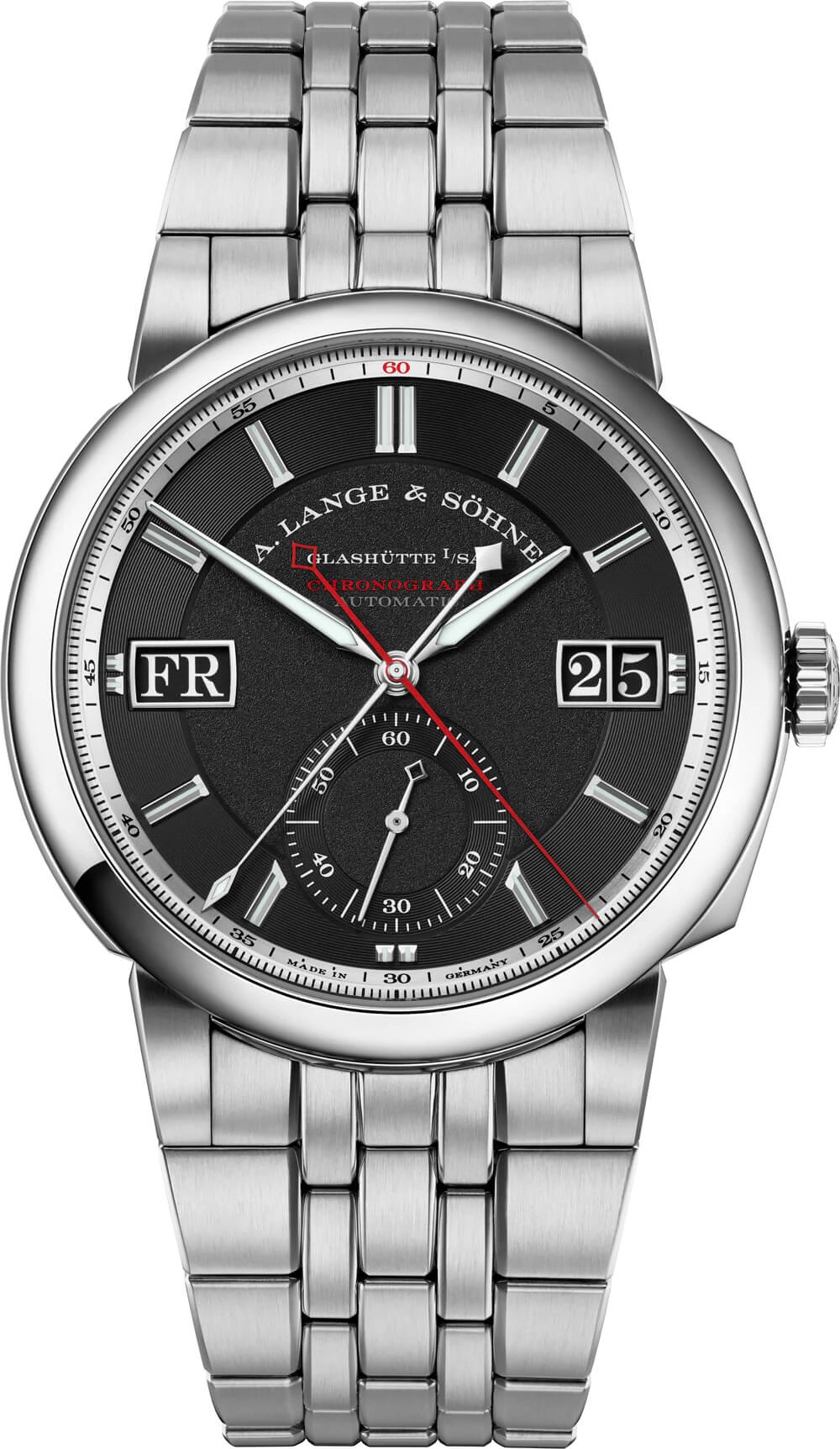
Chrono-wise, everything runs from the centre of the dial. See the two, thin hands static at 12? Those are the chrono seconds and minute recorders. That leaves the rest of the dial free for the classic Lange day and date windows. Down at 6 o’clock is the running seconds subdial. So you get all the practicality (if one can talk about practicality on a watch that costs about the same as a decent-sized house in Sunderland) of a chrono but none of the visual fuss.
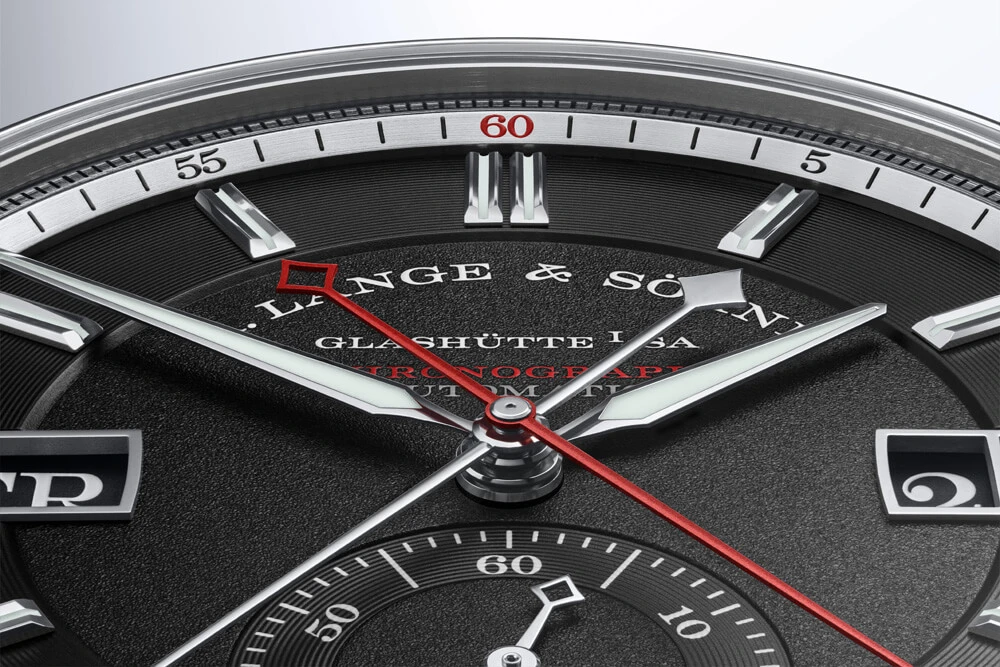
We don’t see enough chronographs with centre minute recorders, more’s the pity. After all, the minutes function is probably the most useful on a chrono yet most makers put it on a little subdial where you have to squint to read it. Old giffers like me will be delighted to see a chronograph that can easily be read without the whole ‘have you seen my specs’ rigmarole. Bring back the Lemania 5100, Delrin parts and all!
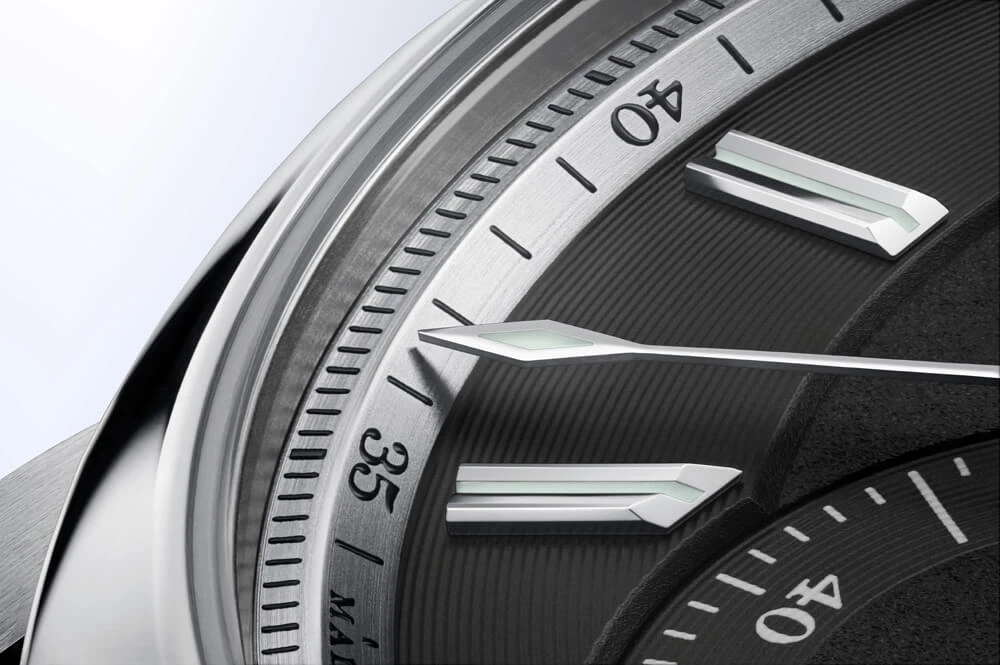
Here, the red hand looks after the chrono seconds and the lozenge-tipped silver hand sorts out the chrono minutes. So far, so simple. But running the chrono function from the centre of the dial also allows Lange to uprate the watch from measuring 30 minutes on its 1815 Chronograph to a full hour.
Comprising 516 movement parts
Chronographs are one of those things where the user’s ease is traded off directly against the watchmaker’s sweat and tears. All you do is push a button to start, another to stop and reset. Yet inside the case, that simple push sets off a train of 516 levers, cams, wheels, springs and parts that, in this case, took six years, a lake of espresso and a lot of banging heads on benches to develop.
Dynamic zero resetting
Starting and stopping the chronograph is, for the user at least, simple enough. Press the top pusher and the red second hand steps off, followed at one-minute intervals by the snick of the minute hand advancing. The magic really happens when you hit the button at 4 to reset the hands. The minute counter snaps back to 12, just as you’d expect. The chrono seconds hand, though, spins through one minute for each minute you’ve just timed, but in a fraction of a second before joining its colleague at 12. For example, if you’ve timed twenty minutes, the chrono seconds will spin twenty times before coming to rest again. This magic is managed with an ant-sized cam on the minute wheel that moves to ‘remember’ the number of elapsed chrono minutes.
If you’ve timed less than thirty minutes, the two hands will run anti-clockwise to rest. If you’ve timed more, they reset the other way. It’s glorious to watch.
The more prosaic might think this is all a bit of a faff and actually counter-productive. What if you have a couple of vintage racing Bentleys (you’re a Lange owner, so that’s probably not unreasonable) and want to time them over a lap at Spa. Surely waiting for the whole twirly reset thing (Lange calls this ‘dynamic zero resetting’) between one finishing and the other crossing the line will be a pain? In fact, it happens so fast there’s a decent chance you won’t even realise how many revolutions the second hand makes.
Changing the day and date indications
There’s more cleverness. Those two pushers that you barely notice because they’re faired into the case side? As well as looking after chronograph operations they also change the date and day for you. Just unscrew the crown and press the top one – that’ll change the date. The bottom one moves the day on.

Although you might not spot it at first glance, the new Odysseus comes in a slightly larger three-part case than its non-chrono cousins. It’s no dinner plate at 42.5 mm, mind; that automatic rotor needs some room to move. The 14.2 mm thickness may not be skinny, but it should still go under a cuff without much fuss. It’ll survive 12 bars of water pressure, too, so it actually is a watch you could wear in the pool. And, of course, it’s stainless steel – still not a material we’re entirely used to seeing on A. Lange and Söhne watches. We wouldn’t be too surprised to see a titanium-cased chrono emerging at some point in the coming years, though.
Dresden Semper Opera clock
Like the rest of the watch, the dial looks simple enough but hides the thought behind its design well. Because it uses a series of steps – from the palladium-coloured dial border with its cardinal red 60-minute mark to the concentric circles on the outer dial and sub-seconds counter – it appears deeper than it is. And of course, it incorporates the Dresden Opera Five-Minute Clock date and day windows – originally conceived by Johann Christian Friedrich Gutkaes. Incidentally, Ferdinand Adolph Lange was apprenticed to Gutkaes and was also his son-in-law, which must have made for some interesting Sunday dinner table conversations.
A. Lange and Söhne Odysseus Chronograph – Large numerals
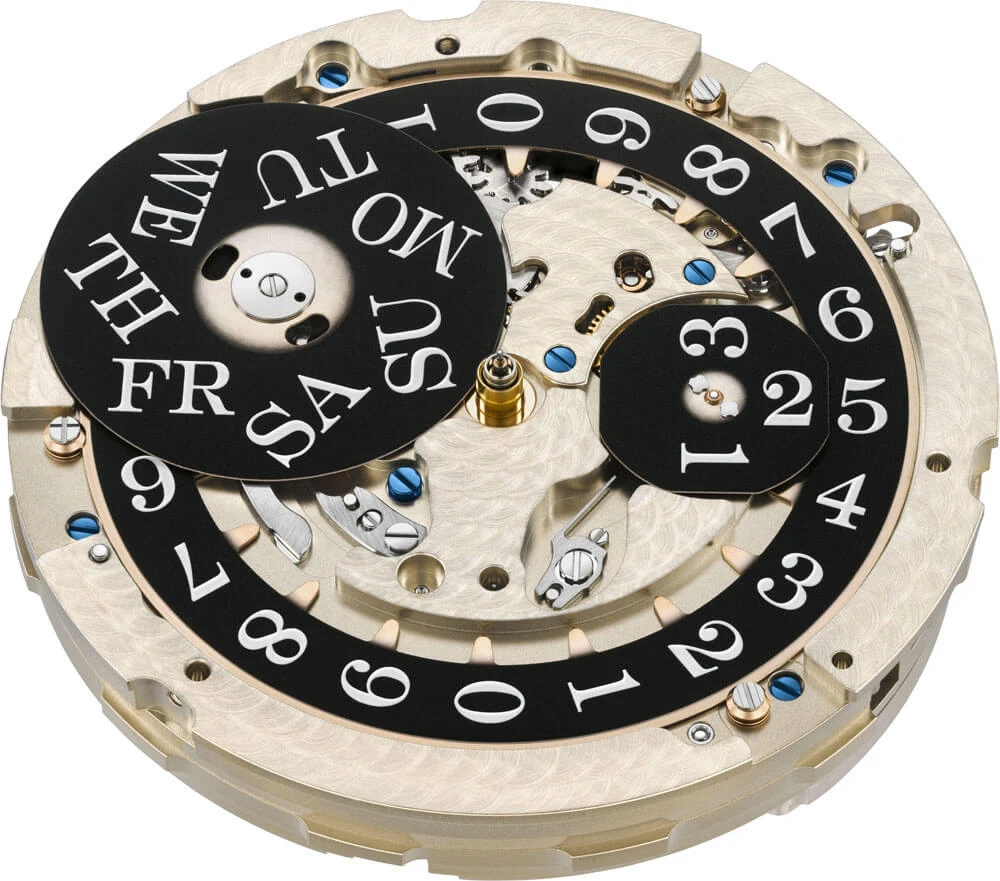
Talking of dial depth and Herr Gutkaes, take a close look at the date on the right side of the watch. Viewed from the front you’ll see that the two numbers appear to be at the same level. Look at an angle and you can spot that the second number is actually slightly lower in the window. It’s a lovely example of the way Lange goes about solving problems. If you want a properly large see-it-from-space Lange date, you can’t simply paint bigger numerals on a standard date wheel. It just doesn’t work; you either have the usual small numbers or you need a watch so big you could use it as a frisbee. The Lange approach is typically simple, logical and effective; put the 1, 2 and 3 initial numbers on their own smaller date ring and run the 0-9 numerals on a larger ring around the edge of the movement. That way you get properly big numbers without a huge watch to match.
The A. Lange and Söhne Odysseus Chronograph pulls off a series of very neat tricks like this. It couldn’t come from any other watchmaker, yet both case and movement are markedly different from what has come before. It appears simple from the outside, yet the movement does things that would give even a quartz the heebie-jeebies – and does them with cams, levers and springs. It’s a chronograph that works better than most, but it doesn’t look like a chronograph. No wonder the firm was confident enough to make it the one watch they exhibited at this year’s Watches & Wonders.
Langeopihlia
Apart from the prison time from robbing a bank to afford one, the challenge for those of us afflicted by Langeopihlia will be snagging one of the mere 100 watches that will leave Glashütte. And those that reach the secondary market are highly likely to do so at a hefty premium. Best get in quickly.
Further reading
https://www.alange-soehne.com/
Technical specification
- Model: A. Lange & Söhne Odysseus Chronograph
- Reference: 463.178
- Case: stainless steel, diameter 42.5 mm, height 14.2 mm, sapphire crystal to the front and exhibition caseback
- Functions: hour, minutes, subsidiary seconds with stop seconds, date and day-of-week displays, chronograph with central chrono seconds hand and 60-minute counter
- Movement: Lange manufacture calibre L156.1 DATOMATIC®, automatic movement, frequency 28,800 vph (4 Hz), contains 52 jewels, power reserve 50 hours (when fully wound), 516 components
- Bracelet: stainless steel bracelet with safety deployant buckle with precision adjustment mechanism for adjusting the length
- Price on application
- Boutique exclusive
- Limited Edition: 100 pieces