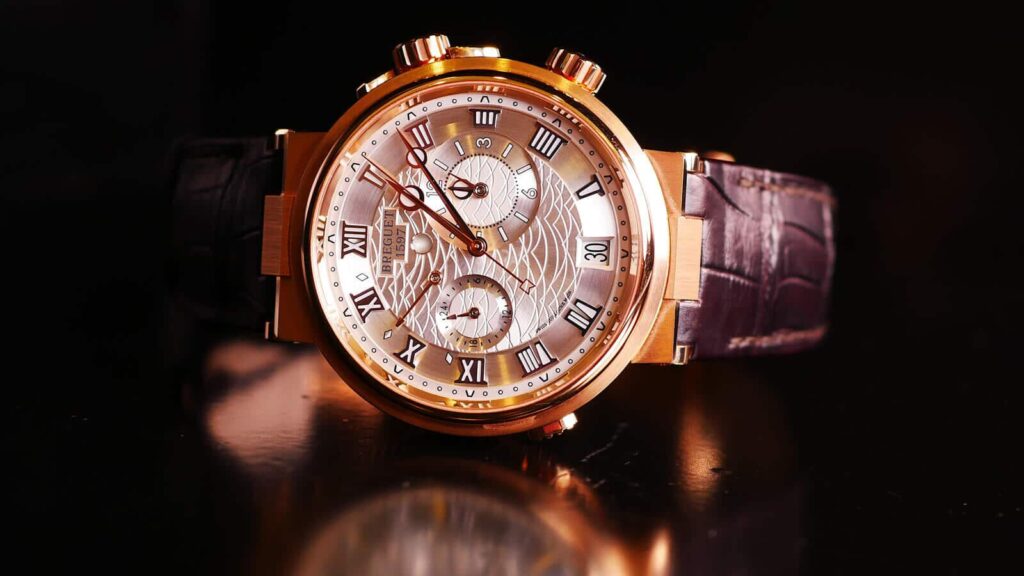
Alarm Watches: FAQs
What are alarm watches?
Alarm watches are a type of timepiece that can be set up to sound or set off an alarm at a pre-set time, serving as a convenient reminder for our important daily tasks. Initially, this practical feature could only be found in clocks, but nowadays, we see it more and more in day-to-day wristwatches.
When was the first alarm watch invented and who by?
The first alarm watch was invented in 1900 by Johannes Dürrsstein, a German watchmaker from Glashütte, and his unnamed brother. Here’s some more information:
- The first mass-produced, alarm-equipped pocket-watch calibre: While individual alarm-equipped pocket-watches existed earlier, the Dürrsstein brothers patented a movement that could be produced on a large scale. This was record-breaking for the 1900s.
- Extra-long mainspring: Incorporating an extra-long mainspring, their patented calibre could power both the timekeeping and the alarm function, which could chime for up to 30 seconds.
How do alarm watches work?
Alarm watches utilise a mechanical or electronic mechanism to trigger a sound or vibration at a pre-set time. Here’s a full breakdown:
- Traditional calibres: Traditional versions use a separate mainspring to power the alarm function, which is activated by a notched cam and lever system when the set time is reached.
- Modern versions: Modern alarm functions use electronic components, e.g. microchips and quartz crystals, to generate the alarm sound or vibration.