
Arnold & Son Ultrathin Tourbillon Gold & Opal Dial Watch Review
Unveiled at Watches & Wonders 2023, the new Arnold & Son Ultrathin Tourbillon Gold & Opal Dial perpetuates the eponymous brand’s quest for high chronometric performance. Endowed with a cream/opaline dial and housed in a 41.5 mm diameter case with a svelte profile, this latest model serves as a beautiful example of Haute Horlogerie.

The need to determine longitude at sea
In former times, navigating the oceans and seas was a perilous undertaking. A ship’s relative position above or below the equator (latitude) could be determined by observing the sun. However, determining a vessel’s position while moving east to west or vice-versa (longitude) was far more difficult.
In the 17th century, the method for calculating longitude was based on ‘dead reckoning’. This involved estimating the east-west position based on speed and course. Unfortunately, it made little allowance for the influence of currents, tides and prevailing winds.
In 1707, a fleet of 21 ships heading for English shores in stormy conditions, incorrectly estimated their position with grave consequences. Four ships from the fleet crashed into rocks off the Isles of Scilly with the loss of approximately 1450 men (albeit the precise number seems to be a matter of debate).

Longitude Act of 1714
Given the importance of navigating seas safely, both for civil and military purposes, and England’s supremacy in this maritime field, a suitable means of determining longitude was of huge importance. In response to the Isles of Scilly disaster, the British parliament introduced the Longitude Act of 1714. As part of this legislation, the Board of Longitude was established and a reward of £20,000 was offered. The Longitude Prize would be awarded ‘for a practical and useful method to determine longitude to an accuracy of half a degree’.
John Harrison – H4
John Harrison (1693–1776), a carpenter by trade made four attempts to create a marine timekeeper (chronometer), aptly named H1, H2, H3 and H4. It took Harrison about 25 years to create his marine chronometer, the H4. The H4 was evaluated over a four-month voyage from Portsmouth to Jamaica and was found to be only 1 minute 54 seconds out.
However, the problem with H4 was that it was difficult to reproduce and it was also incredibly expensive. In the early 1770s, John Arnold (1736-1799) presented a marine timekeeper that promised precision and could be made for just 60 guineas. Arnold’s first timekeeper was used on board a vessel in 1771. Over the years, Arnold received several payments from the Board of Longitude for his work. Ultimately, John Arnold became one of the largest and most reputable suppliers of marine chronometers during the latter part of the 18th century.
A relentless quest for precision
John Arnold clearly understood the importance of precision, especially when it came to the production of marine chronometers. The consequences of mariners relying on inaccurate instruments would not have been lost on him.
However, Arnold did not focus on marine chronometers alone. He expended much effort on other areas of horology that served to advance chronometry. Indeed, he held patents for the detent escapement, bimetallic balance and helical balance spring. Arnold also worked on terminal curves for his helical balance spring, a feature designed to enhance isochronism.
Abraham-Louis Breguet (1747-1823)
Arnold formed a friendship with Abraham-Louis Breguet (1747-1823). Just as Breguet, a son of Neuchâtel, relocated to Paris and also travelled extensively, so Arnold would also visit overseas countries. Both men sought to amass knowledge by learning from others. They initially met in France, but Breguet would subsequently travel to London. Arnold and Breguet shared a mutual respect for one another, discussing a variety of ideas. Moreover, Arnold’s son, John Roger Arnold, was entrusted to Breguet, working at the Quai de l’Horloge where he completed a two-year apprenticeship. Likewise, Antoine-Louis Breguet, Abraham-Louis’s son, trained under Arnold in London.
The first tourbillon
While Abraham-Louis Breguet patented the tourbillon in 1801, it is likely that he discussed his gravity-defying mechanism with John Arnold. In fact, when Breguet unveiled his first tourbillon escapement (No.169) in 1808, he used one of Arnold’s pocket chronometers (No.11). Breguet went on to give John Roger Arnold this tourbillon, housed in an engine-turned silver box made by Tavernier. Breguet added a plate inscribed, ‘the first tourbillon regulator by Breguet incorporated in one of the first works of Arnold. Breguet’s homage to the revered memory of Arnold. Presented to his son in 1808’. This tourbillon is currently in the possession of the British Museum.
Like, Breguet, John Arnold, and his son, John Roger Arnold, never ceased in their pursuit of superior precision. It is a tradition that lives on at the eponymous Manufacture today.
What is a tourbillon?
Breguet identified that gravity has an adverse influence on the behaviour of a regulating organ. His solution was to place the escapement and regulating organ within a rotating cage. Typically, this cage would rotate 360° once every 1, 4 or 6 minutes. Any positional errors were averaged out during the rotational cycle.
Originally conceived as a means of enhancing precision, the tourbillon also serves to showcase the expertise of the watchmaker. Furthermore, it confers a spellbinding spectacle of the cage, hairspring, balance wheel, pallets, etc in motion.
Arnold & Son UTTE (2013)
In 2013, Arnold & Son unveiled its inaugural UTTE model. The name is an acronym for ‘ultra-thin tourbillon escapement’. Since the advent of this watch, the brand has embraced different materials and various artisanal techniques such as guilloche. Moreover, skeleton versions of the timepiece have also been produced.
However, perpetuating the brand’s fondness for advancement and, specifically, its desire to achieve greater levels of precision, the Manufacture has just unveiled a new interpretation of the UTTE model. Like its forebears, the Arnold & Son Ultrathin Tourbillon Gold upholds the slender theme and incorporates the gravity-defying mechanism. It also features über-refined finishing, as well as incorporating some new, exquisite enhancements.
Arnold & Son Ultrathin Tourbillon Gold & Opal Dial – an off-centre dial
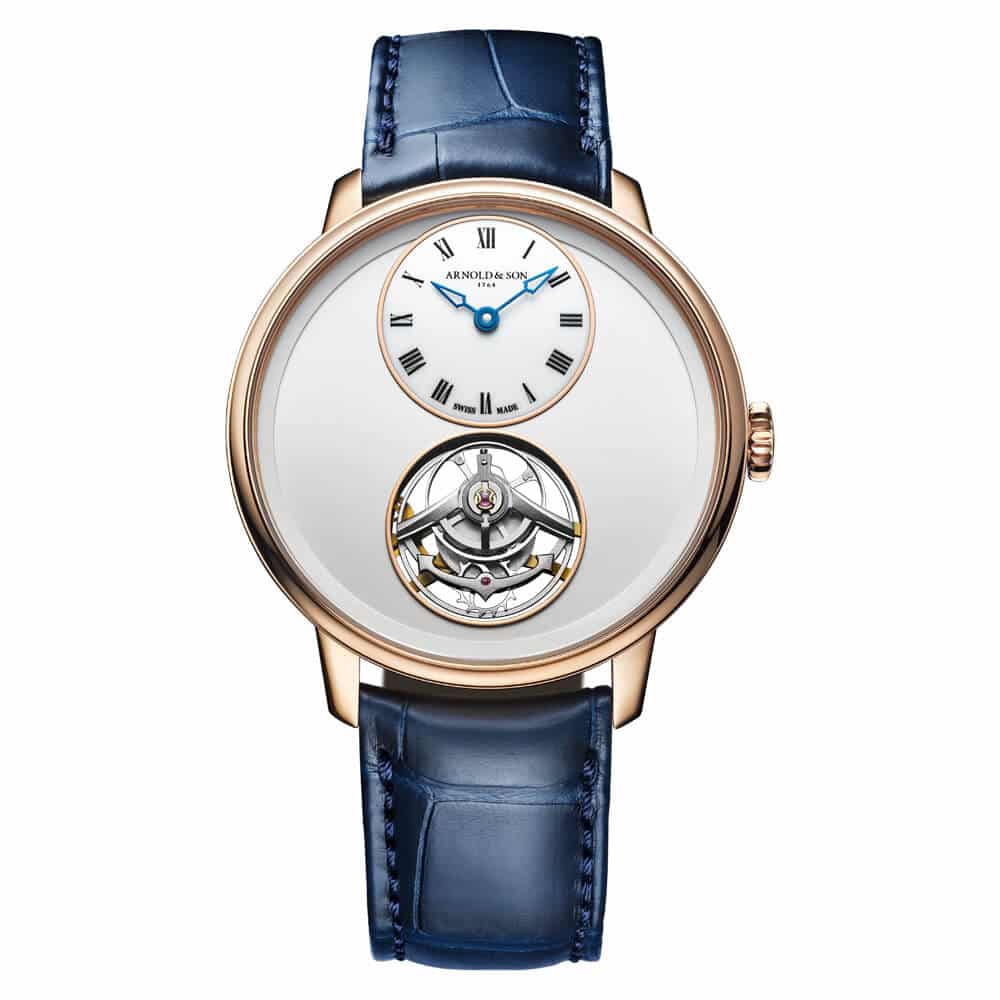
The hours and minutes are displayed on a domed, off-centre white opal dial. Blued hands, with openworked tips, converse with elongated Roman numerals, imparting time clearly and with a notable degree of style. A fine golden circlet frames the hour and minutes display, delineating it from the neighbouring cream-coloured vista.
An aperture positioned at the base of the dial matches the dimensions of the hour and minutes display and is again framed with a golden circlet. This arrangement employs symmetry, delivering a harmonious aesthetic.
Flying tourbillon
The dial opening reveals a one-minute flying tourbillon. Unlike a conventional tourbillon, a flying tourbillon eschews an upper bridge affording superior views of the cage, escapement and regulating organ in motion. When contrasted with the UTTE of 2013, the cage is more angular and, in my opinion, it looks more refined. A ‘double-arrow counterpoise’, designed to emulate an anchor, a nod to the brand’s association with the maritime world, features a marker at its centre, indicating the running seconds.
Variable-inertia balance
Most watches feature a ‘raquette’ which is moved towards or away from the stud, altering the effective length of the hairspring and, by default, the rate. However, the new Arnold & Son Ultrathin Tourbillon Gold is equipped with a variable inertia balance. On this system, the length of the hairspring remains constant and the rate is adjusted by altering weights affixed to the rim of the balance wheel, mitigating positional influence on the balance and delivering superior rate stability.
Arnold & Son Ultrathin Tourbillon Gold & Opal Dial – A&S8300 calibre
On the UTTE 2013, the balance wheel was fitted with screws. This is a traditional approach when poising the balance wheel or altering the rate (if equipped with a variable inertia balance). However, the balance found on the A&S8300 calibre as featured on this latest model, eschews poising screws and features inertia blocks mounted in-board, positioned on the spokes of the balance wheel. By adopting this latter approach, the oscillating balance wheel generates less air perturbation, thereby augmenting precision.

Two barrels
The hand-wound movement features two barrels, delivering an impressive power reserve of 100 hours. By employing two barrels instead of one, the power reserve serving the regulating organ will be more consistent, improving rate stability.
Haute Horlogerie finishing
Arnold & Son, a firm known for its exalted levels of watchmaking, has appointed the movement with high standards of finishing worthy of the term, ‘Haute Horlogerie’. For example, the main plate is adorned with Côtes de Genève raynonnantes, the bridges are polished and chamfered by hand and the wheels are circular-grained.
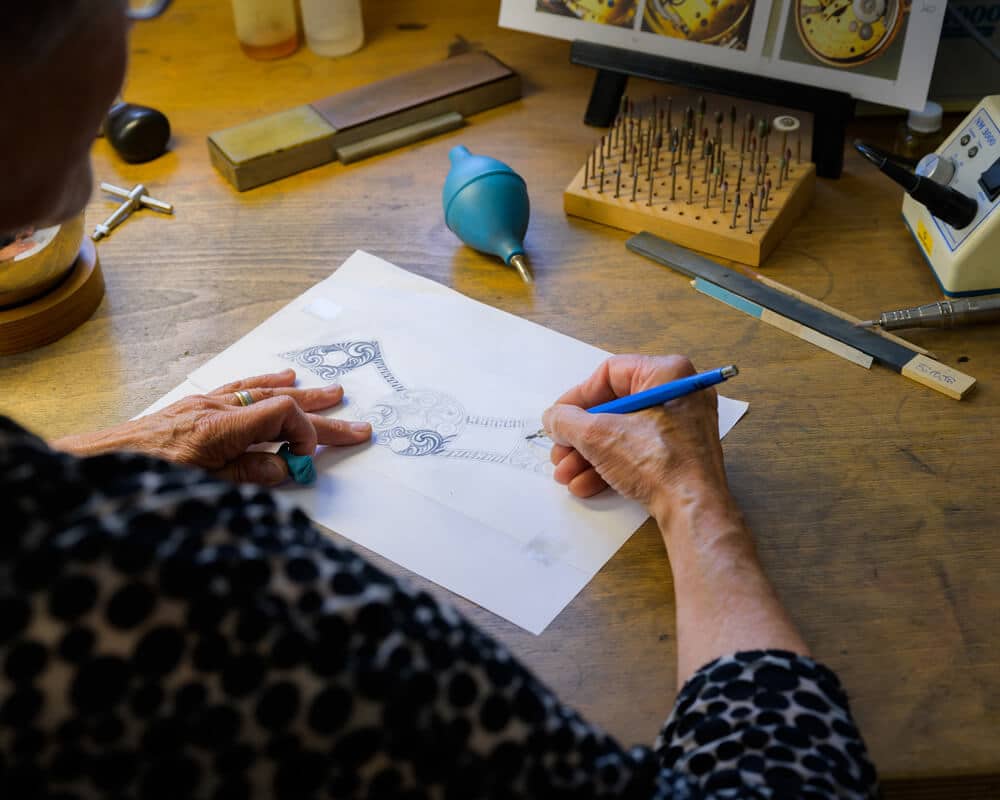
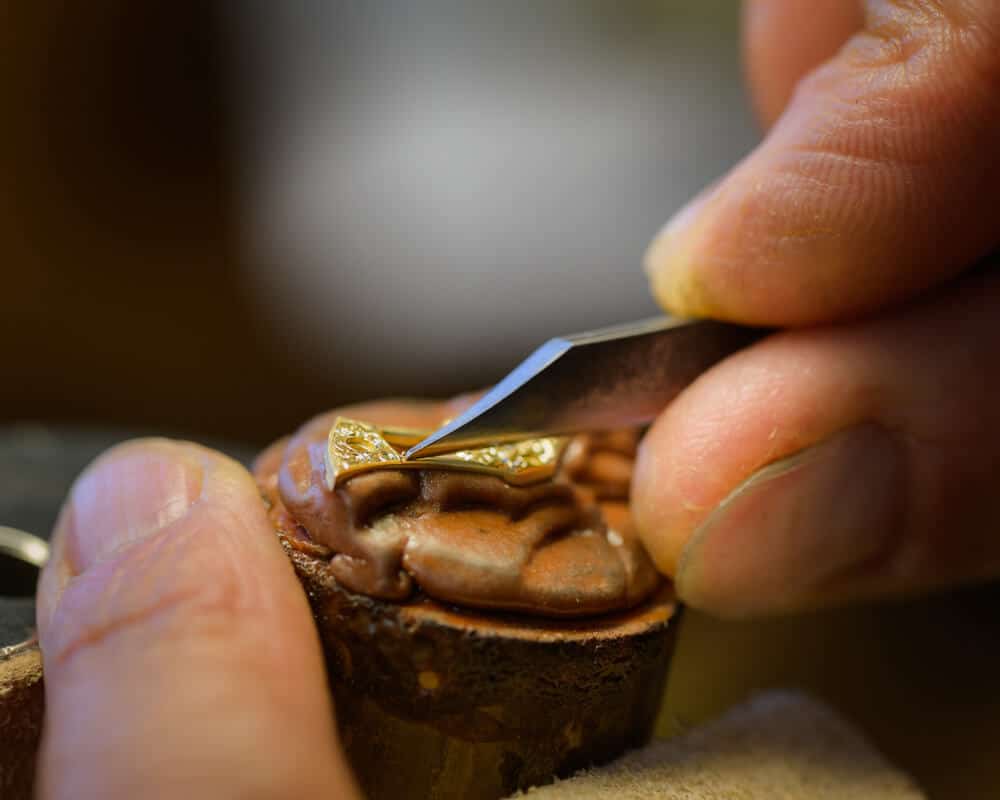
Moreover, blued screws abound and feature bevelled and mirror-polished heads. Golden engravings grace the verso plane of the movement proclaiming the Maison’s name, the model’s place of origin, jewel count, etc. A particularly attractive touch is the tourbillon bridge visible via the exhibition caseback. Formed of 3N yellow gold, it is intricately hand-engraved and matches the colour of the gear train, making it stand out from the neighbouring rhodium-plated bridges.
Arnold & Son Ultrathin Tourbillon Gold & Opal Dial – ultrathin watch
Despite its notable complexity, the Arnold & Son Ultrathin Tourbillon Gold measures just 8.3mm in thickness. Its lithe profile contributes to its ergonomic wrist-fit. Measuring 41.5 mm, the scale of the watch should suit most wrists. Close examination of the case, reveals flanks are not straight, but feature several angles, augmenting wearer comfort and heightening the overall perception of elegance.
The watch is presented on a dark blue alligator strap with black alligator lining, hand-stitched, paired with an 18-carat red gold folding clasp.
Arnold & Son Ultrathin Tourbillon Gold & Opal Dial – continuous advancement
From marine chronometers to modern-day wristwatches, the name Arnold is inextricably linked to the pursuit of high chronometric performance. The new Arnold & Son Ultrathin Tourbillon Gold perpetuates this reputation by incorporating a series of subtle improvements. Moreover, with its handsome dial, ergonomic case and flawless finishing, there is much to tempt the discerning horophile.
Further reading
Technical specification
- Model: Arnold & Son Ultrathin Tourbillon Gold & Opal Dial
- Reference: 1UTBR.I01A.C246R
- Case: 18-carat red gold (5N), diameter 41.5 mm, height 2.97mm, water resistance 3 ATM (30 m), sapphire crystal to the front and exhibition case back
- Functions: Hours, minutes
- Movement: A&S8300 calibre; hand-wound movement; frequency 21,600 vph (3 Hz); 29 jewels; power reserve 100 hours
- Strap: dark blue alligator strap with black alligator lining, hand-stitched, paired with an 18-carat red gold folding clasp.
- Swiss retail price: CHF 70,000 including taxes (RRP as of 27.3.2023)
- Limited Edition: 88 pieces