
AWAKE Son Mài Guilloché Main Watch Review
The new AWAKE Son Mài Guilloché Main collection comprises three models: Alba, Borealis and Sunset. Each version is equipped with a hand-guilloché dial, suffused with multiple ultra-thin layers of Son Mài lacquer. With its egalitarian approach to Métiers d’Art, the French marque democratises hitherto expensive artistic crafts while still delivering beauty and emotion in abundance.
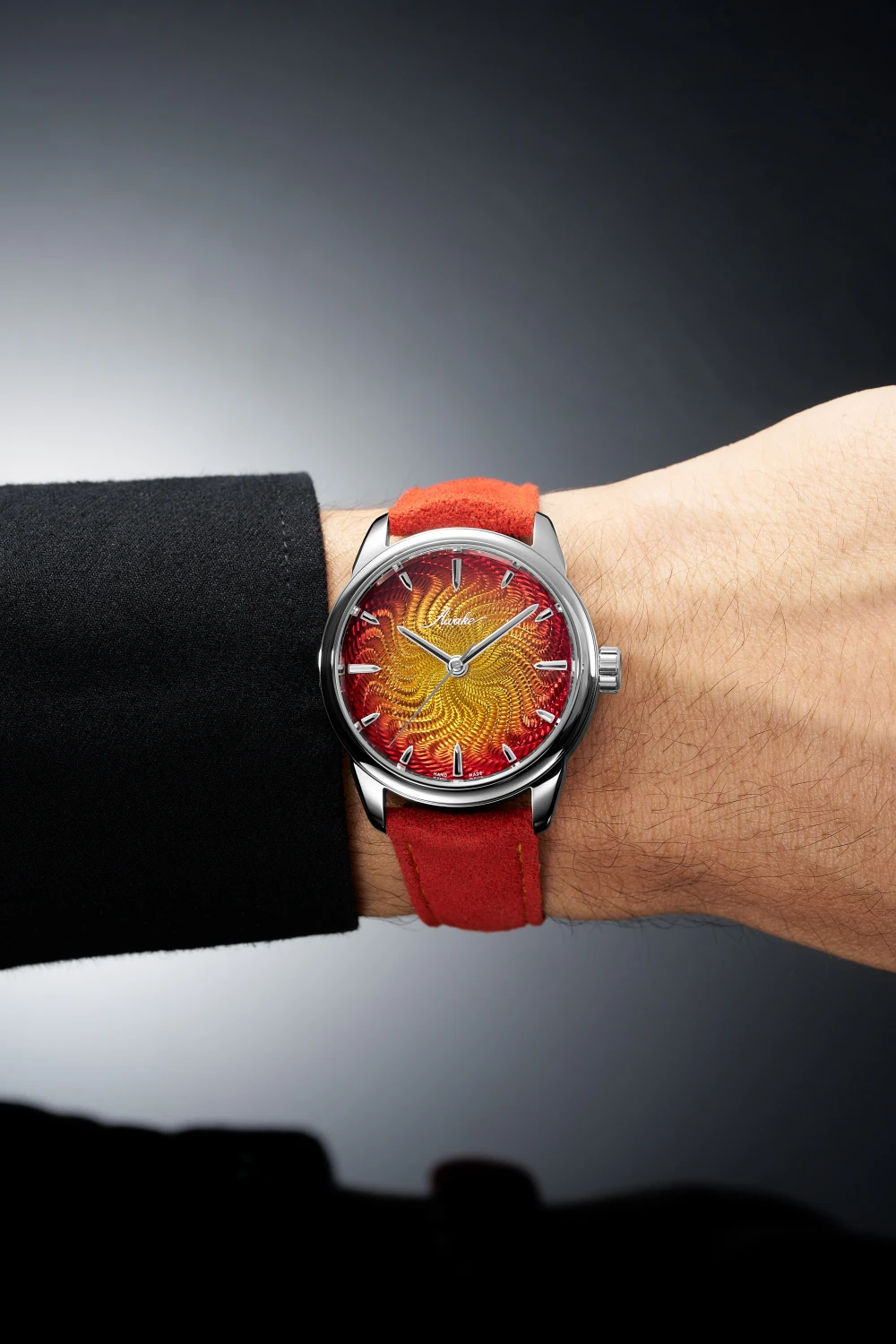
Image – AWAKE Son Mài – Guilloché Main Alba
Democratising Métiers d’Art
Imagine for a moment, it’s late at night and you are walking along a busy thoroughfare in the heart of a vibrant city. In the distance, you see people queuing to enter a building. As you approach that building, you sense excitement, and through the windows you see incredible craftspeople showcasing their work: miniature painting, guilloché and lacquer work. As you near the entrance, two large men in long coats request your name and, after an awkward pause, say, “Sorry, your name’s not on the list” and with that you are denied entry. Welcome to the world of luxury!
Luxury is a world where creativity is celebrated, craftsmanship is respected and traditions are preserved. However, owing to the scarcity of the materials and skills employed, such sumptuousness comes at a price; hence it remains the preserve of the few. But for those of us lacking oligarch-wealth, there is an alternative, more democratic route to luxury, namely AWAKE.
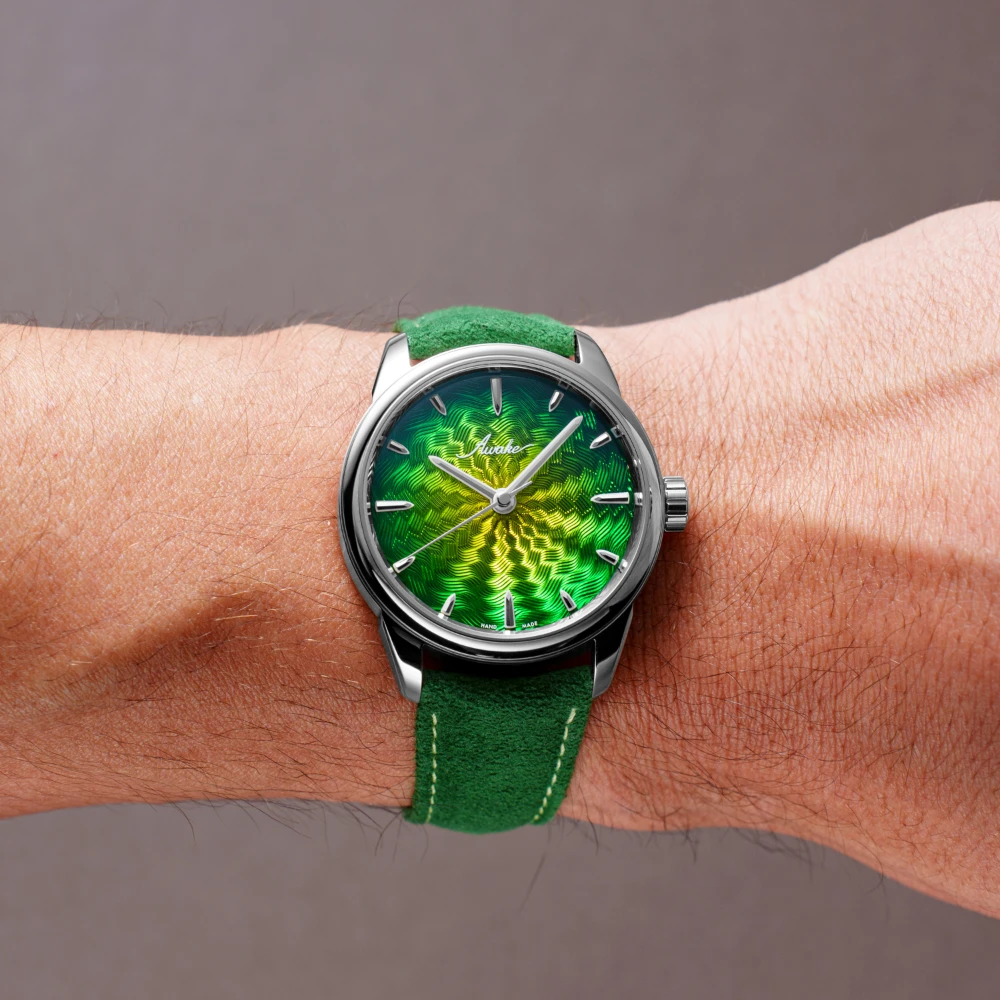
Image – AWAKE Son Mài – Guilloché Main Borealis
Founded in 2019 by Lilian Thibault, AWAKE has created a body of work that honours Métiers d’Art but with each technique expressed in contemporary form. This son of France, a nation where ‘Égalité’ is part of the country’s identity, has already democratised Vietnamese lacquer, silver leaf, mother-of-pearl and miniature painting. Historically, such artisanal techniques have not only been expensive but have tended to be classical and sometimes a tad dusty in character. Recently, the Maison released the AWAKE Son Mài Guilloché Main, a collection of models that combine Vietnamese lacquer and hand-guilloché, executed in a neoteric style. These latter, ancient artistic crafts are the very antithesis of modern-day large-scale production, relying on human hands to imbue each timepiece with a rare beauty, rich with nuance. Allow me to explain.

Image – Lilian Thibault
Hand-guilloché – history
Guilloché can trace its origins to the 16th century, when it was first employed for imparting geometric patterns to ivory and wood. Using a technique termed ‘engine-turning’, this proved a popular pastime among society’s elite. In the mid 18th century, rose engine lathes became increasingly popular, used for endowing a variety of items, including snuff boxes, with intricate motifs.
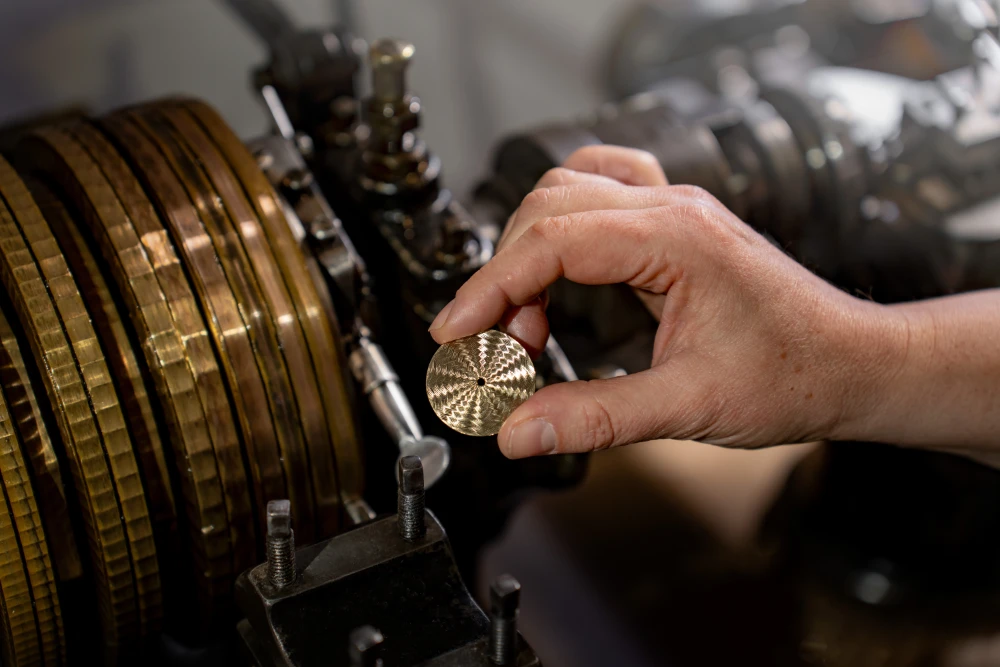
Image – hand-guilloché dial adjacent to a rose-engine lathe
In 1786, Abraham-Louis Breguet (1747-1823) famously introduced guilloché to the world of watchmaking, applying different motifs to dials. While Breguet was a consummate aesthete and his guilloché dials proved eminently attractive, it is said that he applied the artisanal technique primarily to protect the decorated surface from general wear and tear. Moreover, by using different patterns, each dial indication was discrete, hence making them simpler to read, while the textured surface helped mitigate glare. There is an array of traditional decorative motifs employed in watchmaking, including ‘Clous de Paris’ and ‘Grain d’Orge’. Interestingly, from 1885 to 1916, the House of Fabergé crafted several Imperial Eggs endued with guilloché enamelling.
Back in the 1970s, the traditional Swiss watch industry was in decline as quartz watches, the young upstarts, entered the fray, promising both accessibility and impressive precision. It was against this backdrop that demand for mechanical timepieces imbued with artisanal crafts waned. Thankfully, with the renaissance of the mechanical watch industry during the late 80s and early 90s, the seeds were sown for a resurgence of artistic crafts and eventually they came into bloom circa 2008 and have remained popular ever since.
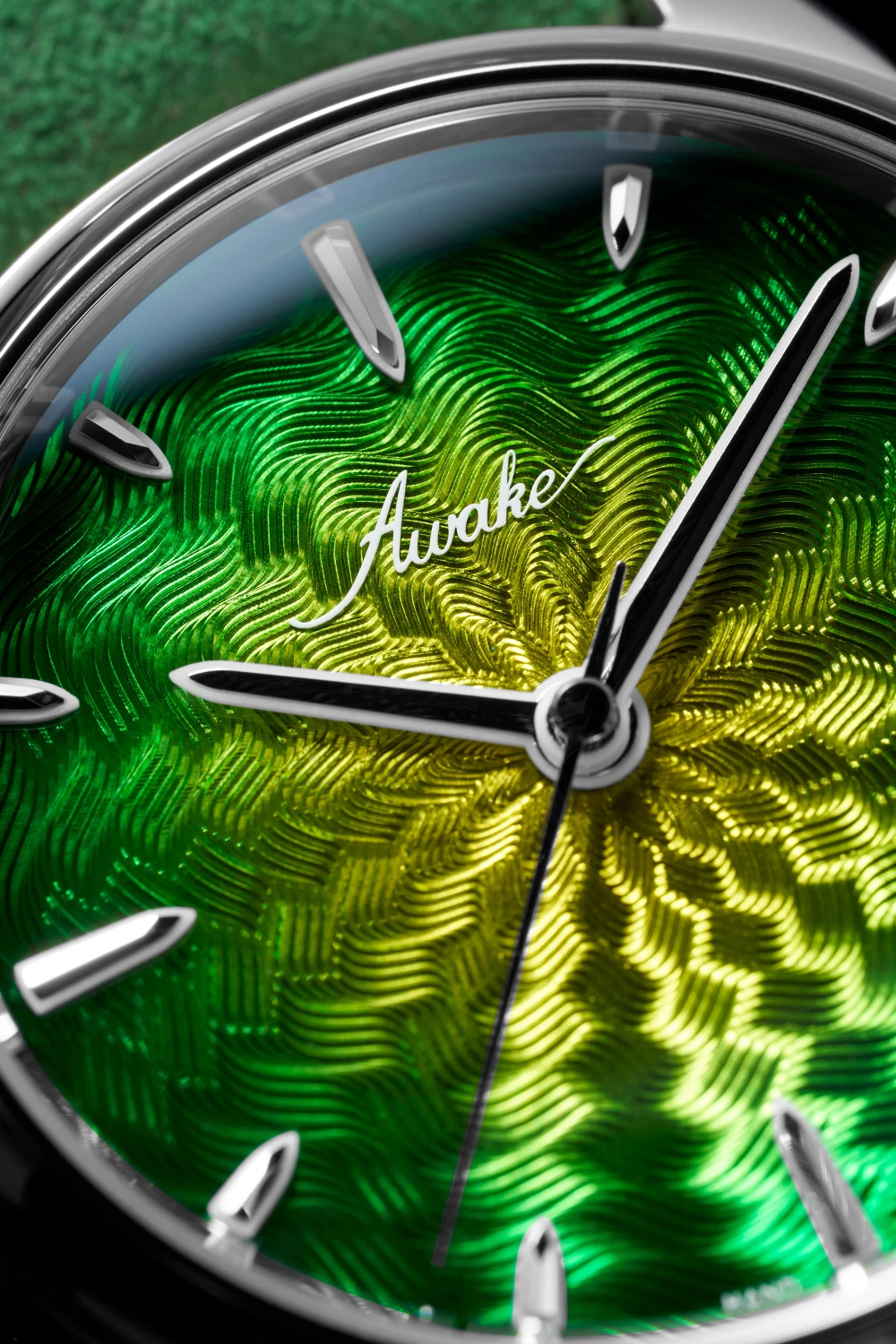
Image – AWAKE Son Mài – Guilloché Main Borealis
Hand-guilloché – methods
Despite living in a computerised age where acronyms such as CAD, CNC and AI are part of everyday speech, it may come as a surprise to learn that nothing compares to the traditional techniques employed in the past. Hand-guilloché produces repetitive patterns comprising deep grooves and sharp ridges that confer unparalleled nuance, albeit the technique requires much patience and skill.
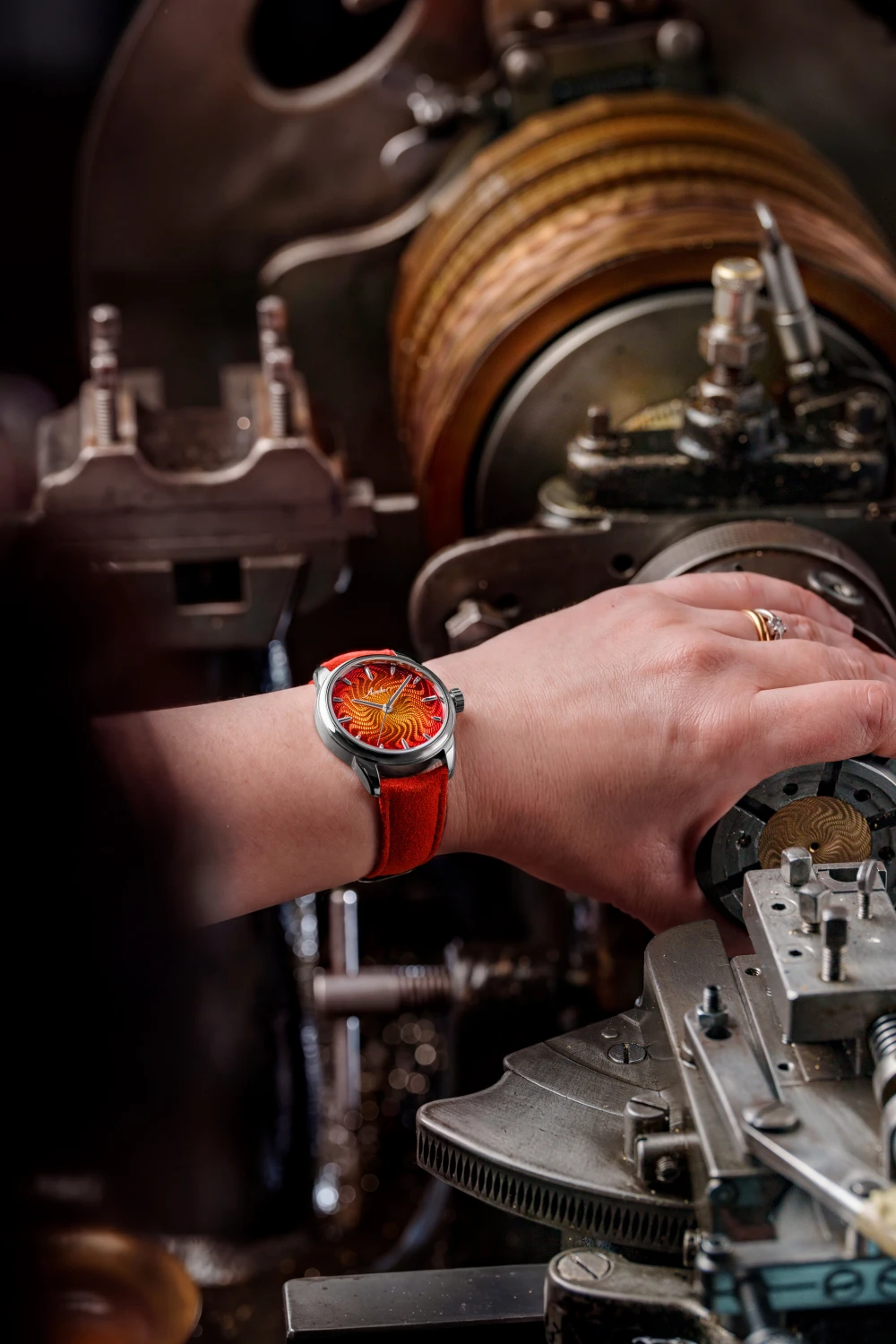
Image – AWAKE Son Mài – Guilloché Main Alba (rosettes in background – top of picture)
The rose-engine lathe is manually operated and used to impart circular or oval motifs. There is an absence of computer controls or electrical power. The workpiece (dial blank) is held vertically within a rotating head (headstock). A cutter, positioned perpendicular and mounted on a slide, is pressed against the dial blank, usually with the artisan’s right hand, while the left hand turns a wheel, causing the rotating head to move. As the workpiece rotates, the cutter imparts a curved line.
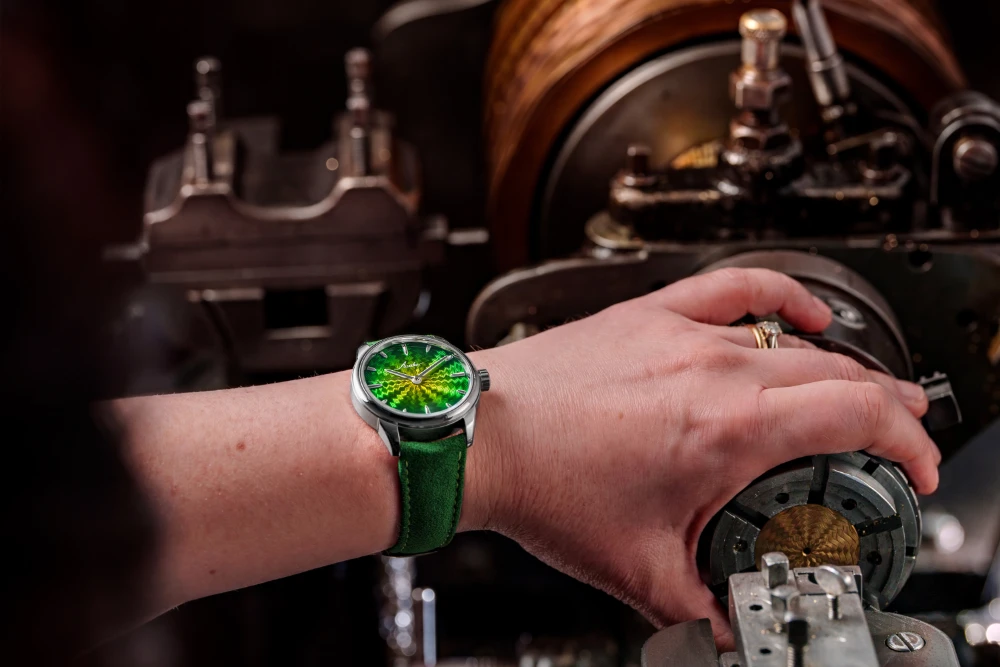
Image – AWAKE Son Mài – Guilloché Main Borealis
The desired pattern is determined by which ‘rosette’ (cam) is selected. Rosettes are discs with an undulating outer edge which is read by the ‘touch’, influencing the trajectory of the headstock. The artisan has to turn the wheel with the left hand at a constant speed while pressing the cutter with the right hand with uniform pressure. When examined closely, the lines forming the motif should be equidistant (when intended) and must align. Circular or swirling patterns should be perfectly centred, the depth of cuts must be consistent and there cannot be any extraneous marks left on the dial.
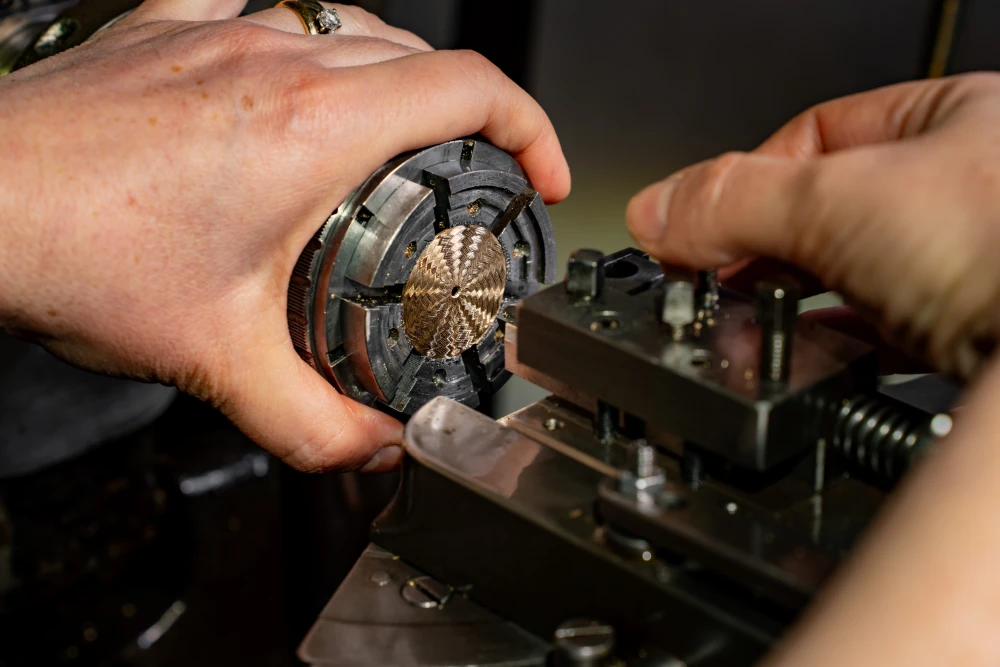
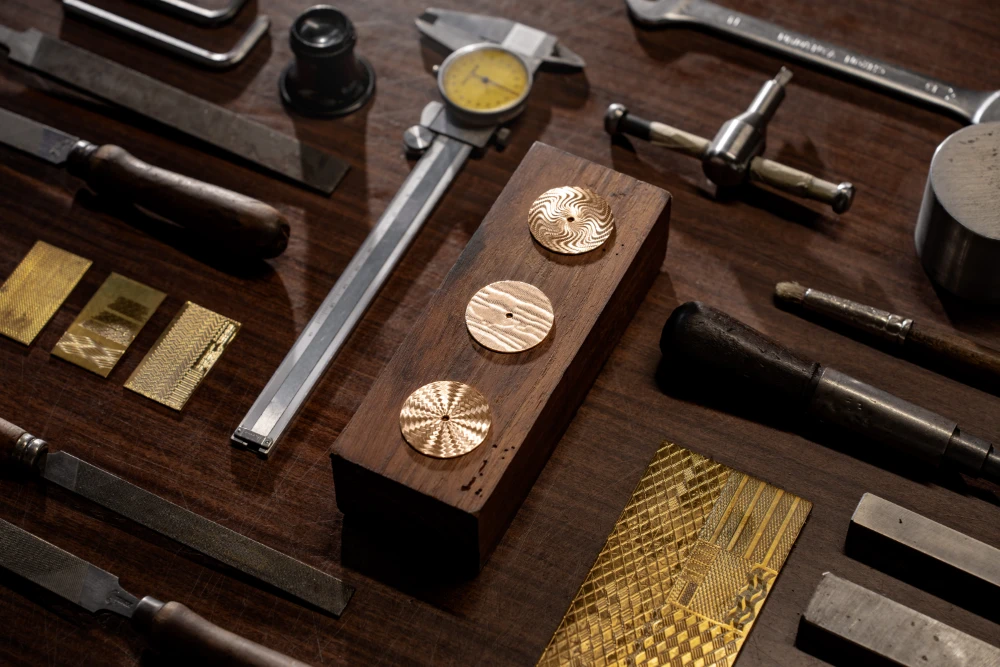
As its name suggests, a straight-line engine is used to impart straight-line motifs eg diamond patterns. Like the rose-engine lathe, the straight-line engine eschews computer controls or electrical power. Rather than use rosettes, patterned rectangular bars are used to dictate the horizontal or vertical motion of the workpiece. Often, a guilloché specialist will use a combination of a rose-engine lathe and a straight-line engine to create various works.
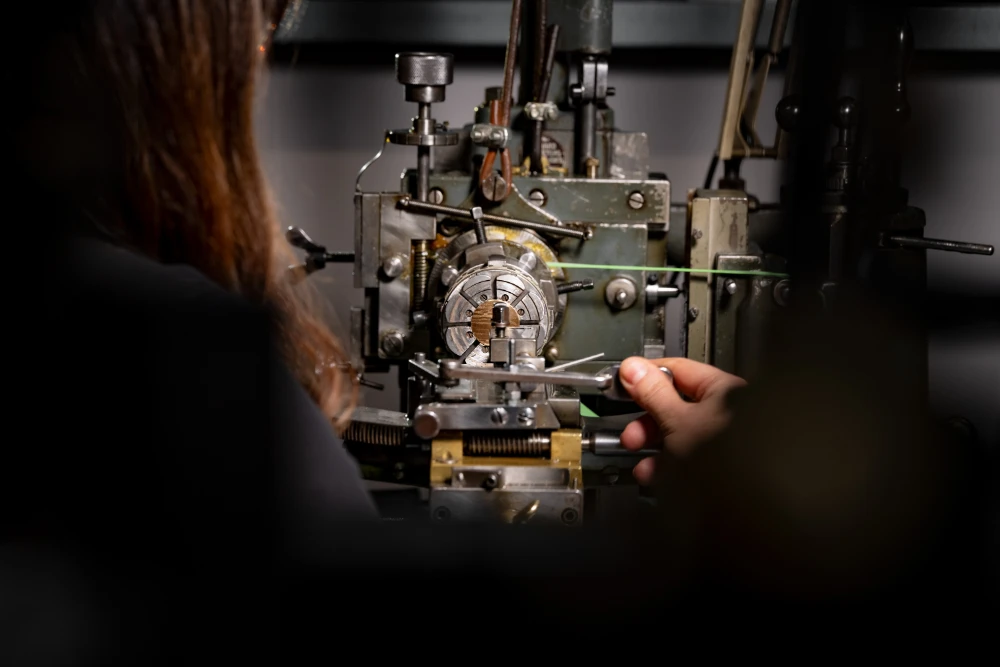
Creating a hand-guilloché dial is time-consuming and, by default, costly. Some watch brands choose to use a CNC machine, which can produce a flawless dial, but it is generally not as good at producing very fine patterns. Moreover, a pattern created using a CNC machine can appear a tad inert. Sometimes stamping is employed; however, the resultant patterns, created by deforming the metal, lack the definition of a hand-guilloché dial, with the grooves deficient in depth and the peaks devoid of sharpness. Quite simply, hand-guilloché remains the purist’s choice.
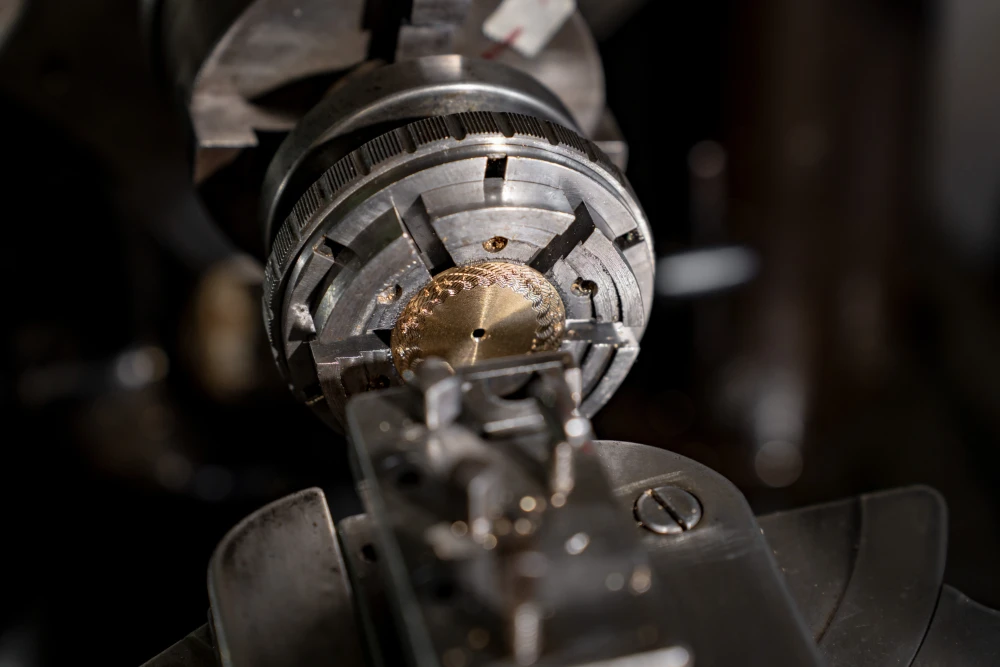
As previously stated, the AWAKE Son Mài Guilloché Main is currently available in three versions, each equipped with a hand-guilloché dial. The dial of the ‘Alba’ reference features a ‘helical pattern’, the ‘Borealis’ is adorned with a ‘radiant pattern ’, and the ‘Sunset’ is endowed with a ‘draped-moiré’ pattern. AWAKE entrusted Renzetti 1909, a hand-guilloché specialist based in Milan, to create these models using a combination of rose-engine lathes and straight-line engines.
Once completed, the hand-guilloché dials are sent to Hanoi, Vietnam, where they receive an additional quotient of artisanal know-how – Son Mài lacquer.
Son Mài lacquer
Asia’s relationship with lacquer dates to prehistoric times and has become synonymous with the worlds of art and luxury. Generations have harvested resin sap from Rhus verniciflua trees. Each year, the trunks of these mature trees, at least 10 years old, are cut, releasing small amounts of sap. Initially, this sap looks milky-white, but its appearance soon changes once in contact with the air. The sap is filtered, stirred and then heated to remove excess moisture, a process that leads to a homogeneous lacquer.
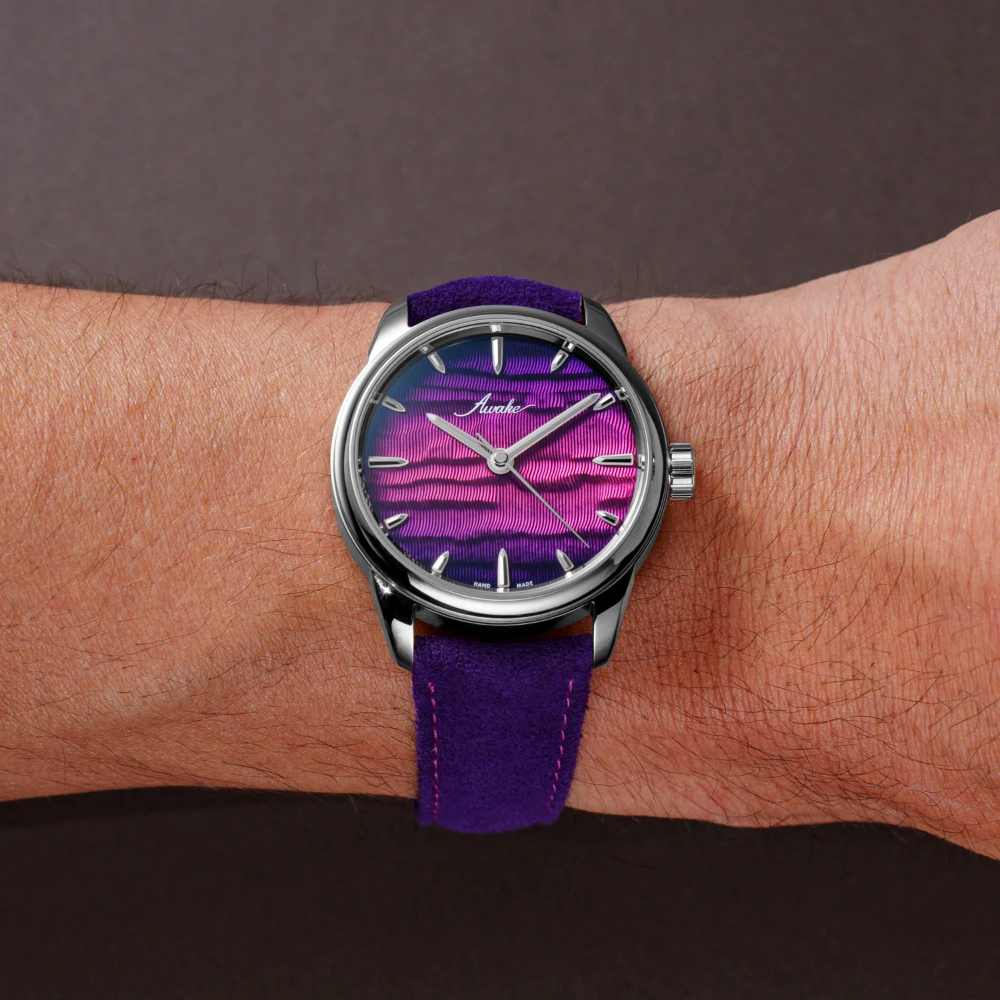
Image – AWAKE Son Mài – Guilloché Main Sunset
Traditional lacquer work can be found in China, Japan, Korea and Vietnam, each imbued with its own regional character. To create the AWAKE Son Mài Guilloché Main, multiple ultra-thin layers of Son Mài lacquer are applied to the hand-guilloché dial. After each application of lacquer, the surface dial is cured in a humid chamber. Exercising care not to mar the engraved motif below, it is then sanded and subsequently polished. It is a protracted process which, together with the hand-guilloché work, requires a total of ‘15 hours of meticulous craftsmanship’.
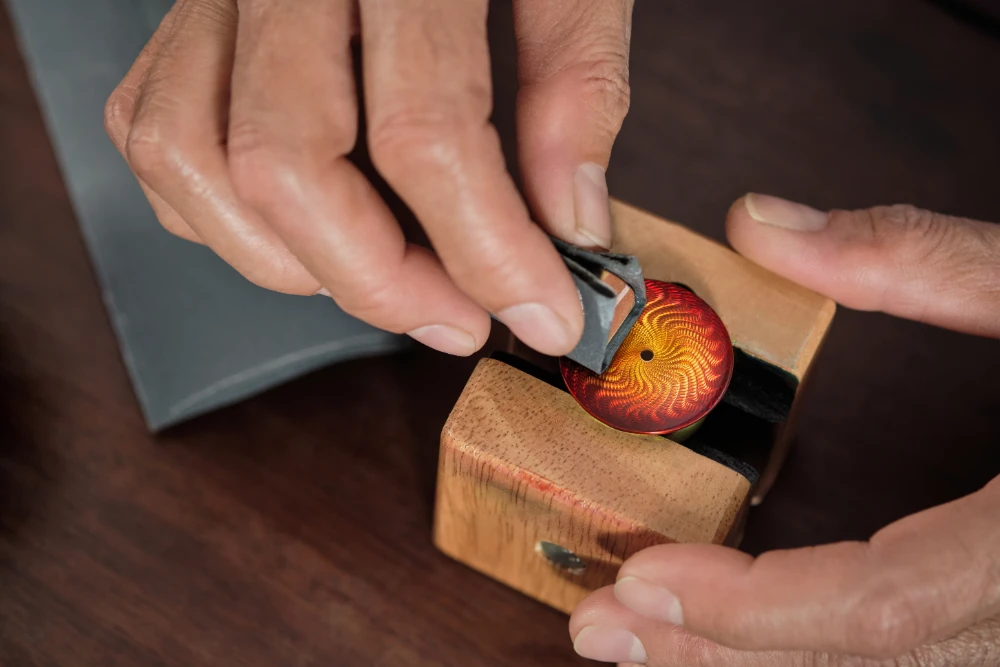
Image – AWAKE Son Mài – Guilloché Main Alba (dial being sanded)
The resultant dial surface proves lustrous, exhibits a becoming depth and subtly plays with light. By combining these two artisanal crafts, AWAKE unites the artistry of Italy and Vietnam to deliver a harmonious composition.
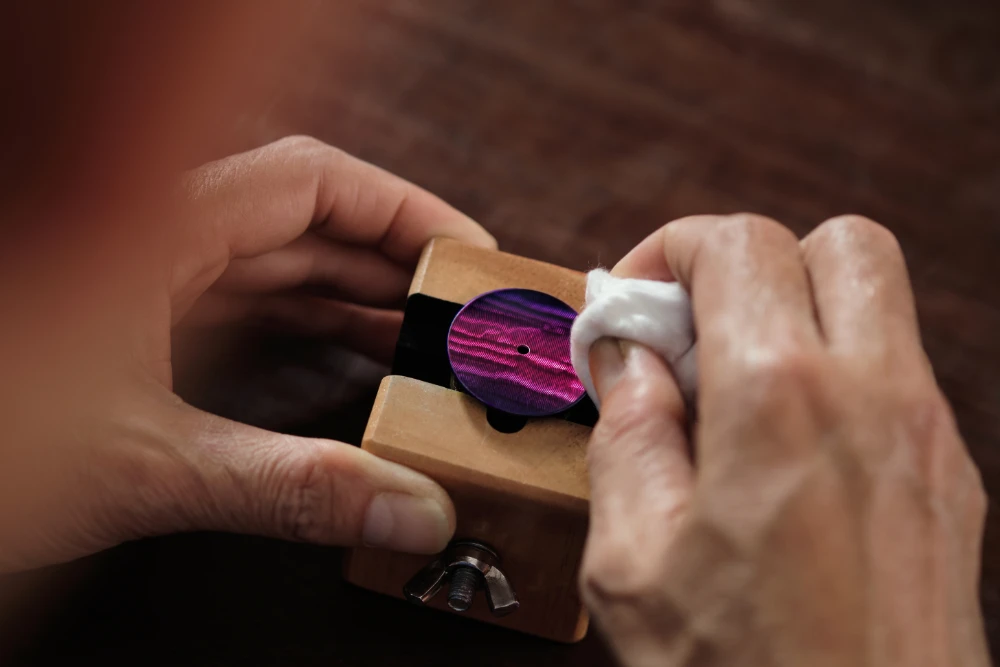
Image – AWAKE Son Mài – Guilloché Main Sunset (dial being polished)
Having explored the artisanal techniques used to create the dials of each member of the Son Mài Guilloché Main collection, I now turn my attention to the remaining dial details.
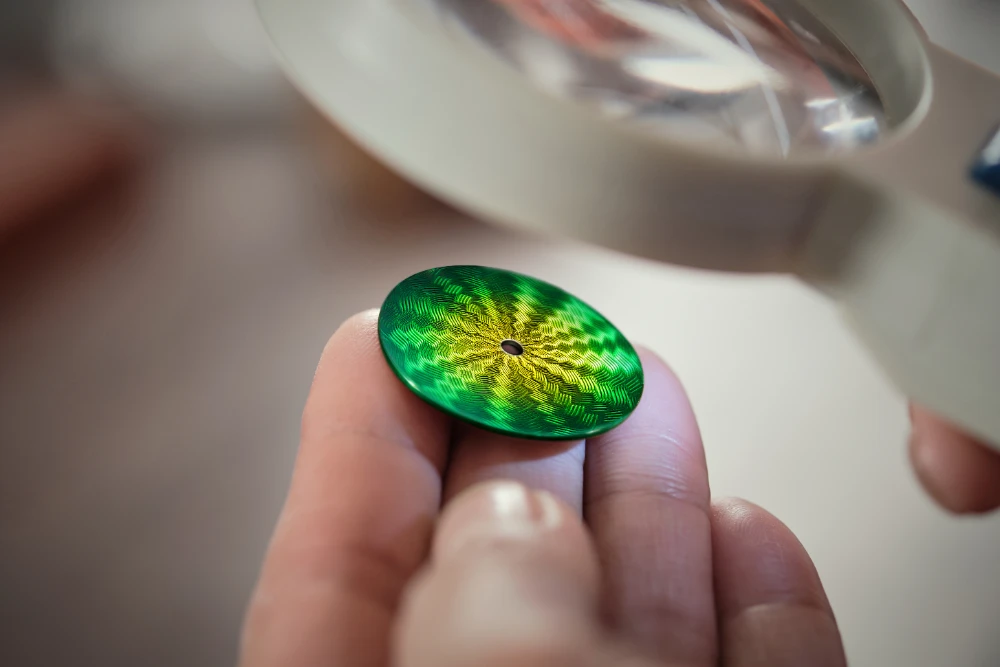
Image – AWAKE Son Mài – Guilloché Main Borealis dial
AWAKE Son Mài Guilloché Main – other dial details
Each model is endowed with an intricately patterned, rich horological canvas. AWAKE has granted each artisanal scene sufficient space to breathe, eschewing superfluous indications and restricting the inventory of functions to merely hours, minutes and seconds.
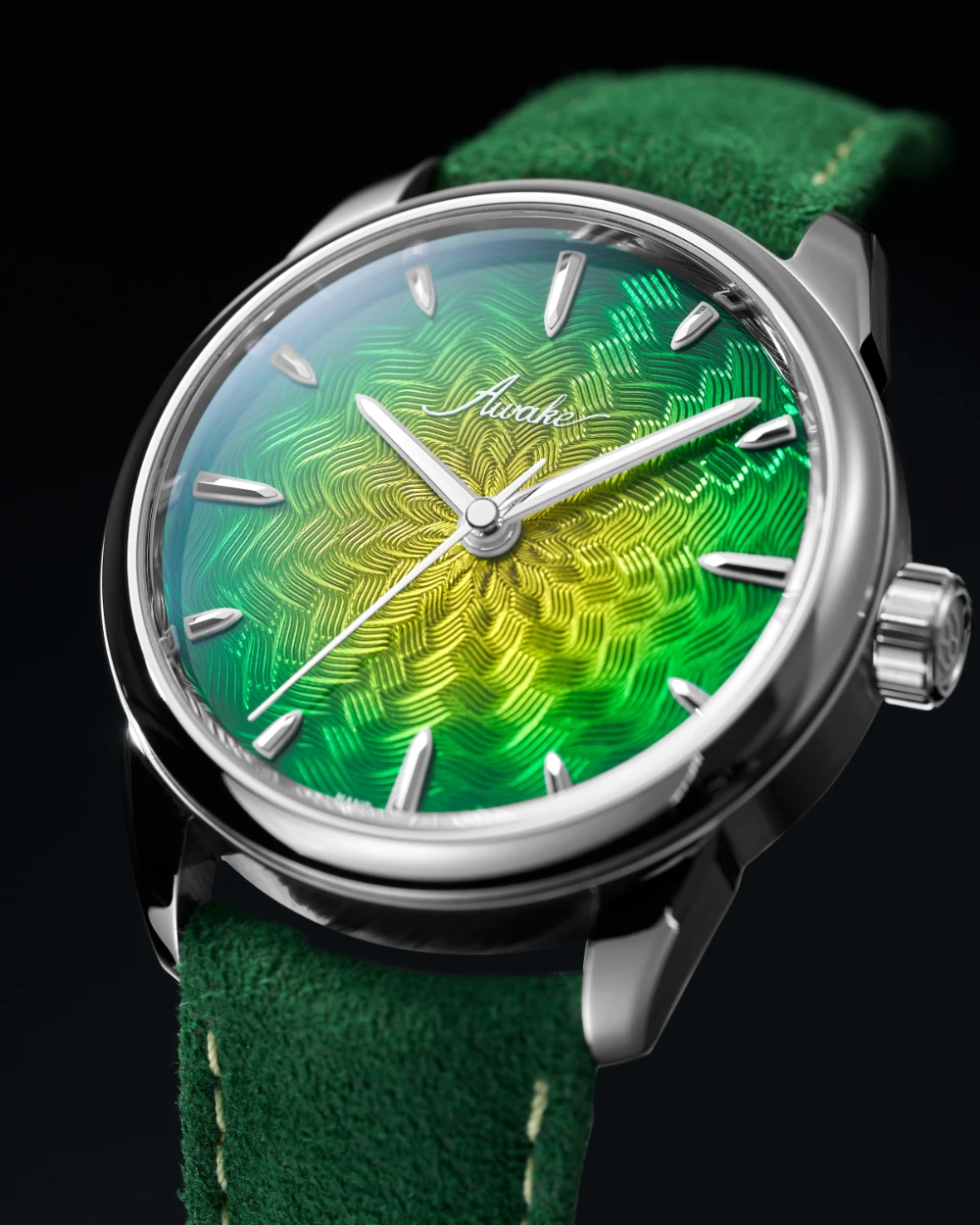
Image – AWAKE Son Mài – Guilloché Main Borealis
The hands and hour markers are presented in the brand’s own ‘Chiaroscuro’ luminous signature that emits a vivid blue glow in dim light. The brand’s literature describes said luminous signature (when applied to its Son Mài – Silver Leaf models):
Our exclusive ‘Chiaroscuro’ luminous signature, which enhances the depth and contrasts of the dials, whether by day or by night. Hands and indexes combine Super-LumiNova® BGW9 and polished, brushed, and faceted steel. This innovation, called “coiffe”, allows for a subtle diffusion of light and a better readability without spoiling the dial. During the day, discretion is de rigueur. In the dark, luminescence works its magic. A gentle luminous halo appears and accentuates the brilliance of the lacquer, the sparkling of the silver leaves and the contrast of the pigments, bringing poetry and technical exploit together. A feast for the eyes!”
Interestingly, this ‘luminous signature’ appears to emanate from beneath the hour markers and hands, imbuing the dial with a unique nocturnal appearance. In the northern region of the dial, the maker’s name is presented in a cursive font.
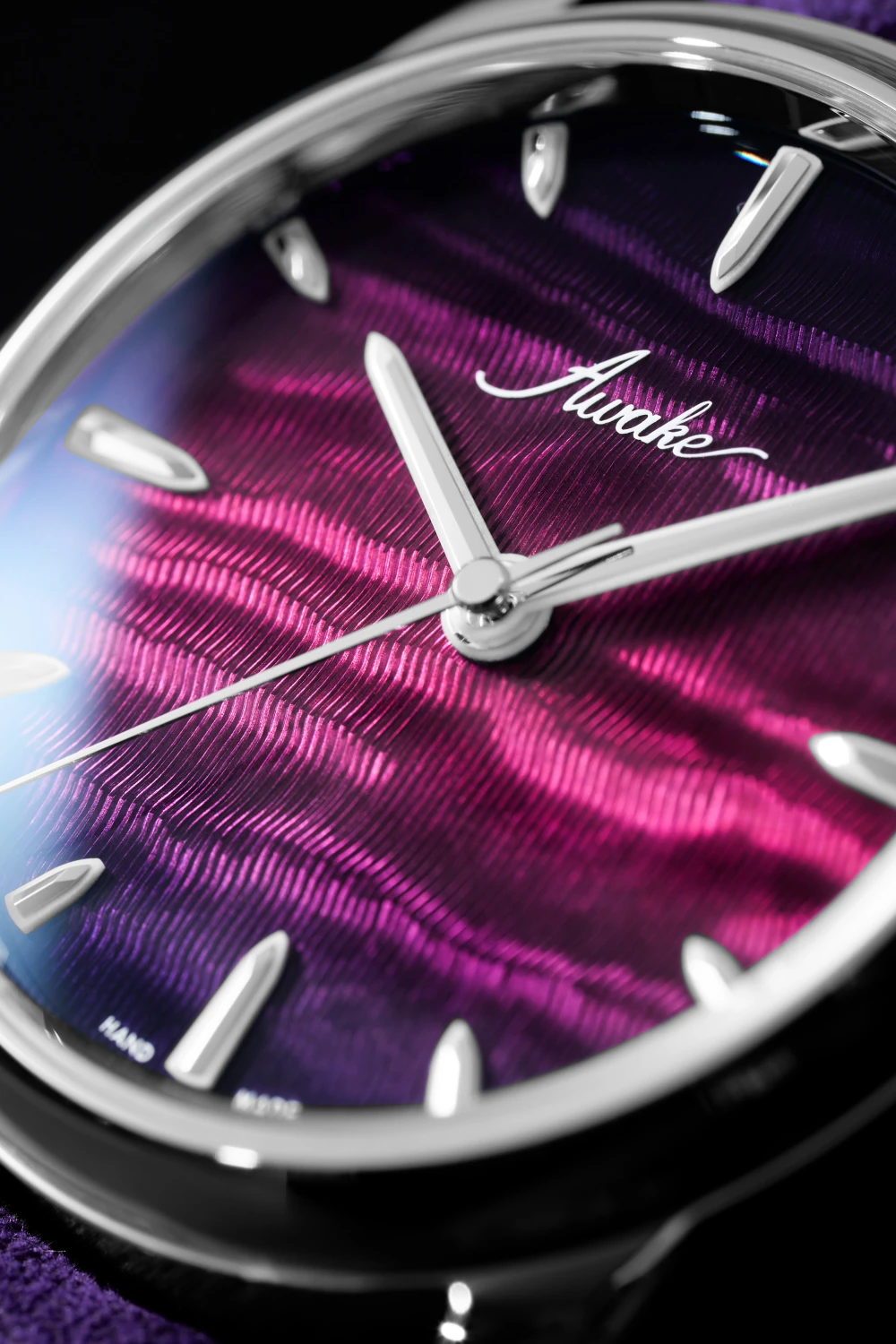
Image – AWAKE Son Mài – Guilloché Main Sunset
AWAKE Son Mài Guilloché Main – case
AWAKE has chosen to house each member of the Son Mài Guilloché Main family in a 38 mm case, a size that promises universal appeal. The bezel is highly polished and concave, swooping from the sapphire crystal to the caseband in an arc. The relationship between the lugs and the caseband is also very interesting, with the lugs appearing to step outwards as they emerge from the caseband.
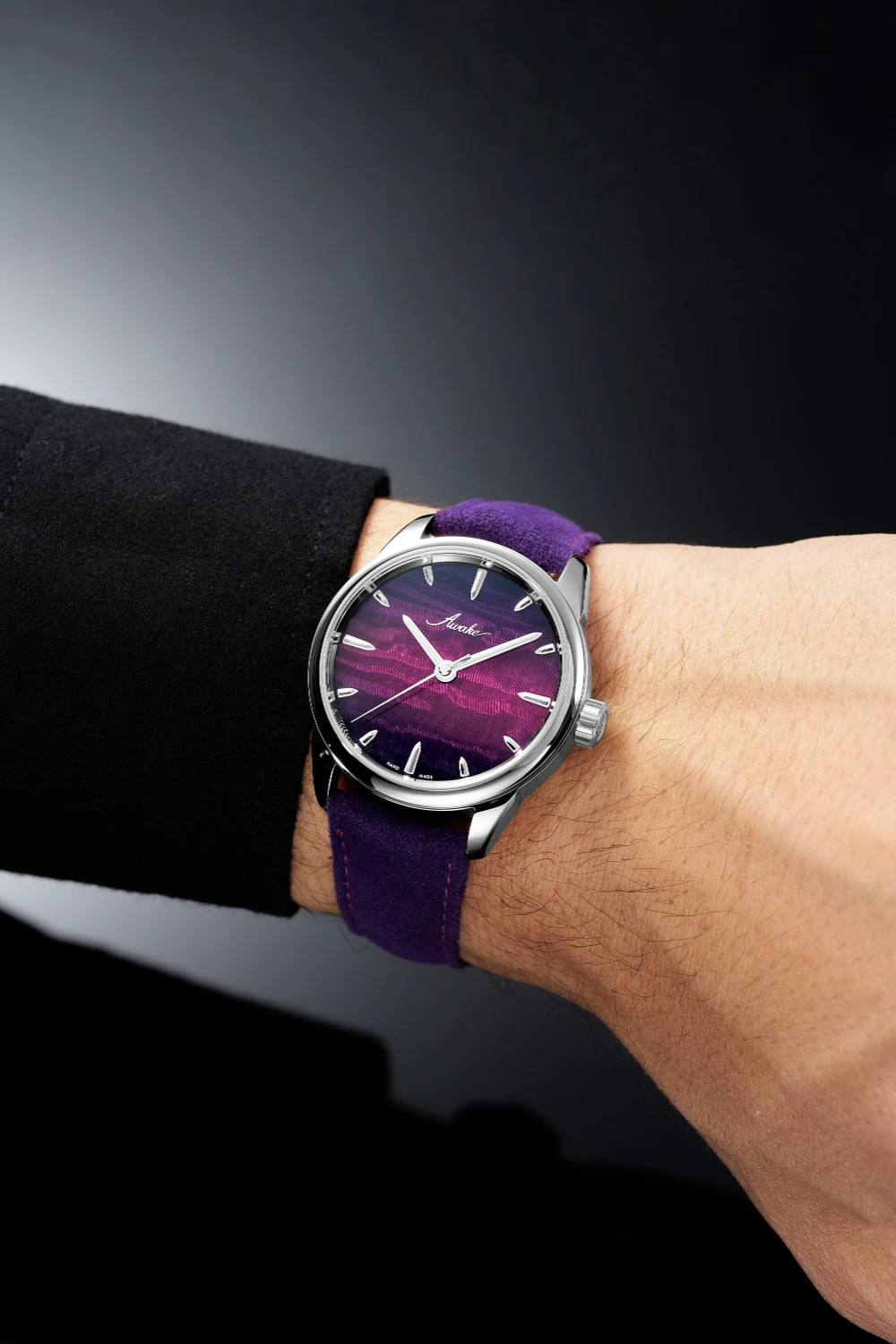
Image – AWAKE Son Mài – Guilloché Main Sunset
Like the bezel, the lugs are highly polished, save for their flanks, which are brushed. AWAKE has also chosen to present the caseband in brushed form, counterbalancing the ebullience of the polished surfaces. By juxtaposing two contrasting finishes, the Maison delivers a refined aesthetic not usually found on watches at this price point (€3,180 inc. taxes – RRP as of 19.11.2026).
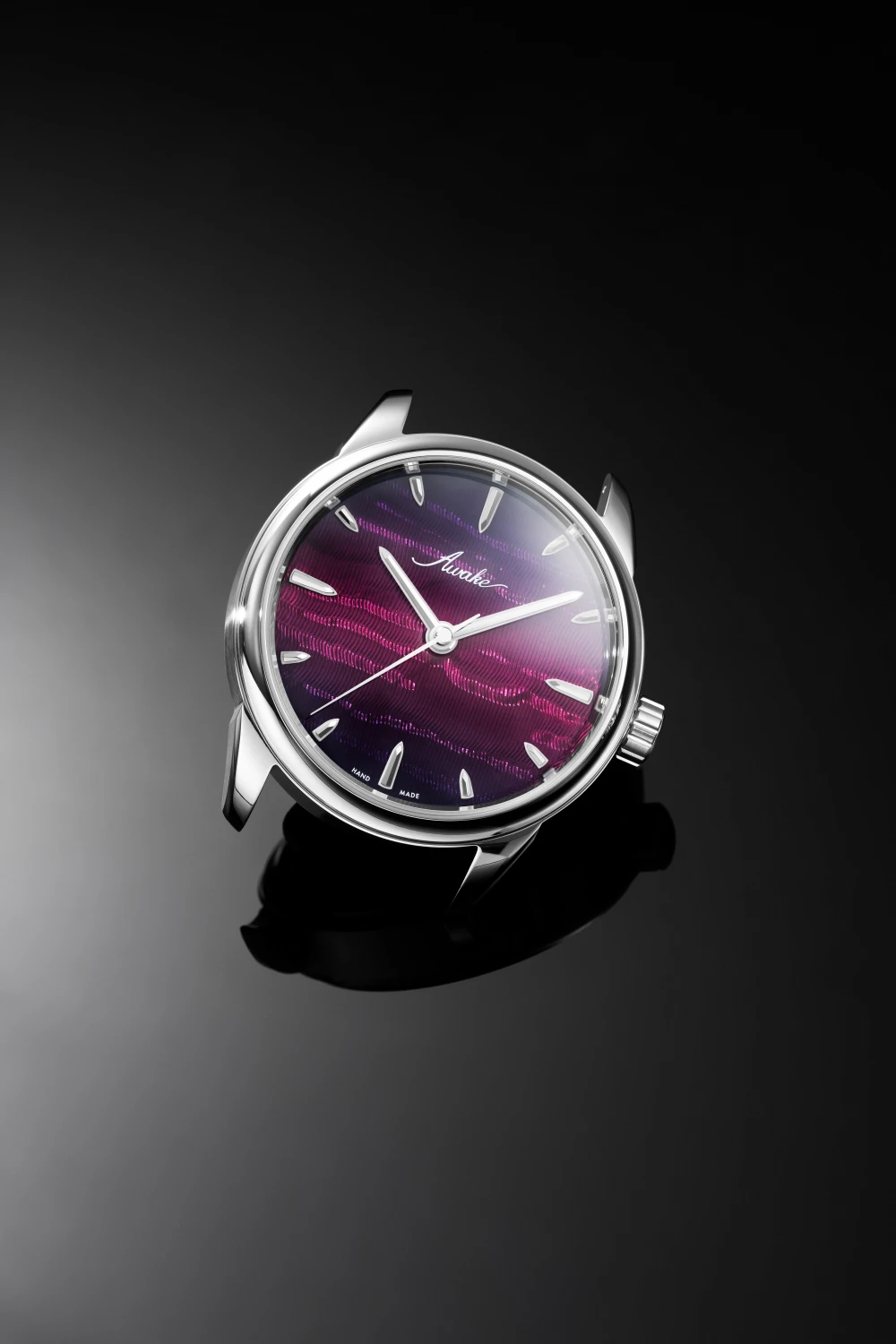
Image – AWAKE Son Mài – Guilloché Main Sunset
To the rear of the watch, a pane of sapphire crystal grants a view of the automatic movement within, the Calibre G101 by La Joux-Perret. The steel surrounding the sapphire crystal is enriched with engraved text, presented in relief.
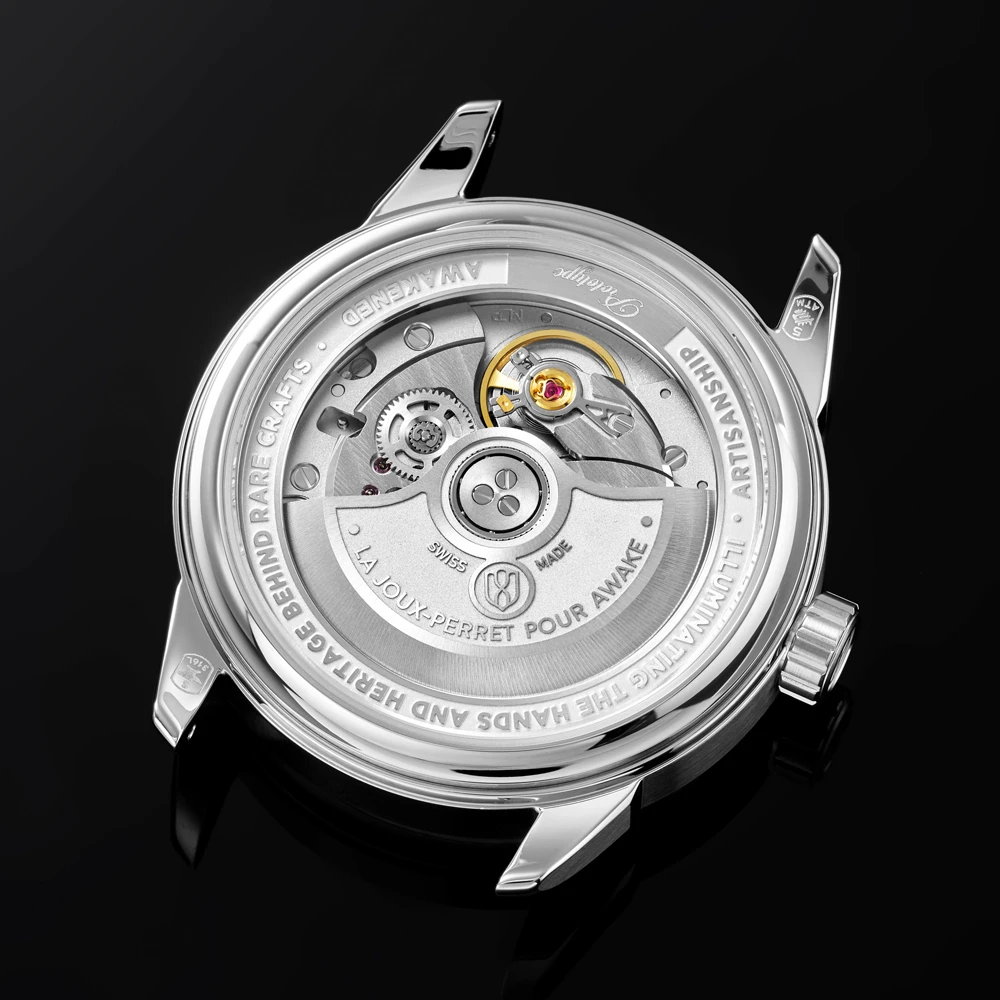
Image – AWAKE Son Mài – Guilloché Main Borealis (caseback)
Each member of the collection is presented on a colour-coordinating Jean Rousseau strap. The upper surface is Alcantara, the underside is ‘rubberised calfskin’ and the stitching is executed in a contrasting hue. AWAKE has clearly considered the ergonomic relationship between the strap and the wearer’s wrist, choosing to equip the model with its ‘new micro-adjustable Fitwell M1 buckle’. This ingenious feature allows the wearer to alter the size of the strap in 3 mm increments – perfect for warm days when clammy wrists tend to swell.

Image – ‘new micro-adjustable Fitwell M1 buckle’
AWAKE Son Mài Guilloché Main – movement
As stated earlier, the French brand has chosen to equip the Son Mài Guilloché Main collection with the Calibre G101 by La Joux-Perret. This movement specialist is based in La Chaux-de-Fonds, a Swiss city with a rich heritage of making watches.
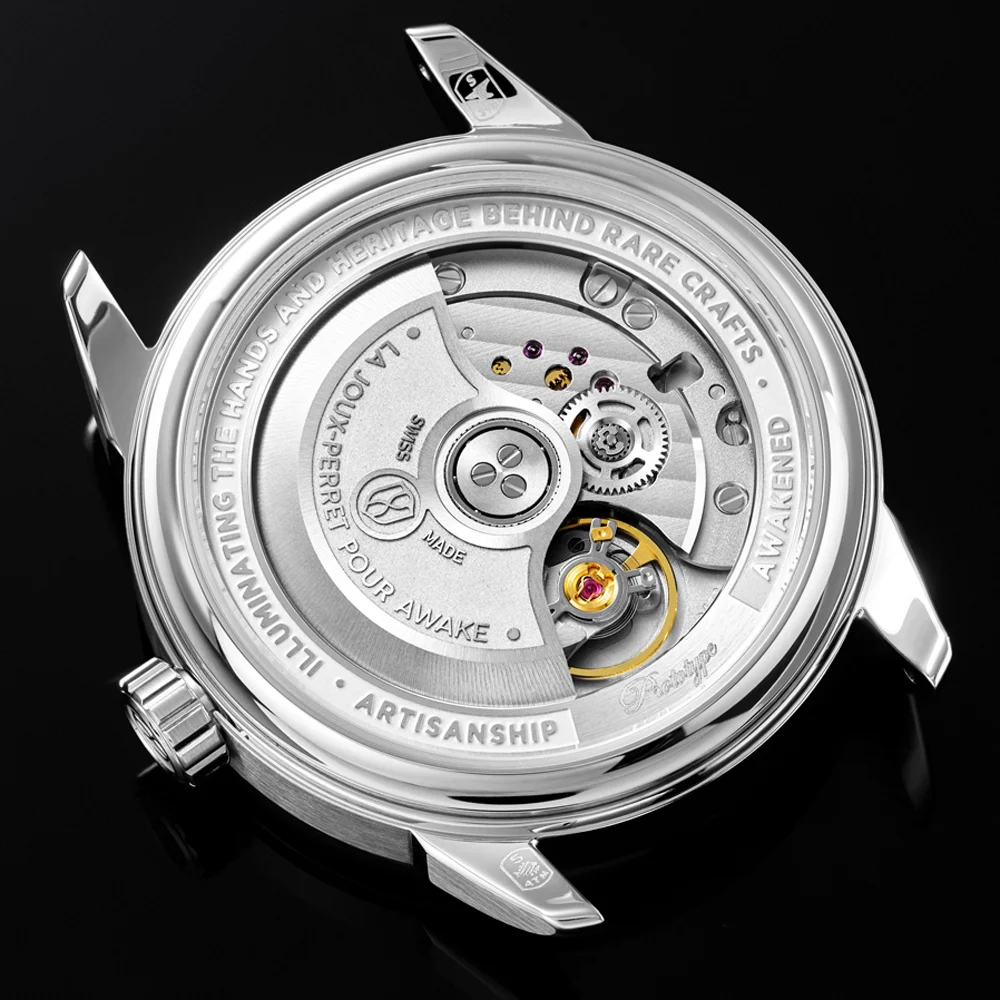
Image – Calibre G101 by La Joux-Perret
The movement has a frequency of 28,800 vph (4Hz) and incorporates 24 jewels. Assuming the mainspring is fully tensioned, the movement will run autonomously for 68 hours. The personalised tungsten rotor bears the names ‘La Joux-Perret’ and ‘AWAKE’. It is also enriched with ‘alternating recessed and raised surfaces, featuring brushed, micro-blasted and polished finishes’. Beneath the rotor, the bridges are adorned with Côtes de Genève motif.
Closing remarks
When assessing the AWAKE Son Mài Guilloché Main, one’s attention is inevitably drawn to the headline act – the dial. However, it is worth taking a moment to evaluate the case, the strap and the movement. Reassuringly, the French watch brand has not spent everything on the dial only to neglect other components.
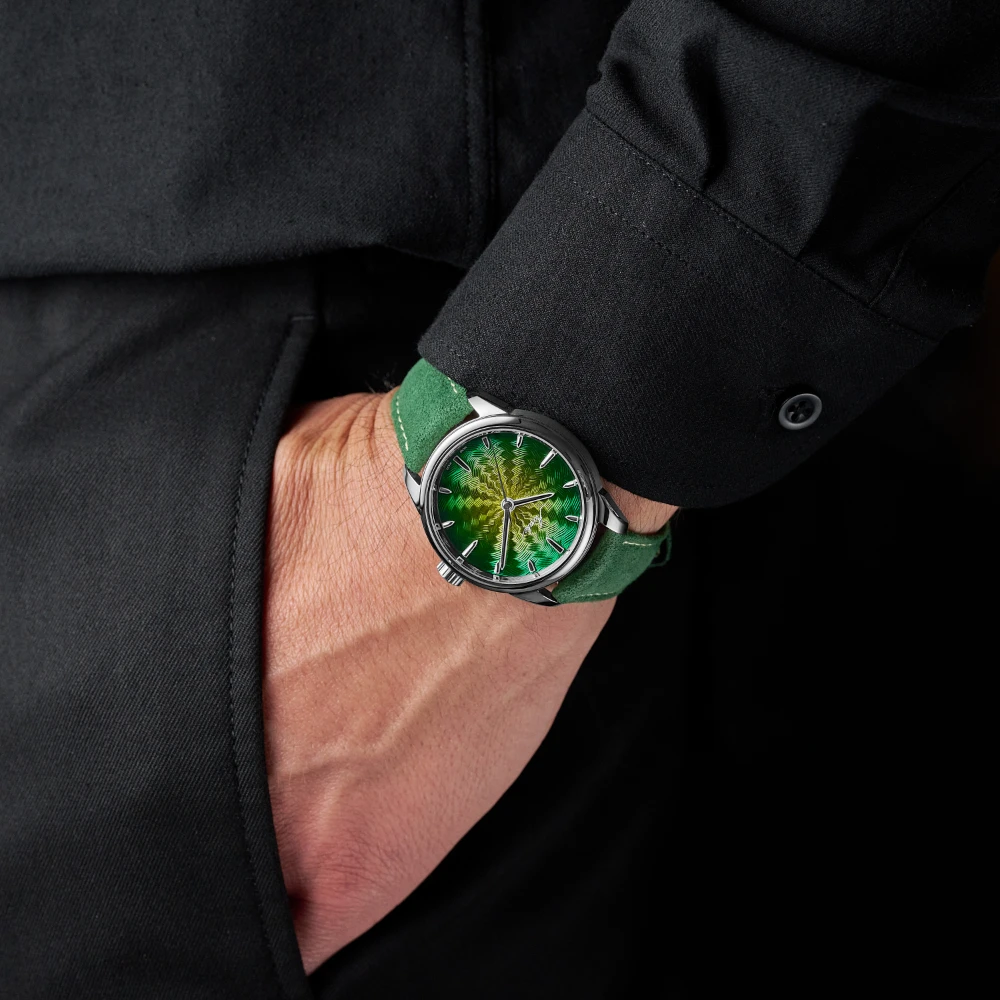
Image – AWAKE Son Mài – Guilloché Main Borealis
For example, one form of polishing would have been the low-cost option, but AWAKE has chosen to juxtapose two contrasting finishes, each of which is perfectly delineated. The intricately shaped bezel and the stepped lugs will have further heightened the cost of production. Then there is the circlet framing the sapphire crystal with text presented in relief – a small detail which helps augment the model’s overall appeal. The Jean Rousseau strap could have been substituted for something a few Euros cheaper, but it seems Monsieur Thibault is averse to penny-pinching. In fact, he has chosen to heighten costs further by adding a nifty micro-adjustable buckle. Then there is the Calibre G101 by La Joux-Perret, a movement that’s still ticking when many rivals have run out of steam (the power reserve is 68 hours). Factor in attractive finishing and the Swiss Manufacture’s reputation and, once again, the AWAKE makes a compelling case for acquisition.
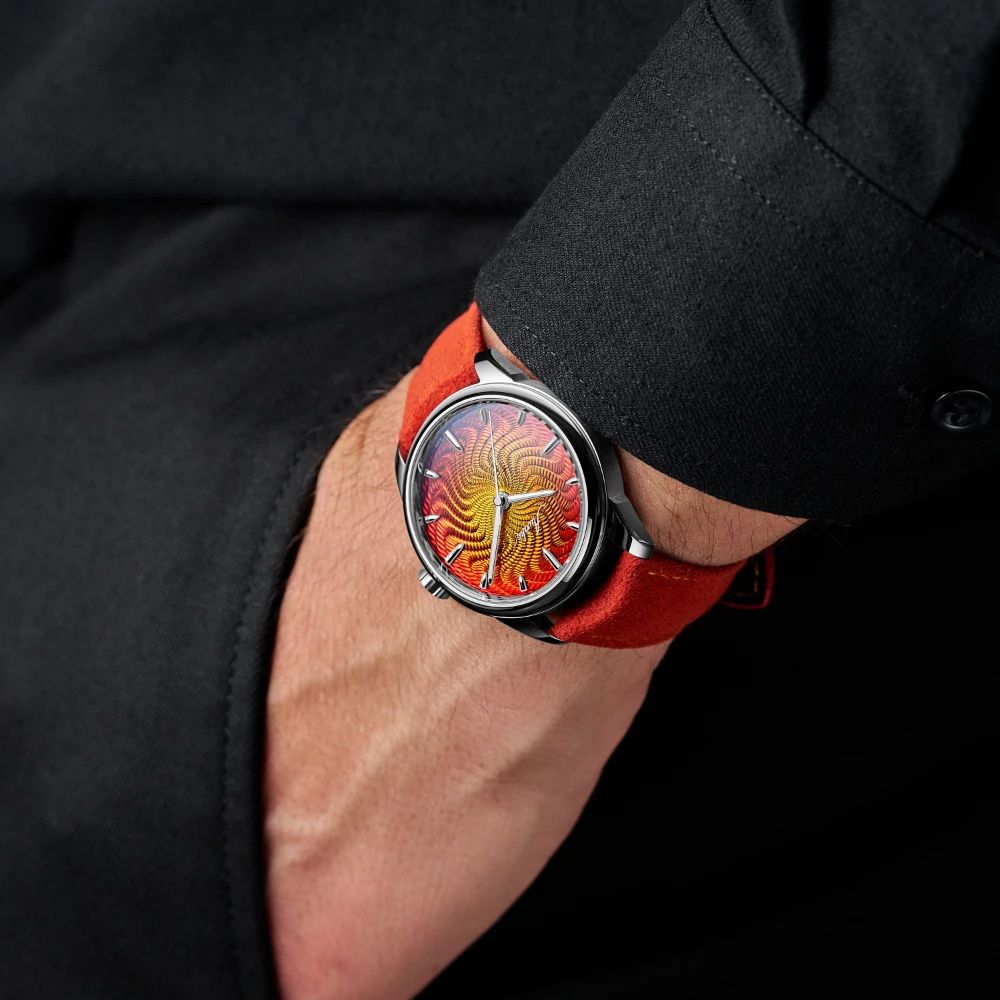
Image – AWAKE Son Mài – Guilloché Main Alba
But ultimately, we must return to the dial. It perpetuates two historic artistic crafts that are the antithesis of mass production. They draw on amassed know-how, where skills are handed down from one generation to the next. Despite the advent of cutting-edge technology, sometimes the old ways remain the best. In this instance, each motif imparted to metal, every layer of lacquer applied by brush, imbues the dial with permanence and an enduring joy – characteristics often lacking in many modern-day objects.
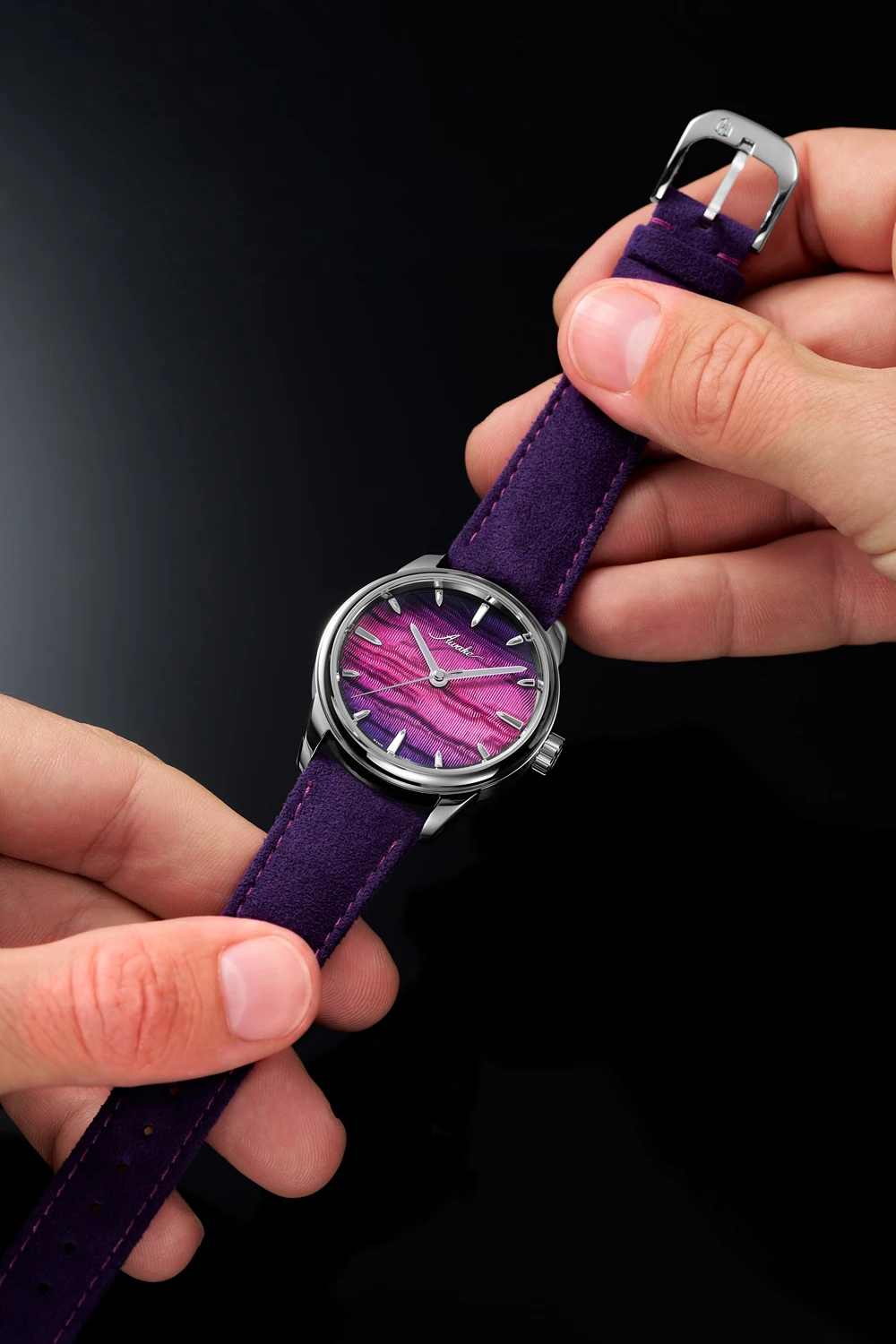
Image – AWAKE Son Mài – Guilloché Main Sunset
Métiers d’Art has always been an exclusive club where only the fortunate few are granted entry. However, by looking beyond the borders of his home nation, working with partners in Italy, Switzerland and Vietnam, Lilian Thibault has democratised hand-guilloché and Son Mài lacquer, making them available to a wider audience. Indeed, Lilian has flung the doors open to a once exclusive club and invited regular folk to join his Fraternité.

Image – the AWAKE team
Further reading
Technical specifications
- Model: AWAKE Son Mài Guilloché Main
- Case: 316L stainless steel, diameter 38 mm, height 11.50 mm (with crystal), water resistance 10 ATM (100 metres), sapphire crystal to front, exhibition caseback.
- Functions: hours, minutes, centre seconds
- Movement: Automatic La Joux-Perret G101, frequency 28,800 vph (4 Hz), 24 jewels, power reserve 68 hours
- Strap: Jean Rousseau Alcantara strap with rubberized calfskin lining, coloured stitching paired with a micro-adjustable Fitwell M1 buckle.
- Price: €3,180 including VAT (RRP as of 19.11.2026)
- Limited Edition: 200 pieces per dial