
Philip Day discusses the prestigious Amarone della Valpolicella Classico DOCG produced by Azienda Agricola Giuseppe Quintarelli, arguably the most prestigious red wine of Veneto Valpolicella.

Grown and produced in the Veneto Valpolicella growing region of north-eastern Italy, not far from Verona, Amarone della Valpolicella is an intensely flavoursome red wine, made from dried grapes and the one produced by the Azienda Agricola Giuseppe Quintarelli is arguably the most prestigious red wine of the region.
It is almost impossible to mention the name Quintarelli without resorting to superlatives. The name evokes much more than a family name. It stands for traditional values, exquisite wines, a unique style and method of working that reflects a great amount of time, effort, care and patience being invested in each bottle of wine produced. No wonder that these artisanal attributes are further embellished by the use of beautifully handwritten labels and corks of the highest quality to indicate that the vineyard produces handmade, artisanal wines of the finest quality. Giuseppe Quintarelli was truly an uncompromising perfectionist.
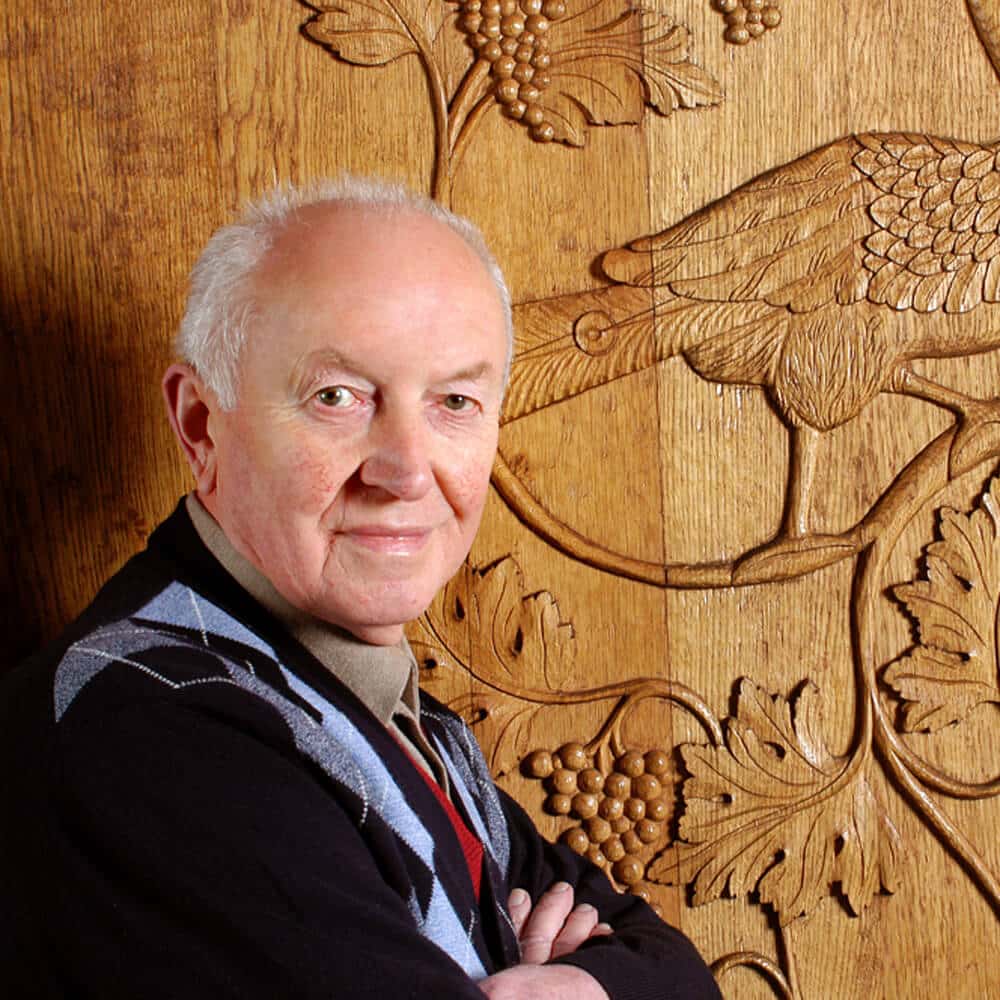
Giuseppe Quintarelli
History
The company was established at the beginning of the twentieth century by Silvio Quintarelli, who, along with his brothers cultivated vineyards under a share-cropping system at Figari, in the municipality of Marano di Valpolicella.
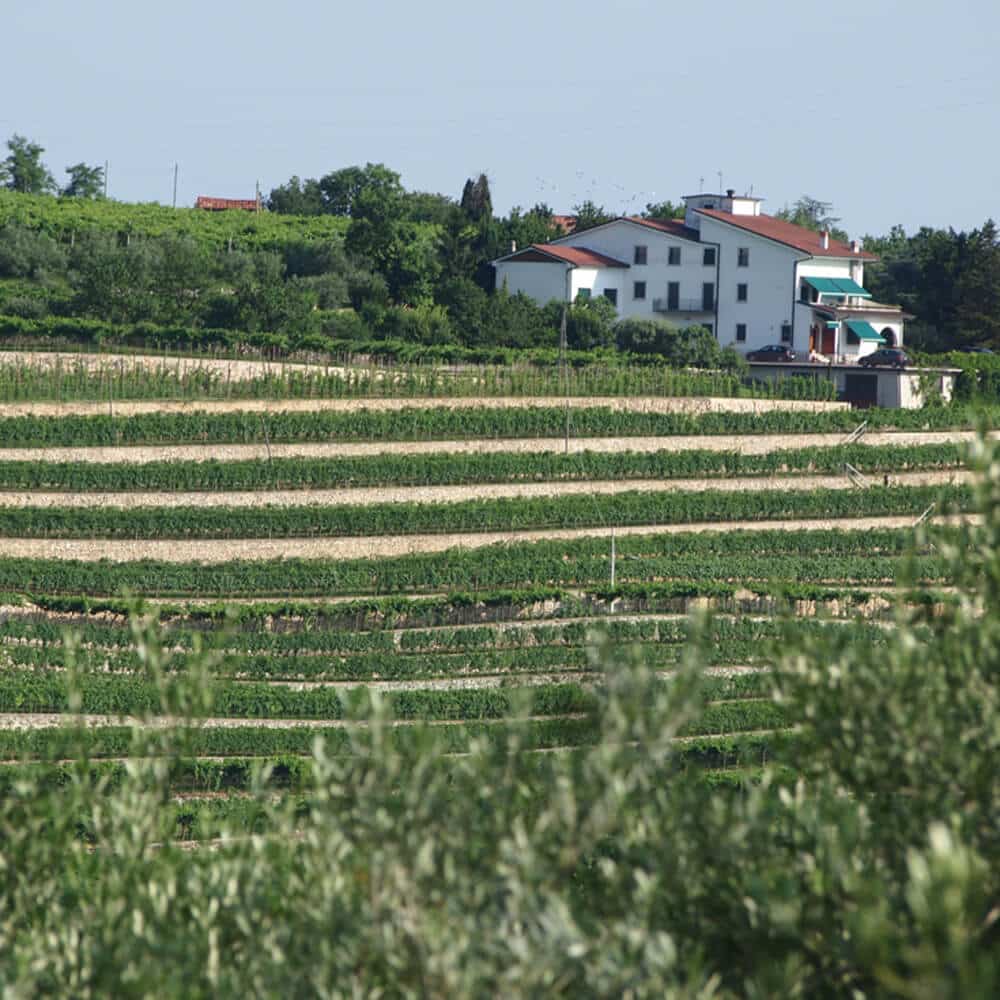
Photo credit – Gabriele Nardo
After the First World War Silvio established his own estate in 1924 in the valley of Negrar, in the small hamlet of Cere? in the heart of the Valpolicella Classico area.
Giuseppe (always referred to as ‘Bepi’) was Silvio’s youngest son, born on 19 March, 1927. He took over the estate in 1950 and immediately launched a programme of gradual improvement and expansion, working tirelessly to produce wines of ever better quality. His pursuit of perfection extended to better bottles, corks and Quintarelli’s distinctive labels, many of which were hand-drawn and hand-glued onto the bottles by Quintarelli and other members of his family.
Today the 12ha (29.65 acres) of vineyards stretches along the length of the eastern side of the Negrar valley and its grapes are stored and vinified in the estate cellars located on the peak of the Ca? Paletta hill in Cere? di Negrar.
Giuseppe Quintarelli died on 15 January, 2012 but his legacy is continued by his wife, Franca, four daughters and several grandchildren. As Quintarelli became more incapacitated by the Parkinson’s Disease that eventually killed him, his daughter Fiorenza took over the day-to-day operations of the vineyard, with the help of her husband, Giampaolo Grigoli, and their children Francesco and Lorenzo.
The vineyards
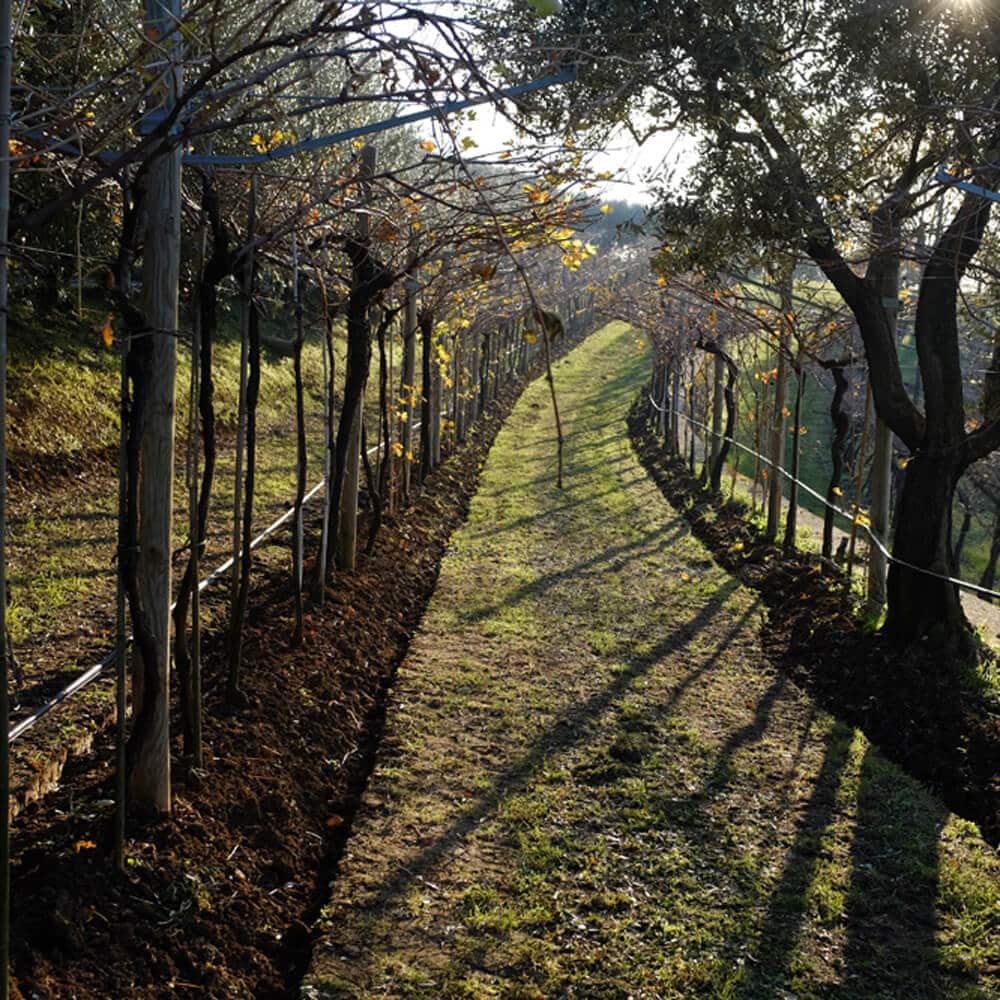
The oldest of the current Quintarelli vineyards were those acquired by his father, Silvio, in 1924, whose dominant grape variety was ‘Corvina’, with some ‘Rondinella’ and ‘Molinara’. Then in 1980 Giuseppe began increasing the size of the estate and in 1985, he began introducing new grape varieties like ‘Nebbiolo’, ‘Croatina’, ‘Cabernet Franc’, ‘Cabernet Sauvignon’ and ‘Sangiovese’ among the reds. Vibrant plots of ‘Garganega’, ‘Trebbiano Toscano’, ‘Sauvignon Blanc’, ‘Chardonnay’, and ‘Saorin’ can also be found here for the production of some white wines. Indeed, his ‘Bianco Secco’ was one of the first dry white wines produced in the Valpolicella region. From all the grapes yielded by these vineyards Quintarelli produces roughly 60.000 bottles of wine a year.
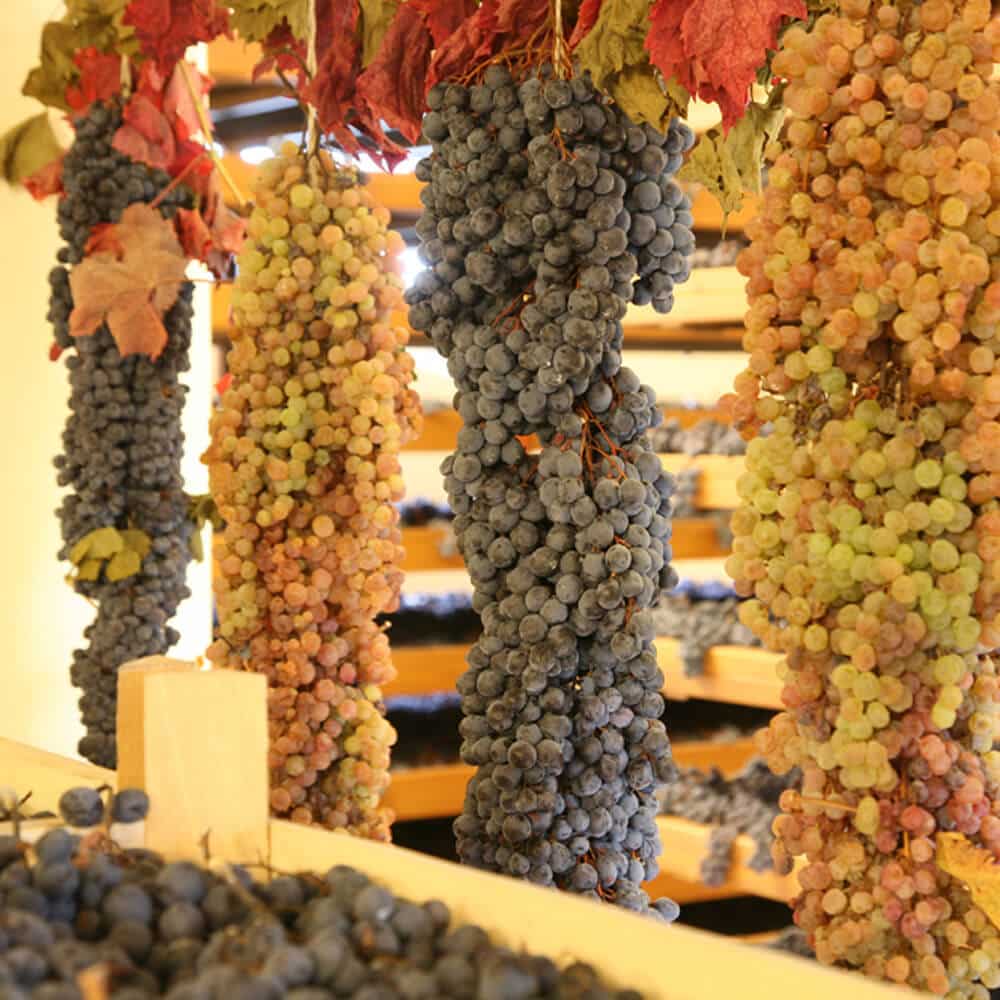
Photo credit – Gabriele Nardo
Amarone della Valpolicella, usually referred to as Amarone, is typically made from the partially dried grapes of the Corvina (the percentage in the blend varies between 45%-95%, of which up to 50% is allowed to be substituted with Corvinone; Rondinella (between 5%-30%) and (up to 25%) of other approved red grape varieties). The wine was awarded ‘Denominazione di Origine Controllata’ (DOC) status in December 1990, whilst on 4 December 2009, both Amarone and Recioto della Valpolicella (a sweeter type of wine produced using the same production methods) were promoted to the prestigious status of ‘Denominazione di Origine Controllata e Garantita’ (DOCG). At Quintarelli the mix is around 55% ?Corvina and Corvinone, 30% Rondinella, 15% Cabernet Sauvignon, Nebbiolo, Croatina and Sangiovese.
The name Amarone, literally means ‘the Great Bitter’, coming from the Italian word ‘amaro'(bitter), and the suffix ‘-one’, used to denote impressive size or volume.
| Appellation | Amarone della Valpolicella DOCG
|
| Owner | Azienda Agricola Quintarelli Giuseppe
|
| Planted acreage | Total: 12 hectares (29.65 acres) |
| Grape varieties | 55% Corvina and Corvinone, 30% Rondinella, 15% Cabernet Sauvignon, Nebbiolo, Croatina, Sangiovese |
| Wines produced |
Other Wines Produced:
|
| Terroir | Iron-rich limestone on a base of basaltic rock.
|
| Production | Around 60,000 bottles annually (all wines).
|
| Top Vintages Produced | 1966, 1971, 1973, 1978, 1979, 1980, 1983, 1985, 1988, 1990, 1991,1993, 1995, 1997, 1998, 2000, 2001, 2003, 2004, 2005, 2006.
|
Viticulture
The Quintarelli approach to winemaking means sacrificing quantity for quality. The yields are deliberately held extremely low by rigorous pruning and green harvesting (a form of crop thinning by removing unripe green clusters of grapes from the vines to restrict yields, enabling the remaining clusters to fully ripen).
The grapes tend to be picked later to further ensure ripeness, usually around the middle of October, selecting only those bunches that have fruits not too close to each other, to allow sufficient air flow.
After being harvested manually into wooden boxes, the bunches are closely inspected for quality before being placed on wooden racks where they are dried for close to 5 months in special drying chambers under controlled conditions.
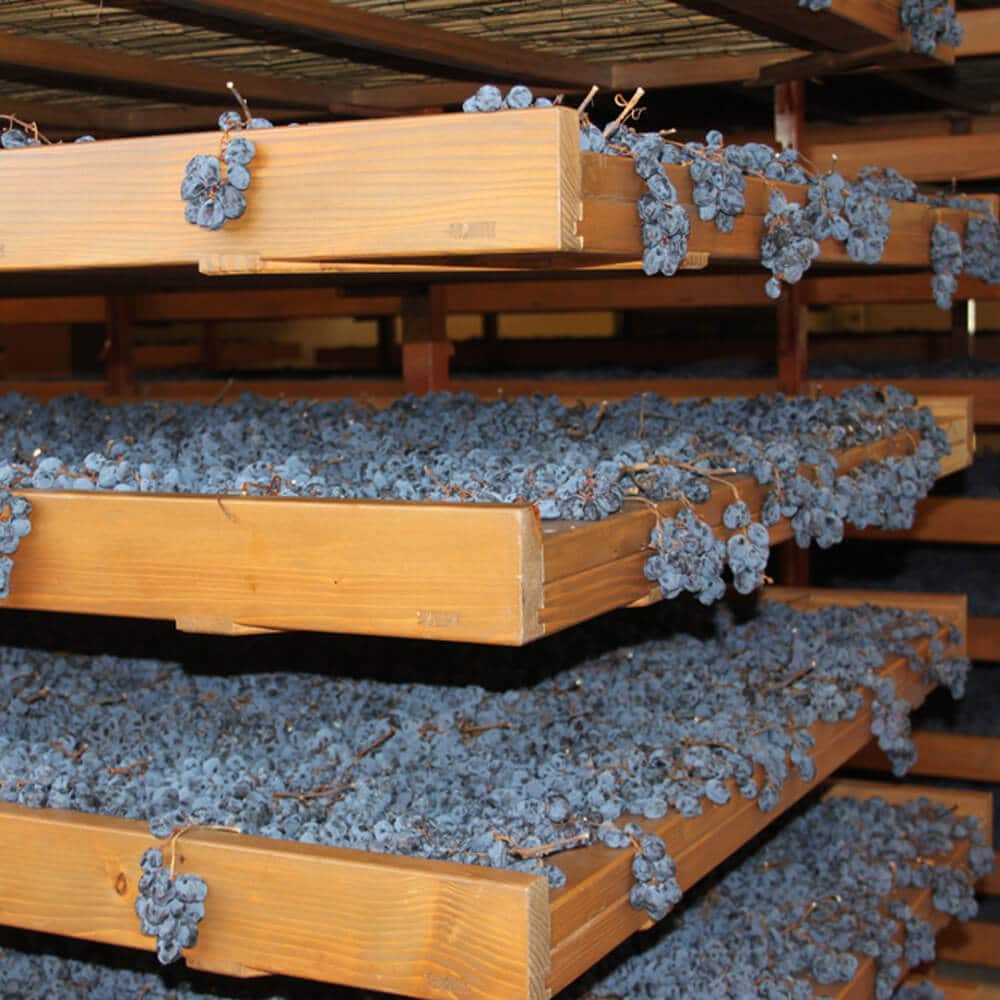
The flavours and the remaining sugars of the grapes are further concentrated by being allowed to dry and shrivel in a process called ‘rasinate’ or ‘appassimento’ in Italian. During the time that this occurs, the grapes will lose up to 50% of their weight, resulting in intensely concentrated flavours and a very high sugar content, which in turn translates into 15% alcohol levels or even higher.
Once the ‘rasinate’ is complete, the grapes are gently pressed and go through a dry low temperature fermentation process which can last up to seven weeks, as the reduced water content of the grapes can slow down the process. The wine is then aged in Slavonian oak ‘barriques’, in which there is less wine- wood contact surface allowing the taste of the wine to become mellower and more supple, which for Amarone takes around seven years and for Amarone Riserva 10 years. Besides giving the Amarone a better structure, benefiting from such a long ageing time means that Amarone wines last longer, sometimes thirty years or more.
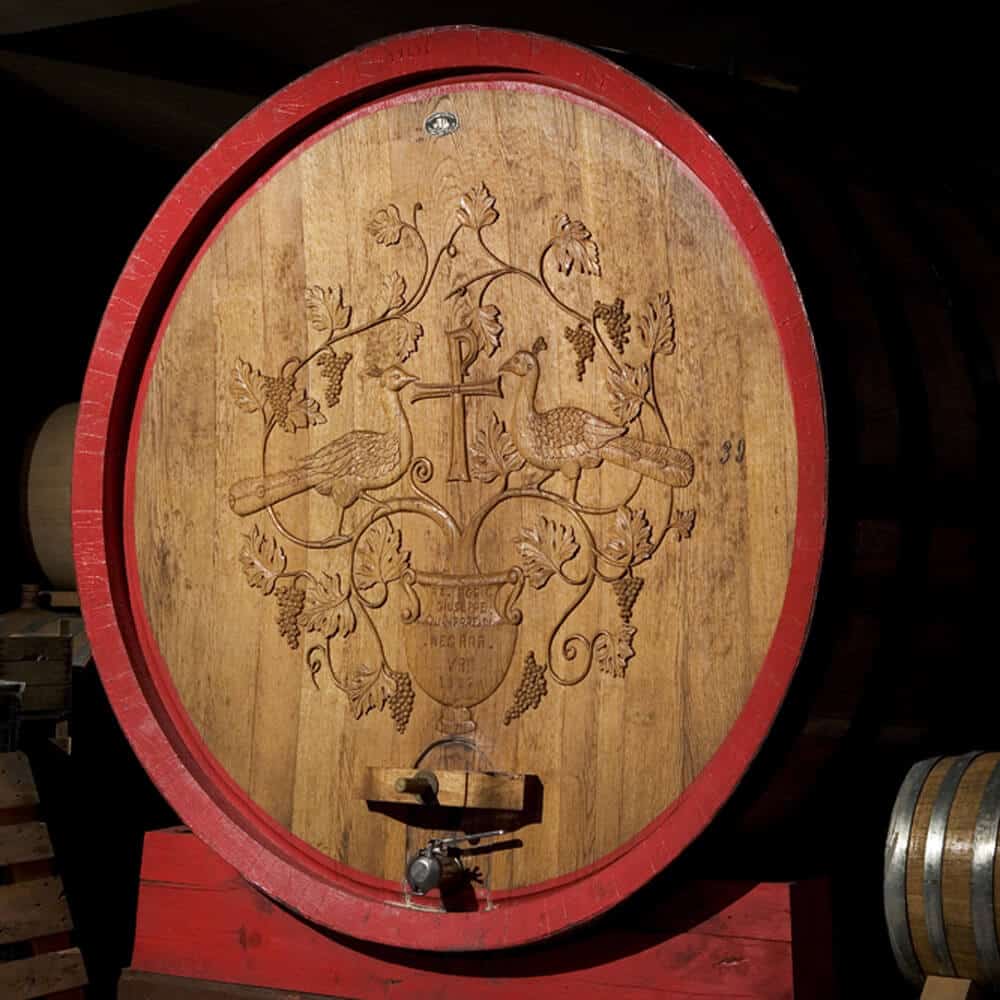
Amarone della Valpolicella, is a high-quality wine that is respected and appreciated by many important connoisseurs. Quintarelli Amarone comes from a respect for nature and a strong bond with tradition, meticulous care and attention to quality from the cultivation of the vine and the patient and careful selection of grapes to the fastidious oversight of the drying and aging processes. All this together with the use of twice the amount of grapes of normal wine to make one bottle and the possibilities along the way to its final bottling for an increased risk of spoilage and potential wine faults such as a high level of volatile acidity added to the time and space of storage of the ageing wines, no wonder then that it commands a premium price. That said, the resulting wine is generally considered one of the most complex wines ?produced in Italy.
Contact details
Address: Azienda Agricola Giuseppe Quintarelli Via Cere?, 1 37024 Negrar, Verona, Veneto, Italy.
Telephone: +39 045 750 0016
Email: giuseppe.quintarelli@tin.it
You can see more about the vineyard here: https://www.youtube.com/watch?v=Z5JqADLmWsc
References
- https://www.wine-searcher.com/regions-amarone+della+valpolicella
- https://www.veronissima.com/sito_inglese/html/wine_valpolicella-amarone-ing.html
- https://www.kermitlynch.com/our-wines/quintarelli/
- MacNeil, Karen (2001).The Wine Bible. Workman Publishing, USA.
- Johnson H & Robinson J (2013) The World Atlas of Wine 7th Edition, Octopus Publishing Group Ltd., London.
- Johnson H, (2014) Hugh Johnson’s Pocket Wine Book, 2015, Octopus Publishing Group Ltd., London
- Clarke O, (2014) Pocket Wine Book 2015, Pavilion, London.
About the author
Philip Day is an early-retired academic in linguistics who has published many articles.
A North-Midlander (The Potteries) by birth, he currently lives close to the Lancashire Pennines which he regularly explores with his Patterdale terrier, Max.
In particular he has a keen interest in European fine wines and good food and will be contributing further articles in the future for Escapementmagazine.com.