
Breguet Classique 7637 Répétition Minutes Watch Review
The Breguet Classique 7637 Répétition Minutes appears, at first glance, an understated affair. However, those individuals who carefully appraise the dial will discover a gorgeous lustre and depth that only comes with grand feu enamel. Moreover, turning over the watch, indulges the eyes with a hand-engraved movement, the Calibre 567.2, bedecked with elaborate scrolls. Breguet devotee, Mark McArthur-Christie shares his observations and concludes by asking one question, ‘Wouldn’t you?’
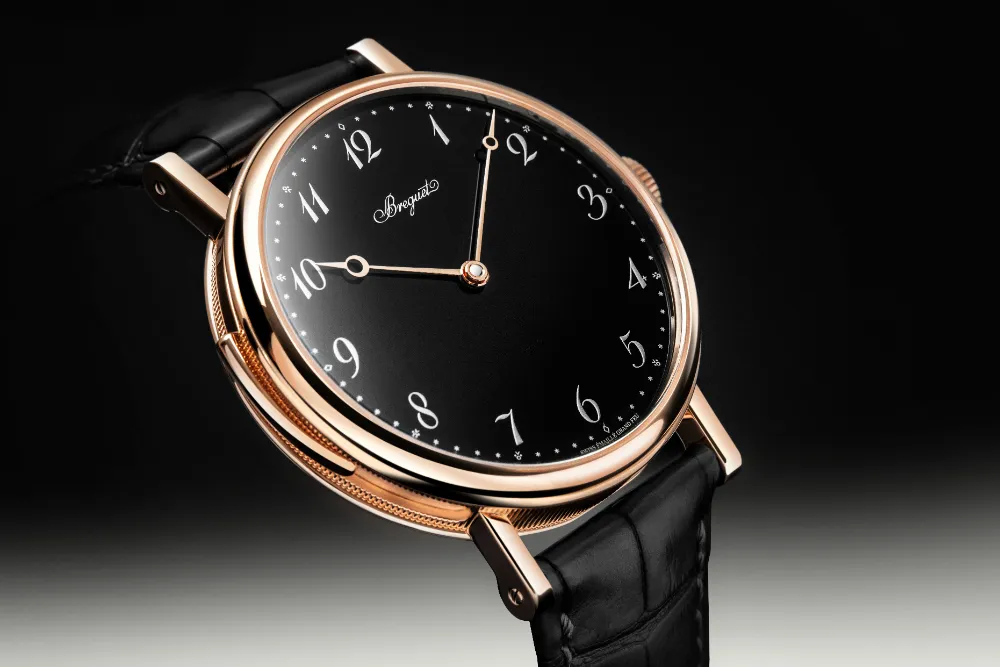
Breguet minute repeaters
Firms like Breguet that create exquisite watches makes one believe that, somehow, all is right with the world. That’s because the only reason you’d make one is, to paraphrase George Mallory, simply because you can. They make no sense from a time-telling point of view; not now there’s luminous paint, backlighting, tritium vials and a whole host of other ways to tell the time in the dark. You can even do what Breitling does with the Aerospace model and have your quartz movement bleep repeatedly at you with the push of the crown. But that’s not the point. The idea of making a mechanical repeater is to be the watchmaking equivalent of Lord Flashheart and simply say “Well, this isn’t a reasonable use of my time and resources, but I’m going to do it anyway.”

Breguet Classique 7637 Répétition Minutes – seemingly simple
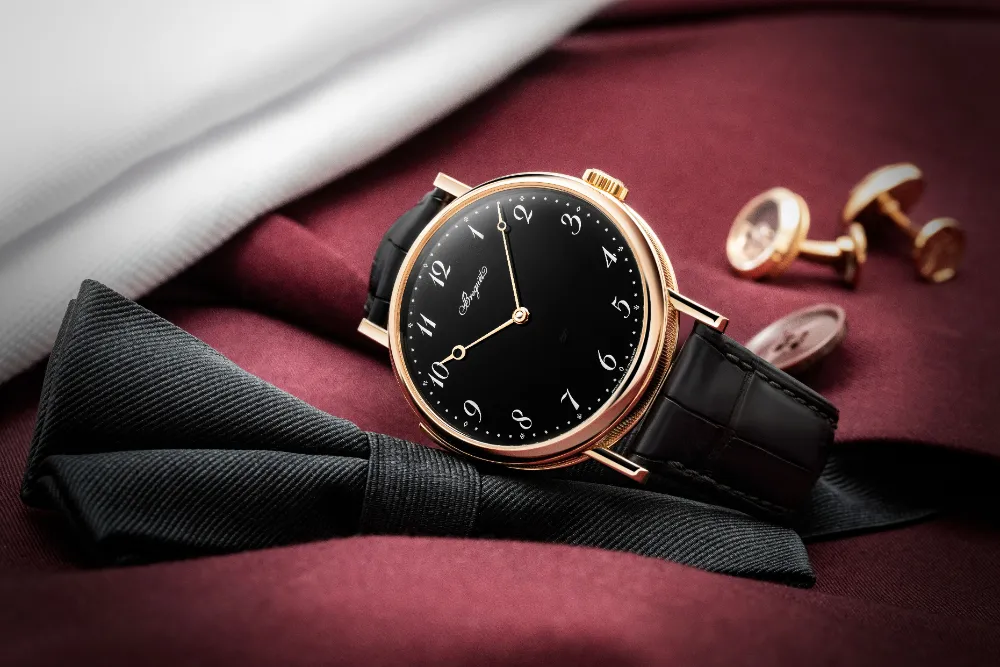
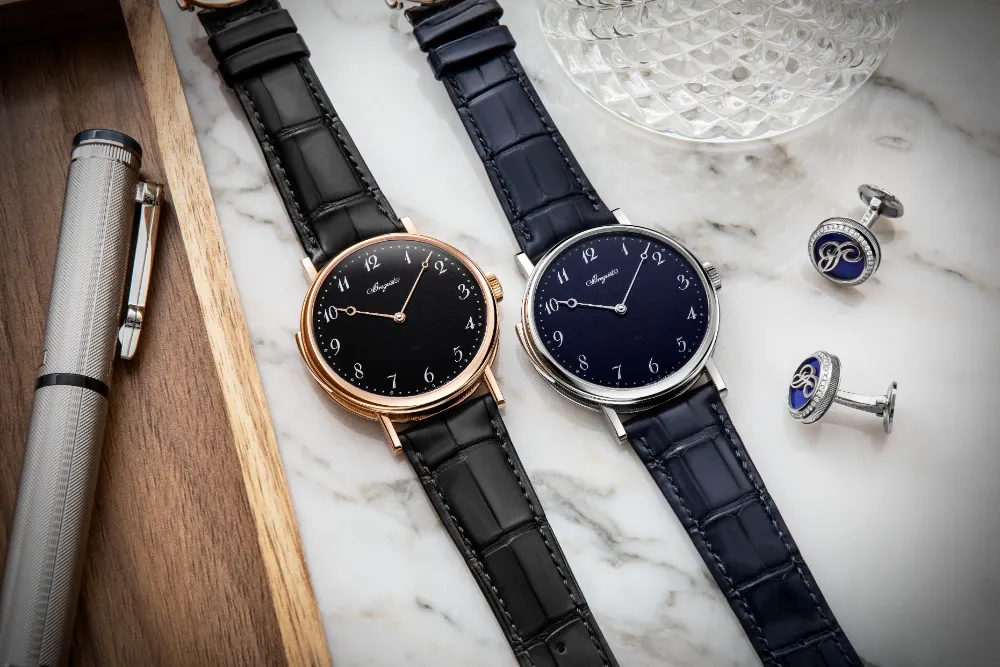
Making a minute repeater is like trying to get a tune out of two bent paper clips with the end of a hatpin. It’s the sort of project that would drive normally balanced and sane watchmakers to drink. Add in a grand feu enamel dial and you’ve got a recipe for ending up dribbling in a corner somewhere. But, that’s exactly what those nice Breguet people have done, not that you’d have any sense of all this horological cleverness and industry just from simply glancing at the 7637. A dial, that at first glance is plain as plain can be. A case that’s as unfussy and well-made as a Norman cathedral wall. You get an hour hand and a minute hand. And that’s your lot. At least, it is on the dial side.

Flip the watch over – the side that sits against your wrist, that hardly sees daylight – and things get positively baroque. Every facet and surface of the movement is so finely hand-engraved that you will need a loupe to fully appreciate every nuanced detail.
Adjacent to the dorsal glazing, there’s a wave pattern cut into the golden caseback. Even the hammers for the gongs are mirror-polished and feature gleaming bevels. There’s something wonderfully batty about decorating the bits you see least and leaving everything else so unornamented.
Breguet Classique 7637 Répétition Minutes – hands, indexes and secret signatures
That’s not to say the dial of the Classique 7637 lacks beauty. Far from it. What it lacks is fuss and frippery. The proportions and design of the Breguet numerals and hands contribute to its elegance, but it’s the subtle details that distinguish this watch as special.

There are three different types of hour and minute markers, all presented in powdered silver. Adjacent to the indexes at 3, 6, 9 and 12 o’clock, there are small diamond-shaped markings. The intervening hours are denoted with tiny marks resembling heraldic ermine, while minute stars indicate the minutes. But you won’t notice any of this with just a cursory glance; the detail only rewards those who spend the time looking at the dial, savouring each exquisite detail. With a design this simple you have to get every detail right, simply because there are so few of them. Changing the design of just the minute markers would affect the rest of the watch.

There’s the Breguet ‘secret’ signature just above 6. Abraham Louis etched it with a diamond-pointed pantagraph that enabled him to reduce his name to just a few millimetres on the enamel dial of any watch he made. People have often argued that he invented this to stop his watches from being faked. In fact, there’s a good argument that this ‘secret signature’ was relatively easily copied and certainly not secret. So why bother carefully etching it on the surface of each dial?
If one thinks of it as a tiny, perfect and exclusive logo, a symbol of the care, effort and detail he put into each watch, it makes more sense. And anyone who has thought of buying a Breguet will probably have been told about it. “See, my friend. No – look closer. You see it now? Isn’t that remarkable?” They’d become an initiate, a member of the Breguet club. Breguet understood the power of detail and symbols; this was a man who would even round the top surface of a balance wheel to make it appear visually more appealing.
Breguet Classique 7637 Répétition Minutes – grand feu enamel dial
And that enamel dial is the star of the show – at least as far as the front of the watch is concerned. The process of making a dial like this is enough to reduce grown craftspeople to tears. In essence, you’re taking a small metal disc and applying micron-thin layers of glass to it. The more layers, the more physical depth you produce and, by default, the greater the allure you create.
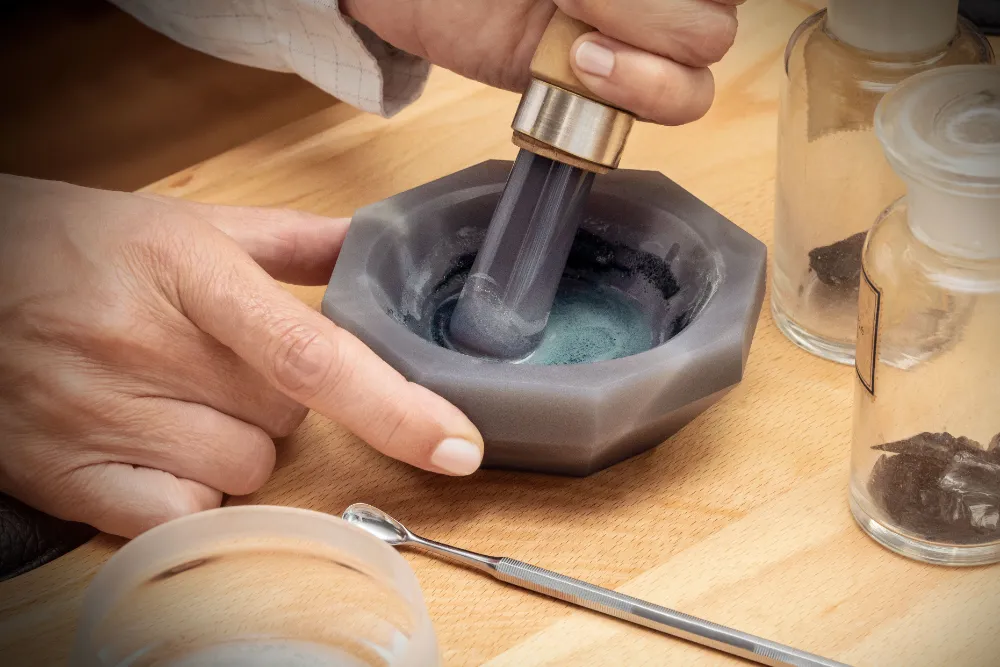
Start by taking a mixture of silica and ground oxides, and dissolve it (technically it’s a suspension, but it’s only me being fussy) in water. Then apply them to the dial. Remember – the surface needs to be flat and perfect. Once you’ve thrown several dials across the workshop because they’re not right, you’ll have one that is. Now you need to fire it at 800°C and hope the dial doesn’t warp and the enamel doesn’t bubble or crack. The liquid carrier evaporates and the enamel powder melts and binds to the dial surface (you hope – a single speck of dust can ruin the process), then solidifies once it cools.
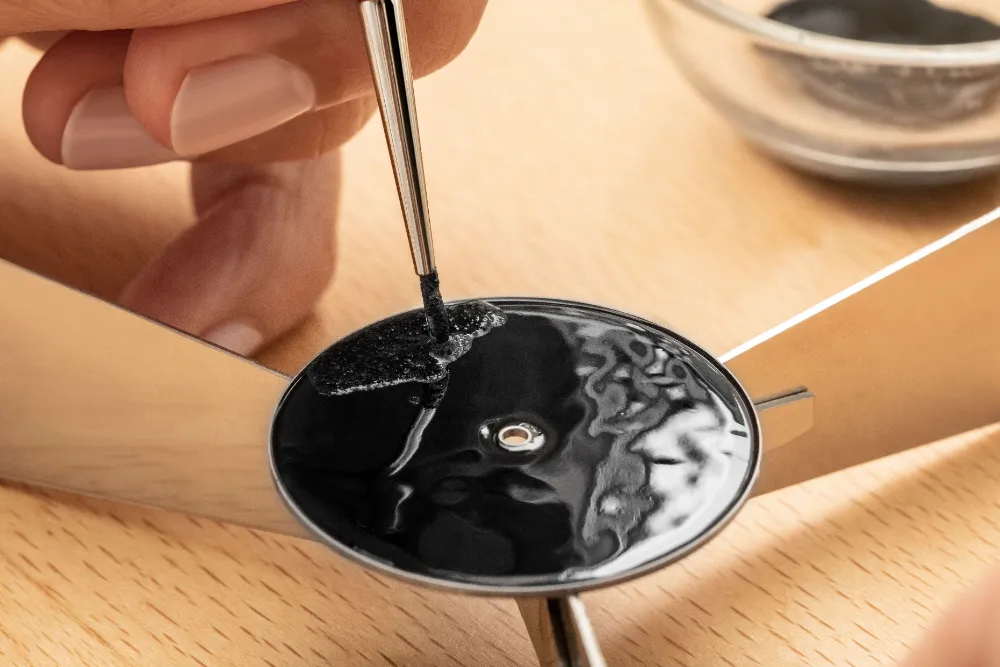
If the enamelling gods are smiling down on you that day, you’ll have completed the first step towards making a Grand Feu dial. Now do it all again with the second layer of enamel. The more layers you apply, the more depth and beauty you impart to the dial but also the more likely you are to get a fault and to have to start again.
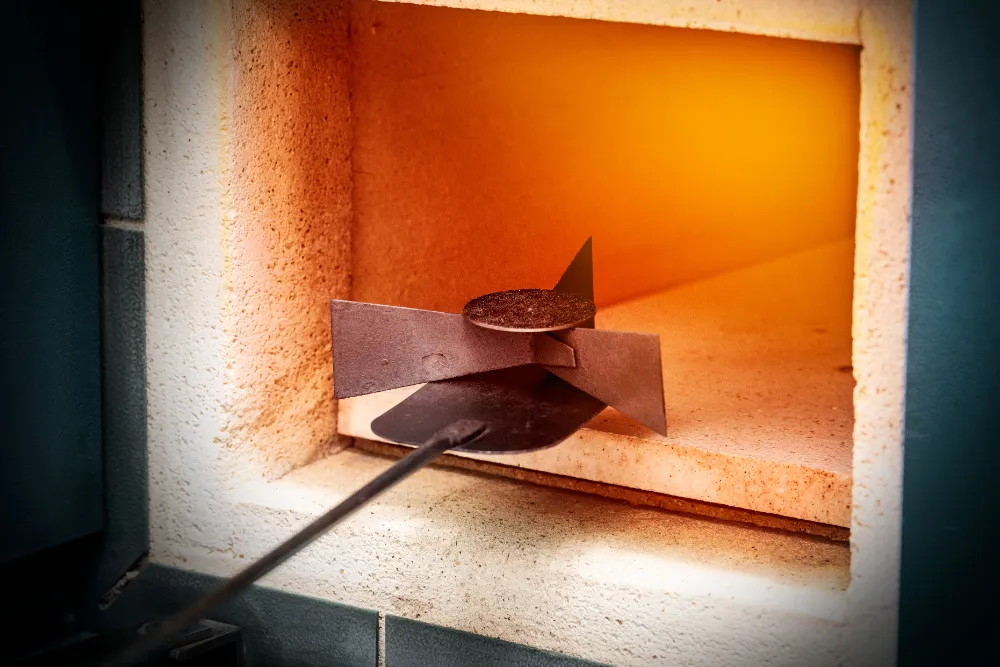
Breguet says, with some measure of understatement, ‘it can take several weeks to produce a single dial in the desired shade’. I suspect a lot of that time involves dialmakers saying, ‘stuff this for a lark, I’m going out for a coffee’ and crying into their espresso before returning and starting again.
Breguet Classique 7637 Répétition Minutes – case, gongs and hammers
The 18ct gold, 42 mm case is just 12.2 mm high and everything is very Breguet – straight, club lugs with screwed-in bars (the strap bars are retained by a single screw on the reverse of the lug), coin-edged sides and a polished bezel. The only irregularity is the repeater action lever opposite the crown. Go on – give it a push. Well, a slide, really.

Once you’ve gently slid the lever (which works against a spring set into the edge of the movement), you set a geartrain in motion that fires the two gold, shark-fin hammers into action. These have only a couple of millimetres to move on their pivots to strike the movement’s two gongs.

The gongs themselves are a gold alloy. Now there’s a challenge in itself. If you’re wearing a gold ring, give it a tap with your pen. You’ll notice two things. Firstly, it’s not exactly tuneful, is it? Gold tends to go ‘thud’ rather than ring. And secondly, it’s quiet. To get a sound that carries you’ll need an amplifier; and one that’ll fit within just 12.2 mm of headroom. Time for more espresso – that’s a lot of watchmaking to pack into a small space.
To improve the acoustic properties of the metal, Breguet uses a gold alloy formed into two tiny wire gongs of different lengths that wind around the movement. They’re fixed at one end into a solid, heavy square gold block with the other end free to resonate. The block is screwed to the case middle rather than the movement plate – and there’s your perfect amplifier; a hollow gold box. Think of it like a guitar, with the gongs as strings, the gold block as the bridge and the case as the instrument’s amplifying body.
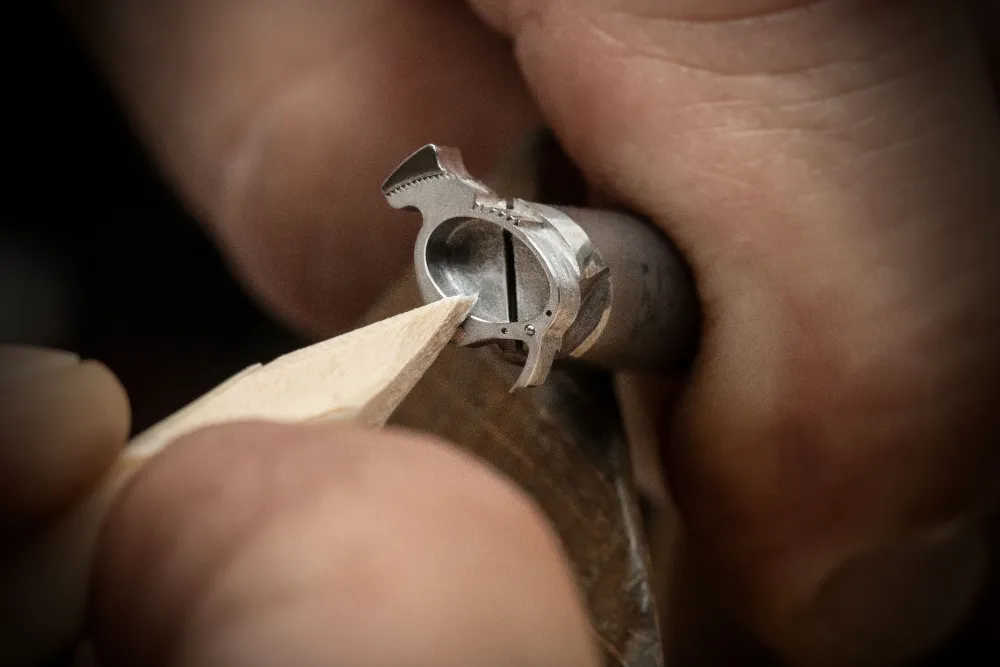
Breguet explains the final level of cleverness. “Since the case is also made of gold, the components share the same acoustic impedance, thus providing better sound transmission and performance – a feature that has been duly patented.”
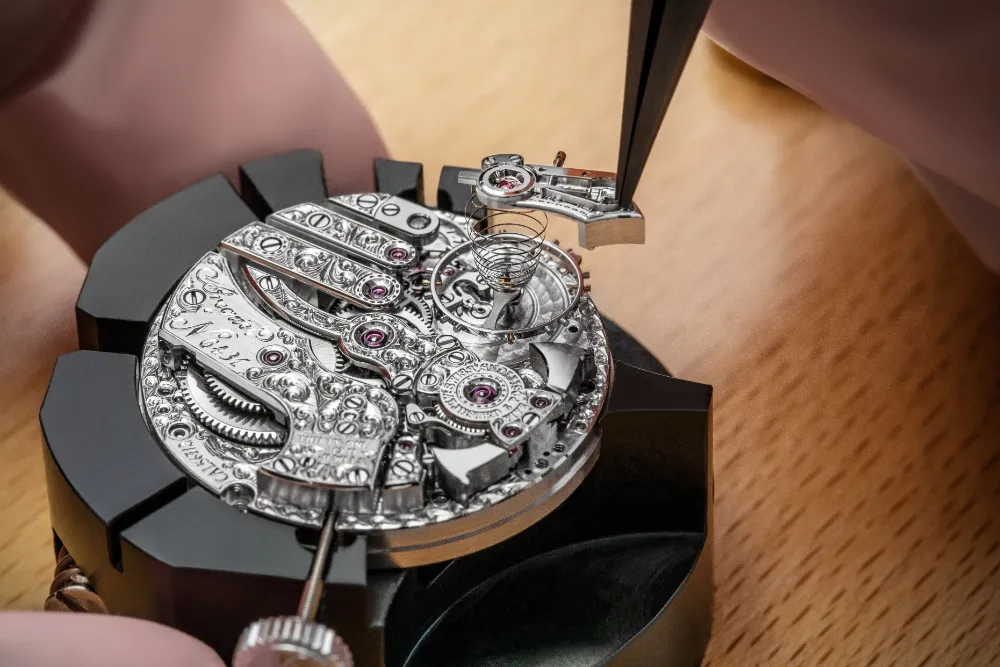
Once the watchmaker has fitted the gongs to the movement, you’d think it was time to close the (sapphire) caseback and go for a very well-earned beer. But no, you can’t just whack the repeater parts in and leave them. They need tuning and refining. So the watchmaker takes the movement to a soundproof chamber to have a listen. They’ll tune the gongs by using a pair of metal snips to cut a fraction from the end of a gong or a file to remove even less metal. Just imagine that – file a bit too much and it’s back to the start. Making a Classique 7637 is so perilous that it’s more like bomb disposal than watchmaking.

Breguet Classique 7637 Répétition Minutes – Calibre 567.2
The movement doing the work of firing off the hammers and telling the time is the Calibre 567.2, an evolution of an earlier repeater engine. It comprises 358 parts running at 2.5Hz for 40 hours. The numbers don’t really tell the story though – just look at the pictures. You can find the same movement in several other watches from the firm in various states of tune (the watchmaking sort rather than the musical variety).

Breguet Classique 7637 Répétition Minutes – closing thoughts
Step back and have a look. Yes, it’s clearly a Breguet, but it’s as understated as a Swaine Adeney Brigg briefcase. You could wear this anywhere without anyone even spotting what you had on your wrist. Yes, a proper horophile will know exactly what you have, but to anyone else it’s a plain, elegant dress watch.
Then there’s the price. A few years ago a pal of mine was fortunate enough to get a tour around Rolls-Royce’s Goodwood works. He learned how each car’s woodwork uses matching veneers not just from the same tree, but from the same burr walnut log – with the remainder kept in careful storage in case of later accident damage. They told him how only 15 cars a day are put together by hand. He started the day thinking £240,000 for a car was close to insanity. He ended it wondering how on earth the firm managed to produce cars that were such good value.
You’ll need £226,900 to snag yourself a Breguet Classique 7637 and yes, it’s an almost insane amount of money for a watch (although in the rarified world of Haute Horlogerie it’s far from stratospheric). But if you’d just sold your business or your lottery numbers had stacked up you would, wouldn’t you?
Further reading
Technical specifications
- Model: Breguet Classique 7637 Répétition Minutes
- Reference: 7637BR/2N/9ZU
- Case: 18k rose gold, diameter 42 mm; height 12.25 mm, sapphire crystal to the front and exhibition case back.
- Functions: Hours, minutes, minute repeater
- Movement: Calibre 567.2, hand-wound movement; frequency 18,000 vph (2.5 Hz); power reserve 40 hours, 358 components.
- Strap: alligator leather strap with gold triple-blade folding clasp.
- Price: £226,900 (RRP as of 19.9.2023)