
De Bethune DB Kind of Two Tourbillon Watch Review
Compared to its siblings, the De Bethune DB Kind of Two Tourbillon may at first seem simple, however, nothing could be further from the truth. The watch is equipped with a swivel-type case which allows the wearer to switch between two different displays depending on their prevailing mood. Each display features its own unique topography, with the seconds located off-centre on one display and centrally positioned on the other. The specification includes other technical highlights, fine finishing and breathtaking aesthetics.

De Bethune watch
The independent Swiss watch brand, De Bethune, was founded in 2002. It has since gained a reputation for making neoteric timepieces, rich in style and finished to the highest standard. Furthermore, the company has always been a pioneer, researching fresh ideas and patenting new inventions.
De Bethune invented a ‘self-regulating twin barrel’, delivering a 5-day power reserve back in 2004. It also patented a titanium balance wheel with white gold weights, used to adjust the moment of inertia and, by default the rate (2016). The design and composition of this balance wheel gave due consideration to aerodynamics and variations in temperature.
In 2006, the brand patented its own balance spring fitted with a terminal curve, a feature intended to augment isochronism. Two years later (2008) the Swiss firm invented its ‘Ultra-light De Bethune 30″ tourbillon in titanium’. By having a reduced mass, the tourbillon consumes less energy.
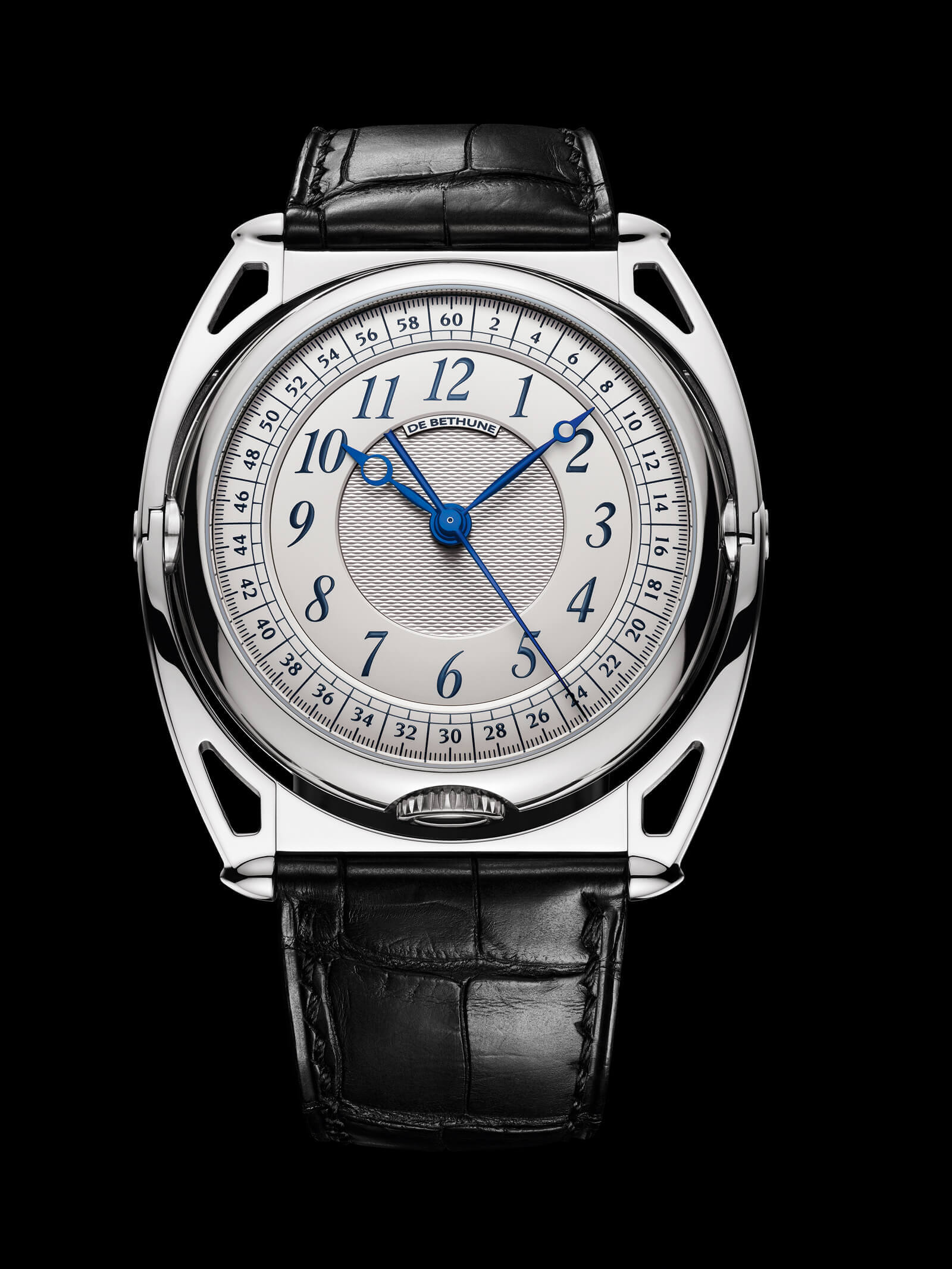
De Bethune DB Kind of Two Tourbillon
The luxury marque’s latest creation, De Bethune DB Kind of Two Tourbillon, features a silicon escape wheel and high-frequency balance (5Hz). However, these latter details have featured on several of the brand’s earlier models. Where this new model stands out is that it features two displays.
At first, this may not sound remarkable. After all, other brands have made watches endowed with two dials but often equipped with two movements. Those watches with one movement and equipped with two dials typically position the indications in the same place. This two dial set up merely necessitates reversing the direction of the hour wheel for the second display.
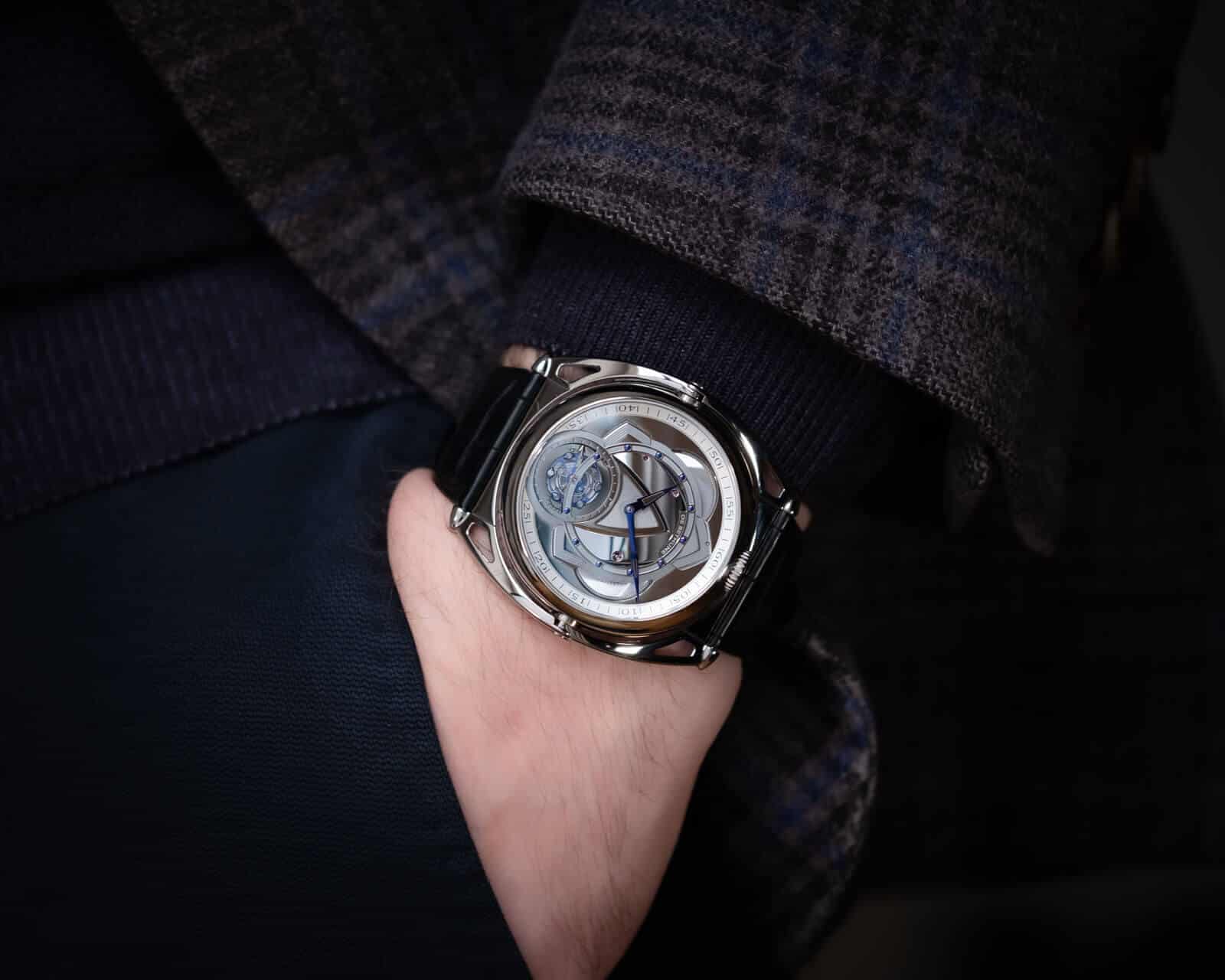
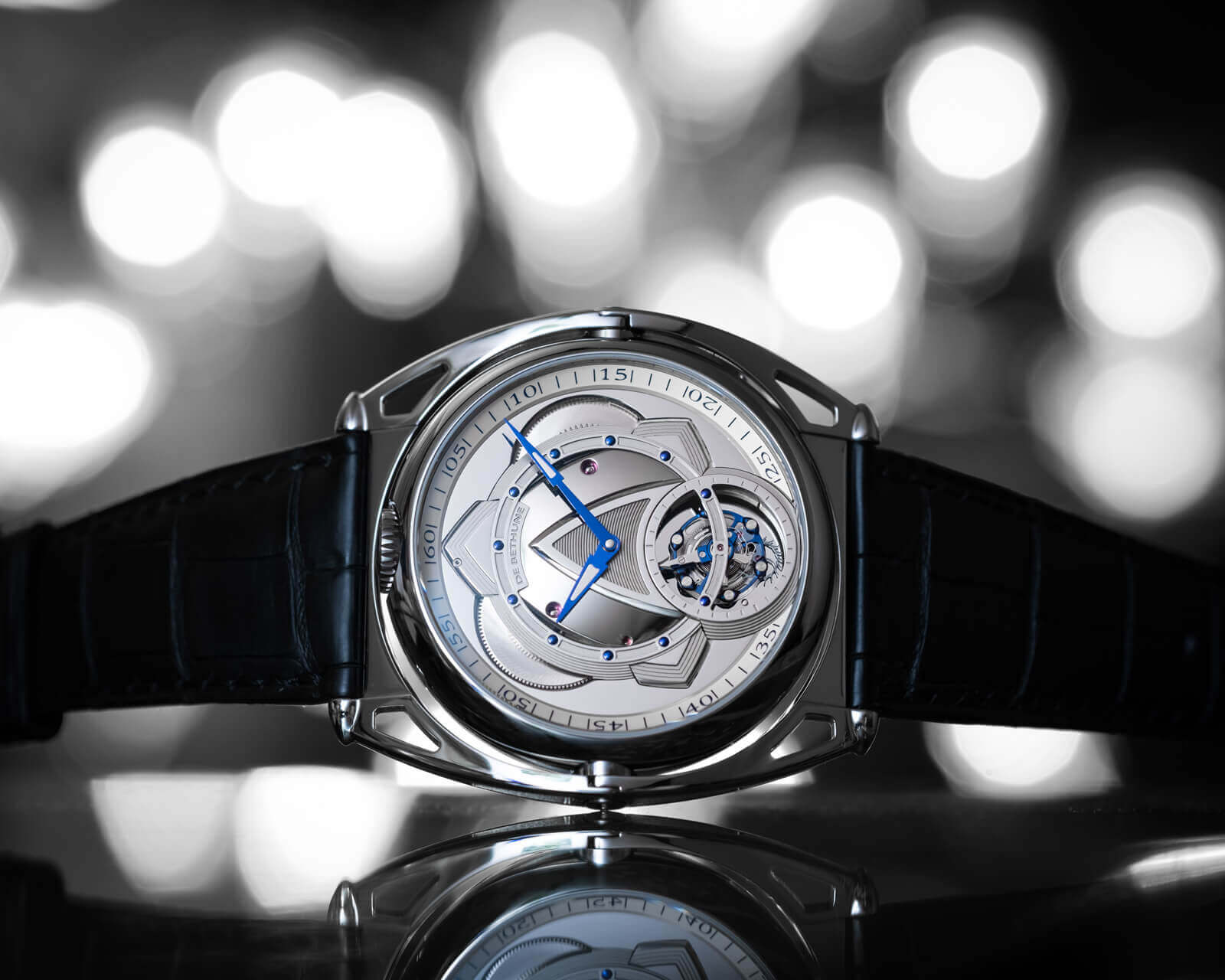
The De Bethune DB Kind of Two Tourbillon is incredibly complicated. The ‘contemporary’ display features hand-polished and blued titanium hands for hours and minutes, with a 30-second tourbillon positioned at 6 o’clock. By swivelling the case middle over, the ‘classic’ display is revealed. The hour, minute and central sweep seconds are centrally located. The off-centre 30-second hand featured on the contemporary display is supplanted by the central sweep seconds hand found on the classic display, which makes one rotation every 60 seconds. Rest assured, the complexity of this model cannot be overstated.
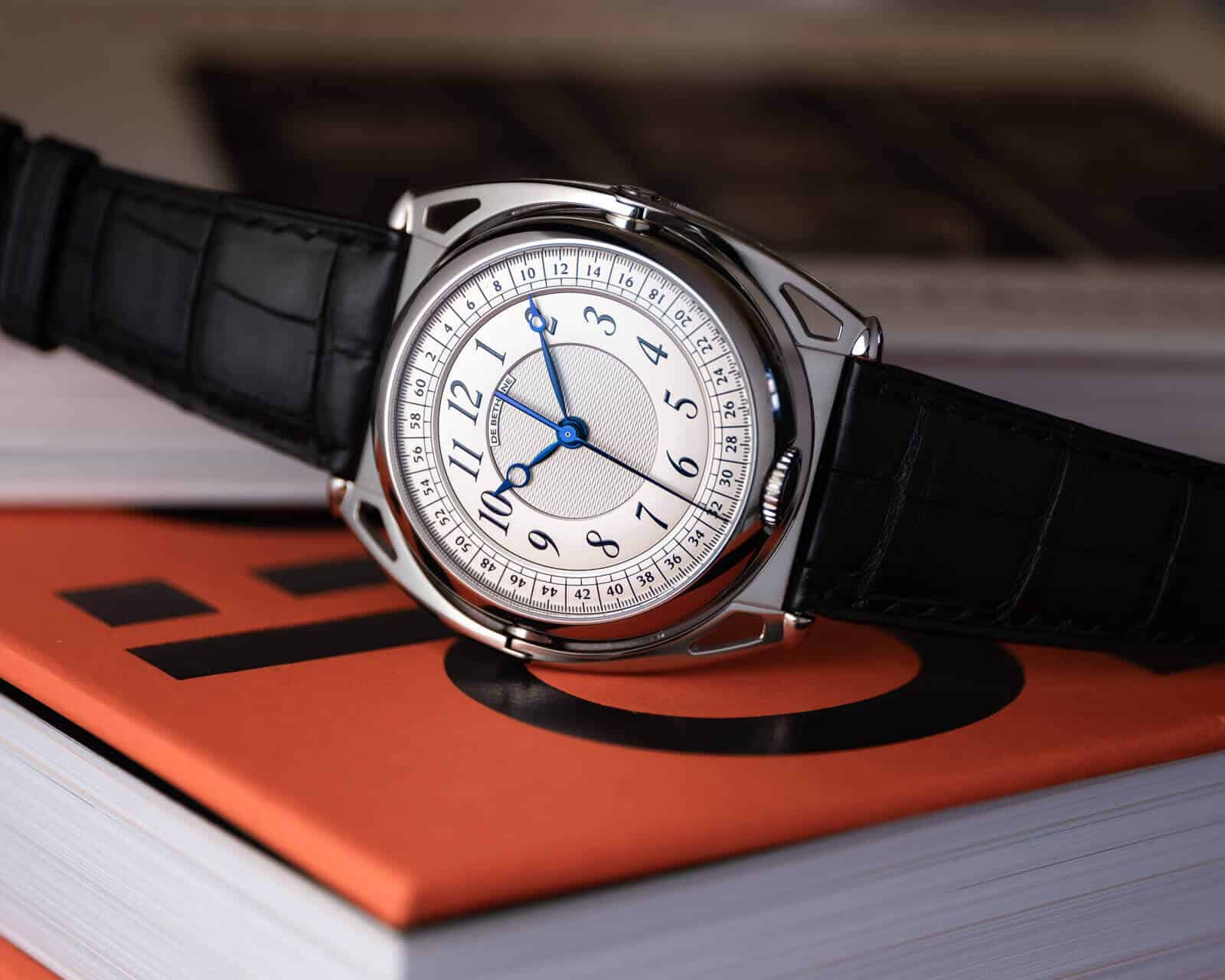
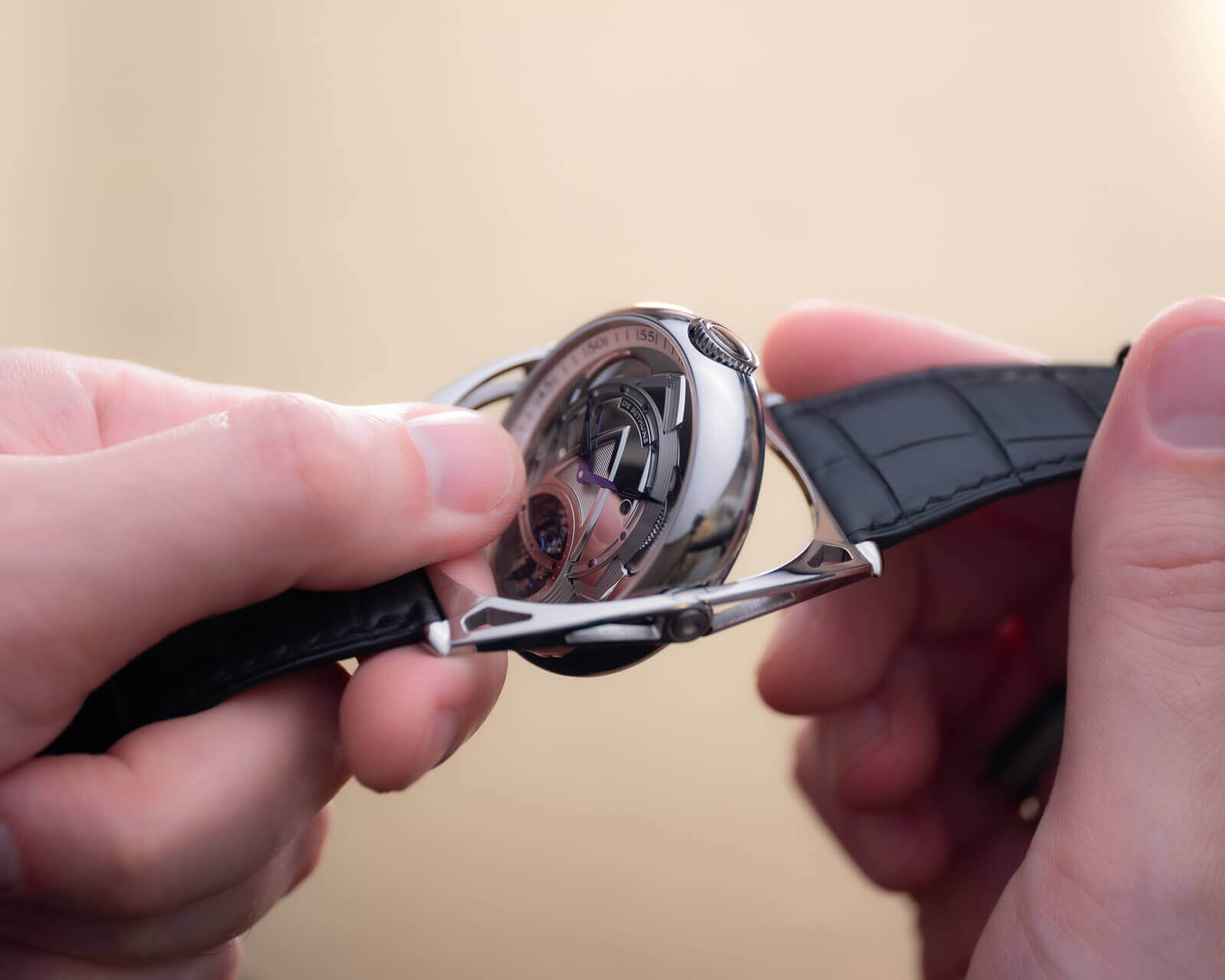
As well as featuring a swivelling case middle, allowing the wearer to switch between one display and another, the DB Kind of Two Tourbillon also incorporates the brand’s tried and trusted floating lugs. This latter invention entices the strap to mould to the shape of the wrist. Furthermore, the system is dynamic, hence it sympathetically moves with natural wrist movements.
Finally, there is the matter of styling and finishing. De Bethune has endowed the contemporary display with its highly original deltoid-shaped bridge. Both displays feature thermally blued hands, yet another speciality of the house, and the Grade 5 titanium case is mirror polished to a gleaming conclusion. In terms of finishing, numerous movement components are hand-polished, chamfered, snailed or shot-blasted. While this is an overtly modern creation, it employs traditional finishing techniques and it is distilled to a peerless standard.
De Bethune DB Kind of Two Tourbillon – the brand’s press release (January 2021)
Double-sided watches are not a recent invention. For more than two centuries, these singular mechanisms have been born at the hands of erudite watchmakers, open to the new ideas of the Age of Enlightenment and often inspired by astronomy, the decorative arts as well as mechanical engineering.
With horologists increasingly driven by the temptation to develop ever more complicated models, double-sided cases became increasingly prevalent, a solution enabling their creators to express the full scope of their aesthetic and technical expertise by making it possible to display a greater number of functions.
The history of horology has been punctuated by certain major accomplishments in this respect. Already during the Renaissance, tower clocks – the most famous of which is located in Venice – had several faces. A little later, certain table clocks with their vertical, four-faceted dials also displayed several identities within a single object. This was followed by pocket watches also featuring two dials, the best-known being the Leroy 01 by Louis Leroy – presented in 1900 and winner of the Grand Prix at the Paris World Fair – which long remained the most complicated watch ever created.
A contemporary take on the double-sided watch
Double-sided watches hold a special place in the realm of highly complicated watches. Beneath the apparent simplicity of this timepiece, De Bethune has clearly not taken the easiest path with this model involving two dials that embody a real watchmaking challenge. Views from back and front reveal an authentic transformation.

This was an idea that had been taking shape for many years in the mind of Denis Flageollet, who was convinced that it would offer him an unprecedented field of research and the opportunity to provide a different, contemporary interpretation. Just as with the invention of his silicon balance and balance-spring, as well as the famous floating lugs, it would enable him to make another contribution to the advancement of horology.
Two very different faces, both aesthetically and technically
The DB Kind of Two Tourbillon is perfectly reversible and can be worn on either side according to the mood of the moment. This model houses a highly sophisticated mechanism based on a complex system of gears and pinions arranged on the front or back of the watch, and which enables the hands to turn in the right direction, regardless of the dial chosen.
Central seconds on one side? Shift the display of this indication to 6 o’clock on the other? Add a tourbillon that would be invisible on the other side? Opt for a modern or more traditional design? The initial inspiration was to create a watch with two very different identities, of which the aesthetic aspect guided the technical design of the new calibre entirely developed by Manufacture De Bethune at L’Auberson in the Swiss Jura.
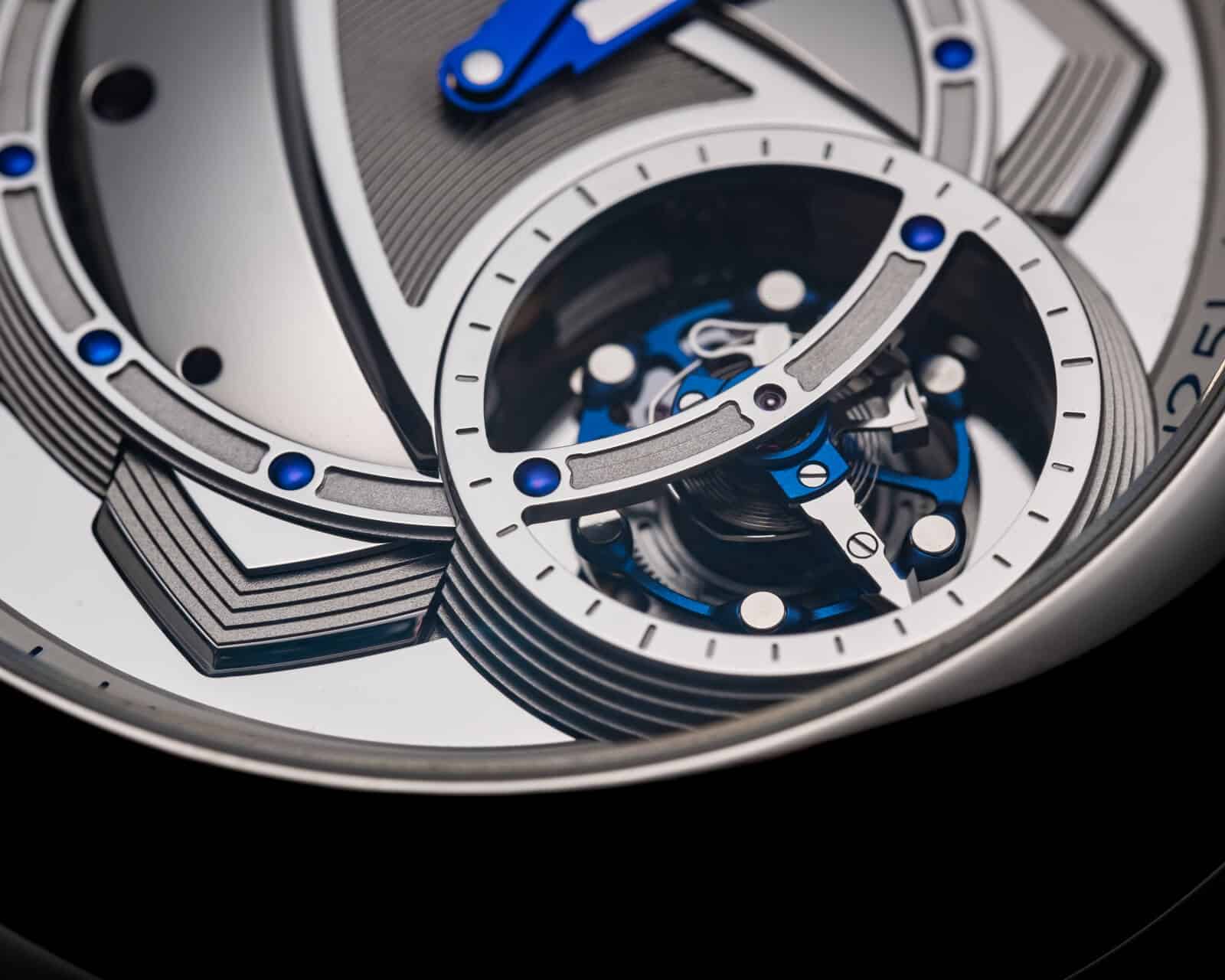
The front side of the DB Kind of Two Tourbillon displays a dial featuring a sleek, contemporary design, with central hours and minutes hands as well as a tourbillon at 6 o’clock, complete with a 30-second indication. Extensive work has been done on integrating polished, curved shapes, matt or glossy components, different thicknesses and levels, thereby creating a sensation of ample space and optimal volume, given the minimum height available for a tourbillon watch. A new type of deltoid-shaped bridge – this time perfectly symmetrical – is positioned in the centre, like an isosceles triangle that contributes to the overall sense of harmony.
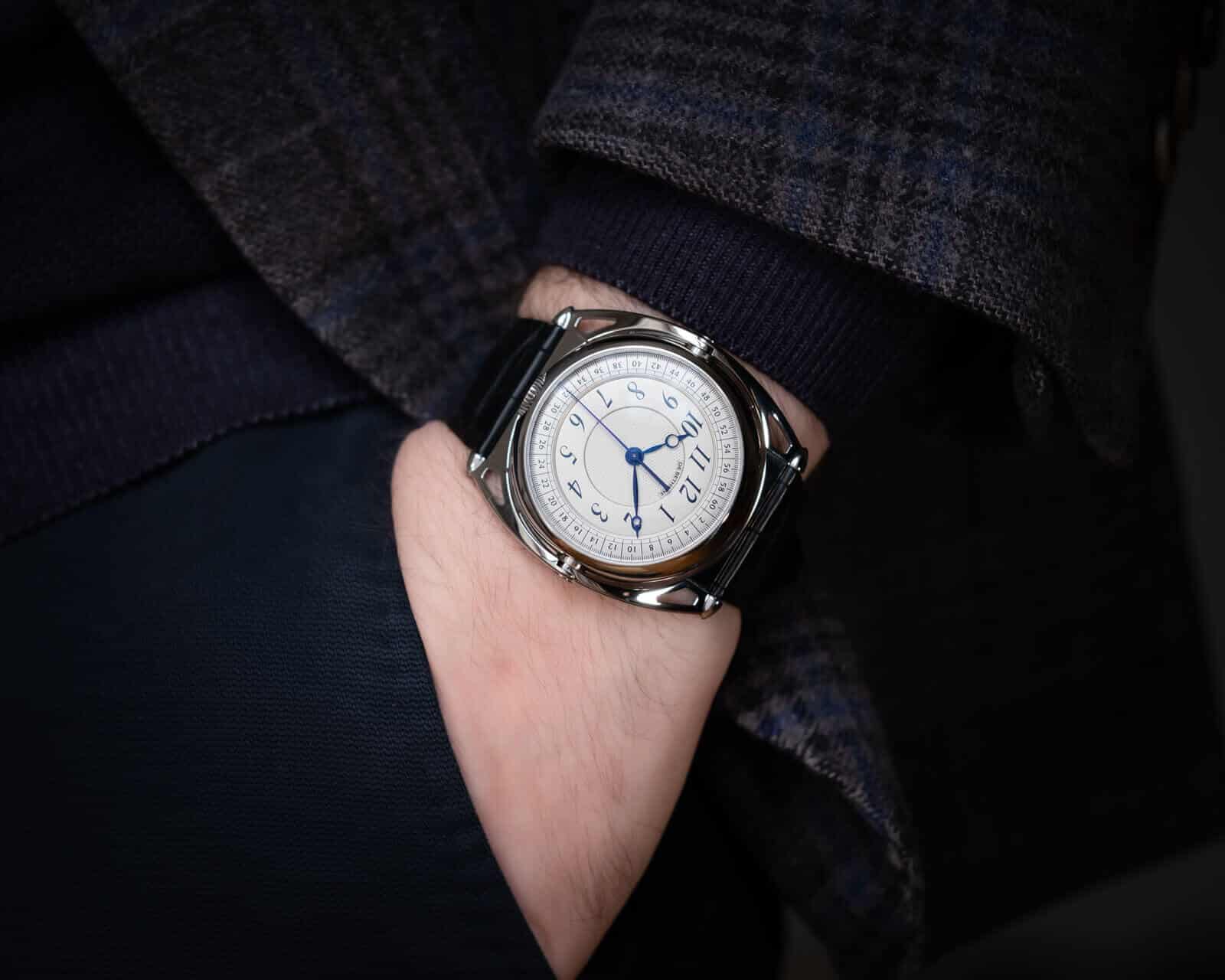
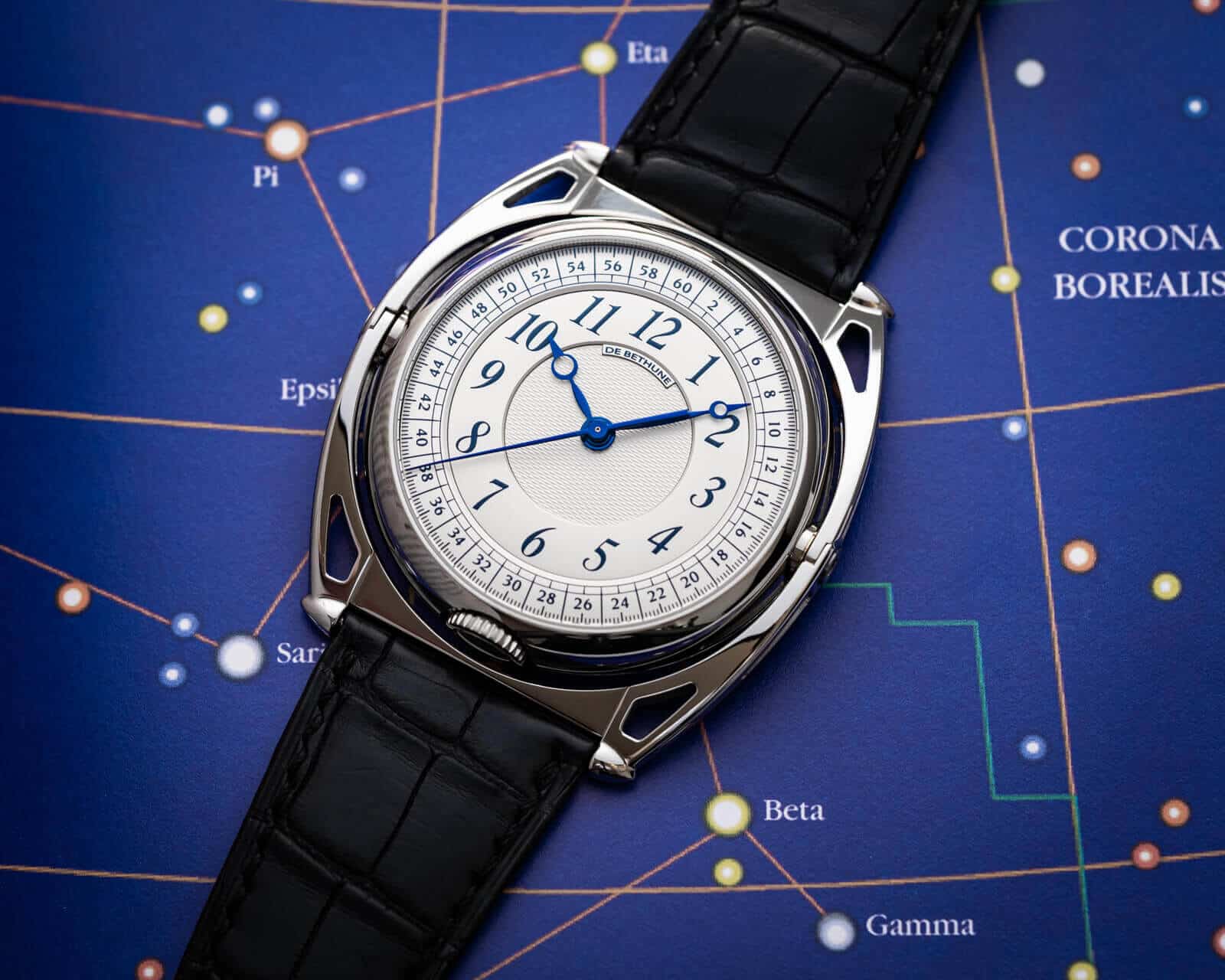
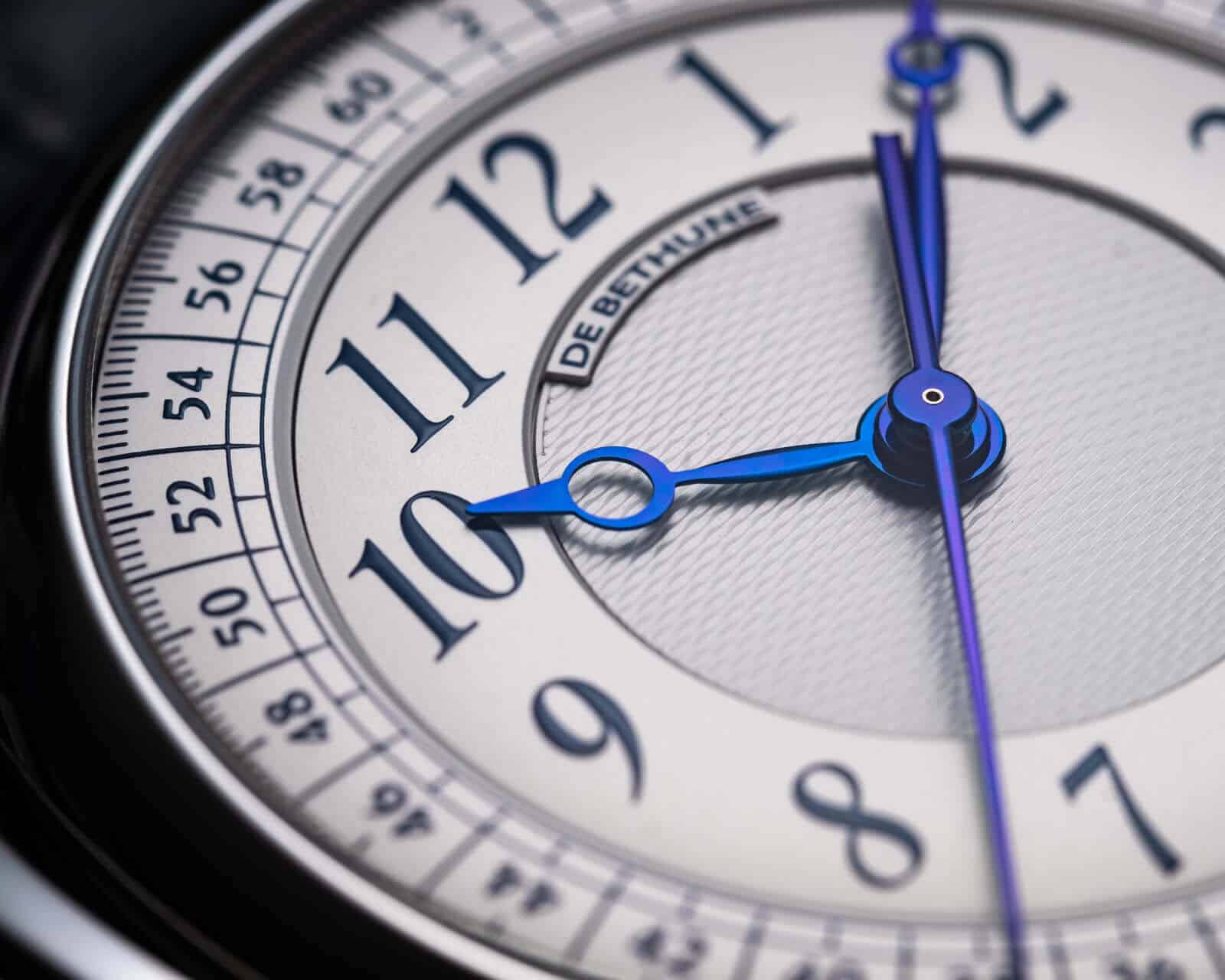
The other side reveals a dial based on more traditional aesthetic inspiration, with a finely hand-guilloché central part surrounded by the numerals already featured on the dials of De Bethune models such as the DB8 and DB10. The tourbillon with its seconds has vanished, and on this face the hours, minutes and more surprisingly the seconds hands are all centrally positioned. This represents an extremely subtle technical challenge that is not necessarily perceptible at first glance, and therein lies the elegance of this timepiece.
Floating lugs playing their role to the full
Every detail has been taken into consideration. Easy to use, yet highly complex, the system of floating lugs lends itself particularly well to the “pivoting” of the case.
Redesigned for the occasion, these elements have been equipped on each side with an ingenious little rotating mechanism made up of 28 components. For reliability purposes, they are manufactured in stainless materials such as surgical steel or titanium, thus enabling them to withstand the external aggressions of water, humidity, temperature variations and continuous contact with the skin.
Thanks to a cam, a small “notch” allows the watch case to be instinctively and perfectly positioned in line with the floating lugs. The round case rotates on its central axis and can be positioned, front or back, in a delightfully easy, smooth and entirely natural way.
The DB29, a case middle inherently suited to a swivel watch
Finally, the DB29’s case middle quickly became a key element in the pivoting case project developed by De Bethune. Its perfectly symmetrical shape offers a beautiful balance with the floating lugs and its elegant crown totally integrated at 12 o’clock (or 6 o’clock depending on the side chosen). It thus swivels naturally and the circumference principle is patently obvious, offering a true understanding of the object.
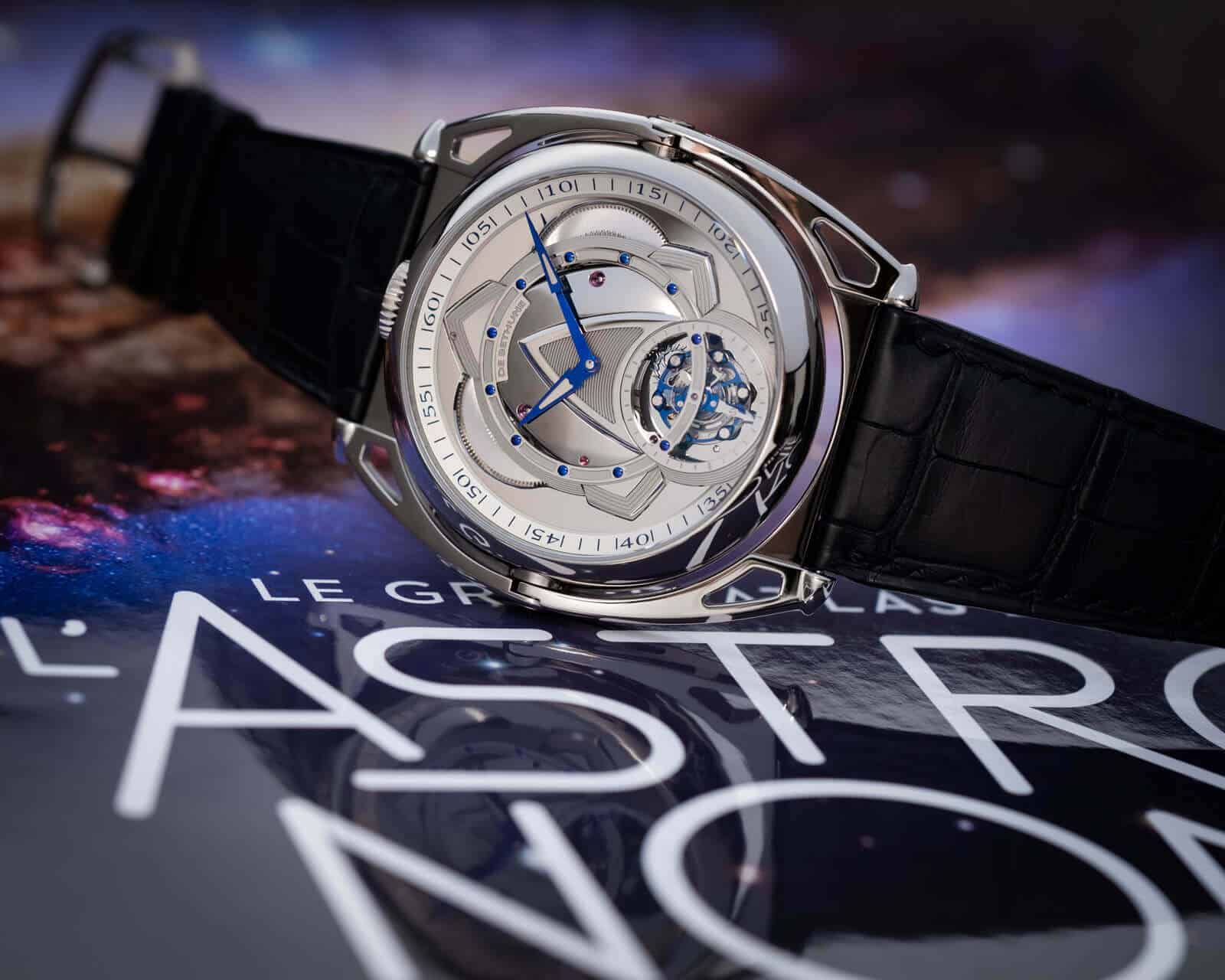
All in all, with its elegant design, the combination of contemporary mechanics with a more traditional face, as well as the meticulous care devoted to details, legibility and comfort, the DB Kind of Two Tourbillon perfectly illustrates one of the great principles of the Manufacture De Bethune: reinterpreting grand traditions with a contemporary vision of the horological object, thereby opening up a new field of expression that is refined and sophisticated while preserving user-friendliness and simple read-off. A work of art with two faces, whose timeless beauty reflects mechanical and aesthetic perfection.