
F.P.Journe Chronomètre À Résonance Souscription No.7 in-depth feature
Recently, the F.P.Journe Chronomètre À Résonance Souscription No.7 was sold at Phillips, New York, fetching the remarkable sum of $13,922,000. However, there is a bigger story beyond this headline-grabbing figure. It’s a remarkable account of brilliant minds who observed and questioned, experimented and discovered, and most importantly, invented and made. This is the story of resonance told by Angus Davies.
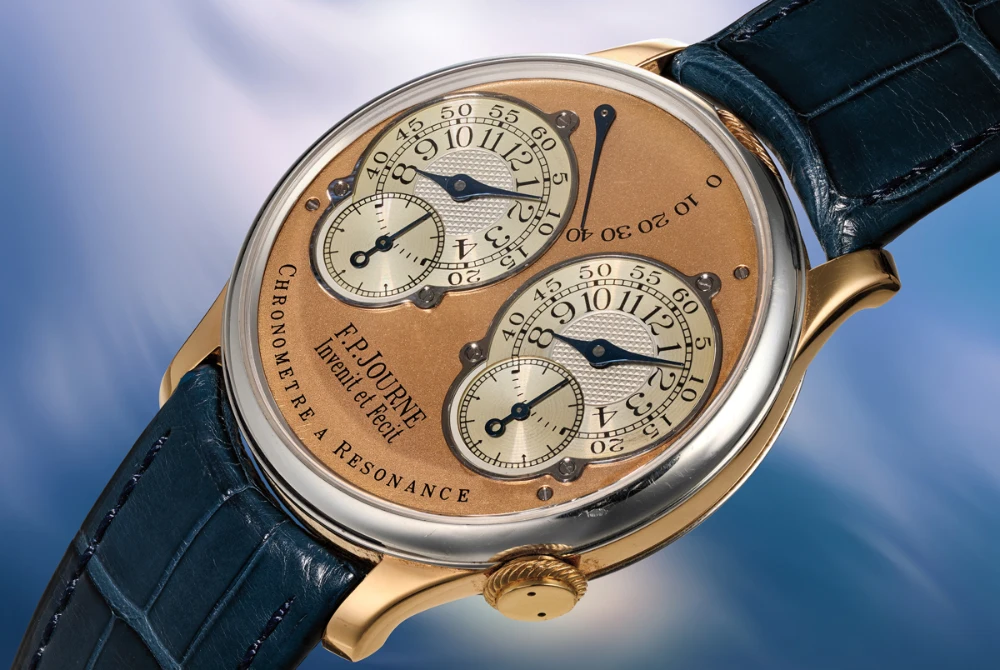
Image – F.P.Journe Chronomètre À Résonance Souscription No.7 (credit: Phillips)
Christiaan Huygens (1629-1695)
The story of resonance can be traced back to the multi-talented Christiaan Huygens. An astronomer, mathematician and physicist, Huygens was born in The Hague. He was the son of Constantijn Huygens, a wealthy diplomat who regularly corresponded with intellectual figures of the day, including René Descartes, the so-called ‘father of modern philosophy’. Meeting such remarkable individuals in his early years would certainly have made an impression on the young Christiaan.
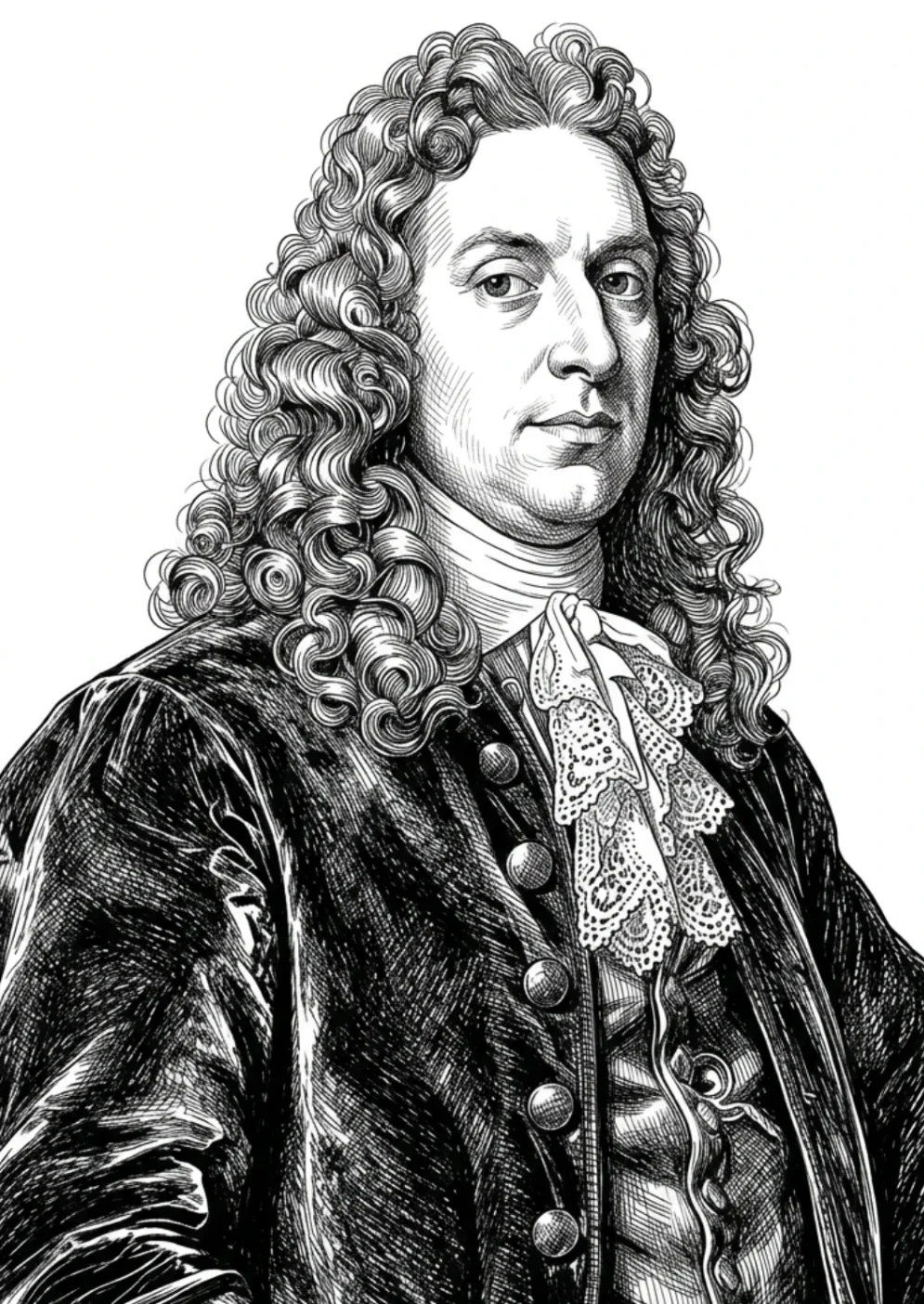
Christiaan Huygens was blessed with an enquiring mind, possessed a talent for drawing and had an aptitude for mathematics. He studied geometry, gravity and the laws of centrifugal force; however, for most horophiles, the invention of the pendulum clock in 1656 will remain his most important achievement.
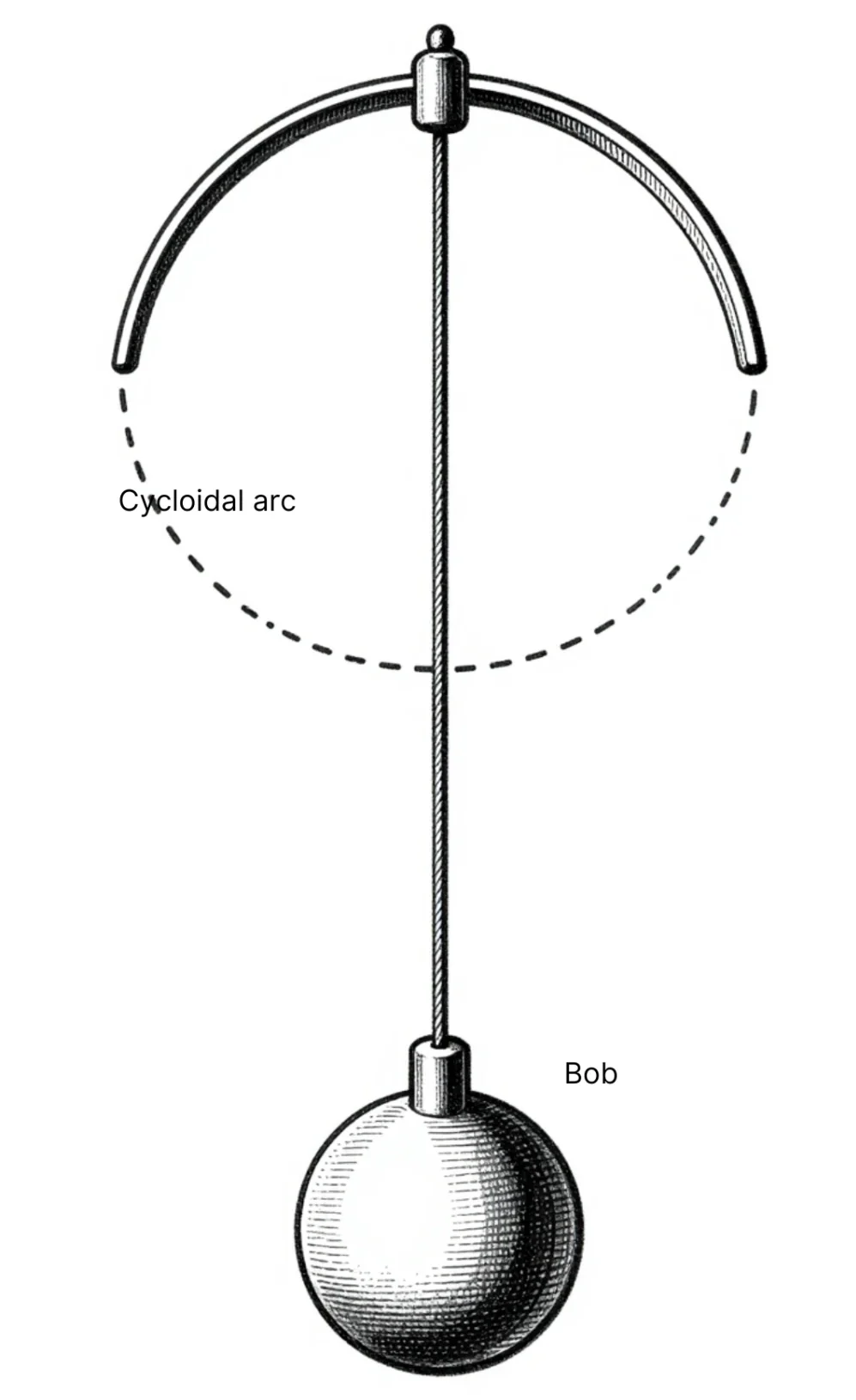
If we consider a mass (or bob) attached to a wire, swinging back and forth along the arc of a cycloid, the period of oscillation remains constant, irrespective of the amplitude (provided it does not stray from the cycloid curve). This constant period of vibration is termed ‘isochronism’. The rate of the swing is determined by the length of the wire. For instance, lengthening the wire will increase the period of oscillation. Termed a ‘harmonic oscillator’, Huygens used a pendulum in conjunction with a verge (crown wheel) escapement to deliver, for the era, an unprecedented degree of precision.
Huygens’s life was blighted by ill-health. Indeed, he is reported to have suffered from migraines, recurrent fevers and depression. In 1665, the Dutch inventor was lying in bed and aimlessly looking at two identical pendulum clocks, suspended from a common beam. He noticed that, irrespective of their starting positions, they began to move in sympathy with one another; same period, same amplitude but moving in opposite directions. The scientific phenomenon he witnessed is now referred to as resonance. Huygens concluded that infinitesimal vibrations through the beam were the reason for the pendulums moving in sympathy. However, the Dutch inventor never created a resonance clock or pocket watch.
Antide Janvier (1751-1835)
Antide Janvier was born near Saint-Claude in eastern France. The son of clockmaker Claude Etienne Janvier, Antide showed a talent for clockmaking from a young age. By the time he was 15, he was already working on a ‘planetary’, a complex clockwork model of the planetary system (aka an ‘orrery’). Later, this form of clockwork model would become a speciality of Antide Janvier. He went on to establish a clockmaking business in Paris and, in 1783, became ‘Horloger mécanicien de Monsieur frère du Roi’, (Clockmaker and mechanic to the King’s brother) – the future Louis XVIII. The following year (1784), Louis XVI acquired two planetaries from Janvier which also led to Antide becoming ‘Horloger Mécanicien du Roi‘ (the King’s Clockmaker and Mechanic).
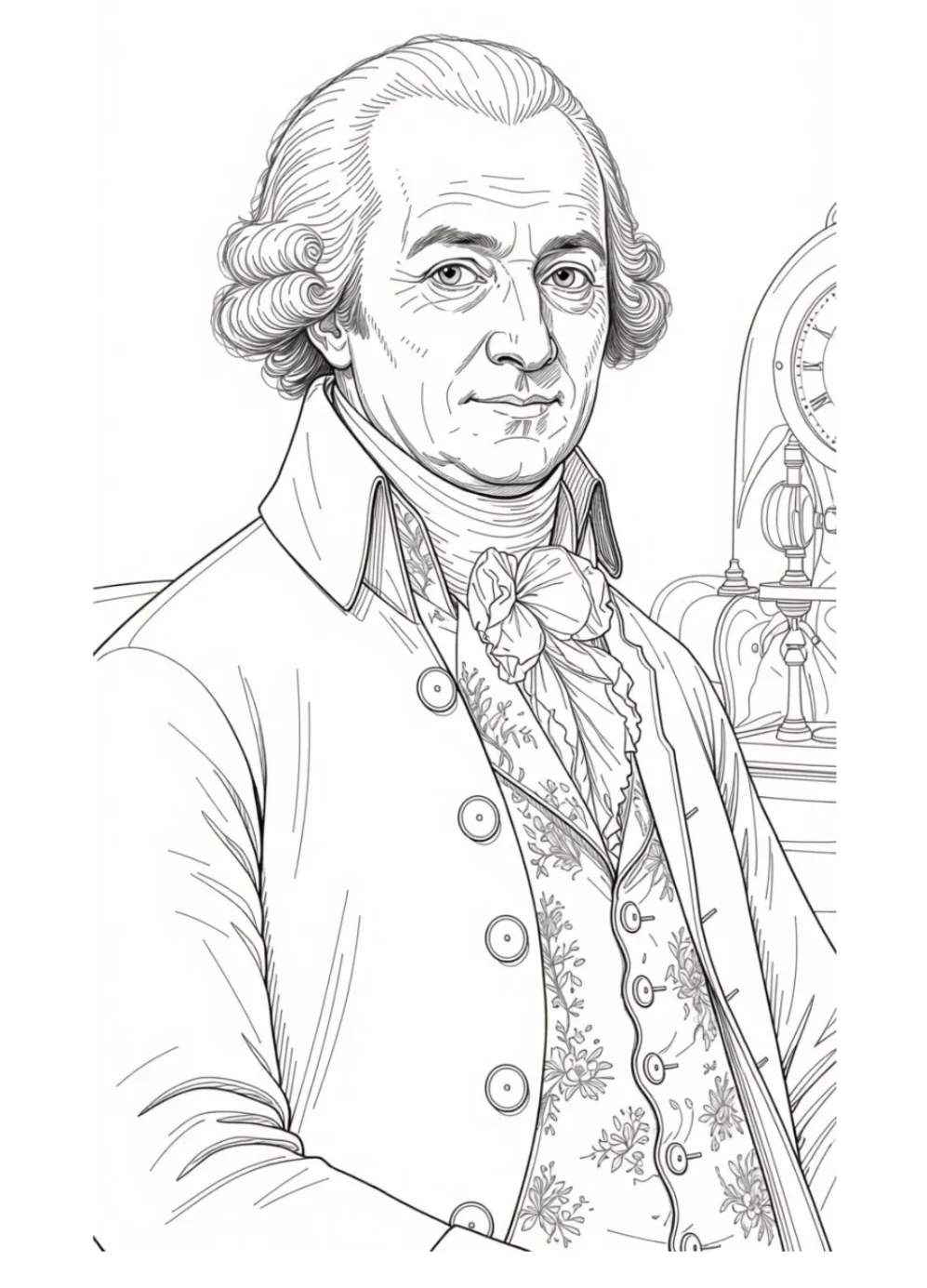
It was around 1780 that Antide Janvier created his first ‘double pendulum clock’, exploiting resonance, a feat Huygens never attempted.
The clock comprised two escapements and two pendulums, housed in the same case and positioned in close proximity, side by side. Each pendulum swing gives energy to its neighbouring counterpart. Eventually, both pendulums swing at the same frequency with the same amplitude, but in opposite directions. Should one pendulum swing too fast, the other pendulum will compensate by swinging slower, and vice versa.
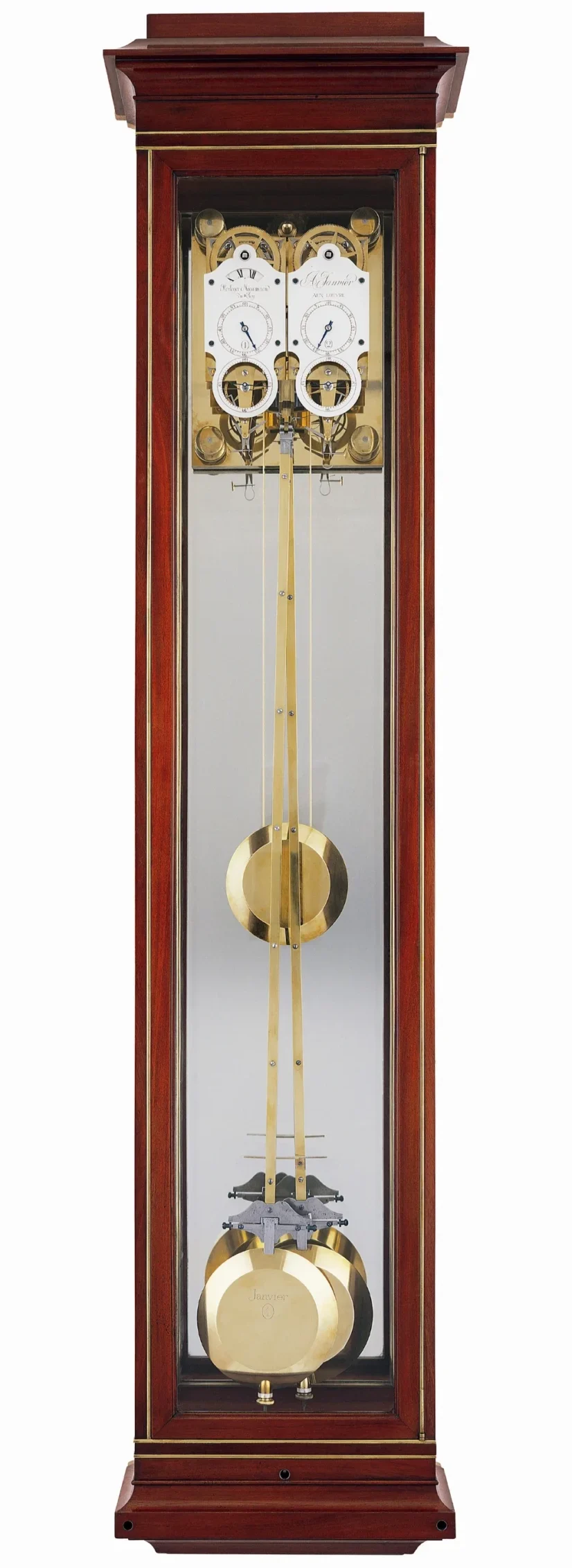
Image – Antide Janvier Dible Pendulum clock (circa 1780)
Janvier created three double pendulum regulators. These are currently in the possession of the Musée Paul-Dupuy in Toulouse, the Patek Philippe Museum in Geneva and the third example is owned by Montres Journe. In the autumn of 2001, François-Paul Journe attended an auction at Antiquorum in Geneva and acquired the double pendulum regulator for CHF 1,488,500. It is now on display in the Janvier Room at the Manufacture in Geneva.
Abraham-Louis Breguet (1747-1823)
Abraham-Louis Breguet was born in Neuchâtel, Switzerland. At the age of 14 he began an apprenticeship in nearby Les Verrières. The following year, he travelled to Versailles before subsequently moving to Paris where he completed his apprenticeship. During his time in Paris, he attended evening classes at the Collège Mazarin, where he studied mathematics and physics under Abbé Marie. Meeting Abbé Marie proved fortuitous for the young Breguet. Apparently, the mentor liked him and was said to have encouraged Breguet to continue with his scientific approach to horology.
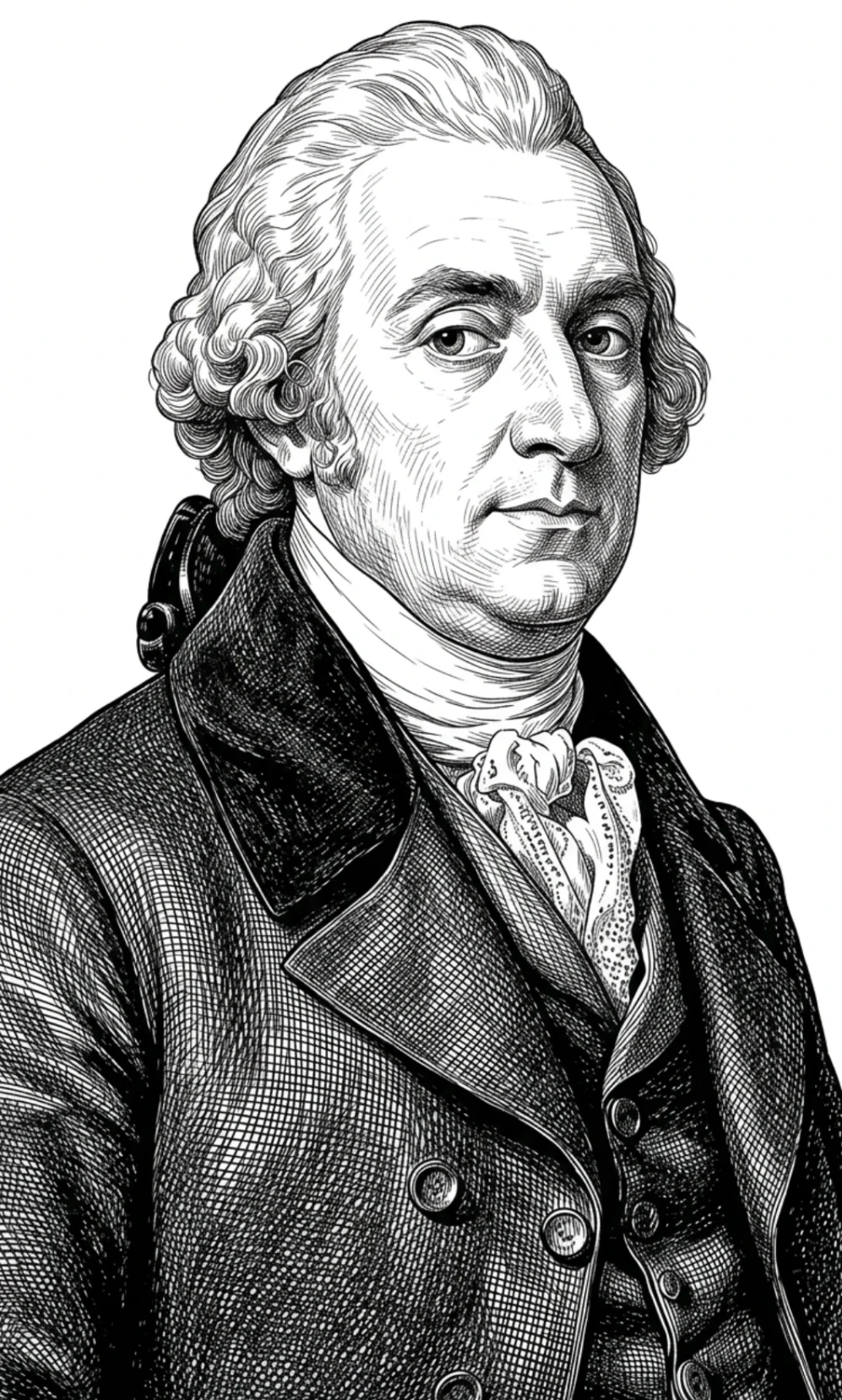
In 1775, aged 28, Breguet married Cécile Marie-Louise L’Huillier, a member of the Parisian bourgeoise. In the same year, he opened his first workshop on Quai de l’Horloge. The brother of Cécile Marie-Louise had close ties to the royal court and eventually became a general agent to the Comte d’Artois, Louis XVI’s younger brother. Around the same time, Abbé Marie was the assistant tutor to Comte d’Artois’s children. Ultimately, Breguet was introduced to the French court, a pivotal moment that led to the watchmaker enjoying the patronage of royalty and aristocracy, both in France and beyond.
Breguet was a multitalented individual, an extraordinary watchmaker, an aesthete and a consummate businessman. He was also remarkably inventive, conceiving the gong-spring (1783), the ‘pare-chute’ shock absorber (1790), the Breguet balance spring (1795), the ‘sympathique clock’ (1798) and, perhaps most famously of all, patenting the tourbillon in 1801.
A contemporary of Janvier, Breguet was also interested in equipping a clock with a double pendulum. When Janvier’s business was in financial difficulty, he sold part of his workshop to Breguet, supporting him.
Abraham-Louis Breguet produced three double pendulum clocks, albeit only two survive today. One example, No. 3177, made for Louis XVIII, is housed in the Musée des Arts et Métiers in Paris, while the other surviving example, No. 3671, sold to King George IV, forms part of the Royal Collection (kept at Buckingham Palace).
In parallel with his work on clocks, Breguet also miniaturised the double pendulum mechanism, adapting it for use within a pocket watch. He created three watches, No. 2667, No. 2788 and No. 2794. Incidentally, No. 2667, originally sold in 1814, was auctioned by Christie’s in May 2012 and fetched CHF 4,339,000.
The son of Neuchâtel was the first watchmaker to place two parallel movements in the same pocket watch, using resonance to enhance its operation. He termed his creation, the ‘Montre Plate A Deux Mouvements’ (flat watch with two movements).
François-Paul Journe (1957-present)
Born in Marseille, François-Paul Journe was a spirited adolescent and a reluctant pupil at school. François-Paul’s mother, Jacqueline, anxious about what the future would hold for her mischievous son, contacted François-Paul’s uncle, Michel Journe, for advice. Thereafter, the adolescent boy spent the summer at Michel’s workshop in Paris, a company specialising in the restoration and repair of clocks. The environment awakened something in the young François-Paul and set him on a journey that continues to this day.
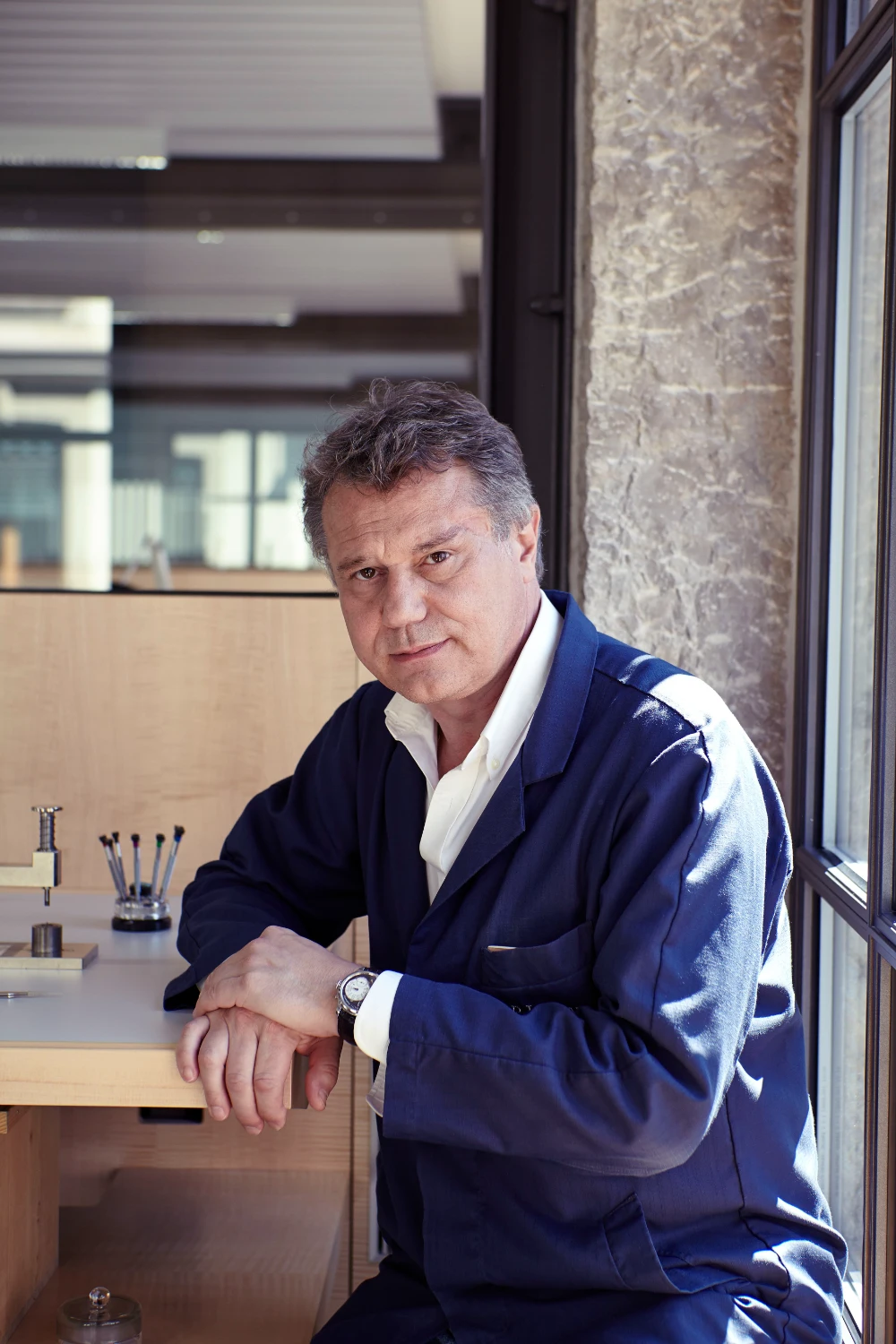
While working with his uncle, François-Paul Journe, still only in his twenties, was exposed to incredible horological artefacts. Indeed, together with his uncle, he was responsible for winding the entire collection of the Musée des Arts et Métiers and sometimes carried out restoration work. It was on one such occasion that François-Paul worked on Breguet’s double pendulum clock, no. 3177. Journe said of the experience, “It was while servicing it that I became fascinated by resonance, in the 1980s. People thought it was beautiful, but no one knew what it was for. While servicing it, I understood the system and became interested in it.”
François-Paul’s encounter with resonance proved a pivotal moment, setting him on a path of discovery that began with Huygens’s observations, the double pendulum clocks of Janvier and Breguet’s ingenious pocket watches. The idea of using resonance had been forgotten for almost 200 years. However, François-Paul Journe would go on to renew interest in the scientific phenomenon, later releasing his acclaimed Chronomètre à Résonance watches.
Chronomètre à Résonance – Journe’s second pocket watch (1983)
François-Paul Journe completed his first pocket watch in 1983. Entirely crafted by hand, equipped with a tourbillon, double barrel and detent escapement, it was the culmination of 5 years’ work.
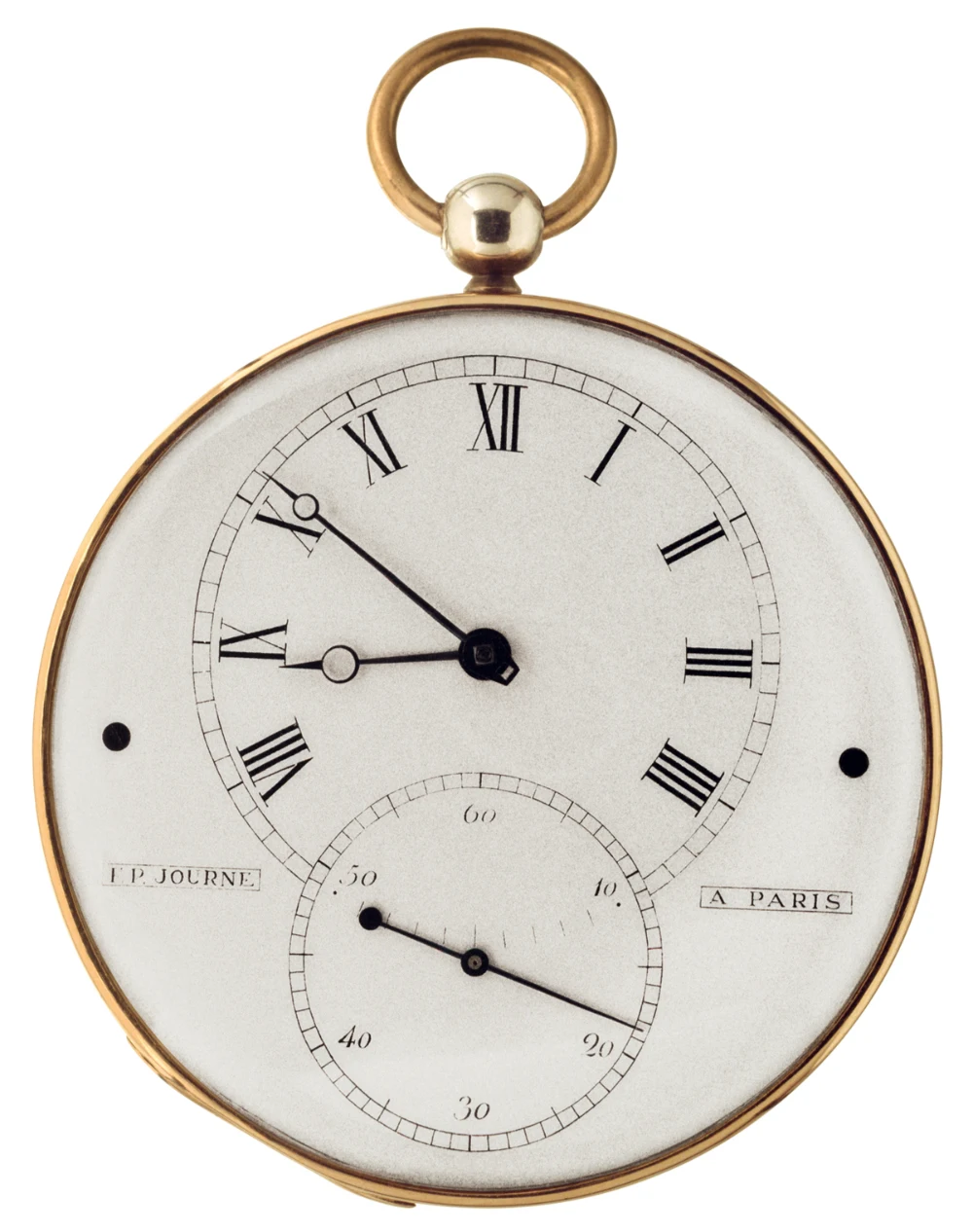
Image – 1st F.P.Journe watch (completed 1983)
Several of his uncle’s clients took interest in François-Paul’s work. He received a commission from Raymond Vogel (also known as Bill), to make a resonance pocket watch, his first client order. Journe completed the watch, but it did not meet François-Paul’s exacting standards, hence he took it back. Only the movement survives today, which remains in the possession of Montres Journe. François-Paul offered Raymond Vogel, at no charge, a watch identical to Journe’s third pocket watch, the ‘Tourbillon with Remontoire 3/84’ (completed in 1984), but with the addition of a moon phase.
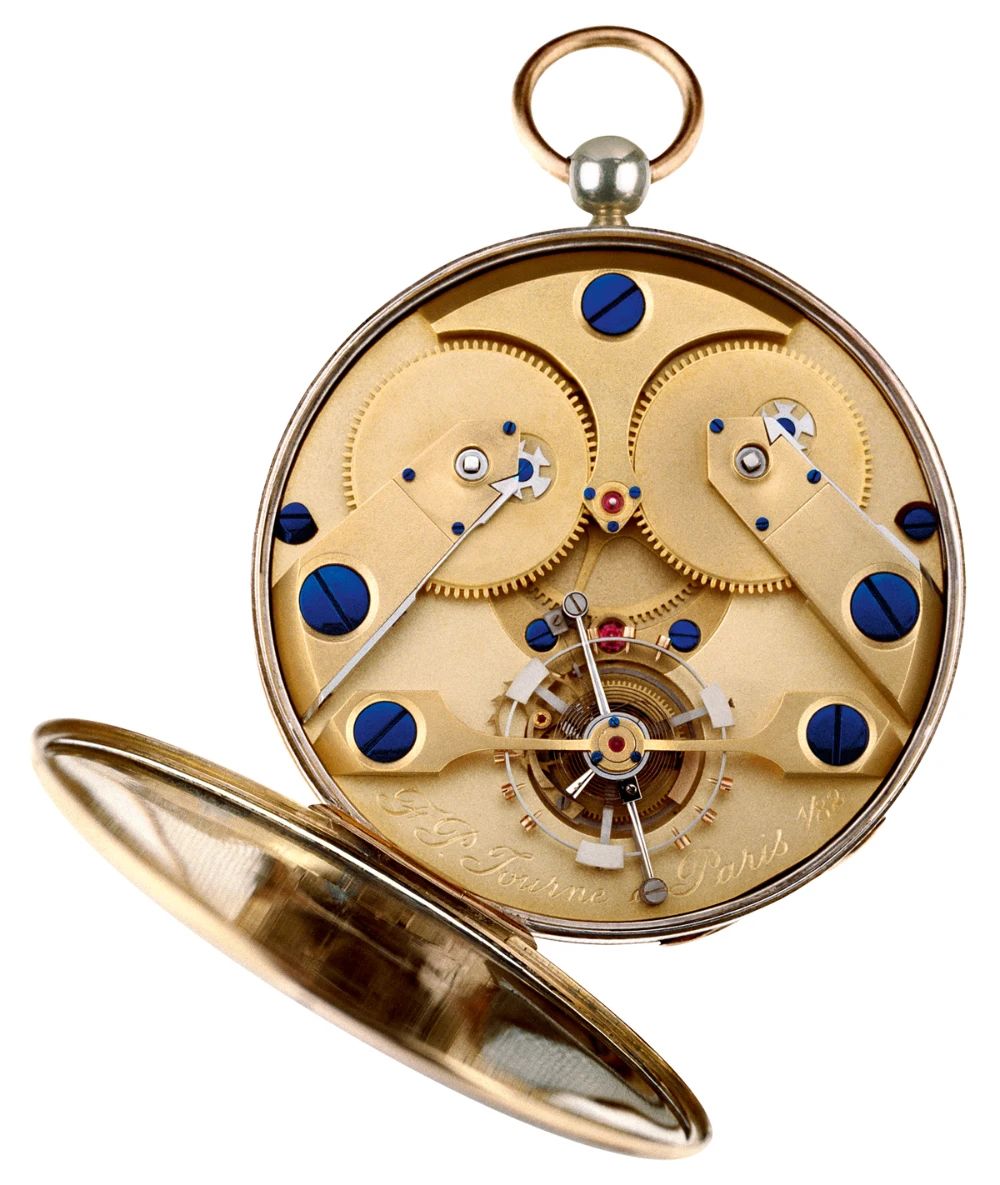
Image – 1st F.P.Journe watch (completed 1983)
Journe set aside the idea of resonance for several years after his problematic second pocket watch. Indeed, he said, “After my attempt in making my first commissioned pocket watch, it wasn’t my best experience, so I forgot the resonance principle and continued making other watches for customers. However, I don’t like to lose, so I told myself one day, one day I will win this ….”
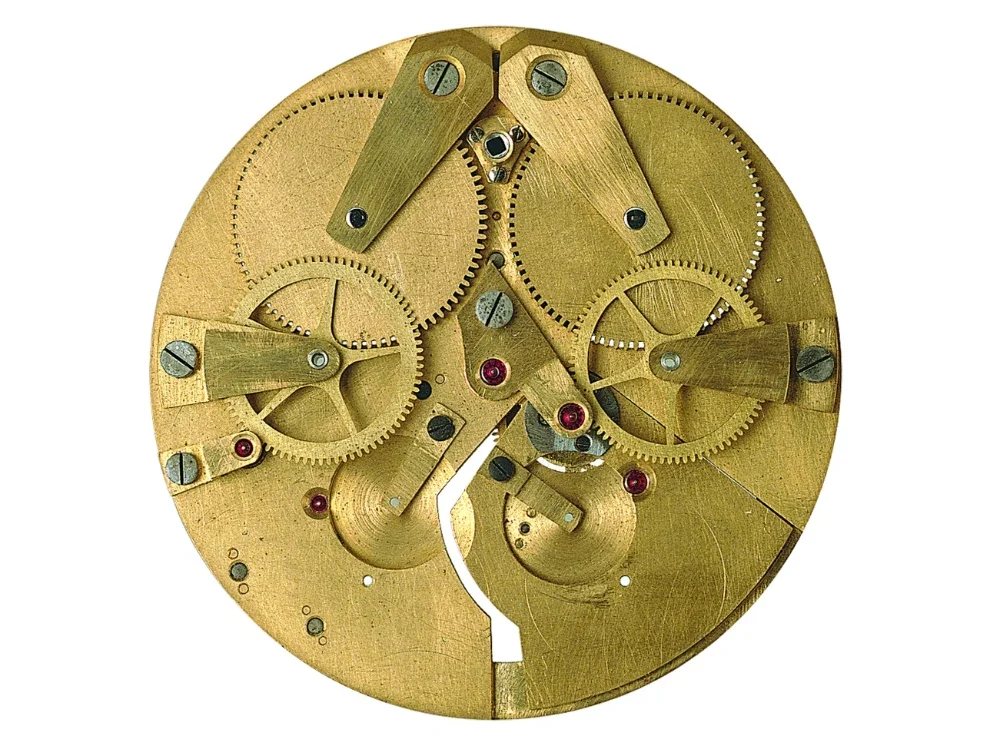
Image – ‘roughing of the first resonance watch entirely made by hand’ (made circa 1983)
Chronomètre à Résonance – Prototype No.1 (1998)
In 1996, acclaimed watchmaker Philippe Dufour unveiled his Duality watch. The model featured two balances linked by a differential. While this was not a resonance watch, its arrival incentivised François-Paul to revisit the idea of making a resonance watch. Moreover, he sought to create the first wristwatch utilising the natural phenomenon of resonance. As Journe discovered, the scale of a wristwatch did not readily lend itself to making a resonance watch; however, he persisted in his quest to realise his idea.
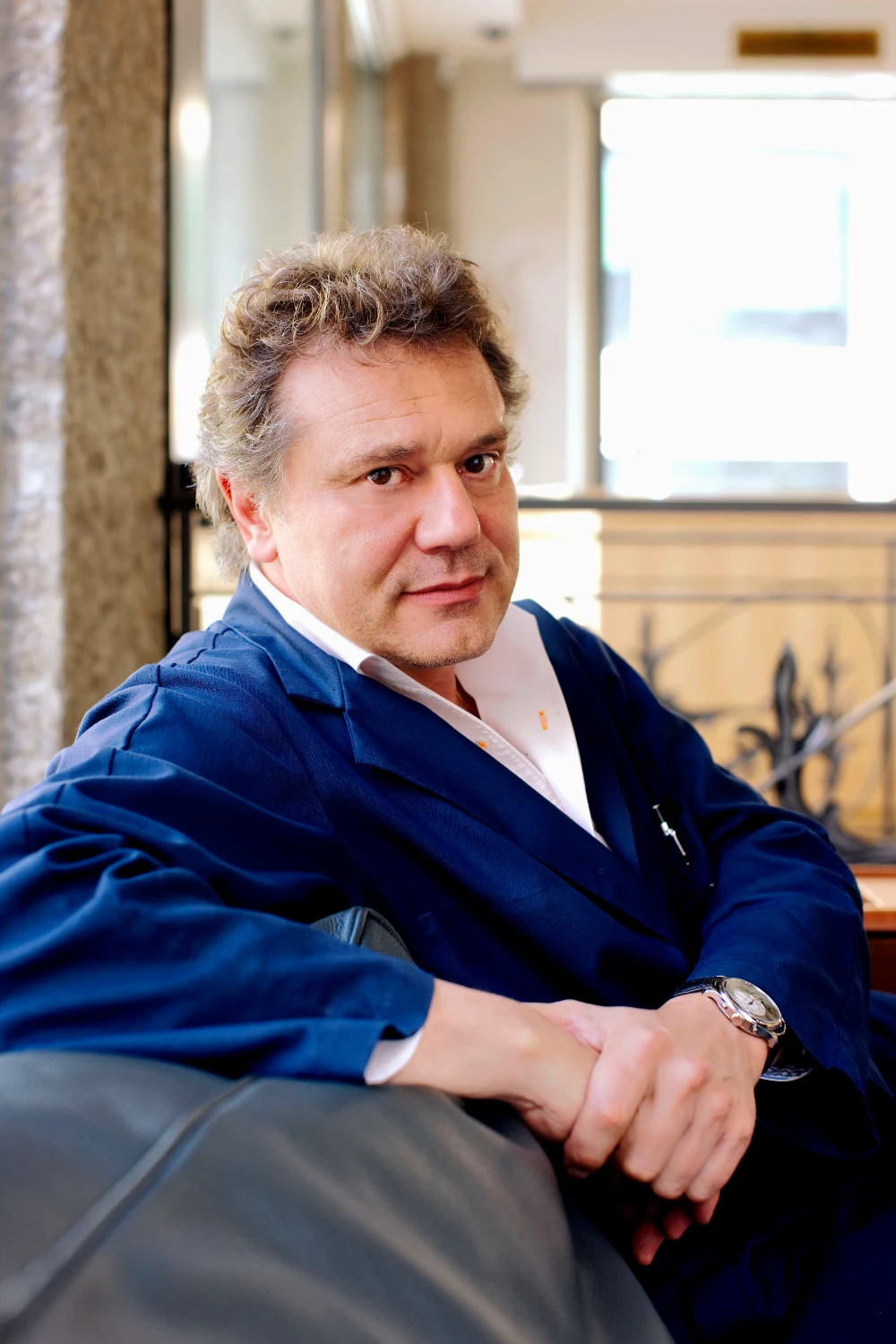
Apparently, Journe would carry the prototype movement in a plastic case upon his person, frequently checking to see how it was working. He discreetly wore the watch at Baselworld in 1998. The design of the power-reserve indicator, the overall dial execution, the case and the movement would subsequently change. The proximity of both balance wheels to one another, just 0.4 mm apart, is one factor that is critical to achieving resonance. Journe exhibited the Prototype No.1 in 1999.
The following year at Baselworld 1999, Journe launched his eponymous company, Montres Journe SA, unveiling 6 watches, comprising 5 Tourbillon Souverain models and said prototype Resonance watch.
Chronomètre à Résonance – a story of evolution
Pre-series (1999)
In 1999, having displayed the Prototype No.1 at Baselworld, Journe submitted a further prototype No.000, the ‘pre-series’, for sale at Antiquorum’s thematic sale The Longitude at the Eve of the Third Millenium (23.10.1999). Few prototypes have ever left the confines of the Manufacture, making this watch a rare exception. It sold for CHF 97,000 at the time.
F.P.Journe Chronomètre Résonance Souscription (2000)
One year later, in 2000, François-Paul presented the world’s first wristwatch harnessing the natural phenomenon of resonance, the aptly named Chronomètre à Résonance.
The previous year, Journe had released the Tourbillon Souverain Souscription Series limited to 20 pieces. He offered owners of the Tourbillon Souscription the opportunity to purchase a Résonance Souscription model with a matching number. The idea of the souscription watch harks back to Breguet, a watchmaker that François-Paul has always greatly admired. Clients paid a 50% deposit at the time of ordering and the balance on delivery. Journe recalls that of the 20 examples offered to Tourbillon Souscription owners, 17 or 18 of them purchased a Résonance Souscription. The remaining examples were sold in one of the company’s points of sale.
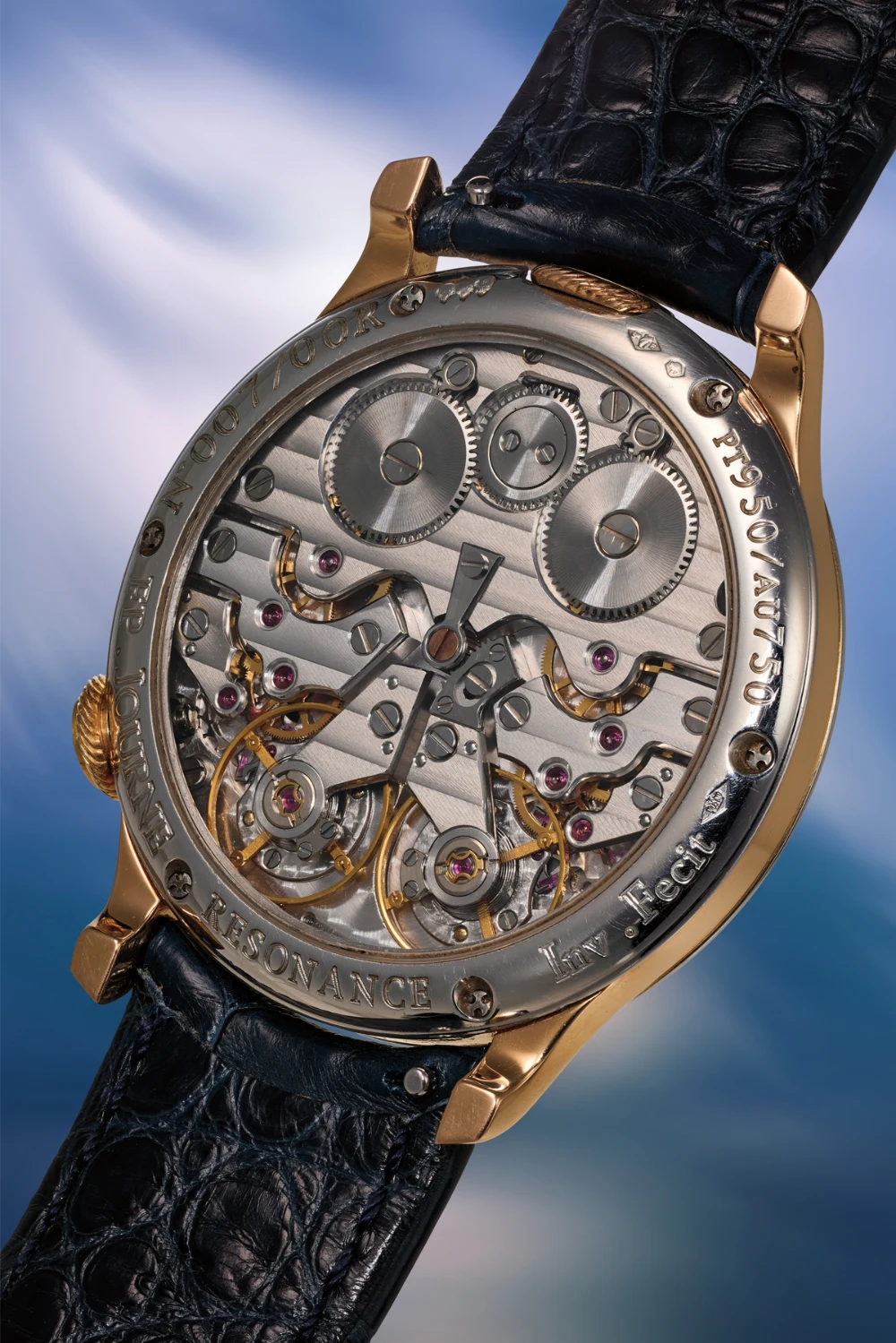
Image – F.P.Journe Chronomètre À Résonance Souscription No.7 (credit: Phillips)
While all examples of the Résonance Souscription measured 38 mm in diameter, they were not all identical. Some were housed in a platinum case, while other examples were presented in a two-tone 18-carat pink gold and platinum case. The monochromatic platinum cases were paired with white, pink or yellow gold dials, whereas the two-tone cases were complemented with just white or pink dials. The movement, the Calibre 1499, was executed in brass.
Chronomètre À Résonance Souscription No.7 (circa 2000)
The F.P.Journe Chronomètre À Résonance Souscription No.7, recently sold at Phillips, New York (13.6.2026) was housed in a two-tone case and endowed with pink gold dial. The watch sold for $13,922,000.
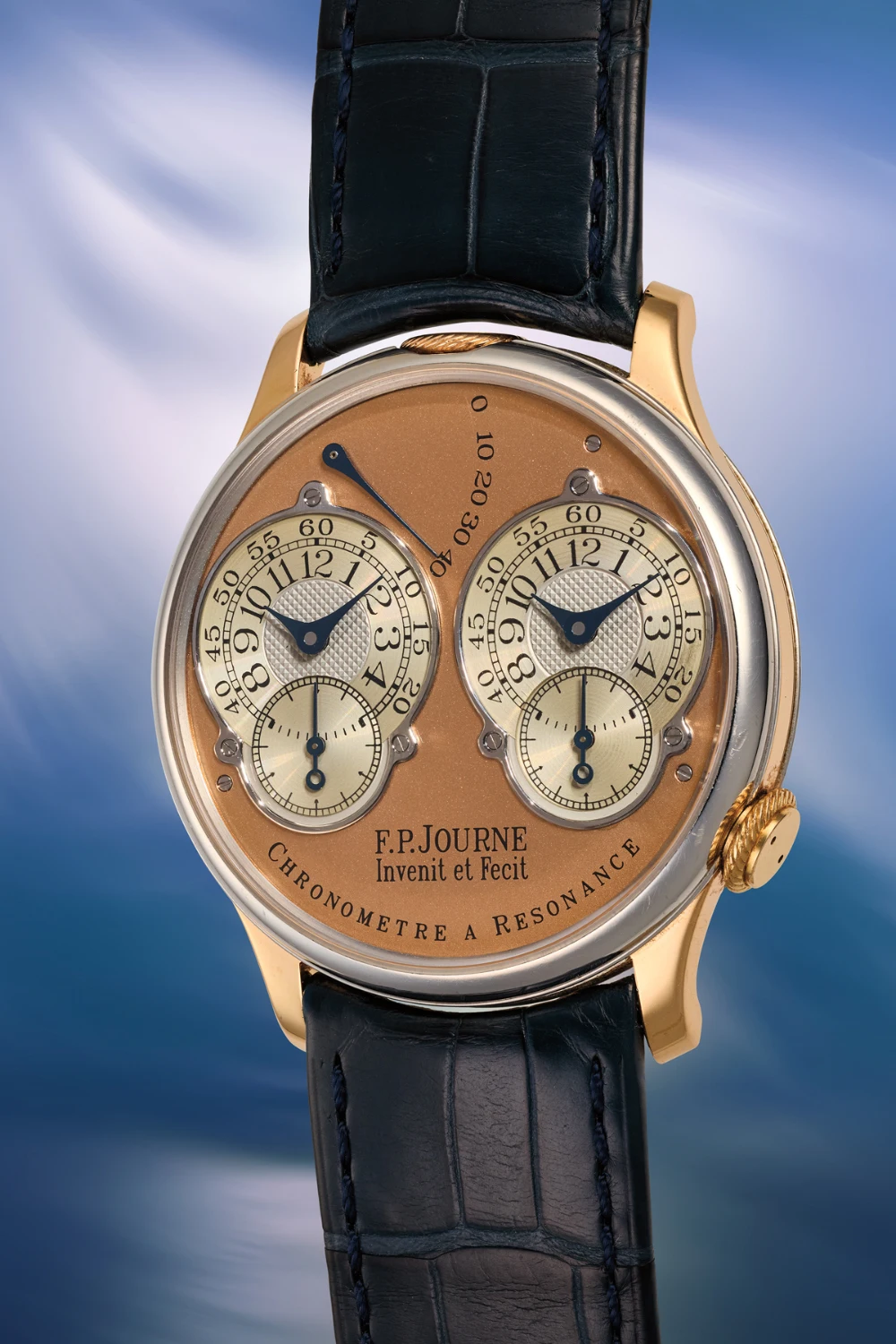
Image – F.P.Journe Chronomètre À Résonance Souscription No.7 (credit: Phillips)
R Series (2001-2003)
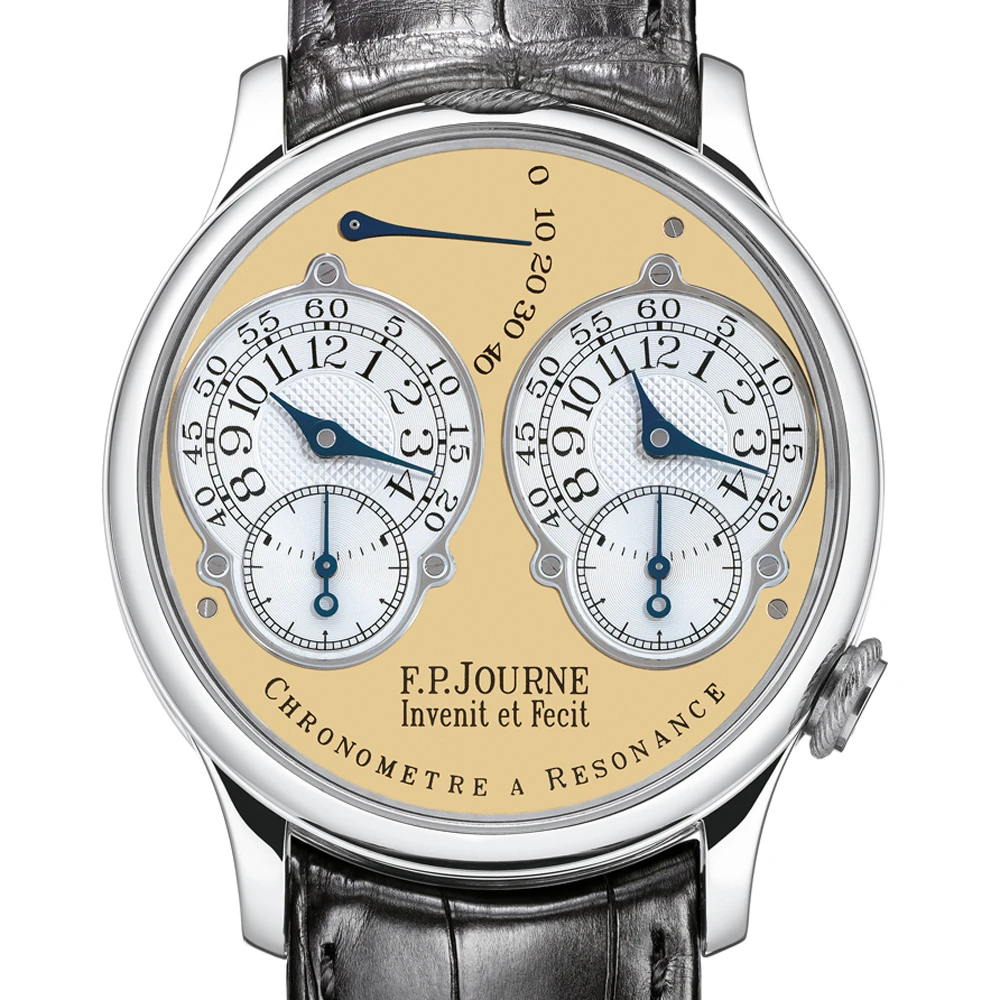
In 2001, following the success of the Résonance Souscription, F.P.Journe released the ‘R Series’, the first collection series. Once again, measuring 38 mm in diameter, prospective clients were offered the choice of a platinum or red gold case. Dial variants included white, rose or yellow gold. The movement, the Calibre 1499, was formed of brass. The series ran until 2003.
RN Series (circa 2004-2010)
Around 2004/2005, F.P.Journe released the RN Series. The son of Marseilles had long harboured a desire to make movements in 18K rose gold as it is one of the least reactive metals, hence, unlike brass, it doesn’t require plating. Unable to find a supplier either able or willing to work with the noble metal, he eventually acquired the necessary plant to make gold mainplates and bridges in-house.
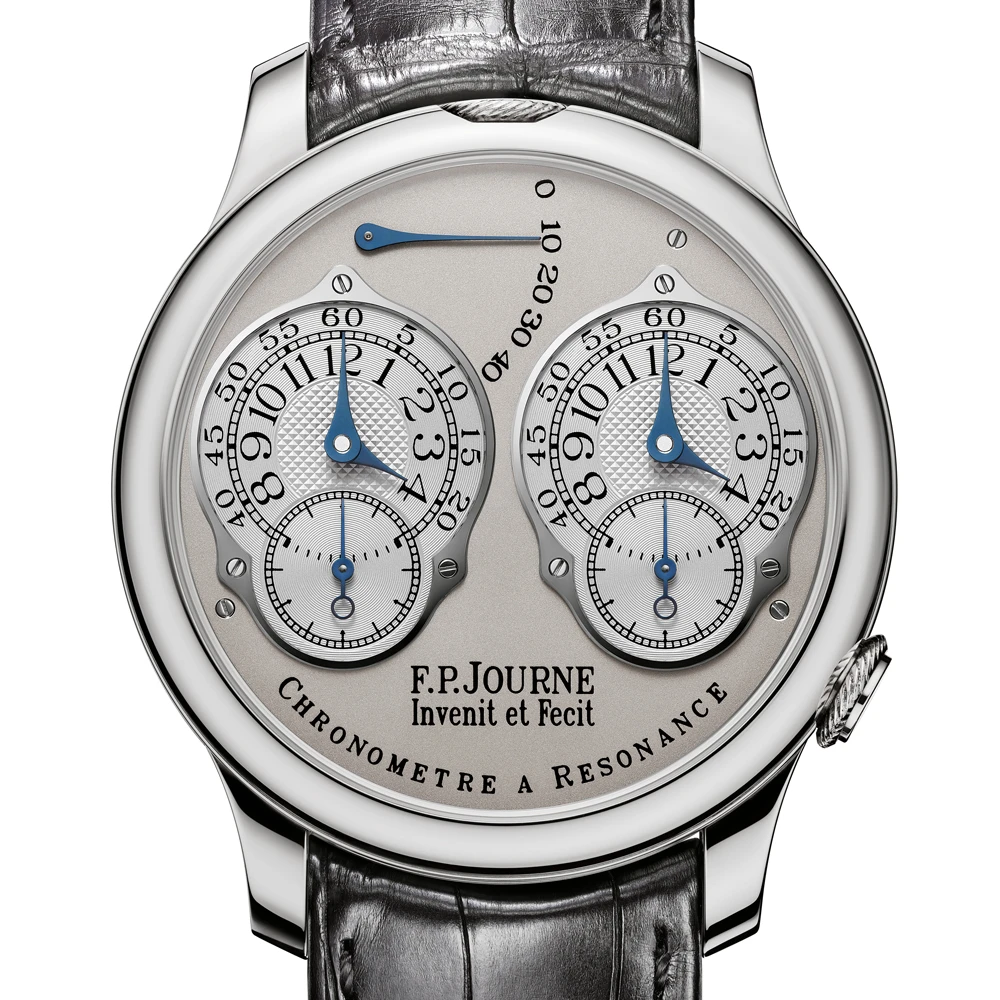
In 2004, the company began making watches equipped with gold movements, including the Chronomètre à Résonance. The RN Series was equipped with the Calibre 1499.2, crafted in rose gold. The design of the movement was like that of the Calibre 1499, save for the design of the barrel bridge and the adoption of a new ratchet/winding system that Journe had developed for the Chronomètre Souverain (released the following year, 2005).
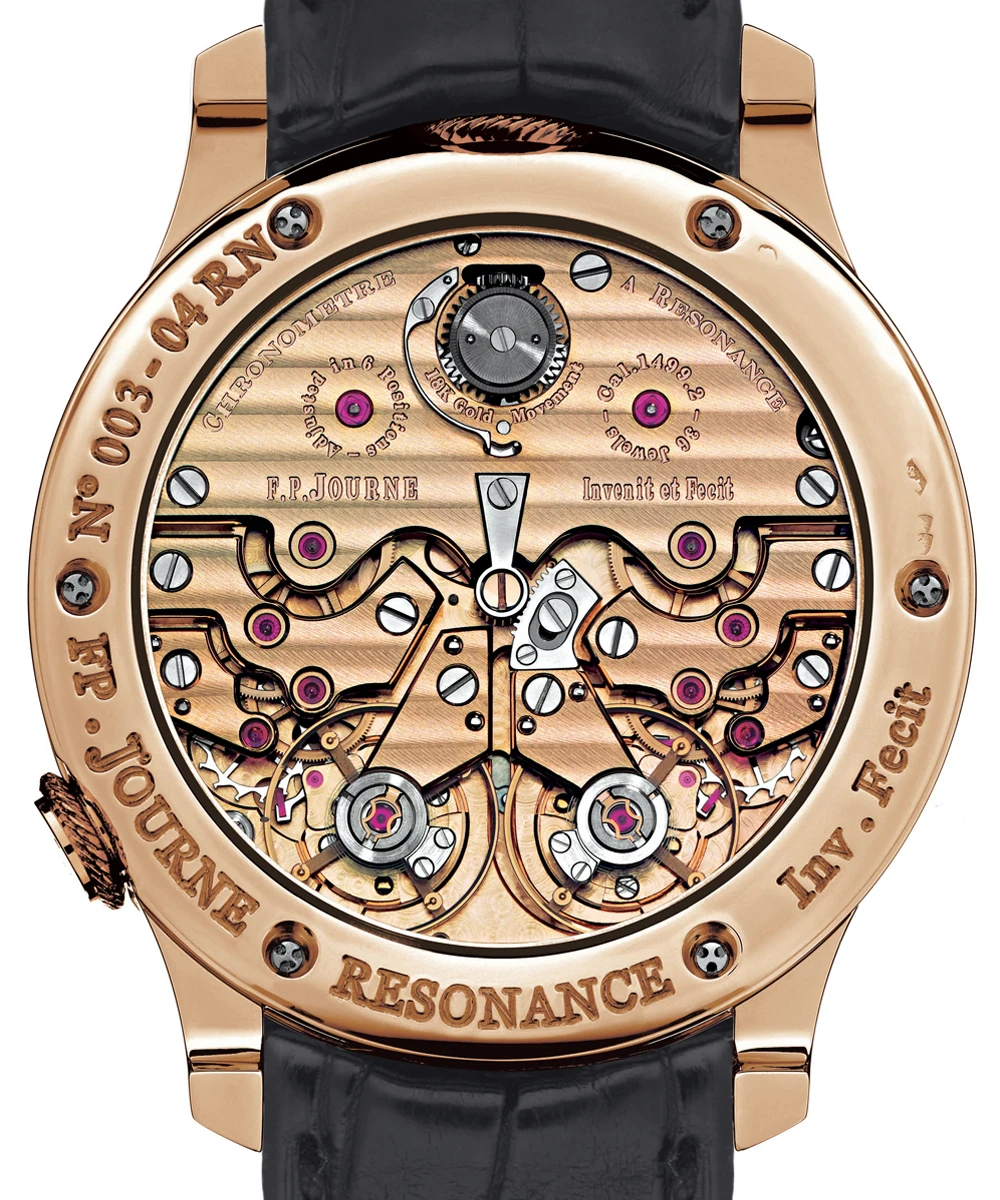
Above image – Calibre 1499.2
It would be fair to say that François-Paul Journe is a perfectionist, continuously seeking to make infinitesimal improvements to his work in his quest for flawless horology. At some point in 2006, he introduced the Calibre 1499.3, incorporating a new power reserve mechanism. The RN Series continued in production until 2010.
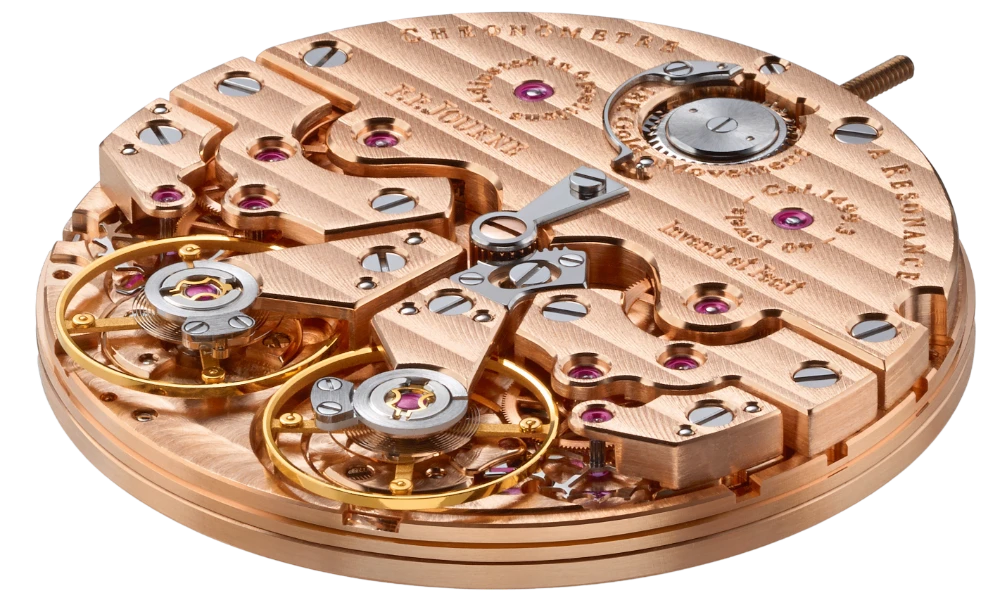
Above image – Calibre 1499.3
RT Series (2010)
The RT Series, the third collection series, was released in 2010, marking the 10th anniversary of the Chronomètre à Résonance. It featured an arc-shaped aperture at 9 o’clock which revealed a revolving disc marked with a 24-hour display. The brilliance of the watch was duly recognised, receiving the Grand Complication prize at the GPHG awards in 2010.
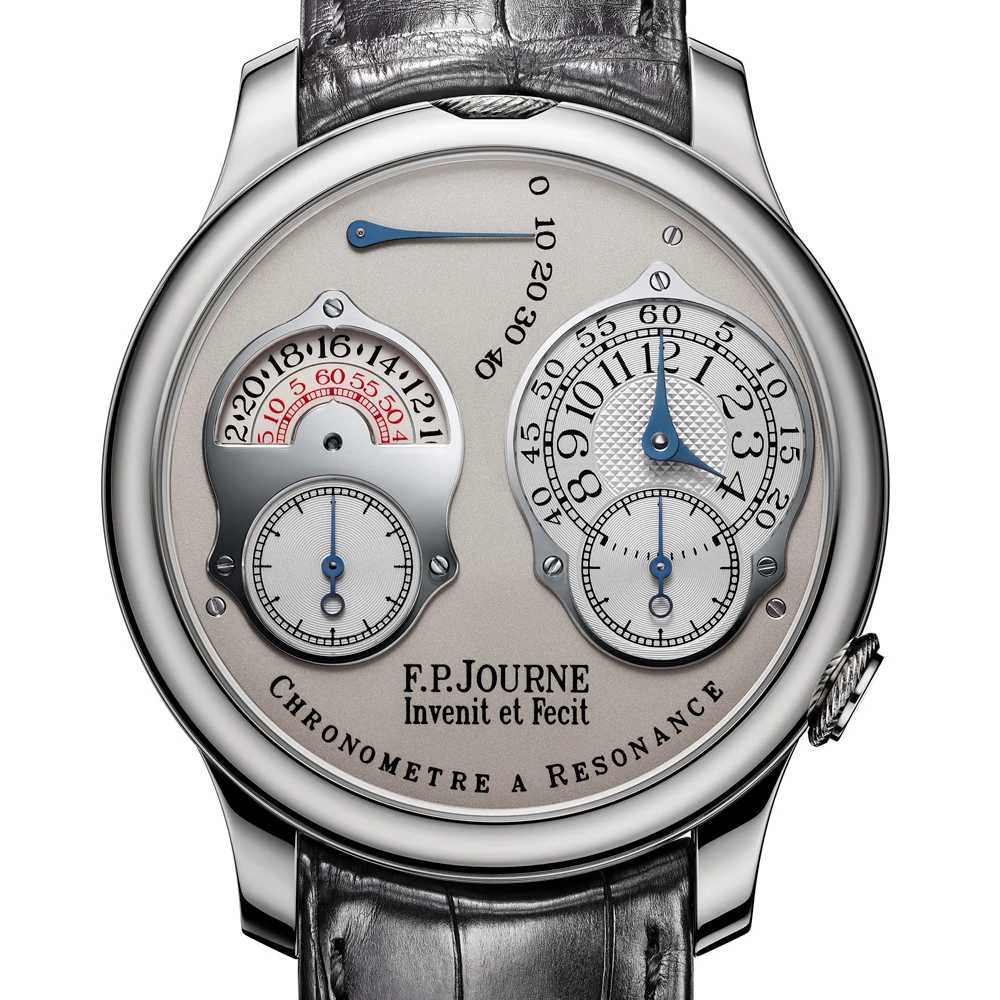
RTA Series (2019)
Apparently, Journe planned to discontinue the Chronomètre à Résonance in 2019; however, he decided to redesign the dial, with a 24-hour analogue display located at 9 o’clock and produce the watch for a further year. Termed the RTA Series, it was the fourth collection series and the model’s swansong.
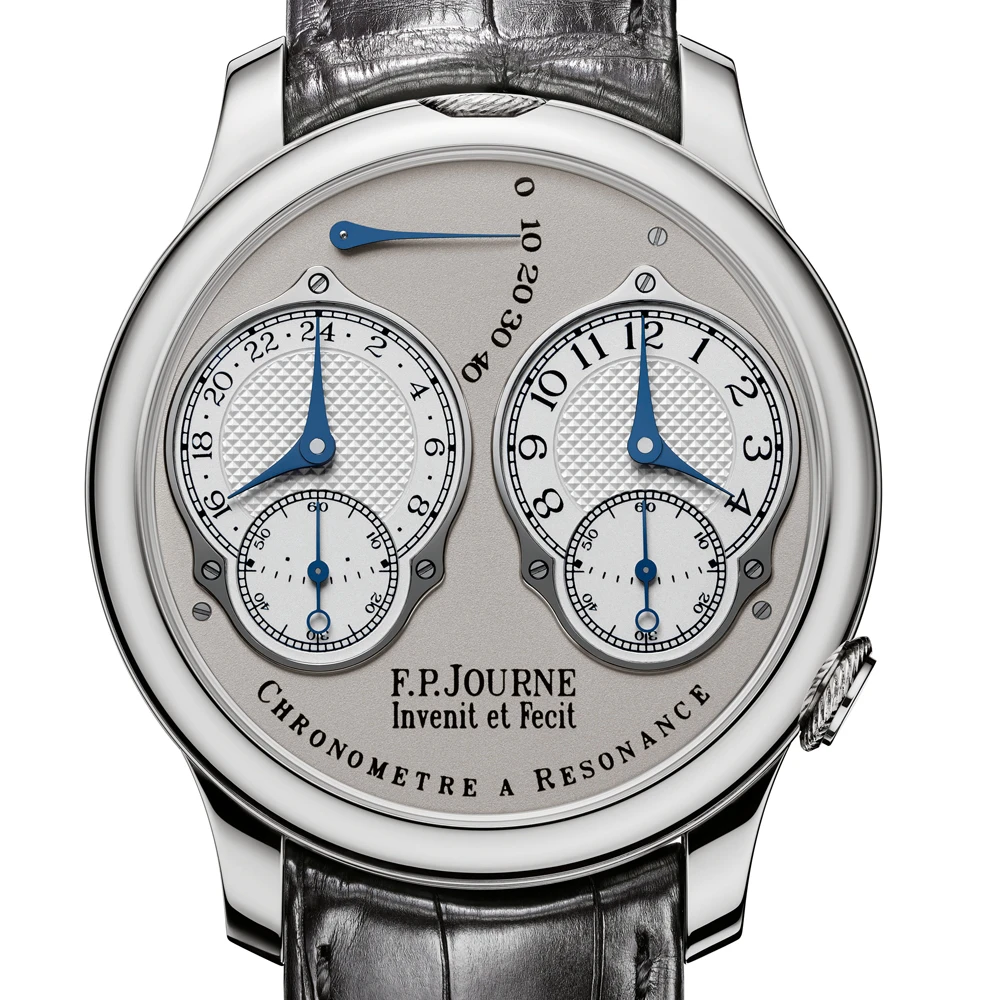
RQ Series (2020 – present day)
In 2020, the Maison celebrated the 20th anniversary of Chronomètre à Résonance by releasing a wholly new model. It shared a familial likeness with its antecedents, but it also looked different. The power reserve indicator had moved, now sitting at 12 o’clock, conferring a greater sense of symmetry. The new dial also featured an aperture at the centre of the dial, granting sight of a differential (see later). It was clear there was something different beneath the dial.
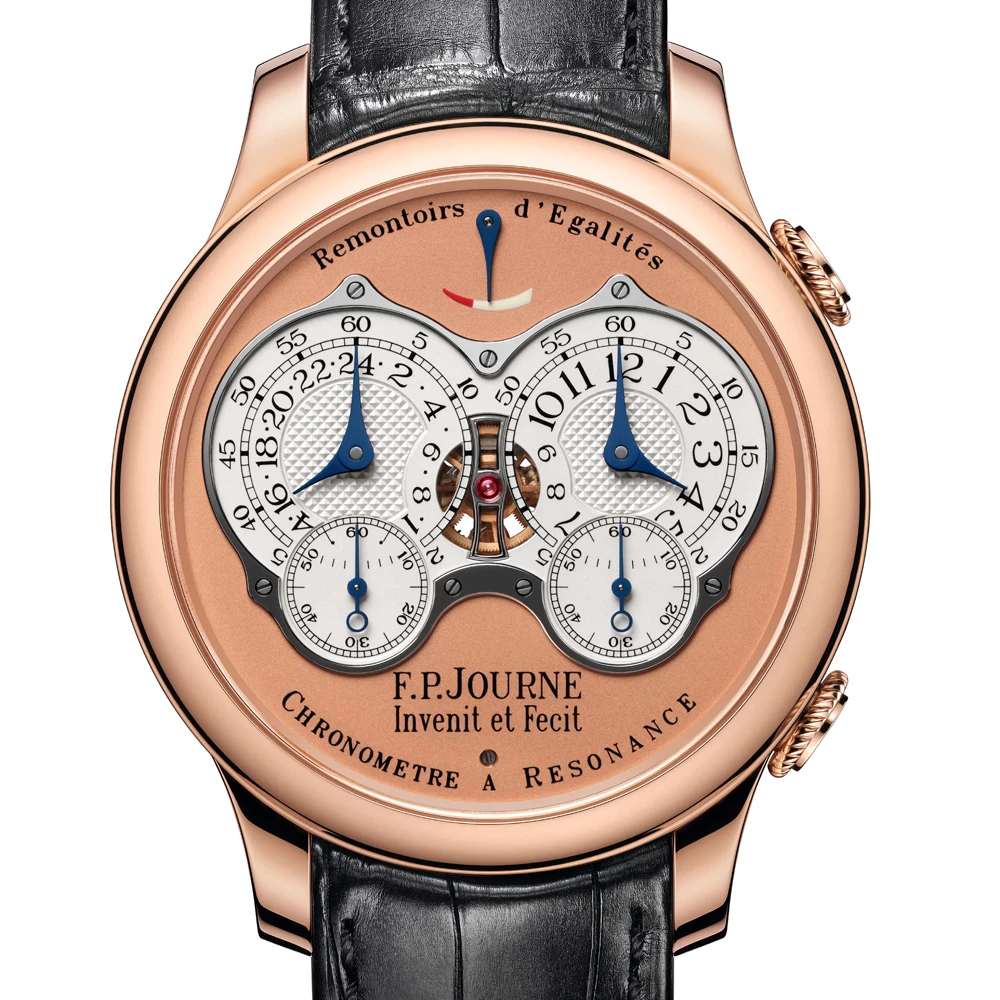
Journe had created a new movement, the Calibre 1520. Where the Calibre 1499 (as well as Calibre 1499.2 & Calibre 1499.3) had two separate mainsprings, each serving their own gear train, the Calibre 1520 does things a little differently. It employs one mainspring to drive the two secondary gear trains through a differential placed on the first wheel. Each gear train is connected to a one-second remontoir d’égalité, serving each balance wheel with a linear force, proving isochronous for 28 hours.
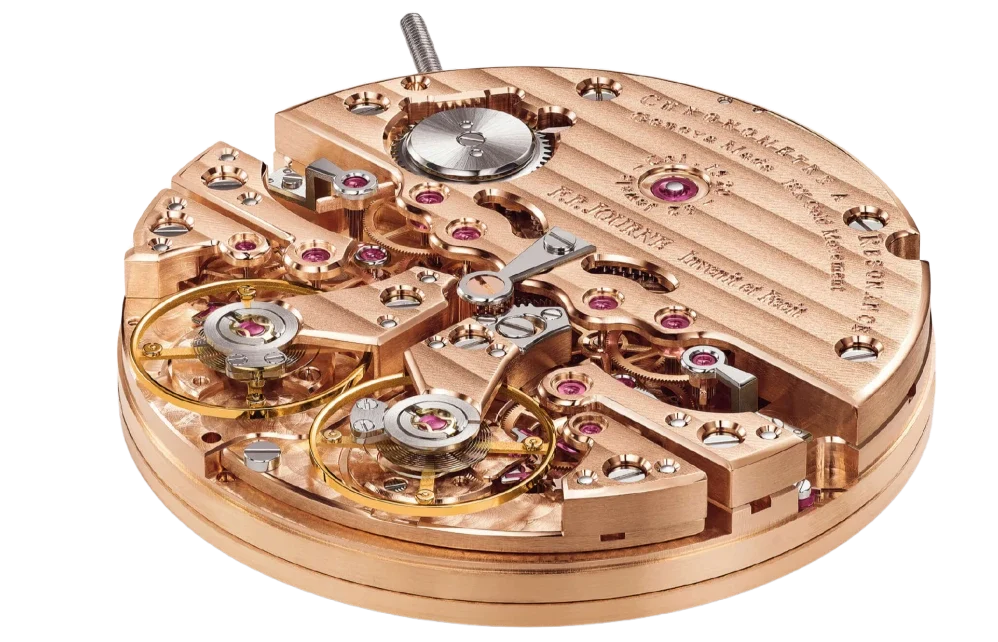
Above image – Calibre 1520
Closing remarks
The recent sale price of the F.P.Journe Chronomètre À Résonance Souscription No.7 at Phillips, New York is simply extraordinary; a figure few people can comprehend. It serves as a testament to the desirability of Journe’s work and it has created much interest among industry press and the wider business community.
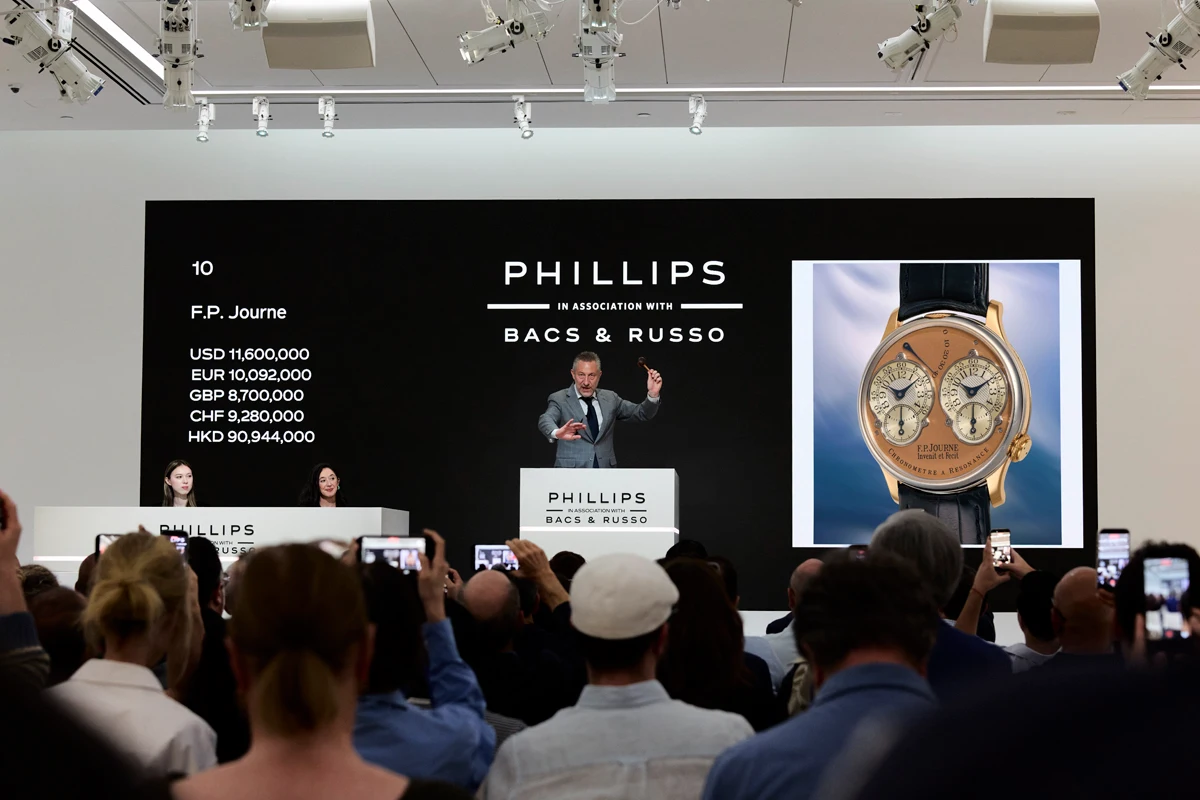
Image – F.P.Journe Chronomètre À Résonance Souscription No.7 (credit: Phillips)
However, it seems somewhat crass to talk about money when viewing horological art. And, in my opinion, the Chronomètre À Résonance is a piece of art worthy of comparison with a canvas gracing the wall of a gallery. The only difference is that Journe’s work confers functionality, his chosen media being precious metals, springs, wheels, pivots and jewels. Allow me to elaborate.
If we consider each iteration of the Chronomètre À Résonance there is a movement featuring two balance wheels oscillating to and fro. Each balance wheel is independent, yet they give energy to one another, averaging the rate between the faster oscillator and its slower counterpart, a mere 0.4 mm away. Furthermore, by employing acoustic resonance, Journe has delivered remarkable chronometric performance.
When conceiving each dial, Journe has given much thought to readability and aesthetic beauty. Likewise, the case of each model is crafted with due consideration to ergonomics and aesthetics. Every detail is the product of Journe’s creativity and imagination. Both the dials and cases are crafted in-house, at dedicated facilities.
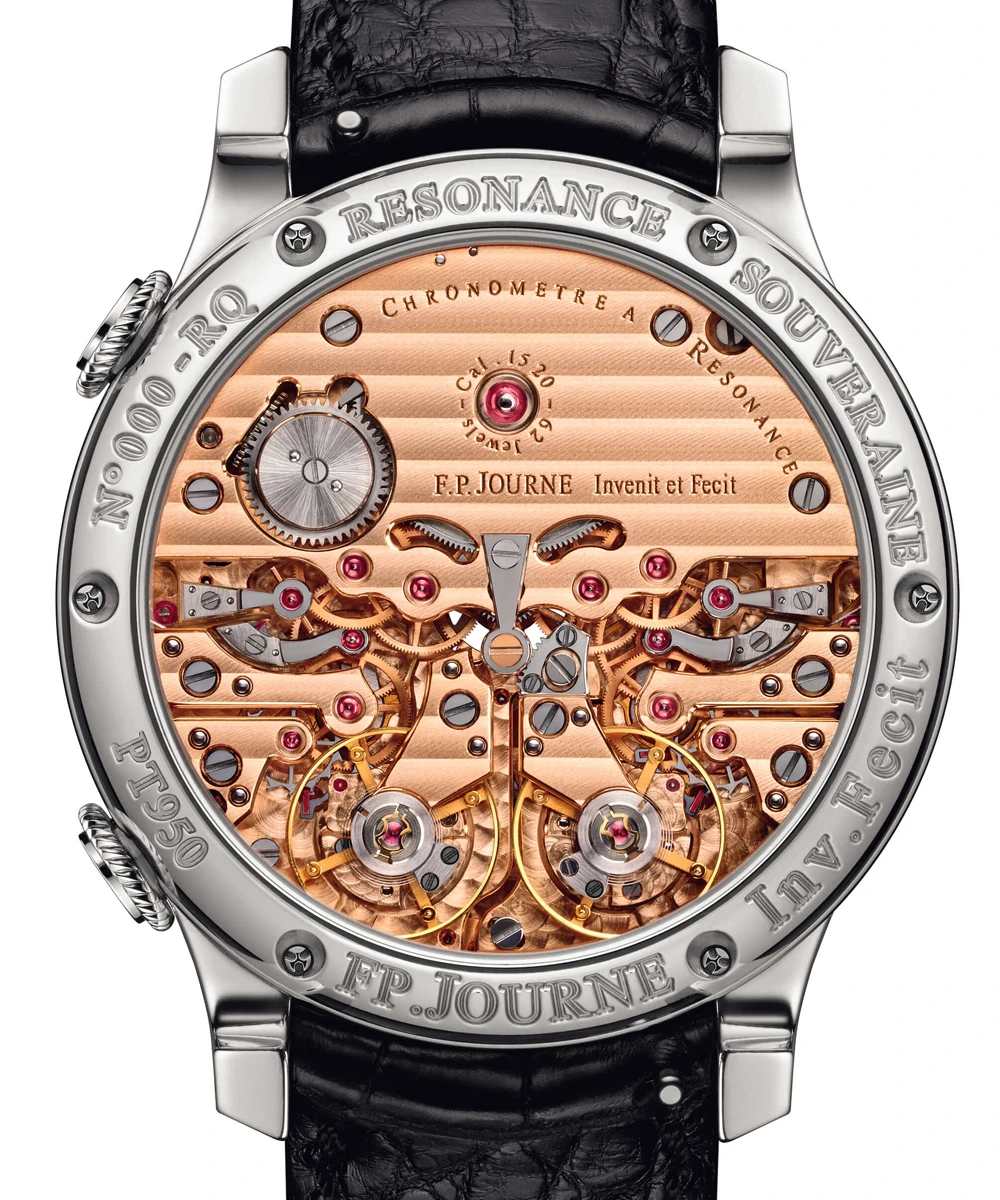
Image – RQ Series featuring the Calibre 1520
Similarly, the movements are made within the Geneva Manufacture and endowed with an array of hand-finishes, including perlage, Côtes de Genève, bevelling, polished and bevelled screws with chamfered slots and hand-finished steel components. Each of these beautifully decorated parts (the Calibre 1520 features 378 components) is brought together and assembled by a single watchmaker. Thereafter, the movement is regulated. Both balances ‘must beat within five seconds of each other, measured cumulatively across six positions per day’, a process that requires hours of making small adjustments and countless checks.
The Chronomètre À Résonance is a highly desirable, functional object. Its protracted creation means that demand inevitably outstrips supplies, a factor which helps to explain recent auction prices.
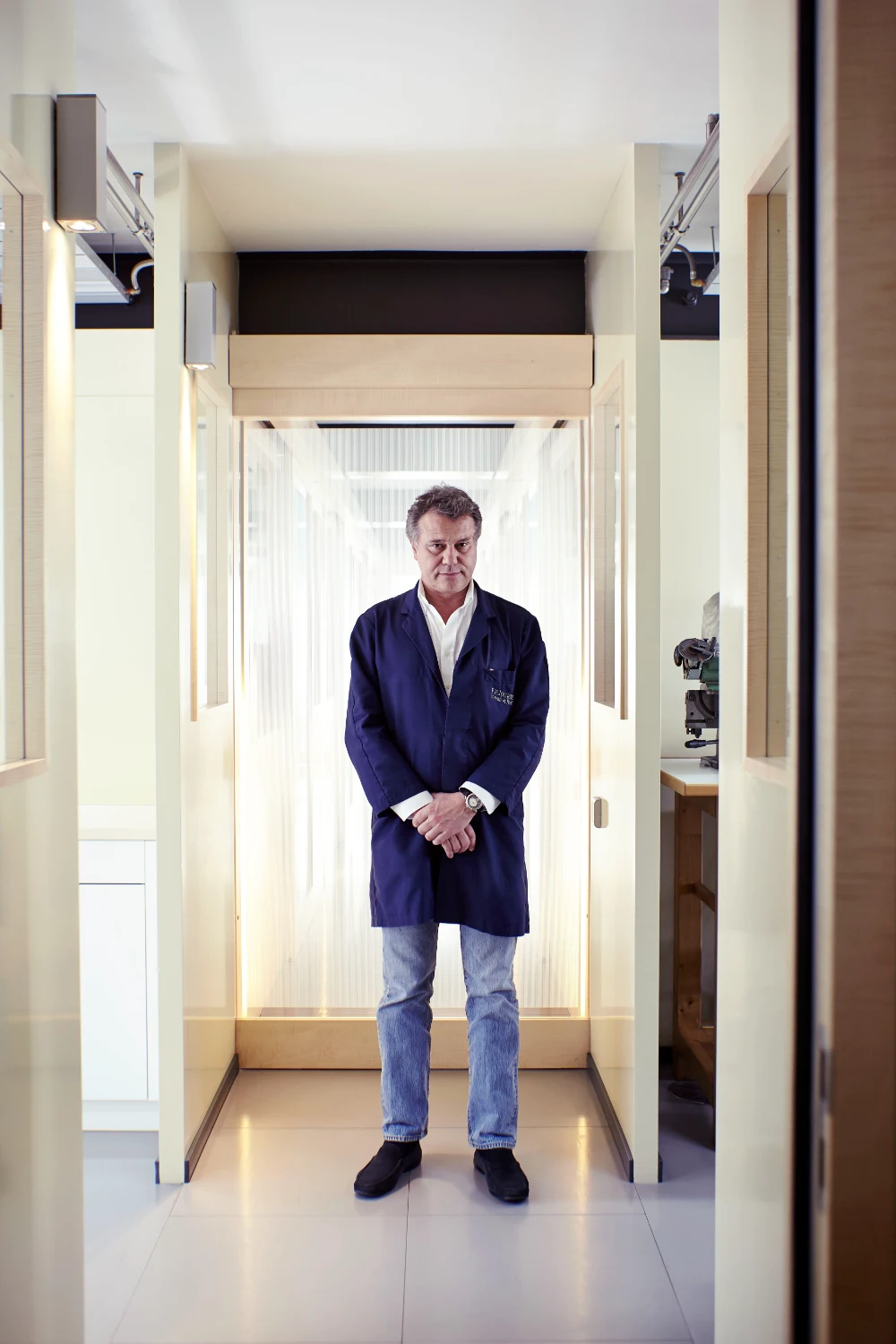
However, this is also the story of a journey that began with Christiaan Huygens. Thereafter, the baton passed to Janvier, Breguet and, ultimately, Journe. All four individuals, each blessed with a brilliant mind, didn’t merely accept the status quo, they chose to question. They experimented, encountered problems, discovered solutions and, most importantly, invented and made, or as F.P.Journe prefers to say, ‘Invenit et Fecit’.