
F.P.Journe Octa Calibre In-Depth Watch Review
At Baselworld 2000, François-Paul Journe showcased three prototypes fitted with the now-legendary Octa Calibre. This self-winding movement burst onto the watchmaking scene in 2001 and has since powered a myriad of models, equipped with a plethora of complications. Widely admired by watch aficionados around the world, the F.P.Journe Octa Calibre may well be the perfect automatic movement.

Image – Quantième Perpétuel, Calibre 1300.3 (2020)
F.P.Journe boutique, Geneva
The F.P.Journe’s Genevan boutique is located at Pl. de Longemalle 13, a place where peerless exemplars of watchmaking can be found. However, before any journey of discovery can begin, visitors to the boutique must pull a golden-toned door handle that resembles an oscillating weight. This unconventional ironmongery emulates the appearance of the rotor found within F.P.Journe’s Octa Calibre. A feature common to all F.P.Journe boutiques, the distinctive door handle provides the means to enter a world of exquisite horology.
At this juncture, many readers may reasonably ask, why does the Swiss firm attach so much importance to the Octa Calibre? After all, the name F.P.Journe is linked to many groundbreaking timepieces. Allow me to elaborate.
The birth of Montres Journe SA
In 1999, François-Paul Journe created his eponymous company, Montres Journe SA. At that time, the famous watchmaker was widely known within the watch industry and familiar to a few well-informed collectors, albeit his brilliance was still relatively unknown. The advent of Montres Journe SA provided the catalyst that changed this situation forever.
This shift from artisanal watchmaker to Maison coincided with a subtle evolution of the Journe name gracing the great man’s creations. Moreover, his name was accompanied by the now-famous motto ‘Invenit et Fecit’, meaning ‘invented and made’. This motto has since graced the dials of some of the world’s finest expressions of horology.
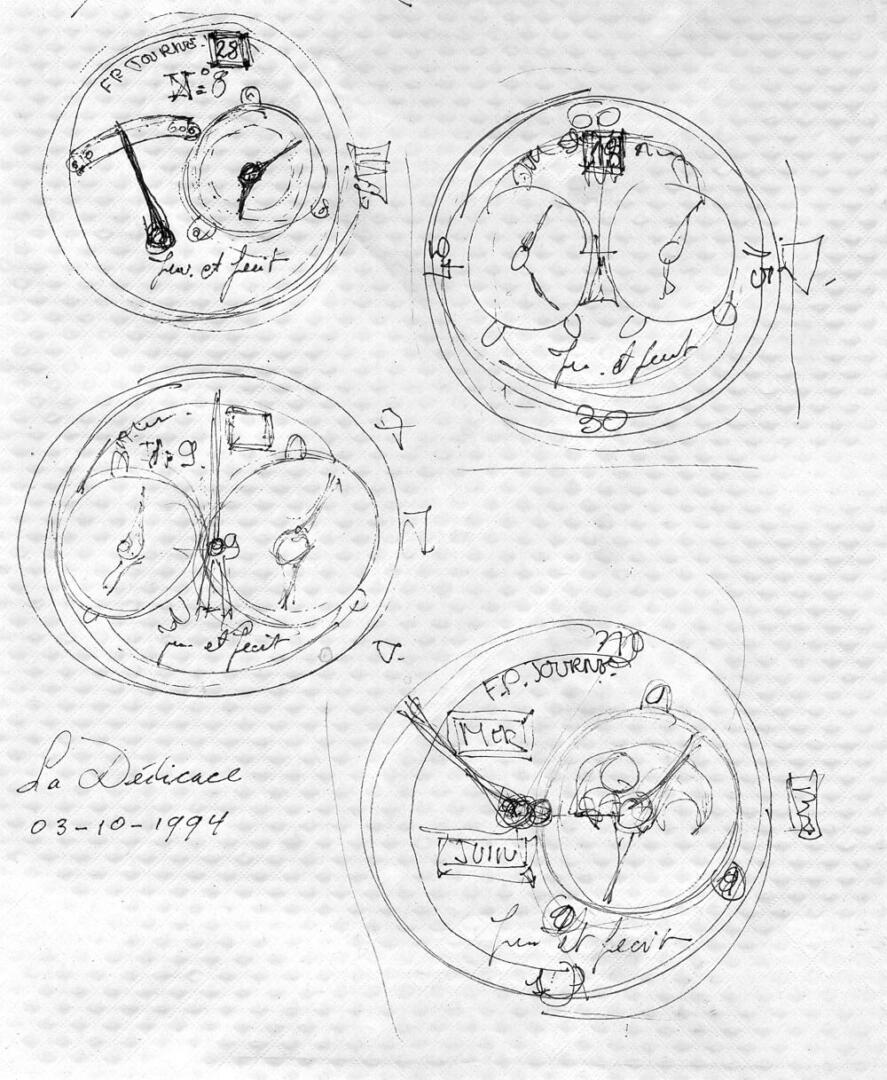
Journe’s initial collection included the Tourbillon Souverain, Chronomètre à Résonance and a unique piece, the Sonnerie Souveraine, sold to the Royal Collection of the Sultan of Oman. These models were exhibited at Baselworld in 2000. At the same time, François-Paul Journe also revealed three prototype models: the Octa Réserve de Marche, the Octa Chronographe and the Octa Calendrier. Each prototype was housed in a platinum case and paired with a pale yellow gold dial.
F.P.Journe Octa Calibre – three years of research
The Octa Réserve de Marche was Journe’s first automatic watch and its specification was extraordinary. Indeed, after three years of extensive research, the F.P.Journe Octa Calibre delivered incredible chronometric precision typically only found with hand-wound movements. Moreover, the Octa Réserve de Marche
was the first automatic watch with a big date capable of running autonomously for up to 120 hours while still delivering excellent precision.
F.P.Journe Octa Calibre – what’s in a name?
Originally, Monsieur Journe intended for the Octa Calibre to run autonomously for 8 days, hence the model’s Latin soubriquet. However, he soon discovered that such an impressive power reserve would come at the expense of precision.
Although the mainspring was sufficiently powerful that the Octa Calibre could run for 150-160 hours, Journe chose not to fully exploit its vast energy. Indeed, he appraised the magnitude of the torque serving the balance and found it was most consistent over the first 120 hours. Thereafter, the reduction in torque would cause the amplitude of the balance wheel to drop markedly, impairing accuracy.
Mindful of the relationship between precision and autonomy and, in particular, between torque and amplitude, François-Paul Journe preferred to state the Octa Calibre’s power reserve as 120 hours.
A powerful mainspring and generously sized balance wheel
While fitting a large mainspring can deliver seemingly impressive autonomy, it is widely known that autonomy is often achieved by fitting an undersized balance wheel. Certainly, a small balance wheel is easier to move, consuming less energy and thereby providing a longer power reserve, but it also comes at the expense of accuracy.
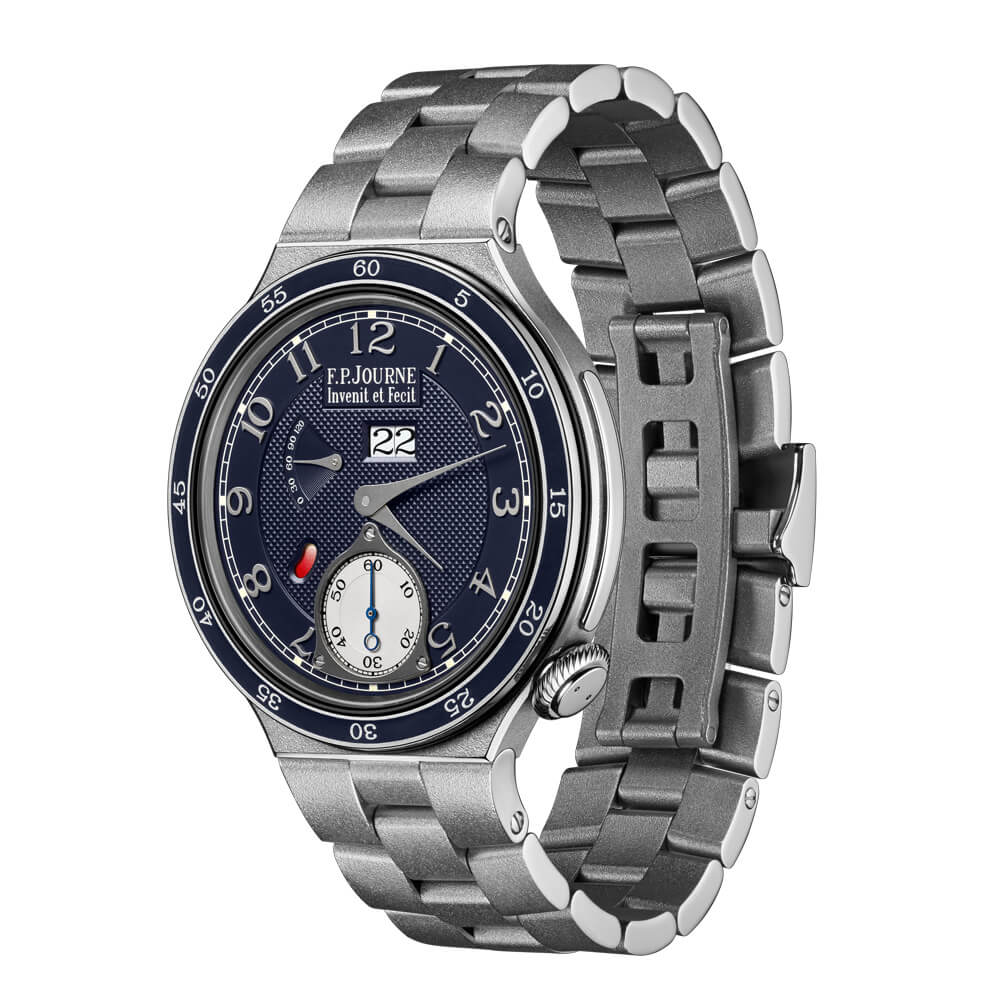
Image – Automatique Réserve, Calibre 1300.3 (2019)
With this in mind, Journe sought to achieve an impressive degree of autonomy, pairing a powerful mainspring with a large balance wheel. He turned to mainspring specialists, Générale Ressorts, based in Biel/Bienne. The company produced a mainspring measuring 1m in length with a thickness of 1mm. Tightly coiled 13.5 times, it caused the barrel to rotate 360° every 12 hours. All subsequent iterations of the Octa Calibre are endowed with a single barrel containing this mainspring.
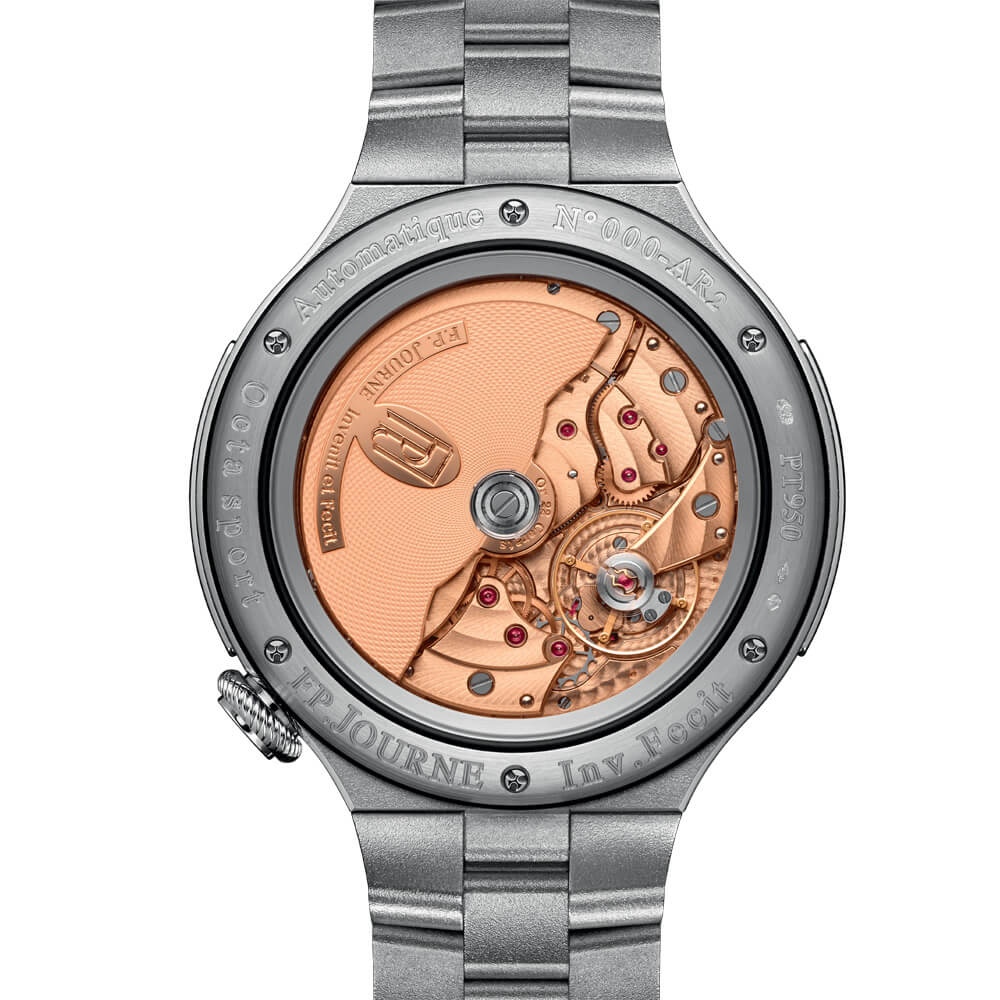
Image – Automatique Réserve, Calibre 1300.3 (2019)
The supply of energy from the barrel (850 grams of torque) is linear and relatively stable over the stated 120 hour power reserve. Moreover, the large diameter of the balance wheel, measuring 10.1mm, proves easier to regulate, delivers optimal stability and is less susceptible to external disturbances.
F.P.Journe Octa Calibre – one size fits all
During the development of the Octa Calibre, Montres Journe SA was in its infancy with modest resources at its disposal. However, undeterred, Monsieur Journe wanted to produce several watches endowed with a variety of complications, powered by the Maison’s new calibre. The only problem with releasing numerous models was they would each necessitate their own unique case, a prohibitively expensive requirement, especially for a company ordering relatively small quantities.
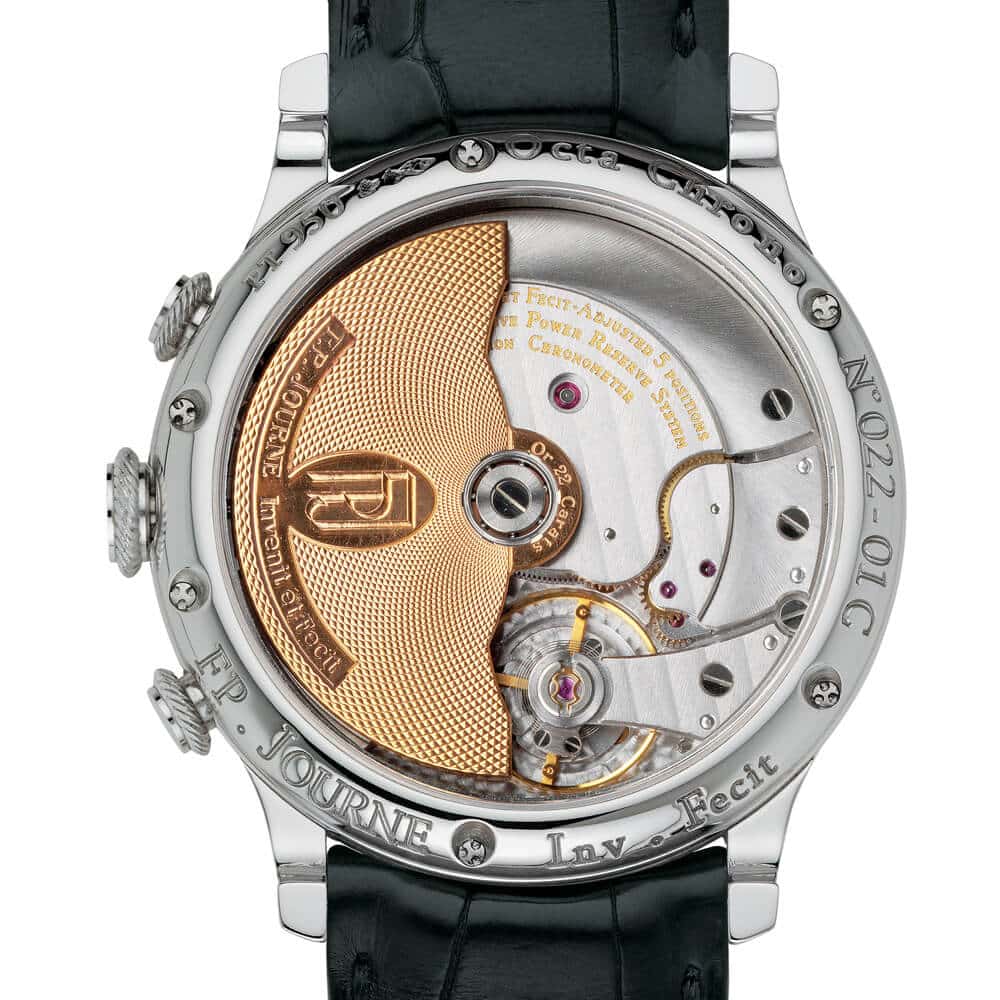
Image – Octa Chronographe, Calibre 1300 (2001-2006)
The answer lay in the design of the Octa Calibre, a movement produced in a variety of forms, yet all sharing the same height of 5.90mm (save for the Quantième Perpétuel which is 6.20mm) and measuring 13 lignes in diameter (30mm). Incidentally, the diameter of the movement, expressed in lignes, is referenced with the first two digits of the calibre reference eg Calibre 1300.3.

Image – Calibre 1300.3
As a result, the movements within most versions of the F.P. Journe Octa share the same footprint, irrespective of which complications are included, hence one case would suffice. The only exceptions were the Octa Chronographe which needed a unique case middle to accommodate the pushers and the latest Quantième Perpétuel (equipped with the 1300.3 calibre).
Allow me to explain how this feat was achieved.
An evolutionary approach to design
Using the chronograph as an example, many purists favour an ‘integrated’ type rather than a ‘modular’ design. An integrated chronograph is designed from the outset to be a chronograph, while a modular chronograph employs a base (usually used for displaying the hours and minutes) with a module affixed on top, delivering the stopwatch function. This latter approach is cheaper but is accompanied by several concessions. Most notably, it is more likely to cause ‘drag’ when actuated and, because it is added to the base, it has a tendency to increase the thickness of the movement.
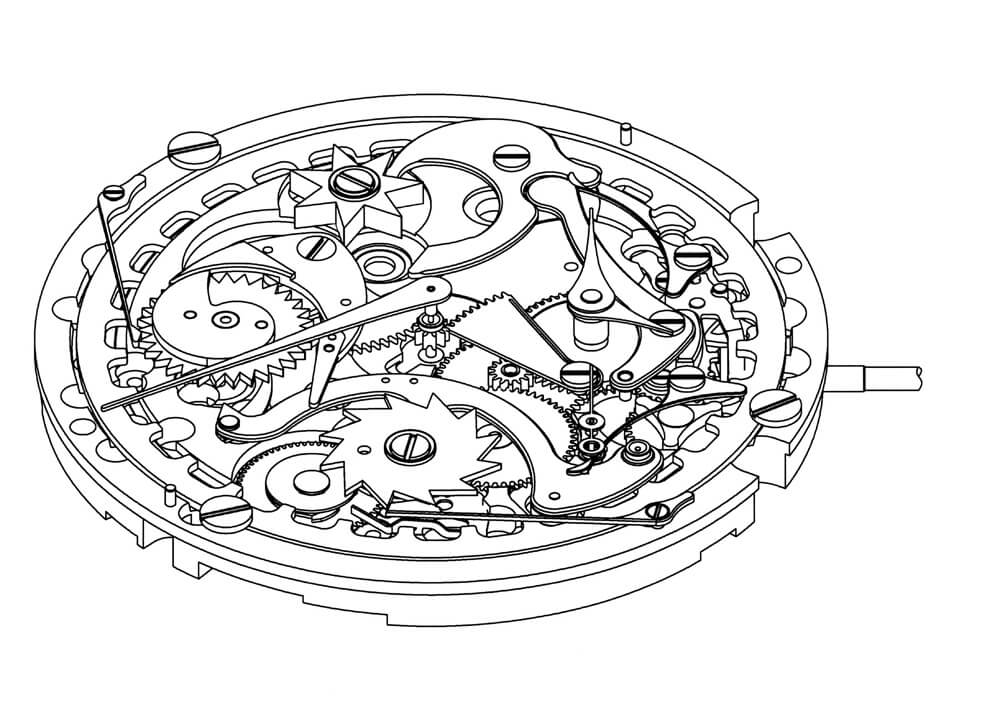
Image – Octa Calendrier, Calibre 1300 (2003-2005)
François-Paul Journe sought his own unique approach. He wanted to offer an array of complications but could not justify the expense of a dedicated movement for each reference. Conversely, Journe the perfectionist, couldn’t countenance the idea of using modules. His solution was to create a movement that would allow him to integrate future complications without altering its overall dimensions. Journe ingeniously allocated a 1mm gap beneath the dial in which he could accommodate a complication within the existing movement.
In the beginning there was the Calibre 1300 (2001)
The mainplate and bridges equipping the inaugural Octa Calibre were rhodium-plated brass embellished with straight Côtes de Genève motif. The bi-directional 22K gold rotor harnessed energy from the motion of the wearer’s wrist, tensioning the notably long mainspring within the lone barrel. Incidentally, the rotor was positioned off-centre, providing Journe with a small space (not to be confused with the gap beneath the dial) where he could position a pinion. This could be used if he subsequently wanted to place a complication to the rear of the watch eg a sky chart complication.

Image – Octa Réserve de Marche, Calibre 1300 (2001-2005)
The balance had a frequency of 21,600 vph (3Hz), a cadence that would be adopted for later versions of the Octa Calibre. The movement featured a variable inertia balance (also known as a free sprung balance).
With an index regulated balance, typically found on the majority of watches, the effective length of the hairspring is adjusted, thereby altering the rate. However, with a variable inertia balance, the length of the hairspring remains constant. The rate is altered by adjusting masselottes, positioned on the spokes of the balance wheel, effectively changing the moment of inertia.
When contrasted with an index regulated balance, a movement fitted with a variable inertia balance is less susceptible to positional influence and the rate stability is superior. Another benefit of this approach is that by placing the masselottes on the spokes of the balance wheel rather than its rim (a traditional approach), the motion of the balance creates less air perturbation, enhancing precision.
When the clockwise swing of the balance wheel does not match the counterclockwise swing, it is out of beat. This happens when the impulse pin is not dead centre between the banking pins (when at rest). With some watches, correcting the beat error necessitates moving the collet on the balance staff, a time-consuming task. In terms of the Octa Calibre, it is fitted with a mobile stud holder, allowing a trained watchmaker to easily reposition the complete balance, thereby eliminating the beat error. This perfectly demonstrates Journe’s reputation for horological probity.
F.P.Journe Octa Calibre 1300.2 (2004)
Prior to 2004, F.P.Journe outsourced the making of mainplates and bridges. Unfortunately, while Monsieur Journe wanted to use 18K gold for these parts, there were no companies around at the time capable of working with the precious metal. Subsequently, in 2004 F.P.Journe was able to make 18K plates internally.
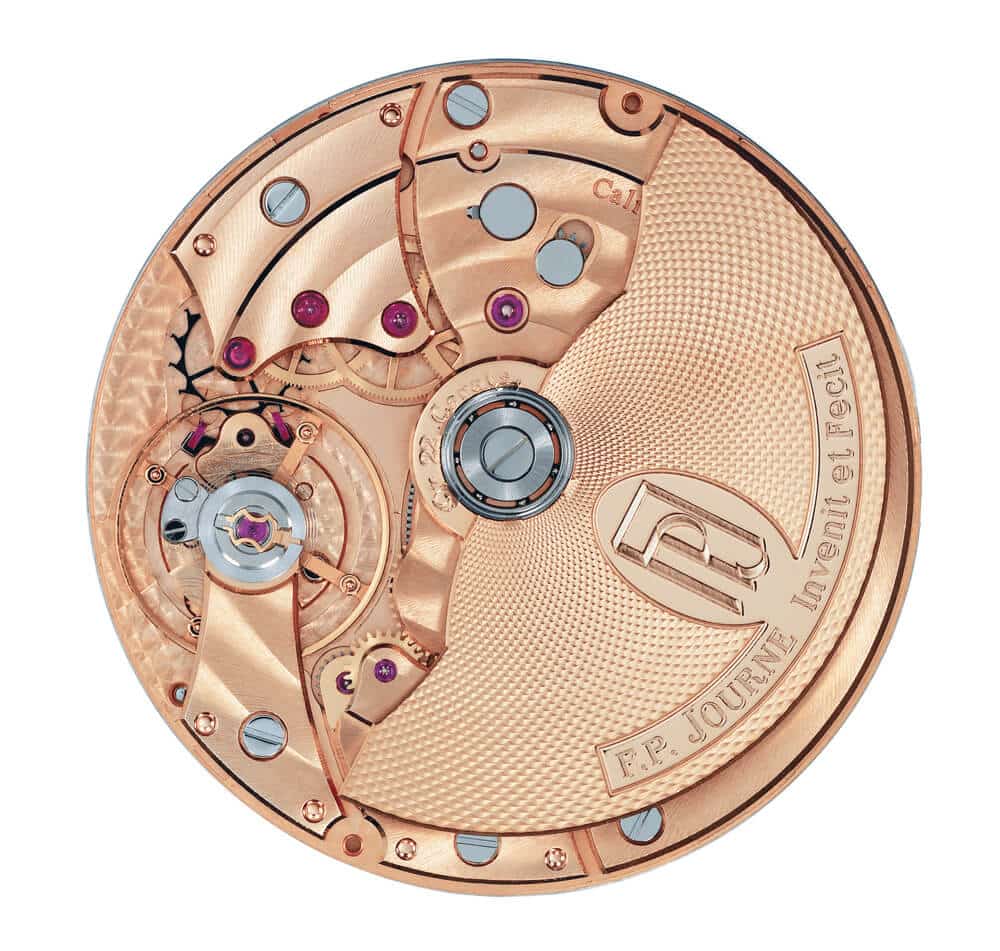
Image – Calibre 1300.2 (2004)
With the advent of the Calibre 1300.2, the rhodium-plated brass found within the Calibre 1300 was supplanted by 18K rose gold. Gold is very soft, requiring great care when assembling or repairing a movement. However, it is one of the least reactive metals, obviating the need for any plating. This provides a significant benefit as rhodium plating can wear off over time or be damaged with a wayward tool. Once removed, the damaged plating cannot be remedied with a localised repair, but instead requires a full strip down, replating, re-assembly and regulation.
By opting for gold, Journe clearly gave consideration to the longevity of the movement, even if this demanded greater concentration during the assembly process. Moreover, the 18K rose gold, now widely employed by the Maison, also serves to reinforce the luxurious character of F.P.Journe’s movements.
The Calibre 1300.2 featured an alternative form of decoration on the main plate and bridges, namely circular Côtes de Genève.
Interestingly, the yellow gold dials fitted to the inaugural Octa models of 2001 were discontinued as François-Paul Journe did not like the combination of yellow gold dials and rose gold movements. Needless to say, these early models are now highly desirable, attracting commensurate prices.
F.P.Journe Octa Calibre 1300.3 (2007)
The Calibre 1300.3 was produced after Monsieur Journe noted that his friend, an accountant, had a very sedentary lifestyle. He realised that his watch would seldom be fully wound, hence his answer was to move from a bidirectional rotor to a unidirectional rotor. This latter form of oscillating weight moves more freely, rotating with greater alacrity, producing more inertia, thereby energising the mainspring more effectively.

Image – Automatique, Calibre 1300.3 (2022)
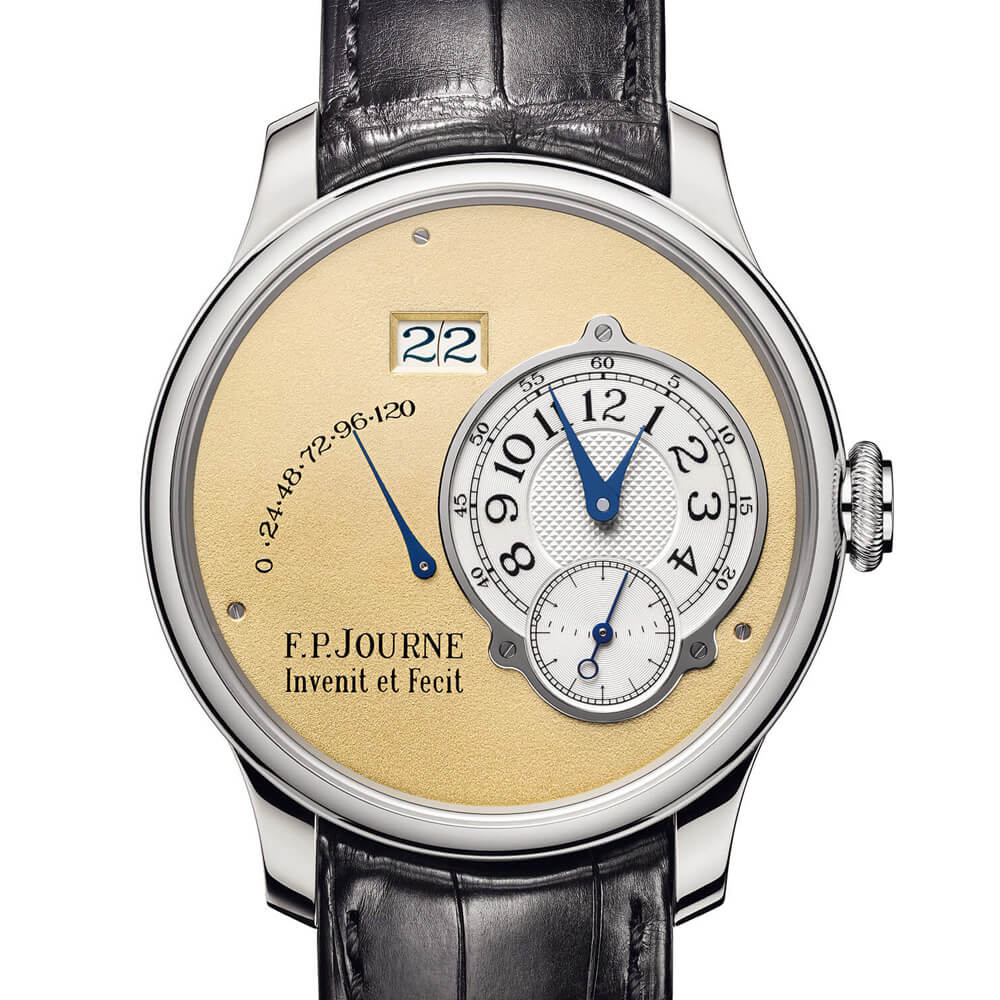
Image – Automatique Limited Series, Calibre 1300.3 (2021)
While the Calibre 1300.3 continues to be made in 18K rose gold, it has also been made in aluminium and fitted to the Octa Sport Aluminium (2011). This latter metal was selected for its lightweight characteristics.
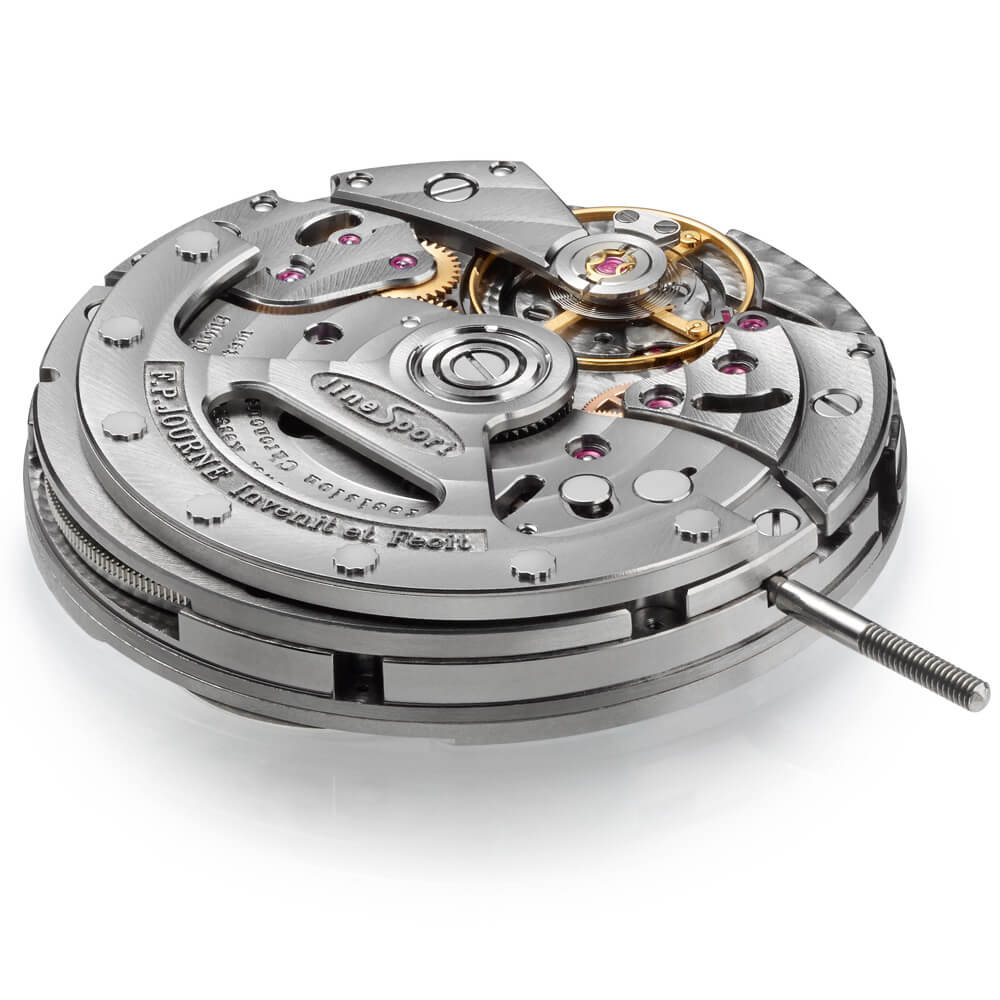
Image – Calibre 1300.3 – Aluminium alloy
F.P.Journe Octa Calibre – it’s difficult to improve on perfection
Since releasing the Octa Calibre in 2001, the firm has produced 20 different references fitted with the self-winding movement. Indeed, the inventory of Octa models is lengthy and comprises numerous complications, including a calendar, chronograph, moon phase, perpetual calendar, UTC, power-reserve with big date, power-reserve with moon phase and big date, zodiac…..
Interestingly, the F.P.Journe Octa Calibre has featured within watches equipped with centrally positioned hour and minute hands but has also powered timepieces with off-centre hour and minutes displays. The versatility of this movement has allowed Journe to fully exploit his extraordinary creativity for the delectation of horophiles.
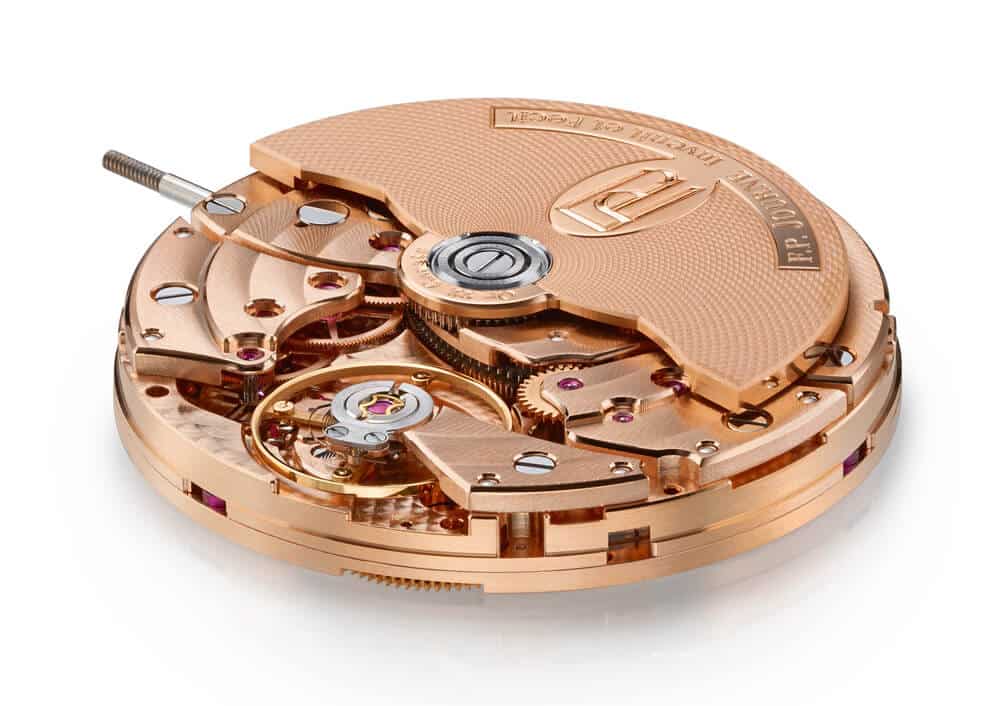
Image – Calibre 1300.3 – 18 K rose Gold
It’s more than 20 years since François-Paul Journe attended Baselworld and showcased his three prototypes equipped with the Octa Calibre. Over the years, he has made subtle refinements, however, such was the brilliance of his inaugural automatic movement, which remains relatively unchanged. Today, the movement is known for its precision, reliability as well as the longevity of the materials used in its construction. As a result, it is now revered by watch aficionados around the globe. Could it be described as perfection? Quite possibly.