
Glashütte Original Alfred Helwig Tourbillon 1920 – Limited Edition
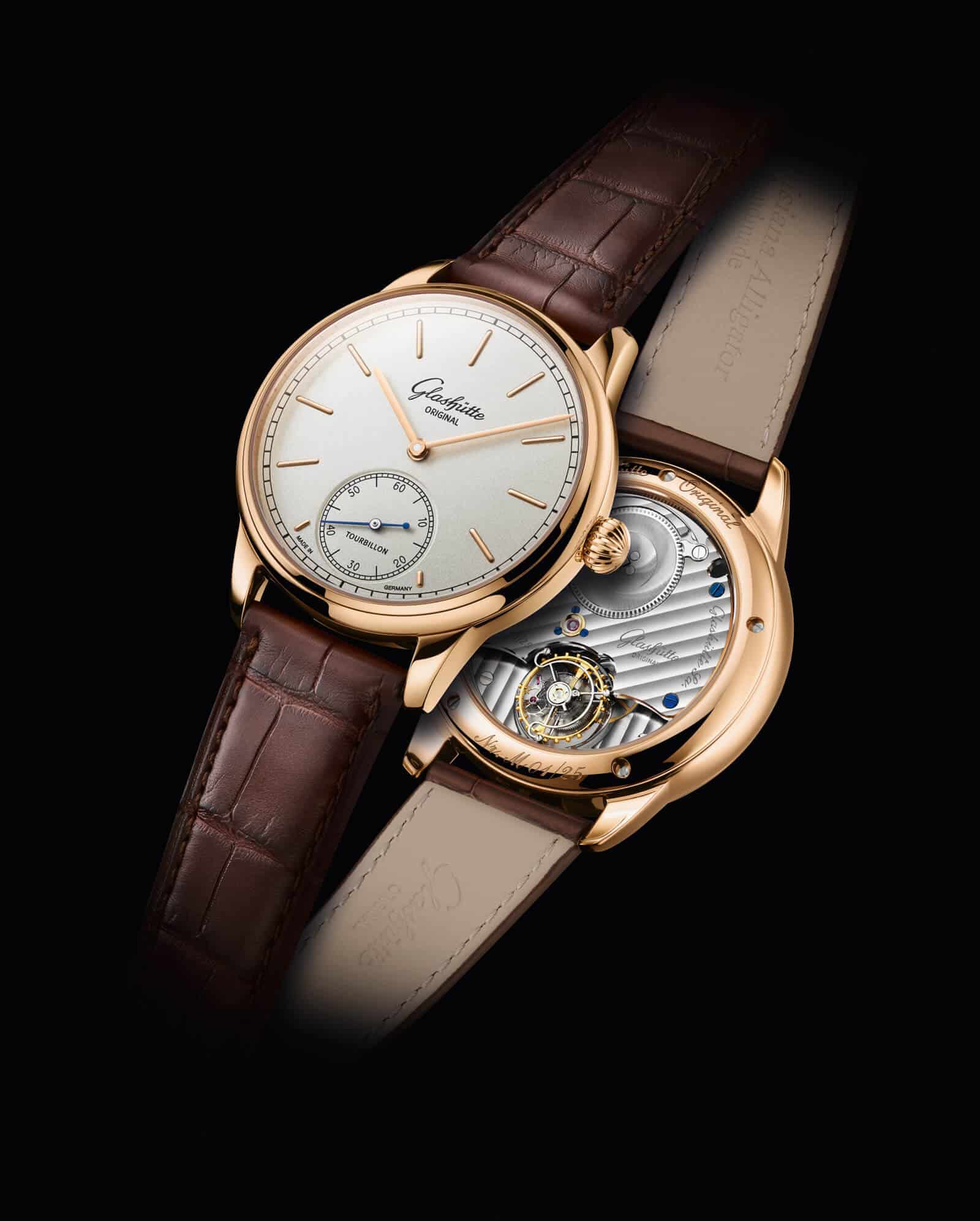
The Glashütte Original Alfred Helwig Tourbillon 1920 – Limited Edition is equipped with a flying tourbillon, visible to the rear of the watch. Limited to just 25 pieces, this model is not only exclusive but also the epitome of grace and understatement. It’s 100 years since Helwig invented the flying tourbillon and yet its appeal has never diminished with the passage of time.
In the town of Glashütte, nestling at the foothills of the Ore Mountains, there is probably a Konditorei doing a roaring trade selling celebration cakes. This year, this town in Saxony is celebrating 175 years of watchmaking. Since Ferdinand Adolph Lange established his watchmaking business in 1845, Glashütte has attracted several watch firms and has become the epicentre of German watchmaking.
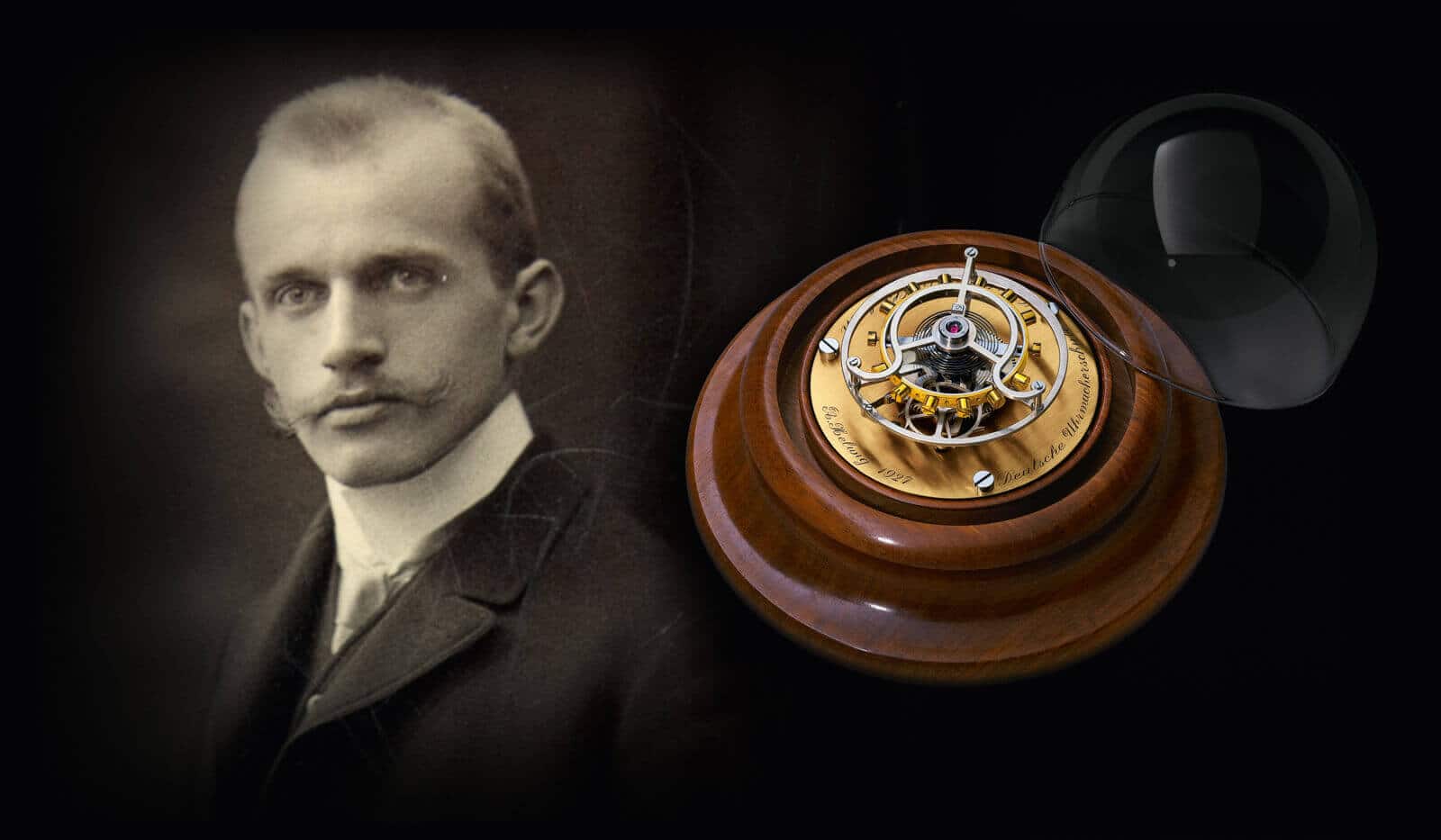
As part of this expansion, various firms needed employees with the requisite skills, hence in 1878, the German School of Watchmaking Glashütte opened its doors. With the passage of time, the school grew in size. In 1913, Alfred Helwig was appointed as a teacher at the school. Despite being only 27 years of age when he arrived at the school, he possessed an impressive understanding of watchmaking.

Perhaps Helwig’s most significant achievement was in 1920 when he invented the ‘flying tourbillon’. Unlike Breguet’s tourbillon (1801) which featured upper and lower bridges, a flying tourbillon eschews the upper bridge, allowing unrestricted views of the escapement, regulating organ and cage in motion. It’s a bewitching spectacle no self-respecting horophile can resist.
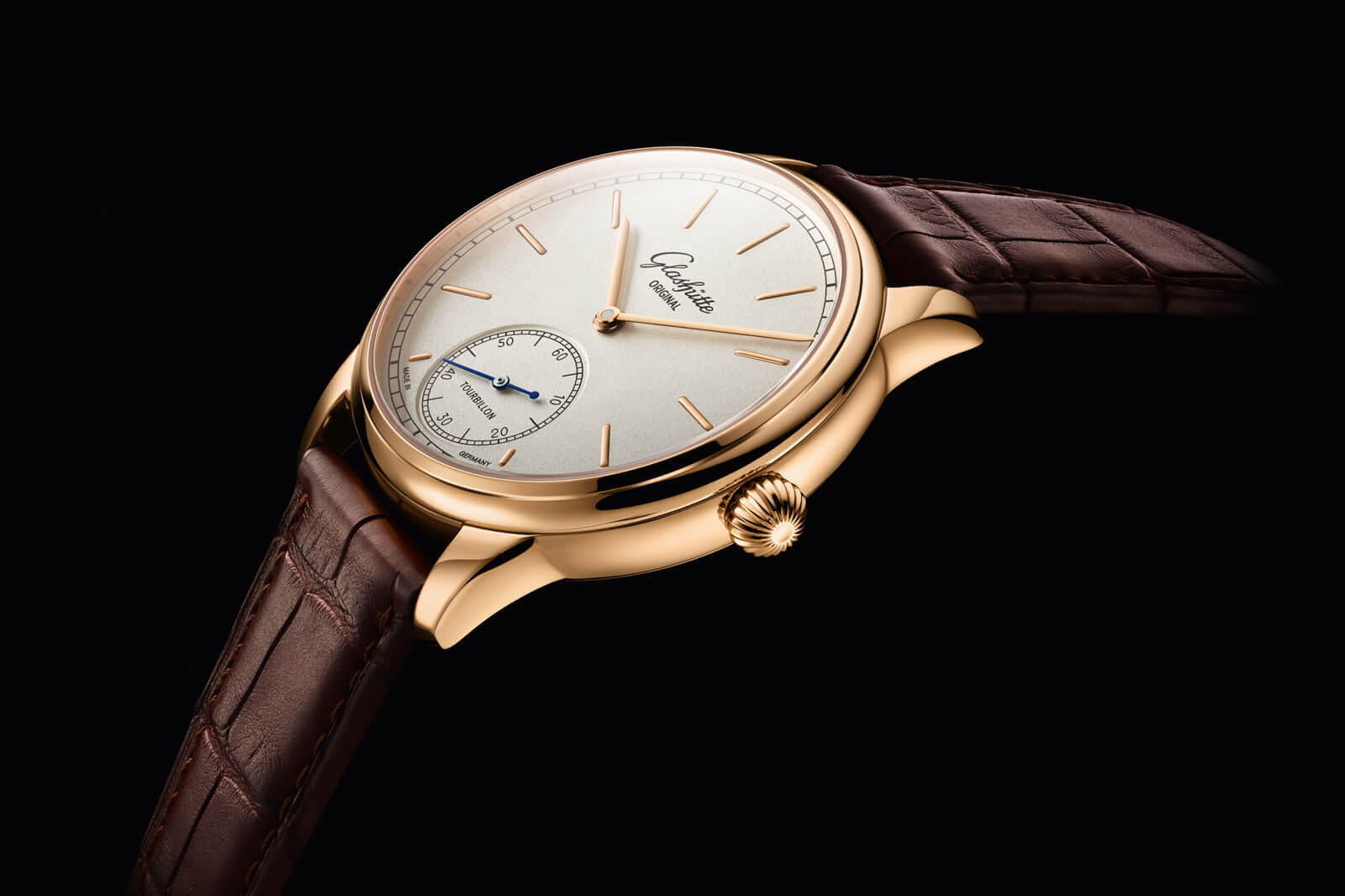
It is now the 100th anniversary of Helwig’s invention and Glashütte Original has chosen to mark the event by releasing a sublime watch, the Glashütte Original Alfred Helwig Tourbillon 1920 – Limited Edition. This new timepiece, featuring a flying tourbillon, visible to the rear, is limited to just 25 pieces. The dial is elegantly understated and is formed of solid gold with a silver-plated finish.
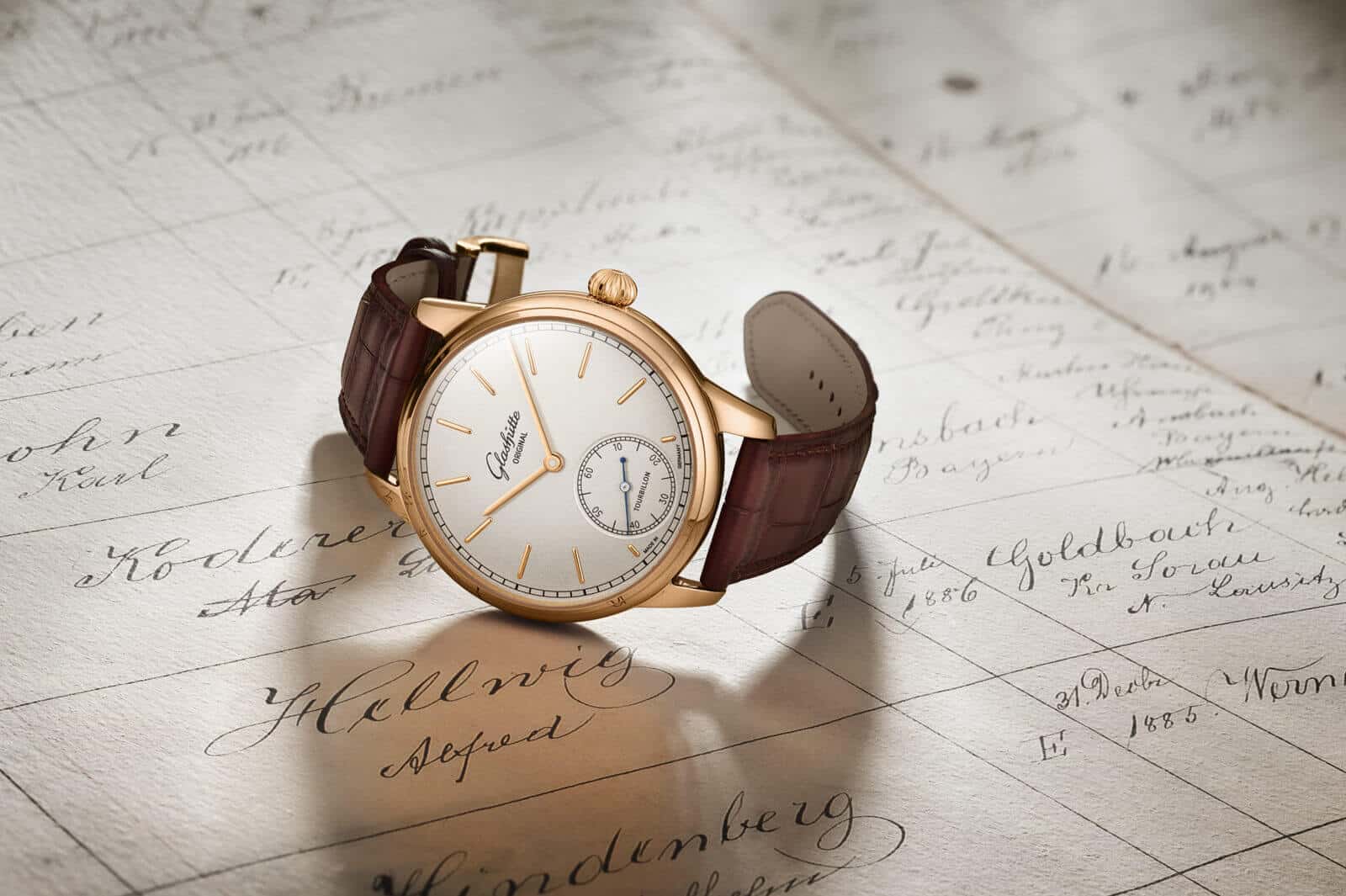
Returning to Helwig, he worked at the school until he was 68 and throughout his career he trained more than 800 apprentice watchmakers. Today, the town’s watchmaking school is named after him, providing a fitting tribute to the man who invented the flying tourbillon. As mentioned earlier, it’s the 100th anniversary of the flying tourbillon, providing yet another perfect excuse for eating a piece of celebratory cake.
Price: €116,970 (RRP as at 24.9.2020)
The brand’s press release (September 2020)
Pure elegance and exceptional craftsmanship
The new timepiece from Glashütte Original is an example of pure elegance, technical sophistication and exceptional craftsmanship. This splendid masterpiece is limited to 25 pieces and presented in a rose gold case. The dial is fashioned in solid gold and subsequently silver-plated by friction. A railroad chapter ring and rod index appliques lend the timepiece an elegant, classic appearance. The filigree baton-style hands in rose gold contribute to the understated look of the watch as a whole.

The eye-catcher is the seconds display, which is positioned at 6 o’clock and bears the inscription ”Tourbillon”. The latter serves as a subtle indication that this timepiece reveals its many sophisticated aspects in the course of time – certainly not at first glance. With this model, in fact, the famous Flying Tourbillon is hidden on the reverse of the movement – in keeping with the historic models of Helwig‘s era.

Alfred Helwig and the Flying Tourbillon
The Flying Tourbillon was developed in Glashütte in 1920 by one of the most eminent of German watchmakers: Alfred Helwig. In contrast to the classic tourbillion anchored on both sides, Helwig’s elegant construction required only a single anchor on the underside, with the result that it appears to be flying within its cage.

In an open frame, the balance and escapement revolve steadily around their own axis at precisely 360° per minute. In this way, the tourbillon effectively counters the negative influence of gravity on the rate precision.
The German Watchmaking School Glashütte – the domain of Alfred Helwig
The German Watchmaking School in Glashütte was founded in 1878. Through its training of a great number of master watchmakers, it achieved considerable influence over the art of German watchmaking as a whole. In 1913, at the age of 27, Alfred Helwig was appointed to a position as technical instructor at the famous training institute. There he dedicated himself – together with his master class students – to the development of particularly accurate timepieces featuring cantilevered tourbillons, which Helwig called “rotary gear watches”. From 1920, a series of such watches was developed under his direction and in accordance with his concept. When tested by the German Naval Observatory in Hamburg, the general testing centre for precision clocks and watches, they achieved excellent results. Alfred Helwig taught at the renowned watchmaking school for 41 years, in the course of which he trained more than 800 apprentice watchmakers. His publications remain important reference works for watchmakers, regleurs and watch collectors today.
Since 2008 the historic building that once housed the German Watchmaking School Glashütte has been home not only to the German Watch Museum Glashütte, but also to the Historic Workshop of Glashütte Original, whose staff specialise in the restoration and maintenance of valuable timepieces made in Glashütte.
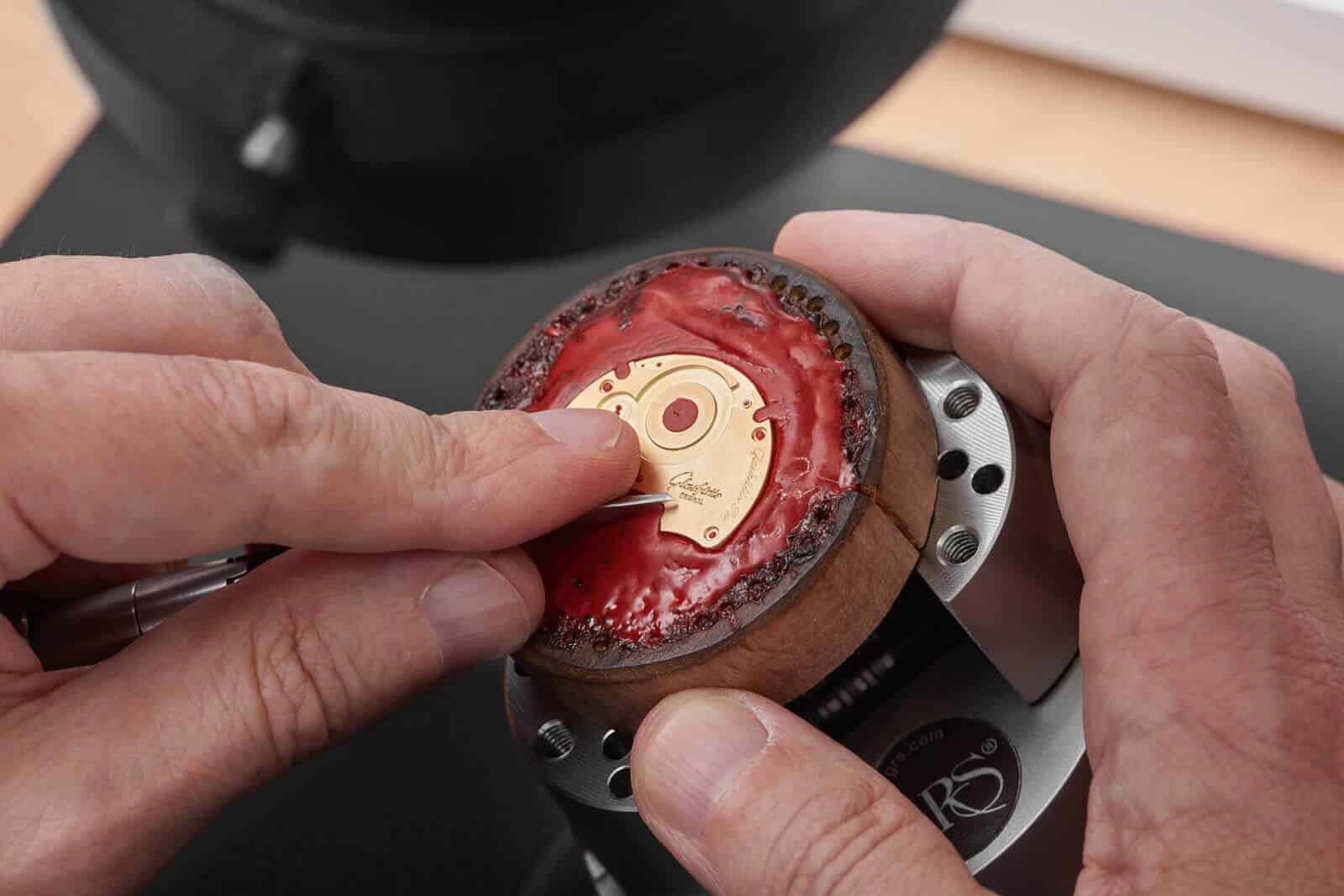
Final assembly of the 25 pieces of the new limited edition will be performed by these supremely competent specialists, which means this masterpiece will not only bear the name of Alfred Helwig, but will have been produced at the original site of his work as master watchmaker and teacher.
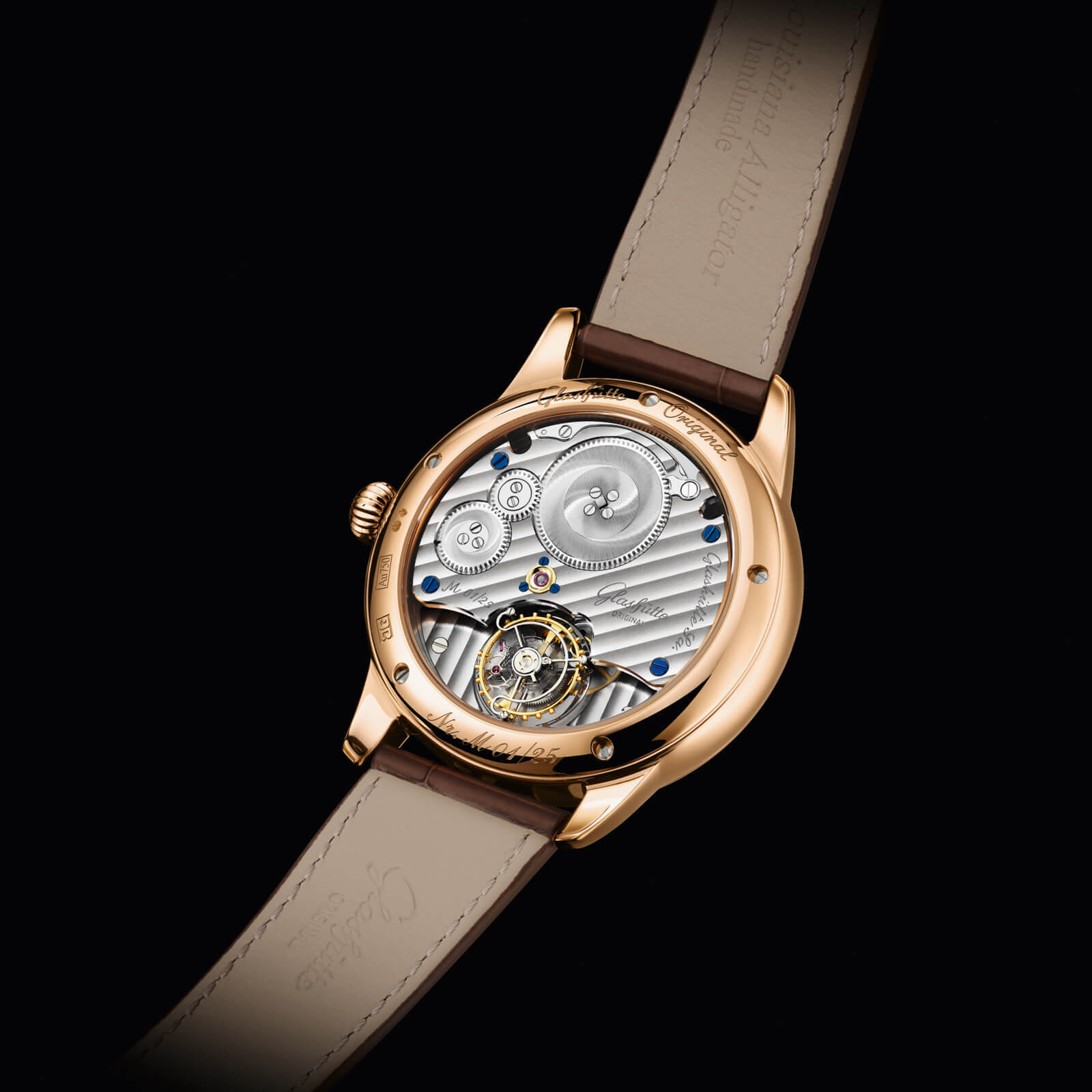
Sophisticated technology
This timepiece is powered by the finely finished Calibre 54-01 manual winding movement, which features a remarkable running time of 100 hours. The eye-catching element on the reverse of the movement is, of course, the filigree Flying Tourbillon. Numerous elaborate decorations and finishes such as the sunburst decoration on the spring barrel cover, Glashütte stripes on the three-quarter plate, blued screws and screw-mounted gold chatons, as well as a great number of polished steel parts, contribute to the fascination of this masterpiece of the Glashütte art of watchmaking.
Further reading