
Louis Erard Excellence Émail Grand Feu Watch Review
The Louis Erard Excellence Émail Grand Feu is yet another model from the brand which sets aside accepted notions of value. This new timepiece has a grand feu enamel dial, a feature that is normally the preserve of much costlier watches and yet it proves surprisingly affordable. Once again, the Maison from Le Noirmont has democratised fine watchmaking.

What makes some watches expensive?
In the esoteric world of fine watchmaking, non-experts often question what makes a watch expensive. The answer to this question is complicated and cannot be imparted in three or four words, hence I ask for your patience while I endeavour to explain.
The cachet of a brand
Those marques that are perceived as highly desirable, perhaps where demand for certain models outstrips supply, are more likely to command the full asking price for their watches. In some cases, where demand is exceptionally high with commensurately long waiting lists, the grey market often swoops in and supplies these sought-after models for ‘overs’ i.e. above the list price. The desirability of a brand is often strongly influenced by the size of a marketing budget, driving global brand awareness. However, sometimes this is merely a function of hype over substance. In some cases, a brand will cynically inflate a price with little justification to fuel demand. Put simply, some consumers assume that an expensive product is superior when actually, in reality, the opposite is true.
The materials used
Noble metals such as gold and platinum have an intrinsic worth that can heavily influence the final selling price of a watch. Grade 5 titanium is clearly cheaper than these precious metals, but costs more to machine. Growing a sapphire crystal boule is protracted and by default the watch cases made of this material are expensive. The application of precious stones to a dial or case will also heighten costs.
Complications
Some movements endowed with high complications necessitate the skills of the most accomplished watchmakers. To work on a tourbillon or a minute repeater, for example, will require the talents of a master watchmaker with several years of experience. These individuals are the crème de la crème of watchmaking.
Finissage
The finest exemplars of fine watchmaking will encompass peerless finissage. A finisseur will decorate movement parts to remove signs of machining, uphold watchmaking traditions, eg applying Côtes de Genève to bridges, and lastly, enhance corrosion resistance. There are various forms of finissage, including perlage, anglage, mirror-polishing etc. In some cases, embellishing a component with mirror-polishing or black polishing can take several hours, a fact that will justifiably inflate the final selling price of a watch.
Artistic crafts
Dials enriched with hand-guilloché, marquetry, miniature paintings, cloisonné, champlevé or grand feu enamelling require the talents of a time-served artisan and a vast amount of patience. Furthermore, when firing enamel at temperatures of 800°C, the surface can become marred with air bubbles or may even crack. Indeed, when making such dials, typically 60 – 70% are discarded. Inevitably, this cost has to be recouped.
The aforementioned list is not exhaustive, but as you can see, there are several factors that influence the final selling price of a watch. Most of these are justified, but some are driven merely by commercial opportunism.
In recent years, Louis Erard has repeatedly challenged convention. It has made watches housed in Grade 5 titanium and it has collaborated with some of the biggest talents in the watch industry to deliver sublime limited-editions at remarkably ordinary prices. Beyond making conventional chronographs it has also made a monopusher chronograph for two-pusher money.

However, despite being a seasoned horophile, I could not have envisaged the Swiss brand from Le Noirmont, or any other brand for that matter, offering a watch with a proper Grand Feu enamel dial for CHF 3,900. Moreover, Louis Erard has entrusted the making of the dial to the venerated Swiss company, Donzé Cadrans. The grand feu specialist was founded in 1972 and has made dials for some of the most prestigious and revered watch brands in existence. Today, the specialist maker of enamel dials is regarded as the finest practitioner in its field.
Making a grand feu enamel dial
Everything starts with a copper base or blank, the preferred material for this type of dial. Two feet are attached to the underside of the base. Ultimately, once the dial is completed, the feet will be used to affix the dial to the movement.


Enamel is made from what is essentially crushed glass applied in powder form. After the blank is dipped in an alcohol-based liquid, the enamel powder is dusted onto the top and underside of the copper base. The alcohol helps the powder adhere to the blank until the firing process melts and fuses it with the base and other layers.
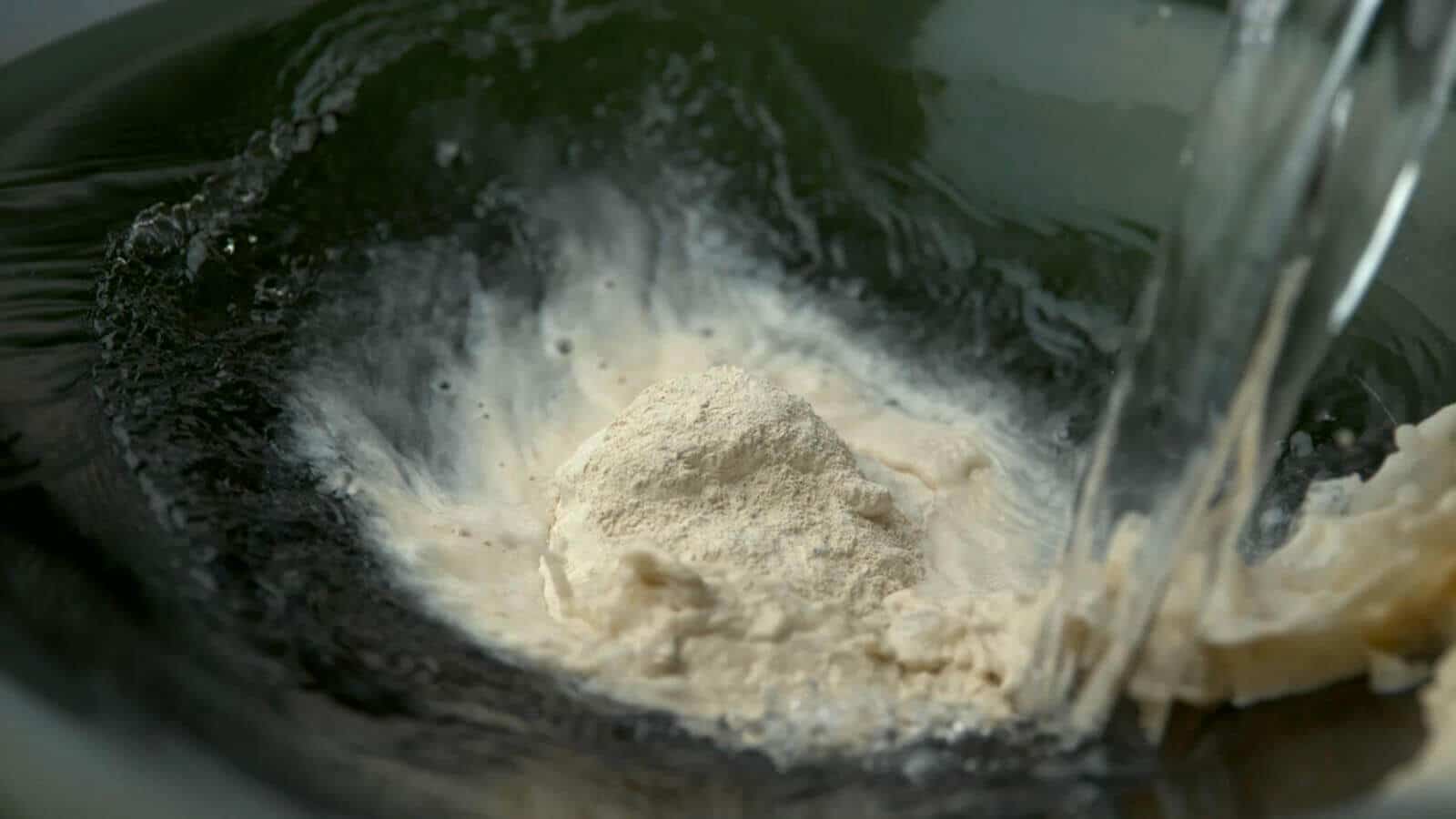
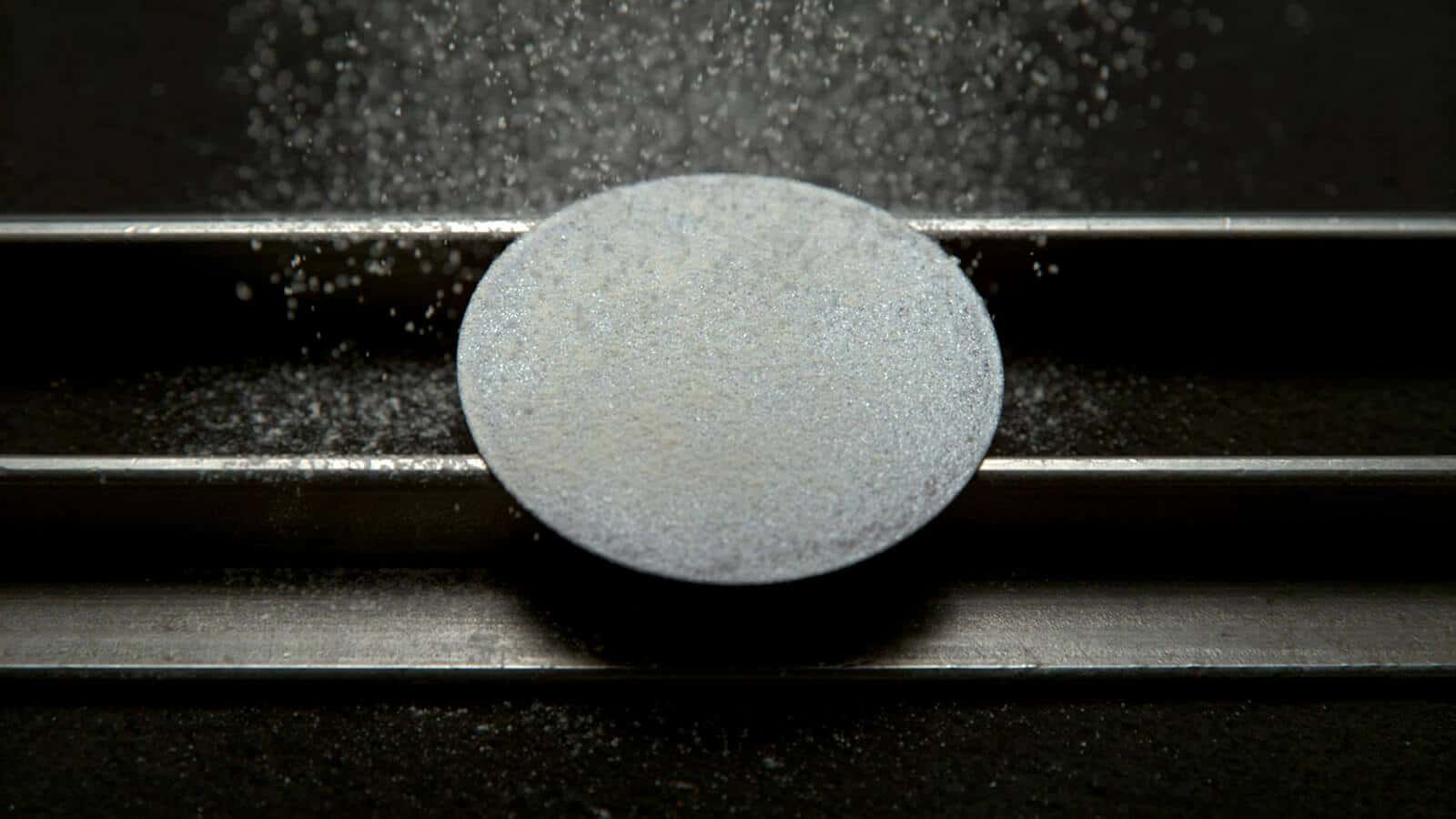
A base layer is applied to the copper blank, both to the upper surface and the underside, despite this not being seen. The reason for applying a layer to both sides of the dial is to prevent the copper blank from buckling during the firing process. The oven usually operates at about 800°C, but the precise temperature is determined by the type of enamel used. The cooking time is not defined but based on the artisan’s experience. Once the dial is removed from the oven, it is allowed to cool.
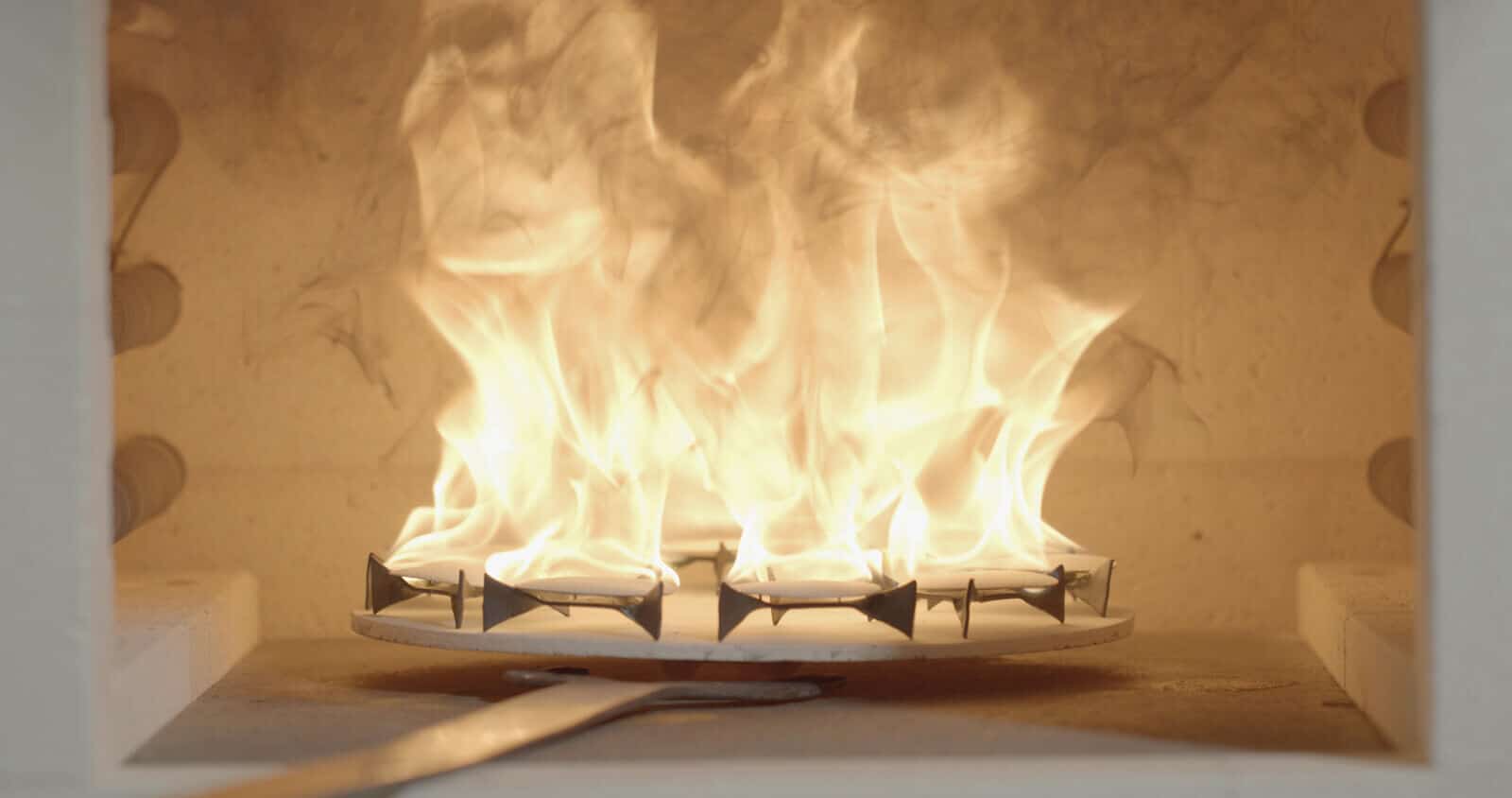
Thereafter, the blank is dusted again with the ground enamel powder and the firing process is repeated. A dial will be subjected to several firings. At this point, 60 – 70% of dials don’t make the grade, only the finest dials are cherry-picked. There may be tiny inclusions but these are indicative of the dial’s hand made nature. After inspection, each selected dial is polished and filed.
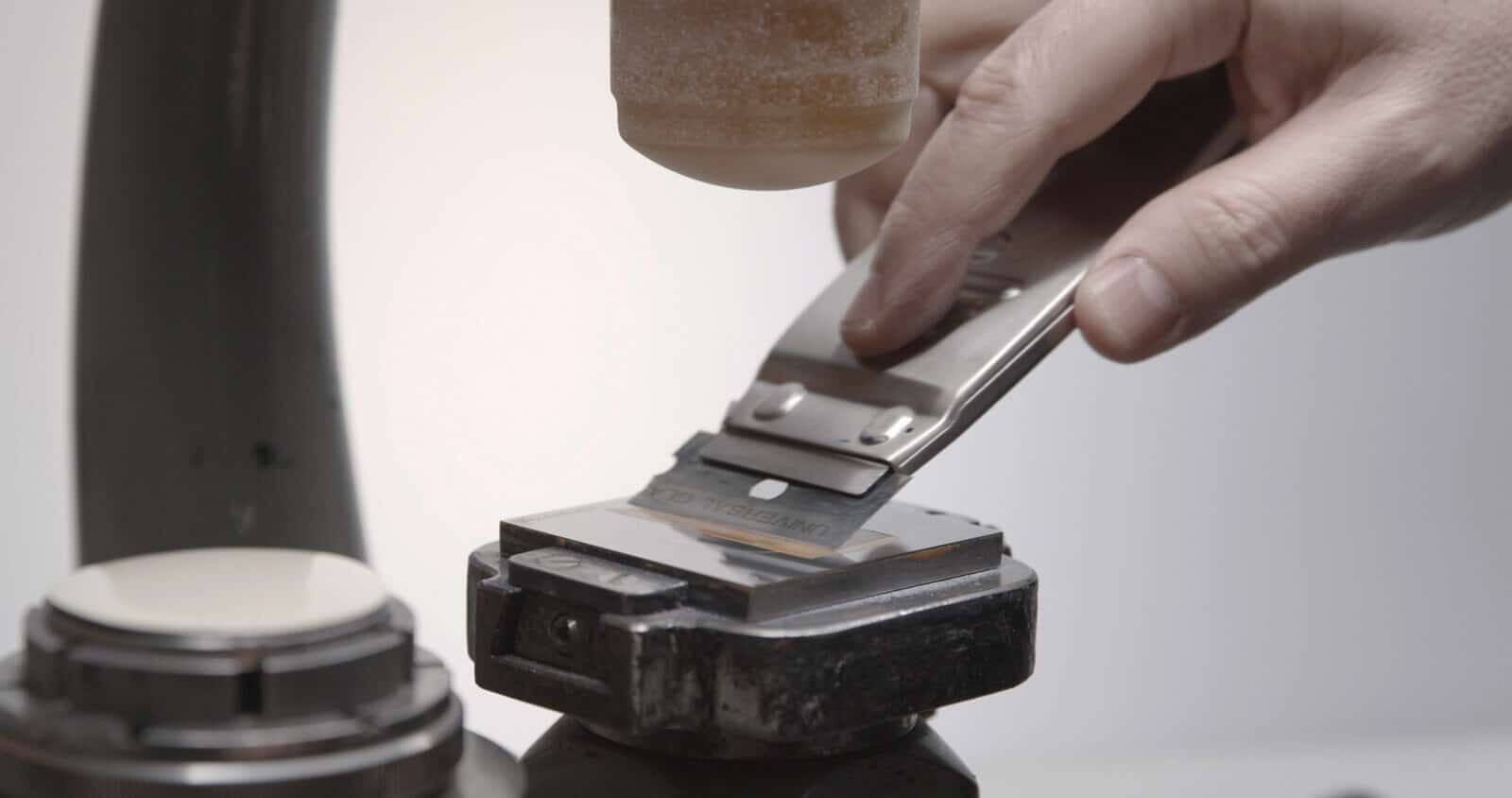
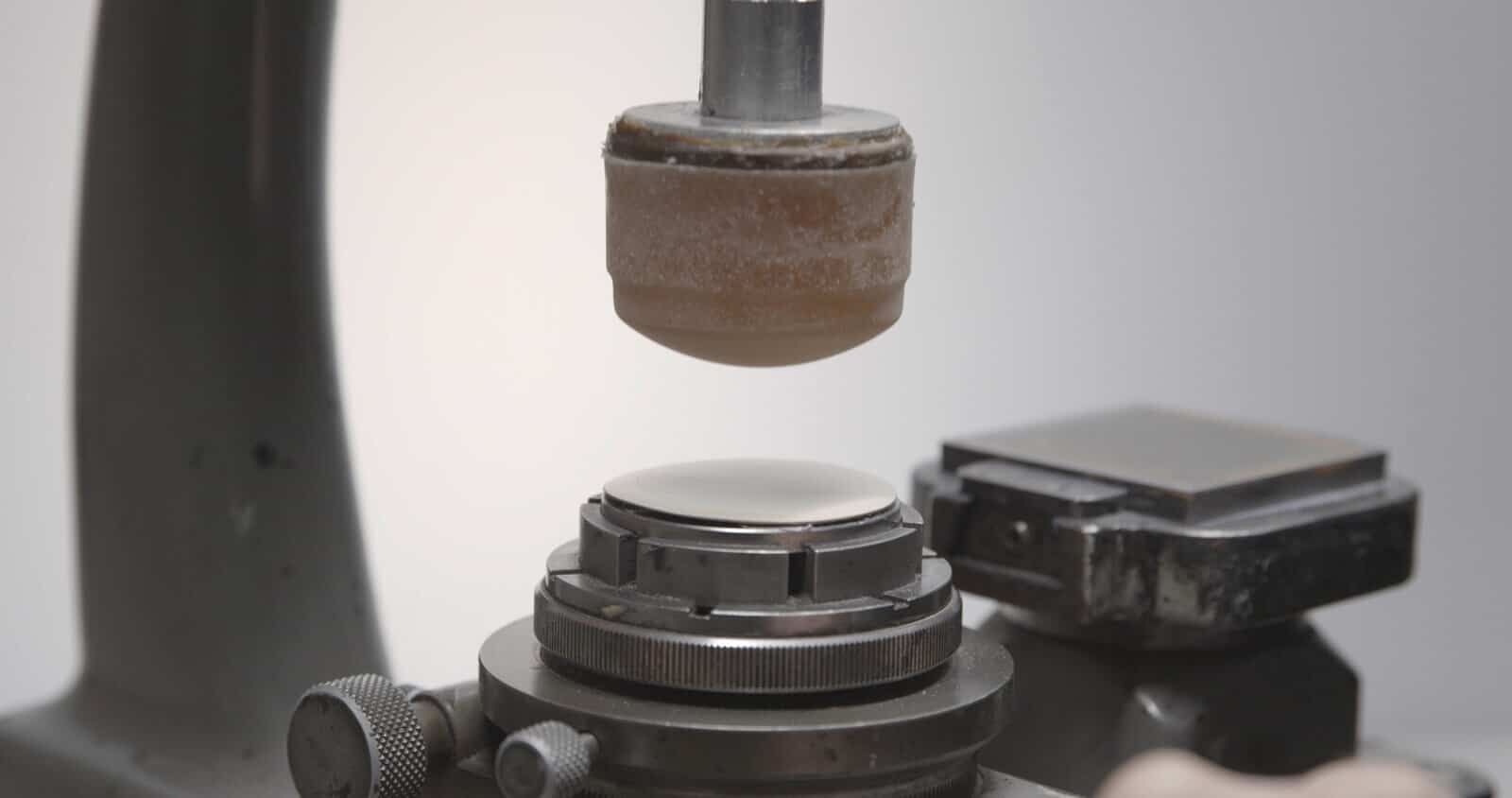
The dial is then pad printed with the brand’s name, hour markers, etc and subjected to another firing. An artisan uses a piece of carbon to flatten the surface, taking care not to damage the dial. Lastly, the dial is trimmed precisely, again exercising great care to avoid harming it as the surface is quite brittle.
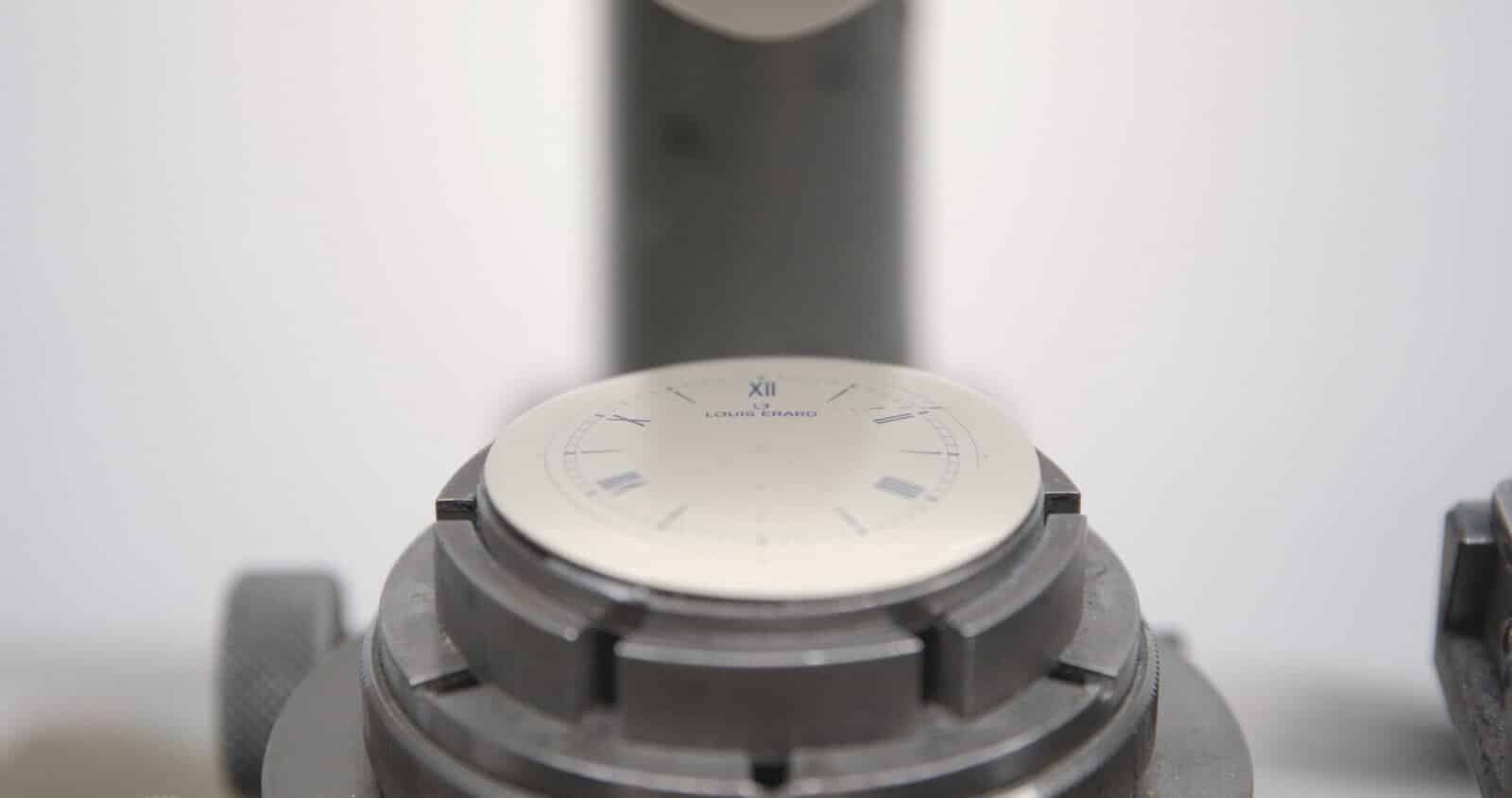
As I have shown, the making of a grand feu dial is a lengthy process with a relatively low production yield. The production of dials cannot be industrialised as the skills and techniques preclude such an approach. Needless to say, the dials are expensive, however, they confer several desirable qualities. In particular, a grand feu dial has a wonderful depth to its appearance. Furthermore, the dials won’t age with the passage of time.
Louis Erard Excellence Émail Grand Feu – dial
Returning to the dial of the Louis Erard Excellence Émail Grand Feu, its surface is cream-coloured with additional blue and beige details. The hour markers, chemin de fer and branding are pad printed, while the small seconds display features blue and beige ‘enamelled transfers.’ The resultant dial surface exhibits a sublime profundity and promises to retain its showroom-fresh appearance for many years to come.

Thermally blued fir-tree hour and minute hands impart meaning. This style of hand was first seen last year with the advent of the Excellence Triptych collection, albeit these hands were not thermally blued. These latter timepieces were inspired by Art Sapin, a derivation of Art Nouveau from the Swiss Jura. While the coniferous-themed hands are stylish, they also remain highly legible.
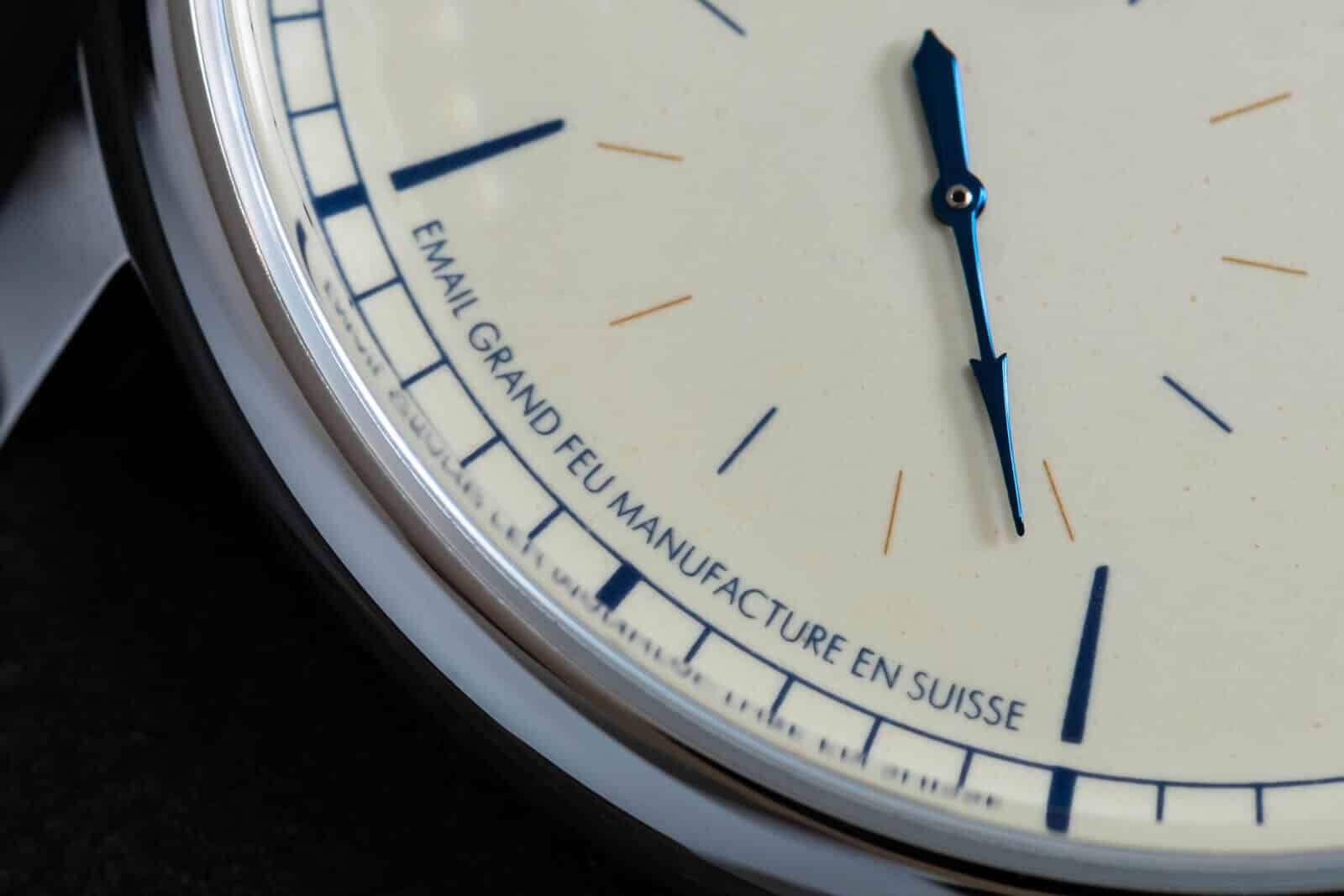
An oversized small-seconds display is positioned at 6 o’clock. A lone fir-tree hand circumnavigates the display while the notable scale of the indication augments readability. The use of blue and beige markings enriches the overall appearance.

The indexes comprise of elongated Roman numerals and slender triangular batons which reinforce the perception of elegance. A chemin de fer respectfully doffs its hat at traditional watch design as well as aiding readability.
Louis Erard Excellence Émail Grand Feu – case
Housed in a 42 mm stainless steel case, the Louis Erard Excellence Émail Grand Feu should suit the majority of wrist sizes. All case surfaces are highly polished which is tempered by the gentle temperament of the grand feu dial.

A domed sapphire crystal sits above the dial, accentuating the dial’s appearance. The crown is adorned with a fir tree motif, matching the aforementioned hands. An exhibition caseback affords views of the self-winding movement.

Louis Erard has fitted the model with a ‘coffee-coloured calf nubuck leather’ strap which is paired with a steel pin buckle. The strap features ‘functional catch spring bars’ enabling the wearer to readily swap the strap without the need for tools.

Louis Erard Excellence Émail Grand Feu – movement
At the heart of the Louis Erard Excellence Émail Grand Feu is the Sellita SW261-1 calibre. This is not the first time that the Swiss company has used this movement, it is also used in the Excellence Triptych Petite Seconde.

A few months ago, I spoke to Manuel Emch, ‘Strategic Advisor’ to Louis Erard. Mr Emch used the terms ‘suppliers’ and ‘partners’. Although both types of company provide Louis Erard with components, it is clear those companies termed ‘partners’ are strategic allies of the Swiss firm. Mr Emch was very open about the brand’s relationship with Sellita and repeatedly described them as ‘partners.’

Although Sellita may not compete in the highest echelons of Haute Horlogerie, it does produce reliable, keenly priced, quality movements. Moreover, Sellita is the ‘biggest independent, family-run supplier of mechanical movements in Switzerland. ‘Quite simply, Sellita is a very capable movement specialist.
As Louis Erard continues to grow and offer new complications, I suspect it will have Sellita close by its side.
Closing remarks
Louis Erard has released some amazing watches in the last couple of years. I say ‘amazing’ because its products deliver an impressive quality-price ratio. The Swiss firm has released models that are attractively styled, incorporate costly materials and, in many instances, deliver impressive functionality.

In recent times, I have worn Louis Erard watches housed in Grade 5 titanium or bronze. Likewise, I have seen examples of the brand’s creations made in collaboration with Eric Giroud, Vianney Halter and Alain Silberstein. Beyond the Swiss firm’s two-hand watches, equipped with a small seconds display, I have enjoyed ‘hands-on’ experiences with regulators, two-pusher chronographs and mono-pusher chronographs. The specification of these aforementioned watches would rule out potential ownership for many individuals and yet Louis Erard somehow makes the aspirational accessible.

As stated earlier, I have spoken at length with Manuel Emch, eager to understand how the firm manages to deliver such high quality products at incredibly keen prices. Firstly, the brand freely admits it is willing to work with lower margins than most of its competitors. Secondly, its models are often made in limited numbers, hence they readily sell-out and stock levels are kept low. Thirdly, the brand is very adept at sourcing parts and creating valuable relationships with ‘partners’. Finally, while each model has its own identity, Louis Erard uses some of the same parts on different models, allowing it to enjoy economies of scale.

At this point everything makes sense, however, considering the long-drawn-out process of making a grand feu dial, I still cannot understand how Louis Erard is able to offer the Excellence Émail Grand Feu for CHF 3,900 and make a profit. However, with only 99 pieces available, I would not waste too much time trying to work out the answer to this conundrum.
Further reading
Technical specification
- Model: Louis Erard Excellence Émail Grand Feu
- Reference: 34237AA54
- Case: Polished stainless steel; diameter 42 mm; height 12.25 mm; water resistance 5 ATM (50 m); sapphire crystal to front and exhibition caseback
- Functions: Hours; minutes; small seconds
- Movement: Sellita SW261-1 calibre; automatic movement; frequency 28,800 vph (4 Hz); 31 jewels; power reserve 38 hours
- Strap: Coffee calf nubuck leather with tone-on-tone stitching, polished stainless steel pin buckle
- Price: CHF 3,900 (RRP as at 4.3.2021)
- Limited Edition: 99 pieces