
Perrelet calibre P-331-MH – Manufacture movement
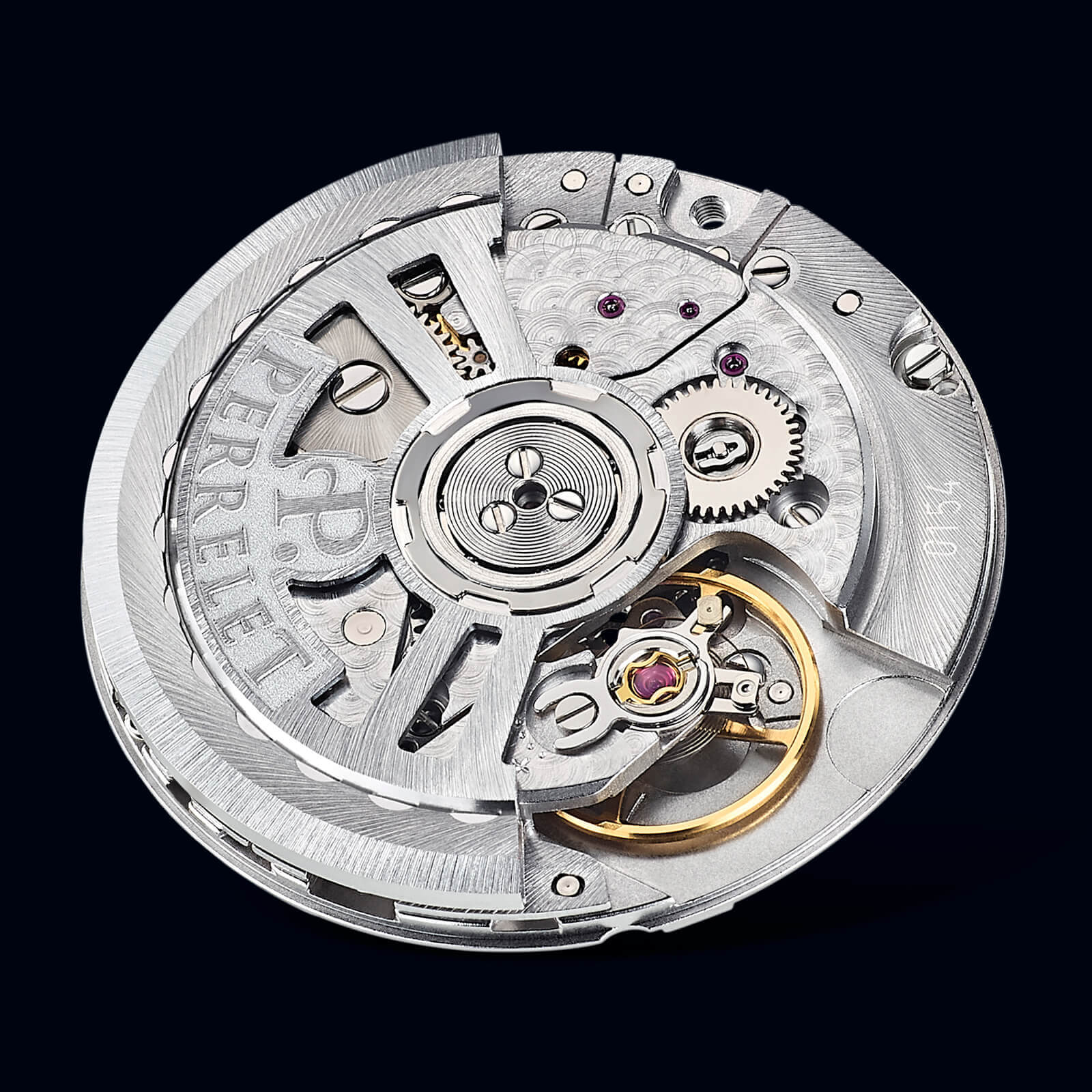
The Perrelet calibre P-331-MH is a Manufacture movement that has been subjected to the independent scrutiny of COSC and Laboratoire Dubois. Its composition is the result of prolonged thought, giving due consideration to precision, reliability and robustness. It incorporates a number of additional refinements and currently sits at the heart of both the Turbine Evo and Turbine Pilot models. Most pertinently of all, this in-house movement demonstrates Perrelet’s extraordinary ambition.
Strictly speaking, car companies don’t make cars. They undertake research and development, procure components from third-party specialists, assemble the vehicles and ultimately market and distribute them. The majority of car marques make their own engines but other than that, car companies call on the services of Bosch, Lear, ZF et al.
When it comes to watchmaking, the similarities with car production are obvious. Once again, brands focus on research and development, procurement of components, assembly, marketing and usually distribution. However, most Maisons choose to buy off-the-peg movements from specialist companies such as ETA, La Joux-Perret, Sellita, Soprod, etc.
This arrangement goes back hundreds of years and is often referred to as the établissage system. This fragmented production method relies on specialist trades each making components, something economists refer to as ‘the division of labour’. It is a method of production that has served many watch companies well over the years.
However, in the last 10 years, some watch firms, fearful that movement supplies may be interrupted or could even dry up, have chosen to make their own in-house calibres, taking greater control over their future. Now, there are a greater number of companies that have become a ‘Manufacture’, crafting their own movements within their own facilities.
Being a Manufacture
A welcome consequence of making movements in-house is that brands don’t have to accept off-the-peg specifications. Movement dimensions can be optimised for specific models. Furthermore, a brand can demonstrate its creativity in terms of movement architecture, materials used, complications and even finishing.
Some watch companies have made impressive in-house movements, while others have been blighted by poor accuracy, lack of robustness or unreliability.
Before any Maison can even think of making its own movements it has to take a long, hard look in the mirror and consider what is involved and whether it has the prerequisite resources at its disposal. Indeed, to bring a movement to life necessitates significant investment and the task shouldn’t be embarked upon lightly.
Perrelet – group expertise
Perrelet, a historical name in the sphere of horology, can trace its roots to Abraham Louis Perrelet. He founded his eponymous firm in 1777 and his technical prowess remains legendary. Indeed, Monsieur Perrelet invented the self-winding watch equipped with a bi-directional rotor. This mechanism was sometimes referred to as the ‘perpétuelle’ meaning perpetual watch, a system which remains widely used today, almost 250 years after its invention.

In more recent times, Perrelet has restructured its business, placing much emphasis on research and development. Moreover, as part of the marque’s internal changes, it embarked on an ambitious journey, namely to equip some of its models with a Manufacture movement, the calibre P-331-MH.
Miguel Rodriguez, the owner and president of the brand, has stated that he wants to ‘equip Perrelet’s distinctive timepieces with new-generation automatic calibres that meet the exceptional quality and high mechanical performance required by Swiss Haute Horlogerie standards’.
Mr Rodriguez remarked “We have the advantage of owning several movements and components production sites combined with a prestigious heritage that sets us apart as one of the leading independent watchmakers in Switzerland. All this represents enormous added value for Perrelet, which relies on Soprod for the development – in complete autonomy – of its exclusive calibres with their outstanding functionality, resilience and performance.”
Unusually, Perrelet is part of a group comprising six companies. The group’s in-house expertise includes the making of all movement components, including escapements, balance wheels and hairsprings. In many instances, even so-called Manufactures procure these latter parts from external specialists, differentiating this truly in-house movement from many others. Thanks to the skills of its sister companies, Perrelet clearly has the capacity to make its own movement.
However, even with the most accomplished movement specialists, the time and expense involved in bringing a movement to life is significant.
In the beginning
The process of conceiving a movement starts by considering the complications required and the size of the watch that will accommodate it. Basic plans are made and passed to Soprod’s engineers and the development process begins.
These engineers, highly versed in CAD (Computer-Aided Design), distil an idea into a viable movement design. Complications, features, materials and finishes are subject to much consideration.
Thereafter, the calibre-makers produce prototypes to ensure everything works smoothly. Where necessary, corrective steps are taken to address any issues. Indeed, a process of protracted testing and exhaustive evaluation takes place before full scale production can even be contemplated.
Making the Perrelet calibre P-331-MH
Everything starts with a square-shaped brass blank termed a ‘barquette’. This is placed in a CNC (Computer Numerical Control) machine and is milled to a pre-determined shape. The resultant part is termed the ‘mainplate’ and is made to exacting tolerances, typically measured in microns. If the mainplate is not within tolerance, all of the other parts that are subsequently added will be out of position, impairing performance and reliability. The mainplate will ultimately accommodate arbors, wheels, springs and a myriad of other parts. Bridges that span the various moving parts are also made using CNC machines.
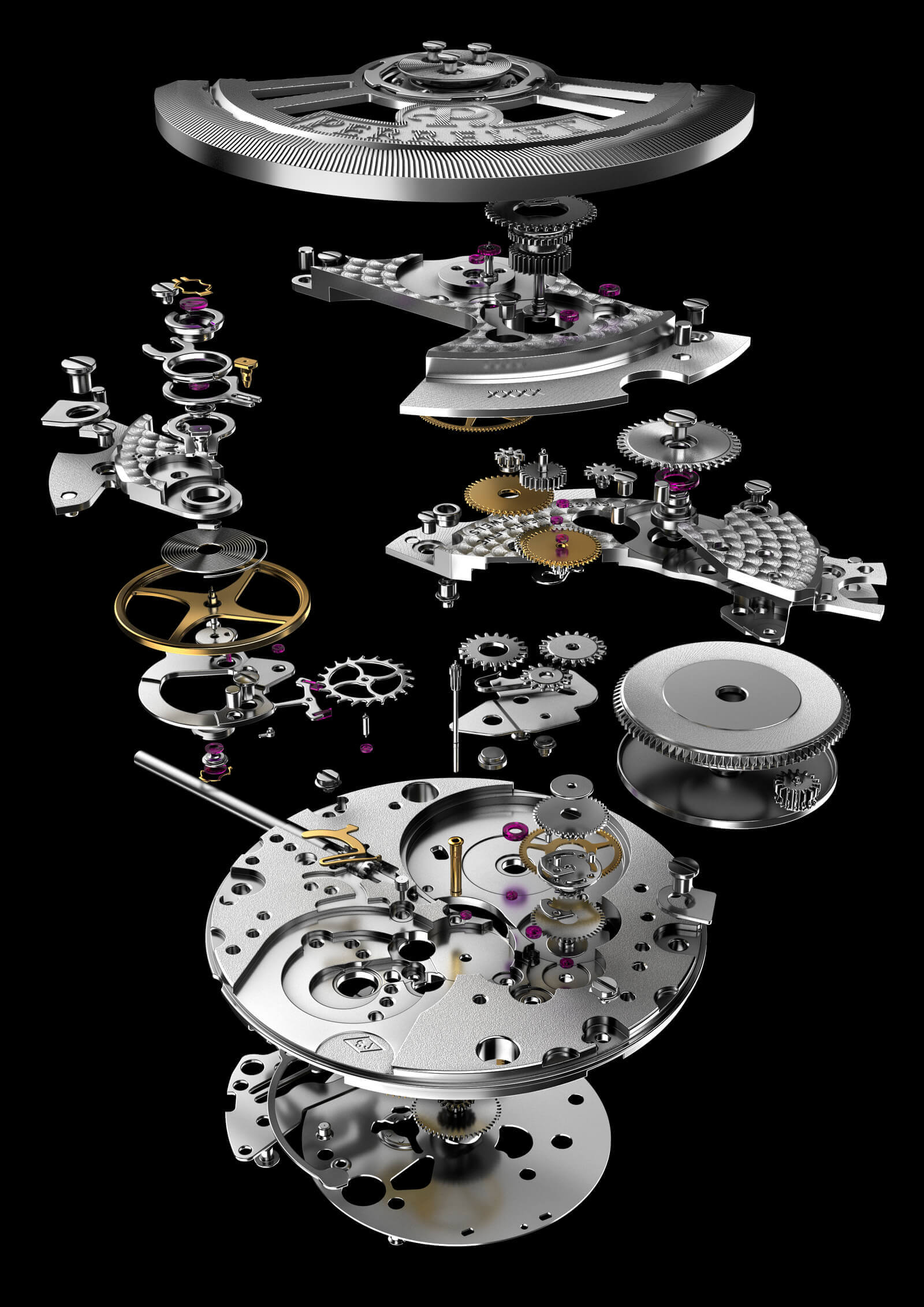
Small parts are made using profile turning machines. These long machines contain long rods of brass or steel which are transformed into tiny components such as pinions, pivots and screws. Some of these parts are barely visible to the human eye.
Needless to say, the aforementioned plant is expensive and requires the talents of skilled personnel in order to make parts to specification.
Once parts are produced, they are decorated. In the case of the calibre P-331-MH, the mainplate is adorned with perlage and colimaçon, while the oscillating mass features a brushed decoration. Thereafter, the mainplate, bridges and oscillating mass are rhodium plated to ensure the factory-fresh appearance of the newly-made movement does not fade with the onset of years.
The collection of parts is supplied in kit form to the assembly department, where components are affixed to the mainplate in a predetermined sequence. Once fully assembled, the movement must be regulated.
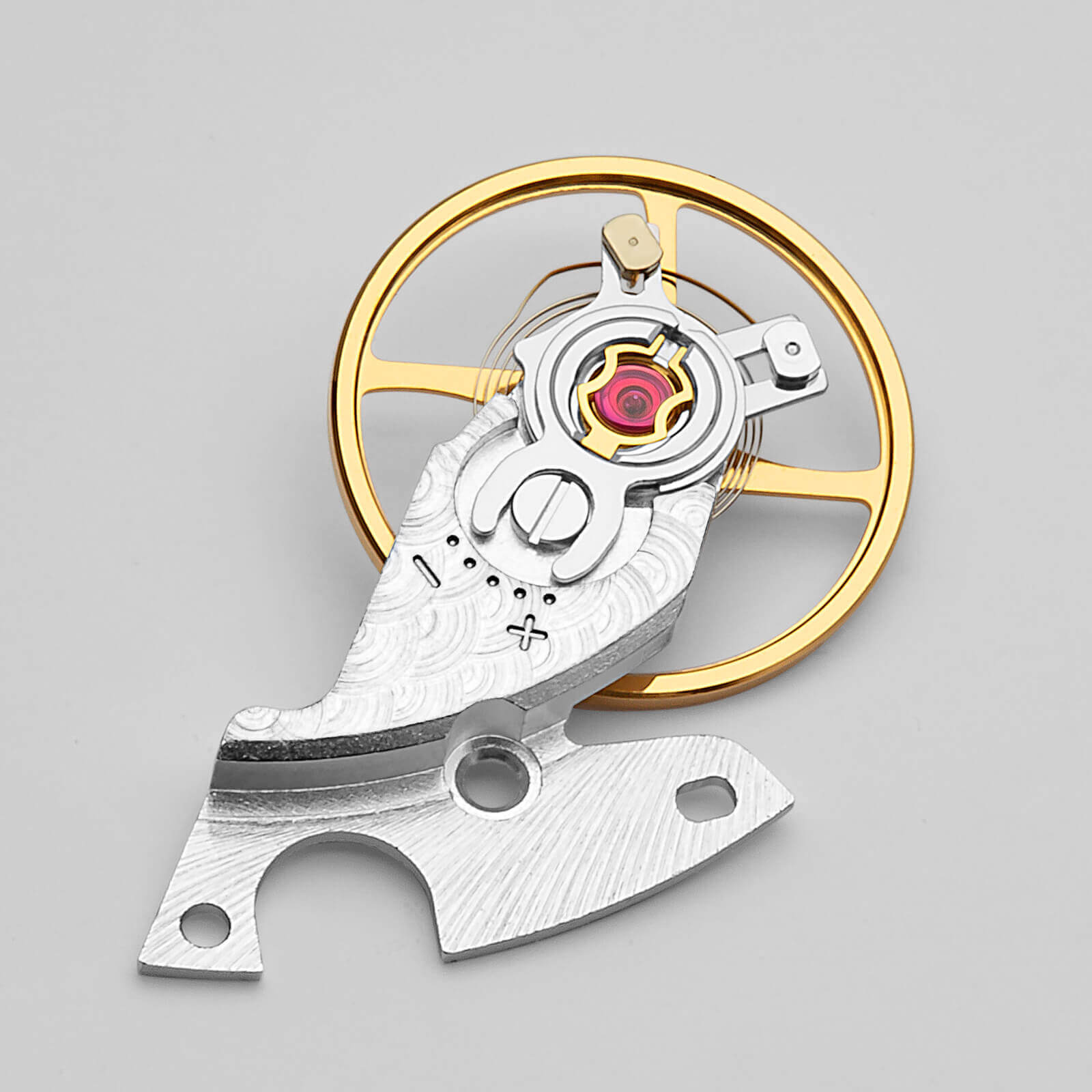
The hairspring is made to tolerances measured in nanometres. Despite everything being made to specification, there are inevitably small variances. Therefore, the hairspring is paired with a balance wheel, a process termed ‘classage’. The objective is to ensure the selected hairspring and balance are a perfect match. The hairspring is affixed to the collet and cut to size. Finally, the balance wheel and hairspring must be poised. This is similar to the wheel of a car, where small weights are affixed to the rim of the wheel to ensure it runs true. In the case of the balance wheel, a small incision is made in the underside of the balance wheel, making it rotate without any undesirable wobbling.
After the regulating organ is installed and the final assembly is complete, the movement needs to be regulated by a watchmaker. Usually, the movement is placed on a Witschi Chronoscope. This test instrument looks at three criteria, the rate accuracy, expressed as ± seconds per day, the amplitude and the beat error. When the balance oscillates to and fro, it scribes an arc expressed in degrees (°), termed the amplitude. On many watches, this will typically be 270° to 315°, albeit this will vary depending on the position of the watch eg dial up or dial down. Finally, the watchmaker is interested in the beat error. This is where there is a difference detected between the clockwise and counterclockwise swing of the balance wheel. Ideally, the beat error should be zero, however, a very small variance is acceptable.
Perrelet has equipped the calibre P-331-MH with an index regulator. A small screw, positioned against a track marked ‘+’ and ‘-’, is used by the watchmaker to alter the effective length of the hairspring, thereby altering the rate.
Once the movement has been regulated it is sent to COSC Contrôle Officiel Suisse des Chronomètres for independent evaluation of its precision (see later). Assuming the movement meets the requirements of COSC it is certified as a chronometer.
The Perrelet calibre P-331-MH and third-party scrutiny
Chronofiable certification
Chronofiable certification is issued by Laboratoire Dubois. The testing regime subjects the watch to an ageing cycle. The watch head is exposed to shocks, wear, and magnetism. Moreover, watches undergo an ageing cycle to simulate the effects of wearing. Tests include measuring the pull and push forces on the crown stem. The movement is subjected to shock tests including a ‘free-fall’ test of up to 5000G. Furthermore, the movement is put through 20,000 ‘impacts’ as well as heat stresses (15°C, 30°C and 55°C). The duration of the tests lasts 21 days, simulating the effects of wear over six months.
Tests take place at the beginning of the evaluation process and also at the end. This raft of tests includes checking functions, rate and amplitude, temperature tests (0°C, 50°C), power reserve and winding rate (automatic movements). The water-resistance of the watch is also subject to the in-house scrutiny of Perrelet’s quality assurance personnel.
COSC certification
The calibre P-331 movement has also undergone exhaustive testing by COSC. This non-profit organisation was created by five watchmaking cantons (Bern, Geneva, Neuchâtel, Soleure and Vaud) along with the Federation of the Swiss Watch Industry (FH). A watch that passes COSC’s rigorous testing regime is certified as a ‘chronometer’.
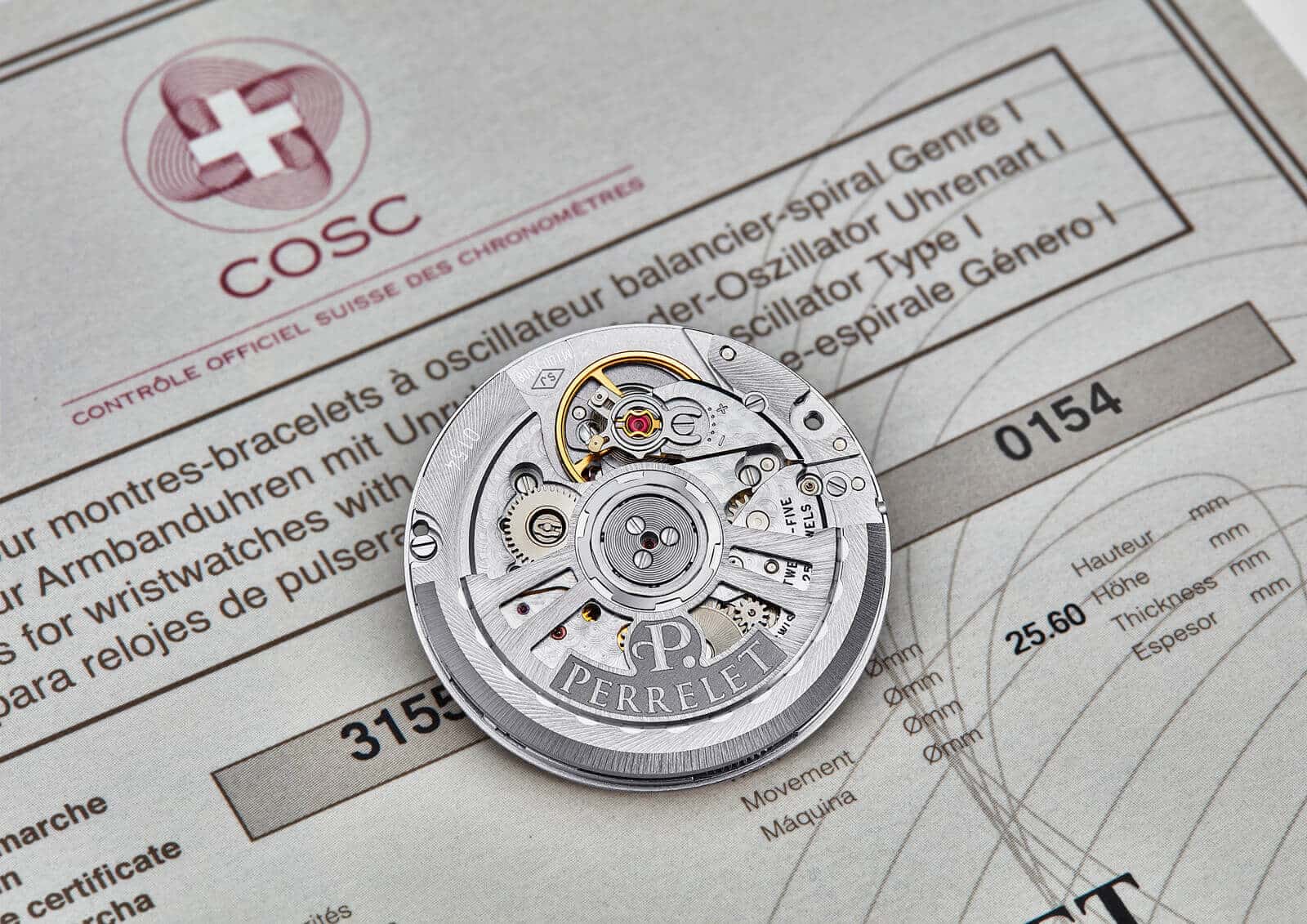
In order to fulfil the requirements of COSC, the movement is subjected to a battery of tests over a 15-day period. Moreover, it is tested in five different positions and at three different temperatures. Throughout the evaluation period its precision has to fall within COSC’s stipulated range of -4 and +6 seconds per day.
The Perrelet calibre P-331-MH points to note
The oscillating mass on the calibre P-331-MH is partially openworked affording enhanced views of the decorated movement surfaces below.
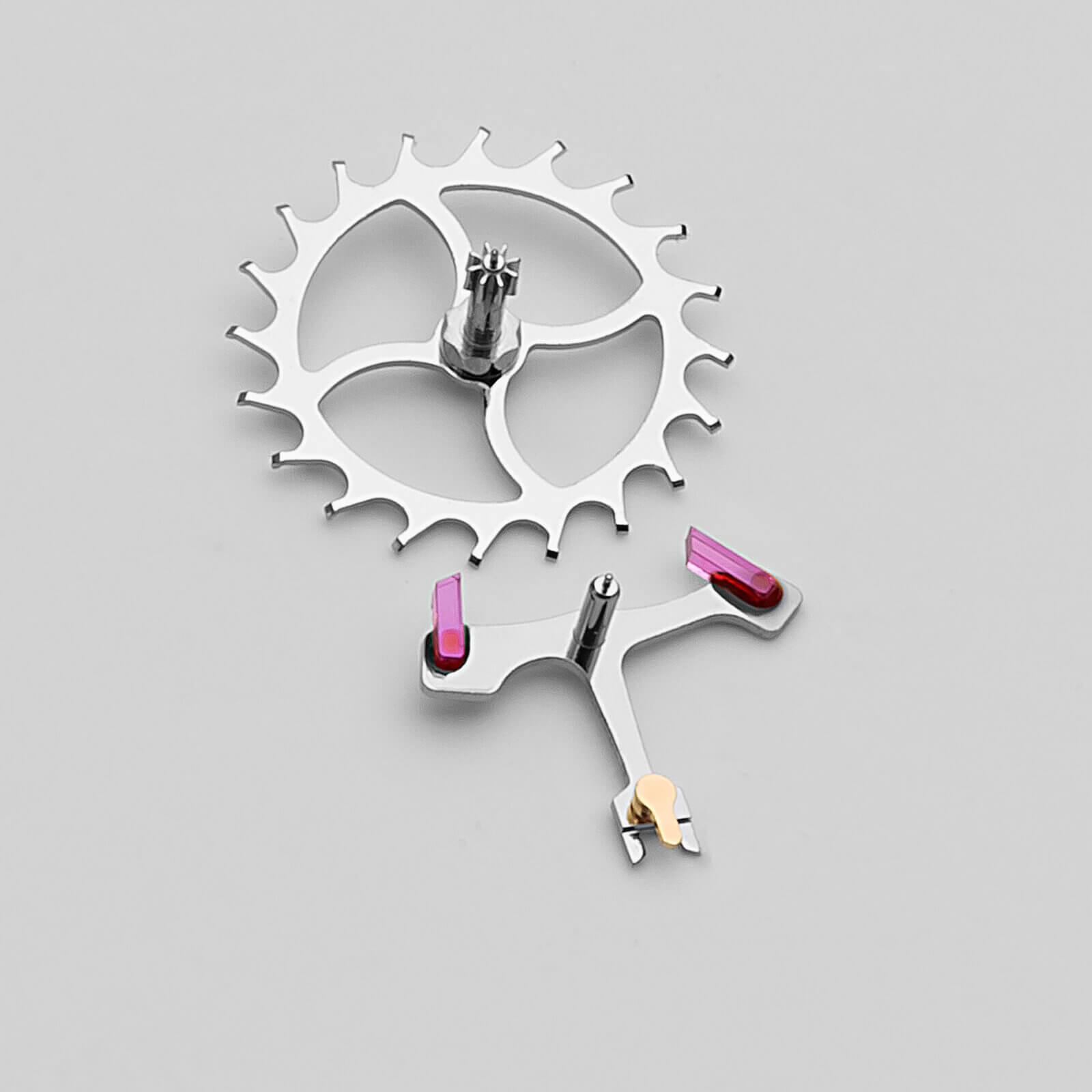
Each tooth of the escape wheel has a refined finish, resulting in reduced friction and thereby conserving energy and mitigating wear. Furthermore, the pallet stones fitted within the anchor are of exceptional quality, delivering superior performance and reliability.
The Perrelet calibre P-331-MH, as previously mentioned, is an automatic movement, a mechanism invented by Abraham Louis Perrelet back in the 18th century. Indeed, based on the brand’s history, it was perhaps inevitable that this modern-day movement would be self-winding. In this instance, the rotor is bi-directional and as such it is fitted with so-called ‘reversers’. These transfer the rotational energy of the oscillating mass through a series of gears to the mainspring housed within the barrel. Perrelet has equipped the calibre P-331 with a new lubricating system for the reversers which optimises the performance of the bi-directional winding system.
A balance-wheel double-cone Incabloc shock absorber increases protection against impact. In terms of any watch movement, the balance is the most susceptible area to shocks.
Assuming the mainspring is fully wound, the calibre P-331will run autonomously for up to 42 hours. Although there are other movements fitted with a single barrel that have a longer power reserve, their amplitude may be subject to greater variation as the mainspring becomes increasingly relaxed. With the calibre P-331-MH the energy delivered to the escapement and the amplitude is more consistent, aiding precision. The amplitude has been repeatedly assessed by COSC as well as Laboratoire Dubois and fulfils their criteria.
Turbine Technology
In 2009, Perrelet unveiled its inaugural ‘Turbine’ model. Unusually, the model featured a second rotor, positioned front of house. Whereas Abraham Louis Perrelet’s ‘perpétuelle’ was designed to enhance functionality, the second dial-side rotor was conceived for aesthetic reasons. The upper rotor’s design, incorporating a blend of apertures and spokes, affords glimpses of the surface below. This latter feature provides Perrelet with many possibilities for creative expression and over the 12 years that have followed since its launch, the brand has not been afraid to release numerous eye-catching variants, sometimes sporting hypnotic dial designs.
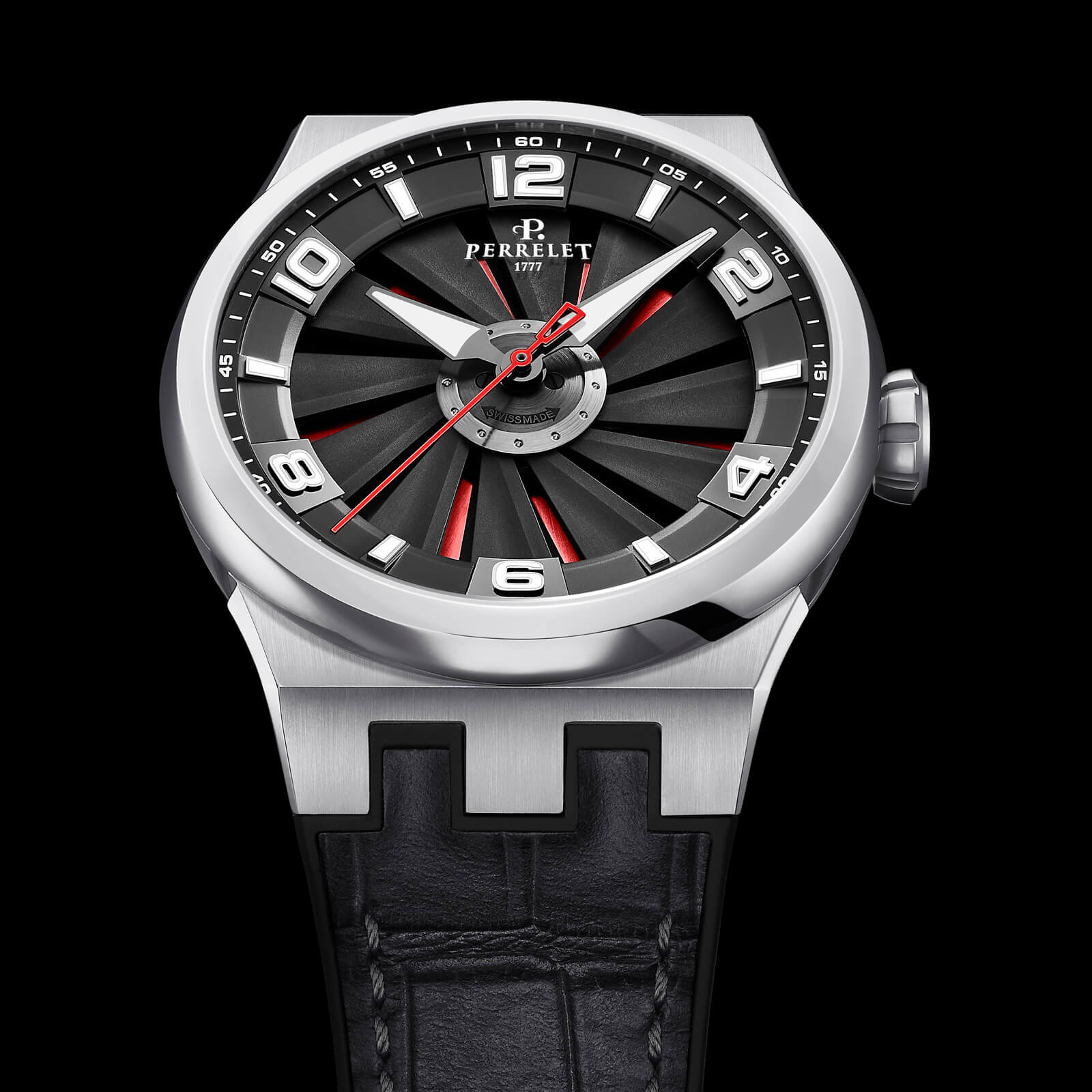
Ten years after releasing the first Turbine model, Perrelet unveiled the Turbine Evo (2019), this time housed in a generously proportioned 44mm case and offered in a choice of finishes. The case was extensively reworked and featured a new lug design, a smoother bezel, a new crown design and a fluted caseband. Most pertinently of all, the model was equipped with the calibre P-331.
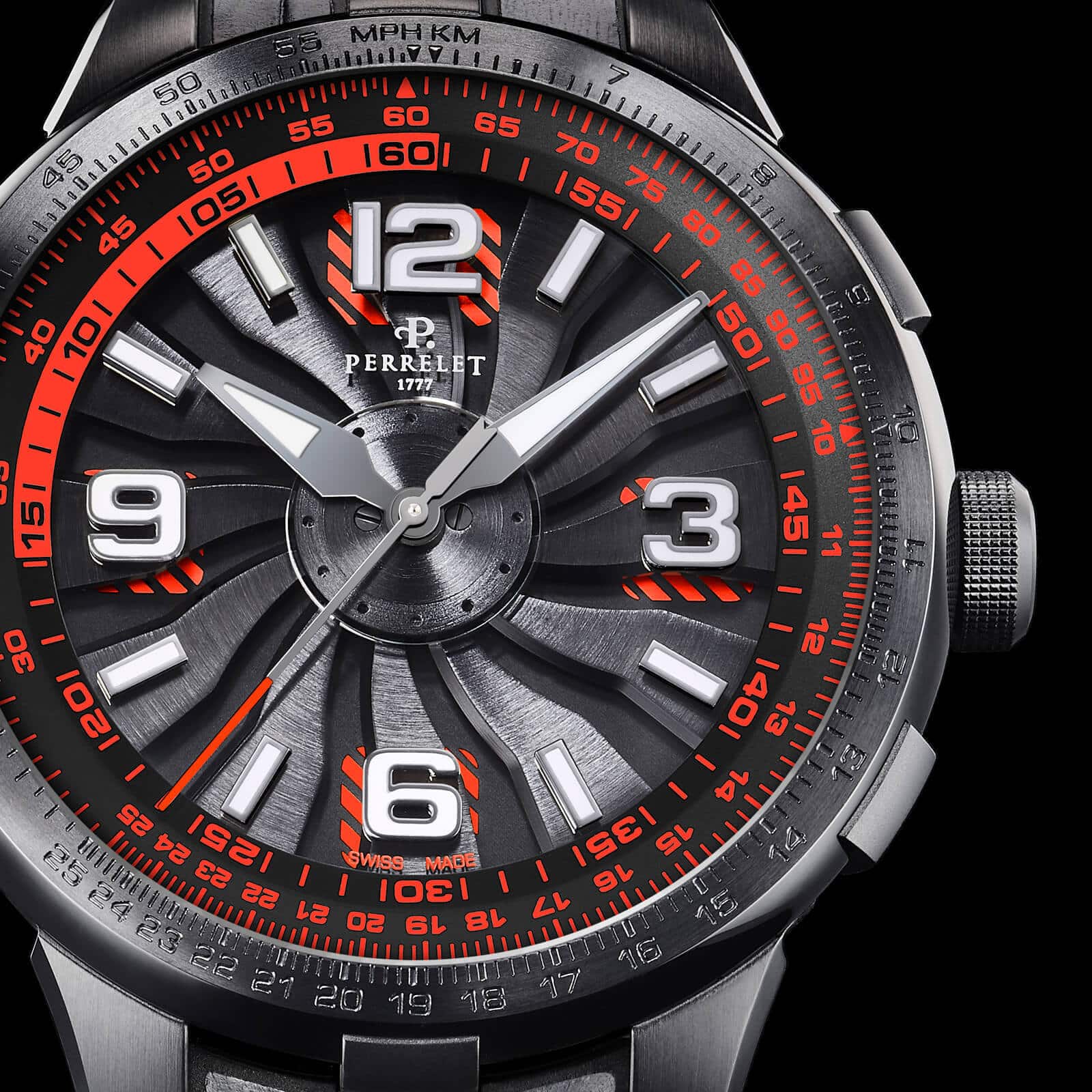
Last year, Perrelet unveiled its aviation-themed ‘Turbine Pilot’ timepiece. The familiar patented Double Rotor and Turbine technology were much in evidence. However, in this instance, the Swiss brand cleverly paired utilitarian practicality with captivating styling and vibrant hues. Housed in a 48mm case, the watch upheld the tradition of oversized aviators’ watches, but with a notably modern twist. Once again, Perrelet chose to endow the model with its high-performance automatic movement, the calibre P-331.

Closing remarks
There is nothing wrong with being an établisseur per se, however, to be a Manufacture confers unparalleled creative freedom and provides welcome immunity from any third-party supply issues. However, being a Manufacture requires the necessary financial means and human resources to bring movements to life. Sadly, there are many watch companies that have embarked on an ambitious journey of making movements in-house only to see their ambitions thwarted by a lack of money and/or know-how.
Perrelet unveiled its Perrelet calibre P-331-MH in 2019 and during the last two years, the movement has been repeatedly checked by COSC and Laboratoire Dubois, culminating in the Swiss brand’s movements receiving certification by both bodies. Put simply, the Perrelet calibre P-331 meets the needs of watch aficionados and, most pertinently, demonstrates the Swiss Maison’s technical prowess and notable ambition. Indeed, the brand is already promising a new collection and Manufacture movement in 2021, which, based on past evidence, should be worth the wait.