
Breguet Tradition Quantième Retrograde 7597 Watch Review
The Breguet Tradition Quantième Retrograde 7597 is the latest creation from the venerable Maison and includes an enchanting retrograde date display. Its styling references the souscription watches of yesteryear but also encompasses modern-day technology such as a silicon hairspring. This cutting-edge know-how sits in concert with traditional elements, including a hand-guilloché dial and blued Breguet hands.
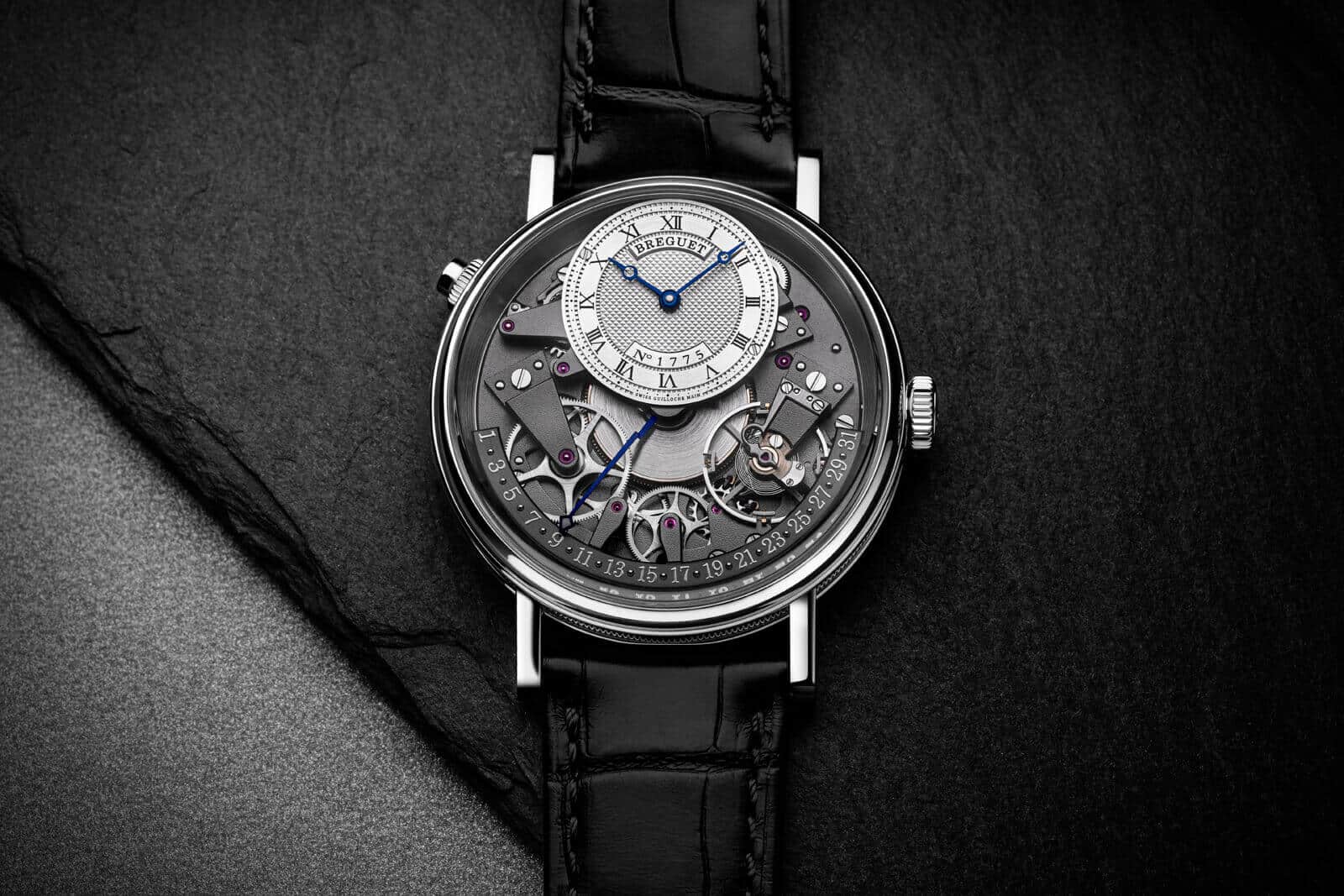
Image – Breguet Tradition Quantième Retrograde 7597 in 18-carat white gold
Abraham-Louis Breguet, the greatest watchmaker of all time
Most experts in the field of horology agree that Abraham-Louis Breguet was the greatest watchmaker of all time. He was extremely innovative, conceiving an array of technical solutions to problems few had even identified. Most notably he patented the tourbillon in 1801, invented the pare-chute, an early shock-protection device, and conceived the overcoil, a refinement to the hairspring which enhances isochronism. Despite the passage of time, some 200 years later, many of his inventions remain in use.
Breguet was also an aesthete. He recognised the importance of lines and proportions. Today, in regular watchmaking parlance, we frequently refer to Breguet hands and Breguet numerals.
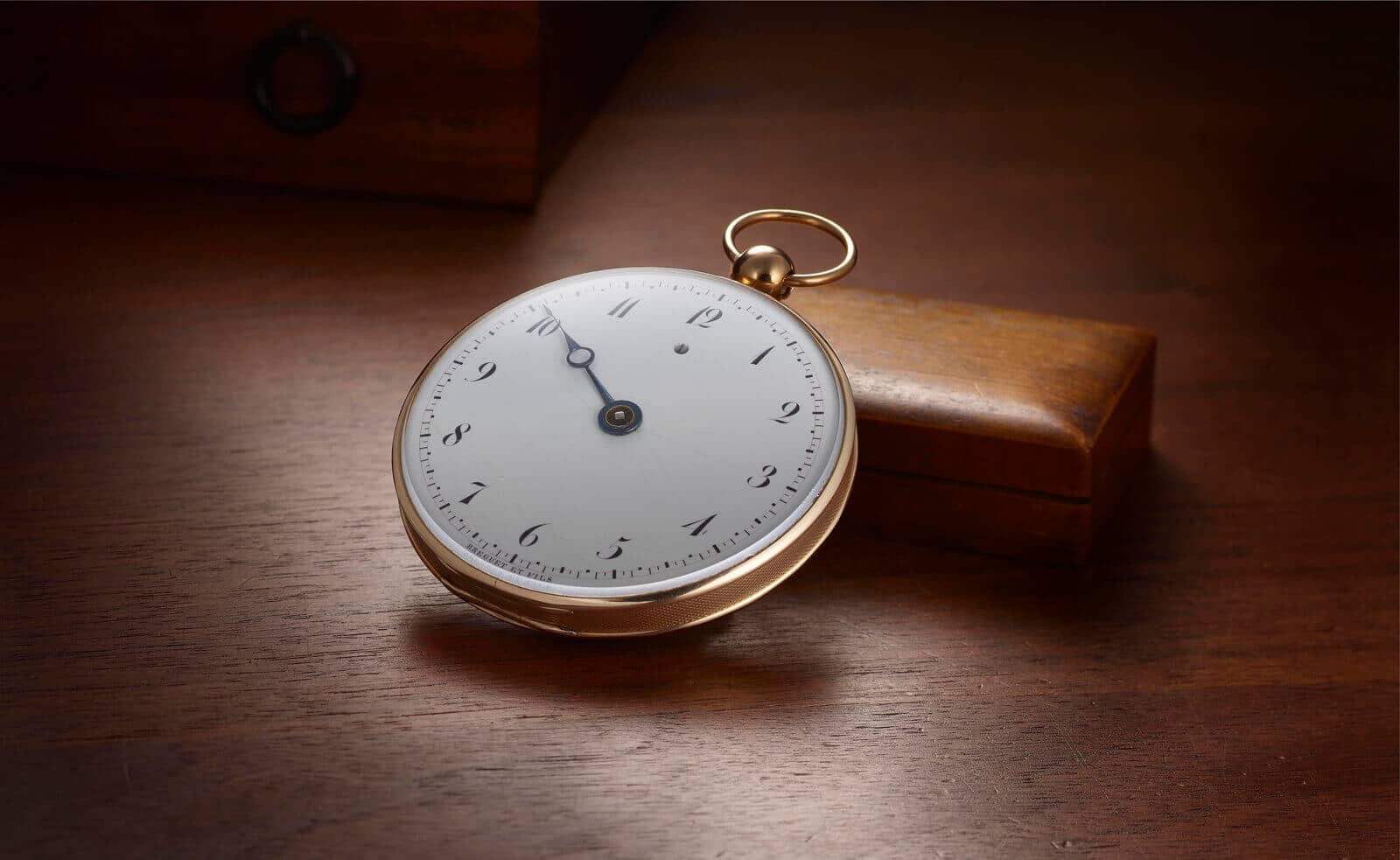
Image – sousciption montre
Souscription montre
The famous son of Neuchâtel was also an astute businessman. In the latter part of the 18th century, Breguet famously conceived the souscription montre (subscription watch). Whereas Breguet’s watches had been the preserve of royalty and other wealthy patrons up to that point, the advent of the subscription watch brought Breguet ownership within the financial grasp of many more aspiring owners.
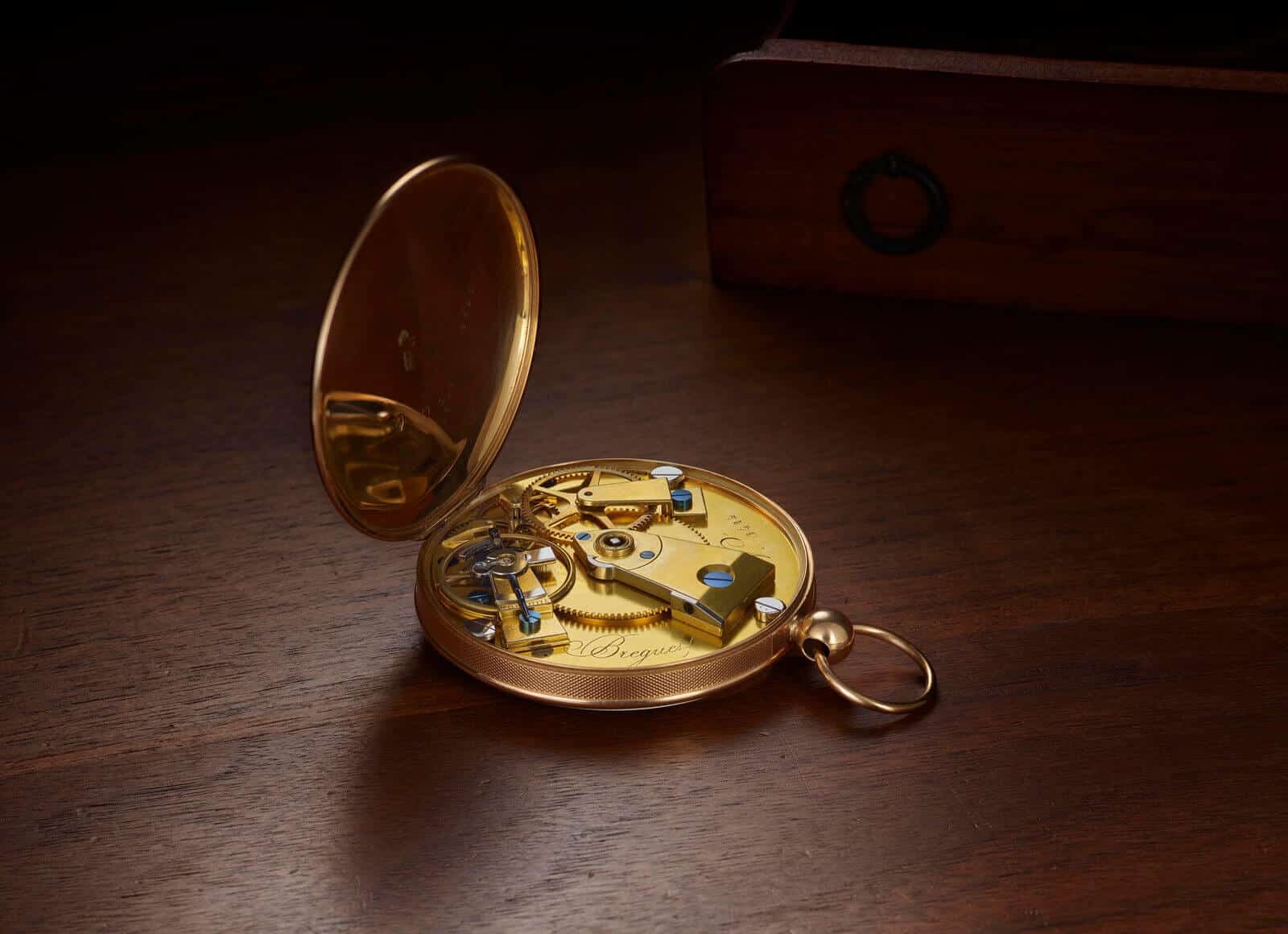
Image – sousciption montre
Despite the subscription watches being more affordable they were beautifully made. The details of these watches included a lone hand, indicating the hours and minutes, chaste white dials with simple Breguet numerals, cases with Clous de Paris on the caseband and beautiful symmetrical movements.
Even today, many businessmen struggle with the problem of cashflow. However, Breguet marketed his watches using a brochure and insisted on a 25% down payment at the time of ordering. It was a clever strategy that proved a commercial success. Reputedly, Breguet made about 700 souscription watches during his lifetime.
Breguet Tradition Quantième Retrograde 7597 – new for 2020
The Breguet Tradition Quantième Retrograde 7597 is a new model for 2020 which references the souscription watches of the late 1800s / early 1900s. This modern-day timepiece features an off-centre dial embellished with a Clous de Paris hand-guilloché motif, satiné circulaire on the hour track, with Roman numerals, and thermally-blued Breguet hands. Similar to the souscription watch, this new watch features a very symmetrical movement design. For instance, at 4 o’clock, the balance is held with a cock, i.e. fixed at one point, while at 8 o’clock the centre wheel is also secured with a cock. This design affords a wonderful sense of balance.
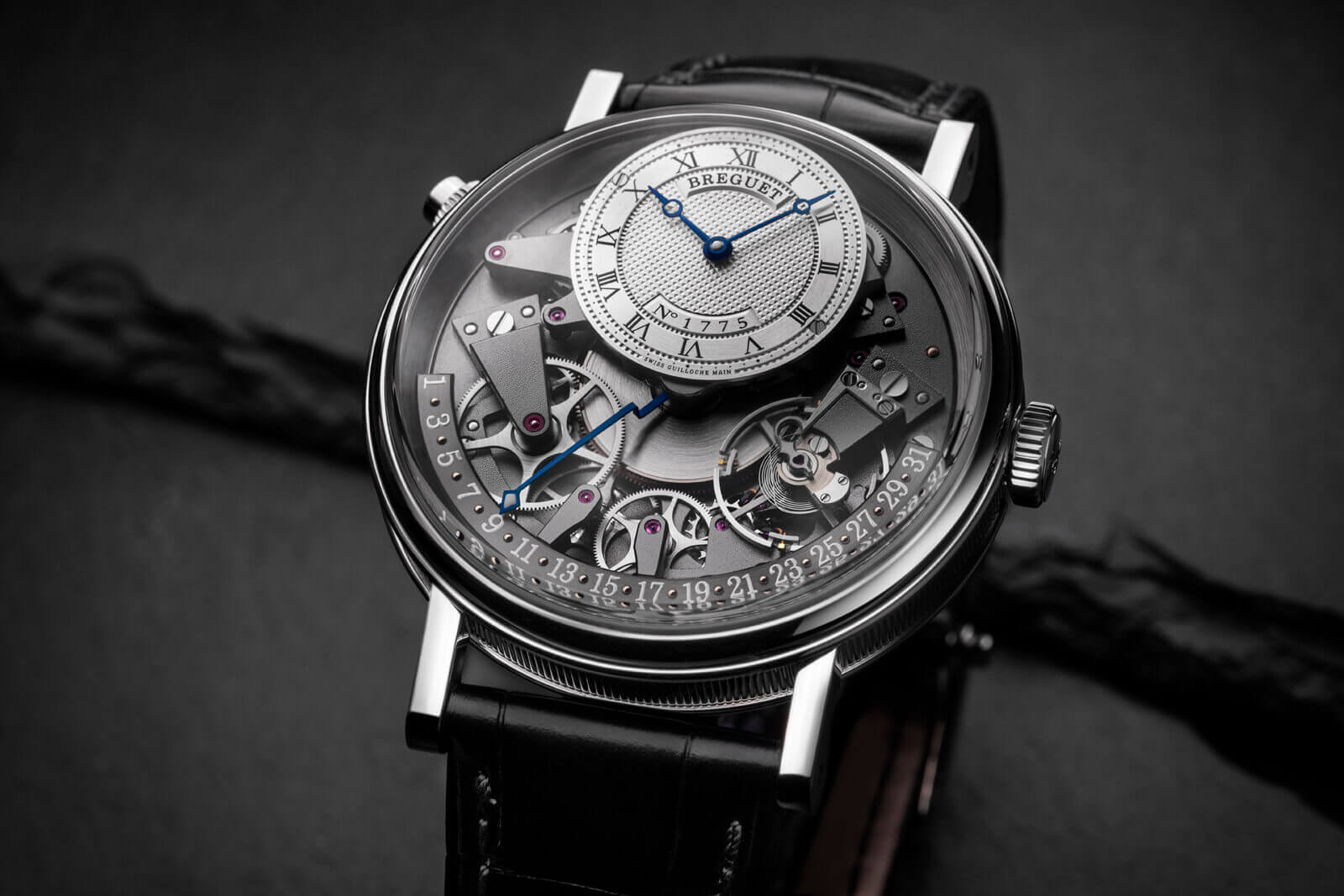
Image – Breguet Tradition Quantième Retrograde 7597 in 18-carat white gold
Where this model differs from its forebears, is that it features a retrograde date at the base of the dial. This delivers a becoming sense of theatre when the associated blued hand returns to its point of origin on the first day of each month.
Breguet Tradition Quantième Retrograde 7597 – the brand’s press release
The Tradition collection actually takes its inspiration from one of the most significant pieces of Breguet’s history: the subscription watch. Purposefully simple and stripped-back, its fully visible movement unveils a perfectly symmetrical design. In the new Tradition 7597 model, it also features a retrograde date display, a complication that the watchmaker was one of the first to develop, and which it has bestowed on some of its most famous creations.

Image – Breguet Tradition Quantième Retrograde 7597 in 18-carat rose gold
Adjusted in a fluted white gold 40 mm case, the 505Q self-winding calibre is equipped with a reverse in-line lever escapement with silicon horns, as well as a Breguet balance spring also in silicon. The gold rotor visible through the transparent caseback is reminiscent of that of the Perpetuelles, or first self-winding watches, further testimony to the ingenuity of the master watchmaker.
Original design, symmetrical assembly
A perfectionist, concerned with both technology as well as aesthetics, Abraham-Louis Breguet designed a movement the modernity of which is still astonishing to this day. Crossing the centuries, his design is at the very root of the Tradition range: positioned in the centre, the large barrel is topped by a symmetrically arranged gear train. As such, the centre wheel at 8 o’clock triggers the oscillating mechanism of the same size at 4 o’clock. This is equipped with the famous pare-chute invented by the master watchmaker, the ancestor of all today’s anti-shock mechanisms, and signature element of the Tradition collection.
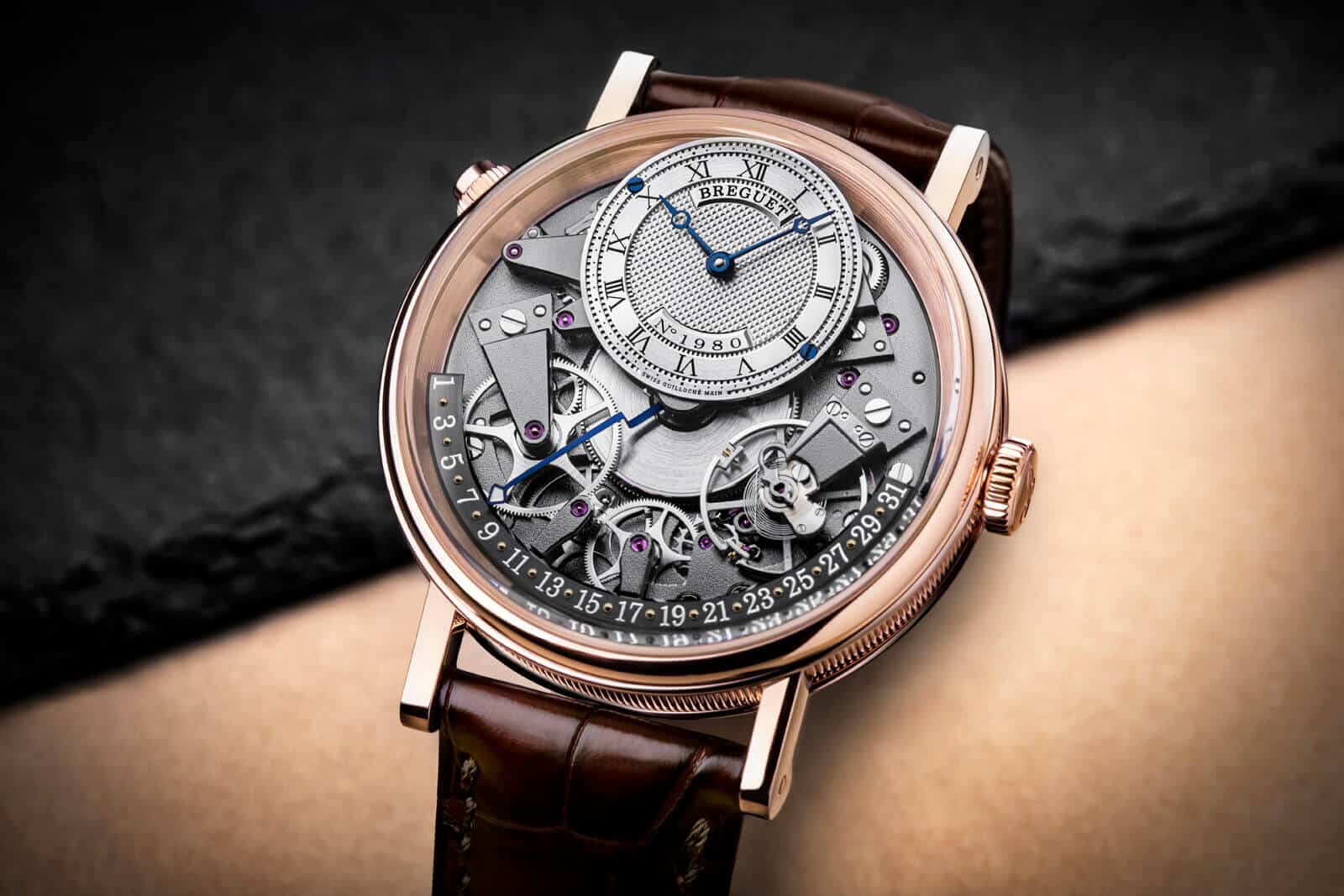
Image – Breguet Tradition Quantième Retrograde 7597 in 18-carat rose gold
Another specific feature is the hour and minute dial that, eccentrically positioned at 12 o’clock and made of gold, is inspired by that of certain Breguet tact watches. As such, the new Tradition 7597 features an hours chapter with Roman numerals, bordered by a delicate engine-turned Clous de Paris pattern, which serves as a backdrop for blued Breguet hands.
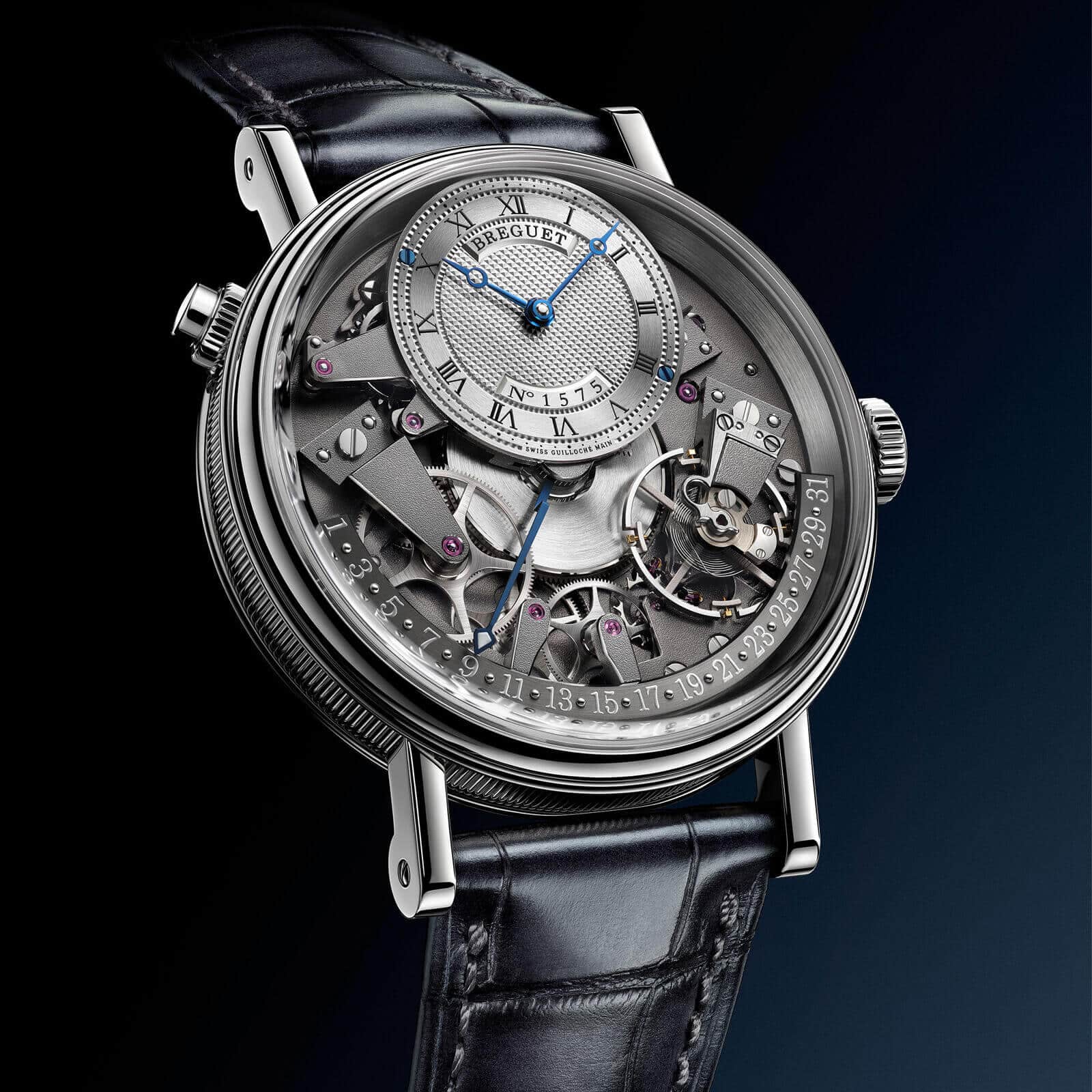
Image – Breguet Tradition Quantième Retrograde 7597 in 18-carat white gold
In the interests of balance, a retrograde date section is positioned between the 3 o’clock and 9 o’clock and a skillfully curved hand indicates the date moving in the vertical plane, fitting in with the ultra-architectural movement. A patented mechanism provides for a fine adjustment of the date hand. The latter is multi-tiered, allowing it to fly over the movement components. At 10 o’clock, a screw-in corrector allows users to set the date safely.
The subscription watch, a masterpiece of simplicity
Abraham-Louis Breguet was one of the most talented watchmakers of all time, the architect of technology innovations adopted throughout the profession, such as the gong spring for repeating watches (1783) or the tourbillon (1801). But while he has created some of the most complicated timepieces there are, he is also known for creating the simplest piece.
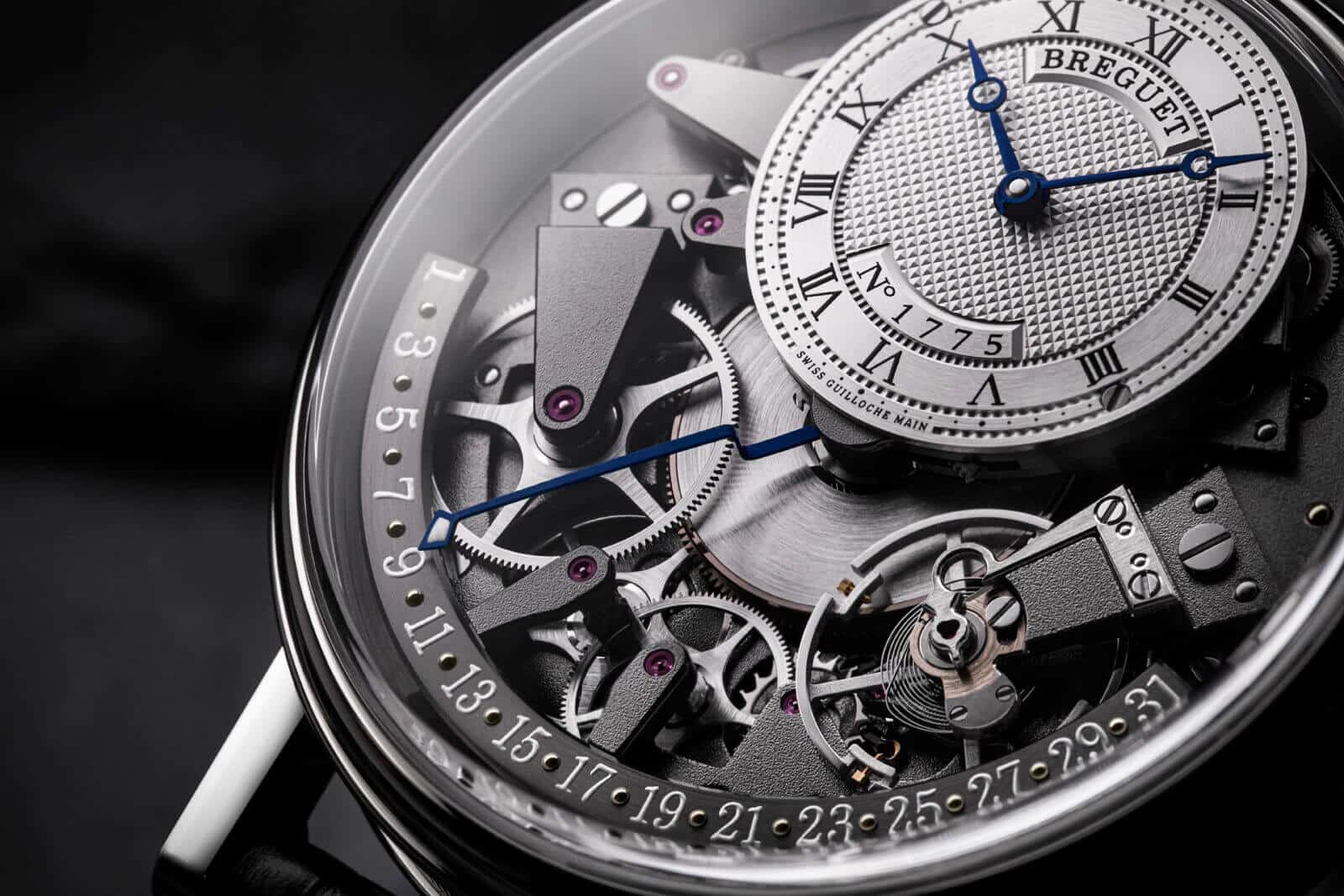
Image – Breguet Tradition Quantième Retrograde 7597 in 18-carat white gold
After having spent two years in Switzerland at the height of the French Revolution, Abraham-Louis Breguet resumed the management of his Parisian workshop on Quai de l’Horloge, on the Ile de la Cité, in the spring of 1795. His first step was to attract some new clientele. Therefore, he invented a watch that was both of the utmost simplicity and extremely reliable. He offered a subscription service for this. This would go on to be a spectacular commercial success. Today his creations can be admired at the Breguet Museum in Paris and various other European museums; subscription watch number 947, sold in 1802, is on display in the Louvre Museum.
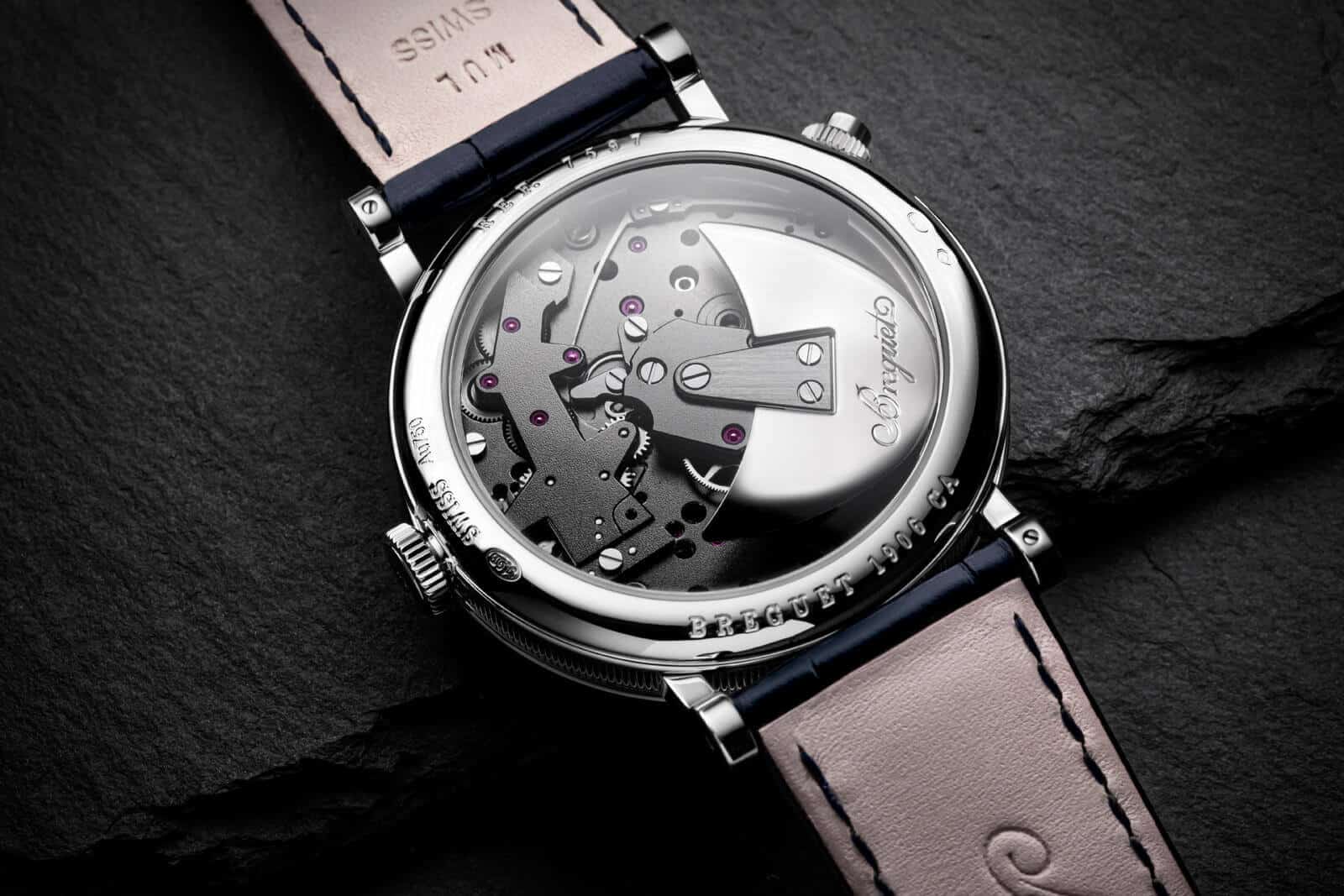
Image – Breguet Tradition Quantième Retrograde 7597 in 18-carat white gold
Breguet used the calibre of the subscription watches to create the first tact watches, sometimes adding a little dial to them; this was the inspiration for the Tradition collection launched in 2005, which marked a return to this very typical architecture.