Cyrus Klepcys DICE (Part One)
Since the first chronograph was invented in 1816, the complication has been subject to various changes and improvements. Nevertheless, the majority of models equipped with this stop-watch function subscribe to the same basic concept. With the advent of the new Cyrus Klepcys DICE (Double Independent Chronograph Evolution), the ingenious Swiss brand has written a new chapter in the history of chronographs. In this first part of a two-part feature, Angus Davies looks closely at the Swiss marque, Cyrus, its overriding penchant for innovation and major milestones in the history of the chronograph. Moreover, he provides a brief introduction to the brand’s latest model.

Cyrus Watch Review
Contrary to widespread opinion, some of the larger watch brands lack creative freedom. When a new model is conceived it will be evaluated by focus groups and appraised using other forms of market research. Only those models which are highly likely to succeed will pass muster. Several of the large brands belong to holding companies who in turn are answerable to institutional investors. Such industrial behemoths are seldom willing to take major risks. Indeed, ‘playing it safe’ is the order of the day.
When it comes to innovation and cutting-edge design, horophiles invariably look to the ‘independent’ brands. These companies frequently place all their chips on red, potentially culminating in success or failure, albeit as these firms grow in size and amass a significant war chest, the potential risks are mitigated.

The independent brand Cyrus was established in 2010 by a ‘Swiss entrepreneurial family’. Since the company was founded, the firm has enjoyed continued success and is financially independent.
Chronode
Part of the company’s success can be attributed to Jean-François Mojon, an industry veteran and the founder of the movement and module specialist, Chronode. In his role as CEO of Chronode, Mojon has worked on movements for Czapek & Cie, HYT, MB&F, Hermès, Urban Jürgensen and several other companies. He is one of watchmaking’s shining lights with a remarkable talent for conceiving incredible movements.
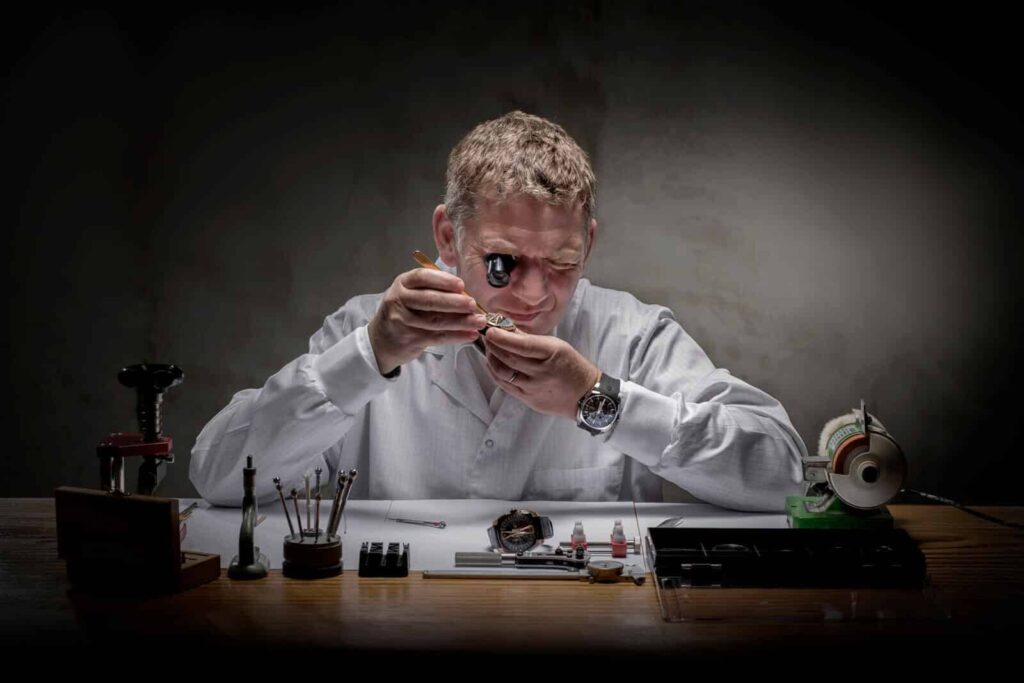
Image – Jean-François Mojon
Jean-François Mojon is also the Technical Director of Cyrus, bringing his vast expertise to the watch brand. Operating from the same building, the Master Watchmaker is always on hand to oversee the making of Cyrus’s timepieces. However, Cyrus is not a ‘one man show’, the company employs several highly skilled professionals, all of whom play their part in making the firm’s high-end watches.

Image – Walter Ribaga, Managing Director of Cyrus Watches
Conquest of Innovation
A desire to innovate sits at the heart of Cyrus’s paradigm. Indeed, the company has shown a remarkable ability to conceive ingenious timepieces. In fact, the firm often refers to its ‘Conquest of Innovation’. One example is the Kambys model which features three cylinders on the right side of the dial. Resembling an abacus, these sliding cylinders indicate the stored energy held within the model’s two spring barrels. Moreover, a ‘secret animation with a customisable rotating disc’ is located in the north-easterly region of the dial.
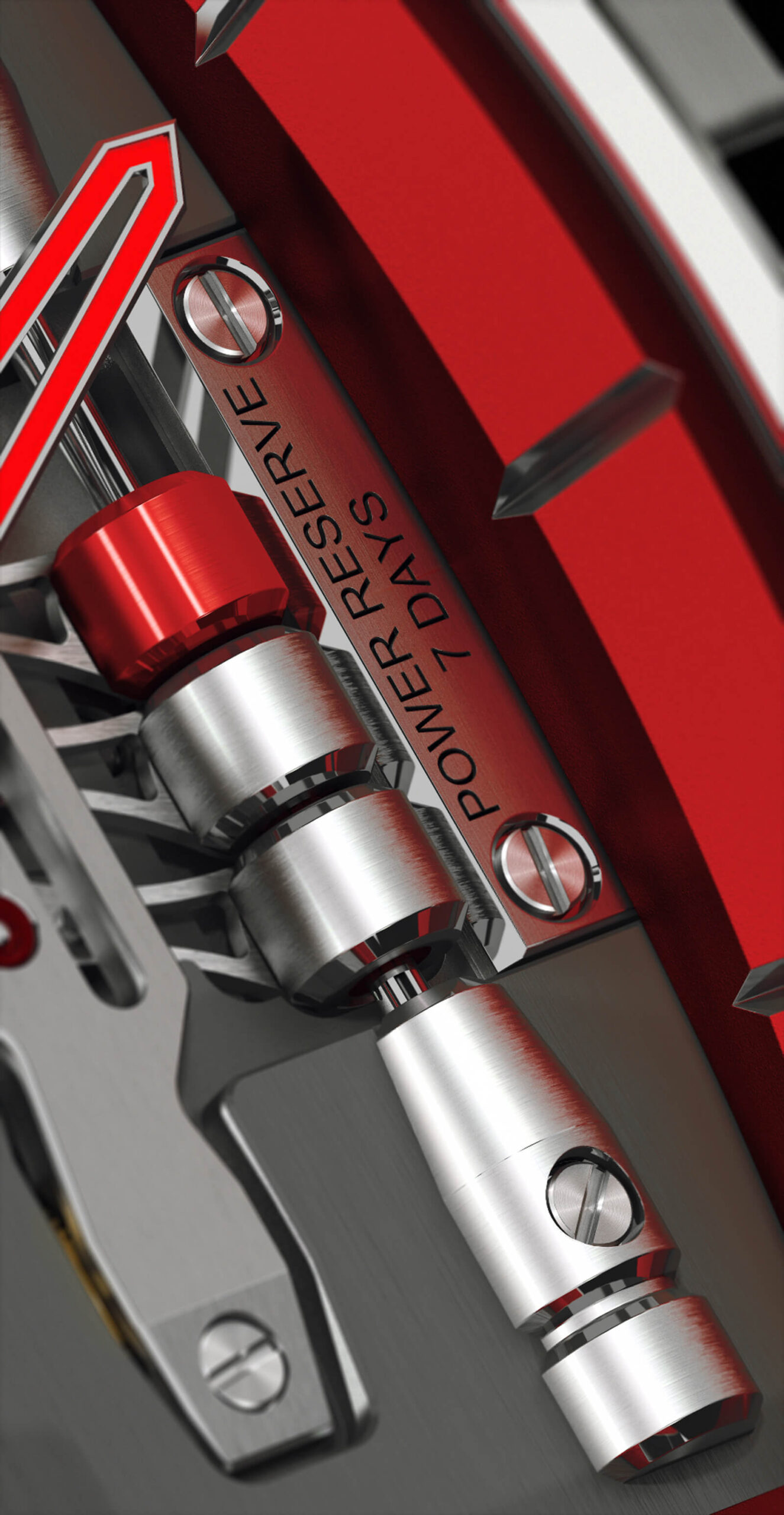
Image – Kambys
Cyrus Klepcys Alarm
The Klepcys Alarm is another example of Cyrus’s penchant for innovation. There are a number of alarm watches on the market, most of which feature some form of primitive hammer that strikes the interior of the case. They have a tendency to be somewhat crude, emitting a harsh, shrill noise. However, Cyrus chose its own, unique approach, releasing the Klepcys Alarm. This model, unlike most alarm watches, shares much in common with a minute repeater. This latter complication aurally conveys the hours, quarters and minutes using two gongs and two hammers. In the case of the Klepcys Alarm, it employs one hammer and one gong to deliver a notably mellifluous chime, surpassing the unsophisticated sound of a regular alarm watch. As any watch aficionado will attest, the making of a gong and hammer requires much time and expertise, both evident at Cyrus.
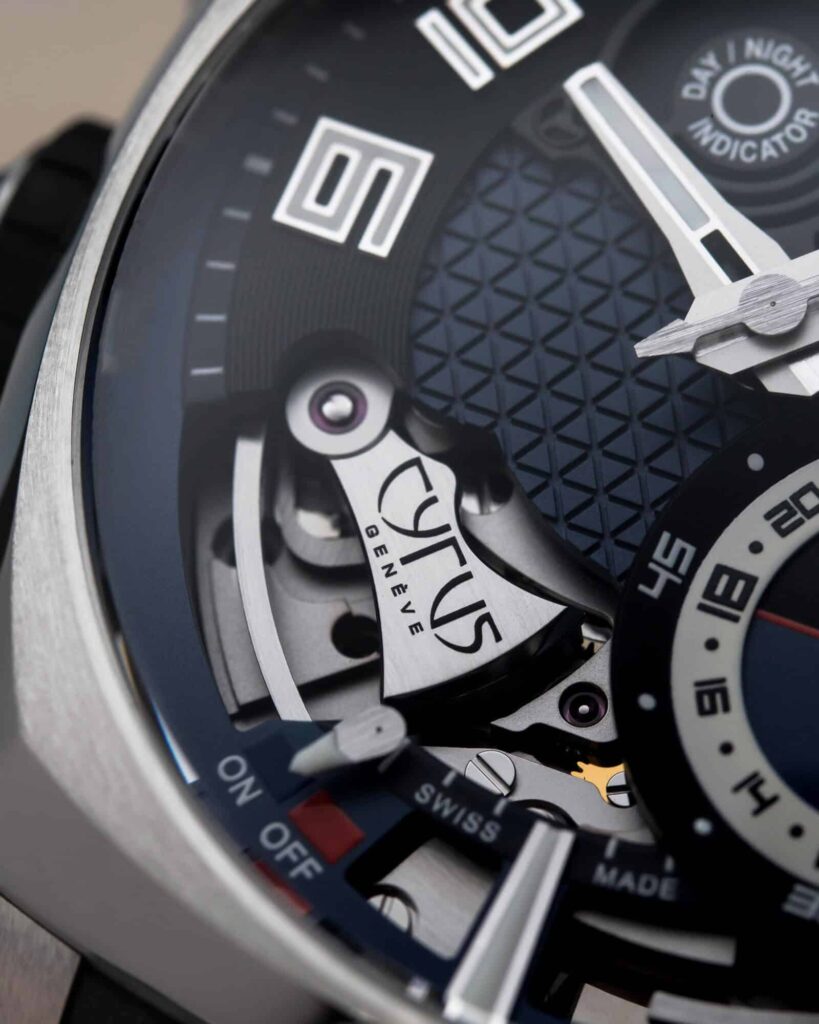
Image – Klepcys Alarm
Cyrus Klepcys Vertical Tourbillon
The Klepcys Vertical Tourbillon is a further example of Cyrus’s blue sky thinking. Patented by Abraham-Louis Breguet in 1801, the tourbillon’s purpose is to negate the adverse influence of gravity on the regulating organ. Breguet had the inspired idea of placing the escapement and regulating organ in a rotating cage, thereby negating any positional errors.
When Breguet patented his tourbillon, his invention was intended for use in a pocket watch which would normally be carried in a waistcoat pocket and held in a vertical position. When the owner retired to bed, they would place the timepiece in a pocket watch nightstand in order to keep it in the same vertical position overnight.
While Breguet’s tourbillon countered the influence of gravity when a pocket watch was worn in an upright position, its effectiveness diminishes when held in a horizontal position. Today, pocket watches are seldom worn as most horophiles prefer the convenience of a wristwatch. This latter, modern-day timepiece is frequently held in a horizontal position when affixed to the wrist.
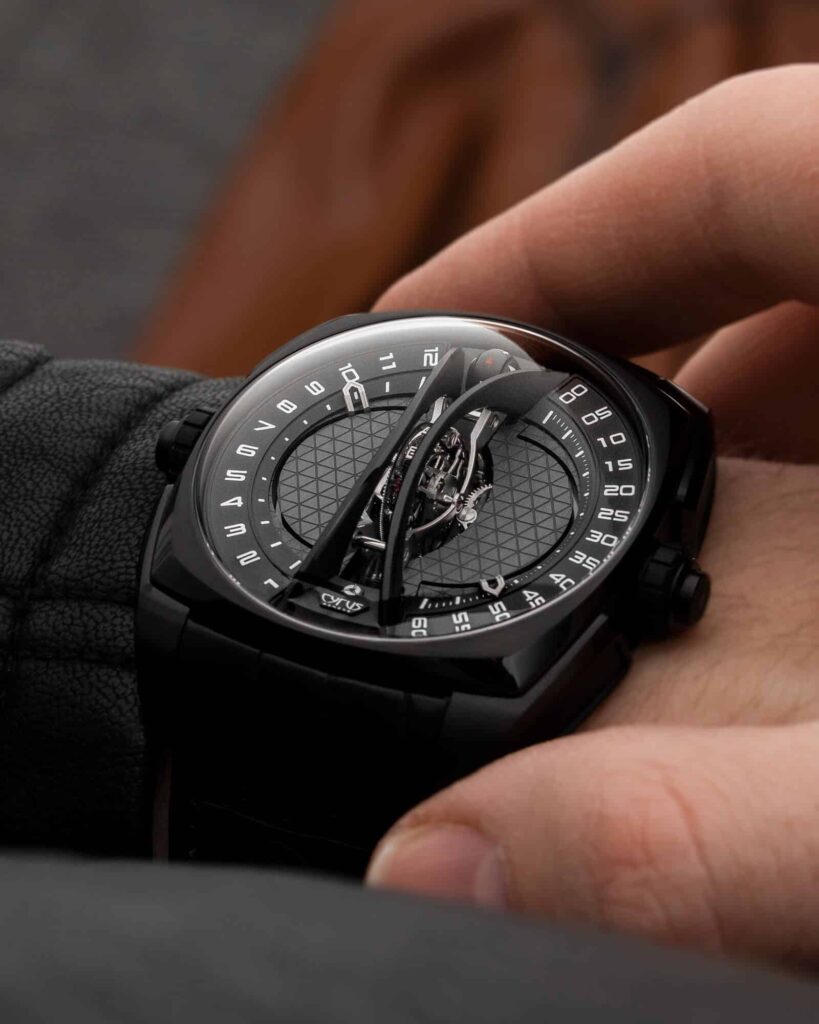
Image – Klepcys Vertical Tourbillon
When conceiving the Klepcys Vertical Tourbillon, Jean-François Mojon and his team chose to move the tourbillon from its customary 6 o’clock position and relocate it to the centre of the dial and also rotate it by 90°. By locating the tourbillon towards the centre of the dial, positioned beneath a domed sapphire crystal, the watch proved more wearable. Moreover, the central position of the tourbillon allowed Cyrus to fit a large diameter balance wheel to the watch, thereby augmenting precision. Lastly, if the watch is removed from the wrist and placed on a surface, with its caseback facing downwards, the tourbillon will continue to work its magic in the same way as a pocket watch in a nightstand.
These examples demonstrate that Cyrus does not appropriate the ideas of others, but prefers to visualise its own new and ingenious ideas. As stated earlier, the Maison’s ‘Conquest of Innovation’ ethos is very much in evidence. Indeed, the Swiss marque’s penchant for non-conformist horology is manifest with the new Cyrus Klepcys DICE, a groundbreaking monopusher chronograph.
Chronographs – a brief history
The term ‘chronograph’ is a combination of two Greek words ‘chronos’ (time) and ‘graphein’ (write). In 1821, Nicholas Rieussec unveiled a chronograph at Paris’ Champs de Mars. It was designed to time horse races and featured two rotating discs and an ink-filled marker that ‘wrote’ the elapsed times. This device was thought to be the first chronograph ever made, however, this widespread opinion was overturned in 2013 when Louis Moinet’s ‘Compteur de Tierces’ appeared at auction.
The’Compteur de Tierces’ was produced in 1816 and, according to the Guinness World Records Organisation, it is the ‘World’s First Chronograph Ever’. Amazingly. this watch operates at a dizzying frequency of 30Hz, a cadence seldom matched today. It was created for astronomical observation, such as timing the passage of stars and planets.
With the advent of the Longines Calibre 13.33Z in 1913, the chronograph was no longer the solely preserve of pocket watches but made an appearance for the first time in a wristwatch. This model was a monopusher chronograph where the pushpiece, positioned at the end of the crown, served three roles, namely, to start, stop and reset the stopwatch function.

Two years later, in 1915, Gaston Breitling patented a wristworn chronograph with a dedicated chronograph pusher located at 2 o’clock. Later, in 1934, Willy Breitling invented the second independent pusher at 4 o’clock. This latter pusher was responsible for resetting the chronograph hands. This two pushpiece arrangement has changed little over the years and, despite the passage of time, it remains in widespread use.
The self-winding chronograph arrived in 1969, a year when rival firms competed for the honour of being first. Breitling, Buren, Dubois-Dépraz and Heuer formed an alliance and secretly worked on ‘Project 99’. Meanwhile Zenith was busy finessing its ‘El Primero’ movement and Seiko was putting the final touches to the 6139 movement. Effectively, 1969 was like the horological equivalent of the space race.
While small innovations have since materialised, fundamentally the watch industry has mainly accepted the two pushpiece chronograph as the norm and little changes from one year to the next.
Uses for chronographs
Chronographs have been used for several purposes beyond merely astronomical observation and timing horse races. Other applications include measuring elapsed periods during athletic or motorsport events. Indeed, many of today’s chronographs feature a tachymeter, usually located on the bezel, for ascertaining the speed of an object over a known distance.
In yesteryear, artillery regiments would use chronographs in conjunction with a telemeter scale. By measuring the time taken from hearing a shell being fired to the point it struck its target, the artillery could ascertain its range.
A doctor could determine the heart rate of a patient using a chronograph fitted with a pulsometer scale.
When the Apollo 13 mission ventured to the moon it suffered an oxygen tank explosion causing the navigation instruments to fail. The crew moved to the Lunar Module, however, it was not intended for prolonged habitation. In order to conserve energy, the astronauts shut down virtually all power, rendering their digital timers inoperable. The men had to manoeuvre the module so that it would re-enter the Earth’s atmosphere at the correct angle. They needed to manually adjust the course of the spacecraft by executing a 14-second burn of the engine. They had just one chance to realign the spacecraft or bounce back into space for perpetuity. The crew timed the 14 seconds on their Omega Speedmasters and ultimately returned to Earth safely.
Cyrus Klepcys DICE – a new generation of chronograph
When timing successive events using a regular chronograph, the wearer needs to stop, reset and start the timing function. Unfortunately, even the most nimble-fingered wearer will struggle to perform this task quickly enough. A ‘flyback’ (patented by Longines in 1935) shares much in common with the basic chronograph, save for one useful feature. By pressing the pushpiece at 4 o’clock, while the chronograph is running, the flyback will stop, reset and start again within the blink of an eye. By minimising the interval between stopping and starting, the recorded time has greater validity.

The rattrapante, first unveiled by Patek Philippe in 1922, features two centrally positioned hands, one superimposed over the other. One hand is the central chronograph seconds hand while the other is the rattrapante hand. They are positioned very close to one another in order to avoid any problems with parallax. The rattrapante, or doppelchrono, can be used to measure two elapsed times, albeit the events must commence at the same time.

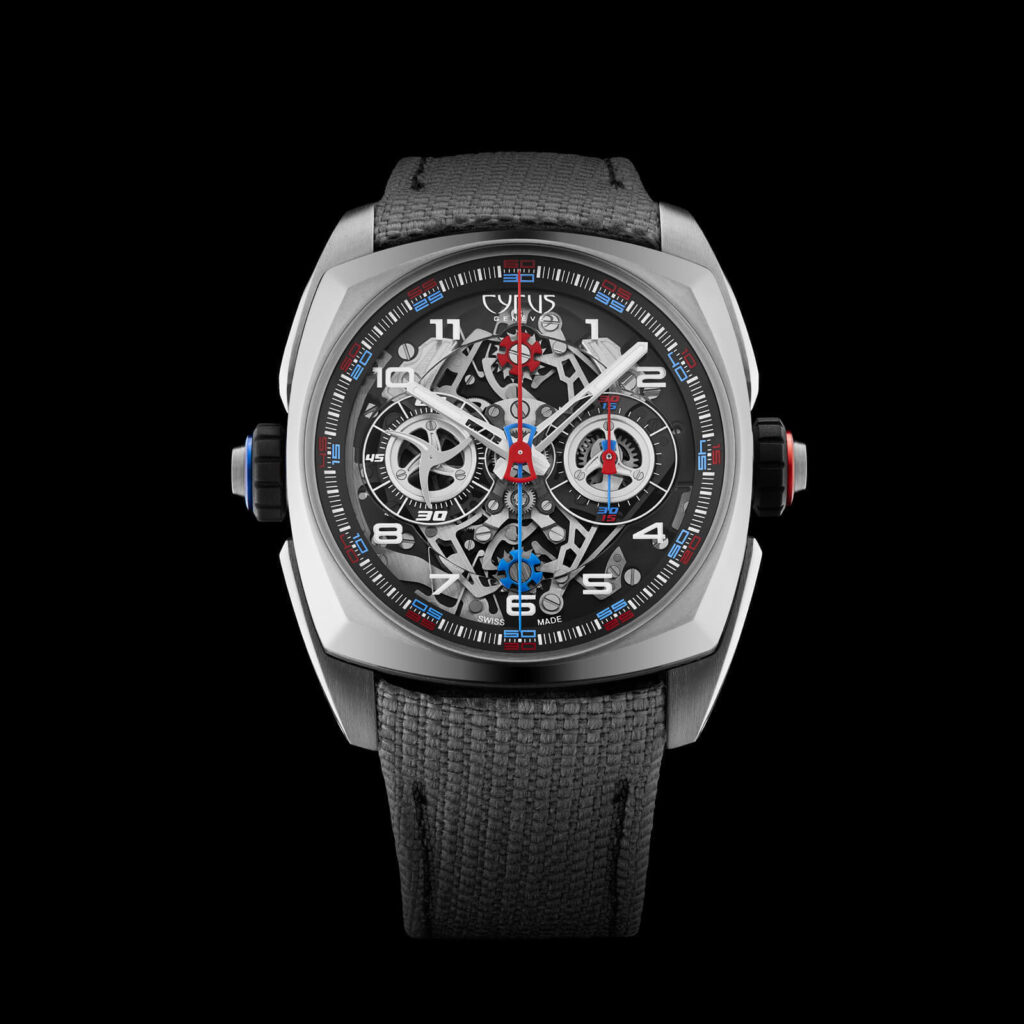
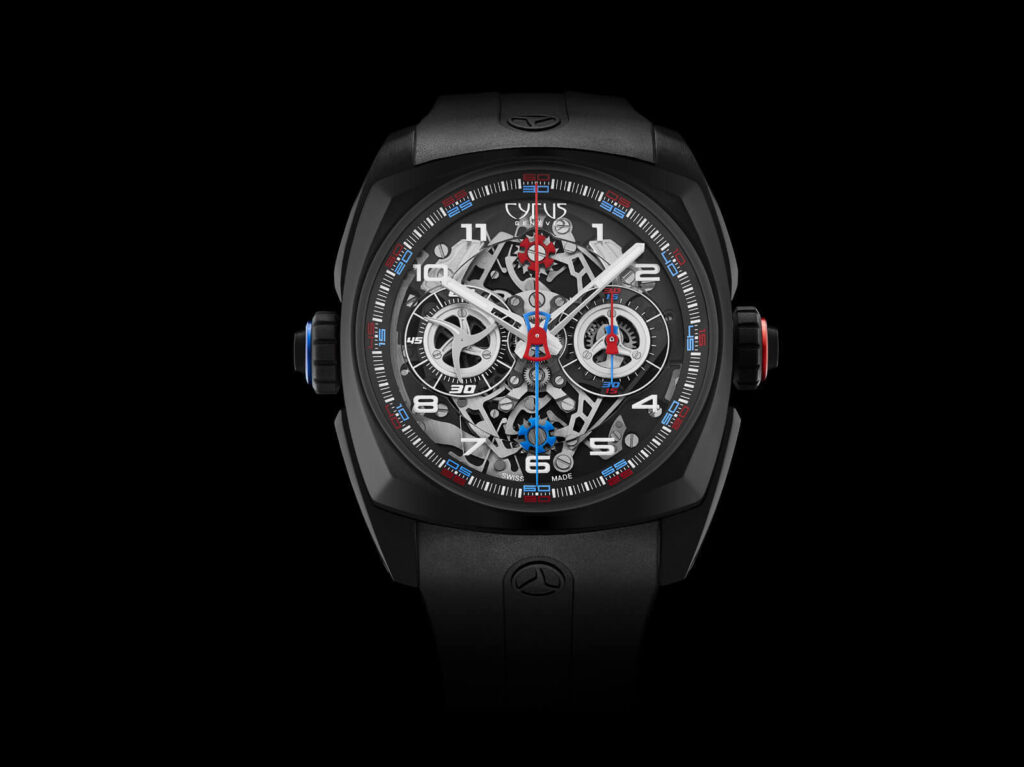
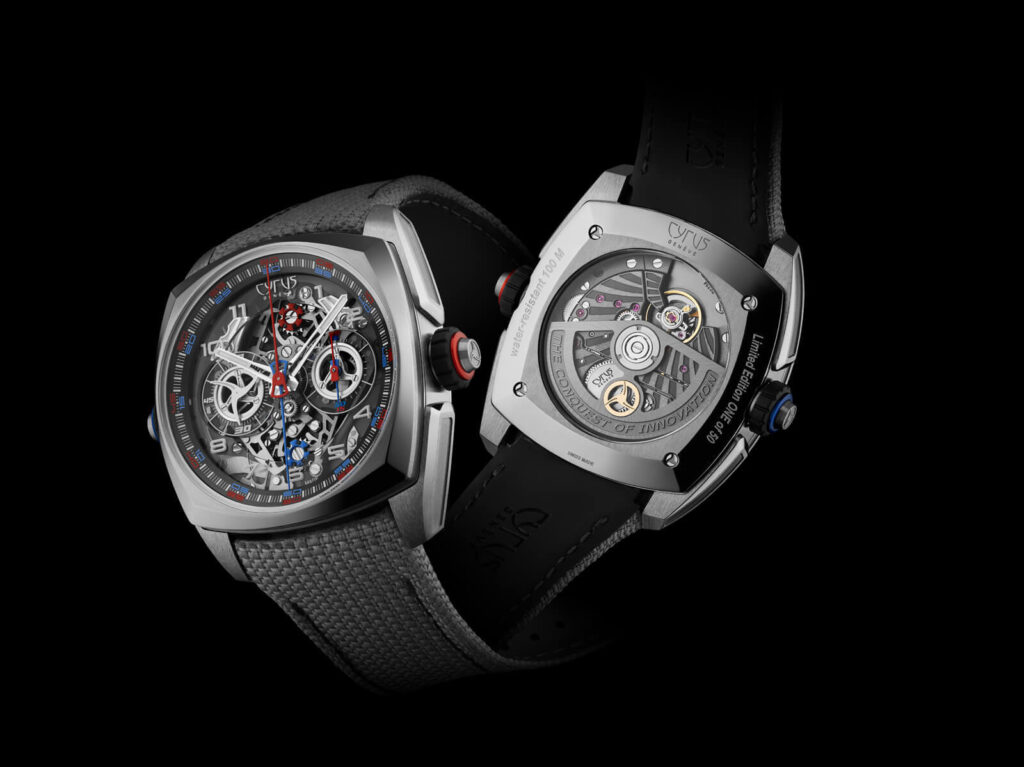
Now, Cyrus has unveiled a wholly new form of chronograph, the Double Independent Chronograph Evolution (DICE). This complication surpasses the functionality of the basic chronograph. The Manufacture self-winding movement, the calibre CYR718, features a double chronograph capable of measuring two intervals independently. Unlike a rattrapante, there is no requirement for two events to start at the same time, providing the wearer with much greater flexibility. Indeed, the chronographs can be used simultaneously or in isolation.

In several sports, competitors start a race at different times. In this scenario the Cyrus Klepcys DICE is the perfect timing tool, obviating the need for rapid recording of elapsed times on paper, nimble figured pressing of pushpieces or mental arithmetic.
Cyrus has expended much time researching the annals of horology to see if there were any other examples of this type of complication. The firm discovered that ‘Double-Stop Movements’ were registered at the New York patent office by Arnold Frankfield in 1873. The Maison states that ‘to our knowledge, there is no more recent evidence of this kind of timepiece.’
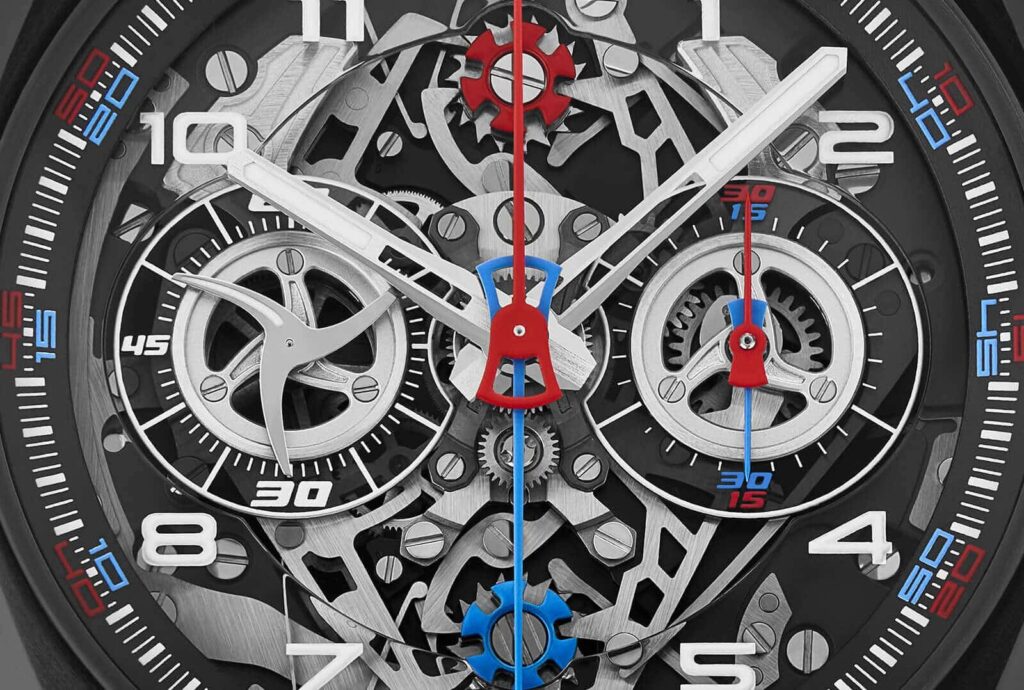
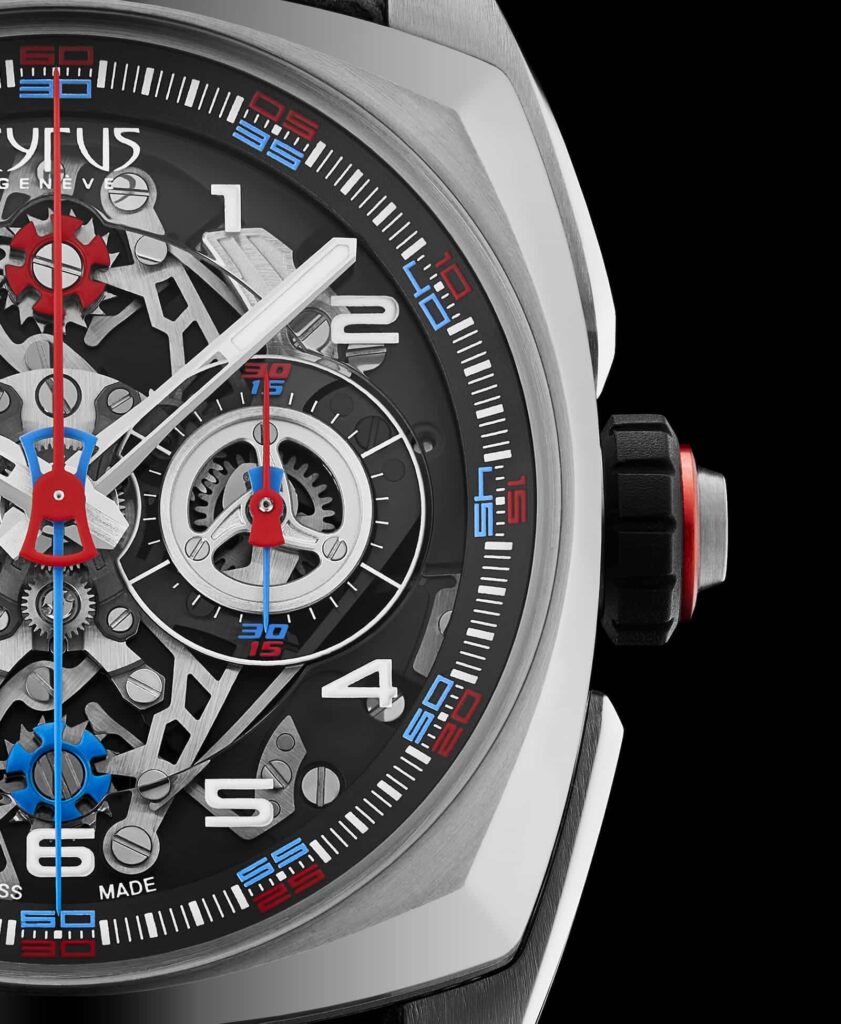
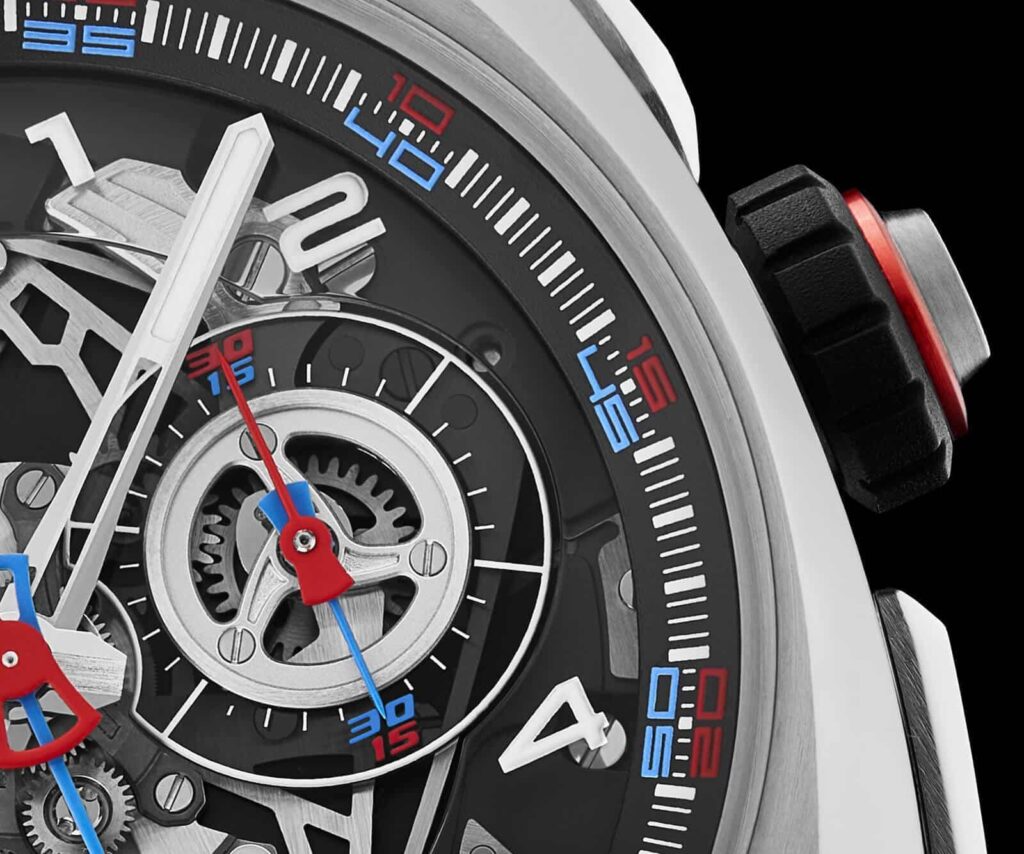
Beyond its additional functionality, the Cyrus Klepcys DICE upholds the brand’s reputation for eye-catching design. The new model uses blue and red hues to visually differentiate the recorded elapsed times for each chronograph. Quite simply, ease of interpretation is assured. Two monopushers, one at 3 o’clock and another located opposite, orchestrate the customary start, stop and reset sequence. However, the colours employed also enrich the overall appearance of the watch.

The hours are presented on a sapphire track, affording views of the numerous grained levers, couplings and wheels. The calibre CYR718 is endowed with column wheels presented centre stage, poised and waiting for orders, all for the delectation of the wearer.
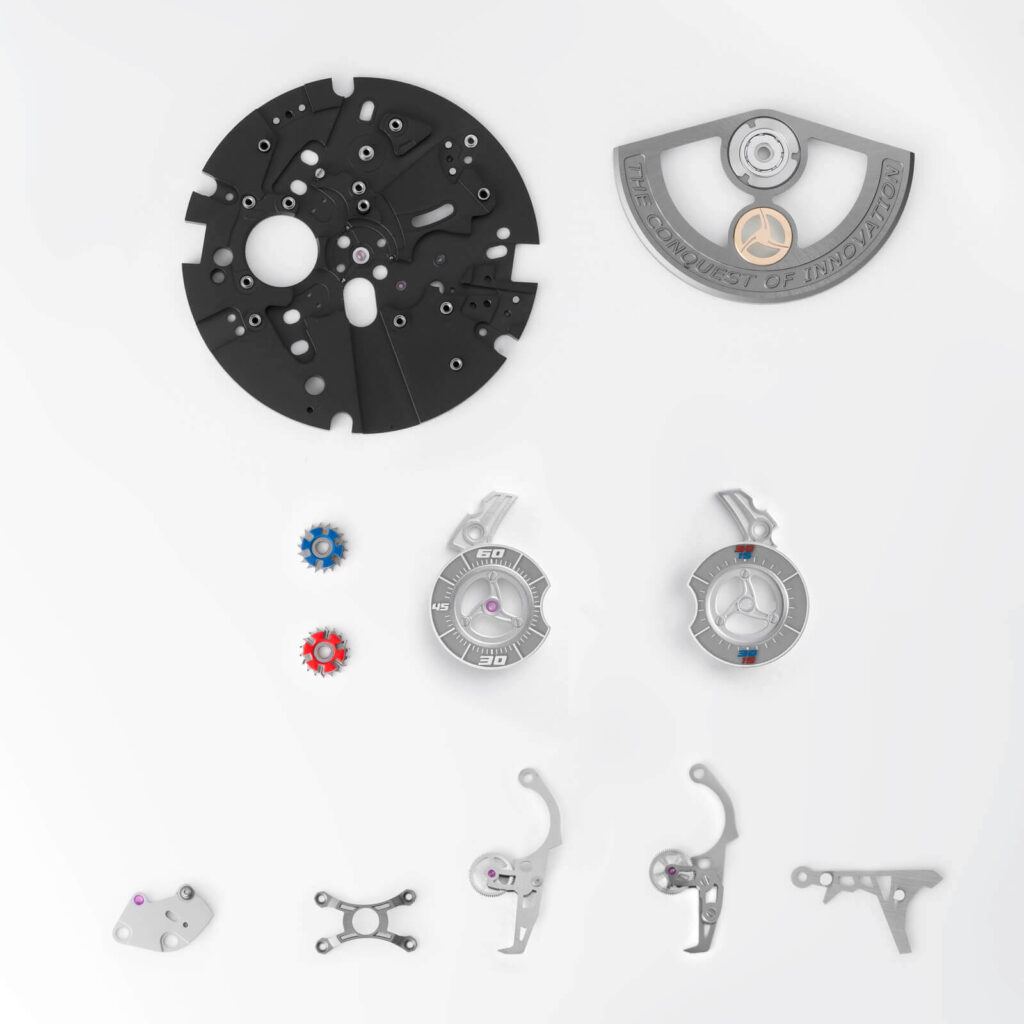
A 30-minute chronograph register, featuring red and blue hands, is positioned at 3 o’clock, while a small seconds display resides at 9 o’clock. This latter indication features the brand’s logo, a triskele, providing a stylish means of conveying the running seconds.
Coming soon
In terms of the Cyrus Klepcys DICE, there is much more to say. In the second part of this two-part feature, I enjoy a ‘hands-on’ experience with the model and share my observations. However, rest assured, this latest chronograph delivers significant advancement over its counterparts and successfully demonstrates the wisdom for the Swiss marque’s ‘Conquest of Innovation’.