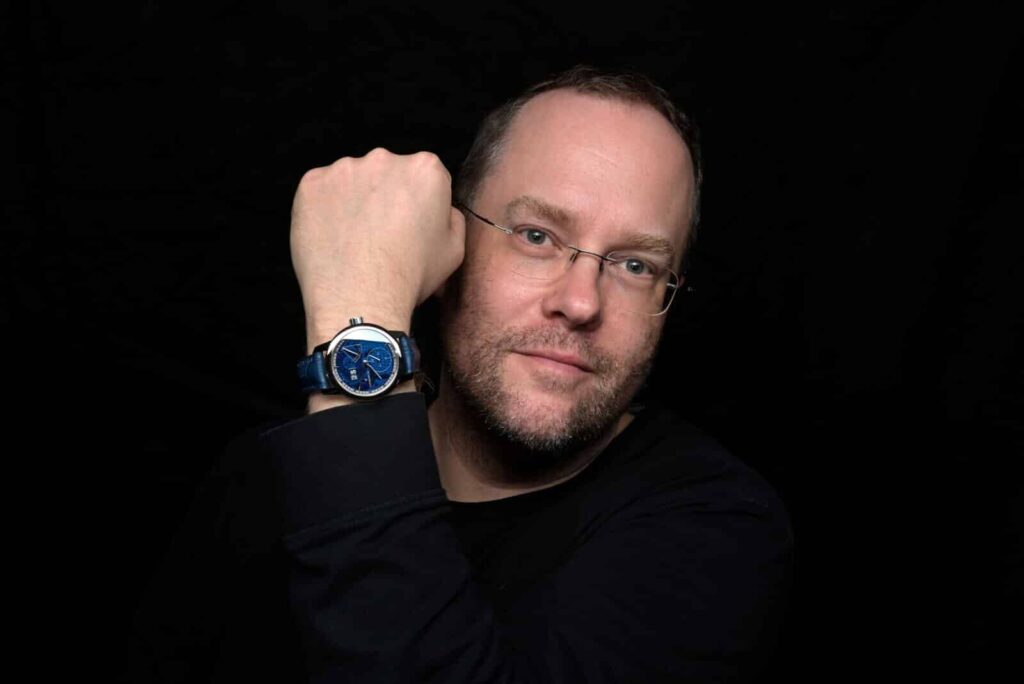
Albert Edelmann of Zeitwinkel
Angus Davies interviews Albert Edelmann, co-founder of Zeitwinkel, the independent watch brand based in Saint Imier. In this feature, Albert explains what differentiates Zeitwinkel’s products from others and the challenges the company has surmounted since it was founded in 2006.
Over the last 12 months, independent watchmaking has never had it so good. H. Moser & Cie report they now have lengthy queues for the Streamliner, Czapek has a full order book, no doubt because of its sublime Antarctique creation, and Kari Voutilainen is hardly twiddling his thumbs either. In September 2021, Grönefeld, aka ‘The Horological Brothers’, put out a public statement explaining that they were unable to accept any new orders for the foreseeable future.
Yes, an increasing number of horophiles are falling for the charms of independent watchmaking. Comparatively low production volumes and often a dose of personal contact with the founder(s) serves to augment the allure of this market segment. But most of all, independent brands invariably offer something different that you will seldom find on your local high street.

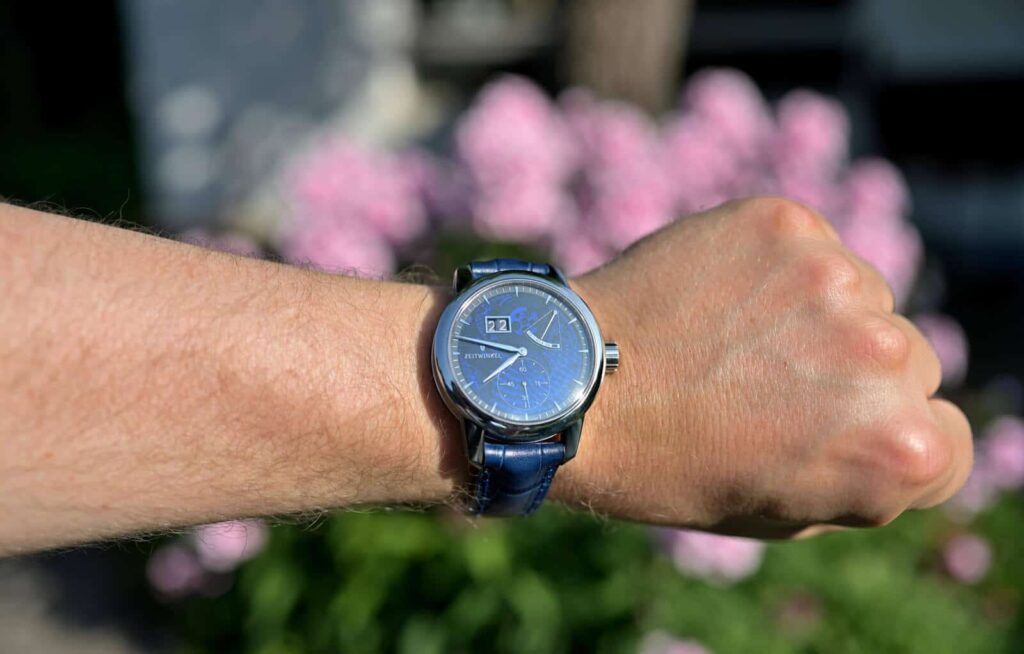
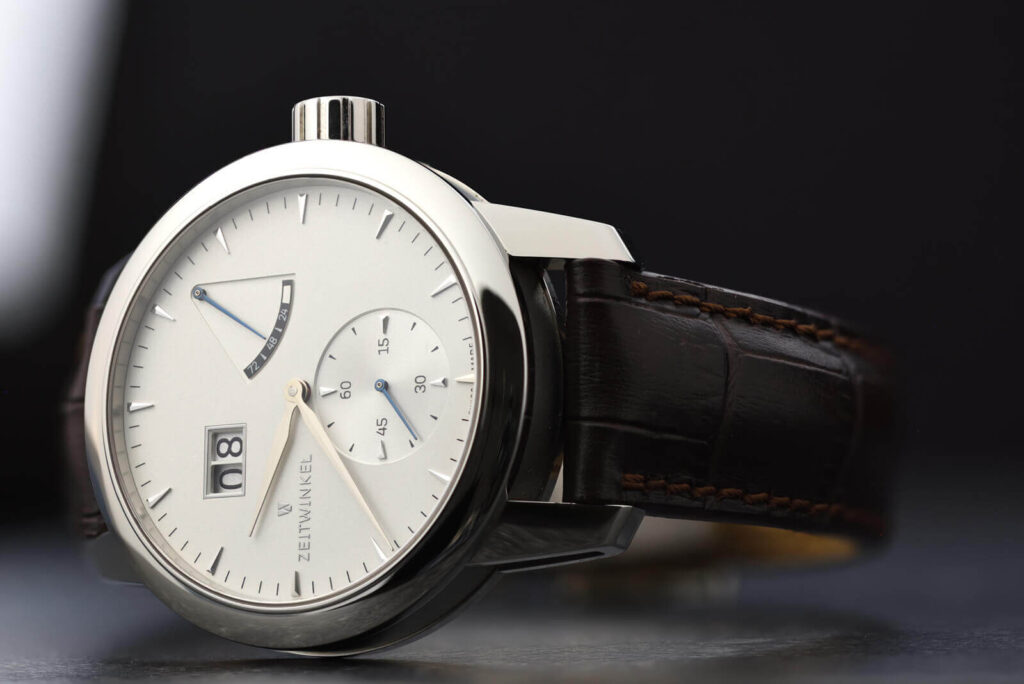
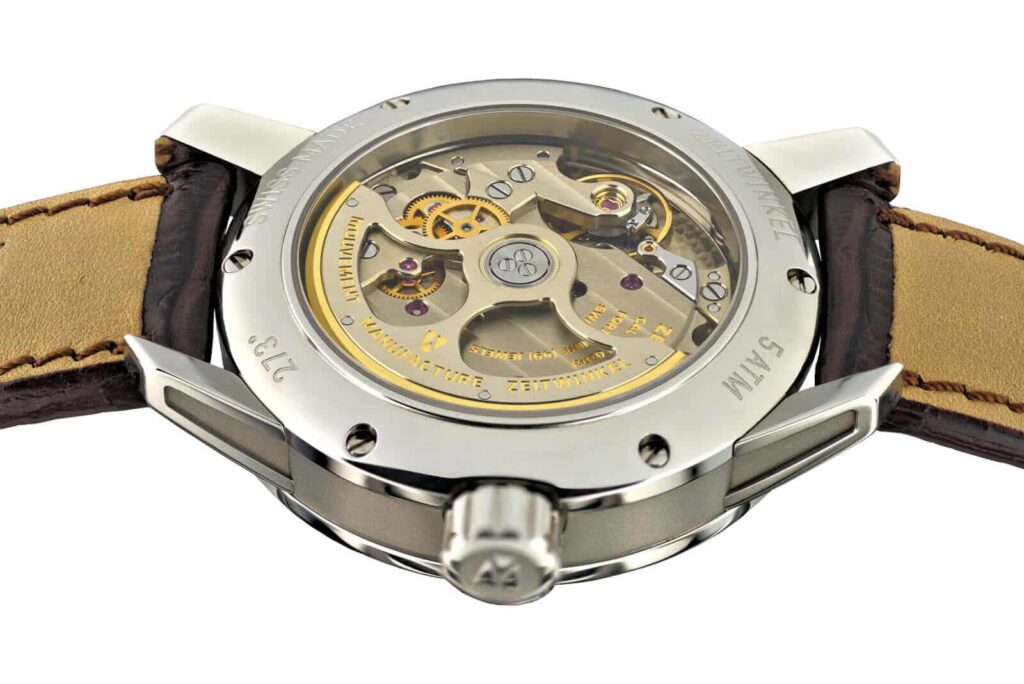
I discovered Zeitwinkel in 2013 when I fell for the understated elegance of the brand’s 273° model. Like most watch obsessives, I turned the watch over and appraised the movement. I was incredibly impressed. No rhodium plating in sight, just expanses of pure German silver, sometimes referred to as ‘maillechort’. Unlike plating which can deteriorate with the onset of years, German silver merely matures, acquiring a delightful patina with age. Beyond its appearance, the in-house movement is exquisitely finished. While front of house, the large date display imparts meaning in a clear, intelligible form.
Eventually, I travelled to the brand’s atelier in Saint Imier, eager to see newly born Zeitwinkels enter the world. Again, I was very impressed.
Nevertheless, making a superb product does not guarantee commercial success. Moreover, while many ‘independents’ are currently making hay while the sun shines, times have not always been so buoyant.
Recently, I had the opportunity to chat with Albert Edelmann, co-founder of Zeitwinkel, and learn more about the high-end Swiss brand.
Interview with Albert Edelmann, co-founder of Zeitwinkel
When was the company formed?
In 2006, a group of friends, myself included, had the idea of creating a brand and making watches. Some of us had worked in the watch industry, while other members of the team had valuable experience from working in different fields.
What were the aspirations of the brand when it was founded?
All of the founders shared a common goal, to build ‘honest watches.’ Most of us were watch enthusiasts and were fed up of seeing overpriced watches, featuring standard movements, housed in Asian watch cases, all wrapped up with a sizeable dose of marketing hyperbole. Quite simply, we wanted to build watches the old-fashioned way, not merely combining off-the-peg components that are used by numerous brands.
What makes Zeitwinkel special?
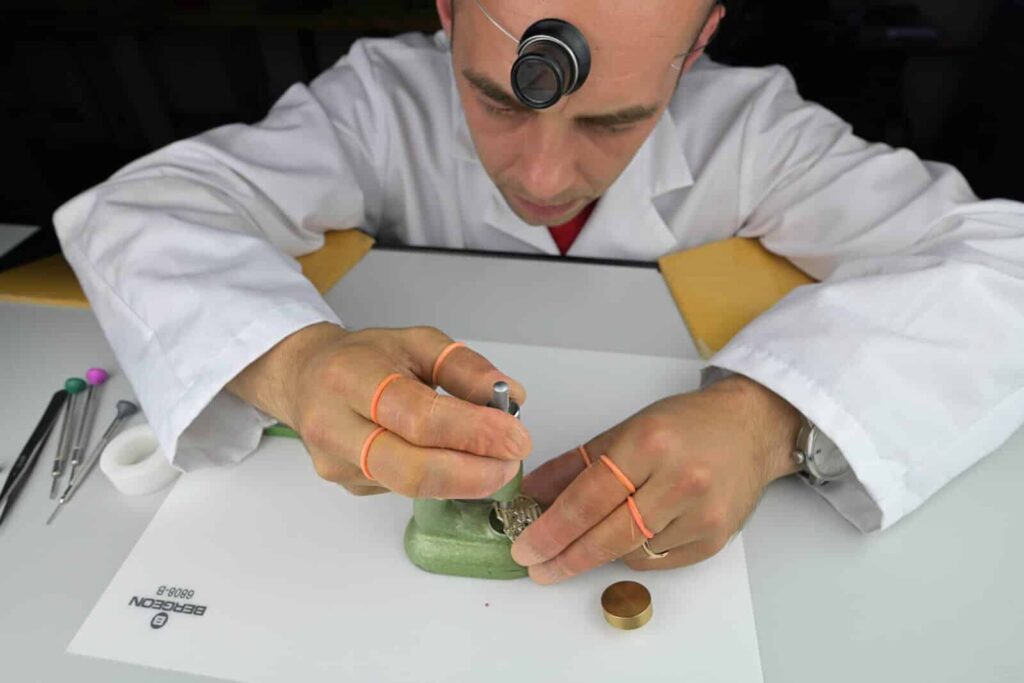
If I had to point out one specific feature, it would obviously be our in-house movements. They are unlike any other movements on the market. We began developing them well before we knew what our watches would look like. The second most important point is that we assemble every movement and every watch by hand from individual components. Zeitwinkel is one of the few watch manufactures that creates watches without shortcuts. The company is still run by its founders.
And last but not least, it is the watches in particular that make Zeitwinkel special.
From the outset, Zeitwinkel has made watches containing its own movements. The R&D must have been a huge financial undertaking. Can you provide more detail?
Looking back, it is safe to say that we completely underestimated the funds, skills, experience, time and also luck it takes to create a manufacture movement. We were of course warned, sometimes by our competitors trying to deter us from entering their market, but also by other experts.
With our experience in the watch industry, we felt that by partnering with a specialised engineering firm to translate our designs into production drawings, we would be able to manage the development and prototype phase without any major headaches.

However, we eventually had to take over the project management for prototyping and component production ourselves and adjust or even correct many of the technical assumptions. The prototype phase, which usually just serves to evolve the technical drawings into a model that can be produced in series, was effectively a redesign. Indeed, we revisited many movement components, hence everything took much longer than expected. We also had to master the prototype and serial production process down to the smallest details without any significant support.
The upside was that we learnt a lot about movement design and production. Today, we enjoy the benefits of this amassed knowledge.
How many different types of watch do you offer? Moreover, how many in-house movements do you offer?
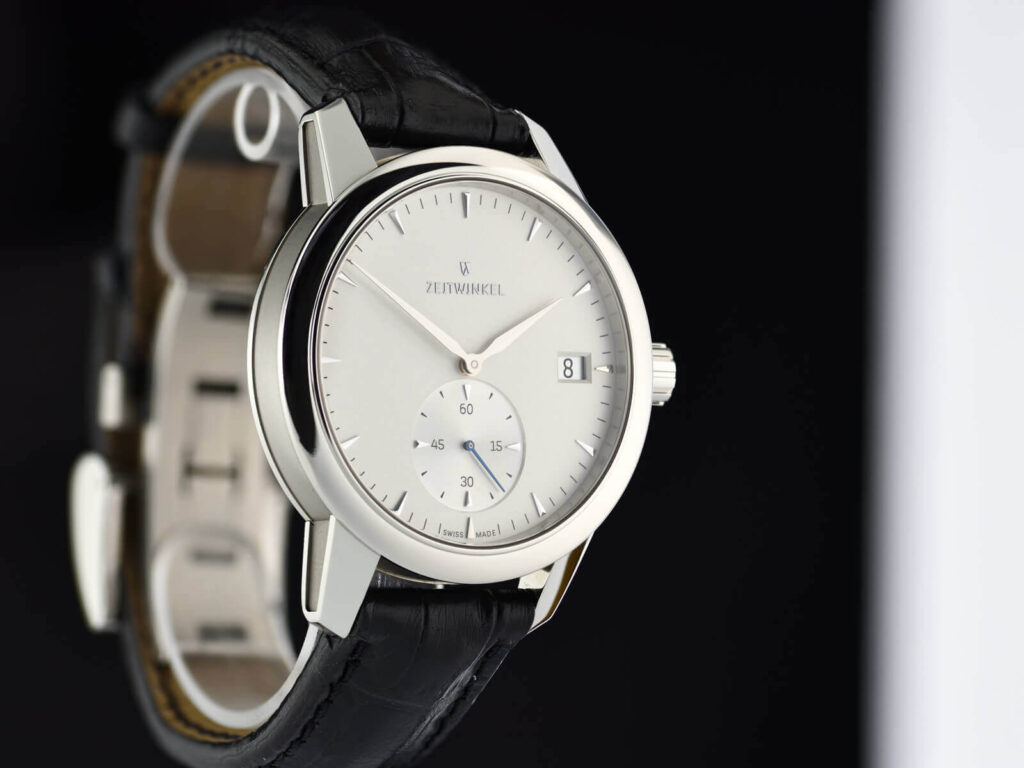
We currently offer two in-house movements: our base caliber ZW0102 with 72 hours power reserve and our patented large-date movement ZW0103 with the date at the unusual ‘11’ position and a power reserve indicator located opposite.
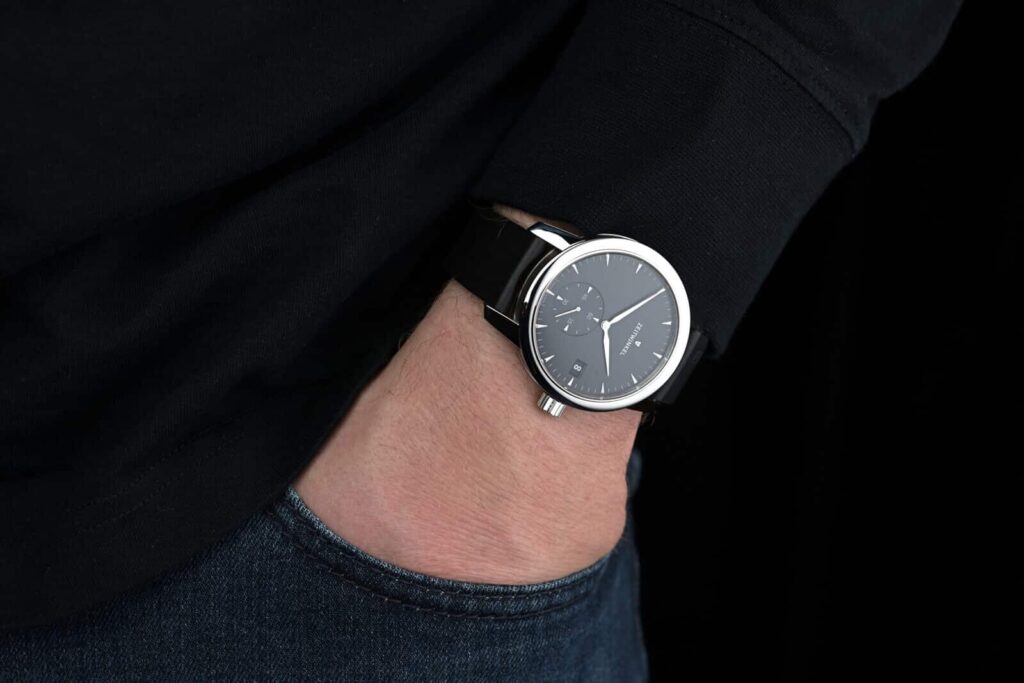
We manufacture our watches in two case sizes, 39mm and 42.5mm. They are available in a variety of dial configurations, dial materials, colours and, of course, with or without our unique large date mechanism.

Are there any distinguishing features about your movements?
The most obvious detail is that they are immediately recognisable as Zeitwinkel movements. Quite simply, they do not look like any other movements on the market.
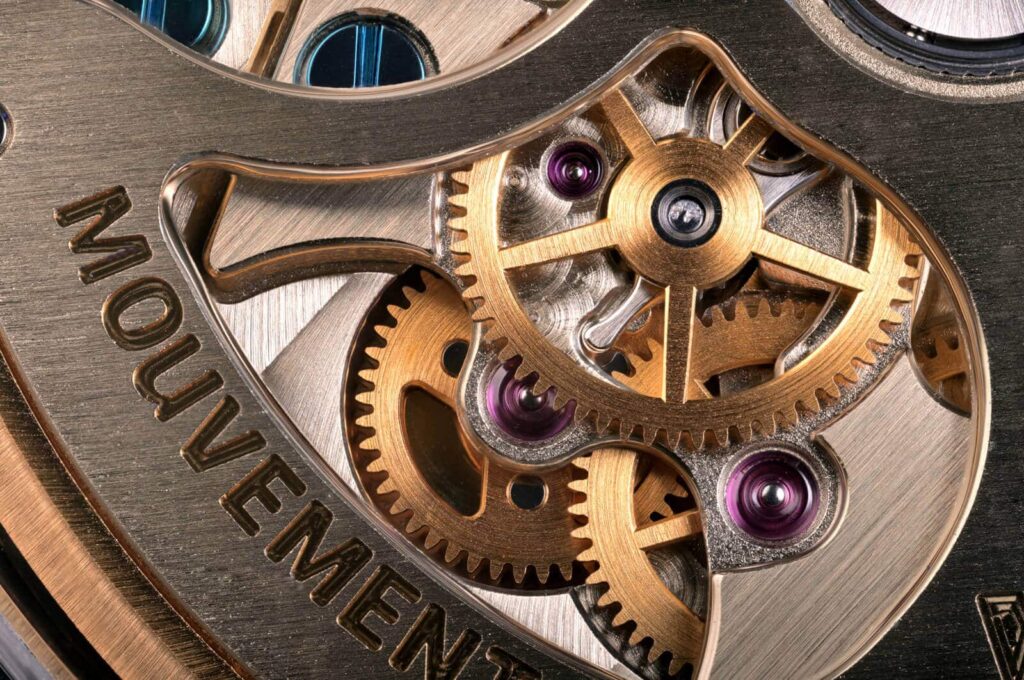
We have not only created unique designs, but we use untreated German silver for the plates and bridges. This material is beautiful and very sturdy, but also quite unforgiving during production and decoration phases. In other movements, fingerprints or minor scratches can be covered up later in the process, but our movements reflect the skill of the watchmaker that made them. As the movement ages, the warm tone of the German silver becomes even more pronounced.
In terms of technical properties, all our movements currently feature bi-directional automatic winding and have a power reserve of 72 hours. They are elaborately decorated, very robust and, thanks to their scale, measuring little more than 30mm, can be incorporated within many dial configurations.

Are there any other components made in-house?
The most obvious in-house components are our handmade, flame-blued steel hands. They prove very labour intensive to make. In fact, many of them break or are rejected before we produce a perfect pair.
Fifteen years after starting Zeitwinkel, we are now equipped with the necessary machinery and experience required to manufacture nearly every component in our own workshop in Saint-Imier.
We use this capability for prototype production as well as making bespoke watch components. For the serial production of our watches, we also work with manufacturing partners in our region, allowing us to focus our limited resources on the important steps of developing and assembling movements and watches.
I must confess, I love the 273° large date in blue. Apart from its impressive movement, the habillage is fabulous. How do you convey the excellence of this product to the watch collecting community?
Thank you very much! We also love the blue dial version, although many customers seem to feel it’s safer to choose the more mainstream silver or black dial versions.
You raise a weak point for many small, independent watch manufacturers with this question. We believe that the craftsmanship and quality of our watches surpasses that of better-known watch brands with a much higher price point. A Japanese customer once commented that Zeitwinkel still decorates its movements in a way others claim to do but have long since given up.
Without the enormous marketing budgets of the large conglomerate brands, it is quite difficult to gain attention as a brand and to convey what makes our products special. We therefore try to meet many watch enthusiasts in person whenever possible. Social Media as well as video calls have also been tremendously useful, especially in recent times when foreign travel has proved difficult.
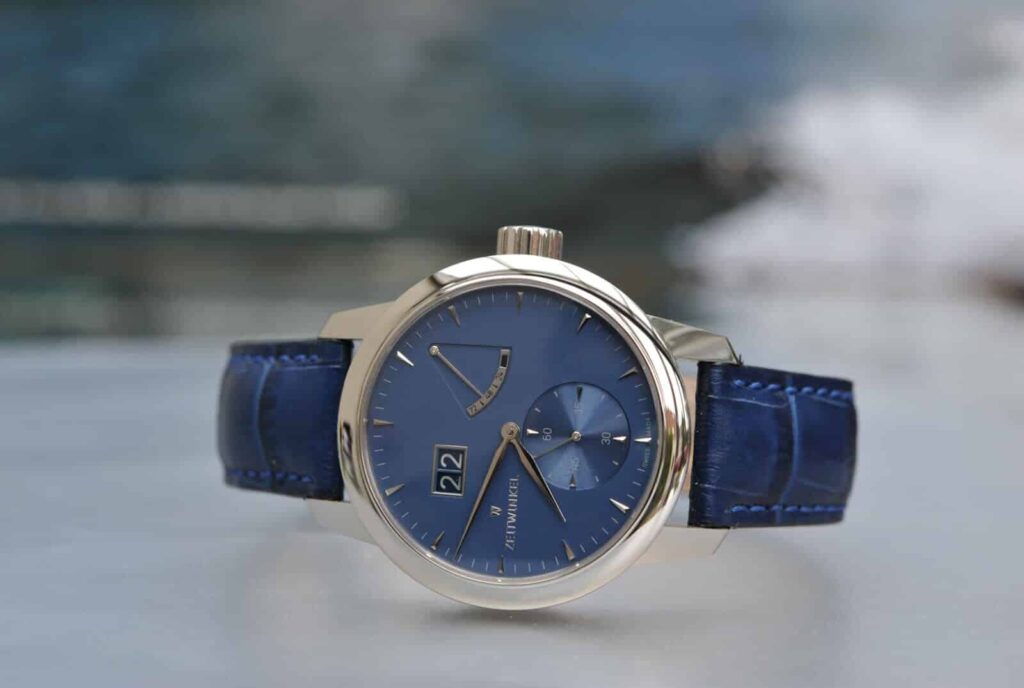
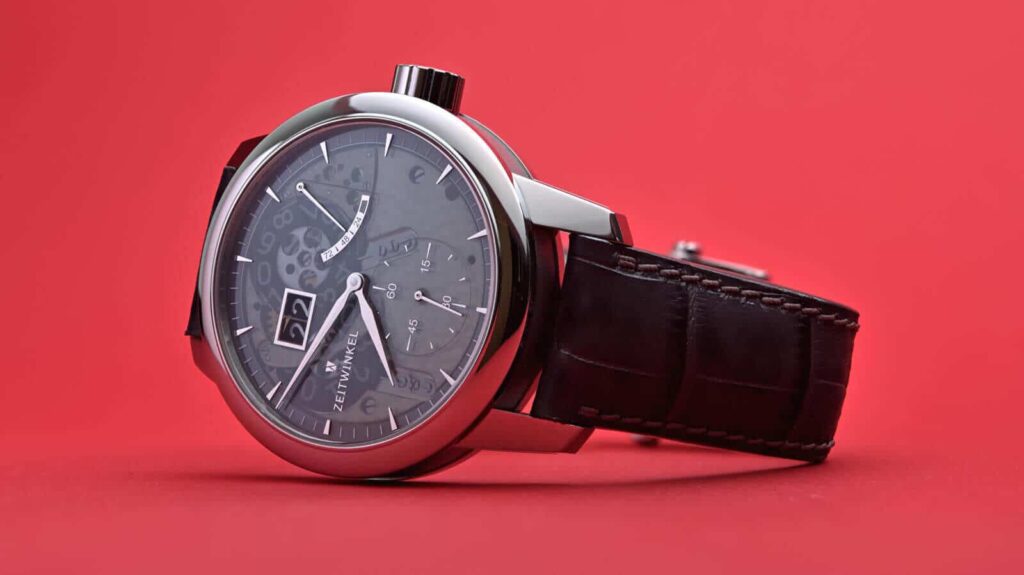
In recent times, the 273° has been offered with sapphire ‘fumé’. Have you any new models in the pipeline?
Apart from our unique smoked sapphire dial 273°, we now also manufacture a blue sapphire dial version that is considerably more complicated to make. In dim light, the dial appears solid blue but when it is exposed to light, the blue surface appears transparent, providing a dynamic aspect to the overall composition. It looks stunning, justifying the efforts required.
We are also working on a few new dial options for early 2022. Generally, however, we don’t feel the need to constantly introduce new ‘collections’ or to follow fashion trends. Zeitwinkel aims to create classic watches with a timeless design that will outlast short-term fashion trends.
In the medium term, we plan to introduce a hand-wound version of our in-house calibers which will allow us to build slimmer watches. Our team is also in the process of designing a second line of watch cases and we hope we can talk about that more in 2022.
How do you distribute your products and what were the reasons for this?
Initially, we sold our watches through traditional watch retailers, but several years ago, we switched to selling most of our products direct to the consumer. The main reason for this is that many retailers don’t want to devote the time to explain independent watchmaking to their customers. Furthermore, it has recently become clear that retailers were being subjected to extreme pressure from the large watch groups to sell their fast-changing collections.
Today, Zeitwinkel watches can be ordered directly from the manufacture in Saint-Imier or from select partners around the world that share our passion for artisanal watchmaking. When customers contact us, there’s a high likelihood that they will talk to one of the founders. We hope we can keep it that way as Zeitwinkel continues to grow.
Your company is based in Saint Imier. What benefits does this provide?
We considered several potential locations when it came to setting up a production facility. We eventually settled on a former dial factory in Saint-Imier not only because of this region’s watchmaking history, but also because it is a quiet, unpretentious town far removed from the glass facades beloved by large groups.
Many of our partners are just around the corner. Furthermore, the people, the landscape and the food are wonderful and we never worry about being stuck in traffic during rush hour. Although visitors have to travel a bit to visit our manufacture, we believe Saint-Imier provides the perfect home for our modern interpretation of traditional watchmaking.
What are your aspirations for Zeitwinkel in the long term?
Since establishing Zeitwinkel some fifteen years ago, our timepieces have been well-received by watch enthusiasts from around the globe. The company’s founders have no aspirations to jump ship or to sell the firm anytime soon. For this reason, we choose to focus on building Zeitwinkel for the long term, rather than fixate on short-term growth.
It’s also our aspiration that, irrespective of the number of timepieces we produce, we continue to build watches with the same care and with the same quotient of handcraftsmanship. We are incredibly passionate about traditional watchmaking and it’s wonderful that Zeitwinkel can provide a livelihood for everybody involved. Obviously, we are looking forward to creating new watches and discussing fresh ideas with watch enthusiasts from around the world!

Closing remarks
Albert Edelmann revealed that, along with his fellow investors, his passion for watchmaking fuelled his desire to make timepieces. I suspect there is a little bit of this entrepreneurial spirit in many horophiles. However, few individuals have the prerequisite skills and necessary courage to make their dreams a reality.
Those brave souls who do sell the family silver and place all their chips on red should be applauded. I suspect that is why, along with many other watch fanatics, I have a fondness for ‘independents.’
However, despite the merit of creating something from nothing and building a brand from the ground up, the resultant products must still pass muster. A sentimental attraction to a brand will not endure if the timepieces produced are devoid of merit or plainly unreliable.
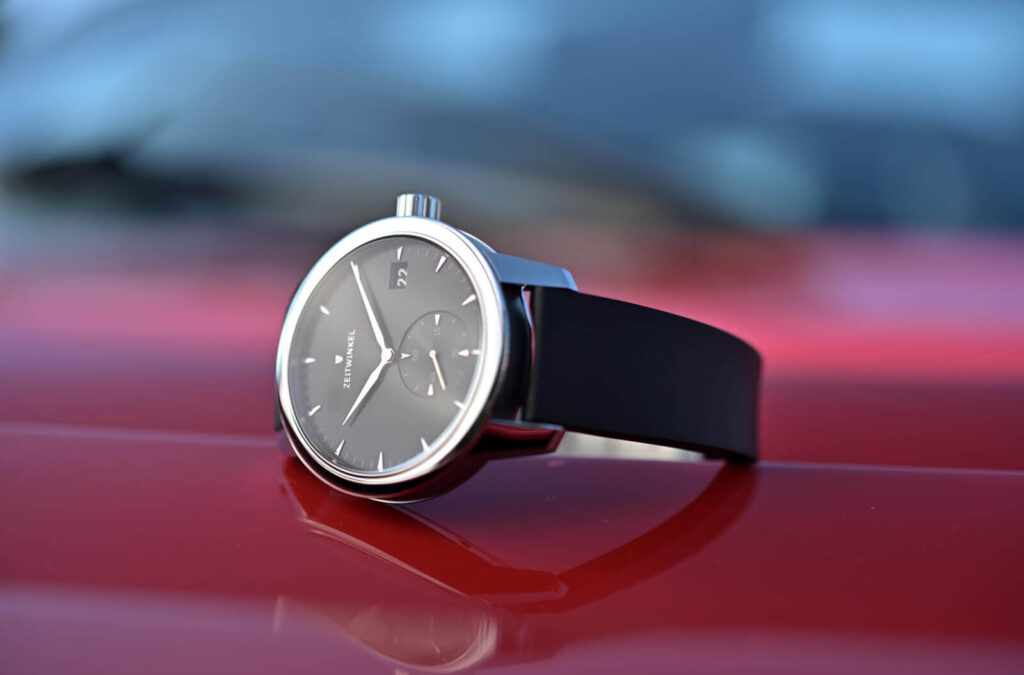
No such issues mar the Zeitwinkel ownership experience. Beyond the ageless aesthetics and refined appearance of its models, these watches are endowed with some exquisite details such as a hand bevelled rotor and a three-quarter plate adorned with perlage. The company could have made life easier for itself using rhodium-plated brass parts instead of its beloved German silver, but that would have diminished the overall appeal of its watches. At no stage has this brand shown any concessions to haste or revealed a propensity to compromise. Indeed, a close friend of mine purchased a model 273° a few years ago. There have been no problems, it still looks fabulous and his fondness for his fresh-faced Zeitwinkel has never waned. Quite simply, there is much wisdom in purchasing from an independent brand.