
URWERK Watches– 25 years and counting (Part Two)
Continuing his retrospective look at 25 years of URWERK Watches, Angus Davies continues to examine the brand’s journey, looks at a selection of the firm’s models, the challenges it encountered along the way and, of course, its many achievements.

Image – drawing of the URWERK UR-103
URWERK UR-103.01 (2003)
Over the years, I’ve interviewed several independent watchmakers and the one thing most of them share in common is a willingness to take risks. It is safer to be cautious when creating new models and to follow the well-trodden path of others, however, the most exciting fledgling brands display a significant quotient of courage from the outset, despite the inherent risks this presents.

URWERK’s formative years were challenging, something the brand describes as ‘six years of hardship and struggle’. Nevertheless, Felix and Martin held their nerve, stayed true to their principles and, following the successful release of their inaugural models, unveiled the UR-103.01. Housed in a curved case and adorned with a series of lines on its surface, the appearance of the UR-103.01 was fresh and highly original.

Consistent with the brand’s DNA, the time was expressed using wandering hours, but with a difference. On this occasion, four different hour values were presented on three-cone shaped satellites orbiting around the inside of the case with each satellite taking its turn to indicate the hour whilst driving by the minute track. Thankfully, the courage shown by URWERK’s founders was duly rewarded and the Maison went on to enjoy commercial success.
Harry Winston Opus 5 (2005)
Back in the 90s, there were several brilliant minds yearning to exercise their right for self-expression through the medium of watchmaking. Some of these free-thinkers had experience working for large brands, but wanted to go their own way, while others had been nurtured by artisanal watchmakers such as Svend Andersen.
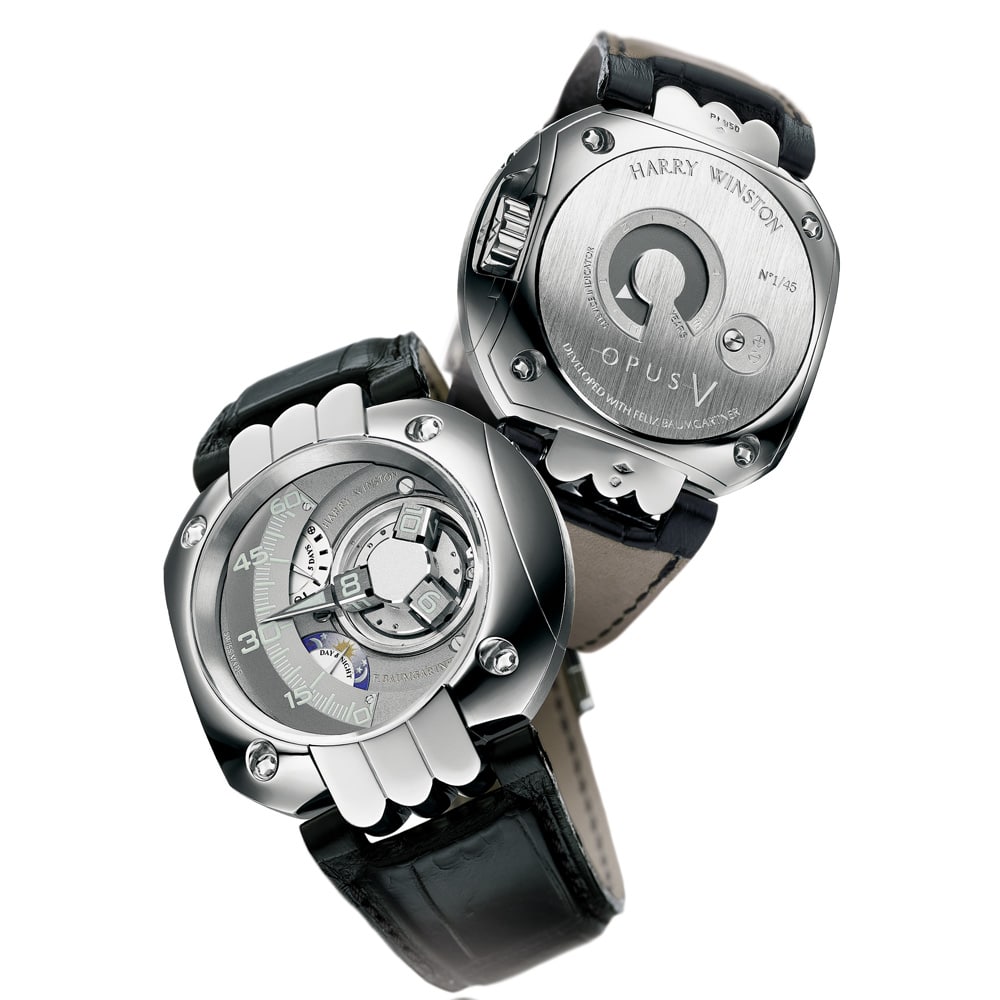
In 1998, Max Büsser was appointed CEO of Harry Winston’s Rare Timepieces division. He had the inspired idea of creating co-branded watches, produced in collaboration with independent watchmakers and marketed under the ‘Opus’ label. His first co-creation, the Opus One, drew on the talents of François-Paul Journe. Thereafter, he would collaborated with several other talented individuals, including Antoine Preziuso, Vianney Halter, Christophe Claret and ultimately, URWERK, which culminated in the release of the Opus 5 (2005).
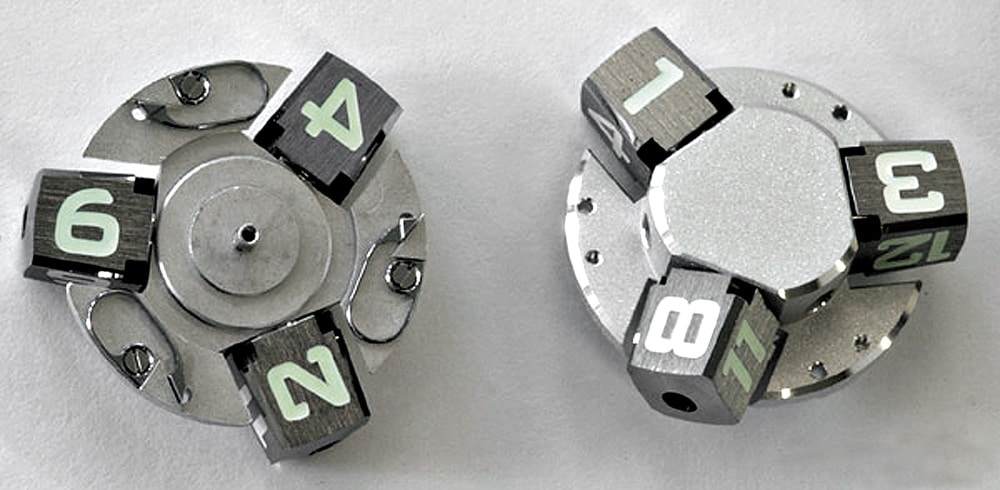
Perpetuating the brand’s predilection for displays that convey time using wandering hours, the Opus 5 showcased URWERK’s talents to a wider audience and cemented URWERK’s reputation as creators of Haute Horlogerie and mechanical art.
URWERK UR-110 Eastwood (2015) – collaborations
Following its release in 2011, the URWERK UR-110, a model featuring three satellites fully disclosed via a pane of sapphire crystal, won the ‘Best Design Watch’ at the 2011 edition of the Grand Prix d’Horlogerie de Genève (GPHG). This reference was a huge success for the brand and became affectionately known as the ‘Torpedo’. However, never a brand to rest on its laurels, it continued in earnest crafting new expressions of URWERK ticking art, culminating in the release of the UR-110 Eastwood models in 2015, based on its prize-winning reference.
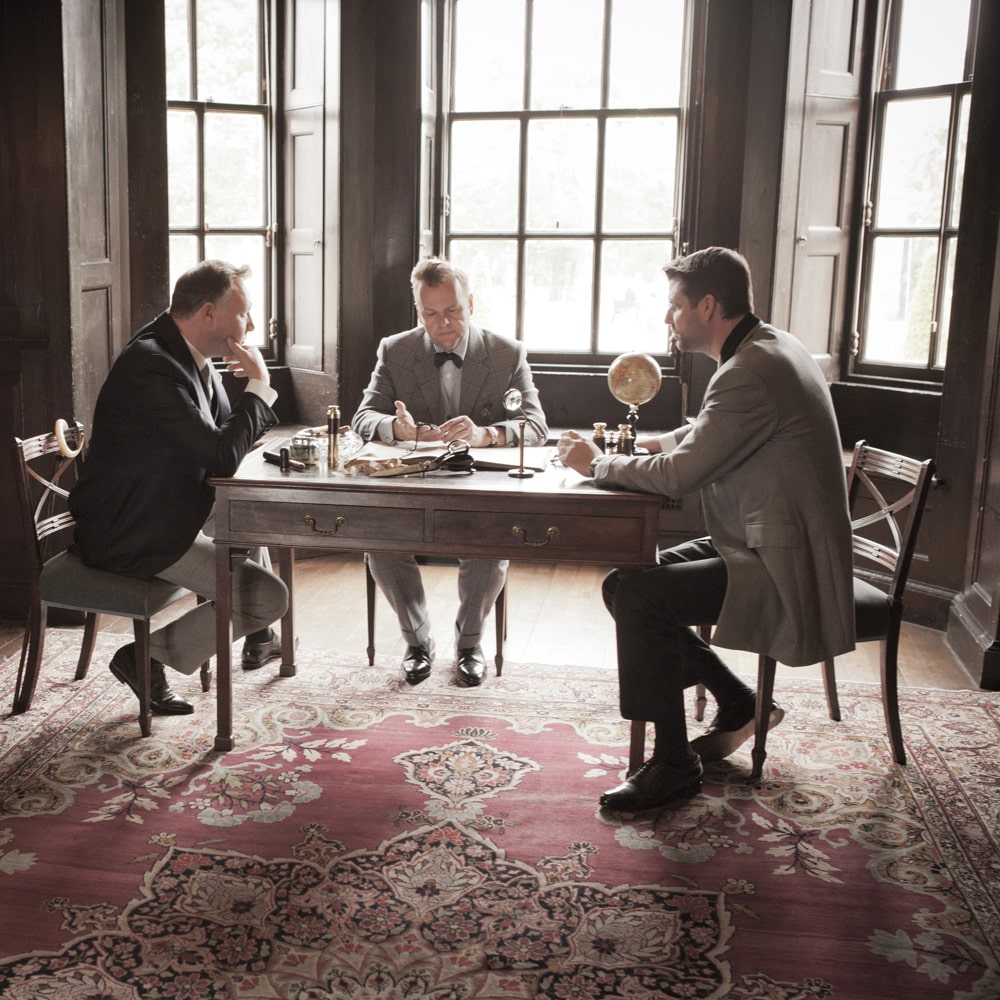
Image – Felix, Martin and Timothy Everest (centre)
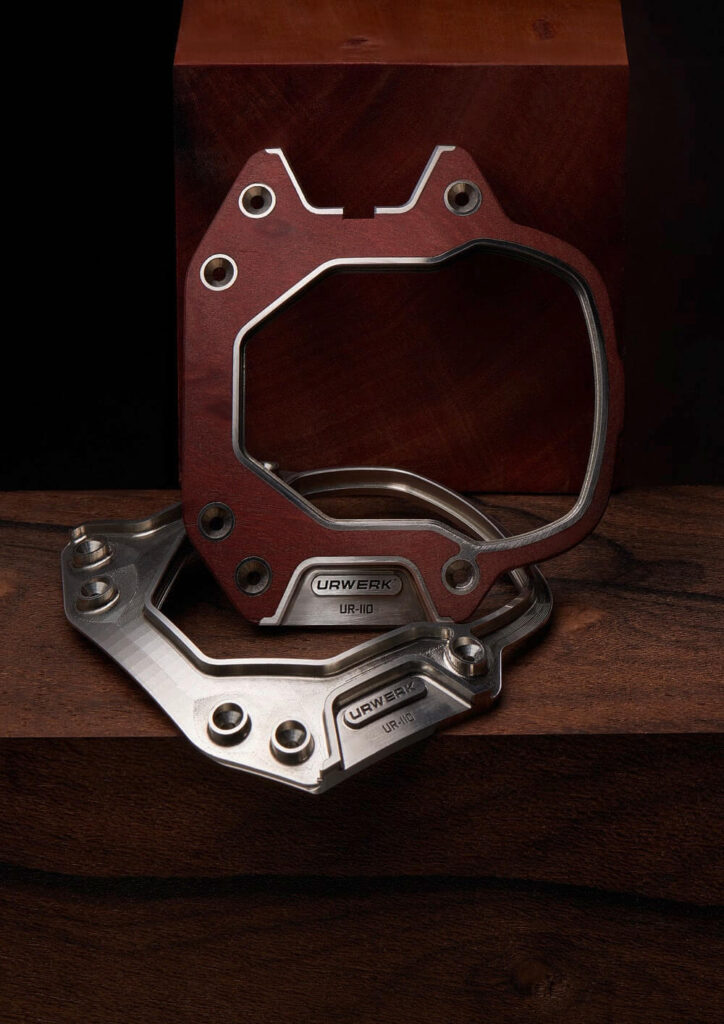
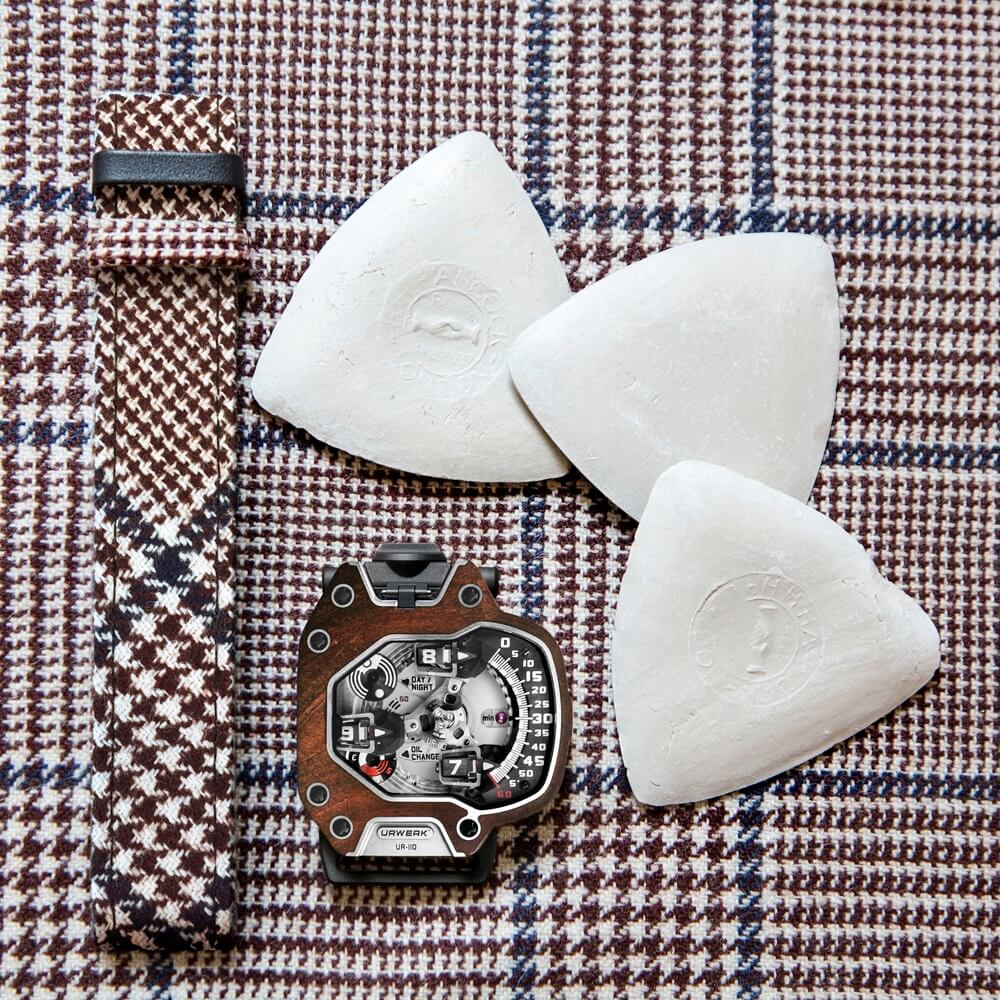
Both Felix and Martin have a passion for using different materials and they frequently look beyond the boundaries of watchmaking for inspiration. When creating the UR-110 Eastwood models, they chose to dress the upper section of each model’s case in either Macassar ebony or South African Red Ivory wood.
Surprisingly, Felix and Martin looked to Savile Row, the home of British tailoring and chose to work with Timothy Everest. The esteemed tailor proposed different tweeds for the strap and eventually selected two fabrics to complement the aforementioned wooden bezels.
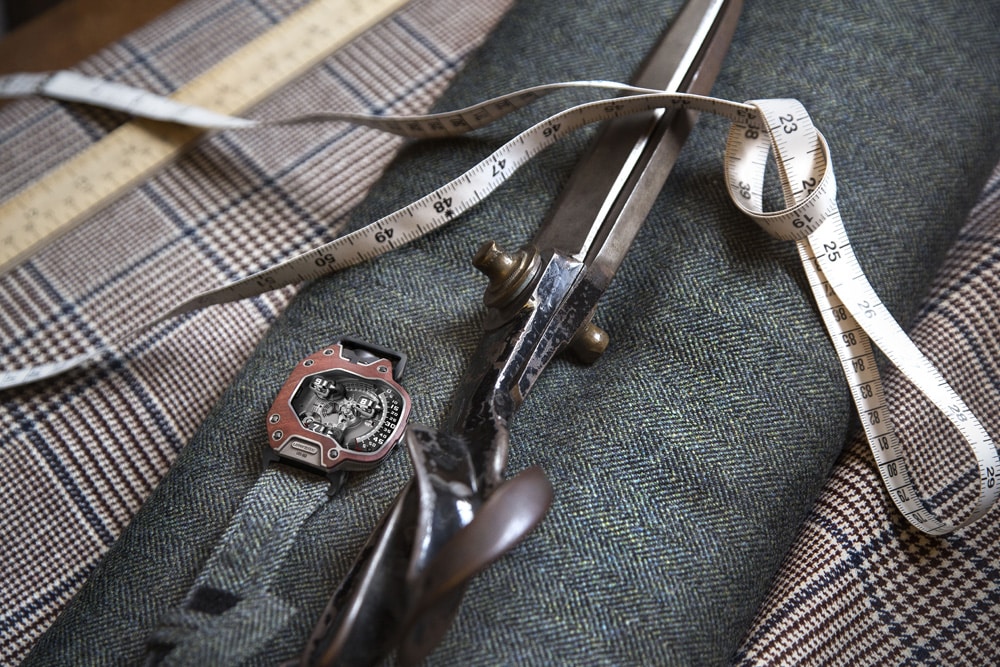
Ever since the advent of the Opus 5, URWERK has repeatedly shown a willingness to collaborate with other parties, including De Bethune and Laurent Ferrier. It has also worked with artisans from outside of the watch industry including engraver, Johnny Dowell and knifemaker, Emmanuel Esposito. It’s willingness to collaborate with others has frequently delivered synergistic outcomes.
URWERK EMC collection (2013)
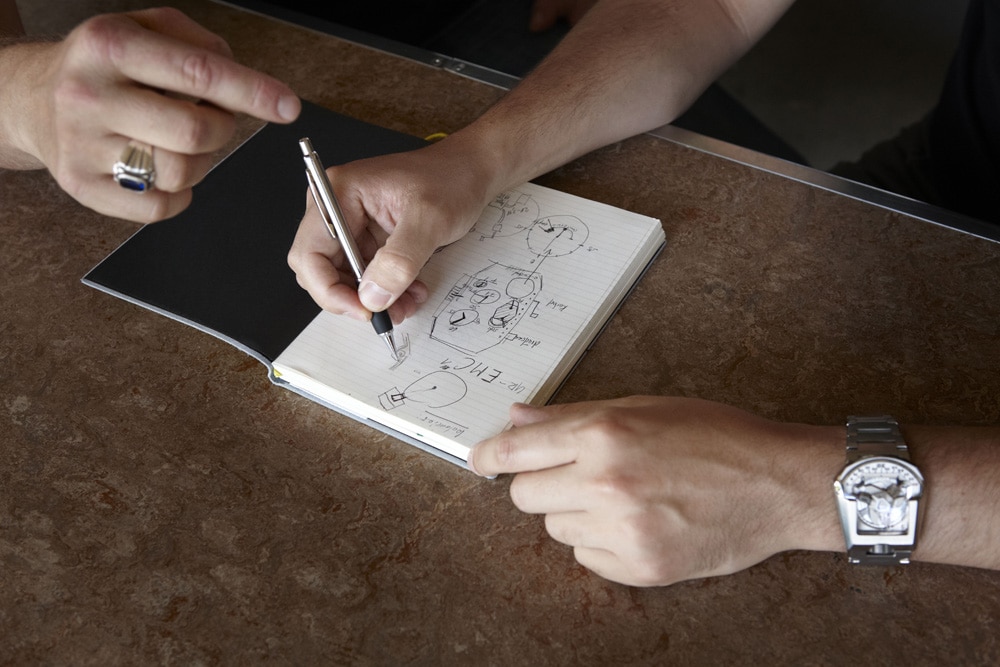
Nobody could ever accuse URWERK of plagiarism. Indeed, for many horophiles it remains an endearing quality that elicits nods of approval. Introduced in 2013, the brand’s EMC was billed as ‘the first high-end mechanical watch with “artificial intelligence”’.
Although URWERK watches are exemplars of neoteric design, they have also delivered remarkable chronometric performance. Nevertheless, the advent of the first EMC models broke new ground.
Watches are typically regulated by a trained watchmaker sat a bench using a Witschi machine. Assuming the movement features a raquette, the watchmaker will adjust the effective length of the hairspring to alter the rate. In addition, they will also check the beat error and amplitude, ensuring they are within tolerance.

While these tests are important, they are performed in laboratory-like, static conditions. URWERK recognised that when a watch is affixed to the wrist, the behaviour of the balance can be very different. Indeed, as the brand explained at the time, ‘changes in position and temperature, and shocks, can all adversely affect isochronism (timing regularity) of a wristwatch’. The EMC walked on virgin snow, a mechanical watch that the owner, with no watchmaking expertise, could easily regulate.

Equipped with a starting handle, reminiscent of an old car, the EMC folds out the crank located in the side of the case and rotates it in order to generate sufficient current to power an optical sensor and computer housed within the watch. The optical sensor reads the balance wheel’s rate of oscillation over a 3-second period and transmits the information to the computer. The observed rate is compared with the reference rate and the deviation is shown on a dedicated display in the top lefthand side of the dial. If the EMC requires adjustment, a screw on the underside of the watch provides a means of user-friendly regulation.
Despite its futuristic looks and groundbreaking means of regulation, the URWERK EMC still encompasses high-end finishing such as Côtes de Genève, snailing and polished bevels on the screwheads. Once again, the Swiss marque illustrates that pioneering technology and avant-garde design can be compatible with Haute Horlogerie.
The magnificence of the EMC did not go unnoticed, scooping the ‘Mechanical Exception Watch Prize’ and ‘Innovation Watch Prize’ at the GPHG in 2014.
URWERK UR-106 collection (2015)
At the time of launch, the URWERK UR-106 collection represented a new direction for the brand, namely the release of the firm’s first ladies’ model. Previously, URWERK was synonymous with large, technical and complicated timepieces, brimming with masculinity, but the UR-106 changed everything.

Endowed with a wandering hours display, the parentage of the UR-106 could never be in question. Sharing a passing resemblance to the UR-105M, released the previous year (2014), the UR-106 looked a little softer and, ergonomically speaking, more optimally suited to a slender wrist. Initially, the model was offered in a choice of titanium and steel (UR-106 Lotus) or black PVD coated steel (UR-106 Black Lotus). Each reference featured diamonds, adding a decadent note to proceedings.
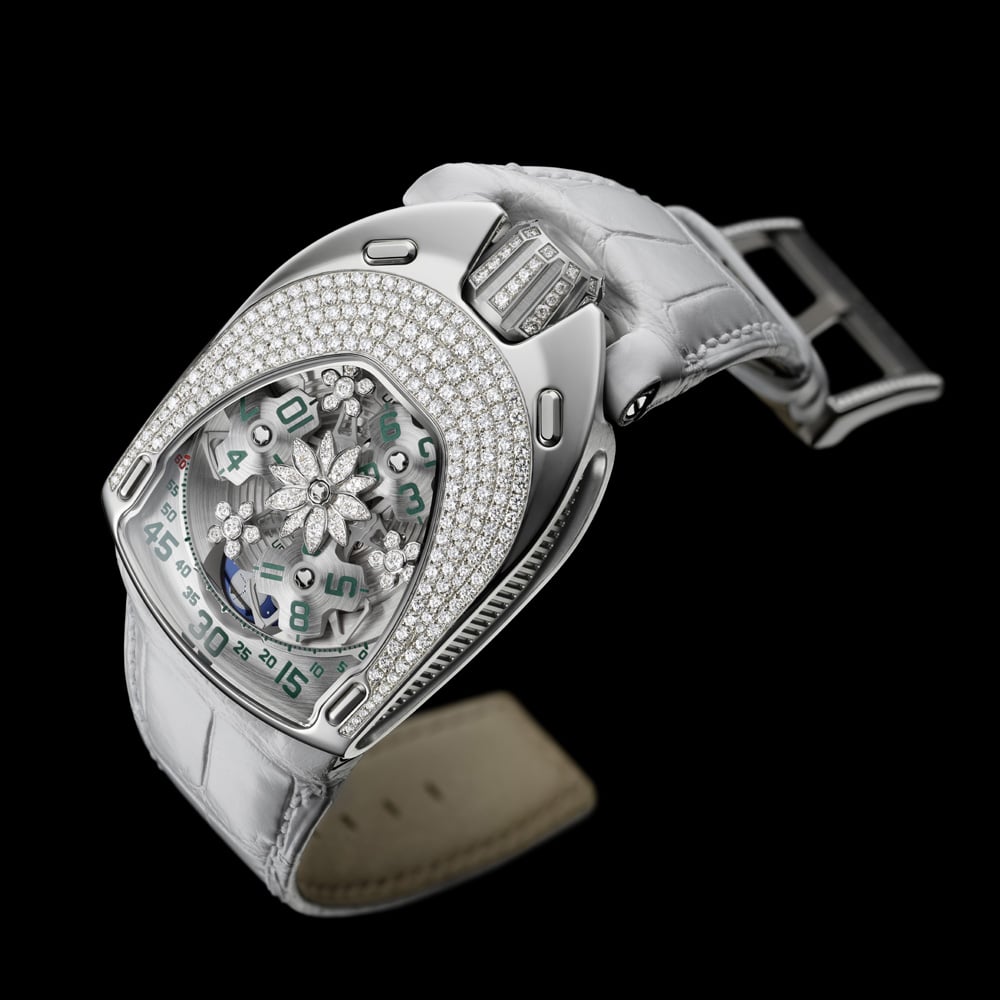
Personally speaking, my favourite version of the UR-106 arrived in 2017, the UR-106 Flower Power. Martin Frei had masterfully designed a watch richly infused with femininity, tastefully adorned with diamonds and floral references, but without seeming to patronise women. Quite the opposite in fact, given this watch is a serious example of Haute Horlogerie.
URWERK AMC (2017)
Having already wowed the watch-collecting community with the release of its EMC collection in 2013, the master watchmaker and visual artist looked to the heavens and came up the AMC.
In the late 18th century, Abraham-Louis Breguet unveiled his ‘Sympathique’ clock. Breguet’s inspired idea was to create a pocket watch that sat within a cradle atop a clock. When placed in the cradle, the pocket watch was wound and regulated by the clock.

Some 219 years after Breguet unveiled his famous clock and watch arrangement, URWERK lifted the covers off the AMC. Once again, driven by a desire to advance the cause of chronometry, URWERK conceived a modern-day equivalent to Breguet’s system, pairing a mechanical watch with an atomic clock.

The supremely accurate atomic clock is ‘guaranteed to within one second in 317 years.’ The watch is placed into a holder within the clock where it is wound, set to the precise time and regulated. The AMC is very URWERK, a product conceived by looking at the world differently.
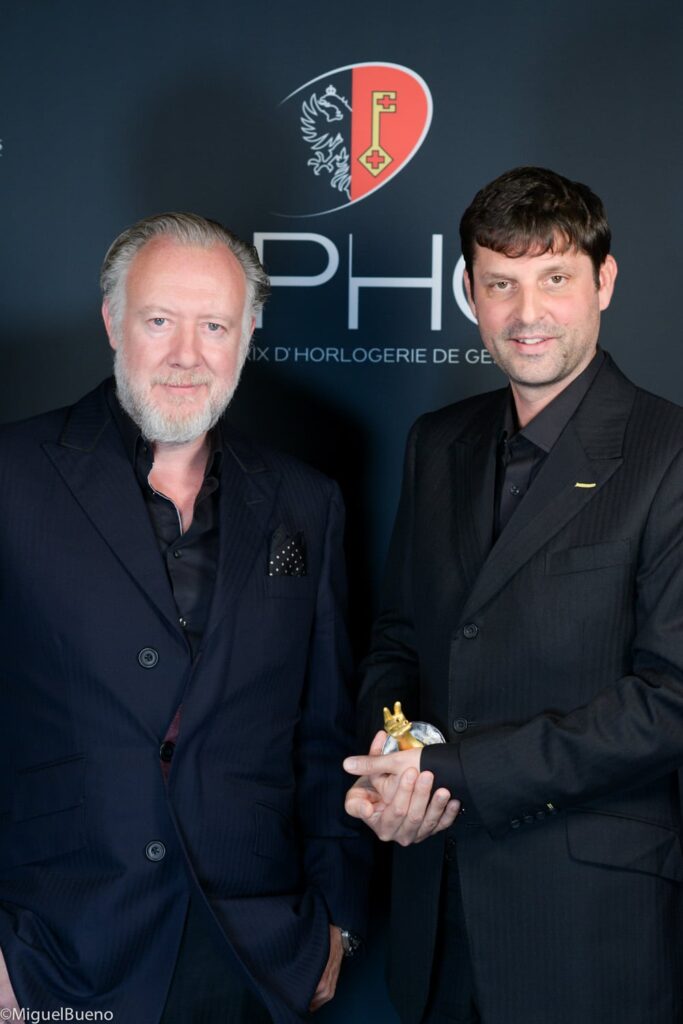
Image – Felix and Martin collecting the ‘Audacity prize’ at the GPHG 2019
URWERK UR-111C collection (2018)
At this juncture, it should be clear that URWERK’s fondness for imparting time using wandering hours has never wavered since the inaugural models were launched in 1997. However, as the EMC and AMC clearly show, the creative duo have not stuck doggedly to one form of horology.

In 2018, URWERK unveiled the UR-111C, a new collection that shunned the brand’s beloved wandering hours in favour of a rotating cylinder or ‘roller’. On these models, the hours are shown in an aperture to the left of the roller and the minutes displayed on both the roller as well as in an aperture to the right. On the top of each watch, an additional window affords sight of the small seconds display.
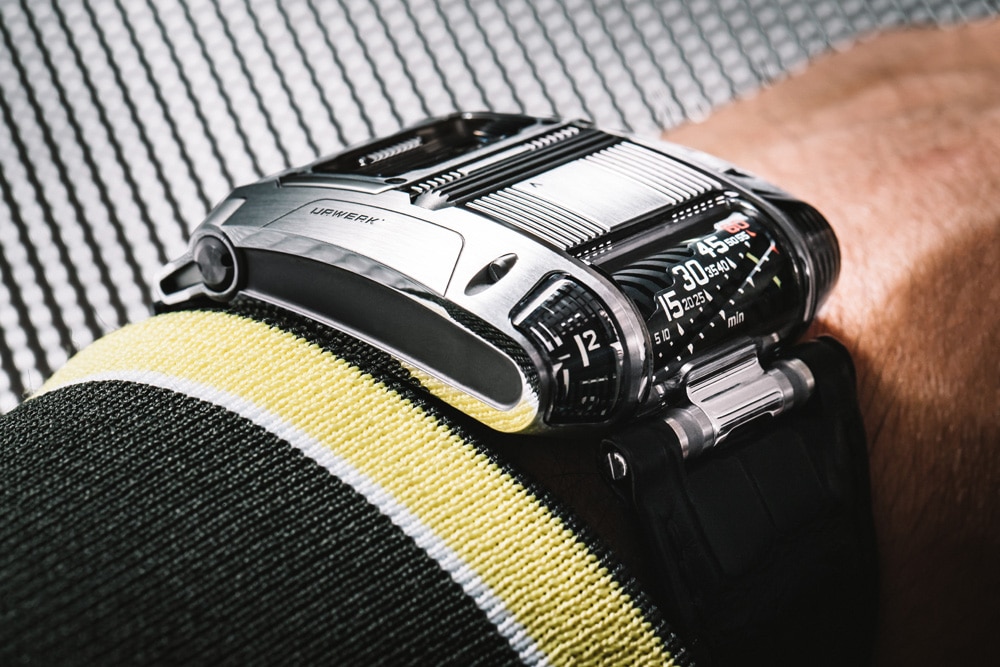
With the advent of the UR-111C, and subsequently the UR-112 (2021), nobody could ever accuse URWERK of being typecast.
URWERK UR-120 (2022)
Last year, Felix and Martin returned to wandering hours as a means of indicating the prevailing time. Nicknamed ‘Spock’ by the two self-confessed Trekkies, the UR-120 has three satellites orbiting the inside of the case, beneath a huge expanse of sapphire crystal. The choreographed dance seen on watches such as the UR-110 is repeated on this model, but with a sensational twist. The satellite nearest the minute track shows the prevailing hour on its upper surface, just like other URWERK watches. However, where the UR-120 differs from its siblings is that each hour marker is formed of two halves that subsequently separate, rotate and regroup to form a new hour value.

URWERK Watches – final thoughts
The beauty of being a comparatively small company is that it allows a degree of flexibility, a useful trait when it comes to being creative. However, being small can present challenges. Procuring limited quantities of parts often proves costlier than mass producing huge volumes of components. When URWERK released the UR-210S ‘Full Metal Jacket’ (2015), it equipped the model with a highly flexible metal bracelet, a first for the brand. The bespoke bracelet was made for just 35 pieces, making the component more expensive than a regular bracelet fitted to a mainstream timepiece.
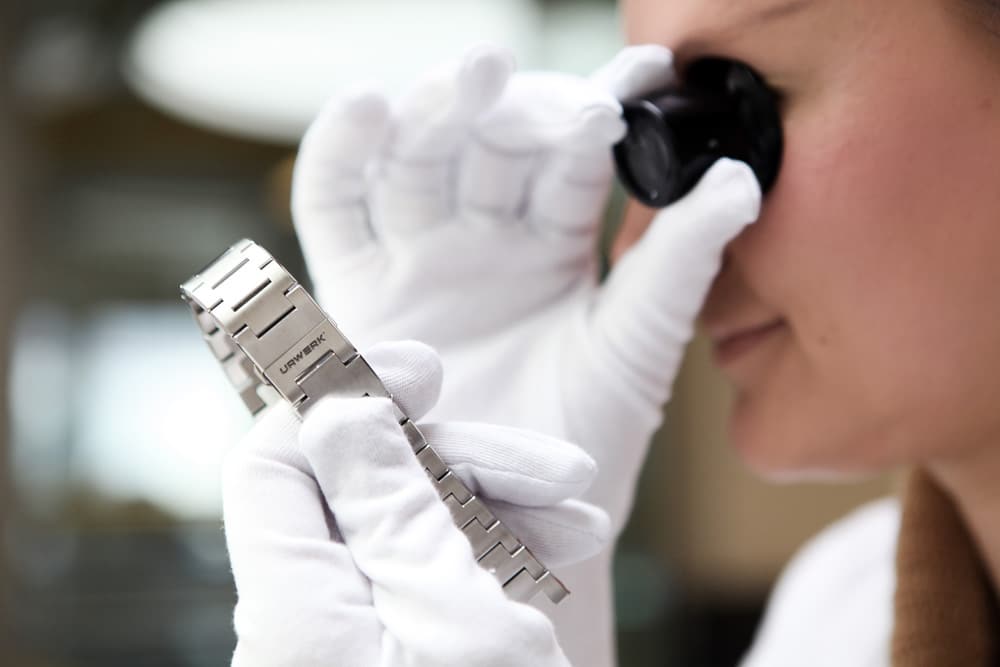
Image – checking the bracelet on the UR-210S ‘Full Metal Jacket’ (2015)
Nevertheless, despite the notable cost of the bracelet, URWERK was not dissuaded. Indeed, Felix and Martin had a particular look in mind (and wrist feel) spurring them to create the ‘Full Metal Jacket’ ensemble. The resultant watch was well-received by the press and public alike, vindicating their decision.
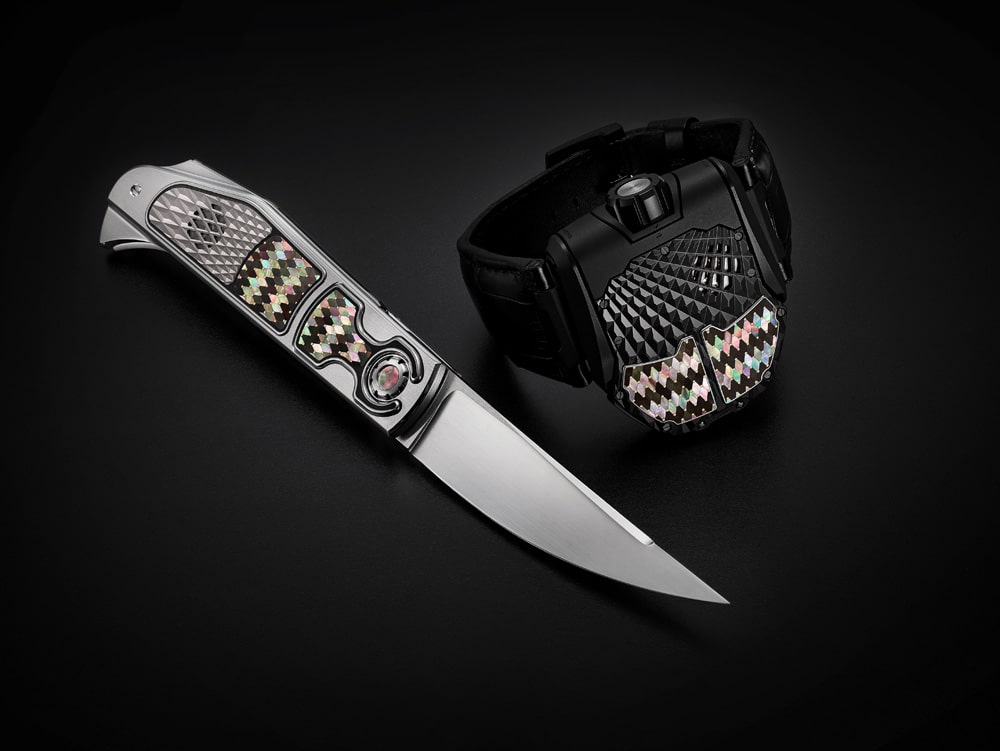
Image – URWERK UR-T8 “Colibri” with its T8 “Colibri” art knife made in collaboration with Emmanuel Esposito
Felix and Martin have continuously looked at new materials and technology. For example, URWERK was an early adopter of ARCAP, using the antimagnetic alloy for various parts. With regard to the UR-111C, the brand used a ‘dense cluster of precisely aligned optical fibres’ for the seconds indication. This latter model also featured super-light wheels formed using LIGA technology while some other models have been equipped with bronze/beryllium Geneva crosses attached to rotating carousels. It seems Felix and Martin have not restricted their gaze to just ‘off-the peg’ parts and techniques, they’ve continuously focussed on inventiveness and delivering excellence.
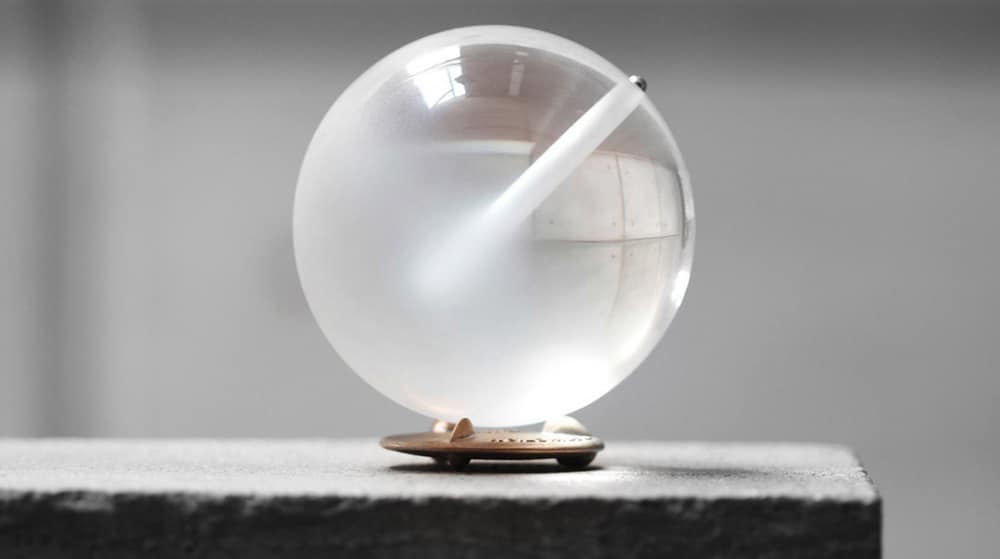
Image – Gaïa Prize
Indeed, it is this quest for greatness that has led to the brand winning several GPHG awards over the years. Moreover, the company’s design prowess and its remarkable ingenuity has attracted many admirers, appreciative of the firm’s unique approach to horological art. In September 2020, Felix and Martin received the Gaïa Prize for entrepreneurial spirit from Mr Régis Huguenin, curator of the International Horological Museum and chairman of the jury. It was a proud moment for the joint founders of URWERK. Moreover, the prize was fitting recognition for the creative duo following their own unique path to eminence in the field of watchmaking.
Inevitably, having achieved so much in the last 25 years, the question many will ask, is ‘what’s next for Felix and Martin?’ Based on experience, it’s impossible to say, but I suspect their continued journey will prove interesting to see.