
F.P.Journe cases and dials in-depth feature
In this feature, Angus Davies looks at F.P.Journe cases and dials, skilfully made by the Maison’s subsidiaries, Les Boîtiers de Genève and Les Cadraniers de Genève. Since 2012, both firms have been located in Meyrin, a small municipality in the Canton of Geneva. Recently, these companies have moved to a new shared facility in Meyrin purposely designed to make dials and cases under optimal conditions. Angus looks at the work undertaken at this new site and the rationale underpinning Journe’s decision to make these components in-house.
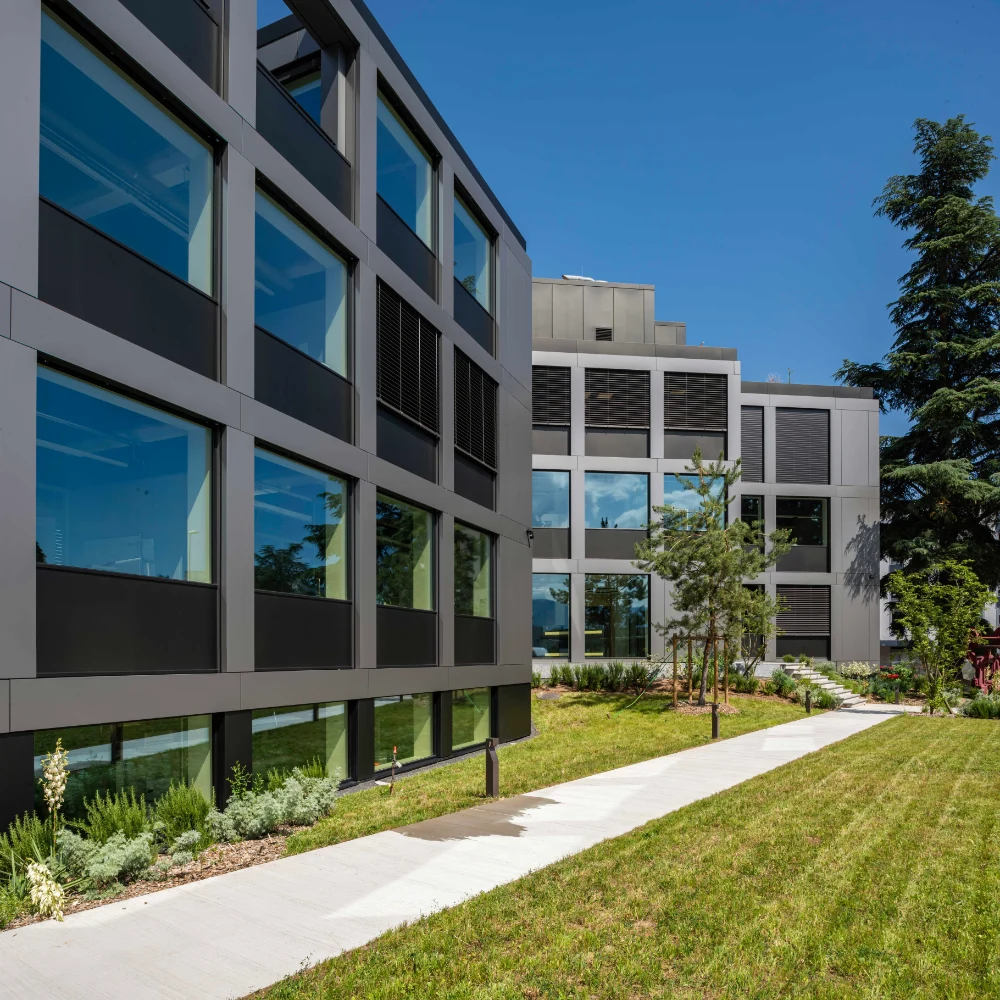
Image – Les Boîtiers de Genève and Les Cadraniers de Genève
Few watch companies make all components
Having spoken to a number of horophiles over the years, I know that many of them wrongly assume that a watch brand makes all of its components in-house. In the vast majority of cases this is not true.
The hills and plains of Switzerland, particularly the French-speaking areas, are dotted with numerous makers and suppliers of watch components. It has always been this way. Many of today’s Manufactures were once établisseurs, the term used to describe firms that procure ébauches, movement blanks, along with a variety of other parts in order to produce complete timepieces.
What is an ébauche?
An ébauche is a raw movement, supplied unassembled and usually incomplete. It may or may not include jewels, but it typically lacks a mainspring, escapement, regulating organ, dial and hands. These parts are procured separately. Établisseurs finish parts, assemble and regulate the movement before encasing everything in a watch of their design.
Third-party calibres
Today, the majority of watch firms choose to purchase off-the-peg movements from specialist suppliers. These are typically decorated and assembled, requiring the brand to simply regulate and encase the third-party calibre.
In-house movements – driven by supply issues?
Approximately 10 years ago, some watch firms began to experience difficulties obtaining movements from third-party specialists. This led several of them to invest in making their own in-house movements, typically marketed under the pretext that they somehow conferred advancement. Unfortunately, this was not always the case.

Image – welding cases
F.P.Journe has always made its own movements
While some practitioners of Haute Horlogerie have transitioned from being an établisseur to a Manufacture, F.P.Journe has always made its own movements. The company released its first series in 1999, the Tourbillon Souverain, a souscription watch limited to 20 pieces. This model was equipped with a rhodium-plated brass movement and endowed with a remontoir d’égalité and large tourbillon cage. With the advent of this watch, the Maison immediately showcased its horological virtuosity.
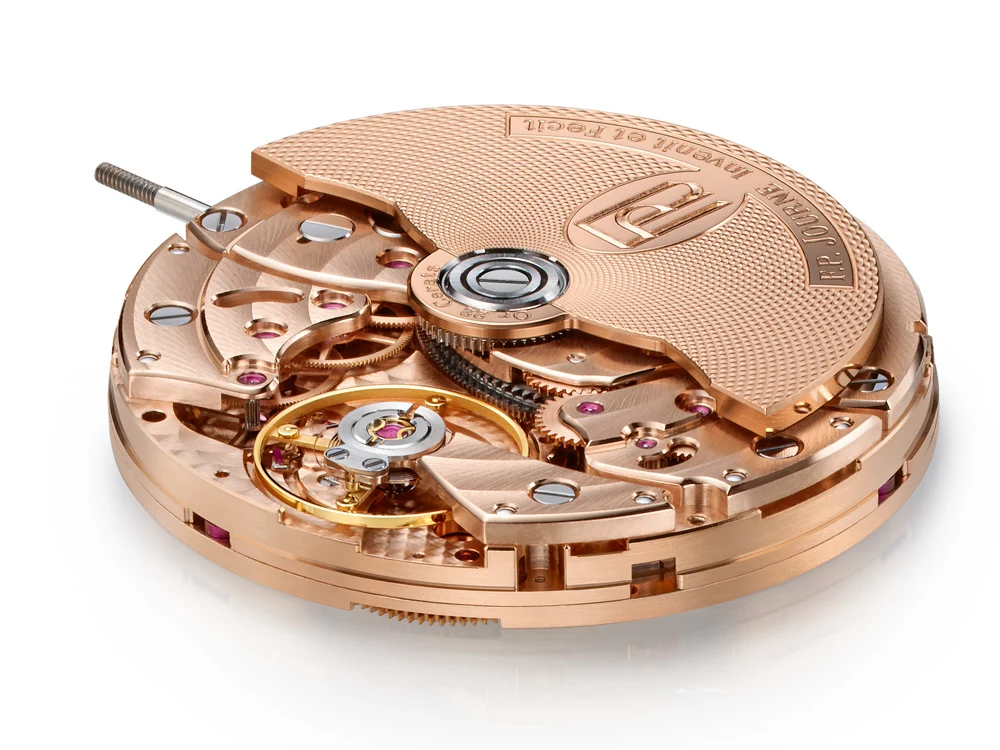
Image – Calibre 1300.3 – 18 K rose Gold
Over the years, F.P.Journe has created a myriad of movements, equipped with a variety of complications, all of which have been executed to an elevated standard. Prior to 2004, the Maison outsourced the making of mainplates and bridges. Monsieur Journe wanted these latter parts to be formed of 18K gold, but alas he could not find a company capable or willing to work with the noble metal. Unfortunately, at the time, the privately funded company lacked the financial financial means to make these parts in-house.
However, Journe, a perfectionist, eventually acquired the necessary plant to make mainplates and bridges in-house. While gold is not the easiest material to work with due to its softness, it is one of the least reactive metals, obviating the need for plating. Although 18K rose gold remains the brand’s usual material of choice, it does make some aluminium movements as well. In 2021, F.P.Journe produced the Octa Automatique 20th Anniversary Limited Edition, a limited series of 99 pieces and the final occasion rhodium-plated brass calibres were used.
F.P.Journe cases and dials – the history of Les Cadraniers de Genève
Choosing to make mainplates and bridges wasn’t the first time Monsieur Journe embraced the idea of crafting components ‘in-house’. Back in 2000, F.P.Journe was working closely with Harry Winston on the Harry Winston Opus One (2001). Both companies were experiencing difficulties with their dial supplier at the time. As a result, they decided to open Les Cadraniers de Genève, a modestly sized facility, located in Geneva, the home city of Harry Winston and F.P.Journe. Eventually, Harry Winston’s stake was sold to Vacheron Constantin before F.P.Journe ultimately acquired 100% of the business in 2016.
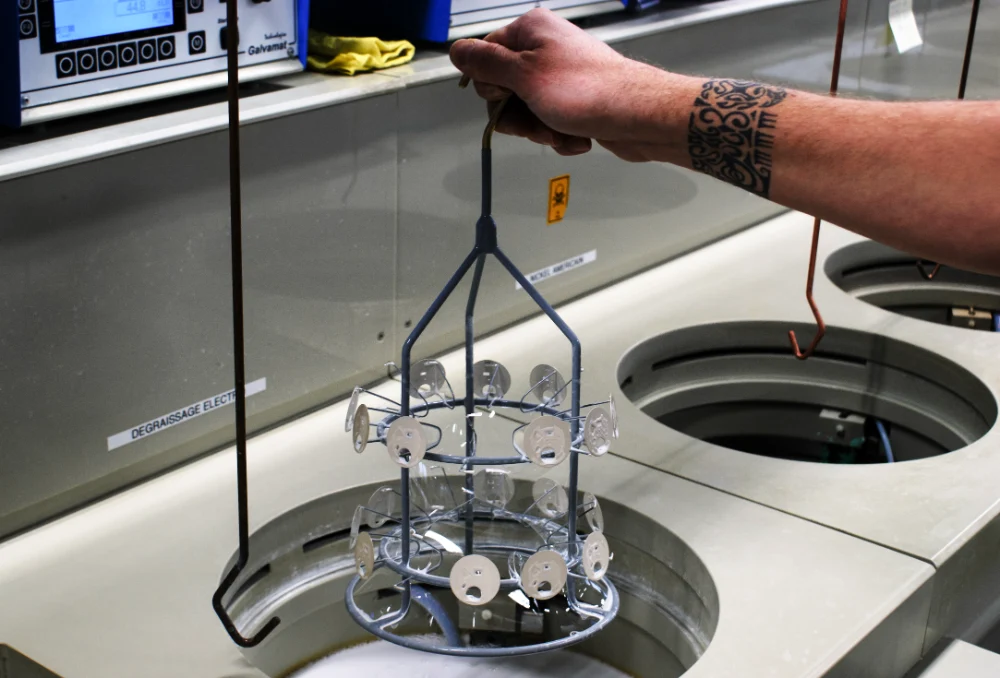
Image – electroplating dials
Being the sole owner of Les Cadraniers de Genève, means the Maison now has absolute control over product quality, an important consideration for the notoriously fastidious Journe. Moreover, by having its own in-house facility, F.P.Journe has been able to avoid the supply problems afflicting some of its competitors.
While brass is the material often used for dial blanks, for F.P.Journe, the preferred dial material is gold or silver. Over the years, the esteemed firm has gained a reputation for juxtaposing gold with whitened silver guilloché. However, Journe’s creativity has not been limited to these materials alone. He has also crafted watches with dials formed of Damascus steel, mother-of-pearl and jade. One obvious benefit of being immune to the whims of third-party suppliers is that it affords Journe the means to showcase his artistic prowess.
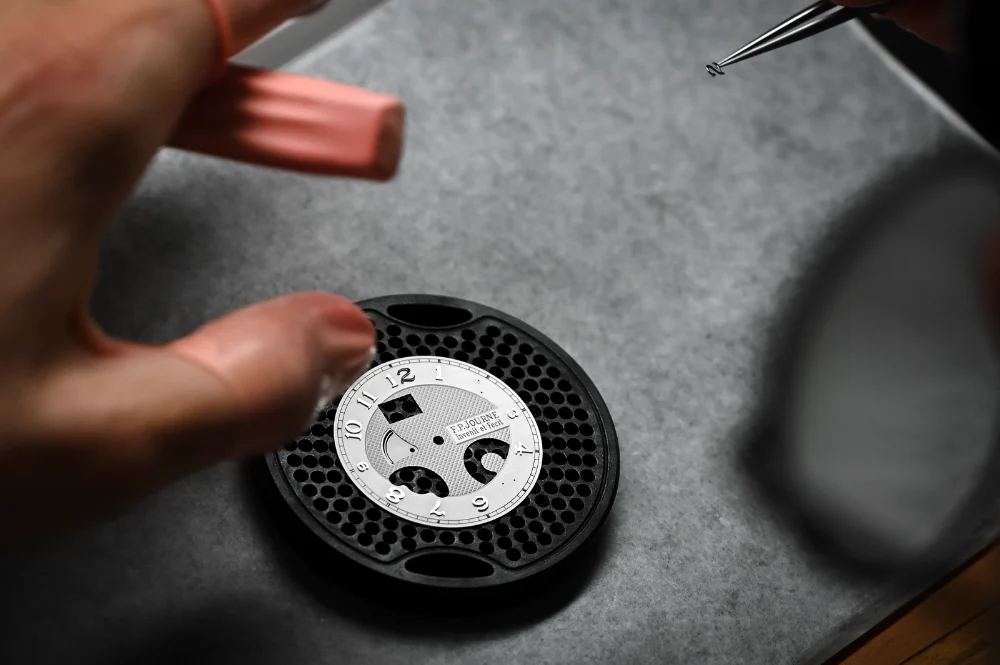
Image – dial assembly
Interestingly, for a man who has gained a reputation for inventing and making remarkable mechanisms, his creative ambitions invariably begin with a sketch of a dial. Scour the internet for a few minutes and it does not take long to find articles relating to the importance Monsieur Journe places on dial design. With this in mind, the precise location of dial elements, lines and proportions is primarily driven by aesthetics and readability. Thereafter, he develops a movement to suit the façade of his watch. This is a refreshing alternative to the customary approach of letting the off-the-peg movement dictate the dial’s appearance.
F.P.Journe cases and dials – the history of Les Boîtiers de Genève
No doubt buoyed by the success of Les Cadraniers de Genève and making movement plates and bridges in-house, François-Paul Journe established Les Boîtiers de Genève. Founded in 2011, this company makes watch cases. Again, Journe’s primary motivation for investing in this venture was driven by quality as well as sidestepping any potential supply issues. In addition, it removed any restrictions with the creation of prototypes.
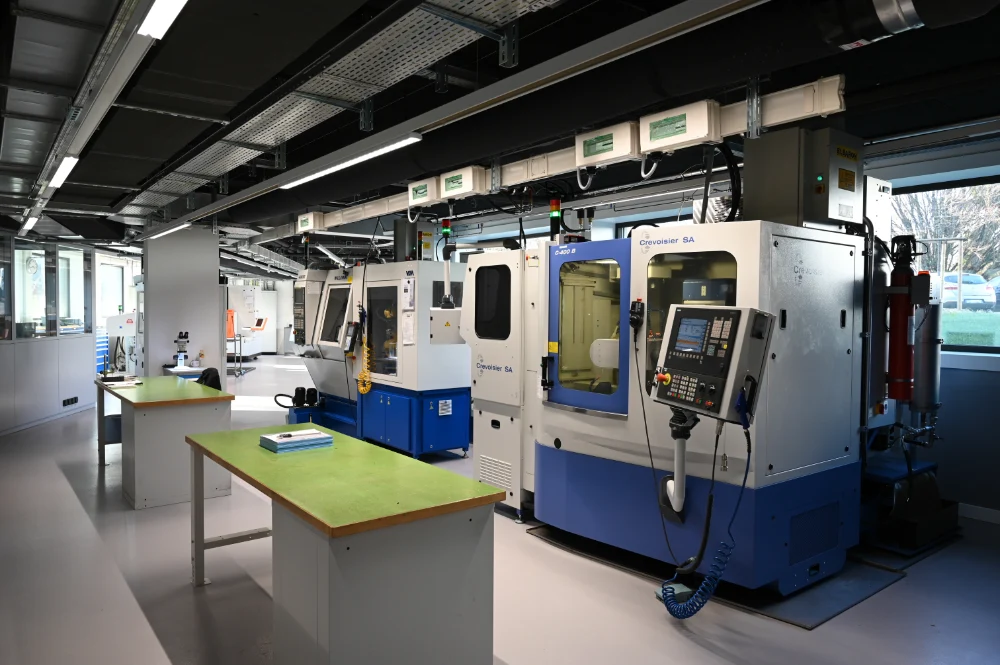
Image – CNC machines used for making cases
In 2012, both Les Boîtiers de Genève and Les Cadraniers de Genève moved into a shared building on rue Emma Kammacher in Meyrin. The opening ceremony was hosted by François-Paul Journe and Juan-Carlos Torres, CEO of Vacheron Constantin (as stated earlier, a shareholder in the company at the time).
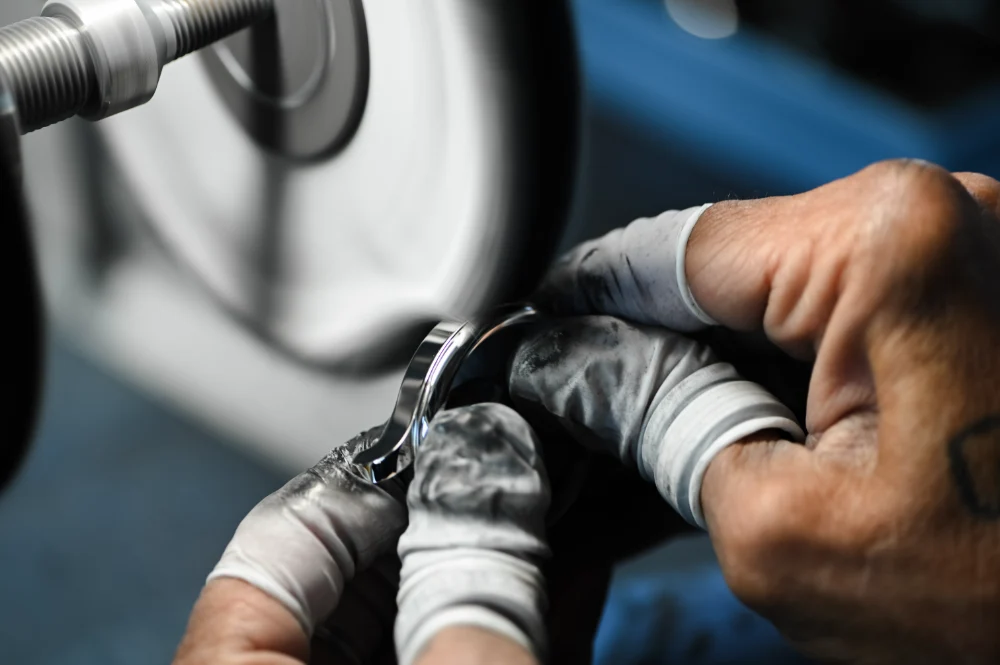
Image – polishing cases
Again, by producing cases in-house, F.P.Journe has been able to offer timepieces in an array of precious metals as well as notoriously challenging materials such as aluminium, titanium and tantalum. Such independence has provided François-Paul Journe with the means to explore his creativity, much to the benefit of his discerning clients.
F.P.Journe cases and dials – relocating Les Boîtiers de Genève and Les Cadraniers de Genève
In June 2023, Monsieur Journe, together with various local dignitaries, cut the ribbon and inaugurated a new building, located on rue de Veyrot, Meyrin. Prior to being acquired by F.P.Journe, the three-storey building had stood empty for 20 years. The company undertook a process of refurbishment, including adding a new floor to the existing structure. The interior was stripped and repurposed in order to meet the precise needs of both Les Boîtiers de Genève and Les Cadraniers de Genève. From the outset, the brief was clear, the building had to be optimally designed for making cases and dials.
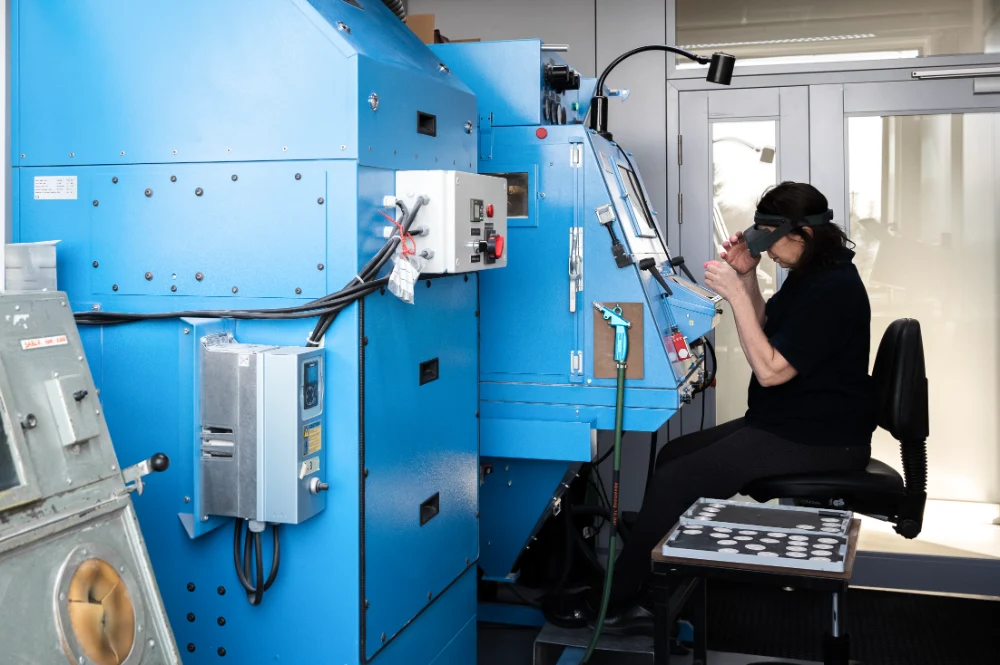
Image – sandblasting dials
When renovating and upgrading the building, three areas had to be considered, namely humidity, light and temperature. Light has always been a prerequisite for watchmaking, but it is also essential for crafting dials and cases. Unfortunately, the problem of having expansive glazing is that sunlight can increase temperatures, especially in the summer months. Moreover, some of the processes involved in making dials and cases can also generate heat, something that can be detrimental to product quality. Furthermore, if working conditions are unpleasant, the artisans will also become unduly fatigued, impairing their capacity to deliver excellence. The humidity and temperature are strictly regulated throughout the building.
François-Paul Journe is no stranger to the bench and has spent a good proportion of his life deftly using his hands and eyes. He understands that to achieve the best from his workforce, they have to be comfortable. In fact, whilst recently touring the company’s new premises, I noted the impressive staff facilities. Indeed, a member of the F.P.Journe team explained that one of the reasons for relocating to the new building was ‘to provide better working conditions for employees’.
While the building and refurbishment programme took place, Tony Billet (Director of Les Cadraniers de Genève and Les Boîtiers de Genève) had to plan the move to the new facility. According to F.P.Journe, the ‘entire relocation process took three years from concept to realisation’.
F.P.Journe cases and dials – behind the scenes
Early in his career, François Paul Journe restored historical clocks and watches. As such, he is very familiar with watchmaking techniques, different forms of decoration as well as the historical methods of manufacturing dials and cases back in the 18th and 19th centuries. His knowledge is underpinned by a respect for the great names of watchmaking such as Berthoud, Breguet and Janvier.
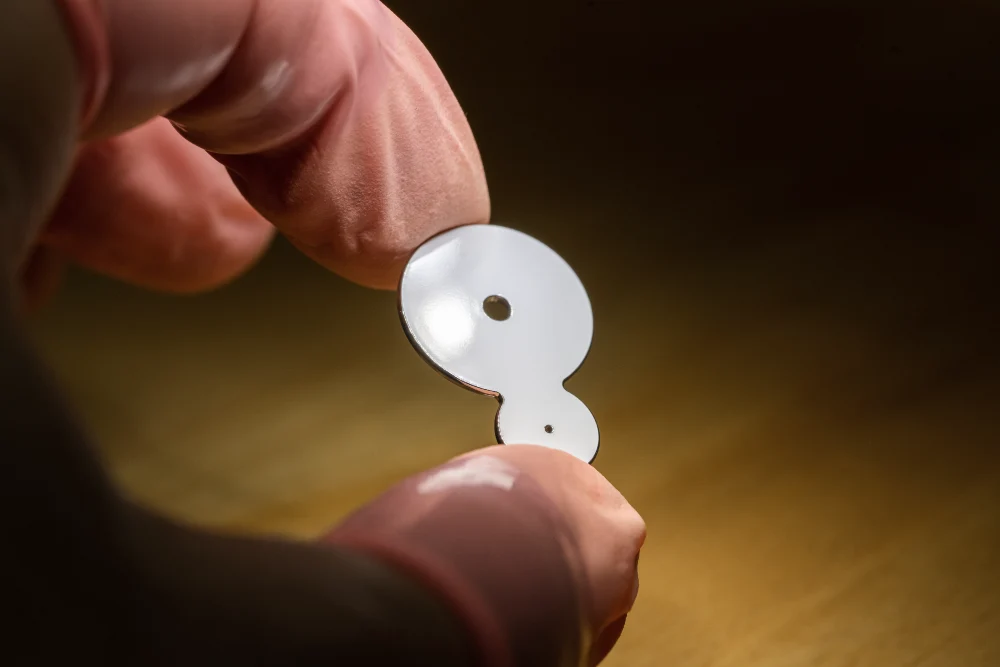
Image – enamelling dial sections
While clearly appreciative of traditional artisanal skills, he is first and foremost motivated by the notion of perfection. Within the confines of this new building, state-of-the-art CNC machines, delivering micron-level precision and sit adjacent to time-served manual techniques. It seems when technical advancement confers genuine product improvement, Journe remains receptive, albeit never loses sight that traditional watchmaking should always remain front and centre of everything he does.
Dial production
The base dials are made of nickel silver, gold or silver. They can be subjected to an array of techniques, including satin-finishing (sunburst pattern), sandblasting (typically using aluminium oxide or glass) and polishing. CNC machines are able to create apertures in the dial membrane eg for the moon phase display. In addition, holes can be applied using CNC to accommodate applied Arabic numerals.
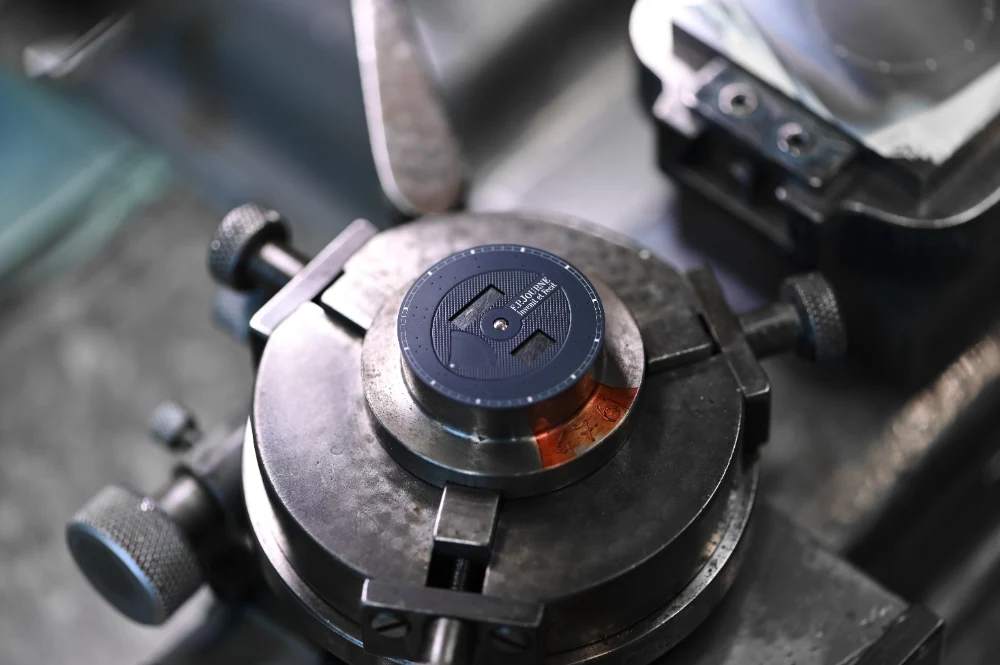
Image – applying paint to dials using tampography
The epidermis of the dial is then fitted with appliques eg hour markers. However, in some instances, the Maison makes enamel dials (grand feu) or applies dial markings using tampography. This latter process is semi-automated, but the human input is critical to the end result. A specialist ink is applied to an image plate, termed a ‘cliché’. Thereafter, the excess ink is removed with a blade.
A pad, typically made of silicon, is introduced to the ink-coated cliché, thereby applying ink to the dial surface. During my recent visit, a gentleman tasked with pad printing the dials explained to me that, ‘you need to respect the pressure’ in order to ensure that the printed detail remains round. After 3-4 layers are applied to the surface, the dials are heated to 70°C for 2½ hours to impart a lasting impression.
Unquestionably a centre of excellence, many of the processes undertaken at Les Cadraniers de Genève are understandably shrouded in secrecy. However, during my visit, I witnessed hand engraving and electroplating as well as hand assembly and profile turning machines. Modernity and tradition happily co-exist within the firm’s facility.
Case production
The making of cases and dials are deliberately segregated. This is primarily because making cases involves some processes which may introduce contaminants to a dial’s surface eg cutting lubricants or dust.
In order to make a case, precious metals are heated in a crucible and poured into a mould to form a small ingot. Thereafter, the ingot is allowed to cool, leading to crystallisation, thereby hardening the metal. The gold ingot, like other metals such as steel, titanium, etc is then placed into a CNC machine where it is subjected to an array of milling and drilling processes. These CNC machines, F.P.Journe has the most up to date examples, can make components to infinitesimal tolerances.
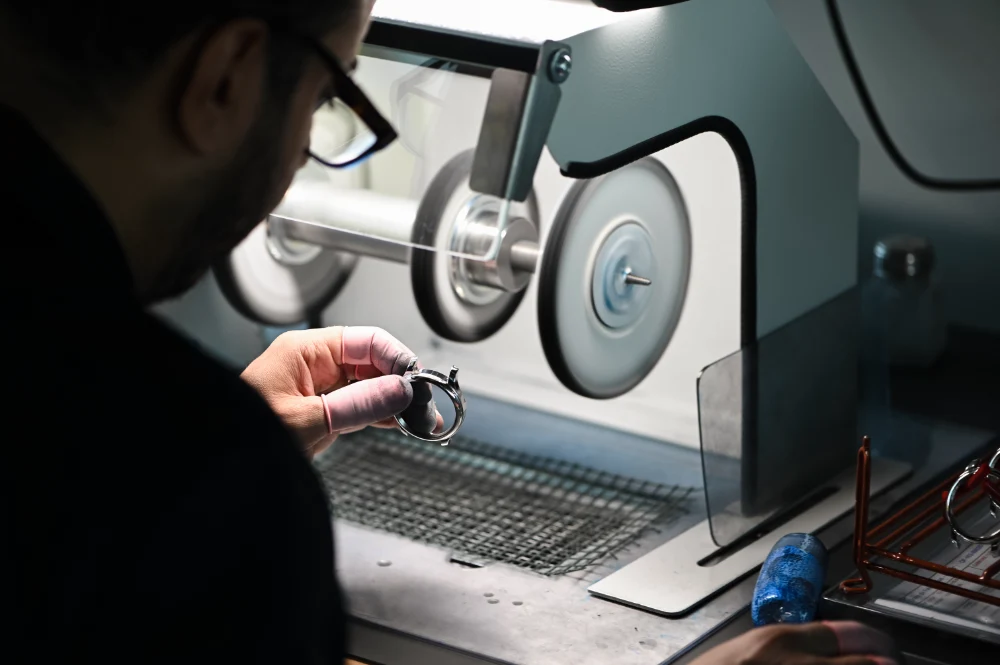
Image – polishing cases
Additional processes take place at Les Boîtiers de Genève. For example, sandblasting and beadblasting are performed on-site. In addition, there is always a need for polishing! Indeed, one of the things I noted during my time at the site was the inordinate amount of time spent polishing each case to a resplendent finish. The polishing of the tantalum cases is particularly challenging due to the hardness of the material. Perfection is seldom achieved in haste.
F.P.Journe cases and dials – closing thoughts
Many companies are reliant on third-party suppliers. Some brands may lack the necessary expertise in making such parts while other firms need to employ finite resources elsewhere. Both scenarios can preclude the making of such parts in-house.
Those companies that make parts in-house are primarily motivated by a desire to reduce costs and to become less dependent on others. One glance at the new facility in Meyrin and it becomes clear that by opening this new building, Journe was not motivated by saving a few Swiss Francs; his objectives were very different.
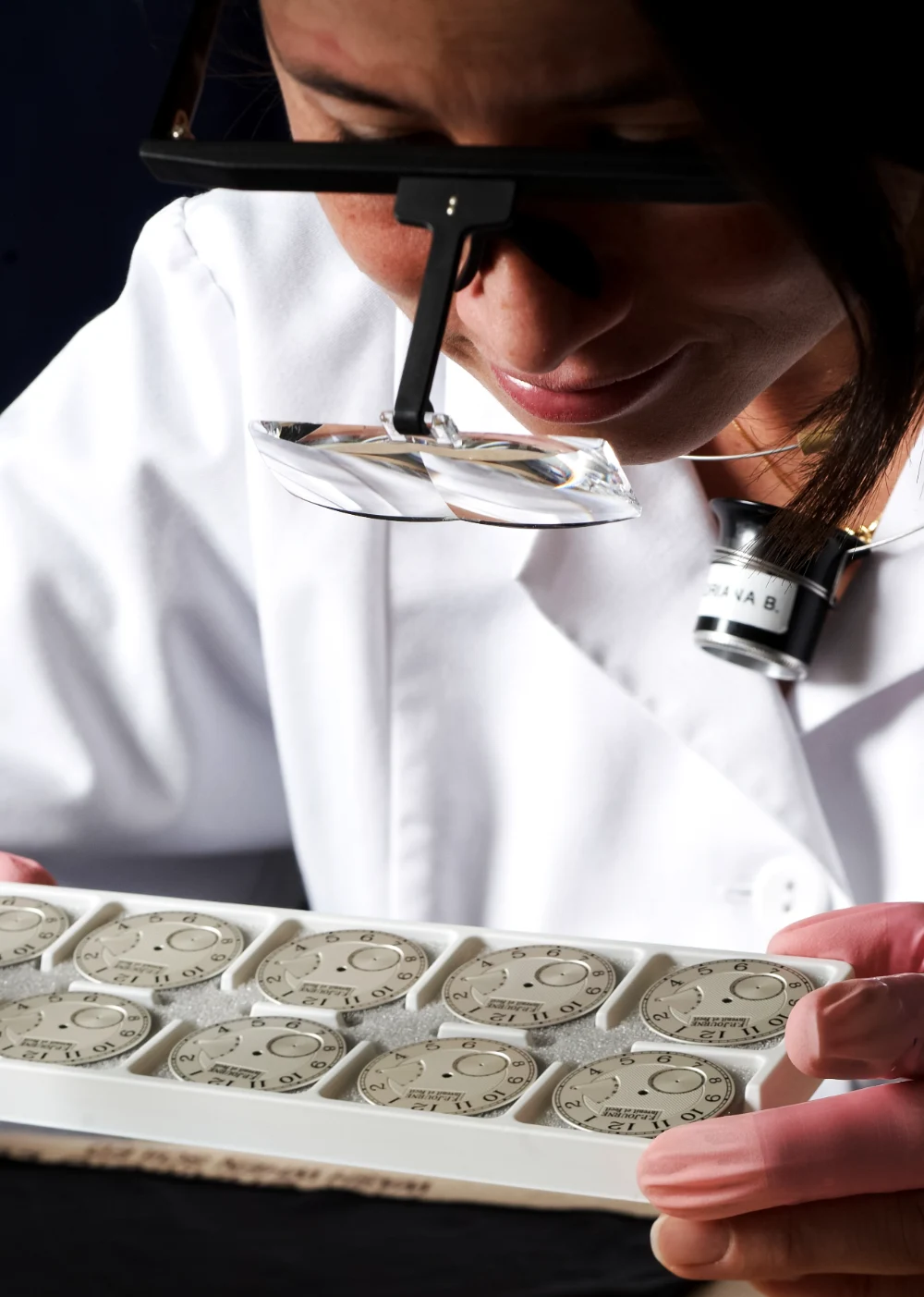
Image – dials being subjected to quality control inspection
Yes, the new Meyrin facility allows F.P.Journe to avoid any potential supplier issues. Furthermore, the building provides a pleasant working environment, no doubt reaffirming to staff the importance F.P.Journe places on the welfare of its employees as well as ensuring the quality of the components made at the site are of the highest order. But most of all, this new building, home to Les Cadraniers de Genève and Director of Les Boîtiers de Genève, allows François Paul Journe the freedom to make the dials and cases of his dreams, free of any compromise.