
NOMOS Glashütte Calibre DUW 3001 (Part One)
The NOMOS Glashütte Calibre DUW 3001 features within several of the brand’s models. It is responsible for displaying hours, minutes and small seconds, a seemingly simple feat. However, in his two-part feature, Angus Davies explains that there is nothing ‘simple’ about this Manufacture movement.
This first part looks at the German marque’s impressive in-house facilities at Schlottwitz and the NOMOS Chronometry in Glashütte, examining the work undertaken at each site.
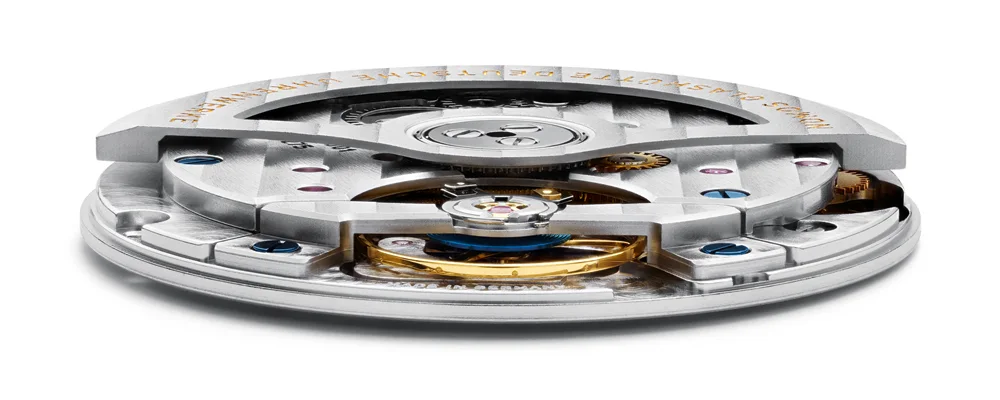
NOMOS Glashütte Calibre DUW 3001 – introduction
Released in 2015, the NOMOS Glashütte Calibre DUW 3001 is a self-winding movement with an unusually svelte profile. Indeed, measuring just 3.2 mm in height, it is even thinner than many hand-wound movements. Since its unveiling, the neat proportions of the Calibre DUW 3001 have seen it appear within several eminently slender, elegant timepieces. However, besides having a narrow waist, this movement is packed with ingenuity and includes various details that confer longevity and precision. Allow me to elaborate.
A Manufacture movement
NOMOS is based in the watchmaking town of Glashütte, the epicentre of German watchmaking. Founded in 1990, the company began life using the tried and trusted, hand-wound ETA Peseux 7001. However, just 15 years after NOMOS was established, the brand released its inaugural in-house movement, the Alpha Calibre.

Image – NOMOS Glashütte Alpha Calibre
Despite being housed within various modestly priced watches, the Alpha Calibre featured a three-quarter plate, tempered blue screws and incorporated several examples of refined finishing. With the arrival of this movement, the German marque revealed to the watch-collecting community, that it was highly ambitious and keen to be self-sufficient.
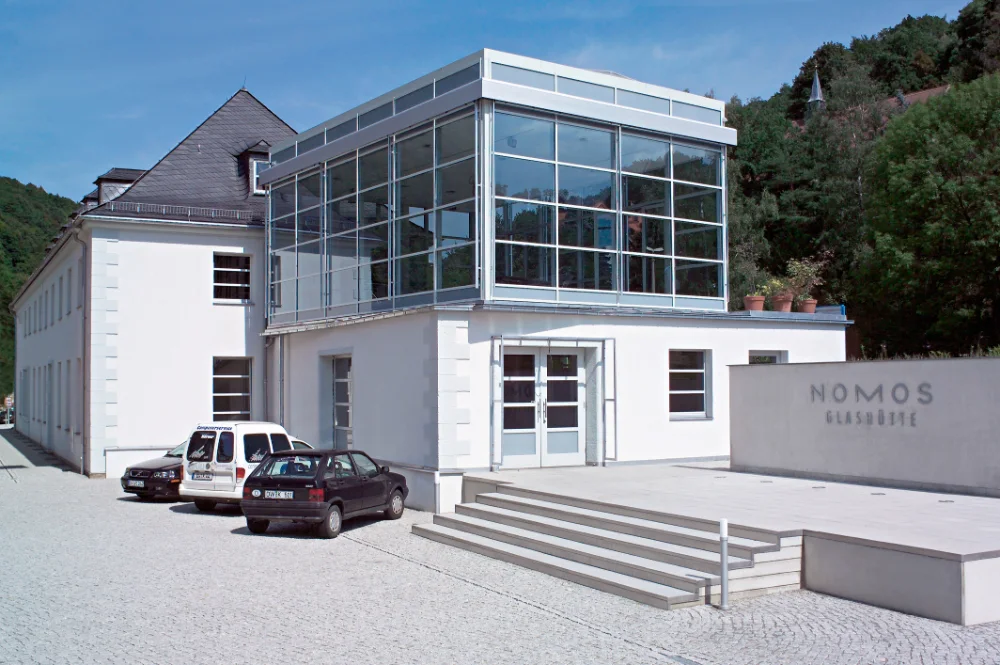
Image – NOMOS Glashütte HQ
With its headquarters located in the town’s former railway station, NOMOS also has two additional sites in the vicinity. Firstly, NOMOS Chronometry, located on a nearby hillside, is home to movement and watch assembly as well as R&D. The other site is in nearby Schlottwitz, a district of Glashütte, approximately 6 km from the firm’s HQ. This purpose-built factory opened in 2017 and is where the company makes wheels, screws, pinions, balance wheels, plates, bridges, etc. In fact, approximately 95% of the parts that form a NOMOS movement are produced at this site.
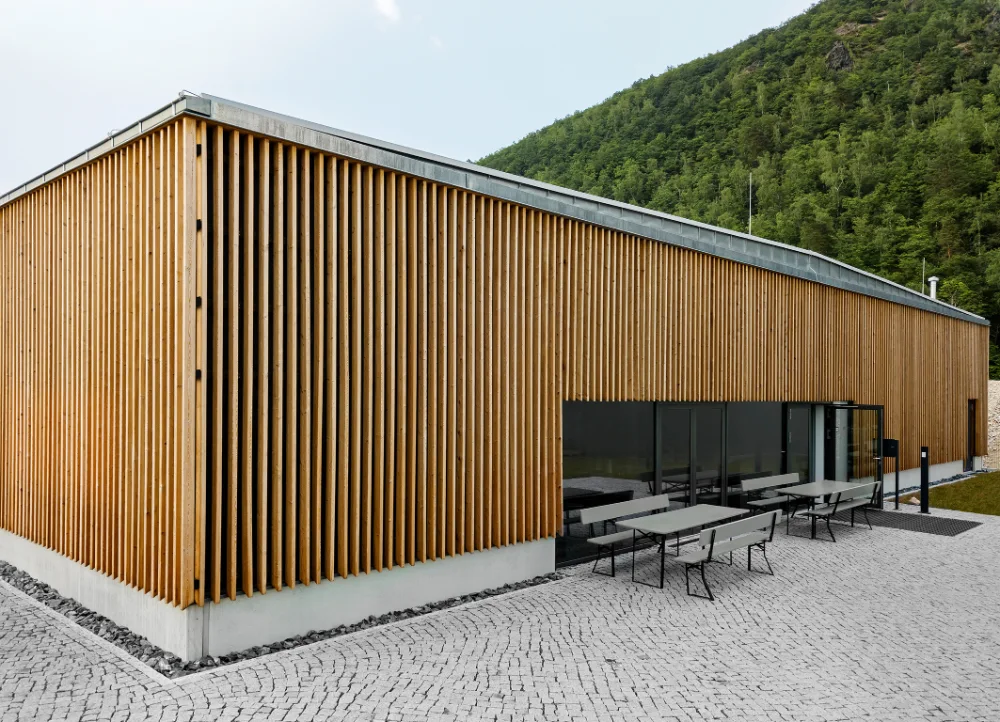
Image – NOMOS Glashütte Schlottwitz
When selecting Schlottwitz as a location for its modern facility, it was very important to the brand that it was within the district of Glashütte. In horological circles, the town’s name carries a certain cachet. In fact, ‘Made in Glashütte’ is protected by law. The Glashütte Regulation states that a watch must have undergone at least 50 per cent of its ‘essential manufacturing stages’ in Glashütte. As any self-respecting brand devotee will attest, the terroir of this region imbues each timepiece with a distinct flavour unlike any other. Herein, I have outlined some of the key activities that take place at Schlottwitz.
Schlottwitz – computer numerical control (CNC)
The largest components of a movement are the mainplate, three-quarter plate and balance bridge. These parts are formed of brass. Typically, this takes the form of a brass plate, sometimes termed a ‘barquette’. This is placed in a CNC (Computer Numerical Control) machine.
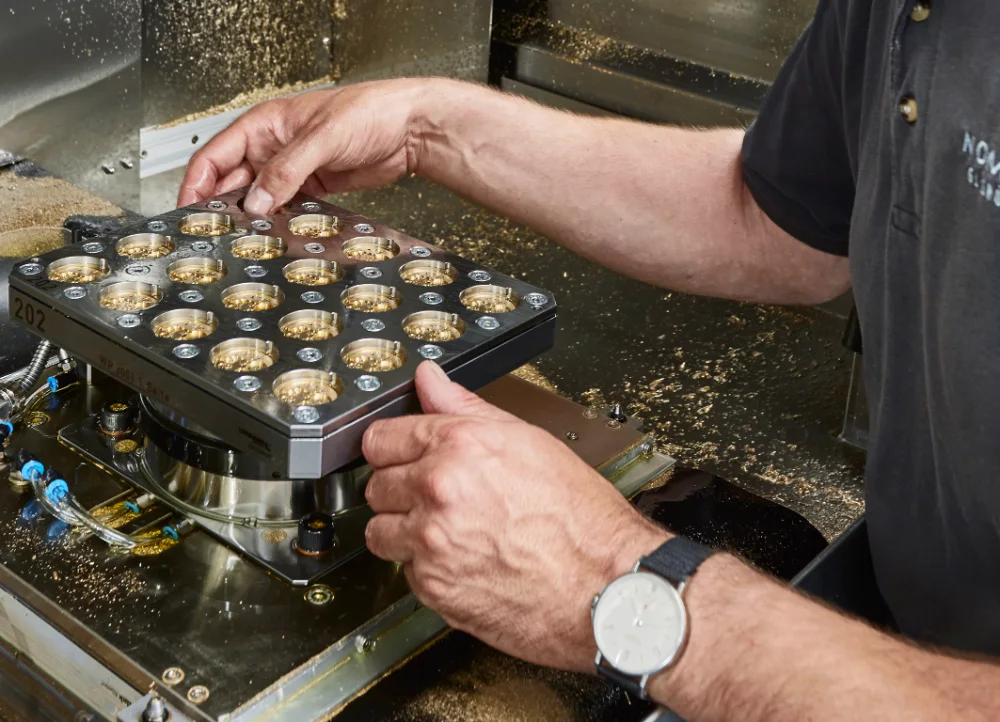
Image – CNC machine
A cutting tool, mounted on a rotating spindle, selectively removes material from the barquette. Controlled by a computer programme, the machine will switch between tools automatically to make a series of holes or cuts. The CNC machines can perform steps from different angles (axes) and deliver a degree of precision to a tolerance of 2 microns (1mm = 1000 microns).
The temperature-controlled production areas are set precisely at 21°C. It is important that temperatures are consistent at all times as any variation can influence the milling process. ‘Tool changes and offsets’ require a trained CNC operator to revisit the computer programme in order to ensure that the quality, accuracy and efficiency of each process is maintained at all times. Clearly, if a tool becomes worn, it will not perform as intended and adjustments are needed. NOMOS use predictive maintenance to replace tools before they are worn out.
Schlottwitz – bar turning machines
Bar turning machines are also used at Schlottwitz. These long, slender machines occupy a large amount of floor space because they are fitted with hoppers filled with long rods of brass or steel. The rods are pushed from one end of the machine towards the cutters positioned at the opposite end. This technique is used for making pinions, pivots, screws and wheels. During the process, the cutters are sprayed with oil to prevent the parts from suffering heat damage as well as mitigating tool wear. NOMOS Glashütte, a brand with a strong social conscience, recycles this oil.

Image – metal rods awaiting bar turning
Schlottwitz – electro discharge machining (EDM)
Small, relatively flat parts, such as levers, are made using electro discharge machining. By using this type of machine, NOMOS is able to make components to very small tolerances, again just a few microns in magnitude.
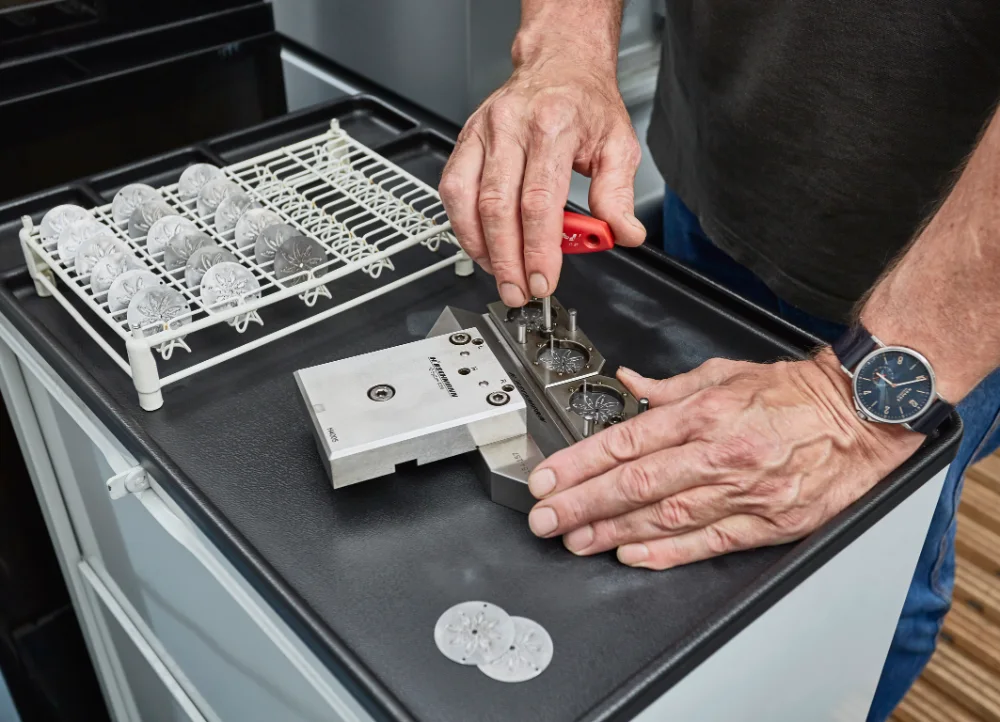
Image – removing round plates from EDM
Round plates of brass or steel are placed in the electro discharge machine and immersed in deionised water. A wire, held on a reel, is directed towards the immersed metal plate. By passing an electrical current through the wire, it can cut the components very precisely. To prevent the wire from breaking it moves from one reel to another, hence the active part of the wire is constantly changing.
Schlottwitz – Verzahnen department
In the ‘Verzahnen’ department, teeth are imparted to wheels and pinions using a semi-automated process. A gear cutter, comprising a series of rotating files, removes extraneous material to leave precisely formed teeth behind. The process necessitates much concentration in order to ensure the correct number of teeth are imparted to a wheel and that they are equidistant and of uniform shape. Failure to adhere to the specification would impair the precision and reliability of the movement.
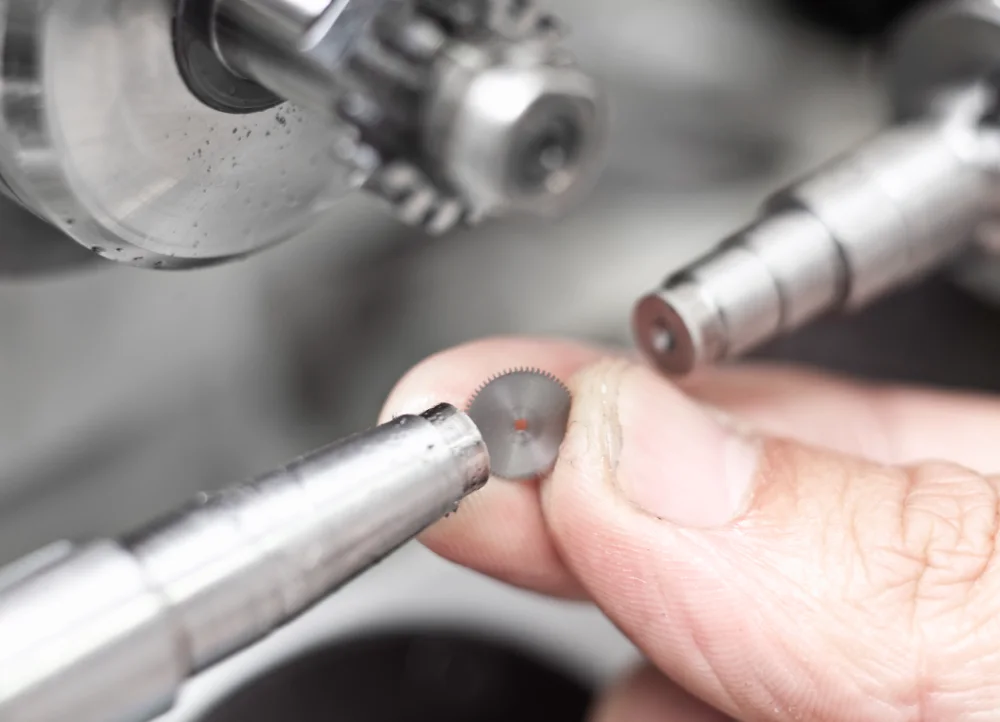
Image – gear cutting
Schlottwitz – the benefit of segregation
The nature of the work undertaken at Schlottwitz necessitates using cutting oils to prevent heat damage to both watch components and machines. By default, there will be some oil residue on machines, the floor and the operators’ hands. While the facility is cleaner than many similar sites I’ve seen in Switzerland, the inherent presence of oil is not ideal for movement and watch assembly. Therefore, these latter tasks take place at NOMOS Chronometry. This allows the firm to segregate these intrinsically oily processes from the dust-free environment essential for movement and watch assembly.
Schlottwitz – movement decoration
At NOMOS Chronometry, a building the brand acquired in 2000, three functions take place: movement assembly, watch assembly and R&D.
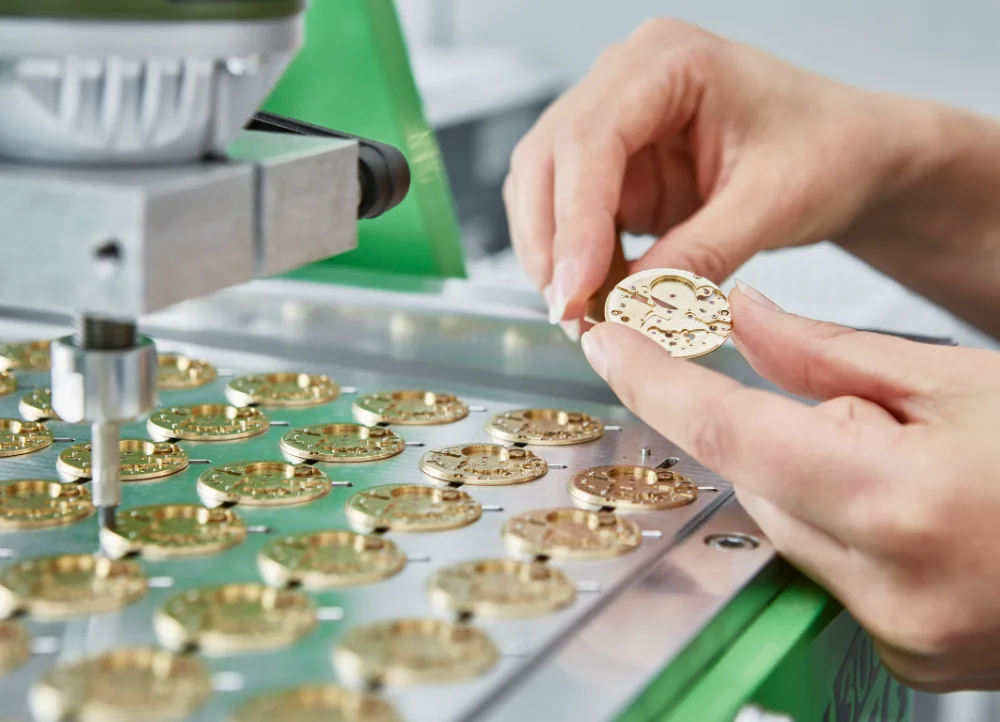
Image – perlage being applied to mainplates
The mainplate, three-quarter plate and balance bridge, the parts are embellished with various forms of decoration. The mainplate is decorated with perlage, while the surfaces of the three-quarter plate and balance bridge and enriched with Glashütte ribbing, a motif similar in concept to the Côtes de Genève pattern found on high-end Swiss watches. Once decorated, the parts are rhodium-plated to prevent oxidisation and to ensure they will retain their factory-fresh appearance for years to come.
NOMOS Chronometry – three-quarter plate
The three-quarter plate is a distinctive feature of watches made within this region of Germany. By using this large plate instead of multiple bridges, the movement is more stable and less prone to flexing. Indeed, by adopting this approach, NOMOS is able to make the plates thinner, contributing to the modest movement thickness, while still remaining very rigid.
Additional refinements include the use of thermally blued screws and engraved text, presented in a rich golden hue; two details that tastefully convey a sense of luxury.
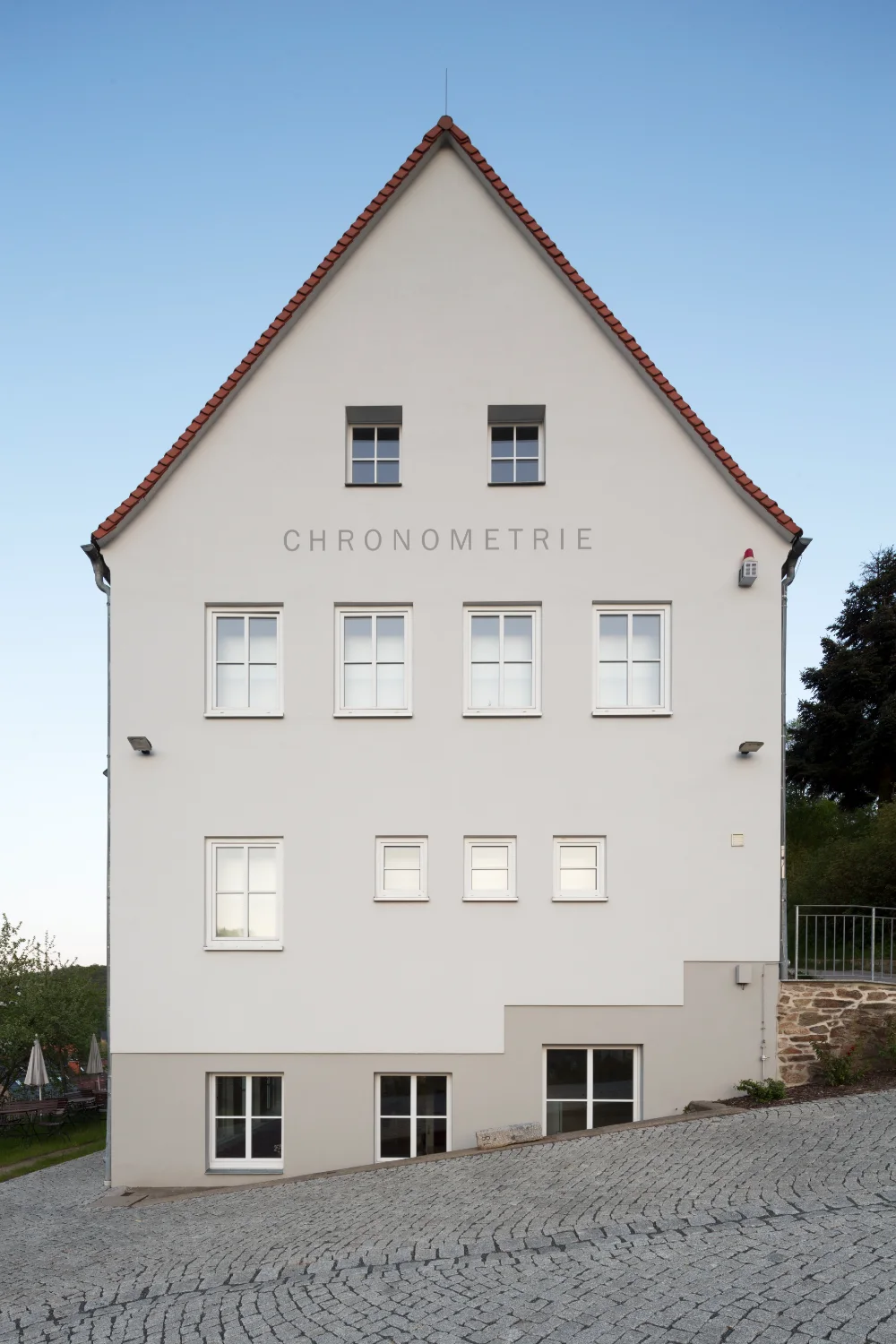
Image – NOMOS Glashütte Chronometry – where movements and watches are assembled
NOMOS Chronometry – swing system
During the assembly phase, the ‘swing system’ is added. This term refers to the brand’s proprietary escapement and regulating organ (I will explore this subject in more detail in part two). The purpose of the swing system is to control the flow of time. Energy from the mainspring is transferred via the gear train to the escapement and regulating organ. By impulsing the balance and subsequently unlocking the escape wheel the hands move a specific amount. This assemblage of complicated parts is usually sourced from specialist firms but in its quest for independence, NOMOS spent a total of 7 years and €11M developing its own system.
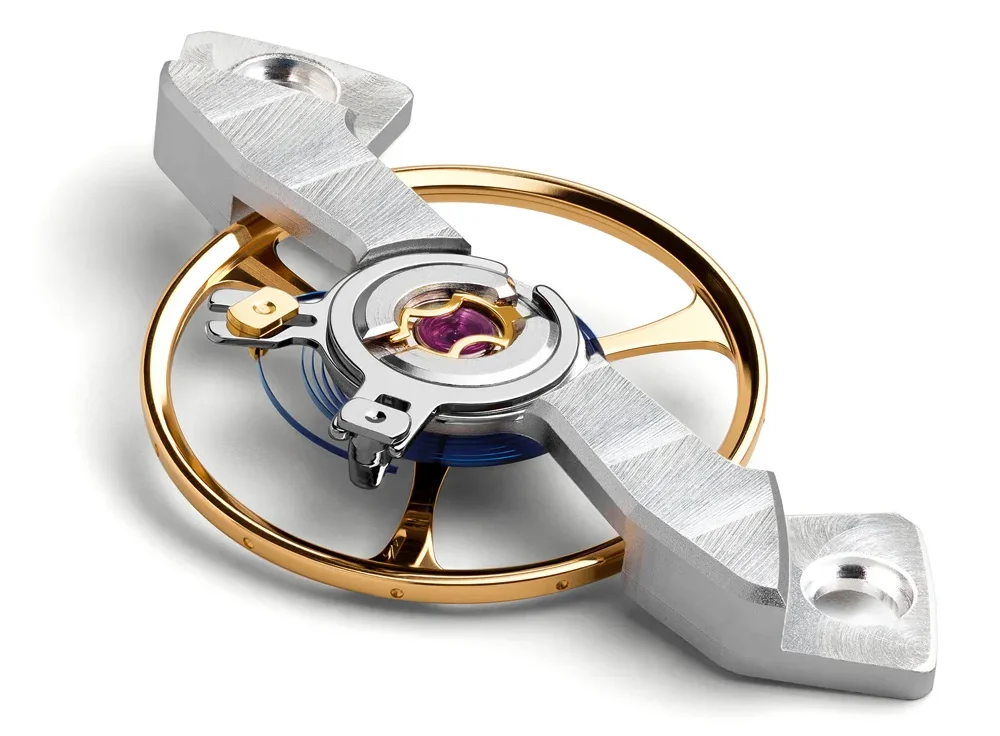
Image – NOMOS Glashütte Calibre DUW 3001 swing system
NOMOS Chronometry – regulation
Once the swing system is installed, the watchmaker places the movement on a timing machine (the most popular brand is Witschi). This test instrument is fitted with a powerful microphone that listens to the movement. It displays the following information:
- The rate variation: the amount of time, in seconds, a movement gains or loses a day. Typically, a watch is checked in several positions as the rate can alter depending on the relative position of the balance. NOMOS regulates the Calibre DUW 3001 in six positions in order to ensure it performs satisfactorily.
- The amplitude: the amount of rotation the balance wheel swings in either direction (expressed in degrees of rotation). The amplitude of the Calibre DUW 3001 ranges from 240° to 320°, depending on the position of the movement.
- The beat error: the measurement of time between the ‘tick’ and the ‘tock’. It can also be described as the difference between the clockwise swing and the anticlockwise swing of the balance. In theory, for a movement to be isochronous, there should be no difference ie no beat error. In reality, there is often a small insignificant difference.
Prior to testing the movement, the lift angle is entered (the lift angle of the Calibre DUW 3001 is 52°). The lift angle is the angle through which a movement’s balance wheel rotates before it unlocks the escapement, allowing the gear train to advance. Prior to using the Witschi, the watchmaker must know the lift angle and enter the value into the machine.
Next, the movement is regulated. The regulation system, again developed in-house, features an index adjuster endowed with two curb pins. These curb pins sit on either side of the balance spring. As the watchmaker moves the index adjuster towards or away from the stud, the effective length of the hairspring alters, making the watch run faster or slower.
NOMOS Chronometry – watch assembly
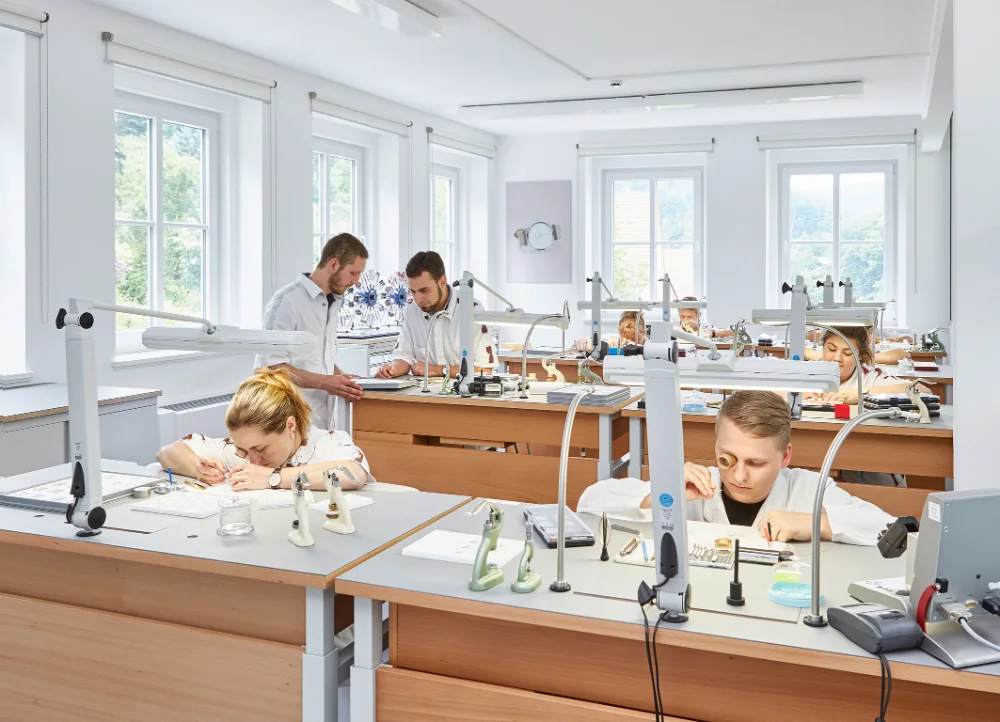
Once the movement has been regulated it is passed to the watch assembly team. In the confines of this department, the dial and hands are fitted and the movement is encased. The assembled watch is then placed on a Cyclotest machine to ensure the automatic winding mechanism is operating correctly. Thereafter, the watch is tested for water resistance. Some models equipped with the Calibre DUW 3001 will be waterproof up to 3 ATM (30 m), while other models have a stated water resistance of 20 ATM (200m). Clearly, the testing regime will take this into account. Finally, the completed watch is visually checked for any imperfections, fitted with its bracelet or strap and boxed.
Coming next
In the final instalment of this two-part feature, I will look at some of the tiny details which distinguish the NOMOS Glashütte Calibre DUW 3001 as very special. For example, I will examine the swing system, including the various technical challenges the brand has surmounted to make this intricate mechanism, as well as the highly efficient gear train.
Images – copyright: NOMOS Glashütte