
Zeitwinkel 188° MAKS Watch Review
At first glance, the Zeitwinkel 188° MAKS looks different from the brand’s previous models; however, as Angus Davies explains, a closer look reveals this latest model upholds the Maison’s consistent approach to watch design and manufacturing, while embracing vibrant hues.
Old enough to drink
In 2024, Zeitwinkel will celebrate its 18th birthday. In some areas of life, 18 years doesn’t merit a mention but for an independent watch brand it is a significant milestone and represents many years of stress and toil.
Zeitwinkel was founded in 2006
The story of Zeitwinkel began with a shared dream. Albert Edelmann, Peter Nikolaus and Ivica “Maks” Maksimovic wanted to form a watch brand. Their aspiration was to create mechanical watches rich in horological goodness. From the outset, the emphasis was on making timepieces imbued with mechanical probity and timeless styling.
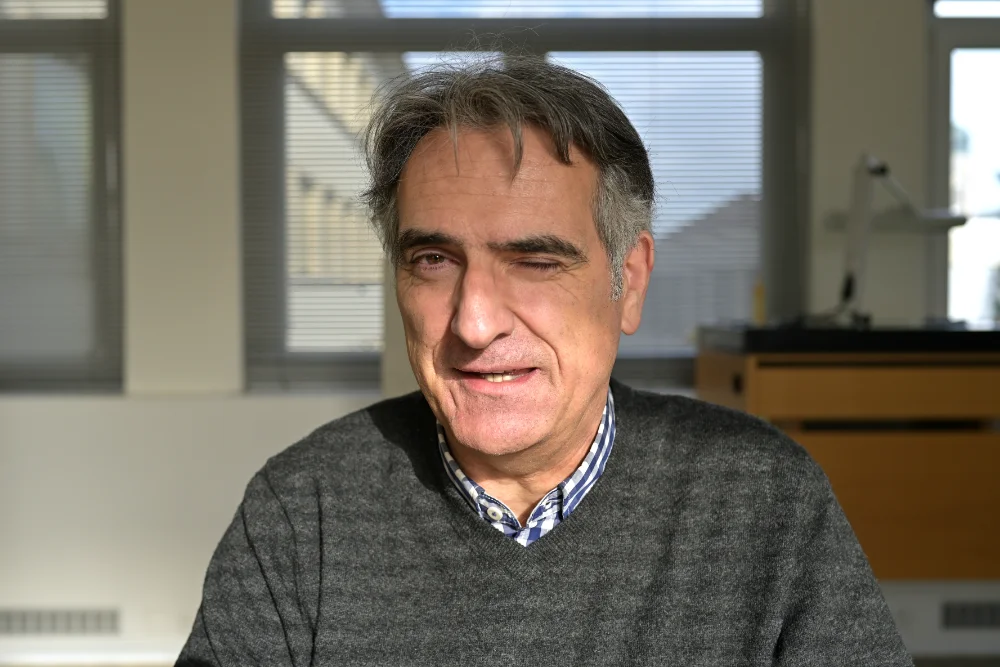
Image – Peter Nikolaus
While all three men are German, they agreed from the start that the company should be based in Switzerland. The entrepreneurial trio eventually selected Saint-Imier, a picturesque town in the Jura Bernois. The rationale for choosing this location was primarily driven by the unparalleled network of suppliers located in the vicinity, coupled with the availability of trained watchmakers within the region.

Image – Albert Edelmann (image credit – 10TenLabs)
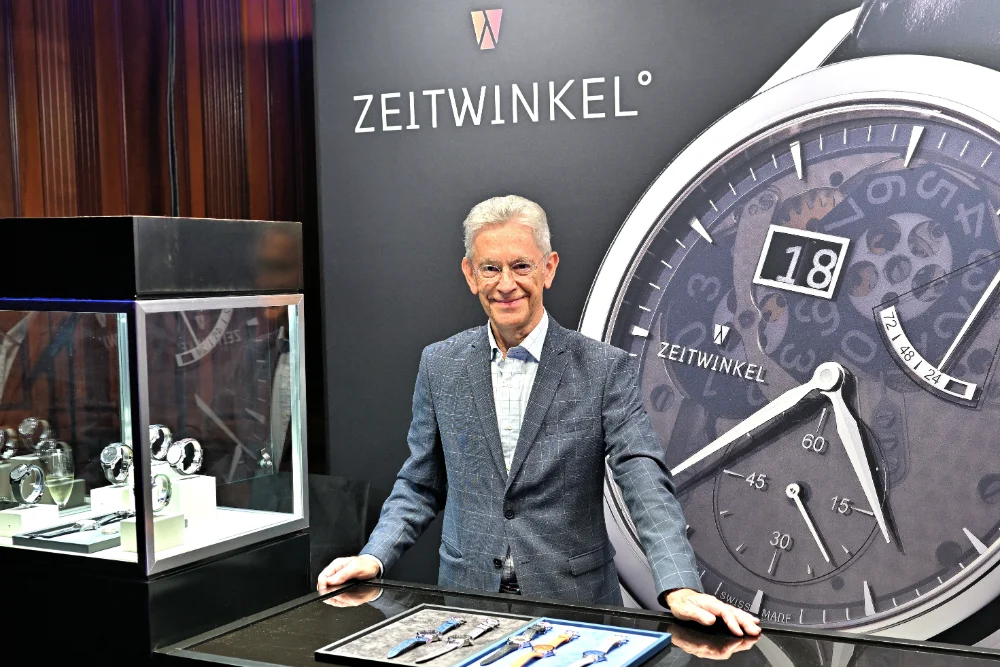
Image – Ivica “Maks” Maksimovic
A Manufacture from the outset
Prior to commencing the design process, Albert, Peter and Ivica discussed watch movements. They all shared a belief that Zeitwinkel should make its own movements, a decision that predates the Swatch Group’s stated intention to restrict supplies of ETA calibres to third parties. While Swatch Group’s policy eventually led some brands to make in-house movements, back in 2006, when Zeitwinkel started, ETA was the common approach for many watchmaking newbies. In fact, at the time, to become a Manufacture, especially for a fledgling company, was somewhat bold, but the founders’ approach has since proved very shrewd. Indeed, the desire to be independent has insulated the firm from potential supply issues. Moreover, Zeitwinkel has been able to make the movements of its dreams, free of concessions.
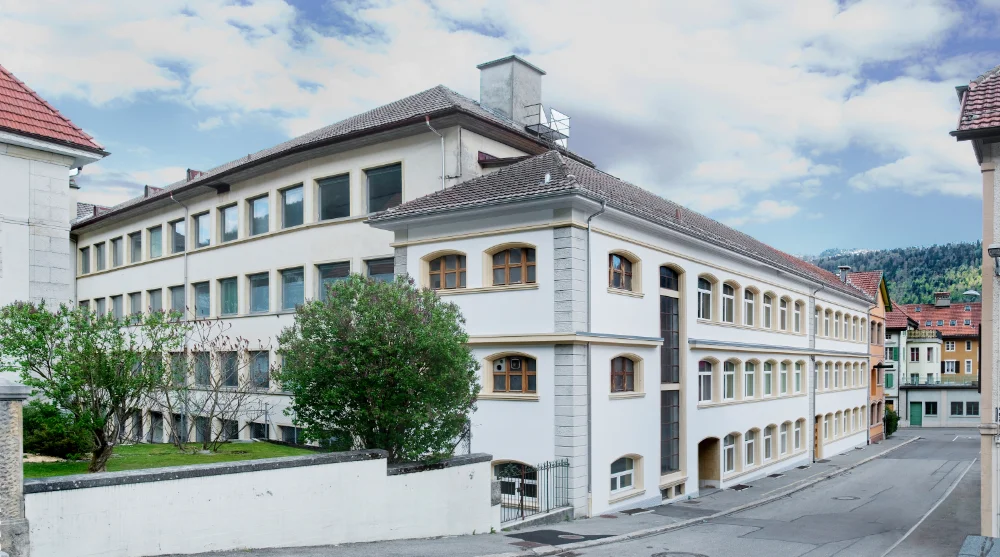
Image – Zeitwinkel Manufacture, Saint-Imier
The conception of the calibres began before the design of the dials and cases such was the importance the brand placed upon the movements. Eventually, Zeitwinkel settled on two movements, the ‘manufacture caliber ZW0102’ (hours, minutes and central or small seconds) and the ‘manufacture caliber ZW0103’ (hours, minutes, small seconds and large date display). While these calibres are different, they both share many of the same attributes. Allow me to elaborate.
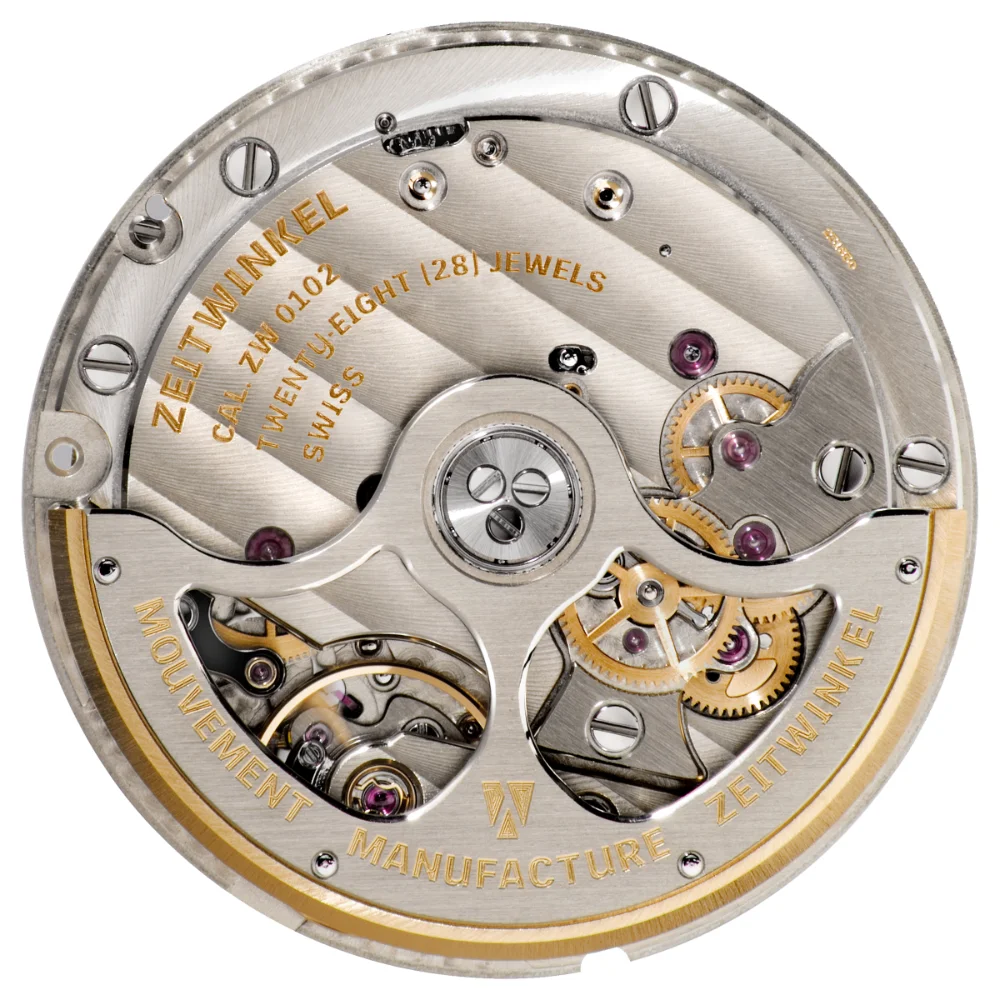
Image – Zeitwinkel manufacture caliber ZW0102
German silver
Most brands use movements made of rhodium-plated brass. However, the problem with plating is that when a watch is repaired or serviced, it can easily be scratched by a screwdriver or other watchmaking tool, exposing the brass beneath.
Zeitwinkel makes its movements from German silver or ‘maillechort’. This copper alloy is composed of about 60% copper, 20% zinc and 20% nickel. It is very durable and does not require plating or coating to prevent corrosion. With time, the alloy assumes a honey toned appearance, a characteristic that is highly prized by many watch aficionados.
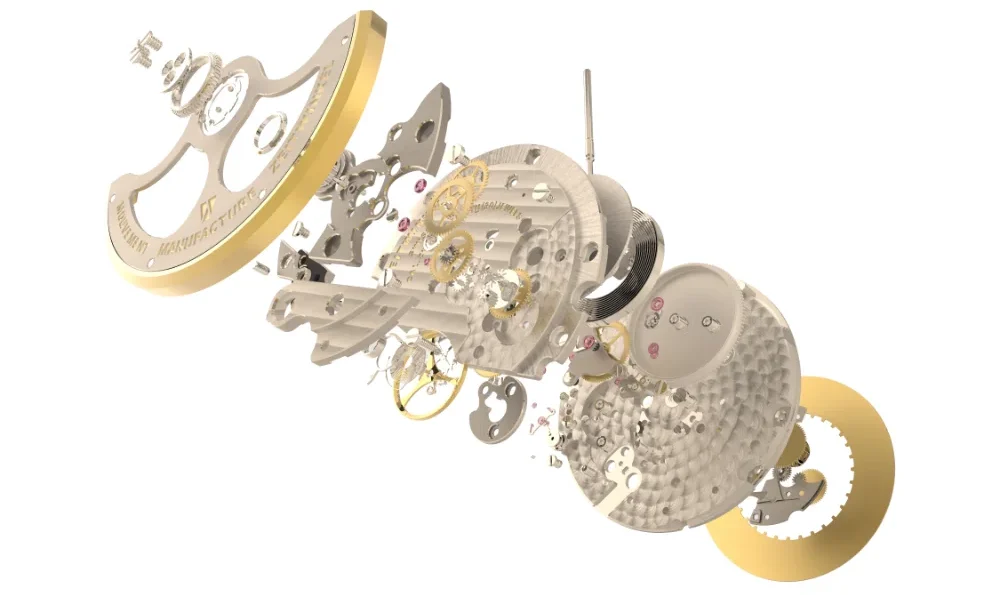
Image – Zeitwinkel manufacture caliber ZW0102
German silver is much harder than brass which is an additional benefit; however, it does necessitate greater precision when it is being machined. This hardness, and the fact that Zeitwinkel leaves it untreated and uncoated, also makes finishing far more challenging. Moreover, extreme care is needed when working with this material. Should the watchmaker forget to wear finger cots and touch the metal, they will leave a residue that will ultimately mar its appearance. Watchmakers have to be honest, declare any momentary lapse in concentration, remove the part and diligently clean it. Failure to mention such a mistake will inevitably lead to the affected part subsequently appearing blemished. It is for the aforementioned reasons the majority of brands avoid using this alloy.
Three-quarter plate
Most watch movements resemble a horological sandwich. The mainplate is the base layer, a series of bridges serve as the upper layer and the barrel, gear train, escapement and regulating organ form the filling. In watchmaking, stability aids precision and reliability. By using a three-quarter plate instead of numerous smaller bridges, the movement is less prone to flexing and mitigates any unwanted play in the jewel pivots.
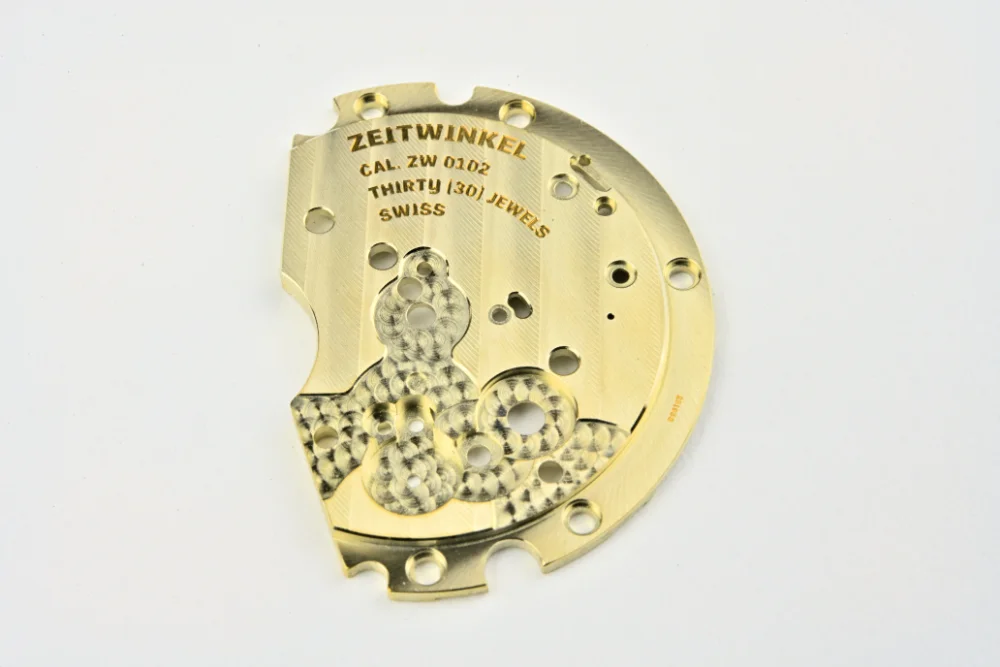
Image – Zeitwinkel manufacture caliber ZW0102
Again, many watch brands avoid using a three-quarter plate because it’s more time-consuming to assemble the movement and it requires more skill on the part of the watchmaker. During assembly, the watchmaker must repeatedly check that each jewel pivot has the correct amount of vertical play (termed ‘end shake’) before the installation of the three-quarter plate can be fully completed. Too little or too much end shake can impair performance, heighten wear or even cause the movement to stop working. Nevertheless, when a three-quarter plate is fitted correctly, it proves far superior.
Watchmaking traditions
Horological rectitude sits at the heart of the firm’s paradigm. Indeed, the brand invariably favours traditional techniques where these proffer wearer benefits even when they involve more work. For example, a collet is used to connect the hairspring with the balance staff. On most modern-day watches, the hairspring is laser welded to the collet; however, the traditional approach, favoured by Zeitwinkel, involves manually pinning the hairspring to the collet. It’s a far more labour-intensive method but it is a traditional approach that will undoubtedly resonate with purists.
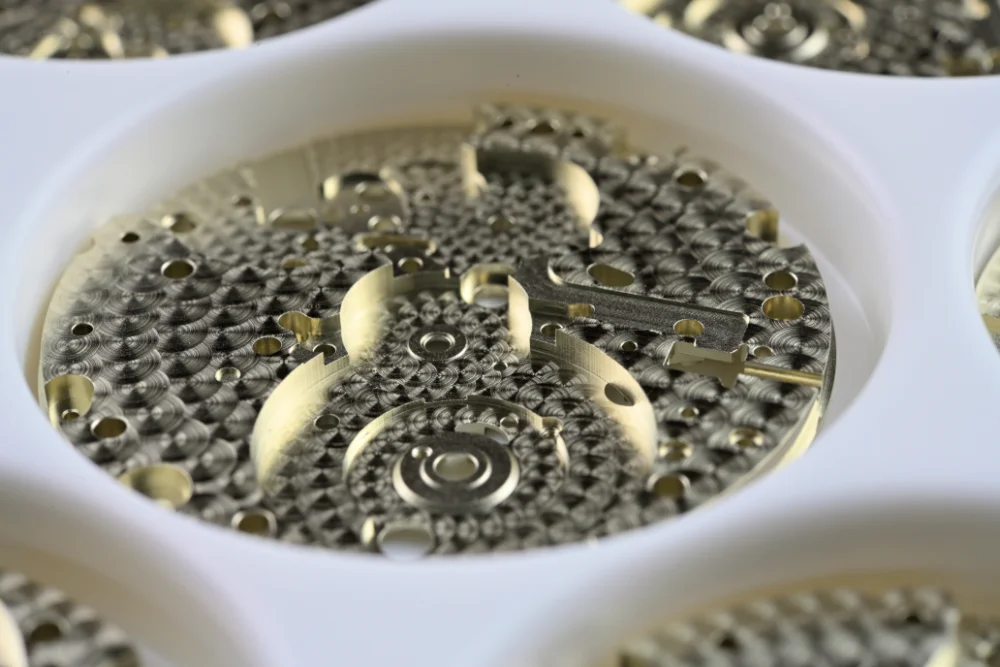
Image – different forms of decoration
Similarly, while some companies use epoxy resin to fix the hairspring to the stud, Zeitwinkel again upholds watchmaking tradition by using a pin.
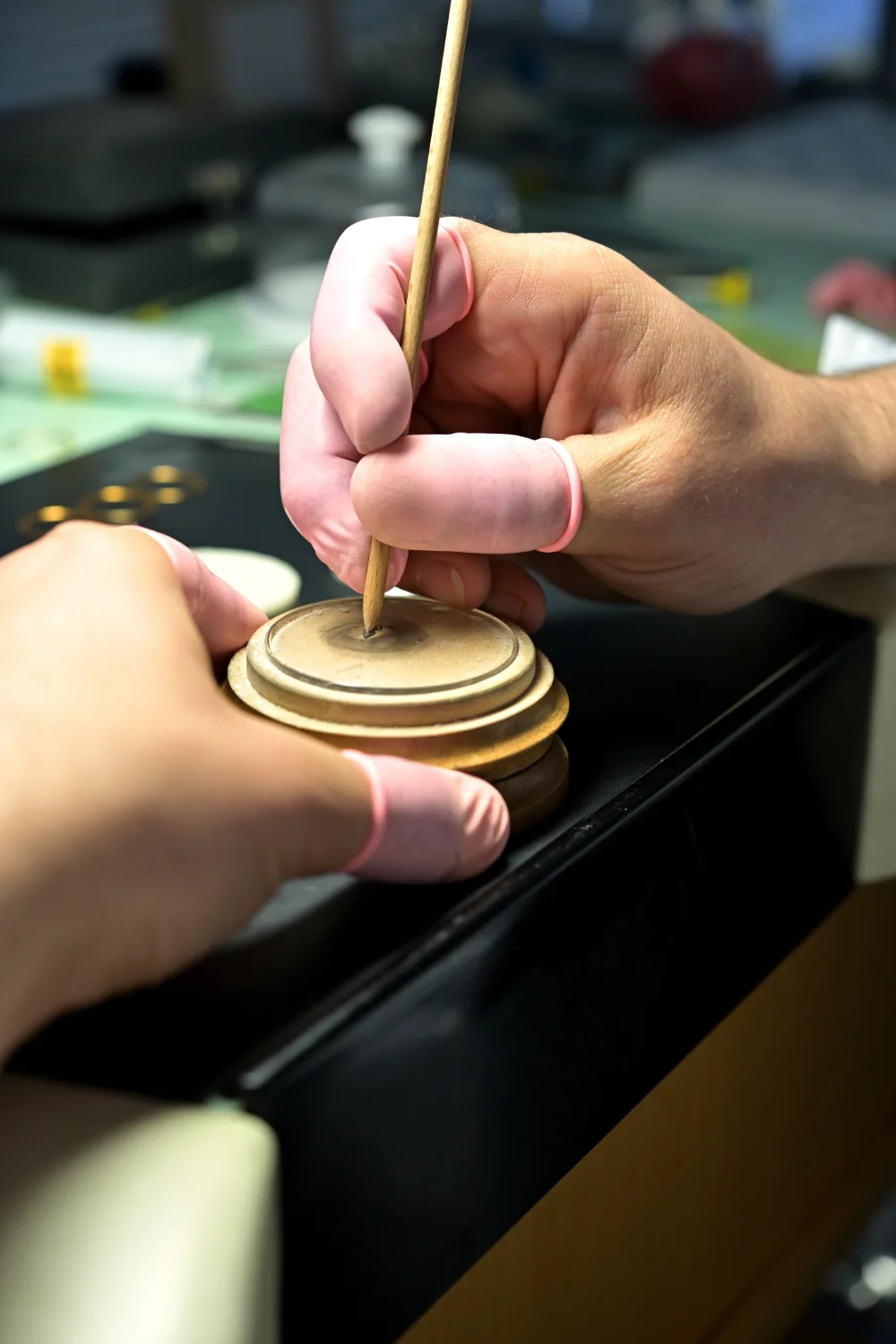
Image – black polishing
Zeitwinkel also places much importance on finishing. For instance, despite the challenges in decorating German silver, the Swiss marque embellishes the mainplate with perlage (in two different sizes, smaller pearls are located beneath the barrel and wheels). The three-quarter plate is adorned with Côtes de Genève motif, while the edges are chamfered and polished to a gleaming conclusion. The brand places much emphasis on hand decoration. The ultimate expression of finishing is black polishing, a technique that involves painstakingly rubbing parts against glass (some firms use a zinc plate), smeared with diamond paste. Zeitwinkel endows the balance cock with this coveted finish. During a recent visit, I witnessed the company’s watchmakers diligently perform these tasks by hand. It is clear the brand doesn’t countenance the idea of shortcuts.
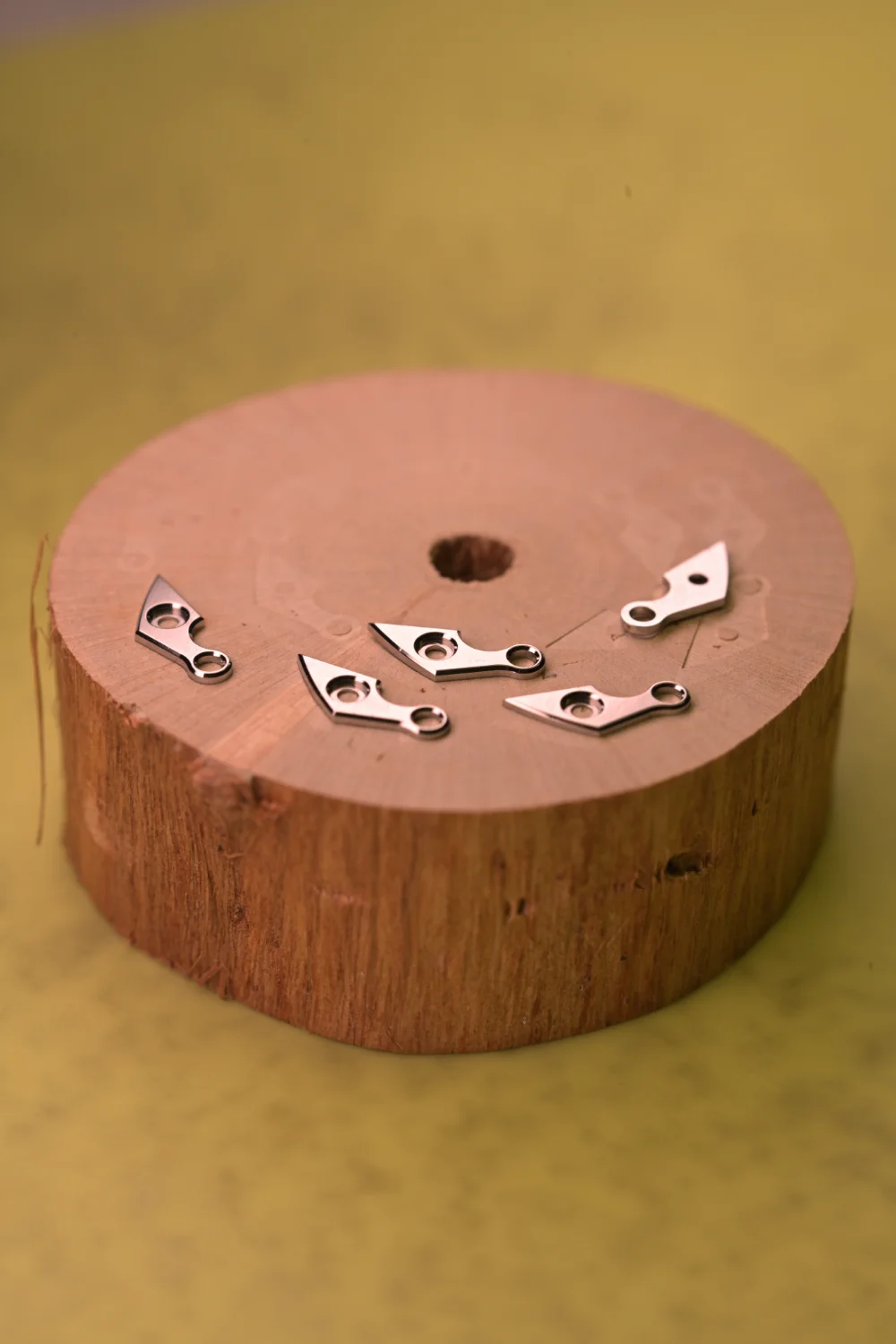
Image – parts after black polishing
Zeitwinkel logo
Besides being an ardent watch enthusiast, Ivica Maksimovic, affectionately called ‘Maks’, is also an expert in communication design. Indeed, Maks has a professorship in this field and is described as ‘a constant source of creative and unusual ideas’. It was perhaps inevitable therefore that Maks, or, more specifically, his design firm, Maksimovic & Partners, would be entrusted with designing the brand’s logo. In addition to creating the ’W’-shaped logo, Maks’s team conceived the house font, aptly named ‘Zeitwinkel’.
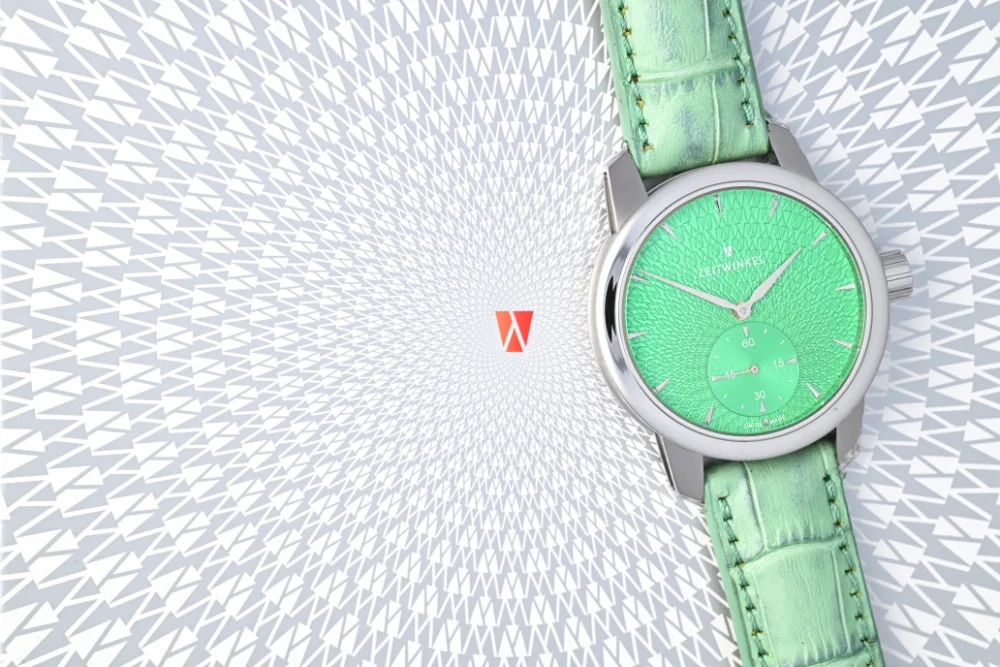
In the early years of the company, Maks designed company brochures as well as a series of promotional postcards. These featured the brand’s red emblem at the centre with numerous white and grey logos emanating outwards, gradually increasing in size. The Swiss marque has returned to this design with the new Zeitwinkel 188° MAKS (see later).
Sidestepping obsolescence
A strange strategy employed by some luxury watch brands is to regularly discontinue one collection and replace it with another. It is an approach that seems to undermine the very ethos of luxury. To release a model with much fanfare and declare it as the last word in luxury only to set it aside just a few years later erodes brand equity and often results in widespread discounting of obsolete references.
Since it first unveiled its inaugural collection, Zeitwinkel has continued to make the same models: a two-hander, three-hander, three-hander with date and, of course, the top of the range 273° with its large date, power-reserve and small seconds displays. Sure, over the years the firm has released additional dial variants, but it still makes the same models it sold from ‘day one’. It seems that the ‘if it ain’t broke don’t fix it’ philosophy is very much alive and well in Saint-Imier. Without further ado, let’s take a closer look at the Maison’s latest creation, the Zeitwinkel 188° MAKS.
Zeitwinkel 188° MAKS dial
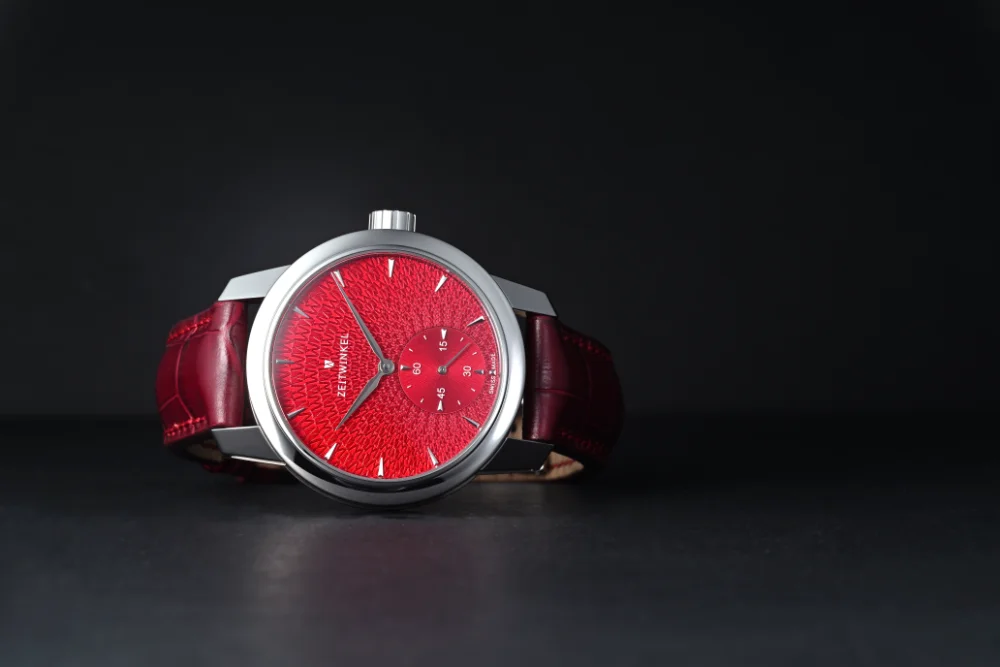
As its name suggests, the new Zeitwinkel 188° MAKS is based on the brand’s existing 188° model, a watch housed in a 39 mm case, blessed with an expansive dial, ideally suited to artistic expression.
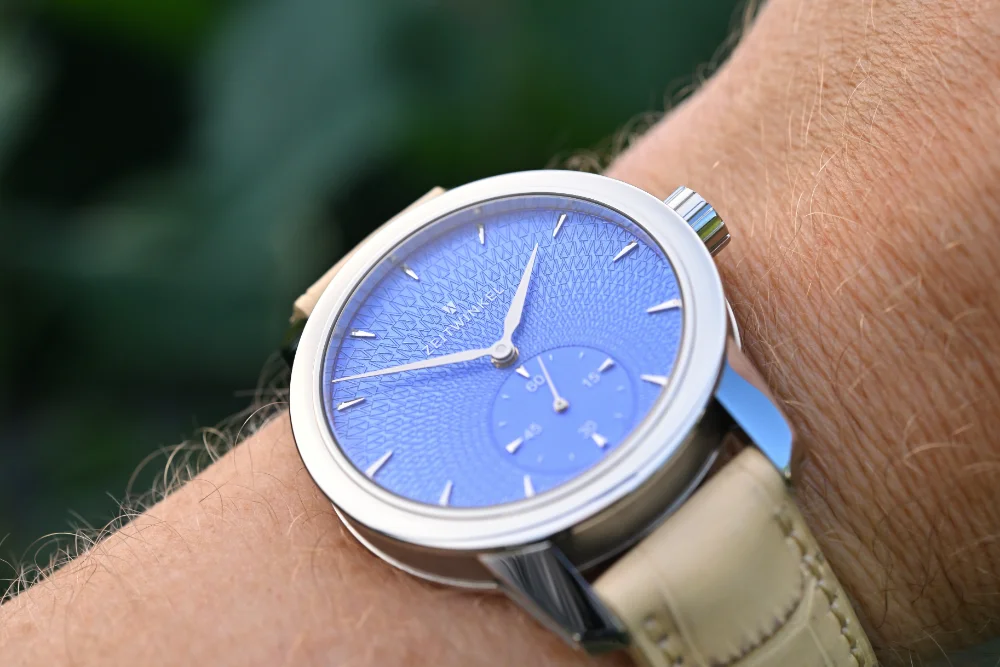
Eager to create a watch that delivered something new, while remaining unequivocally Zeitwinkel, the creative trio looked to the firm’s past and found inspiration in the most unexpected place. The aforementioned postcards designed by Maks featured a tapestry of Zeitwinkel logos spreading outwards. This design piqued the men’s interest and they wondered if the intricate pattern could be replicated on a watch dial in minuscule form.

Eventually, Zeitwinkel found a company that had the necessary expertise to create this intricate dial motif using cutting-edge 7-axis laser technology. While Zeitwinkel has a predilection for historic artisanal techniques such as Grand Feu enamelling, something it employed on the 082° Email Grand Feu, it realised at an early stage that a traditional engine-turned guilloché dial was not practicable. Quite simply, laser technology was the only way to go. The precise method used to produce the dial remains shrouded in secrecy; however, the complexity of the motif and its prepossessing appearance are clear to see.
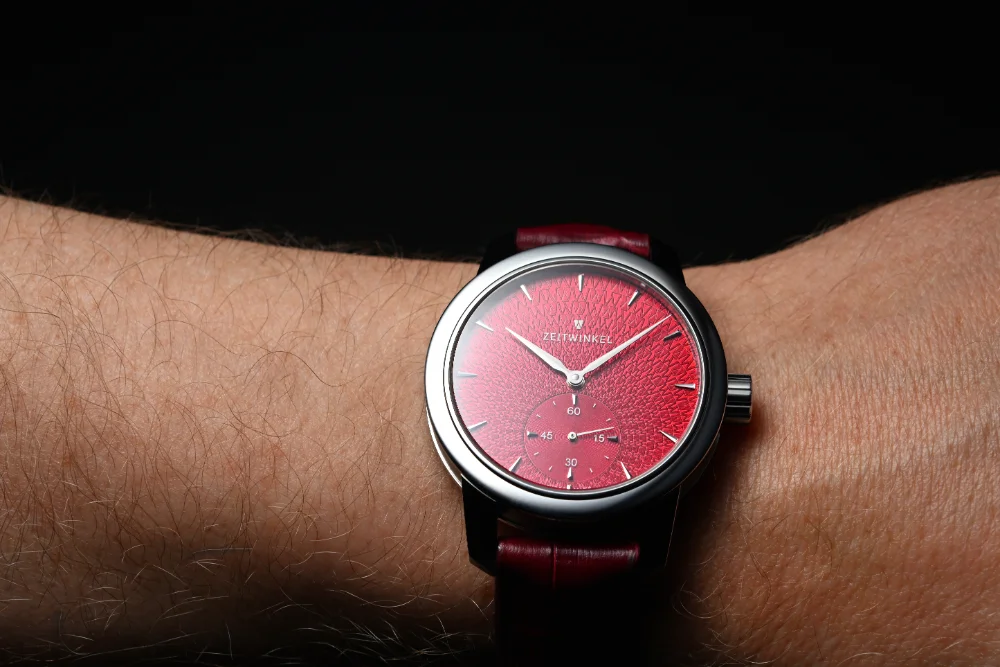
Once engraved, the dial receives almost 20 layers of lacquer, each layer applied by hand. Initially, one or two layers of clear lacquer are administered, then, depending on the colour, one or two layers of coloured lacquer are painted onto the surface. Thereafter, numerous layers of clear lacquer are applied onto the patterned dial epidermis. Each layer must dry before the next layer is added, making the whole process very protracted.
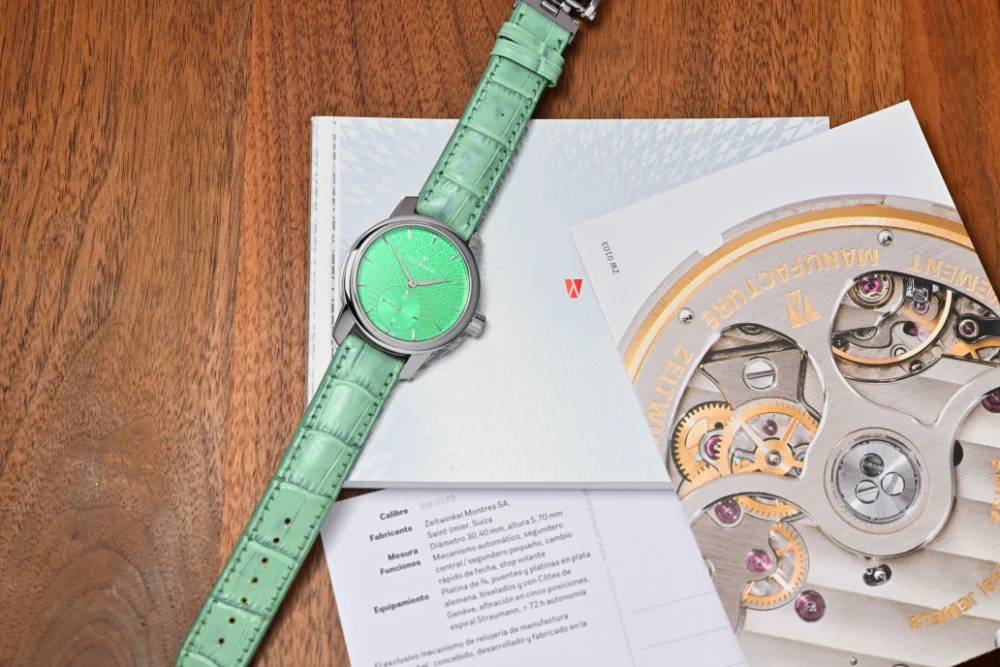
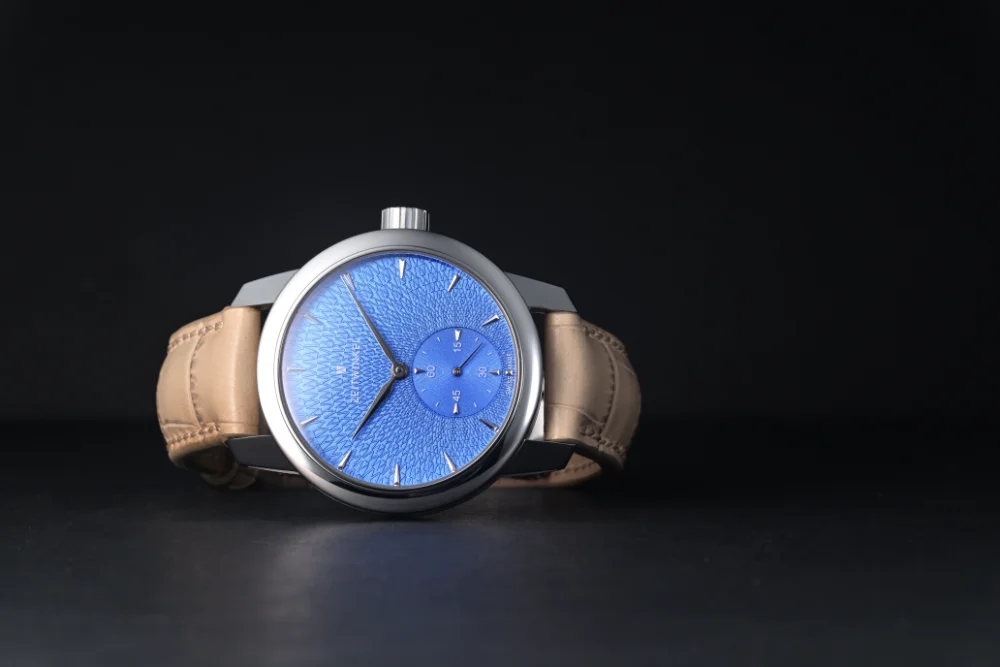
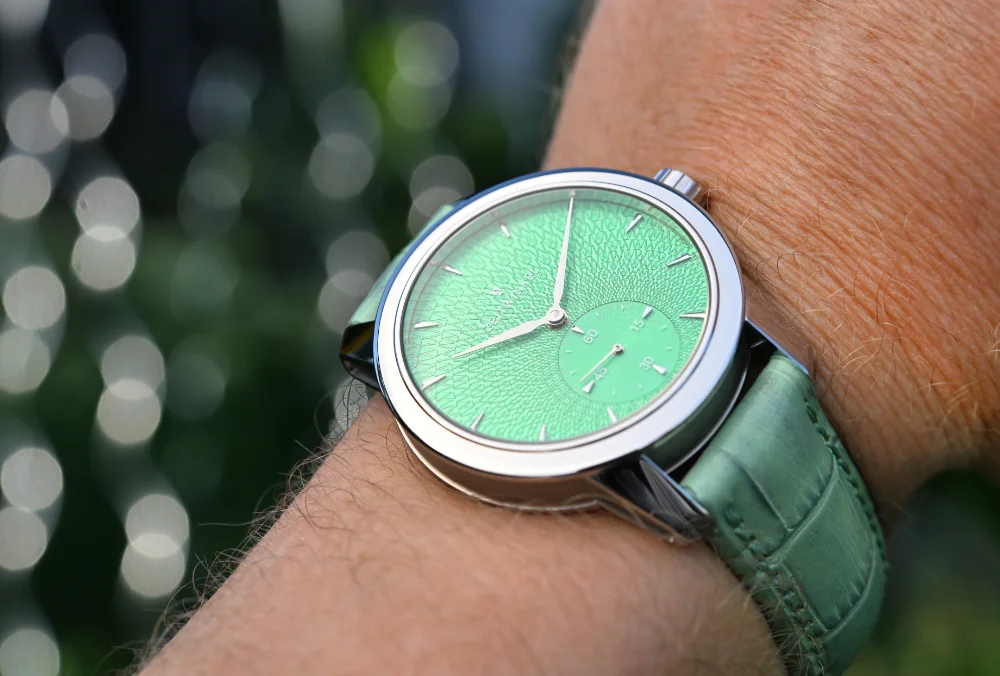
Given the new model was inspired by Maks’s postcard idea, it seemed fitting that the new model should bear his name. The independent brand has released four colours, ‘Bleu Glacier’, ‘Vert de Limón’, ‘Rouge Lobélie’ and ‘Orange d’Edouard’. Interestingly, this latter name was inspired by one of the brand’s clients, Edward, who once visited the brand’s atelier in Saint-Imier in a bright orange car and who is the first owner of the MAKS version named after him.

The silver-hued lancine-style hour and minute hands are faceted. Comprising two facets, the hands readily engage with light, often with one side gleaming, while its adjacent counterpart broods in the shadows. A cursory glance at the silver-toned, applied indexes may lead one to believe they are shaped like isosceles triangles; however, consistent with the brand’s ethos, their design is far more nuanced. Look again and you will note that adjacent to the case they are slightly recessed and bear a close resemblance to the fletching found on an archer’s arrow. It is subtle details like this which engender lasting ownership delight.
As previously stated, the ‘manufacture caliber ZW0102’ is able to indicate the running seconds with a central hand or with a small seconds display at 6 o’clock. In this instance, Zeitwinkel has opted for a small seconds display for the MAKS. Featuring a snailed finish, the small seconds display confers contrast, while also playing a deferential role to the elaborate dial motif positioned adjacent.
The resultant dial and indications are fabulous to behold. Everything proves eminently legible, while simultaneously conferring a high quotient of style.
Zeitwinkel 188° MAKS case
Zeitwinkel procures cases from a specialist firm in Germany and only ever offers models in two sizes: 39 mm and 42.5 mm. Both case sizes are executed in the same way. By employing this strategy, the firm achieves economies of scale, allowing it to deliver its clients greater value for money. Moreover, Zeitwinkel does not flit from one case style to another, once again sidestepping obsolesce.
In common with other Zeitwinkel models, the case of the 188° MAKS is intricately shaped. It is formed of 26 parts and the assembly process comprises more than 80 individual steps. Clearly, there is nothing expeditious about the making of this housing.
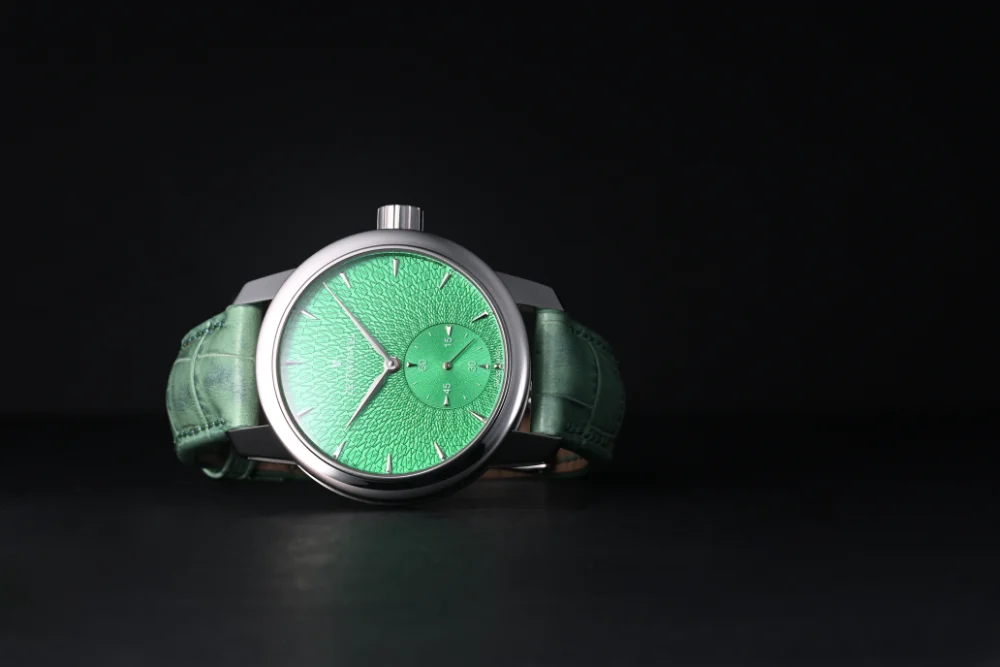 The exterior surfaces are polished to a resplendent gleam, save for the caseband. Once again, Zeitwinkel has not made life easy for itself. The caseband is outlined in gleaming steel, while most of the vertical flank is recessed and glass bead blasted. The muted appearance of the caseband interior provides an agreeable counterbalance to the ebullient polished steel. Everything sits in concert and delivers a sumptuous and seemly appearance.
Front of house, the sapphire crystal is convex-shaped, while to the rear, a disc of flat sapphire crystal affords sight of the self-winding movement.
The Zeitwinkel 188° MAKS is supplied on a hand-sewn colour-coordinating calfskin strap paired with a stainless steel folding clasp.
Closing remarks
With some large watch brands there seems to be a revolving door. Newly appointed CEOs make short-term decisions knowing they will probably leave within five years. This often adversely influences product life cycles leading to models soon becoming obsolete. Zeitwinkel’s three founders are invested in the brand, not just financially but also emotionally. The materials and techniques employed endow the firm’s models with longevity, while the design language ensures they will retain their eye-appeal for many, many years to come. Indeed, from the outset, Zeitwinkel has focussed on making high-quality watches that are imbued with integrity.
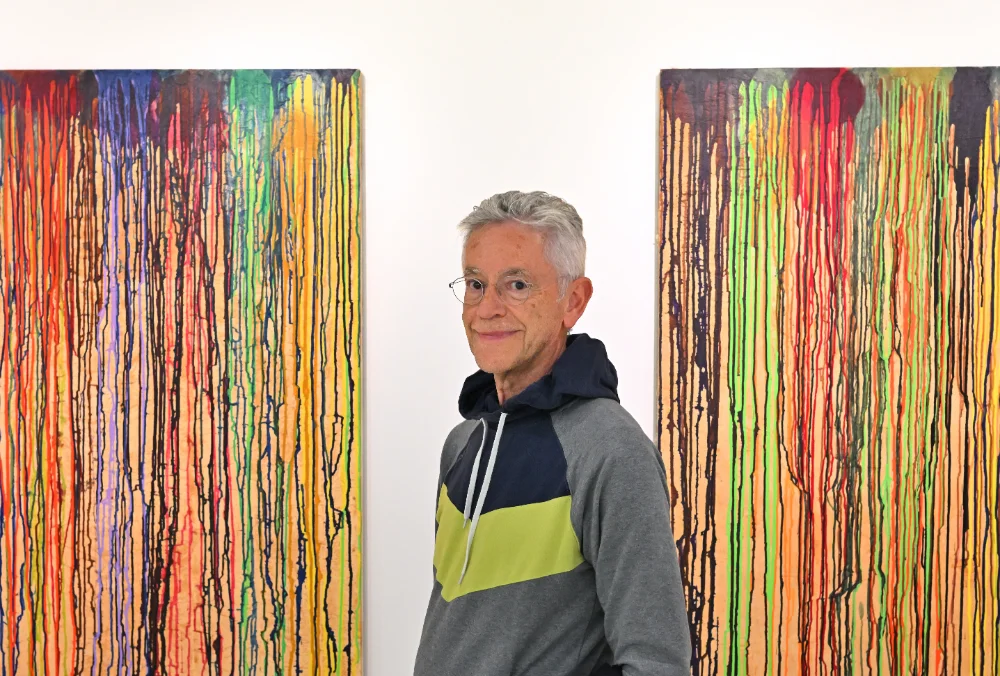
Image – Ivica “Maks” Maksimovic
Compared to its siblings, the 188° MAKS is the brand’s boldest creation to date; however, it remains a Zeitwinkel, representing all that this illustrious marque stands for. Clearly, Professor Ivica Maksimovic is a man of many talents and his achievements should be rightly acknowledged. However, with Zeitwinkel now 18 years of age, legitimately standing at the bar, sipping a cool beer, all members of this entrepreneurial triumvirate should be toasted for their part in making ageless watches that are rich in virtue.
Further reading
Technical specification
- Model: Zeitwinkel 188° MAKS
- Case: steel, diameter 39 mm, height 11.6 mm, water resistance 5 ATM (50 metres), sapphire crystal to front, exhibition case back.
- Functions: hours, minutes, small seconds
- Movement: ZW0102; self-winding movement; frequency 28,800 vph (4Hz); 28 jewels; power reserve 72 hours.
- Strap: colour-coordinating alligator embossed calf leather strap or rubber strap paired with a folding clasp
- Price: CHF 14,500 including VAT – (RRP as of 9.12.2023)