
Pequignet Royale Paris 39.5 mm Watch Review
The Pequignet Royale Paris 39.5 mm has just been unveiled at Watches & Wonders 2025. Crafted in Morteau, this latest expression of French Haute Horlogerie features several technical innovations and provides an attractive alternative to some of Switzerland’s finest timepieces. Angus Davies begins by exploring France’s rich watchmaking history before closely examining the composition of this latest model to originate from the Franche-Comté region.
A common misconception about watches
Every year, when strolling through the exhibition halls of Watches & Wonders, it is difficult to ignore the predominance of Swiss watch brands. Indeed, should you canvas opinion, it’s likely that most members of the public will cite Switzerland as the birthplace of mechanical watchmaking. However, this is not the case. During the 17th and 18th centuries, British and French watchmakers led the way. For example, in 1735, John Harrison (1693-1776), an Englishman, unveiled the first marine chronometer, a means of determining longitude at sea that was hailed as groundbreaking at the time.
French watchmaking – a rich history
French watchmaking dates back to the Middle Ages. In 1518, Julien Coudray, clockmaker to King François I, created the first portable clock, but most experts consider the 17th and 18th centuries as the ‘golden age’ of French horology. Horological luminaries of the period, including Antide Janvier, Pierre Le Roy, Jean-Antoine Lépine, Ferdinand Berthoud and Abraham-Louis Breguet, based their activities in the French capital. Although Berthoud and Breguet were Swiss (both originating from the canton of Neuchâtel) they left Switzerland in their teens, keen to fulfil their watchmaking ambitions in Paris, a city that was widely considered a horological powerhouse at the time.
However, political and religious events significantly influenced the fortunes of Paris’s watch industry with many talented individuals leaving the city.

Watchmaking – the impact of politics and religion
Following the Massacre of St Batholomew’s Day in 1572, when thousands of Huguenots were killed, many protestants fled to England and the Swiss cantons of Geneva and the Valais. In some instances, those fleeing catholic France were artisans, clockmakers and jewellers; skills that would eventually be repurposed for watchmaking.
In 1598, a ruling by King Henry IV of France granted religious and civil freedoms to the Huguenots. Termed the ‘Edict of Nantes’, the rights were subsequently revoked in 1685, leading to a further wave of Huguenots seeking refuge in Geneva, again taking their skills with them.
Both events eroded France’s pre-eminence for watchmaking and sowed the seeds for Switzerland’s present-day standing in the luxury watch sector.
Interestingly, during the French Revolution (1792 – 1799), some of the King’s watchmakers worked incognito while others fled Paris and moved to Switzerland. However, some watchmakers chose to relocate to Besançon, in the Franche-Comté region. Around the same time, some Huguenot watchmakers from Geneva also moved to Besançon. This combination of events led to the city becoming France’s principal watchmaking location, supplanting Paris. Since 1884, the city has been home to the esteemed Besançon Astronomical Observatory, a facility that continues to be used by some of Switzerland’s finest watch brands. The region is also home to several prestigious watchmaking schools. Ironically, many watchmakers from the area now cross the border each day to work in Switzerland.

Pequignet – Manufacture de Haute Horlogerie Française
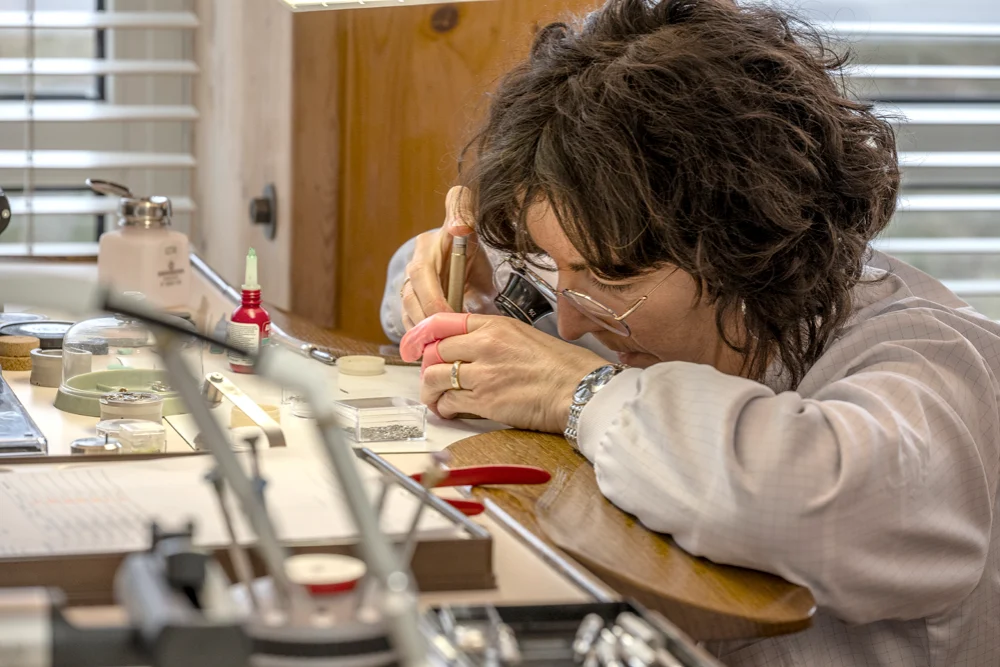
Founded in 1973, Pequignet perpetuates France’s rich history of watchmaking. Based in Morteau, approximately 60 km from Besançon, the company is the only French Manufacture in existence today. It crafts movements of the highest order, several featuring ingenious mechanisms, some of which are patented. The Maison’s portfolio of products includes sports models, three-hand dress watches and even a tourbillon. Moreover, with its mission to provide a ‘legitimate alternative to Swiss brands’, the Manufacture employs 20 highly talented watchmakers.

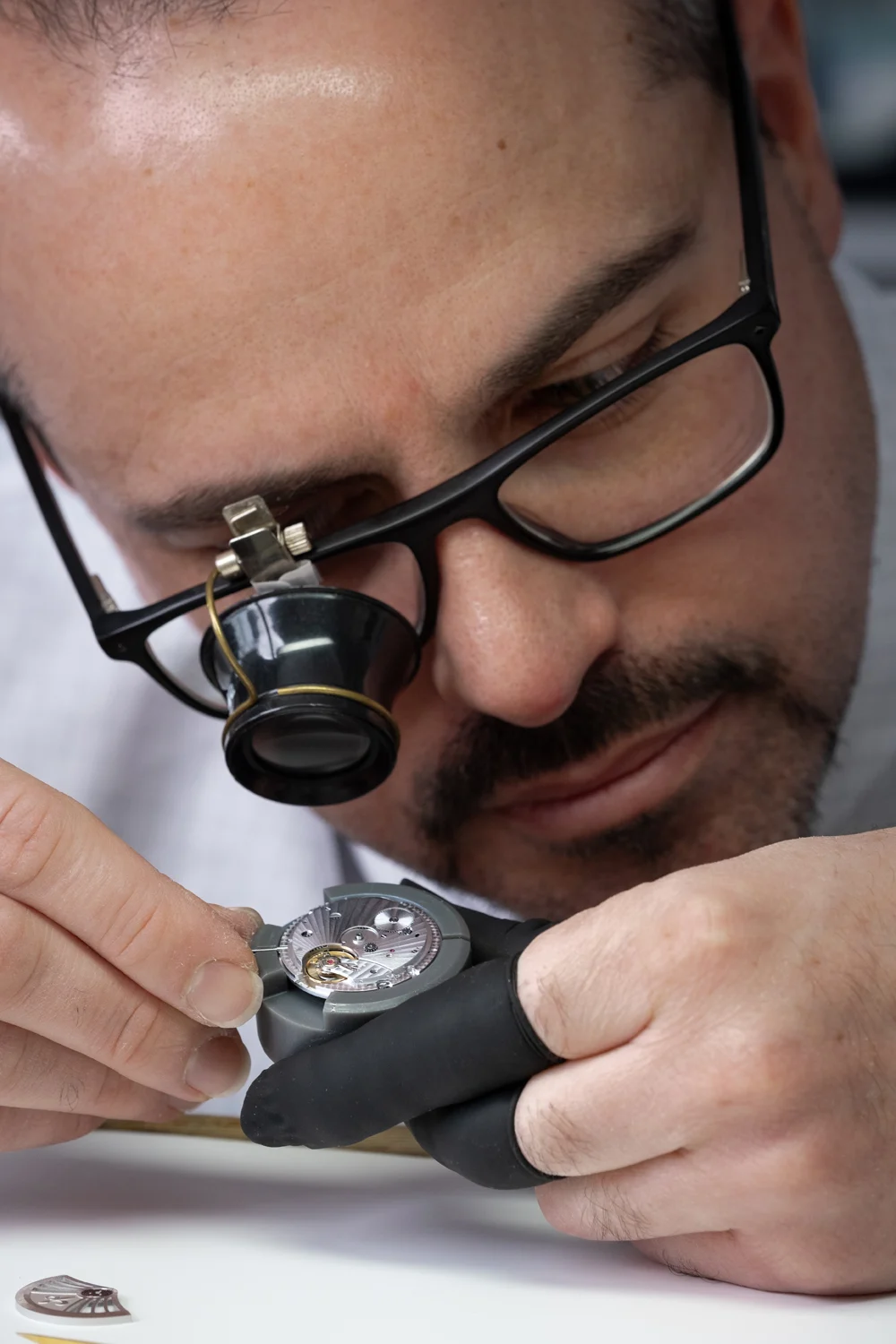
In 2008, the company expanded its operations in Morteau, opening its ‘Haute Horlogerie laboratory’, a place where it designs, creates, assembles and regulates its in-house movements. Throughout each stage of production, rigorous quality checks are performed to ensure everything meets the company’s exacting standards. Furthermore, the brand’s in-house movements are endowed with an array of refined finishes.
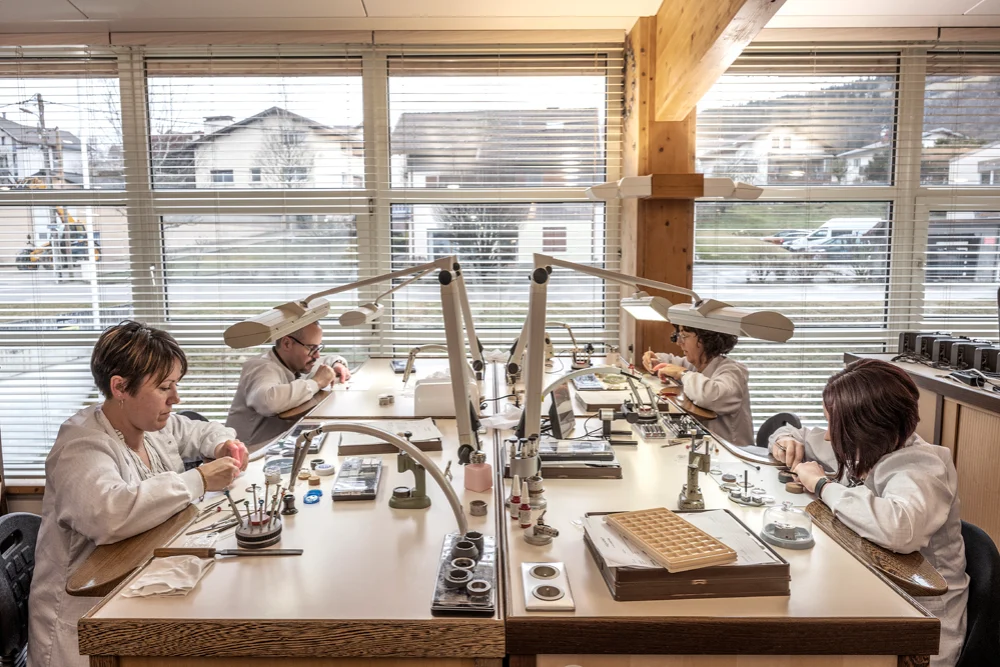
Four in-house movements are made at the Morteau Manufacture, namely the Calibre Royal (automatic), the Calibre Royal Manual, the Calibre Royal Tourbillon and the Calibre Initial. While many parts are made within the Manufacture, in common with other prestigious marques, Pequignet does source some components from specialist companies in the region. For example, the Maison states that the Calibre Initial is ‘entirely composed of components produced within an 80 km radius of Morteau; 72% are of French origin, the rest coming from Switzerland’.
The Maison has just released a new timepiece, the Pequignet Royale Paris 39.5 mm. Without further ado, let’s take a look at this latest expression of ‘French Haute Horology’.
Pequignet Royale Paris 39.5 mm – dial
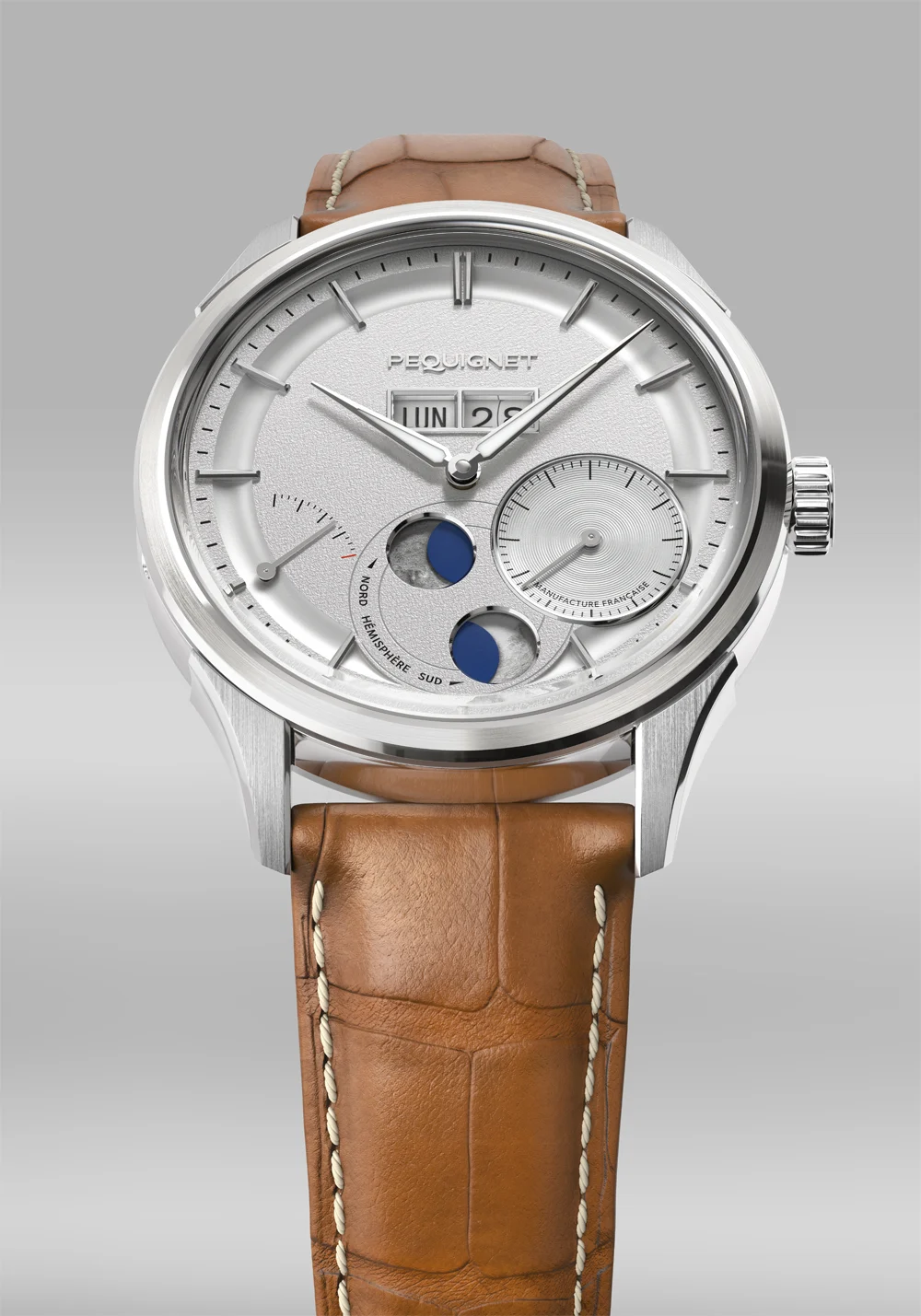
The dial of the new Pequignet Royale Paris 39.5 mm features classical elements while also embracing a variety of textures and a becoming dose of asymmetry. The lancine-style hour and minute hands are lined with Super-LumiNova that bestows a blue hue in dim light. These hands sit above a silver-toned, grained surface and collaborate with bevelled indexes, enunciating the prevailing time. Interestingly, Pequignet has chosen to break with convention by positioning the indexes above a smooth, circular trench. The indexes straddle this trench, effectively bridging it, thereby delineating the central dial area from the minute track.
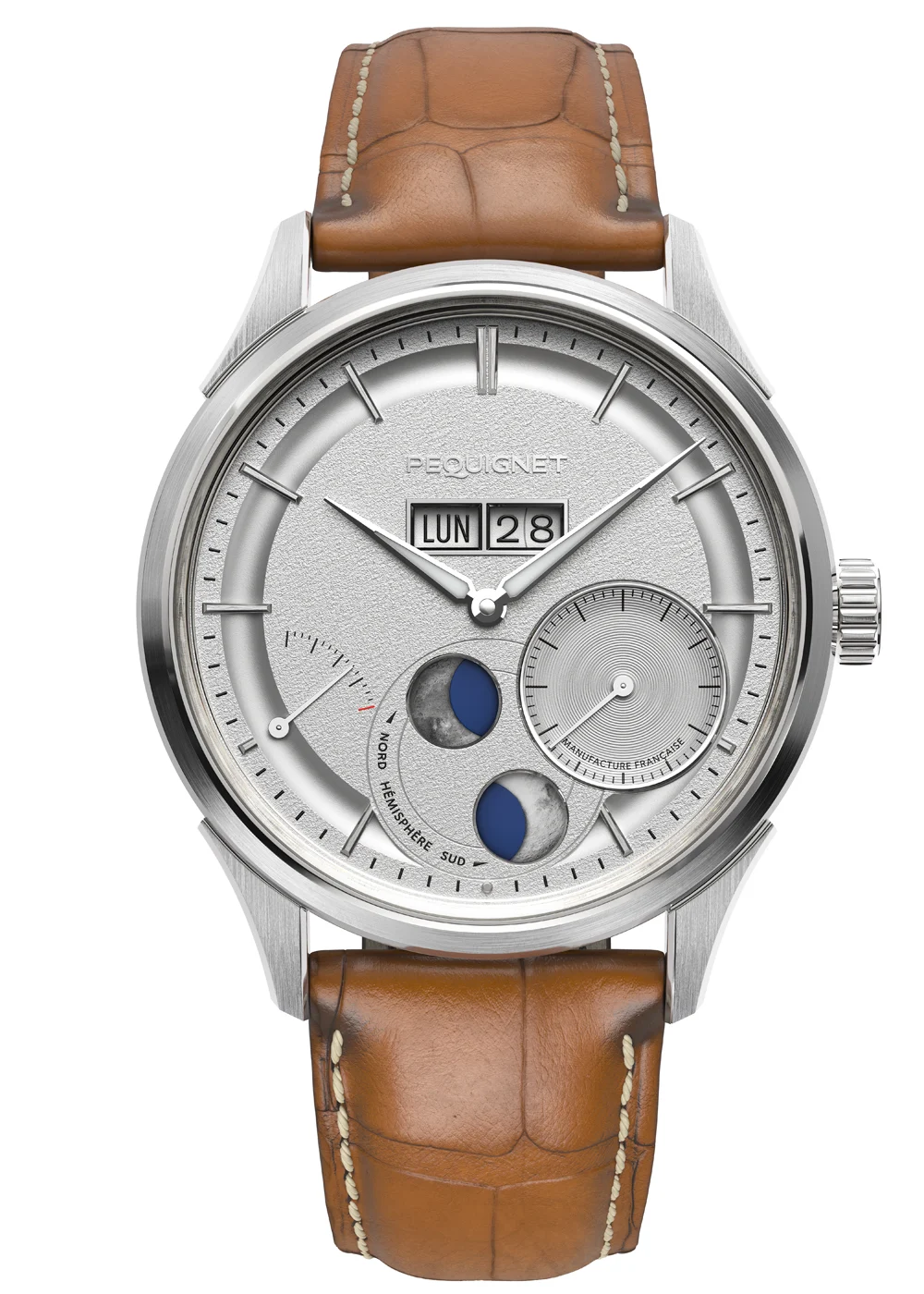
In the upper region of the dial, the brand’s name is presented in relief with two apertures located below. The left aperture reveals the day, while the adjacent aperture reveals the date. However, unlike a ‘regular’ date display, this model features a large date indication, employing two discs. These latter discs, one for tens and the second for units, move in a choreographed sequence to impart meaning. Unlike some rival brands, Pequignet has presented the day disc and date discs at the same level, augmenting readability. Interestingly, all three discs instantly jump at midnight.
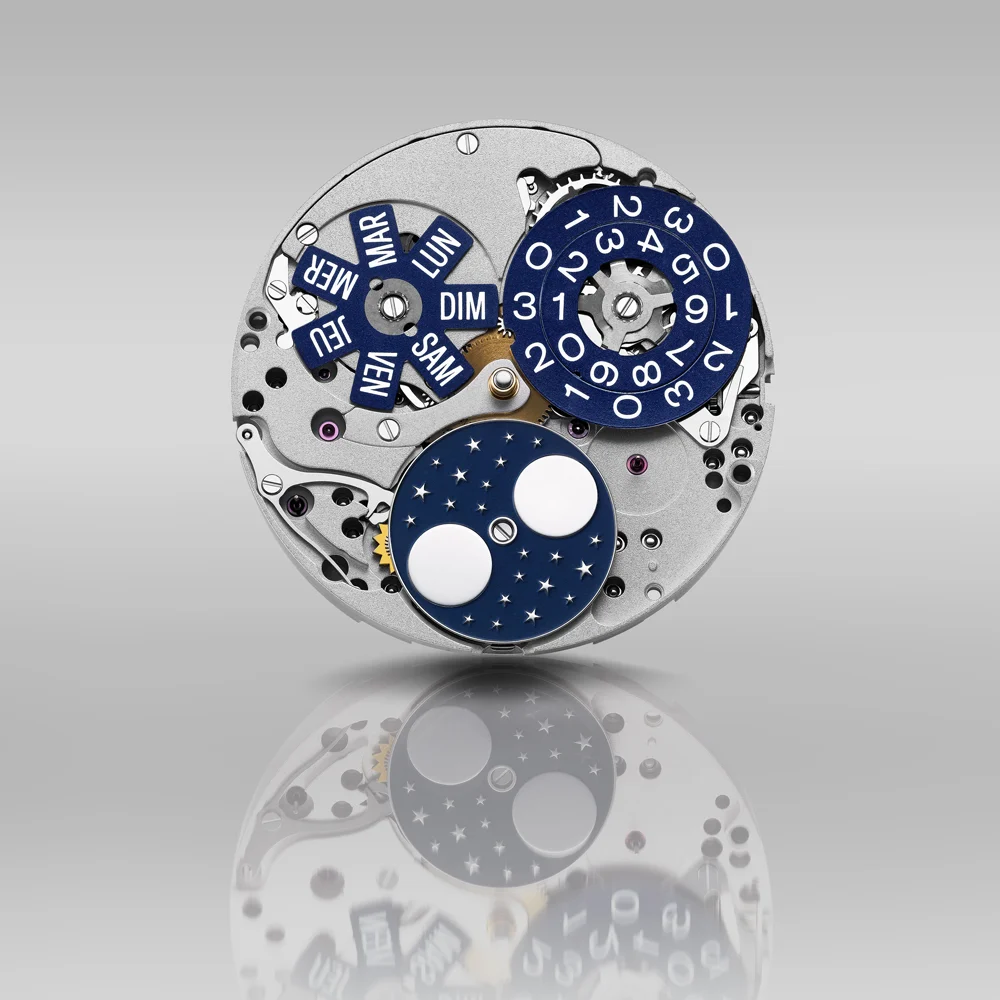
A small seconds dial resides between 3 and 5 o’clock. Generously proportioned, the indication is enriched with snailed detail and sports a polished steel seconds hand. A moon phase display is located between 5 and 7 o’clock, but unlike a watch fitted with a ‘regular’ moon phase display, showing merely the current moon phase in the Northern Hemisphere, this model also displays the moon phase in the Southern Hemisphere. Furthermore, each moon is presented in photorealistic form, even incorporating tiny lunar craters. The moonphase is adjusted with a caseband corrector, positioned at 08:30.
Lastly, the available energy within the mainspring barrel is shown with a power-reserve indicator at 8 o’clock. Assuming the mainspring is fully tensioned, the watch will run autonomously for up to 96 hours.
Pequignet Royale Paris 39.5 mm – case
While the Pequignet Royale has always been a popular model for the French brand, with this latest version the company has chosen to revisit the design of the case. Firstly, the diameter has been reduced from 41 mm to 39.5 mm, a size that is likely to appeal to a larger audience. This feat has been partly achieved by slimming the width of the bezel by 0.75 mm, ensuring that, despite the reduction in diameter, each dial indication still has sufficient room to breathe.
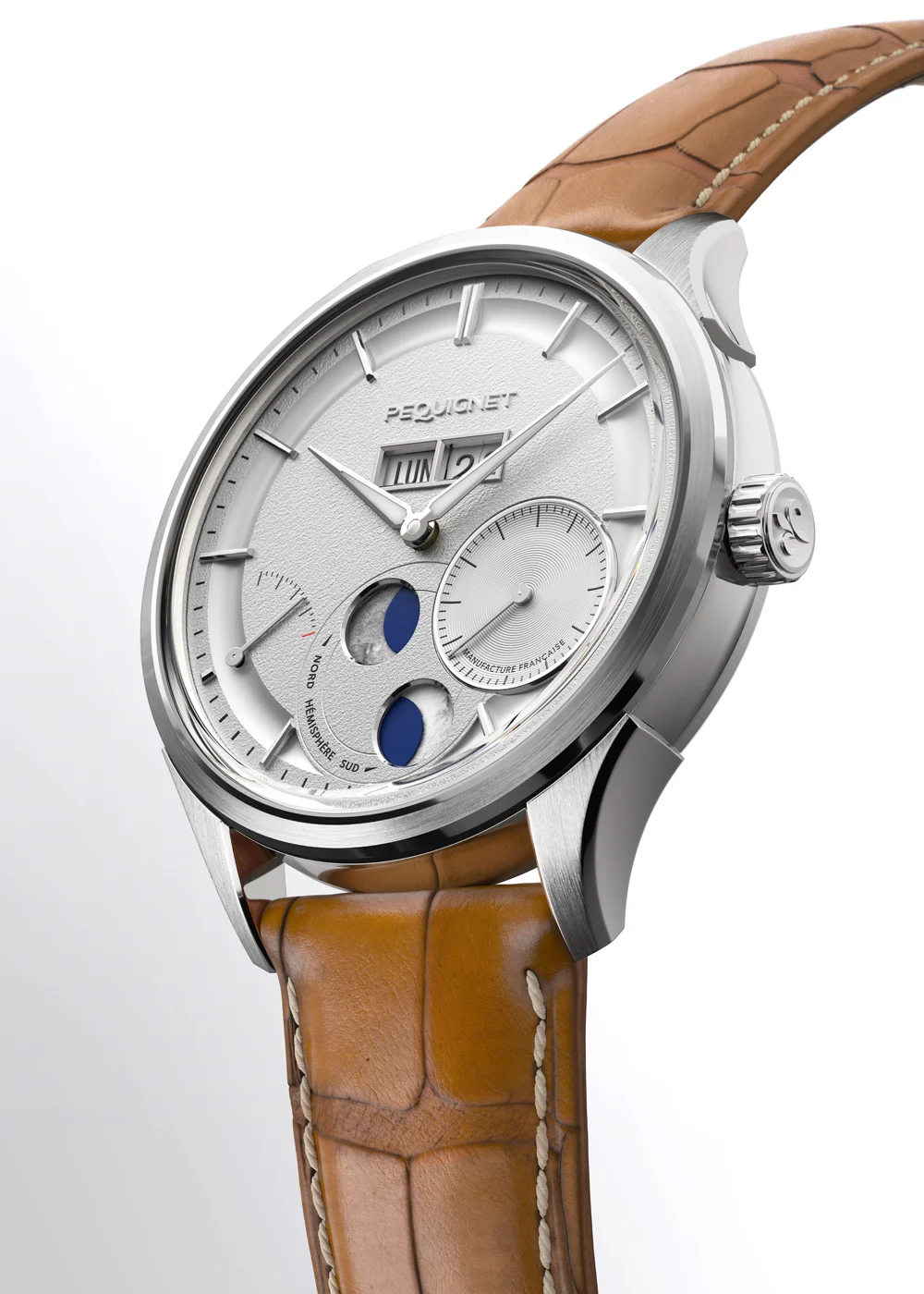
The intricate contours of the case play with depths and toy with light. This characteristic is accentuated with the design of the lugs. Perpetuating fine watchmaking practice, the lugs are created individually before being affixed to the case. This approach grants the case flanks with a wonderful, stepped aesthetic and helps optimise the ergonomic relationship between the wearer’s wrist and the watch.
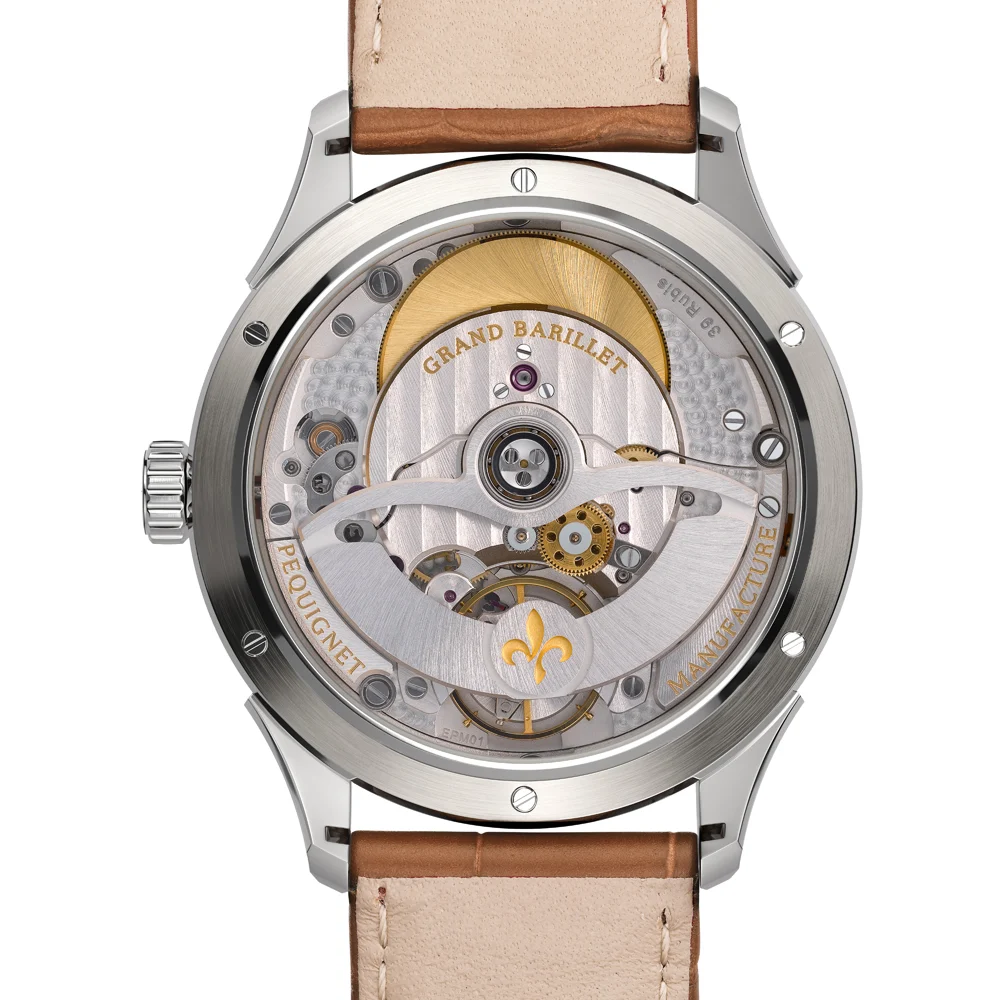
Pequignet has secured the bezel with screws, a detail that helps facilitate repair/servicing. The case is enriched with a harmonious blend of brushed and polished surfaces, imbuing the Royale Paris 39.5 mm with a sumptuous appearance. The dial sits beneath a domed glass box sapphire crystal, bathing the display with an abundance of light, thereby enhancing readability. To the rear of the case, an expansive pane of sapphire crystal affords views of the Calibre Royal.
Despite the Pequignet Royale being automatic, the crown remains an important touch point. On this occasion, it features a patented winding system that declutches the automatic mechanism while the mainspring is being manually tensioned. Although the barrel is large, the action of winding the crown proves easy and proffers a smile-inducing tactility. Furthermore, a patented winding gear, featuring unusually shaped teeth, optimises the interaction between the crown wheel and the castle-wheel, heightening efficiency and mitigating wear and tear. Finally, the crown’s vertical flank is adorned with the fleur de lys emblem, a clear reminder that this watch is the product of France.
Pequignet Calibre Royal
Viewing the Calibre Royal through the exhibition caseback grants sight of the bi-directional oscillating mass. Its openworked design allows inquisitive eyes to view numerous parts, some of which can be seen in motion. Comprising 318 components, the movement is ‘subject to 8 international patents’. Indeed, with the Calibre Royal, innovation abounds.
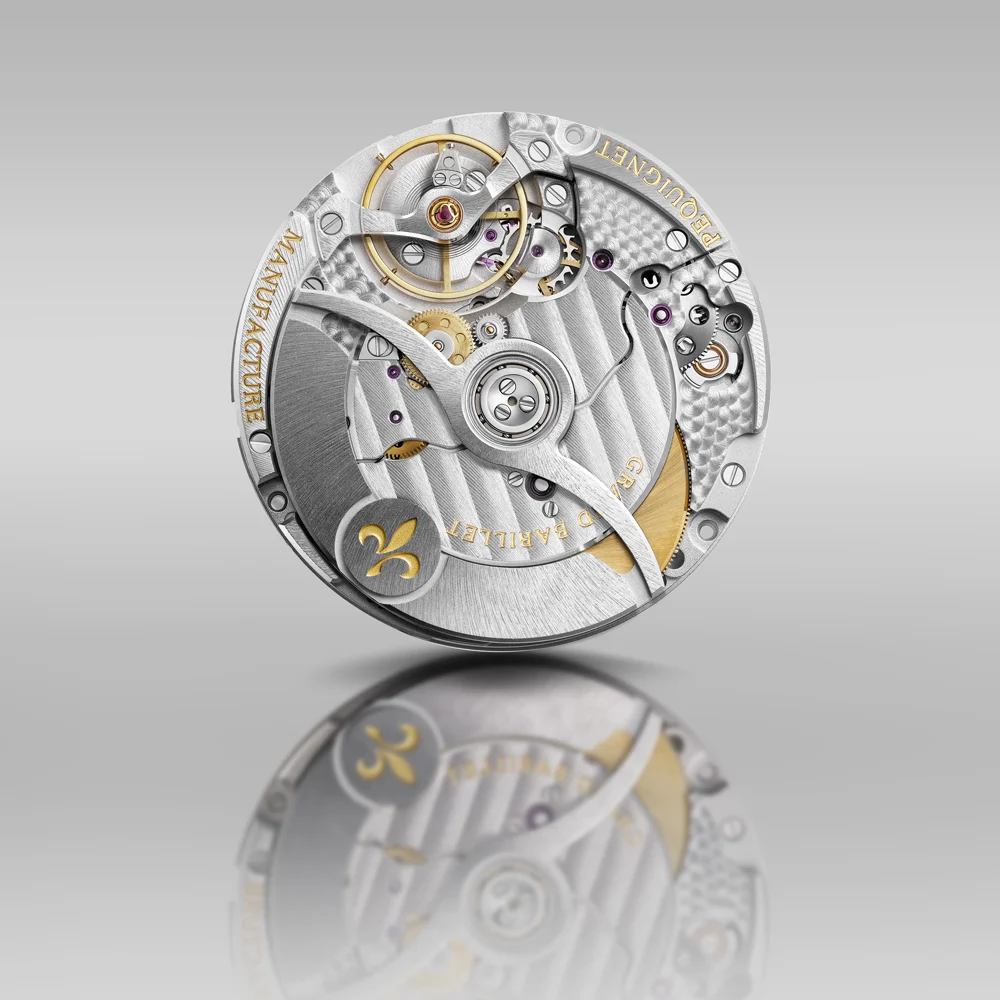
For instance, take the barrel. In a ‘regular’ watch, turning the crown causes the transmission wheel to rotate which then turns the ratchet wheel. The ratchet wheel turns the arbor at the centre of the barrel, tensioning the mainspring. This energy is then released via the teeth encircling the barrel, turning the gear train and ultimately sending force to the escapement. However, in this instance, the Calibre Royal employs an alternative system (patented). Rather than the mainspring being wound by the arbor, it is tensioned by the complete barrel drum turning. The force is then ‘distributed by a central barrel axis’. This latter approach, while more complicated to make and assemble, delivers several benefits. Firstly, if the mainspring should ever break, the risk of harming the gear train is significantly reduced. Secondly, by using a central barrel axis to transmit power to the gear train, the frictional forces are reduced, mitigating energy consumption. Lastly, the supply of force from the mainspring, ultimately serving the escapement, is more linear, thereby aiding precision.
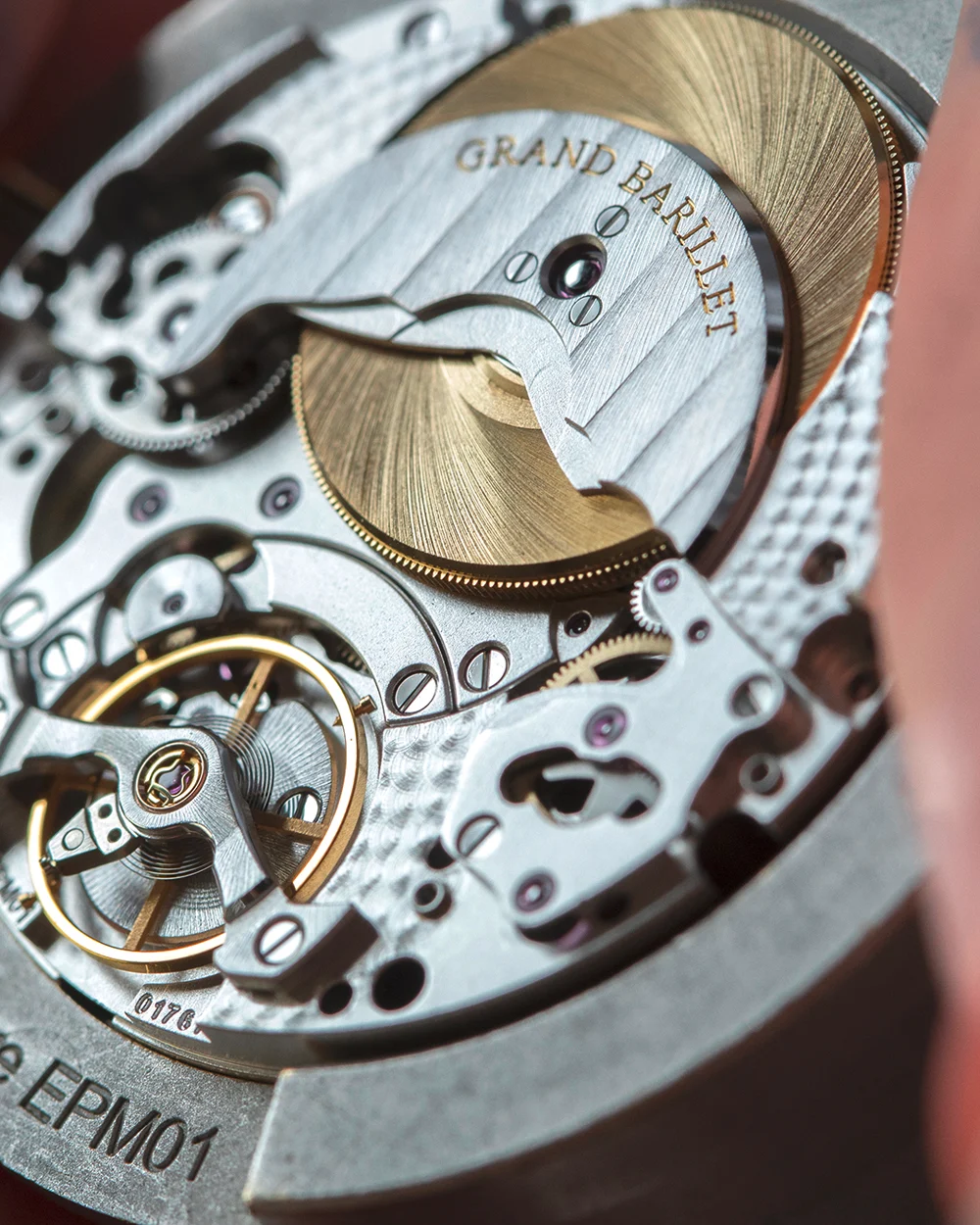
Turning our attention to the balance fitted to this watch, it ‘receives a high quotient of inertia’, a characteristic that ensures greater rate stability and shock resistance. Most watches feature an ‘index-regulated’ balance where the effective length of the balance spring is altered by moving a ‘raquette’ either towards or away from the ‘stud’, thereby making the watch run faster/slower. In this instance, Pequignet has opted for a superior ‘variable-inertia balance’. With this latter means of regulation, also known as a ‘free-sprung balance’, the effective length of the balance spring remains fixed. The rate is adjusted by tightening/loosening timing screws affixed to the rim of the balance wheel, altering the moment of inertia. Usually the preserve of high-end watchmaking, this means of regulation is more precise, less prone to positional errors and, should the watch be subjected to a shock, it is less likely to need remedial regulation.
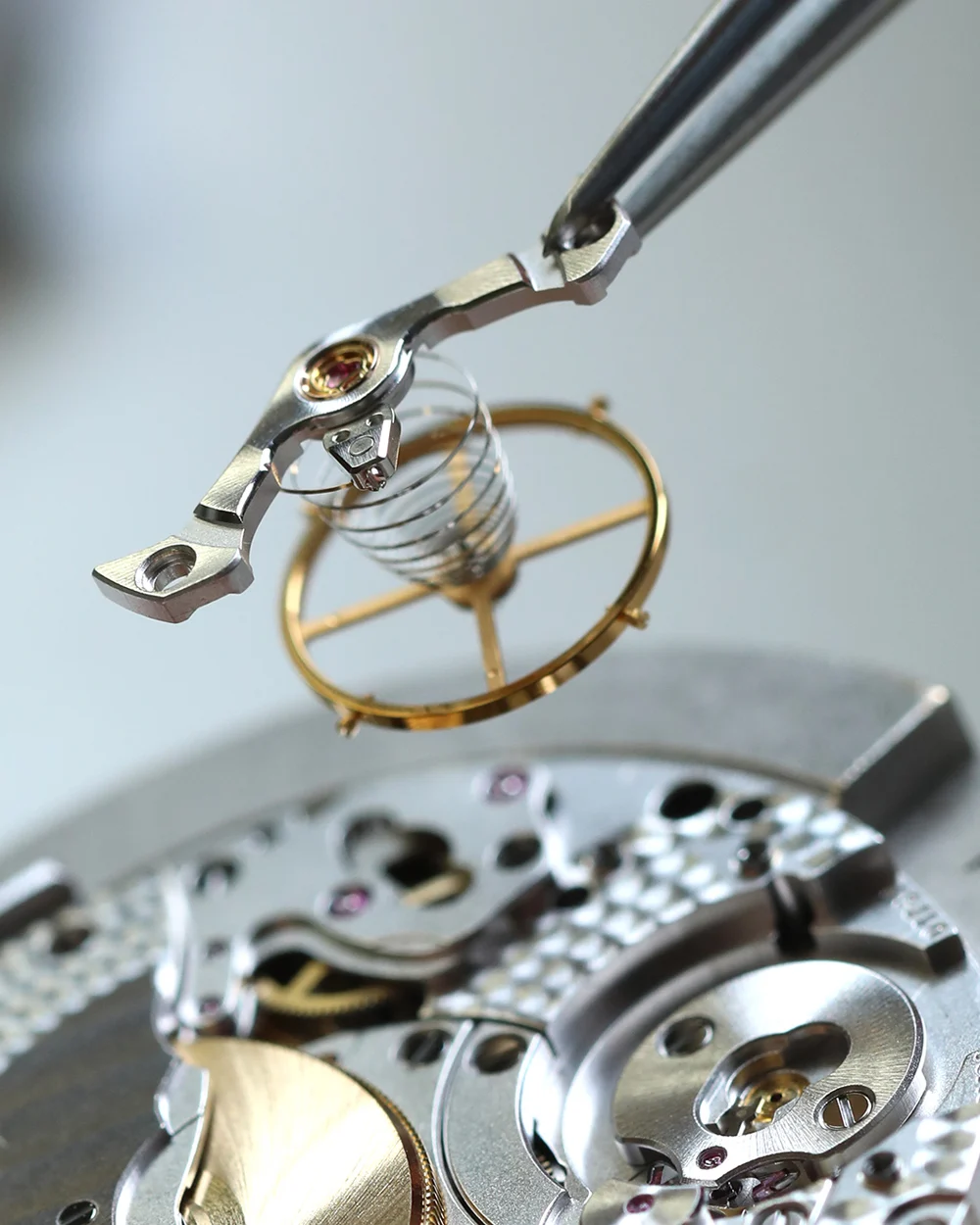
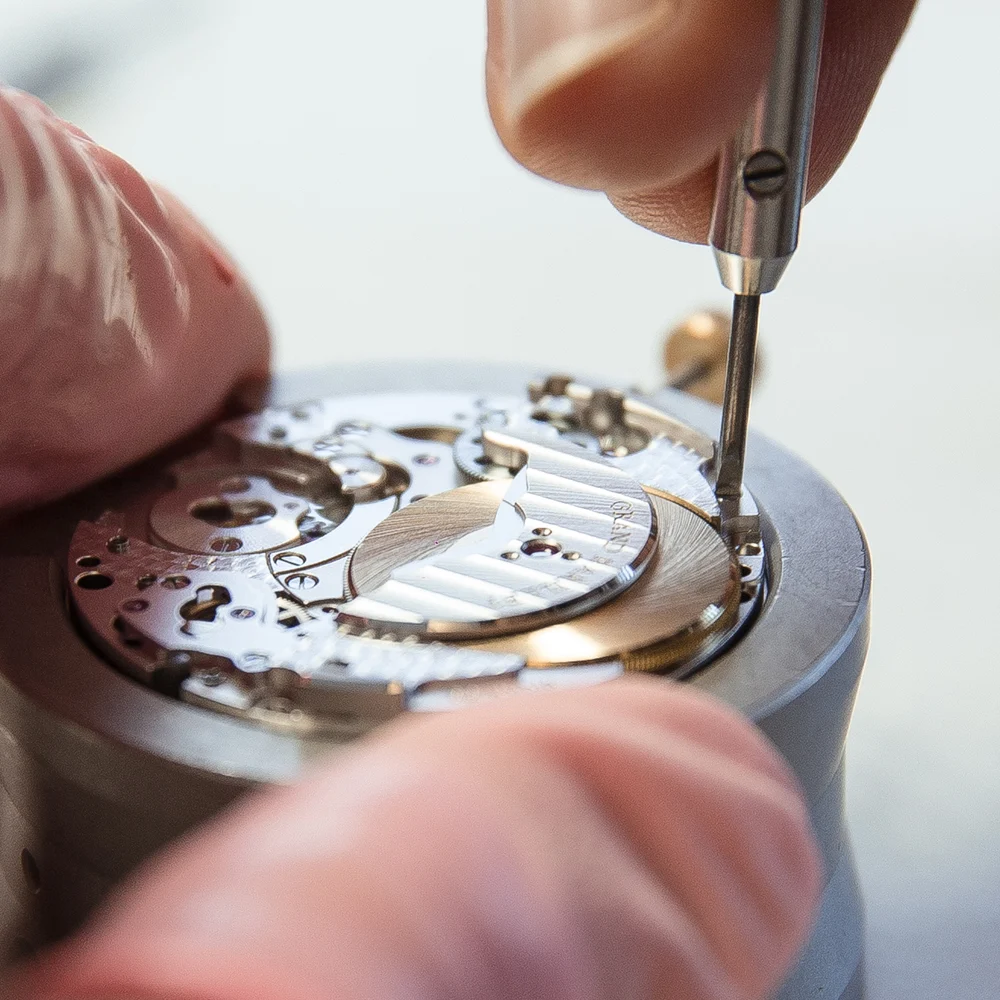
The Pequignet Calibre Royal is enriched with various traditional finishing techniques, including perlage, Côtes de Genève and colimaçonnage. Moreover, the Maison also states, ‘the Calibre Royal undergoes rigorous adjustments to achieve chronometric precision’, delivering an average daily rate between -4 to + 6 seconds.
Pequignet Royale Paris 39.5 mm – closing remarks
The Pequignet Calibre Royal 39.5 mm does not seek to emulate Swiss Haute Horlogerie but instead follows its own path to horological greatness. For example, the dial incorporates several indications, arranged asymmetrically and embracing a variety of textures, colours and depths making it not only unequivocally elegant but eminently simple to read.

Beyond the prepossessing appearance of the dial and case resides an impressive movement, the Calibre Royal. Since it was established, Pequignet has gained a reputation for not only being a watchmaker but also a movement specialist, supplying several other watch brands. Its prowess as a Manufacture is evident with the impressive execution of the Calibre Royal. A variable-inertia balance, a bidirectional oscillating weight, a patented winding gear, an innovative large barrel along with a day and large date display, with three discs that instantly jump at midnight, are just some of the technical delights to be found on this movement. Indeed, the Manufacture’s penchant for blue-sky thinking has led to the Calibre Royal featuring eight patented systems.
When discussing luxury products, France is often cited as ‘a world leader’ creating sublime foods, fine wine, perfume, couture and leather goods. Now, Pequignet, ‘the only high-horology manufacture to design and produce its own movements in France’, offers an interesting alternative to Swiss timepieces and is at the vanguard of a French horological renaissance. The Pequignet Calibre Royal 39.5 mm serves to reinforce this statement with its attractive blend of understated elegance and mechanical virtue; a timepiece that is proud to be a product of the Franche-Comté region.
Further reading
Pequignet Royale Paris 39.5 mm – technical specification
- Model: Pequignet Royale Paris 39.5 mm
- Reference: 9100633
- Case: stainless steel, diameter 39.5 mm, water resistance 5 ATM (50 metres), sapphire crystal to front, exhibition caseback.
- Functions: hours, minutes, small seconds, day, large date, moon phase (Northern Hemisphere), moon phase (Southern Hemisphere), power-reserve indicator
- Movement: Calibre Royal, self-winding movement, frequency 21,600 vph (3 Hz), 39 jewels, power reserve 96 hours
- Strap – Light brown alligator strap fitted with a steel folding clasp
- Price – €8,000 (RRP as of 1.4.2025)