
Arnold & Son Constant Force Tourbillon 11 Watch Review
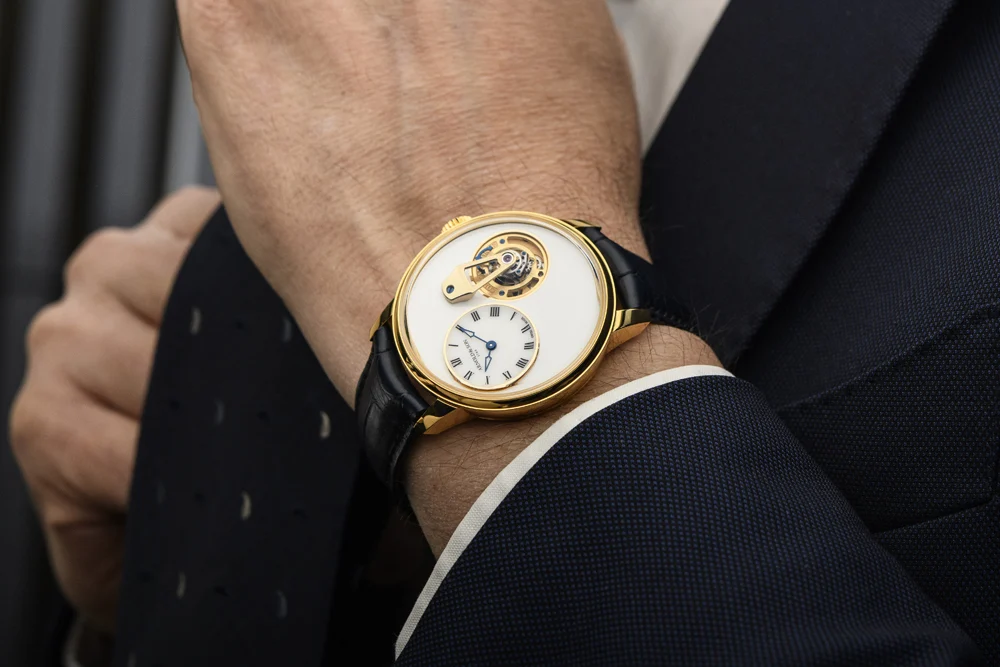
The Arnold & Son Constant Force Tourbillon 11 Yellow Gold Edition pays tribute to John Arnold and Abraham-Louis Breguet, two horological greats who shared a close friendship. Blessed with a beautiful Grand Feu enamel dial, this limited-edition model not only features a tourbillon,but also a dead-beat seconds and a constant force mechanism.
Born during the Age of Reason
Historians talk about the ideals of the Enlightenment; empiricism and the use of reason, universal rights, liberty and progress. But what about the collaborations that sped these ideas throughout Europe from the late 17th century to the early 19th century? It’s all very well being a genius like the encyclopaedist Diderot, but the burning fuse of the Enlightenment – his Encyclopédie – would have fizzled out without his editorial collaboration with the philosopher and mathematician, D’Alembert.
Sharing and mixing ideas wasn’t just the preserve of philosophers, mathematicians and astronomers. Watchmakers – the tech bros of the new revolution – worked far more closely together than one might imagine from the origin stories of modern watch companies. Not only did they collaborate in-house (the movement of Breguet’s No. 160, the Marie Antoinette, was a team effort headed by his colleague, Prudhomme), they also collaborated with their competitors in a way that’s sadly unthinkable today.
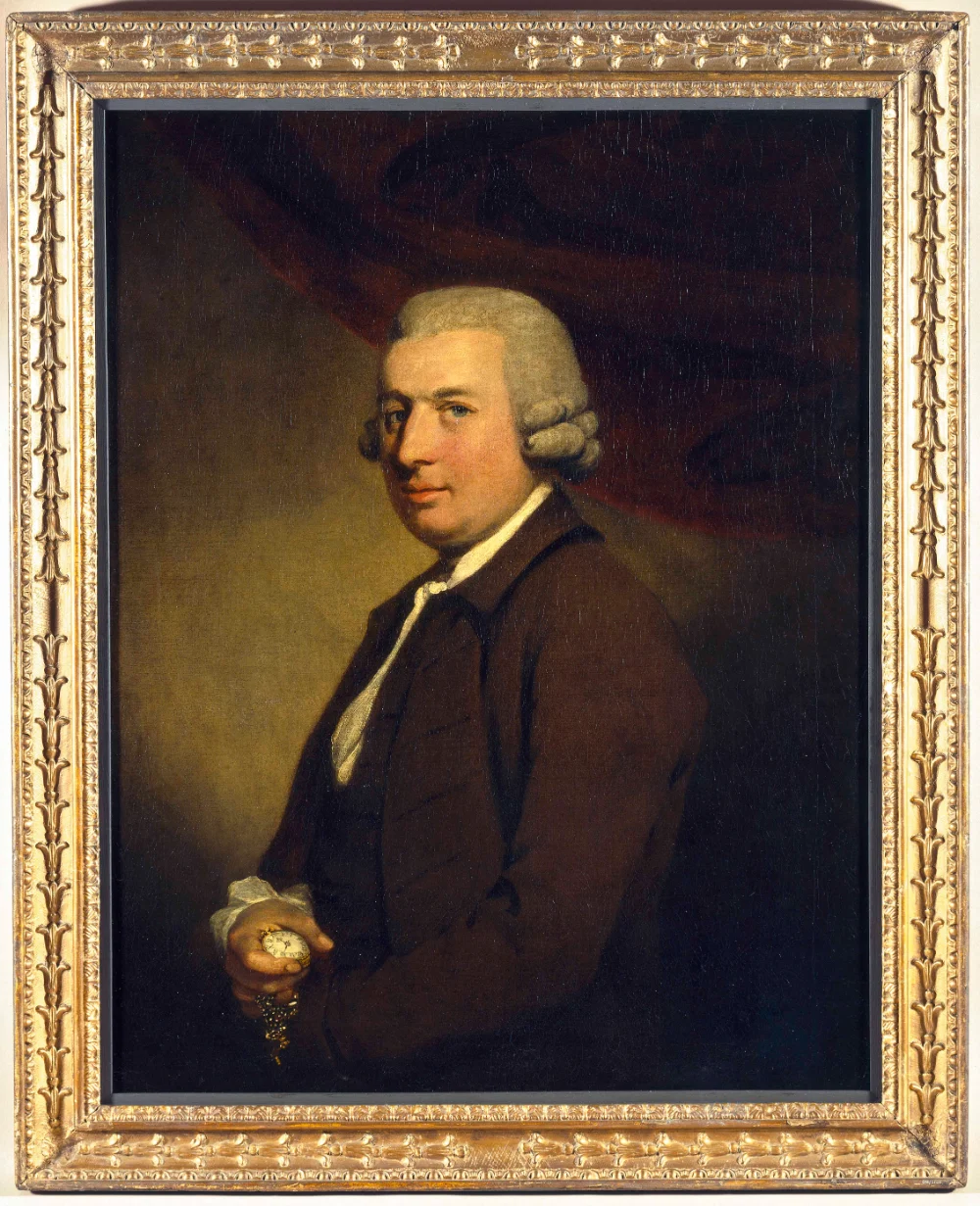
Image – portrait of John Arnold ©British Museum
Arnold & Son Constant Force Tourbillon 11 – inspired by John Arnold’s No.11 watch
Take John Arnold’s No.11 watch from c.1774, the chronometer from which this new watch draws its inspiration. In its current form, this 18th century timepiece illustrates almost perfectly the level of collaboration between Arnold and Breguet.
Now in the British Museum, this was one of Arnold’s pocket chronometers. Originally made with a full-plate and a fusée with Harrison’s maintaining power system (an early form of remontoire).
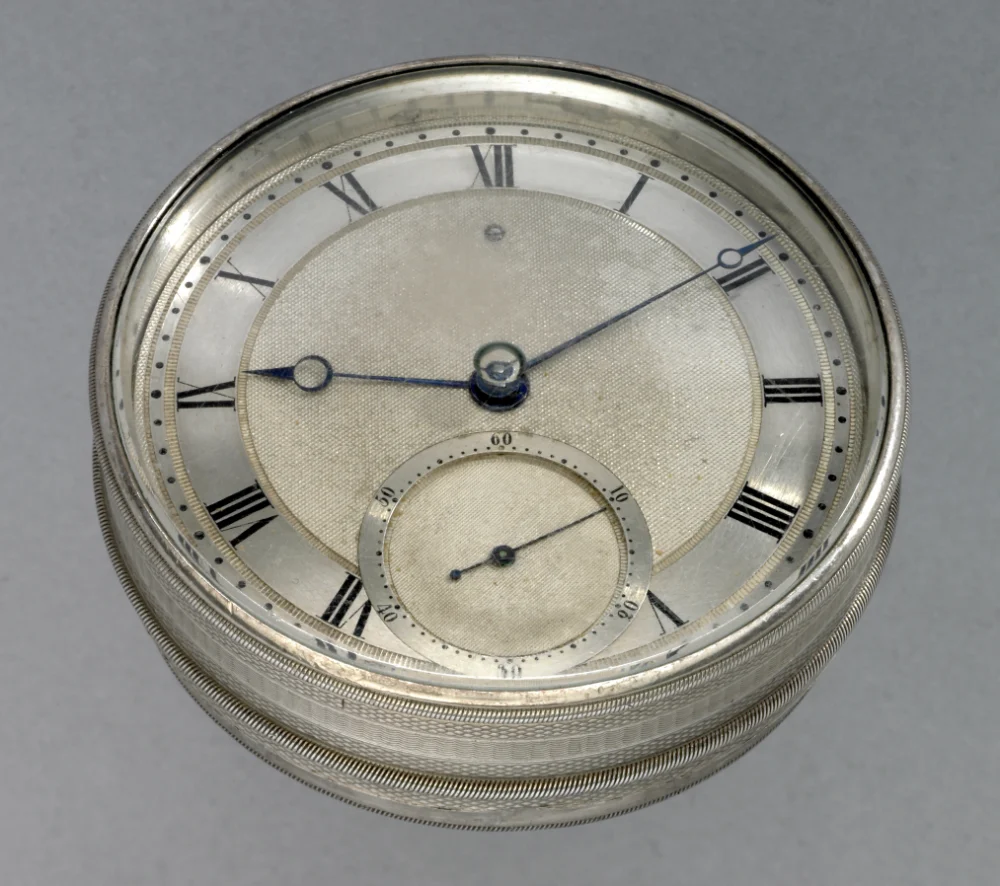
Image – Arnold watch featuring Breguet movement ©British Museum
Arnold’s son, John Roger, probably took the watch with him when he moved to Paris to work with Breguet in 1792. It might have been as a gift or perhaps even intended as a testbed for a collaborative development. Whatever the reason, Breguet’s team of 14 watchmakers certainly treated it as one. They worked on upgrading and refining it between early 1808 and Spring 1809. They altered the escapement to a rare Peto cross-detent type (used later by Daniels in his Pocket Watch No.3) but also added a tourbillon. Rather than one-upmanship, it’s clear what Breguet’s intentions were.
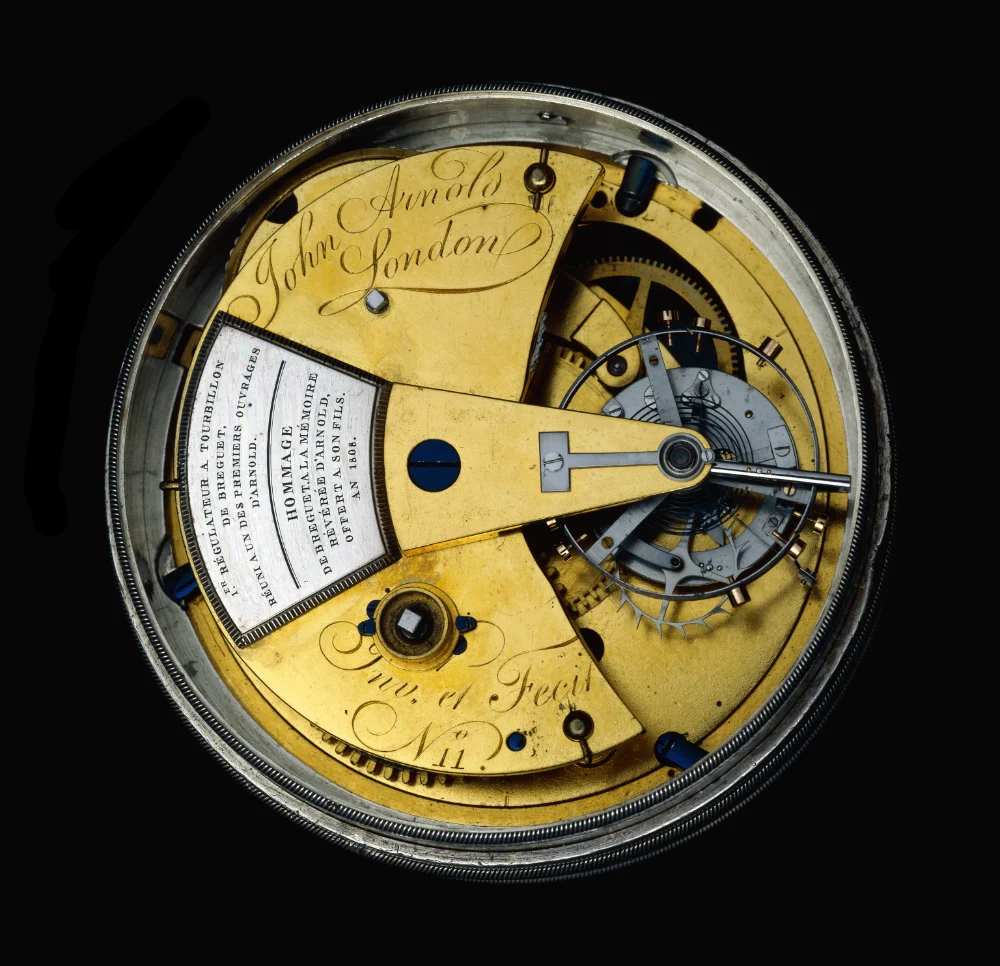
Image – Arnold watch featuring Breguet movement ©British Museum
The modified watch had an engraved plate mounted on the movement that read ‘1er regulateur a tourbillon de Breguet réuni a un des premiers ouvrages d’Arnold. Hommage de Breguet, a la mémoire révérée d’Arnold, offert a son fils an 1808’ (‘The first tourbillon regulator by Breguet incorporated in one of the first works of Arnold. Breguet’s homage to the revered memory of Arnold. Presented to his son in the year 1808’). In the rather restrained and formal nineteenth century, the warmth of the two men’s relationship shines through.
What we would now call the R&D costs were considerable – Breguet paid his team over 1,000 francs for their work. Finally, Pierre Benjamin Tavernier made the engine-turned silver case in which the movement now sits. So the final watch was the work of at least eighteen watchmakers and craftsmen (assuming John Roger also had some involvement).
Arnold & Son Constant Force Tourbillon 11 – a tribute
This new watch from Arnold & Son is most definitely not intended as a copy or a replica of the original 1774 watch (for a start it’s a wristwatch, not a pocket chronometer), but as “…a tribute to their work and in memory of the friendship between these two watchmaking geniuses…”
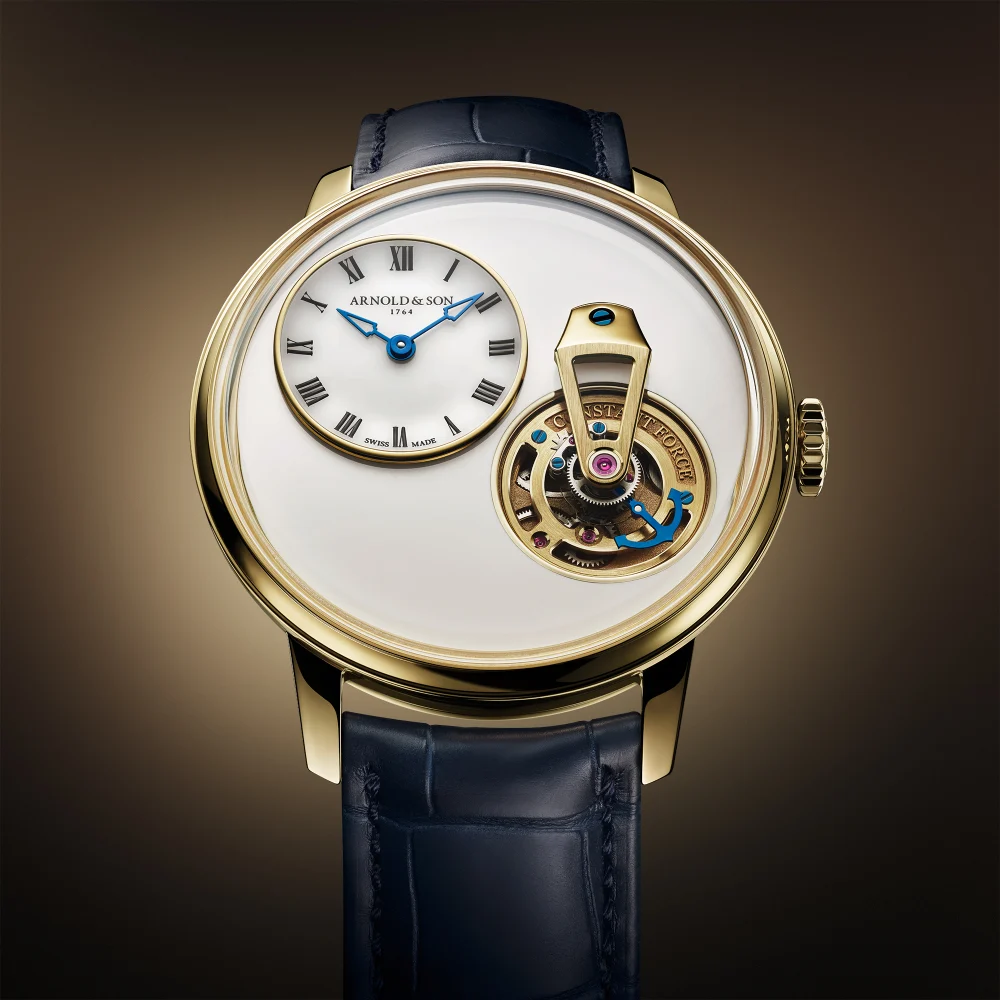
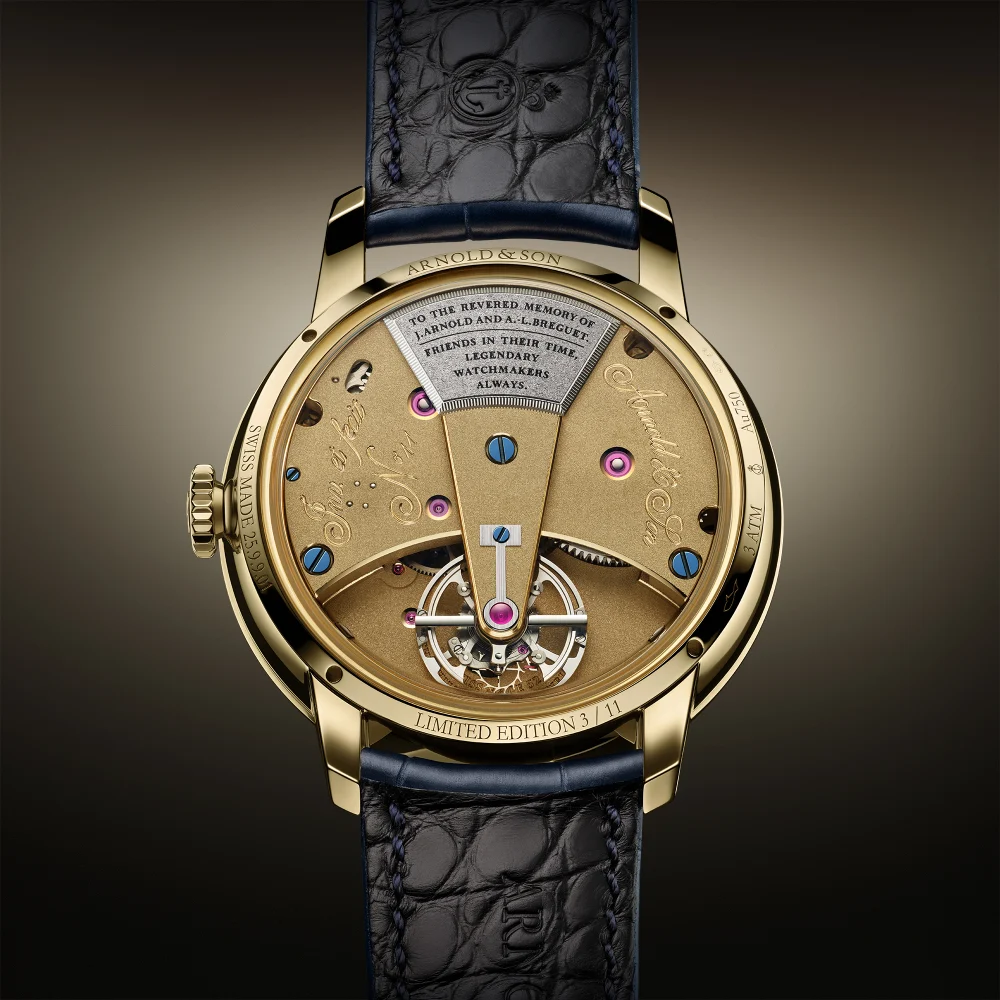
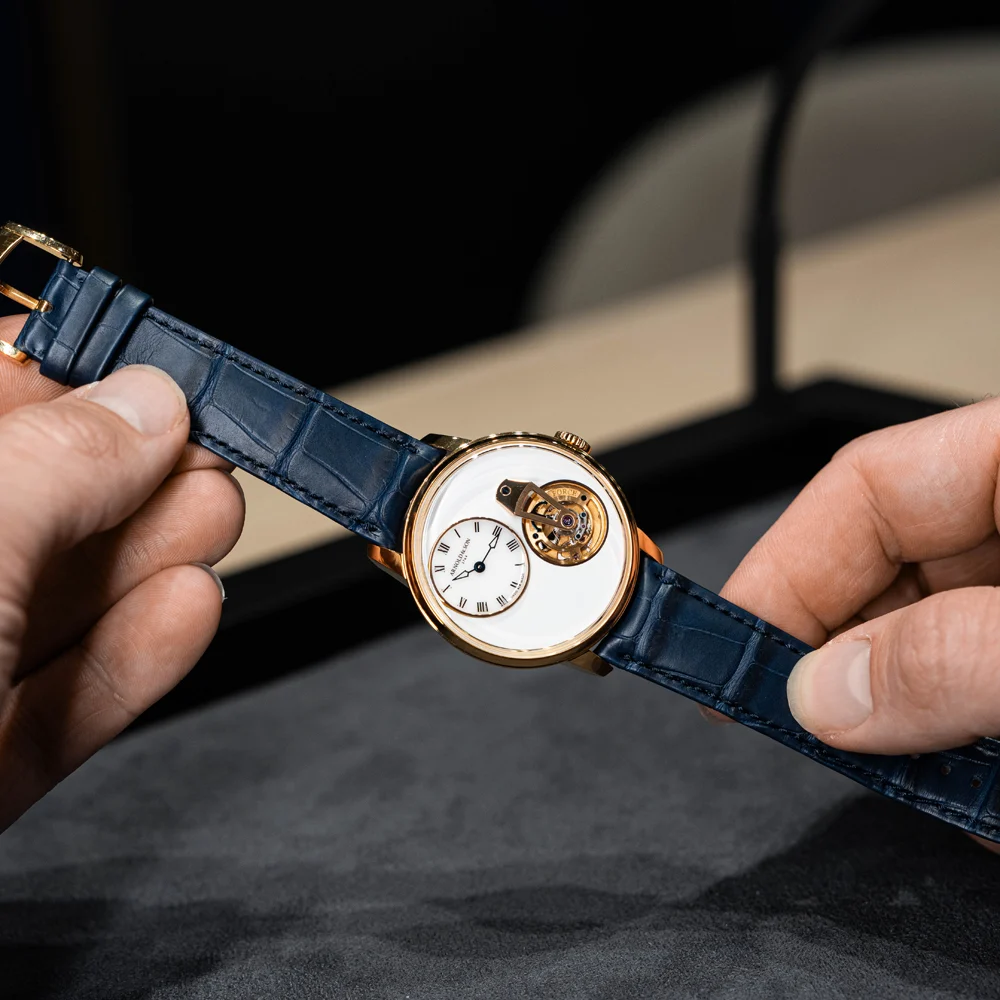
It’s quite the tribute. No more silver case, now it’s an 18k gold case, measuring 41.5 mm in diameter. Inside is the A&S5219 movement which looks as though it could have stepped straight from the eighteenth century, just with far tighter tolerances and better materials.
Arnold & Son A&S5219 movement
Although, like its spiritual ancestor, it’s hand-wound, the movement has two series-mounted mainspring barrels so the owner won’t need to get involved very often, just a few turns every hundred hours or so. This isn’t just an assumption of laziness on Arnold & Son’s clients’ part, it makes the watch more accurate. Further helping the movement’s isochronism along is a constant force mechanism sitting between the going train and the tourbillon (you didn’t think they’d leave out a tourbillon in a Breguet/Arnold tribute, did you?)
At the risk of teaching Escapement readers to suck eggs, a constant force mechanism helps deal with the flagging power of the mainspring(s) as they wind down. The original Arnold/Breguet watch used a fusée and chain. The modern tribute uses a spring. That said, just calling it a ‘spring’ rather understates the thinking and complexity involved. Usually, the more components you introduce between mainspring and escapement, the more power you sap. But if you use the mainspring’s power to energise a small spring that can capture the mainspring’s power and then release it directly to the escapement in one second bursts, you flatten the torque curve, delivering greater stability and, ultimately, superior precision. Furthermore, because this remontoire always stores and releases the same amount of energy, irrespective of each mainsprings’ tension, the impulses to the escapement are even.
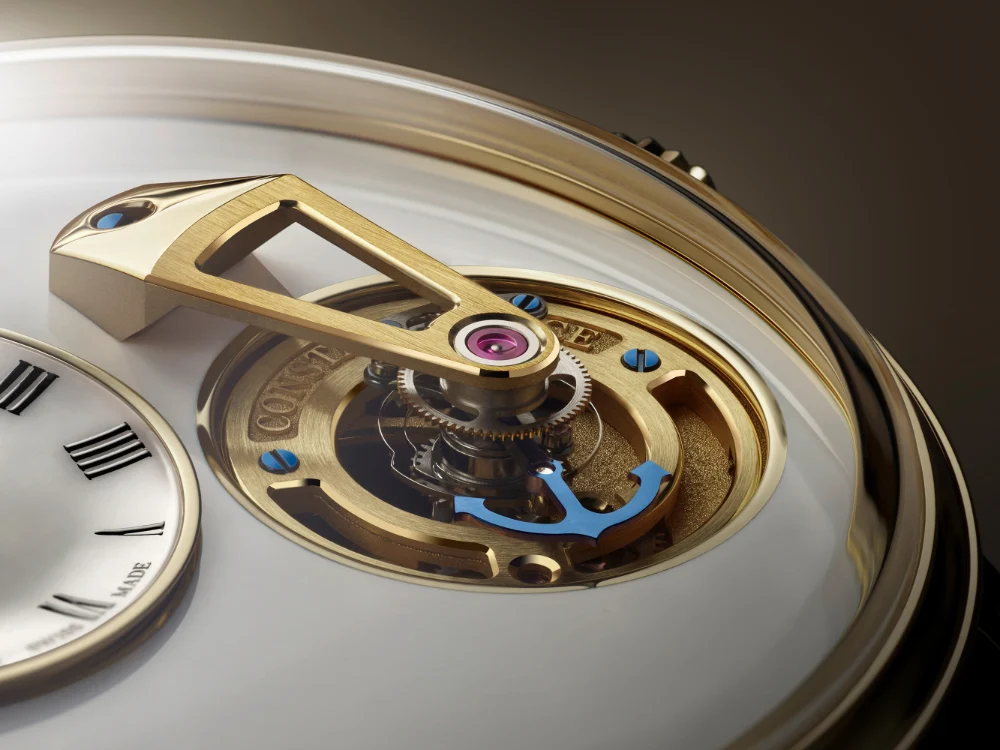
The A&S5219 movement also features a deadbeat seconds, a nod to Arnold’s sea chronometers which used a detent escapement and so beat every half second. The new watch, perhaps unsurprisingly, uses a Swiss lever escapement rather than a detent. Neatly, there’s a further nautical link with a flame-blued steel anchor that advances in discrete one-second increments.
There’s another rather lovely tribute to the original movement. Look just above the balance at the little brushed steel T-spring, secured with a blued screw. This is an echo of Breguet’s pare-chute shock absorption system from 1790. Breguet, a consummate markeeter, once demonstrated his invention at a society party by throwing his watch to the floor, showcasing its remarkable capacity to deal with impacts.
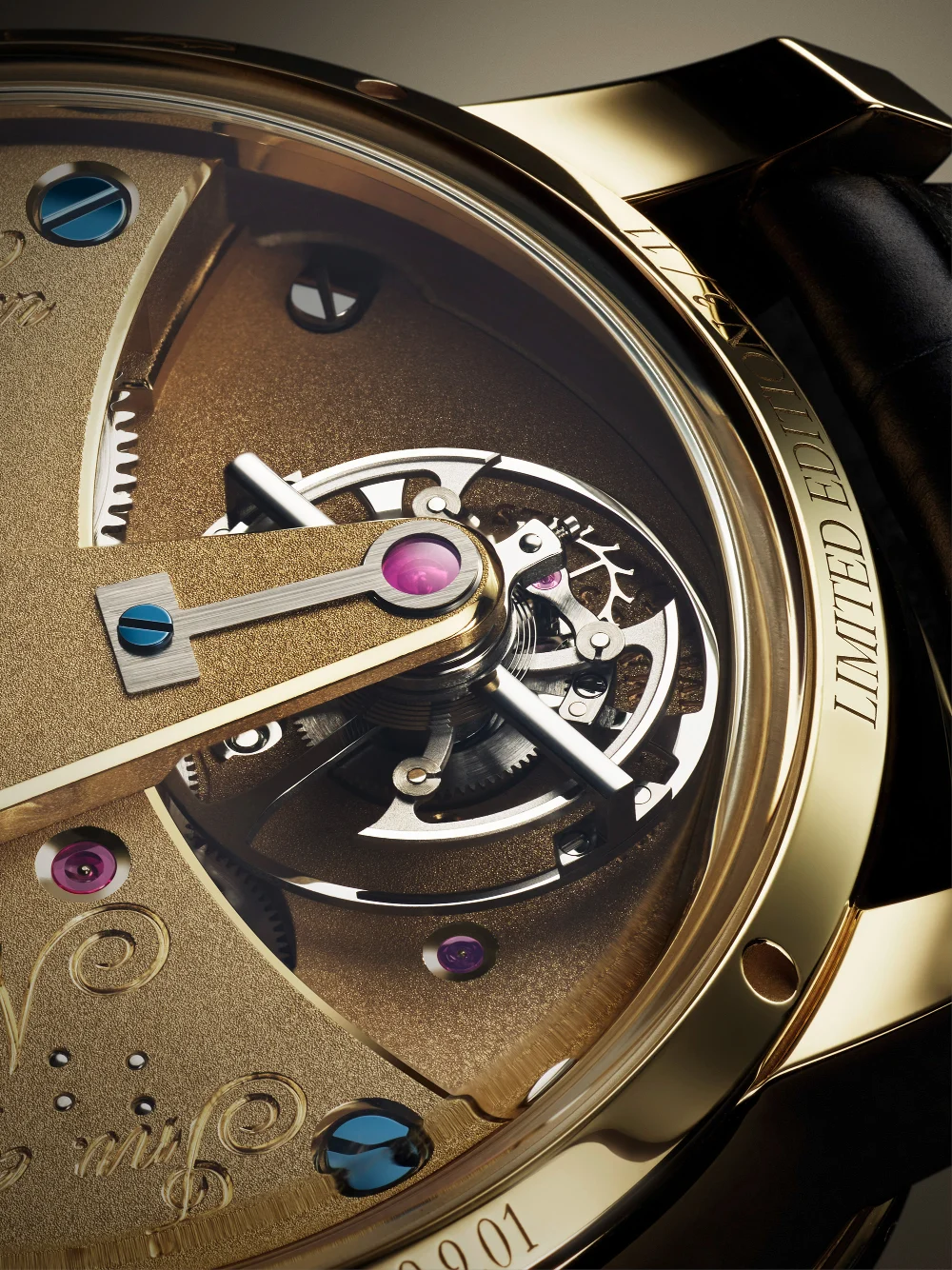
The tourbillon itself carries the marks of its ancestor. The linear carriage bridge (the bar you can see arcing over the balance) is not just slim, it’s a direct visual link to Arnold’s 1774 watch’s carriage. The variable inertia balance itself uses tiny, C-shaped weights redolent of his chronometers as a means of regulation.
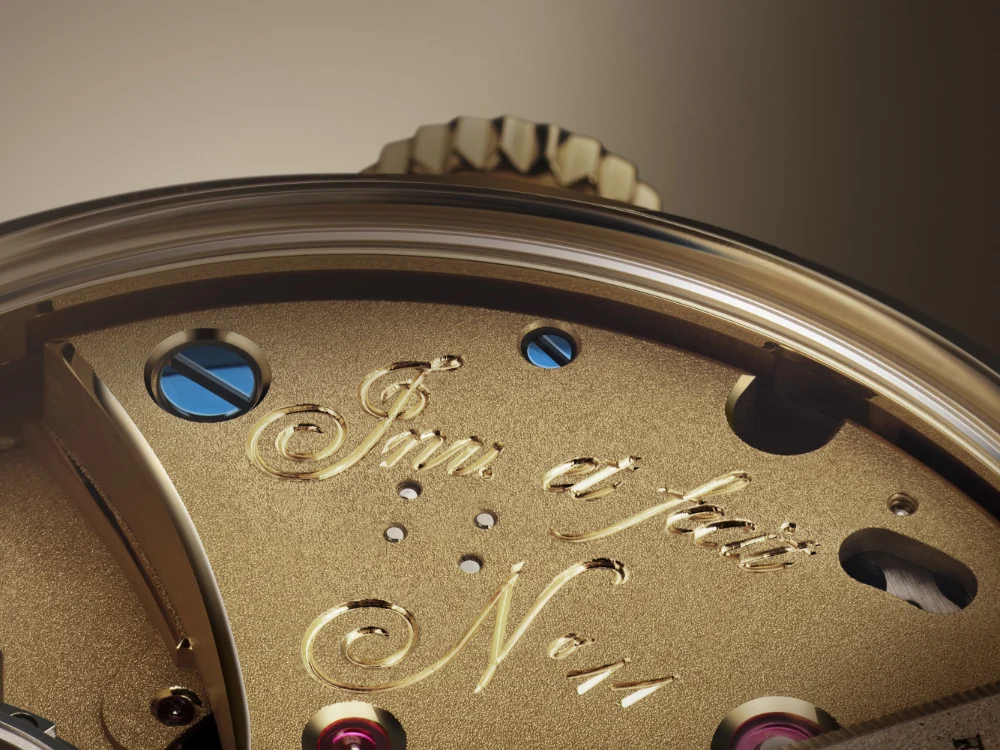
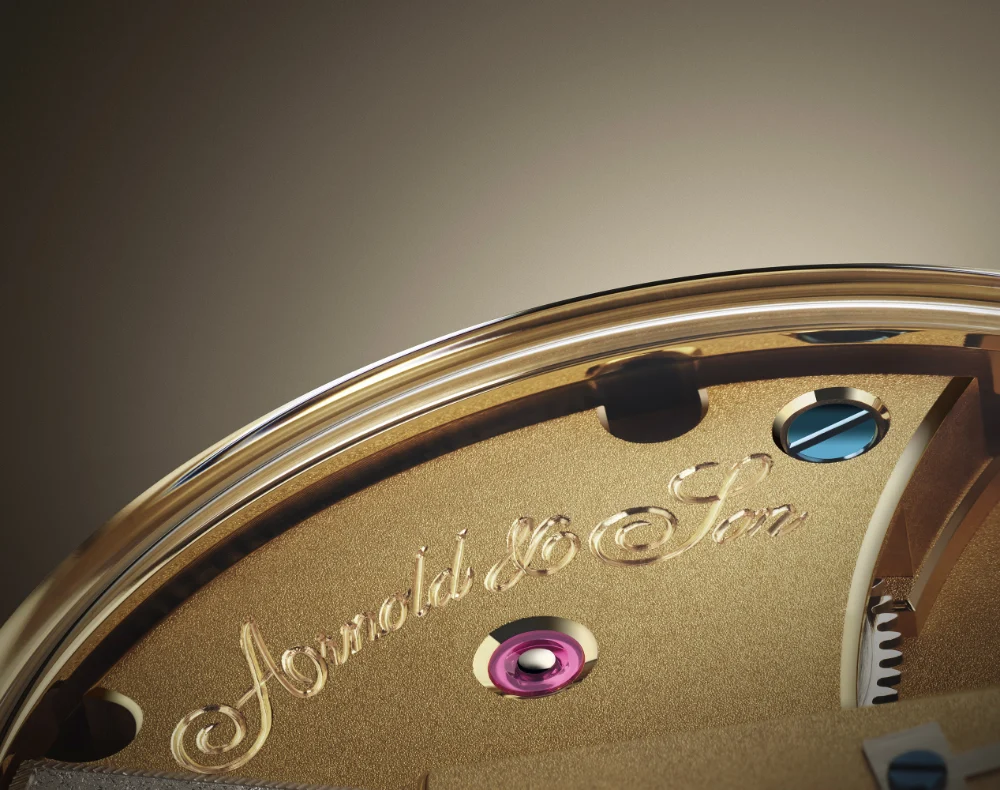
The finishing on the new movement is every bit as top-end as you’d imagine. The upper surfaces of the bridges, mainplate and balance cock are grained, incorporate anglage and feature polishing on the vertical faces. Screws are either heat-blued or mirror polished and jewels are all countersunk with polished seats. Hand-engraved lettering graces the movement, including an inscription on the barrel bridge stating, “To the revered memory of John Arnold and Abraham-Louis Breguet. Friends in their time, legendary watchmakers always.”
Arnold & Son Constant Force Tourbillon 11 – case
It would be more than a shame to hide a movement like this, so Arnold & Son has equipped the watch with a transparent, anti-reflective sapphire crystal caseback.
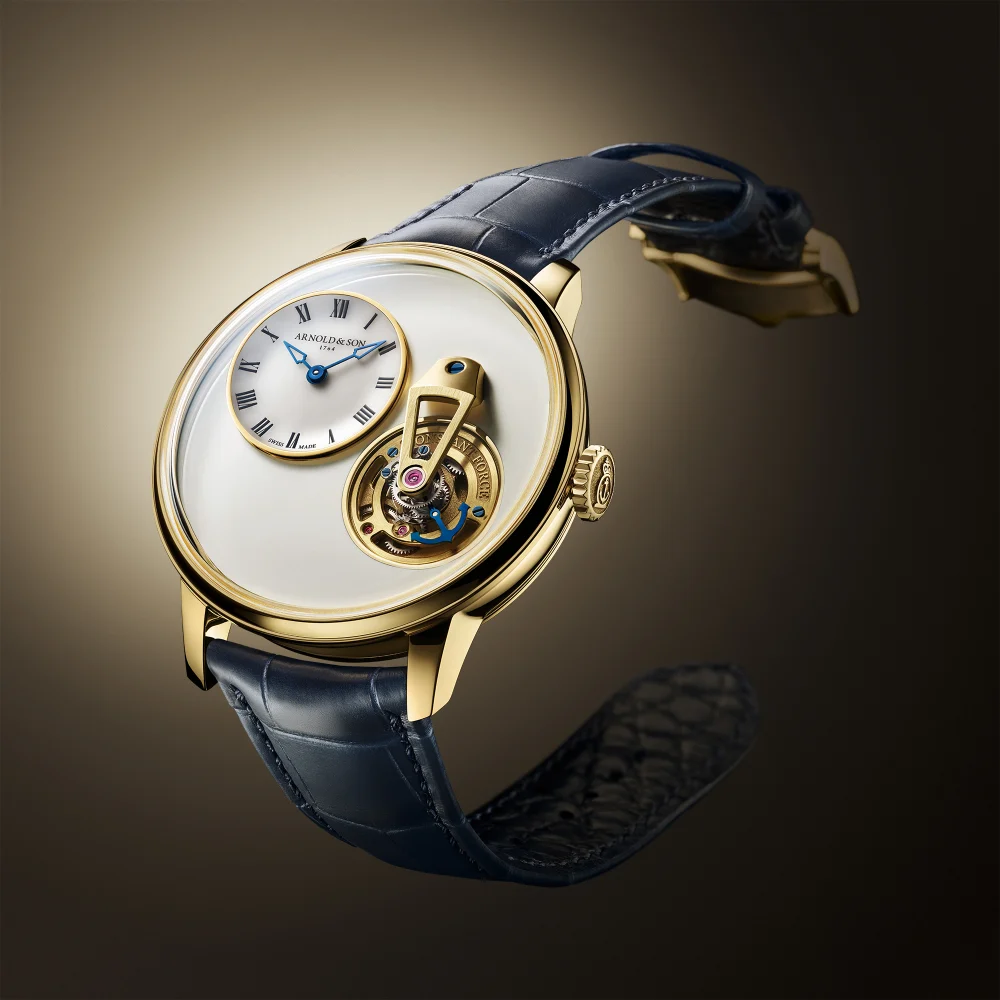
The 18-carat gold case itself has a thin bezel holding the slightly domed front sapphire crystal with an anti-reflective coating on both sides. No need to fret about getting your watch wet either as it’s water resistant to a decent 3 bar (30 metres or 100 feet). The beautiful alligator leather strap with a monogrammed 18k pin buckle is probably more of a worry when it comes to moisture.
Arnold & Son Constant Force Tourbillon 11 – Grand Feu enamel dial
Fittingly, the dial takes its inspiration – and manufacturing technique – from the marine chronometers John Arnold made in his London workshop, back in the eighteenth century. It’s a white gold base with white grand feu enamel – a material almost guaranteed to reduce grown craftsmen to tears.
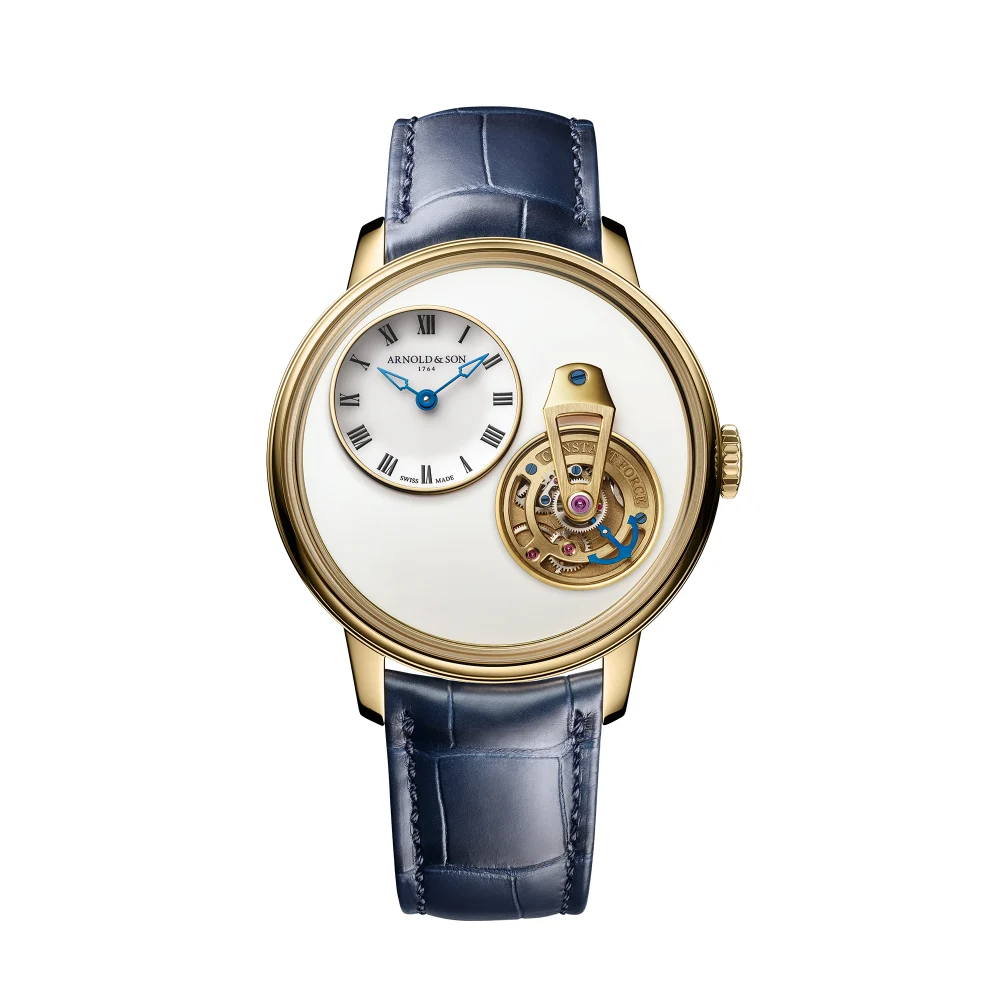
Each time you fire an enamel dial, you risk it cracking. In this case, each dial is fired repeatedly in a kiln at 800°C. This builds up layer after layer of material, each layer being lapped before applying the next. Finally, brave trousers on, the dialmaker applies a layer of translucent enamel, raises a prayer to the gods of watchmaking and fires the dial once more.
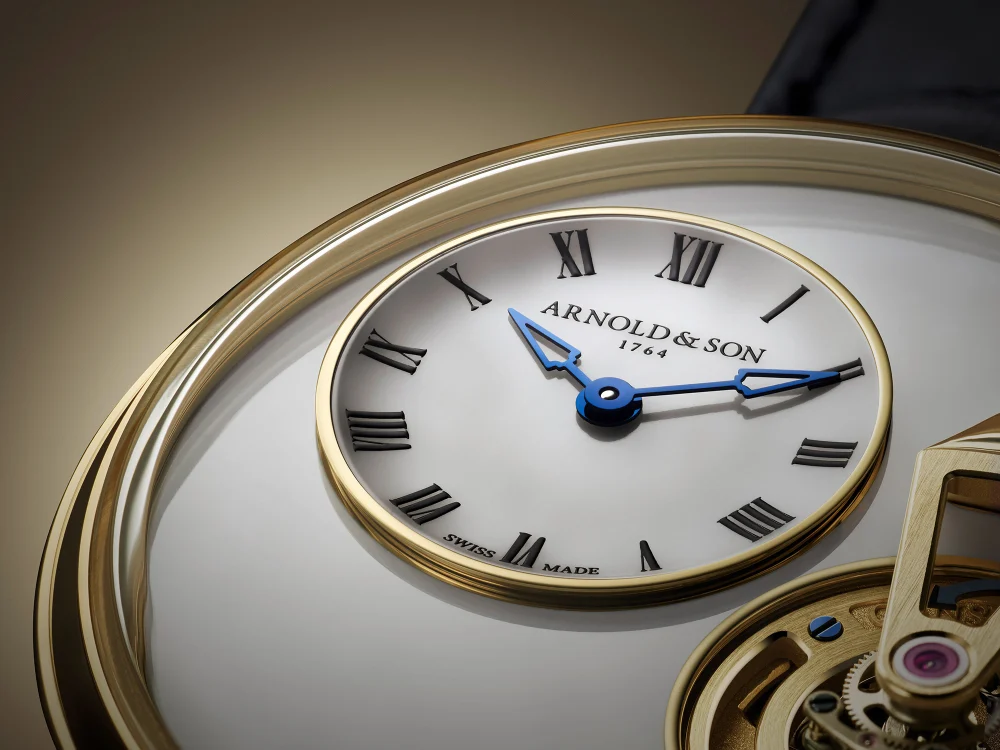
If you tilt the watch, you can see that the dial isn’t flat. That would be far too easy. Instead, it’s concave. The Arnold & Son swear jar has probably never done so well.
Once the base dial is finished, the transfer numerals are applied (Roman numerals like the original, although that featured a silver, engine-turned dial) and the complete dial is mounted on the movement.
Closing remarks
Watches evoking history are always a challenge. After all, how do you pay tribute to a chronometer that was a product of two watchmaking greats? It’s easy for the marketing department to end up running the show and for the watch to be more style than substance. Not here. The sheer quality of materials, design and watchmaking sets this one apart.
Arnold & Son is producing just 11 examples at CHF 129,800 including taxes.
Further reading
Technical specification
- Model: Arnold & Son Constant Force Tourbillon 11
- Reference: 1FCBJ.E01A.C246J
- Case: 18-carat yellow gold (3N), diameter 41.5 mm, height 13.7 mm, water resistance 3 ATM (30 m), sapphire crystal to the front and exhibition case back
- Functions: hours, minutes, true-beat seconds (aka dead-beat seconds)
- Movement: A&S5219 calibre, hand-wound movement featuring constant force and one-minute tourbillon, frequency 21,600 vph (3 Hz), 35 jewels, power reserve 100 hours
- Strap: midnight blue alligator leather with black alligator leather lining pin buckle, 18-carat yellow gold (3N)
- Swiss retail price: CHF 129,800 including taxes (RRP as of 13.5.2025)
- Limited Edition: 11 timepieces