
Ferdinand Berthoud Naissance d’Une Montre 3 – Part Three
On Friday 5 September 2025, Chronométrie Ferdinand Berthoud unveiled the Naissance d’Une Montre 3. The culmination of 6 years of work, the watch is arguably the Maison’s greatest achievement. Handcrafted using traditional tools ‘without digital assistance’, it serves to preserve age-old skills and prevent them from disappearing. In the third and concluding part of his look at Chronométrie Ferdinand Berthoud, Angus Davies endeavours to highlight some of the remarkable characteristics of this rare watch, an exemplar of Haute Horlogerie, the excellence of which will never fade with the onset of years.
Chronométrie Ferdinand Berthoud – 10th anniversary
The story of Naissance d’Une Montre 3 began in 2019 when Chronométrie Ferdinand Berthoud announced it was working in collaboration with Time Æon Foundation in its quest to craft a ‘handmade watch’ using traditional methods (see my previous article, perpetuating traditions, in which I explain what is meant by the term ‘handmade watch)’.
On Friday 5 September 2025, I sat with fellow journalists, as well as luminaries of the watch industry, for the official unveiling of the Ferdinand Berthoud Naissance d’Une Montre 3, the product of 11,000 hours of work. Despite Geneva’s unusually inclement weather, nothing dampened the enthusiasm of the assembled guests. With everyone vying to see the Maison’s magnum opus, the room resonated with palpable excitement.
As I listened to the repeated sound of wine glasses clinking, I recalled attending the launch of Chronométrie Ferdinand Berthoud in Paris, 10 years earlier (2015). Having acquired the Ferdinand Berthoud name in 2006, Karl-Friedrich Scheufele sought to revive one of the most esteemed names in horology. While Berthoud’s legacy was extraordinary, Mr Scheufele and his team chose to work with a blank canvas, crafting timepieces that ‘Ferdinand Berthoud might have created if he were living now’ (Mr Scheufele’s words at the time).
While waiting for the official unveiling, I reflected on the 10 years that have elapsed since the rebirth of Ferdinand Berthoud. I noted the display cabinets arranged around the room which contained the reborn brand’s body of work over the last decade. Contemporary, handsome and rich in mechanical virtue, they remained destined to retain their timeless charm for generations to come. Moreover, I noticed the assembled trophies, including five GPHG prizes. And yet, with the bar already set very high, Chronométrie Ferdinand Berthoud was about to unveil, arguably, its most impressive creation to date, the Naissance d’Une Montre 3.
Without further ado, let’s examine the composition of this timepiece in detail.
Ferdinand Berthoud Naissance d’Une Montre 3 – dial
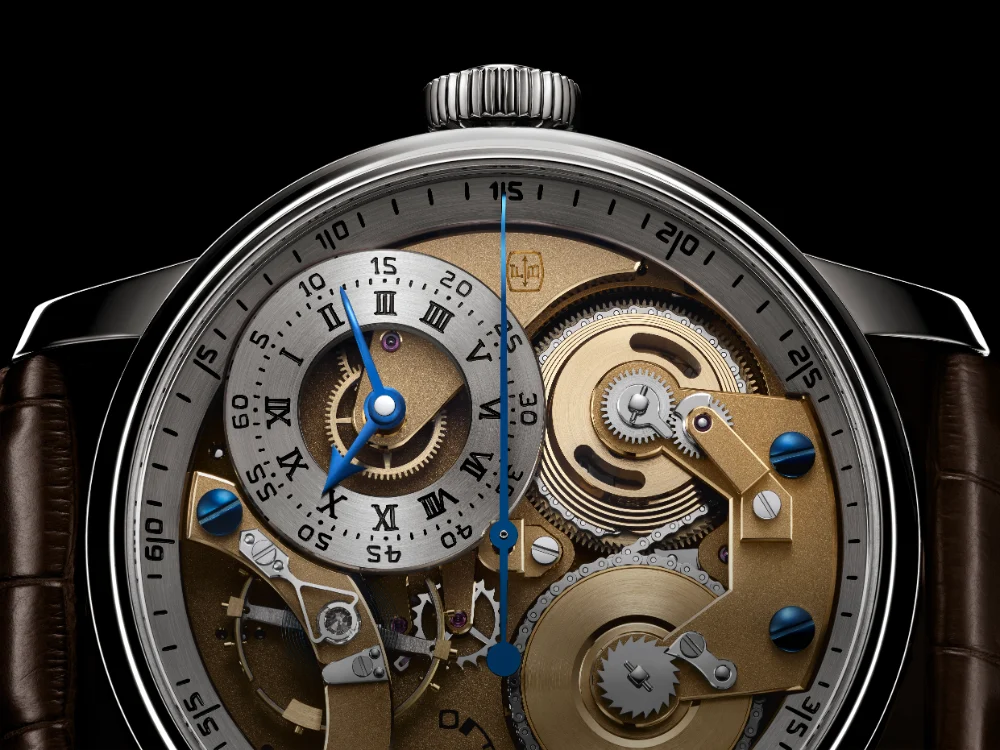
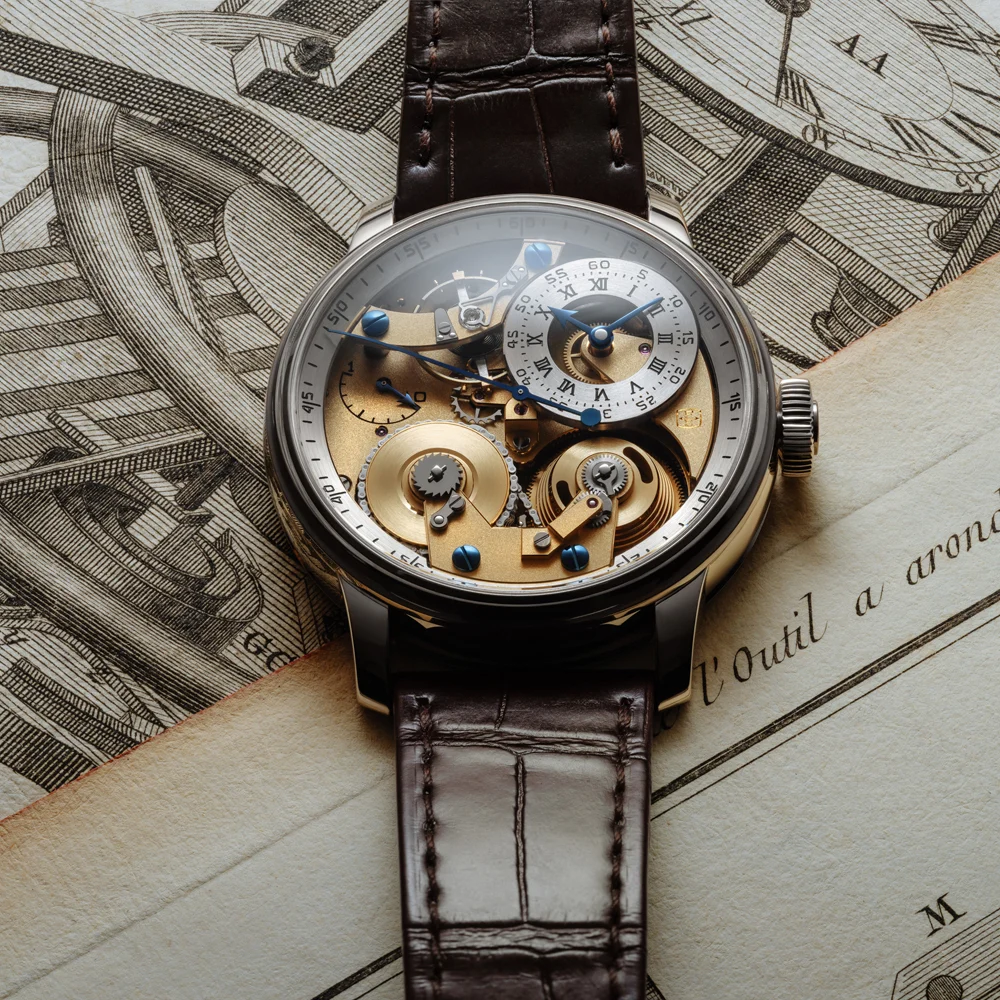
Survey the dial of the Naissance d’Une Montre 3 and you will see a landscape featuring extraordinary topography. The complex horological vista reveals many components usually hidden from view. Arcs and lines shape the scene, often arranged at different heights and populated with silver, golden, ruby and blue hues. Each dial element contributes to the three dimensionality of the composition.
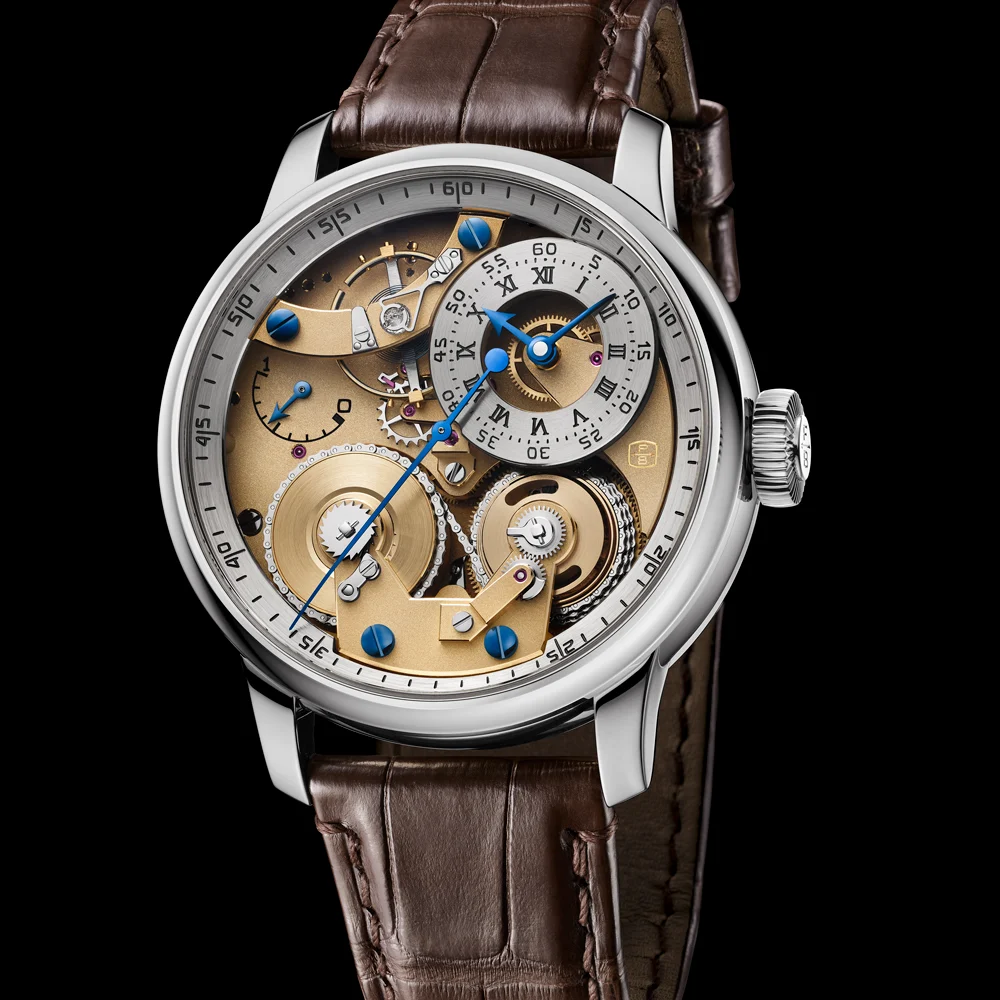
The hours and minutes are shown on an offset, openworked dial positioned between 1 and 2 o’clock. Handcrafted in white gold, the dial features two tracks, comprising Roman numerals for hours and Arabic numerals for minutes; eminently simple, yet the result of many hours of painstaking craftsmanship. A central sweep seconds hand circumnavigates the dial, its tip floating above a silver-toned satin-finished seconds track. All three hands (hours, minutes and seconds) are formed of steel and flamed blued, their creation requiring nearly two days and ‘involving no fewer than 54 micromechanical operations’.
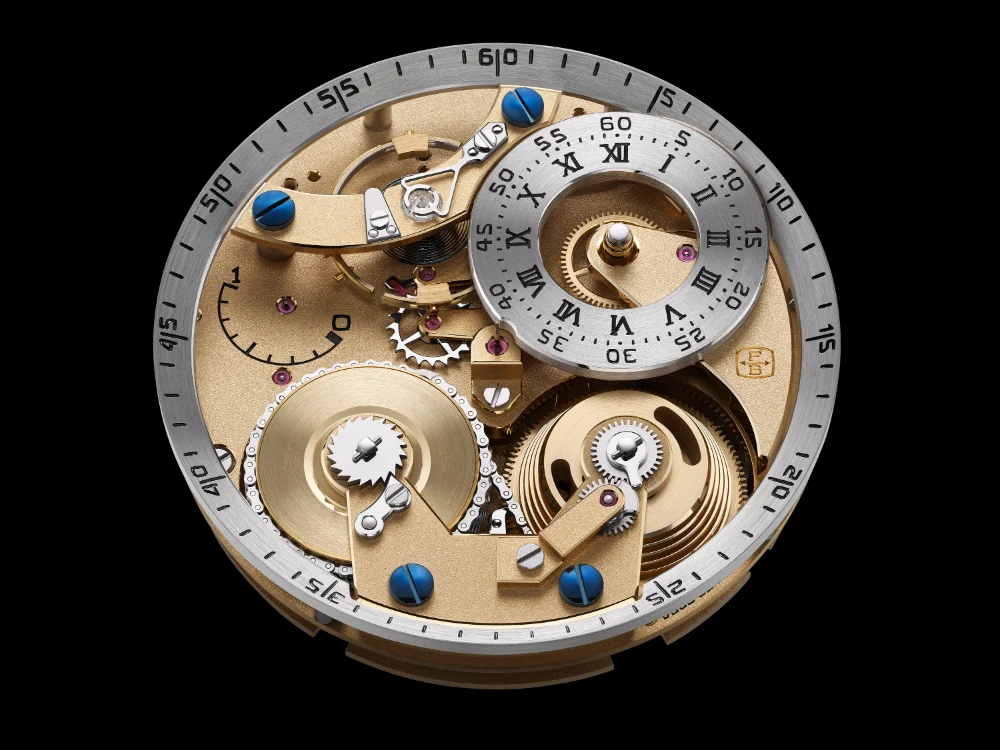
Eschewing a conventional dial, the Naissance d’Une Montre 3 indulges the wearer with a becoming view of golden-toned bridges and a matching mainplate. Formed of sandblasted nickel silver, the material (aka ‘maillechort’) is challenging to work with due to its hardness, but it’s beloved by purists as it develops an attractive patina over time. Watchmakers must always exercise caution when working with nickel silver as the material can easily be marked with an absentminded slip of a screwdriver or a simple fingerprint; costly mistakes that necessitate time-consuming remedial work.
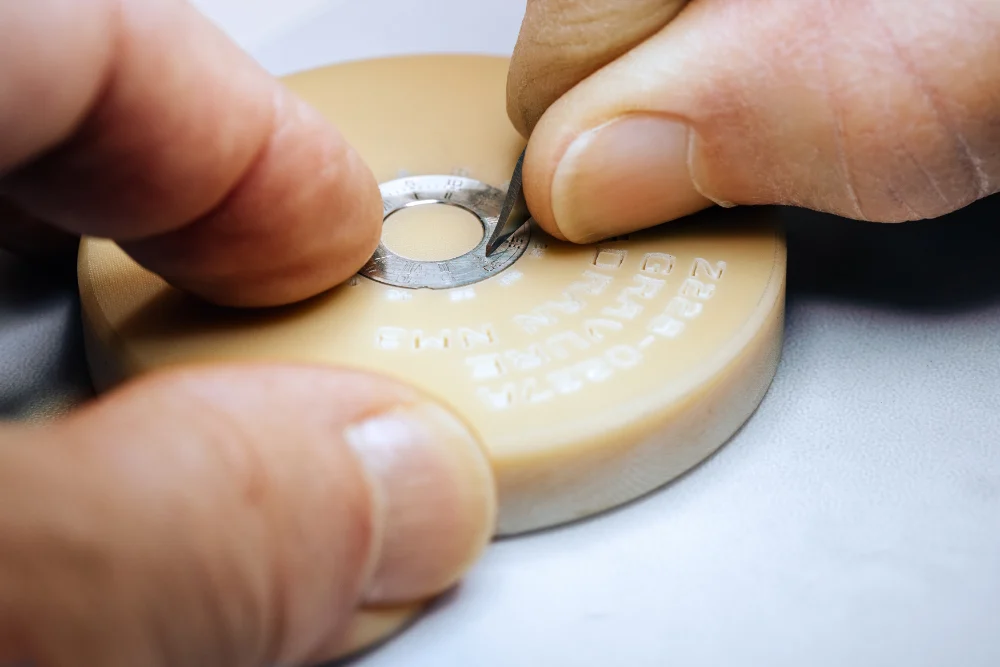
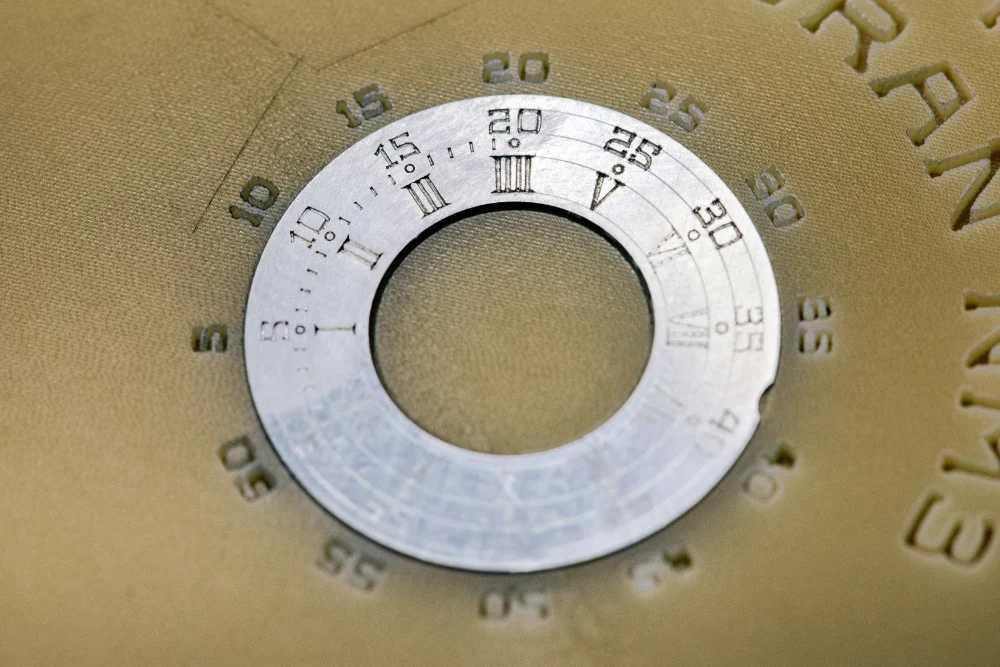
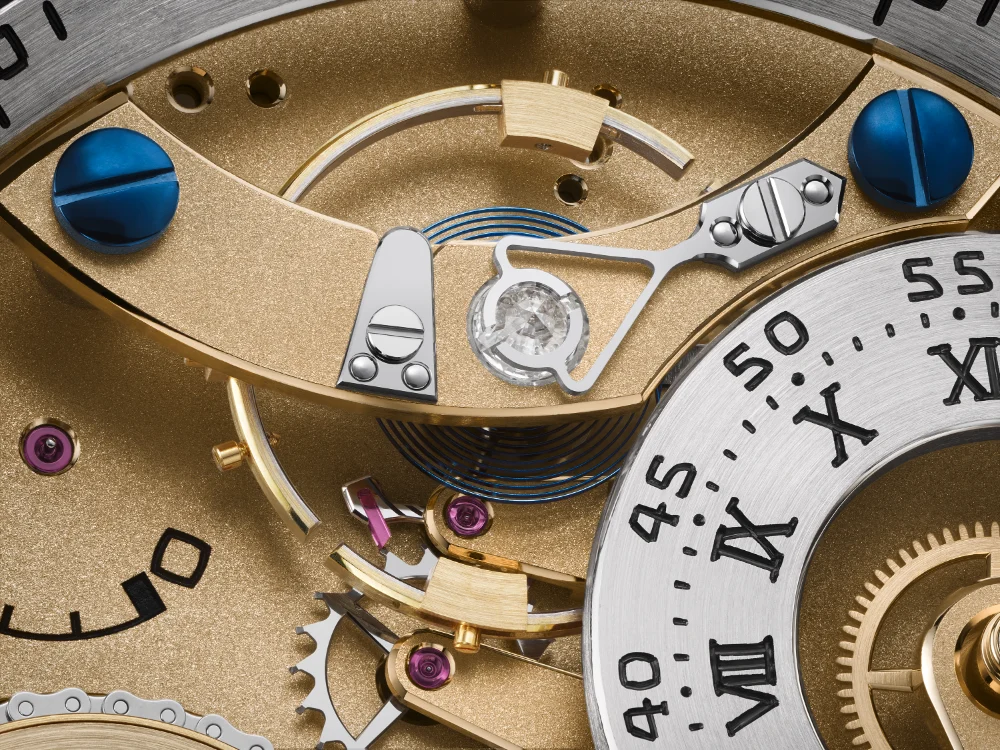
An arcing bridge, located between 10 and 12 o’clock, secured with two pristine blue screws, holds the balance from above. The upper endstone is a real diamond, as is its counterpart to the rear of the watch, a sumptuous alternative to synthetic rubies. The endstones act as a shock absorber, an alternative to Incabloc often employed on many mass-produced watches. The stud rests upon the balance bridge, its surface painstakingly mirror-polished to a resplendent conclusion (I will return to the balance later).
Positioned between 9 and 10 o’clock, a power-reserve indicator shows the available energy within the barrel. It features a flamed-blued hand that points to a track, hand-engraved on the mainplate, succinctly marked ‘0’ and ‘1’ with a series of increments in between.
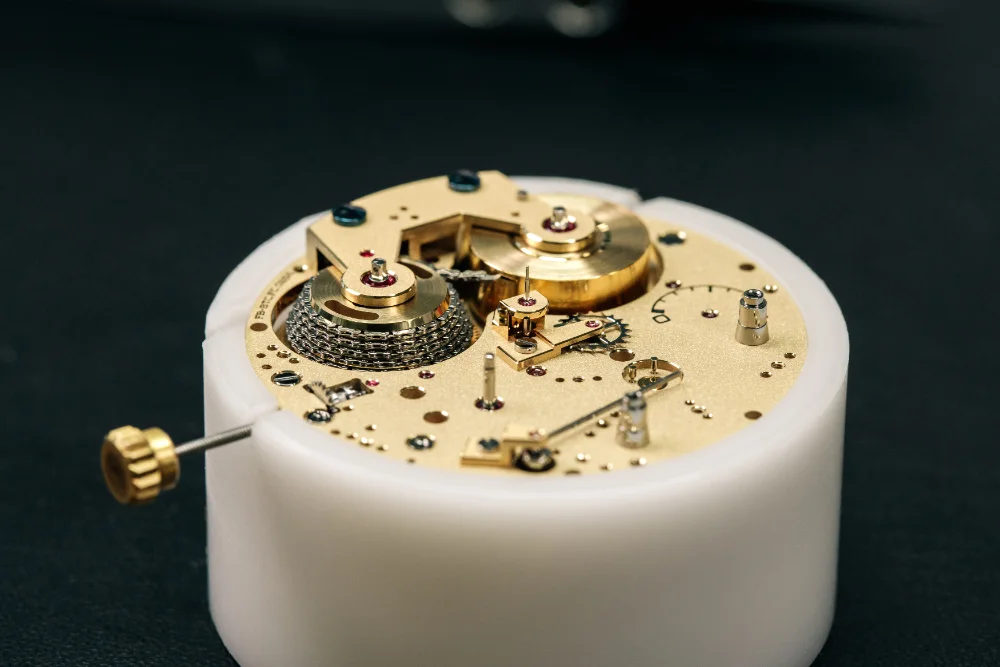
A fusee-and-chain transmission dwells in the southern portion of the dial. This historic means of controlling the torque from the barrel ensures the escapement is served with a constant force. A similar system appeared on the very first model produced by Chronométrie Ferdinand Berthoud, the FB 1. Thereafter, the esteemed Maison has employed the mechanism on all subsequent models, save for the FB 3SPC. However, as the brand explains, ‘the construction of this mechanism is very different from other Ferdinand Berthoud movements. The fusee is equipped with a direct-drive stopwork system consisting of an extremely robust cam and fingerpiece, based on a technical drawing by the illustrious watchmaker Breguet.’
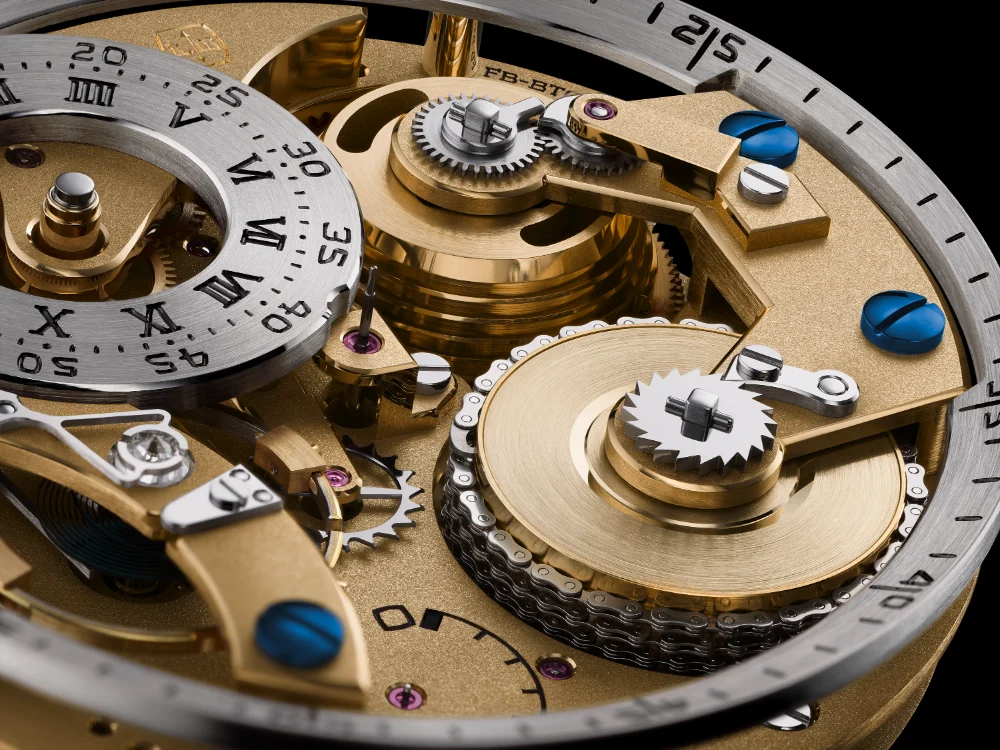
The chain on the Naissance d’Une Montre 3, which is visible from the front, was ‘specifically developed’ for the movement of the watch, the Calibre FB-BTC.FC. Measuring 172 mm in length, it ‘comprises 477 components, including a hook and 285 links that are thinner than those used in contemporary constant force movements from Chronométrie Ferdinand Berthoud’. Assembled by hand, using 191 pins, each link measures no more than 0.30 mm, a feat that would test even the most dexterous hands.
Ferdinand Berthoud Naissance d’Une Montre 3 – case
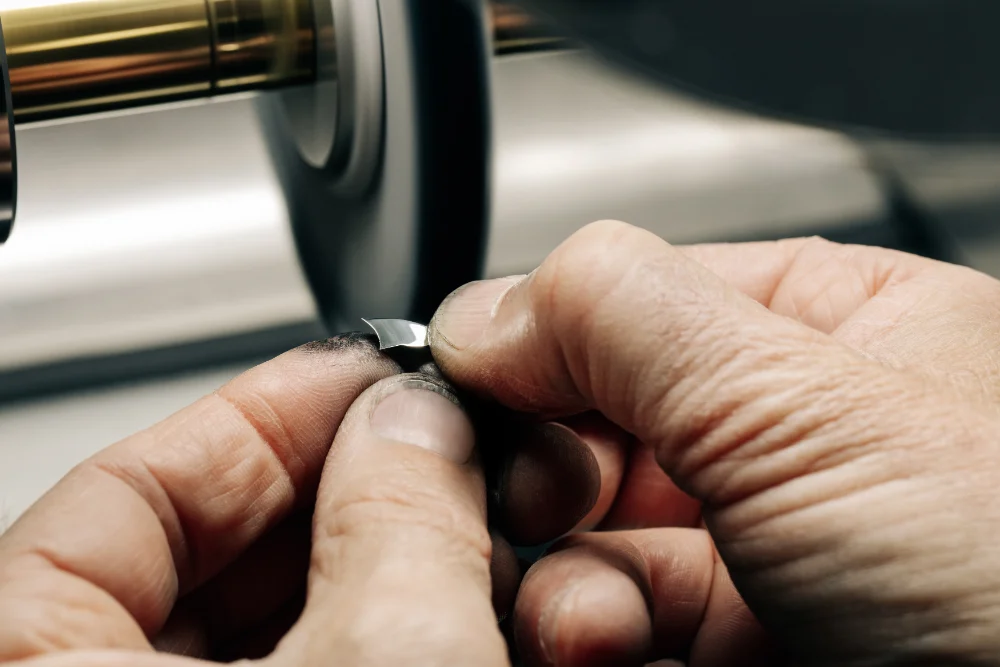
The Naissance d’Une Montre 3 is limited to 11 pieces: one in stainless steel (see later) and ten pieces in ethical 18-carat white gold. When viewed at close quarters, the watch, measuring 44 mm in diameter with a thickness of 13 mm, appears smaller than its stated dimensions would suggest. The case is crafted in a dedicated department within Chopard’s Meyrin facility, again employing traditional methods. Indeed, in accordance with the regulations governing the Time Æon Foundation, every component of the case is individually crafted ‘without digital assistance’.
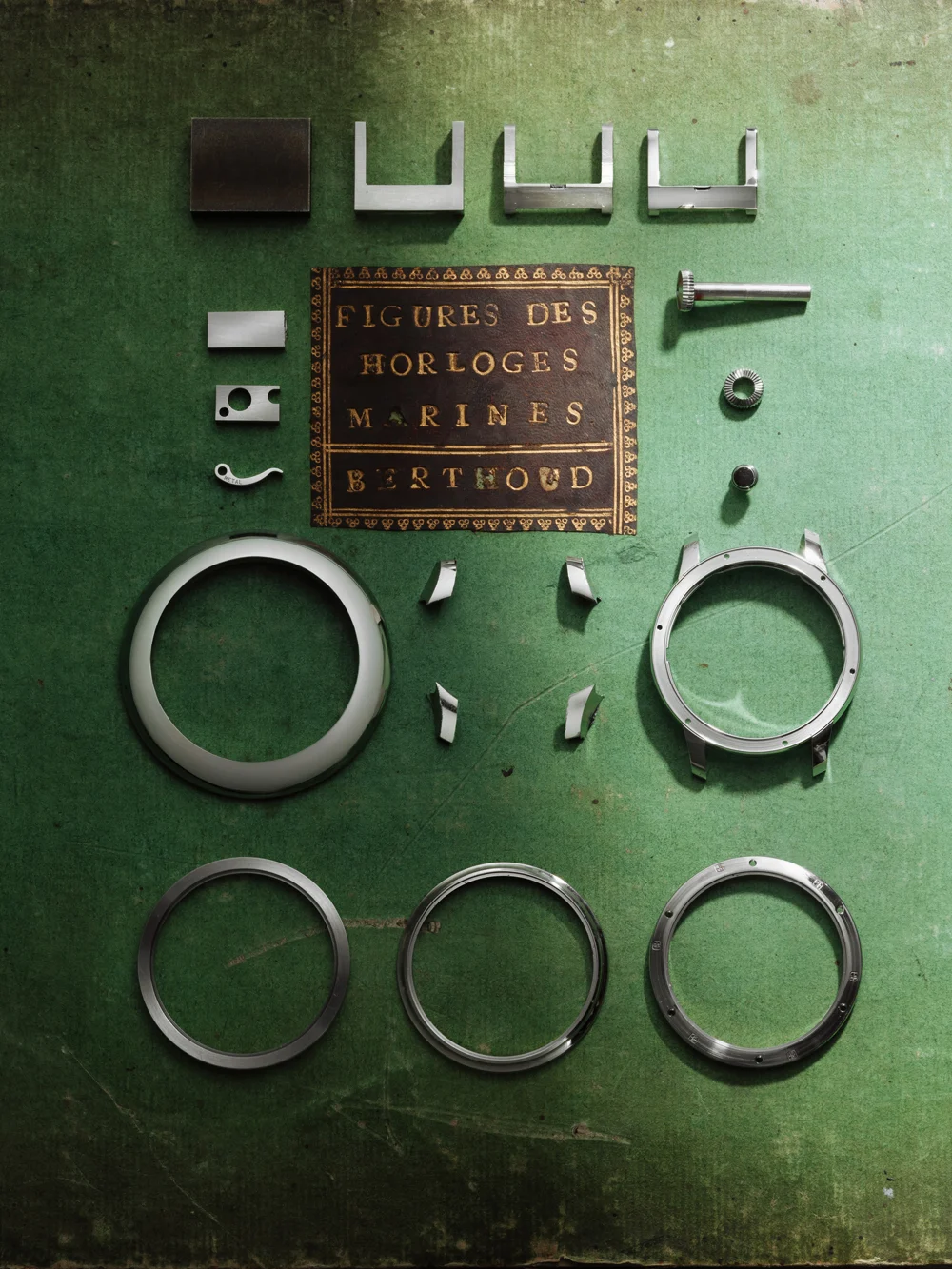
Drawing on the talents employed within the Chopard group, the case unites both traditional jewellery and watchmaking trades. Regular watch cases are made using stamping, CNC or a combination of both methods. However, the housing of Naissance d’Une Montre 3 is brought to life using lost wax casting, a technique traditionally used in jewellery making. The process consists of creating a wax pattern which is then used to make a ceramic mould. Molten metal is poured into the mould to form the basic shape of the component and then subsequently refined using a combination of reworking, trimming and polishing. Additional techniques are also employed, including turning, milling and tapping to form various curvaceous case components.
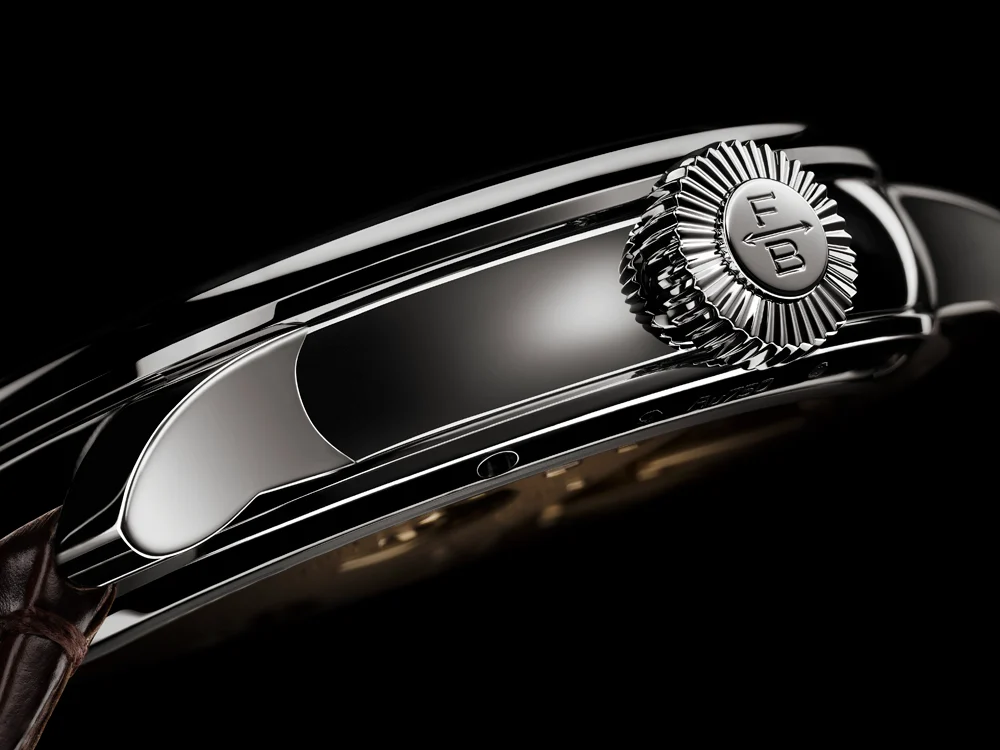
When appraising the exterior of the watch, the combination of the caseband, with its arcing vertical flanks, and the domed sapphire crystal located above the dial endue the watch with an organic profile. Upholding fine watchmaking practice, the lugs are welded to the case, optimally positioned to confer both elegance and peerless ergonomics. The crown is handcrafted in 18-carat white gold and features a fluted design with the ‘FB’ logo engraved on its vertical surface.
To the rear of the watch, a pane of sapphire crystal grants sight of the hand-wound Calibre FB-BTC.FC.
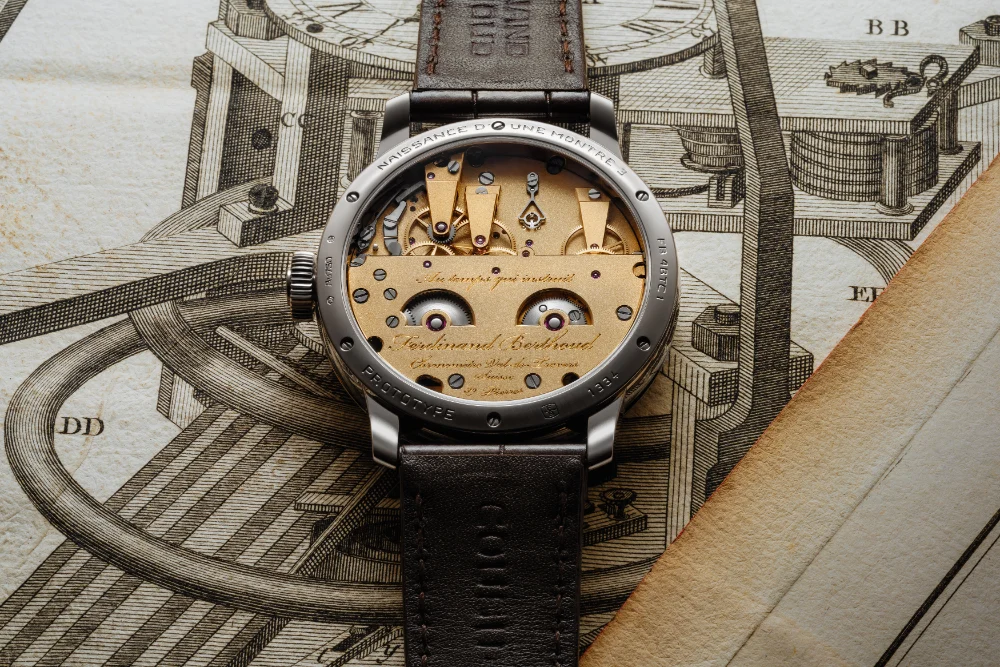
Ferdinand Berthoud Naissance d’Une Montre 3 – Calibre FB-BTC.FC
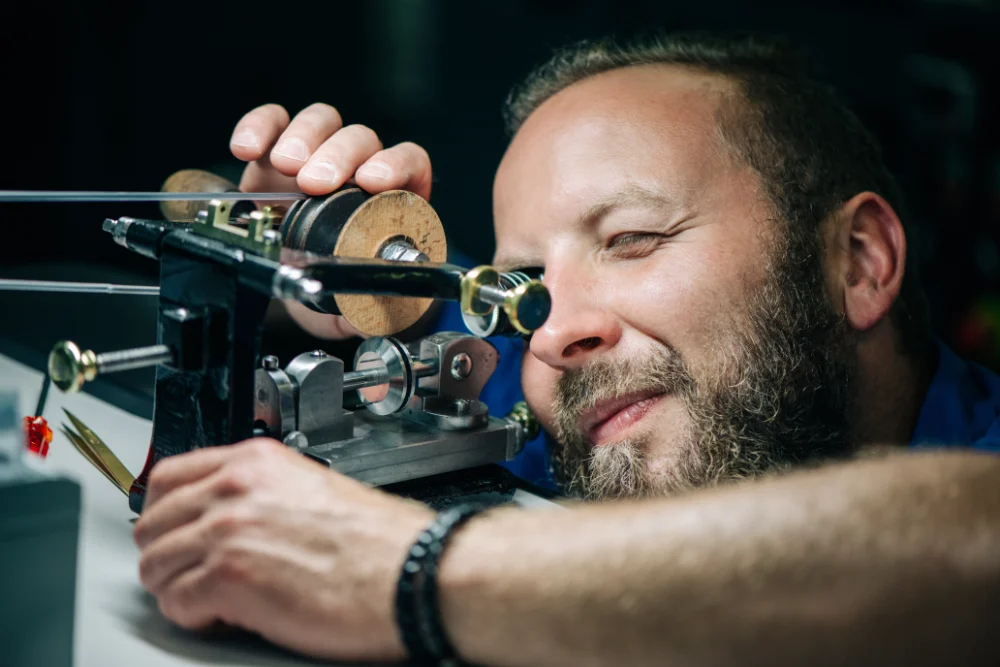
During a recent trip to the Chronométrie Ferdinand Berthoud atelier in Fleurier, I witnessed a barrel bridge being made with the aid of a pantograph. This component alone takes 3 days to produce in ‘grey’, ie before decoration. On seeing the completed watch for the first time, I was hugely impressed by its notable elegance. Two semi-circular apertures reveal the underside of the fusee-and-chain transmission, their gleaming pivots resting in deep red rubies. The edge of each aperture is enhanced with anglage and mirror-polishing. The barrel bridge bears the name of the Maison, its place of origin, the jewel count and an inscription, ‘AU TEMPS QUI INSTRUIT’. The motto, taken from a book by Louis Berthoud (1754-1813), means ‘Dedicated to time, the great teacher’.
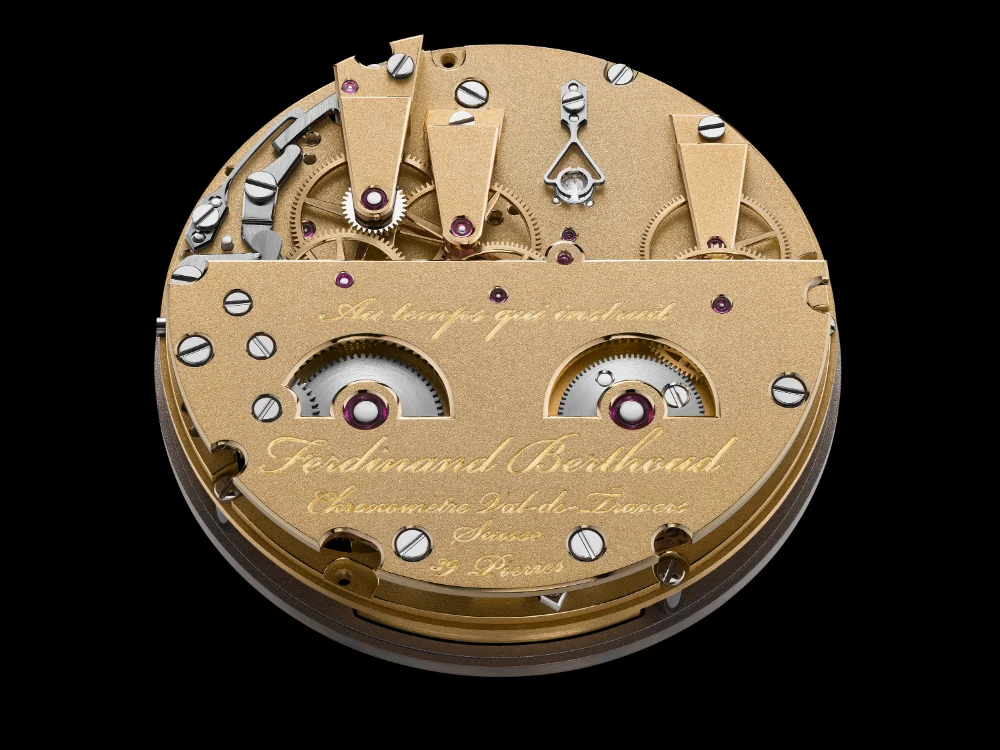
The barrel bridge sits on high with the mainplate and gear train positioned below. This tiered arrangement not only bestows visual interest but evokes thoughts of Berthoud’s historic movements of the 18th century which often employed pillar-type architecture.
Once again, the verso view of the movement is a vision of warmth, the pleasing outcome of using nickel-silver. Gleaming screws with bevelled rims and crisp slots punctuate the golden bridges and mainplate. Each screw precisely formed on a Schaublin lathe, manually endowed with a thread and polished to a brilliant endpoint.
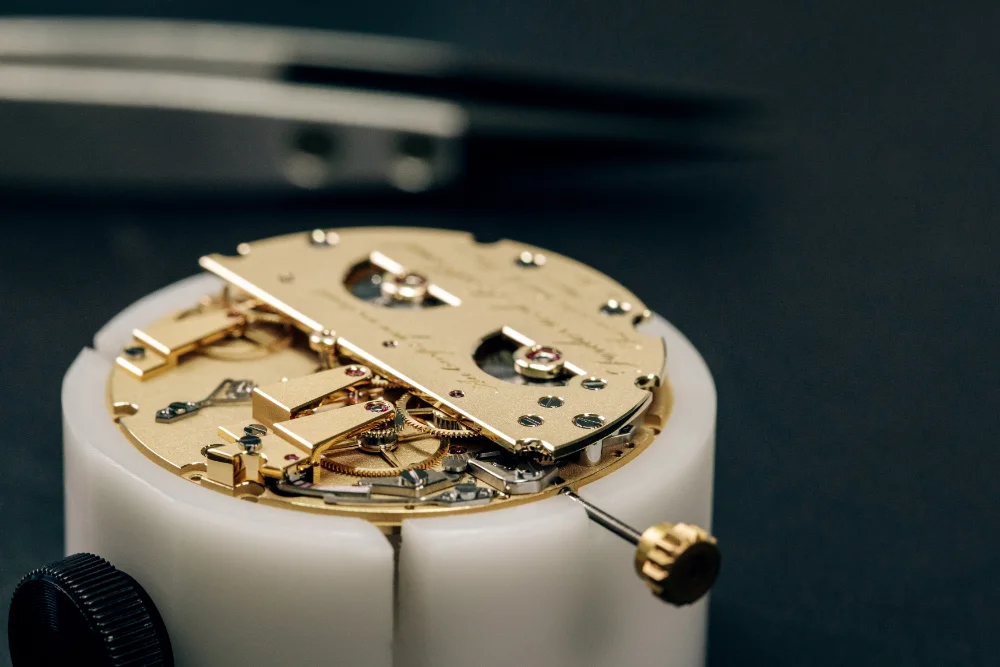
A second diamond endstone signifies the location of the balance wheel, reliably oscillating front of house (dial side). Finger-type cocks, secured with mirror-polished screws, support the circular grained wheels of the gear train, while grained levers complete the dorsal scene.
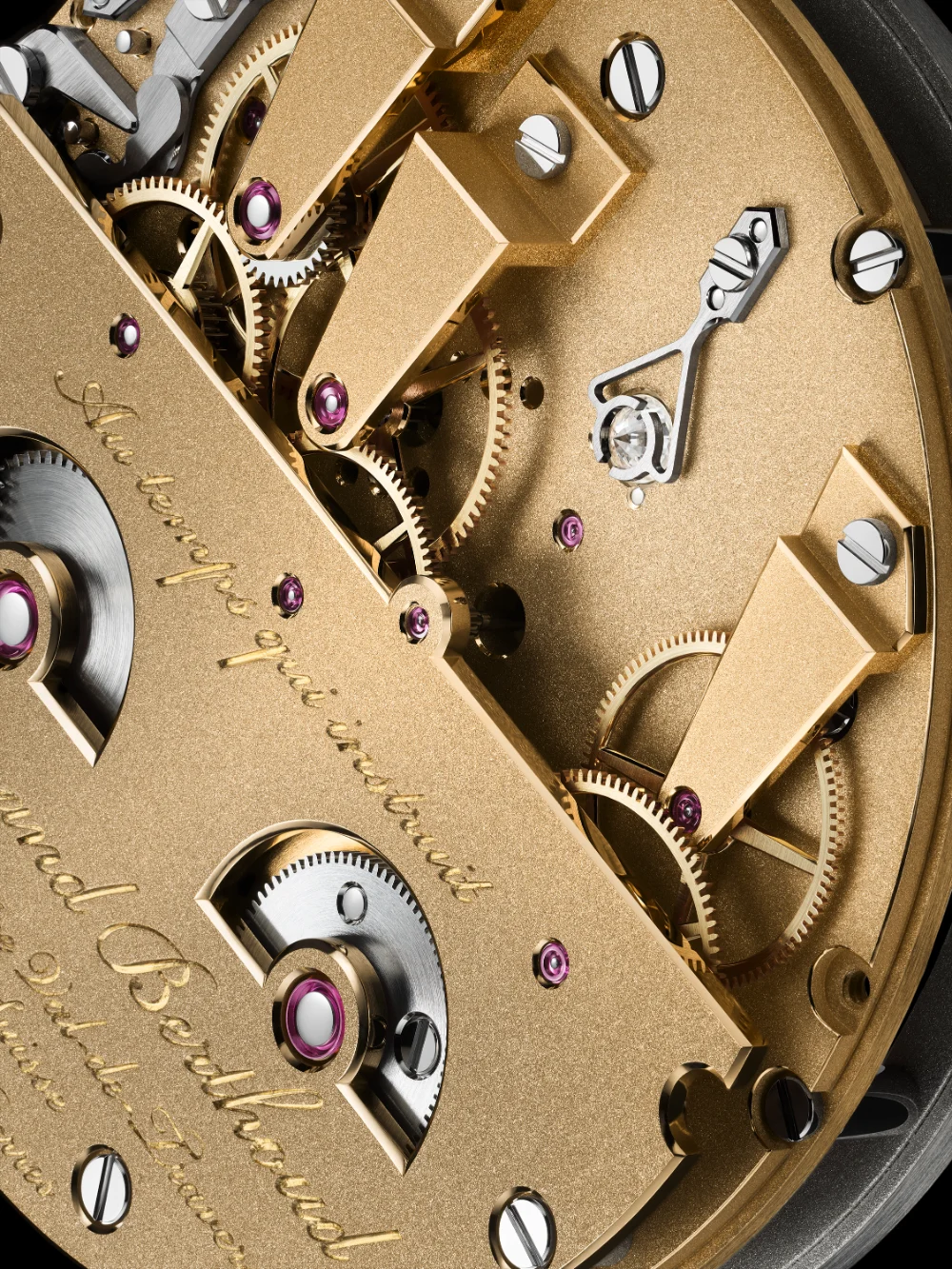
The movement is a tour de force, brimming with numerous refinements, some of which I will touch upon hereafter.
Bimetallic temperature-compensated Guillaume-type balance wheel
The name of the movement, the Calibre FB-BTC.FC is an abbreviation for ‘Balancier Thermo-Compensé et Fusée-Chaîne’. While I have already discussed the fusee-and-chain transmission, the name of the movement also makes reference to its unusual balance wheel, its composition rarely seen in the current era.
In present-day watchmaking, modern materials are used which cope with fluctuations in temperature. However, when Ferdinand Berthoud was creating his ultra-precise marine chronometers for the French navy, fluctuating temperatures often adversely affected the rate. Indeed, a plain steel balance and a steel balance spring tended to lose time in warm temperatures and gain time when cold.
Some of the great luminaries of watchmaking sought to address this issue, including Harrison, Mudge and Arnold. However, it was the Swiss physicist, Charles-Édouard Guillaume who eventually conceived a solution, creating a bimetallic balance wheel made of invar and brass. As Chronométrie Ferdinand Berthoud helpfully explains:
A bimetallic balance maintains the oscillation frequency by compensating for the effects of temperature. The nickel-free steel alloy balance-spring is particularly sensitive to temperature changes, which affect its elasticity: when exposed to cold, the metal contracts and stiffens. This increased resistance tends to increase the oscillation speed of the balance and the movement gains time. When it is warm, the metal expands, causing the reverse effect.
However, thanks to its Invar-brass bimetallic composition with different expansion coefficients, the balance also reacts to the effects of temperature, but in the opposite way: when cold, the rims of the split balance open, increasing its diameter and therefore its moment of inertia. Its oscillation speed will tend to be slower, causing a delay in the movement. When warm, the balance rims close, creating a gain. Temperature affects the balance-spring on the one hand and the bimetallic balance on the other in opposite ways: this is known as a Guillaume-type thermo-compensated split bimetallic balance.”
Throughout his life, Guillaume, the son of a watchmaker, continuously researched metal alloys, keen to mitigate the adverse influence of temperature on the rate of a clock or watch. He was instrumental in the development of Invar (1895) and Elinvar (1919). In 1920, the Nobel Prize in Physics was awarded to Charles-Édouard Guillaume ‘in recognition of the service he rendered to precision instruments in Physics’. The term, ‘Guillaume type thermos-compensated split bimetallic balance’ pays tribute to this remarkable individual.
Modern production methods, often adopted in the pursuit of production efficiency, have led to the demise of the Guillaume-type balance. From the outset, one of the objectives of creating the Naissance d’Une Montre 3 was to ensure that such know-how is retained and not lost to history.
The regulating organ
The balance wheel is fitted with four gold adjustment screws. The rate is altered by tightening or loosening the screws, changing the moment of inertia. This is widely regarded as better than a raquette/index regulated balance as it allows more precise setting of the rate. Moreover, should the watch be subjected to a mild shock, it is less likely to require remedial regulation.
In addition, the balance features two nickel silver weights which are used to compensate for temperature, while a further two screws are used for poising.
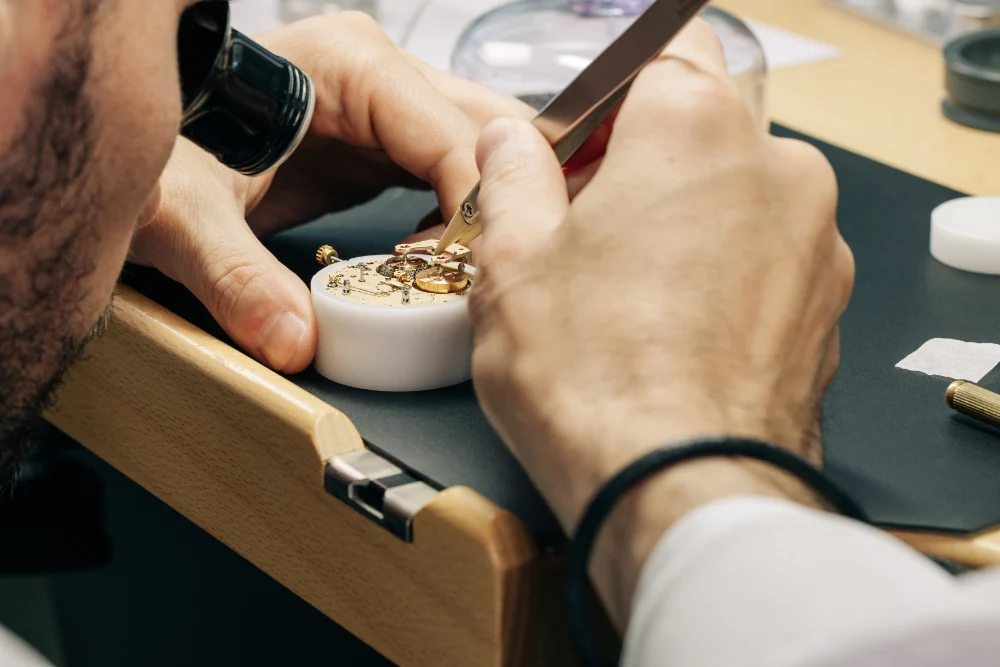
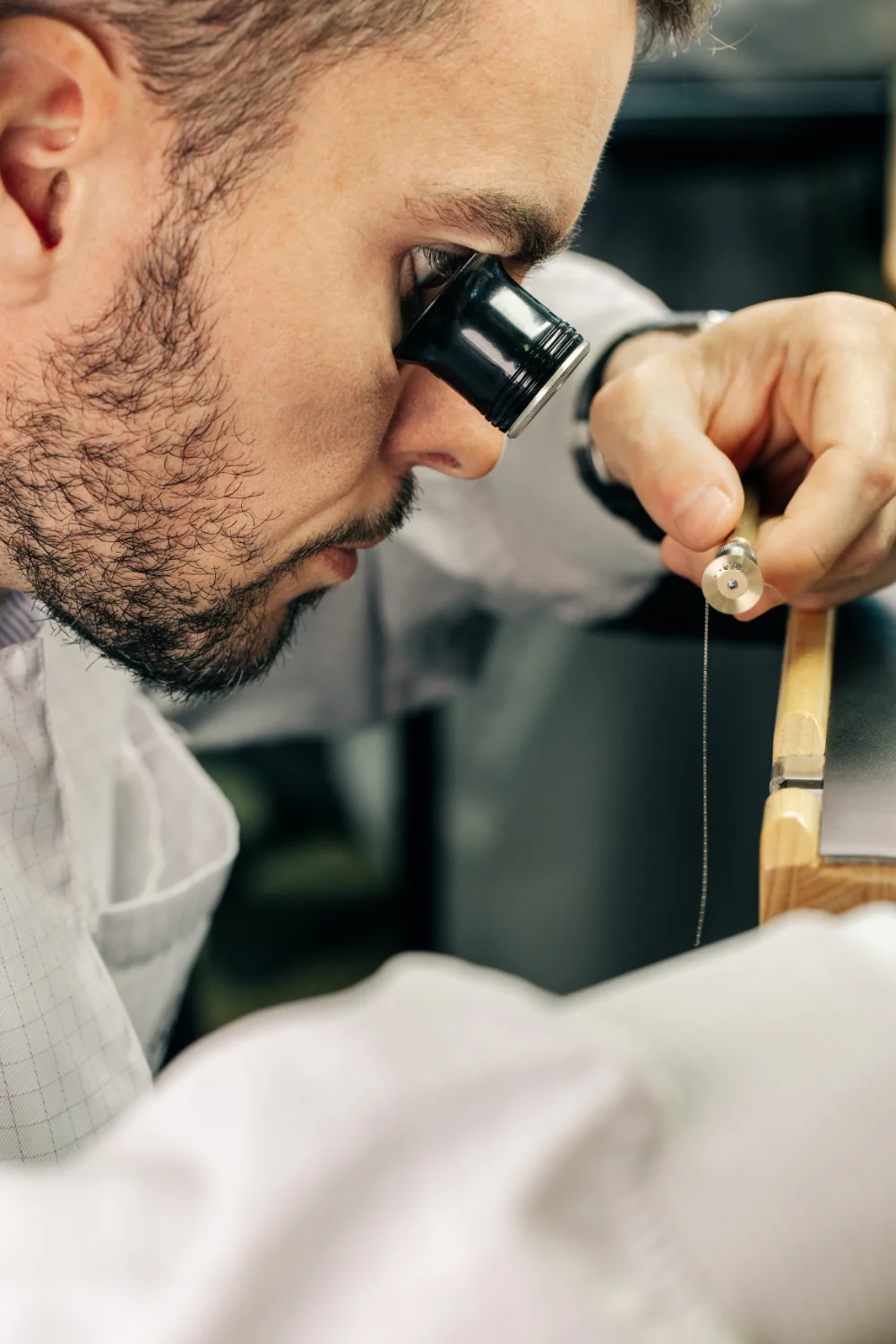
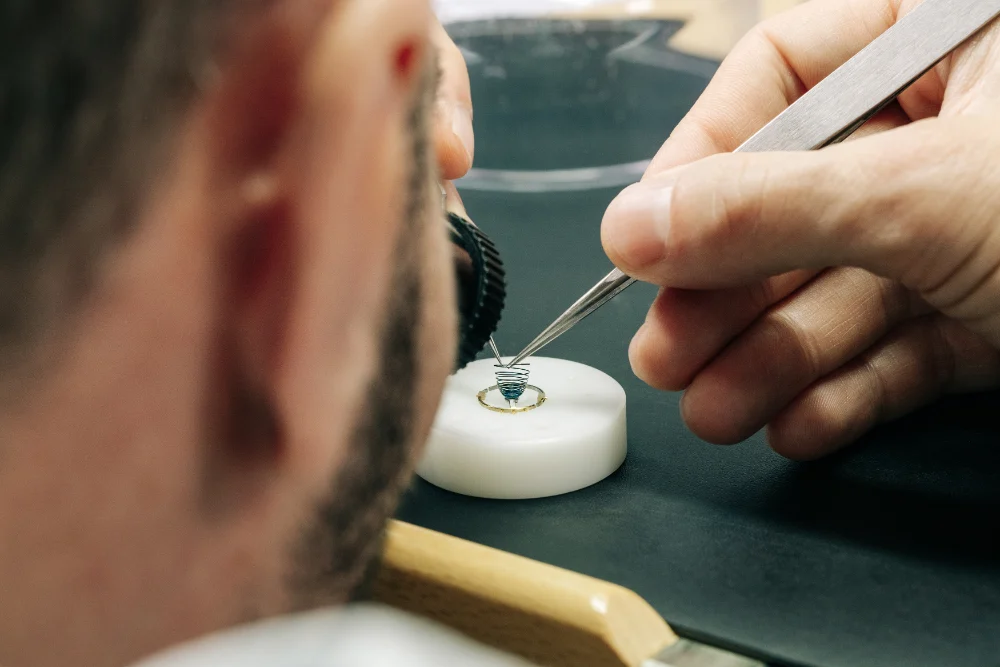
Each balance spring is custom-made for the Naissance d’Une Montre 3 ‘before being blued, cut, pinned up to the collet, counted and centred by hand’. All of these tasks are performed by a specialist known as a ‘timer’, a trade that has changed over the years with an overall ‘dumbing down’ of skills and a loss of know-how, a situation the Time Æon Foundation has sought to reverse.
Chronometer certification (COSC)
Throughout his career, Ferdinand Berthoud sought to create increasingly precise marine chronometers. The safe navigation of seas was an overriding concern and placed much importance on precise timekeeping. Indeed, Berthoud would have been fully aware that a lack of precision could spell disaster.
Since its inception in 2015, Chronométrie Ferdinand Berthoud has focussed on crafting chronometers, each independently tested and certified by the COSC. The testing regime involves evaluating a watch at different temperatures, in various positions over a 15 day period. Ultimately, the average daily rate must be -4 to +6 seconds. Despite being ‘handmade’, the Naissance d’Une Montre 3 ably fulfils such requirements.
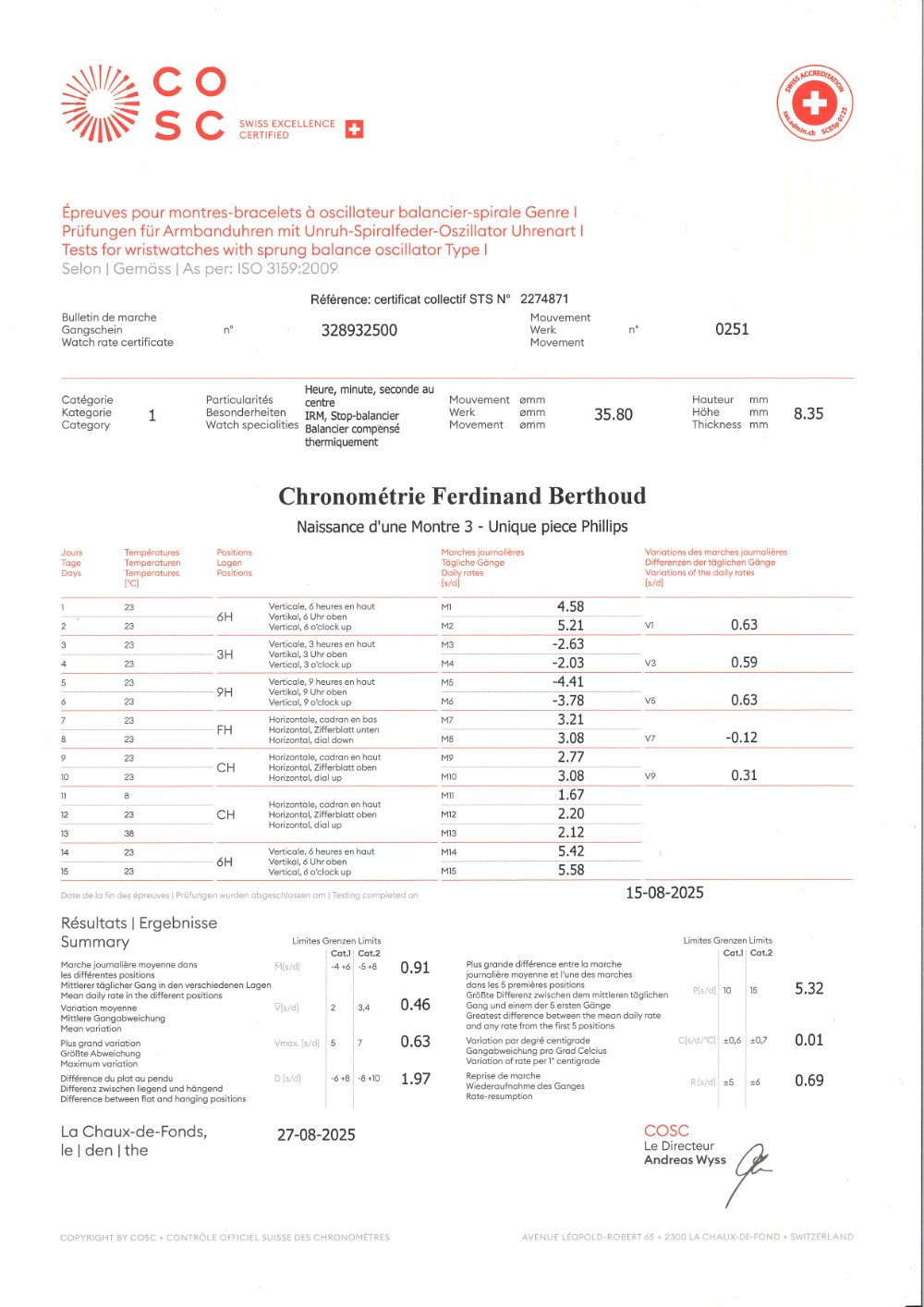
Image – the first COSC certificate for the unique piece to be auctioned by Phillips
Ferdinand Berthoud Naissance d’Une Montre 3 – strap and presentation box
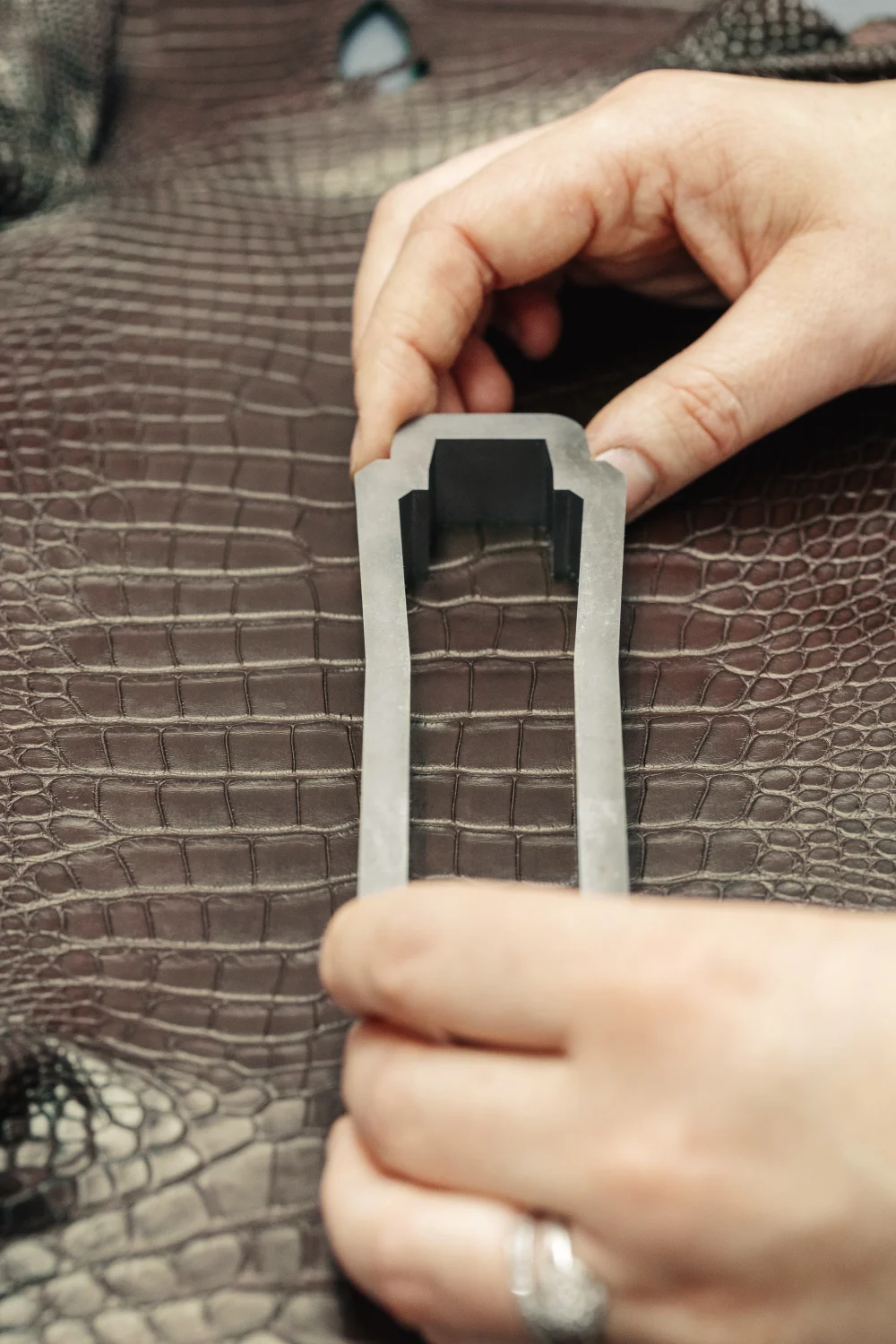
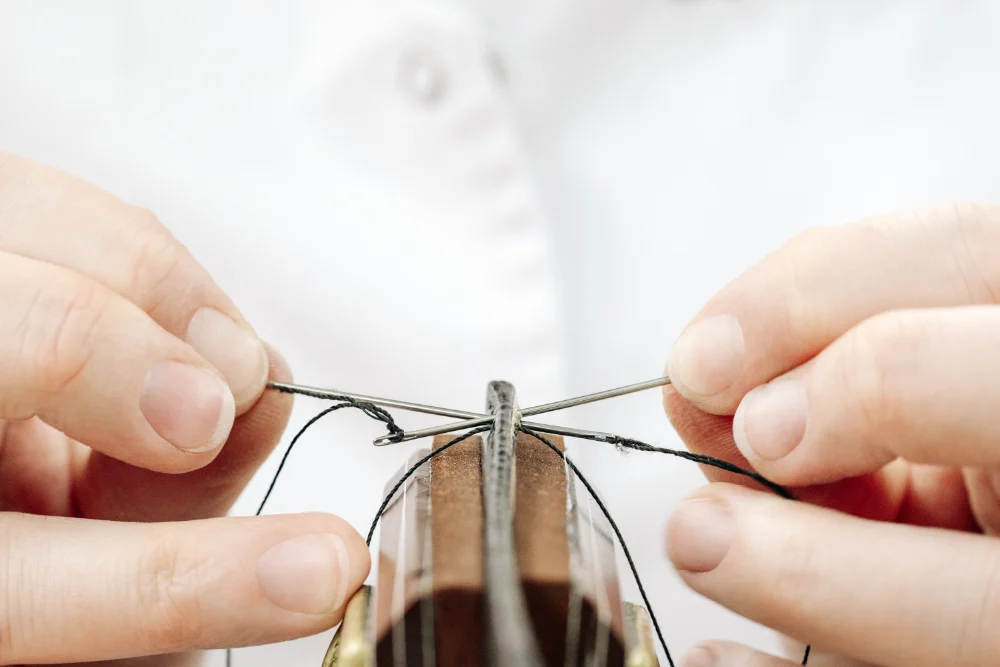
Every aspect of the Naissance d’Une Montre 3 has been considered in minute detail. Consistent with the dial, case and movement, the strap is also handmade. Employing traditional, artisanal craftsmanship and made from alligator leather, it embraces age-old techniques, including ‘cutting, marking, perforating, rolled-edging, stitching, fitting the loops, lining and finishing’.
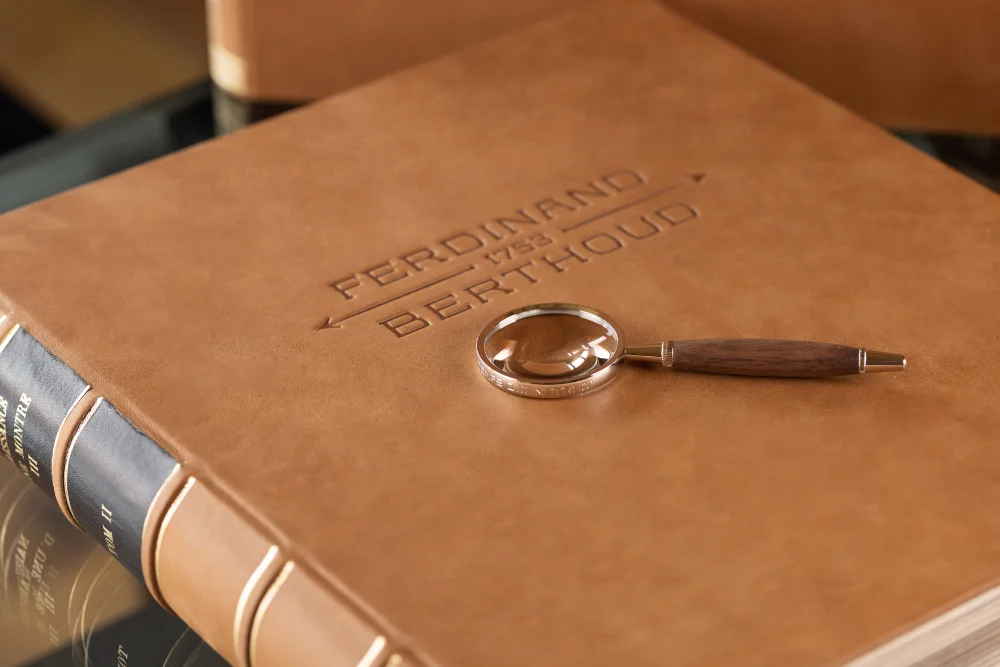
Likewise, the presentation box is, once again, the product of protracted consideration. Inspired by ‘the treatises on watchmaking written and published by Ferdinand Berthoud in the 18th century’, the Naissance d’Une Montre 3 is supplied with ‘two large books’ formed of wood and covered in calfskin. One ‘book’ is dedicated to storing the watch while the second accommodates the various documentation, travel pouch, cloth, USB stick and magnifying glass.
Ferdinand Berthoud Naissance d’Une Montre 3 – stainless steel version 1/1
Eager to preserve traditional watchmaking skills, using vintage machines and historic methods, Karl-Friedrich Scheufele, along with his colleagues, embarked on a courageous journey in 2019 when deciding to create the Naissance d’Une Montre 3.
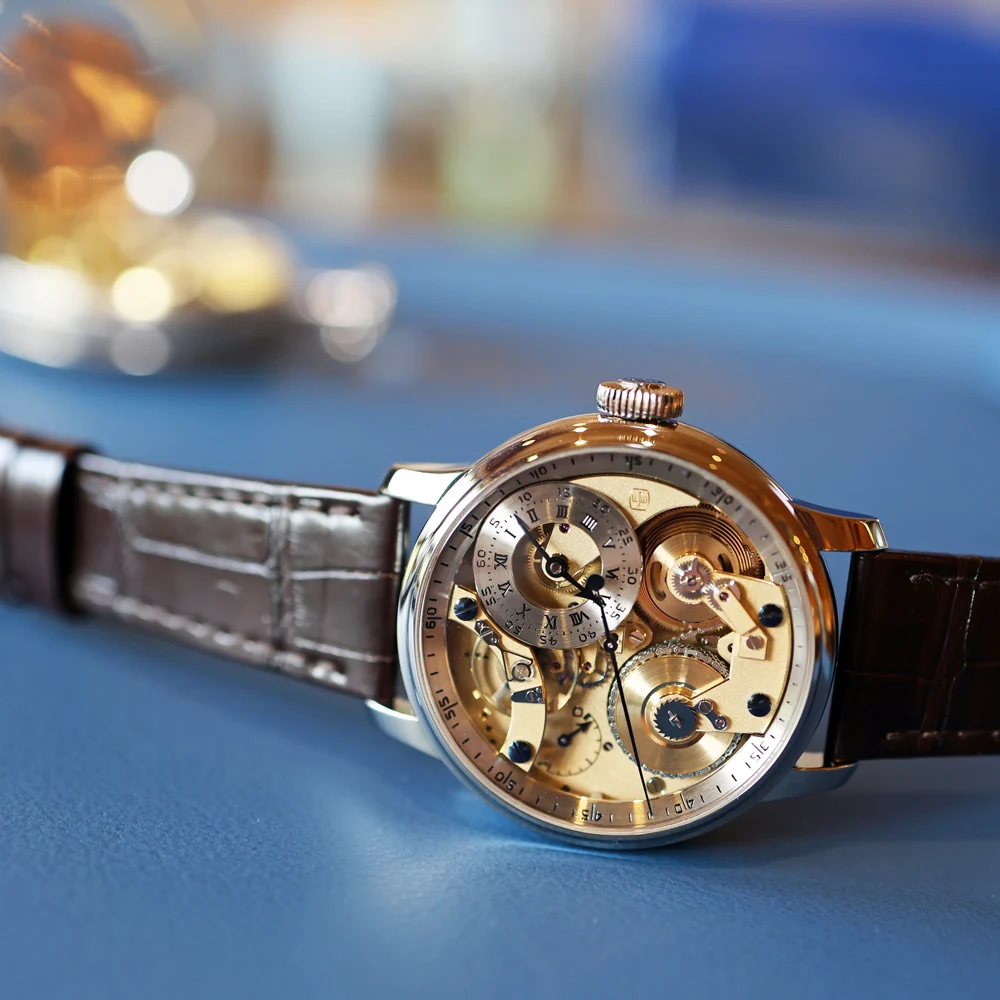
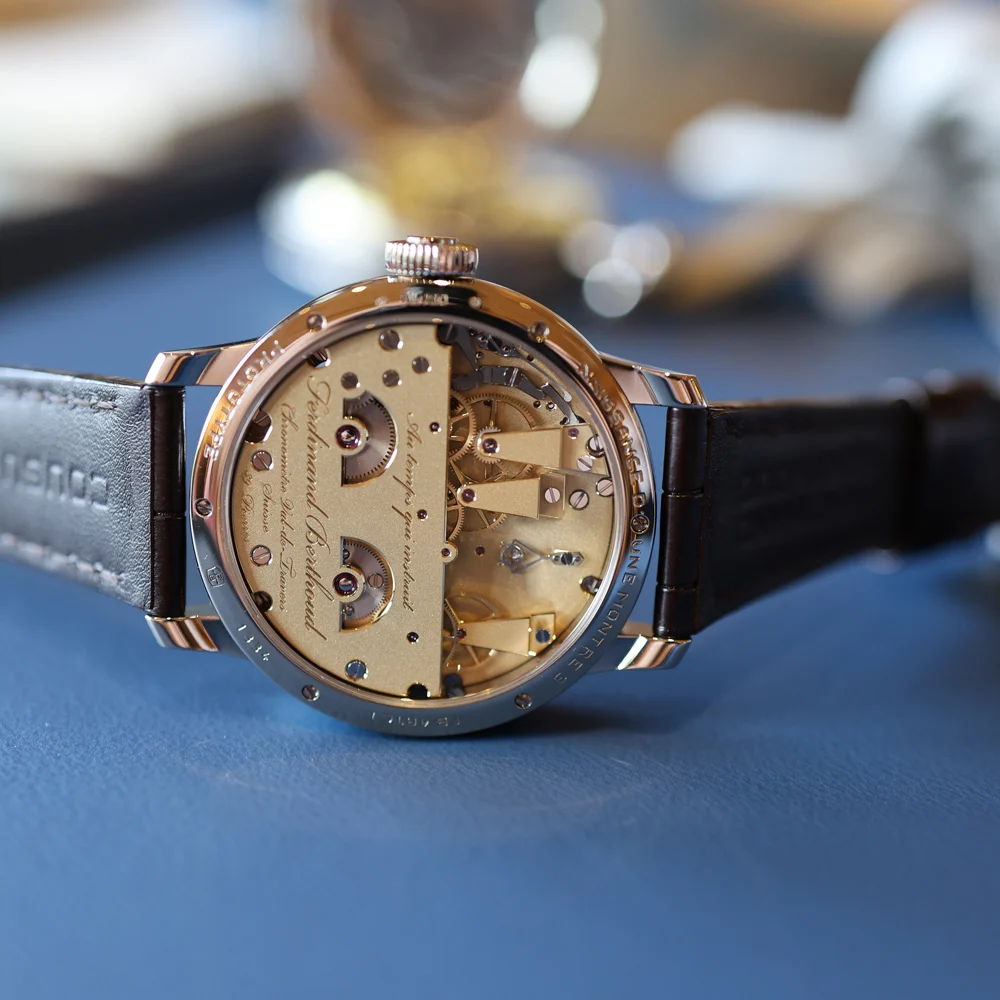
The first example of Naissance d’Une Montre 3 is housed in a stainless steel case, a piece unique never to be repeated. This has been produced exclusively for Phillips in association with Bacs & Russo in Geneva and will be auctioned in November 2025. ‘Part of the proceeds from the sale will be donated to a charity dedicated to preserving and passing on watchmaking expertise to future generations.’ The other 10 pieces will be encased in ethical 18-carat white gold and produced at a rate of two per year, starting in 2026.
Closing remarks
Crafted to precise tolerances and executed to a flawless standard, the Naissance d’Une Montre 3 makes no concessions to its ‘handmade’ origins. For example, when drilling holes in the mainplate with a jig borer, the centre to centre distances (the space between milled holes) are incredibly precise, matching those standards achieved using CNC, while at the same time ensuring the soul of the piece is retained. Indeed, this watch is devoid of compromise yet brims with emotion, a quality sometimes lacking in mass-produced watches.
By virtue of its time-consuming creation, the Naissance d’Une Montre 3 is expensive (CHF 850,000 as of 5.9.2025). Nevertheless, the timepiece remains relevant to all horophiles as it perpetuates watchmaking traditions, including artisanal methods.
Returning to the launch event in Geneva, listening to the assembled speakers, I reflected on the remarkable journey of Chronométrie Ferdinand Berthoud from its launch in Paris 10 years ago to the present day. During this period, the prestigious Maison has amassed numerous prizes, assembled a highly accomplished team of artisans and watchmakers, created a rich body of work and, with the advent of the Naissance d’Une Montre 3, helped preserve age-old skills and prevent them from disappearing; a remarkable feat worthy of the legendary ‘Horloger Mécancien du Roi et de la Marine’.
Further reading
https://www.ferdinandberthoud.ch/
Technical specifications
- Model: Ferdinand Berthoud Naissance d’Une Montre 3
- Reference: FB 4BTC.1
- Case: ethical 18-carat white gold, diameter 44.3 mm, height 13 mm, water resistance 3ATM (30m), sapphire crystal to the front and exhibition case back.
- Functions: hours and minutes between 1 and 2 o’clock, central seconds, power reserve and balance-stop function
- Movement: Calibre FB-BTC.FC, hand-wound movement, frequency 21,600 vph (3 Hz), 37 jewels, power reserve 50 hours, 747 components, chronometer-certified (COSC)
- Strap: hand-stitched, rolled-edge alligator leather strap. Handcrafted 18-carat white gold pin buckle
- Price on application
- Limited Edition: 10 pieces in ethical 18-carat white gold
- Unique Piece in steel to be auctioned.