
Chronométrie Ferdinand Berthoud – Part One
In the first of three articles, Angus Davies begins by looking at the legacy of Ferdinand Berthoud and the emergence of Chronométrie Ferdinand Berthoud in 2015. During its 10 year history, this distinguished practitioner of Haute Horlogerie has produced an impressive body of work and been awarded five GPHG prizes.
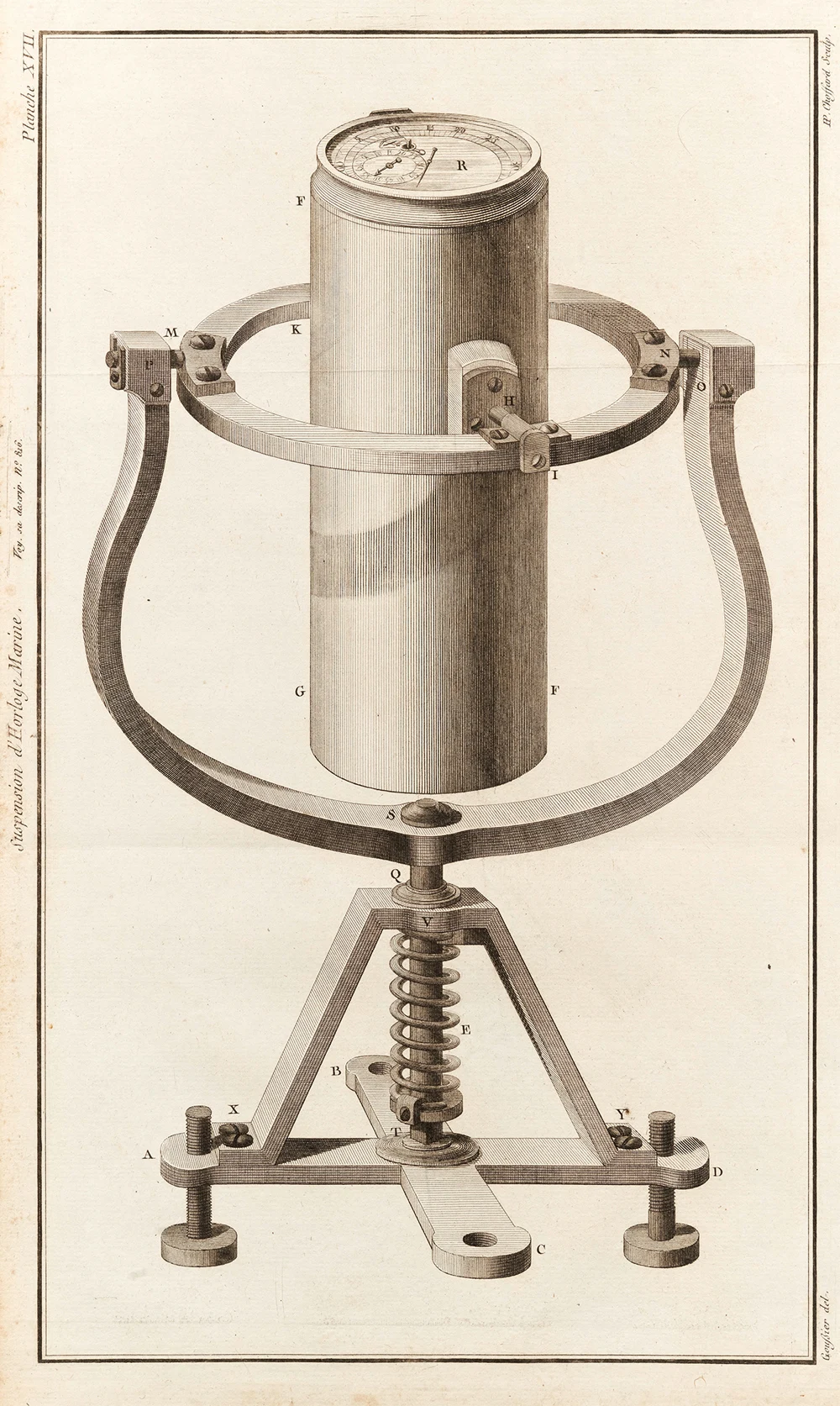
Image – Ferdinand Berthoud HM6
Determining longitude at sea – a matter of national importance
During the 17th and 18th centuries, France vied with England for pre-eminence in the field of horology. With the advent of marine chronometers, navies gained the means to determine longitude at sea, allowing ships to safely navigate vast oceans. In their quest for naval supremacy, both France and England incentivised the development of increasingly precise marine chronometers. Ferdinand Berthoud (1727-1807) was born in Plancemont, a small village in the canton of Neuchâtel. From an early age, he chose a career in watchmaking and ultimately became one of the most accomplished producers of marine chronometers.
Paris – clock and watchmaking in the 17th and 18th centuries
Despite the passage of time, the brilliance of English greats such as George Graham (1673 – 1751), John Harrison (1693-1776) and John Arnold (1736-1799) has never diminished.
Similarly, on the opposite side of ‘La Manche’, there were equally brilliant minds busily conceiving ingenious mechanisms, several of which remain in use today. Julien Le Roy (1686-1759), his son, Pierre Le Roy (1717-1785) and Antide Janvier (1751-1835) are just a few of the luminaries who flourished in France.
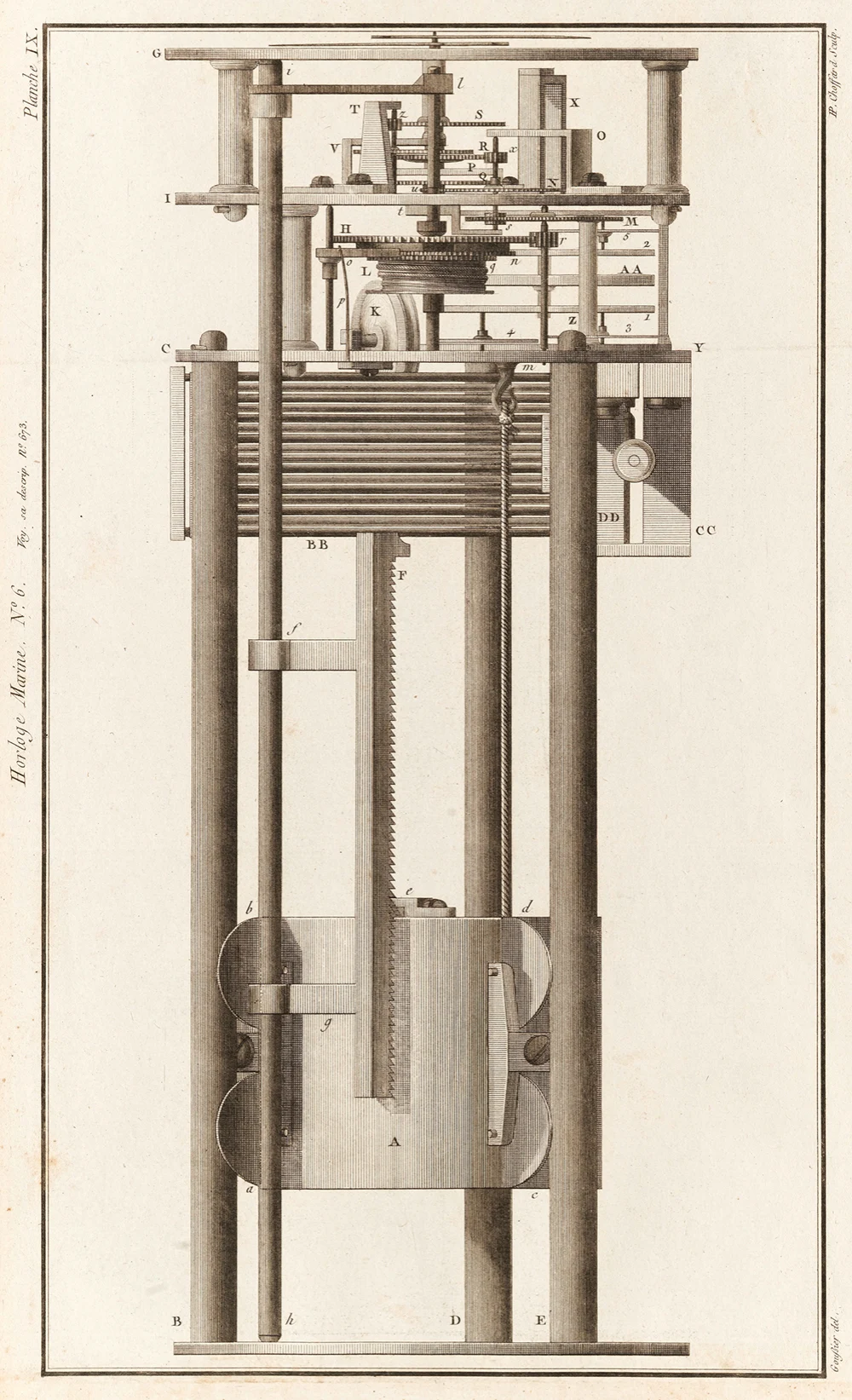
Image – Ferdinand Berthoud HM6 movement
Like a moth to a flame, Paris attracted the most gifted individuals. Indeed, Ferdinand Berthoud left the canton of Neuchâtel in 1745, relocating to Paris at the young age of 18. Incidentally, Abraham-Louis Breguet (1747-1823), also from the canton of Neuchâtel, travelled to Versailles, just 30 km from Paris, in 1762, aged 15. He worked for two extraordinary masters, Jean-Antoine Lépine (1720-1814) and Ferdinand Berthoud. Breguet eventually relocated to Paris, establishing his own business on Quai de l’Horloge in 1775 and went on to achieve critical acclaim.
Paris in the 18th century, during ‘The Enlightenment’, was a hub of creativity with intellectuals and philosophers challenging existing ideas. Enquiring minds engaged in scientific study began to base their opinions on observation and experimentation rather than tradition or religious beliefs. Against this backdrop, Paris became an incubator of horological ideas where brilliant minds and extraordinary talents flourished.
Ferdinand Berthoud – the early years
Ferdinand Berthoud began his apprenticeship at the tender age of 14 in Couvet, a mere 3 km from his place of birth. He worked alongside his brother, Jean-Henry and completed his apprenticeship by the age of 18. As previously stated, he moved to Paris and began working for the aforementioned Julien Le Roy. When he was just 26 years of age, Ferdinand Berthoud was awarded the title of ‘Master Clockmaker’ by King Louis XV’s council (1753).
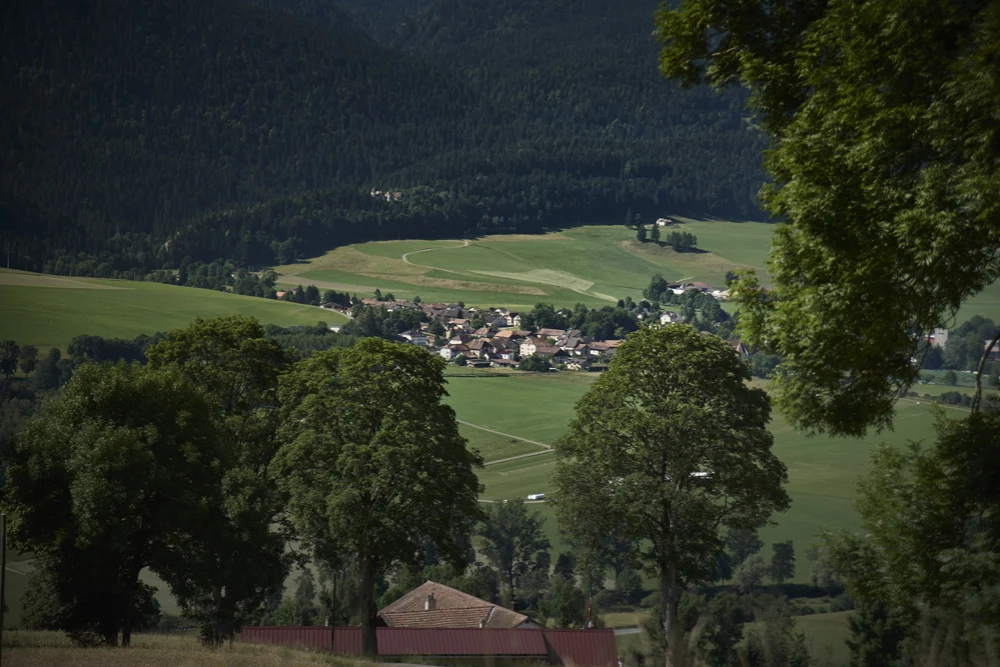
Image – Ferdinand Berthoud was born in Couvet in the district of Val-de-Travers
Despite his youth, Berthoud had already demonstrated his prodigious talents and was commissioned to write a series of texts. Examples include, ‘L’Art de conduire et de régler les pendules et les montres’ (1759) and ‘Horloge Marine Principe de construction (1760). Most notably, in 1760, Berthoud began work on a two-volume horological treatise, ‘Essai sur l’horlogerie: dans lequel on traite de cet Art relativement à la Navigation, en établissant des principes confirmés par l’expérience’, completing it in 1763.
Ferdinand Berthoud – marine chronometers
In 1763, the King of France tasked Berthoud with travelling to England to examine John Harrison’s H4 Marine Timekeeper. Harrison declined Berthoud’s request, no doubt wishing to preserve his trade secrets! Nevertheless, Berthoud’s efforts were not in vain. On the contrary, his travels to England led him to meet fellow intellectuals and scientists, culminating in Berthoud being appointed a ‘foreign associate member’ of the Royal Society in 1764.
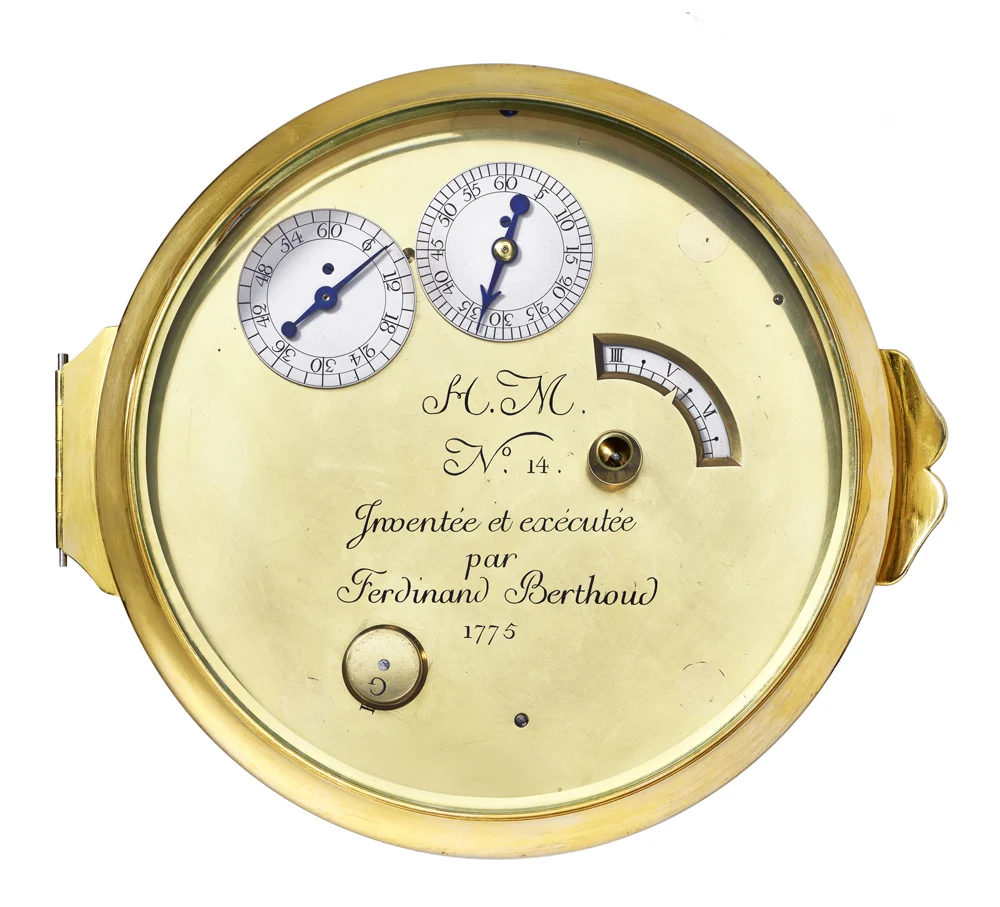
Image – Ferdinand Berthoud Marine Clock No.14
From 1761, Berthoud created a series of marine chronometers. Famously, Marine Clock No.8 performed sea trials over an 18 month period. It was able to determine longitude at sea within half a degree, a feat confirmed by astronomical observations.
For the remainder of his life, Ferdinand Berthoud continuously sought to develop new marine chronometers that conferred superior precision. Unlike most of his contemporaries, Berthoud fitted his movements with jewels such as rubies and diamonds, a concept invented by Nicolas Fatio de Duilier in 1704. Berthoud also completed extensive research on temperature compensating balance wheels and he continuously worked on high precision escapements.
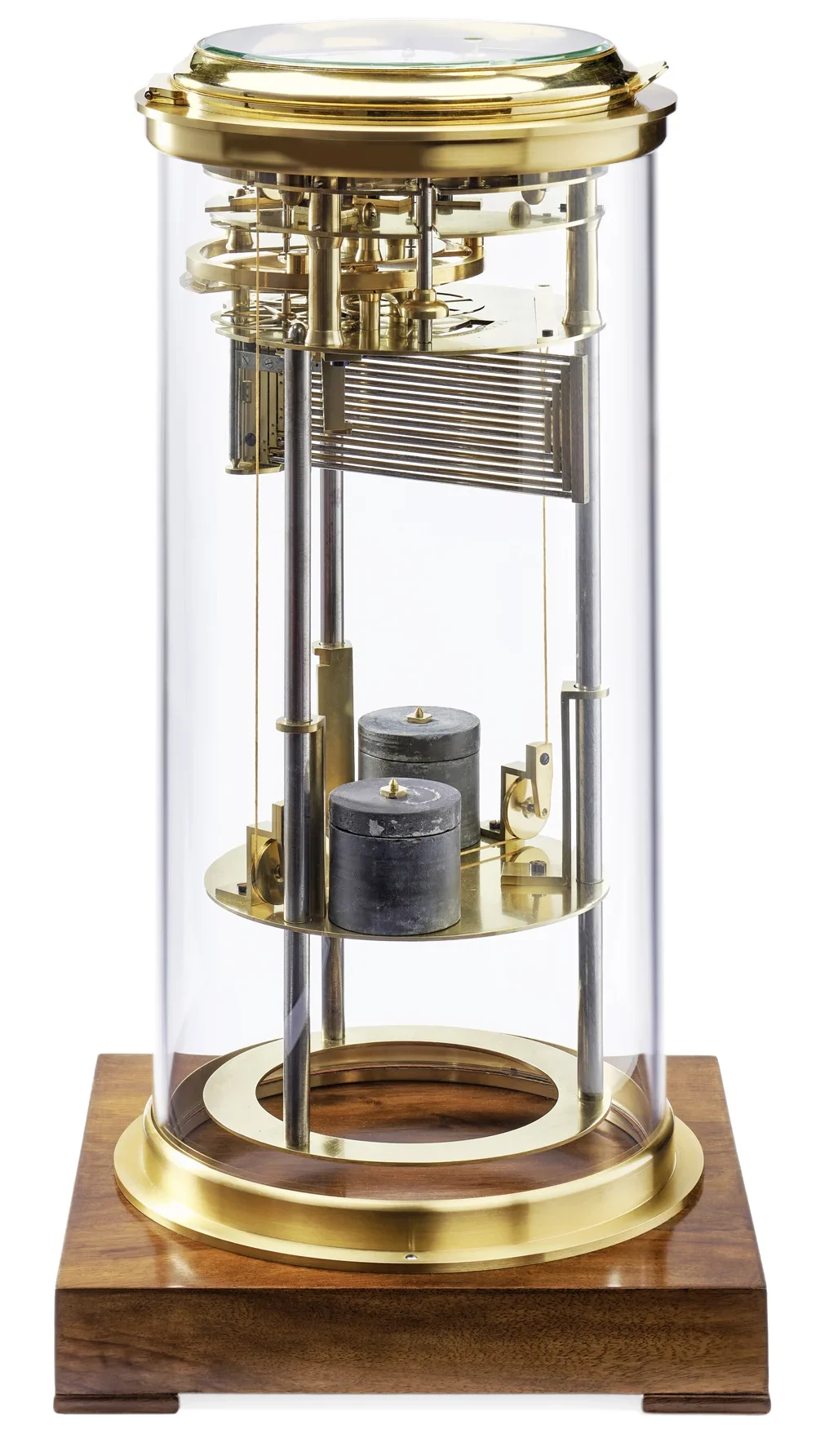
Image – Ferdinand Berthoud Marine Clock No.14
In 1770, Ferdinand Berthoud was appointed to the highest position for a watchmaker in France, namely ‘Horloger Mécancien du Roi et de la Marine’ (Clockmaker to the King and the Navy). Simultaneously, he was awarded a royal commission to supply 20 marine chronometers.
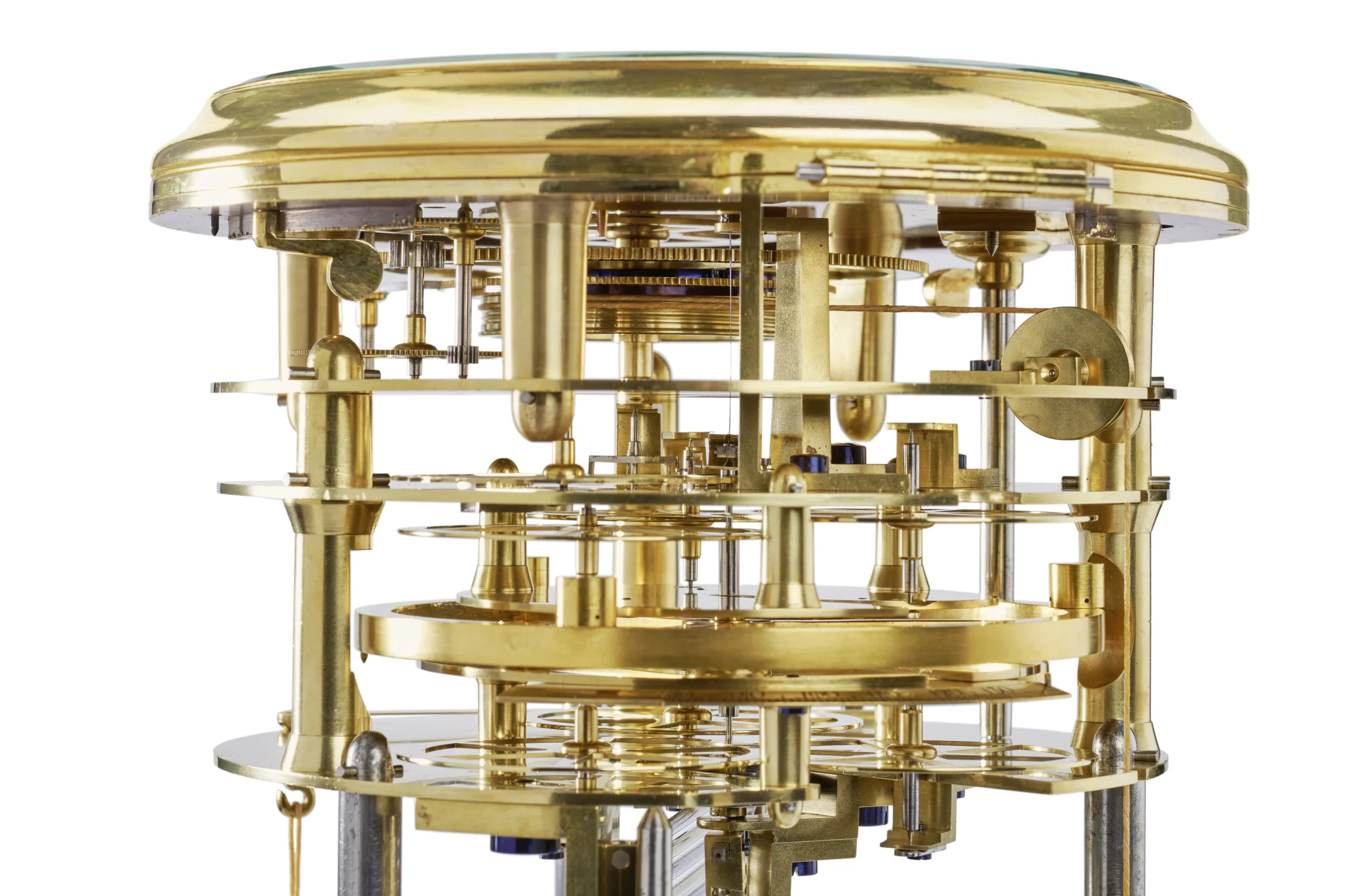
Image – Ferdinand Berthoud Marine Clock No.14
Eventually, with his work in much demand, supplying both the French and Spanish navies with marine chronometers, Ferdinand Berthoud decided to call upon his nephew Pierre-Louis Berthoud (1754-1813) to assist him, mentoring the young man at the same time. Later, in 1775, he entrusted the running of his Paris workshop to his nephew Henry. However, due to Henry’s premature demise, Ferdinand then had to pass the reigns to Pierre Louis. In turn, Pierre-Louis’s sons, Jean-Louis Berthoud (1793-1880) and Charles-Auguste Berthoud (1798-1876) entered the watchmaking profession. It is fair to say, all three generations of Berthoud watchmakers left an indelible mark on watchmaking history: each man dedicated to the making of highly precise timekeepers.
Chronométrie Ferdinand Berthoud – 10 year anniversary
Having acquired the Ferdinand Berthoud name in 2006, Karl-Friedrich Scheufele, Co-President of Chopard embarked on a journey, reviving one of the most esteemed names in horology. Throughout his life, Mr Scheufele has been passionate about collecting historic clocks and watches. In 2006, to coincide with the 10th anniversary of Chopard Manufacture in Fleurier, the Swiss marque opened the L.U.CEUM, a curated collection of timepieces produced from 1500 CE to the present day.
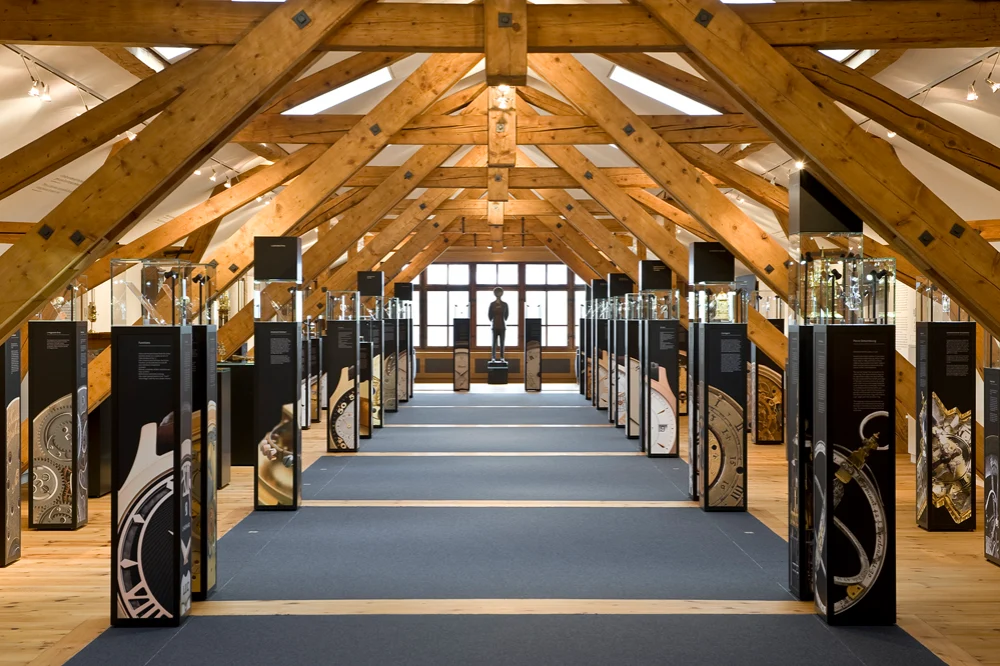
Image – L.U.CEUM, Fleurier
Within the confines of this museum, there are fascinating timepieces from Ferdinand Berthoud and Pierre-Louis Berthoud that have since proved a source of inspiration for the company’s modern-day creations (see later).
In 2015, I joined my fellow journalists attending the launch of Chronométrie Ferdinand Berthoud. The event was hosted in the palatial surroundings of Hotel 1, Place Vendôme, Paris. As I sat waiting for proceedings to commence, I admired the grandeur of the room. However, despite the beauty of the décor, everything paled by comparison when Mr Scheufele revealed the brand’s inaugural model, the FB 1. As he cradled the watch in his gloved hands, the assembled guests began taking pictures. The design and composition of the watch shared visual similarities with the MM No.6 (dated 1777) yet it was contemporary. Indeed, reviewing the notes I made at the time, Mr Scheufele said he wanted to make a contemporary timepiece that ‘Ferdinand Berthoud might have created if he was living now’.
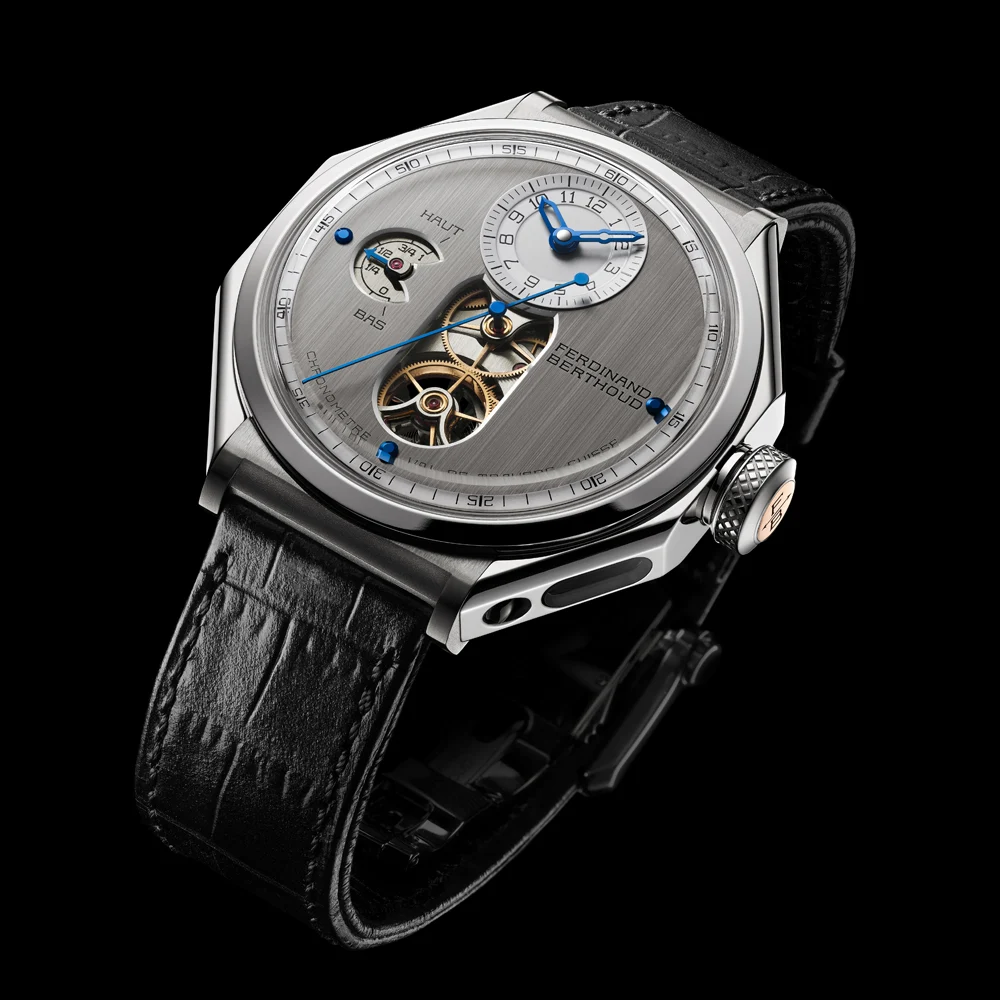
Image – Chronométrie Ferdinand Berthoud FB 1.1
The Chronométrie Ferdinand Berthoud FB 1 was endowed with a movement with pillar-type architecture and housed within a gimbal-shaped case featuring portholes. The lengthy list of mechanical highlights included a suspended fusee and chain mechanism, Geneva stopworks, mobile power-reserve with cone and feeler as well as a direct-drive seconds tourbillon. The finishing of the movement was of the highest order and, as you would expect of Ferdinand Berthoud, the FB 1 was chronometer-certified (COSC).
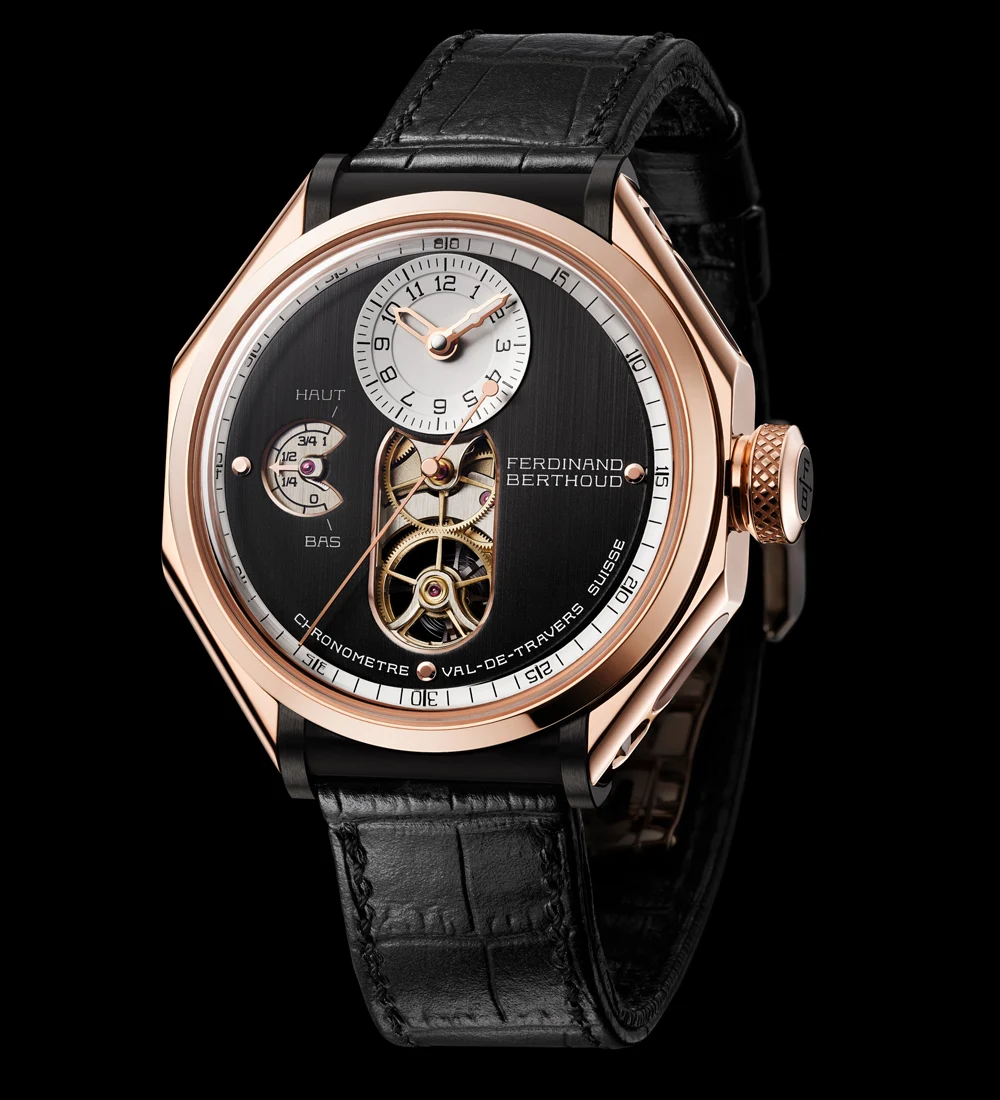
Image – Chronométrie Ferdinand Berthoud FB 1.2
Mr Scheufele was no doubt aware that the successful rebirth of the Chronométrie Ferdinand Berthoud was not only a commercial undertaking, but also an obligation to create watches worthy of the great man. In my opinion, with the advent of the FB 1, Mr Scheufele, with the help of his team, not only met such obligations but surpassed them. Clearly, I am not alone in my opinion. In 2016, the Chronométrie Ferdinand Berthoud FB 1 was awarded the prestigious ‘Aiguille d’Or’ at the Grand Prix d’Horlogerie de Genève (GPHG).
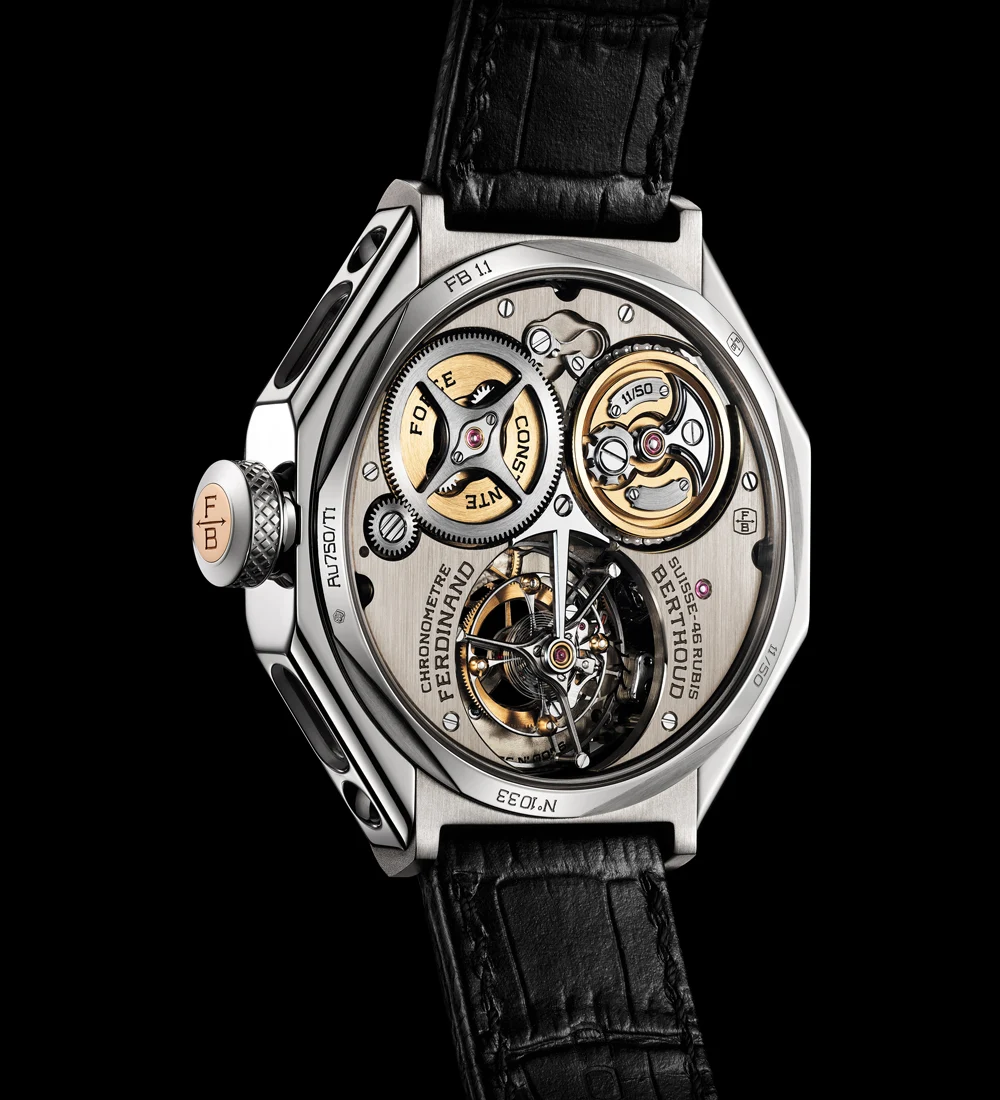
Image – Chronométrie Ferdinand Berthoud FB 1.1
Since this success in 2016, the Maison has not rested on its laurels. It has continued to develop new references, incorporating new mechanisms, new materials and embracing alternative designs. Moreover, the same inherent quality of the FB 1 has also enriched each subsequent release. Again, all references have been evaluated by COSC and certified as chronometers.
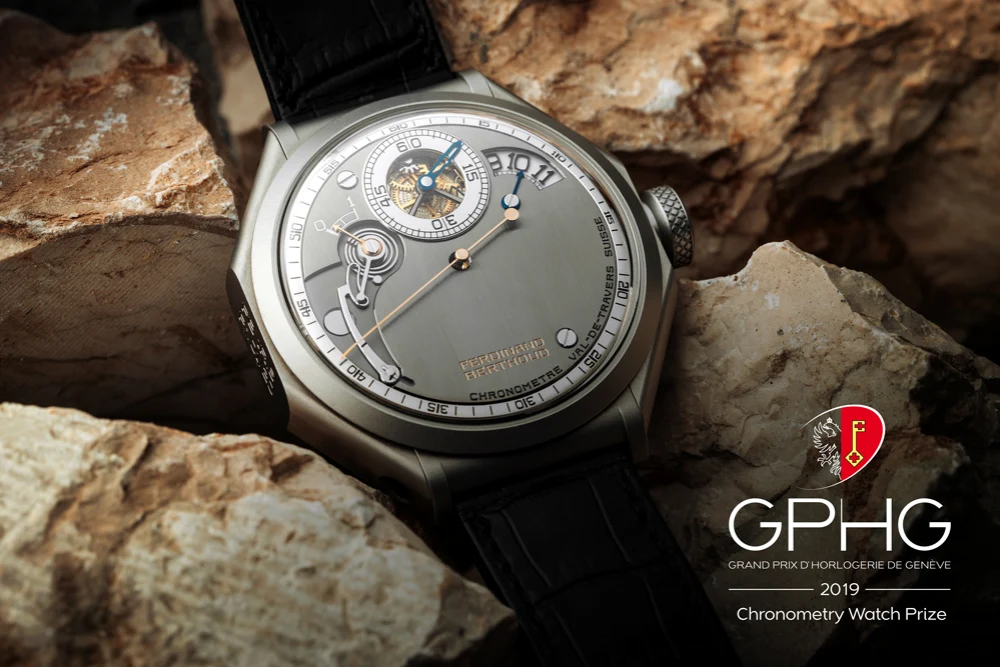
Image above – Chronométrie Ferdinand Berthoud FB 1R.6-1 (GPHG 2019)
Following its initial success in 2016, Chronométrie Ferdinand Berthoud has received further recognition by the jury of the GPHG. In 2019, the Maison won the ‘Chronometry Watch Prize’ for the FB 1R.6-1 and repeated this success in 2020, winning the same prize with the FB 2RE.2. In 2022, the brand scooped the ‘Mechanical Watch Exception Prize’ with the FB 2RSM.2-1, before winning another ‘Chronometry Watch Prize’ for the FB 3SPC in 2023. This latter watch, a personal favourite, was particularly unusual in that it featured a cylindrical balance spring and yet, upholding Chronométrie Ferdinand Berthoud tradition, it was chronometer-certified (COSC), a first for a watch fitted with this form of regulating organ.
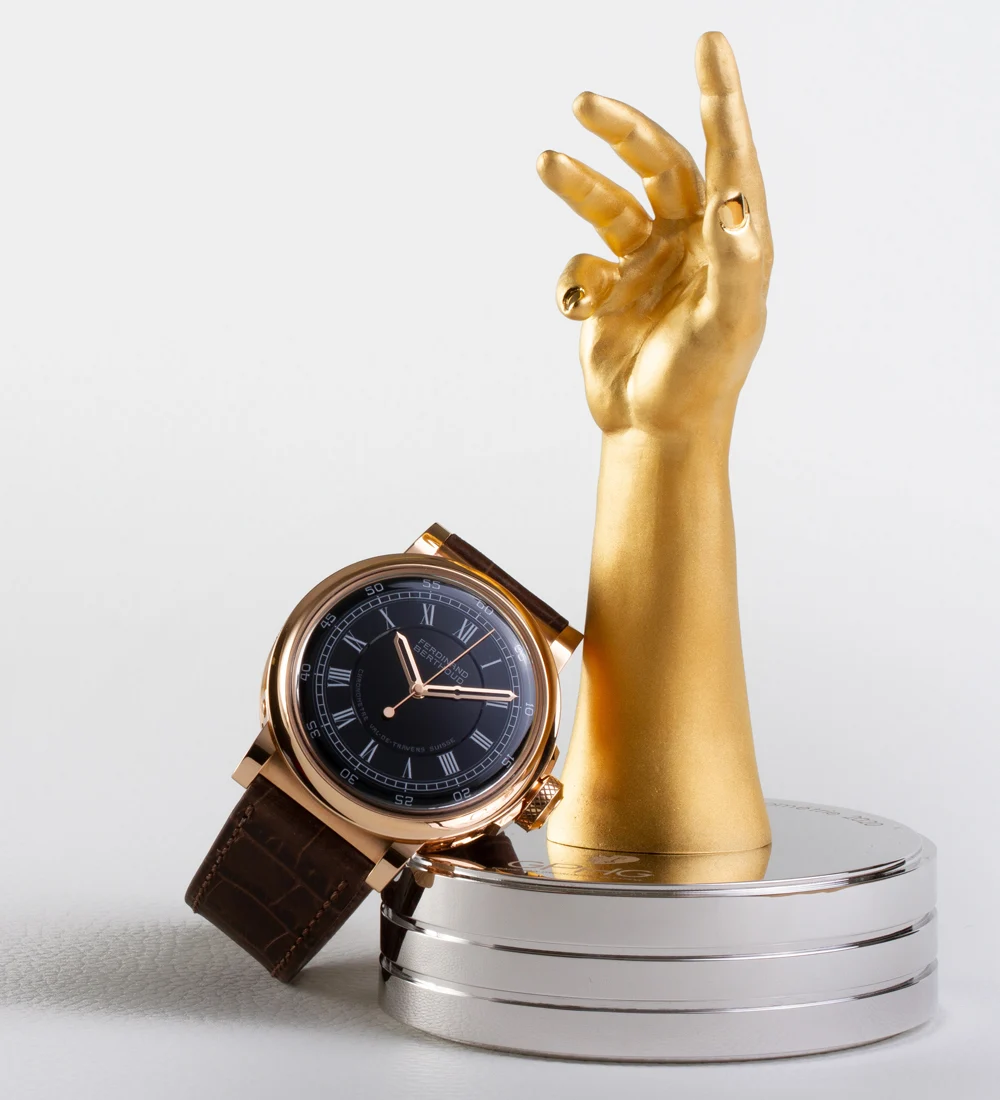
Image above – Chronométrie Ferdinand Berthoud FB 2.RE2 (GPHG 2020)
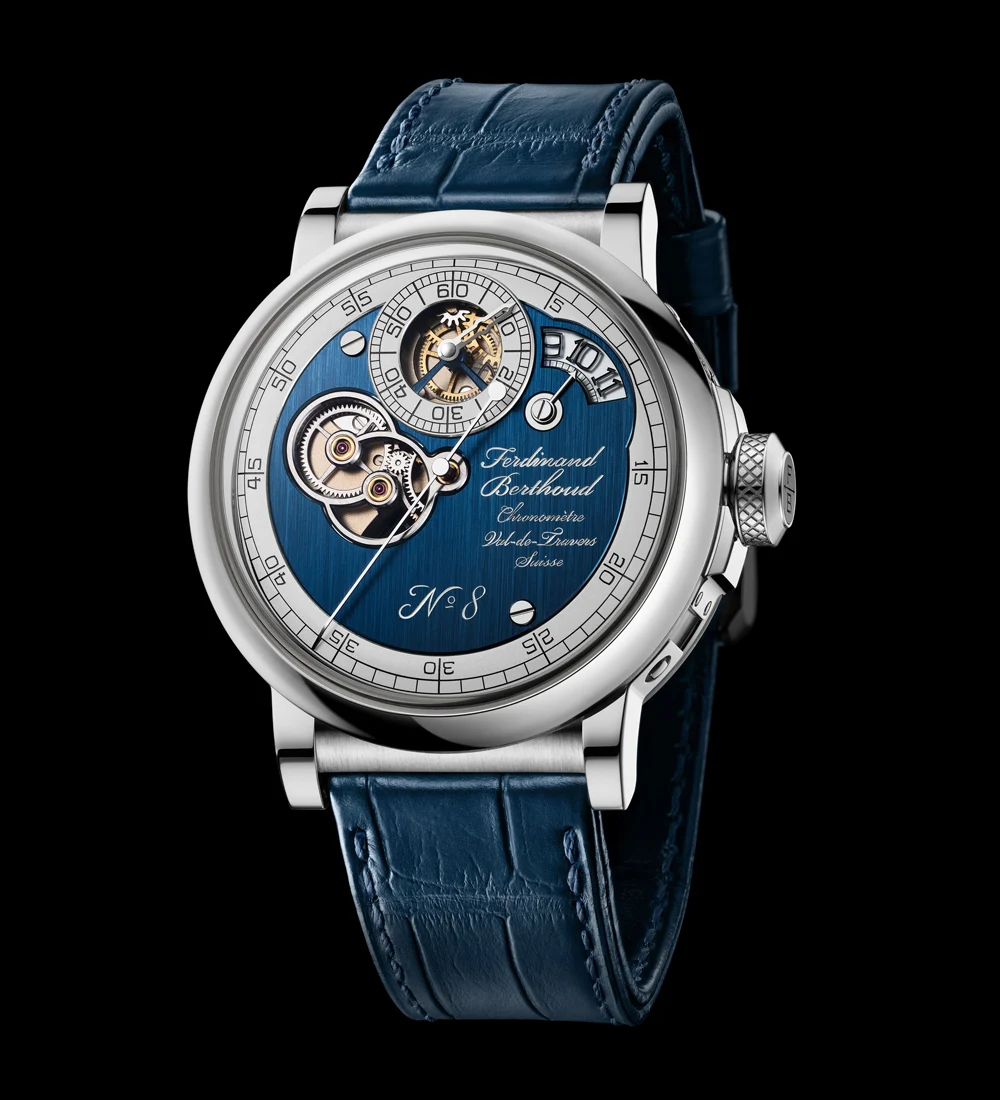
Image above – Chronométrie Ferdinand Berthoud FB 2RSM.1 (GPHG 2022)
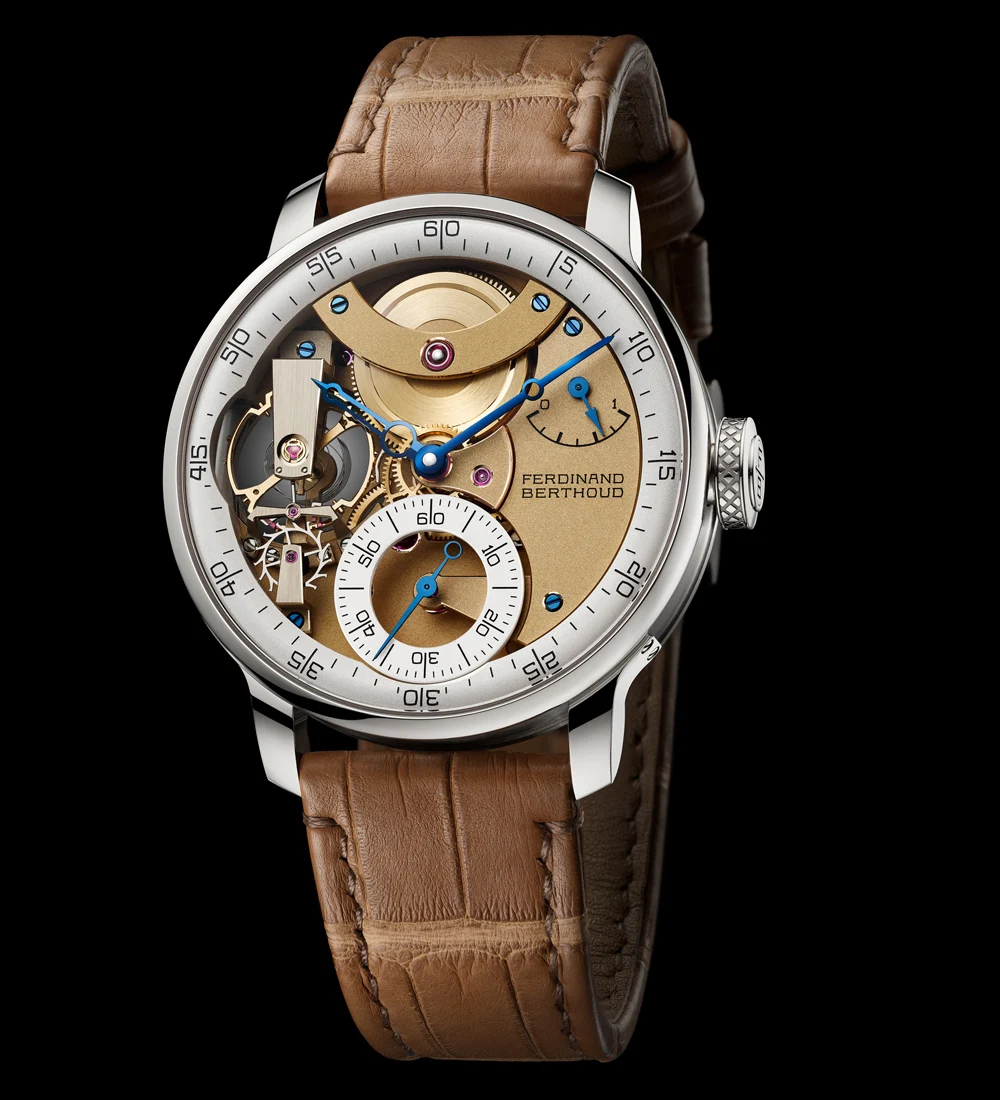
Image – Chronométrie Ferdinand Berthoud FB 3SPC (GPHG 2023)
Since Mr Scheufele unveiled the FB 1 back in 2015, Chronométrie Ferdinand Berthoud has continuously innovated, creating numerous references. However, while its 10 year history is punctuated with several releases, the firm has also devoted time to collaborating with others.
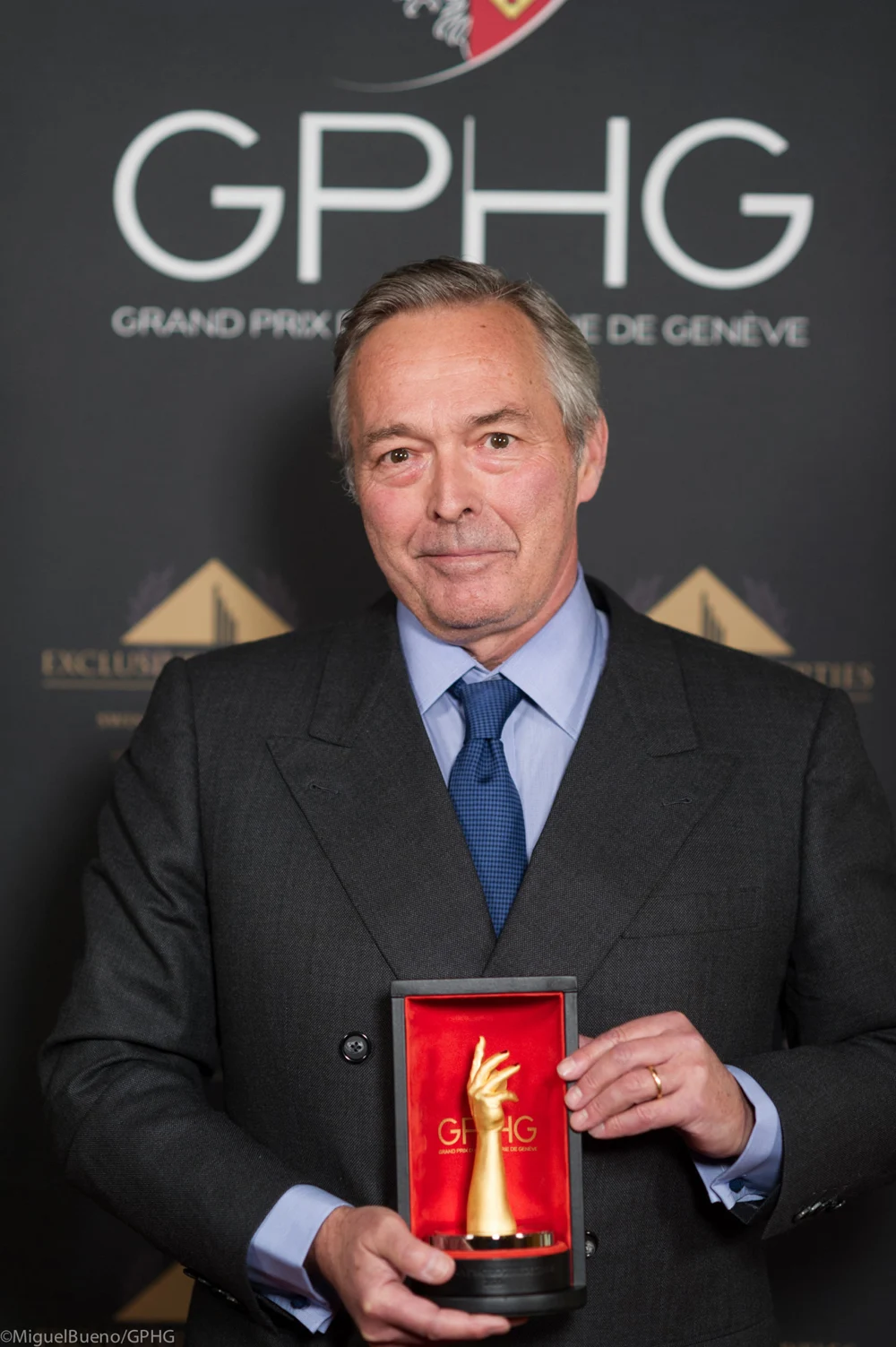
Image above – Karl-Friedrich Scheufele at the GPHG awards in 2020
As the watch industry has embraced modern manufacturing techniques such as CNC (Computer Numerical Control), EDM (Electrical Discharge Machining) and computer-controlled bar turning machines, concerns have been expressed regarding the possible extinction of historical methods. In his desire to preserve traditional watchmaking tools and techniques for generations to come, Mr Scheufele made an important announcement in 2019. Working with Time Æon Foundation, Chronométrie Ferdinand Berthoud stated it would produce a ‘handmade watch’, the Naissance d’Une Montre 3.
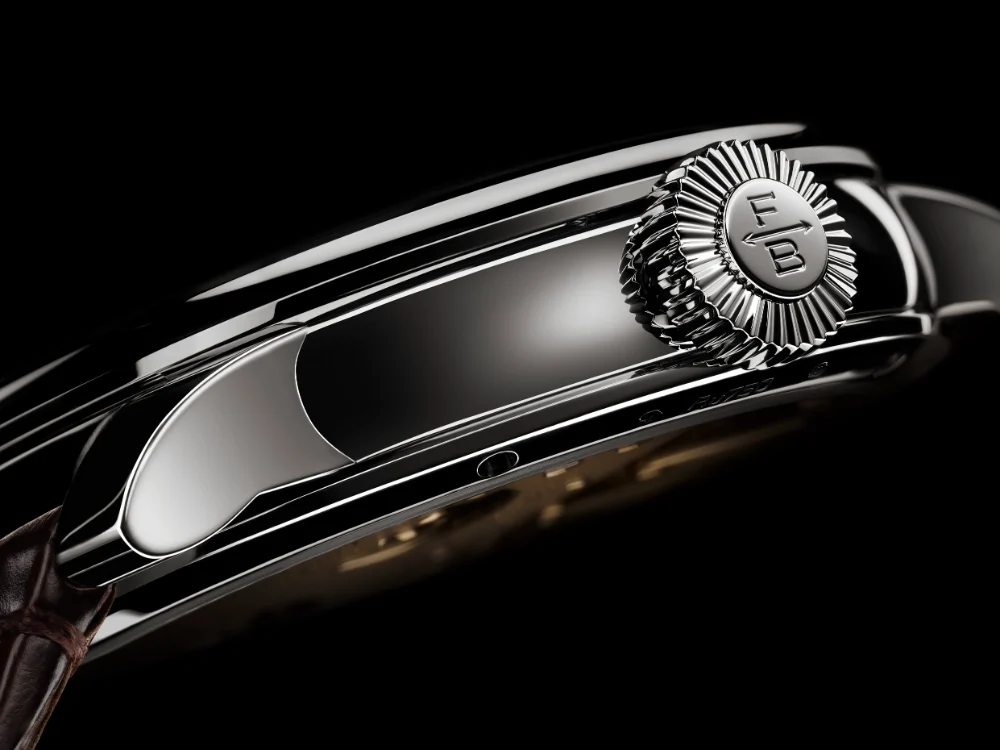
Image – Naissance d’Une Montre 3
In my next feature, I look behind the scenes at the making of Naissance d’Une Montre 3 and explain why this expression of watchmaking is both extraordinary and incredibly rare.