
Naissance d’Une Montre 3 – Part Two
In 2019, Chronométrie Ferdinand Berthoud, working in collaboration with Time Æon Foundation, announced it would craft a ‘handmade watch’, the Naissance d’Une Montre 3. It was a bold undertaking after the watch industry had so wholeheartedly adopted CNC, CAM, CAD and various other forms of computer-controlled equipment that promised a new era of efficiency. The rationale was simple, if traditional skills were no longer practised, they would eventually be lost forever. Recently, Angus Davies travelled to the Manufacture in Fleurier to witness first-hand watchmaking employing traditional methods.
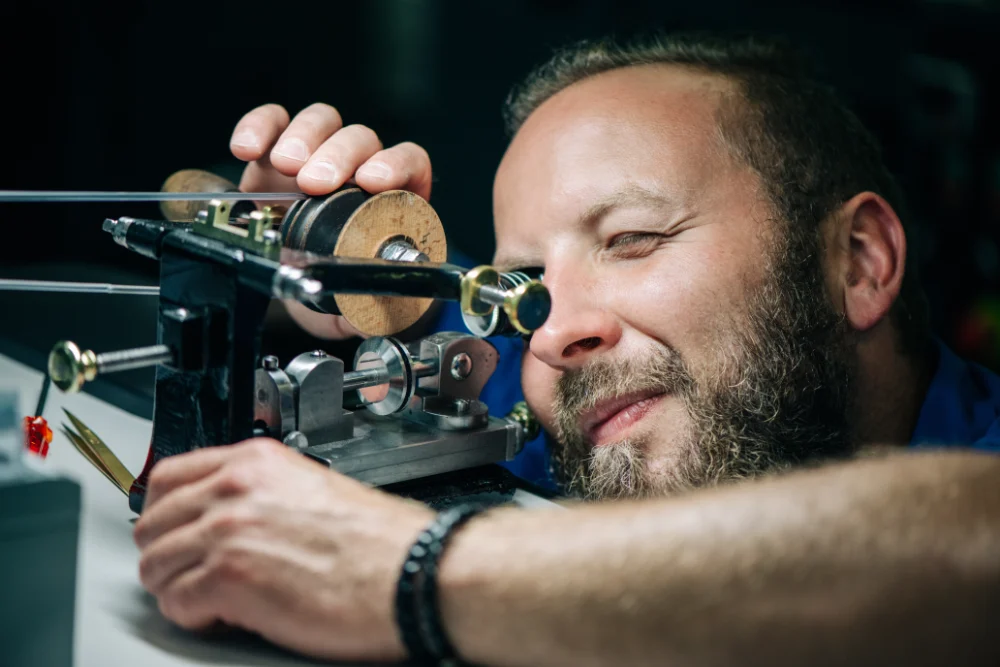
What do we mean by handmade?
Most commercial organisations employ marketing professionals, a group of individuals who are assigned various duties, including accentuating the attributes of a product. This task sometimes involves using terms, either intentionally or mistakenly, which convey a characteristic that is somewhat lacking. For instance, the term ‘quality food’ has been justly applied to Haute Cuisine, but conversely it has also appeared on the packaging of low-cost food items.
In the world of watchmaking, the term ‘handmade’ is frequently employed; however, it is seldom applied correctly. Allow me to elaborate.
The impact of the industrial revolution
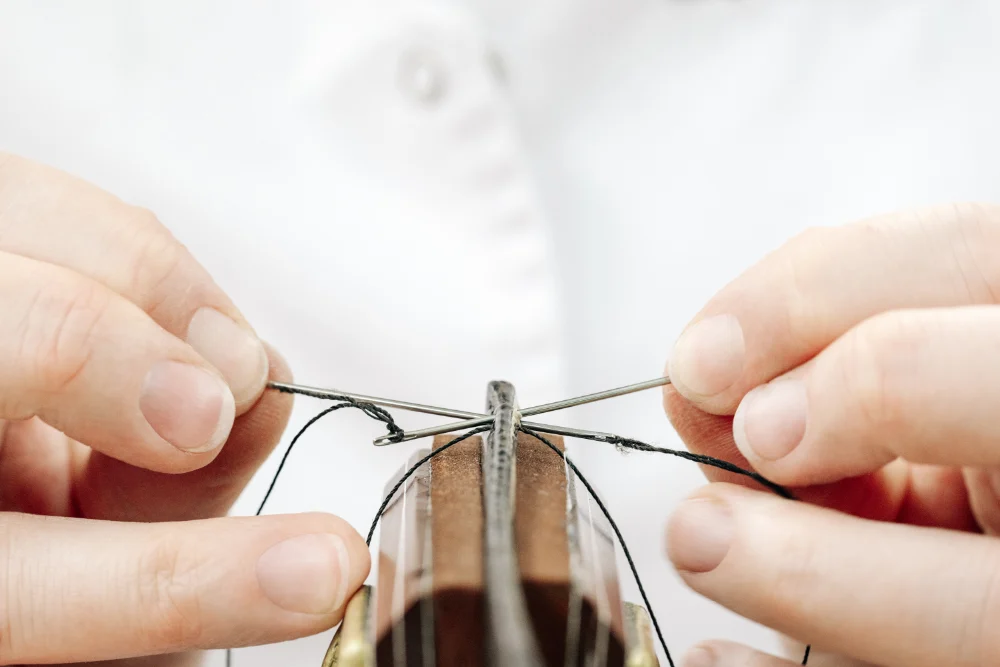
The watch industry has witnessed much change since the 19th century when many traditional hand crafting techniques began to be supplanted by mechanical production methods. Consequently, some skills were inevitably lost. Furthermore, this erosion of traditional techniques was accelerated with the advent of computerisation.
Today, ideas are seldom sketched on paper but conceived using CAD (Computer Aided Design). Similarly, many watch components are made using CNC (Computer Numerical Control), CAM (Computer Aided Manufacturing), EDM (Electrical Discharge Machining) and computer-controlled bar turning machines. These examples of high-tech equipment are not bad per se. On the contrary, they deliver product consistency, mitigate waste and allow companies to ‘produce’ cheaper, more accessible products.
However, the word ‘produce’ is often linked to volumes and efficiency, rather than craft, excellence and traditions. Indeed, since the early days of the industrial revolution (circa 1760), humankind has galloped towards the tangible benefits of industrialisation with scant consideration for the skills that may potentially be lost.
For example, the ancient skill of stone masonry, employed to make some of the most architecturally splendid churches, monuments and homes, experienced significant decline with the advent of the industrial revolution. The arrival of new stone cutting machines replaced hand-cutting and shaping techniques. Later, the widespread adoption of bricks and cast iron supplanted stone and its associated artisanal methods. Today, when admiring the interior of an important cathedral, there comes a sad realisation that some skills employed in the past have since been forgotten.

Time Æon Foundation – perpetuating watchmaking traditions
A concern shared by many individuals within the watch industry is that the growing dependency on computerisation will ultimately result in some skills being lost forever.
In 2007, Robert Greubel, Stephen Forsey and Philippe Dufour established the Time Æon Foundation, keen to preserve skills for future generations. Initially, it commenced indexing and cataloguing ‘endangered crafts’. It then sought to preserve such crafts in its desire to ‘protect the world’s watchmaking heritage’. To achieve its goals, the foundation, began to impart skills to a new generation in its quest to promote watchmaking excellence and potentially attract more individuals to take up watchmaking as a profession.
Does handmade mean without using machines?
The answer to this question is surprisingly, ‘no’. A handmade watch can involve using a machine or tool which is deemed to be an extension of the human hand. For instance, a hand guilloché dial, much admired by purists, is traditionally made on a rose engine lathe. This type of machine is equipped with a series of rosettes, but it is the artisan applying hand pressure to the cutter, while simultaneously rotating the headstock with their other hand, who is critical to success. There is an absence of computerisation, everything hinges on the hand-eye coordination of the operator. Unfortunately, some dials are marketed as guilloché despite being produced using a CNC machine. These latter dials lack the definition and becoming lustre of a hand guilloché dial, something that is apparent even to an untrained eye.
The jig borer is another traditional mechanical device used by watchmakers. It provides the means to make highly precise holes in sheet metal, eg mainplates, where the ‘centre to centre distances’ (the space between milled holes) is of paramount importance. The jig borer incorporates a microscope, includes a series of hand controls and is used to form holes with pinpoint accuracy. There is a notable absence of electronics and this traditional tool takes several years to master. Unlike a CNC machine, a jig borer is the very antithesis of mass production and is only used when creating very small quantities of components.
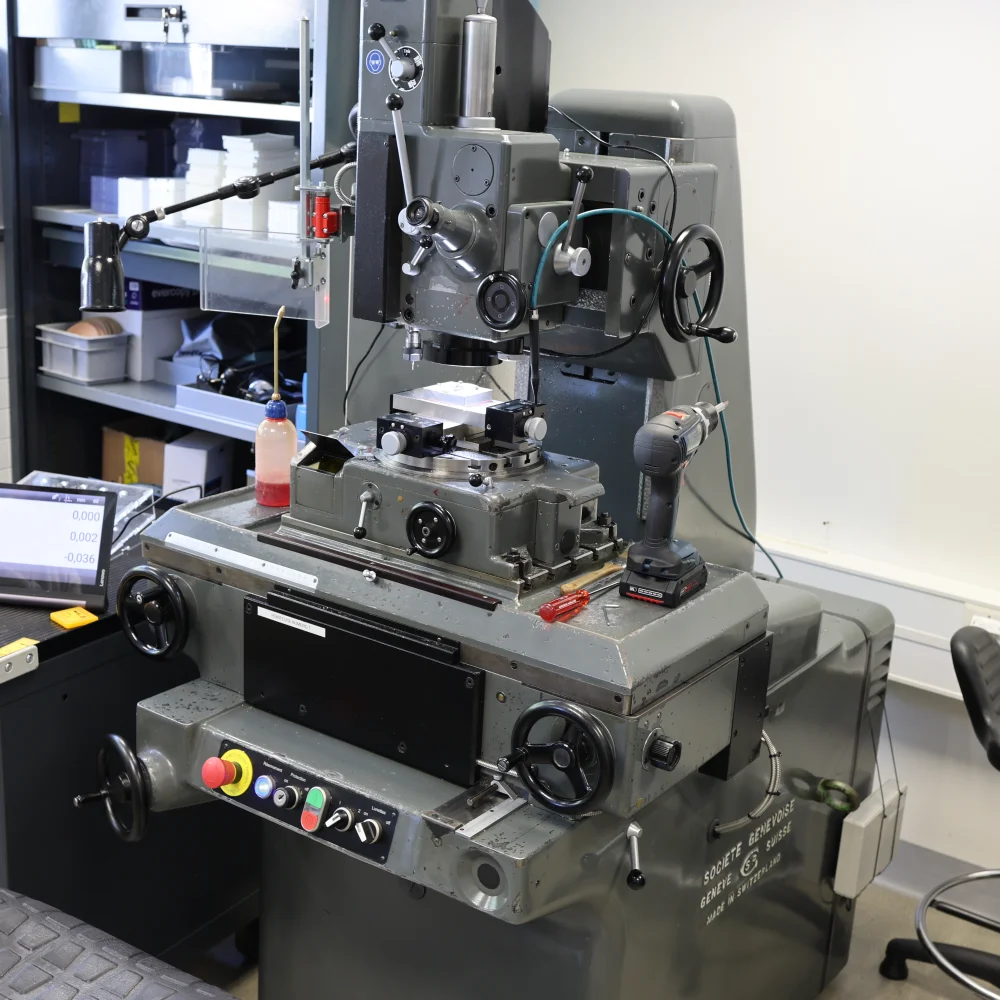
Image – SIP jig borer
As previously mentioned, machines such as rose engine lathes and jig borers are complex to operate and necessitate extraordinary artisanal skills amassed over many years. The machines are also very rare. It is not unheard of for a rose engine lathe to be over 100 years old or to witness a SIP jig borer being operated that was made back in the 1960s. Therefore, it is equally important that these machines are maintained and future generations are also trained in carrying out repairs and servicing.
Chronométrie Ferdinand Berthoud – ‘Tradition Workshop’
The ‘Tradition Workshop’ is a room dedicated to the making of components for the Naissance d’Une Montre 3. It’s a modestly sized area where various components are crafted, including wheels, pinions, mainplates, bridges and screws. These raw components ultimately leave the Tradition Workshop destined for the ‘Decoration Room’ (see later), before eventually being supplied in kit form to a small team of highly proficient watchmakers. Thereafter, the process of assembly and regulation takes place within a dust-free environment.
While some machines within the Tradition Workshop were already owned by Chronométrie Ferdinand Berthoud or its sister company, Chopard, additional machines had to be procured for the making of Naissance d’Une Montre 3. Moreover, all machines, both existing and newly acquired, had to be adapted for their intended purpose.
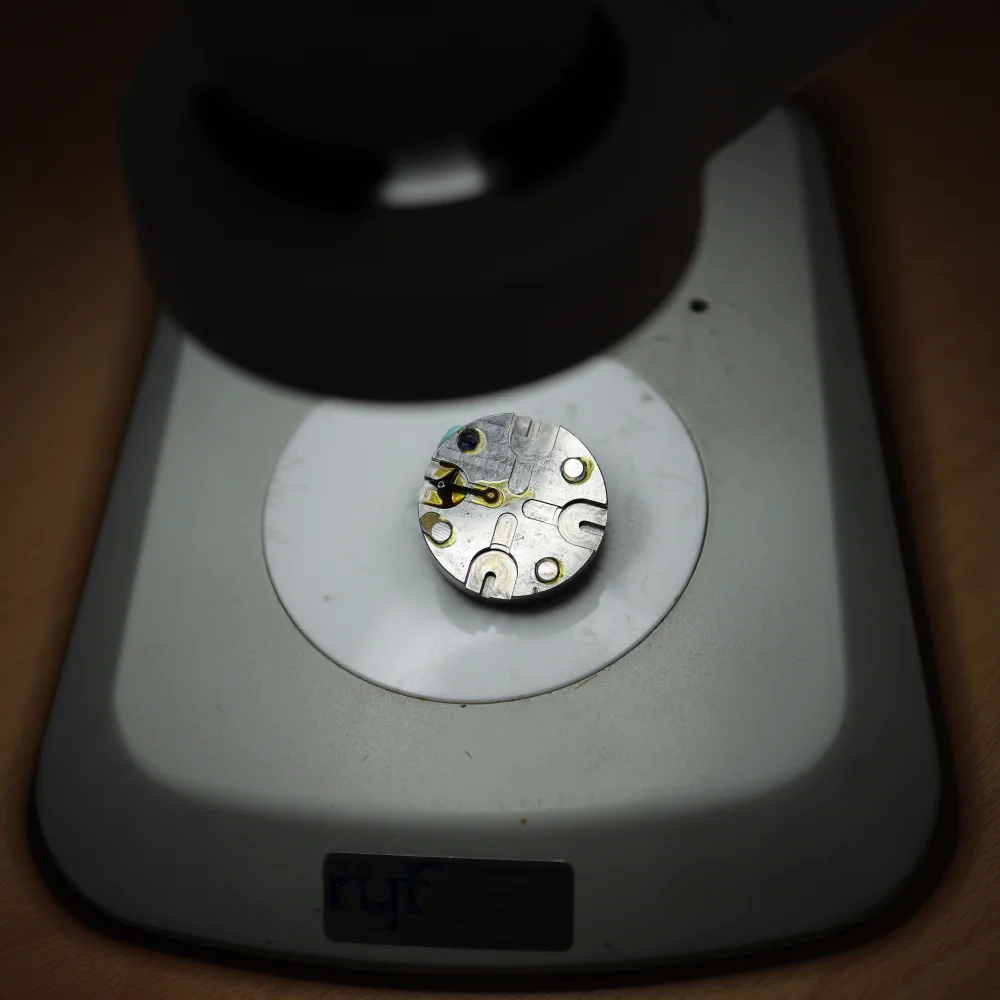
Image – a bridge made for the FB 2 (prior to decoration)
Over the years, I’ve toured various watch factories and they are usually arranged in the same way. Everything begins with ‘T0’, a discrete area playing host to CNC, EDM and computer-controlled bar turning machines. Bars of brass or steel along with square plates of brass (each termed a ‘barquette’) are processed, culminating in the creation of mainplates, bridges, springs, screws, etc. As parts are milled, they are cooled with suitable lubricants to prevent any heat damage and to mitigate the wearing of tools, etc. Inevitably the presence of these lubricants necessitates such processes take place away from those clean and dry areas used for decoration and assembly in order to reduce the risk of contamination.
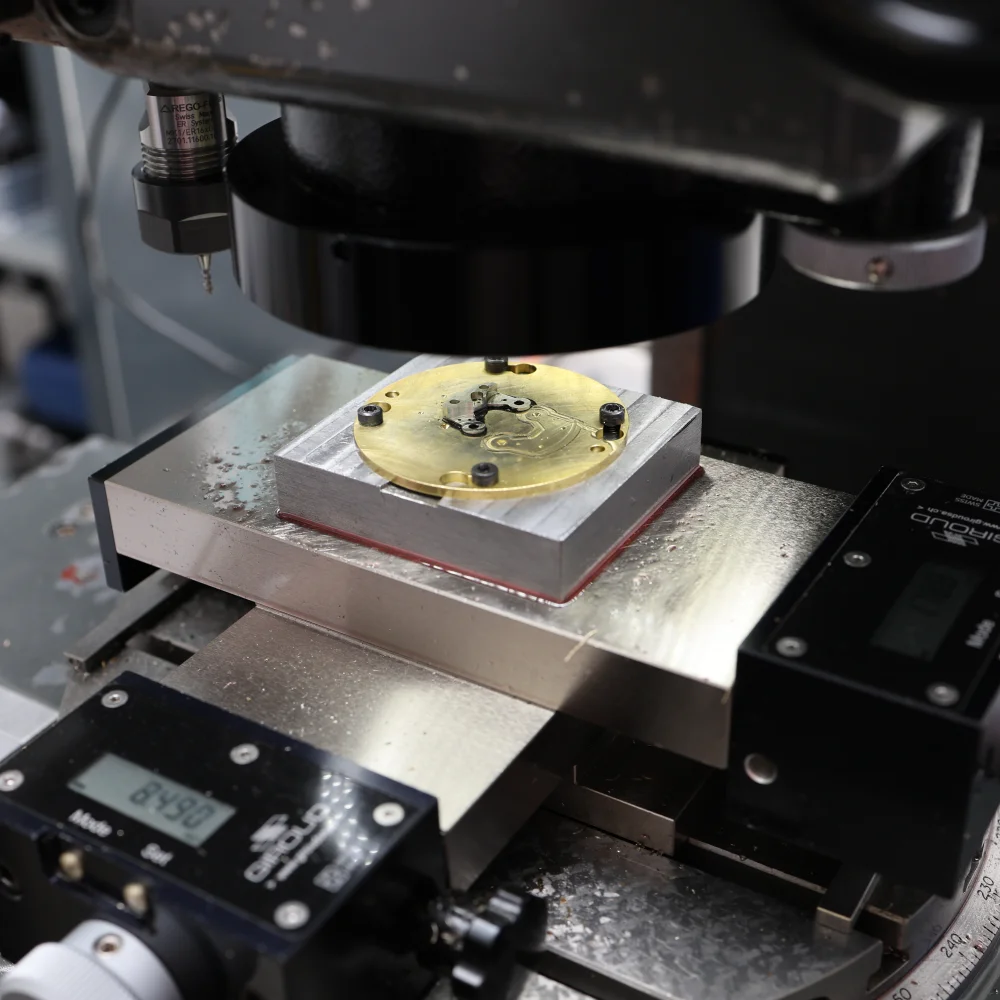
Image – bridge being milled on a SIP jig borer
The ‘Tradition Workshop’ is far cleaner than the typical ‘T0’ departments you will find in most industrialised watch factories. The absence of CNC, bar turning machines, etc, obviates the need for using vast amounts of lubricants. Nevertheless, drilling metal or forming parts using a lathe does create metal swarf that must be contained within the workshop to avoid it being transmitted to the ‘Decoration Room’. Hereafter, I have detailed some examples of components made within the Tradition Workshop.
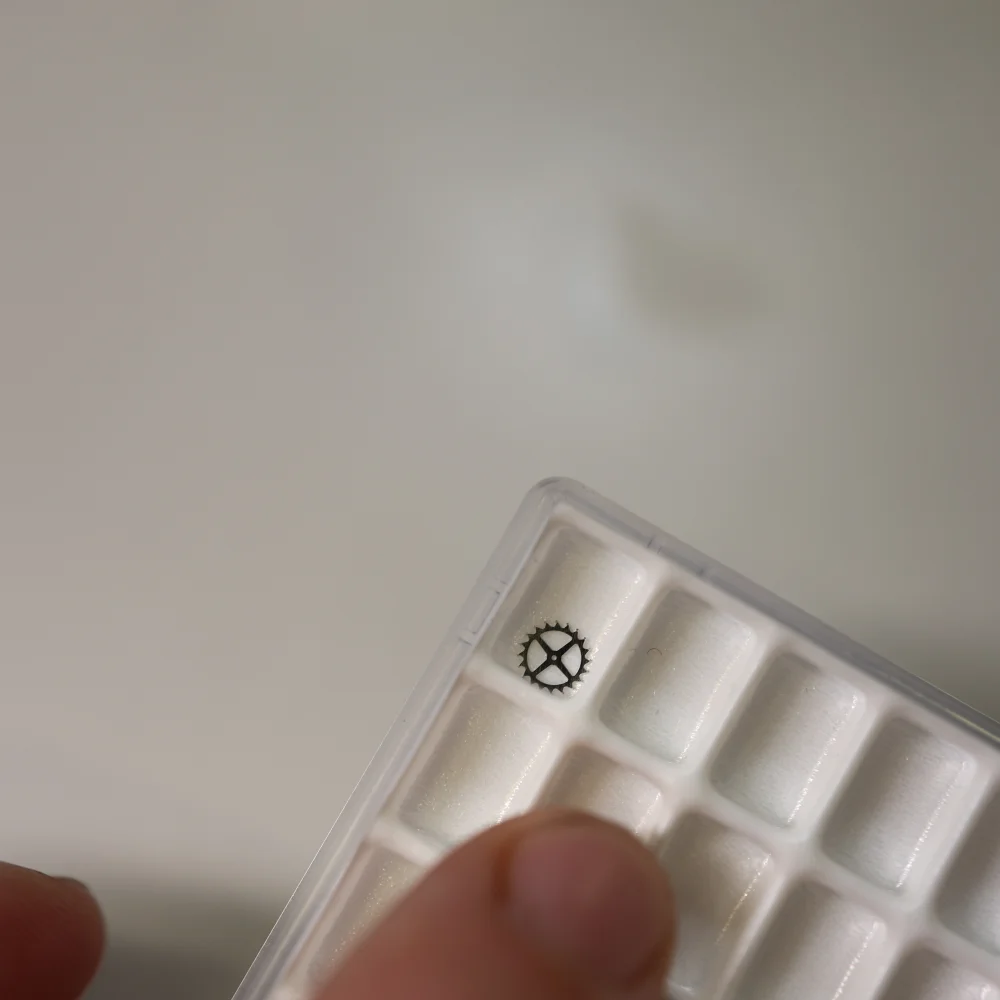
Image – escape wheel made using traditional methods
Mainplate
Ordinarily, I would expect to see a CNC machine being fed with several barquettes. After following a programmed sequence of milling operations, the machine will produce numerous mainplates, a process that takes place in just a few hours.
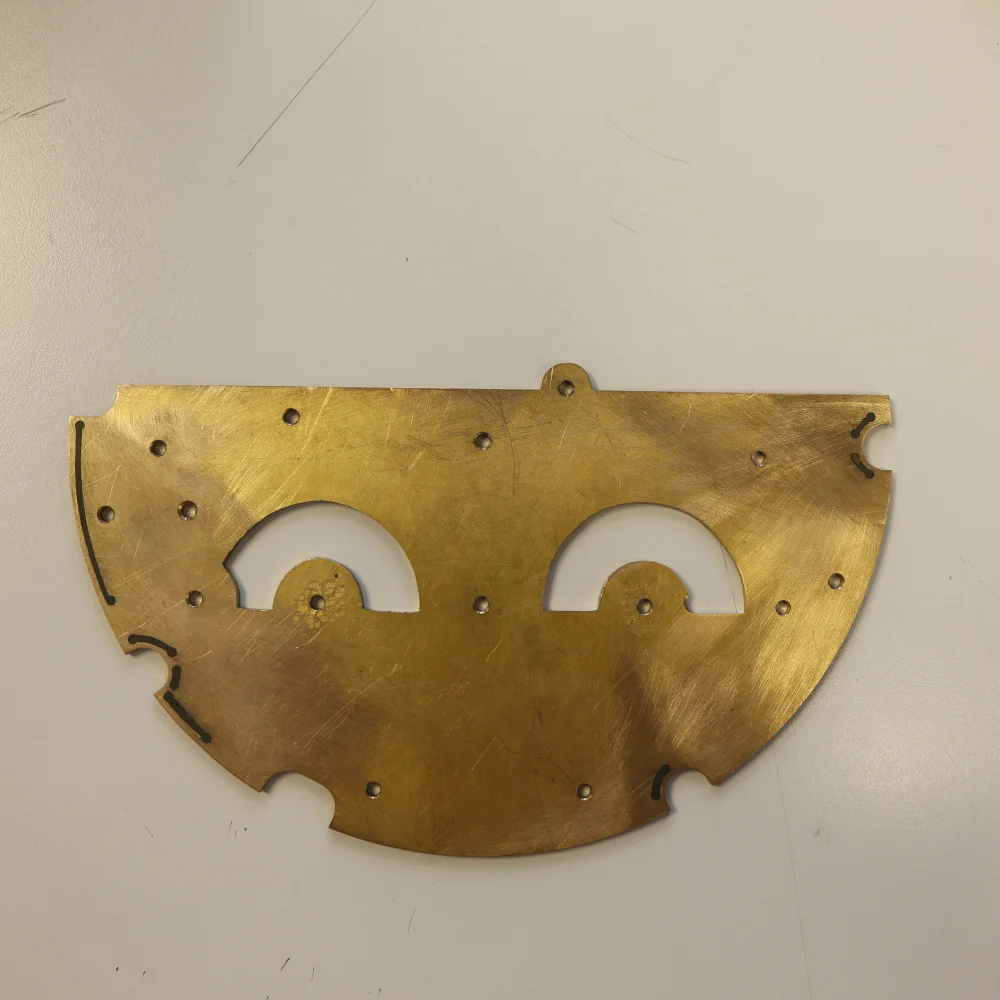
However, creating a mainplate using artisanal methods is a more time-consuming operation. In the Tradition Workshop, the mainplate is precisely shaped and every hole is drilled with great care using a SIP jig borer. It takes two weeks to make just one mainplate. Staff working within the workshop are mindful to always exercise great care. Drilling a hole within a mainplate only to discover it is in the wrong place can prove a costly mistake.
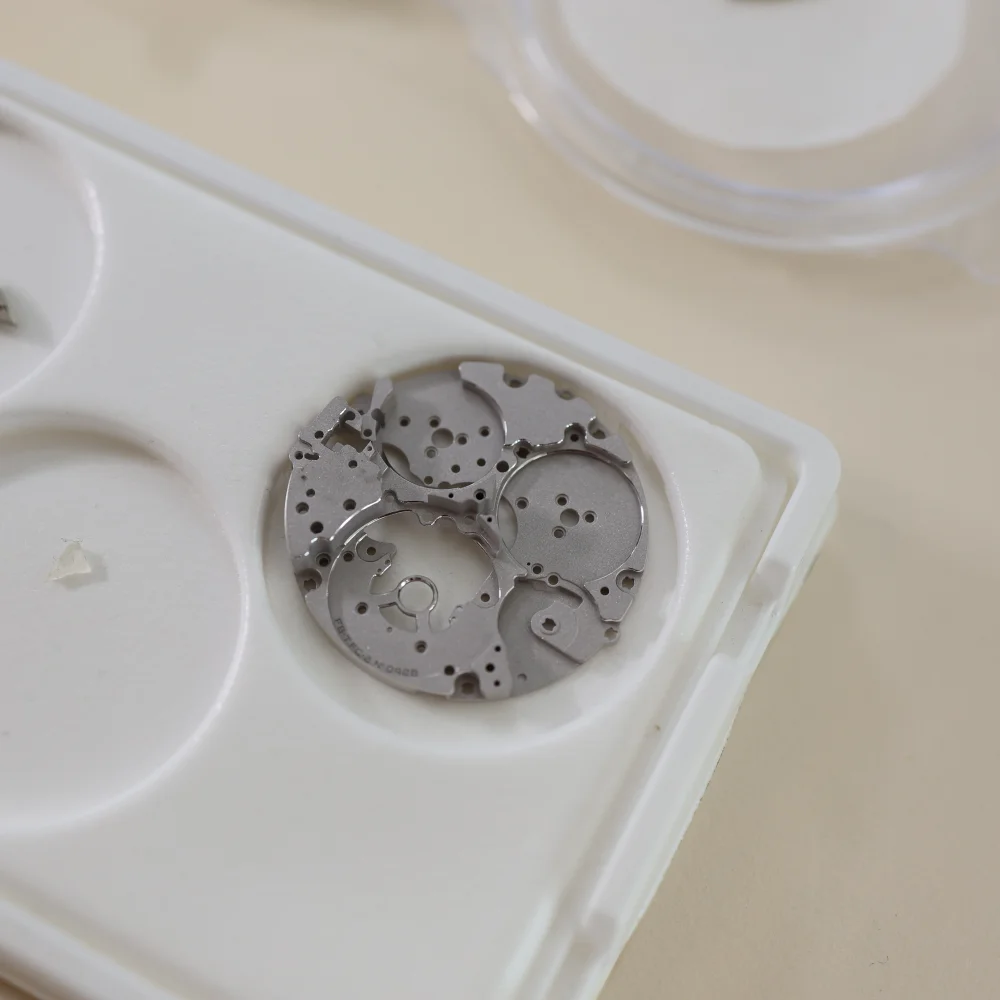
Image – mainplate in decoration room with gleaming bevelled edges. Note the numerous holes within the plate, all milled individually
Barrel Bridge
While touring the workshop, I witnessed a barrel bridge being shaped using a pantograph, a mechanical linkage used to trace a large-scale model. The models in the workshop are typically 5 – 10 times the actual size. Again, this approach is more protracted with a barrel bridge taking approximately 3 days to produce in ‘grey’ (before decoration).
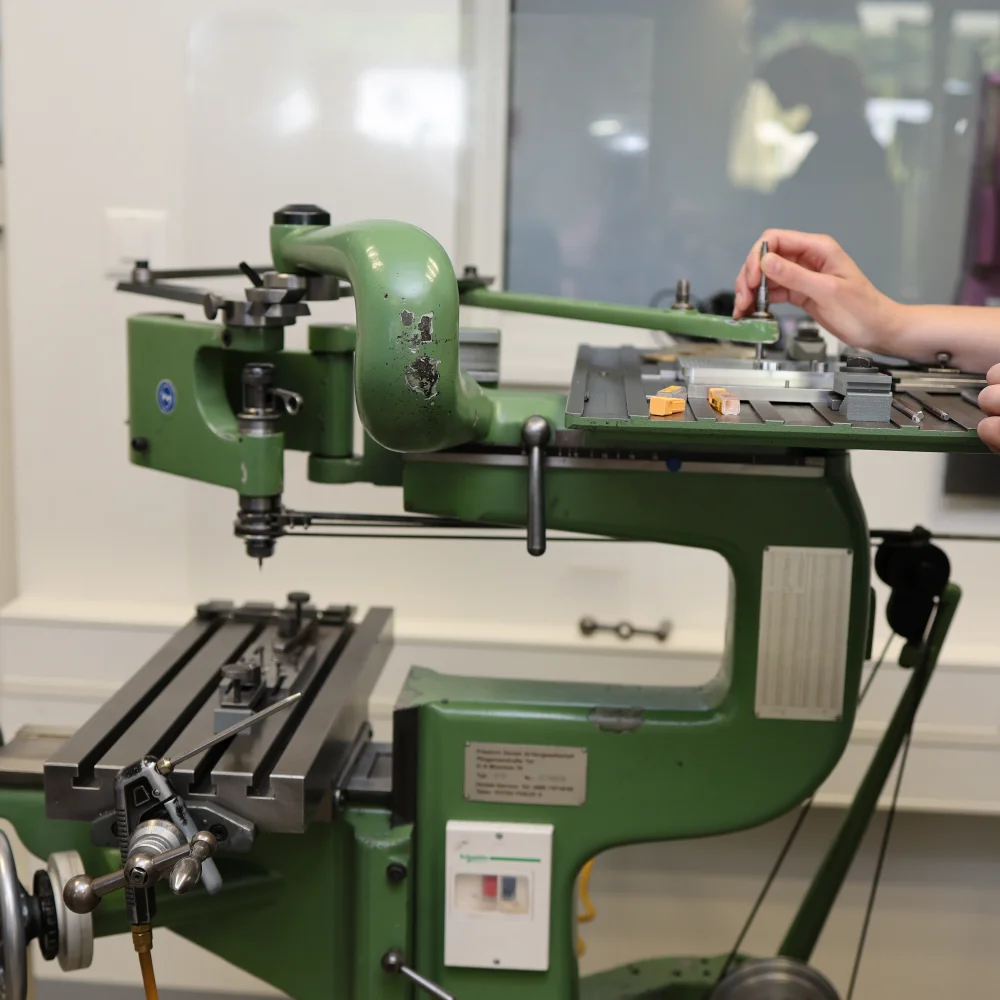
Images above – show the pantograph being used and the large-scale model
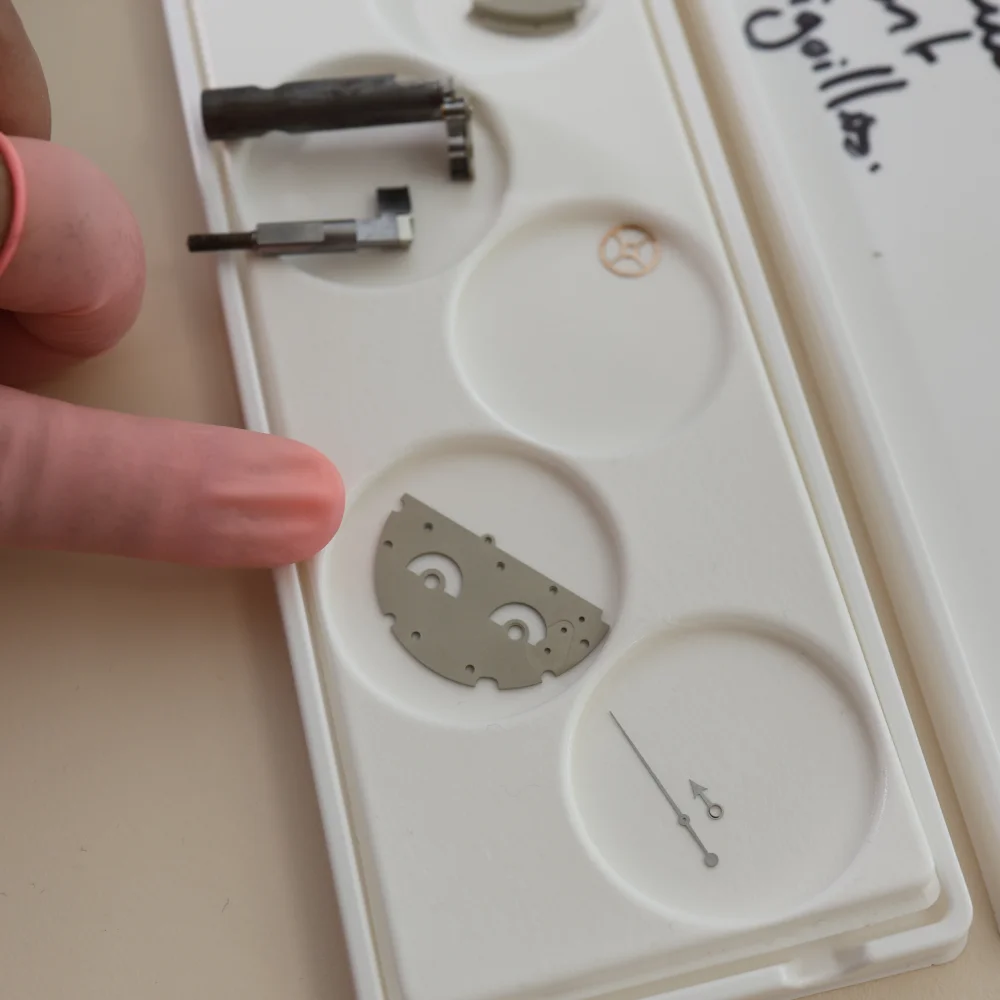
Image above – shows the resultant barrel bridge (as well as hands, located nearby)
Pivots
Pivots are burnished and rounded using a Jacot tool in conjunction with a bow that resembles a violin bow. This technique has been employed in artisanal watchmaking since the 18th century. The pivot is retained with a clip and rotated by the shaft of the spindle using the motion of the bow. At the same time, the watchmaker moves a burnisher against the pivot to polish and harden its surface.
Pinions
The leaves on pinions are also polished using a bow. It takes at least 30 minutes to refine the leaves of one pinion and the Naissance d’Une Montre 3 contains 17 pinions in total.
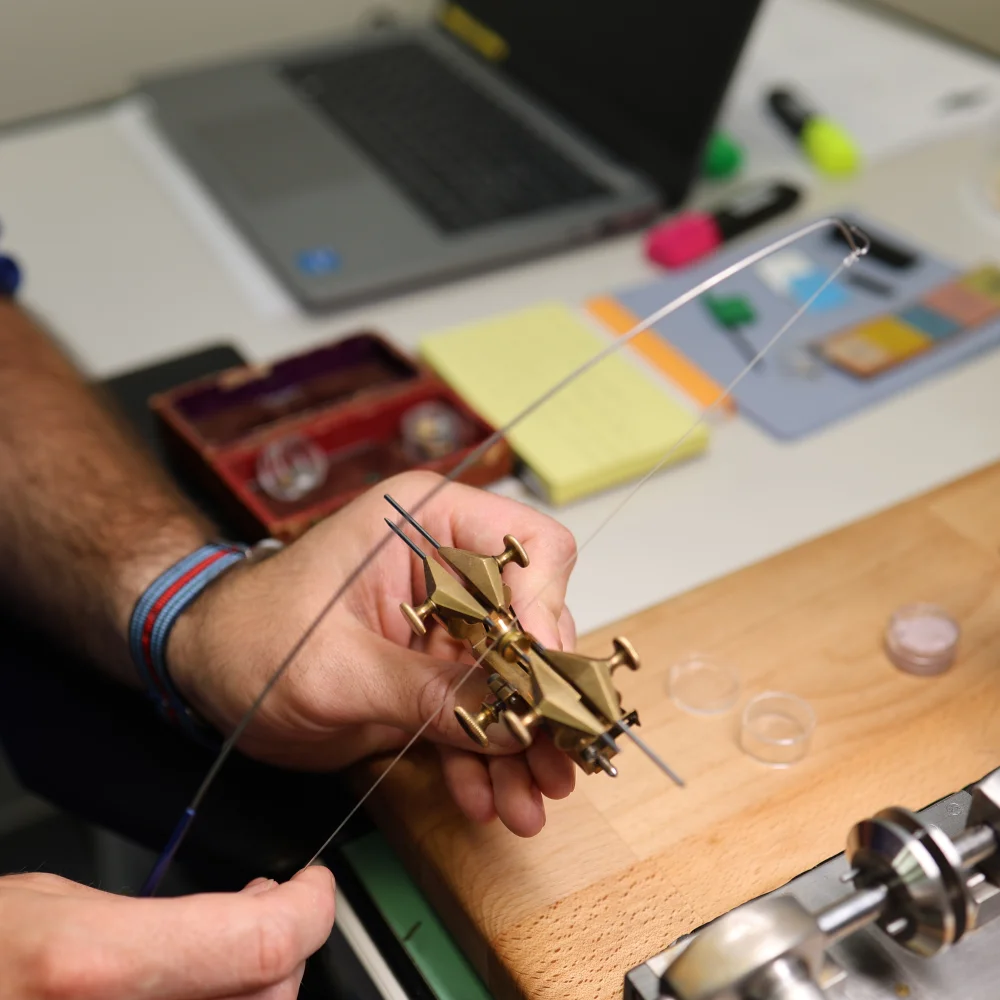
Image – polishing pinions using a bow
Screws
A bar-turning machine can produce a handful of screws in just a few minutes. However, as you will no doubt have ascertained by this stage, adopting an artisanal approach to making screws proves far more protracted.
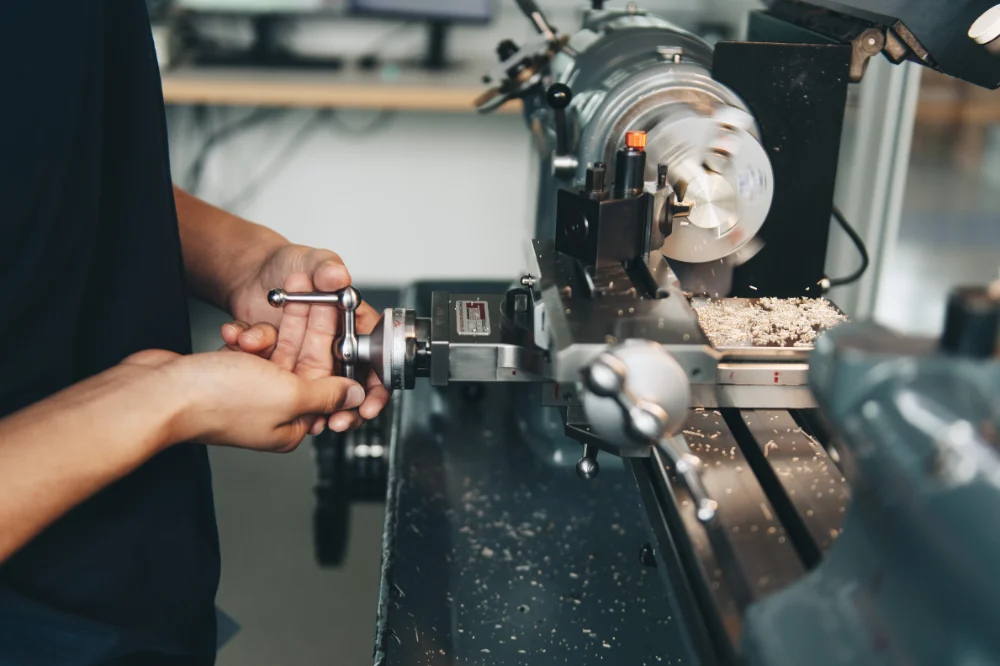
Image – Schäublin lathe (circa 1960)
In the Tradition Workshop, screws begin life as a section of metal rod which is turned on a Schäublin lathe (circa 1960) to form a blank. Thereafter, threads are imparted to the blank using a die. The artisan turns the die in one direction before partially rotating it backwards to remove any swarf that could potentially mar the thread. The screws are ultimately secured in a holder and polished on a tin plate that’s smeared with paste to achieve a mirror finish (see later). Some of the screws gracing the Naissance d’Une Montre 3 are subsequently heat blued.
Again, this artisanal approach is time-consuming and is in stark contrast to industrially produced screws formed using a bar-turning machine.
Chronométrie Ferdinand Berthoud – Decoration Room
The Decoration Room plays host to a team of highly skilled finisseurs. The finest hand craftsmanship techniques synonymous with Haute Horlogerie are practised within the room, but again with a distinct absence of computerisation.
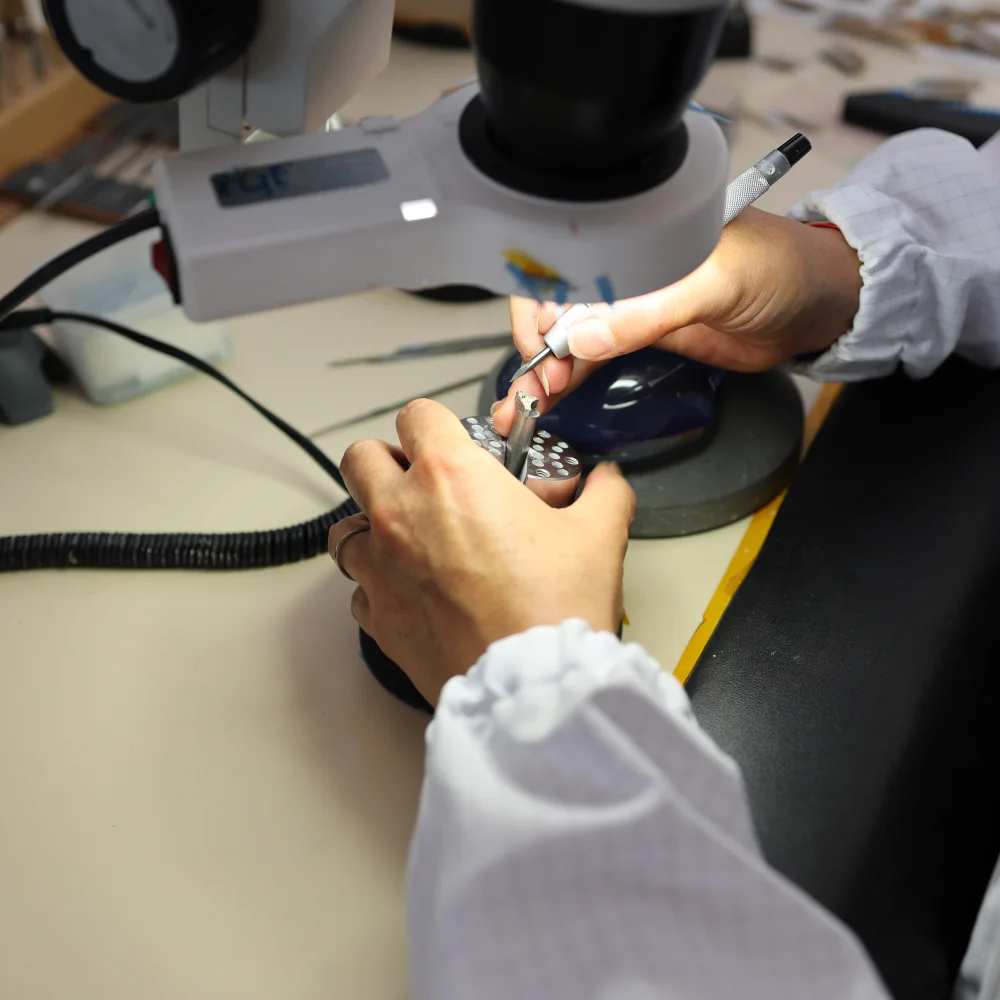
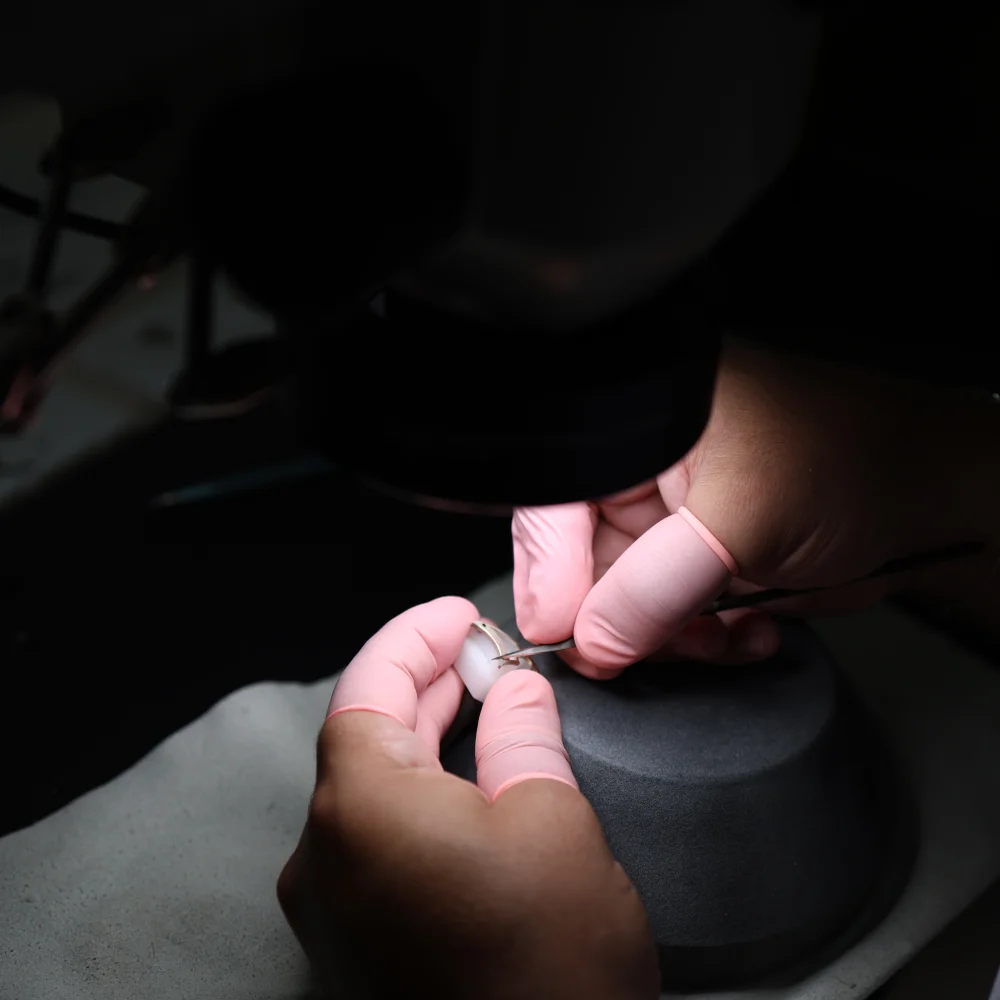
Images above – cutting the bridges by hand to create an angle
The appearance of parts crafted in the Tradition Workshop is subsequently enhanced in the Decoration Room. Angles are introduced to bridges by manually cutting the metal with a sharp blade, then filed before being rubbed with abrasive papers. Ultimately, the bevels are polished with gentian wood. My host stressed the importance of ensuring each angle is uniform, making sure they contribute to the harmonious appearance of the movement.
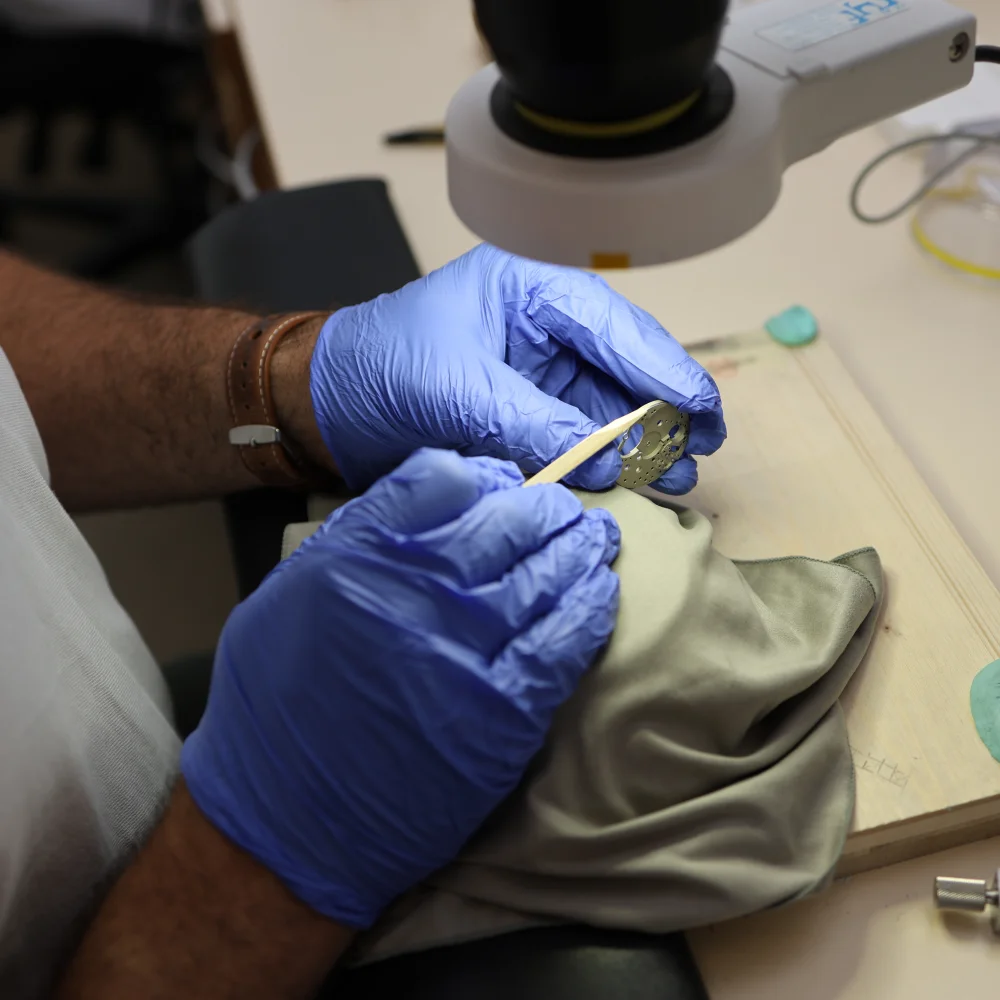
Image – bevels on mainplate being polished with gentian wood
Like the bridges, the wheels are hand chamfered and then polish by hand. At one point, I was shown a wheel belonging to a gear train. The wheel was endued with ’32 closing angles’, all of which were crisp, angular and devoid of rounded corners. Again, everything was painstakingly polished. Likewise, the hands of the Naissance d’Une Montre 3 are cut by hand then polished. The sides of the hands are satin finished and ultimately all surfaces are subjected to thermal bluing.
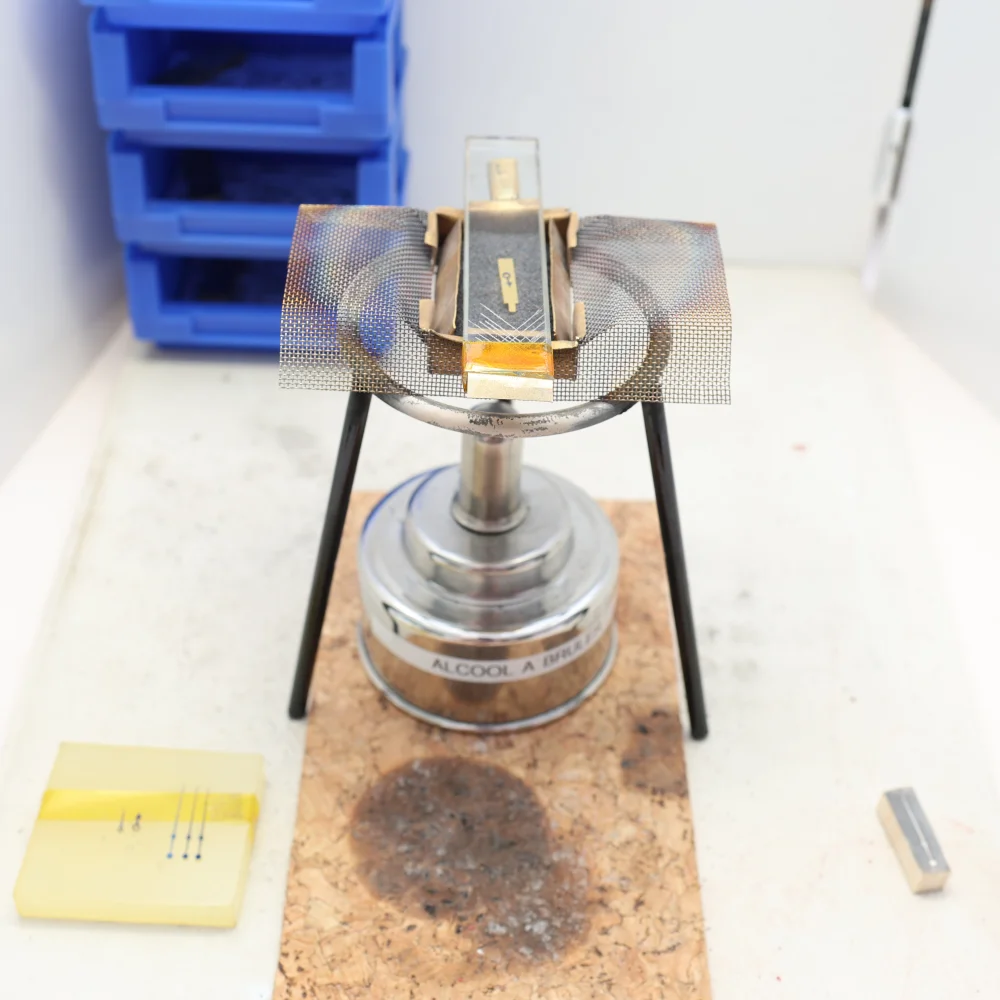
Image above – thermal bluing of hands
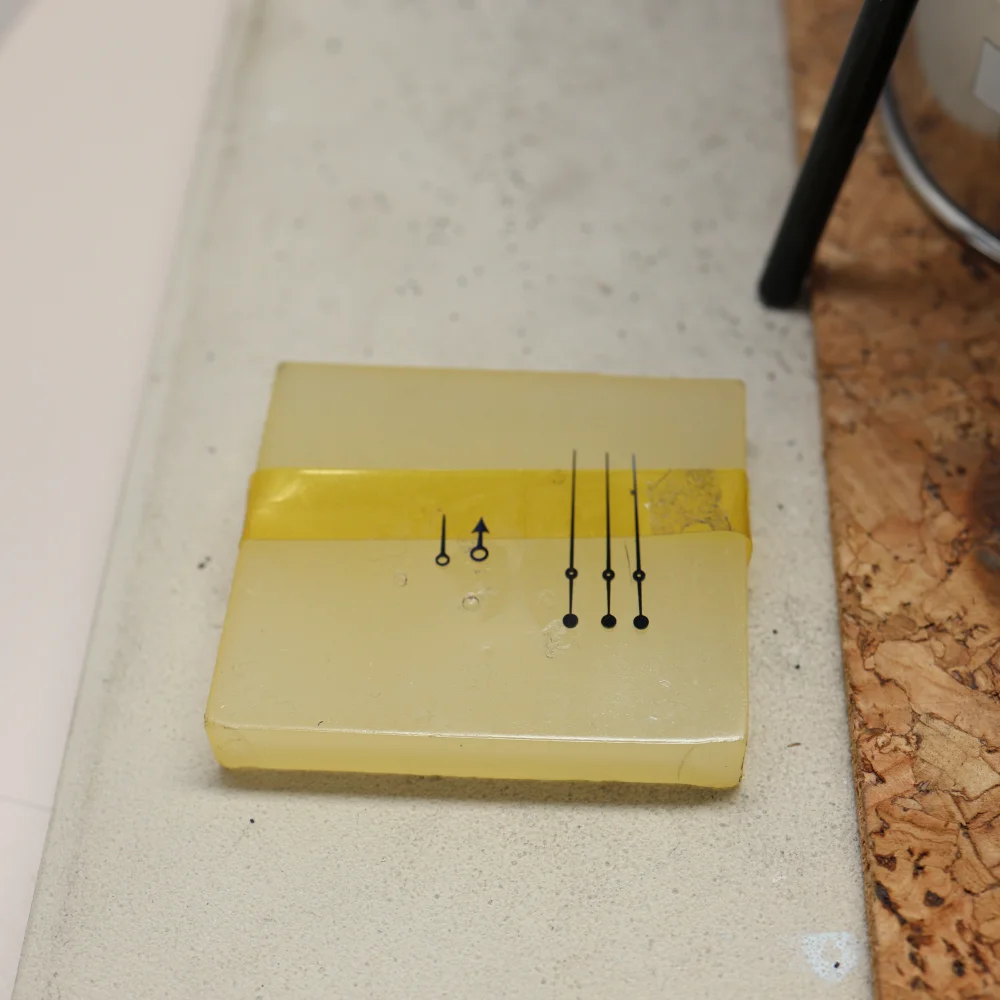
Image above – a set of hands
Consistent with the finest expressions of watchmaking, various steel components are subject to poli plat (aka mirror polishing / black polishing), widely regarded as one of the most challenging finishes to execute. A flat component is placed upon a tin plate smeared with diamond paste and then, using only the hand, it is subject to a rotary motion. This form of polishing imbues the surface with a mirror-like appearance that can seem black from one angle and virtually white from another perspective. The technique is very labour intensive, often taking several hours to complete, but in this no-compromise environment, personnel seldom ‘clock watch’.
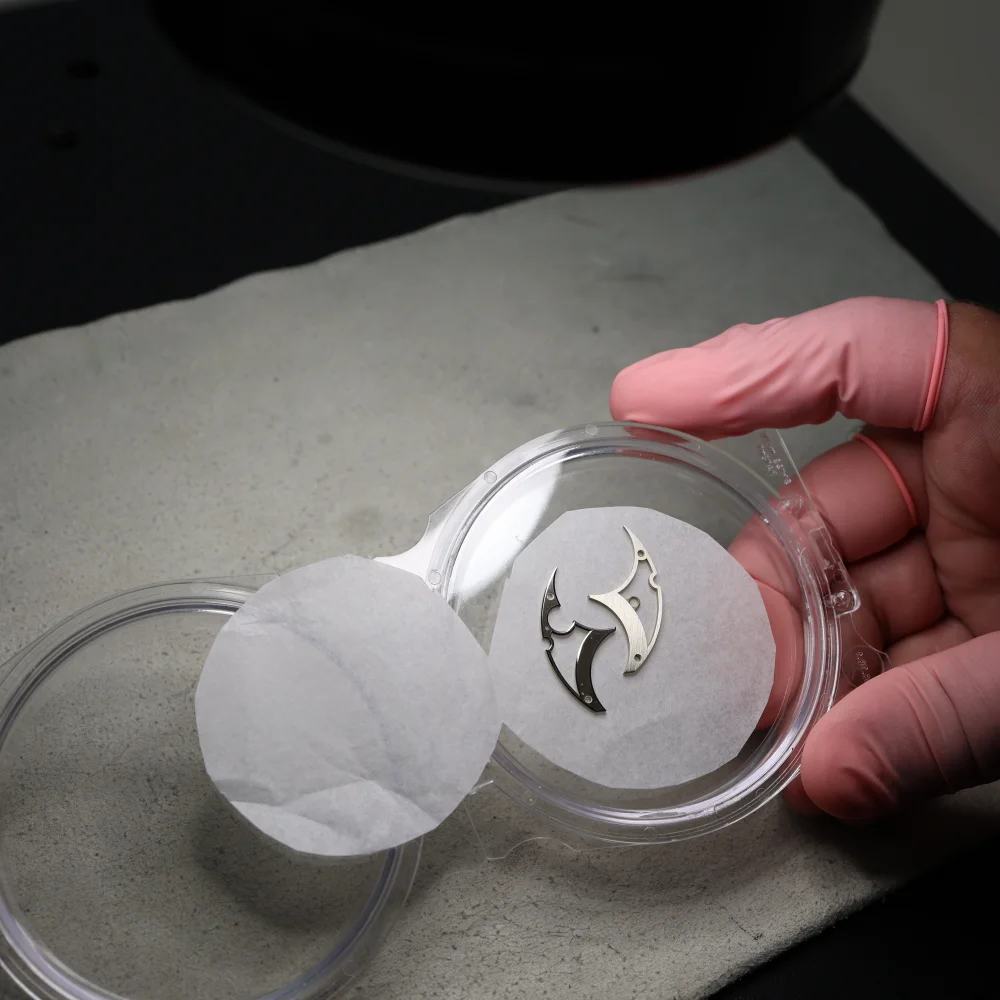
Image above – two identical components – before mirror polishing (right), after mirror polishing (left)
Indeed, this is a world where everything is constantly inspected through a Bergeon 6.7 x watchmaker’s loupe, delivering a degree of magnification that reveals even the slightest imperfection. No shortcuts nor automated means to keep the bean counters happy, just perfection wherever you care to look.
Naissance d’Une Montre 3 – habillage
Another dedicated workshop, located at Chopard’s facility in Meyrin, is responsible for habillage (those parts other than the movement) and uses similar machines as the Tradition Workshop in Fleurier. Once again, the emphasis is on handcraftsmanship and the total rejection of computer-controlled machines.
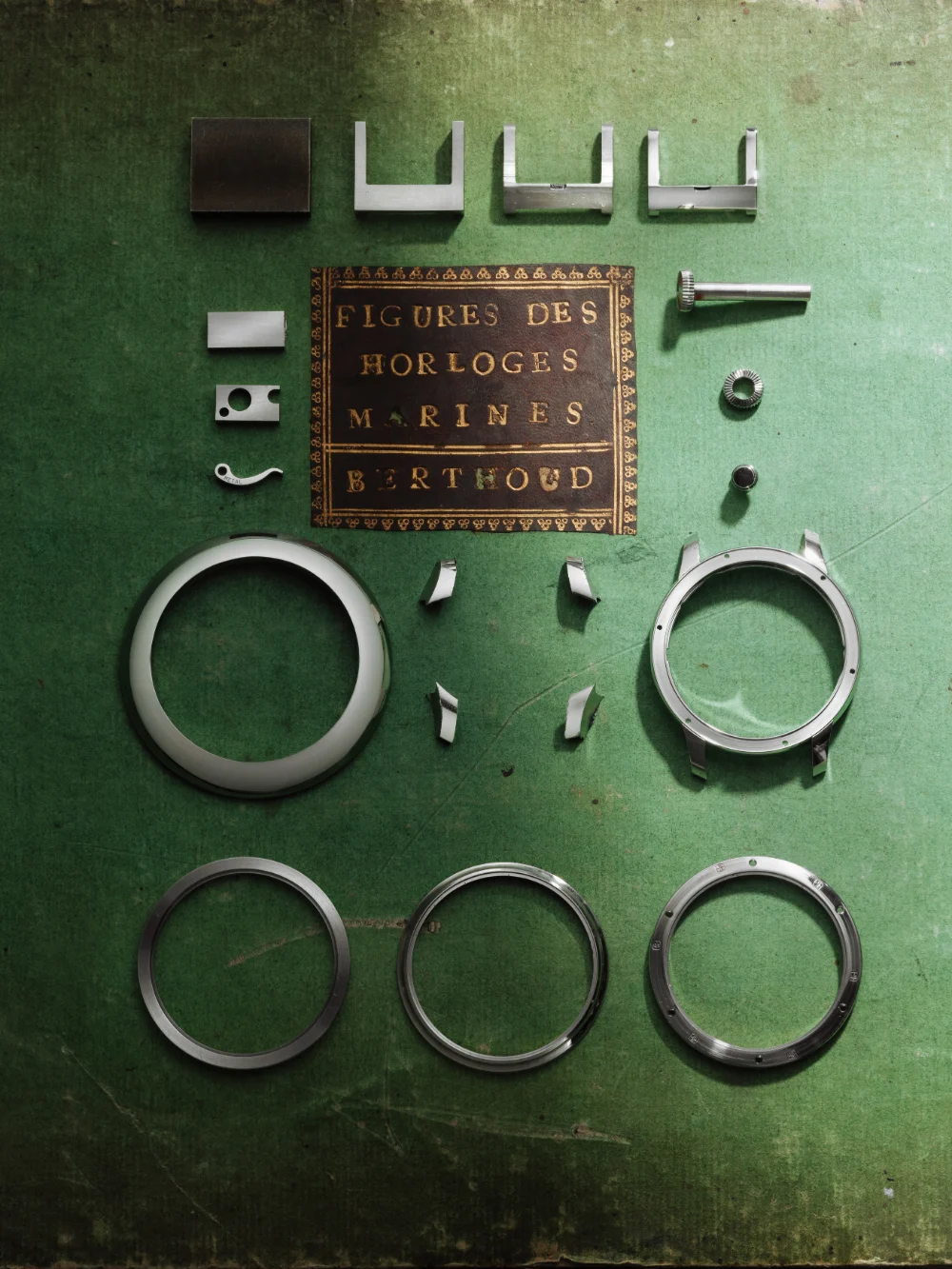
Image – Naissance d’Une Montre 3 – case construction
Chronométrie Ferdinand Berthoud – uniting all components
The parts from the Decoration Room and the components made in Meyrin are presented to the company’s watchmakers in kit form. Within a dedicated assembly area, the flawless parts are united, regulation takes place and various quality controls are performed.
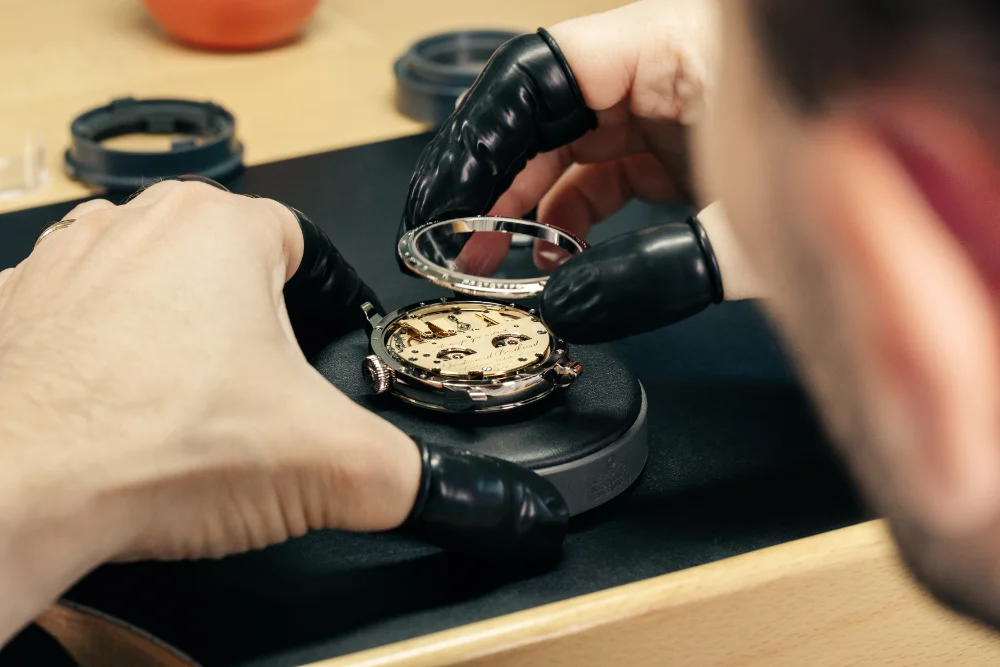
Image – Naissance d’Une Montre 3 – final assembly
Naissance d’Une Montre 3 – 11,000 hours required
While components are made by hand, rather than utilising computerised methods, the resultant quality and tolerances of the handmade parts match those made using CNC, etc. The exalted level of hand finishing found on the Naissance d’Une Montre 3 requires more than 800 hours to perform. Moreover, the total amount of time necessary to bring this watch to fruition is 11,000 hours. Unsurprisingly, by virtue of its prolonged creation, Chronométrie Ferdinand Berthoud will only make 11 examples of the Naissance d’Une Montre 3.
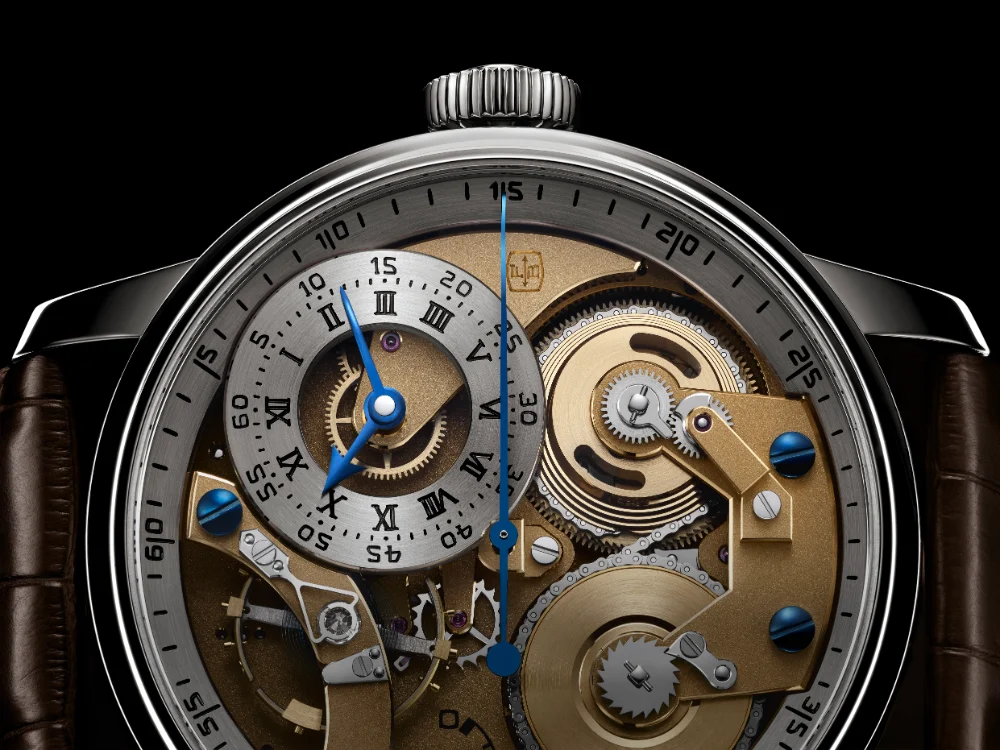
In my next feature, I discuss the inspiration that led to the creation of the Naissance d’Une Montre 3 and examine the completed watch in detail.