
Ferdinand Berthoud FB 1 Watch Review
The Chronométre Ferdinand Berthoud FB 1 is the inaugural release from the newly-revived prestigious marque, brought to life again by avid watch collector, Karl-Friedrich Scheufele. This fine expression of Haute Horlogerie features tourbillon movement with fusee-and-chain transmission, stopworks and an ingenious power-reserve indicator employing a cone and feeler system.

Isles of Scilly naval disaster (1707)
In 1707, four ships belonging to the British Royal Navy were lost off the Isles of Scilly. The tragedy, one of the worst in maritime history, saw 1,550 souls lose their lives. The grave magnitude of this event led the British Parliament to establish the Longitude Act of 1714 and subsequently the Board of Longitude was formed.
The Board of Longitude offered a reward of £20,000 for a method of determining longitude at sea to within half a degree (equivalent to two minutes of time) after a voyage of six weeks.
John Harrison – longitude problem
John Harrison, a joiner from Lincolnshire, England, solved the ‘longitude problem’ with his first ‘marine timekeeper’, the H1. Construction of the H1 took place between 1728 and 1735. Whilst it performed well during a trial at sea, Harrison continued to refine his ideas, releasing further marine chronometers during his lifetime. The H2 and H3 were constructed between 1737 and 1759, whilst the H4 (1755 – 1759) completed successful sea trials in 1762. This latter marine chronometer resembled a pocket watch, measuring 13cm in diameter, whilst Harrison’s earlier marine chronometers were much bulkier clocks.
Ferdinand Berthoud – French Navy
Ultimately, this was a period when the supremacy of the seas was of national importance. On the other side of the English Channel, the French Navy, under the reign of Louis XV, was also striving to overcome the ‘longitude problem’.
Ferdinand Berthoud, a son of the Val-de-Travers, Switzerland, travelled to Paris when he was only 18 years of age to study clockmaking. Eight years later, in 1753, Berthoud became a Master Clockmaker at the decree of King Louis XV’s council.
Berthoud was clearly a learned young man, writing a number of reference papers. Furthermore, in 1763, his two-volume horological treatise, ‘Essai sur l’horlogerie’ was published. The following year, his contribution to horology was recognised by the Royal Society in London and he was elected an ‘associate overseas member’.
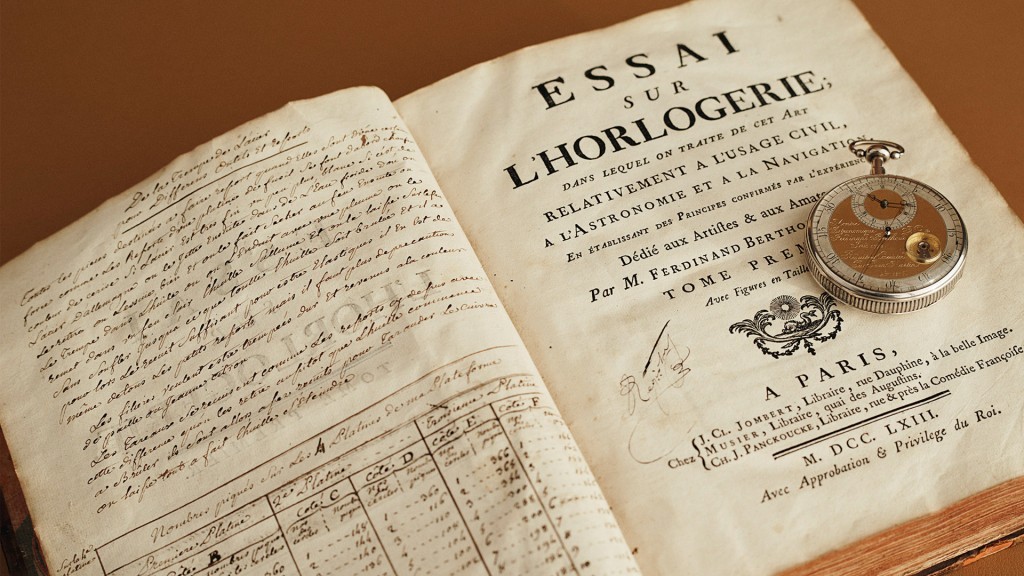
The technical prowess and creativity of Berthoud was exceptional, guaranteeing his place in horological history. His marine chronometers proved remarkably accurate, capable of measuring longitudes with incredible precision. Indeed, his marine chronometers No.6 and No.8 concluded successful sea trials on board the corvette ‘L’Isis’ during an 18-month journey from Rochefort to Santo Domingo. Thereafter, in 1770, Ferdinand Berthoud was awarded the title of ‘Horloger Mécancien du Roi et de la Marine’ (Horologist-mechanic to the King and the Navy) and received an order for 20 marine chronometers from the French Admiralty.
Karl-Friedrich Scheufele – a passion for watch collecting
A few years ago, whilst touring Chopard Manufacture in Fleurier, I had the good fortune to visit the company’s atelier-based museum, the charmingly named L.U.CEUM.
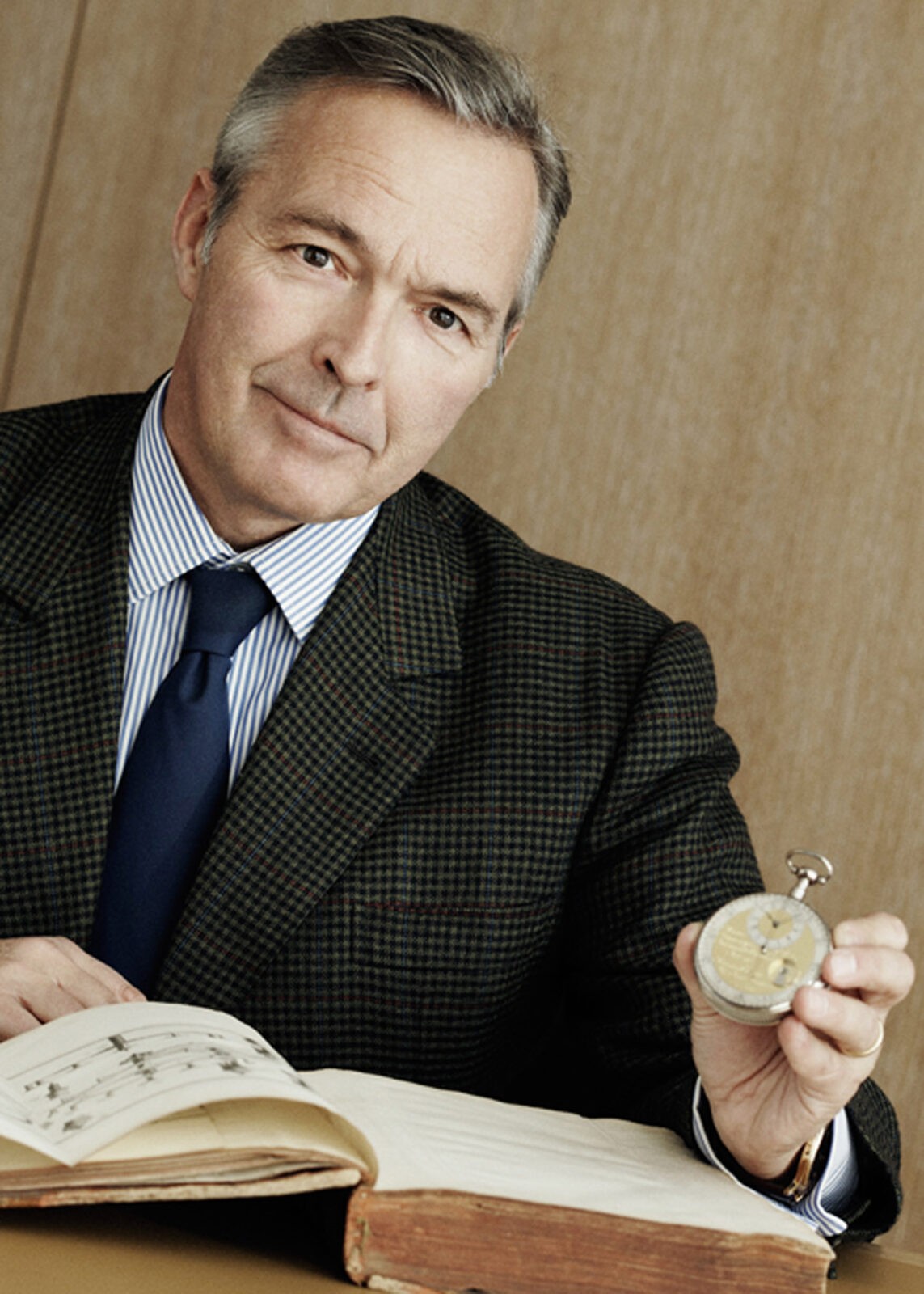
Karl-Friedrich Scheufele, co-President of Chopard and President of Chronométrie Ferdinand Berthoud, is an avid collector of clocks and watches.
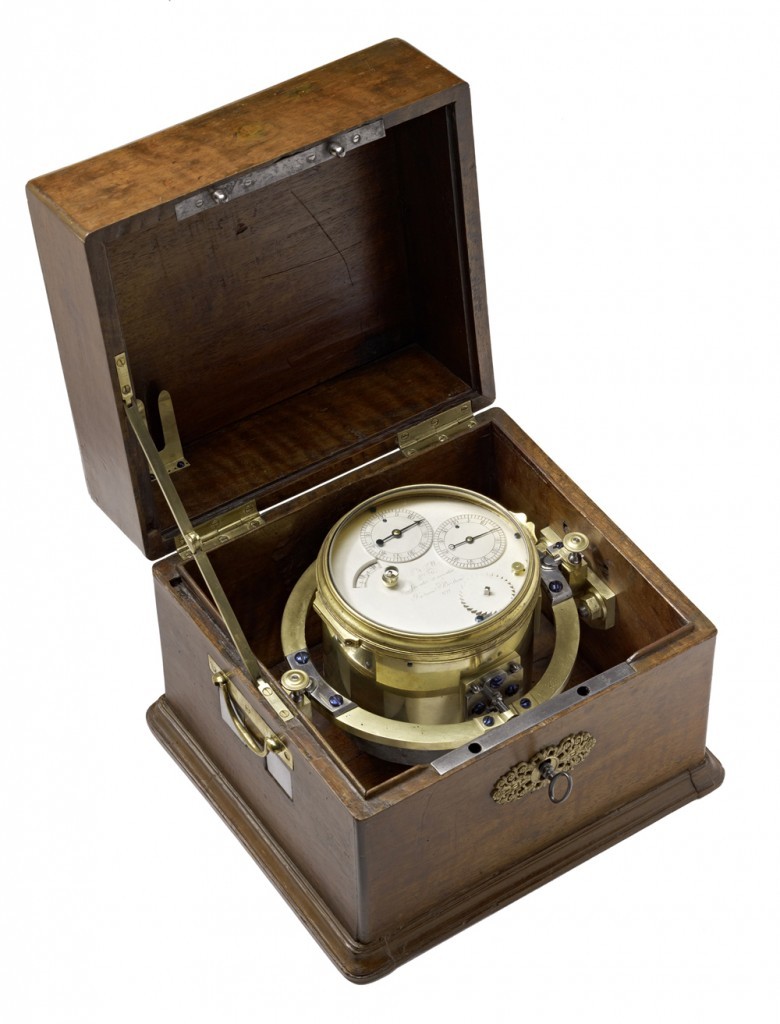
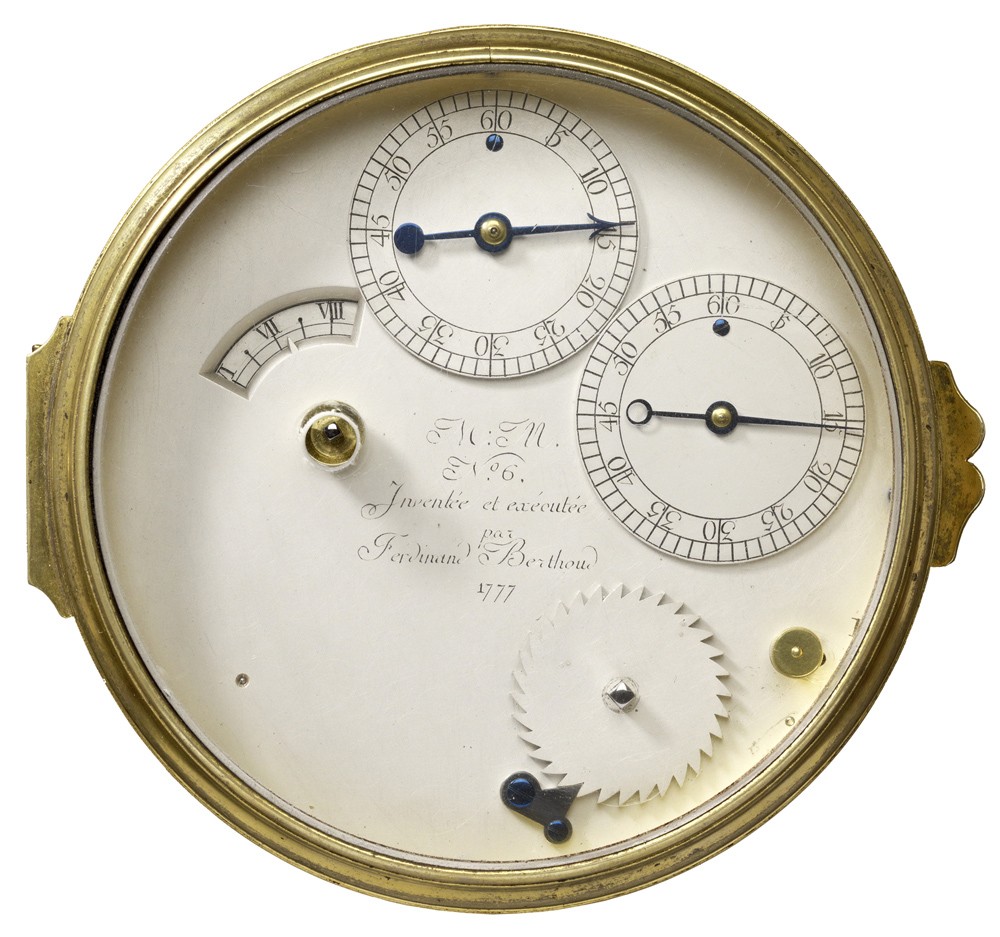
Within the confines of the L.U.CEUM, sat alongside timepieces created by Ferdinand Berthoud’s descendants, resides a marine clock M.M. no. 6, dated 1777. It was this marine chronometer which ignited a desire within Mr Scheufele to revive the Ferdinand Berthoud name and create new watches for today’s most discerning watch collectors.
Ferdinand Berthoud name acquired in 2006
Mr Scheufele acquired the Ferdinand Berthoud name in 2006 and embarked on a personal journey to realise a new, modern-day timepiece worthy of the Chronométrie Ferdinand Berthoud nomen. The Ferdinand Berthoud FB 1, recently launched at an event in Paris, is the splendiferous conclusion to Mr Schufele’s voyage into the highest echelons of haute horlogerie.
Ferdinand Berthoud inaugural model released in 2015
I have been eagerly awaiting the Ferdinand Berthoud FB 1, expecting horological greatness based on my profound respect for Chopard’s in-house expertise and personal encounters with its mouthwatering L.U.C timepieces. I was not to be disappointed and confess that the Chronométre Ferdinand Berthoud FB 1 is my favourite ‘novelty’ of 2015. It is a technical tour-de-force which masterfully blends a plethora of attributes to comely effect.

Ferdinand Berthoud FB 1 – contemporary styling
Thankfully, Chronométrie Ferdinand Berthoud has not produced a cynical replica of a timepiece from yesteryear. The styling of this watch is modern, bold and very original. The aspiration of Mr Schuefele was to create a contemporary timepiece which ‘Ferdinand Berthoud might have created if he was living now’.
The resultant watch, penned by the company’s Creative Director, the incredibly talented Guy Bove, brims with exquisite flourishes of style. It was during the presentation which accompanied the launch, that I suddenly became aware of my involuntary nods of appreciation. Each element of the complex 44mm case is delightful and appears to have been the considered result of prolonged contemplation. Indeed, Mr Bove’s diligent efforts have delivered a sublime horological work of art.
Ferdinand Berthoud FB 1 – case options
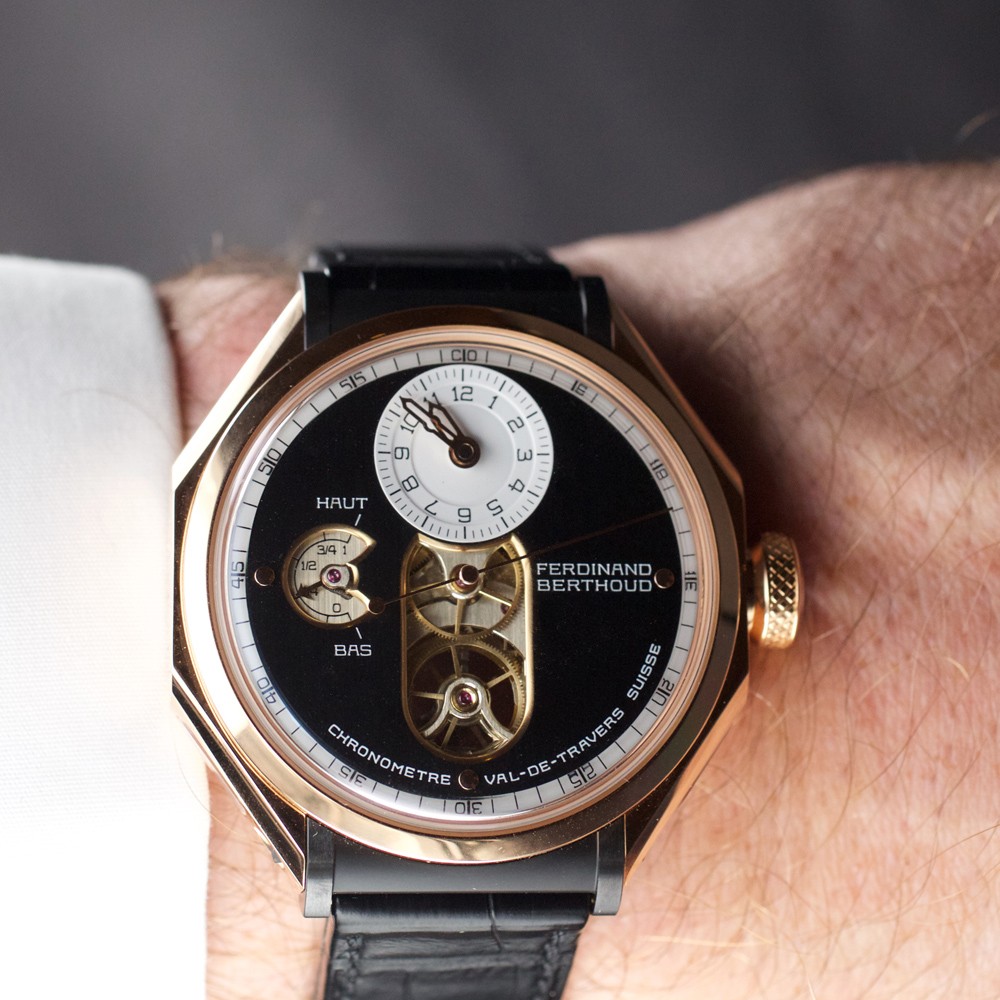
The Ferdinand Berthoud FB 1 is offered in two variants, an 18-carat rose gold and black ceramic model and an 18-carat white gold and titanium option. The choice of case material dictates the dial colour presented.
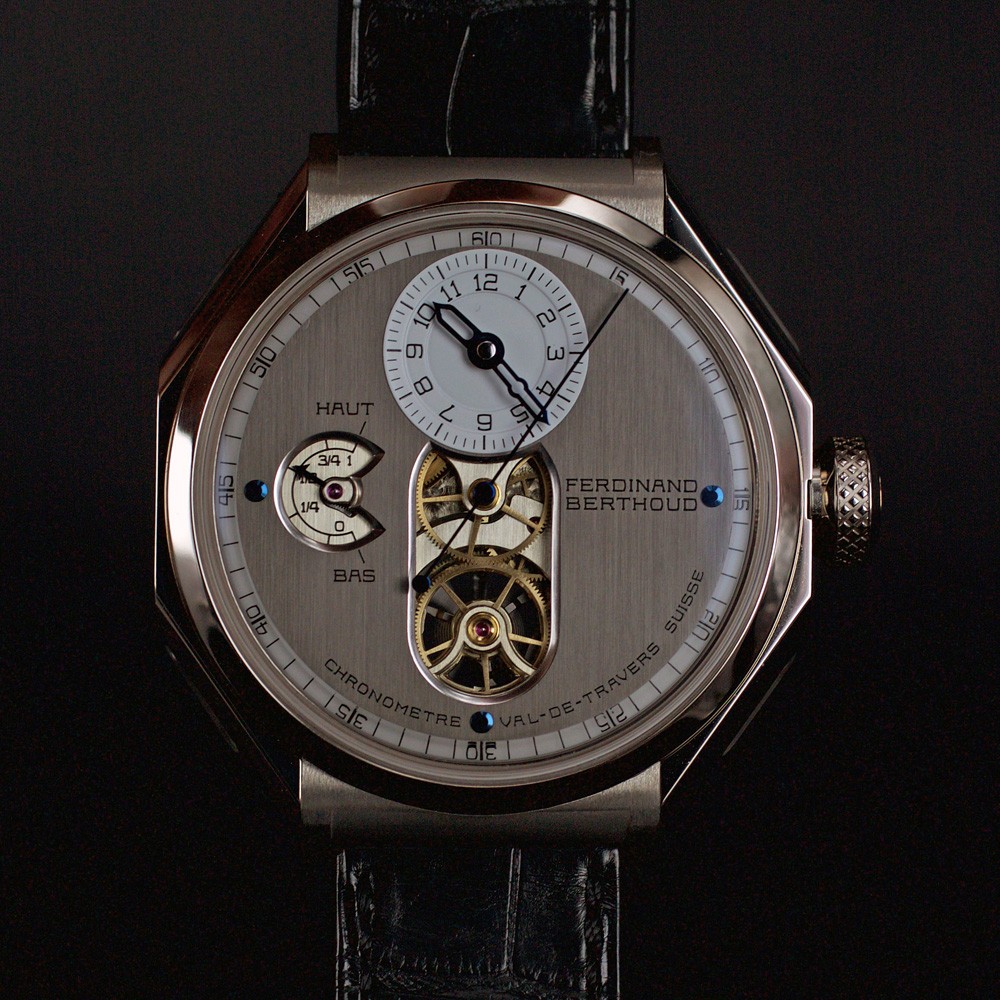
The rose gold and black ceramic version exhibits a delightful warmth. However, I felt especially drawn towards the 18-carat white gold and titanium model. Its vertical satin-finish ruthenium dial, exhibits a cool, understated persona and its grey canvas confers a muted air. It is this latter model which I primarily focus upon in this article.
Ferdinand Berthoud FB 1 – dial variants
Below noon, a white-lacquered subdial displays the hours and minutes in a genteel, becoming manner. The 18-carat gold ‘dagger-shaped’ hour and minute hands are cut-out, faceted and thermally blued. The Arabic numerals encircling the dial are presented in the Maison’s own unique font, proving crisp, stylish and simple to interpret.
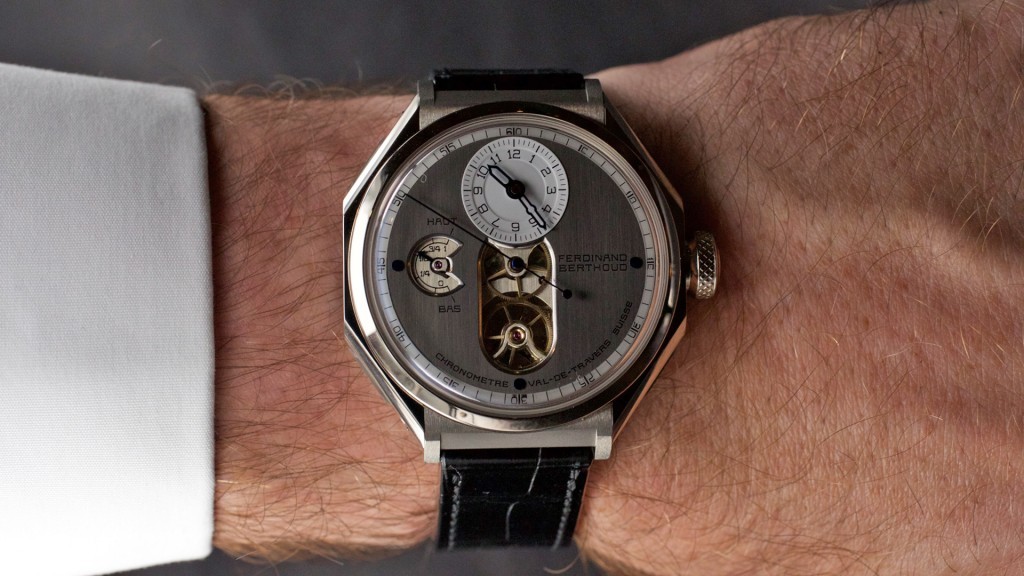
Encircling the dial, a contrasting seconds scale is presented on a matt translucent sapphire ring. The central sweep seconds hand is a model of elegance. It is made of bronze, lithe in profile and fitted with a circular ‘counterweight typical of Ferdinand Berthoud regulators’. The hand is thermally blued and advances with a majestic gait, dictated by the movement’s frequency of 21,600 vph (3Hz).
Tourbillon movement and direct drive seconds system
Centre stage, an aperture reveals the seconds wheel and pinion which are in mesh with the driving wheel of the tourbillon carriage. Both wheels are the same size affording symmetry and balance. Moreover, there is minimal loss of power transmitted between the two interfacing wheels. The tourbillon with central seconds is unique and a patent has been filed for this know-how.
Beyond the functionality of the two wheels collaborating together, the execution of this central dial area is magnificent. The chamfered edge to the aperture, the circular-grained wheels and the mirror-polished open-worked bridges manifestly illustrate this is a no-compromise timepiece of the highest order.
Power reserve display – cone and feeler system
Adjacent to 9 o’clock, a power-reserve indicator is presented. Once again, Chronométrie Ferdinand Berthoud has exploited depth to eye-catching effect. The recessed disc sits in tasteful contrast below the main dial surface with beautiful bevelling much in evidence. A sole 18-carat gold hand, again thermally blued, points to the number of hours of energy available. The words ‘Haut’ and ‘Bas’, ‘high’ and ‘low’ are shown at both extremes of the scale on the main dial surface. The relative simplicity of the indication belies the complexity at play within the case.
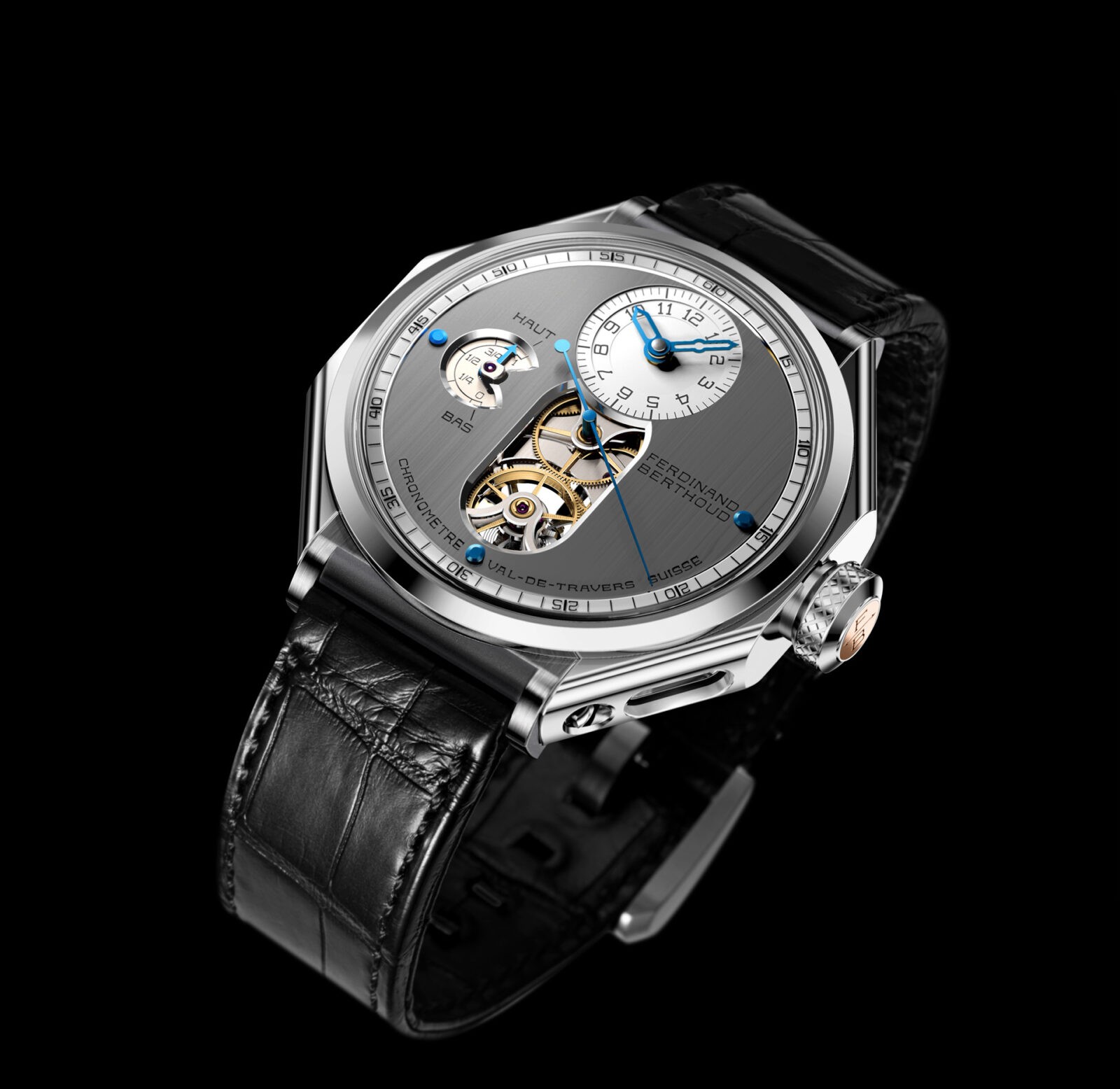
An intricate power-reserve mechanism, ‘uses the winding and letting down motion of the mainspring to make a truncated cone move up and down along an arbor secured to the mainplate. A mobile arm tipped with a roller jewel serves as a feeler-spindle measuring the motion of the cone and transmitting the movement’s power-reserve level to a dedicated hand.’
The innovation at the heart of this indication is, once again, subject to a patent application.
Gimbal-inspired case
A problem experienced with developing marine chronometers in the 18th century was the influence of the sea’s motion on the escapement. One approach to mitigate these adverse effects on the marine chronometer was to house it within a gimbal suspension system.
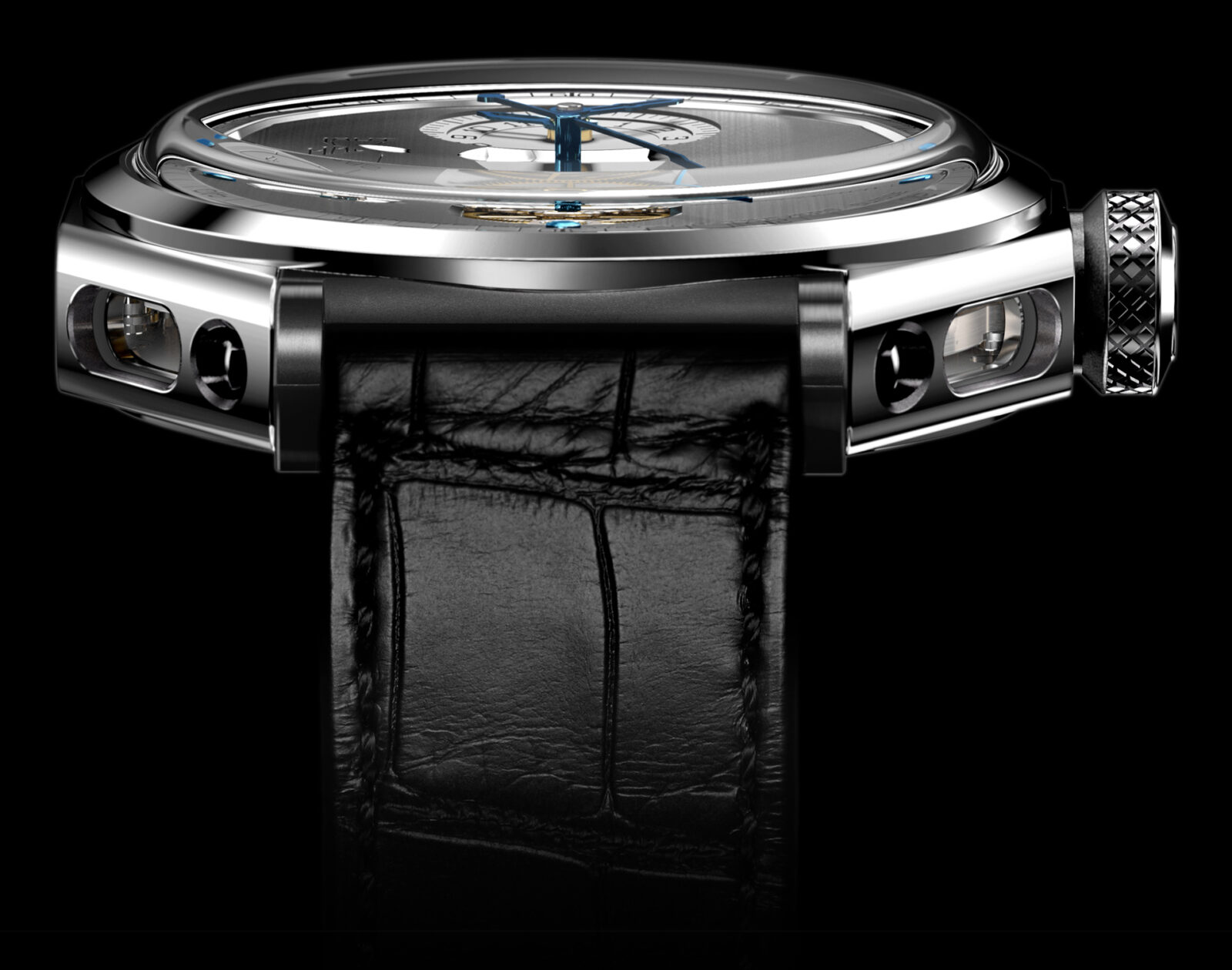
Chronométrie Ferdinand Berthoud has taken this idea as a source of inspiration for the case design. The movement is housed within a water-resistant container. Thereafter, additional case elements are affixed to the caseband, affording the Ferdinand Berthoud FB 1 with its distinctive octagonal shape.
The case measures 44 mm in diameter with a height of 13mm. It proffers superb wrist presence but, courtesy of its short lugs, envelopes the wrist wonderfully, affording sublime levels of wearer comfort. Furthermore, the congenial fit is augmented by the inclusion of a supremely luxurious hand-sewn alligator leather strap, comprising of one skin, sewn with a linen thread and paired with a double folding clasp in 18-carat gold.
Ferdinand Berthoud FB 1 – portholes
The caseband features four portholes, allowing the wearer to view various aspects of the movement within. A particularly appealing attribute of this design is the sight of the chain unwinding around the barrel, viewed via one of the portholes. The adjacent porthole simultaneously reveals the chain winding on the fusée. This watch entices curious eyes to examine each detail. Moreover, a further aspect of this design element is that it allows light to flood into the case, granting an enhanced view of the microcomponents within.
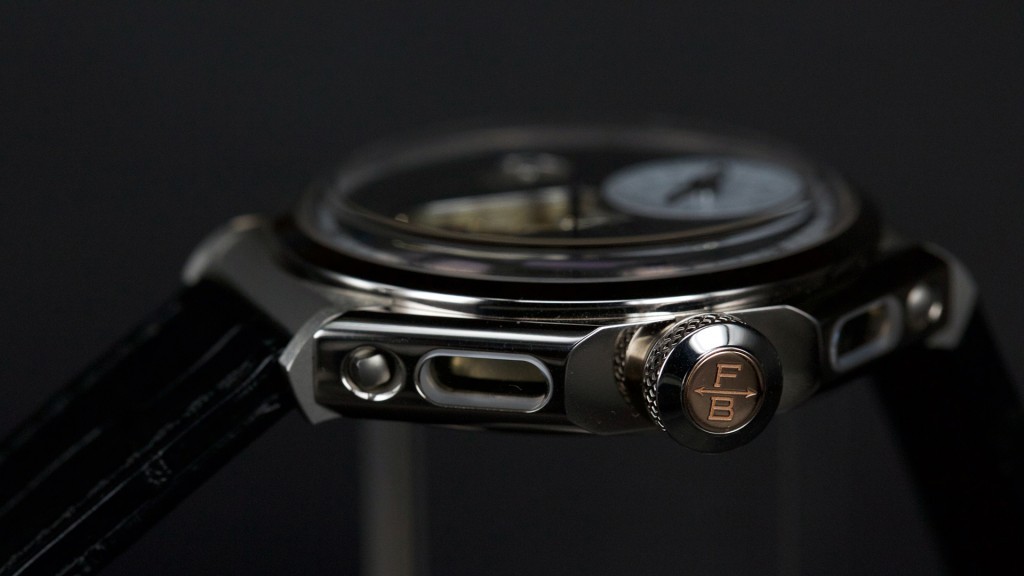
I seldom say much of crown design, but the Ferdinand Berthoud FB 1 is unlike the majority of watches I encounter. The screw-lock crown is adorned with a lattice-like grip which proves both attractive and highly practical. A rose gold medallion adorns the vertical plane of the crown and sports the company’s logo. The functionality of the crown and the fantastic tactile quality of its construction are notable. Moreover, the crown evinces a handsome aesthetic.
The upper sapphire crystal is of the glassbox variety and is coated with very high-quality anti-reflective treatment, illustrated by the total absence of glare whilst photographing the watch.
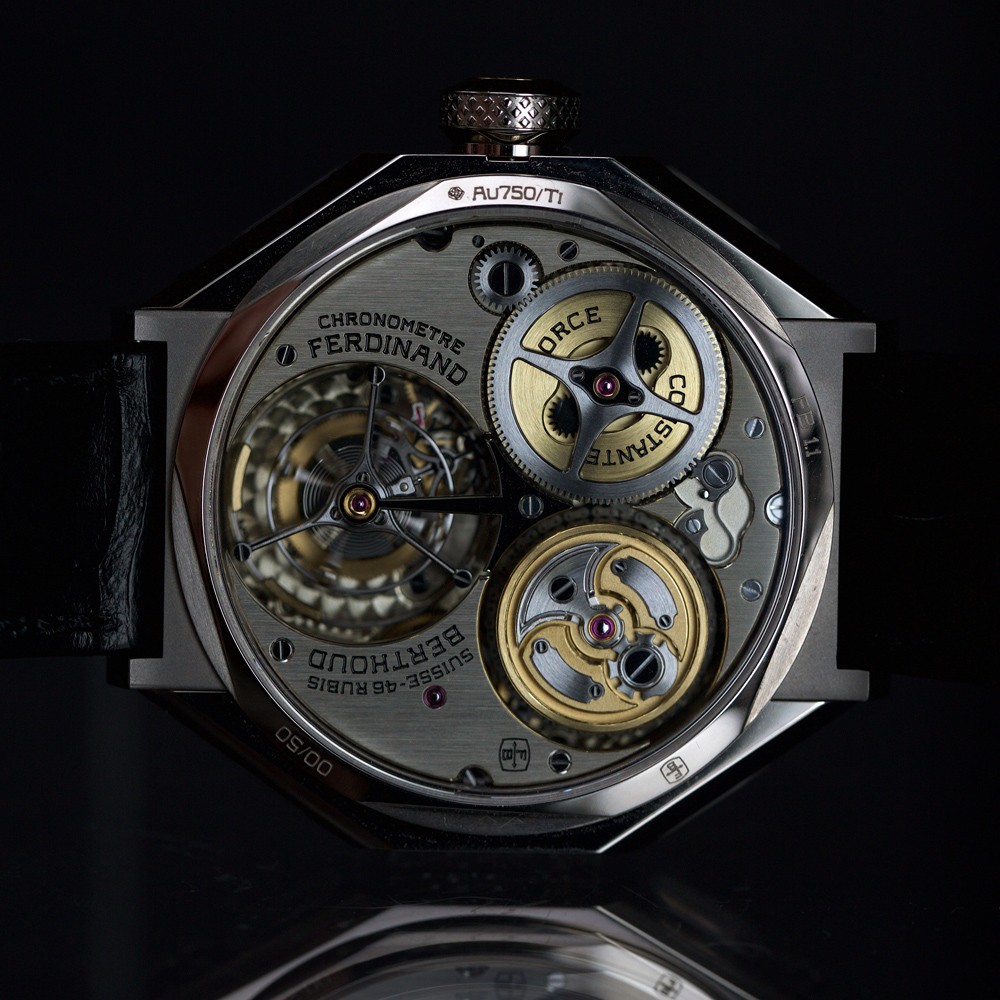
The caseback of the Ferdinand Berthoud FB 1 features a widescreen sapphire crystal allowing each facet and nuance of the movement to be absorbed at close quarters. The scene presented should make any purist smile, it is an exceptional illustration of matchless watchmaking.
Ferdinand Berthoud FB 1 – Calibre FB-T.FC
The Calibre FB-T.FC is ‘an exclusive hand-wound movement entirely designed, developed and produced by Chronométrie Ferdinand Berthoud’. It took almost three years of research and development to bring to fruition.
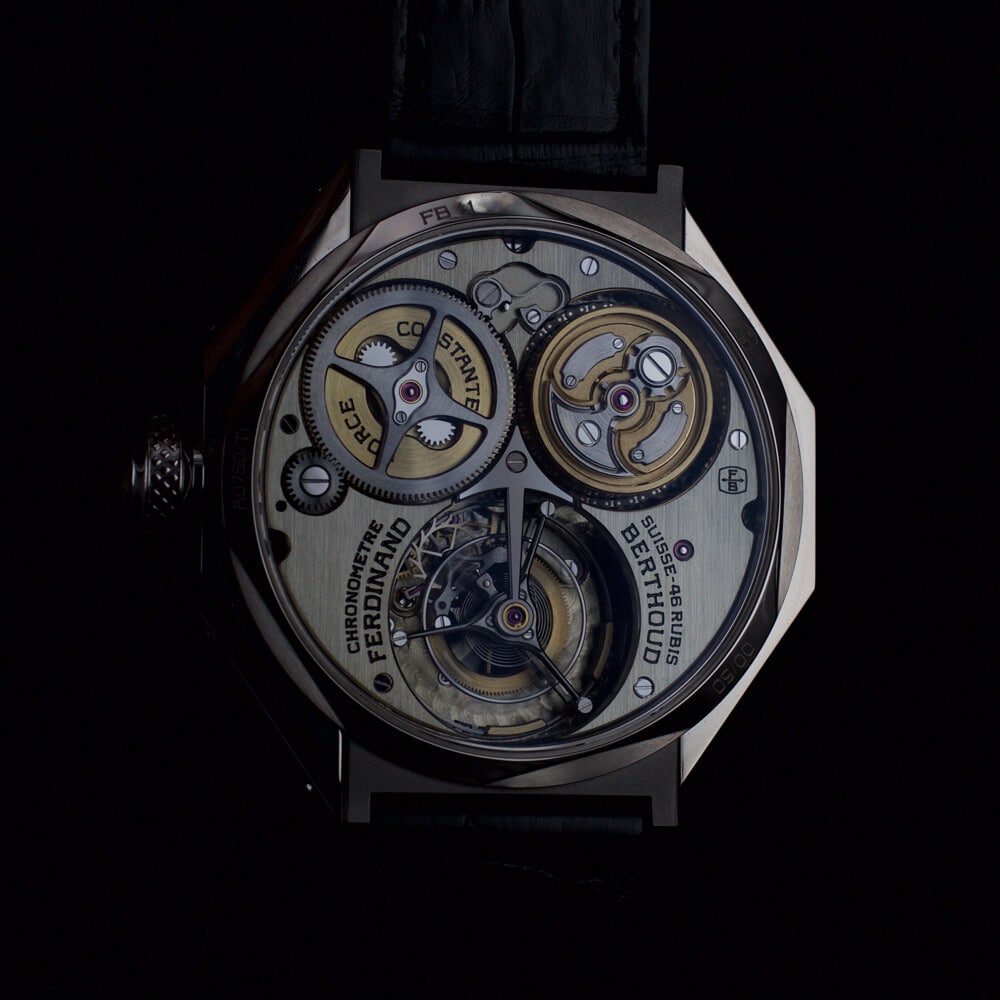
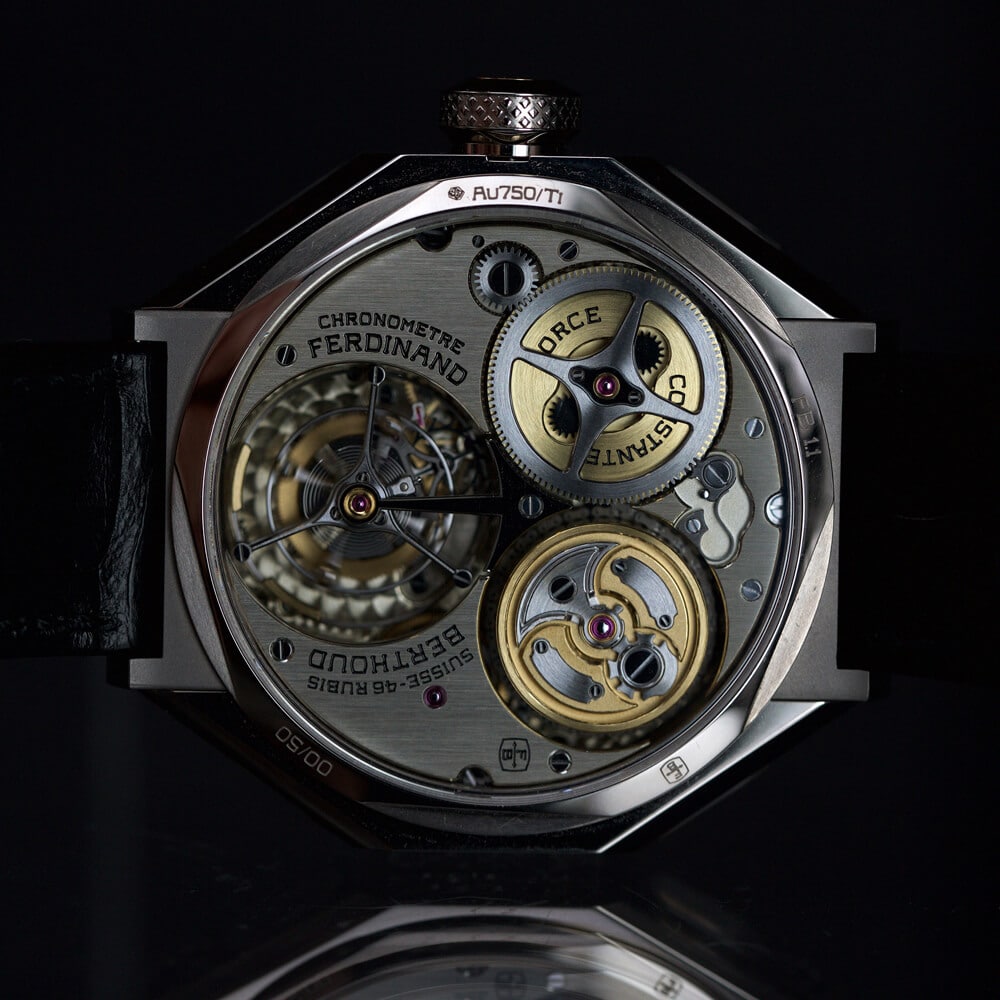
Precision is assured with chronometer certification by COSC.
The aforementioned Marine Clock M.M. no.6, dated 1777 featured a movement equipped with a constant-force module, a fusée and chain transmission system. A fusée and chain transmission system ensures that the amplitude remains constant, irrespective of the available energy stored within the barrel.
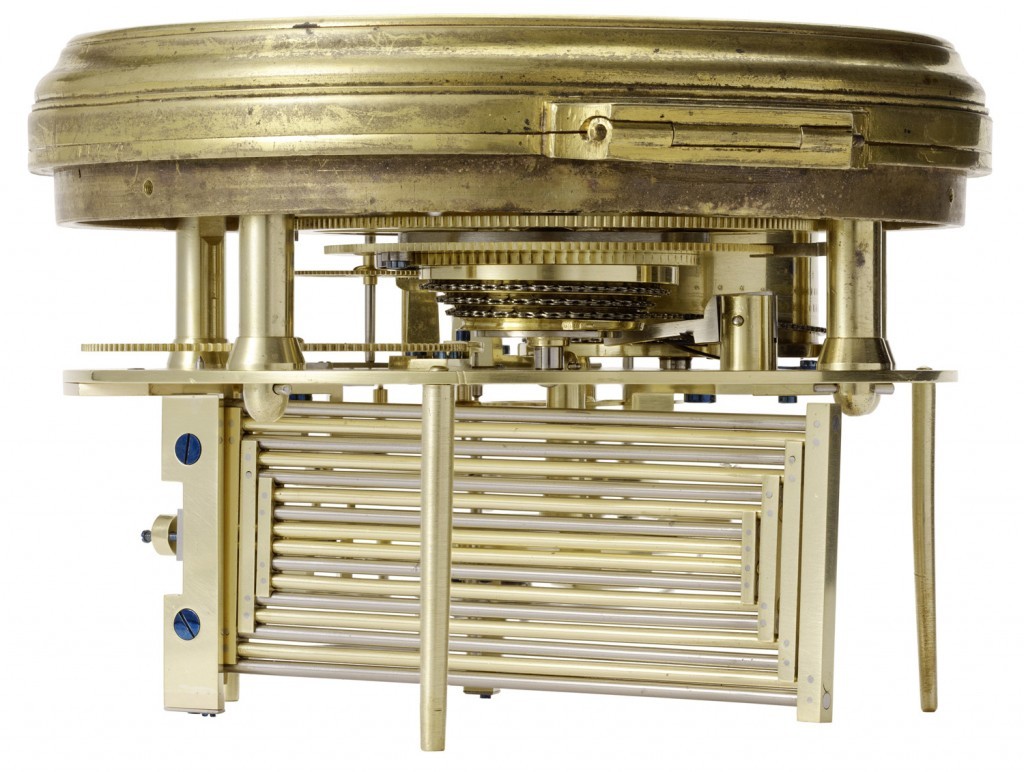
Ferdinand Berthoud FB1 – suspended fusée and chain transmission system
Incorporating a similar system into the relatively confined constraints of a wristwatch case is not for the faint-hearted and presents numerous challenges. However, Chronométrie Ferdinand Berthoud has achieved this technical feat, creating a watch with a height of just 13mm, remarkable for this type of watch. Part of the secret for this modest height is the suspended fusée and chain transmission system which eschews one bridge, mitigating height.
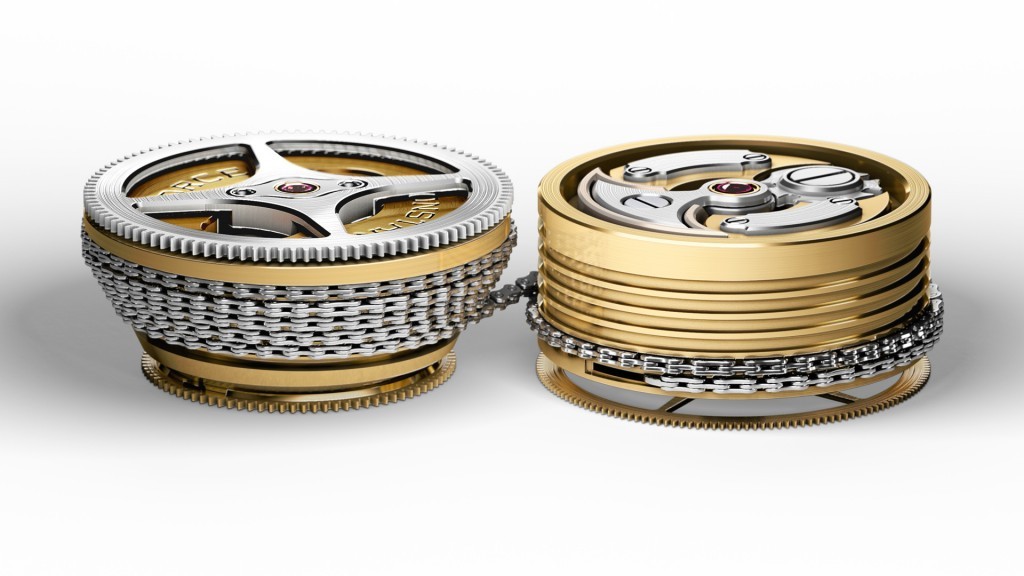
Ferdinand Berthoud FB1 – stopworks
This particular movement includes a stopworks to ensure the movement halts as the energy becomes depleted, ensuring accuracy is not compromised.
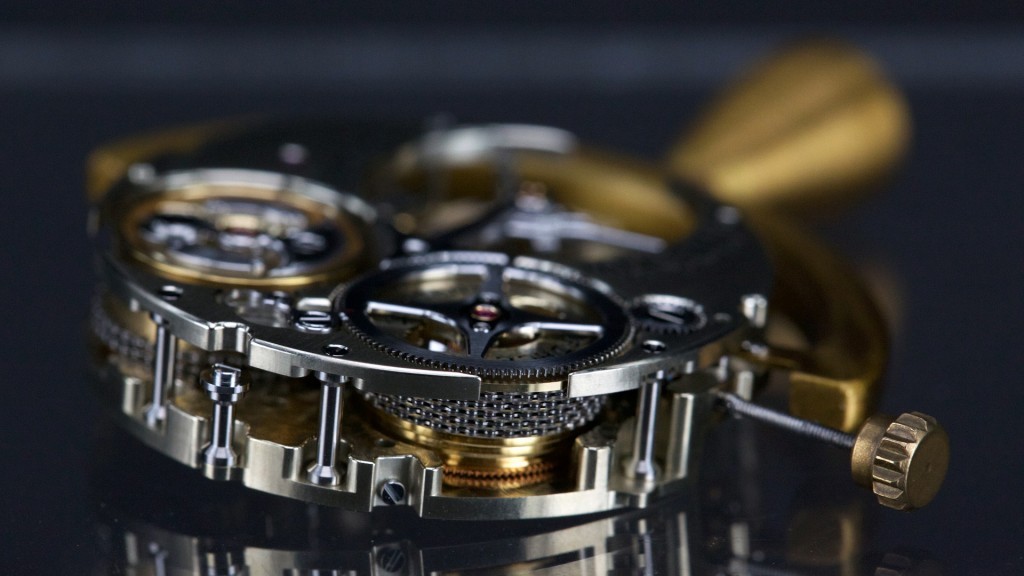
The 28cm chain alone consists of over 790 parts in total (474 steel links and over 316 pins), all assembled by hand.
A notable aspect of the movement design is the ‘pillar-type architecture’, again referencing the 1777 timepiece. Polished titanium pillars secure bridges to the mainplate, providing sufficient space in between to suspend the barrel, fusée and tourbillon, bestowing a light and airy appearance. By allowing light to envelop each element of the movement, the wearer is presented with a stunning view of the exalted finishing employed. The ‘pillar-type architecture’ is again subject to the filing of another patent. Indeed, this watch is suffused with a high quotient of ingenuity which distinguishes it as truly special.
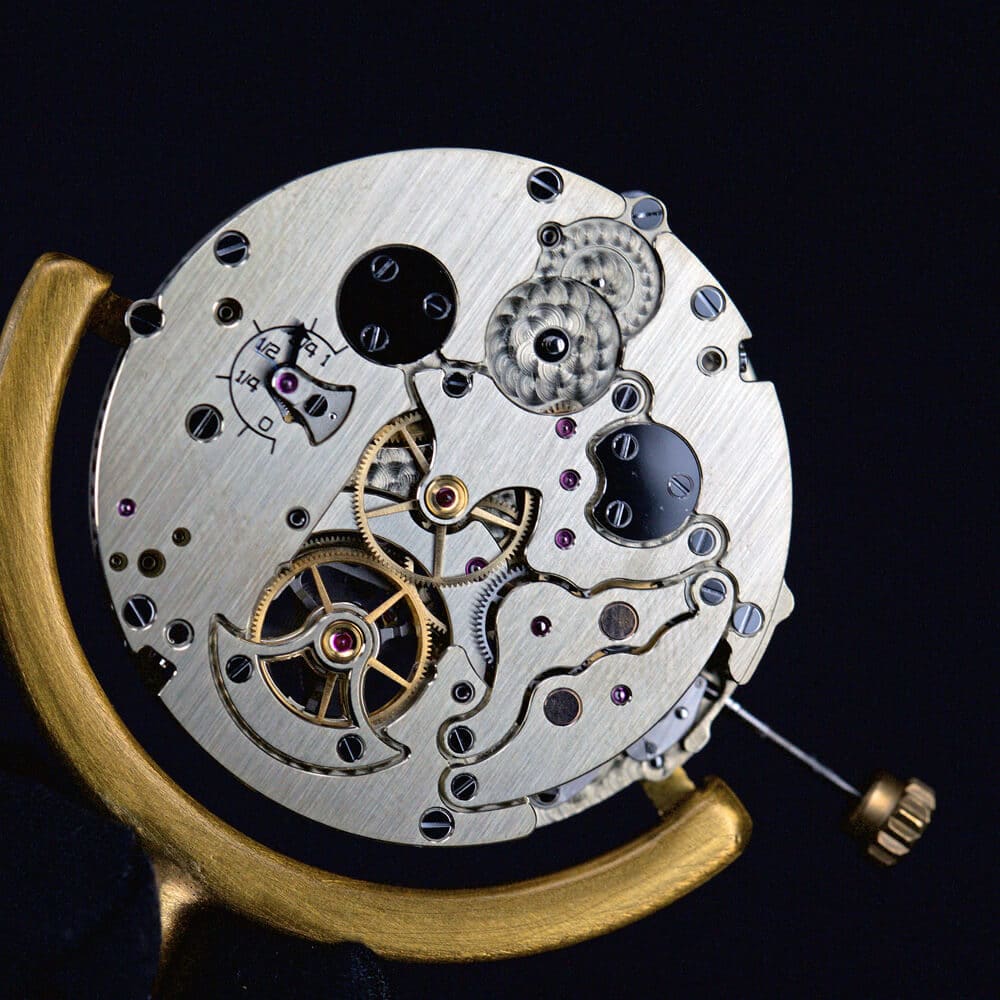
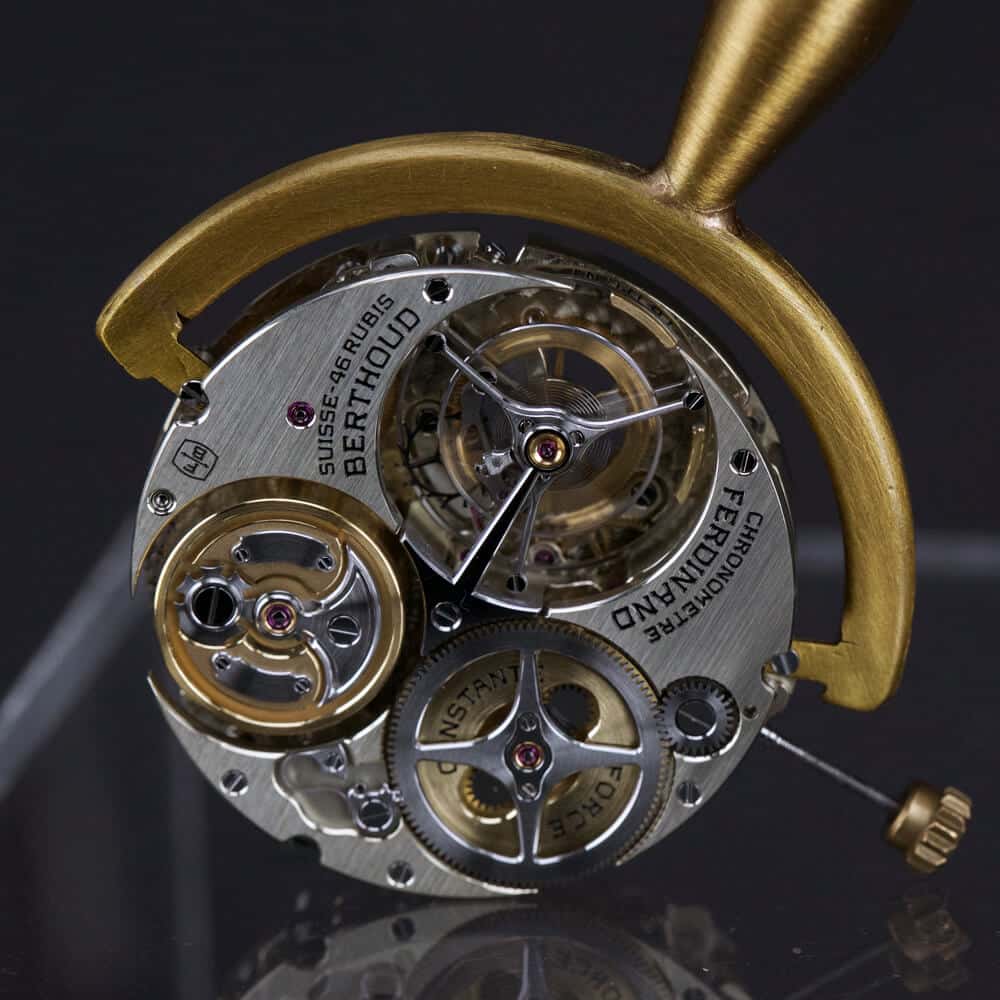
Inspecting the movement with my loupe, I was profoundly impressed with the finishing employed. The hand decoration is peerless, reinforcing the sense of quality. The unusual gear wheels feature slim, long spokes and circular-grained surfaces. The half-bridges are satin-finished and bevelled with straight-grained flanks. The jewels are set in polished and chamfered chatons. Below the tourbillon carriage, a sea of perlage, pristinely presented, can be seen via the exhibition caseback. The rims of the screws are bevelled and have chamfered slots. This movement is incredible and I suspect will sate the desires of the horological cognoscenti with its no-compromise design, construction and assembly.
Ferdinand Berthoud FB 1 – closing thoughts
While I have seen many incredible watches this year, I have to say there is no other timepiece which has so wholeheartedly seduced me to the extent of the FB 1. Indeed, the Chronométre Ferdinand Berthoud FB1 is my favourite watch of 2015. I make this statement without any caveats. In my opinion, it really is the epitome of haute horlogerie.
The aesthetic beauty of the watch is complemented with incredible innovation and peerless finissage, respecting the name of a talented watchmaker and his significance within the history of horology.
Louis XV endeavoured to achieve maritime supremacy by solving the problem of longitude with the assistance of Ferdinand Berthoud. Chronométrie Ferdinand Berthoud, in the form of the FB 1, has produced a supreme horological offering relevant to today’s watch collector. I eagerly await further timepieces from this Maison, pondering what the future holds for this brand and the continued renaissance of the illustrious name of Ferdinand Berthoud.
Technical specification
- Model: Chronométre Ferdinand Berthoud FB 1
- Reference: 1.1
- Case: 18-carat white gold and titanium, diameter 44 mm, height 13 mm, water resistant to 3 bar (30 metres), sapphire crystal to front and caseback.
- Functions: Hours, minutes, central sweep seconds, power-reserve indicator, tourbillon.
- Movement: Calibre FB-T.FC, hand-wound movement, frequency 21,600 vph (3 Hz), 46 jewels, power reserve 53 hours.
- Strap: Hand-sewn rolled-edge alligator leather strap supplied on an 18-carat white gold double-blade folding clasp.
- Price: £161,000 (RRP as of 5.10.2015)
- Limited Edition: 50 pieces (also 50 pieces in 18-carat rose gold and ceramic)