
A. Lange & Söhne 1815 UP/DOWN Watch Review
The latest A. Lange & Söhne 1815 UP/DOWN is a product of Saxony, a place where ‘time’ and ‘craftsmanship’ have been treated with reverence for centuries. Angus Davies discusses the influence of Martin Luther and Augustus the Strong on watchmaking before looking at two new references crafted in the esteemed Manufactory in Glashütte.
Watchmaking and religion
Whether you are a believer or not, you cannot escape the fact that religion has shaped watchmaking. Allow me to elaborate.
John Calvin & Geneva
During the 16th century (1540-1590), many Huguenots (French protestants), fleeing from persecution in Catholic France, settled in Geneva. In 1598, the ‘Edict of Nantes’ granted Huguenots new rights and fostered a culture of religious tolerance. However, the edict was revoked in 1685, leading to a second wave of refugees fleeing France, seeking sanctuary in Geneva.
Many Huguenots were skilled in enamelling, engraving, smithery and micro-engineering. However, John Calvin (1509-1564), the French protestant reformer, governed Geneva with a rod of iron and famously banned ostentatious signs of wealth. Therefore, unable to make jewellery, the craftspeople of Geneva repurposed their skills and began making watches; practical objects the church deemed acceptable. As a result, watch production grew exponentially and an industry was born. Despite the passage of time, watchmaking continues to flourish in the city as well as neighbouring regions.
Martin Luther & Saxony
When John Calvin was a mere boy, Martin Luther (1483-1546), a German monk and theologian, famously nailed 95 Theses to the door of the Castle Church in Wittenberg (Saxony at the time, now Saxony-Anhalt). He rejected the idea of human and institutional intermediaries, convinced that every believer had direct access to God through faith. Moreover, Luther was opposed to the idea of ‘indulgences’ – a practice where the church pardoned sins for money. Luther’s 95 Theses were a catalyst for change that led to the Protestant Reformation and saw Rome’s influence over Saxony diminish.
The Reformation also led to a shift in the way society viewed labour, time and craftsmanship. Work, once thought as secular or an everyday activity, was suddenly considered a divine service to God. Time was deemed a scarce resource that should be used prudently – squandering time was thought to be a sin. The so-called ‘shoemaker concept’ reflected Luther’s belief that craftsmanship is the highest form of serving one’s neighbour and honouring God. In Saxony, the importance of time and craftsmanship has never diminished and, today, they are manifest in the making of fine watches.
Augustus the Strong
Augustus the Strong (1670-1733), the Elector of Saxony, surprised his subjects when he converted to catholicism in a strategic move to secure the royal crown of the Polish-Lithuanian Commonwealth (1697). However, he provided various reassurances to the people of Saxony that the state would remain Lutheran and his faith would not affect their religious rights. Keen to ingratiate himself with the local population, he supported the building of the Frauenkirche, a Lutheran church, located in the centre of Dresden. Formed from Saxon sandstone and an example of ‘Dresden Baroque’, the construction was a feat of engineering, imbued with extraordinary craftsmanship. Augustus the Strong was instrumental in transforming Dresden into ‘Florence on the Elbe’, with buildings such as the Japanese Palace and the Zwinger Palace punctuating the city’s impressive skyline.
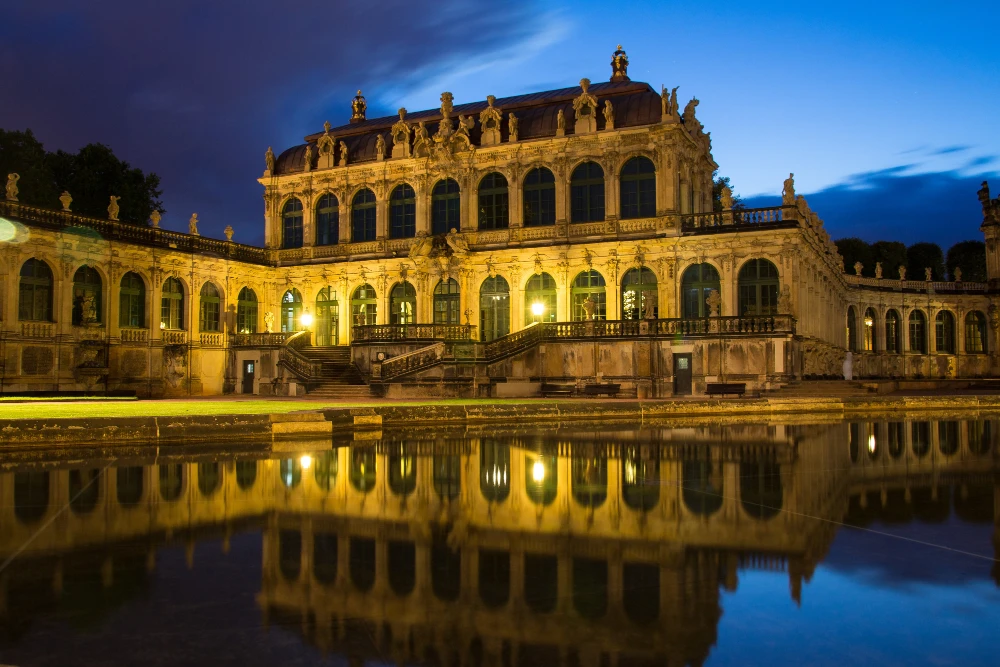
Image – The Royal Cabinet of Mathematical and Physical Instruments, situated in Dresden’s Zwinger, houses a world-famous collection of historical clocks, including the model of the Five-Minute Clock from Dresden’s Semper Opera House. (Credit – © Lange Uhren GmbH)
Most pertinently, Augustus the Strong collected mechanical timepieces, astronomical devices and various measurement instruments. Some of the clocks were housed in Meissen porcelain cases, another passion of the ruler. The Mathematisch-Physikalischer Salon was founded in Dresden (circa 1728) and housed astronomical clocks and precision instruments for celestial observation and to precisely determine the time.
Augustus the Strong had an appreciation for aesthetics, especially architecture and porcelain. He was a man of impeccable taste with a fondness for art and a penchant for collecting jewellery and other luxury goods. His passions necessitated the skills and talents of the finest artists and craftspeople, which fostered an environment where specialist trades continued to prosper after his passing. Indeed, his legacy went on to shape the work of Johann Christian Friedrich Gutkaes (1785-1845) and his apprentice, Ferdinand Adolph Lange (1815-1875), the man who established the first Manufactory in the former mining town of Glashütte.
Once again, time and craftsmanship are a recurring theme that continues to influence the work of A. Lange & Söhne today.
A. Lange & Söhne 1815 UP/DOWN – respecting traditions
Devotees of A. Lange & Söhne will immediately recognise the significance of the name ‘1815‘ – it was the year that Ferdinand Adolph Lange was born. The collection encompasses a variety of references, ranging from the ‘seemingly’ simple to ultra-complicated timepieces. I use the word ‘seemingly’ as a Lange that merely indicates hours, minutes and seconds will be engineered to the nth degree and have been breathed upon for many hours by the finishing gods.
The entry-level 1815 was released in 1995 and has since been executed in various metals, offered in an array of dial colours and presented in different case sizes. Characteristics that are common to all models include lancet-shaped hour and minute hands, Arabic numerals denoting the hours and a small seconds display at 6 o’clock, with a chemin-de-fer framing the scene. A hand-wound movement sits at the heart of every 1815 reference, enriched with an abundance of Lange loveliness, much to the appreciation of purists (more on this later).
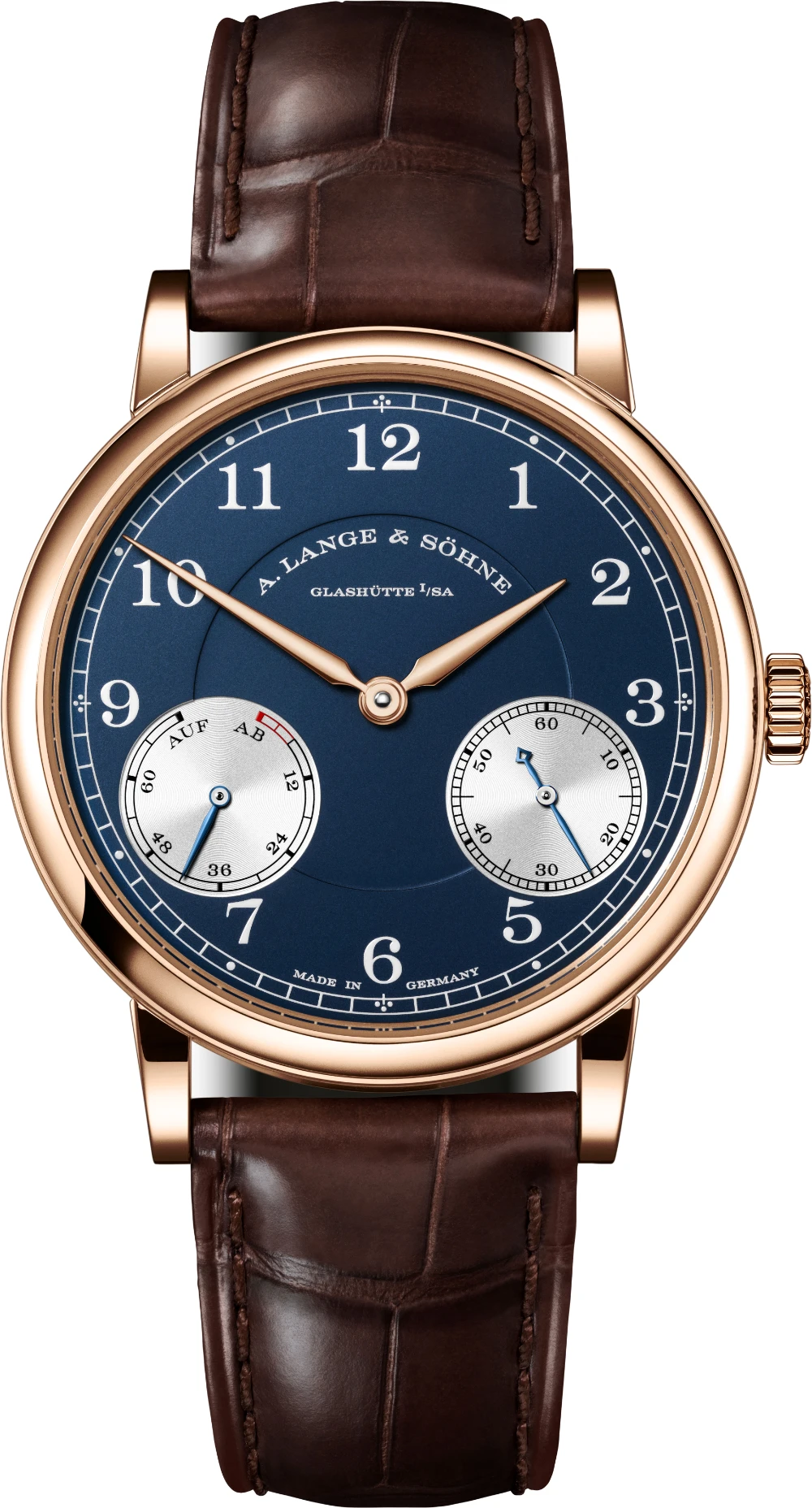
In 1997, the German marque released the A. Lange & Söhne 1815 UP/DOWN. It shared much in common with the regular 1815, save for the addition of a power-reserve indicator at 8 o’clock and the repositioning of the small seconds indication to 4 o’clock, bestowing the dial with a symmetrical appearance.
‘To never stand still’ is a phrase etched into the watch brand’s psyche. However, given the Maison’s designs are near perfect from the outset, most new models are more often than not a subtle evolution of what has gone before. This is important to anyone who wishes to collect fine watches. Should you look at an 1815 UP/DOWN from 1997, its appearance shows no signs of ageing and its timeless beauty remains undiminished.
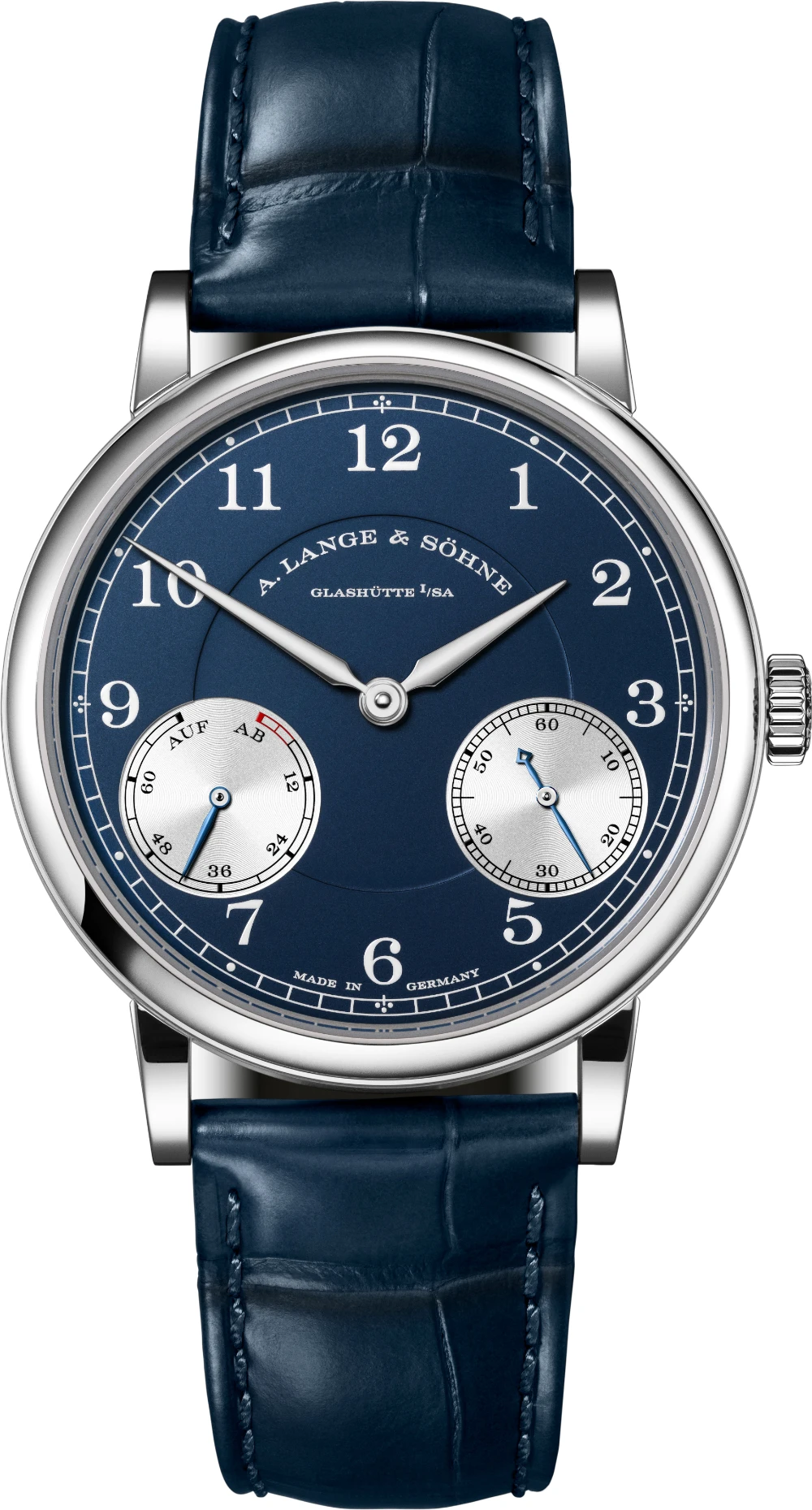
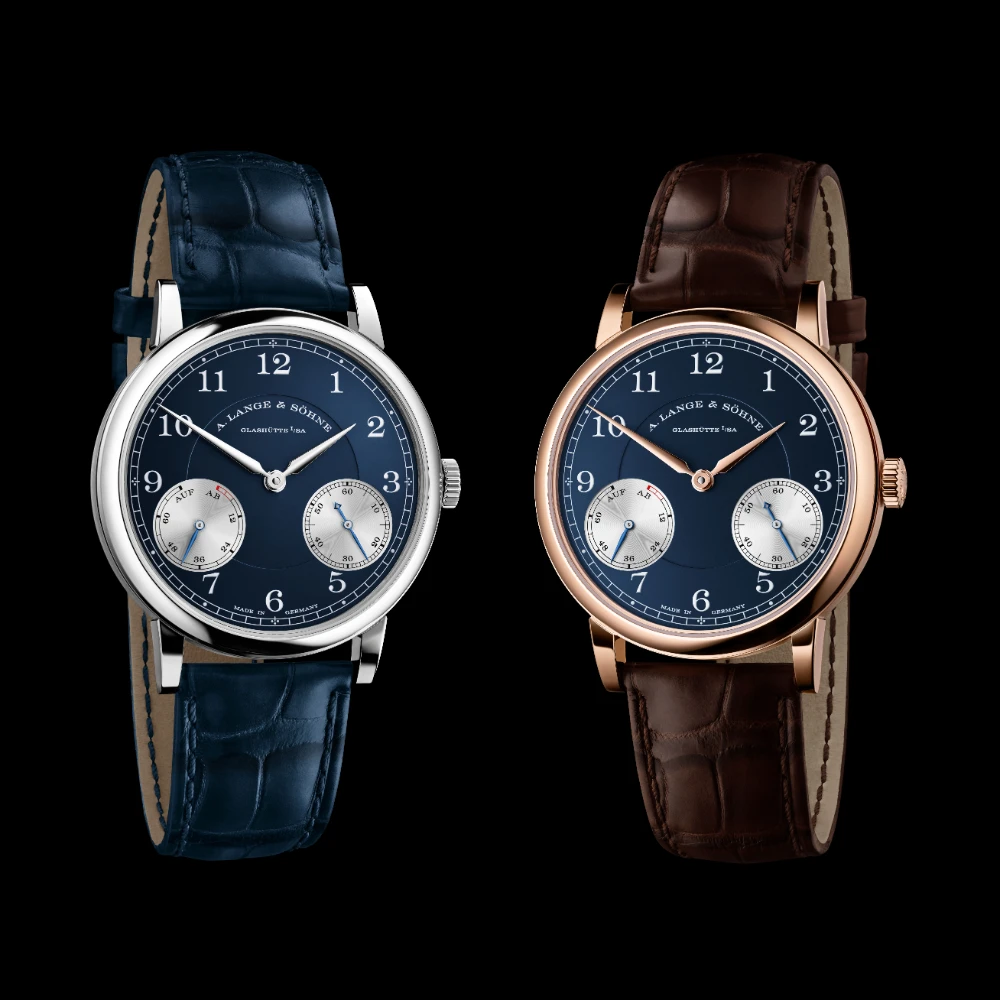
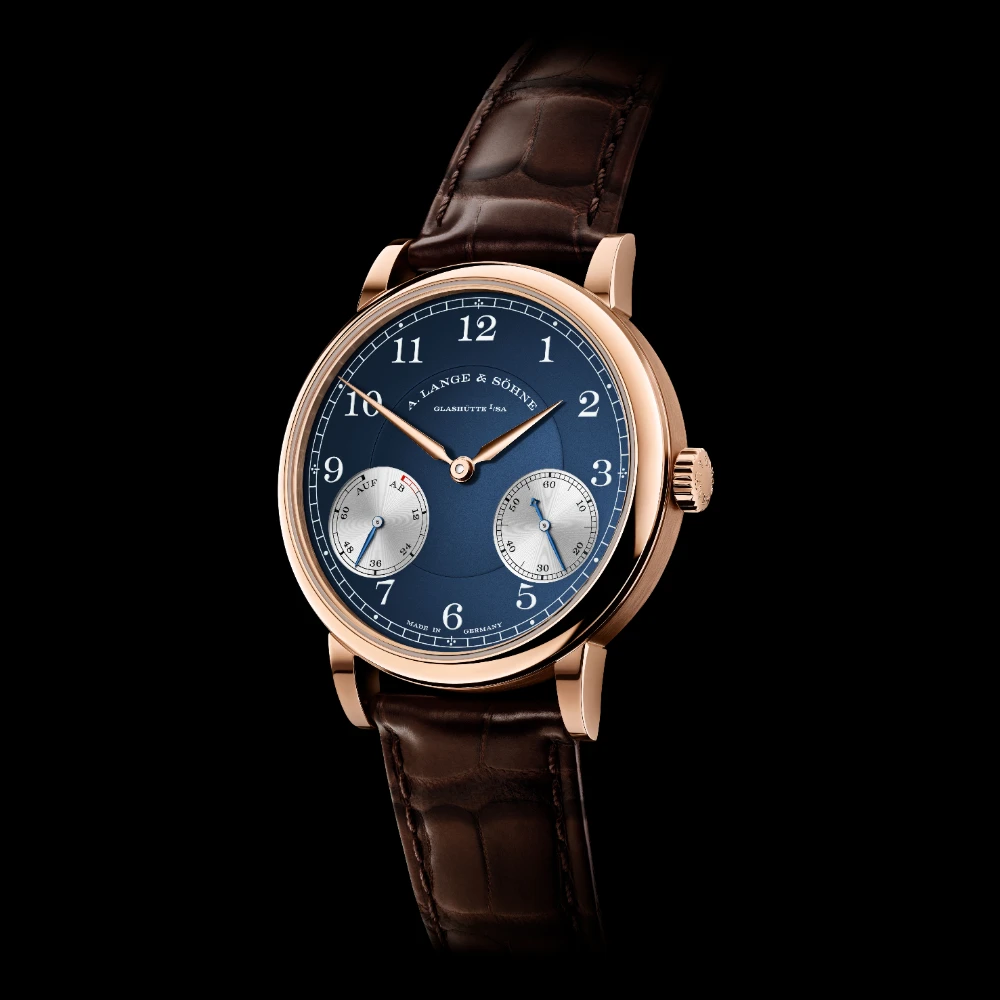
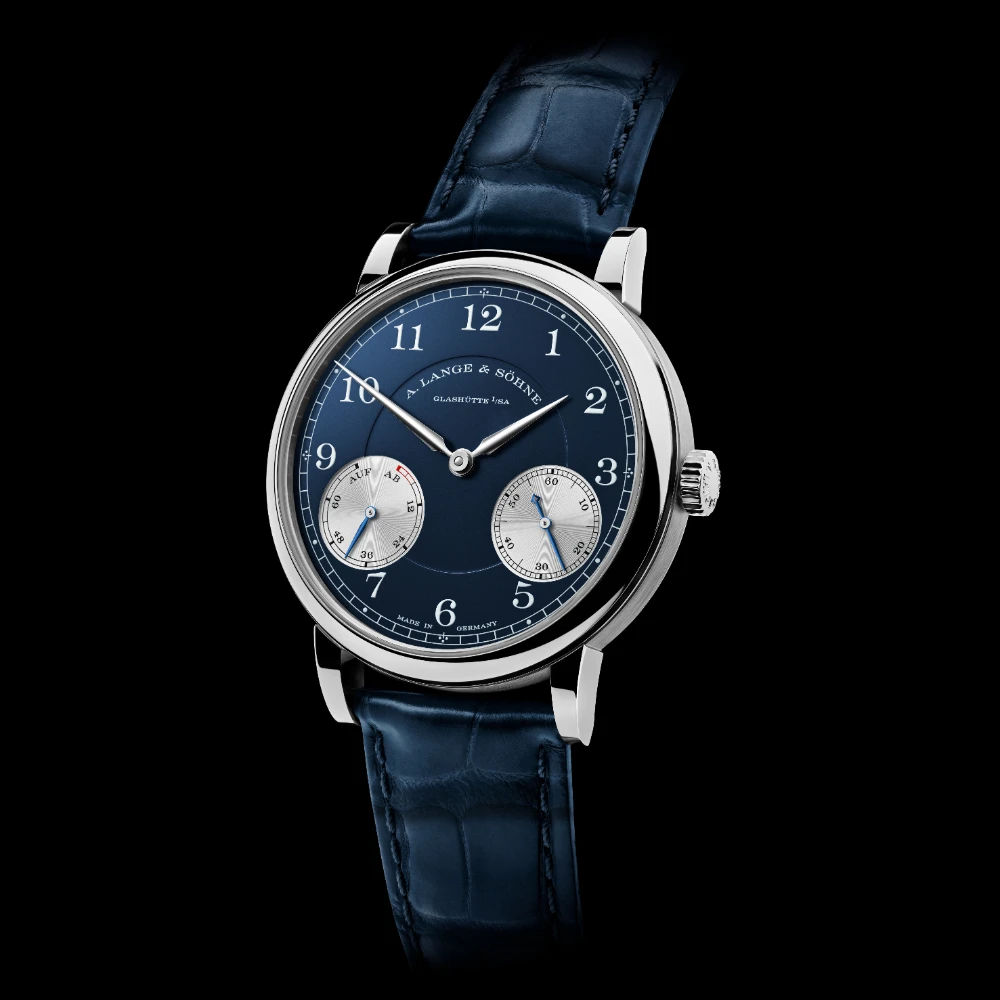
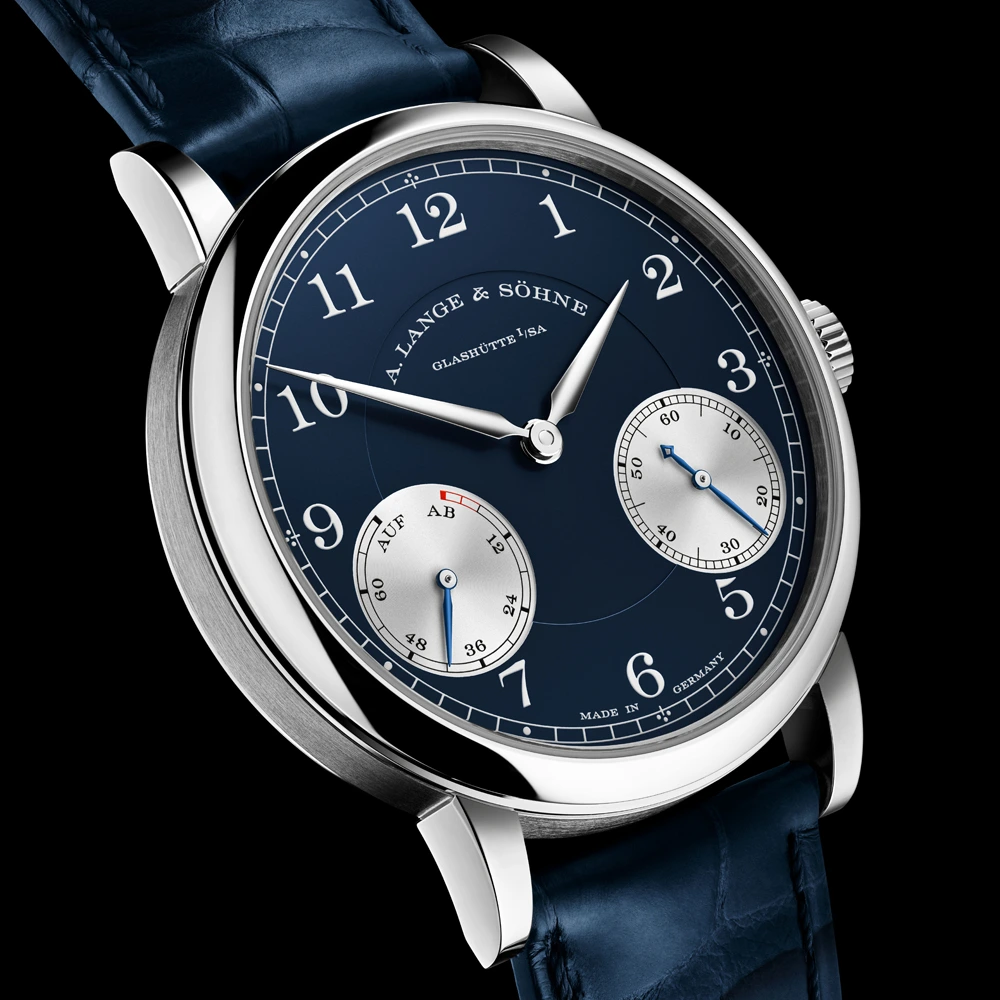
Now, the Manufactory has released a new version of the A. Lange & Söhne 1815 UP/DOWN, offered in two executions – 18-carat pink gold and 18-carat white gold. The chosen case material determines the colour of the hour and minute hands as well as the hand-stitched alligator strap. Both references are limited to 300 pieces each.
A. Lange & Söhne 1815 UP/DOWN – dial
Save for the colour of the hour and minute hands, both references share the same dial. Inspired by historical Lange pocket watches, the dial is presented in blue, a colour which has always had regal associations. Hours and minutes are indicated with gold hands and the centre of the dial bears the maker’s name as well as ‘Glashütte I/SA’, the model’s place of origin.
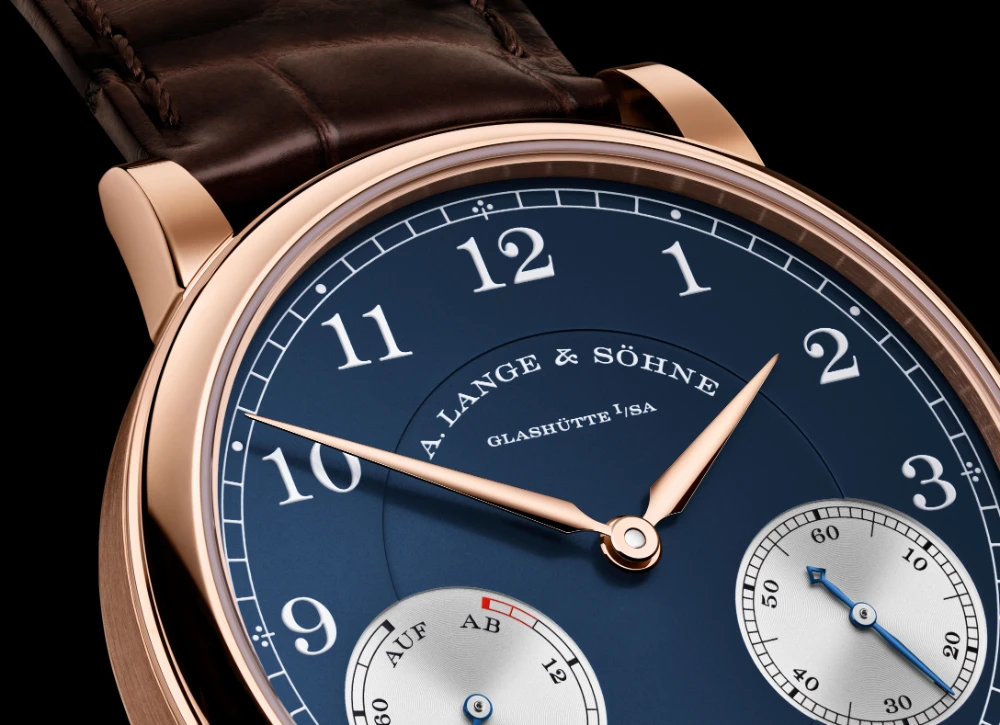
Two silver-toned subdials, comprising a small seconds display (4 o’clock) and a power-reserve indicator (8 o’clock), nestle neatly within the sea of blue. They feature thermally blued hands with contrasting high-gleam centres. Both subdials are slightly recessed, snailed and endowed with a black track.
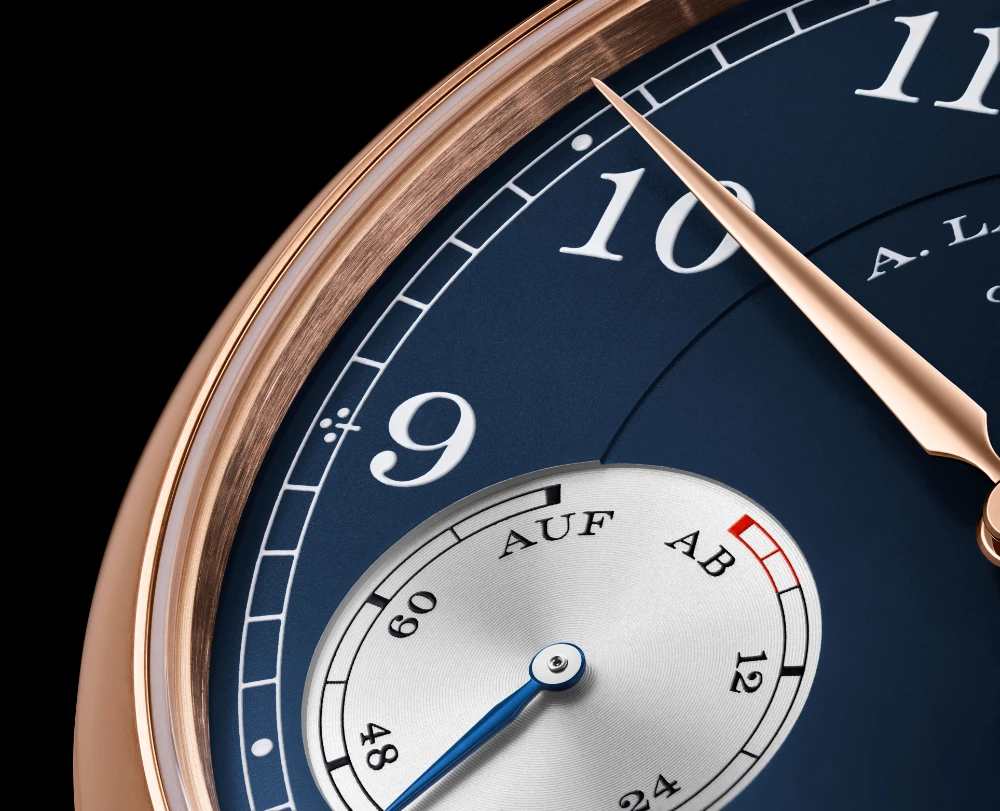
The power reserve indicator is marked with a tasteful smattering of red and the word ‘AB’ (DOWN), indicating when the mainspring is devoid of energy. Once fully wound, the blued hand will point to ‘AUF’ (UP), signifying the mainspring is fully tensioned. Incidentally, the watch has a power reserve of 72 hours when fully wound.
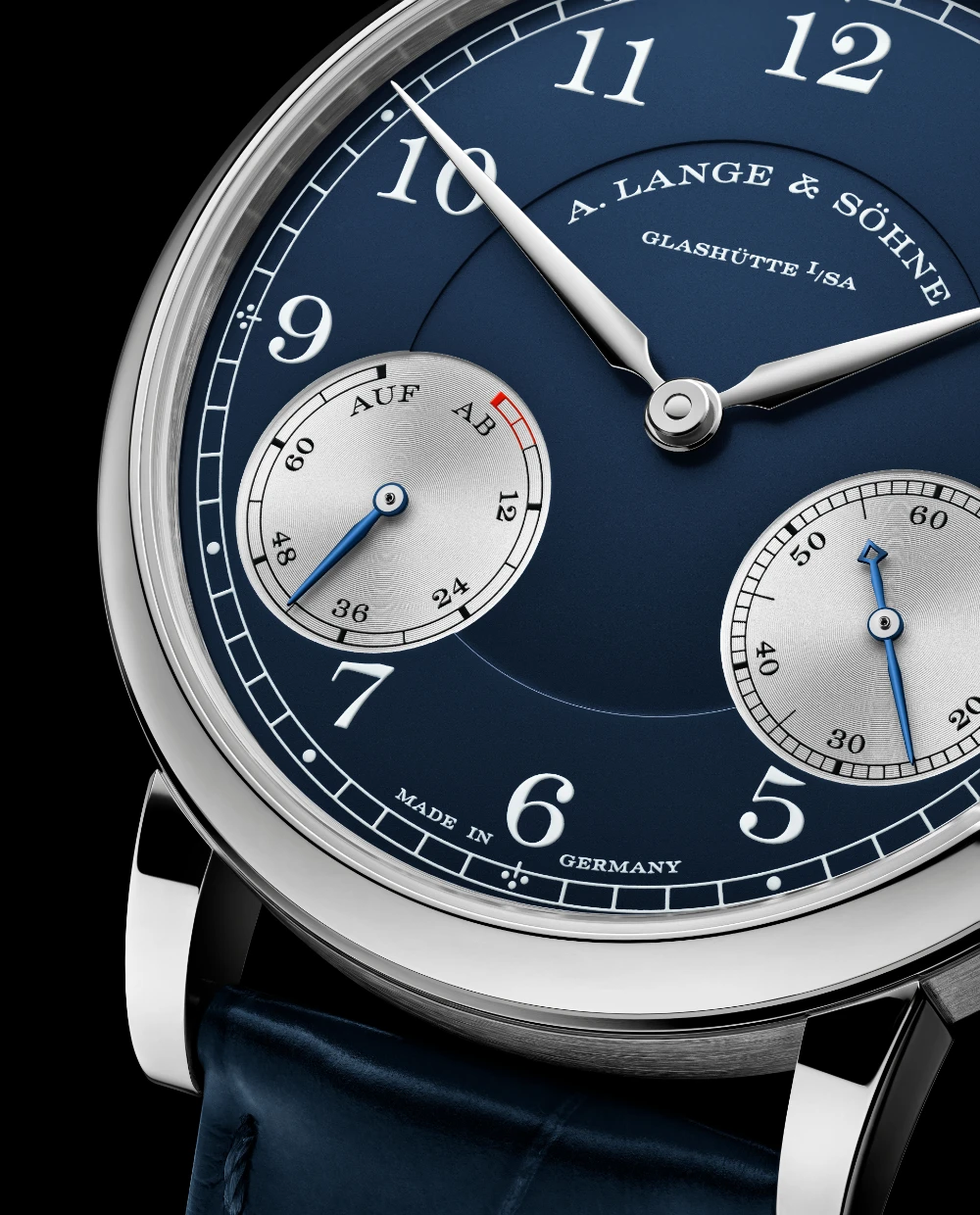
Upholding the design language of the 1815, the hour track is presented on a higher level. The typeface of the Arabic numerals, along with the traditional railway track (chemin de fer), confer a classical appearance. The horological landscape is framed with a tiered bezel which proves subtle and refined.
A. Lange & Söhne 1815 UP/DOWN – case
This latest version of the A. Lange & Söhne 1815 UP/DOWN measures 37.5 mm in diameter and has a thickness of 8.7 mm. It is not a watch that fanfares its presence with unnecessary bulk. Indeed, its compact dimensions are deliberately understated, endowing the watch with prepossessing elegance.
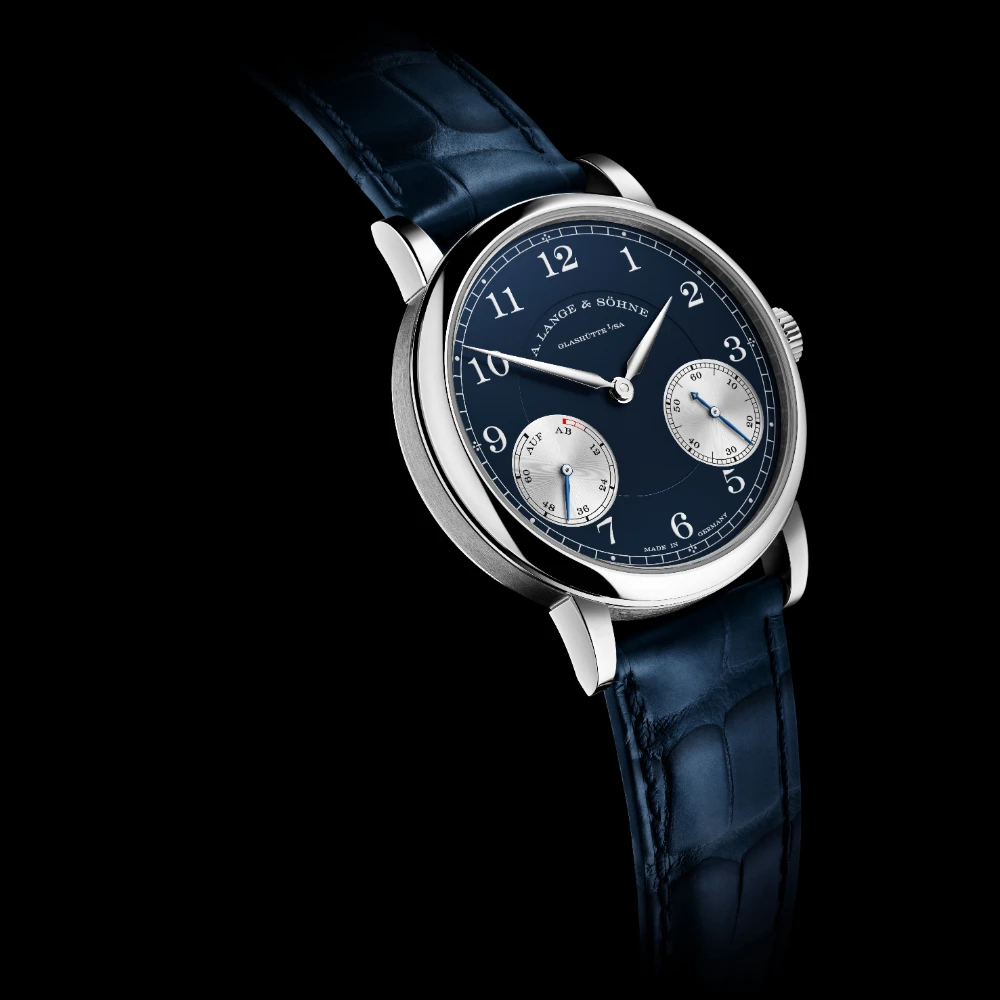
Many facets of the case, including the lugs, are presented in gleaming form; however, the caseback (adjacent to the pane of sapphire crystal) is circular satin-brushed, while the carrure (case middle) is straight satin-brushed with fine lines running parallel to the dial. The contrasting finishes are clearly delineated and contribute to the overall sense of refinement.
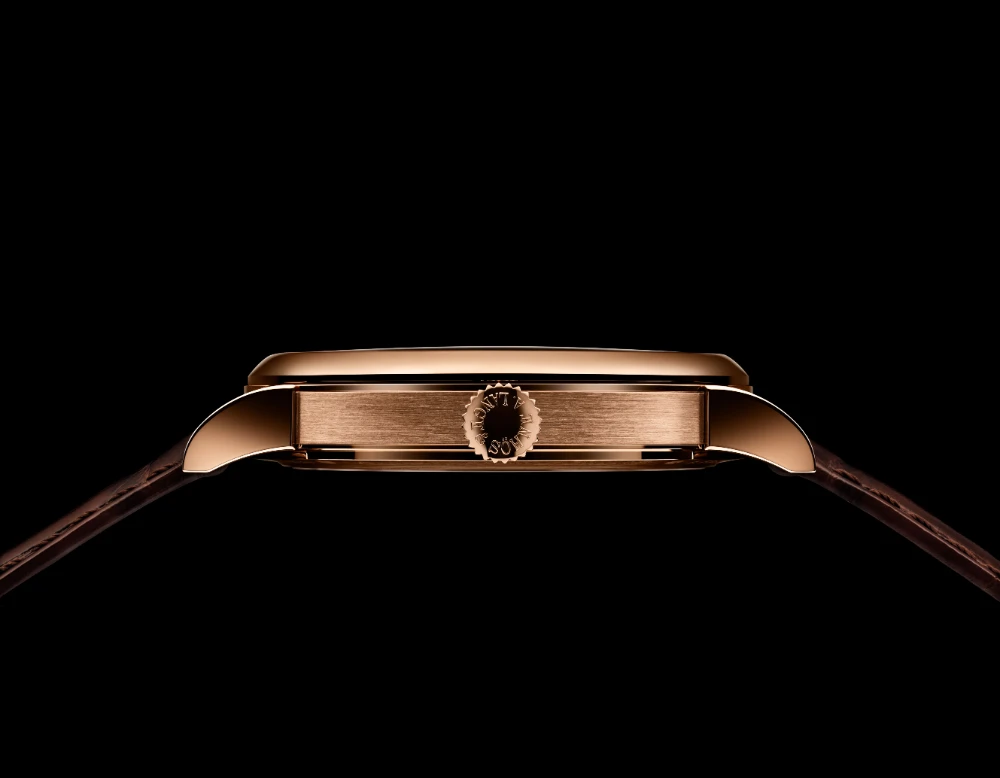
The lugs are universally polished and sit in close proximity to the brushed carrure, suggesting they are discrete components which are subsequently brazed to the case. This practice is typical of Haute Horlogerie and facilitates a level of finishing seldom achieved with a simple one-part carrure.
A. Lange & Söhne 1815 UP/DOWN – L051.2 Manufacture calibre
The sapphire crystal caseback invites the wearer to explore a fascinating world of high-precision engineering and artisanal craftsmanship. The hand-wound L051.2 Manufacture calibre is formed of untreated German silver, a material that is exceptionally hard, non-magnetic and corrosion-resistant, obviating the need for plating. The alloy, sometimes termed ‘Maillechort’, is composed of copper, nickel and zinc which, over time, will acquire a honey-like appearance that’s much loved by brand devotees.
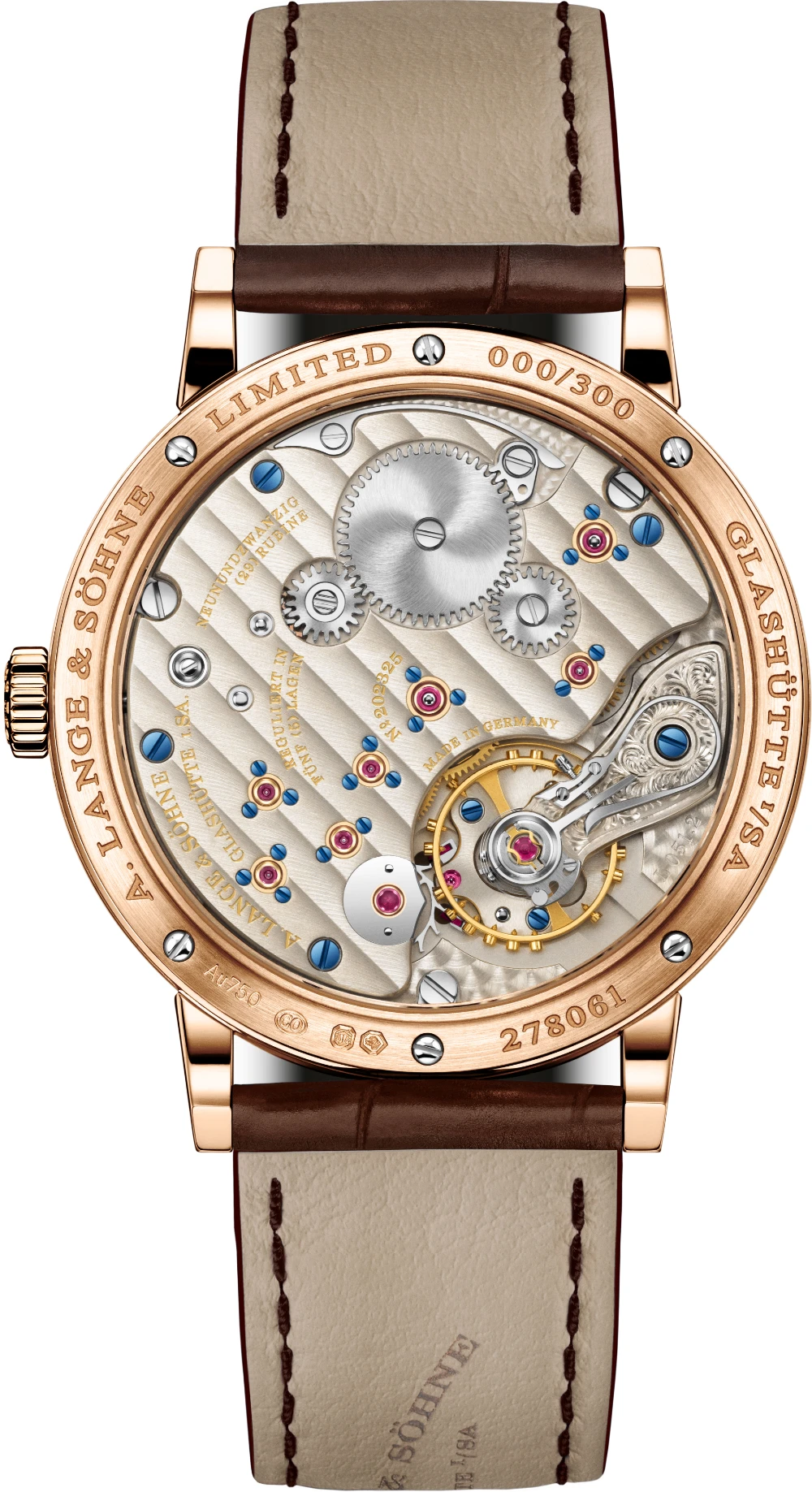
Unfortunately, due to its notable hardness, German silver is difficult to shape, engrave and finish. Personnel working with the material will wear finger cots at all times, mindful that a wayward fingerprint may develop into an unsightly mark marring the otherwise pristine surface. Nevertheless, the challenges of using the material rest with those personnel working in the Manufactory. Indeed, Lange owners can simply enjoy the pleasure of owning a fine movement that’s been lovingly crafted.
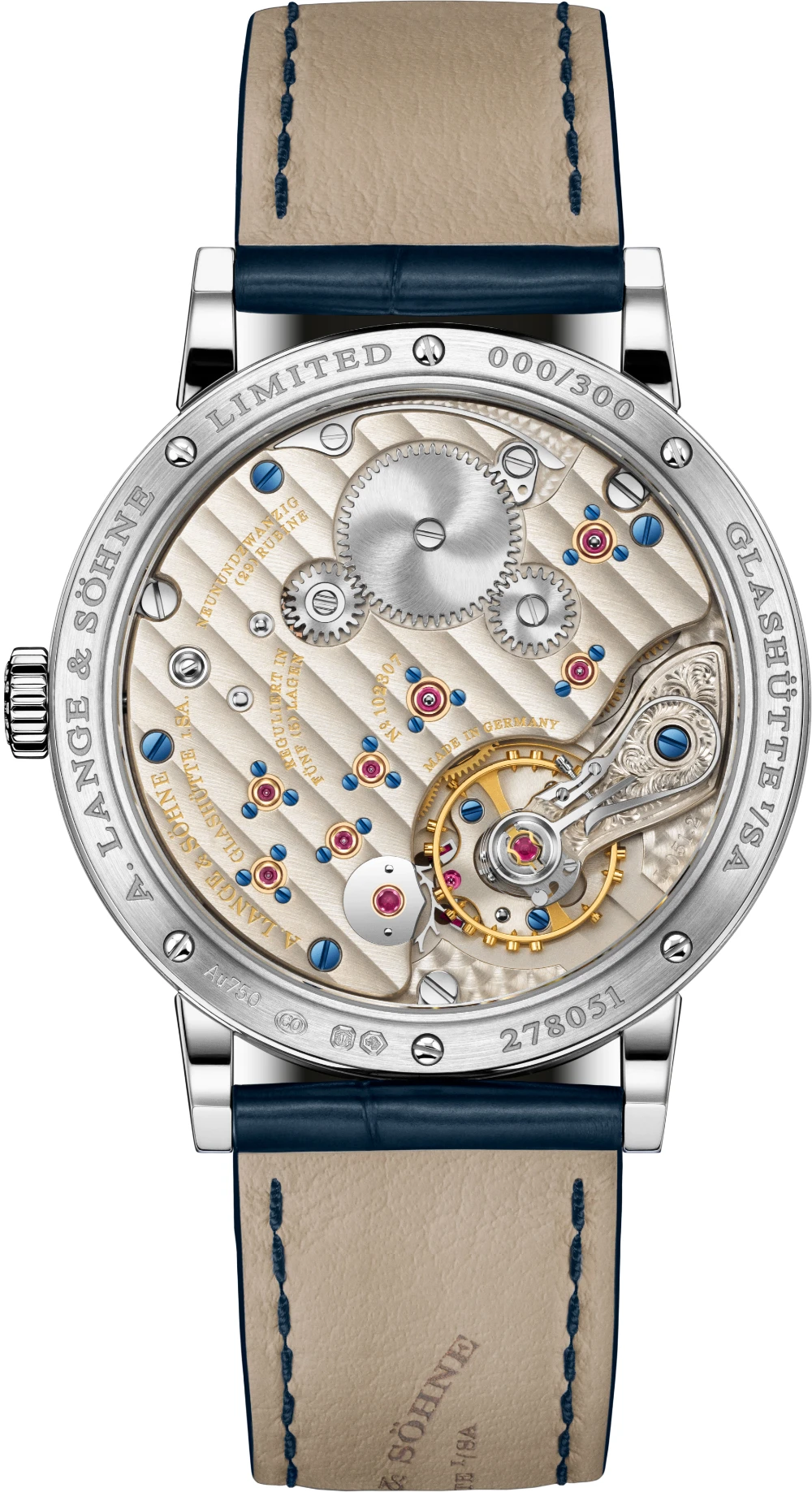
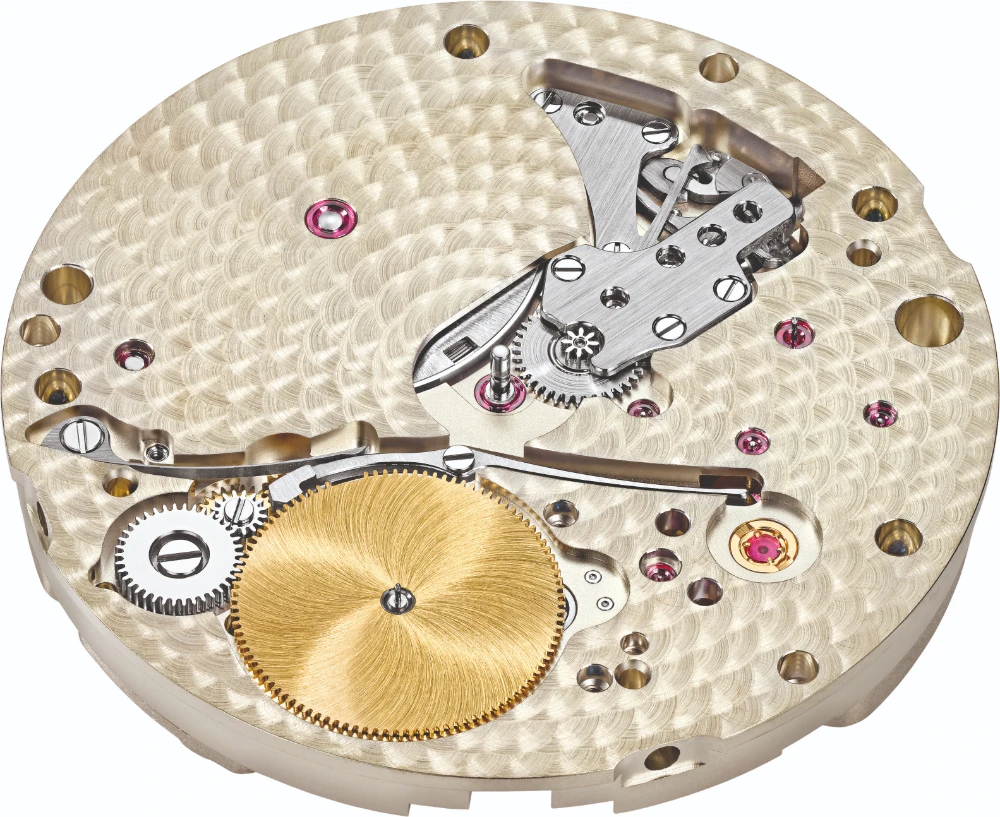
While most Swiss watches feature multiple bridges, A. Lange & Söhne has always favoured a traditional three-quarter plate, a metal structure that spans the barrel and gear train (aka wheel train). This latter approach imbues the movement with greater stability. As A. Lange & Söhne explain, ‘…the three-quarter plate can accommodate all of the arbors of the wheel train, thus keeping all of the gears in stable contact’. A further benefit of the system is that gears are less prone to shifting over time, mitigating the need for remedial adjustment. Assembling the movement with a three-quarter plate requires more skill on the part of the watchmaker, particularly when fine-tuning the end shake of each pivot within their accompanying jewels.
Once the German marque decided to make the 1815 UP/DOWN, the simplest approach would have been to engineer a module and place it atop an existing base calibre. However, I suspect this idea was anathema to Lange as it would make the watch much thicker. ‘Instead, it is directly integrated in the movement with a specially designed, space-saving planetary gear system’. The resultant movement has a thickness of just 4.6 mm.
Unlike the majority of watches which feature an index-regulated balance, the L051.2 Manufacture calibre is equipped with a variable-inertia balance. With this latter means of regulation, the rate is adjusted by tightening/loosening timing screws set within the rim of the balance, altering the moment of inertia, thereby adjusting the rate. This approach confers superior precision and should the watch be subjected to a minor shock, it is less likely to need remedial regulation. (Not all of the screws affixed to the balance wheel are for timing – some are for poising, ensuring the balance wheel has no heavy spots and runs true). It takes longer to regulate a variable-inertia balance, but as many watch obsessives already know, Lange’s personnel reject the notion of haste when excellence is ‘up for grabs’.
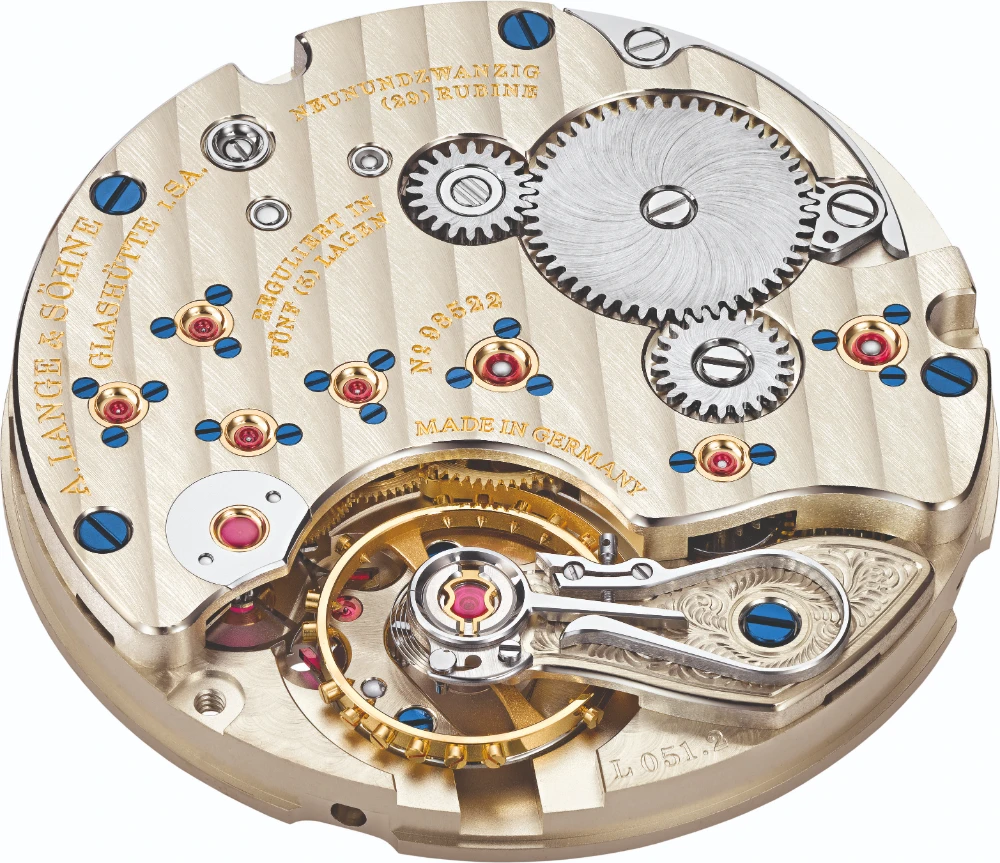
Unusually, while most watch brands procure balance springs from third-party specialists, Lange crafts them in-house. The movement is equipped with a swan-neck (aka whiplash) fitted with a lateral set screw. This is used to address any beat error (the difference between the clockwise and anti-clockwise swing of the balance wheel).
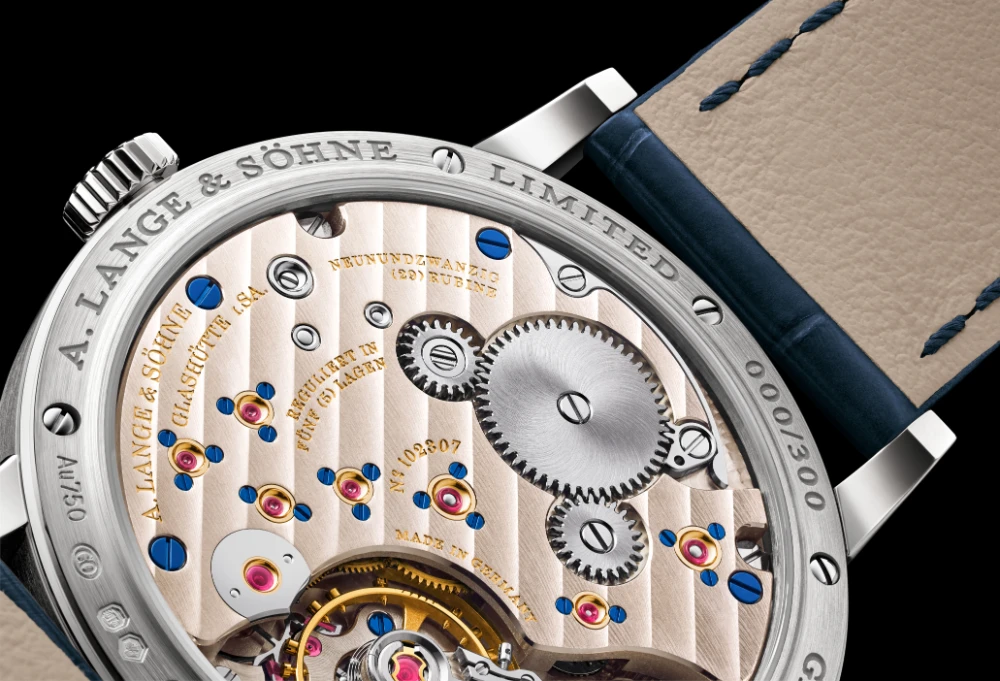
Consistent with all watches that are crafted in the Manufactory, the finishing is exemplary. The swan-neck is mirror-polished, a technique involving the use of diamantine paste and tinplate that takes an inordinate amount of time to execute. Furthermore, the swan-neck sits upon a hand-engraved balance cock that is beautifully adorned with an elaborate floral motif. The three-quarter plate is enriched with a series of parallel stripes termed ‘Glashütte ribbing’ and features anglage, golden text and polished sinks. Adjacent to both the balance and the click, the mainplate is adorned with perlage, while the winding wheels are embellished with solarisation. Lastly, seven gold chatons, retained with thermally blued screws, imbue the mechanical scene with bewitching pockets of colour.
Closing remarks
As I hope I have shown, the A. Lange & Söhne 1815 UP/DOWN is by no means a simple watch. The movement is rich in technical virtue and is finished to an exalted standard.
The model’s blue dial and silver-toned subdials are contemporary, while many aspects of the L051.2 Manufacture calibre perpetuate longstanding traditions. And yet when viewed collectively, all aspects of the watch sit in concert. Similarly, the highly polished case surfaces are juxtaposed with circular-satin brushed and straight brushed facets, that collectively deliver a harmonious aesthetic. This outcome is no accident, it’s the product of extraordinary skill and shrewd judgement.
I began by talking about Martin Luther and Augustus the Strong. Both men left an indelible mark on Saxony. Luther believed in the sanctity of time, stating that it should be used wisely and proclaiming that craftsmanship is the highest form of serving one’s neighbour and honouring God. Augustus the Strong also shared a fascination with time, collecting mechanical timepieces and instruments for astronomical observation. Moreover, he provided employment for craftspeople and fostered an appreciation for their work. Today, Lange perpetuates the value of craftsmanship and treats time with the due reverence it deserves with each product it makes.
Further reading
https://www.alange-soehne.com/
Technical specification
- Model: A. Lange & Söhne 1815 UP/DOWN
- Reference: 244.037 (750 pink gold / 18-carat pink gold)
- Reference: 244.028 (750 white gold / 18-carat white gold)
- Case: diameter 37.5 mm, height 8.7 mm, sapphire crystal to the front and transparent caseback.
- Functions: hours, minutes, small seconds with stop seconds function, UP/DOWN power-reserve indicator
- Movement: Lange manufacture calibre L051.2, hand-wound movement, frequency 21,600 vph (3 Hz), contains 29 jewels, power reserve 72 hours when fully wound, 245 components
- Strap: colour-coordinating hand-stitched alligator strap with prong buckle in 18-carat gold
- Price upon request
- Limited Edition: 300 pieces in each material