
Patrick Ulm of Charles Girardier – interview
Earlier in 2026, Angus Davies travelled to Buchs, the home of Charles Girardier’s HQ and was hugely impressed with the products he saw. Recently, he interviewed Patrick Ulm, the brand’s Founder and Chairman, eager to learn more about his personal journey, the brand’s GPHG success, its exciting expressions of Haute Horlogerie and his vision for the company.
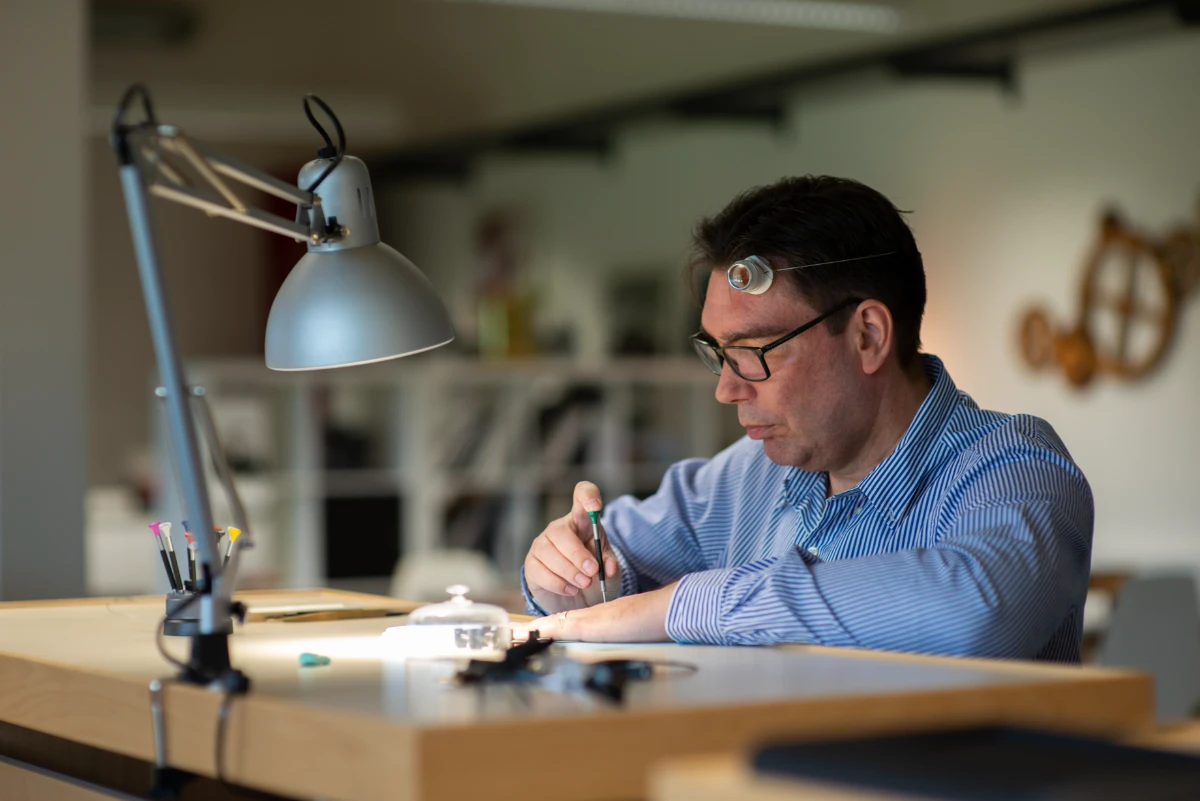
Image – Patrick Ulm of Charles Girardier
Independent watchmaking – driven by passion
Over the years, I have attended a number of press trips, often hosted by large watch brands. After dinner, journalists, ‘bloggers’ and ‘influencers’ share a few stories, recalling past experiences. Inevitably, watches are removed from wrists, passed around the room and opinions are proffered. The famous names are usually much in evidence, but then someone will be wearing a watch from an ‘independent’ and the conversation notches up another level. Independent watch brands always arouse interest and stir emotions. But why?
Most independent brands begin with a watchmaker, sometimes working for a big firm, choosing to step out alone and create something new. Such a move can be motivated by a desire to work for oneself, conceive an innovative mechanism, create a timepiece with unique, bold design or rekindle a historic, much-loved name from the past. For the most part, these mavericks are not primarily driven by financial reward, but rather an innate desire to design, invent and make. They are driven by passion, and their courage leads both journalists and collectors to fixate on their creations, myself included.
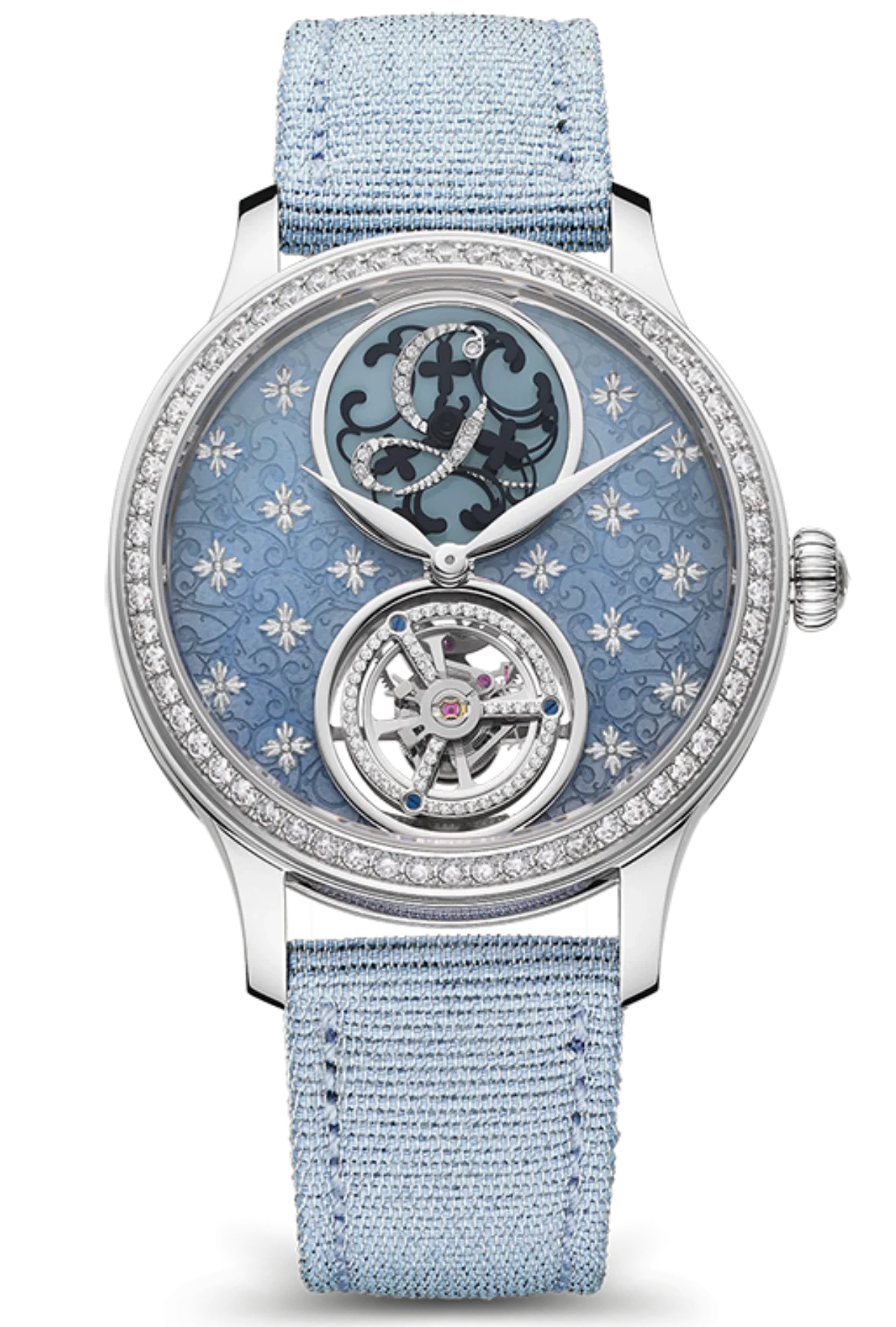
Image – Charles Girardier Signature Mystérieuse ‘Fleur de Sel’ – winner of the ‘Ladies’ Complication Watch Prize’ at the GPHG awards in 2020
One such individual who chose to embark on this journey is Patrick Ulm. In 2018, he swapped careers and took the bold decision to revive the historic name of Charles Girardier. Two years later, the Charles Girardier Signature Mystérieuse ‘Fleur de Sel’ won the ‘Ladies’ Complication Watch Prize’ at the Grand Prix d’Horlogerie de Genève (GPHG). The model featured a Grand Feu dial with silver paillons and an automaton, two signatures of the gifted watchmaker who famously signed his work Girardier l’aîné (Giradier the Elder). In addition, the 37 mm watch featured a 60-second flying tourbillon and a diamond-set bezel, its extraordinary specifications nothing short of seductive.
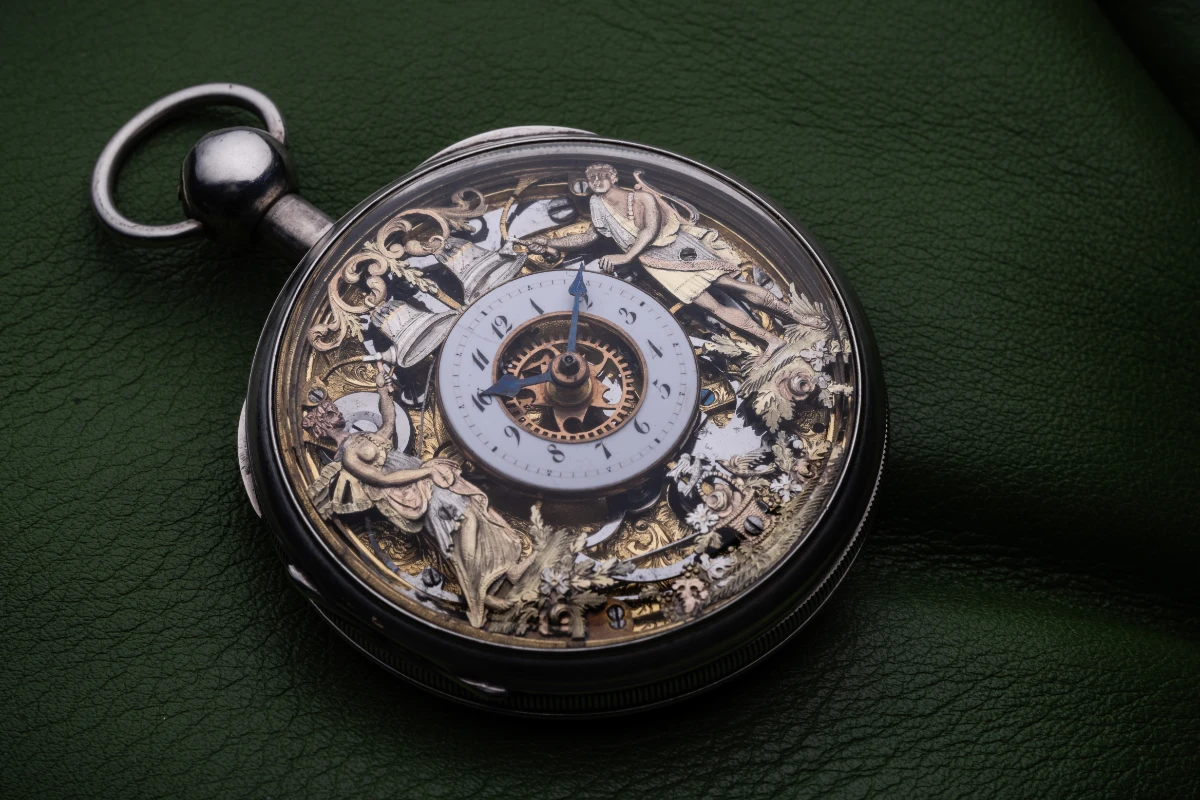
Image – ‘very rare quarter-repeating pocket watch with Jaquemart automata, Geneva (circa 1815)’
Since then, the Maison has gone on to release additional eye-catching models, each imbued with considered details and executed to an impeccably high standard. Critically, none of the references have been a pastiche of 18th-century horology, but rather contemporary expressions of fine watchmaking, sensitively crafted for discerning horophiles.
Recently, I had the opportunity to ask Patrick Ulm a series of questions, keen to learn more about him and the company he leads.
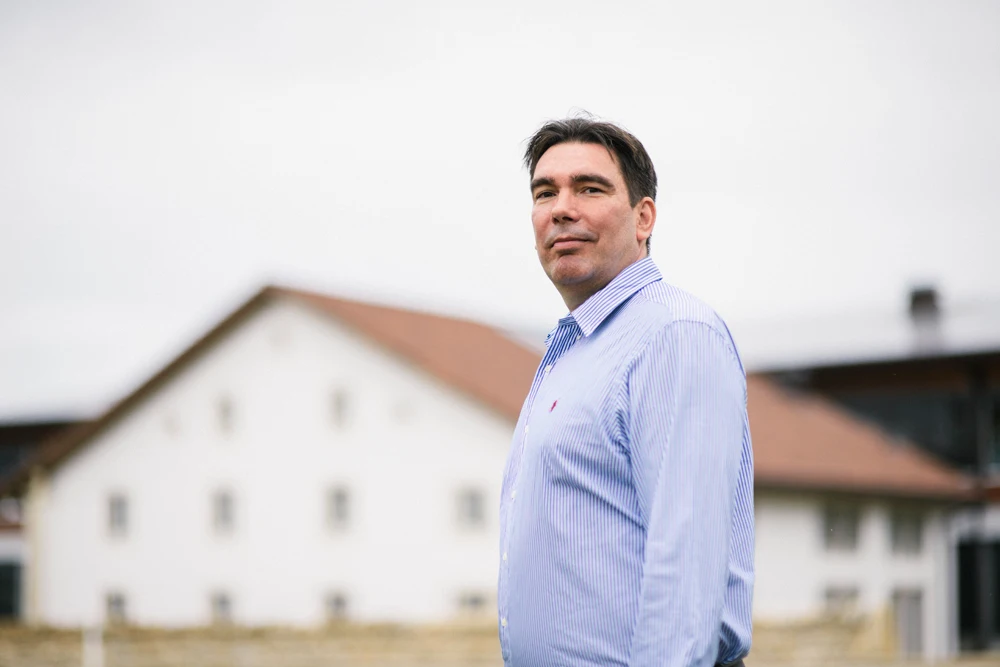
Image – Patrick Ulm of Charles Girardier
Patrick Ulm of Charles Girardier – Q&A
Angus Davies (AD): Can you state your title and your role at Charles Girardier?
Patrick Ulm (PU): Founder and Chairman of CG-Watches SA, the company behind Charles Girardier. In practice, I am the guardian of the name and the person who sets the brief. I am not a watchmaker and have never claimed to be. My job is to decide what a Charles Girardier watch should be and then give the watchmakers the resources to make it.
Angus Davies (AD): Can you tell me a little bit about your background?
Patrick Ulm (PU): I spent many years in private banking and family offices in Geneva – a profession where you convince very demanding people to trust you over the long term. When the financial crisis came, Yves Mirabaud, partner and chief executive of the bank, said two words to me in English that I have never forgotten: ‘Reinvent yourself’. At the time it meant losing my job. In hindsight, it awakened the entrepreneur within that had been sleeping inside me since adolescence.
Before any of that, I recall my grandfather saying that, ‘All the great watchmakers have their pocket watches in a museum’. I also received a Tissot from my godmother when I was 12 – the same age I started reading Agatha Christie, which, as it turned out, proved significant.
Angus Davies (AD): Can you tell me a bit about your discovery at Greenway and the research into Girardier l’aîné?
Patrick Ulm (PU): In 2018, I was in London on business and managed to slip away to Devon, to Greenway, Agatha Christie’s former holiday home. Among her pocket watches was an enamelled piece signed ‘Girardier l’aîné’. I had collected pocket watches for years and at the time, the name meant nothing to me.
What stopped me was a contradiction. Agatha Christie did not collect just anything; if that watch was there, it was there for a reason. And yet here was an enameller, a guillocheur, a movement-maker of that quality, with an assertive signature – ‘the Elder’, like a man insisting on being recognised – and total silence around him. A beautiful object, you admire and move on. A riddle, you take home to solve.
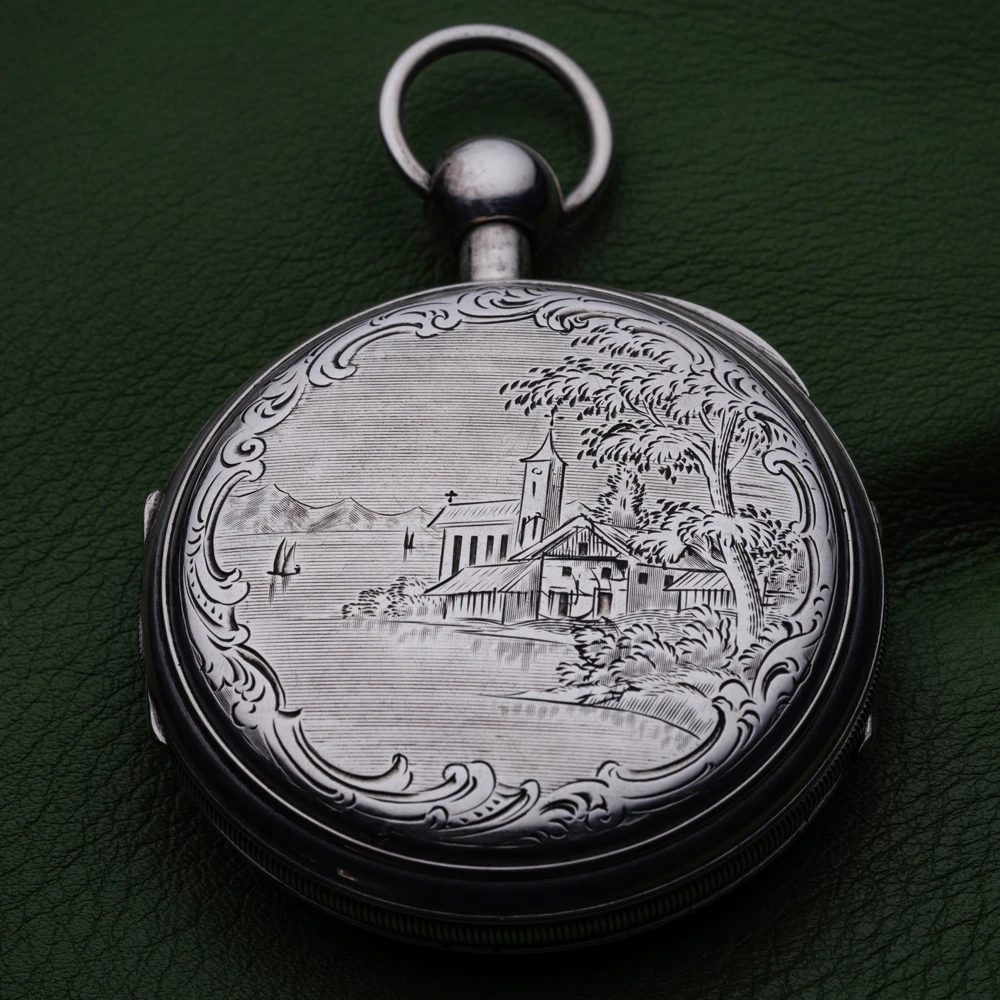
Image – Girardier l’aîné pocket watch
So I did what many collectors do – conduct research. In this instance, I looked to the Petit Palais in Paris, the Geneva museums, the archives and auction catalogues and discovered Charles Girardier was born in Geneva in 1759 and had opened his own workshop at 21. He was a remarkable enameller and guillocheur, who was fascinated by automata. Sadly, he died in 1839 without descendants; no company, no heirs, no continuity. I set out to acquire some of his original pieces: first a pocket watch with a painted hunting scene, at auction; then the quarter repeater with jaquemart automata, dated 1815, of which, to my knowledge, is one of only two still in existence. Holding that object two centuries on and hearing it still strike – that was the moment I thought, ‘I am going to do this’.
I want to be precise about one thing. I never saw myself as an heir. There is no Girardier bloodline and there never will be. I am a collector who rebuilt the name around the evidence – a guardian of fine watchmaking.
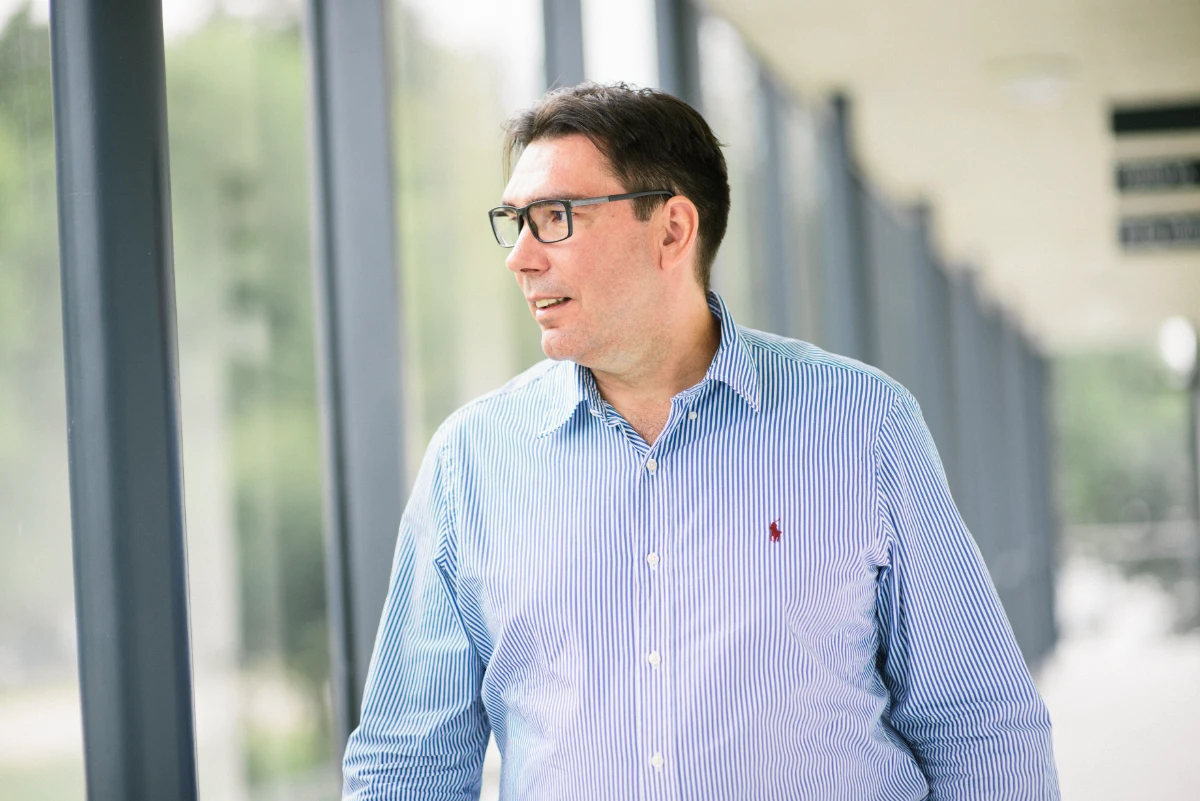
Image – Patrick Ulm of Charles Girardier
AD: What makes Charles Girardier of today a special brand?
PU: Three things – all of which are verifiable.
First, a method. Every collection starts from an existing Girardier piece, never from a drawing. The Signature Mystérieuse took his automata; the Synchronaut took the snailed date counter from a pocket watch he signed; the Plénitude took the winding key. Three collections, three different sources of inspiration, no copies. I call the method ‘the fourth chair’ – when a designer, a constructor, an artisan and I sit down there is always a chair for Monsieur Girardier. The question is what would he make if he were alive today?
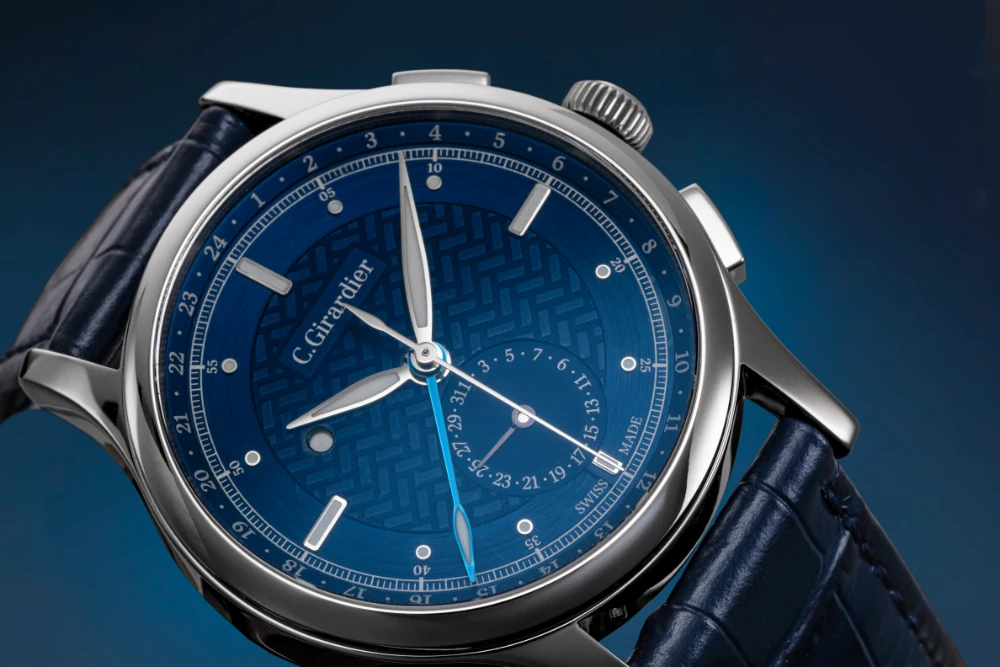
Image – Charles Girardier Synchronaut GMT
Second, a signature you can follow through the watch. On the Plénitude the crown takes its form from the winding key of a period Girardier pocket watch; beneath the dial, a cone rising on a screw thread measures the mainspring’s tension; above the dial, a hand makes that cone’s climb visible from twelve to six. The key, cone, hand – one idea in three dimensions, at three levels of the watch.
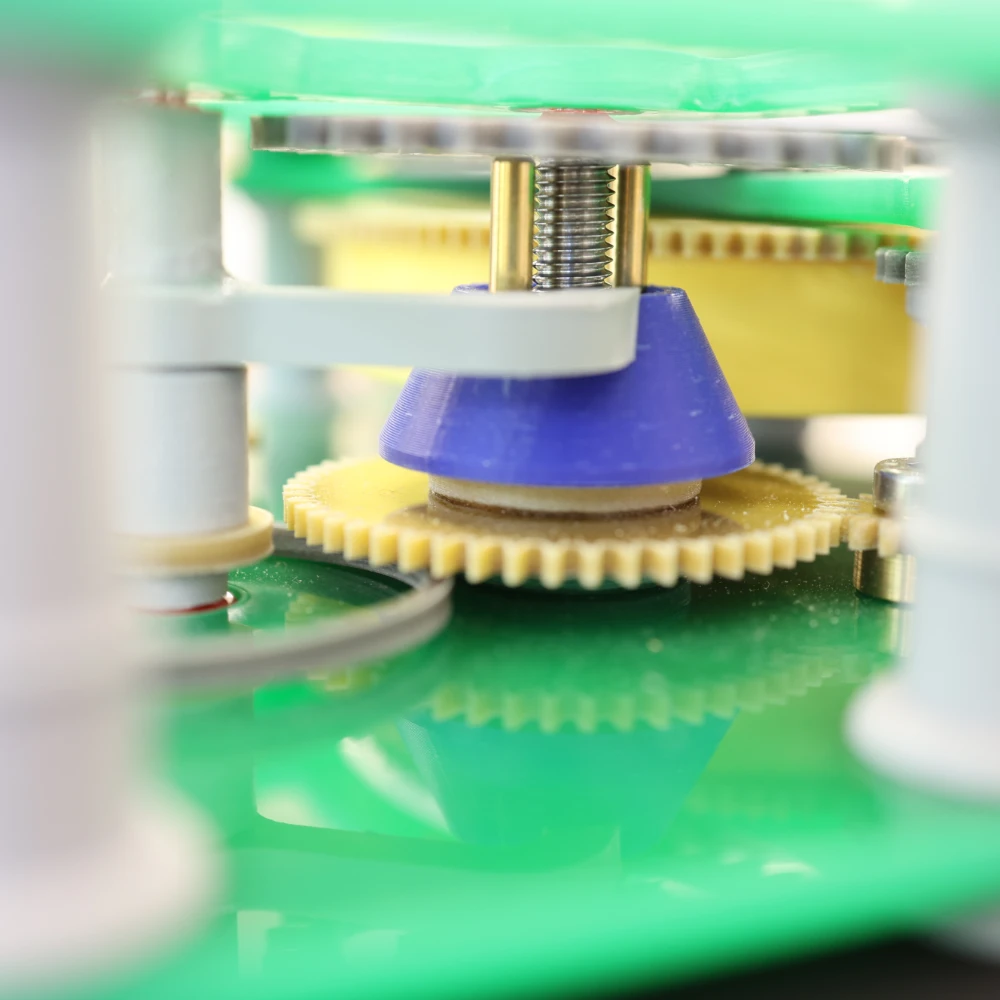
Image – a 3D printed model showing the feeler (in grey) in contact with the Volcano (in blue)
Third, named authors. The CG PL1 and PL2 calibres were designed with Cyrano Devanthey and Dominique Buser in Buchs. Nothing is hidden behind a corporate ‘Manufacture’.
AD: The GPHG Ladies’ Complication Prize, 2020 – what did it mean?
PU: I was in a state of shock for two months and I say that without exaggeration. Two years after reviving the name, to be on that stage in front of the entire industry. But very quickly another thought arrived, which is not pressure but responsibility: the prize was not mine – it was Charles Girardier’s. I had brought his name back into the room where the best are rewarded, 181 years after his death – and now it had to earn its place there for good, not as an accident.
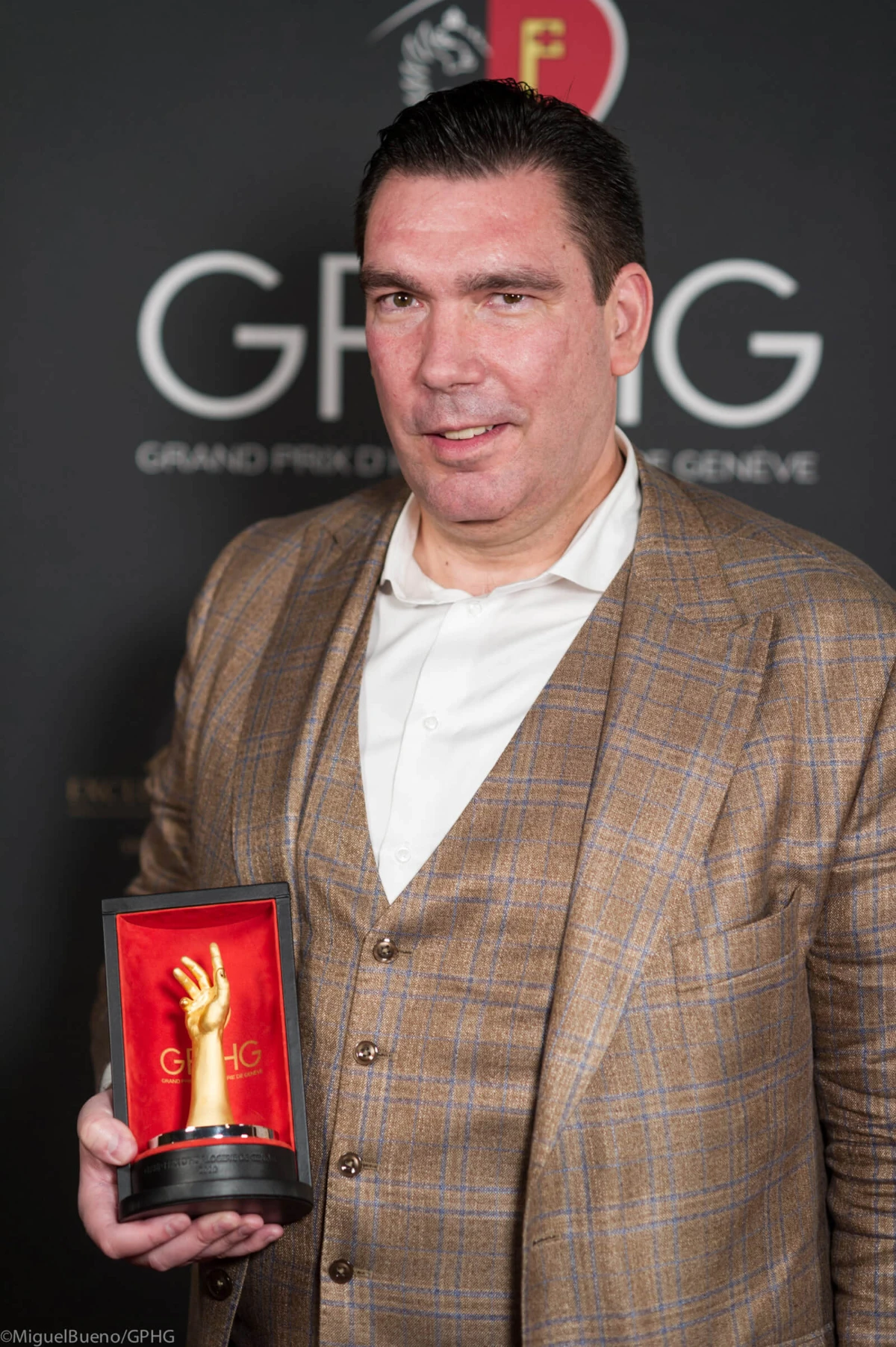
Image – Patrick Ulm holding the GPHG award
Commercially, it did what no advertising budget could have: it told collectors that a name they had never heard of was being taken seriously by people whose job is to be sceptical.
AD: Champlevé enamel, miniature painting, chiming mechanisms – what’s next?
PU: They are in the Maison’s DNA and they will come back. The Fleur de Sel dial – grand feu enamel with silver paillons, a technique that was almost extinct. We found an elderly lady near Lyon still running one of the last paillon-stamping machines — proof we take the métiers d’art very seriously.
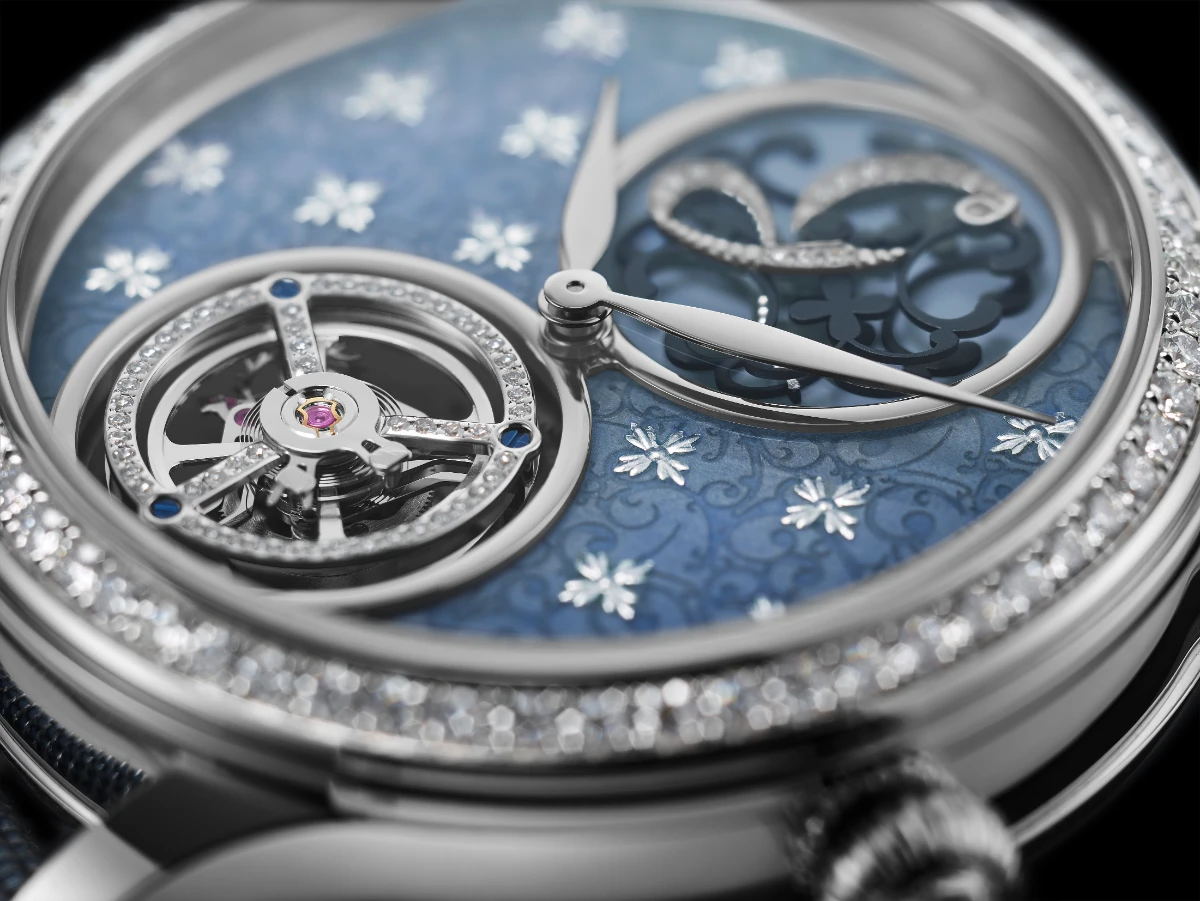
Image – dial of Charles Girardier Signature Mystérieuse ‘Fleur de Sel’ featuring silver paillons
But the order matters. The first watches had something to prove: an unknown name needed enamel, a tourbillon, an automaton, colour – it needed people to look. A Maison, though, is not built on astonishment; it is built on a movement. The Plénitude is where we stopped borrowing calibres and designed our own. Uniting métiers d’art with our own movement, at a price that corresponds to that work. I will not promise a chiming watch in print, but what I will say is that Girardier’s repeater is on my desk and I look at it often.
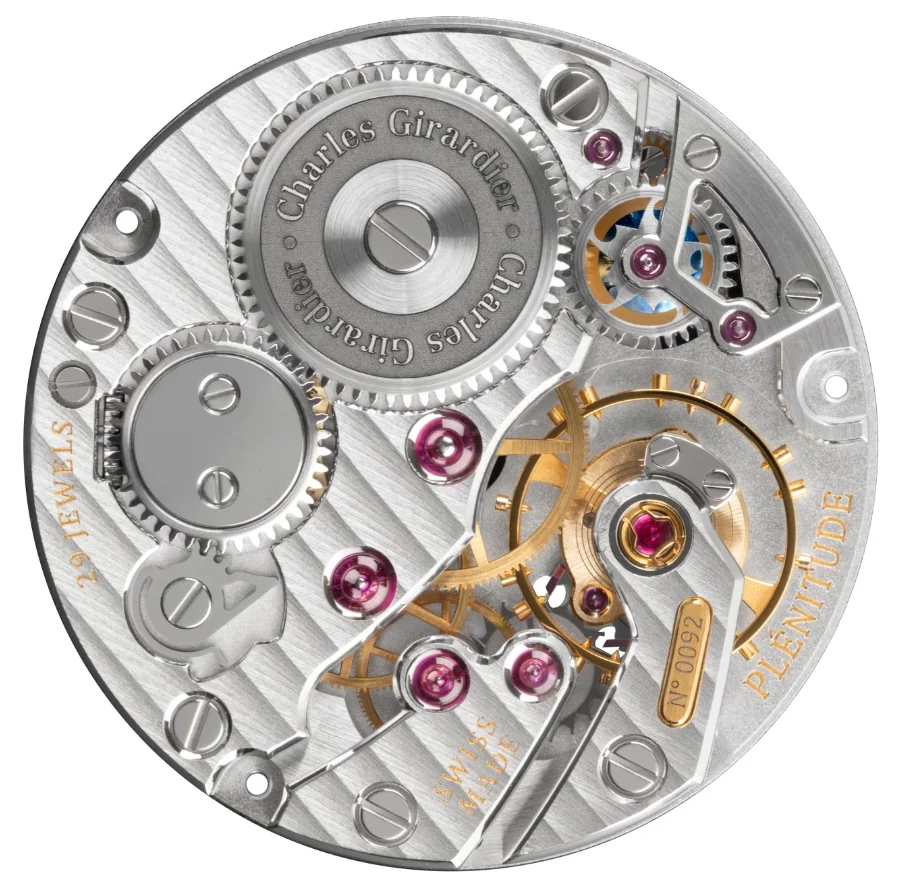
Image – Charles Girardier Plénitude movement (recto)
AD: Did you receive guidance from Laurent Ferrier in the early days?
PU: No, the guidance did not come from Monsieur Laurent Ferrier himself but from Olivier Müller, the former chief executive of Laurent Ferrier, who accompanied me as a coach for three years.
He taught me what a man from finance could not know: that in this profession the watch is not finished when it leaves the workshop; it is finished when it finds its collector. And he made me understand that, curiously, I already knew how to do that. In private banking you deal with people who expect discretion, an individual relationship built on trust over a number of years. A collector is no different. He wants to be treated personally, not as a market segment. It is the same approach as private banking, transposed to the watch industry.
AD: Conceiving the Plénitude – did the symmetrical dial shape the movement?
PU: I began neither with a drawing nor with a movement, but rather with a historical piece and a desire to provoke an emotion. For the Plénitude the piece was the winding key and the emotion was to see the energy of the watch — not a small gauge squeezed into a corner, but an indication given the whole north–south axis of the dial, with the symmetry it deserves.
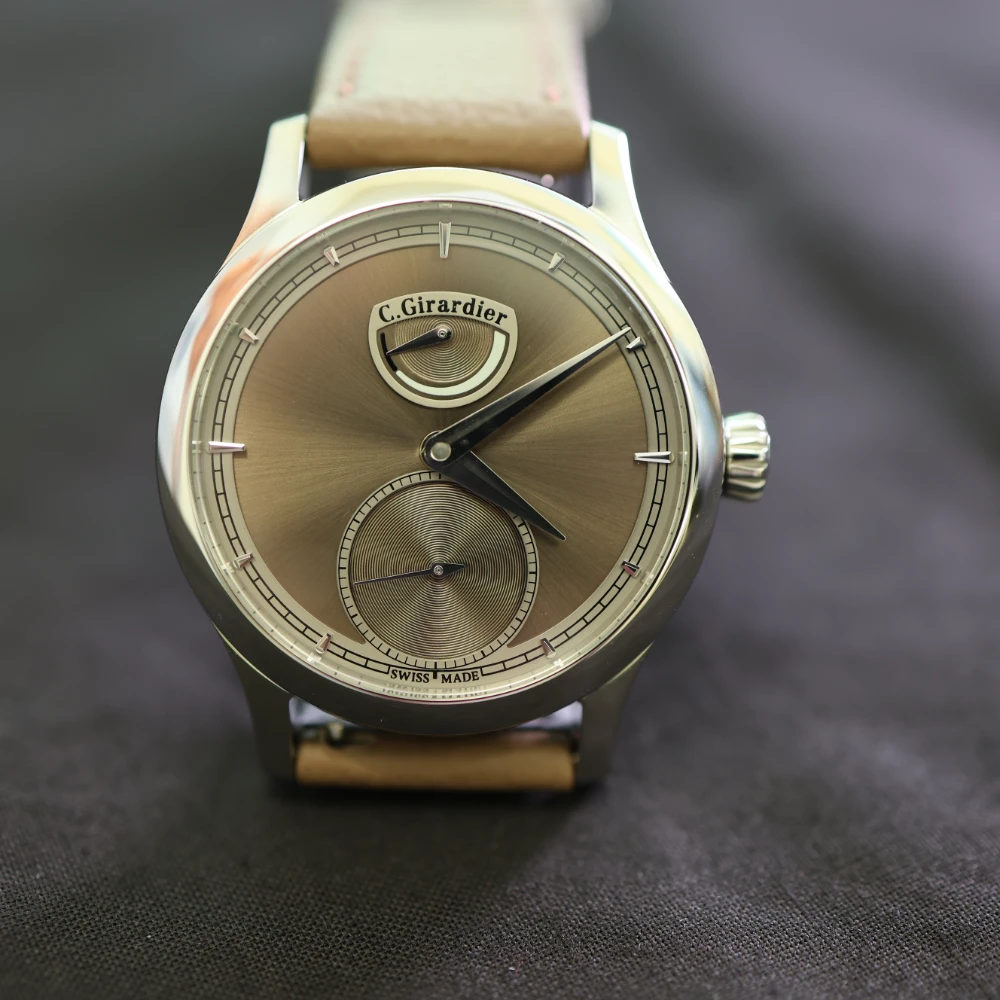
Image – Charles Girardier Plénitude PL1
So yes, the dial layout came first and shaped the movement, not the other way round. Once you decide the power reserve indicator will be positioned on the central axis, running 6 to 12 o’clock, the usual flat planetary-gear solution no longer serves; you need a mechanism that reads mainspring tension and indicates it precisely. The answer was three-dimensional: a wheel in mesh with the ratchet wheel turns a vertical screw; a truncated cone rides that screw, descending as you wind and rising as the tension falls; a feeler arm follows the cone and drives the hand. All of it inside a pillar-type bridge of traditional construction, in a case 10.95 mm thick. It took 3D-printed models, prototypes, reworks and patience – and, usually, Cyrano or Dominique telling me, ‘Patrick, that is not possible’, which with them generally means, ‘not like that’.
It is costly and complex, as you say, and it cannot be patented. That is why I tell it the same way every time: key, cone, hand. Repetition is the only protection a mechanism like this has.
AD: The Plénitude PL1 retails for CHF 17,800 — what is your secret?
PU: There is no secret, only choices. We are a small company with no boutiques, no advertising budget and no distribution layer taking its margin; the collector pays for the watch, not for the building it is sold in. The case is steel, deliberately. Decoration is done in Geneva by specialist workshops, exactly as La Fabrique worked in Girardier’s day, and assembly is done with independent watchmakers rather than a factory incurring the overheads necessary for producing a thousand pieces.
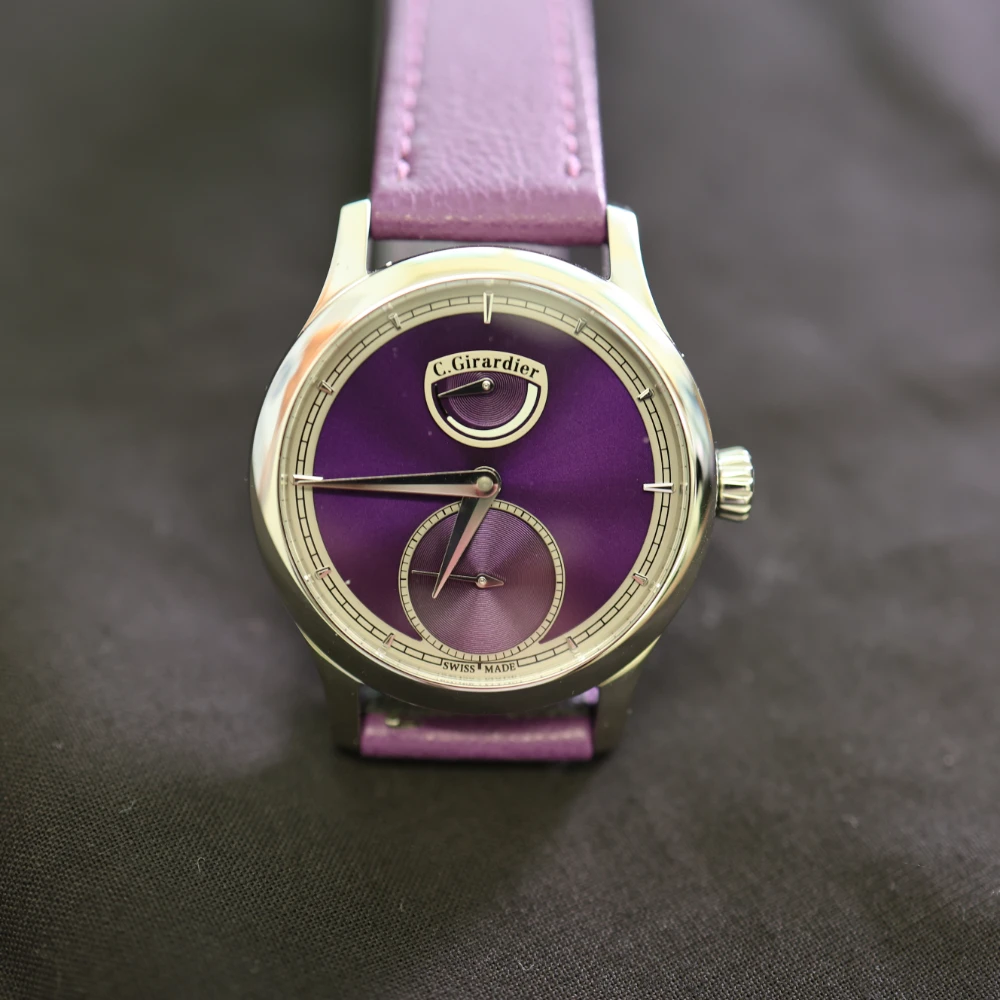
Image – Charles Girardier Plénitude PL1
The intention is to offer incredible value for the price, and the reason is simple. Some collectors are still hesitant to enter the world of Charles Girardier — a young name, even if it is a very old one. We welcome the seasoned collectors, of course. But at this price we also want to inspire a new, younger collector to make an affordable first move into independent watchmaking, with a Manufacture calibre, a proprietary complication and the CG Seal. After regulation, the average rate is just a few seconds a day; the balance is poised the old way with eighteen screws and anglage is executed by hand with a cabron and diamantine. I will say it plainly: the price will rise. Those who buy now will benefit from coming in early.
AD: Buchs, and the horological hub with Cyrano Devanthey and Dominique Buser
PU: Buchs is not a castle, and I think that is the point. It is a watchmaking hub: several independents, each with their own projects, who pool expertise when a problem demands it. We went there to develop a Manufacture movement and because Cyrano Devanthey and Dominique Buser were there. Under their own name, Oscillon, they build around five watches a year entirely by hand.

Image – Cyrano Devanthey
Does it give the watches a regional character? I would say it gives them a Genevan character. Geneva’s strength in Girardier’s century was La Fabrique – a decentralised system of independent specialist workshops, some five thousand people, a fifth of the city. Girardier was a master who drew on the ateliers around him. We have not left Geneva; we have rebuilt La Fabrique at our scale. The straps, for that matter, are still hand-stitched in Geneva.

Image – Dominique Buser
AD: Work, family — and advice for aspiring brand founders
PU: I have three boys, aged four, six and seven – so the future of Charles Girardier is safe: three watchmakers in preparation! Seriously though, none of this would be possible without my wife, who is extremely dedicated, and their grandmother, who is always around to help. An independent brand is a family undertaking whether you intend it to be or not; I was fortunate that mine signed up for it.
For those wanting to start their own brand: start from evidence, not from a mood board. A revived name without a specific, documented object behind it is a trademark exercise. Find your watchmakers before you find your marketing experts. And expect the people around you to tell you it will fail — mine did. It was not an absurd remark: an unknown name, a flying tourbillon, grand feu enamel and an automaton as a first watch, without a Manufacture behind it. What they did not see is that I did not need to be reasonable – I needed to be an entrepreneur.
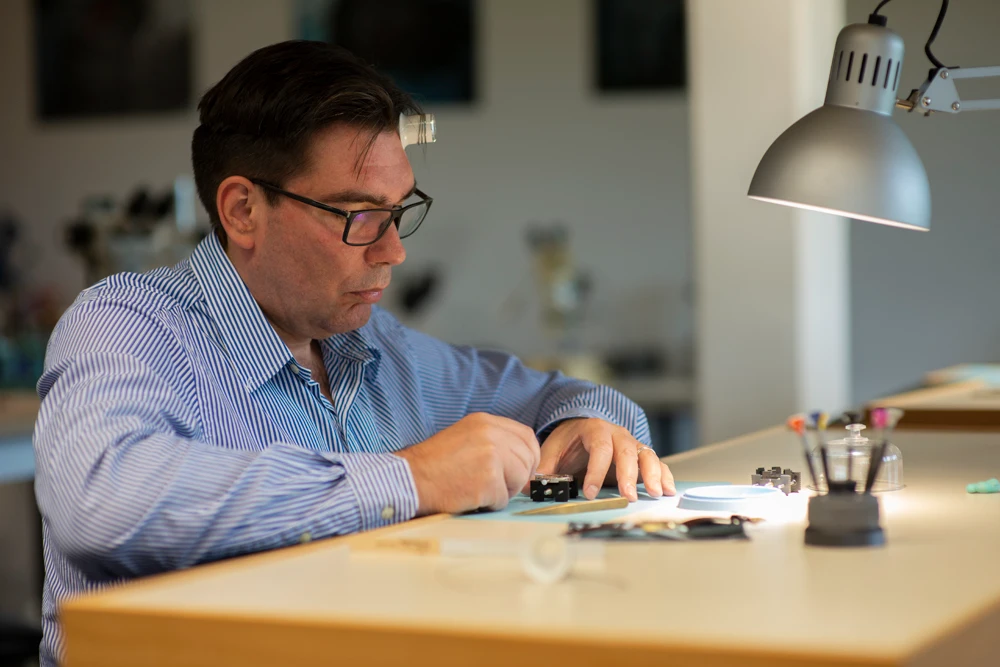
Image – Patrick Ulm of Charles Girardier
AD: Watches & Wonders 2027 — will there be something new?
PU: Yes. I will say only this: the Synchronaut will receive a new dial. It is a watch that deserves more attention than it has had – the GMT with home time set by pushers and the snailed date counter taken from a Girardier pocket watch – and in 2027 we intend to give it that attention. The rest you will see in Geneva.

Image – Charles Girardier Synchronaut GMT
AD: What does the future hold for Charles Girardier?
PU: The honest answer is that the next step is not another complication. We now have a signature, a method, a Manufacture calibre, named authors and a coherent approach. What remains is to hold that identity and turn it into delivered watches: the Plénitude is in series, twenty-five pieces per reference, against a declared ceiling of three hundred for the collection.
Beyond that, every future collection will start as the first three did – from an existing piece by Girardier l’aîné. He left a rich body of work that will keep us busy for a long time. My job is to make sure his name is never forgotten.
Closing remarks
Since I first saw the GPHG-winning watch of 2020, I have witnessed Charles Girardier release further exquisite timepieces. The models draw inspiration from the work of Girardier l’aîné without cynically applying faux patina or creating replicas of 18th-century watches. Indeed, Patrick Ulm has chosen to create contemporary watches, imagining what Girardier the Elder would produce today if he were alive.
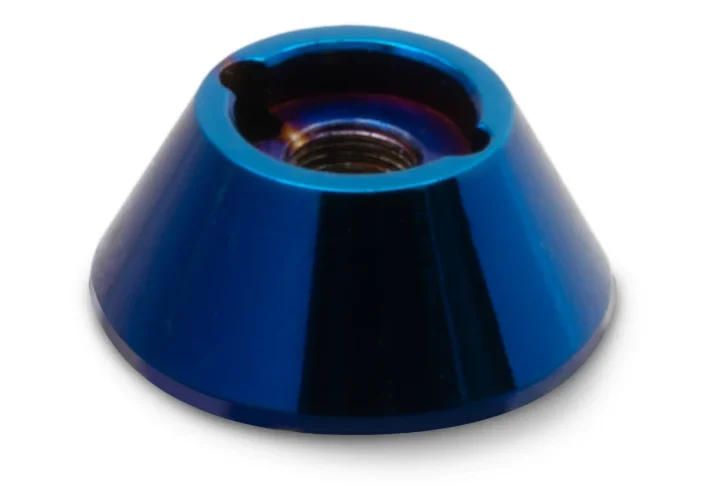
Image – the cone, part of the Volcano Power Reserve
By moving to Buchs, the brand has been able to produce its own Manufacture movement with the assistance of the hugely talented Cyrano Devanthey and Dominique Buser. The Charles Girardier Plénitude, with its ingenious cone and feeler power-reserve (aka Volcano Power Reserve), is wonderfully engineered and something I have only previously seen on watches with six-figure price tags. The Plénitude is a luxury watch and an aspirational product by virtue of its specifications and peerless finishing, but, surprisingly, it’s keenly priced. Mr Ulm chooses to sell his products directly to collectors, an approach that mitigates cost, providing savings that he chooses to share with his clients.
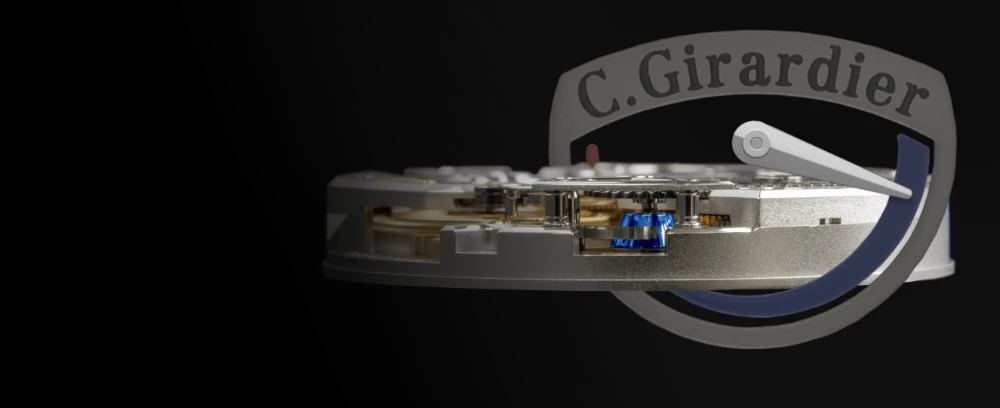
Image – Volcano Power Reserve
Patrick Ulm, by his own admission, is not a watchmaker; however, he has been an enthusiastic collector of watches since the age of 12. In common with many entrepreneurs who establish their own independent brand, he is passionate about the watches his company creates – watches that are imbued with character, interesting mechanisms and glorious finishing.