
A. Lange & Söhne 1815 Rattrapante Watch Review
The A. Lange & Söhne 1815 Rattrapante is the latest high-complication to emerge from the Saxon Manufactory. Its repertoire surpasses that of a ‘regular’ chronograph with its ability to measure ‘splits’. Its excellence also extends to its technical refinement and the peerless finishing of the Manufacture calibre L101.2.
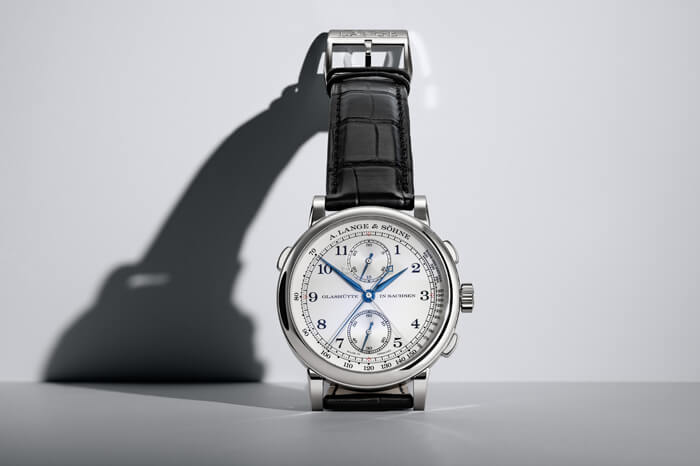
A. Lange & Söhne 1815 Rattrapante – not all chronographs are the same
A chronograph is a complication that is able to measure elapsed periods of time on demand. Typically this information is shown with a central chronograph seconds hand with longer periods shown on one or more counters. However, this description gives the impression that all chronographs are the same, but they are not. Allow me to explain.
Cam-actuated or column-wheel?
Modular or integrated? Cam-actuated or column-wheel? Oscillating pinion, horizontal coupling or vertical coupling? The jargon may seem bewildering and inevitably leads some shoppers to select chronographs purely on price.
Horizontal or vertical coupling?
Typically, the most affordable chronographs use a cam to control the start, stop, reset and, where applicable, the fly-back function. A column-wheel serves the same purpose, but instead of being a simple stamped part, it is intricately formed and features small fingers that engage with levers. Purists will tend to favour column-wheel chronographs as they confer a smoother pushpiece action, but they are usually the preserve of costlier timepieces.
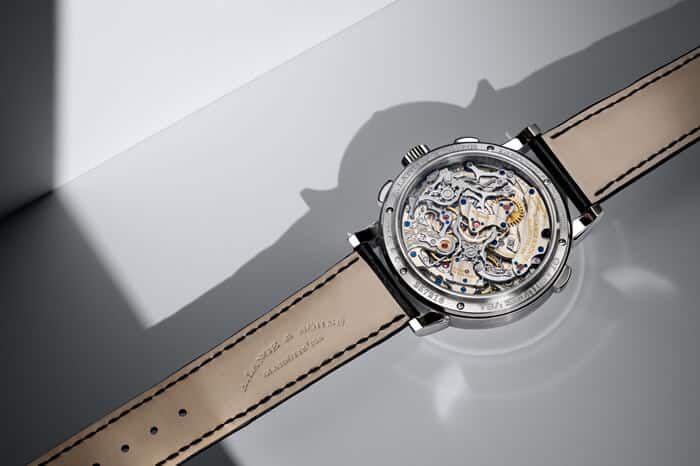
A chronograph typically has two trains. The main going train, found on virtually all mechanical watches, connects the barrel to the escapement. In addition, a chronograph has a second train used to measure elapsed periods. In order to power this latter arrangement of components, energy is transferred from the main going train to the second train via a coupling. The modern approach is the vertical coupling, while the classical approach is the horizontal coupling. The low cost option is the oscillating pinion, a form of horizontal coupling.
The benefit of the vertical coupling is that when the chronograph is actuated, the central chronograph seconds hand immediately commences its journey without any suggestion of stuttering.
Traditionalists often favour the horizontal coupling as this form of meshing system allows the wearer to see the chronograph engaging and disengaging. However, with this system there is a greater chance of stuttering, drag (the drop in amplitude which can adversely affect precision) and wear. While A. Lange & Söhne prefer the horizontal coupling, they have employed their vast watchmaking expertise to eradicate the aforementioned issues while still delivering a stunning visual spectacle.
A. Lange & Söhne 1815 Rattrapante – Calibre L101.2
Appraise any chronograph from the A. Lange & Söhne Manufactory and you will see a myriad of beautifully finished parts sat atop a three-quarter plate. Everything is painstakingly assembled, twice. Now, the German marque from Glashütte takes an already complex chronograph and goes one step further.

The new A. Lange & Söhne 1815 Rattrapante is a chronograph with an additional rattrapante or split-second hand that is used to measure a short period of time. This additional hand spends most of its time hidden from view as it runs in synchrony with the central chronograph seconds hand superimposed above. The watch has conventional pushpieces at 2 and 4 o’clock for stop, start and reset duties. However, the model also has a pushpiece at 10’clock, dedicated to the rattrapante hand. Pressing this latter pushpiece causes the hand to stop independently of the chronograph hand and, with a further press, catch up with it again.
Rattrapante
With a rattrapante, there are a few challenges that must be mastered. For example, managing the colossal forces typical of a chronograph. Also, the gap between the rattrapante and the chronograph seconds hand must be minimal in order to avoid any parallax issues ie both hands appearing to point to different markings on the chemin de fer despite running in synchrony. Needless to say, A. Lange & Söhne has surmounted all such technical obstacles with notable aplomb. Furthermore, one glance at the movement reveals Glashütte ribbing, perlage, thermally blued screws, anglage, hand-engraving, mirror-polishing, gold chatons….
As A. Lange & Söhne clearly demonstrate, not all chronographs are the same.
A. Lange & Söhne 1815 Rattrapante – the brand’s press release
A. Lange & Söhne is enriching its 1815 model family with a timepiece featuring one of the most sophisticated horological complications: The chronograph rattrapante. The new model is fully focused on the eponymous complication, and it is endowed with a custom-developed movement. It not only delivers the foundation for a totally unique dial design but also stands for the drive that allows the Saxon manufactory to go its own way. The 1815 RATTRAPANTE has a platinum case and comes in a limited edition of 200 pieces.
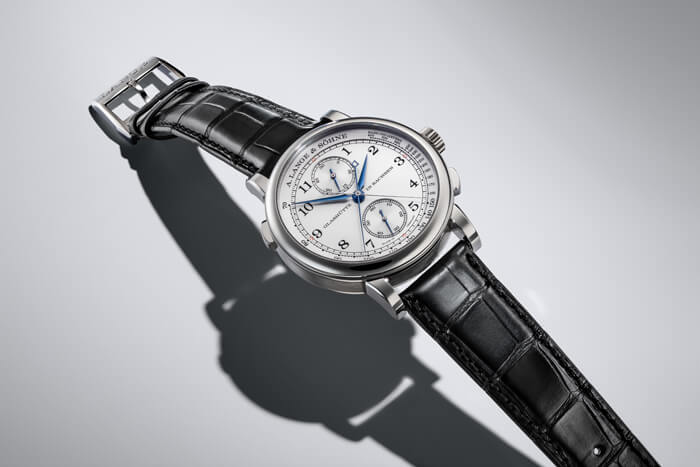
The masterclass of short-time measurement
With the 1815 RATTRAPANTE, A. Lange & Söhne’s watchmakers yet again demonstrate their expertise in the field of short-time measurement. Its complex mechanism expands the functionality of a classic chronograph by allowing the measurement of a random number of lap times within a minute. For this purpose, the watch has two superposed chronograph hands, the centre chronograph hand and the centre rattrapante hand. Both hands start together when the pusher at 2 o’clock is actuated. The centre rattrapante hand can now be stopped independently of the centre chronograph hand and then resynchronised with it. This procedure, used for instance to measure lap times, can be repeated infinitely.
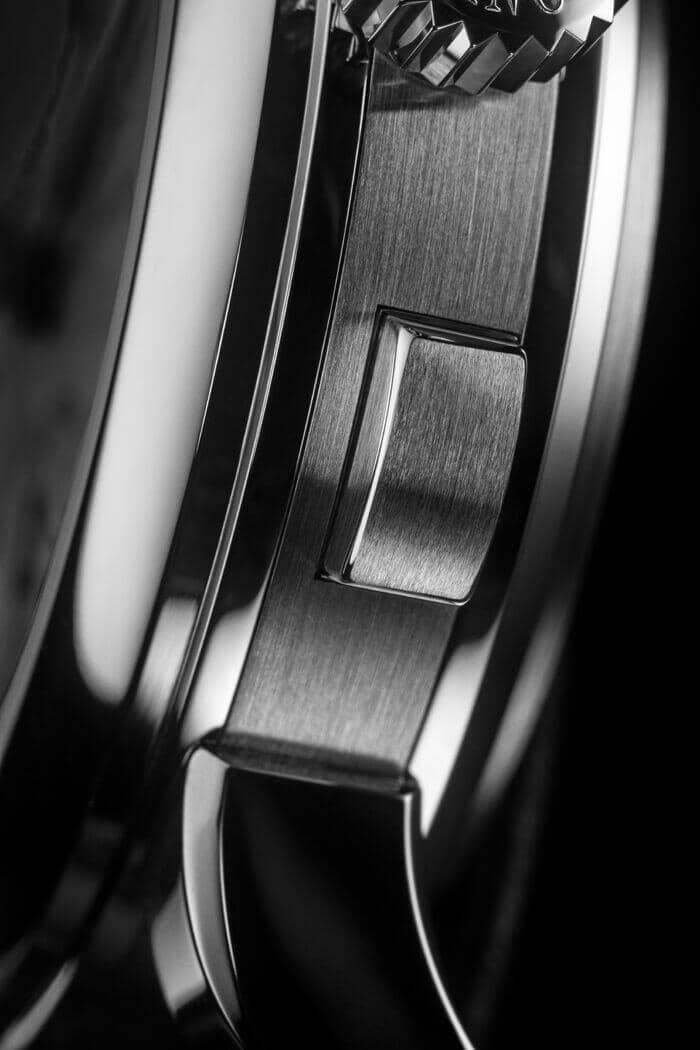
Functional elegance
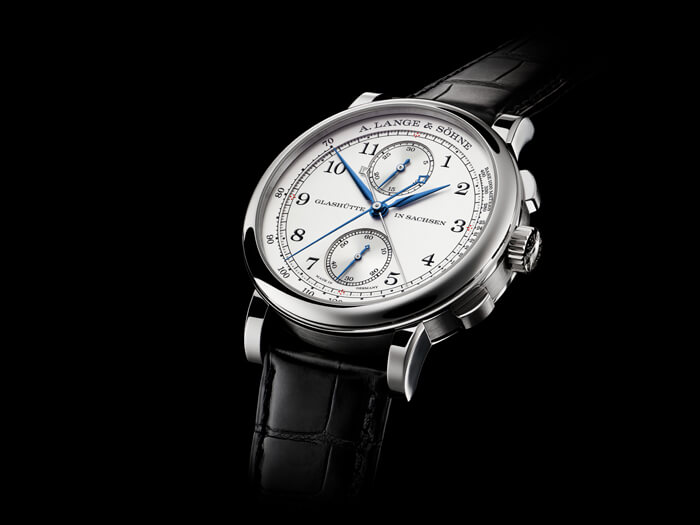
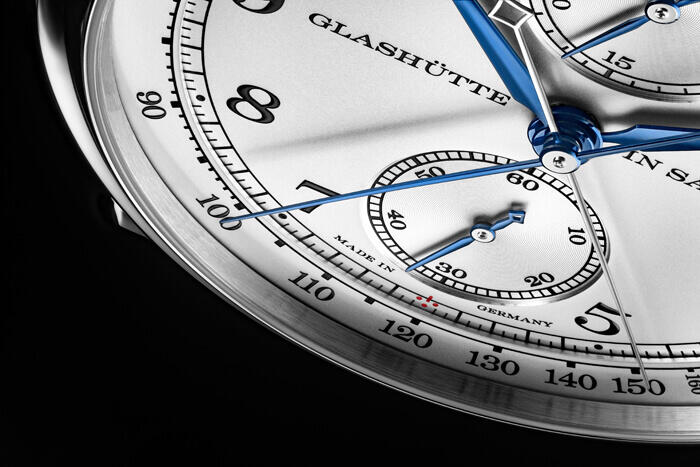
The 1815 RATTRAPANTE comes in a noble platinum case. The bright argenté-coloured dial and the dark blued hands contrast well and assure perfect legibility. The traditional style elements of the watch include the peripheral railway-track minute scale and the prominent Arabic numerals. They clearly reflect the genre that already characterised the historic Lange pocket watches and the model family that is still named after Ferdinand Adolph Lange’s birth year.
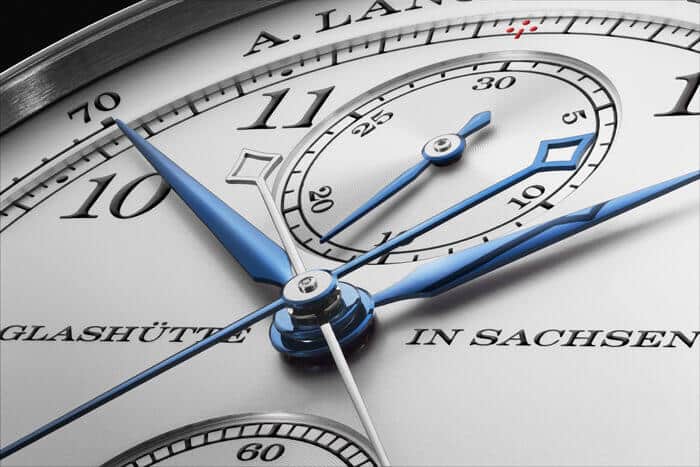
The development of their own movement makes it possible for the watchmakers to freely choose the positions of the subsidiary dials. Instead of the ordinary positions at 3 and 9 o’clock, the 30-minute counter and the subsidiary seconds dial are at 12 and 6 o’clock, respectively, on the vertical centre axis. This symmetric arrangement gives the 1815 RATTRAPANTE a balanced and expressive personality. Additionally, the peripheral tachometer scale allows average speeds to be determined.
Manufacture calibre L101.2
The 1815 RATTRAPANTE is powered by the manufacture movement L101.2. The entire rattrapante chronograph mechanism is configured such that it is visible through the sapphire-crystal caseback. This allows the complex switching processes to be observed in detail. The control of elapsed and lap-time measurements is handled highly precisely in the classic manner with two column wheels. When fully wound, the mainspring barrel delivers a power reserve of 58 hours. In connection with the screw balance, also manufactured in-house, the freely oscillating Lange balance spring guarantees excellent rate accuracy at a frequency of 21,600 semi-oscillations per hour (3 hertz).
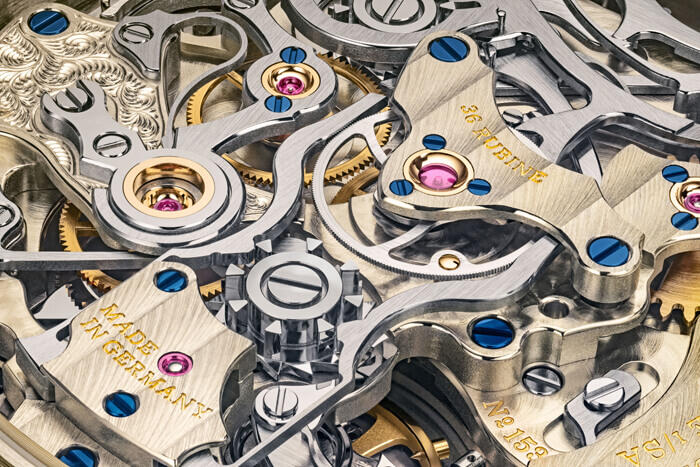
It is already the seventh calibre with this complication developed and crafted by Lange. With a special finissage, the movement was already integrated in the 1815 RATTRAPANTE HONEYGOLD “Homage to F. A. Lange”. With this 100-watch limited edition featuring Lange’s exclusive honey-gold alloy, the manufactory celebrated the 175th anniversary of Saxon precision watchmaking in 2020.
The signature of the grand masters
The finissage of the calibre, that was manually assembled twice, reflects the tradition of Ferdinand Adolph Lange: His movements always stood out with prominent design elements as well as inimitable aesthetic details. As befits the 1A quality attribute – the highest quality category of his pocket watches – the calibre L101.2 movement features bridges and cocks made of untreated German silver, a screw balance, screwed gold chatons that secure the jewels and a hand-engraved balance cock. Paired with the latest-generation watchmaking skills, these traditional elements unite to form a micromechanical fusion of the arts.
All upper sides of the moving parts of the rattrapante chronograph, such as levers, springs and jumpers, are decorated with straight graining while the peripheral chamfers are polished. Bevel-polishing re-entrant angles is a particular challenge for the finishing specialists. Only experienced artisans will succeed in polishing the corners acutely and so they are truly sharp.
A class of its own
All upper sides of the moving parts of the rattrapante chronograph, such as levers, springs and jumpers, are decorated with straight graining while the peripheral chamfers are polished. Bevel-polishing re-entrant angles is a particular challenge for the finishing specialists. Only experienced artisans will succeed in polishing the corners acutely and so they are truly sharp. The conceptualisation and production of top-flight chronographs, especially of split-seconds chronographs, is regarded as one of the most difficult challenges in precision watchmaking. It takes considerable skill, experience and patience to assure the precision and reliability of the complex mechanism.
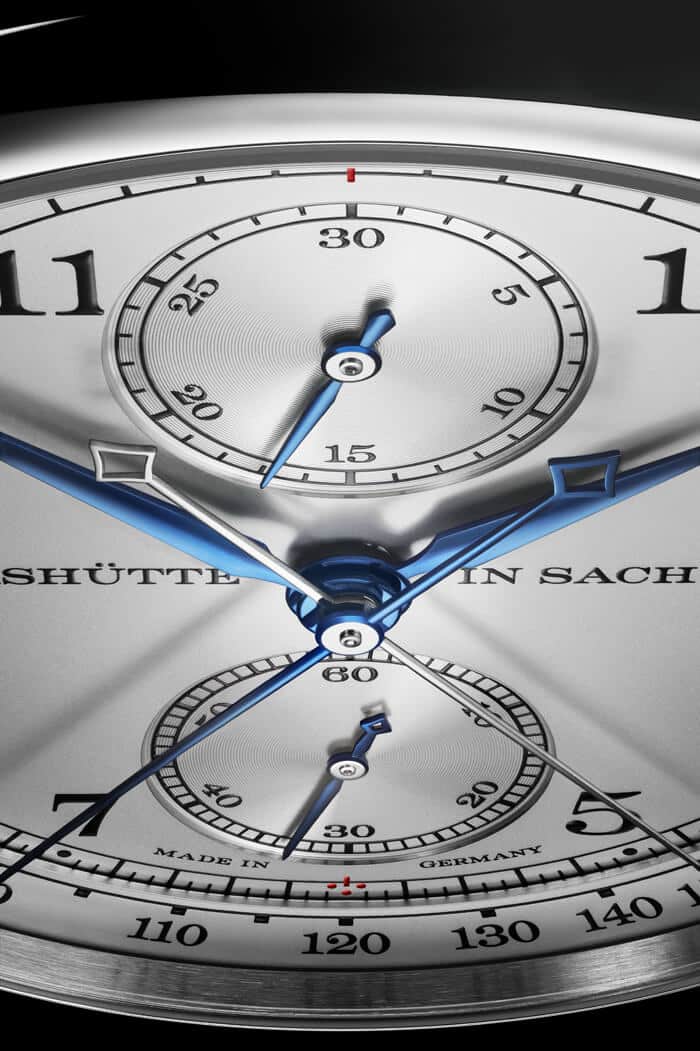
Since the relaunch of A. Lange & Söhne, several timepieces defined new standards in this field. In 2004, for the first time in the history of precision watchmaking, A. Lange & Söhne created a double rattrapante chronograph that extended the range of intermediate time measurements from 60 seconds to 30 minutes: the DOUBLE SPLIT. Presented in 2018, the TRIPLE SPLIT benchmarked the current state of the art in rattrapante function developments. With the addition of a third, separately stoppable hand pair, the chronograph and rattrapante functions can be used for measurements that last up to 12 hours. To this very day, both timepieces are unique in precision watchmaking. Now, the new 1815 RATTRAPANTE comes into the focus as a classic interpretation of the split-seconds mechanism, indeed as a singular complication. It makes its appearance in a platinum case with a diameter of 41.2 millimetres. Lange’s engineers succeeded in limiting the height of the case to 12.6 millimetres despite the technical complexity of its 365-part manually wound calibre. Given its horological intricacy, this masterpiece is limited to a global 200-piece edition.