
Roger Dubuis Manufacture – Part Two
Angus Davies continues to explore the world of ‘hyper horology’, looking behind the scenes of the Roger Dubuis Manufacture. In this feature, Angus looks at the making and finishing of components along with the assembly and regulation of the company’s watches.

Image – Roger Dubuis Manufacture
The Fondation Haute Horlogerie (FHH) defines a plethora of terms on its highly informative website. When describing a Manufacture, its description states that ‘the Swiss watch industry uses this term to differentiate between a company that manufactures a watch almost in its entirety as opposed to finishing shops which only assemble and time the watch, and fit the hands and movement, and établisseurs.’ Having spent numerous hours touring Roger Dubuis’ modern facility, I can attest that its atelier is, without doubt, a ‘Manufacture’. Indeed, when I recently followed the linear flow of production, I was amazed by the vast number of components made in-house, all of which are made to an elevated standard.
Allow me to guide you through the various processes undertaken at the Roger Dubuis Manufacture.
Mainplates, bridges and small components
Movements begin life as rods of metal such as brass and steel, together with square plates, again made of brass but sometimes formed from other materials. Interestingly, as part of its close relationship with the supercar maker, Lamborghini, the Roger Dubuis Manufacture also receives super-expensive rectangular blocks of forged carbon which it also converts into various parts. While many watch firms form an association with an expensive car marque, invariably these relationships are employed purely for marketing purposes. Refreshingly, the relationship between Roger Dubuis and Lamborghini has a direct influence on the composition of several watches.

Image – rods of metal
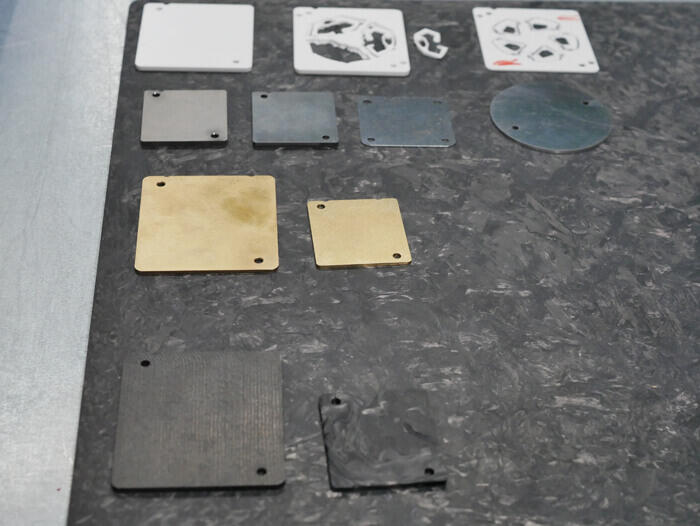
Image – square plates made of various materials
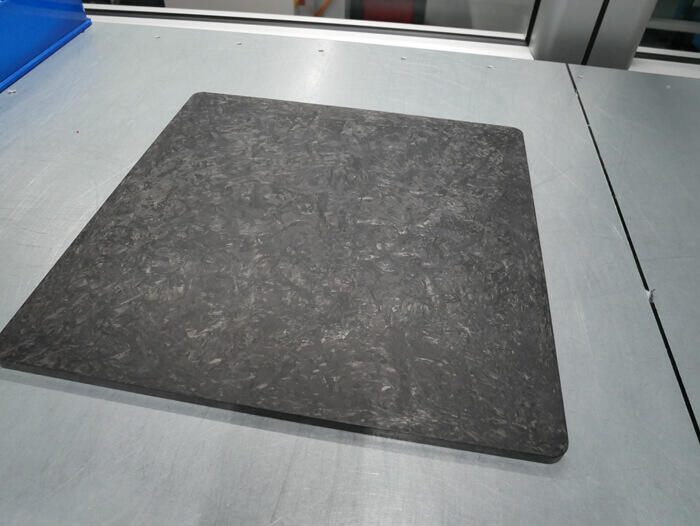
Image – rectangular block of forged carbon from Lamborghini
CNC (computer numerical control) machines
CNC machines are used to process square plates, termed ‘barquettes’. Once processed these will form a mainplate, a bridge or a small component. The thickness of the barquette is checked prior to use. The CNC (computer numerical control) machine employs a number of tools that, in conjunction with a programmed sequence of operations, drills and mills the metal. The CNC operator is a highly skilled member of staff, who will often amend the program for various reasons, eg when compensating for tools becoming increasingly worn. Other considerations when programming include the type of material to be processed and even the size of the hole to be drilled. These factors will influence drill speeds.
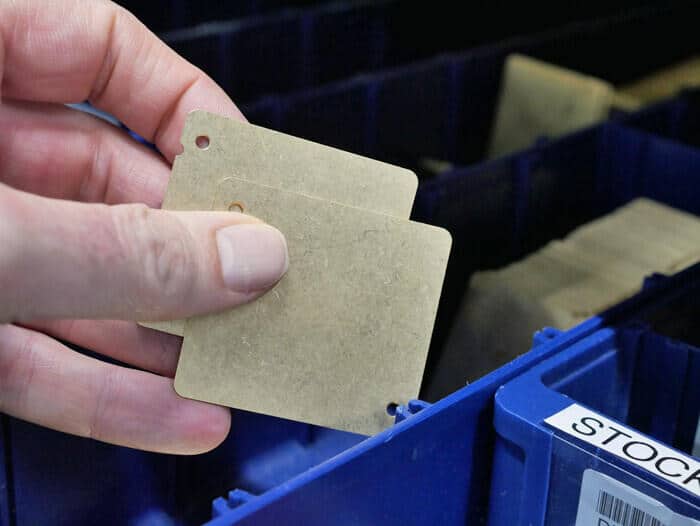
Image – barquettes
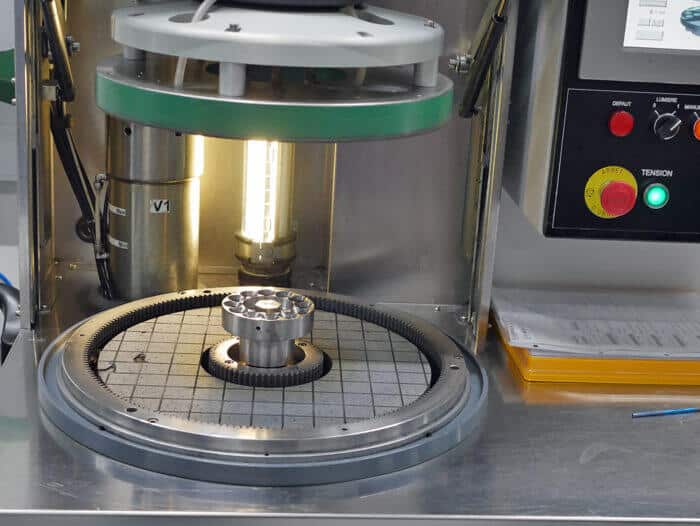
Image – machine for checking thickness of barquette
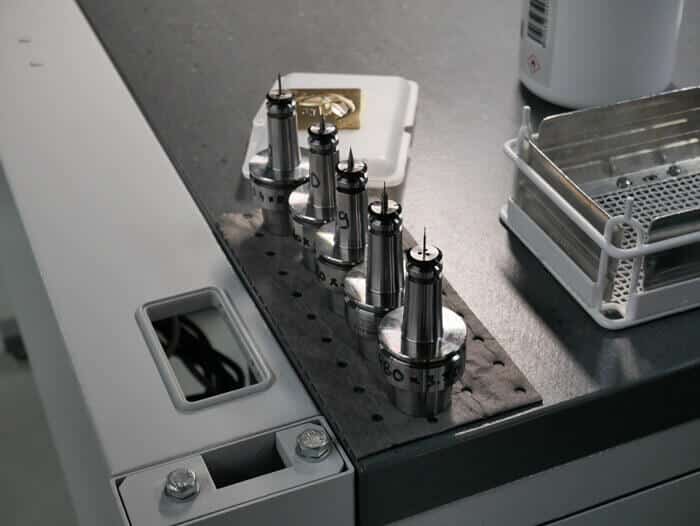
Image – CNC tools
The Roger Dubuis Manufacture has a variety of CNC machines which are selected depending on the task to be undertaken. For example, the new Excalibur Monobalancier EON Gold, which I will review later, has a prominent star bridge front of house. A Willemin-Macodel CNC machine is used to produce the diagonal elements of this star.

Image – Willemin-Macodel CNC machine
Older CNC machines necessitate the brass plates being turned over before further processing can take place. However, Roger Dubuis has repeatedly updated its equipment and now uses the latest-generation CNC machines that process both sides of the plates simultaneously without the need for manual rotation. After the plate has been processed it is measured using a cutting-edge micrometer which evaluates the various drilled holes, checking they are within specification. At the time of my visit, I witnessed the Duramax micrometer check 66 holes, testing each hole in six places or ‘touch points’. This is just one of the many rigorous quality controls in place at the Manufacture.
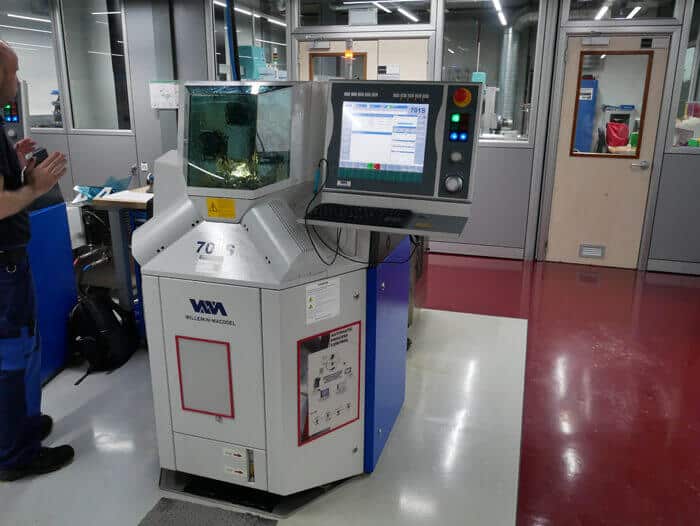
Image – latest generation CNC machine
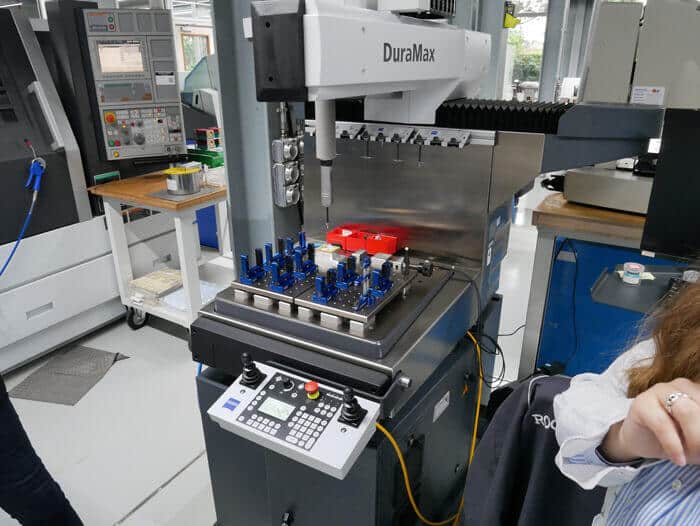
Image – Duramax micrometer
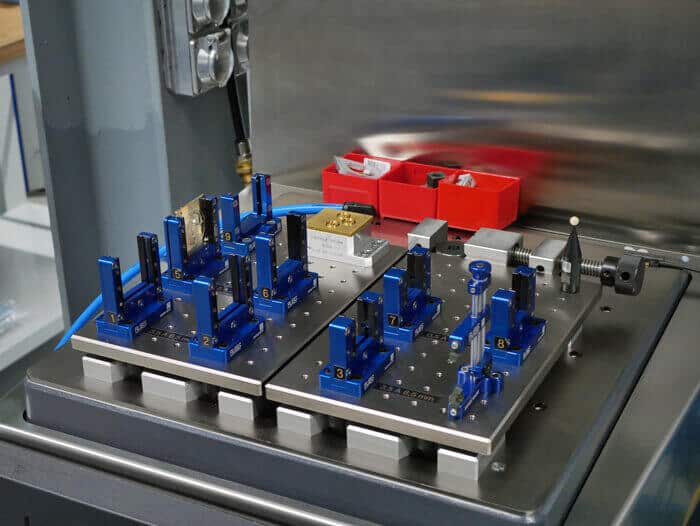
Image – Duramax micrometer
While drilling, milling, etc, CNC machines spray cutting oil on the components to prevent heat-damage and lessen tool wear. After the plates and bridges are made, they have to be washed in the ‘lavage’ room to remove any residue of oil or other potential contaminants. The washing phase includes the use of detergents as well as both high and very low temperatures. Once the washing phase has been completed, a temporary protective coating is applied to the plate or bridge to prevent it from becoming damaged when being processed elsewhere in the Manufacture.
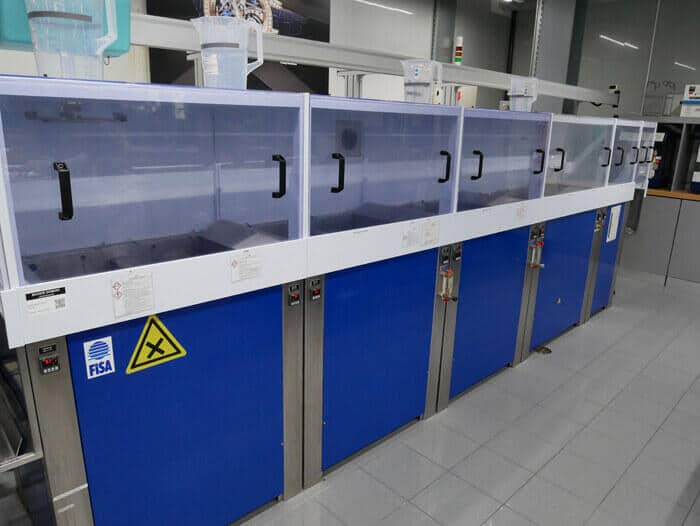
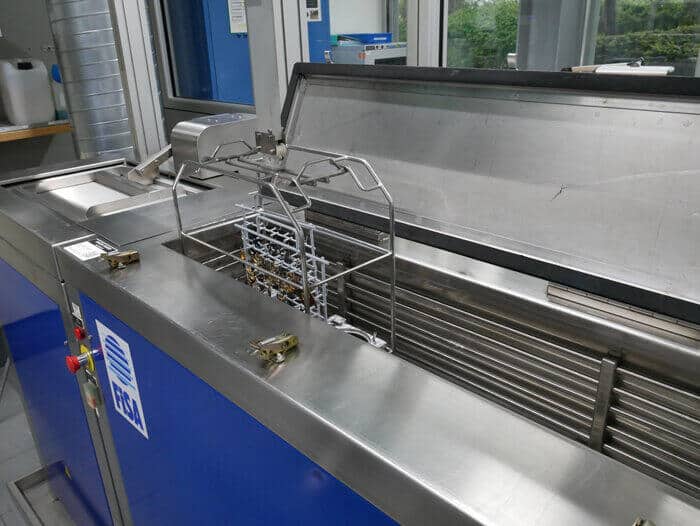
Images (above) – Lavage Room
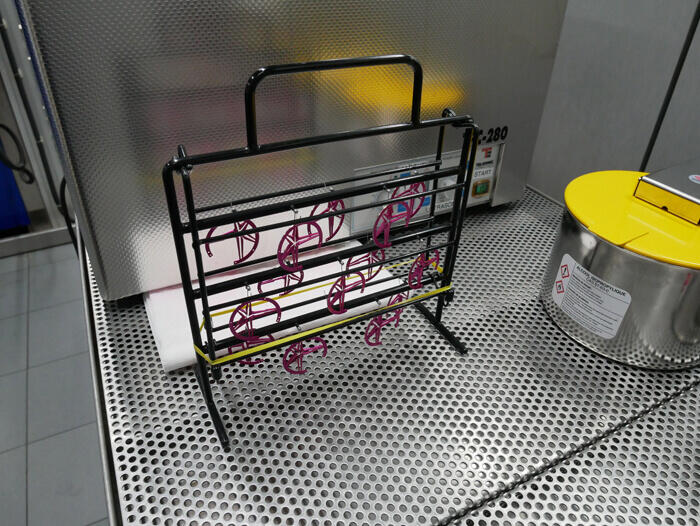
Image – temporary protective coating applied to plates
Profile turning machines
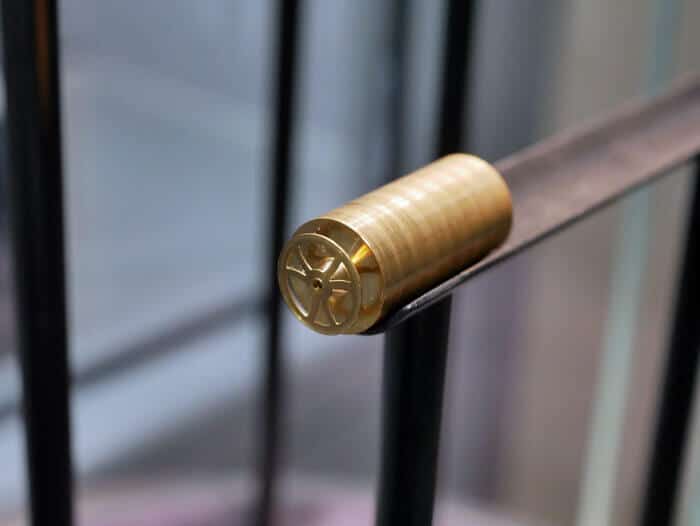
Not all components are made using CNC machines. For example, pinions, pivots, screws and wheels are made using a profile turning machine. This machine features a hopper filled with long rods of metal, typically brass or steel. One of these rods is pushed into a cutter at one end of the machine and is sprayed with oil to prevent any unwanted heat build-up. The capabilities of this machine are incredible, eg it can make wheels with a specific number of teeth. Likewise, some screws can be minuscule, something I later discovered while trying to affix a bridge to a movement (see later).
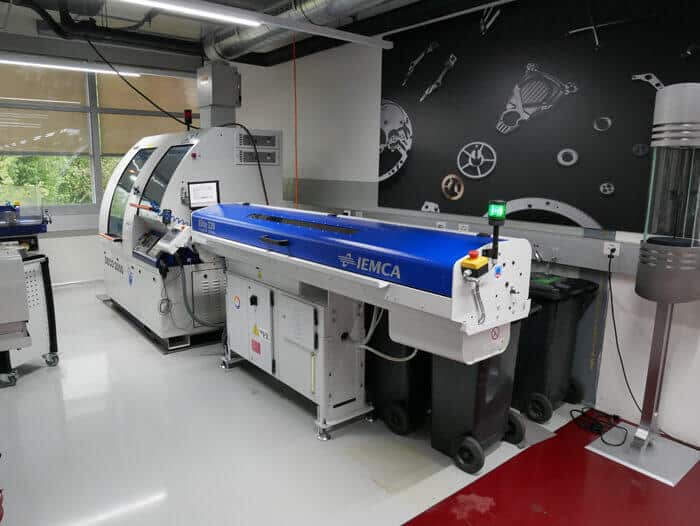
Wire erosion machines
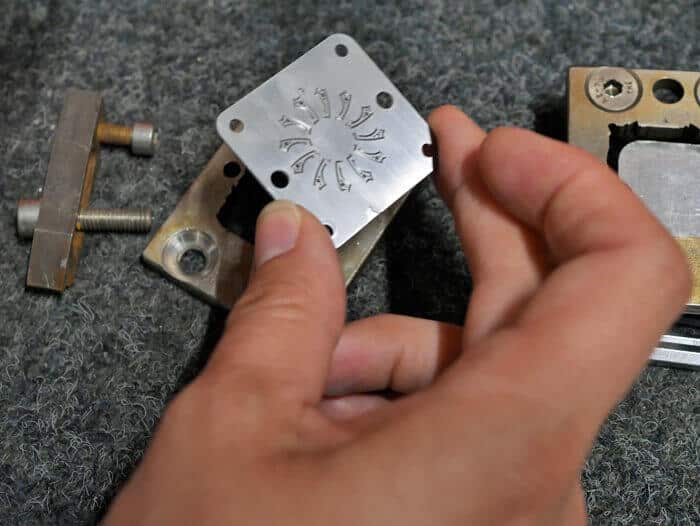
Other small components such as levers are manufactured to small tolerances using a ‘wire erosion machine’. This involves placing a series of metal plates in the machine which are subsequently submerged in deionised water where they are cut. Fine wire, held on a reel, is directed downwards to the metal plates, located below. By passing an electrical current through the wire, small components such as levers can be cut very precisely.
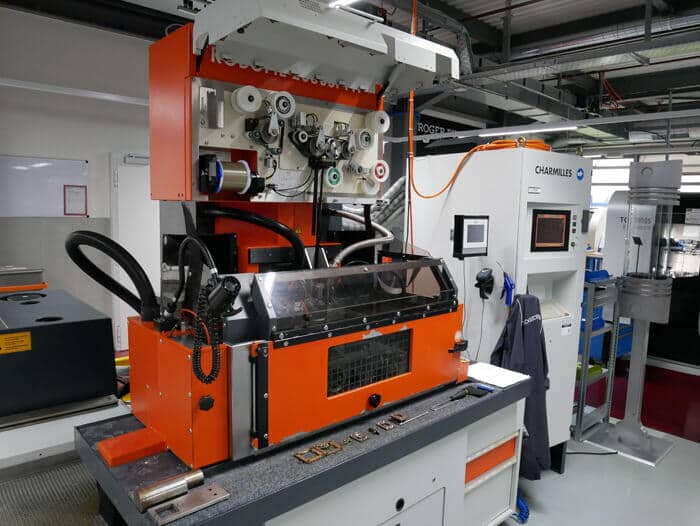
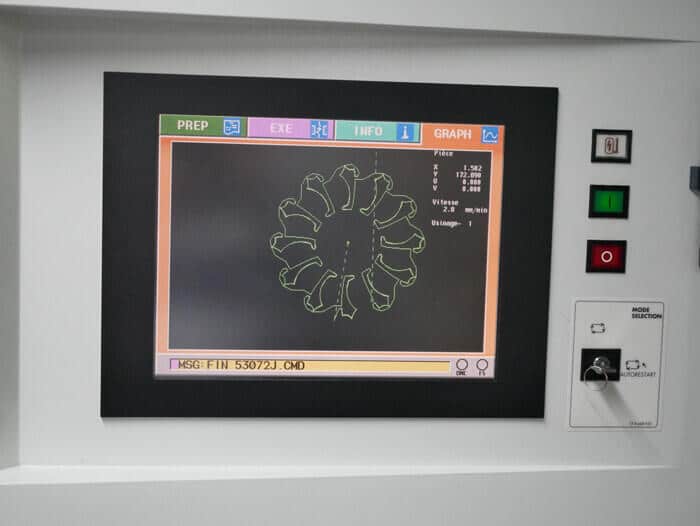
Image – wire erosion machine – showing part on screen (above) and after cutting (below)
Tempering, polishing and removing burrs
Once metal components are processed they often require tempering. This involves heating the component to approximately 400°C and then quenching it in oil (room temperature). Not only does this make the metal harder it also reduces its brittleness and ameliorates any internal stresses.
In some instances, parts are placed in a centrifuge (tumbler) filled with abrasive grains which help to remove various contaminants and polish the surface.
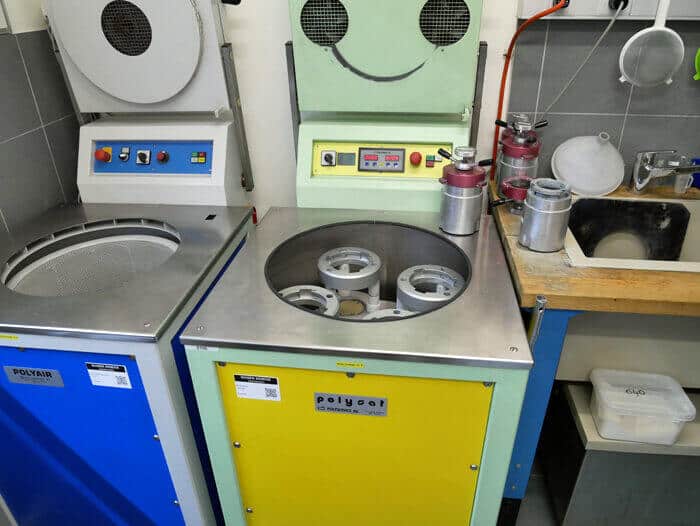
Image – centrifuge
When a mainplate, bridge or other component is produced there may be some burrs left on the part which necessitate manual removal using a suitable deburring tool.
Polishing wheels and pinions – a requirement of the Poinçon de Genève
The Poinçon de Genève covers provenance, craftsmanship, performance and durability. Meeting the stated criteria of this hallmark increases production time by approximately 40%. As stated in my previous article, various types of finishing must be employed in order to remove signs of machining.
Wheels for the gear train must meet the requirements laid down by the Poinçon de Genève. Other wheels will also be subject to the scrutiny of TimeLab and its team of independent auditors, albeit the requirements may be more specific.
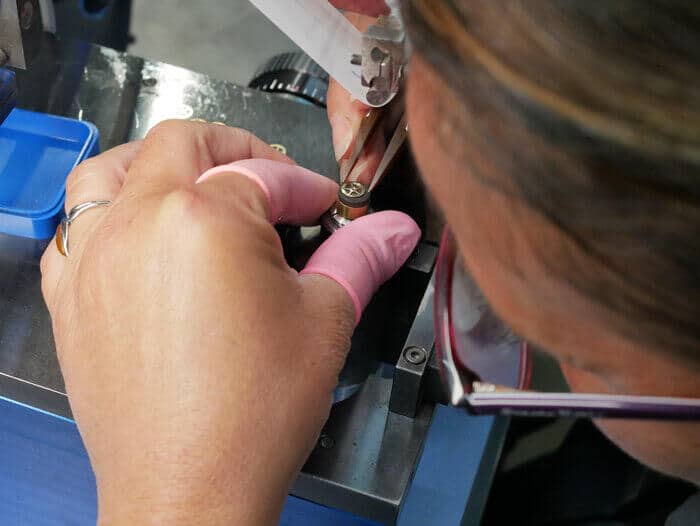
For example, the gear train wheels, including the crossing, hub and rim, must be chamfered. The functional parts of the pivot-shanks and pivots, including their faces, must be burnished. The pinion leaves must be polished without modifying the functional part of their tips. At Roger Dubuis, wheels are checked using a Nikon profile projector to ensure the teeth or tips are to specification.
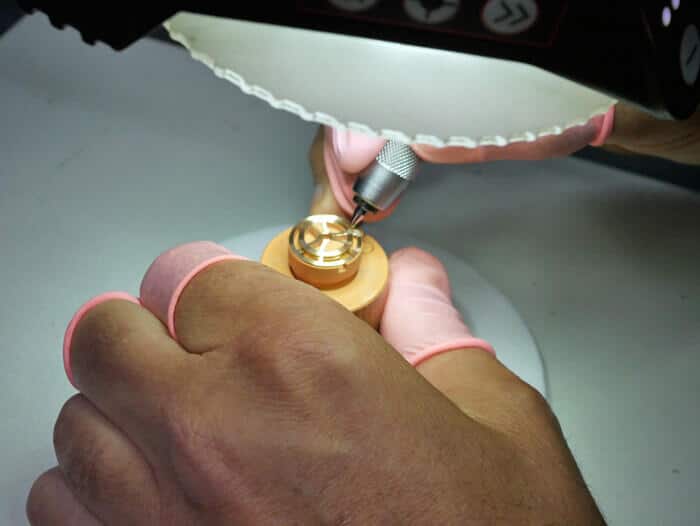
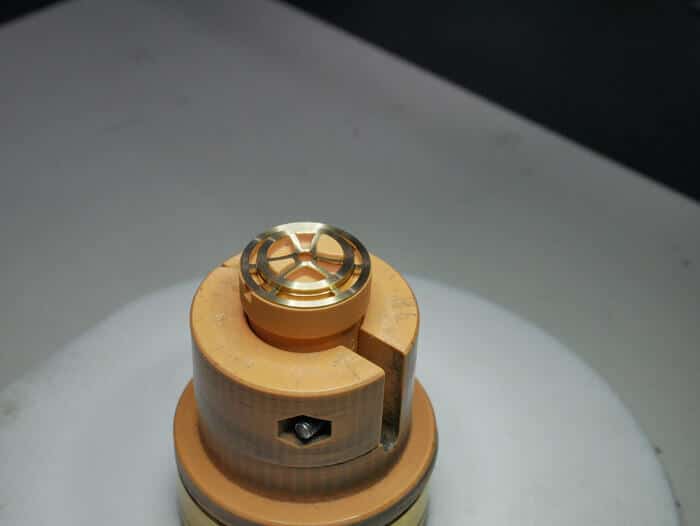
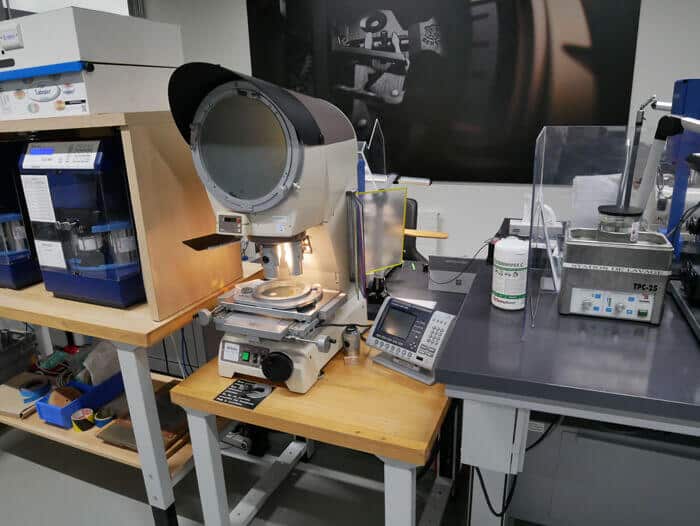
Image – Nikon profile projector to ensure the teeth or tips are to specification
Other wheels, such as the ratchet wheel and crown wheel, must have chamfered and polished teeth, if thick enough.
When it comes to other components such as mainplates and bridges, the requirements are no less onerous. Below, I have listed a number of finishing techniques that I saw first-hand on my recent visit.
Détourage
A détourage machine is used to polish the side of a component. This involves a skilled artisan placing the unfinished part against a revolving disc, endowing the side of the component with a brilliant gleam. Interestingly, the disc on the machine I saw was made from a modified beer mat. At no stage should the craftsperson alter the shape of a part, the objective of détourage is merely to polish a surface.
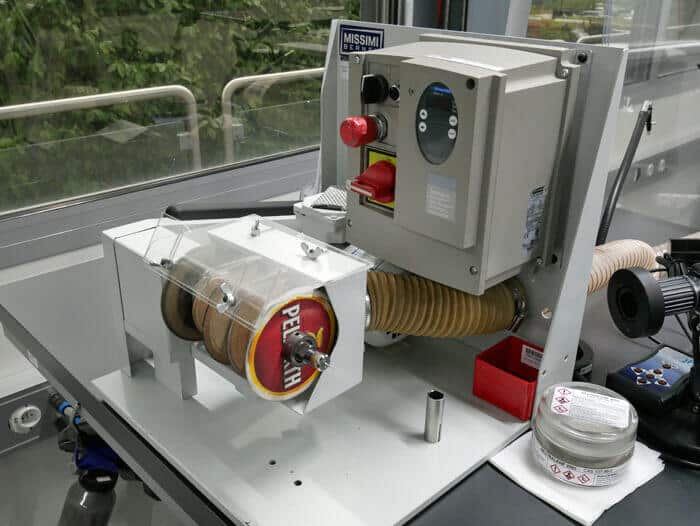
Dressage
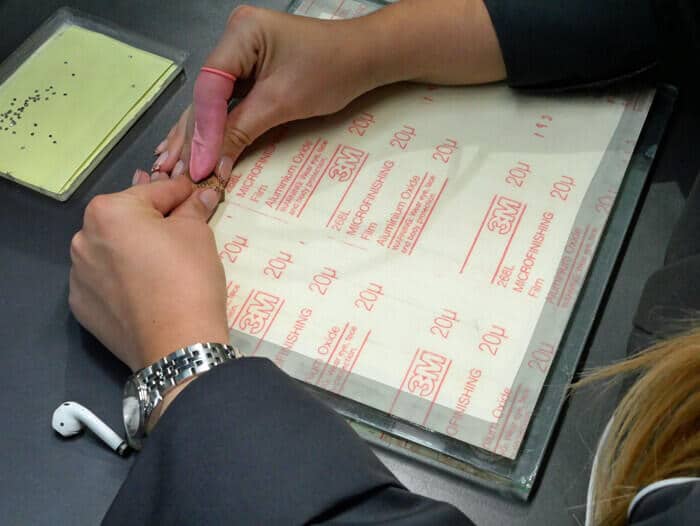
In this instance, a pattern, formed of fine lines, is imparted to the surface of a component, once again, to remove signs of machining. This is a fully manual operation where the part is mounted on top of a Champagne cork and then dragged across an abrasive paper in a straight line.
Étirage
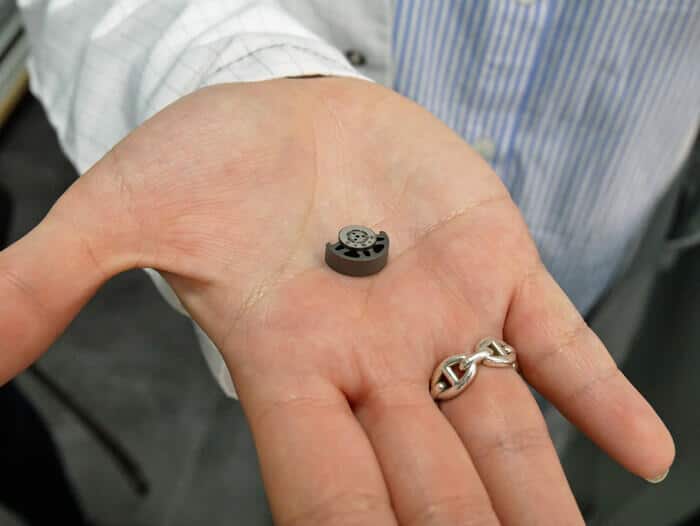
Components made using a CNC machine or wire erosion machine will have rough flanks and signs of machining. Étirage or ‘drawing’ is more than merely removing burrs, it showcases the expertise of the finisseur and is an indicator of quality. The aim is to create a flawless surface, free of blemishes. Étirage also enhances the corrosion resistance of components.
Poli-plat
Poli-plat, sometimes termed ‘black polishing’ or ‘mirror polishing’, requires that the surface of the component is perfectly flat prior to being polished. In some companies a zinc plate is used to perform the polishing technique, however, Roger Dubuis prefers to use a glass surface. The surface is smeared with a very fine diamond paste and then the component is repeatedly rubbed against the glass in a figure of eight motion. Poli-plat is difficult to execute but the craftsperson’s efforts are rewarded with an ultra-flat surface that appears white from some angles and black from other positions. Once executed, the part has to be carefully handled before casing-up, (see later) as it can be easily scratched.
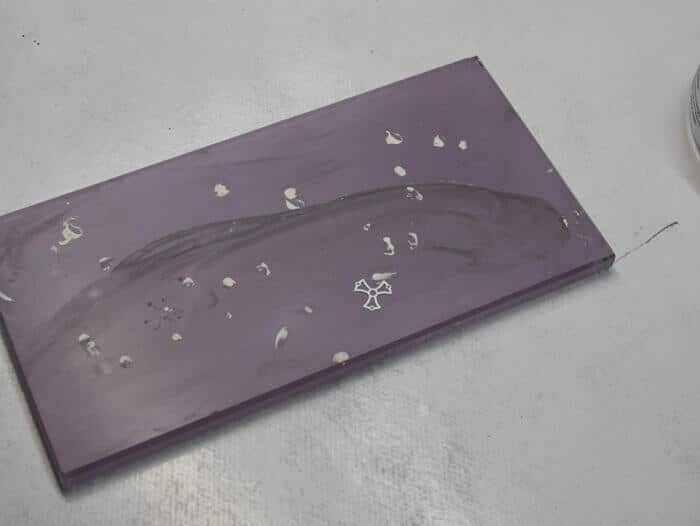
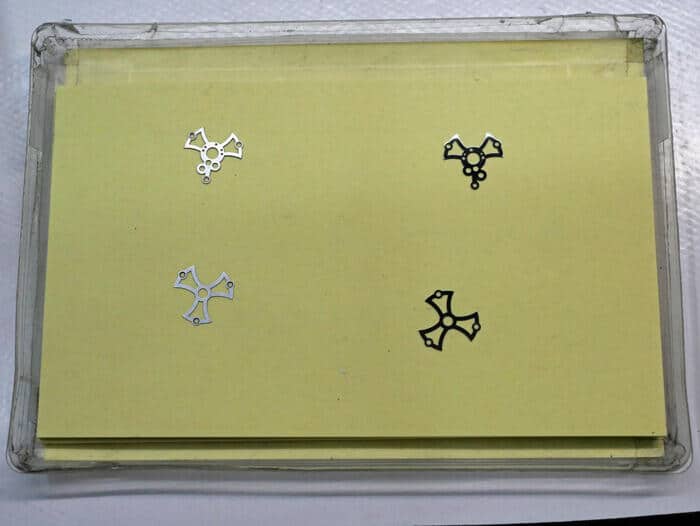
Image – Parts before (left) and after Poli-Plat (right).
Cerclage
Cerclage refers to a circular satin finish that comprises fine concentric lines that engage with light, bestowing an attractive brilliance to the appearance of wheels.
Sablage
This fine frosting technique is typically used for decorating mainplates and bridges. The process involves placing the component in a machine that blasts it with sand. The operator places their hands within two rubber gauntlets which are integrated within the machine. This feature allows the operator to direct the sand to a specific section of the part whilst being protected from hazard of using high-pressure sand.
Perlage
Perlage is a traditional motif, sometimes termed ‘spotting’. It comprises numerous circles being applied to a plate or bridge. Each circle typically overlaps its neighbouring circle by 50%. Perlage is imparted to a surface using a machine with a rotating jig fitted with a wooden or plastic peg. The operator has to carefully push a lever downwards to embellish the surface with one circle. This task requires the operator to apply uniform pressure to the lever and to ensure the rotating peg touches the plate in the correct position. This decorative technique is used to remove signs of machining, while bestowing a becoming lustre and enhancing corrosion resistance. Roger Dubuis frequently employs this technique on parts to the front of the watch, thereby heightening the aesthetic allure of the openworked dial area.
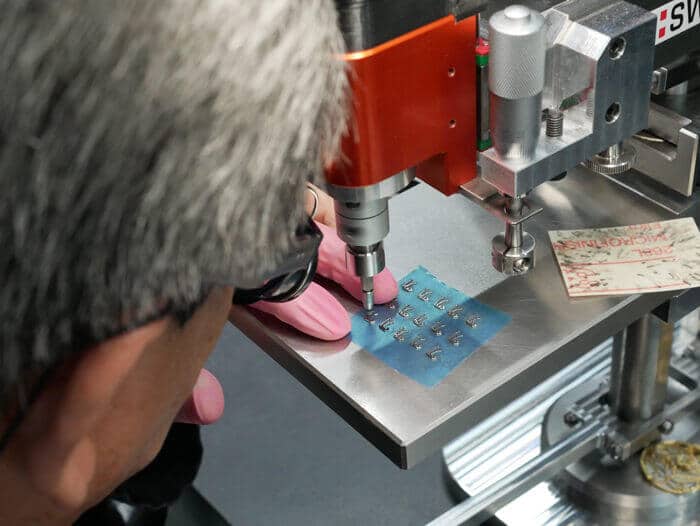
Image – applying perlage to components
Guillochage
While Roger Dubuis crafts avant-garde timepieces, guillochage dates back to the 18th century. Indeed, one of the great exponents of the technique was Abraham-Louis Breguet. Most companies use rose-engine lathes to impart one or more patterns to a surface, quite often dials. Today, nobody makes rose engine-lathes, hence they are much sought after and, by default, they are incredibly valuable. It is not uncommon to see brands using machines that are over 100 years old.
Usually, a brass disc is affixed to a rotating head and held in a vertical position. By pressing a chisel against the brass plate and turning the rotating head using a wheel, the chisel imparts a groove to the brass plate. The rose-engine lathe is equipped with an array of rosettes or cams which determine the trajectory of the chisel, thereby creating the desired pattern.
Hand-guilloché is not a trade taught in school or college, instead knowledge is passed down from one generation to the next. Firstly, when turning the handle to control the rotating head, the artisan must ensure it is turned at a constant speed. Secondly, the hand-pressure applied to the chisel must be uniform. It may sound simple but in reality, mastering the art of hand-guilloché takes many years to perfect.
While Roger Dubuis’ watches eschew conventional dials, subscribing to skeletonsation, the Maison still employs guillochage for decorating some components.
Anglage
Anglage or chamfering involves removing the edge between a surface and a flank. Firstly, once a component has been machined, residual burrs must be removed as these are unsightly and may impair the smooth operation of the movement. Also, chamfering components improves their corrosion resistance. The norm is to create a 45° chamfer between the surface and the flank. Ultimately, the bevel will be polished, invariably with a piece of gentian wood.
The list of watch decorations and various techniques is exhaustive
While I have listed some types of watch decoration and various techniques employed at Roger Dubuis, there remain additional processes that I have not detailed. Indeed, ‘diamantage’, ‘roulage’, ‘poli ailes’, ‘rivetage’ and ‘garnissage’ are some of the additional tasks undertaken at Roger Dubuis.
Poinçon de Genève – no short cuts allowed
At every stage, the Poinçon de Genève criteria must be met in full. Typically, TimeLab will visit the Manufacture once per month and may well ask to look at the decorated parts for a model prior to its assembly. Quite simply, there are no shortcuts.

Where one drawing for a process may suffice with a ‘normal’ non-Geneva Seal watch, the Poinçon de Genève requirements will often necessitate the creation of three drawings. For example, a drawing may show the part before finishing, but a separate drawing will indicate how much material should be removed through polishing, even if this amounts to only a few microns.
On to assembly
Prior to assembly, some parts require rhodium plating, a specialist task which is performed off-site. This process prevents oxidisation of brass components, contributing to the longevity of the movement.
The fragility of some components requires expertise in terms of manipulation and assembly. ‘Garnissage’, which I mentioned earlier, involves press-fitting and the insertion of miniature components onto thin or delicate fixtures. Often these parts are liable to bend, irrevocably deform or break. A specialist team assembles these parts and placed them in suitable protective containers which are subsequently passed to the watchmakers undertaking movement assembly.
The watchmaker
Some companies train aspiring watchmakers and then, once they have completed their training, deploy them for comparatively simple tasks. However, Roger Dubuis only recruits highly experienced watchmakers due to the complexity of its timepieces and the no-compromise standards it maintains.
Movement assembly and regulation
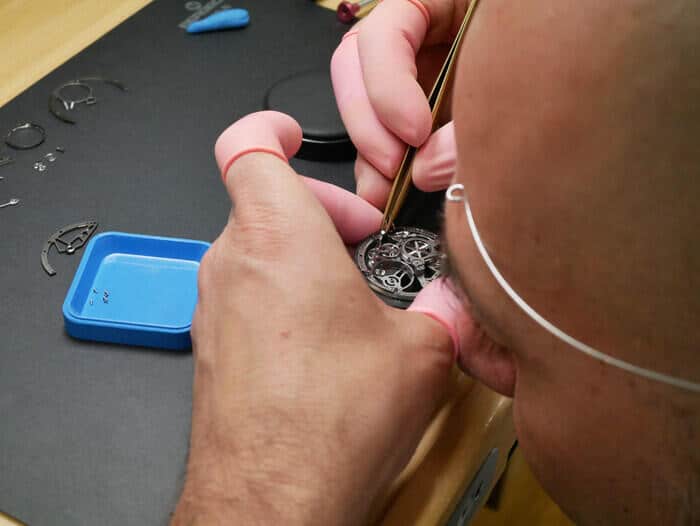
The watchmaker assembles the movement using the parts kits supplied in various protective boxes. At all stages the watchmaker must exercise great care as one slip of a screwdriver can mar the appearance of a part, necessitating replacement.
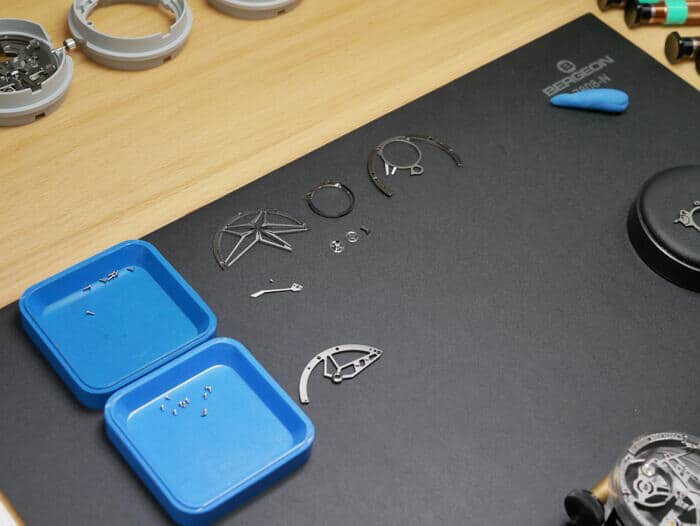
Whilst at the Roger Dubuis Manufacture, I was tasked with removing a micro-rotor which was formed of 15 pristine parts. With my acute myopia and shaky right hand, several tiny screws took flight in various directions and I suspect there were also a few superficial scratches too. This is a world where extraordinary hand-eye coordination and absolute concentration are essential prerequisites for success.
In order to create the best environment for the watchmaker, the chair and the bench can be adjusted for the optimal working position. A Roxer Flux Laminaire is positioned above the bench providing a dust-free environment, mitigating the risk of product contamination.
During the assembly process, a watchmaker will apply a variety of lubricants using a pen-like oiling tool. The amount of oil and its viscosity are critical. There is a watchmaking adage that ‘too much oil can be just as bad as too little’.
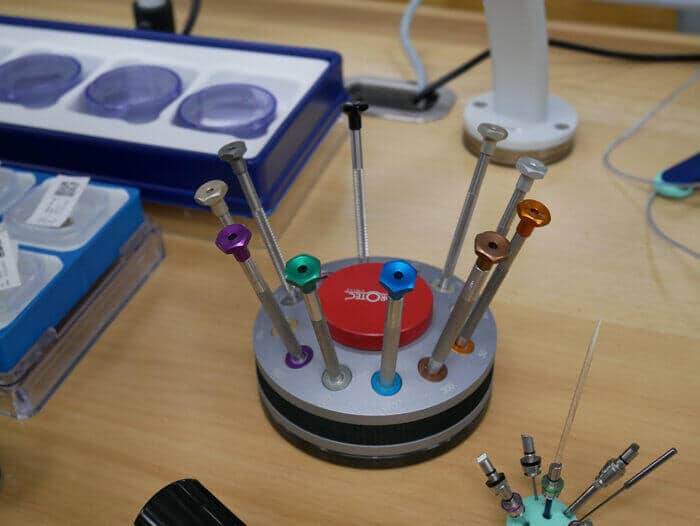
Each watchmaker has a stand filled with a number of colour-coded watchmaking screwdrivers. The personnel at Roger Dubuis also use dynamometric screwdrivers to ensure that certain screws are tightened to a pre-set torque.
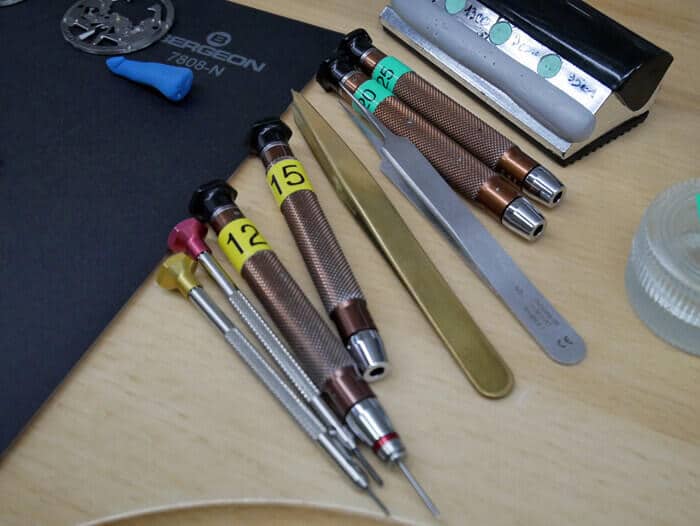
Image – dynamometric screwdrivers
Once the movement is assembled, it must be regulated. On some models this involves moving an index adjuster, altering the effective length of the hairspring, making the movement run faster or slower. On other models, such as the new, the rate is altered by adjusting weights positioned on the rim of the balance wheel.

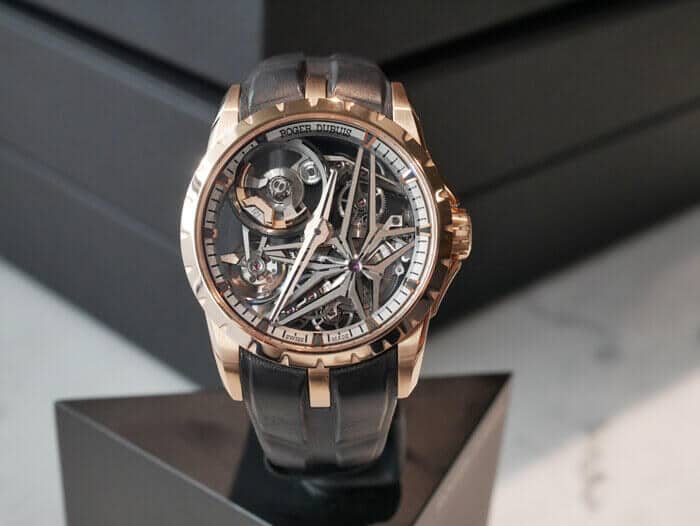
Image – Excalibur Monobalancier EON Gold
All movements, save for the brand’s Quatuor model, are initially tested using a Witschi Watch Expert. This measuring instrument checks the rate accuracy, amplitude and beat error. If a movement is found to be out of specification, it will be adjusted or, if necessary, disassembled. Once the movement is running precisely, it is then ready for ‘casing up’.
Casing up
This involves fitting the hands using a special machine which ensures they are located at the correct height, allowing them to circumnavigate the dial without impeding the motion of other hands.
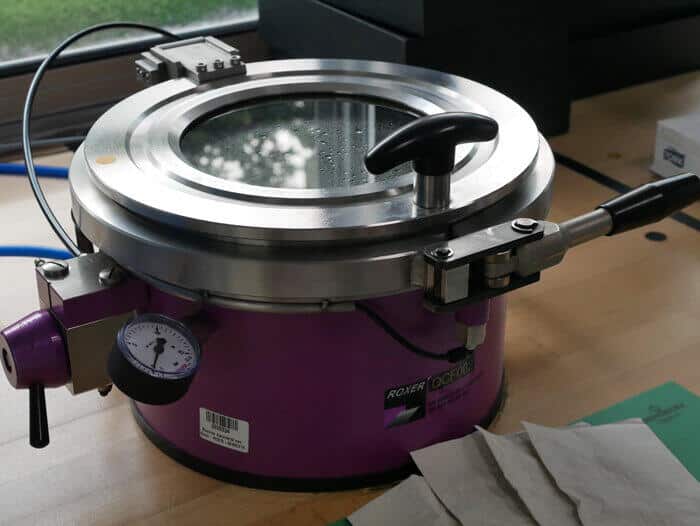
The caseback is removed and the conjoined hands and movement (there is no dial) are fitted within the case along with a ‘casing ring’. The crown and crown stem are inserted into the movement and secured. The case back is refitted and the complete watch is then tested for water resistance using a Roxer Aquavac. With this device the watch is immersed in water and subjected to pressure, simulating the water at a specific depth eg 30m. This is a nervous time for the watchmaker as any water ingress will ruin the completed timepiece.
Final quality controls
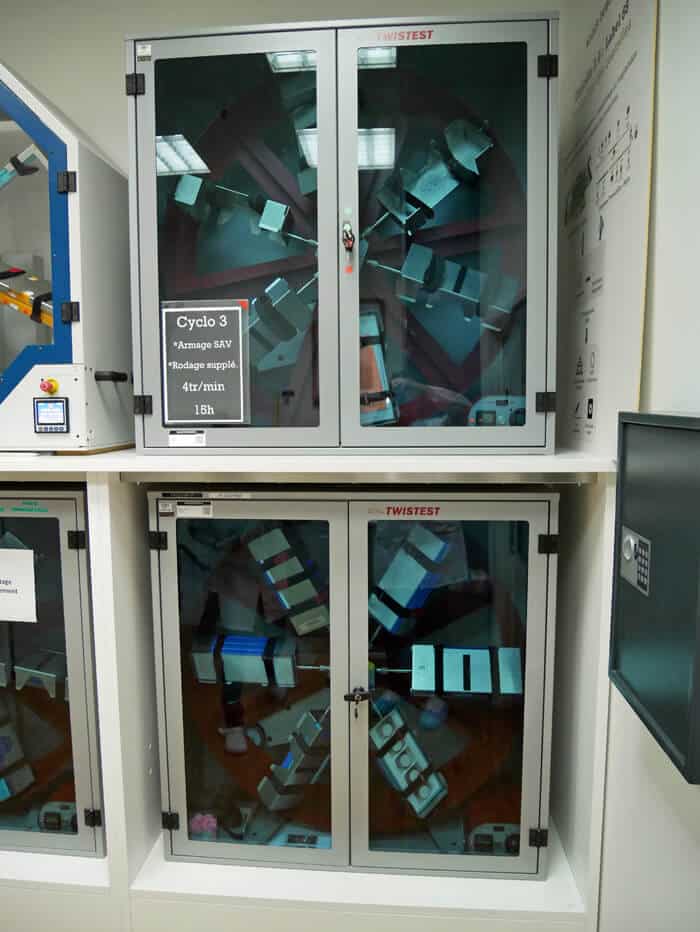
Automatic models are evaluated using a watch-winder testing machine. This simulates normal wear and confirms that the oscillating weight harvests sufficient energy to energise the mainspring.
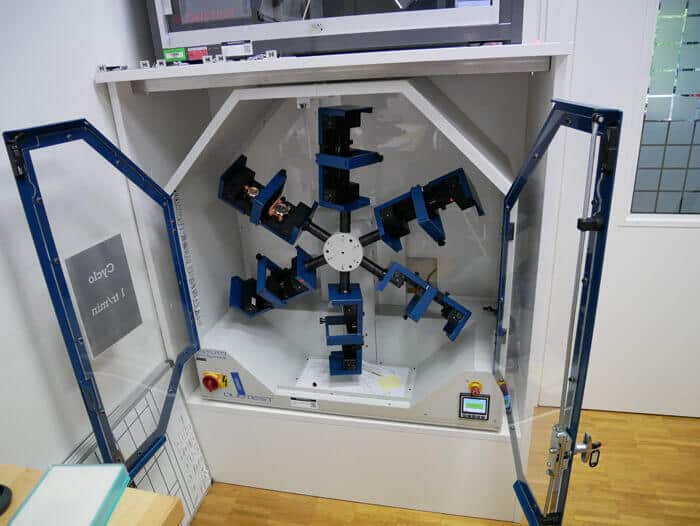
Interestingly, Roger Dubuis has another machine I have never seen before which automatically winds a hand-wound watch and confirms that it will run autonomously for the same period as the specified power reserve.
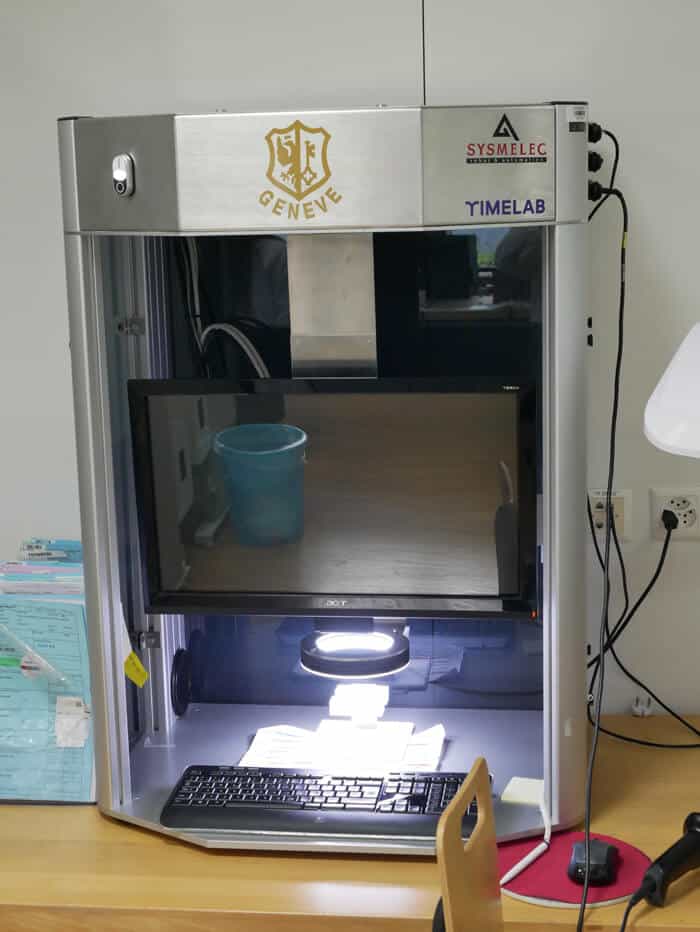
As part of the requirements of the Poinçon de Genève, the complete watch is placed in a TimeLab machine. The watch is photographed on day 0 and day 7. The two images and compared. After seven days, the watch must not have varied by more than one minute. When evaluating a chronograph, the stopwatch function must be running for the first 24 hours of the test.
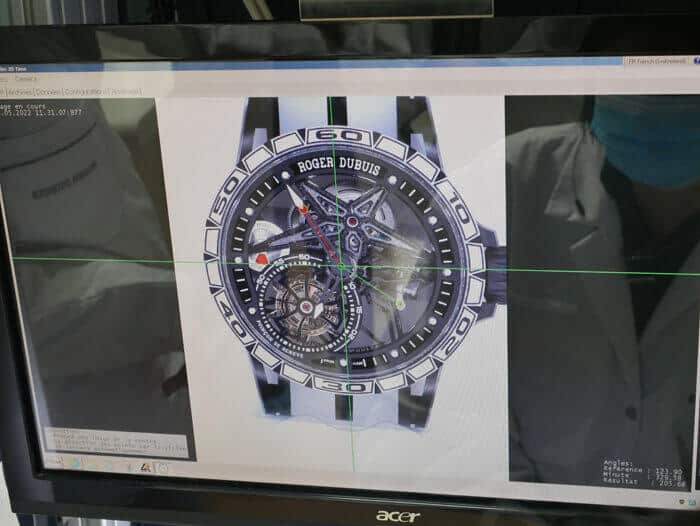
Once all tests are completed, the watch is visually inspected, the strap or bracelet is fitted and, where appropriate, the completed Poinçon de Genève certificate and accompanying hangtag are placed within the presentation box.
In summary
Roger Dubuis don’t subscribe to the notion of ‘ordinary’. Its watches are innovative, über-luxury exemplars of avant-garde watchmaking. They are very expensive and wonderfully decadent, however, as this feature hopefully conveys, numerous hours and many skills are necessary to bring each Roger Dubuis watch to life. Moreover, the creation of each timepiece takes place under the exacting scrutiny of TimeLab.
Coming next
In my next feature, I recount some of the interesting conversations with three key individuals at Roger Dubuis, namely Nicola Andreatta (CEO Roger Dubuis), Gregory Bruttin (Product Strategy Director Roger Dubuis) and Sadry Keiser (CMO Roger Dubuis). During our discussions, I about the Manufacture famed for ‘Hyper Horology’.
Further reading