
About Time by Rebecca Struthers Book Review
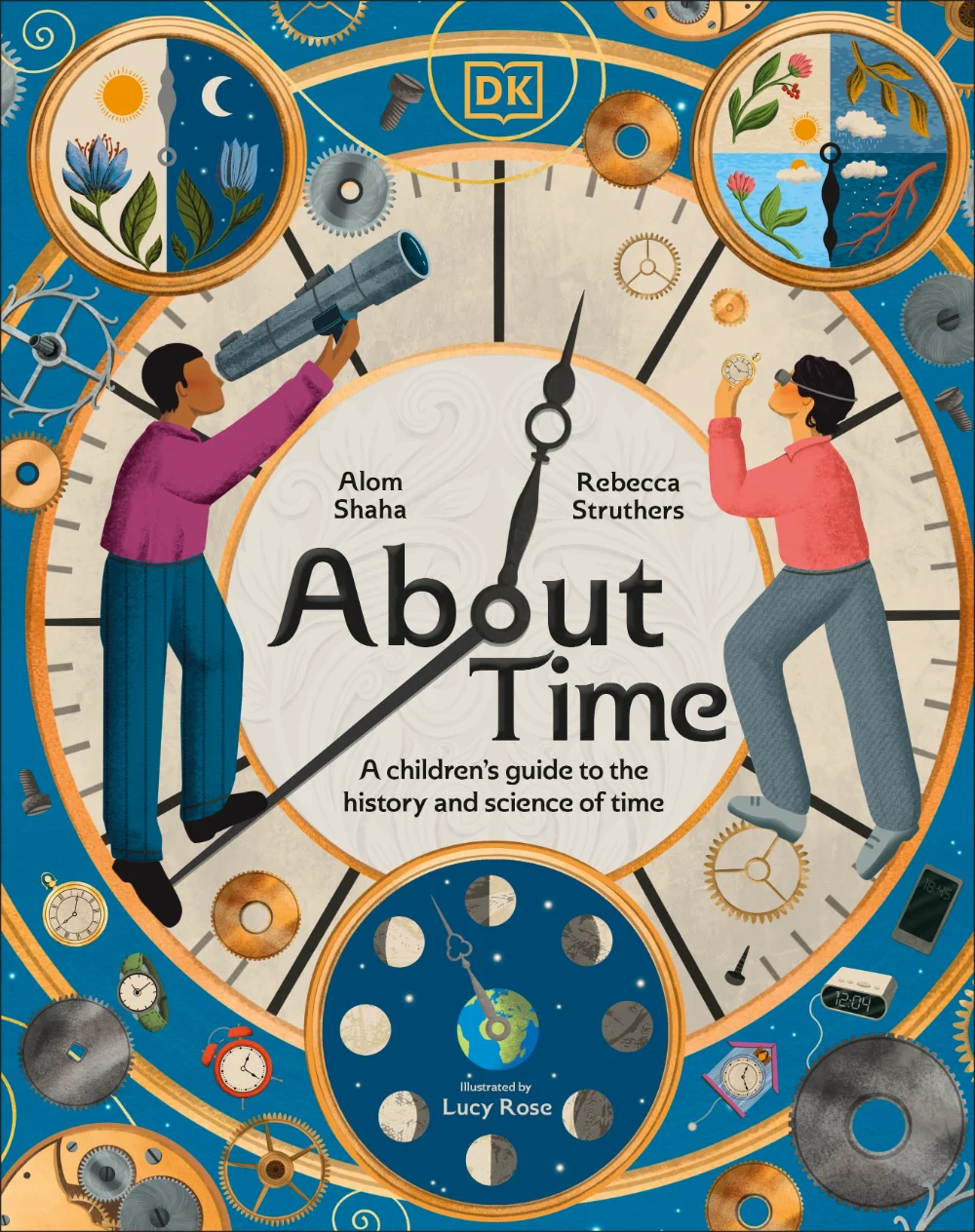
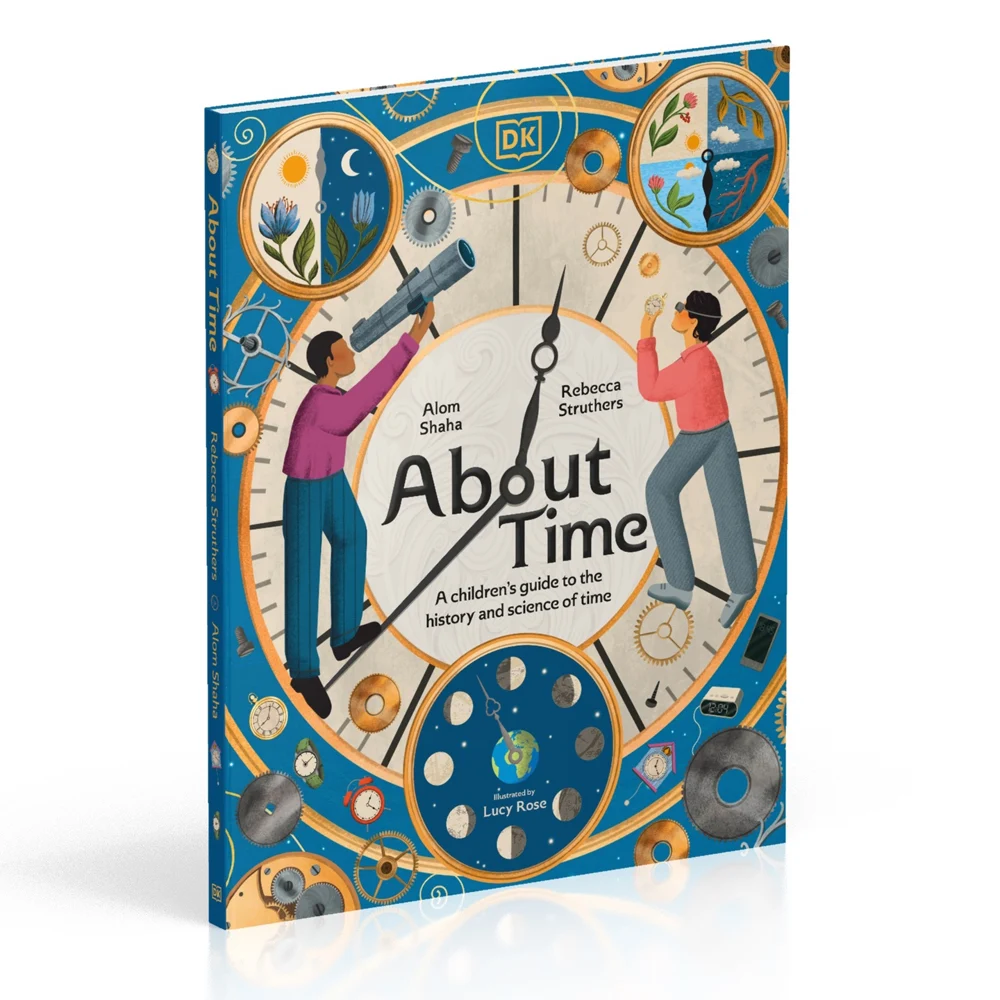
Aimed at children aged 7 – 9, About Time by Rebecca Struthers and Alom Shaha is a beautifully illustrated book, explaining both the history and mechanics underpinning horology. It’s a must-read for budding watchmakers, aspiring horophiles and mechanically curious children. Mark McArthur-Christie, a man who was partial to tinkering with watches as a young lad, provides an insight into this book: the perfect Christmas gift for young, enquiring minds.
The problem with being a young horological tinkerer
Being a watch-obsessed brat in the late 1970s or early 1980s was something of a mixed bag. For a start, the internet was a long way off becoming ubiquitous. That meant it was perfectly possible to pick up a military-issued Jaeger-LeCoultre cal. 479s in junk shops for a few quid, simply because no one had a clue they were special or valuable. Sadly, for the same reason, it was equally possible for the same watch-obsessed brat to take one apart and, lacking necessary skills, be able to put it back together again. “Forgive me, Father Abraham-Louis, for I have sinned…”
Back then, watch books were aimed either at the serious watchmaker (Daniels’ Watchmaking) or at someone with a proper workshop (de Carle’s Practical Watch Repairing). The library shelves were bare of anything that explained watches and time from first principles in a way most kids would understand.
Librarians were always obliging and the interlibrary loans system would eventually deliver almost any title directly to a special shelf labelled ‘Orders’, but a watch tyro needed the sort of patience and background knowledge rarely found with 9 year olds. Oh for YouTube!
Years ago, if you had asked any watchmaker about horology as a career, they would likely have warned you off, pointing to the future gleaming in the shop window: watches like the new plastic Texas Instruments LED quartz.
Access to watch information, history and careers may now be available at the click of a mouse, but there’s been a need for a book that starts young people on the journey. That’s a gap neatly filled by a new book by horologist Dr Rebecca Struthers and co-author science teacher Alom Shaha – ‘About Time’. It’s an apposite title in every sense.
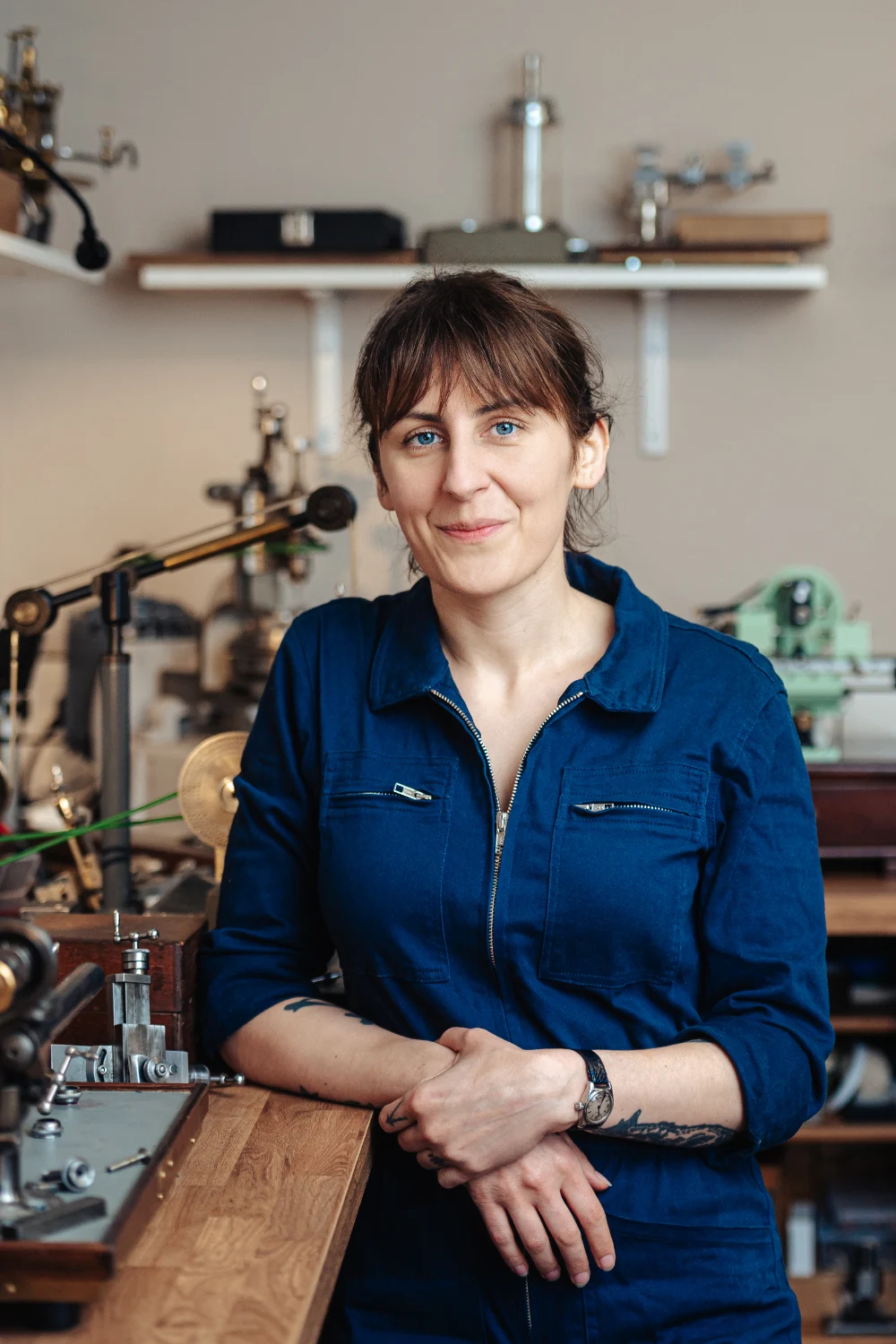
Image – Rebecca Struthers (credit – Wes Webster)
About Time by Rebecca Struthers – how the collaboration began
How did Rebecca and Alom come to write it? Rebecca explains:
“We actually kind of came to each other with the same idea. There was a very brief period where we were both trustees at the Museum of Timekeeping in Newark. We were wandering around the exhibitions when Alom said something like, ‘You could teach pretty much the entire GCSE physics syllabus just using horology!’ and I replied, ‘Now that’s cool – you should totally do that’.
Later, in the gift shop, we realised there were no kids’ books at all using horology to teach. We both thought that was crazy so decided to write a book ourselves. So we wrote the proposal together and my agent introduced us to Dorling Kindersley, and that was that.”

Image – Alom Shaha (credit – Paul Tanner)
Rebecca might not be the most obvious children’s author. After all, she and her husband, Craig handmake the kind of serious watches that prompt Google searches for “how much can I get for a kidney?”! She is also the first practising horologist to earn a PhD in the field (side note – her thesis, Unravelling the Myth of the ‘Dutch Forgery’: The Production, Trade and Dissemination of Grey Market Watches in Europe, 1750–1820, would make a cracking thriller).
So how does one go from the fine detail of eighteenth-century mass watch production to ‘here’s how a balance wheel works, kids’? Rebecca admits the same thought crossed her mind:
“I was thinking, how do I write for children? There were plenty of things I worried would be too complicated. I’ve taught at universities before, but never written for kids!”

As it turned out, she was a natural:
“The real eye-opener was that you just write the same way. You simply moderate the level of detail depending on the age group, but you don’t change your style, because kids know a lot more than we give them credit for.”
It looks as though things are going well:
“The reviews are good. It’s always lovely getting feedback about a book you’ve written, but when you see children engaging with it, it’s great. Kids don’t hold back, so I was far more scared about their reviews than the adults’.”
About Time by Rebecca Struthers – alsatians to anglage
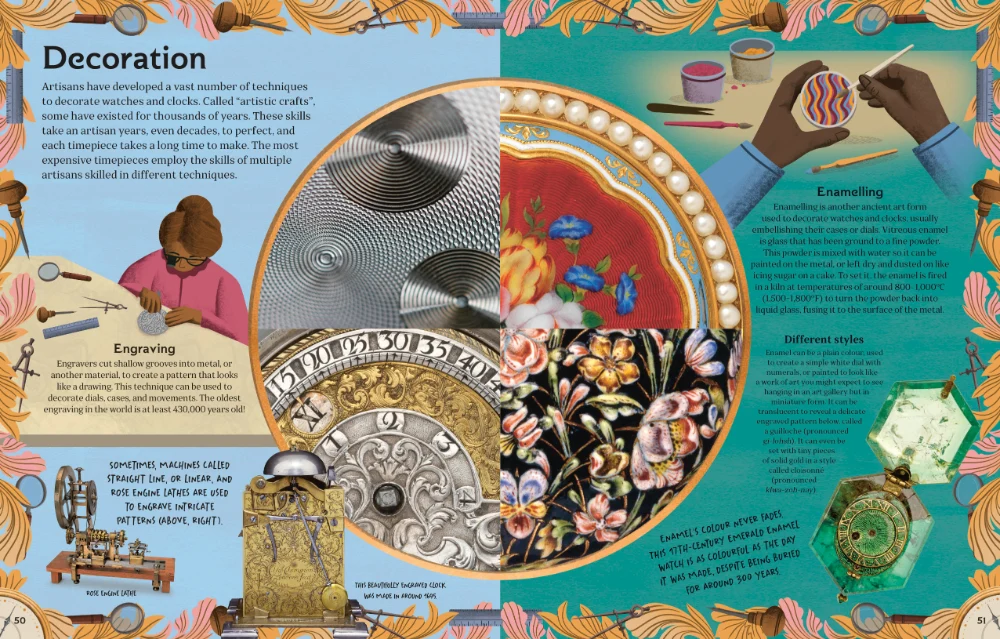
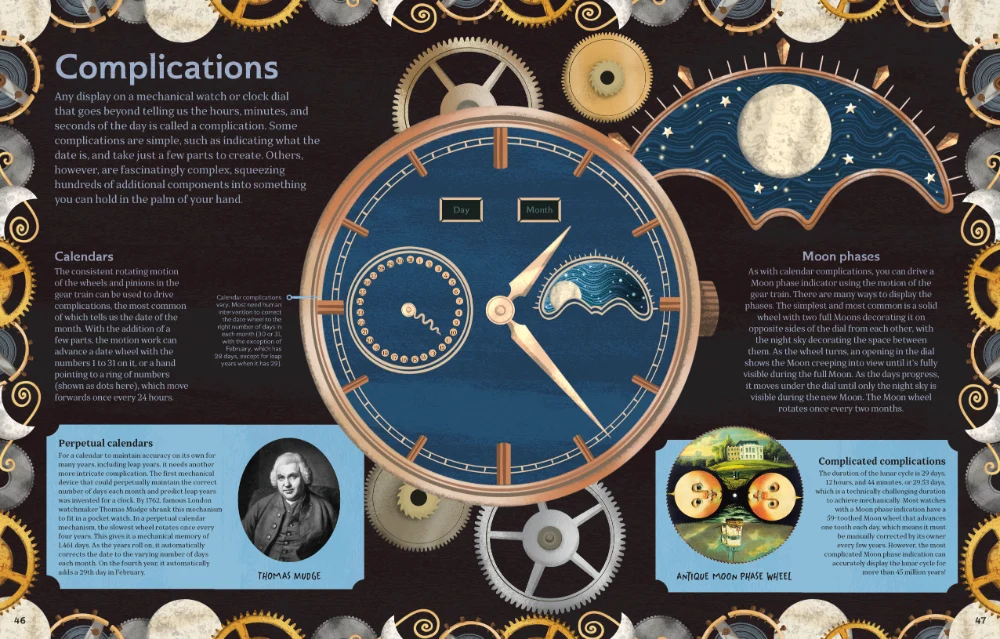
The book covers everything from how dogs tell the time (anyone faced with That Look on arriving home late and smelling of spaniel will sympathise) to anglage and almost everything in between. Packing in this much technical information is achievement enough. Making it as interesting as the two authors and illustrator Lucy Rose have managed, one suspects, will win awards.
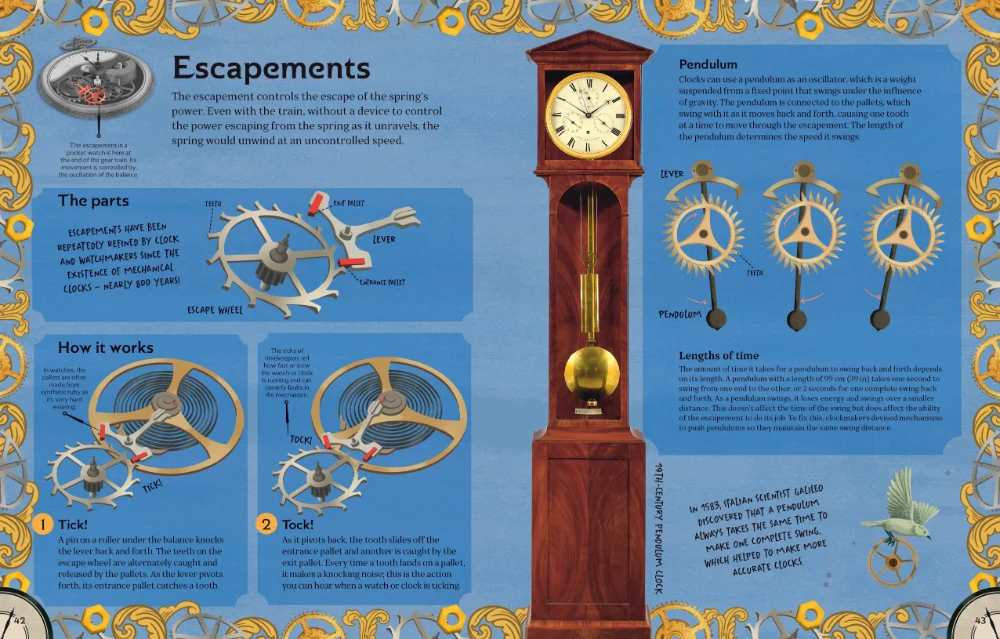
One of the neat things about Dorling Kindersley books is the way illustrators and authors collaborate to bring pages together, often making features of subjects that might, at first, sound less than scintillating. For example, you might think watch gears would only merit a passing sidebar somewhere; but not a bit of it. There’s a double-page spread where Lucy runs a gear train across the whole two pages. She manages to show where the train sits in the case, explains ratios and contrarotation and (for those who can never remember which one the fourth wheel is) names each part. If anyone from DK is listening, it’d make a cracking good wall poster.
About Time by Rebecca Struthers – why horology matters
Rebecca explains the wider thinking:
“Horology is just the best subject for teaching history and science. There’s so much essential knowledge kids need that you can get from watchmaking. For example, kids today don’t know things we don’t even think about – like how to tell the time on an analogue watch. There’s this whole generation now growing up without ready access to analogue time and watches because everything’s on your smartphone and your computer. I’ve been into classrooms with kids of seven, eight, or nine who can’t read analogue time. They’ve been taught it, but they don’t use it, so it just stops being relevant to them.”
But this loss of ability to understand the analogue extends to everyday life and the world around them:
“Think about public clocks – Big Ben or your town hall clock. By teaching kids about timekeeping, you’re giving them more opportunities to engage with the world around them, things they might otherwise ignore.”
The book is about far more than just the theory of how to put a watch together and take it apart again; there are plenty of practical things to try.
Where we once honed our mechanical skills on JLCs or, more sensibly, Smiths pocket watches (30p from the junk shop on Frome’s Catherine Hill), kids today don’t have those options. Rebecca explains:
“It’s about having the space to work. Houses are smaller, gardens are rarer. Having a garage is a luxury – some people in London live in one! So, it’s really tricky and that’s why we’re encouraging them to make stuff out of things knocking around the house. It’s so important, because that’s how you make it more accessible.”
Alom led the home-based practical side:
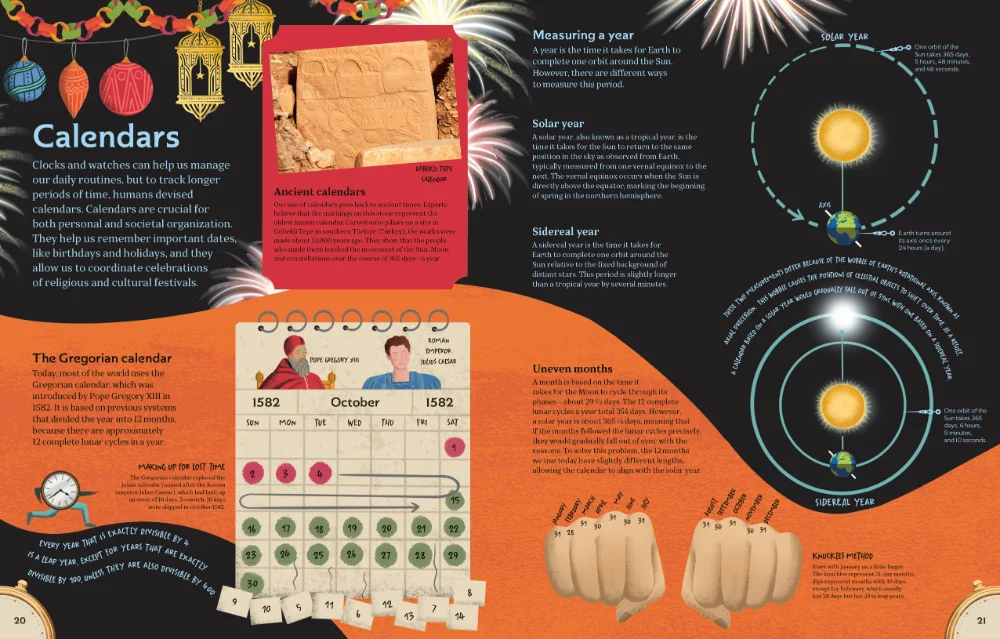
“This is another reason I really loved working with him. He specialises in creating at-home science ‘makes’ that teach you stuff you need for school. They’re all created out of the odds and ends you have knocking around the house like plastic bottles, or milk bottle tops, or even bags of sugar and bits of paper. There’s a whole section on how to make a sundial out of a bit of paper and a pencil, things like that. So, everything’s accessible for anyone. That’s so important.”
About Time by Rebecca Struthers – making time practical
At the heart of the book is this sense of making time practical and getting children involved in understanding it from first principles. After all, kids don’t get the same mechanical opportunities they did in the past. As Rebecca points out:
“I used to watch my mum check the oil or top up the water in her car and you could see the engine. Now, you lift the bonnet and it’s just plastic covers.”
She thinks it’s symptomatic of a wider change in the way we all interact with the things around us:
“I was always taking apart technology around the house. Anything that was redundant, my parents got a new video cassette player or TV, anything like that, I’d have it in pieces, because I was just fascinated about what went on inside. Now there’s so much health and safety stuff and also, things that we use now are less ‘takeapartable’. You just can’t see how anything works.
“By giving children mechanical skills and, crucially, the confidence to have a go at taking things apart, there’s a way to show them they can interact as more than passive users of the machinery around them and start to master it at a deeper level.
“There’s no point being interested in something that’s going to be redundant in two years’ time, and only be good for the tip. That’s why understanding how to maintain something mechanical means it’s something you can invest feelings in, because you can keep it going. It’s a different mindset, isn’t it?”
Why double maths was always longer
Anyone who remembers how Tuesday afternoon’s double maths seemed to last five times as long as Thursday’s double metalwork will understand Rebecca’s fascination with time’s elasticity:
“The book is about things kids experience every day but might not have thought about – like how time can feel fast or slow depending on what you’re doing. Why does that happen? It’s not just observation; it’s empowerment. How can we change our experience of time through what we do each day? The book explores that too.”
Ultimately, that’s the message at the heart of the book:
“It’s so much more than numbers on a watch face. The closing chapters encourage kids to think about how they spend their time – and to make sure they spend it enjoying themselves.”
One suspects the career, and perhaps even life, trajectories of many of us might have looked very different had a book like this been around years ago.
Availability
(ISBN 978-0241709320). Available in various bookstores, including Amazon.