
F.P.Journe Chronomètre Souverain 20th Anniversary Watch Review
There is little virtue to be found in fashion, a fact François-Paul Journe reminds the world of with his extraordinary creation, the F.P.Journe Chronomètre Souverain, a watch now celebrating its 20th anniversary. A perennial design imbued with mechanical purity, the model’s appeal has never diminished.
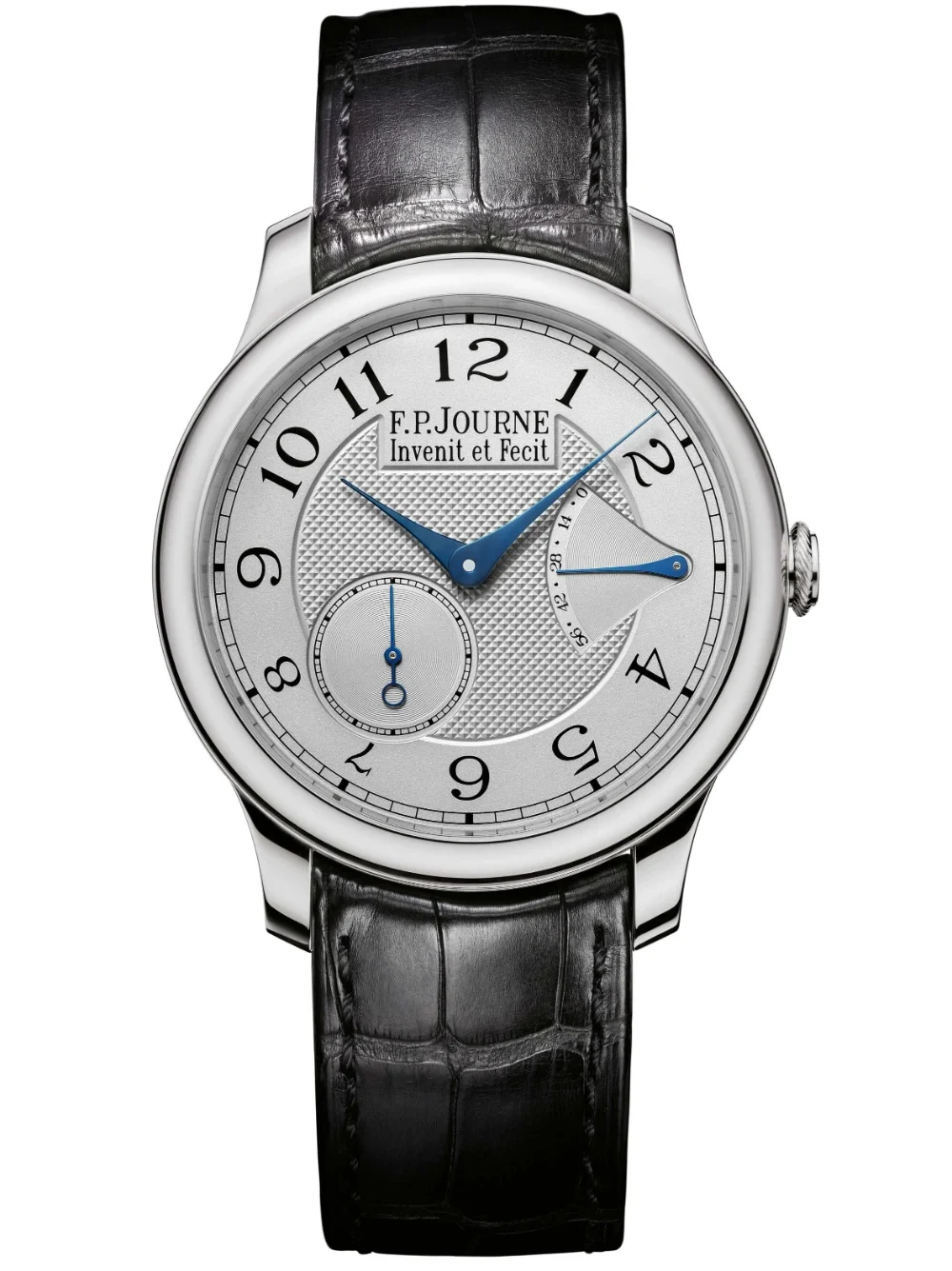
Image – F.P.Journe Chronomètre Souverain Ref. CS
F.P.Journe watch
The gentleman handed the wine list back to the sommelier and in a soft voice said, “A bottle of the Romanée-Conti, please” and then, after a brief pause, he added, “The 2005”. The wine professional nodded and with slight smile, replied, “Yes sir. That was an exceptional year.”
In the esoteric world of Haute Horlogerie, 2005 was important for another reason. It was the year François-Paul Journe unveiled the inaugural Chronomètre Souverain, a watch that now celebrates its 20th anniversary. For the uninitiated, this legendary timepiece is deserving of your attention. Allow me to elaborate.

Image – F.P.Journe Chronomètre Souverain winner of the GPHG ‘Favourite Men’s Watch’ prize in 2005
F.P.Journe Chronomètre Souverain – seemingly simple
F.P.Journe describes the Chronomètre Souverain as a ‘time-only watch with a power reserve indicator’. On the face of it, this may sound strange for a Maison bearing the name of a man who has famously invented and made some groundbreaking timepieces, equipped with a variety of high complications. Some of the notable highlights include the Tourbillon Souverain, the Chronomètre à Résonance, the FFC (indicating the hours using dactylonomy) and the Répétition Souveraine. Each of these models is endowed with functions that heighten their complexity.
However, François-Paul Journe has never viewed complexity as the ultimate objective, but merely the consequence of making innovative timepieces for likeminded individuals. There is no virtue in creating a watch imbued with numerous components if many of them are superfluous. Indeed, underpinning all of Monsieur Journe’s designs is his unwavering quest for precision, aesthetics and longevity; three characteristics manifest in all his creations.
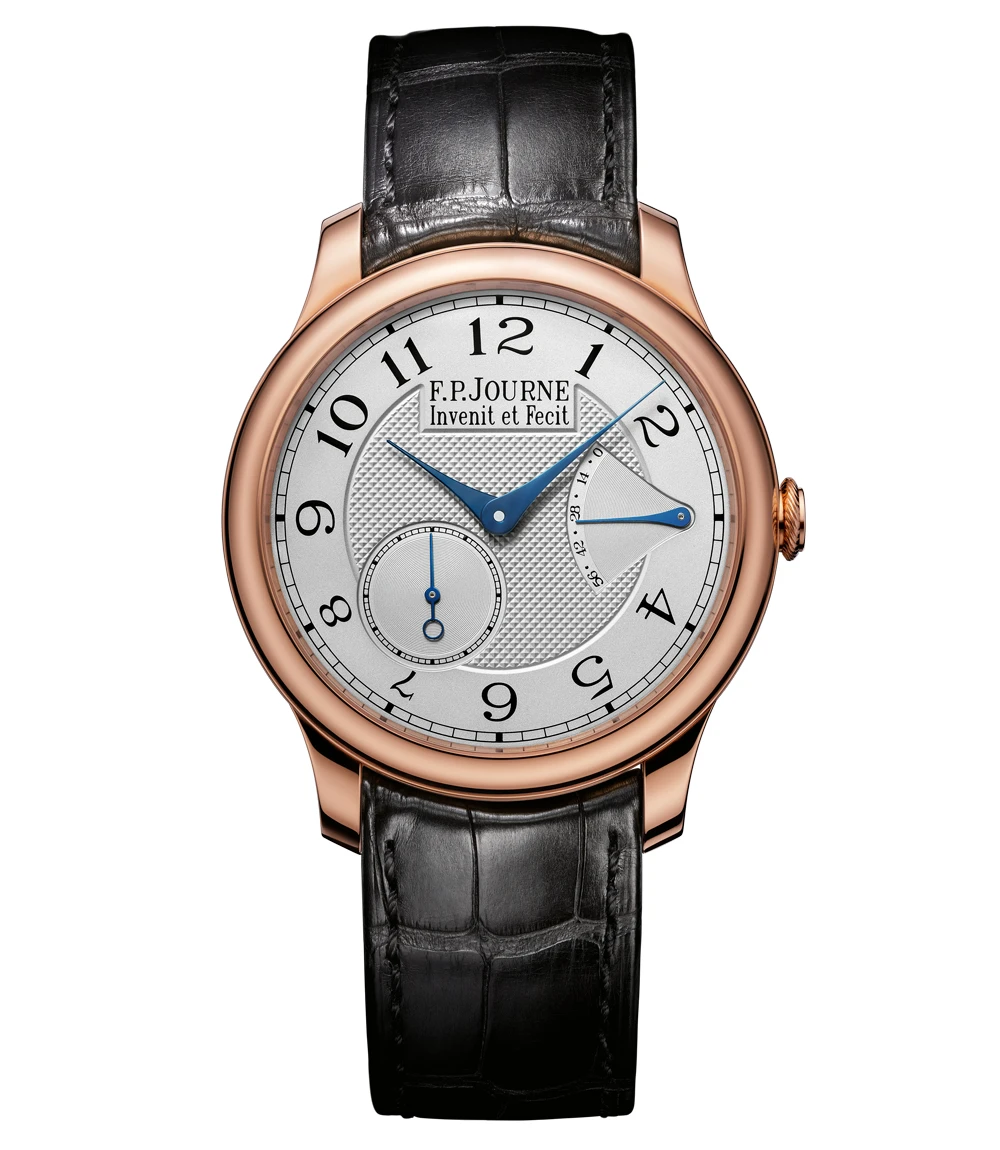
Image – F.P.Journe Chronomètre Souverain Ref. CS
F.P.Journe Chronomètre Souverain – the inspiration
Should you have the opportunity to read the excellent book, ‘François-Paul Journe, Invenit et Fecit’, by Jean-Pierre Grosz (ISBN 978-3-906124-25-4) you will discover much about the watchmaking genius. Throughout his career, Journe has been fascinated by the greats of horology, including Janvier, Breguet and Berthoud.
François-Paul Journe spent his early years under the tutelage of his uncle, Michel Journe, a master restorer of antique clocks. It was while working within Michel in his Paris workshop, that François-Paul was exposed to marine chronometers from the 17th and 18th centuries. These highly precise instruments captivated François-Paul and inspired him to create the Chronomètre Souverain. At this juncture, it is important to touch on the historical significance of marine chronometers.

Image – François-Paul Journe
Determining longitude at sea
In bygone times, navigating the seas was a treacherous endeavour. Indeed, after the Isles of Scilly disaster in 1707, when four Royal Navy ships struck rocks with the loss of 2000 souls, the British parliament introduced the Longitude Act of 1714. Financial rewards were offered by the government, incentivising inventive minds to conceive a means of determining longitude at sea.
John Harrison (1693-1776), an English watchmaker, made the first marine chronometer, the ‘H1’ between 1730 and 1735. Thereafter, he developed further marine chronometers and was later joined by other brilliant minds in this pursuit, including John Arnold (1735-1799). The overriding objective was to make increasingly precise instruments.
On the opposite side of La Manche, Swiss-born Ferdinand Berthoud (1727-1807), based in Paris, was also actively involved in developing marine chronometers. Pierre Le Roy (1717-1785), the inventor of the detent escapement, along with Berthoud, both supplied marine chronometers to the French Royal Navy and were clearly incentivised by the financial rewards on offer.
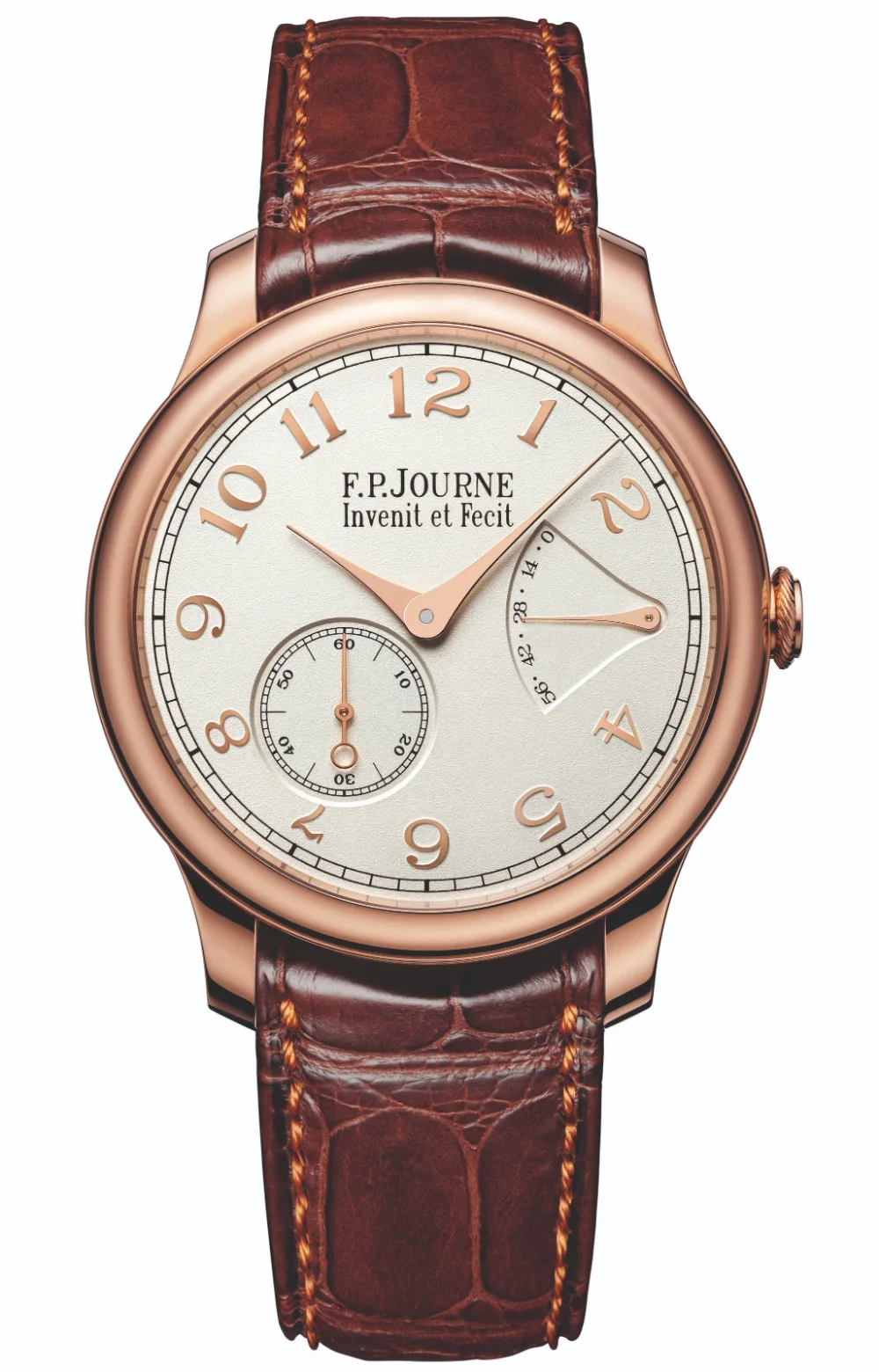
Image – F.P.Journe Chronomètre Souverain with 6N Gold Case with whitened dial
F.P.Journe Chronomètre Souverain – the design
The designs of most watches on the market today are governed by the architecture of the movement within. This is particularly true when an ébauche or third-party movement is used. However, François-Paul Journe has always approached design very differently.
For Monsieur Journe, the design of a watch begins with the dial. Proportions, readability and beauty are considerations which shape his thoughts and his creativity is not constrained by using an existing movement.
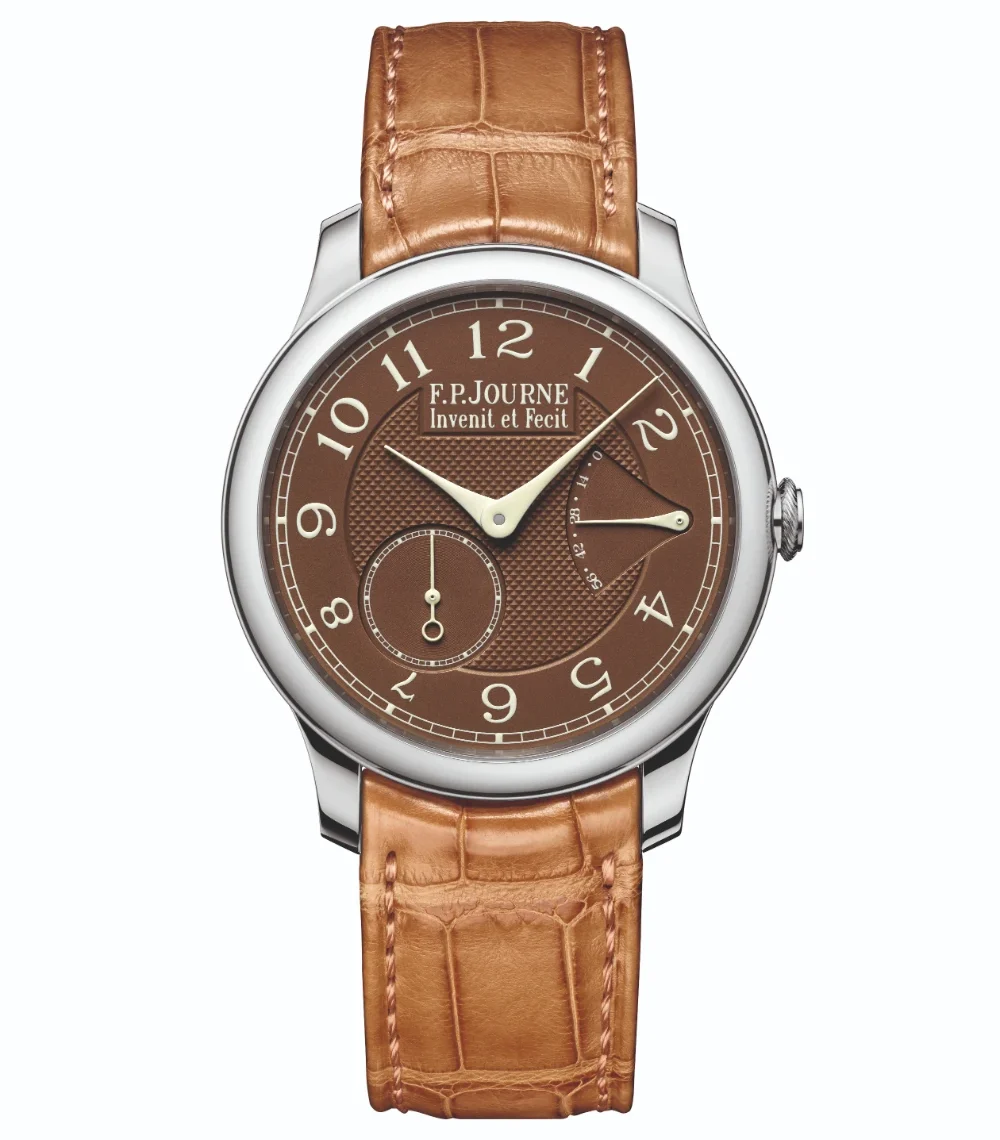
Image – F.P.Journe Chronomètre Souverain Havana Ref. CS
Power reserve indicator
When creating the Chronomètre Souverain, the son of Marseilles sought to create a time-only watch with the addition of a power reserve indicator. But Journe, always an aesthete, wanted to place the latter indication at 3 o’clock. Most watch brands would avoid placing the indication in this position, mindful that the keyless works would get in the way. Moreover, to surmount such an obstacle would usually increase the thickness of the movement, an anathema to Journe who wanted to create a slender timepiece.
A man who spent 17 years perfecting the Chronomètre à Résonance before unveiling it to the world, Journe is known for his tenacity and eventually he conceived a solution. Similarly, he reimagined his power reserve mechanism, reducing its height from 1.65 mm to just 0.5 mm by using ceramic ball bearings, while at the same time improving its efficiency. His patented innovation now features on all F.P.Journe movements. The power-reserve indicator is in Journe’s preferred 3 o’clock position, yet the case measures just 8 mm in height (a point I will return to later).
The scale presented on the power reserve indicator breaks with modern convention. Rather than moving upwards as the energy within the barrel(s) wanes, the Chronomètre Souverain features a ‘reversed power scale’. When fully wound, the lone hand points to ‘0’ on the scale. As the mainsprings unwind, the hand arcs downwards. Journe was inspired by historical marine chronometers. These were typically wound once per day, at a precise time, usually at noon, ensuring the rate remained as stable as possible.
F.P.Journe Chronomètre Souverain – dial detail
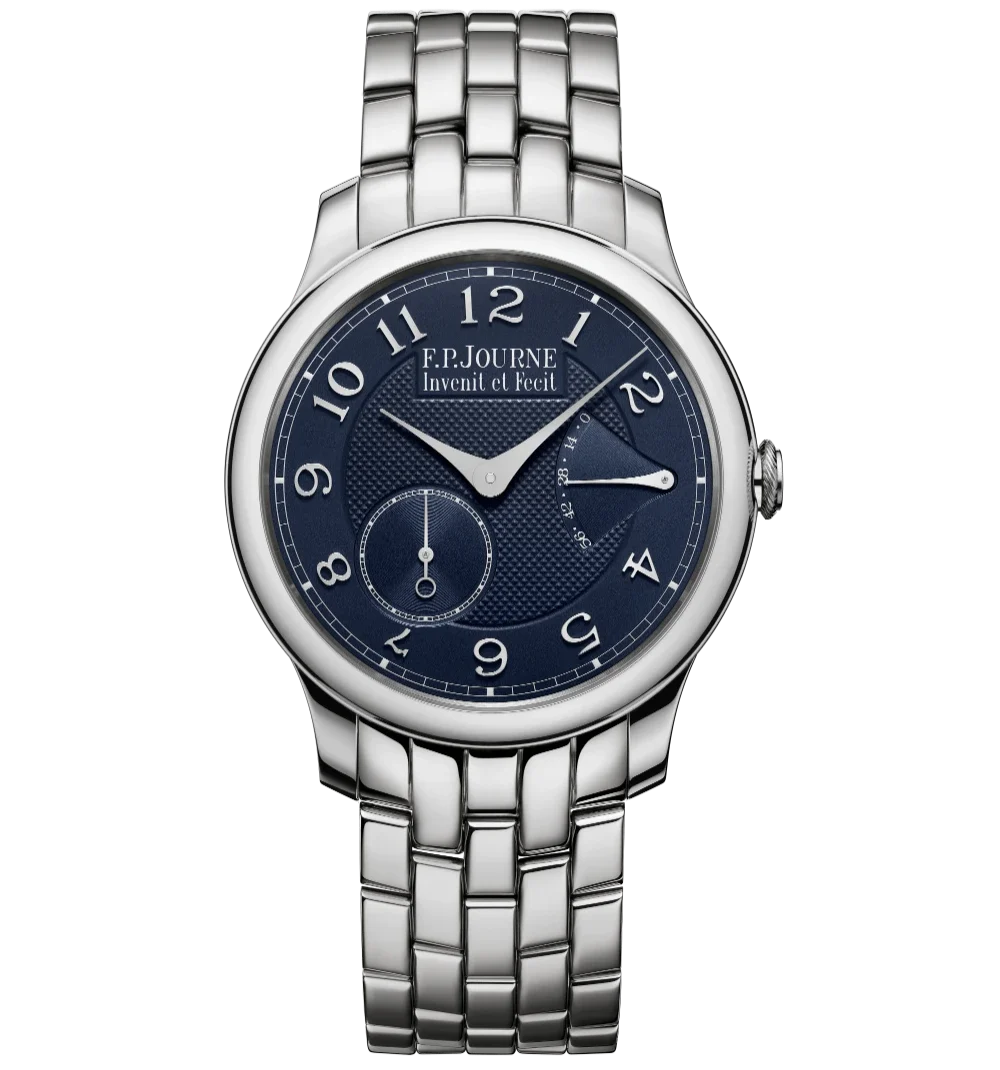
Since it was launched in 2005, the Chronomètre Souverain has changed little. Dials have been executed in ‘whitened guilloché silver’, ‘whitened silver with 18K white gold applied numerals’, ‘Havana guilloché silver’ and, most recently ‘blue guilloché silver with 18K 5N gold applied numerals’ (see later).
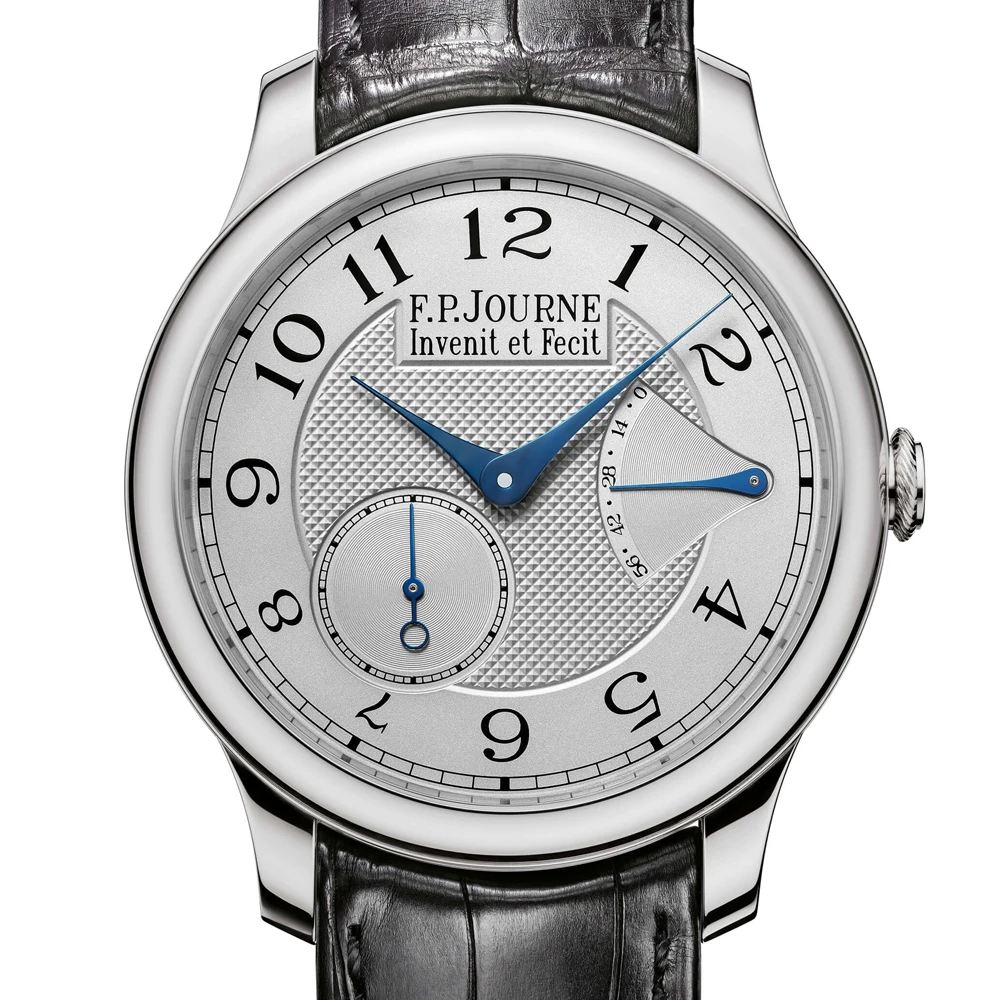
Image – F.P.Journe Chronomètre Souverain Ref. CS
A notable characteristic of the model’s dial is Journe’s careful consideration to proportions, with each element sitting in concert with its neighbour to deliver a harmonious composition. Journe, a perfectionist, chose to reduce the size of the numerals at 7 and 8 very slightly to accommodate the small seconds display, augmenting both readability and elegance.
Despite the passage of time, those watches dating back to 2005 have remained untouched by the fickleness of fashion and continue to proffer an abundance of eye-appeal.
Unusually, F.P.Journe crafts cases and dials in its own facility in Meyrin. This in-house expertise guarantees that both components meet Monsieur Journe’s now-legendary, exacting requirements.

Image – Les Cadraniers de Genève and Les Boîtiers de Genève
Since it was first released in 2005, the Chronomètre Souverain has featured dials formed using different techniques. The first models were endowed with a guilloché dial incorporating printed numerals, a style that remains part of the present-day collection.
The hour and minute hands are a house style. They feature gracefully arcing sides and include razor-like tips that succinctly express meaning. As stated earlier, each hour value is denoted with Arabic numerals avec serifs. Classical in appearance, they have been dipped in the elixir of life, destined to remain forever young.
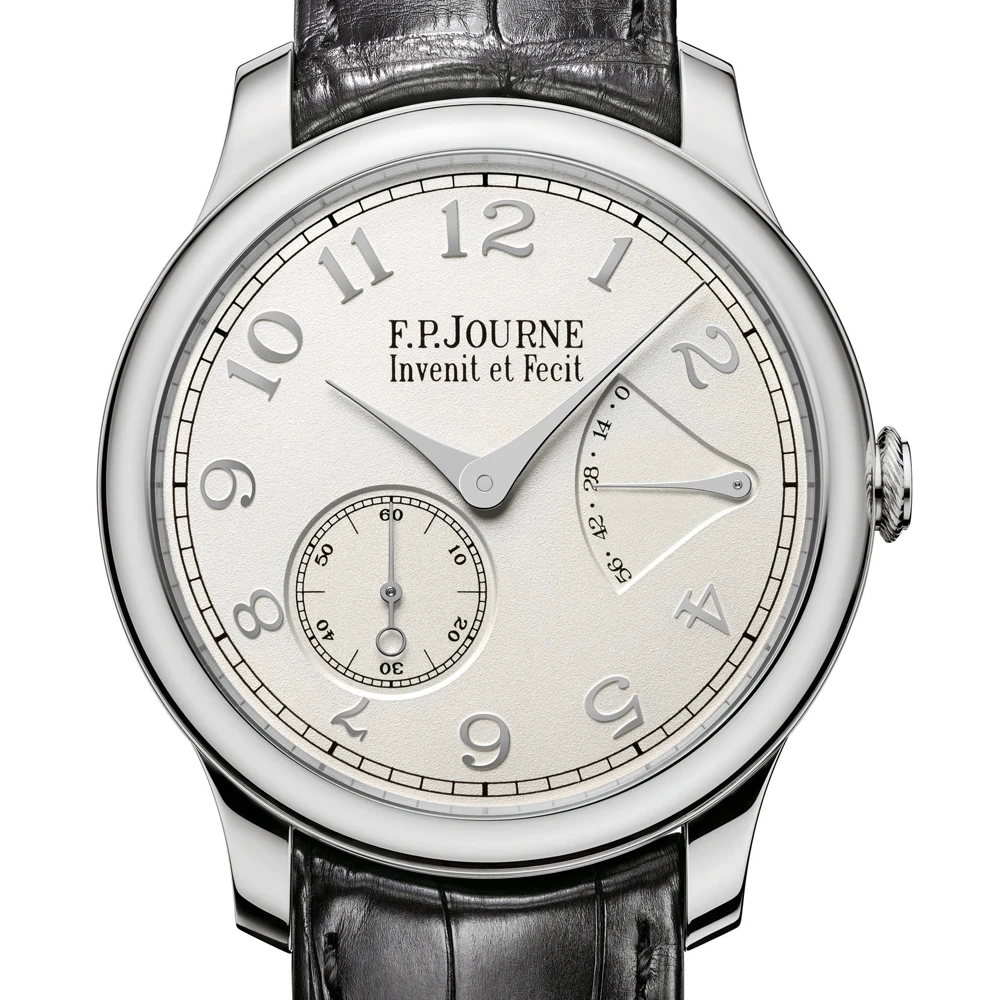
Image – F.P.Journe Chronomètre Souverain Ref. CS
F.P.Journe has skilfully combined textures, depths and finishes to aid legibility while simultaneously delivering a handsome mien. This is perfectly illustrated with the chemin de fer fringing the dial. It grants readability and frames a beautiful, animated horological landscape.
F.P.Journe Chronomètre Souverain – case
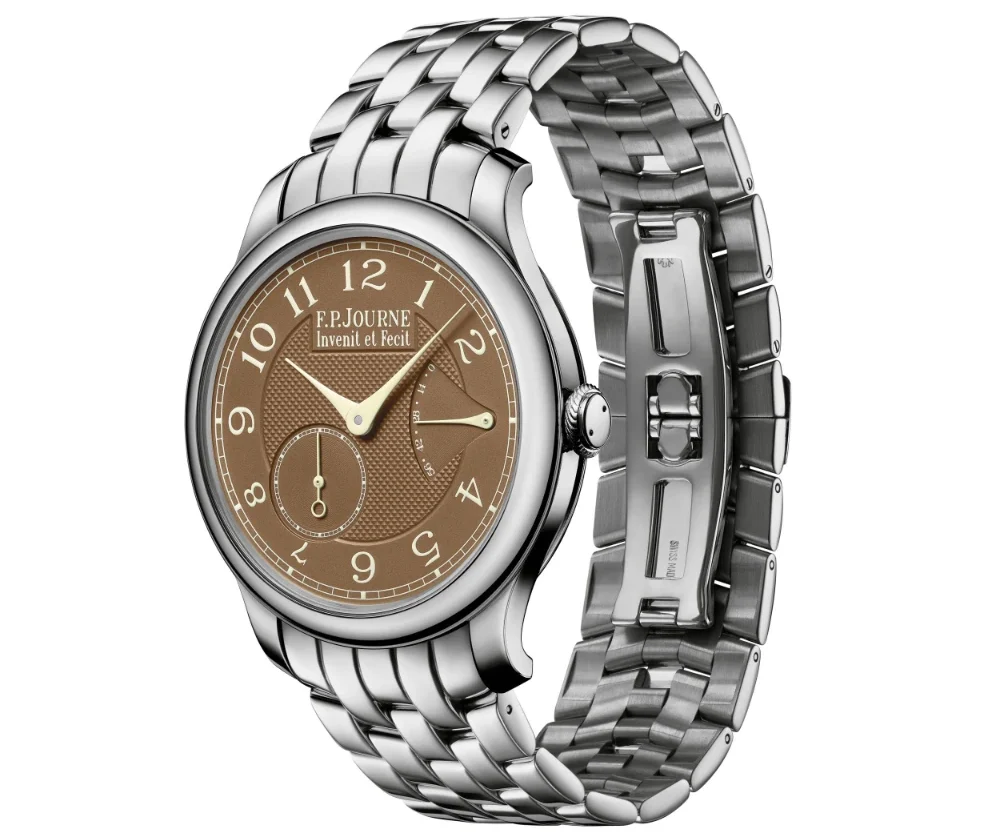
As mentioned previously, F.P.Journe has its own dial and case-making facility. Founded in 2011, Les Boîtiers de Genève fulfils all the Maison’s case needs. It can work with a broad array of materials, including steel, titanium, tantalum, gold and platinum. When it comes to the Chronomètre Souverain, prospective purchasers have been able to select 18K 6N gold or platinum. Customers can choose an alligator leather strap or a matching 5-rows bracelet formed of 18K 6N gold or platinum. Historically, the watch has been offered in two sizes: 38 mm or 40 mm, but today F.P.Journe only offers the latter option, no doubt heightening the resale values of 38 mm models.

Above image – Les Cadraniers de Genève and Les Boîtiers de Genève
Above image – Boutique Collection Chronomètre Souverain
Due consideration has been given to both the size and shape of the case. Measuring just 8 mm in thickness, the Chronomètre Souverain is one of the slimmest mechanical watches in the F.P.Journe collection. Its svelte appearance confers elegance, while its distinctive design has been optimised to confer an ergonomic fit. For instance, the short lugs taper downwards, coaxing the strap (or bracelet) to envelop the wrist.
Above image – F.P.Journe Chronomètre Souverain Havana Ref. CS
To the rear of the watch, a pane of sapphire crystal invites inquisitive eyes to discover the ultra-refined Calibre 1304 (see later). Every facet of the case is clearly the product of prolonged consideration. Monsieur Journe, a man blessed with an eye for detail, has designed a crown with a distinctive grip encircling its form. The crown was inspired by a twisted silk cord, a motif that was typically found on 18th century clocks. Beyond its attractive appearance, the crown’s motif aids manipulation.
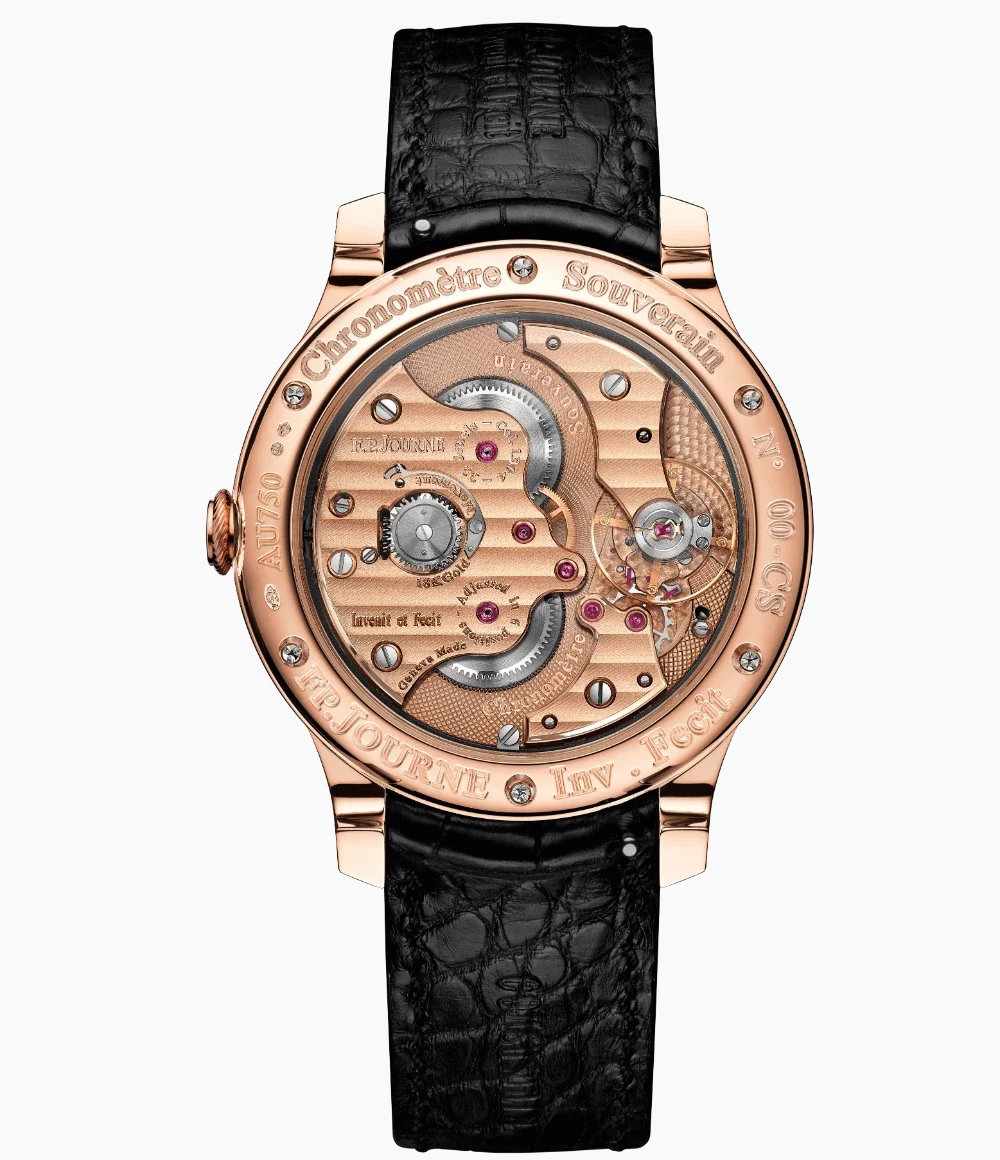
Above image – F.P.Journe Chronomètre Souverain Ref. CS
F.P.Journe Chronomètre Souverain – Calibre 1304
Returning to the inspiration for the Chronomètre Souverain, namely marine chronometers, Journe wanted to create a highly precise timepiece. The resultant movement at the heart of this watch, the hand-wound Calibre 1304, contains only 161 components. In contrast to some of the Maison’s high complication models, this is a modest number. However, its apparent simplicity is the product of careful consideration with each component efficiently serving a purpose. No part is unnecessary; everything is distilled to a pure conclusion.
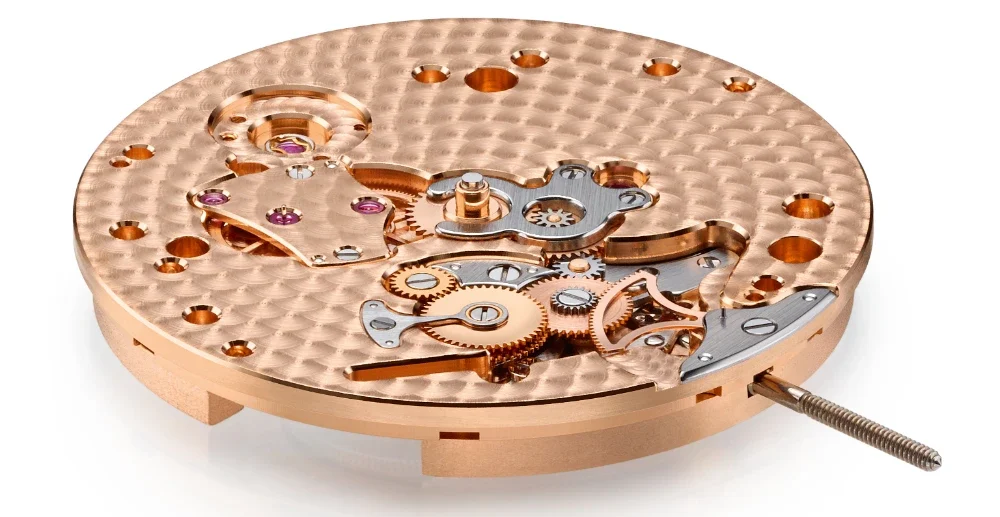
Gold bridges and mainplate
Conventional watch components are made of rhodium-plated brass. In 2004, F.P.Journe began making movements in 18K rose gold. This noble metal is one of the least reactive materials, obviating the need for plating, a form of coating liable to wear in the long term. However, the watchmaker must handle the material with great care prior to the movement being encased as the soft metal can easily be marked with a wayward tool. Moreover, gold is costlier than brass, but for the son of Marseilles, the promise of longevity justifies the expense.
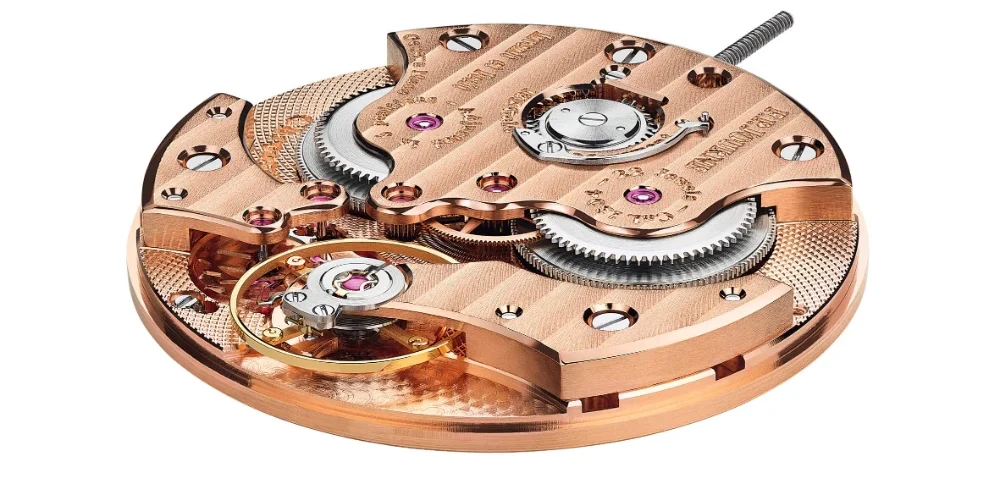
A linear supply of power
The Chronomètre Souverain is a hand-wound timepiece equipped with two barrels. The watch buying public often associate two or more barrels with greater autonomy, possibly with the promise of a three-digit power reserve. Therefore, it may come as a surprise to learn that the Calibre 1304 will only run autonomously for 56 hours ± 2 hours. However, extreme autonomy was not Monsieur Journe’s objective when equipping the movement with twin barrels.
Rather than arrange the barrels in series, the approach often favoured to increase the autonomy of a watch, François-Paul Journe has arranged the barrels in parallel, dividing the torque from both barrels that drive the centre wheel, thereby mitigating friction, a factor that blights precision.
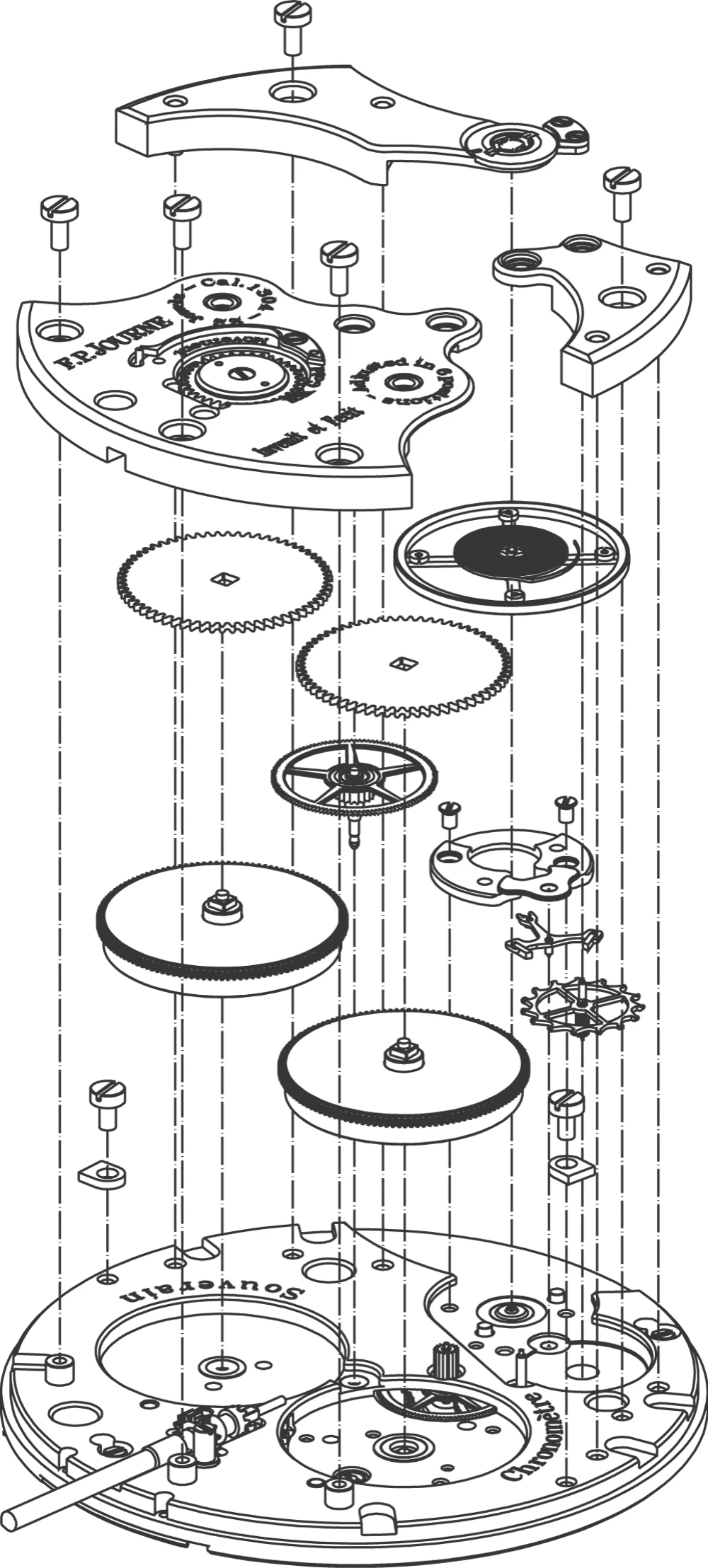
By equipping the Calibre 1304 with two barrels in parallel, the energy passing through the gear train, ultimately reaching the escapement and regulating organ, is more linear. While this should not be confused with the technically superior ‘Echappement Bi-axial Haute Performance’ (incorporating a Remontoir d’Égalité), it does deliver impressive rate stability and, by default, excellent chronometric performance.
Elegant architecture
While longevity, reliability and precision are of huge importance to the son of Marseilles, aesthetics are equally significant. The prepossessing appearance of the Chronomètre Souverain’s dial is matched by that of the Calibre 1304, visible via the exhibition caseback.
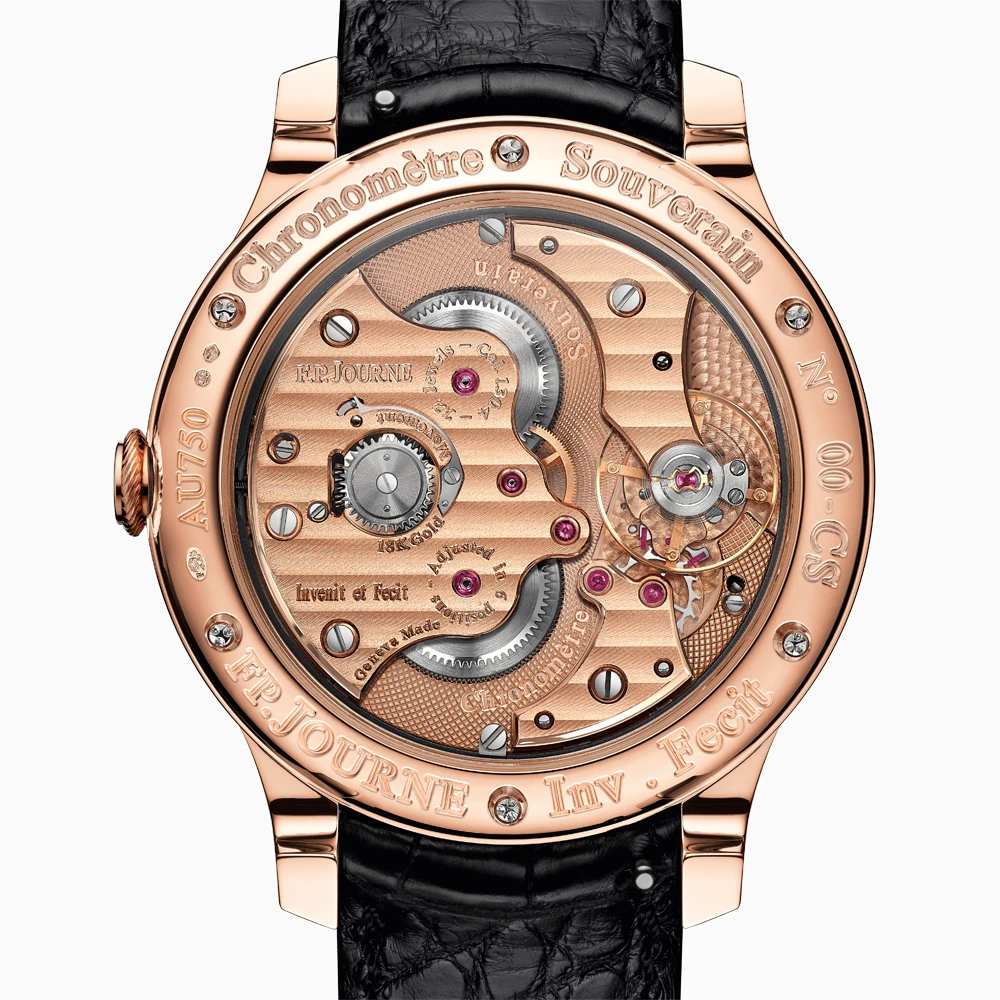
Journe has expended much effort on the appearance of the movement, seemingly separating the escapement and regulating organ from the barrels and gear train. Indeed, at first glance they appear to move without any means of propulsion. The largest bridge, located adjacent to the crown, reveals the ratchet wheel and click, while at the same time discloses the edge of each barrel and affords partial views of the centre wheel. Positioned on the opposite side of the movement, the escape wheel resides beneath a dedicated bridge, while the pallet lever and regulating organ dwell beneath a further bridge.
At this juncture, the mechanically curious may question the whereabouts of the gear train. Journe has positioned these wheels between the mainplate and the dial. The resultant architecture serves to accentuate the dynamic behaviour of the balance and escape wheel as they control the flow of time. Moreover, the design exposes vast swathes of the mainplate that’s beautifully adorned with barleycorn decoration and perlage. The Calibre 1304 demonstrates that functionality does not need to come at the expense of style and beauty.
Variable-inertia balance
The balance spring within a watch is connected to the balance staff at one end, while the outer coil is fixed to the stud at the opposite end.
Most watch movements are equipped with an index-regulated balance. With this system, the balance spring passes between two curb pins affixed to a raquette (index). Moving the raquette, towards or away from the stud, alters the effective length of the balance spring, making the watch run faster/slower.
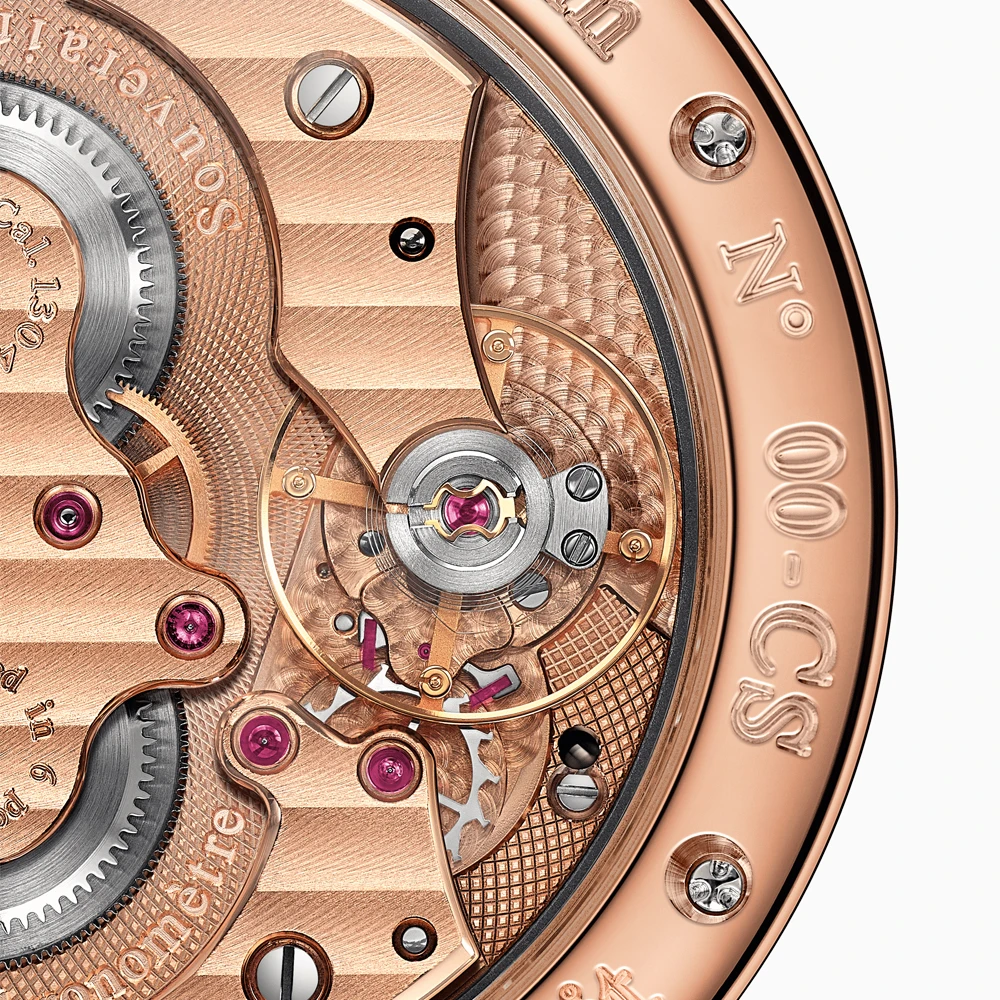
Journe has chosen to equip the Chronomètre Souverain with a variable-inertia balance. With this form of regulation system, the length of the balance spring is fixed and the rate is adjusted by moving inertia weights affixed to the balance wheel. With this latter approach, regulation takes longer. However, it delivers superior precision, is less prone to shocks, will keep its rate for longer and is less susceptible to positional influence.
The Calibre 1304 is equipped with four inertia weights, positioned on the spokes of the balance wheel. Some historic watches featured screws on the exterior of the balance wheel, serving the role of inertia weights. Unfortunately, these screws, which projected beyond the rim of the balance wheel, tended to create air turbulence that could adversely affect precision. However, on the Calibre 1304, the inertia weights are located on the interior of the balance wheel, leaving a smooth, aerodynamic exterior which again boosts precision. However, F.P.Journe cites the primary reasons for its approach were to ‘improve dynamic stability and long-term consistency rather than aerodynamics alone.’ The Maison’s attention to detail is simply extraordinary.
Finishing
The Chronomètre Souverain is an exemplar of Haute Horlogerie, crafted free of compromise. Appraise the execution of the Calibre 1304 and you won’t find any signs of machining. Indeed, everything has been refined with an array of artisanal techniques and the deft use of hand.
Polished screw heads, with chamfered slots, reside in gleaming sinks, punctuating the beautifully formed, curvaceous gold bridges. Moreover, the bridges are embellished with traditional Côtes de Genève and feature bevelled edges that sparkle with the merest suggestion of light. The ratchet wheel is sunray-brushed, the click is mirror-polished, the stud is grained and the pegs feature polished, rounded ends. As stated earlier, the mainplate is adorned with barleycorn decoration and perlage, with the latter located below and adjacent to the balance and escape wheel.
F.P.Journe Chronomètre Souverain – Boutique Collection
The name F.P.Journe is synonymous with timepieces imbued with enduring beauty. Throughout his career, François-Paul Journe has chosen not to release watches with a limited shelf-life, hence any changes he chooses to make to a model are imperceptible to the layperson. It is this approach that has gained the approval of watch aficionados and seen the Maison become the darling of the auction room scene.
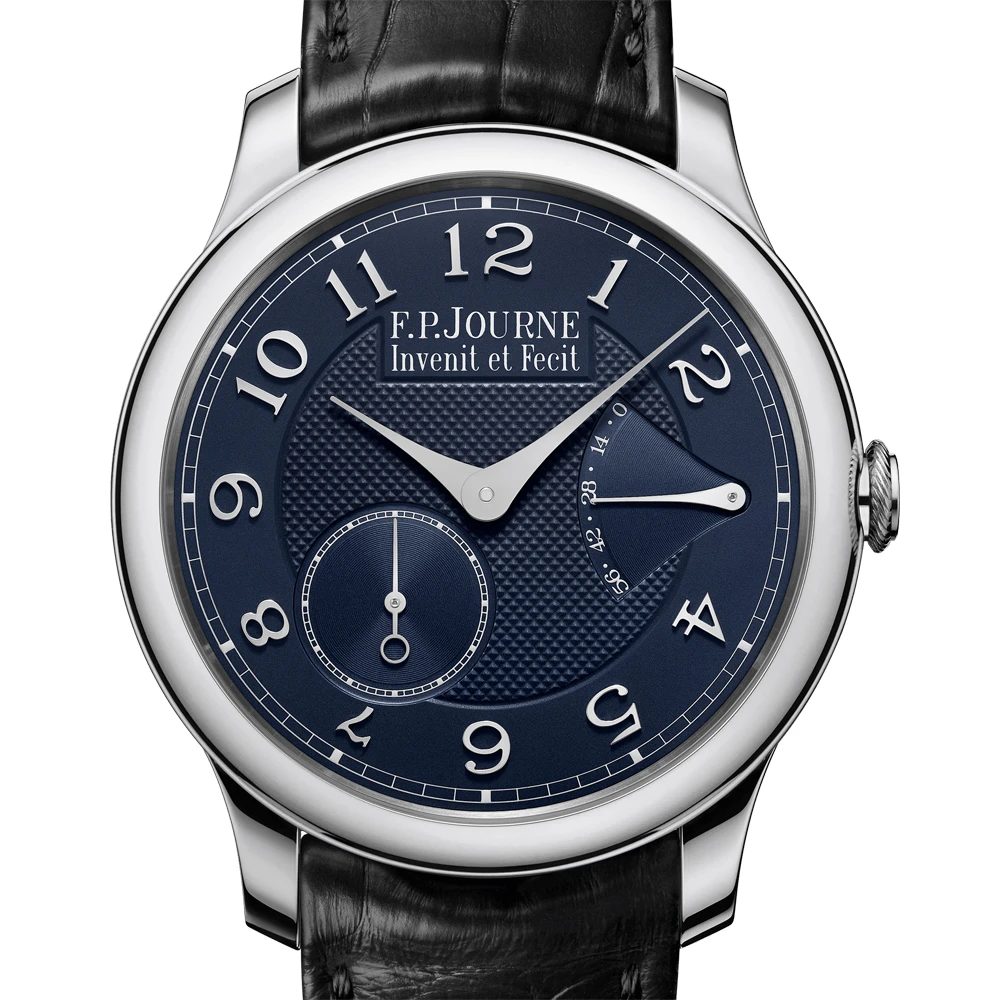
Nevertheless, F.P.Journe has chosen to celebrate the 20th anniversary of the Chronomètre Souverain by releasing two Boutique Collection references. Both models are endowed with a blue guilloché silver dial and feature applied numerals in 18K white gold or 5N gold, fitted with matching rhodium-plated or 5N gilt steel hands, respectively.
Closing remarks
Some watches that burst onto the market are intrinsically obsolete. Blighted with styling that can seem needlessly outré or gauche merely to attract attention, they are destined to become passé within a short period of time.
The Chronomètre Souverain, with its asymmetric dial layout, is enriched with nuanced detail, which even after 20 years shows no signs of ageing. Assembled and regulated by one watchmaker throughout, every component has been crafted to deliver function, beauty, precision and longevity.
There are some individuals who have made it their mission in life to seek refinement in wine. They look beyond mere taste, bouquet and appearance; their discernment surpasses such superficial considerations. Instead, they appreciate the importance of ‘mouthfeel’, allowing the wine to interact with the tongue, teeth and palate. Developing the necessary skills to assess the body, the presence of tannins, the acidity, sweetness and viscosity comes with experience and guidance.
Ultimately, when an individual has the necessary understanding, they may order a bottle of Romanée-Conti not because its expensive, but because they can recognise its excellence and appreciate what makes it special. Likewise, the F.P.Journe Chronomètre Souverain is a noble watch, crafted to the highest standard and blessed with an ageless appearance. Seemingly simple to the untrained eye, its complexities require the beholder to appreciate its many subtleties. The parallels with wine are clear, but rest assured at F.P.Journe every year represents a fine vintage.