
François-Paul Journe – inspired by the greats of watchmaking in-depth feature
François-Paul Journe, a superstar within the watchsphere, cites several historical influences that have shaped his ideas and the extraordinary creations he has made. But of those horological luminaries that have ignited Journe’s imagination and passion, three men stand out, namely Berthoud, Breguet and Janvier. Angus Davies looks at the legacy of these remarkable individuals, providing examples of how their creativity has led Journe to invent and make, or as the son of Marseilles prefers to say, ‘Invenit et Fecit’.
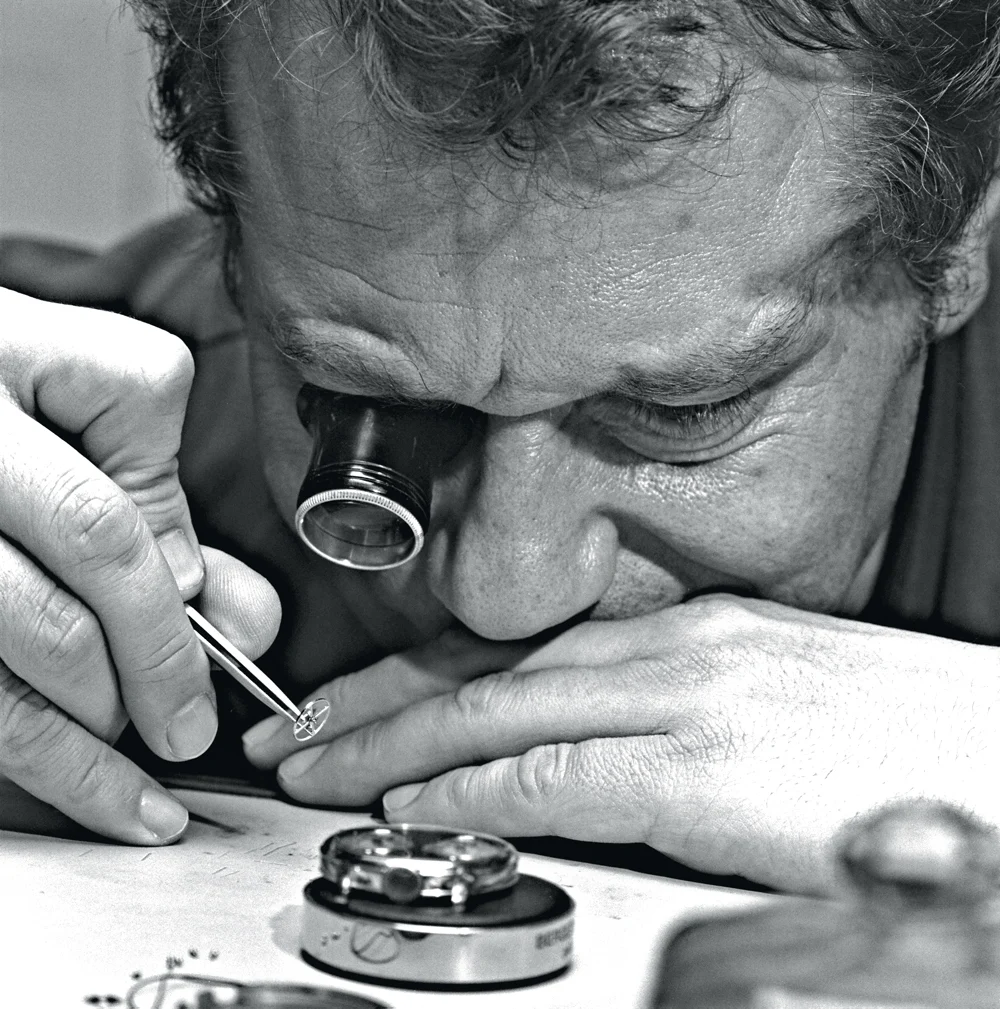
François-Paul Journe – influences from the 18th century
Often when prominent figures from the worlds of music or film are interviewed, they will cite artistic influences. These artists may have inspired an individual to enter their chosen profession or even led them to embrace a particular method, style or technique.
François-Paul Journe, a son of Marseille, and one of the leading names in the esoteric domain of Haute Horlogerie, has been inspired by many figures from the past. Indeed, the list of horological luminaries which have stirred Journe’s soul includes the likes of Christiaan Huygens, Thomas Mudge, Pierre Le Roy and, in more recent times, George Daniels.
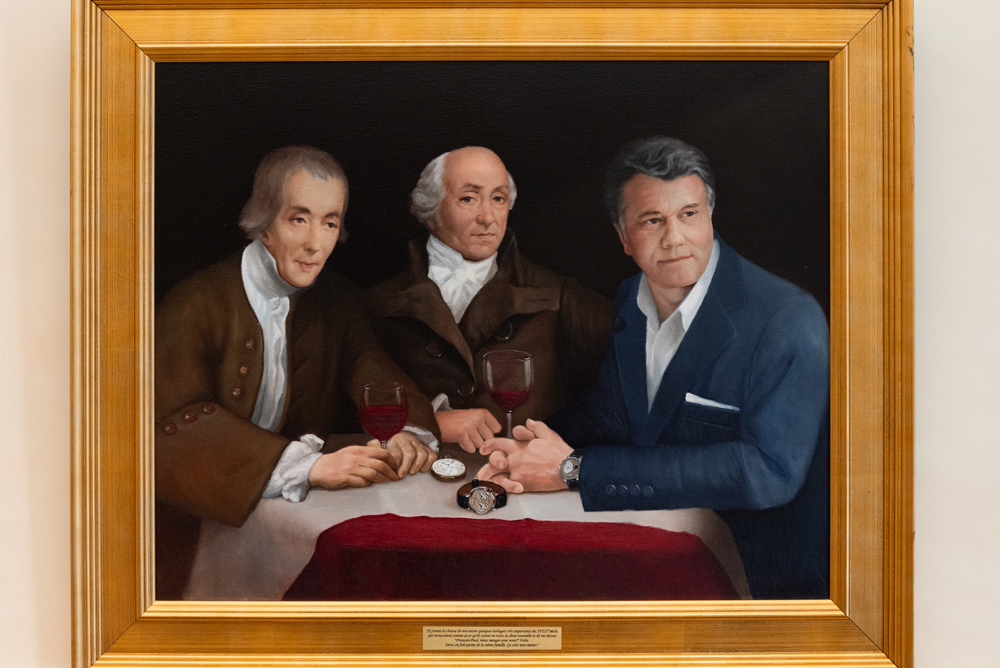
But most notably, there are three gentlemen who have not only inspired Journe in his quest for watchmaking perfection but have also motivated him to reimagine mechanisms originally designed for use in a clock or pocket watch. The identity of two of these gentlemen is revealed in a picture adorning an office wall at the F.P.Journe’s headquarters, located on 17 rue de l‘Arquebuse. The oil painting, a gift from a loyal client, depicts Journe in the company of Abraham-Louis Breguet (1747-1823) and Antide Janvier (1751-1835). The third figure, absent from this picture, is Ferdinand Berthoud (1727-1807).
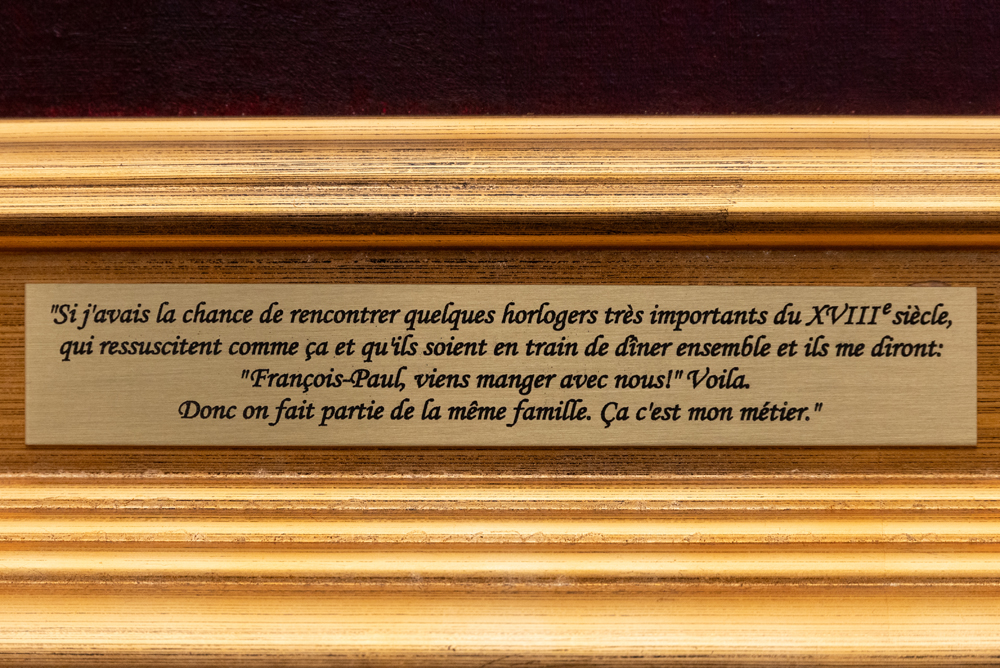
The inscription below the painting reads: “If I was lucky enough to meet some very important watchmakers from the 18th century, who come back , and they were having dinner together, they’d say to me: ’François-Paul, come and eat with us!’ That’s it. So we’re all part of the same family. That is my profession.”
Some of you may already know these legendary figures who came to prominence during the 18th century, but for those unfamiliar with these men and their many achievements, allow me to enlighten you.
Ferdinand Berthoud (1727-1807)
Born in Plancemont in the canton of Neuchâtel, Berthoud’s professional journey began at the tender age of 14 when he embarked on a career as an apprentice clockmaker. Later, aged 18 years of age, Berthoud relocated to Paris where he continued to perfect his skills as a clockmaker, working for a number of master watchmakers.
Living through the ‘Age of Enlightenment’, when much importance was placed on the study of intellectual and cultural subjects, Berthoud became fascinated with science. Amassing knowledge through research and with deft use of hand, honed as a clockmaker, Berthoud conceived exceptional horological mechanisms. An example of his skill and ingenuity was an equation clock that he crafted in 1752 which accounted for leap years.
Ultimately, Berthoud’s talents were recognised by King Louis XV’s council when, in 1753, he was awarded the title ‘Master Clockmaker’.
John Harrison and the Longitude problem
On the opposite side of La Manche, John Harrison (1693-1776) was busily trying to solve the longitude problem, an overriding concern of the maritime world after the Isles of Scilly Disaster of 1707. Harrison produced a series of marine chronometers, starting with H1 (1735), H2 (1739), H3 (1740) and H4 (1753, made with the assistance of John Jefferys). Similar to the post-war Space Race (1955-1975), the pursuit of increasingly precise marine chronometers was of great import at the time.
Ferdinand Berthoud and the Longitude problem
From 1760, Berthoud chose to focus his efforts on solving the longitude problem. He completed his Marine Clock no.1 in 1761 and went on to publish his now famous ‘Essai sur l’horlogerie; dans lequel on traite de cet Art relativement à l’usage civil, à l’Astronomie et à la Navigation, en établissant des principes confirmés par l’expérience.’, a two-volume treatise in 1763. Later, Berthoud created the Marine Clock no.8 (1768) able to calculate the longitude at sea within a tolerance of 0.5°.
Berthoud’s achievements were many. For example, he was appointed a ‘foreign associate member’ of the Royal Society in London (1764), awarded the warrant of Horologist-Mechanic to the King and Navy (France, 1770), Le Temps de la Reconnaisance (Institute National, France 1795) and received the Legion of Honour (1804).
Perhaps most relevant when talking about Ferdinand Berthoud and his influence on François-Paul Journe is the matter of constant force. Berthoud famously wrote, ‘The fundamental principle of a machine that measures time is that when the free regulator is set into motion, it conserves that motion as long as possible, if no outside force restores it.’
Returning to Journe, the principle of constant force has proved a lifelong obsession. Indeed, he famously mastered the force serving the escapement with his interpretation of the Remontoir d’Égalité. This ingenious mechanism ensures that irrespective of the energy held within the spring barrel(s), the escapement is served with a uniform/linear supply of energy, conferring rate stability.

Image – tourbillon and remontoire – 3/84
Journe began work on his third pocket watch in 1983, a commission from Doctor Eugène Gschwind, an avid collector. Completed the following year, the watch, the 3/84, was equipped with a tourbillon and remontoire. It was the first watch created by Journe to feature the constant force device.

Image – tourbillon and remontoire – 3/84
In 1991, Journe created a version of his Tourbillon Souverain, the 11/91, a souscription watch equipped with a remontoir d’égalité. The composition of this watch referenced the work of Journe’s heroes. For example, the screwed dial elements were inspired by Berthoud, while Breguet’s work influenced the design of the hands and tourbillon. After Journe established his eponymous Maison in 1999, he produced several more iterations of the Tourbillon Souverain, each equipped with the constant force mechanism.
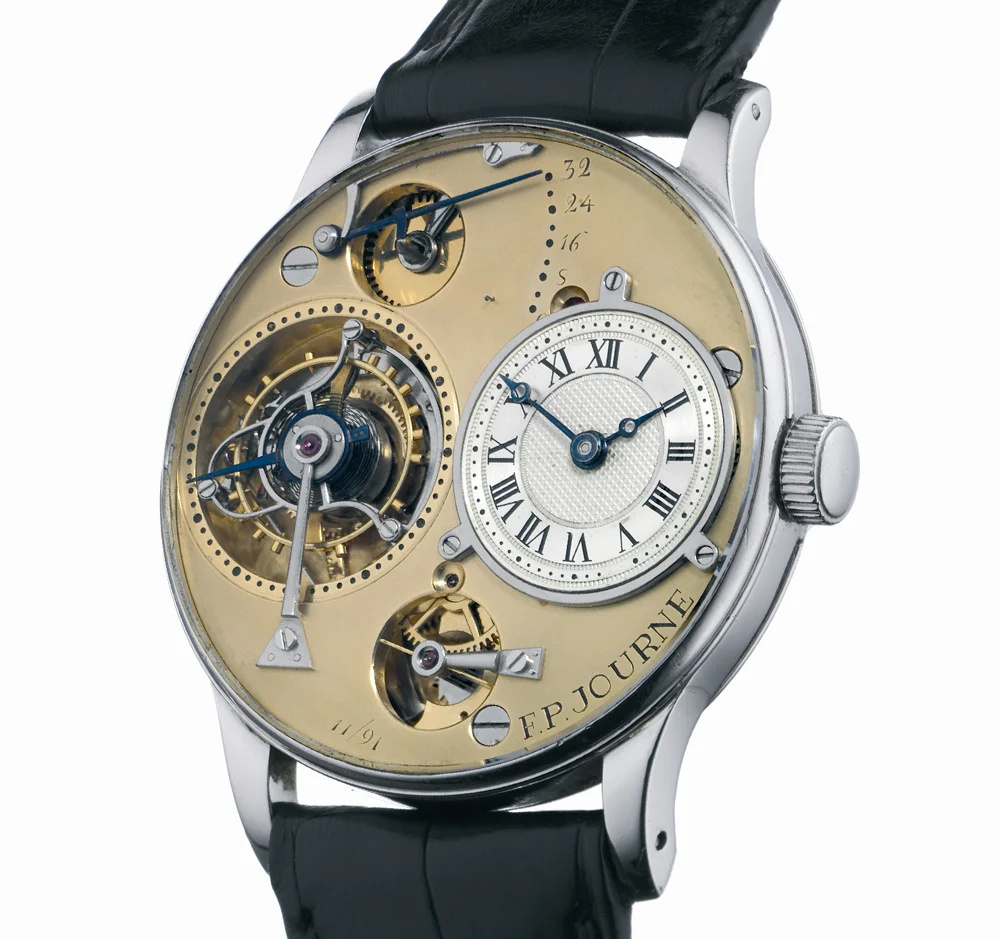
Image – Tourbillon Souverain – 11/91
Later, Journe invented the Chronomètre Optimum, a hand-wound timepiece that unites the Remontoir d’Égalité with his patented escapement (Echappement Bi-Axial Haute Performance) or EBHP. This latter mechanism is an ingenious means of controlling the flow of time that is a hybrid of Breguet’s natural escapement and the Swiss lever escapement. Most notably, Journe’s EBHP system is lubrication-free, overcoming an inherent weakness found with most mechanical movements. Lubricants have a tendency to deteriorate over time, affecting the operation of a watch. Indeed, Breguet allegedly said to Louis XVI, “Find me the perfect oil, Majesty, and I will make you the perfect watch!”

Image – Copyright © F.P.Journe – technical drawing of the ‘Echappement Bi-axial Haute Performance’ (Patent EP 2 487 546 A1) and Remontoir d’Égalité (Patent EP 1 528 443 A1)
Abraham-Louis Breguet (1747-1823)
Abraham-Louis Breguet was born in Neuchâtel and, like his compatriot Berthoud, he left his native Switzerland and moved to the French capital (Breguet was a mere 15 years of age at the time). Breguet was said to have been a distant relative of Berthoud and having witnessed him successfully establish a career in Paris, it is thought that this inspired him to follow the same path as his countryman. Known to have an overriding thirst for knowledge, Breguet was clearly motivated to travel in the pursuit of learning.
There are several reports that state that Breguet worked in Berthoud’s workshop. Certainly, the two men spent time with one another. Breguet was 20 years younger than Berthoud and benefited from the older man’s knowledge, especially in the field of marine chronometers.
Breguet established his business on Quai de l’Horloge in 1775 when he was 28 years of age. During his time in Paris, he came to prominence and ultimately attracted the patronage of aristocrats, royalty and other celebrated clients. Indeed, his famous patrons included Queen Marie-Antoinette, Napoleon Bonaparte, and his wife Josephine, as well as Alexander 1st, Tsar of Russia.
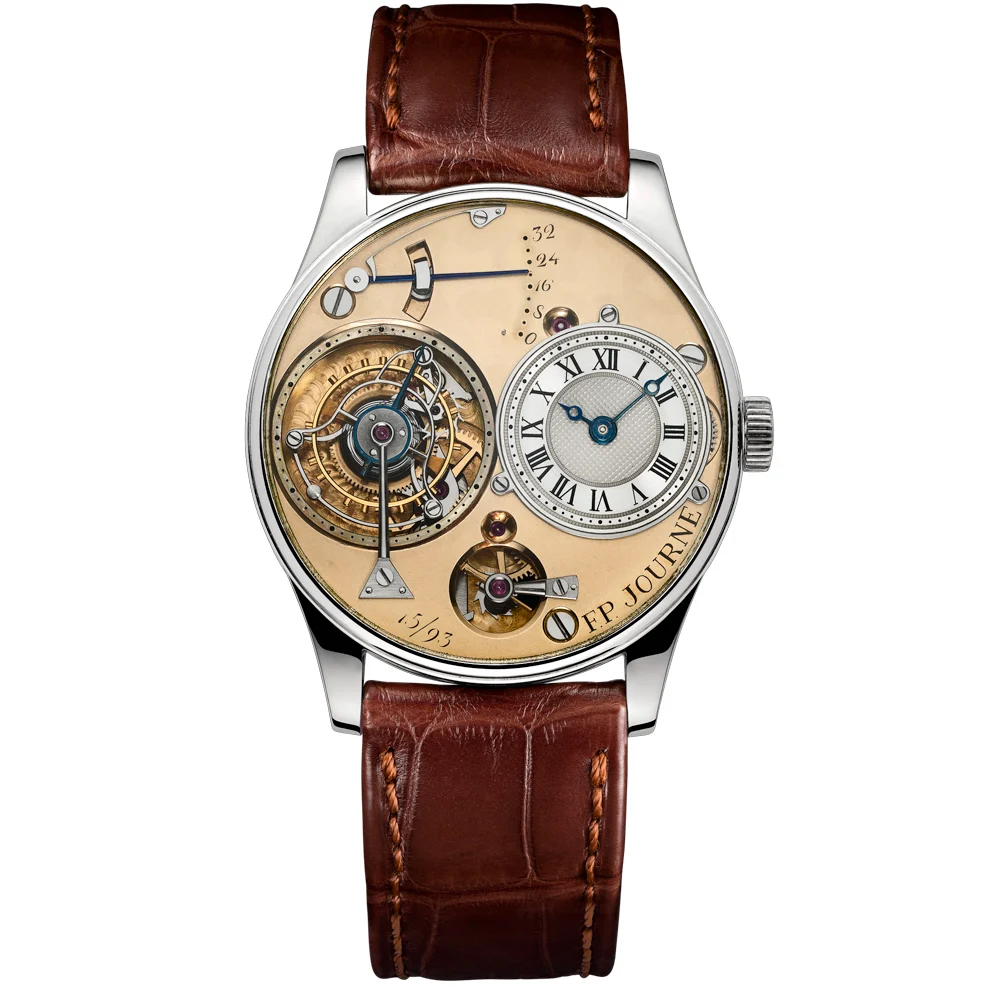
Image – tourbillon and remontoire – 15/93
Abraham-Louis Breguet was a multi-talented individual. He was an inventor, an aesthete, a highly accomplished watchmaker, a marketing genius and a consummate businessman. His many ideas and inventions have influenced Journe’s work. For example, the first examples of the Tourbillon Souverain, produced pre-1999, were, as previously mentioned, sold on a souscription basis, an idea conceived by Breguet in the 18th century. Later in 2000, F.P.Journe would do this again when it released the inaugural version of the Chronomètre à Résonance.
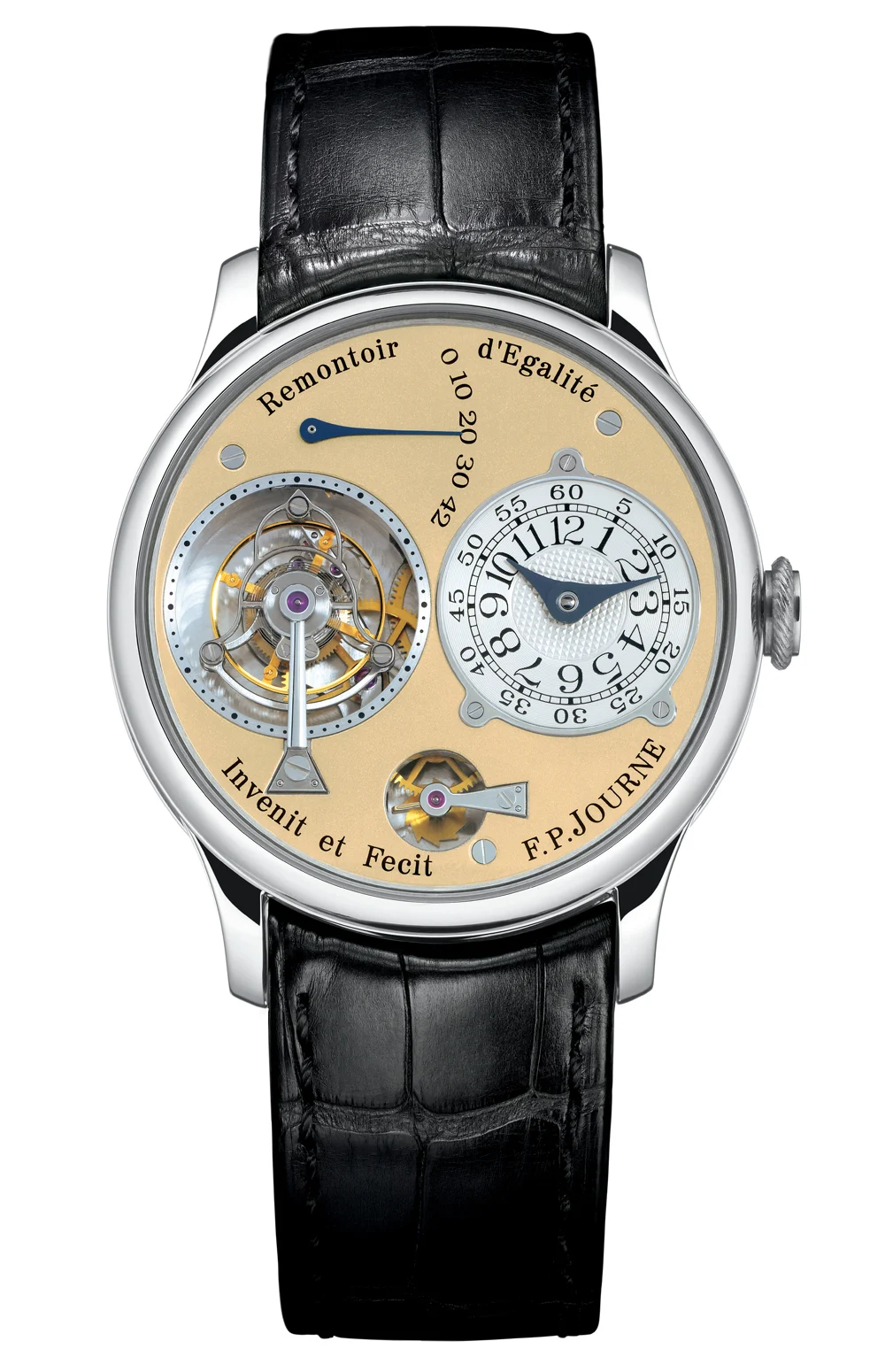
Image – Tourbillon Souverain – Calibre 1498 featuring a rhodium-plated brass movement
Indeed, in 1796, Breguet produced a simpler, more accessible watch, the souscription (subscription) watch. Measuring 61 mm in diameter, endowed with an enamel dial and imparting the hours and minutes with one hand, the watch was comparatively simple when contrasted with Breguet’s previous horological creations. He created a simple brochure and invited prospective clients to make a down payment of 50% at the time of ordering. This fiscal mechanism would have certainly helped Breguet’s cashflow, funded his expansion plans and mitigated the scourge of timewasters.
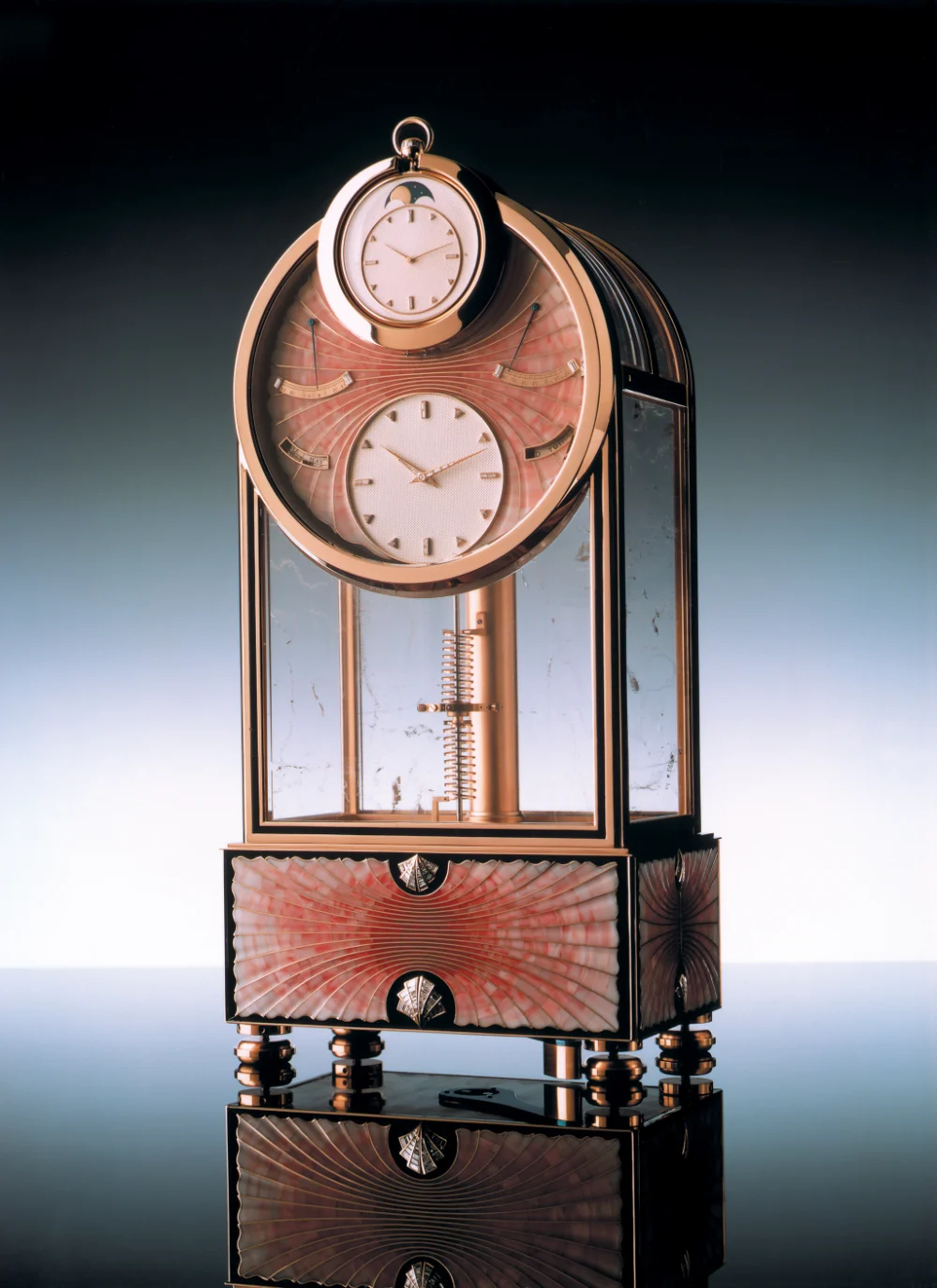
Image – Sympathique clock in gold – no.1 for Asprey
Breguet’s sympathique clock featured a cradle that accommodated a pocket watch. When the pocket watch was placed in the cradle, its hands would synchronise with those on the clock. Breguet unveiled his inaugural sympathique clock in 1798 but made only five examples due to their complexity. Interestingly, in 1987, before Journe established his luxury marque, he was commissioned to make two sympathique clocks for John Asprey, a gentleman who later became a close friend.
Breguet – the inventor of the tourbillon (patented in 1801)
It is clear that Breguet was blessed with a remarkable intellect. He recognised that gravity would adversely affect the behaviour of the regulating organ within a pocket watch. His inspired idea was to place the escapement and regulating organ within a revolving cage, rotating 360° every 60, 240 or 360 seconds. The mechanism’s circular route ameliorated the undesirable influence of gravity on the regularity of the movement. Breguet patented the tourbillon in 1801.

Image – case drawing designed by François-Paul Journe – Paris 1982
Journe – maker of the Tourbillon Souverain
Fascinated by the tourbillon from a young age, Journe dreamt of making his very own gravity-defying mechanism one day. At the time, there were only two books available to him, both written by the British watchmaker, George Daniels, ‘Watchmaking’ and ‘The Art of Breguet’.
In 1978, while working in Paris for his uncle, Journe began creating his first pocket watch. Typical of the son of Marseille, it was an ambitious undertaking; however, undeterred, and after five years of hard toil, he completed said watch. It not only featured a tourbillon, but also twin barrels, a detent escapement, a guilloché dial and was housed in a gold case.

Image – the first F.P.Journe watch completed in 1983
Later, Journe miniaturised the tourbillon mechanism, incorporating it within a wristwatch. He created his first tourbillon wristwatch in 1991, a time when this form of mechanism was a rare sight. Today several practitioners of Haute Horlogerie offer tourbillon wristwatches, but Journe’s watch was groundbreaking back in 1991.

Image – the first F.P.Journe watch completed in 1983
Over the years, Journe has repeatedly reimagined Breguet’s invention, often adding his constant force device (remontoir d’égalité). On some occasions he’s added a deadbeat seconds and, more recently, with the advent of the Tourbillon Souverain (Reference TV), positioned the tourbillon cage perpendicular to the mainplate.
Antide Janvier (1751-1835)
Antide Janvier was born in Lavans-lès-Saint-Claude in the French Jura. His name is synonymous with resonance; a phenomenon in physics where a stationary object vibrates in sympathy with another object sharing the same natural frequency. For example, when a musical note is sung or played on an instrument, it can cause a piano string of the same pitch to vibrate.
Christiaan Huygens – observes resonance in action
The story of resonance begins with Christiaan Huygens (1629-1695). He noticed that as he regulated a clock in a room, it caused a second clock to burst into life and begin moving in phase. Huygens wondered if they communicated via the wooden floor on which they stood, albeit there remains no evidence of him capitalising on his observation.
Janvier – resonance clock
Antide Janvier was the first individual to exploit the phenomenon of resonance by placing two oscillators in close proximity. When two resonance regulators are sufficiently close to one another, each adopts the rhythm of the other. This effectively averages their rate of oscillation, conferring superior precision.
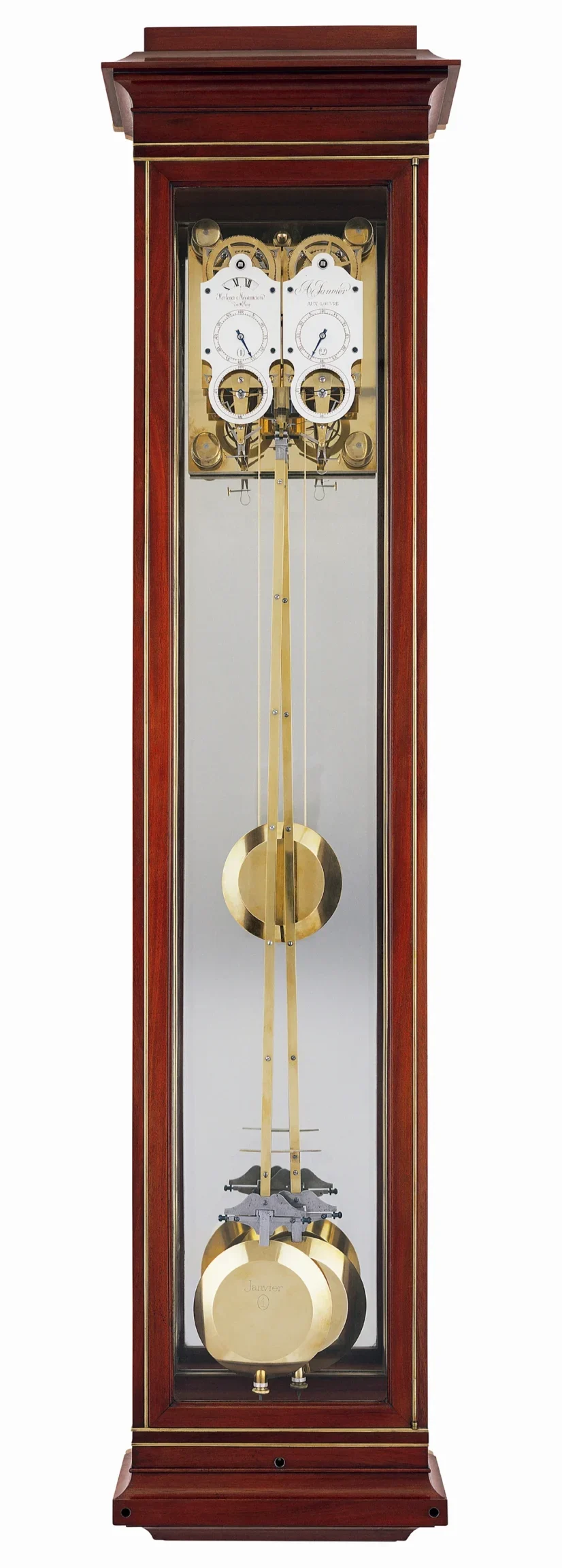
Image – Resonance regulator by Antide Janvier
Janvier made three resonance clocks, one of which François-Paul Journe acquired in 2001 for the sum of CHF 1,488,500 (Antiquorum, Geneva). Today, this regulator resides in ‘Salle Janvier’, a large meeting room within the Manufacture, named in honour of the great watchmaker and a source of inspiration to those who work within its four walls.
Breguet – resonance pocket watch
Ultimately, Janvier experienced commercial woes and sold part of his workshop to Breguet. Thankfully, Breguet also recognised the potential of resonance and at some point between 1810 and 1815, he miniaturised Janvier’s resonance regulator, adapting it for use in a pocket watch.
The Breguet & Fils No.2667 ‘Montre plate à deux mouvements, sur le principe des chronomètres’ (flat watch with two movements, on the principle of chronometers), again employing two resonance regulators, fetched CHF 4,339,000 at Christie’s, Geneva in 2012.
F.P.Journe – Chronomètre à Résonance
Journe, an inventive soul with a prowess for miniaturisation, even surpassed Breguet’s talent for shrinking objects, creating a pocket watch equipped with two regulating organs.
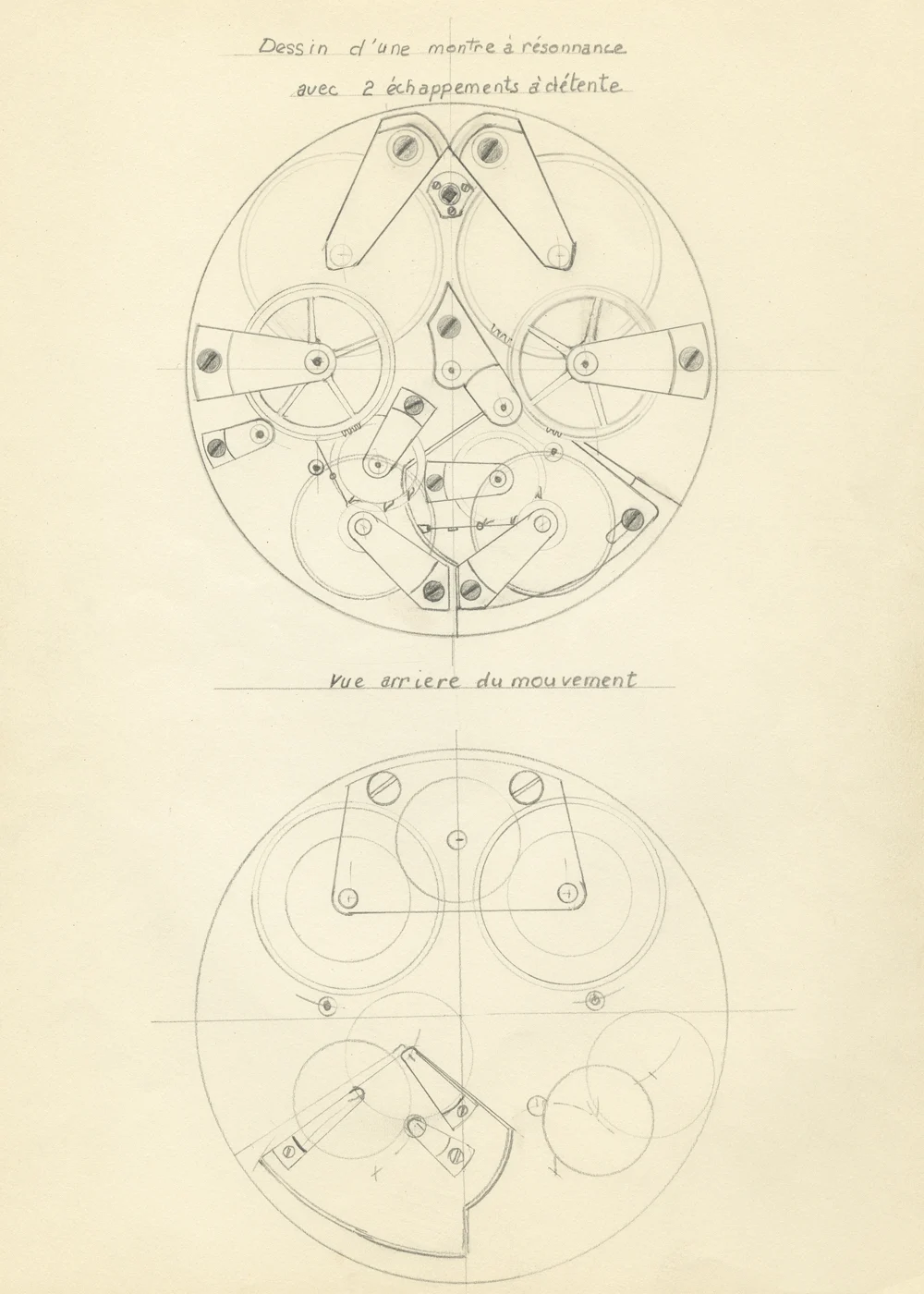
Image – drawing of a resonance watch by F.P.Journe (1983)
The story begins with Raymond Vogel, aka ‘Bill’ a highly knowledgeable watch collector who commissioned Journe to make a pocket watch in 1983. The son of Marseilles was fascinated by the idea of resonance and tried to incorporate it within a pocket watch. Despite Breguet harnessing resonance within a clock, shrinking the know-how into a pocket watch represented a far greater challenge. Today, state of the art wire erosion machines are capable of making parts to infinitesimal tolerances; however, back in 1983, the absence of technology thwarted Journe’s ambitions. Nevertheless, as history has shown, François-Paul Journe is never a man to give up, eventually taking miniaturisation to a new level with the advent of a wristwatch incorporating acoustic resonance.
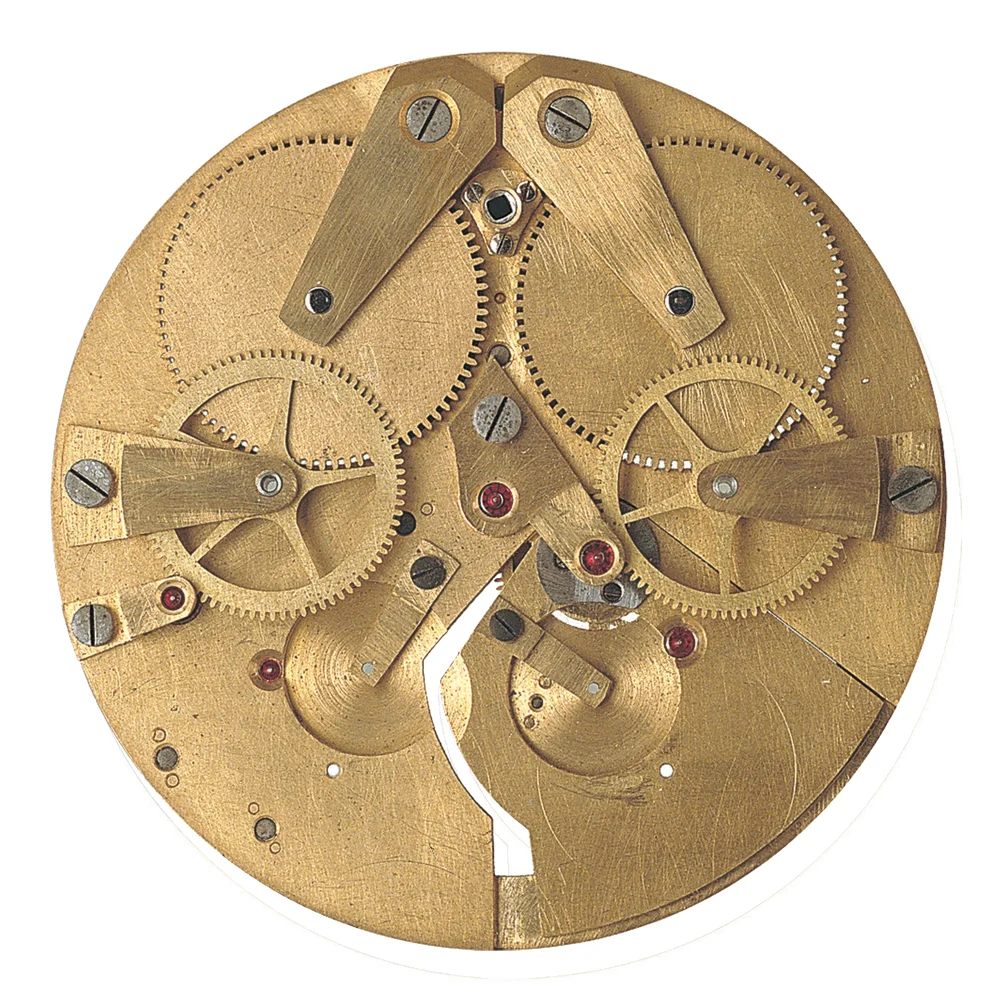
Image – roughing of the first resonance watch entirely handmade (circa 1983)
Christened the F.P.Journe Chronomètre à Résonance, the inaugural model, featuring the Calibre 1499, was unveiled in 1999. Housed in a platinum case, measuring just 38 mm in diameter, the watch featured two free-sprung balance wheels that almost touched one another.
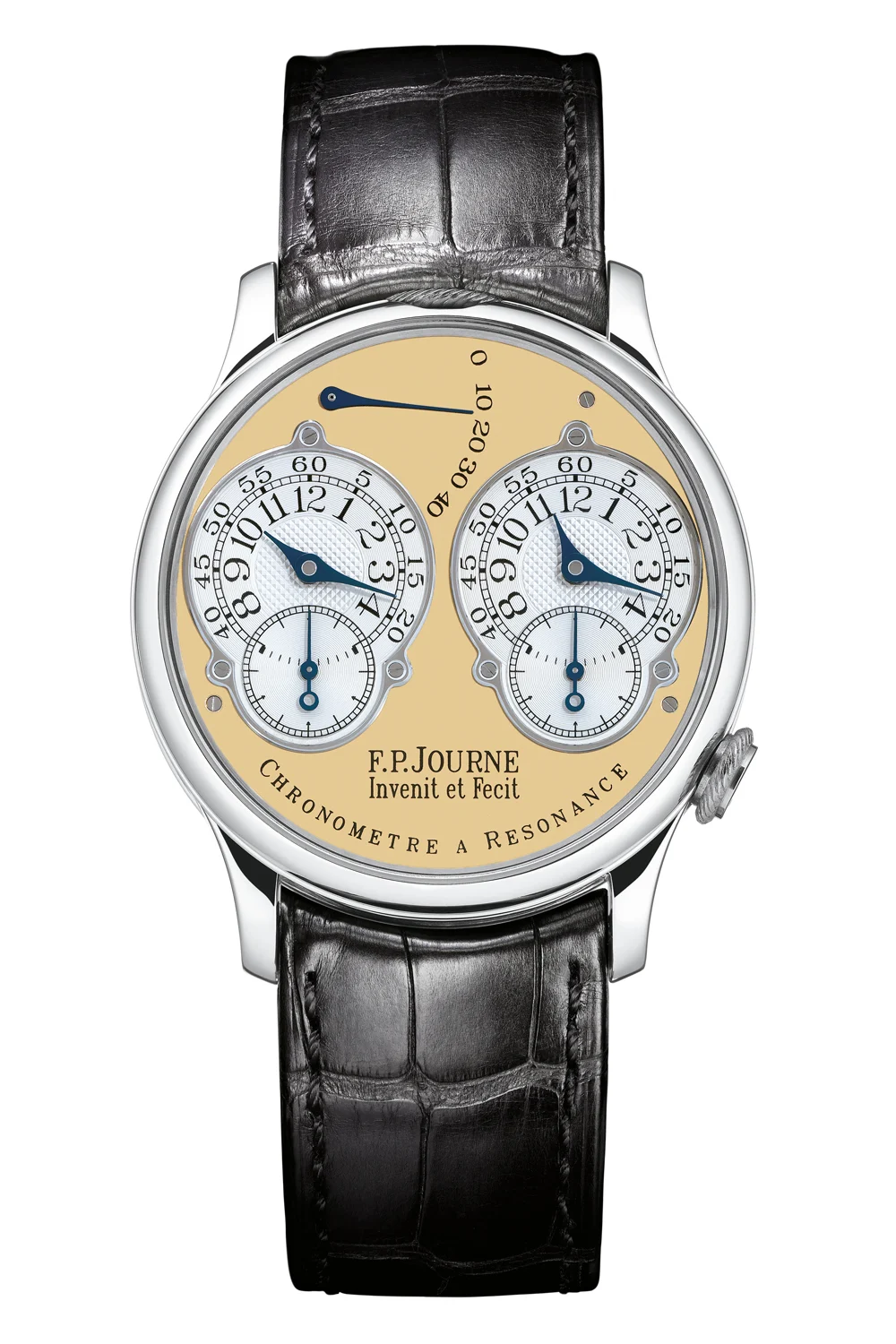
Image – Chronomètre à Résonance – Calibre 1499
While a shock would adversely affect the running of a ‘normal’ watch, the Calibre 1499 with its two balance wheels would negate such disturbances. Put simply, as one balance wheel accelerates, the second balance wheel slows down. Eventually both balance wheels will return to a common rate and operate in synchronicity. The first example of the F.P.Journe Chronomètre à Résonance was sold on a souscription basis. The Maison has since produced various iterations of the watch, executed in different metals, sizes and dial hues.
François-Paul Journe’s influences – closing remarks
Throughout his career, Journe has been inspired by several prominent names from the world of horology. However, as I hope I have demonstrated, the horological triumvirate of Berthoud, Breguet and Janvier has proved a rich source of inspiration to the son of Marseilles.
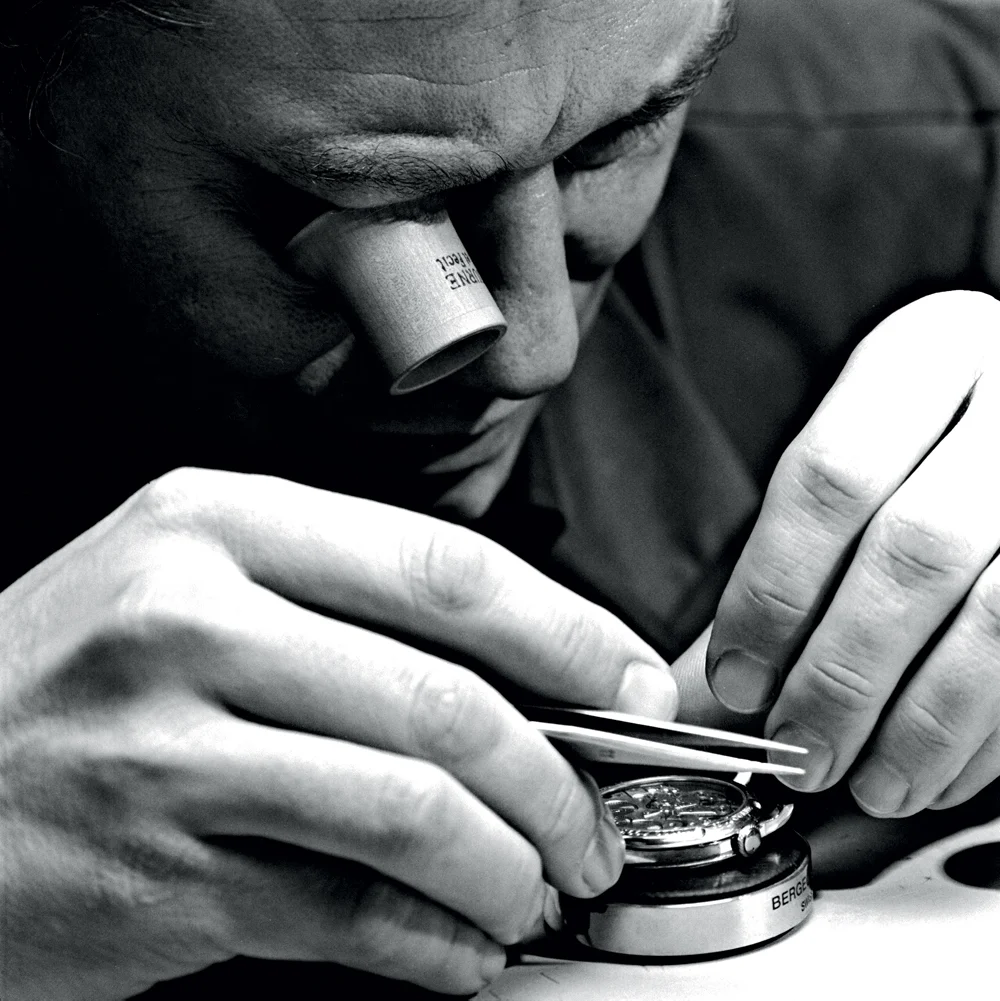
Journe has not plagiarised the work of others but reimagined it through a prism of inventiveness and creativity. For example, the EBHP system enjoys some of the benefits of a natural escapement, without the backlash issues associated with Breguet’s mechanism. It must be remembered that technology, both in terms of materials and production methods, has continued to evolve, a situation that has granted Journe incredible opportunities for advancement that were unavailable to his 18th century counterparts.
Likewise, in just the same way that Breguet miniaturised Janvier’s resonance regulator, Journe pushed the performance envelope further by shrinking the double balance system. Few watchmakers have been able to exploit acoustic resonance within a wristwatch, but then again history has already shown Journe to be an individual blessed with rare talents.
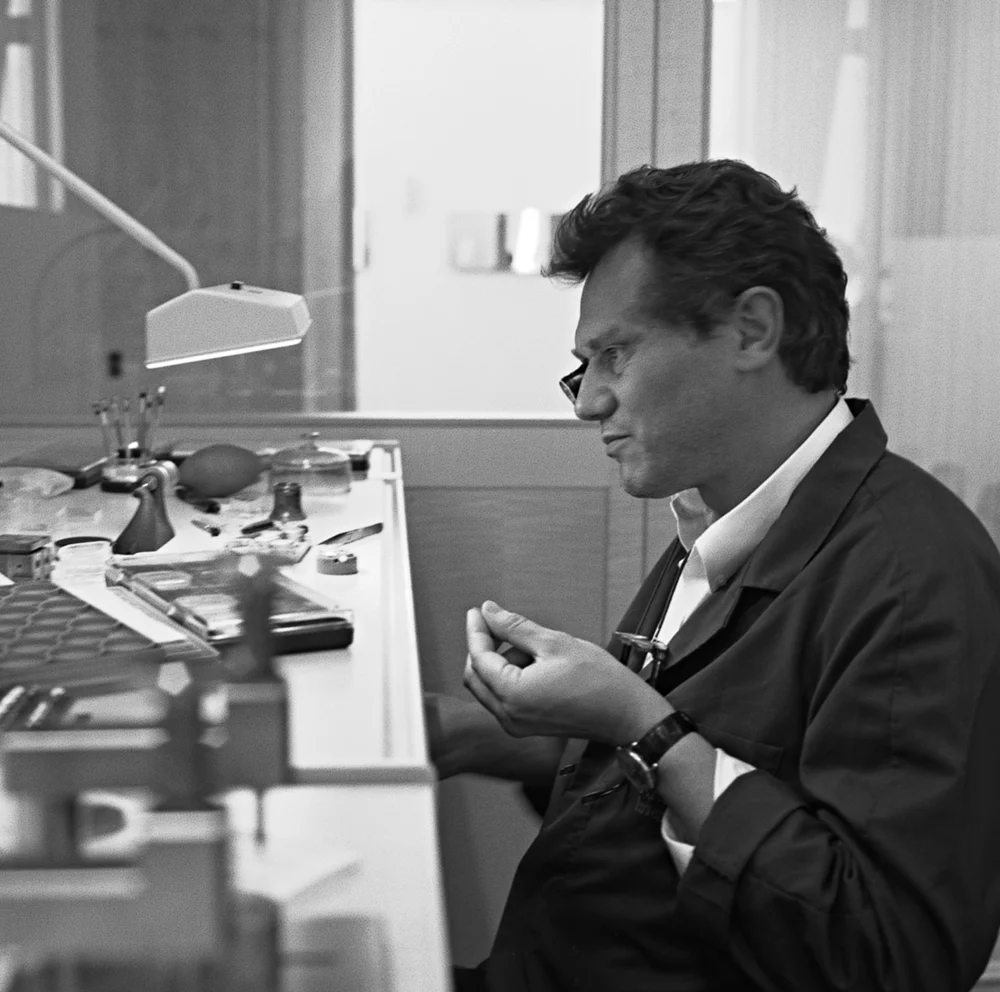
Unlike the aforementioned greats of the 18th century, Journe has been able to embrace modern-day materials and production techniques such as CNC, bar turning and wire erosion machines to make parts to infinitesimal tolerances. This modern-day know-how serves to complement Journe’s ideas. Moreover, he has not merely theorised over concepts, he has invented and made extraordinary mechanisms. Like those men who have inspired him, I’m sure his legacy will be remembered for centuries to come. Invenit et Fecit.