
F.P.Journe lineSport Collection – how the collection evolved (in-depth feature)
The F.P.Journe lineSport Collection has been shaped by François-Paul Journe’s many conversations and encounters over the years. In this article, Angus Davies explores the story of the lineSport Collection, including Journe’s relationship with the Paris Brain Institute and how the needs of a Japanese client led to the creation of a watch with an incredibly low mass.
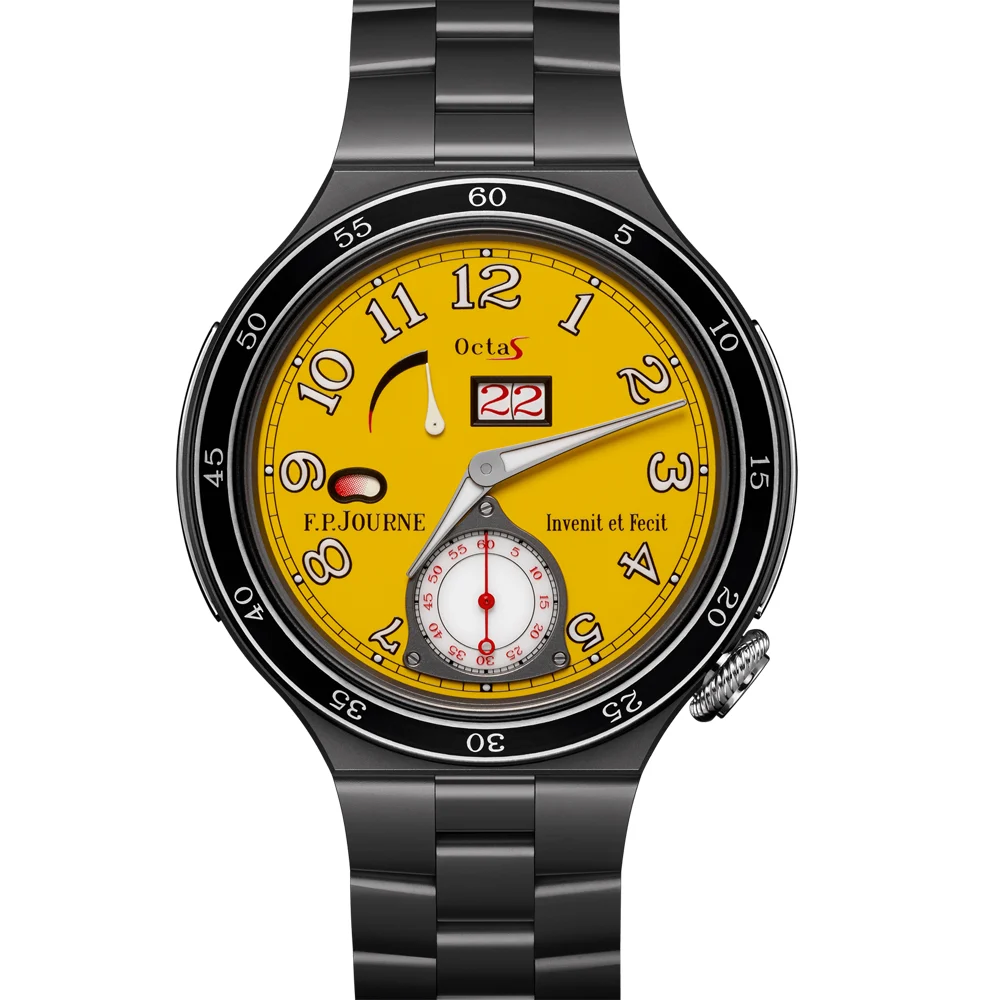
Image – lineSport Automatique Réserve Titanium Yellow
Motorsport and watches
Many watch brands align themselves to the world of motorsport. Indeed, appraise the Formula One cars assembled on the starting grid before a race and you will note that many of them bear the name of a watch marque. However, on reflection, there is a dichotomy between the worlds of Haute Horlogerie and motor racing. The latter discipline involves clipping apexes at speed in the shortest possible time. A Formula One car is designed to last the race distance, with balance and weight the overriding concerns. Thereafter, many of the components are discarded, their life measured in laps rather than years.
In contrast, high-end watchmaking demands patience. Parts are lovingly crafted and painstakingly finished to a flawless conclusion. They are then subsequently assembled with scant regard to the prevailing time. Indeed, paradoxically, watchmakers are seldom guilty of clock-watching. This fastidious approach to making timepieces confers longevity, not measured in laps, but years of ownership delight.
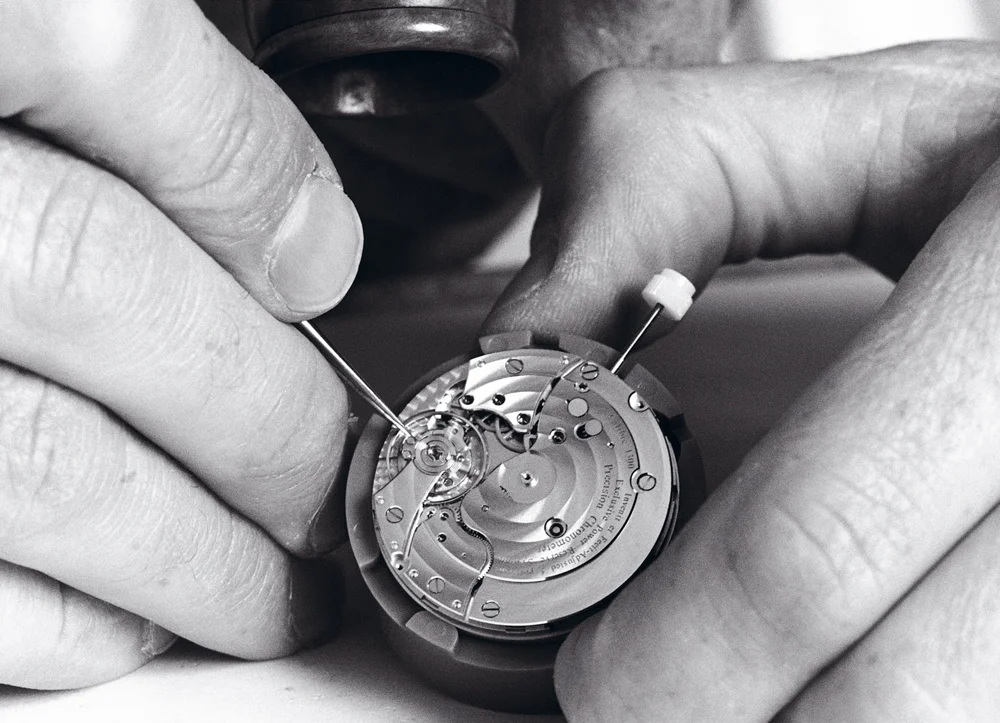
Image – F.P.Journe Manufacture
F.P.Journe – where patience prevails over time
And then there is François-Paul Journe, a watchmaker extraordinaire who has demonstrated a remarkable penchant for inventing movements and mechanisms. His perseverance is extraordinary. For example, having restored a Breguet resonance clock in the 1980s, the son of Marseilles then spent almost 20 years miniaturising resonance for use within a wristwatch. Ultimately, F.P.Journe unveiled the Chronomètre à Résonance in 2000. This watch, measuring just 38 mm in diameter, was equipped with the Calibre 1499, a brass movement that featured two balances positioned in very close proximity to one another, wonderfully exploiting the phenomenon of resonance.
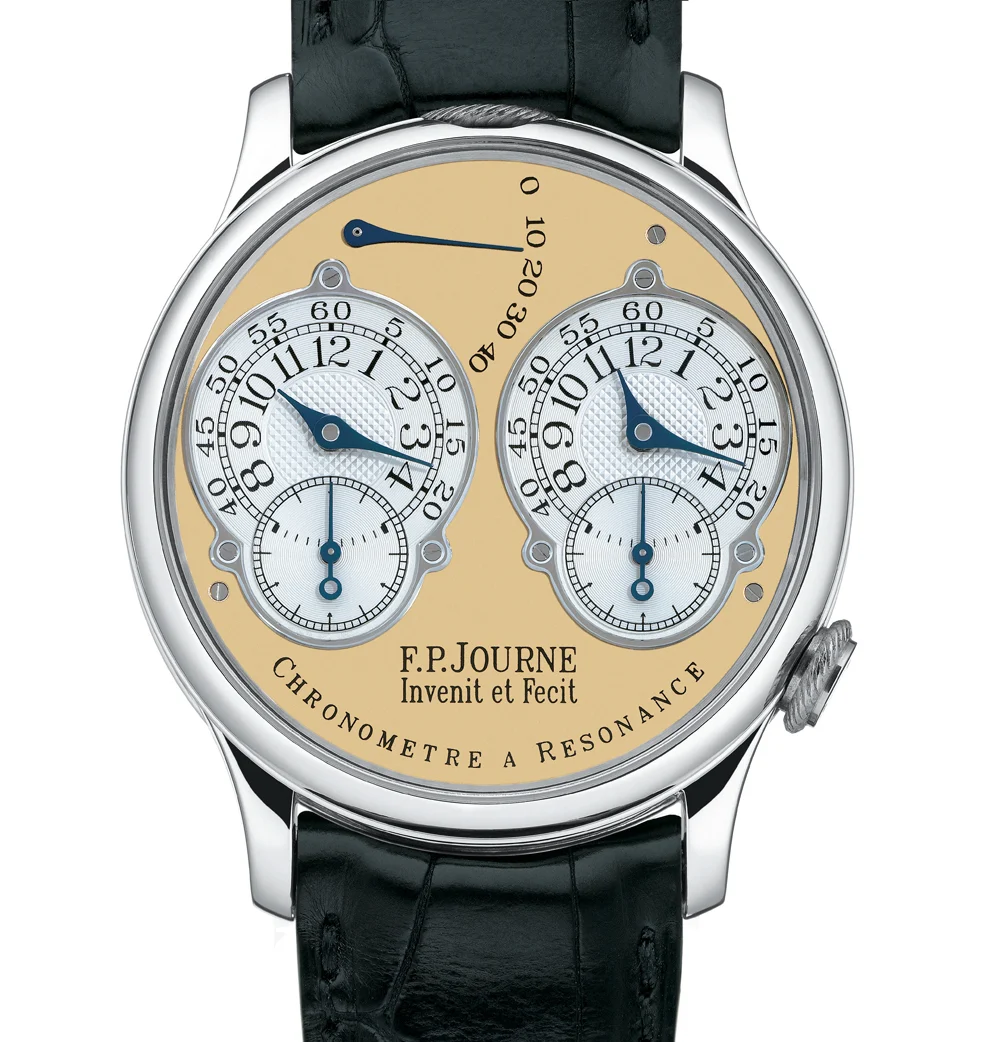
Image – Chronomètre à Résonance (2000)
Paris Brain Institute – longtime supporter
In 2003, Professor Gérard Saillant, Professor of Orthopedic and Trauma Surgery, Jean Todt (then CEO of Scuderia Ferrari) along with Yves Agid and Olivier Lyon-Caen, Professors of Neurology, created a ‘structure bringing together experts from all over the world to study aspects of the brain, from fundamental to clinical research’. The organisation became known as ‘ICM’ before being renamed the ‘Paris Brain Institute’.
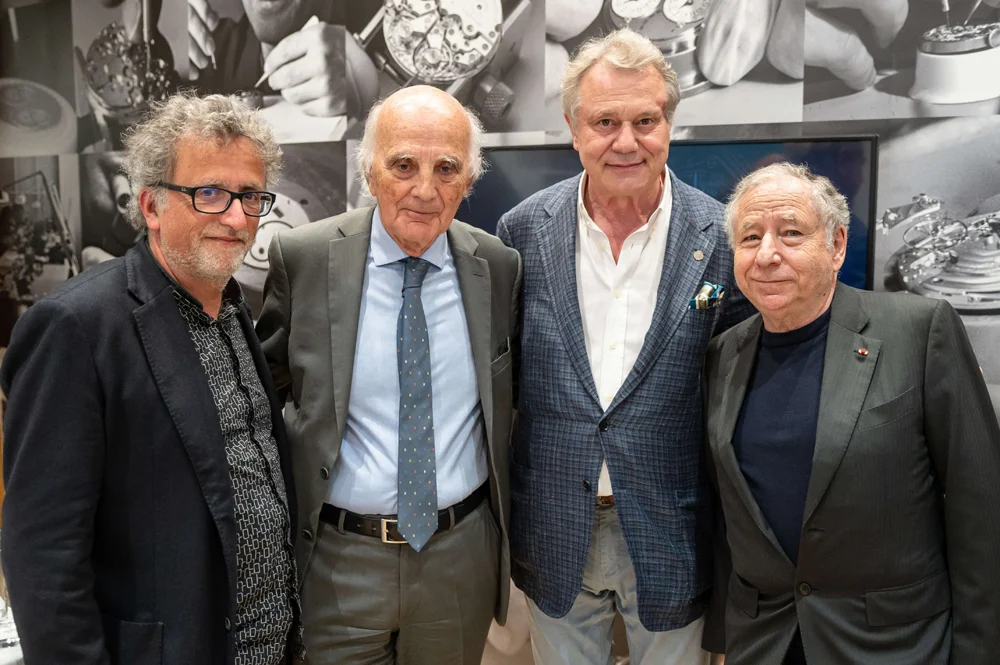
Image – François-Paul Journe surrounded by Professor Lionel Naccache, Professor Gérard Saillant and Jean Todt, members of the Paris Brain Institute
François-Paul Journe, at the invitation of Jean Todt, chose to support the initiative. In 2004, to coincide with the 30th anniversary of Antiquorum, Journe created three Vagabondage timepieces. Each watch was crafted to mark a 10-year chapter in the auction house’s history. Executed in three different noble metals, namely white gold, yellow gold and pink gold, the watches sold collectively for CHF 210,450 with all the proceeds donated to the Paris Brain Institute.
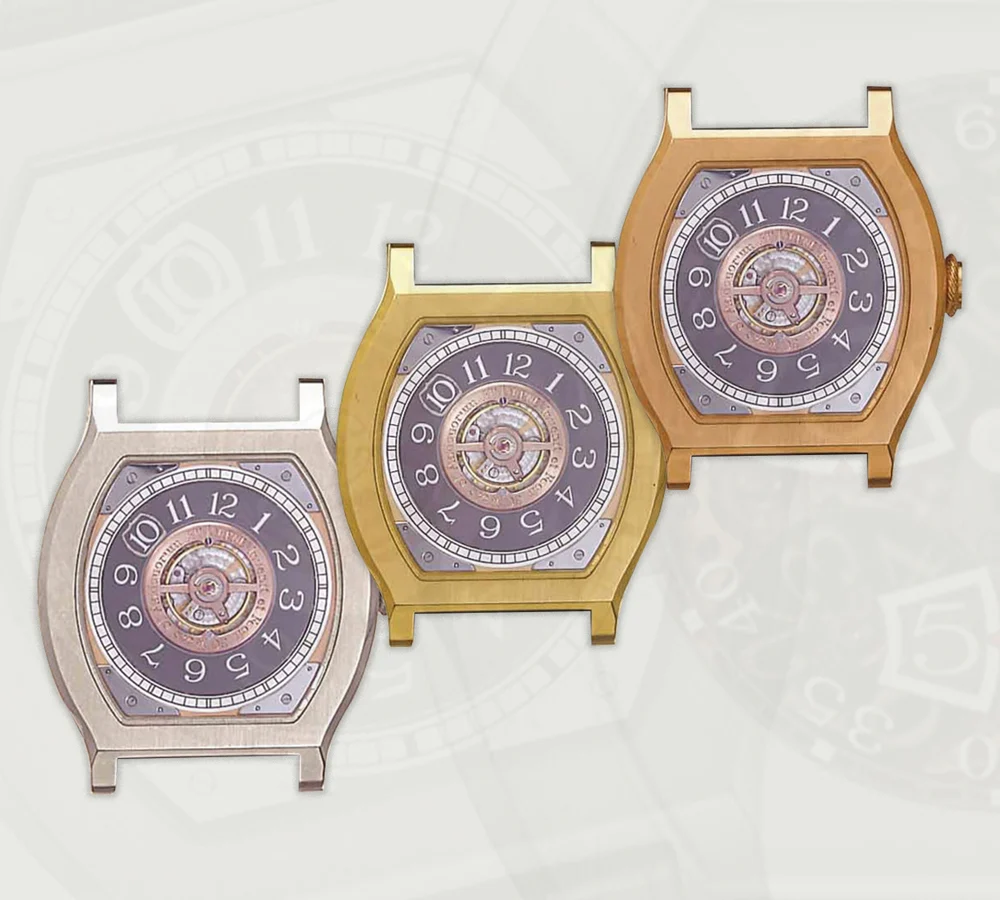
Image – three unique Vagabondage timepieces
Interestingly, a fourth Vagabondage watch made of platinum was created for Michael Schumacher. The dial featured the famous Scuderia shield, seven helmets, a reference to the German’s world championship titles, and was dressed in red, the hue often associated with Ferrari. To the rear of the watch, an inscription read ‘Xmas 2004 – Jean Todt for my friend Michael Schumacher’. The timepiece was sold by Christie’s for CHF 1,497,000 in May 2024. Incidentally, Mr Schumacher was also a founder of the Paris Brain Institute and has owned several F.P. Journe watches, including five much sought-after ruthenium models.
Jean Todt and the Centigraphe
In 2004, François-Paul Journe and Jean Todt discussed the idea of producing a chronograph for motor racing. Four years later, in 2008, F.P.Journe unveiled the Centigraphe Souverain, a chronograph capable of measuring time to 1/100th of a second. François-Paul graciously named Jean Todt, ‘the Godfather of the Centigraphe’. Since its unveiling, F.P.Journe has generously donated 30% of the profits from the sale of each Centigraphe to the Paris Brain Institute.
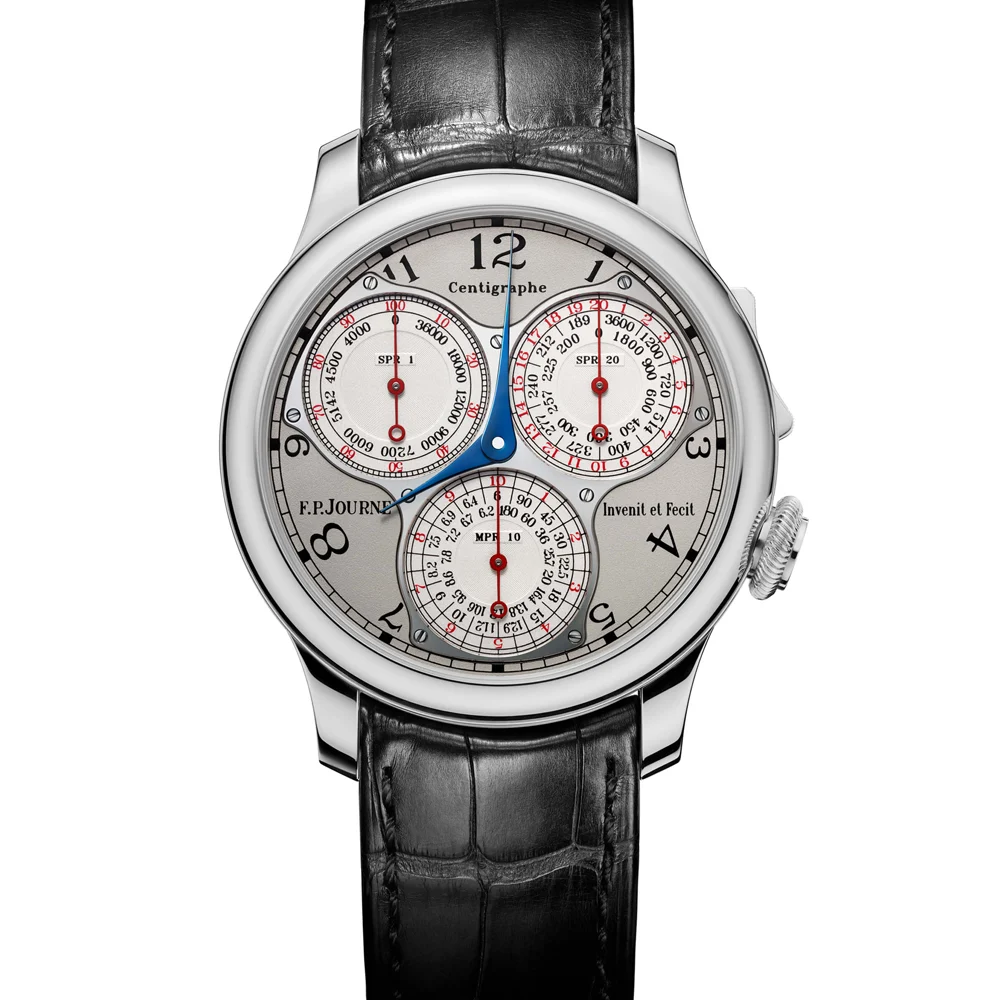
Image – Centigraphe Souverain (2008)
The Centigraphe – from dress watch to sports watch
The Centigraphe Souverain, a dress watch, was endowed with the Calibre 1506, a hand-wound movement formed of 18-carat rose gold. Equipped with three chronograph registers, the model indicated elapsed periods from 10 minutes to just 1/100th of a second. A ‘rocker’ at 2 o’clock proved an ergonomic means of starting, stopping and resetting the chronograph. Incorporating several patented mechanisms, the brilliance of the watch was recognised by the Grand Prix d’Horlogerie de Genève (GPHG) with its ultimate prize, the prestigious Aiguille
d’Or. Monsieur Journe attended the awards ceremony with his friend Jean Todt by his side. Undoubtedly, the Centigraphe Souverain would have remained a dress watch if it were not for a Japanese collector.
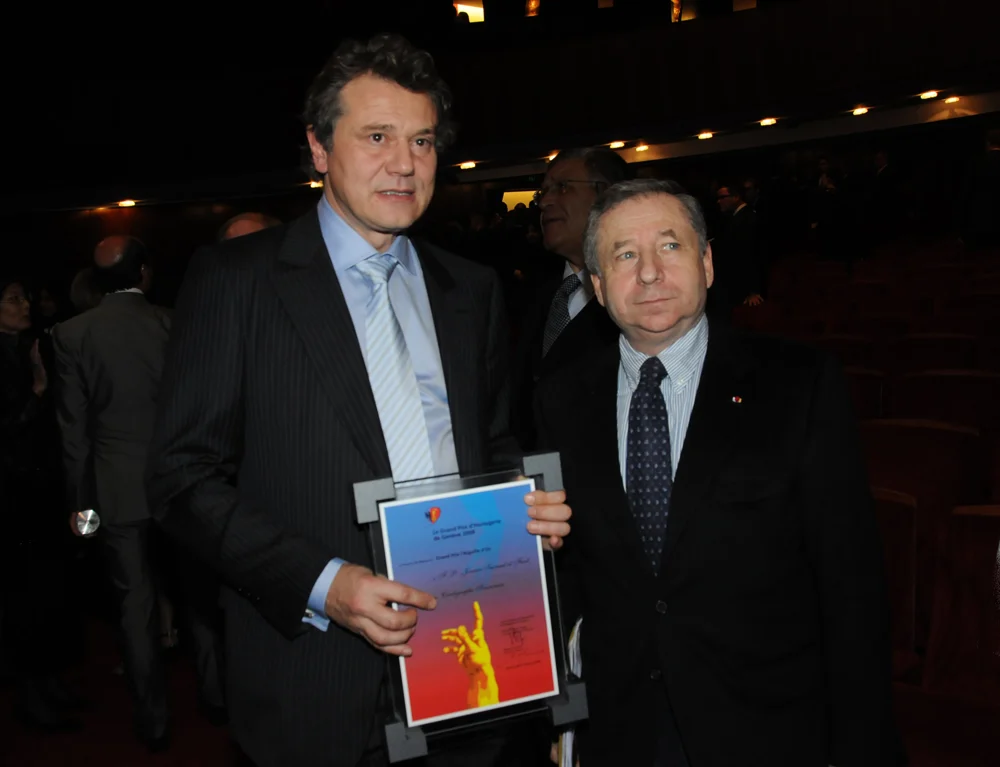
Image – François-Paul Journe and Jean Todt at the GPHG awards (2008)
Indeed, for many years, Journe received requests to make a ‘sports watch’ but politely declined. His stance was always very clear, ‘to create only watches that truly resonate with his own aesthetic convictions, without being influenced by short-lived trends’. Thereafter, he would proceed to cite the same reason for his refusal to make sports watches, ‘I don’t do sports, so I have no interest in making a sports watch’.
Returning to our Japanese collector, the gentleman was a proud owner of a platinum Centigraphe Souverain. On meeting his client again, Journe was surprised how the man had lost much weight. It transpired that he had developed a passion for running, participating in several marathons. The collector explained that a gold or platinum watch was too heavy for running, but he still wanted to wear a fine timepiece, an exemplar of Haute Horlogerie.
Reflecting on his conversation with the collector, François-Paul Journe decided to make a lightweight sports watch. He embarked on a period of research, seeking the perfect material for the timepiece. It had to be ultra-light and yet remarkably strong. Eventually, Journe discovered a high-tech aluminium alloy that was typically employed in the aeronautical industry.
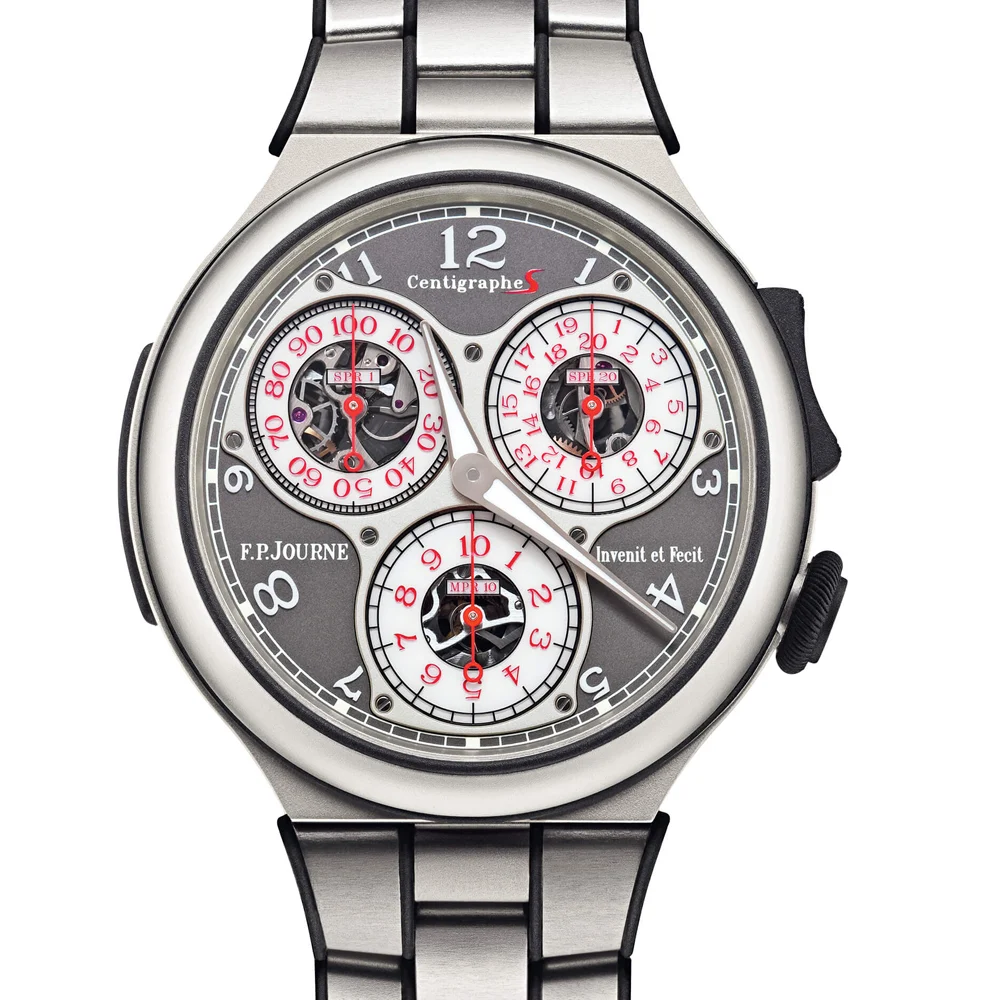
Image – Centigraphe Sport 001 – auctioned by Christie’s in 2011
The watch (case, bracelet and movement) all made of said aluminium alloy weighed a mere 55 grammes. The low mass of the watch contributed to its impressive wearer comfort and made it the perfect running companion.
Following the earthquake and tsunami that struck Japan in March 2011, Journe chose to donate the first Centigraphe Sport (number 001) for ‘charitable action in favour of the victims of the strongest earthquake in history’. The watch was auctioned by Christie’s in Hong Kong and sold for US$ 467,152. All proceeds were donated to the Franco-Japanese Fondation de Fère and to Doctors of the World Japan.
F.P.Journe lineSport Octa Sport
Following the debut of the Centigraphe Sport in 2011, the inaugural ‘lineSport’ model, Journe decided to build a second lightweight watch, the Octa Sport.
The ‘Octa’ already had a strong following among devotees of F.P.Journe, but historically the moniker had been the preserve of dress watches. Moreover, the Octa initially featured rhodium-plated brass movements before transitioning to gold movements during 2004. Once again, Journe looked to create a watch that fused Haute Horlogerie with lightweight materials.
The Octa Sport was unveiled in 2012 and again featured a case, movement and bracelet formed of aluminium alloy. In addition, F.P.Journe offered the watch with a rubber strap. Despite having a low mass, the Octa Sport came packed with features. The movement, the Calibre 1300.3, had a power-reserve of approximately 160 hours and included a variable inertia balance. The dial featured a small seconds display at 6 o’clock, a large date display at 1 o’clock employing two discs along with a power-reserve display and day/night indicator on the left flank of the dial.
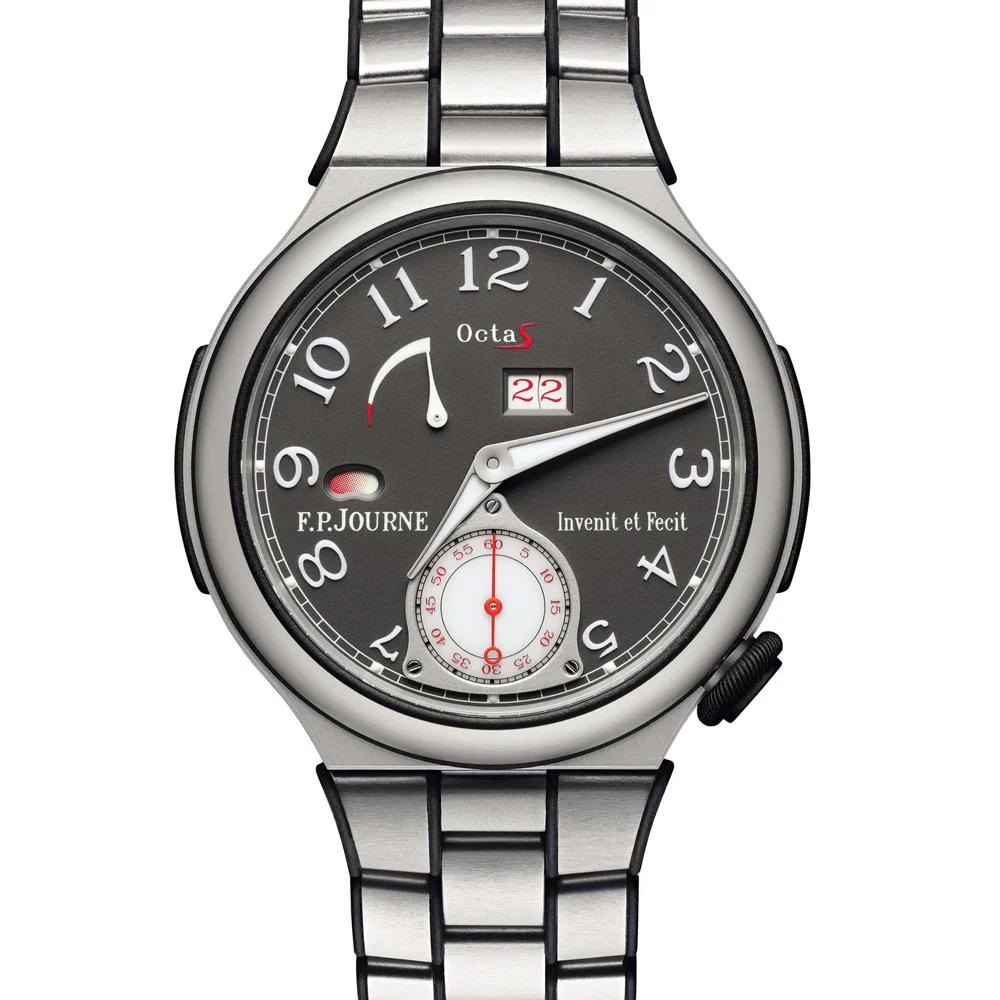
Image – Octa Sport (2012)
While the Octa Sport shared some of its DNA with the Maison’s dress models, it did present an unforeseen challenge for the son of Marseilles. While a ‘regular’ F.P.Journe was endowed with a gold movement, the Calibre 1300.3 was formed of aluminium alloy. The absence of mass would not have been an issue for a hand-wound watch, but for an oscillating weight to energise a mainspring it requires sufficient heft. Ultimately, François-Paul Journe elected to equip the Calibre 1300.3 with a titanium oscillating mass with a dense ‘tungsten segment’ positioned behind. In common with the Centigraphe Sport, aluminium alloy was still used for the bridges and mainplate.
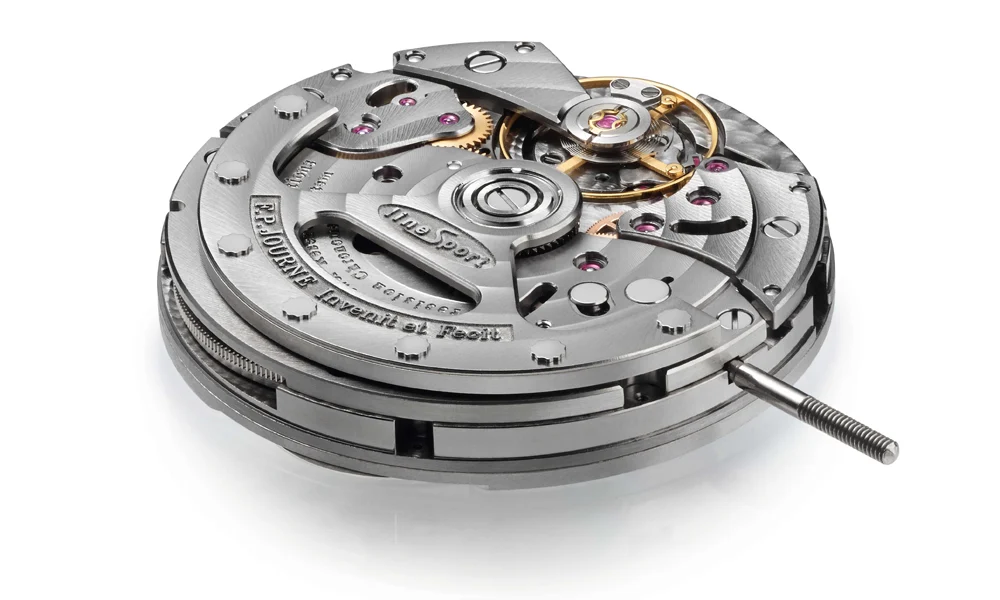
Image – Calibre 1300.3 (recto)
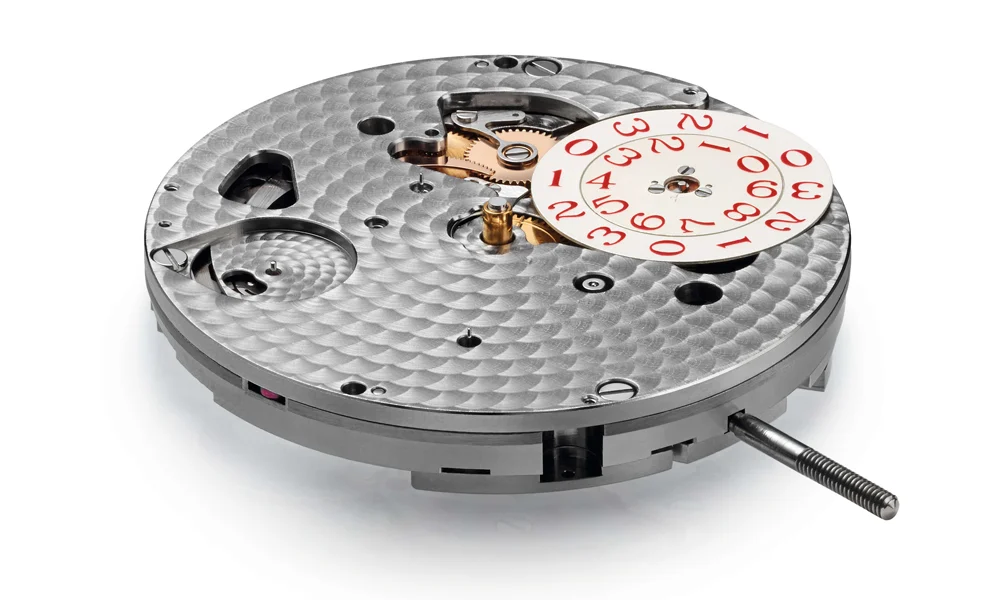
Image – Calibre 1300.3 (verso)
Jean Alessi (2012)
In 2012, the name ‘F.P.Journe’ appeared on a race car and graced race overalls for the first time. Jean Alessi, former Formula One driver, once worshipped by the ‘Tifosi’, participated in the 500 miles of Indianapolis. The iconic race is an annual event that can trace its history to 1911.

Image – Jean Alessi

Image – Alessi in Indy car
To coincide with its participation in the race, F.P.Journe released the Octa Sport Indy 500, a limited edition of 99 pieces. The watch was offered with a choice of two dials, black or black with various related logos. Interestingly, while the model shared much in common with the standard Octa Sport, the aluminium case was blackened, and the watch was presented on a black rubber strap.
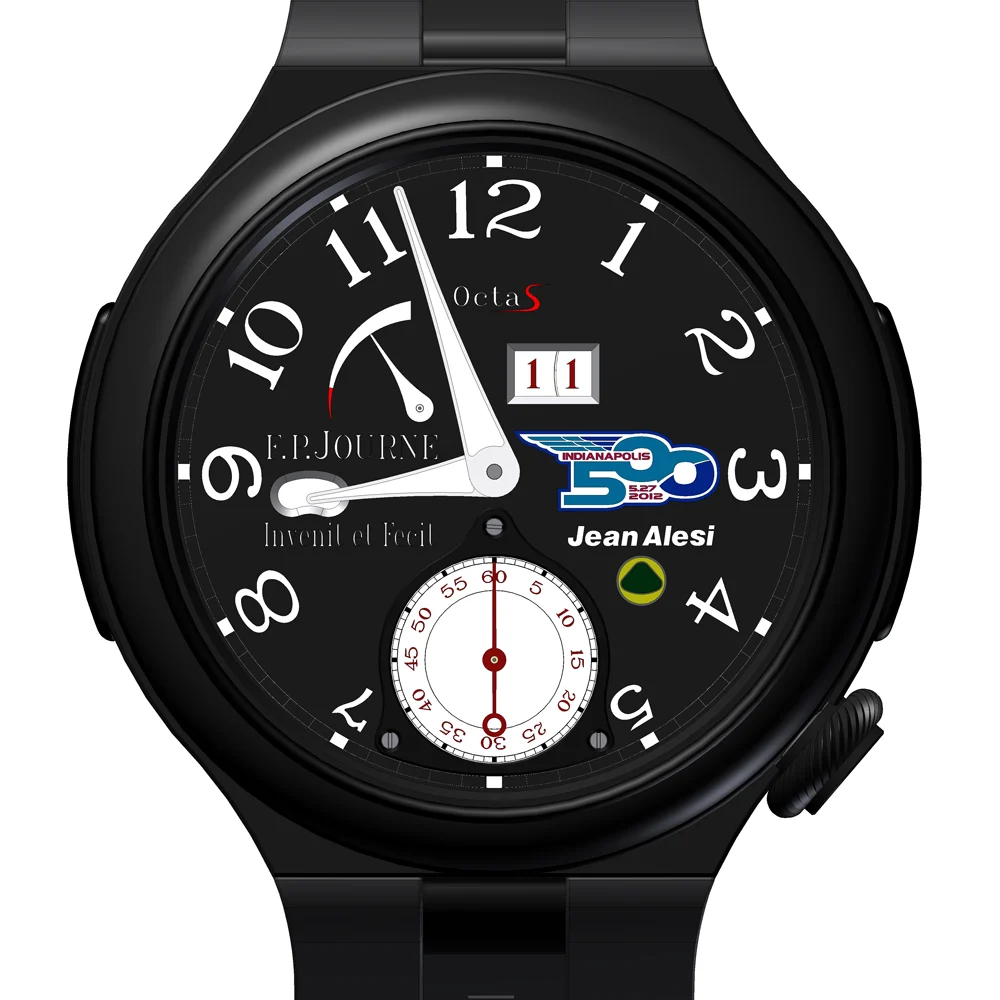
Image – Octa Sport Indy 500
F.P.Journe lineSport Collection – constant evolution
Since 2014, all lineSport models have been made of Grade 5 titanium, an alloy that is ‘more resilient’ than aluminium alloy. Despite the watches continuing to feature aluminium alloy movements, the transition to Grade 5 titanium cases and bracelets did make the watches slightly heavier.
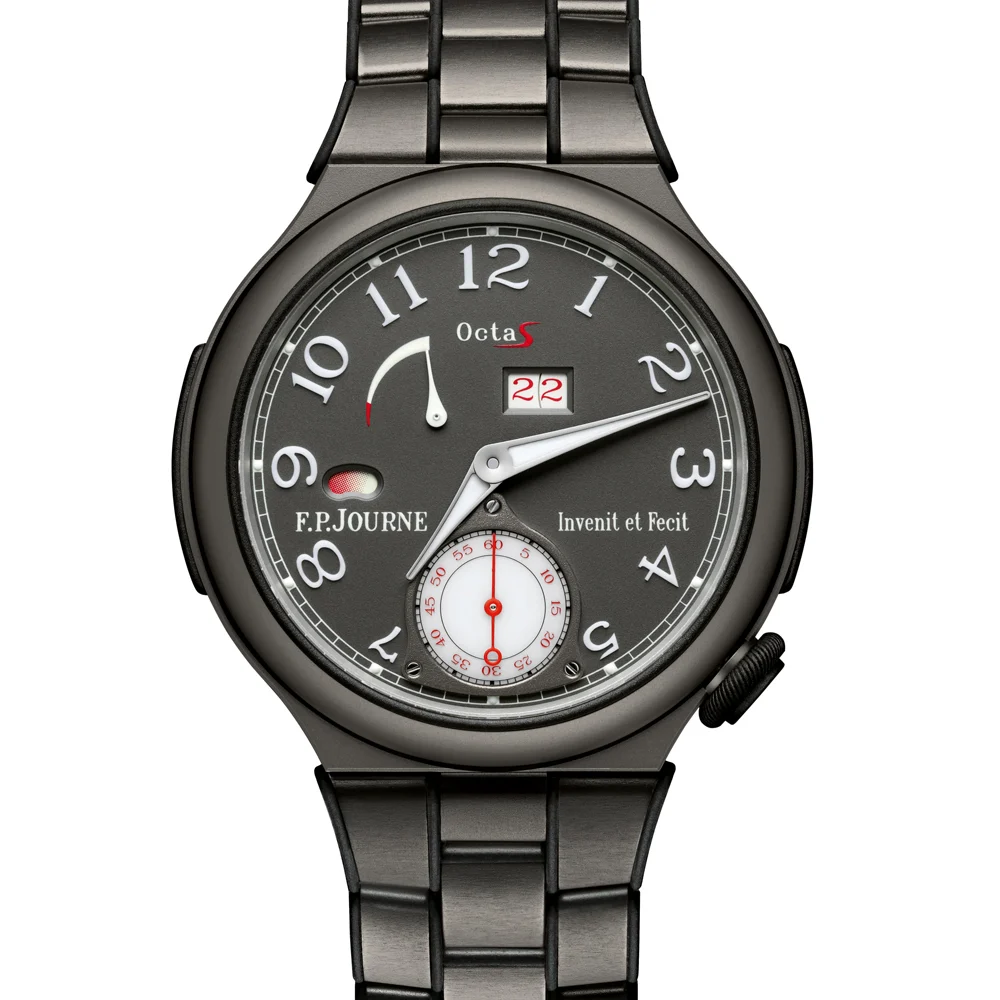
Image – lineSport Octa Sport Titanium
Four years later, in 2018, the design of the Centigraphe and Automatique Réserve were slightly updated. The models were housed in larger cases formed of Grade 5 titanium and executed in a matte finish. Unlike the first-generation lineSport models which featured rubber inserts, these models eschewed the inserts, conferring a cleaner aesthetic.

Image – lineSport Automatique Réserve in Titanium
Furthermore, the Centigraphe Sport and Automatique Réserve were offered in two dial shades: anthracite aluminium or yellow lacquer. This latter hue bore a strong resemblance to ‘Giallo Modena’, the famous shade of yellow that’s familiar to legions of Ferrari fans. However, later the same year, production of the Centigraphe Classique version ceased. This was due to the arrival of a new addition to the F.P.Journe lineSport collection, the Chronographe Rattrapante, featuring a complication able to measure ‘splits’.
By virtue of the protracted creation of each watch, F.P.Journe is not able to easily increase production capacity. With the advent of the Chronographe Rattrapante, François-Paul Journe initially decided to discontinue the Centigraphe Sport. However, after a period of reflection, Journe reversed his decision and brought back the Centigraphe Sport the following year in 2019, thereby enlarging the F.P.Journe lineSport collection to a trio of sporty expressions of Haute Horlogerie. Each model has since been offered in a case formed of platinum or gold (with a gold movement) as well as Grade 5 titanium (with an aluminium alloy movement).
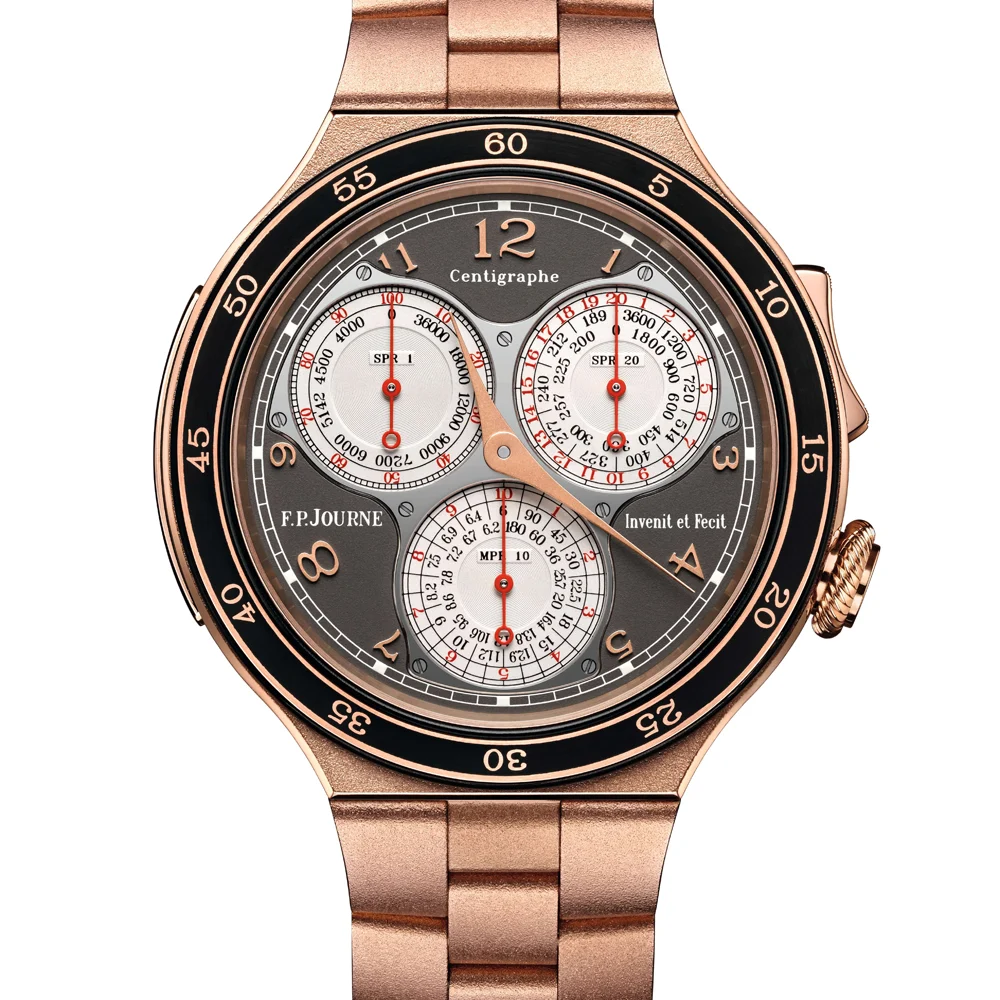
Image – lineSport Centigraphe in 18K 6N gold
Back in 2017, F.P.Journe created a unique piece for the Only Watch Charity Auction, the ‘Chronographe Monopoussoir Rattrapante Bleu’, housed in a tantalum case. The movement within this watch (Calibre 1517), inspired the Maison to create a new hand-wound movement (Calibre 1518) which powered the aforementioned Chronographe Rattrapante (2018).
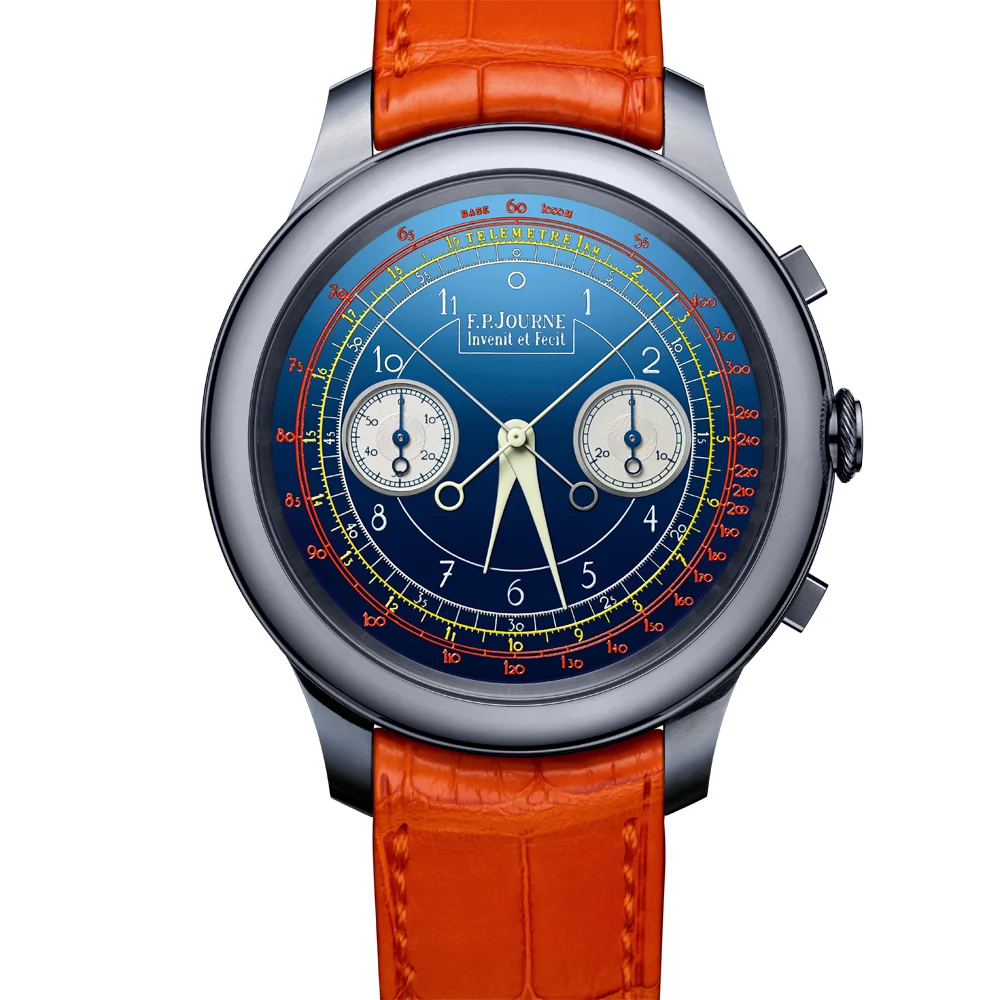
Image – Chronographe Monopoussoir Rattrapante Bleu (2017)
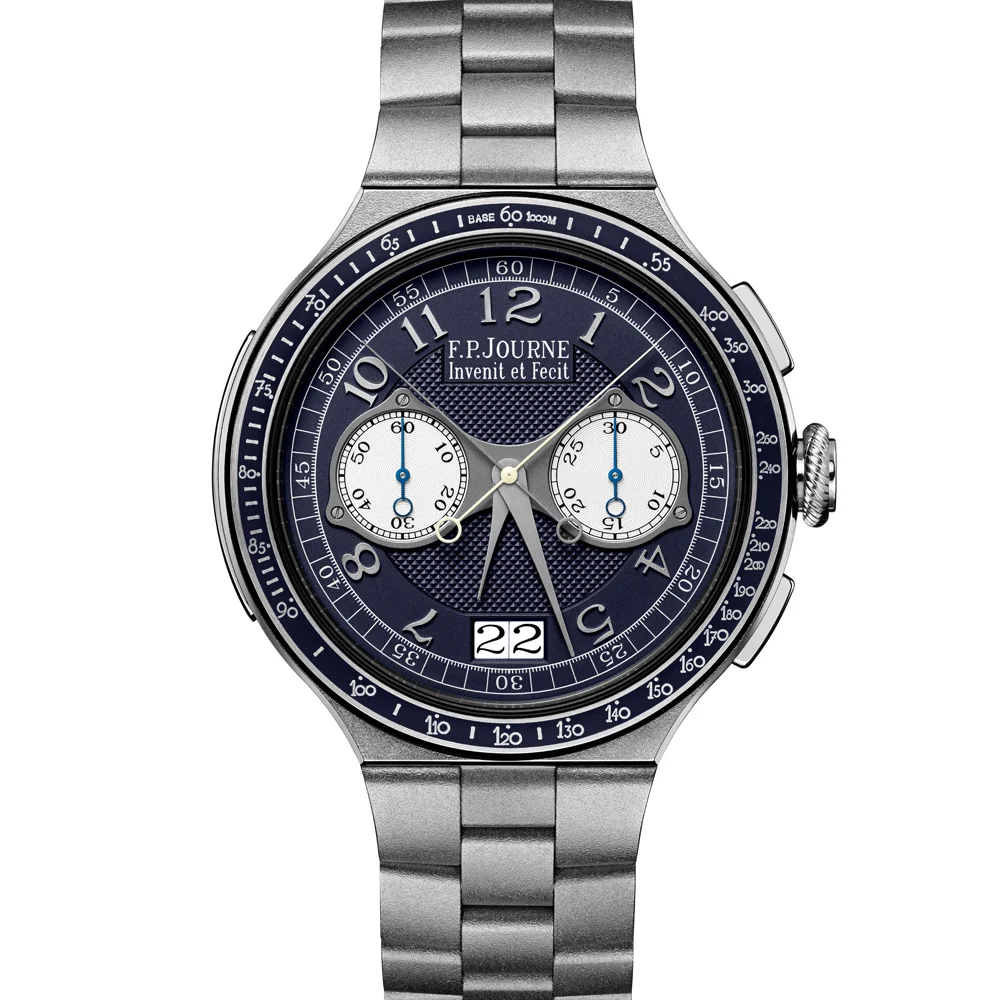
Image – lineSport Chronographe Rattrapante in platinum (2018)
In 2024, Monsieur Journe conceived another charity watch, the unique ‘Chronomètre Furtif Bleu’. It was endowed with a tantalum case and bracelet and equipped with a new hand-wound movement, the Calibre 1522. Recently (March 2025), F.P.Journe unveiled the latest addition to the lineSport collection, the ‘Chronomètre Furtif’, a timepiece inspired by the 2024 charity watch and featuring the same movement. However, at 42 mm, this latest model is slightly larger (the Chronomètre Furtif Bleu measured 38 mm) and the case and bracelet are formed of ultra-hard tungsten carbide rather than tantalum.
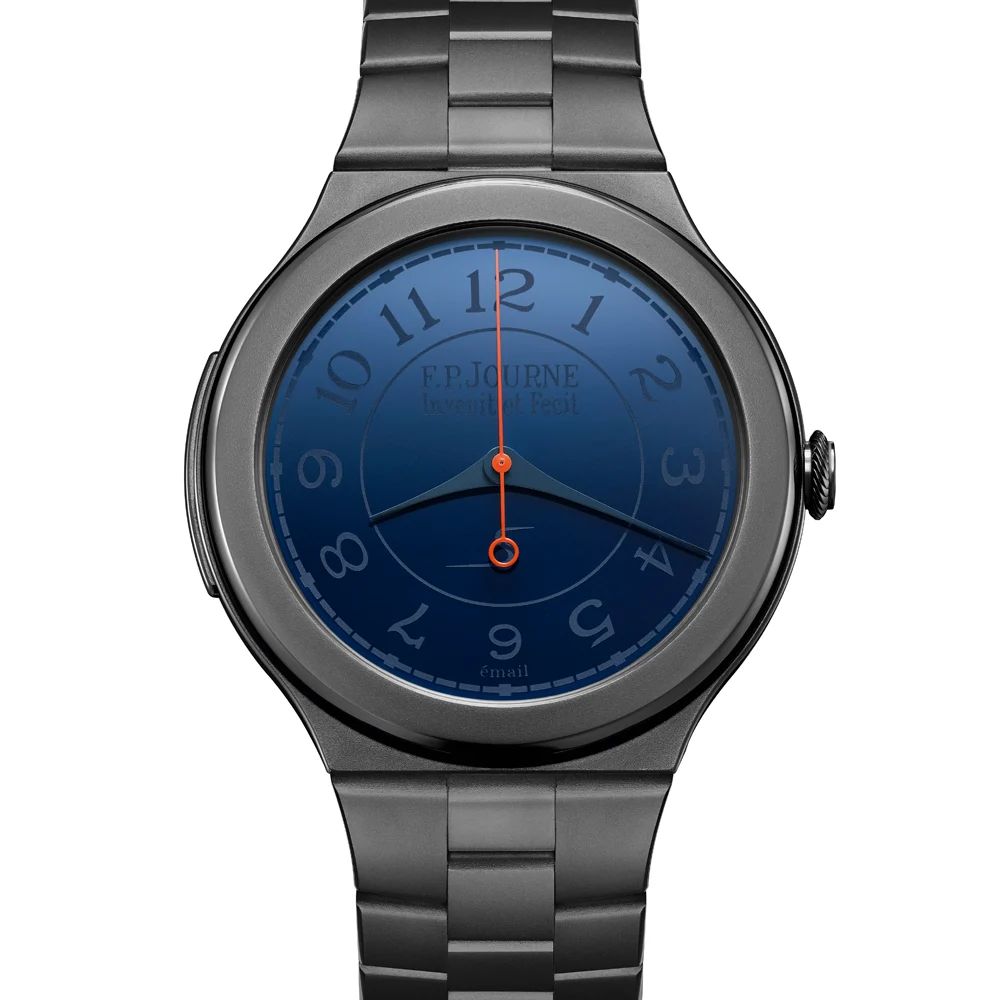
Image – Chronomètre Furtif Bleu (2024)
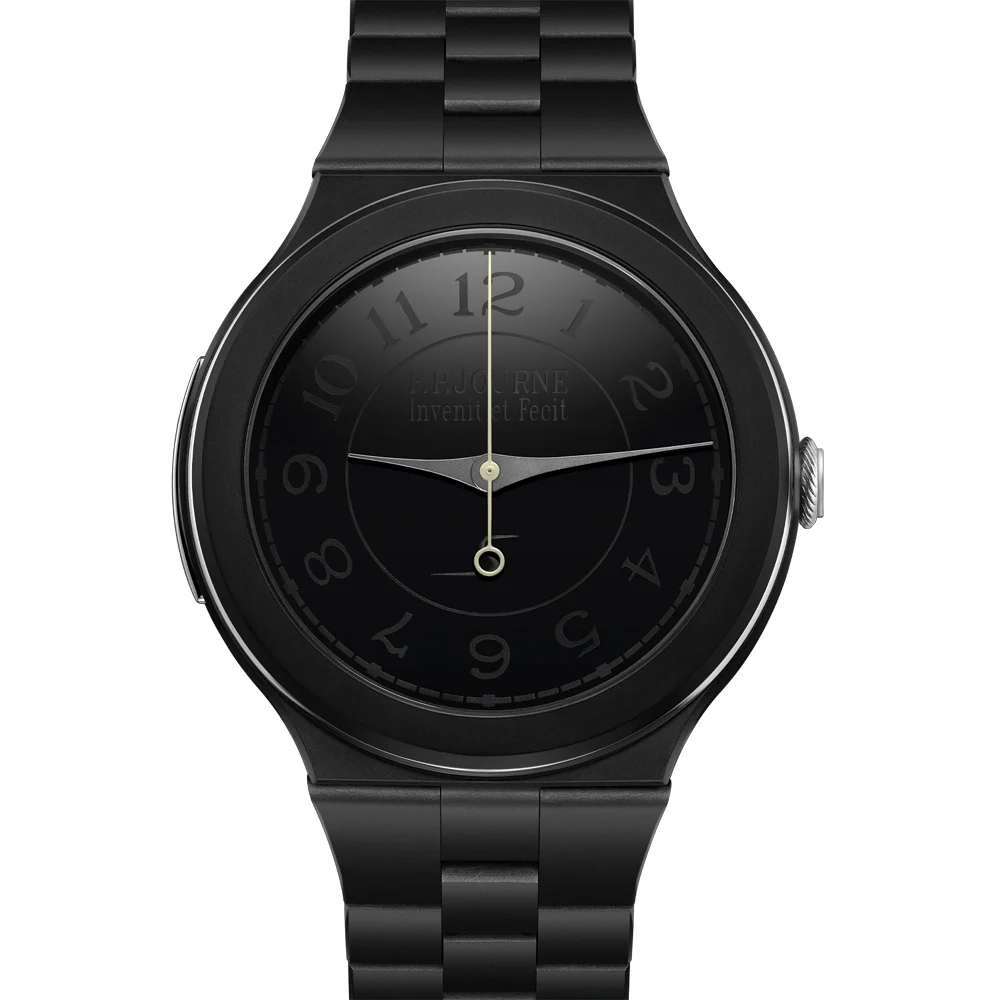
Image – lineSport Chronomètre Furtif (2025)
Interestingly,the dial indications are only visible to the wearer when viewed directly from the front, delivering functionality while at the same remaining tastefully understated. The dial blank, formed of white gold, is dressed in layers of enamel which have been subjected to repeated firings, a technique termed ‘Grand Feu’. Following the enamelling phase, the surface is mirror-polished to a resplendent gleam before the hour markers, logo and track are imparted using a laser frosting technique.
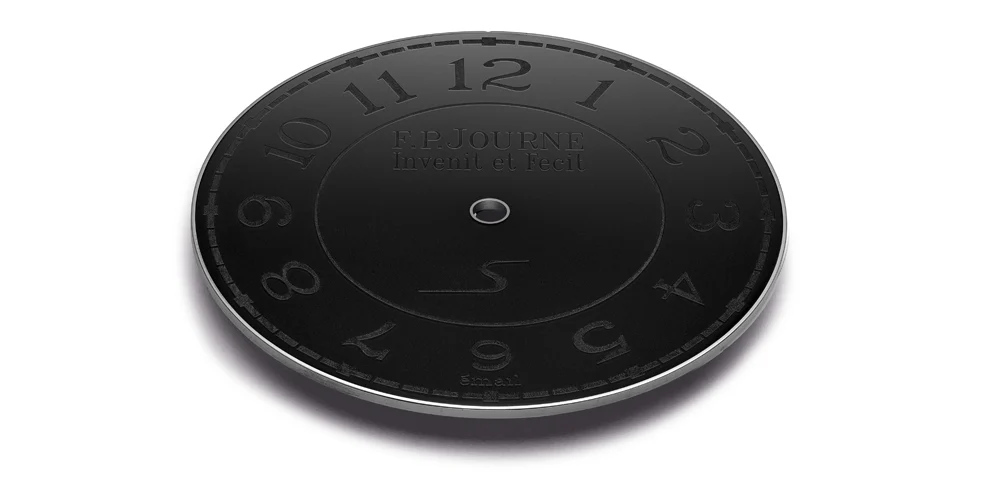
Image – lineSport Chronomètre Furtif dial
To the rear of the watch, the movement (Calibre 1522) can be seen via a pane of sapphire crystal. It features a power-reserve indicator and a moon phase display that are on hand when required but without cluttering the eminently clean dial front of house. As you would expect of this esteemed company, F.P.Journe has enriched each surface of the movement with sophisticated finishes and technical refinements.
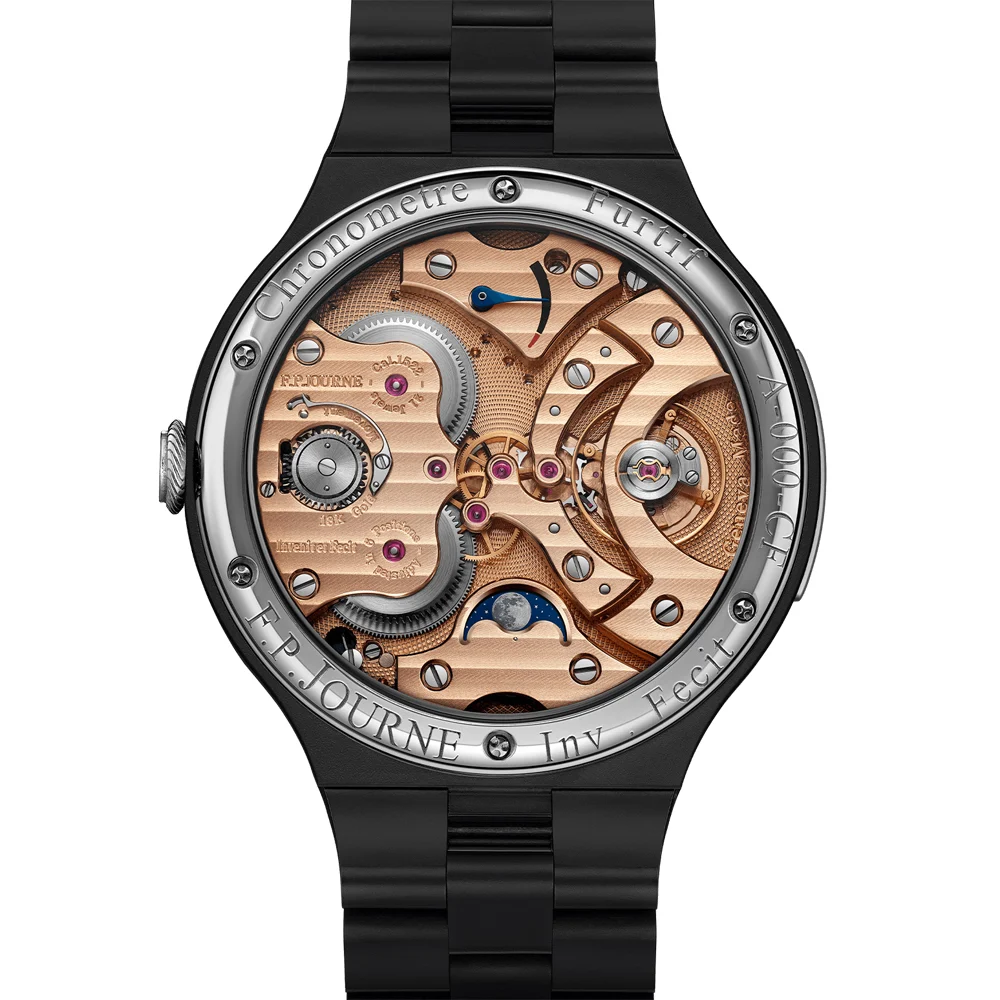
Image – lineSport Chronomètre Furtif back
F.P.Journe lineSport Collection – closing remarks
When Professor Gérard Saillant and Jean Todt ‘decided to create a structure bringing together experts from all over the world to study all aspects of the brain’, the son of Marseille was one of the first people to step forward and offer his support. François-Paul Journe has continued to support the Paris Brain Institute (formerly known as ICM) ever since, sometimes producing unique watches that have been sold at auction in support of the charity. In addition, F.P.Journe continues to donate 30% of the profits from the sale of the lineSport Centigraphe to the Paris Brain Institute.
But ultimately, this is a story comprising a chain of events, some of which were fortuitous. Everything began in 2004 with Jean Todt and François-Paul Journe chatting about the ‘ideal chronograph for the world of motor racing’. This led to the creation of the Centigraphe Souverain (2008), a watch that won the Aiguille d’Or at the GPHG in the same year. A Japanese client purchased a Centigraphe Souverain and then began running marathons. This athletic passion led to a request for a sports version of the watch that ultimately led to the creation of the F.P.Journe lineSport collection. These models have proved a huge commercial success for François-Paul Journe; quite an achievement for a man who famously said, ‘I don’t do sports’.