
Favre Leuba Chief Skeleton Watch Review
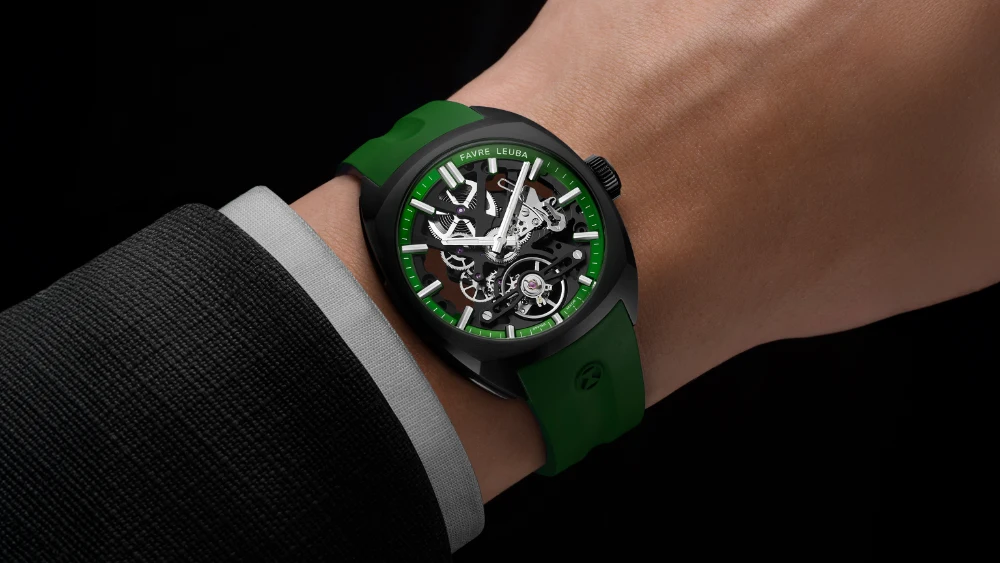
The Favre Leuba Chief Skeleton is the latest release from Grenchen-based brand. Since its rebirth in 2024, the historic Maison has launched an array of watches that revive past styles from its extensive archives; however, this is the ‘first ever skeletonised timepiece in Favre Leuba’s 288-year history’. US-based Meehna Goldsmith explores the anatomy of this skeleton watch in her own inimitable style.
Favre Leuba’s first skeleton watch
Halloween has just passed. Tales of black cats, pumpkins and grinning ghouls will now be in an imaginary box, where they will remain for another year. However, in the world of watchmaking, skeletons are horological perennials, charming watch lovers with their filigreed details. The revitalised Favre Leuba brand has just unveiled its first skeleton watch, the Chief Skeleton.
Favre Leuba depuis 1737
There are a lot of great bones to unpack here with this newest release from the brand. Let’s take a peek behind the curtain of Favre Leuba’s history to see how this newest model fits into the brand’s genealogy. In 1737, Abraham Favre established his watchmaking workshop in Le Locle, sowing the seeds of what would become a family business.
The ‘Maison Favre’ was a multi-generational business passed down from Abraham to his son Abraham II, who in turn handed the reins to his son, Frédéric Favre. Thereafter, Frédéric handed control to his son Henri-Auguste Favre who later joined forces with Auguste Leuba in 1815 to create the joint enterprise, Favre Leuba. After eight generations of Favres controlling the business, one of the oldest Swiss watchmaking dynasties, the quartz crisis forced the sale of the company in 1985.

Favre Leuba – former models
During the Favre Leuba years, the brand chalked up some impressive innovations, which were popular at the time and still whet the appetites of collectors today. There was the Water Deep released in 1960, which was the brand’s first dive watch. The Bivouac in 1962 followed, the first mechanical wristwatch with an aneroid barometer to measure altitude, introducing the iconic cushion case. Capitalising on this aesthetic, the Deep Blue dive watch came a few years later in 1964, another cushion-shaped case that then became a characteristic of the brand’s identity in the tool watch category.
In 1968, the Bathy emerged, or submerged, a revolutionary dive watch that incorporated a mechanical depth gauge that actually measured the diver’s depth underneath the water in real time, pioneering the category. It used an innovative aneroid capsule mechanism inside the case, compressing with water pressure and translating it into a depth reading on the dial. The 1960s were a real heyday that saw the brand at the top of its game.
Favre Leuba Chief – first released in 1955
Now let’s dial back to 1955, when Favre Leuba began the next chapter of the Chief story. During this year, it introduced the in-house Calibre FL101 manual-wind movement, competing right up there with Patek Philippe and Vacheron Constantin, which released their first in-house modern wristwatch calibres in 1953 and 1955, respectively. And where did Favre Leuba showcase the Calibre FL101? In its Sea Chief model. However, the Sea Chief wasn’t a dive watch, more of a dressy-sports hybrid and it came in a round case with tapered lugs along with applied indices and dauphine-style hands. And it’s this model which inspired the Favre Leuba Chief Skeleton, a new timepiece created by the revived brand which returned to the watchsphere in 2024.
Skeletonised watches and skeleton watches
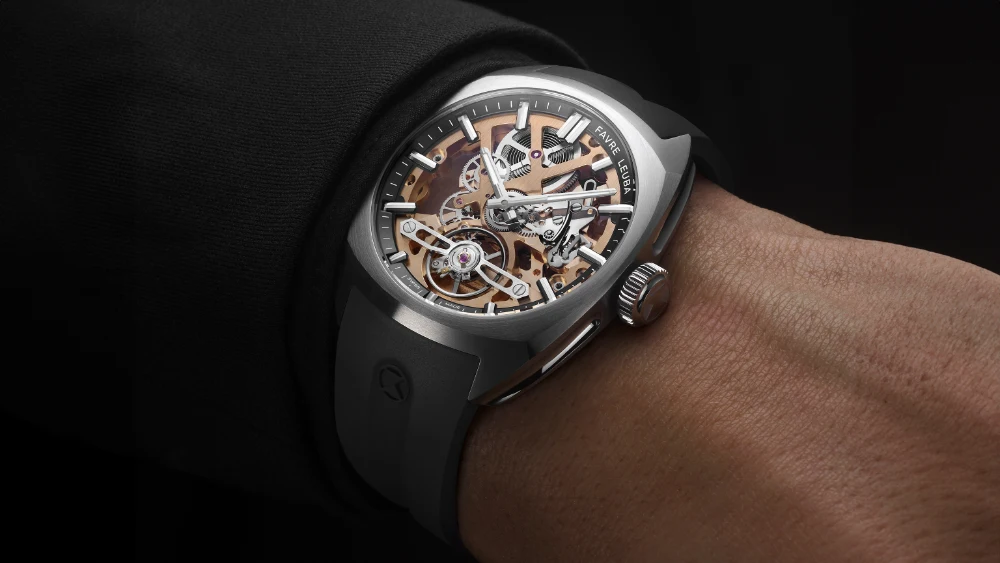
Before taking a look at the Favre Leuba Chief Skeleton, let’s distinguish between skeletonised watches and skeleton watches. Skeletonised watches take an existing base movement, cutting away parts of the mainplate and bridges to reveal the poetry of the mechanics in motion. A skeleton watch also reveals the mystery behind the movement, but is conceived from the outset with the openness woven into the design rather than carved from what already existed.
While both have their fans and particular aesthetics, the Chief Skeleton classifies as a skeleton watch. By the 1970s, the Chief itself was recast in cushion form, aligning with the brand’s tool-watch DNA, a lineage the new Chief Skeleton draws on directly. Re-imagined for the 21st century, the new Chief pillar, introduced in 2024, adopted the brand’s signature attire.
Favre Leuba Chief Skeleton – movement
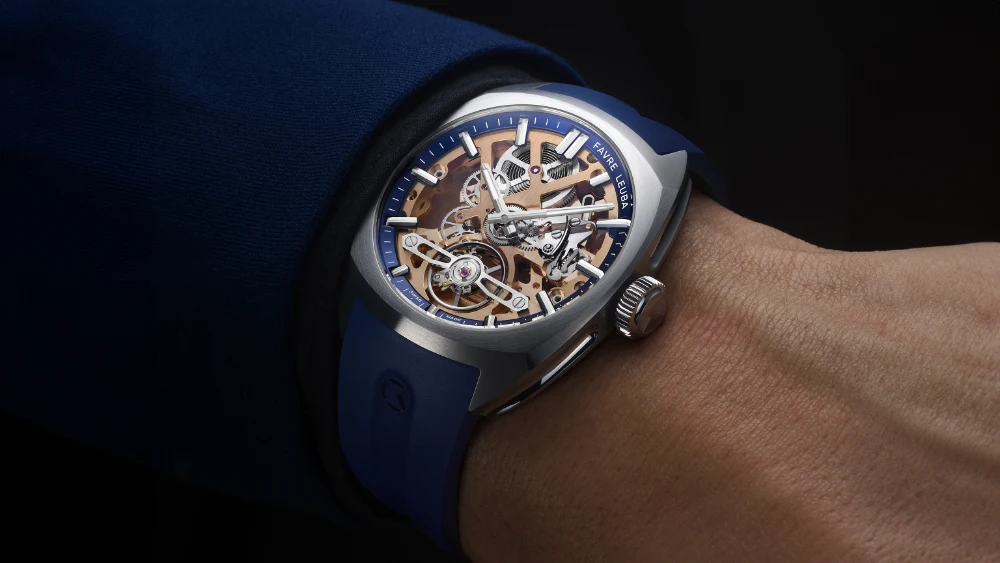
Favre Leuba developed the open-worked movement of the Chief Skeleton in collaboration with Manufacture AMT, a bespoke movement house under Sellita’s umbrella.
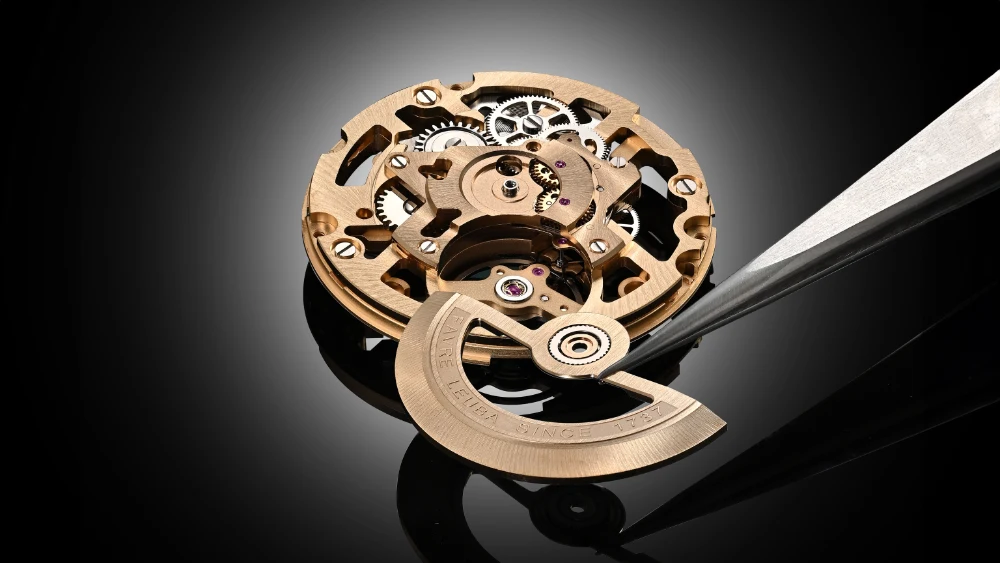
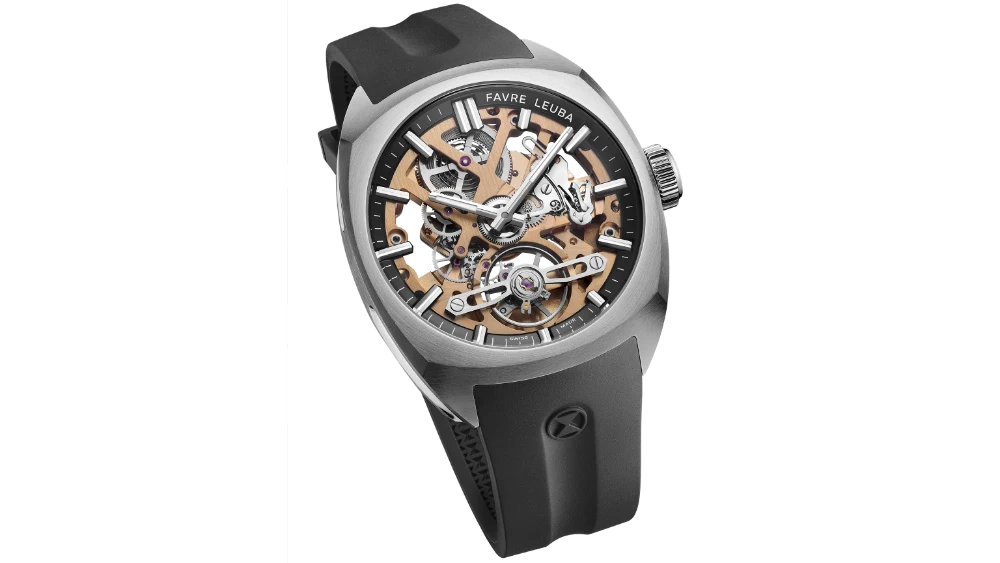
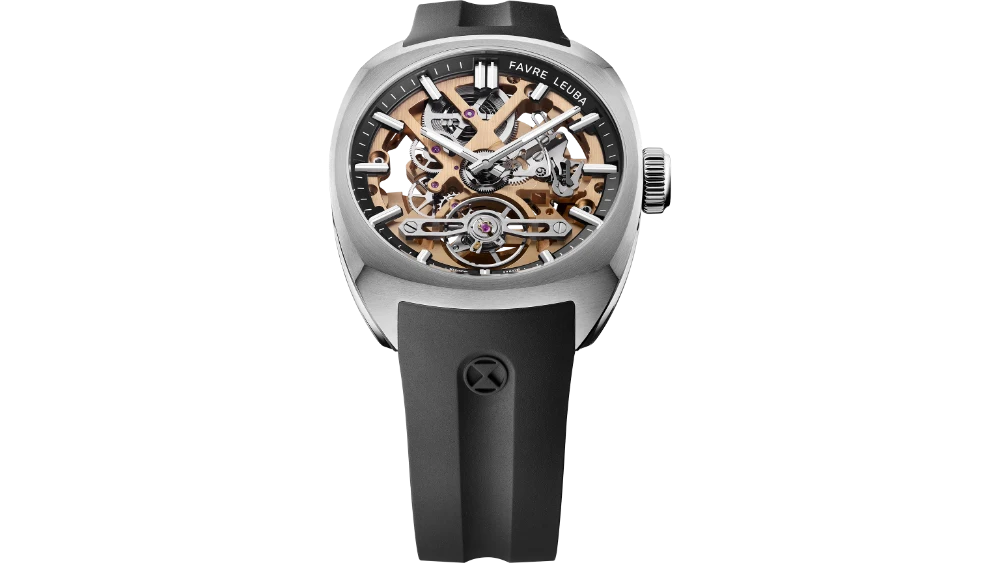
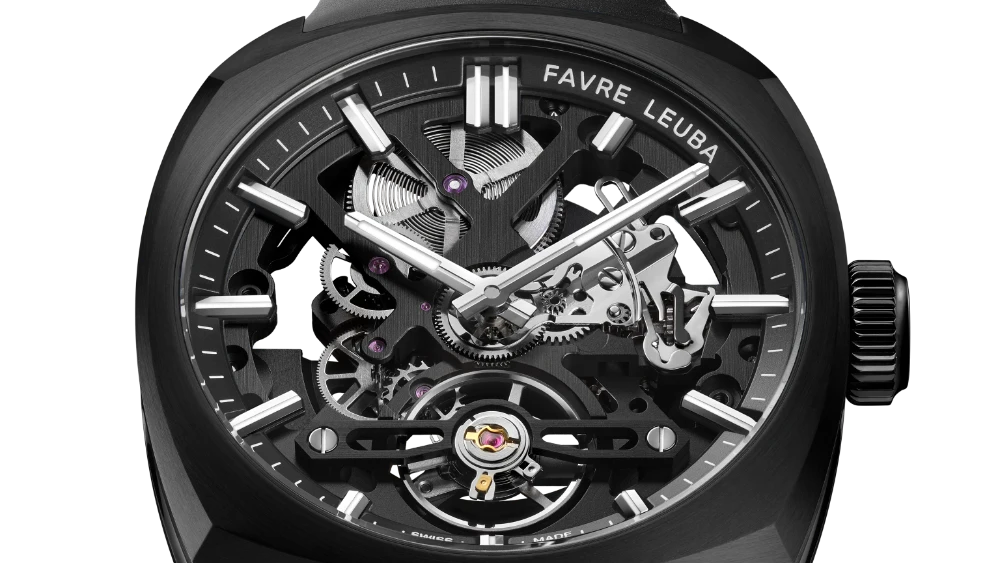
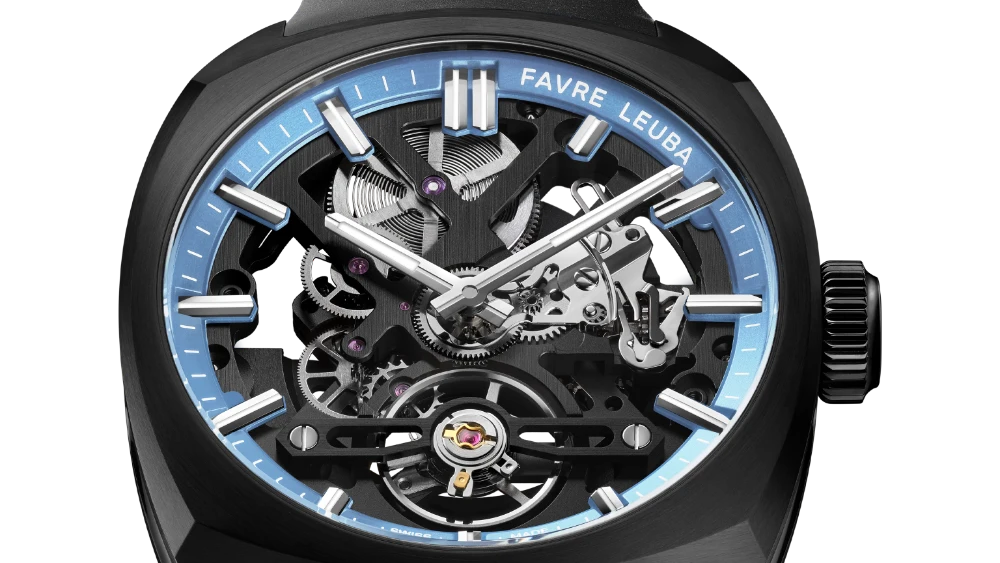
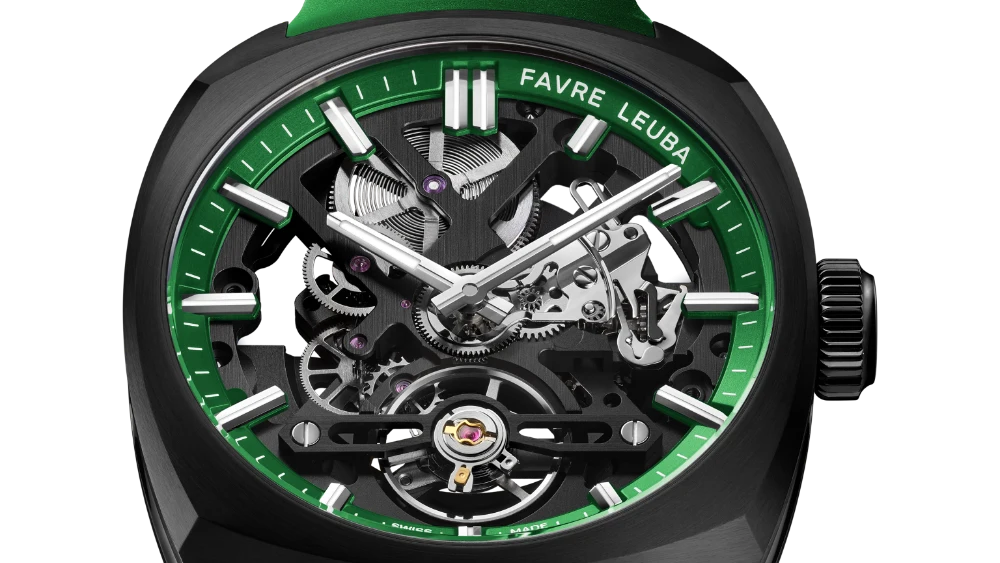
The Chief Skeleton presents a nicely balanced architecture with the movement aligned vertically down the centre of the watch. The mainspring barrel is partially exposed at 12 o’clock and the balance wheel is positioned at 6 o’clock. The balance wheel is supported by an openworked bridge featuring horizontal brushing. The movement on view also combines snailing, satin and sandblasted surfaces, along with other brushed and polished finishing – all of which create a playground for the eye to appreciate the interplay of light and texture.
Favre Leuba Chief Skeleton – dial
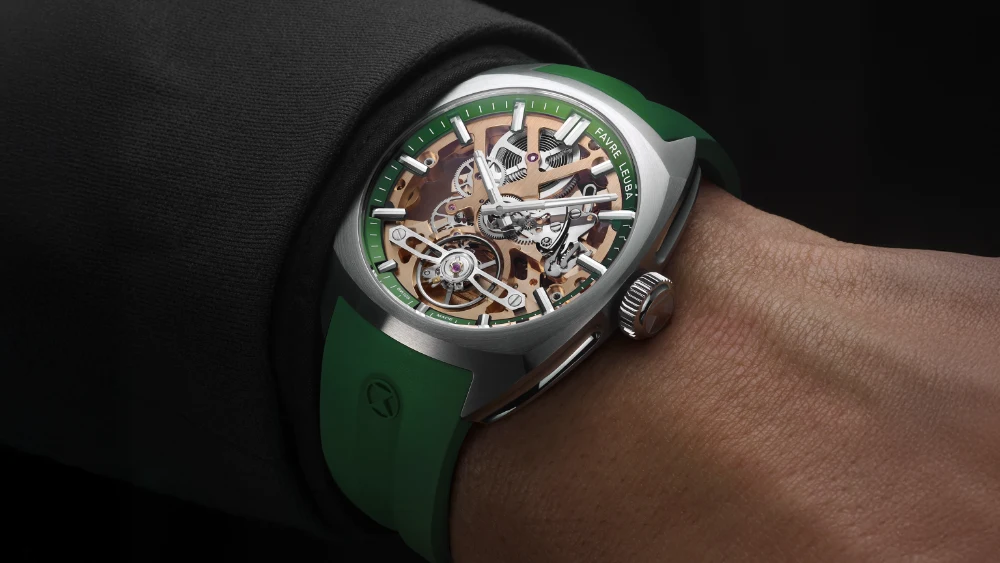
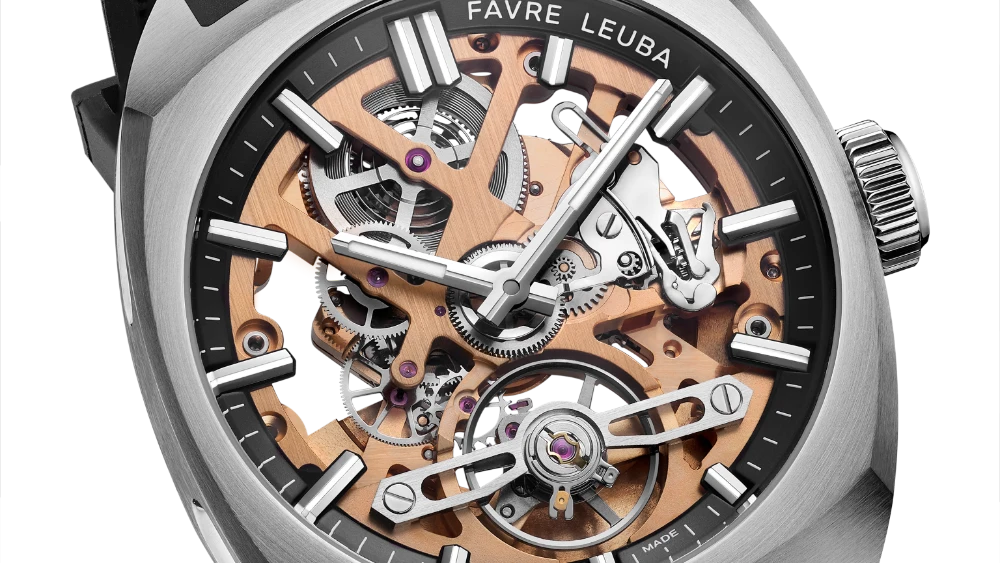
Polished rhodium-plated indexes are applied and filled with blue Super-LumiNova to mark the hours, while the rhodium-plated hour and minute hands, incorporating a sandblasted groove and again filled with blue Super-LumiNova, circle the dial to keep time. Framed within a 40 mm cushion case, the Chief Skeleton is fitted with a curved sapphire crystal, maximising the view from every angle. From the rear, the theme continues with a satin-finished skeletonised rotor, engraved with the brand’s signature.

Favre Leuba Chief Skeleton – case
The Chief Skeleton comes in two configurations. Firstly, a steel case with gold-finished movement paired with either a green, blue or black minute track, matched with a corresponding FKM rubber strap. Alternatively, a black Chrome DLC case with anthracite-finished movement complemented with either a green, blue, black or ice blue minute track, again matched with a coordinating FKM rubber strap. For easy costume changes between the strap and bracelet, there’s an integrated quick-change mechanism.
Closing remarks
Reaching into its rich history, Favre Leuba takes one of its classics and gives it a sophisticated spin. The Skeleton Chief is sure to give Favre Leuba’s legacy a striking contemporary expression. No bones about it.
Further information
https://www.favreleuba.com/?___store=gb
Technical specification
- Model: Favre Leuba Chief Skeleton
- Case: 316L stainless steel or 316L stainless steel black DLC coated, diameter 40 mm, height 11.76 mm, sapphire crystal to the front and exhibition caseback, water resistant to 10 ATM (100 metres)
- Functions: hours, minutes
- Movement: FLS01 (gold-finished bridges) / FLS02 (black-chrome finished bridges), self-winding movement, frequency 28,800vph (4 Hz), 27 jewels, 41-hour power reserve
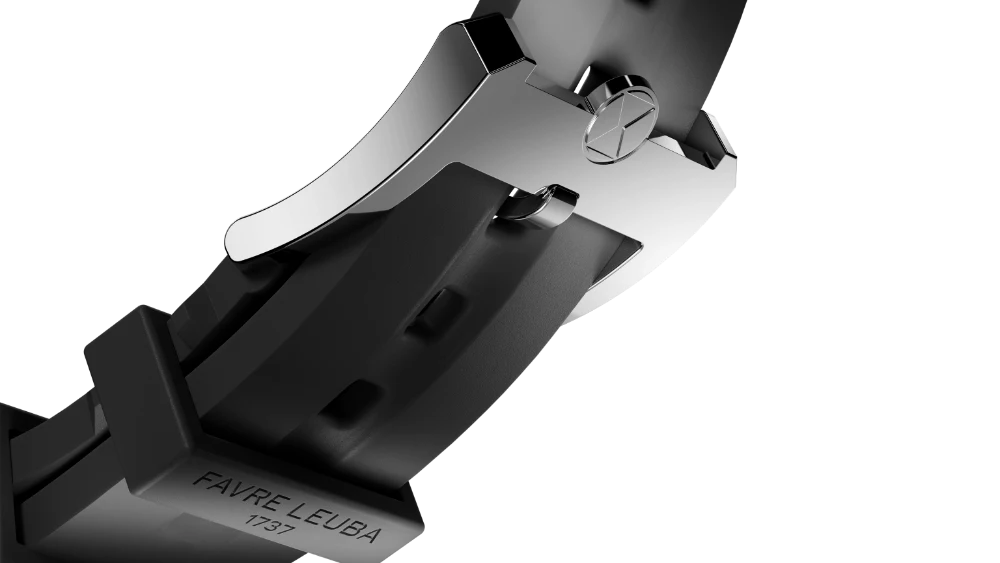
- Strap: equipped with easy-change mechanism, an interchangeable integrated FKM rubber strap, secured by a pin buckle with Favre Leuba logo
- Price – gold movement/steel case: £3450 (RRP as of 8.11.2025)
- Price – black movement/DLC case: £3550 (RRP as of 8.11.2025)