
Gérard Bertrand Minervois La Livinière Le Viala wine feature
Philip Day looks at Gérard Bertrand Minervois La Livinière Le Viala, a supremely refined wine produced in the western Languedoc region of France.
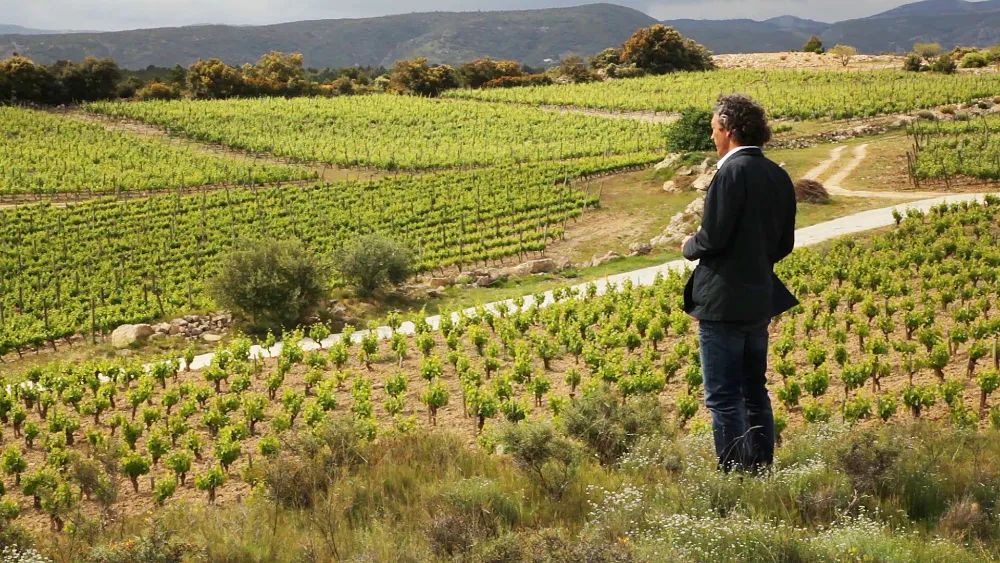
Photo credit – Gilles Deschamps
Minervois AOC is a fairly recent French wine appellation that relates to distinctive red wines produced in the western Languedoc region of France. Officially granted in 1985, the Minervois appellation has, since then, overseen a dramatic change in the quality of its local wines that have gained significant praise from critics both in France and abroad. As with many French appellations, this increase in quality has been a result of significant investment in winery equipment and improved vineyard management and viticultural practices.
Grenache, Syrah and Mourvedre are the predominant grape varieties used in Minervois AOC wines, which must collectively make up at least 60% of the blend, which can be complemented by grapes from Carignan and Cinsaut vines.
La Livinière is a commune in the north of the area covered by the Minervois appellation, with a reputation for producing some of the finest red wines in the region. So much so that the producers of La Livinière spent 10 years lobbying the INAO (the government body in charge of France’s appellation system) for their own, more-specific appellation: Minervois La Livinière AOC, which was finally granted in 1999, effectively creating an appellation within an appellation.
Minervois La Livinière AOC wines differ from Minervois AOC wines, in that their uniquely dry red wines are produced from a blend of Carignan and Cinsaut grapes (limited to a maximum of 40%), to which are added, as ‘cépages améliorateurs’ (‘improver varieties’) Grenache, Syrah and Mourvedre grapes (forming a minimum of 40%). Other varietals such as Terret, Piquepoul and Aspiran are also permitted to be included in the blend.
To the north-west of Narbonne, in the Minervois wine region, the Minervois La Livinière appellation covers some 200 hectares and is focused on four villages and six communes in the foothills of the Montagne Noire, the key trio of which are Siran, Cesseras and La Livinière itself.
The vines of Château Laville Bertrou, a benchmark in the Minervois La Livinière appellation, are situated on an exceptional terroir in the Minervois-La Livinière. This property was bought by renowned winemaker, Gérard Bertrand in 1997 and is considered outstanding. It produces powerful and classical award-winning wines.
Gérard Bertrand Minervois La Livinière Le Viala – history
Born in Narbonne (Aude, France) in 1965, Gérard Bertrand had his first experience of harvesting and wine-making at Domaine de Villemajou at Boutenac, in the Corbières region, helping his father Georges Bertrand in 1975. After successfully achieving his Baccalaureate diploma in 1983, Gérard Bertrand began his undergraduate studies in business administration and sport in Toulouse. A keen and gifted rugby player, he was signed up by RC Narbonne in 1984, for whom he played for 10 years. From 1987 to 1994, Bertrand was both rugby player and wine grower. In the 1993-4 season he finished his rugby playing career as captain of the Stade Français, Paris. After his retirement from the sport, Bertrand became president of RC Narbonne.
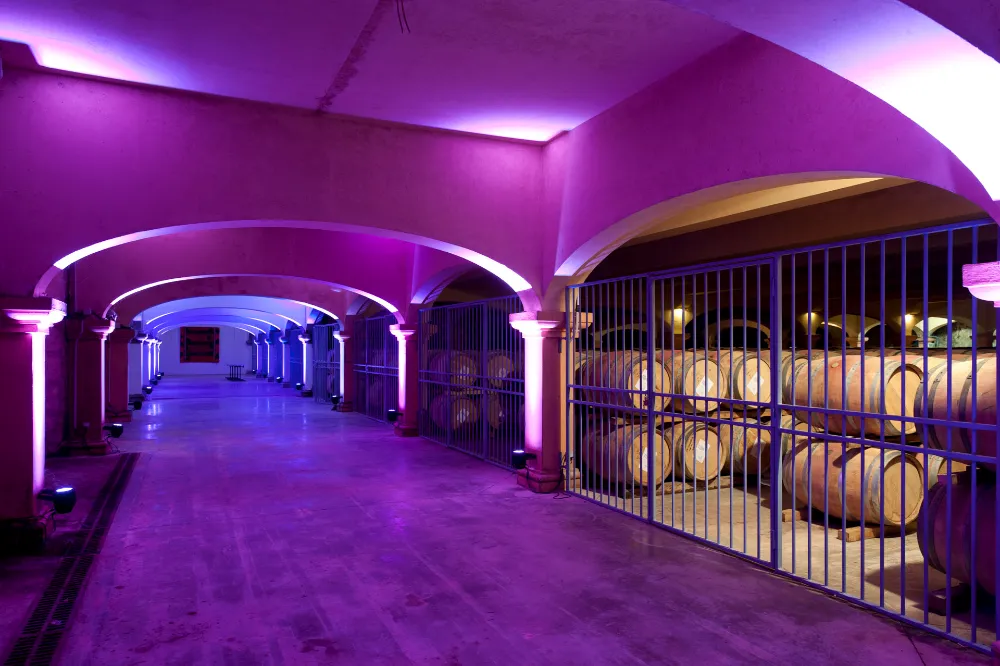
Photo credit – Gilles Deschamps
In 1987, Gérard Bertrand started working alongside his father at the Domaine de Villemajou who passed on his passion for the terroir. His father sadly, died prematurely in October of that year. Gérard Bertrand builds on the success begun by his father by creating the Gérard Bertrand Wine Company, adding to his portfolio of wines reflecting the characteristics and exceptional diversity of each of the terroirs of this region to produce a wide selection of varietal wines or appellation wines as well as sparkling wines, reds, whites and rosés.
Domaine Cigalus in Bizanet (Aude) and Château Laville Bertrou in the commune of La Livinière (Hérault) were acquired in 1992, followed by Château Aigues Vives, in Corbières Boutenac in 2010, Domaine de la Sauvageonne, in Terrasses du Larzac in 2011 and Château de La Soujeole, in the Malepère region in 2012.
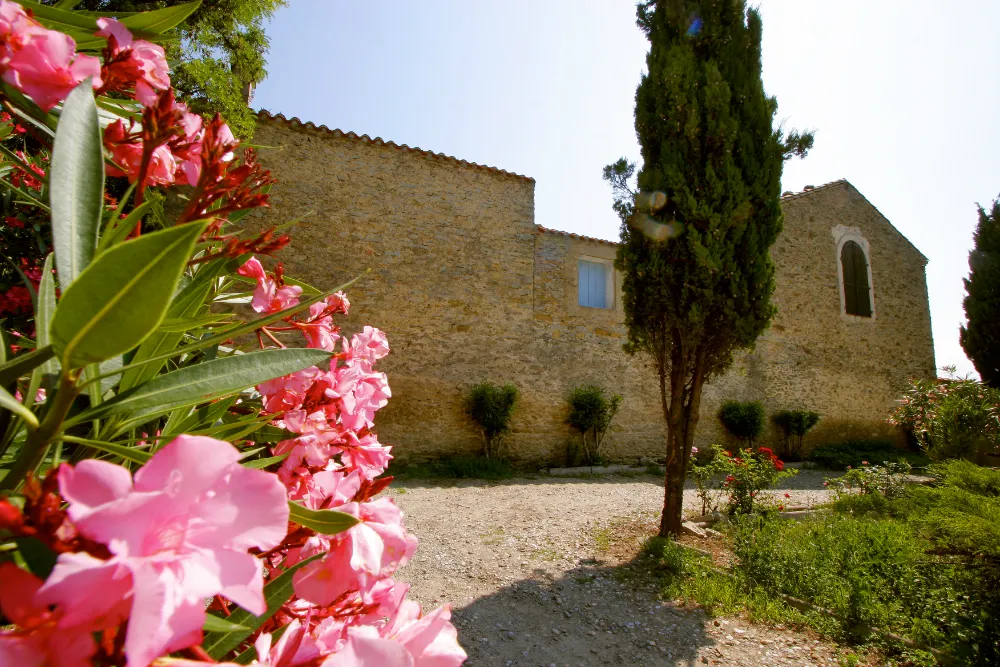
Photo credit – Gilles Deschamps
2002, saw Bertrand settle at Château l’Hospitalet to develop wine-tourism activities based on the concept of L’Art de Vivre. He is so passionate about the Mediterranean lifestyle that he wanted to promote it and share the many cultural and gastronomic riches of the South of France through numerous wine tourism activities available at Château l’Hospitalet. Twenty years of know-how ensures that any wine bearing Gérard Bertrand’s signature has a unique style, the creation of which is driven each day by four fundamental values: excellence, authenticity, conviviality and innovation.
| Appellation |
Minervois La Livinière AOC |
| Owner |
SARL Vins Gérard Bertrand / Gérard Bertrand Wine Company SARL |
| Planted acreage |
Total: 75 hectares (185 acres) Le Viala Single Vineyard Acreage: 8 hectares (19.76 acres) |
| Grape varieties |
Syrah, Grenache, Carignan, Mourvèdre |
| Wines produced |
|
| Terroir |
Sandstone, schist, limestone, marble-type rock, and flint
|
| Production |
Based on 35 hectolitres/hectare
|
| Top Vintages Produced
|
1998, 1999, 2000, 2001, 2002, 2003, 2004,2005, 2007, 2008, 2009, 2010, 2011, 2012, 2013 (Note – this feature was first published in 2015) |
Gérard Bertrand Minervois La Livinière Le Viala – viticulture
Located in the heart of the area of the Minervois appellation in the region of Petit Causse, the vineyard of Château Laville Bertrou, a benchmark in the Minervois La Livinière area, is situated on an exceptional terroir, which is synonymous with the great wines of Languedoc. The property, bought by Gérard Bertrand in 1997 is bounded on the west by the River Ognon, a tributary of the Aude, and to the east by the mountains of the Serra d ‘Oupia. It produces powerful and classical award-winning wines.
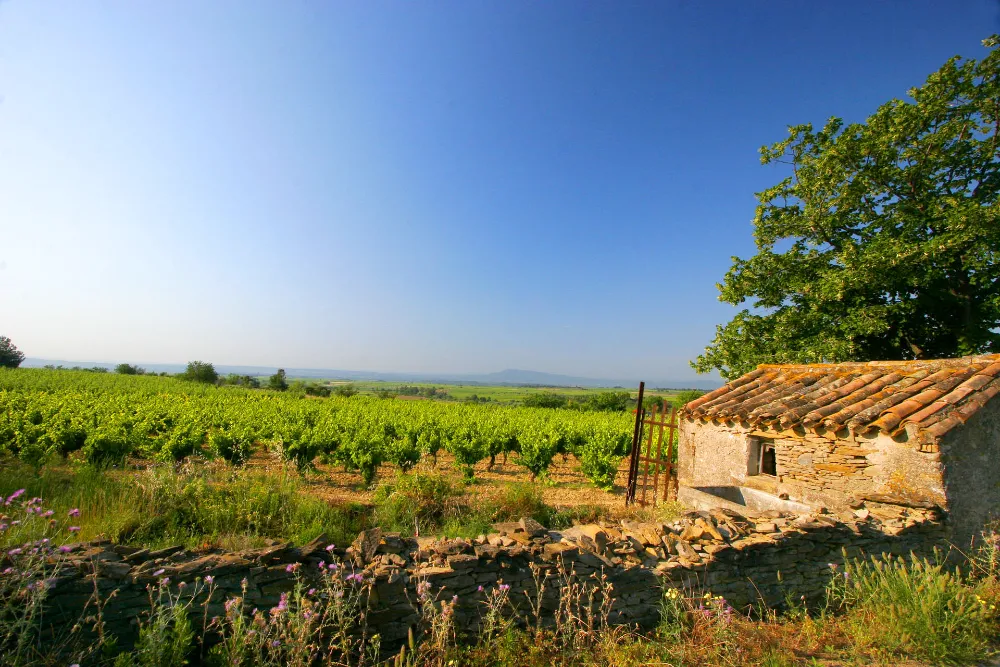
Photo credit – Gilles Deschamps
The vines are surrounded by a typically Mediterranean landscape with garrigue (low-growing vegetation on the limestone hills consisting of bunches of wild-growing, bushy, fragrant plants, like juniper, thyme, rosemary and lavender). La Livinière is one of the places in Languedoc that achieves very high temperatures every year. Although a sunny, hot terroir, the little plots of Syrah, Grenache, Carignan and Mourvèdre vines enclosed by traditional dry stone walls, rarely suffer from drought, thanks to the chalky subsoil which aids water retention. Refreshing nocturnal currents from the Causses, common in the summer months, also assist the provision of optimal conditions for ripening the fruit on the vines, whilst conserving their acidity.
The vines are naturally low-yielding but the red wines aged in oak barriques from thirteen to eighteen months result in powerful, intense wines, ideal for laying down.
The 8 hectares of plots of the Château are split into many smaller plots. Throughout the 19th century in this region of the Languedoc sheep farming was significantly more important than viniculture and consequently, shepherds built low stone walls to enclose their land. These days the stone wall enclosures form part of the character of the property. A great deal of time and effort has been taken to clear the plots of stones from days gone by when they were perhaps planted with the classic Mediterranean staples: wheat, olives and vines.
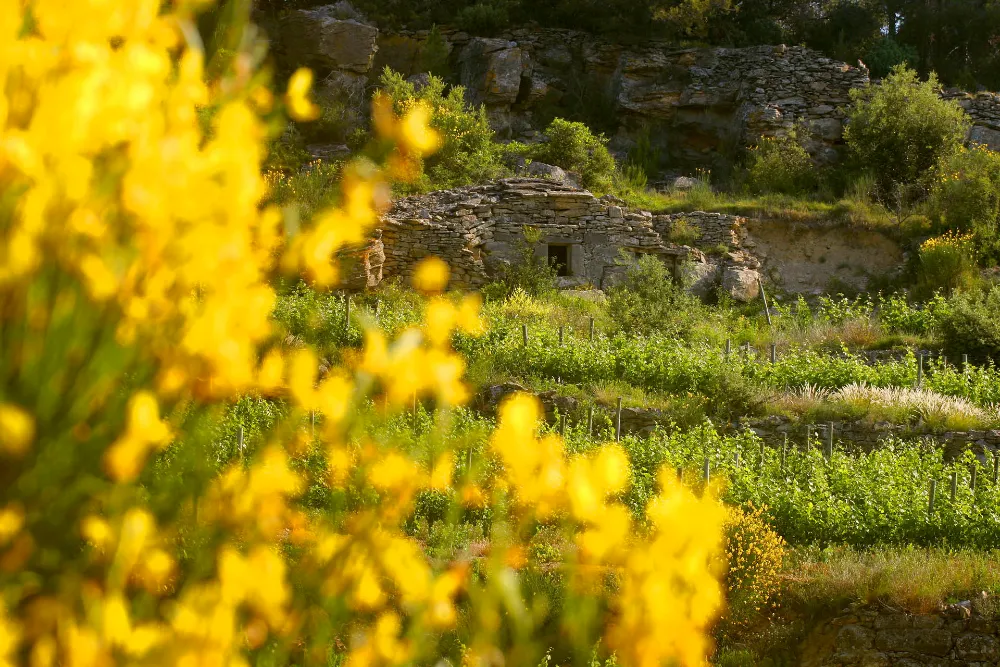
Photo credit – Gilles Deschamps
The grapes from these plots now are used in the production of Le Viala, a wine that represents the excellence and character of Château Laville Bertrou.
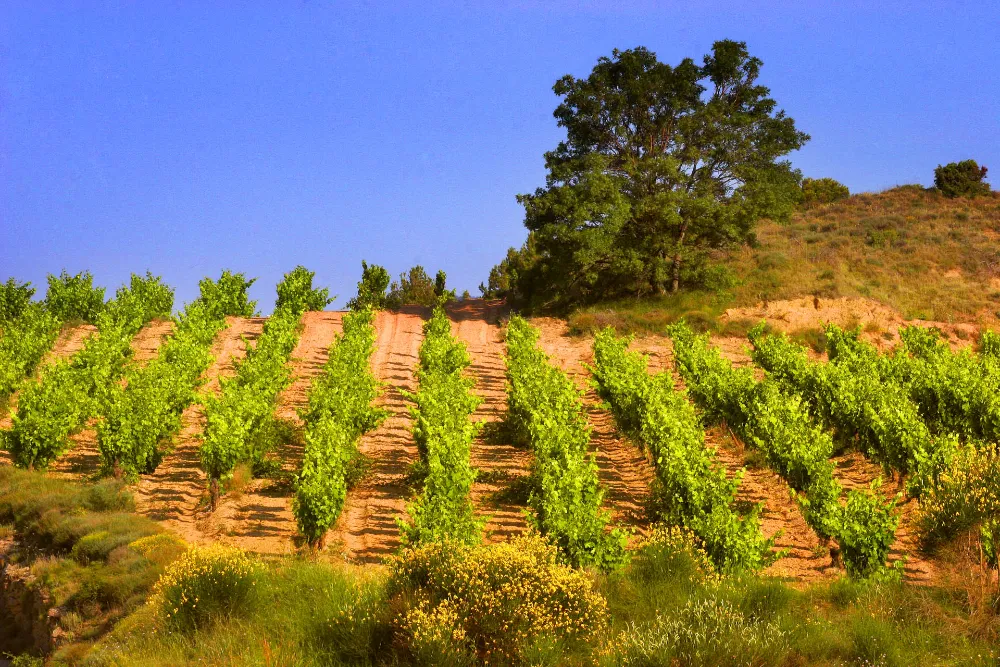
Photo credit – Gilles Deschamps
Gérard Bertrand has made a firm, voluntary commitment to sustainable development in his vineyards, reacting to the increasing demand from consumers, as well as the global need to reduce the adverse effects of greenhouse gases on the climate. He is also committed to the implementation of biodynamic practices on his estates.
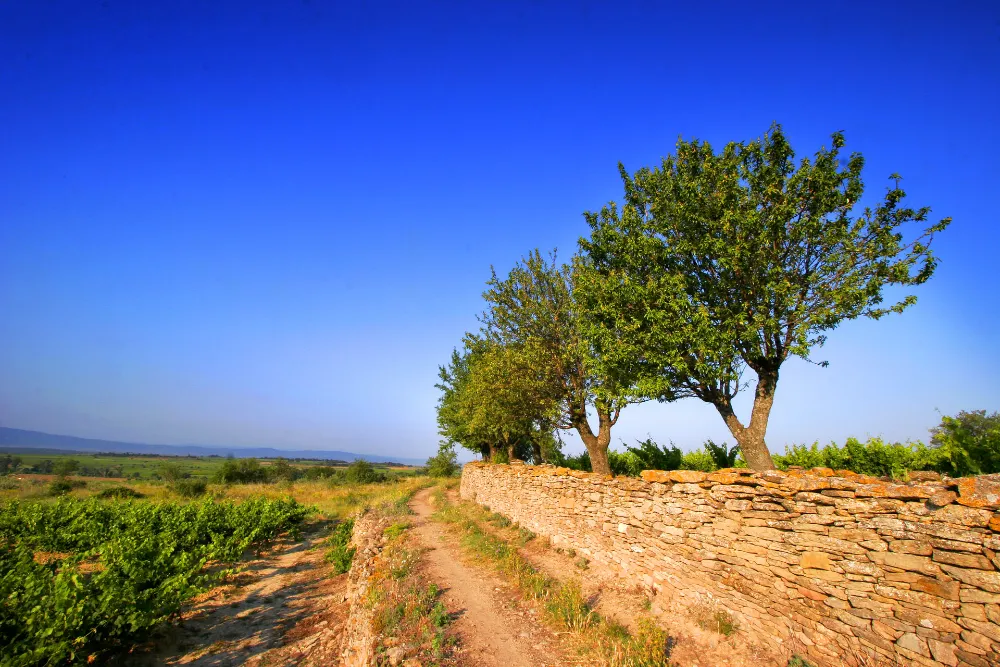
Photo credit – Gilles Deschamps
Harvesting the grapes is undertaken by hand and only takes place once the fruit is at optimal maturity, following a period of close monitoring and daily tastings of the grapes.
On arrival at the cellar, the picked grapes are meticulously sorted and any blemished or under-ripe fruit is discarded. The grapes from the Syrah and Carignan vines are vinified by carbonic maceration in vats separately from grapes from the Grenache vines, which are additionally de-stemmed and vinified under temperature-controlled traditional maceration processes.
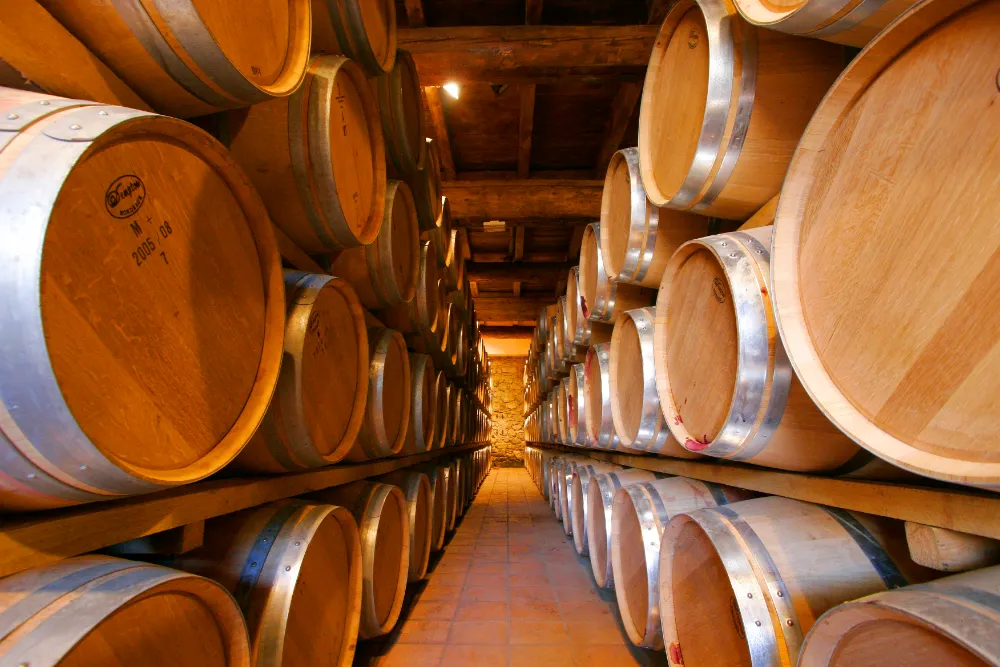
Photo credit – Gilles Deschamps
Once the vats are drained, malolactic fermentation of the wine takes place and then the different grape varieties are blended and the wine is aged in oak barrels for a minimum of 12 months. In order to enhance the potential of each vintage Bertrand employs the services of the best barrel makers to further match the origins of wood and the way they have been heated to the characteristics of the wines. Before bottling, the wines are neither fined nor filtered. The bottles are then stored for a further 12 months before being offered for sale.
The vines are subject to tastings twice during the ageing period, to evaluate their potential. Prior to bottling, they undergo a final tasting, the ‘agrément tasting’, usually undertaken in November, the year after harvesting, to assess whether the wines meet the strict quality standards of the appellation. Each stage of the three-stage tasting is carried out by a producer, an enologist, and a merchant. The final outcome is ‘pass’ or ‘fail’. Only if a wine passes, can it be sold under the title of Minervois-La Livinière, otherwise, it must be bottled under the ‘basic’ Minervois AOC label.
The tasting panel is tough, having a higher rejection rate than any other appellation in France. The average percentage of wines rejected per annum for bottling under AOC rules for the country as a whole is around 5%. By comparison, between 30 – 40% of all wines submitted are rejected by the Minervois-La Livinière AOC panel. If all is successful, the winemaker is permitted to use specific labelling, which includes a cap with the La Livinière logo and a corresponding label, featuring a unique guarantee number.
The Le Viala 2011 which Bertrand describes as ‘a wine which represents the excellence and character of Château Laville Bertrou’, would be a good choice to acquire, being extremely concentrated, while smooth with a magnificent density.

The bouquet is full of dark fruit. The subtle integration of oak combines well with mouthfuls of Christmas pudding fruit: ripe and sweet, all underpinned by a pleasant freshness and a very long-lasting taste in the mouth. Many vintners recommend its optimum drinking time between 2016-2026, so it is well worth lying down.
It would complement the following foods: Beef, Lamb, Pork, spicy food, mature and hard cheeses.
Gérard Bertrand Minervois La Livinière Le Viala – contact details
- Address: Gérard Bertrand, Route de Narbonne Plage 11100 NARBONNE FRANCE
- Telephone: +33 (0)4 68 45 28 50
- Internet: https://en.gerard-bertrand.com/
References
- https://www.gerard-bertrand.com/en/domaines/chateau-laville-bertrou/
- https://www.hachette-vins.com/tout-sur-le-vin/appellations-vins/952/minervois-la-liviniere
- https://www.wine-searcher.com/regions-minervois+la+liviniere
- https://www.coteaux-languedoc.com/en/terroir-geography/terroirs-and-climate/minervois-
la-liviniere - https://www.languedoc-wines.com/en/discover/languedoc-aocs/aoc-minervois-la-liviniere
- https://winewitandwisdomswe.com/2013/11/25/minervois-la-liviniere/
- Johnson H & Robinson J (2013) The World Atlas of Wine 7th Edition, Octopus Publishing
Group Ltd., London - Johnson H, (2014) Hugh Johnson’s Pocket Wine Book, 2015, Octopus Publishing Group
Ltd., London - Clarke O, (2014) Pocket Wine Book 2015, Pavilion, London.