
Girard-Perregaux Tourbillon with Three Flying Bridges
The Girard-Perregaux Tourbillon with Three Flying Bridges is unequivocally avant-garde, but simultaneously it can trace some of its design codes to the brand’s famous pocket watch of 1867. Once again, the venerable Maison shows its expertise in employing shapes and proportions to great effect.

In 1867, Constant Girard presented a pocket watch at the Paris Universal Exhibition, where it became a prize winner. The watch broke with convention by showcasing three parallel nickel silver bridges. This notion of transforming functional components into aesthetic elements has since become part of the Manufacture’s DNA. Later in the 1800s, the bridges were made of gold, became slimmer and their tips assumed an increasingly arrow-like profile. Constant was eager to protect his unique movement design, however, there was no Swiss patent office at the time, therefore it was patented in the USA in 1884.
Girard-Perregaux has released various iterations of the Three Golden Bridges, however, while the brand continues to honour its patrimony, it has never been afraid to embrace modernity. In 2014, the firm released the Neo Tourbillon with Three Bridges. Resembling La Esmeralda, the famous pocket watch of 1889, the Neo Tourbillon with Three Bridges featured three dial-side bridges and positioned the barrel, gear train and tourbillon along a north-south axis. However, it also employed neoteric, sculptured bridges dressed in a brooding shade of black.
The Neo bridges have since returned in singular form, as seen on the Free Bridge of 2020, and as a triumvirate of three sturdy structures, a design aspect wonderfully employed on the Neo Tourbillon Skeleton ADV (2018).
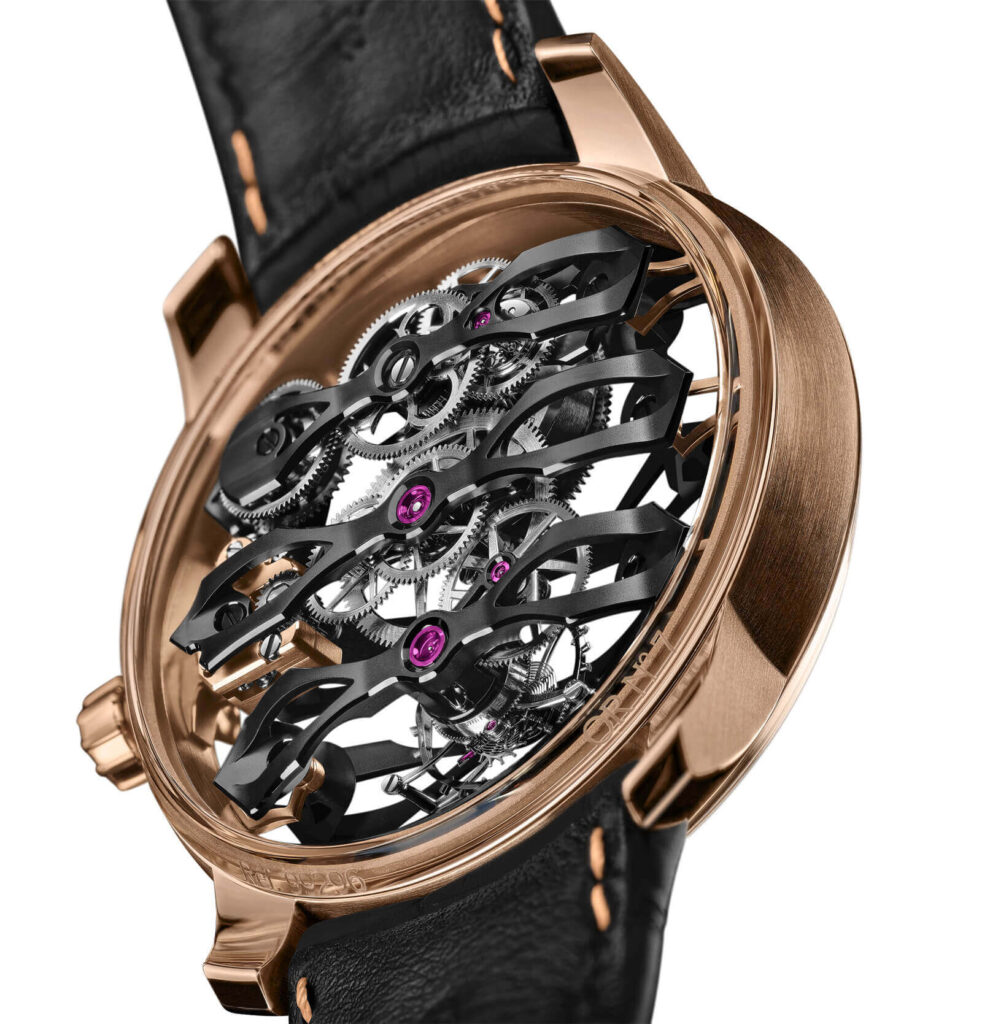
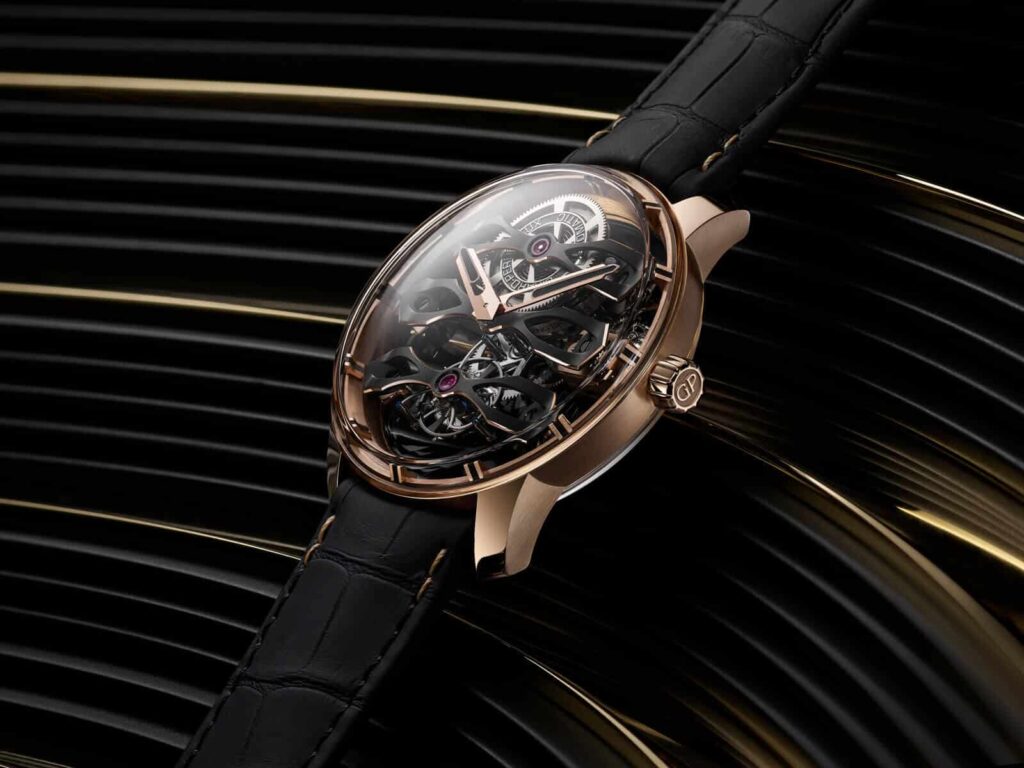
Now, the high-end brand from La Chaux-de-Fonds has released the Girard-Perregaux Tourbillon with Three Flying Bridges. Again, the watch walks on virgin snow, adopting a unique path to horological greatness. The three Neo bridges, positioned to the front of the watch appear black, however, they are still formed of gold but in this instance have been covered in black PVD. It is only the hand-chamfered edges of these bridges that reveal their noble composition. To the rear of the watch, the bridges share the same profile but are formed of titanium, albeit, once again, they’re treated with black PVD.
The Girard-Perregaux Tourbillon with Three Flying Bridges appears to eschew a conventional mainplate with movement components seemingly floating mid-air. The hour markers are affixed to the flange, rising above the dialscape, masterfully playing with light and perspectives.
Throughout its history, Girard-Perregaux has frequented the rarefied world of Haute Horlogerie. This is manifest with this latest model. Each facet of its composition is the result of skill and patience. Take the box-type sapphire crystals located to the front and rear. They share the same profile, conferring an agreeable dose of symmetry. Each crystal uses 4 – 5 times as much material as a conventional crystal and a highly protracted polishing technique has been employed in order to achieve the model’s bewitching aesthetic.
As previously mentioned, when the venerable Maison released its famous pocket watch of 1867, it ingeniously transformed functional components into aesthetic elements. While Girard-Perregaux has repeatedly upheld this design philosophy, it has never shied away from pursuing modernity and progress. Indeed, the fabulous Tourbillon with Three Flying Bridges wonderfully employs different materials, shapes and proportions, to deliver something new and fabulously original while once again respecting Constant Girard’s legacy.
The brand’s press release
In 1867, Girard-Perregaux unveiled the ‘Tourbillon with Three Gold Bridges’ and an icon was born. Unusually, the bridges, three functional parts typically hidden from view, were made an aesthetic element. By taking this decision, the Manufacture became known for making the invisible visible. This approach has been employed on several subsequent Girard-Perregaux models. With the advent of the new Tourbillon with Three Flying Bridges, the Maison perpetuates this design philosophy but with a few fascinating twists along the way.

This year marks the 230th anniversary of Girard-Perregaux. As part of its celebrations, the Manufacture is revisiting its iconic models and releasing a number of new creations, often infused with a dose of modernity. The Tourbillon with Three Flying Bridges is endowed with three Neo bridges formed of pink gold, the first time all three Neo bridges have been made from this noble metal. Interestingly, after releasing the Freebridge in 2020, the release of the new Flying Bridges will be the final subfamily to join the company’s Bridges collection.
The three bridges not only support the geartrain, barrel and tourbillon, they also act as the mainplate. The result is that the bridges appear to float in mid-air, seemingly untouched by gravity. This unusual construction required the Maison to affix the indexes to the flange which in turn is attached to the case.
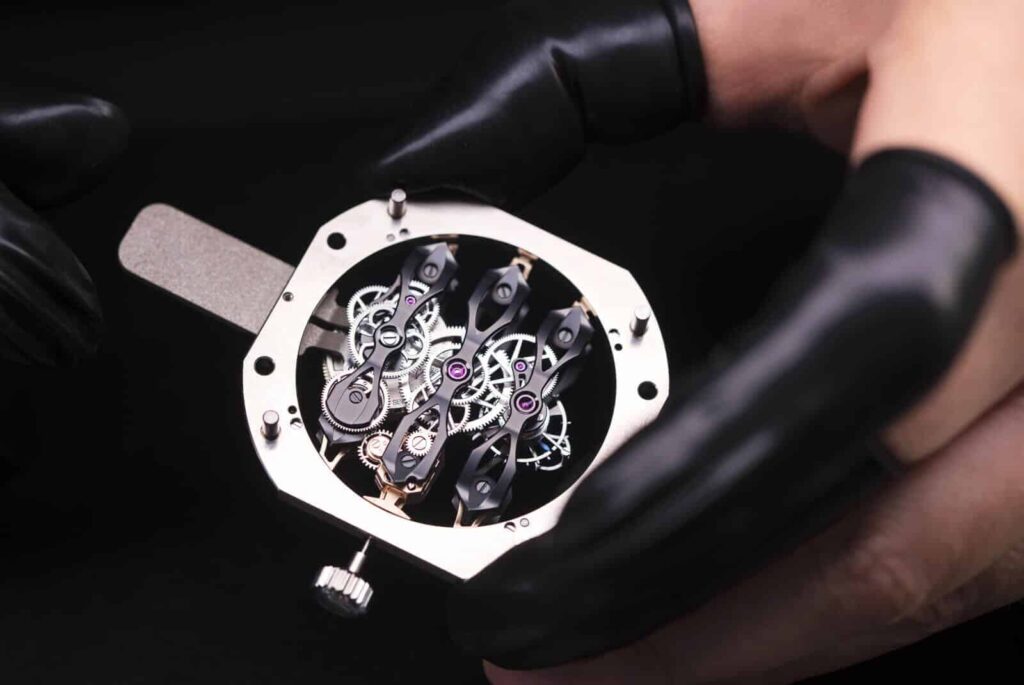
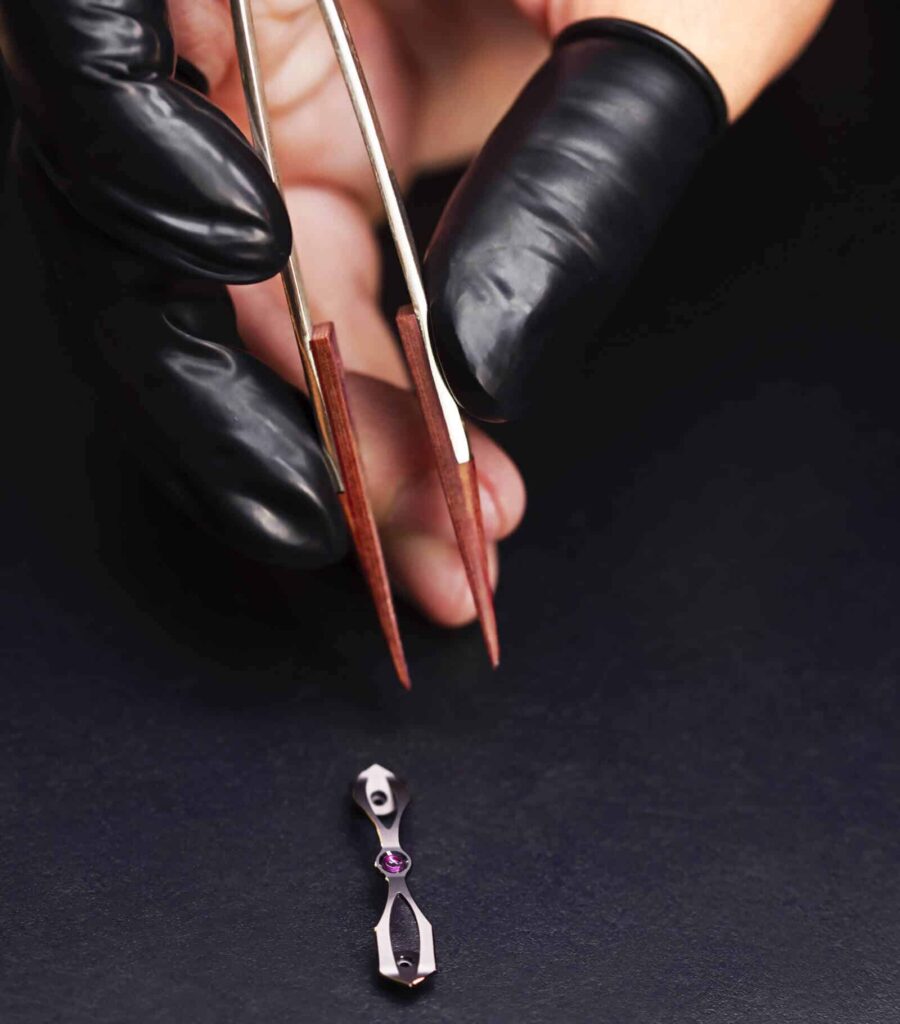
The upper and lower surfaces of the pink gold bridges are dressed in black PVD coating. They are the very antithesis of conspicuous consumption. Only the slim, vertical flanks of each bridge are exposed, providing a clue to their noble composition. Indeed, the bridges can be described as ‘super discreet luxury’ where only those in the know are aware of their precious nature. Each bridge is painstakingly chamfered by hand using a small piece of boxwood, a technique employed for hundreds of years. It takes a time-served artisan one full day to achieve a perfect finish. While the Tourbillon with Three Flying Bridges appears contemporary, it still upholds many of the traditional techniques synonymous with Haute Horlogerie.
Patrick Pruniaux, CEO of Girard-Perregaux, remarks, “We wanted to create a watch that provides a bridge to our past but also demonstrates our vision for the future. It draws on the talents of our artisans and watchmakers, pairing traditional methods with innovative techniques. The Tourbillon with Three Flying Bridges embraces three-dimensional architecture, allowing the wearer to see many parts typically hidden away. Since its inception, Girard-Perregaux has made the invisible visible, something I expect it will continue to do for the next 230 years. However, where our team has chosen to add a slight twist is by making the bridges from gold and then shrouding them in black PVD, save for their sides. It seems wonderfully indulgent, a trait synonymous with luxury, that will remain a secret to most people, except for those in the know.”
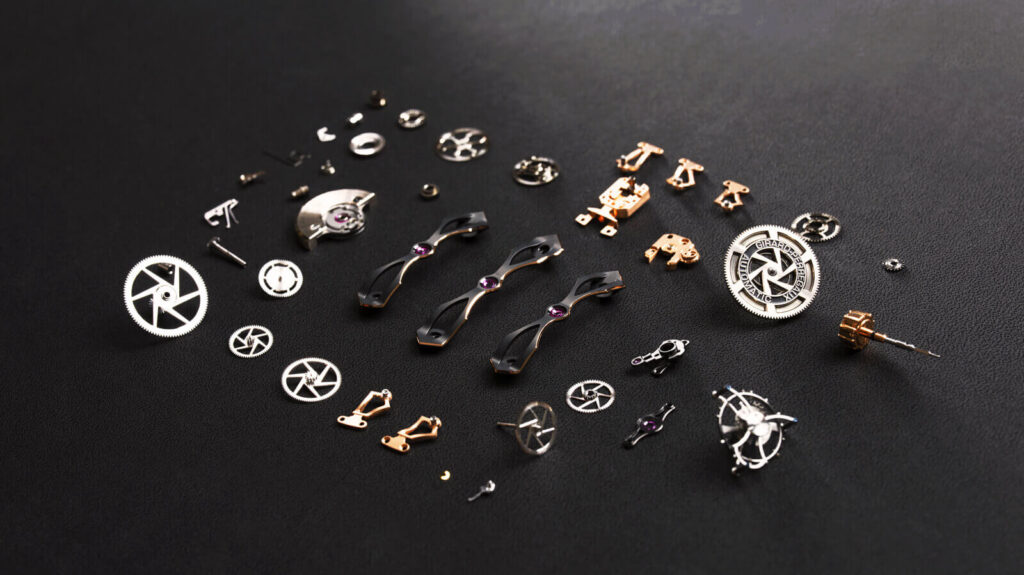
A notable characteristic of this timepiece is that it plays with three dimensional forms, positioning various dial elements at different heights, a characteristic shared in common with some of the world’s finest architectural structures. Despite its complexity, the dial remains clean, uncluttered and simple to read, with the barrel, gear train and tourbillon arranged along a north-south axis. The barrel, made of copper and beryllium, is positioned in the upper portion of the dial and sits above a white gold micro-rotor, harnessing energy from the motion of the wearer’s wrist. The vertical sides of the rotor are engraved with the watch’s model name, a subtle detail which perfectly demonstrates the Manufacture’s obsession with the minutiae.
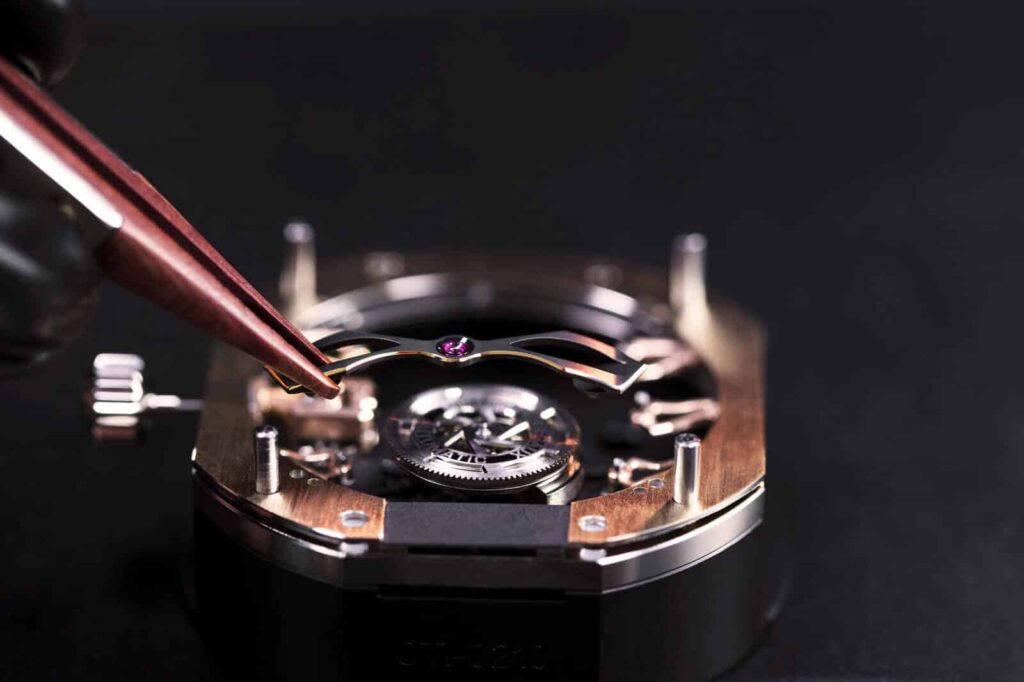
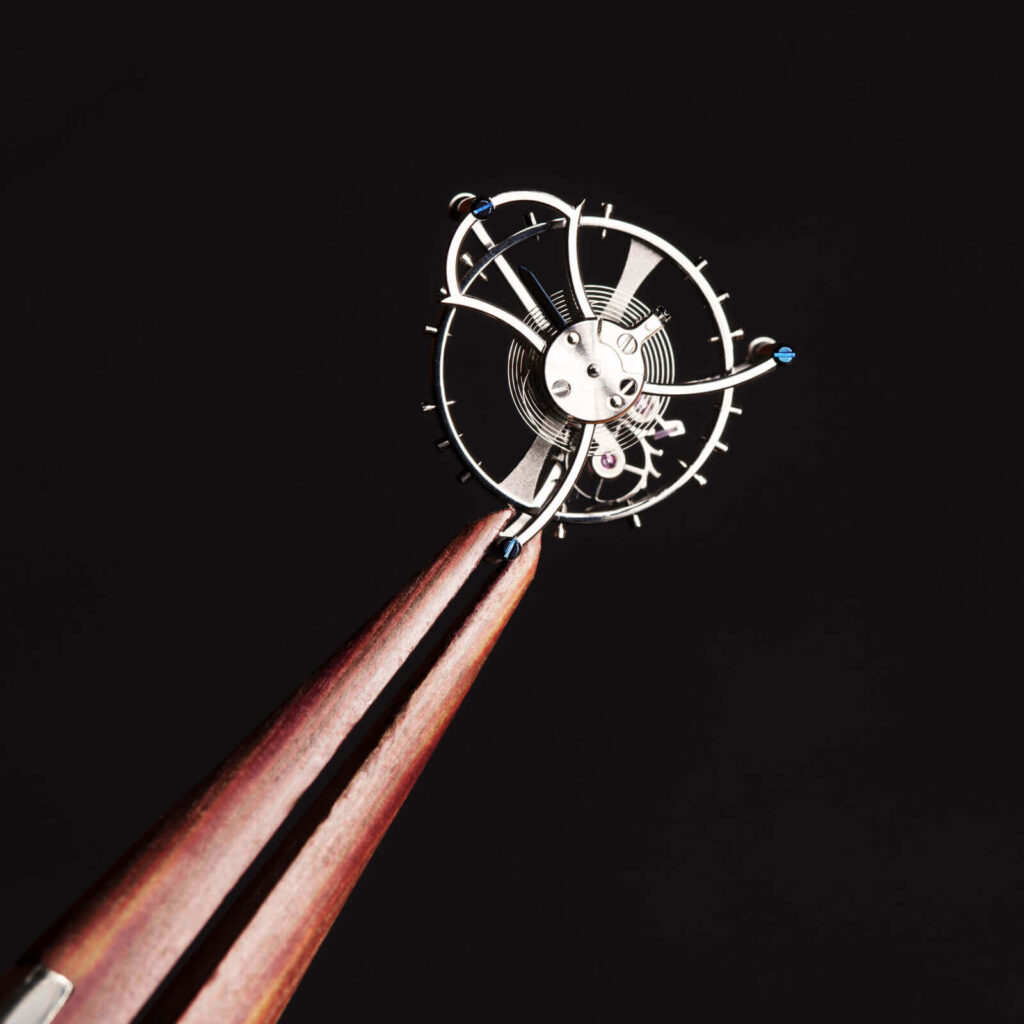
The tourbillon is positioned to the base of the dial. Its cage is lyre-shaped, a historical design dating back to the 19th century, albeit in this instance it is made of ultra-modern Grade 5 titanium. A blued hand on the cage rotates 360° every minute and serves as a small seconds display. The tourbillon cage is comprised of 79 components and weighs a mere 0.25 grams. This remarkably low mass mitigates energy consumption, thereby contributing to the movement’s impressive power-reserve of 60 hours (minimum).
The sapphire crystal, positioned atop the dial, has gently sloping sides that curve downwards to the outer edge of the case middle, hence the model eschews a conventional bezel. To achieve this eye-catching aesthetic, it takes between four to five times more material than a regular sapphire crystal. It also necessitates much expertise to polish the crystal box to a flawless conclusion. Surprisingly, having expended much effort making this upper sapphire crystal, the time-served craftsperson has to repeat the exercise and make a similar crystal box to shroud the underside of the watch head. By equipping the Tourbillon with Three Flying Bridges with upper and lower crystal box sapphire crystals, the Manufacture has imbued the model with a harmonious degree of symmetry.
The Tourbillon with Three Flying Bridges is immediately available worldwide in all authorised Girard-Perregaux retailers.
Further reading