
Jaeger-LeCoultre Reverso Hybris Artistica Calibre 179 Watch Review
The Jaeger-LeCoultre Reverso Hybris Artistica Calibre 179 is the culmination of almost 200 years of watchmaking know-how. A product of the Vallée de Joux, this expression of Haute Horlogerie is equipped with an ingenious Gyrotourbillon, a high complication featuring both a cage and carriage, each rotating at different speeds. In addition, the bridges and plates are enriched with 200 hollows filled with lacquer within the Maison’s Métiers Rares atelier. Angus Davies explores the Swiss marque’s impressive history before taking a deep dive into this model’s numerous complexities.

Image – the Jaeger-LeCoultre Manufacture at night
The Vallée de Joux – a region synonymous with watchmaking
The Vallée de Joux is located approximately 60 km north of Geneva and hugs the border of France. The landscape is chocolate box pretty, comprising mountains, forests, lakes and rivers. During the summer, verdant vistas bathe beneath clear, cerulean skies. However, with the advent of winter, everything changes. White powdery snow coats the land, water turns to ice and the Vallée de Joux assumes a monochromatic appearance.

In times gone by, the arrival of harsh temperatures meant farmers were unable to work the land. Annexed from major conurbations, they chose to hibernate, working indoors, crafting watch movements. With the advent of spring, these movements were collected by specialist traders and eventually sold to watch houses in cities such as Geneva. Back in the day, many watch companies bought third-party movements or ébauches (incomplete watch movements). These were subsequently finished, united with a dial and case, before being regulated and marketed.

Image – the Jaeger-LeCoultre Manufacture
Regional specialities include complicated movements eg tourbillons and minute repeaters, as well as ultra-thin calibres. Paradoxically, while the Vallée de Joux is synonymous with making fine watches that are sold around the globe, it still remains untouched by the grime of industry. Indeed, wherever you choose to roam, you cannot fail to notice the prevailing sense of calm and the area’s breathtaking natural beauty.
Jaeger-LeCoultre depuis 1833
LeCoultre was founded in 1833 by Antoine LeCoultre. Typical of the time, the firm began life in a barn, crafting highly precise timepieces. However, in 1866, the Maison inaugurated its Manufacture in the village of Le Sentier. Unusually for the time, the building accommodated many watchmaking trades under one roof.
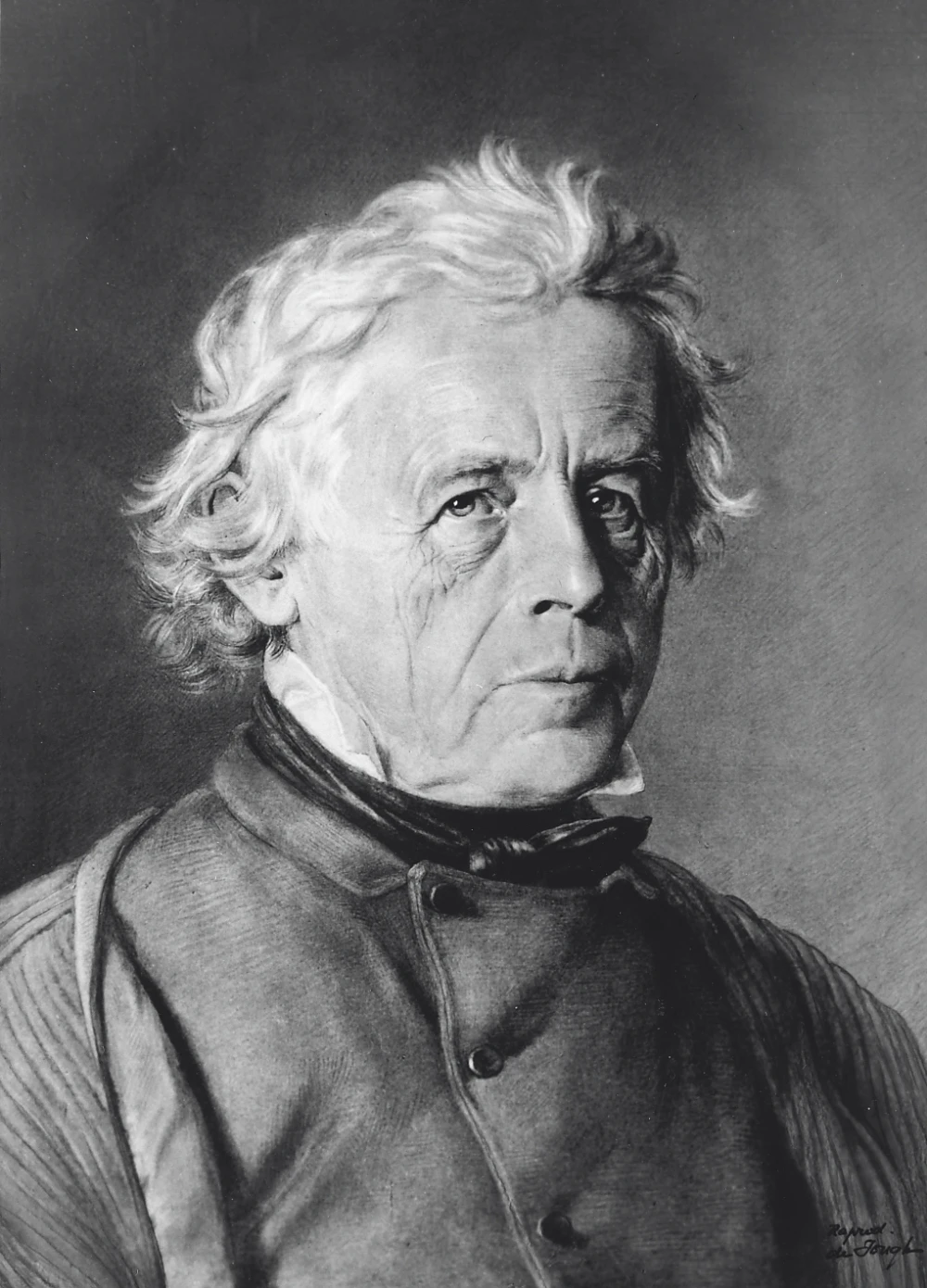
Image – Antoine Le Coultre (1803-1881)
Upholding local tradition, LeCoultre supplied other watch companies with its movements, including esteemed companies such as Audemars Piguet, Patek Philippe and Vacheron Constantin. LeCoultre also made watches bearing its own name.
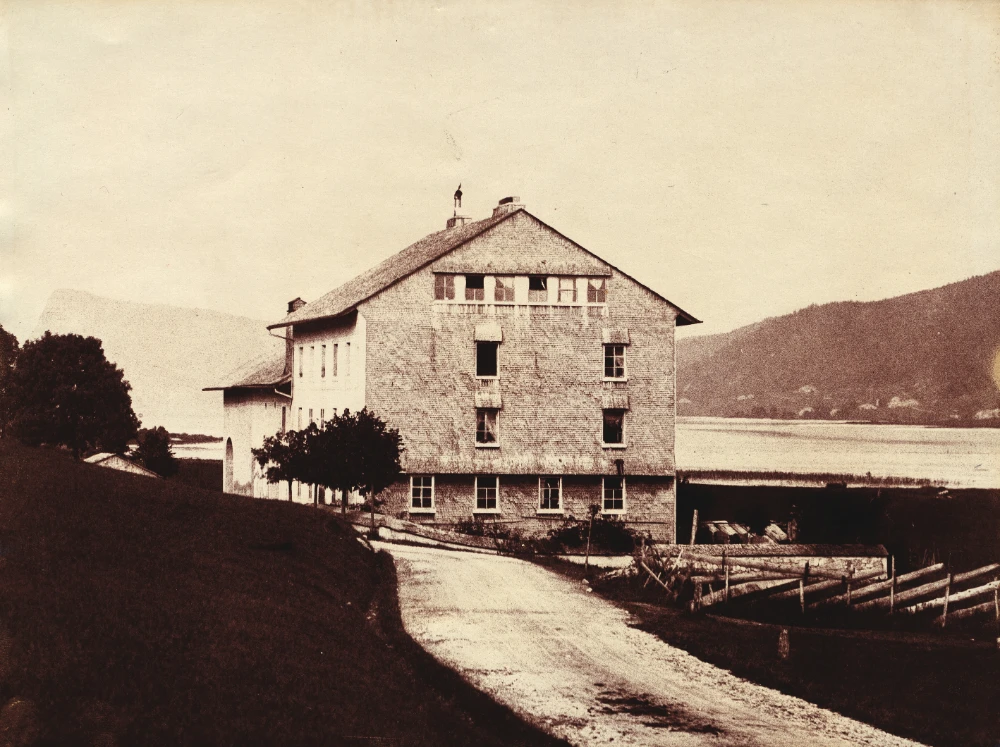
Image – old farmhouse/barn where LeCoultre began its operations in 1833
In 1903, Jacques-David LeCoultre joined forces with Parisian watchmaker Edmond Jaeger and the Maison was renamed Jaeger-LeCoultre, a brand that is now familiar to legions of watch aficionados. Over the years, this highly innovative firm, still headquartered in Le Sentier, has registered 430 patents and created 1300 unique calibres, a remarkable achievement unsurpassed by its rivals.
Jaeger-LeCoultre Reverso
While Jaeger-LeCoultre has much credibility in crafting movements, its talents also extend to design. Indeed, over the years it has masterfully conceived handsome cases and pulchritudinous dials. In 1931, the Maison famously received a request from British colonial army officers stationed in India. They sought a watch sufficiently robust to withstand the rigours of a polo match.
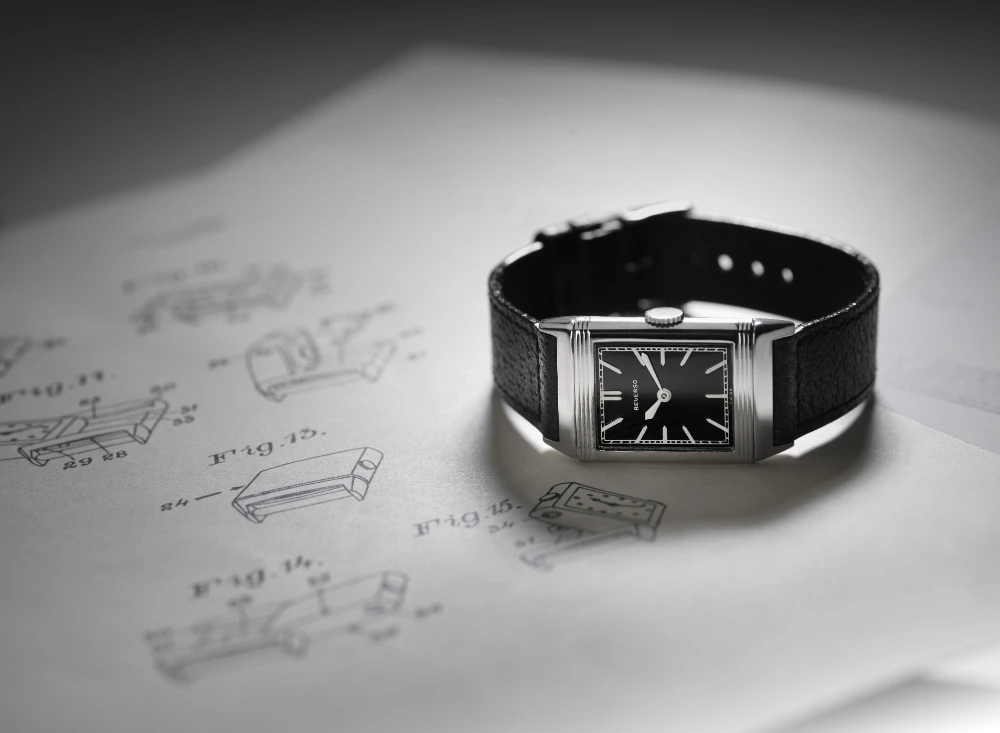
Image – historic Reverso from 1931 (© Johann Sauty)
The Reverso, a rectangular watch, allowed the wearer to flip the inner case over, shielding the dial and glazing from harm. Beyond its functional attributes, the model embraced Art Deco design with gadroons positioned above and below the dial. Like most Art Deco objects, the Reverso’s allure has not diminished despite the passing of years. However, Jaeger-LeCoultre has never rested on its laurels, creating several iterations of the Reverso equipped with complications. In some instances, the Swiss marque has also endued the dorsal plane of the inner case with hand engravings, gems and various other forms of Métiers d’Art.
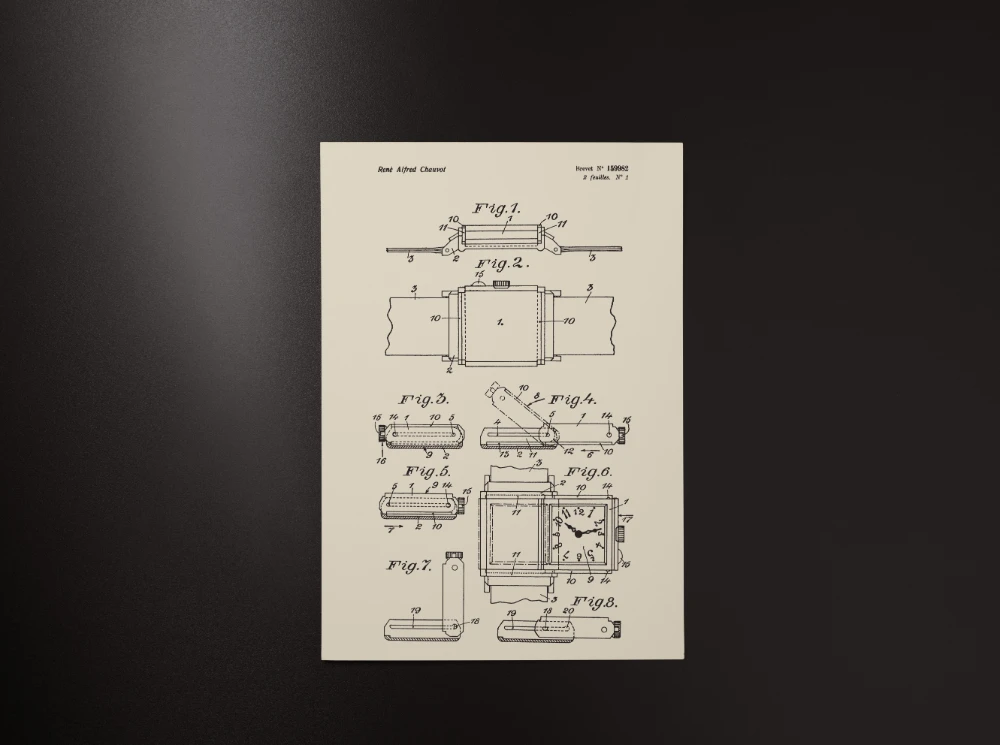
Image – one of several patents relating to the Reverso
In 1994, the Manufacture unveiled the Duoface movement, providing the wearer with the means of viewing time in two different locations, one on the upper dial and a second on the reverse. Jaeger-LeCoultre has also created several Reverso models endowed with high complications.
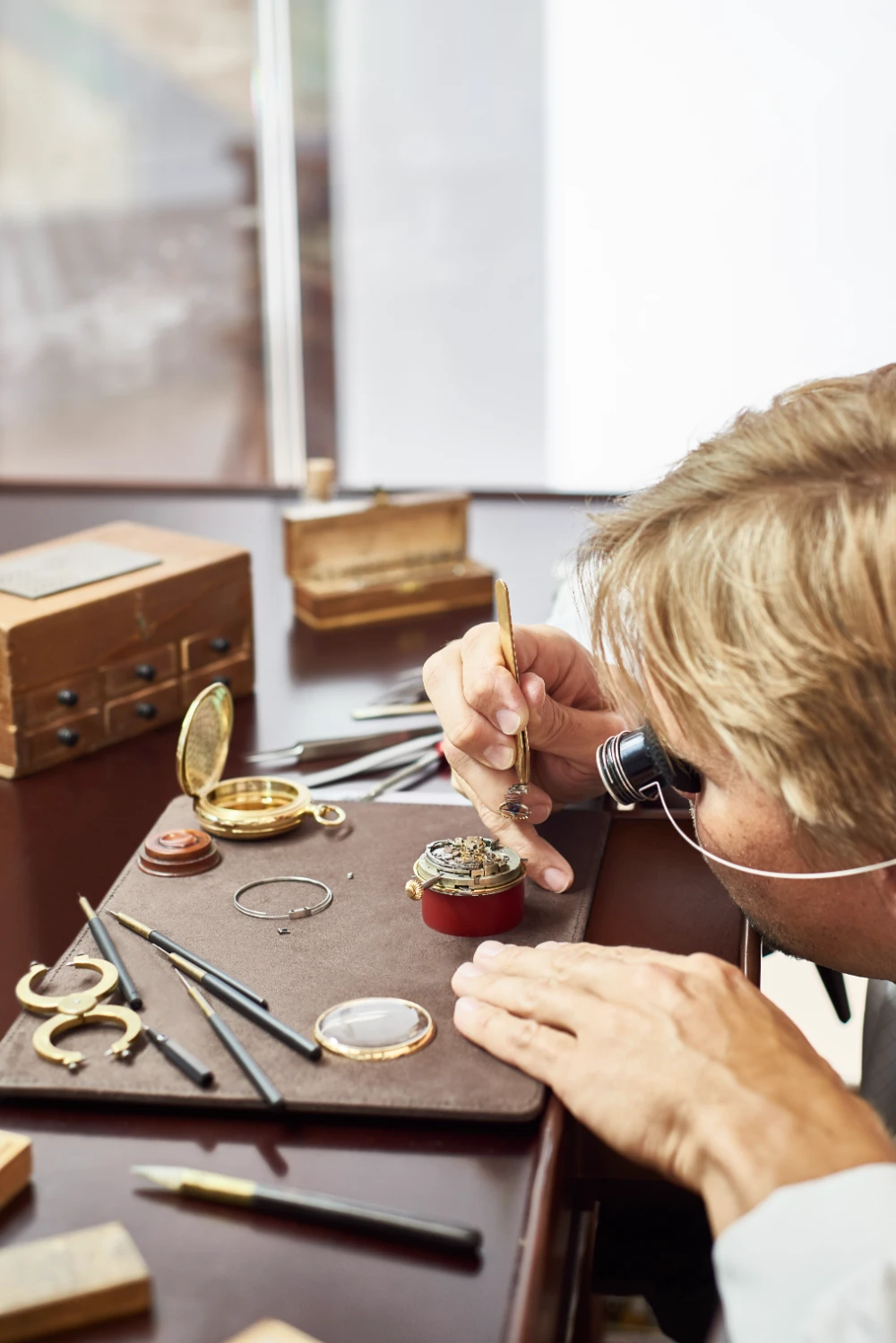
Image – Jaeger-LeCoultre watch restoration workshop
The Reverso Hybris Artistica Calibre 179 features a Duoface display, artisanal crafts and a multi-axis tourbillon, aka ‘Gyrotourbillon’. This particular model wonderfully showcases the company’s vast array of in-house talents and is the focus of this article.
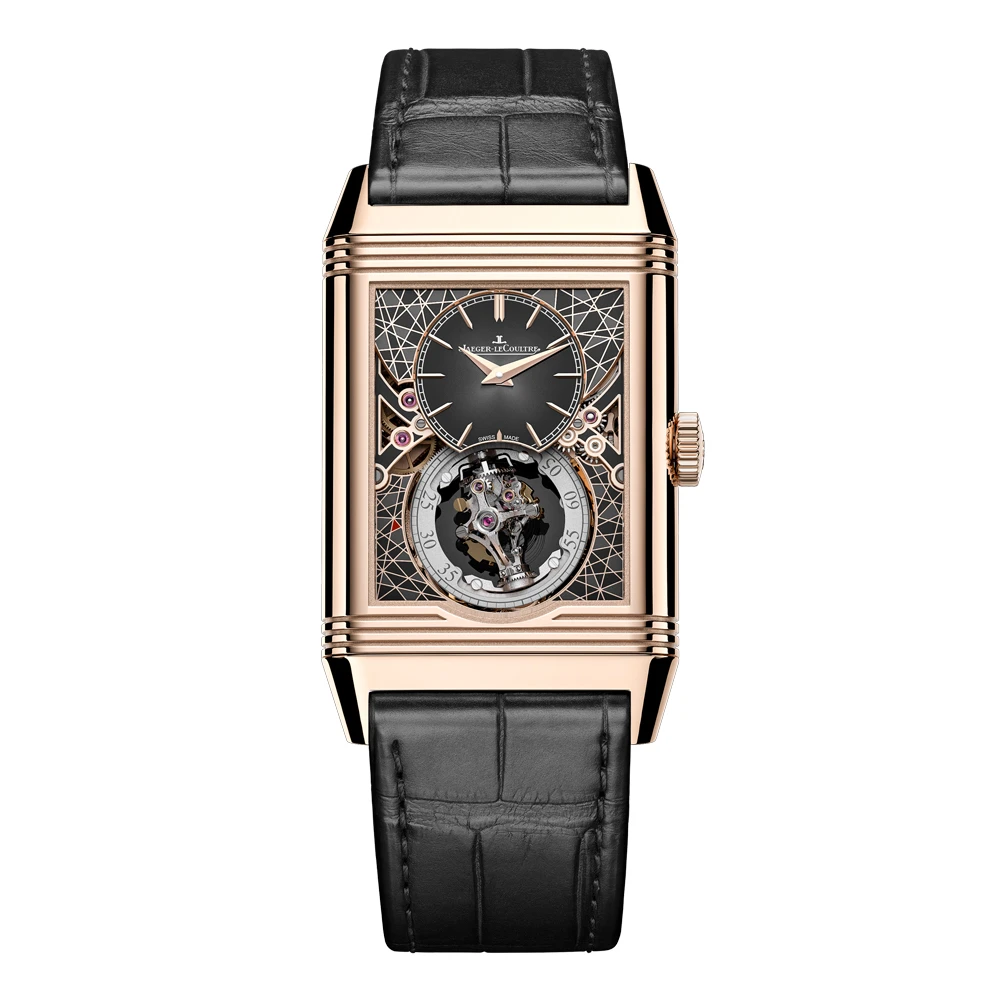
Jaeger-LeCoultre Reverso Hybris Artistica Calibre 179 – front dial
The dial is presented within the usual Reverso rectangular frame; however, it is not a conventional dial per se. It is primarily composed of two plates. One plate, located at the base of the display, sits atop the movement and frames the Gyrotourbillon. It’s crafted from 18K pink gold and has been precisely cut with a laser to form an intricate motif of recesses.
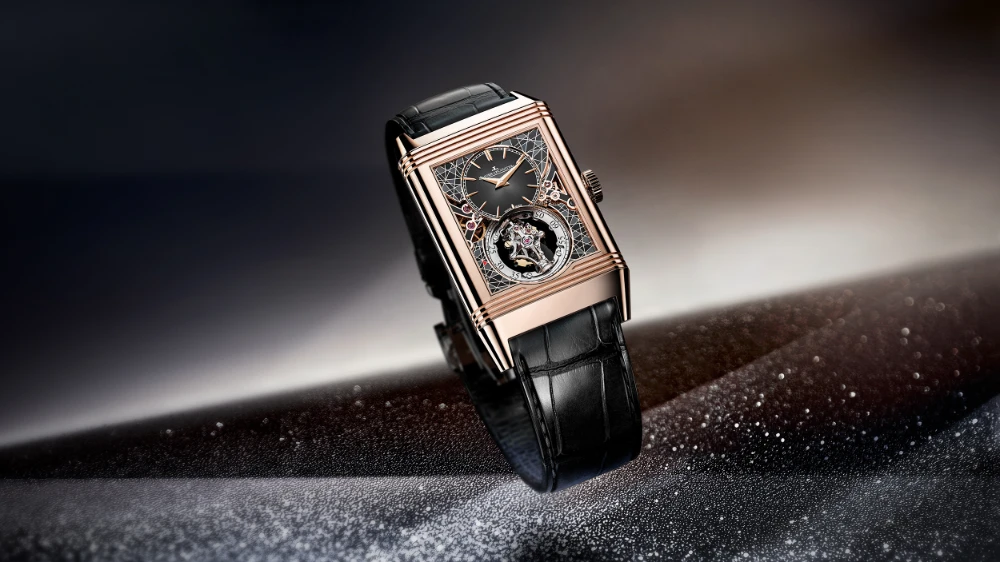
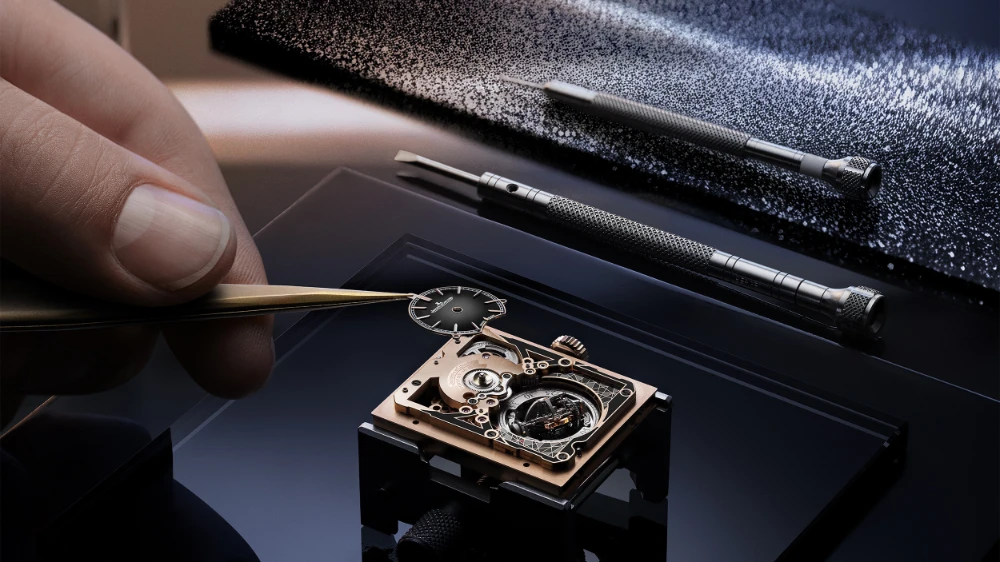
A second plate, again made of 18K pink gold and also endowed with multiple recesses, is positioned towards the top of the display. This plate sits on a higher plane and plays host to a discrete circular dial, indicating the prevailing hours and minutes with golden, faceted Dauphine-style hands. The circular dial is lacquered, appearing grey near its centre and assuming a black hue near its outer edge. Applied indexes denote the hours, while a white chemin de fer collaborates with the minute hand, aiding readability. The circular dial is truncated at its base, affording unhindered views of the Gyrotourbillon below.
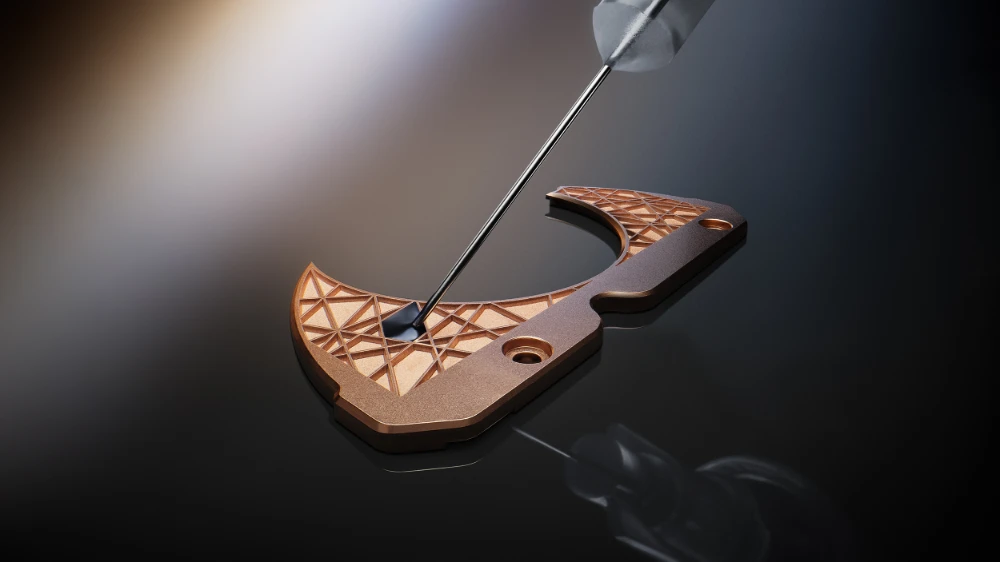
The Gyrotourbillon (see later) is framed with a seconds track. The aforementioned recesses, some 200 in total, are individually filled with either grey or black lacquer within the company’s Métiers Rares atelier, an in-house facility dedicated to artisanal crafts. This lacquering know-how also adorns openworked sections of the movement plate, running east-west.
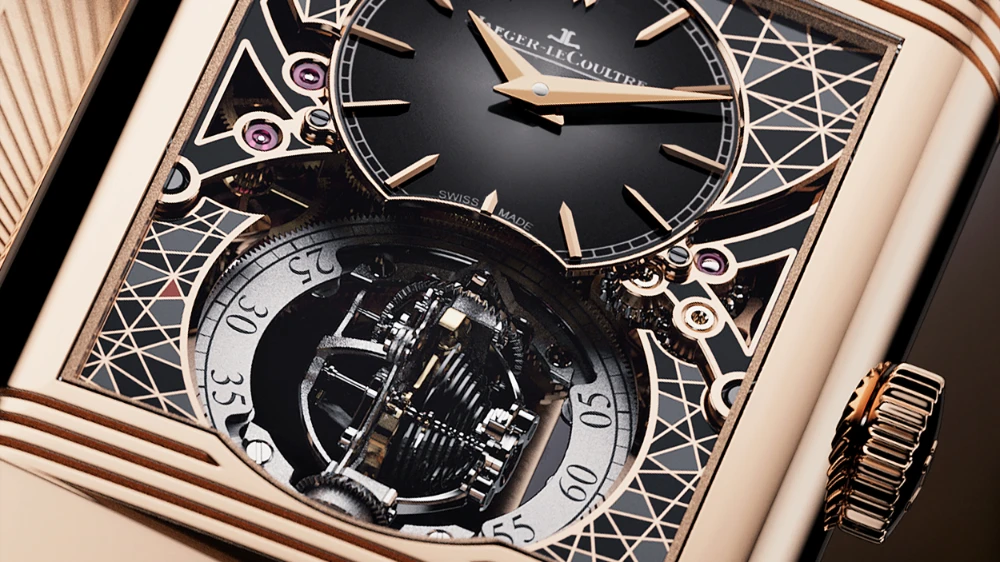
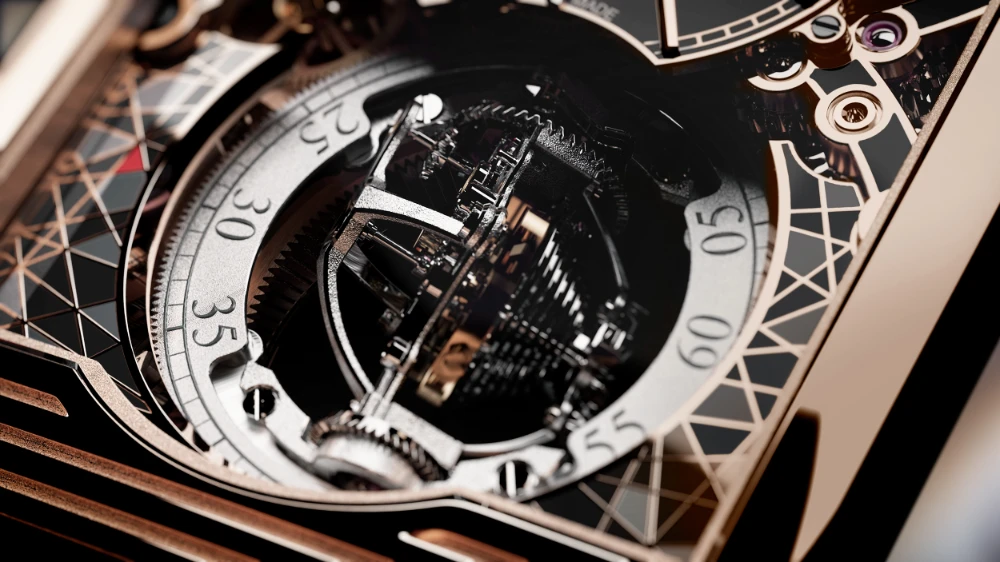
Close examination of the display reveals glimpses of the keyless works, jewels and wheels. The circular dial and Gyrotourbillon (with its seconds track) occupy a similar amount of space, conferring symmetry and imbuing the composition with a harmonious mien.
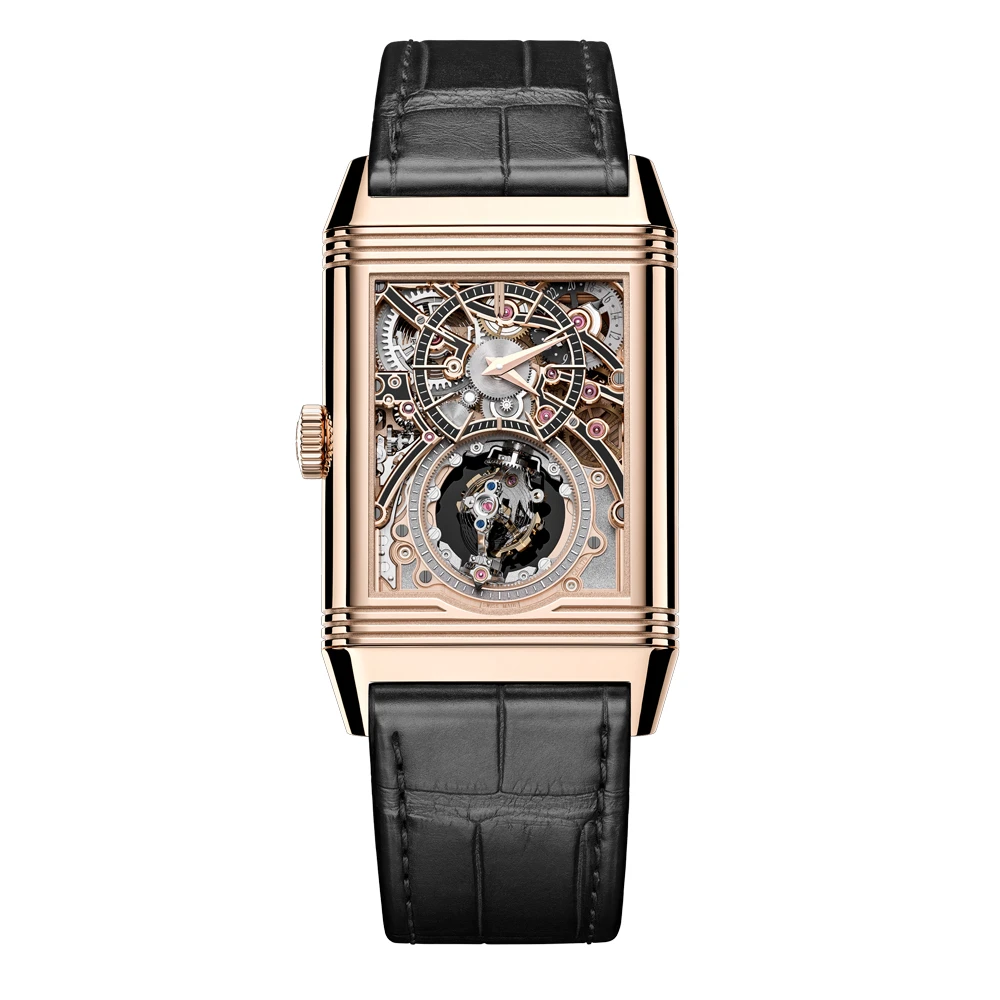
Jaeger-LeCoultre Reverso Hybris Artistica Calibre 179 – back dial
In common with the groundbreaking watch of 1994, the Reverso Hybris Artistica Calibre 179 features two dials, courtesy of its ingenious Duoface mechanism. The back dial can display the time in a different timezone, making it ideal for overseas travel.
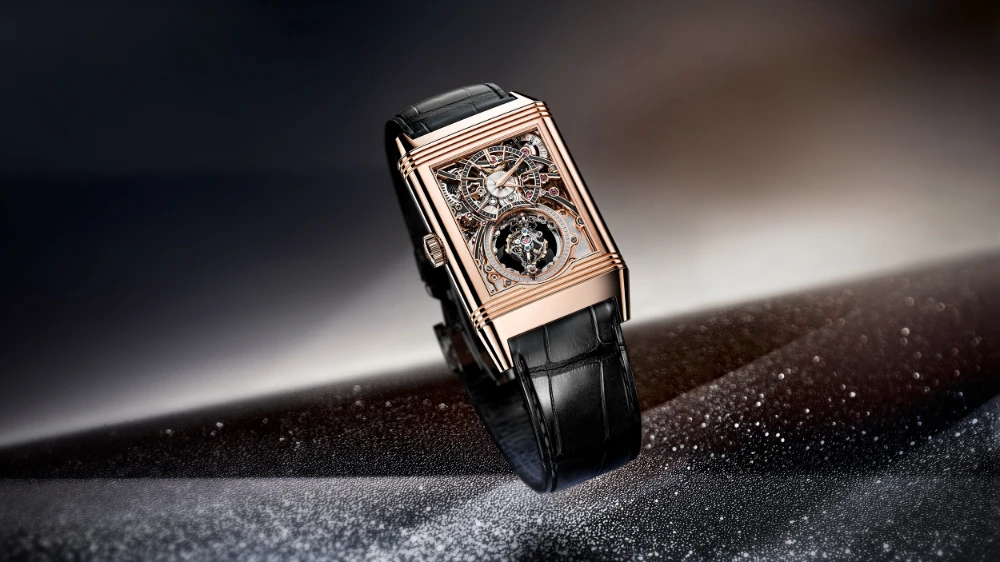
Similar to the front dial, hours and minutes are indicated with Dauphine-style hands. However, the display eschews a conventional dial, revealing an openworked movement that provides a fascinating horological vista, populated with exposed wheels, levers, jewels and even the mainspring. Once again, the Gyrotourbillon performs its seductive dance at the base of the dial, while various beam-like sections, filled with black lacquer, provide tonal contrast.
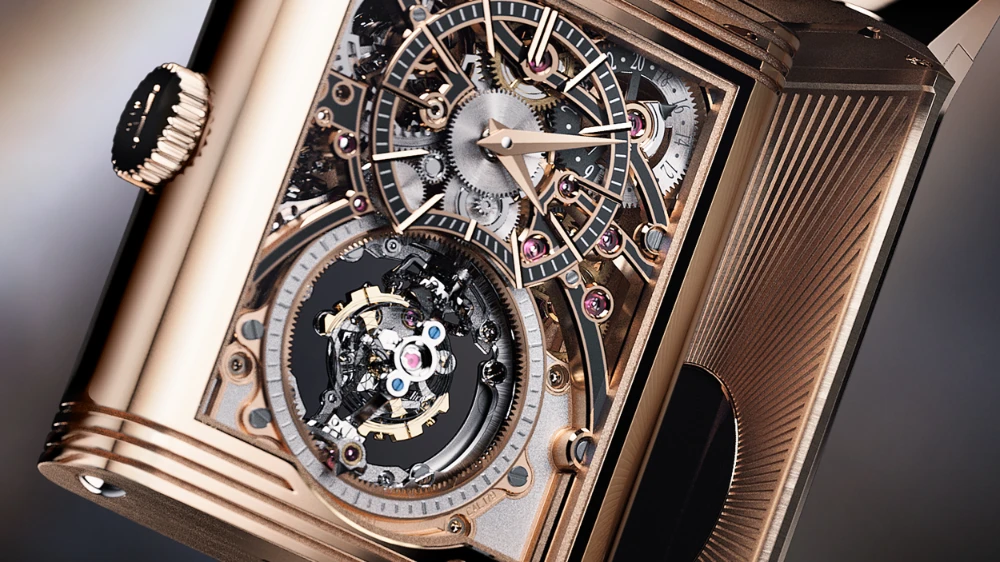
A day/night indicator is located in the north-easterly region of the dial. Featuring a 24-hour rotating disc marked with a 24 hour scale and incorporating grey and black sections, this helps mitigate the risk of phoning home at an unsociable hour.
Jaeger-LeCoultre Reverso Hybris Artistica Calibre 179 – case
A case within a case, comprising over 50 individual components, the Reverso’s housing is a feat of engineering. With the front dial uppermost and the crown positioned to the right, the inner case is delineated from the outer case with two sets of gadroons, three above the dial and three below. A gentle push on the left flank of the inner case is all that is required to dislodge it from its resting position and then, with minimal effort, the wearer can flip it over, courtesy of its ingenious swivelling mechanism, and bring the back dial into play.
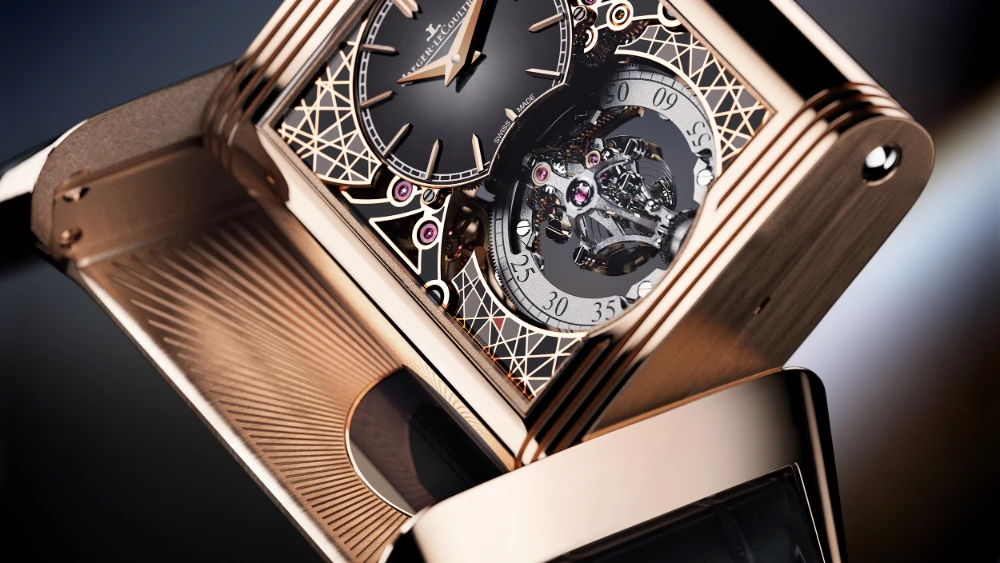
An exemplar of Art Deco design, the Reverso exudes a timeless charm. The outer case or ‘cradle’ features triangular lugs that smoothly flow towards the strap, while a slim rectangular section unites the upper and lower lugs. The inside of the cradle acts as an artistic canvas that, in this instance, is adorned with a black lacquered disc with straight lines emanating from it. This elaborate pattern is revealed merely by swivelling the inner case, while the lacquered disc acts as a foil for the Gyrotourbillon as it performs its choreographed dance, perpetually pirouetting and rolling.
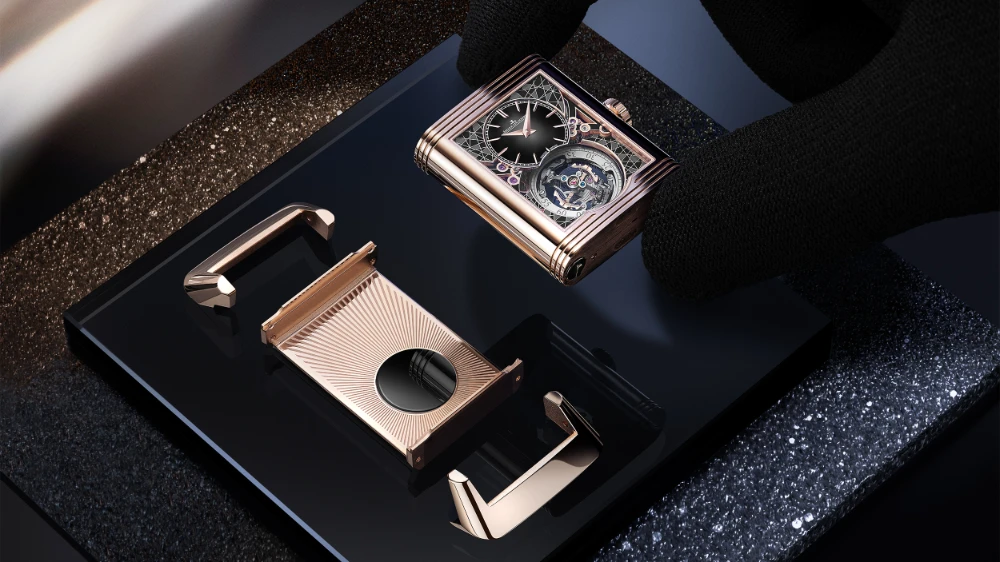
The 18K pink gold case measures 51.2 mm x 31 mm and has a thickness of 13.63 mm. Comparisons with round watches are meaningless. In common with all Reverso models, the short triangular lugs draw the strap close, making the watch appear smaller than its stated dimensions. That said, the Reverso Hybris Artistica Calibre 179 is larger than many of its Reverso siblings, primarily due to the extraordinary complexity housed within its case. Indeed, considering the incredible complexity of the Calibre 179, one has to question why the case isn’t larger.
Jaeger-LeCoultre Calibre 179
The hand-wound Jaeger-LeCoultre 179 showcases the Swiss marque’s mechanical virtuosity and demonstrates its artisanal expertise. Unlike most watch movements, which are typically made of brass and subsequently rhodium-plated, the Calibre 179 is crafted in 18K pink gold. Beyond its glorious appearance, gold is one of the least reactive materials, obviating the need for plating. However, JLC personnel must exercise great care when working on the exposed movement as the softness of the material makes it liable to dents and scratches. Needless to say, the team in Le Sentier is more than adept at working with this noble metal.
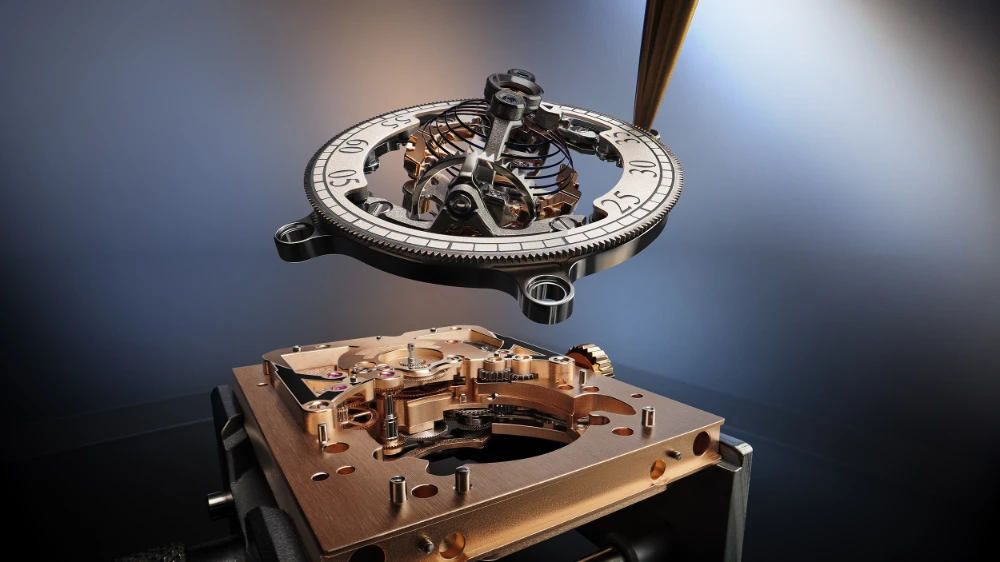
What is a tourbillon?
In the late 18th century, Abraham-Louis Breguet recognised that gravity would have an adverse influence on a movement’s rate. His solution was to place the escapement and the regulating organ within a rotating cage that revolved 360° every 60, 240 or 360 seconds, countering positional influences. Breguet patented his invention in 1801. Designed for a pocket watch, held in a vertical position, his invention improved chronometric performance.
In terms of a wristwatch, the relevance of Breguet’s invention is often questioned. Unlike a pocket watch, a wristwatch is subject to a myriad of positions, diminishing its value. However, Jaeger-LeCoultre’s solution, the Gyrotourbillon, silences any dissenting voices.
What is a Gyrotourbillon?
Invented in 2004, the Gyrotourbillon is a multi-axis tourbillon. The Calibre 179 features the ‘fourth evolution of the Gyrotourbillon’ that was ‘developed specifically for the Reverso’. The regulating organ (balance and balance spring) sits within a titanium cage that rotates 360° every 16 seconds. In turn, the titanium cage sits in a rotating peripheral carriage, positioned perpendicular to the cage, rotating 360° every 60 seconds. With the cage and carriage having different angles of rotation and turning at different speeds, they collectively ameliorate positional errors.
A tourbillon is usually supported by a bridge above and below the carriage, whereas a ‘flying tourbillon’ eschews the upper bridge and is supported solely from below. In this instance, the Gyrotourbillon’s peripheral carriage is supported from the side and runs on a ring of ball bearings. Tourbillons, flying tourbillons and Gyrotourbillons are often selected for their chronometric performance, but they are also prized for the visual theatre they provide. With no bridges to mar the view, the Gyrotourbillon delivers a dynamic spectacle par excellence.
Understanding isochronism
Clocks and watches often feature a mechanical oscillator. This is typically a pendulum in the case of a clock or a regulating organ within a watch (comprising the balance wheel and balance spring). The principle is that, irrespective of the swing (amplitude) of the pendulum or the balance wheel, the time taken to complete one cycle remains the same. This physical phenomenon is termed ‘isochronism’ and is essential to precise timekeeping. Indeed, it is the combination of the regulating organ and the escapement that is responsible for controlling the flow of time.
In a perfect world, all oscillators would be isochronous; however, there are several factors that can adversely affect isochronism. According to the FHH (Fondation Haute Horlogerie), the ‘main factors that disrupt the isochronism of the balance wheel and hairspring are: the escapement, imbalances in the balance wheel and hairspring, play in the hairspring between the regulator pins, centrifugal force, magnetic fields, etc.’
In the highest echelons of watchmaking, known as ‘Haute Horlogerie’, great minds have expended many hours seeking to optimise isochronism in the pursuit of precision. In this instance, Jaeger-LeCoultre has clearly been busy burning the midnight oil.
Although most watches feature a flat balance spring, the Calibre 179 breaks with convention and is equipped with a semi-spherical balance spring. This causes the balance spring to breathe or develop more concentrically, enhancing isochronism. Moreover, the shape of the balance spring, pulsing at the heart of the balance wheel, contributes to the visual spectacle of the Gyrotourbillon.
Usually, a balance spring sits within a balance wheel that resembles a ring of golden metal. However, the Calibre 179 is equipped with the Gyrolab balance wheel, which the brand describes as a ‘double-anchor shape’. Again, by optimising the geometry of components, Jaeger-LeCoultre has been able to achieve superior chronometric performance.
Finishing
The finest timepieces feature beautifully decorated components. Finishing or ‘finissage’ is employed to remove signs of machining, including burrs, which could impair the operation of moving parts. Furthermore, finishing enhances corrosion resistance and imbues components with an almost jewel-like brilliance.

As one would expect of this esteemed company, the movement at the heart of the Jaeger-LeCoultre Reverso Hybris Artistica Calibre 179 has been painstakingly crafted. The brand has provided a wonderful image of a cabron (an abrasive wooden stick), being used in conjunction with an abrasive paste to refine a bevelled edge, culminating in a surface that wonderfully glints in the light.
Strap
Straps seldom justify column inches, but this Jaeger-LeCoultre model has an interesting feature worthy of comment. Supplied on a black alligator leather strap, the Reverso Hybris Artistica Calibre 179 is presented on an 18K pink gold adjustable folding buckle. But what differentiates this buckle from others is that it features a ‘double-wheel system that allows for micro-adjustments to the nearest 0.5 mm’. Comprising 46 parts and weighing approximately 30 grams, the buckle is wonderfully engineered and demonstrates a level of fastidiousness that remains rare.
Closing remarks
The Jaeger-LeCoultre Reverso Hybris Artistica Calibre 179 is a tour de force. Crafted by a Manufacture that has a rich pedigree of making extraordinary movements and timepieces, its specification incorporates small enhancements that contribute to the watch’s overall performance. In some companies, the bean-counters would argue that the extraordinary amount of time expended on some details is too costly or unnecessary. Thankfully, innovation is allowed to flourish at the Swiss marque. Moreover, the pursuit of chronometry, even when potential gains are small, constantly motivates the company’s watchmakers in their quest for perfection. Having created this great work, it seems extraordinary that the brand’s story began in a barn.
Further reading
https://www.jaeger-lecoultre.com/
Technical specifications
- Model: Jaeger-LeCoultre Reverso Hybris Artistica Calibre 179
- Reference: Q39424E3
- Case: 18K pink gold, dimensions 51.2 mm x 31 mm, height 13.63 mm, water resistance 3 ATM (30 metres), sapphire crystal to front and rear
- Functions: hours and minutes on both dials; second time zone with 24-hour indicator on reverse dial,
- Gyrotourbillon (visible on both front and reverse dials)
- Movement: Calibre 179, hand-wound movement, power reserve 40 hours, 108 components
- Strap: black alligator leather with small scale lining; 18K pink gold (750/1000) adjustable folding buckle
- Price on application
- Limited Edition: 10 pieces