
Lionel a Marca, CEO of Breguet
Lionel a Marca, CEO of Breguet, differs from the ‘usual’ business leader. He has the necessary commercial skills to run a prestigious brand, but he is also a trained watchmaker and has performed a variety of technical roles during his lengthy career. Angus Davies chats to Mr a Marca, eager to learn more about the prestigious Maison, much admired by the cognoscenti.

When it comes to art there is an implied obligation that its custodian preserves it for the enjoyment of future generations. I am reminded of this as I sit across from Lionel a Marca, CEO of Breguet. His role is not merely overseeing the operation of a watch brand, but rather he is the custodian of the most esteemed name in watchmaking.
Abraham-Louis Breguet – the greatest name in watchmaking
Abraham-Louis Breguet was born in Neuchâtel, but found fame in Paris. He opened his workshop in the Ile de la Cité and went on to be revered by royalty and aristocracy alike. Indeed, from the early stages of his career, Breguet recognised the importance of wealthy patrons. His commercial prowess was an important characteristic of his eponymous Maison. This was manifest with his inspired idea of selling ‘souscription watches’. These comparatively simple watches required the would-be owner to make a down-payment in advance (approximately 25%), providing an ingenious means of enhancing cashflow.

Monsieur Breguet was an aesthete, conceiving stylistic details that have never aged despite the passage of time. Breguet numerals, Breguet hands, caseband fluting and guilloche dials continue to engender desire among the cognoscenti.
However, Breguet is best known for his ingenuity. He patented the Tourbillon in 1801 and invented the Breguet overcoil, the Pare-chute, the first chiming watch to use a gong spring rather than a bell, the natural escapement, the Sympathique clock, etc.
Arguably, what makes Breguet’s technical achievements so remarkable is that he worked in an era devoid of CAD, CNC, wire erosion and profile turning machines. Moreover, many of his inventions are still in use to this day.
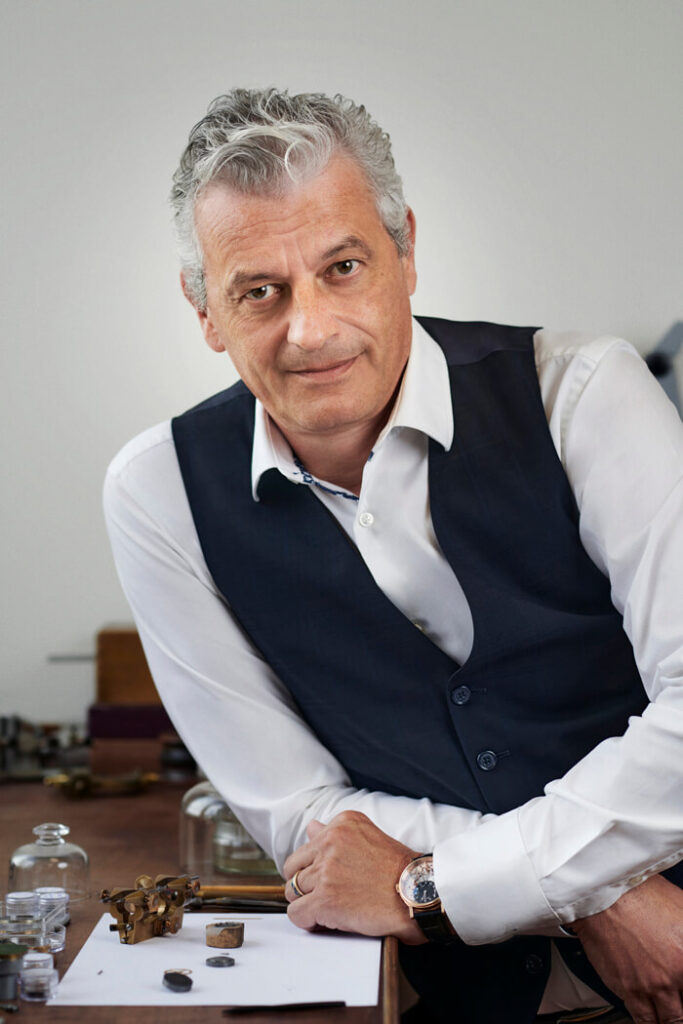
In conversation with Lionel a Marca, CEO of Breguet
As I sat across from Mr a Marca, there were two watches on the table in front of us: a Classique Tourbillon Extra-Plat Anniversaire 5365 and a Marine Hora Mundi 5557. We began our conversation discussing the 5557, a recent addition to the Maison’s product portfolio.

Image – Classique Tourbillon Extra-Plat Anniversaire 5365
Mr a Marca provided a detailed overview of the Marine Hora Mundi 5557, pointing out the model’s many attributes including its ‘GMT function with memory’. This reference will be discussed in detail by my colleague, Mark McArthur-Christie, in the coming weeks, hence I won’t pre-empt his review, albeit I will say that it’s a very impressive timepiece.

Image – Marine Hora Mundi 5557
Instead, on this occasion, I chose to focus on a series of questions relating to Mr a Marca and his role at Breguet.

AD: I would have thought there is a lot of responsibility in running a company like Breguet, after all the brand is viewed by many as ‘la crème de la crème’. Breguet has a fantastic name in the world of horology. For example, the Maison has patented numerous inventions. It must be very difficult to run the company without compromising the Breguet name.
In my opinion, Breguet can never be avant-garde or very different from what it has always been. Is that true?

LaM: Yes, I’ve an enormous responsibility to ensure that Breguet, who was the watchmaker of the 19th century, will also be a watchmaker of the 21st century. It’s a challenge.
I’m going to say something to you about me which very few people know. I’m basically a watchmaker-repairer (horloger-rhabilleur). I’ve always been a fan of Blancpain, especially during my apprenticeship.
I worked for 20 years with Marc A. Hayek at Blancpain. As a watchmaker-repairer and horology technician, I’ve always liked watchmaking developments more than the watches themselves. One person got me to discover Breguet: Marc A. Hayek. He succeeded in instilling in me a love for detail. Because with Breguet, everything is in the detail.
That’s when I fell in love with the brand, head over heels. I have always been impressed by the innovations and patents of Abraham-Louis Breguet. I’m a Breguet fan, in all meanings of the term, whether it be the technicality of a timepiece or its aesthetics.

AD: I’m smiling because I’ve always loved Breguet. What I find interesting is the pare-chute, the tourbillon, …. the innovation, the styling, and, of course, the subscription watch. So, it is not only the aesthetics but the technical side as well as the business side which distinguishes Abraham-Louis Breguet as the greatest watchmaker of all time.
LaM: I totally agree with you. The technical aspects relating to everything he created were incredible. He was a designer, an astronomer, a mechanical genius, a watchmaking genius and a commercial genius as well. He was the first to open comptoirs (trading posts) in Paris, Spain and Russia. He was also the inventor of crowdfunding, as the subscription watch was a form of crowdfunding.
He was also the inventor of CRM with its customer registers, that would today be the database that every brand owns. Customers can still have their name entered in the official archives in Paris, where they will sit alongside the names of the company’s famous patrons dating back to 1775. Breguet invented everything that’s part of today’s watchmaking world.
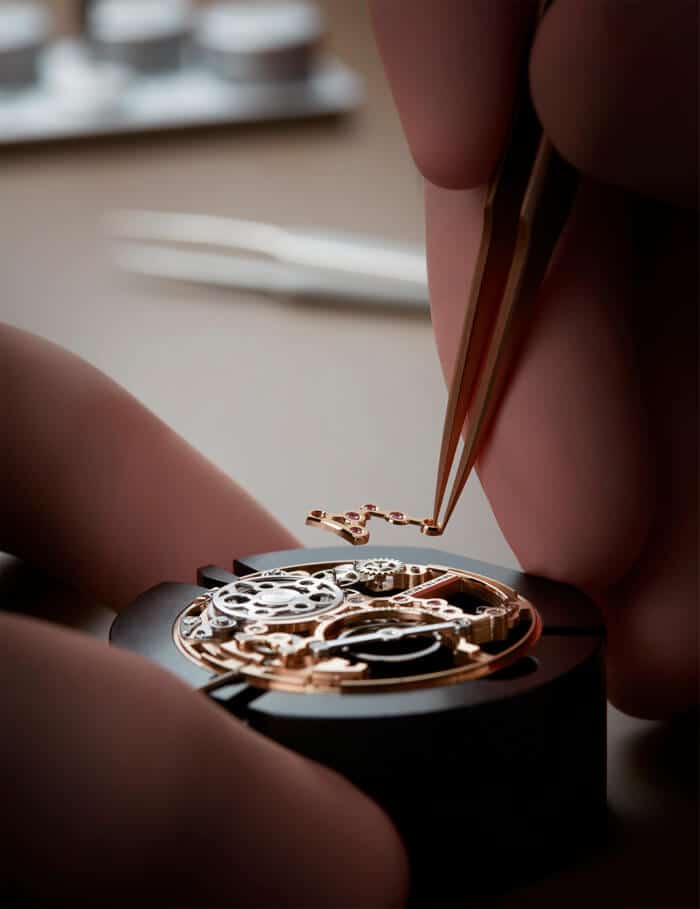
AD: I believe you’re a watchmaker by trade and you were responsible for creating the Omega Tourbillon Central? Today, you are based in the Vallée de Joux. Do you originate from there?
LaM: No, not at all. I’m from the Swiss Jura, where there is a watchmaking school called ‘École d’horlogerie de Porrentruy’. That’s where I learned my trade.
Bienne is very close and that’s where I moved to. I worked for ETA, where I was part of the team developing the Omega Tourbillon Central. Two engineers, Messrs Beyner and Grimm were in charge of the project. They worked with a drawing board. They used to draw the wheels and task me with producing them.
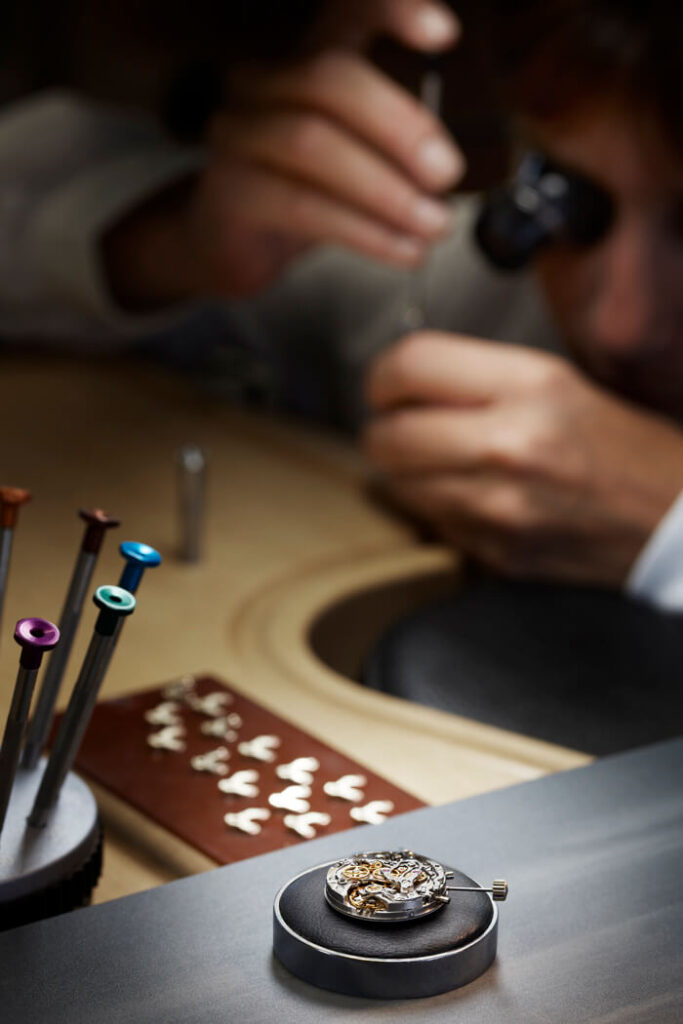
AD: Obviously there are benefits in being a trained high-level watchmaker in your current role as a CEO. But there must also be some disadvantages. I suspect that sometimes you make judgements as a watchmaker rather than as a CEO – is this true?
LaM: If we’re talking about construction, I understand the constraints. If we’re talking about the case and bracelet (habillage), once again, I know and understand the constraints. I understand the manufacturing complexities involved and I have a good idea of timescales. That’s something I did for 20 years, so it’s one of my strengths.
Then, when I think about a product, I have to set aside that part of me which is a highly technical watchmaker. And then, there is another concept that comes on top of that, which is cost. How much is it going to cost? One can create a beautiful timepiece which is impossible to sell.
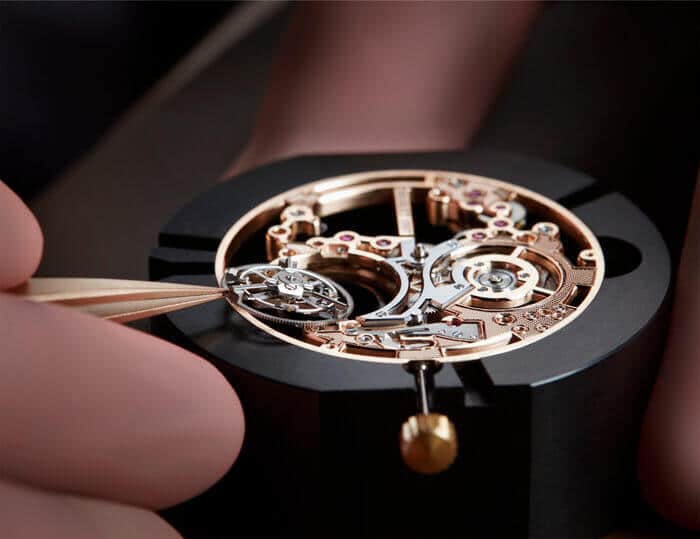
AD: Some time ago, I was shown a watch and was asked what I thought of it. I said it was great but I asked who was going to be the customer for that watch, who was actually going to buy it… just because you can make it, does not mean you should. You have to think about the market. But you’re commercially savvy, as well as being a watchmaker, from what you’re saying.
LaM: Yes, having worked on products for Marc A. Hayek for 20 years, market and customers’ needs need to be considered. Not only the product, but its positioning in the market, the right benchmark, the right price – all of this comes into play. What are we going to say about the timepiece? What’s the USP that we’ll be able to promote? I’ve been doing this for 20 years.

AD: Is there much cross-fertilisation within the Swatch Group? Do you phone the CEO of Blancpain and ask him whether this or that can be done?
LaM: As you can imagine we would talk about all sorts of things together for so many years. With Marc A. Hayek as well and CEOs of other brands such as Omega. We talk to each other a lot. Whether about the market or other matters. Swatch Group is a big family. I’ve been in it for the last 30 years, so I know everybody.
The strength of the group is that it has the capacity to manufacture numerous components and it has much production know-how in Switzerland. There is an emphasis on production. We know what’s involved in producing a case, a movement and the rest. There is enormous know-how within the Swatch Group. We’re talking about 156 manufacturing plants.
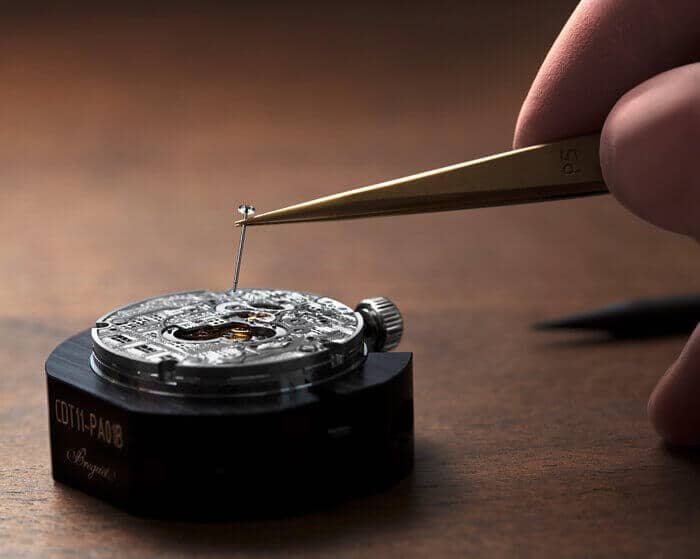
AD: At Breguet, you have vast expertise when it comes to artistic crafts such as guillochage, enamel work etc. How do you perpetuate that know-how for future generations? These are trades that could very easily disappear. As I understand it, there is no formal training course that you can do if you want to learn how to do guillochage.
LaM: Mr Nicolas G. Hayek senior, who founded the group, was determined to purchase the rose engines lathes when Breguet was purchased. He also set up, within Breguet, a training programme for engine-turners. The same goes for other skills inherent to the watch industry. These are genuine skills, authentic to Breguet. Breguet has all of this know-how. It’s perpetuated because we train engine-turners, we train enamellers, we train people in all of these artistic crafts. All this is done in-house at Breguet. This was the vision of Mr Nicholas G. Hayek and it remains our goal to perpetuate this.
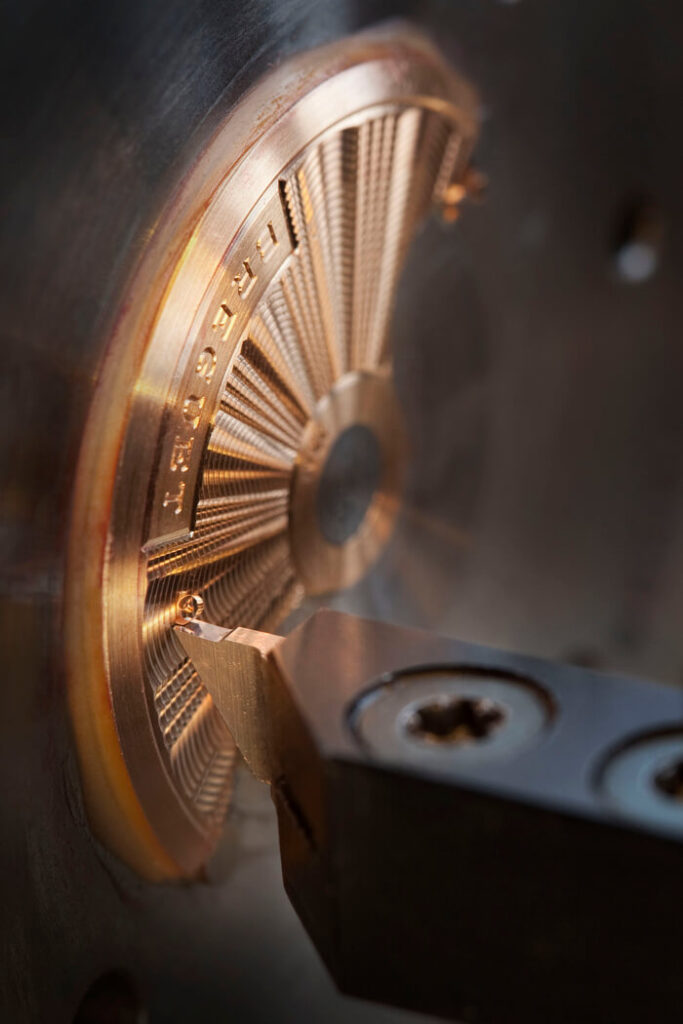
AD: Does Breguet make movements for other companies eg Blancpain?
LaM. No. Breguet only makes movements for Breguet watches and we never sell our movements to other brands within the group.
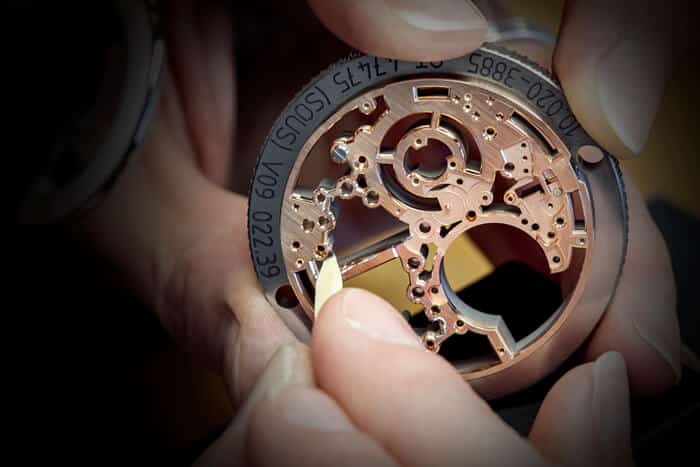
AD: Breguet was obviously an innovator. As we said before, he invented lots of things. In 10 or 20 years time, what do you think will be the big innovation at Breguet? Can you tell me?
LaM. No, I can’t [laughter]. We have projects that are in the pipeline – some beautiful things. We obviously have innovative ideas. Will they revolutionise watchmaking? Maybe.
Closing remarks
As I listened to Lionel a Marca, CEO of Breguet, I found him surprisingly different from most CEOs that I have met. He is not only blessed with a well-developed understanding of business and, in particular, the watch market, he is also an accomplished watchmaker himself. His know-how extends to some highly technical domains beyond the watch bench and he clearly has a deep understanding of product development and watch production. He is a multi-talented individual and yet appears refreshingly modest.
For a long time, I have been aware of the incredible industrial capabilities of the Swatch Group. For some of the group’s marques, operating in lower-priced market segments, the know-how and economies of scale translate into products that deliver an amazing quality-price ratio.
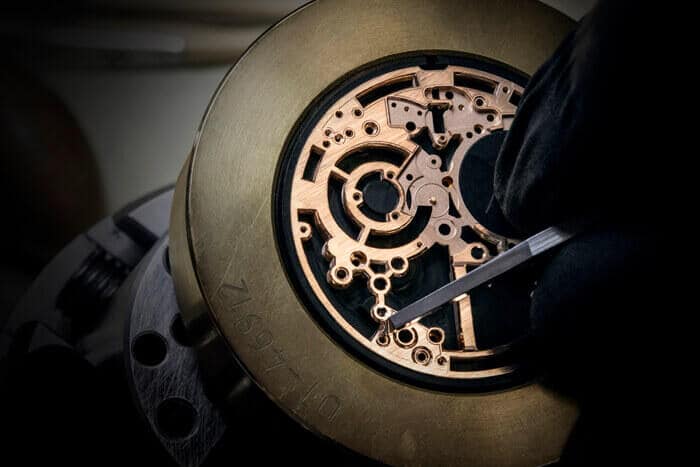
In terms of Breguet, there is the expertise within the Swatch Group that the brand can draw upon. Indeed, the cross-fertilisation of ideas is a strength of the firm, however, Breguet’s unique skills and autonomy are carefully maintained. Thanks to the initiative of Mr Hayek senior, the skills linked with artistic crafts and finishing are preserved, passed from one generation to the next. A Breguet branded product respects the patrimony of the Manufacture and the legend of Abraham-Louis Breguet. Moreover, a Breguet watch is equipped with a Breguet movement, an exclusive calibre that will only see service in a Breguet-branded watch.
In terms of Lionel a Marca, like Abraham-Louis Breguet, he is multi-talented. He has benefited from working with members of the Hayek family for many years and learning from them. But most of all, by his own admission, he’s a ‘Breguet fan’, which in combination with his obvious ability means the esteemed Maison has a very bright future. In my opinion, Lionel a Marca is the perfect custodian of this exceptional Manufacture, something which should give heart to all horophiles.