
Parmigiani Fleurier Tonda PF Xiali Calendar Watch Review
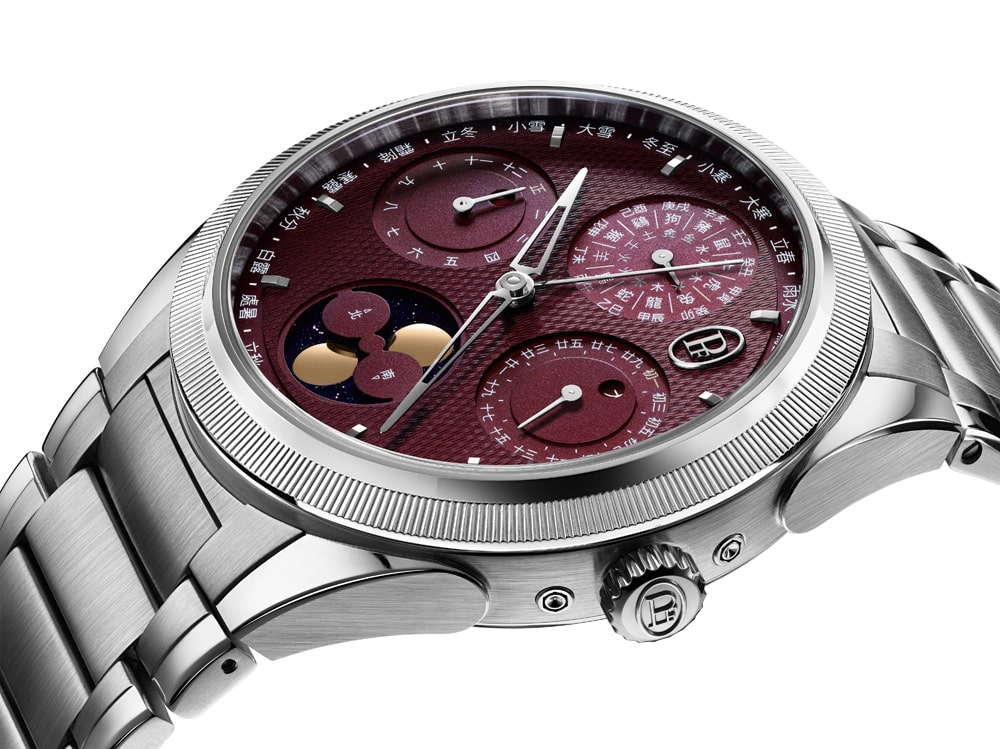
The Parmigiani Fleurier Tonda PF Xiali Calendar represents a ‘world premiere’, a ‘Chinese Traditional Complete Calendar’. Joining the highly popular Tonda PF collection, this technical tour de force showcases the extraordinary talents of this high-end Manufacture.
The inherent complexities of a wristwatch
It’s very easy to look at a mechanical wristwatch and take it for granted, sometimes unaware of its inherent complexities. Take a so-called ‘simple’ two-hander, it features a mainspring that is energised by the twist of the crown or the revolving behaviour of a rotor. And so begins the control of force, where gears step-down the power that serves the escapement and ultimately the regulating organ. The locking and unlocking action of the escapement controls the ‘flow of time’, an essential process that must be precisely controlled in order for the watch to display meaningful information.
Throughout history, some remarkable individuals, clearly not satisfied with surmounting the mechanical complexity of accurately displaying the time, have been driven to conceive ‘complications’. This latter term describes those indications that provide added functionality. Examples include chronographs, chiming watches and calendar watches.
Calendar watches
In terms of calendar watches, the date display is considered the simplest example of a calendar watch and is often the most accessible. Sitting on a higher plane, the ‘complete calendar’ displays the day, date, month and moon phase. The only limitation with the complete calendar is that it is unable to identify those months containing 28, 29 or 30 days and therefore the date display has to be manually corrected.
The ‘annual calendar’ has the mechanical intellect to recognise those months which contain 30 or 31 days, automatically advancing to ‘1’ as appropriate. So far, so good. However, there is one caveat, as February ends and March dawns, the ‘annual calendar’ has to be manually corrected.
Perpetual Calendar
Dwelling in the esoteric heights of fine watchmaking, the perpetual calendar recognises the length of all months, adjusting the date accordingly. The only occasions when manual adjustment of the date would be necessary are in 2100, 2200, 2300 but not in 2400. Invented by British watchmaker, Thomas Mudge, back in 1762, the perpetual calendar has always been considered the ultimate calendar watch due to its mechanical complexity.
Tonda Hijiri Perpetual Calendar
However, in 2019, Parmigiani Fleurier created a calendar watch that surpassed Mudge’s invention in terms of mechanical complexity. The Tonda Hijiri Perpetual Calendar features an Islamic calendar. In the Hijiri calendar, the lunar calendar comprises twelve months containing either 29 or 30 days depending on the moon phase, and is used to indicate Islamic holidays. Inspired by a historic watch PF had sympathetically restored, the brilliance of the Tonda Hijiri Perpetual Calendar was recognised with the award of the Innovation Prize at the Grand Prix d’Horlogerie (GPHG) in 2020. Parmigiani Fleurier truly deserved this accolade for its groundbreaking timepiece, a ‘world premiere’ at the time of its release, ‘the first Hijri Perpetual Calendar wristwatch’.

Image – Tonda Hijiri Perpetual Calendar
Parmigiani Fleurier Tonda PF Xiali Calendar
Now, the high-end Maison from the Val-de-Travers has just unveiled another ‘world premiere’, the Parmigiani Fleurier Tonda PF Xiali Calendar, another supremely complicated calendar watch.

Lunar Solar Calendar
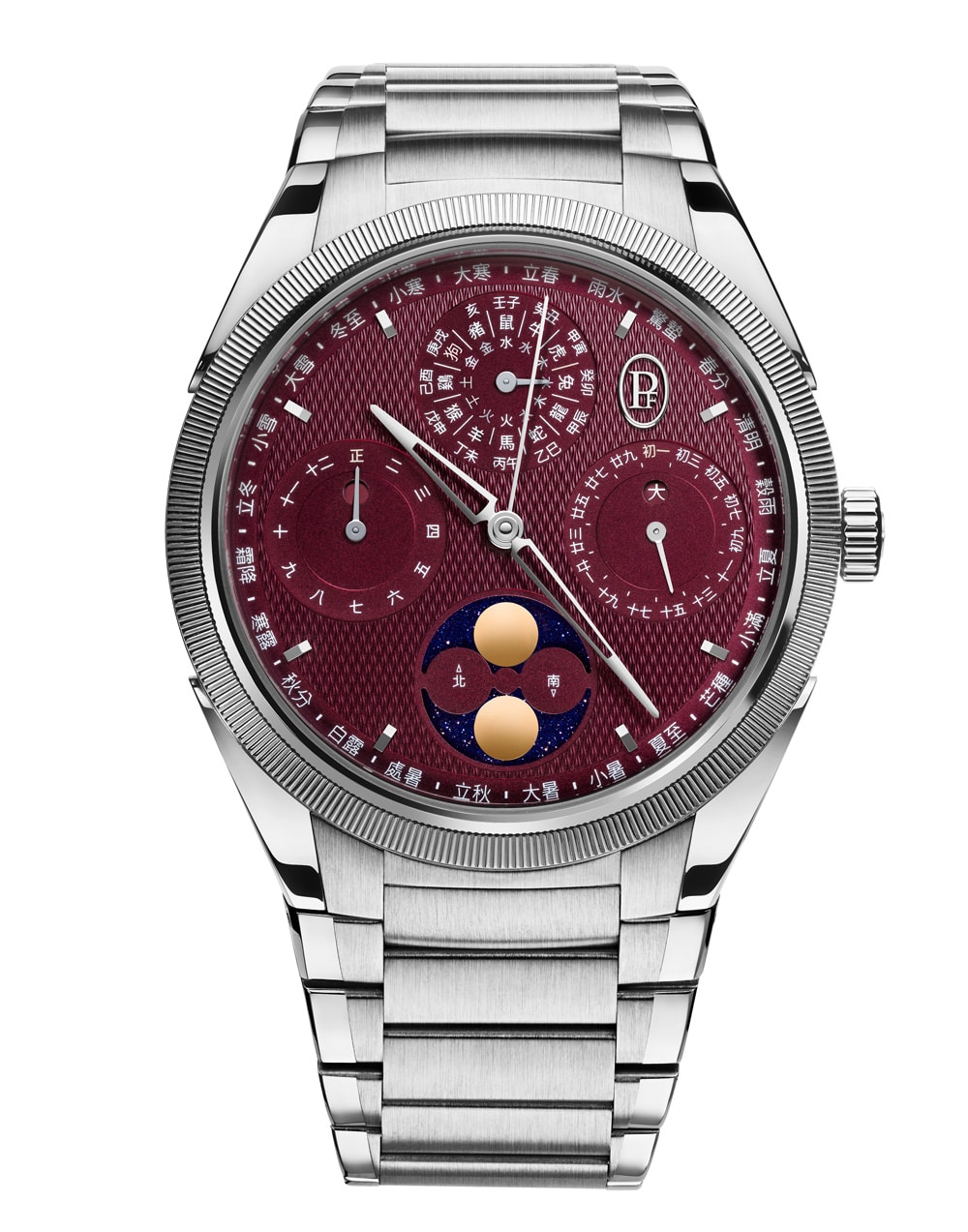
While China adopted the Gregorian calendar in 1912 and continues to follow this system today for ‘official business’, Parmigiani Fleurier has chosen to showcase its horological expertise with this latest model that displays the traditional Chinese calendar. The Swiss brand has provided the following detailed explanation of the Lunar Solar Calendar:
The Chinese Calendar is complex, as it combines elements of both a solar and a lunar calendar, which are calculated separately and then synchronised. This is accomplished by the addition of an extra lunar or intercalary month. This 13th month, which allows the two cycles to coincide, occurs approximately every three years. Finally, the Chinese calendar divides the solar year into 24 solar terms, or breaths, which symbolise the agricultural calendar.
The New Year appears according to precise rules and takes the name of the month that precedes it. The calculation is complex but allows us to follow the seasons and to set the Chinese New Year at the arrival of spring, which varies between the end of January and the end of February in our calendar — between January 21 and February 19.
Sixty-year period (sexagesimal) cycle
Parmigiani Fleurier has also provided additional details relating to the Sixty-year period (sexagesimal) cycle:
Unlike the Gregorian calendar, which names the months and numbers the years, the Chinese calendar names the lunar years and numbers the months. The names of the years are repeated on a 60-year (sexagesimal) cycle, but the calendar including dates, days and months is calculated on the basis of astronomical observations and varies. Because these calculations vary, it is impossible to make a “perpetual” Chinese calendar. However, Parmigiani Fleurier’s creation goes as far as it is possible to go in creating the most complete, and most precise, Chinese calendar in the form of a timepiece. The numbering system of the time units is based on the combination of a decimal cycle, the ten Celestial Stems, and a duodecimal cycle, the twelve Earthly Branches.
The 10 Celestial Stems serve the function of assigning elements to seasons and the planets — water, wood, metal, fire, and earth. The 12 Earthly Branches correspond to the signs of the zodiac: each is represented by an animal, which designates the years of the sexagesimal cycle and will influence the destiny and character of human beings born in that year.
The Tonda PF
The Swiss marque has chosen to house this über-complex calendar mechanism within a 42mm stainless steel case. Brand devotees will immediately recognise the design codes of the Tonda PF, a collection that was unveiled back in 2021. Since the advent of the inaugural Tonda PF references, each a fusion of sporty practicality and elegant formality, these PF models have attracted plaudits for their refinement and notable style.

In common with other steel Tonda PF models, the knurled bezel on the Tonda PF Xiali Calendar is made of platinum, bestowing a sumptuous whitish hue. The dial is dressed in ‘imperial red’ and endowed with a bewitching texture of Grain d’Orge guilloché. And yet, despite the obvious complexity of the watch and the numerous indications presented, the dial remains surprisingly simple to read.
Calibre PF008
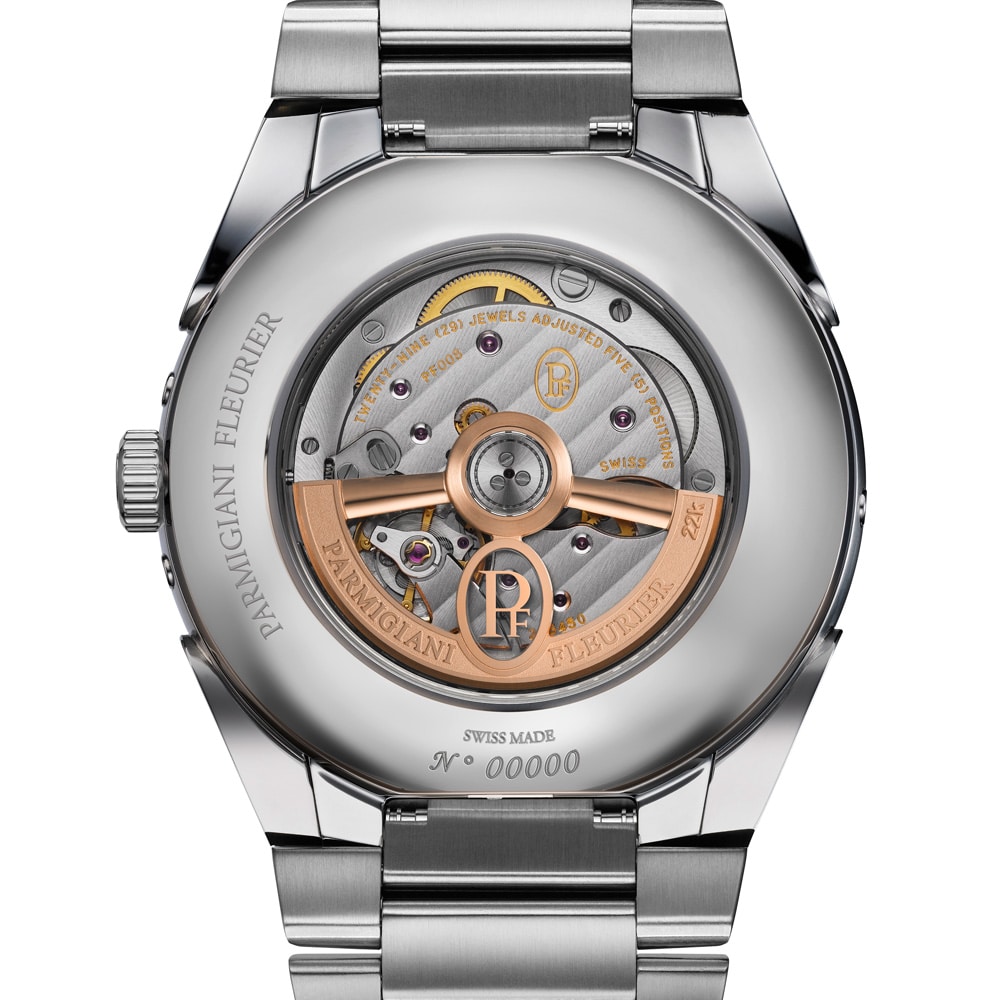
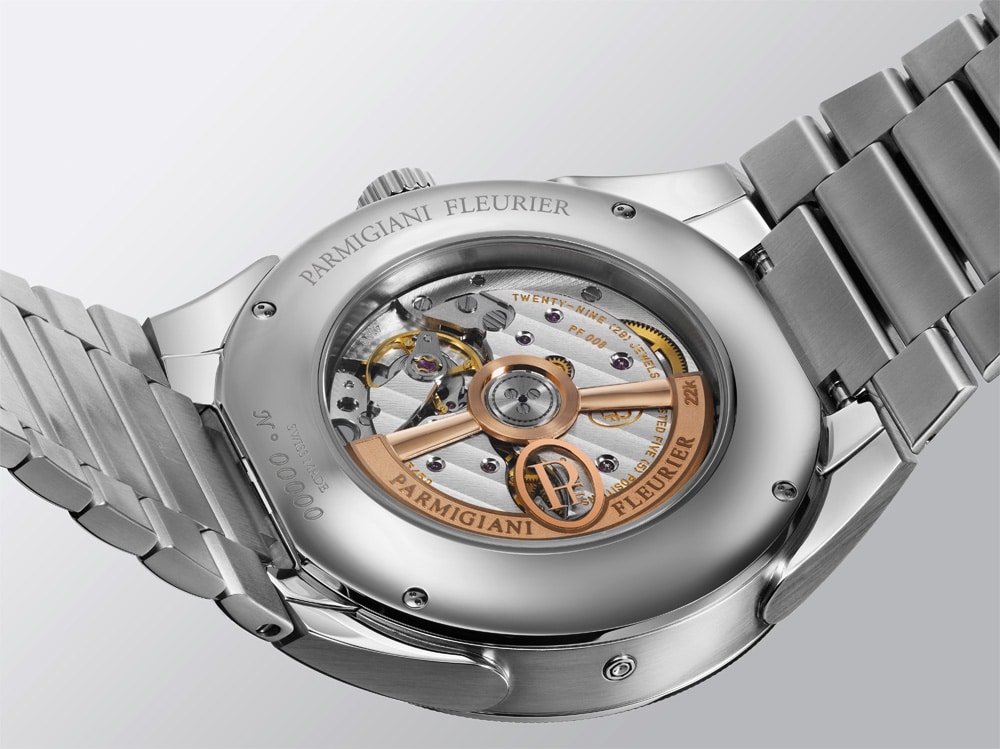
The self-winding PF008 movement encompasses Haute Horlogerie finishing in common with the Maison’s other models.
Xiali Calendar and the Year of the Rabbit
In Chinese culture, red is a colour associated with power, celebration, fertility and prosperity, hence the dial hue will no doubt engage with many would-be Chinese owners. However, it is the mechanical ingenuity of the Tonda PF Xiali Calendar that distinguishes this model as truly extraordinary. On the 22nd of January, over one billion Chinese citizens will celebrate the Chinese New Year, the Year of the Rabbit. This watch marks this important landmark and wonderfully celebrates a fascinating and dynamic culture.
Further reading
Technical specification
- Model: Parmigiani Fleurier Tonda PF Xiali Calendar
- Reference: PFH982-1022301-100182
- Case: stainless steel with platinum 950 knurled bezel, diameter 42mm, height 12.2mm, water resistance 10ATM (100 metres), sapphire crystal to front, exhibition case back.
- Functions: hours, minutes, complete Chinese calendar and precision moon phase
- Movement: calibre PF008, self-winding movement, frequency 28,800 vph (4Hz), 42 jewels, power reserve 54 hours, 353 components.
- Bracelet: polished and satin-finished stainless steel bracelet and folding clasp
- Price: CHF 59,000 including VAT (RRP as of 9.1.2023)