
Vacheron Constantin Overseas Grand Complication Watch Review
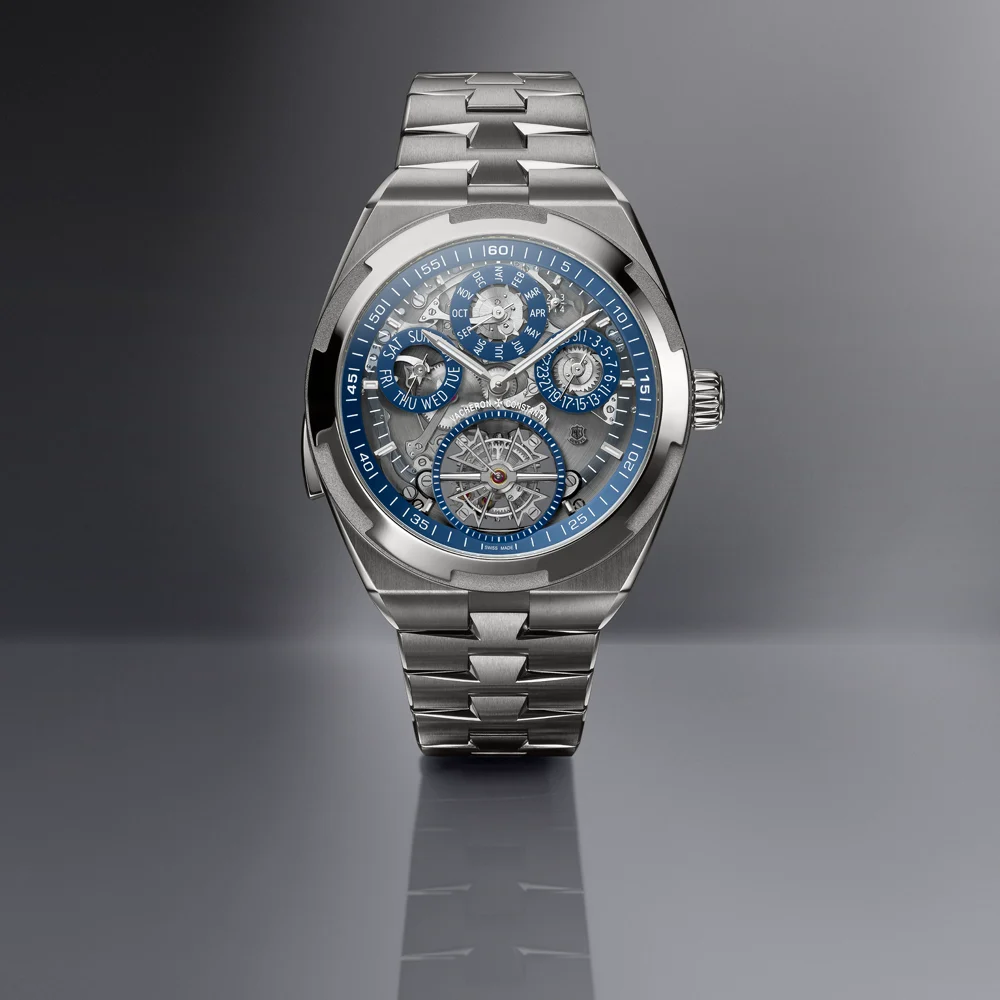
The Vacheron Constantin Overseas Grand Complication features three high complications: a perpetual calendar, a tourbillon and a minute repeater. In addition, there is also a power-reserve indicator, positioned to the rear of the watch, located atop the movement. Angus Davies provides an insight into the creation of this exceptional timepiece.
What is a complication?
The FHH (Fondation Haute Horlogerie) defines a complication as ‘any function other than the indication of hours, minutes and seconds, regardless of whether the mechanism is hand-wound or self-winding, mechanical or electronic, and of movement height. The tourbillon and the self-winding system are considered to be complications even though they do not fall within the generic definition’.
Complications vary in complexity. A GMT or dual-time function allows the wearer to view the prevailing ‘local’ time and ‘home’ time simultaneously and, comparatively speaking, it’s a simple complication. Conversely, there are some mechanisms that are incredibly complex, so-called ‘high complications’. These include the split-second chronograph (aka ‘rattrapante’), the perpetual calendar, the tourbillon and the minute repeater.
The ultimate expression of mechanical virtuosity is the ‘grand complication’, a term usually applied to a watch featuring three or more high-complications. The skills necessary to conceive, make, assemble and regulate a grand complication take many years to hone, hence such models are rare and highly sought-after.
Vacheron Constantin 270 years in continuous operation
The esteemed Maison has chosen its 270-year anniversary to launch a series of openface models. This began with the unveiling of three uninhibited references at Watches & Wonders 2025: the Traditionnelle Perpetual Calendar Retrograde Date Openface, the Traditionnelle Tourbillon Retrograde Date Openface and the Traditionnelle Complete Calendar Openface. Now, it has just unveiled another instalment of candid horology, namely, the Overseas Grand Complication, a tour de force featuring three high complications. The inventory of functions includes a perpetual calendar, a tourbillon, a power-reserve indicator (positioned to the rear of the watch) and a minute repeater. It is the first time this latter complication has featured within the Overseas collection.
Beyond its impressive tally of complications, the watch is endowed with an intricate sapphire crystal dial, heightening the overall sense of modernity. To fully appreciate the complexity of the Vacheron Constantin Overseas Grand Complication and its ultra-refined execution necessitates many column-inches, a task I will endeavour to fulfil.

Vacheron Constantin Overseas Grand Complication dial
With a skeleton or openworked watch, the movement is pared back, culminating in a series of apertures that invite light to pass through the finely filigreed mainplate and bridges. However, an openface model is different. The sapphire dial is transparent, revealing the exposed movement beneath while leaving its structure untouched.
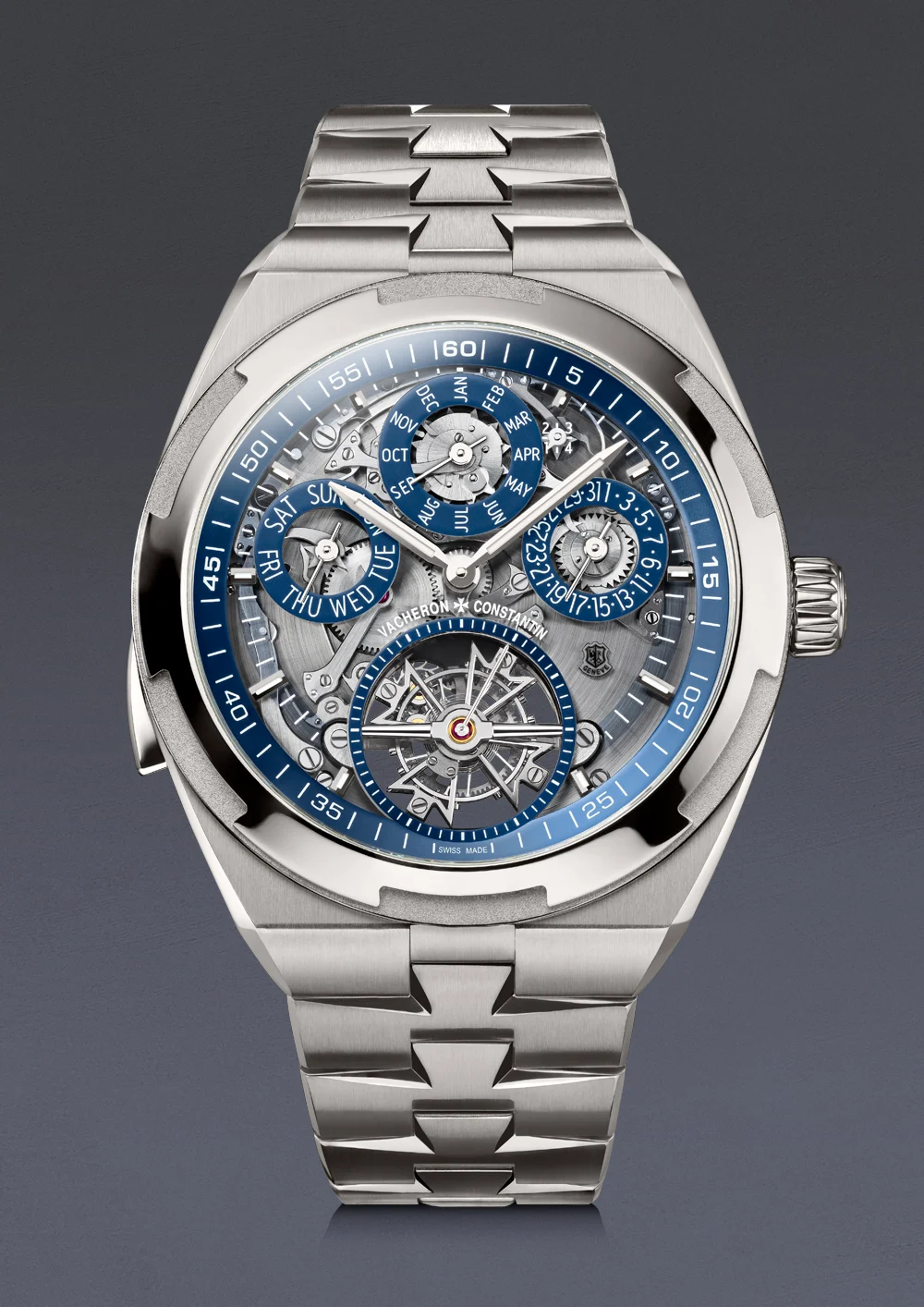
Baton-style hour and minute hands, formed of 18K white gold, converse with matching hour markers, clearly expressing meaning. Both the hands and indexes are lined with Super-LumiNova, bestowing a blue emission in dim light conditions.
Three subdials inhabit the upper dial region, indicating the date (3 o’clock), day (9 o’clock) and month (12 o’clock). Each subdial features a blue track and 18K white gold hands. Moreover, a leap-year indicator is positioned adjacent the month counter. Residing on a colourless pane of sapphire, it appears to float in mid-air. These calendar indications work in concert, both aesthetically and mechanically, fulfilling their QP duties (see later) and expressing meaning devoid of ambiguity.
At the base of the dial, a large aperture plays host to the tourbillon (see later). The style and execution uphold the Maison’s vernacular design with the tourbillon cage (formed in the shape of a Maltese cross) and tapering bar (upper bridge) spanning the dial opening. A hand, positioned on the cage of the one-minute tourbillon, is teamed with a blue track, indicating the running seconds.
Lastly, a blue minute track fringes the dial, delivering tonal contrast with the exposed NAC-treated movement positioned nearby.
Vacheron Constantin Overseas Grand Complication case
Sharing a familial likeness with other members of the Overseas collection, the model features the now-iconic gleaming crenellated bezel, sat atop a softly spoken circular plinth, and integrated metal bracelet. However, as stated earlier, the slide hugging the left flank of the case is unprecedented for an Overseas model and indicates this reference is equipped with a minute repeater.

Vacheron Constantin has chosen to house the model in a 44.5 mm case formed of Grade 5 titanium. a lightweight alloy that is strong, not liable to corrode, anti-magnetic and hypoallergenic.
When creating a housing for a minute repeater, due consideration must be given to the case interior as this will heighten the sound of the chiming mechanism. Typically, minute repeaters are housed in gold or platinum, hence titanium proves an interesting choice. As the alloy is lighter, the transmission of sound is superior, producing louder and crisper chimes. Some connoisseurs may counter this by arguing that noble metals confer a slightly richer aural experience; however, having not heard examples of each in an anechoic chamber myself, I don’t feel able to comment further.
Grade 5 titanium is a challenging material to work with due to its notable hardness; however, unlike cheaper Grade 2 titanium, it can be polished to a resplendent gleam, a characteristic the Manufacture has repeatedly exploited on this reference.
Unusually for a watch equipped with a minute repeater, the Vacheron Constantin Overseas Grand Complication is water resistant to 3 ATM (30 metres). This is quite an achievement given the presence of the slide hugging the left flank of the case that would normally allow ingress of water. Indeed, in its press release, the brand states, ‘The challenge with this model was to ensure the water-resistance of the Overseas case, while adapting its lines to the Calibre 2755 QP. This required a year and a half of research and development and involved a complete redesign of the caseback to create space for the minute repeater mechanism while maintaining the slender curves characteristic of Overseas watches’.

Unsurprisingly, considering the beauty within, the Overseas Grand Complication features an exhibition caseback, granting sight of the Calibre 2755 QP.
Vacheron Constantin Calibre 2755 QP – complications
The Calibre 2755 QP is not new, it originally featured within the Patrimony Traditionnelle, a grand complication unveiled in 2010. Its architecture was heavily influenced by the Calibre 2750, an earlier movement that featured within the Tour de l’Île, a Les Cabinotier piece unveiled in 2005 to coincide with the brand’s 250th anniversary.
As stated earlier, the watch is fitted with three high complications (haute complications) as well as a power-reserve indicator to the rear. Without further ado, let’s examine each of the high complications fitted to this model.
Perpetual calendar (Quantième Perpétuel)
The invention of the perpetual calendar is attributed to Thomas Mudge (1715 – 1794), an English watchmaker who created a pocket watch equipped with the complication in 1762. The mechanism recognises the length of each month (28, 29, 30 or 31 days) and automatically advances the date to ‘1’ as appropriate. The complication even takes into account leap years. Providing the movement is kept wound, the perpetual calendar will not require manual correction until 2100.
Tourbillon
Abraham-Louis Breguet (1747-1823) patented the tourbillon in 1801. He recognised that gravity had an undue influence on the rate of a movement. His solution was to place the escapement and regulating organ within a revolving cage that would rotate 360° once every 60, 240 or 360 seconds. As the cage rotated, it would ameliorate any positional errors. Originally designed for use within a pocket watch, the tourbillon is now usually the preserve of high-end wristwatches.
On this occasion, the tourbillon cage within the Calibre 2755 QP rotates 360° once every 60 seconds, hence the Manufacture has, as mentioned earlier, chosen to exploit this characteristic by fitting a hand to the cage, granting a neat means of indicating the running seconds.
Beyond its timekeeping prowess, a tourbillon also delivers an unprecedented level of dialside animation. Horophiles are indulged with views of the cage rotating, the balance wheel oscillating to and fro, the hairspring pulsing with life and the pallet lever pecking the escape wheel.
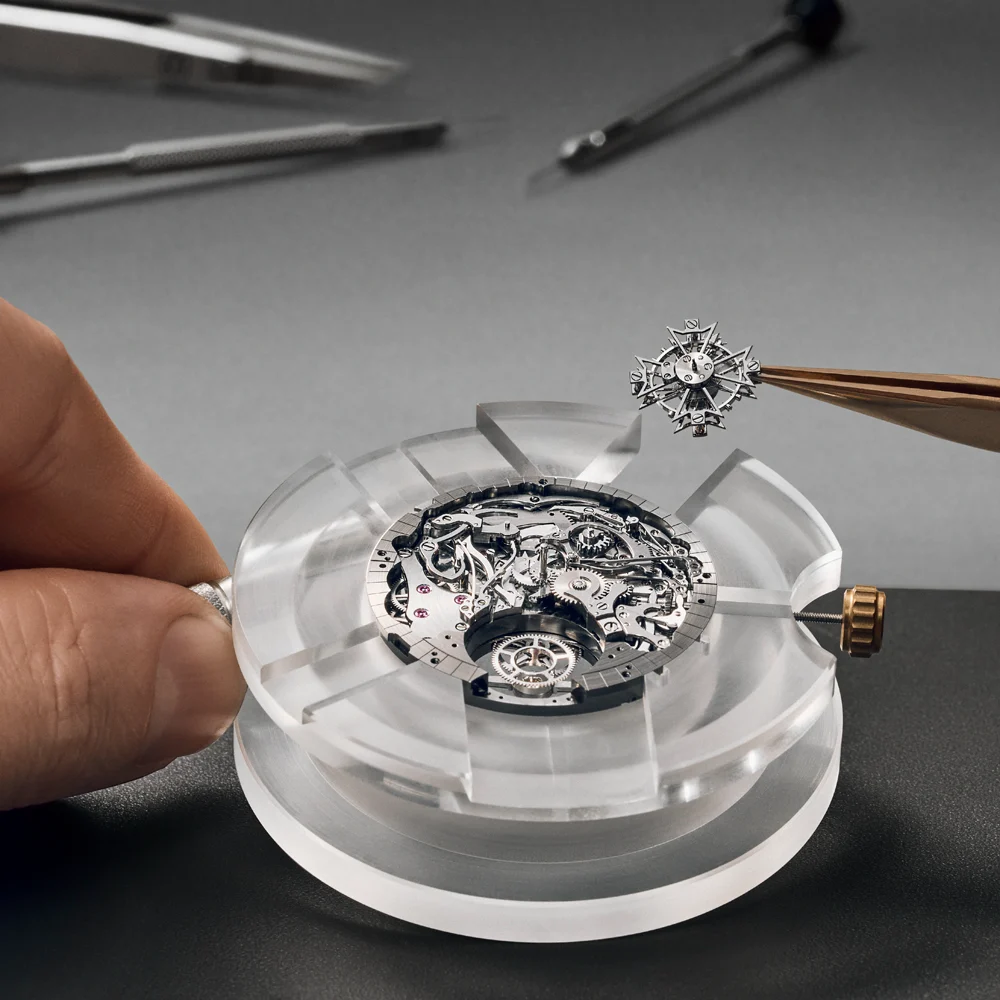
Minute repeater
In 1680, Daniel Quare (1648 – 1724), an English clockmaker, invented the ‘repeating watch mechanism’, chiming the hour and quarters. The inventor of the ‘minute repeater’ is a moot point with various suggestions circulating the web; however, it is likely that it initially appeared in the first half of the 18th century. This was an era where street lighting was virtually non-existent, hence the minute repeater proved highly useful, allowing the owner to actuate the chiming sequence, comprising hours, quarters and minutes, in order to determine the time aurally.
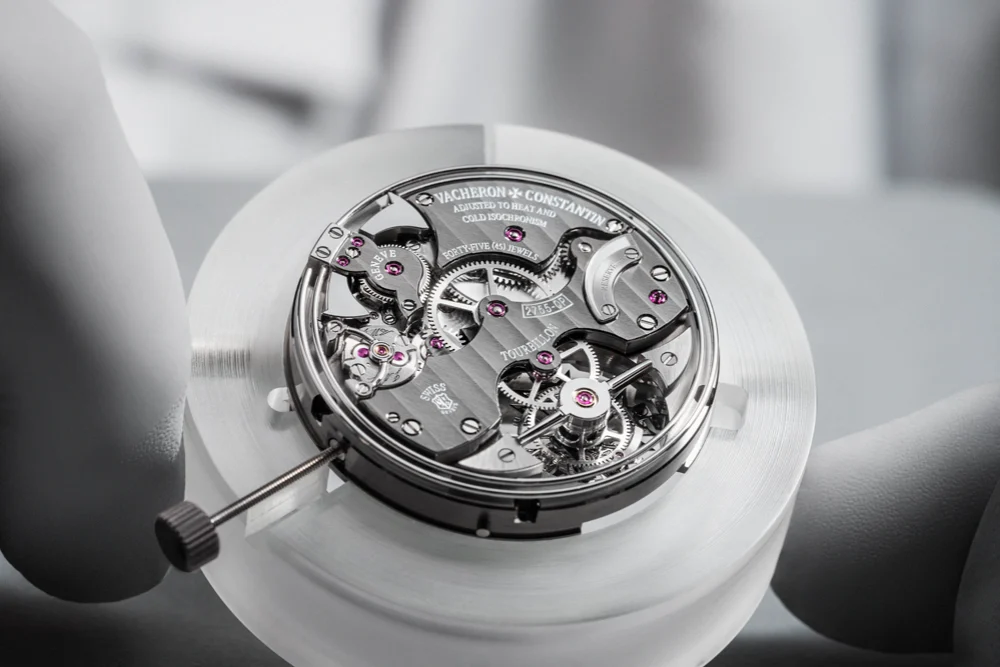
These days, the minute repeater is selected for its characterful sonorous performance, the sight of two hammers striking gongs in a choreographed sequence and for the inordinate amount of watchmaking expertise required to bring such complexity to life.
Often, watch companies use a ‘centrifugal governor’ to control the tempo of the chiming sequence, ensuring the sounds are simple to interpret; however, Vacheron Constantin has created a proprietary ‘centripetal governor’ that quietly controls the cadence of the striking sequence.
Vacheron Constantin Calibre 2755 QP – Finishing
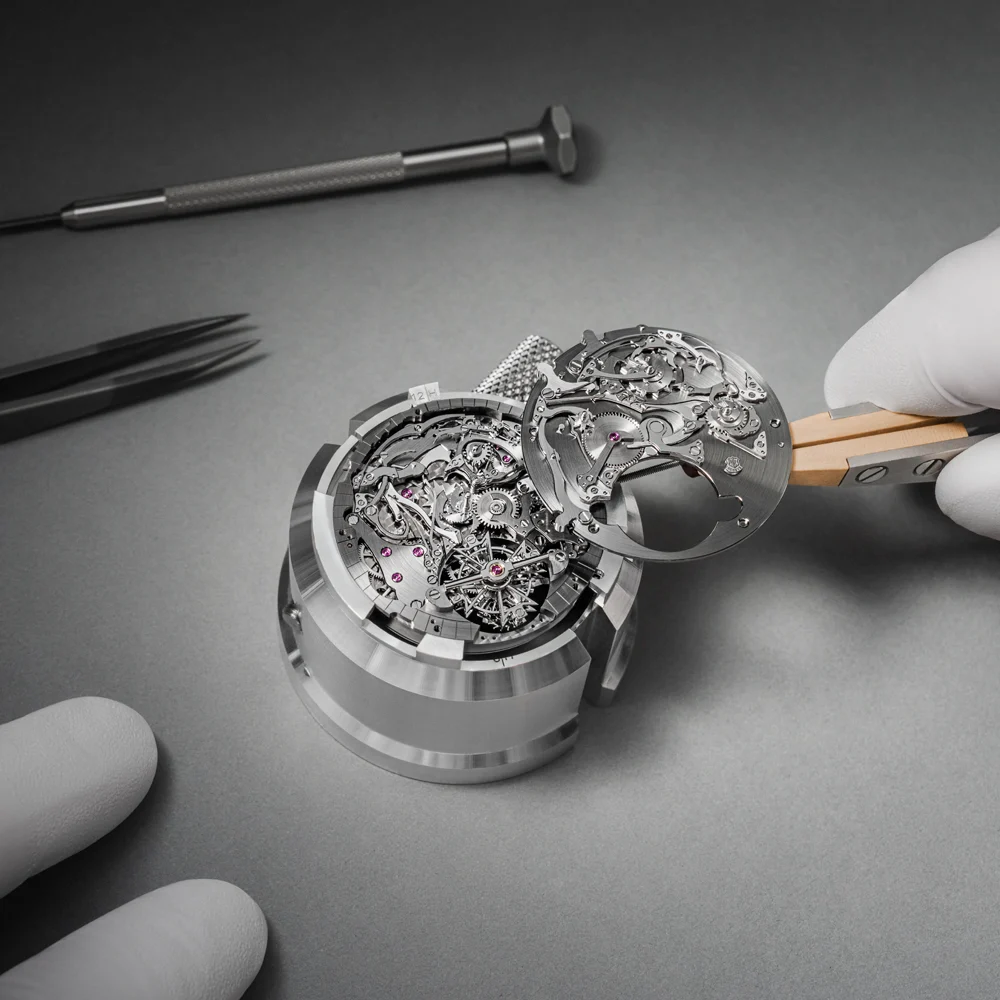
As you would expect of Vacheron Constantin, the Overseas Grand Complication is finished to an exalted level. The bridges, consistent with the contemporary character of the Overseas, are NAC-treated, imbuing them with a grey hue. The wheels are rhodium-plated, contrasting beautifully with the adjacent bridges. Traditional Côtes de Genève adorns the bridges, while anglage abounds.

Without question, one of the most challenging finishes to impart to steel is black polish (Poli Noir). The technique involves the finisseur placing a flat steel component upon a zinc plate that’s smeared with diamond paste and then moving it in a circular motion. This prolonged process begins with a coarse paste, before moving to increasingly finer grains. The resultant finish enriches the appearance of several movement parts, including the hammers and the heel of the gong (aka plot), visible to the rear.
Vacheron Constantin Calibre 2755 QP – Poinçon de Genève
The Calibre 2755 QP bears the prestigious Poinçon de Genève (Hallmark of Geneva), a standard independently audited by TimeLab, the body responsible for upholding the requirements of the organisation. Those brands that assemble, case and adjust their watches within the canton of Geneva can punch their products with the ‘Hallmark of Geneva’ provided they meet its stringent requirements. This necessitates the company supplying detailed dossiers covering each aspect of the creation, construction, assembly, etc. TimeLab conducts on-site audits on a monthly basis, ensuring that everything meets its no-compromise standards.
Vacheron Constantin Overseas Grand Complication – closing remarks
At this juncture, it seems superfluous to reiterate the numerous qualities of the Overseas Grand Complication, previously discussed. Instead, I wish to touch upon the extraordinary skills that are required to make a watch of such complexity.
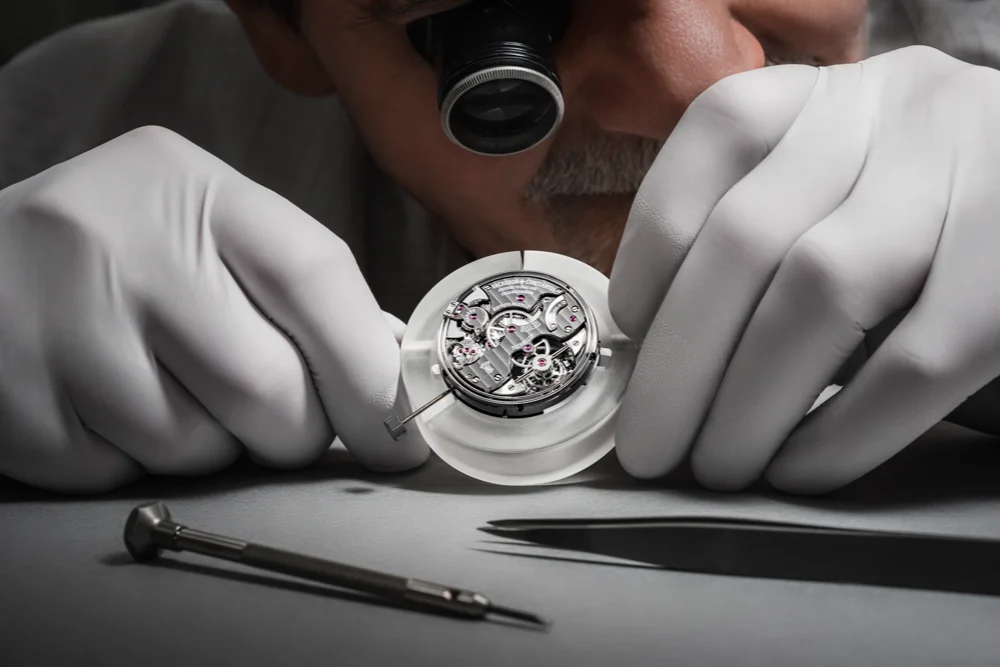
Having attended watchmaking school, the professional journey of a horologer usually starts with mechanically simple timepieces that display just hours and minutes. Some ambitious souls, eager for professional advancement, may choose to graduate to more complex mechanisms and movements, assuming they have the necessary talent. However, only the most capable watchmakers with at least 15 years of experience will be invited to work within the Haute Complications Workshop and, even then, they will be required to spend a further two years being mentored by a master watchmaker. Only after their skills have passed muster will they be allowed to work on their own.
To be entrusted to work on a Grand Complication, the professional journey is more demanding and takes even longer, a factor that helps explain why these paragons of Haute Horlogerie are incredibly scarce and highly coveted by watch aficionados.
Further reading
https://www.vacheron-constantin.com/
Technical specifications
- Model: Vacheron Constantin Overseas Grand Complication
- Reference: 6510V/110T-128C
- Case: Grade 5 titanium, diameter 44.5 mm, height 13.1 mm, water resistance 3 ATM (30 metres), sapphire crystal to front, exhibition case back.
- Functions: hours, minutes, small seconds on tourbillon, minute repeater, perpetual calendar (day, date, month, leap year), tourbillon, power reserve on the back of the watch
- Movement: Calibre 2755 QP, hand-wound movement, frequency 18,000 vph (2.5 Hz), 45 jewels, power reserve approximately 58 hours
- Strap: Grade 5 titanium bracelet, satin-finished and polished, interchangeable and with comfort-adjustment system. Also supplied with two additional straps, in blue alligator and in blue rubber
- Price on application