
Biver Automatique Clous de Paris Watch Review
At Dubai Watch Week 2025, Biver showcases 9 new versions of the Automatique, including a model featuring a blue Clous de Paris dial. Seemingly simple, the watch is packed with a myriad of refinements that distinguish it as extraordinary. Angus Davies recently travelled to the brand’s Swiss atelier and shares some of the remarkable craftsmanship he observed.
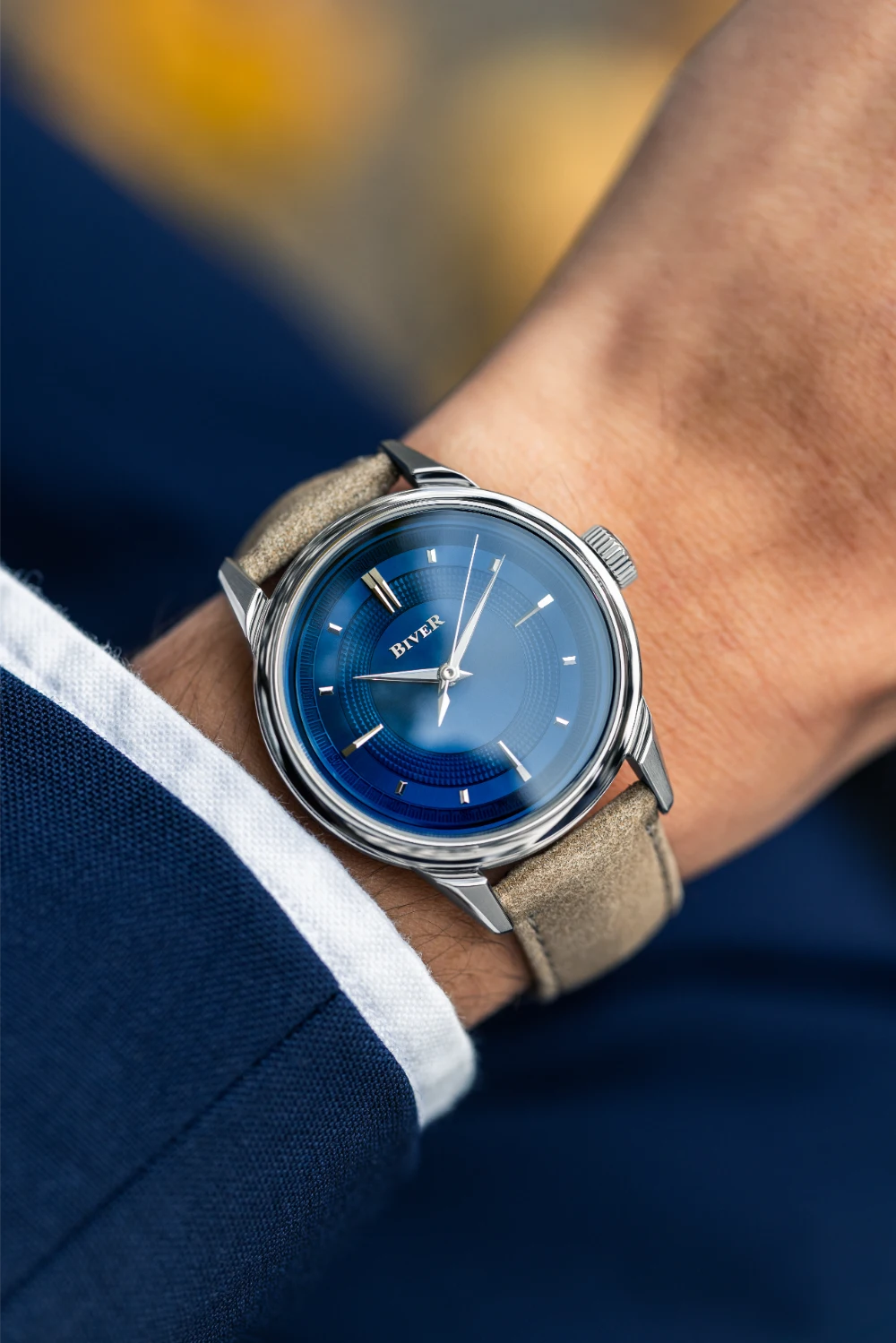
Image – Automatique Clous de Paris
Biver depuis 2023
In 2023, Jean-Claude Biver, a veteran of the watch industry, founded his eponymous watch brand with his son, Pierre. Operating within the Haute Horlogerie segment, where brand histories can sometimes be centuries old, Biver is comparatively young. However, despite its fresh-faced appearance, the Maison is staffed by a small team of expert watchmakers and artisans, sharing an inordinate amount of amassed know-how and skill between them.
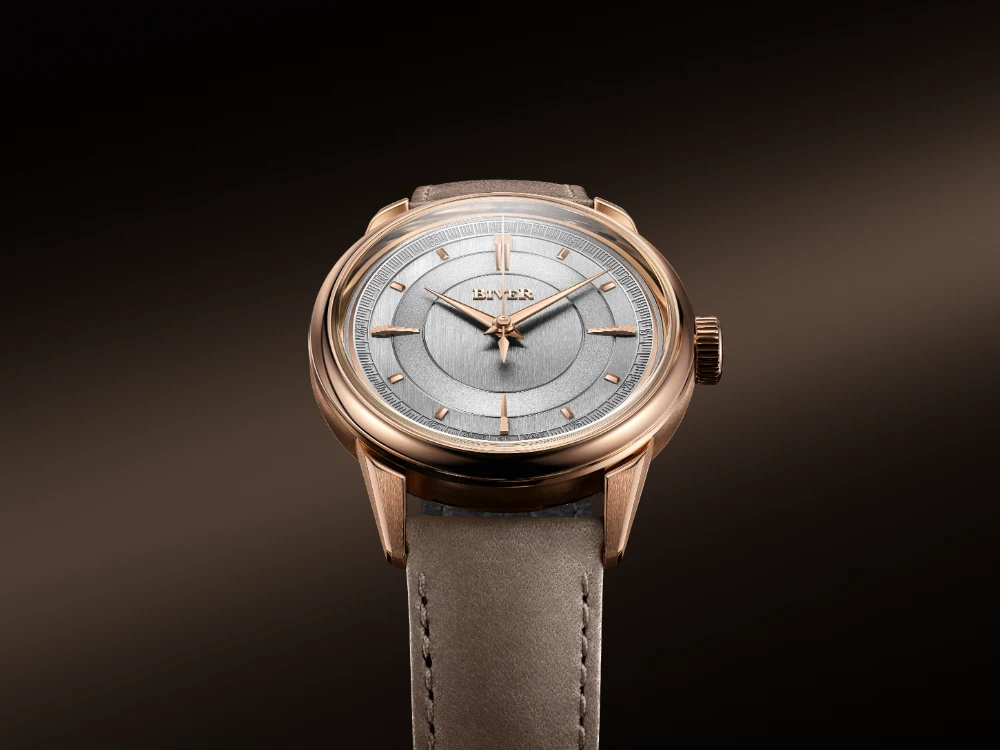
Image – Automatique Two-Tone
The Biver atelier brims with talent
Recently, I visited a period-style atelier located in a picturesque rural setting, 30 minutes from Geneva. I spoke with watchmakers, finisseurs, quality control staff and technical experts. I kept asking, “Where did you work before?” With few exceptions, the answers included the names of familiar brands, those Maisons often loved by enthusiasts. However, rather than copying the work of others, Biver has developed new, highly original expressions of ticking art. The brand has also pushed boundaries by using interesting materials and giving components several ultra-refined finishes rarely seen in the watch world.
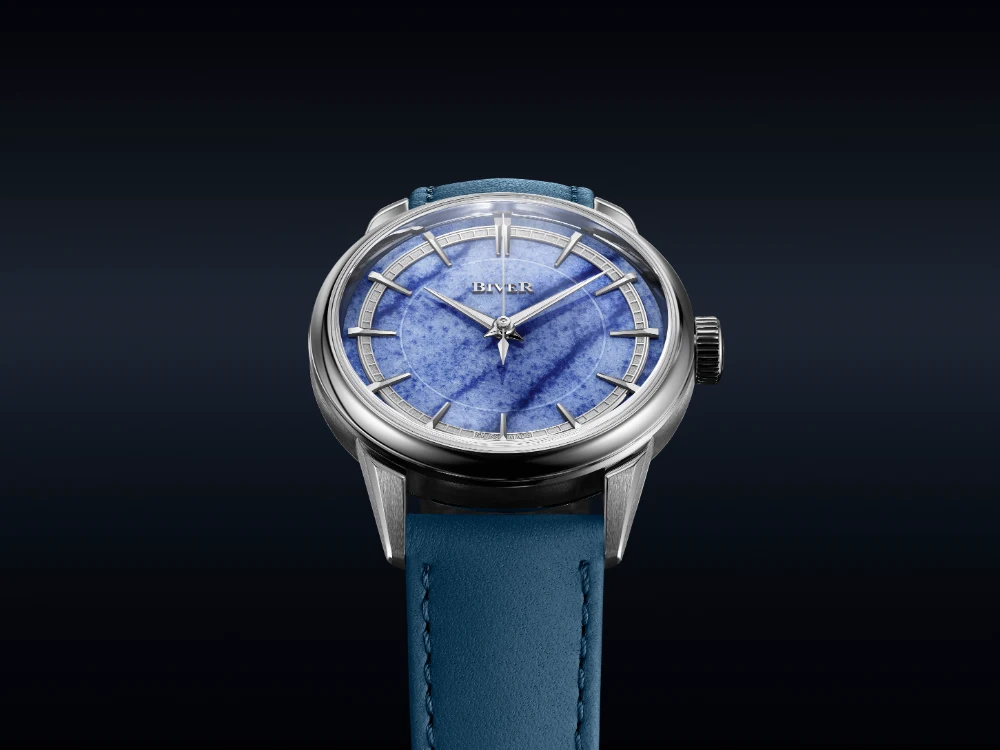
Image – Automatique Quartzite
Biver – anything but simple
While many brands start gently, perhaps producing a simple two-hander, Biver had different ideas. Indeed, the brand demonstrated its extraordinary ambition and skill from the outset with its inaugural watch, the Carillon Tourbillon. This model unites two sought-after high complications, a minute repeater and a tourbillon. Moreover, the automatic movement employs a micro-rotor, a neat means of harvesting energy from the natural motion of the wrist. This diminutive oscillating mass is technically challenging; hence, it remains the preserve of a small, select group of brands (see later).
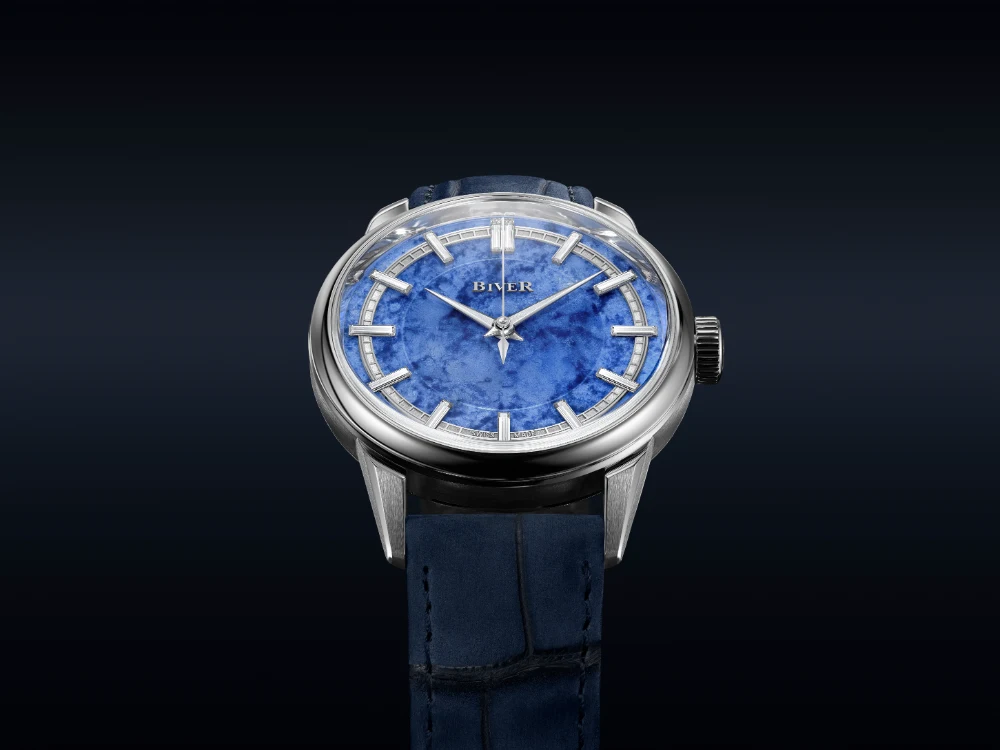
Image – Automatique Quartzite with Diamonds
The idea of releasing the highly complex Carillon Tourbillon as its inaugural timepiece was truly inspired. The model’s unveiling, along with Jean-Claude Biver’s esteemed reputation, attracted lots of attention from the press and public alike and the brand’s initial creation received much critical acclaim.
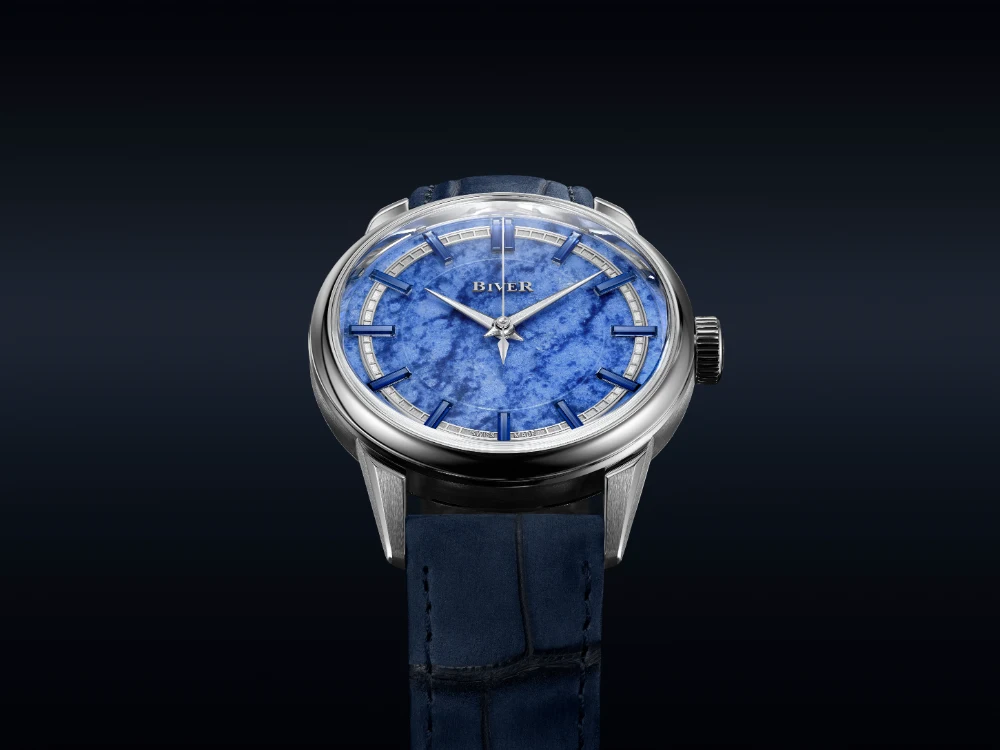
Image – Automatique Quartzite with Sapphires
Biver Automatique – first versions were released in 2024
Subsequently, Biver released the Automatique, a watch indicating the hours, minutes and seconds. Seemingly simple at first glance, the model is imbued with a plethora of details that distinguish it as extraordinary. The first references, released in 2024, were offered in either 18k rose gold or platinum. Furthermore, would-be wearers were indulged with a choice of dial options, including 18k rose gold, 18k white gold or, as part of its exclusive ‘Atelier Series’, Piestersite or obsidian. Later in 2024, the Maison unveiled a unique piece, ‘Echoes of this Moment’, created for the TimeForArt charity auction.
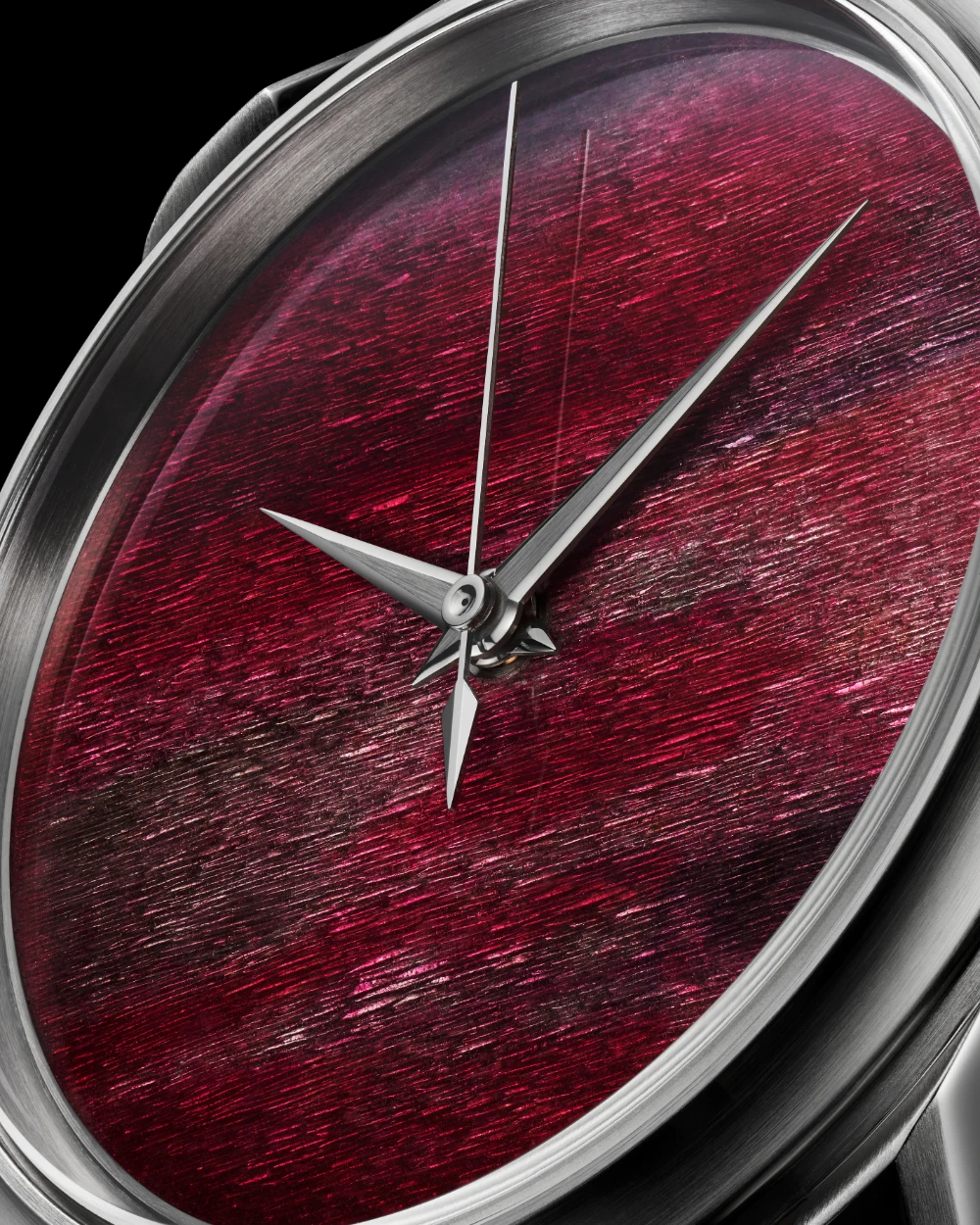
Image – Automatique Echoes of this Moment
In 2025, Biver released two variants of the Automatique, both of which featured Grand Feu dials, crafted exclusively for The Hour Glass Japan. While Biver has repeatedly embraced watchmaking traditions and found much inspiration from the past, it has not been averse to embracing modernity. For instance, last year the independent brand expanded its Atelier Series to include the ‘Carbon Edition’ reference, combining a carbon-fibre dial detail with an 18k yellow gold housing. On one hand, the watch is neoteric, but for those of us old enough to remember, the colour combination evokes memories of the JPS Formula One cars of the 70s.
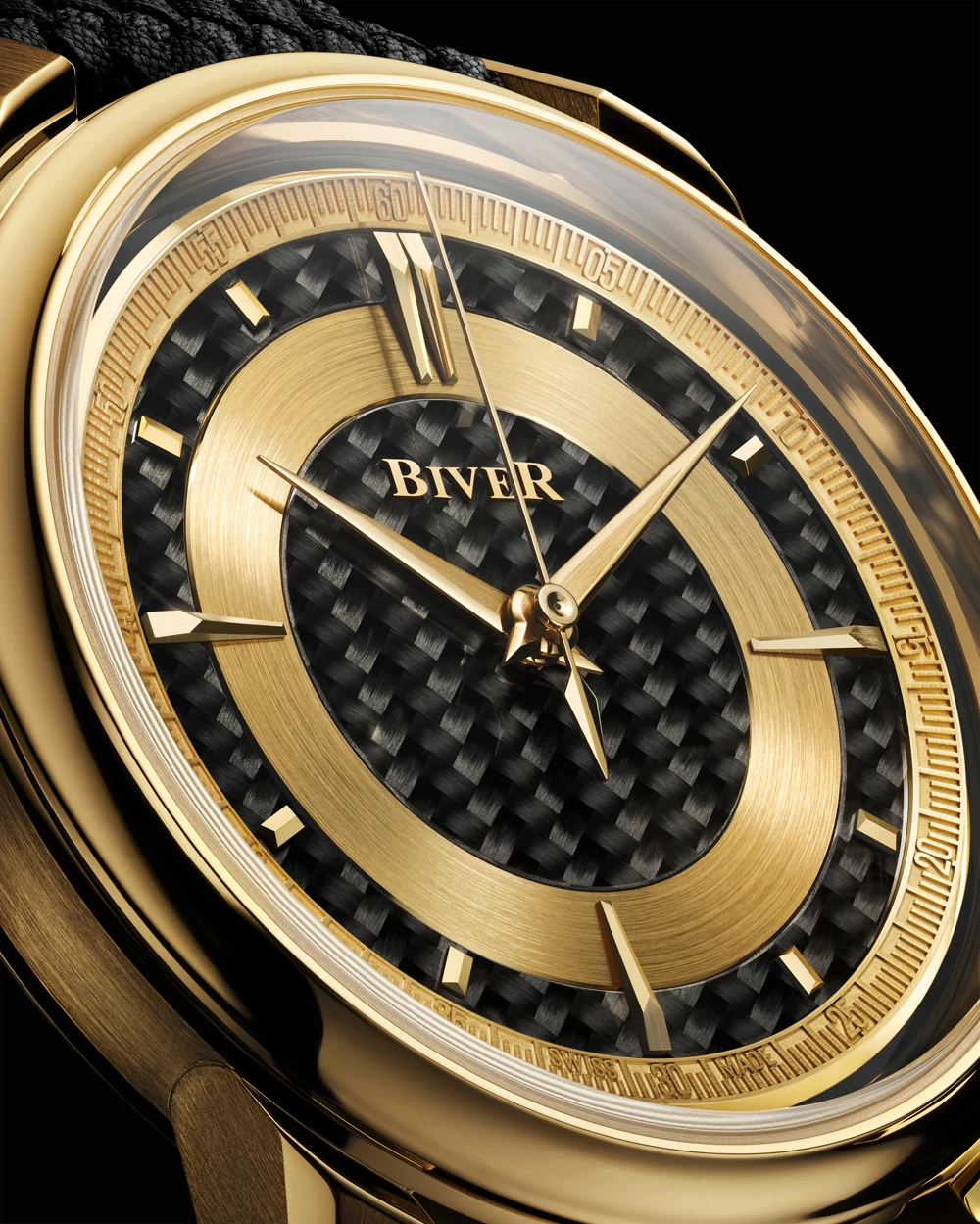
Image – Automatique Carbon Edition
Biver Automatique – Dubai Watch Week 2025
Now, to coincide with Dubai Watch Week 2025, Biver has expanded its Automatique collection further, releasing an additional nine references, namely Clous de Paris, Two-Tone, Quartzite, Quartzite with diamonds, Quartzite with sapphire, Lavender Jade, Lavender Jade with Diamonds, Mahogany Obsidian and Oeil de Fer (Tiger’s Eye).
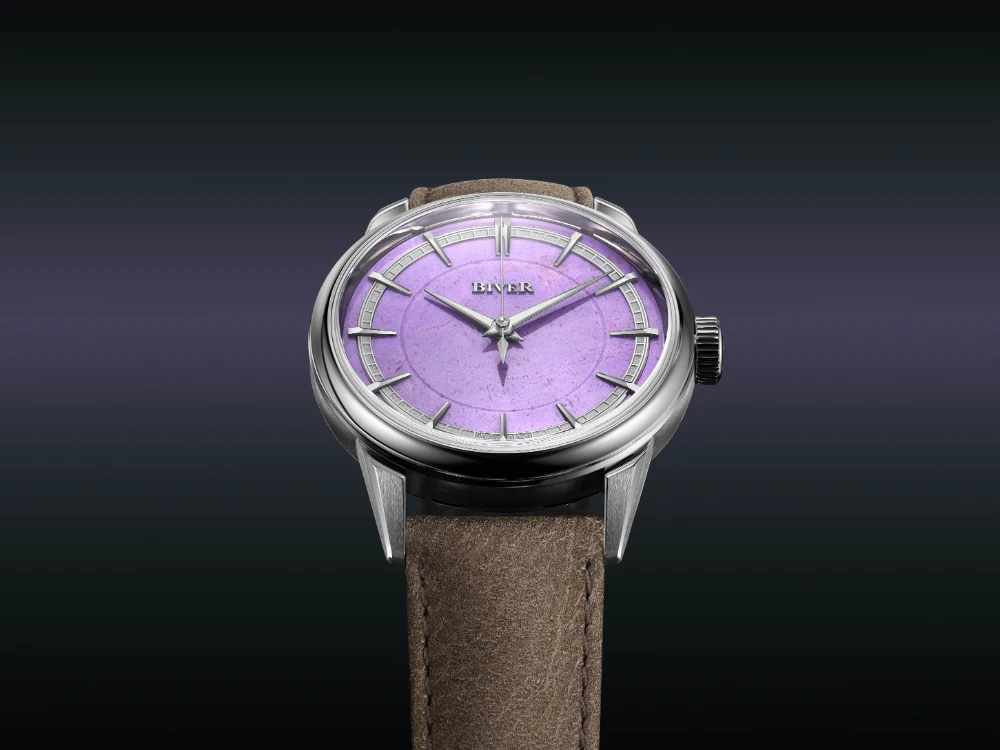
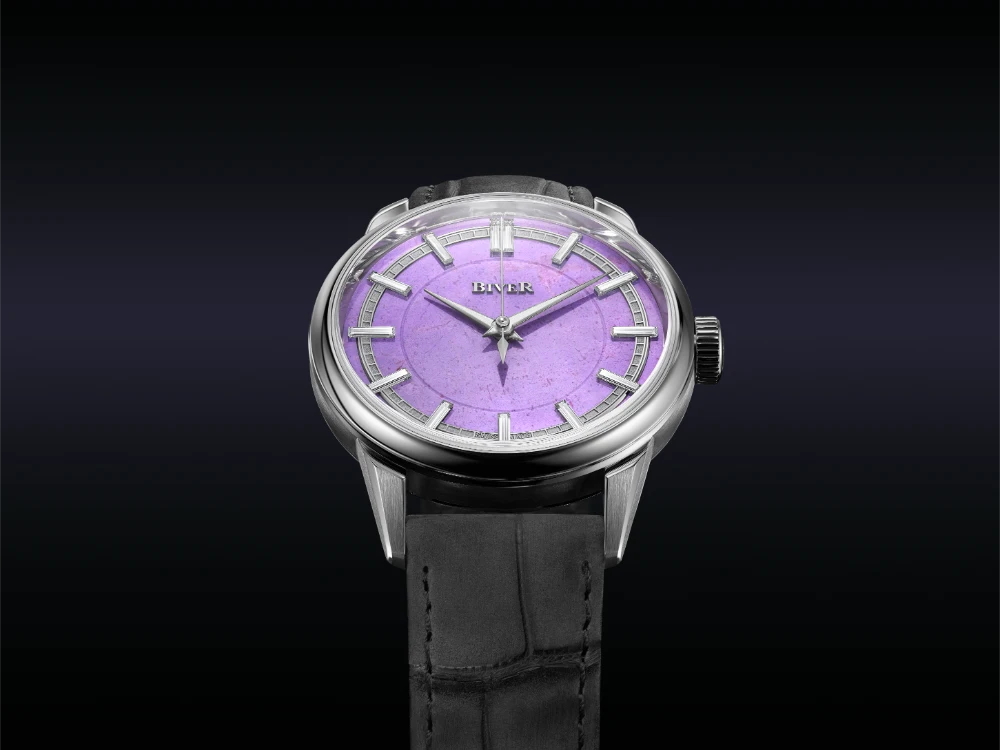
Images above – Automatique Lavender Jade & Automatique Lavender Jade with Diamonds
Despite these latest models featuring new materials, they stay true to the design language found on the inaugural references released back in 2024. This should reassure collectors. All too often, watch companies launch new products that render former references obsolete. In my opinion, a true luxury product should remain immune to obsolescence, a belief I suspect Jean-Claude and Pierre also share.
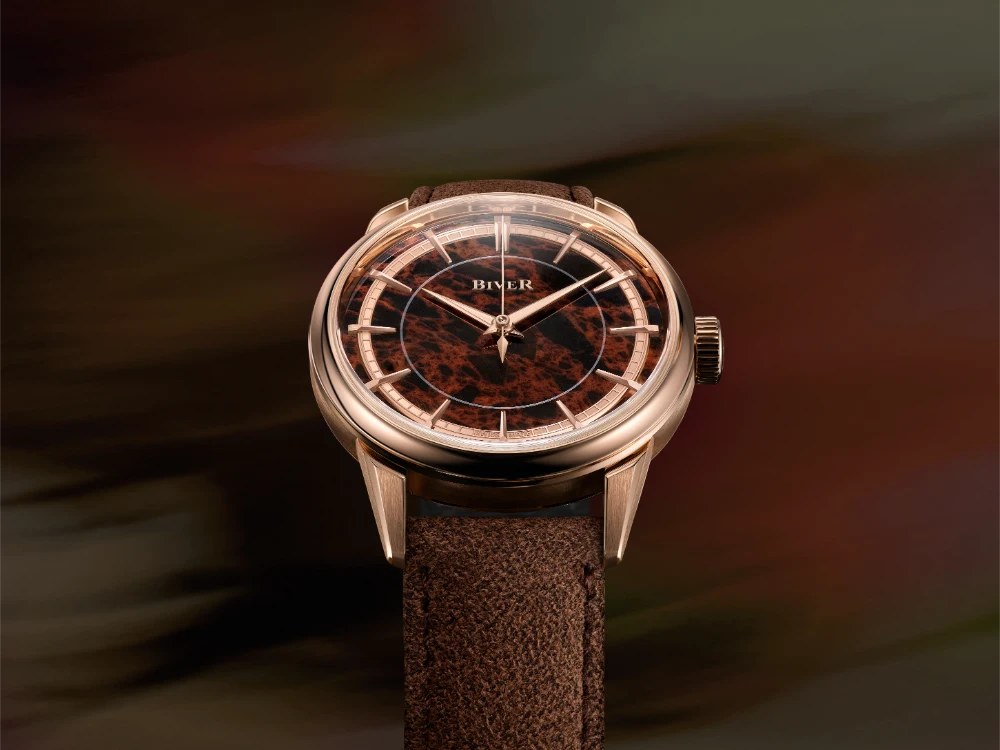
Image – Automatique Mahogany Obsidian
While each new release is imbued with a multitude of qualities, I feel especially drawn to the Biver Automatique Clous de Paris. Hereafter, I will focus on this model and endeavour to point out some of the exquisite nuances that distinguish it as truly exceptional.
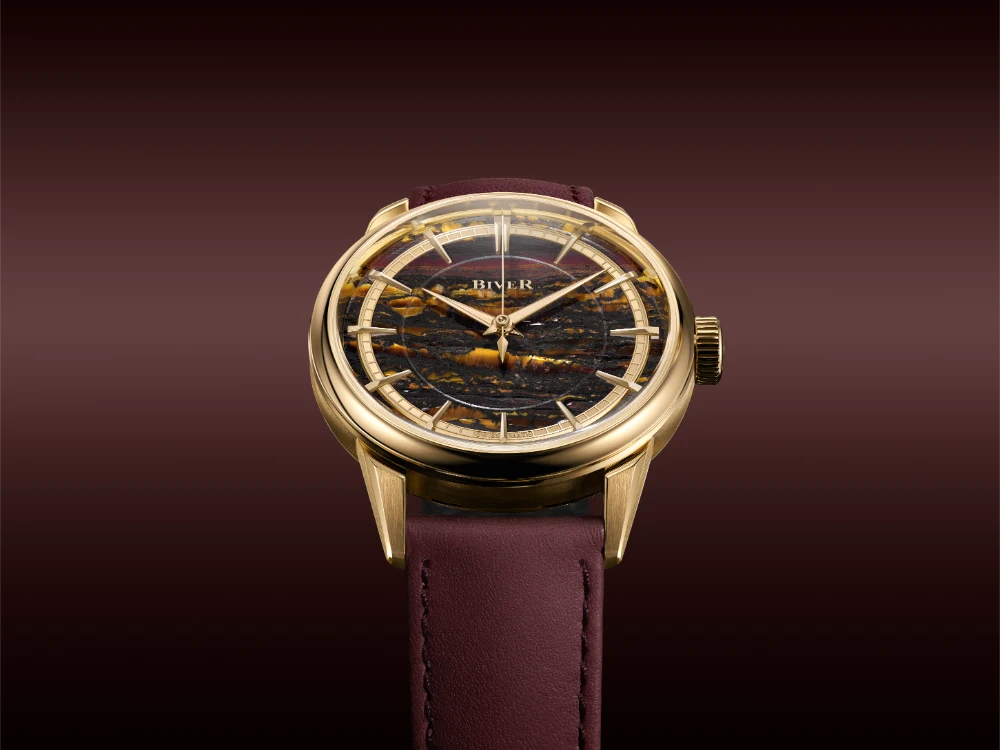
Image – Automatique Oeil de Fer
Biver Automatique Clous de Paris – dial
The dial is formed of 18k gold and suffused with a blue treatment. While brass would have been cheaper and few would ever spot the difference, Biver has chosen to craft the watch with the purist in mind. Likewise, a simple flat surface would have saved a few francs; however, the complex multifaceted dial suggests that Pierre Biver, Co-Founder & Creative Director, places product excellence ahead of cost savings.
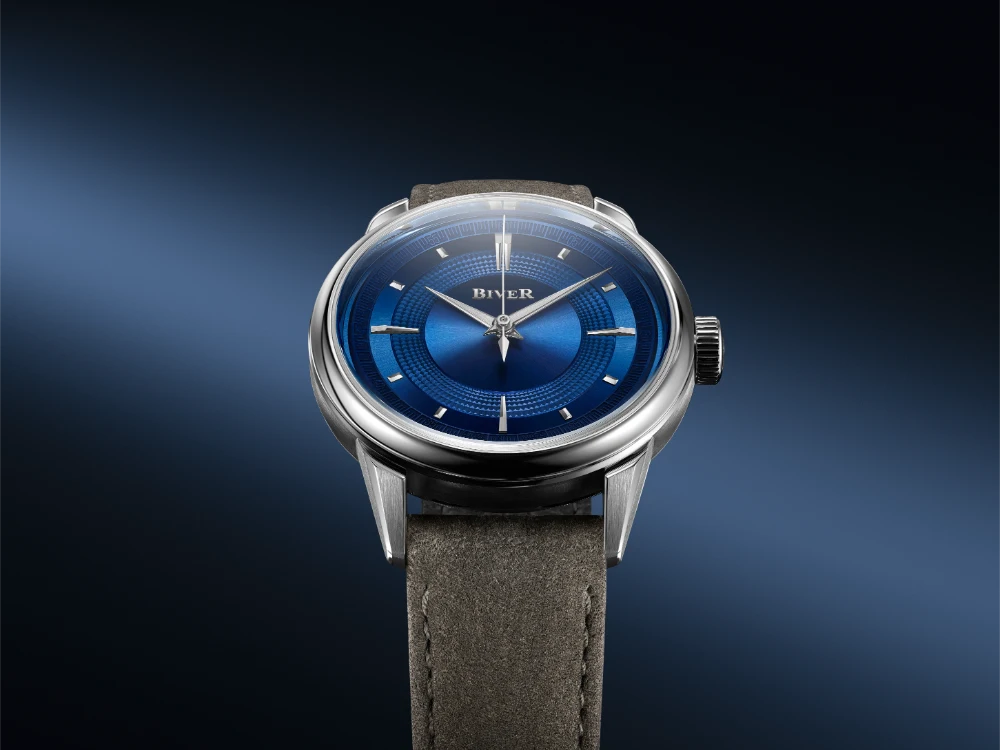
The central area of the dial is endowed with a fine sunray brush emanating from the canon pinon. The resultant appearance is dynamic and readily engages with light, producing areas of light and shade. The headline act, a ring of Clous de Paris, encircles the central dial area. This traditional motif is a regular sight within the watchworld; however, on this occasion, the technique used for executing the pattern remains rare.
Hand-guilloché is a traditional artisanal technique that uses a rose-engine lathe, in this instance employed to create the three-dimensional motif. The circlet of Clous de Paris is composed of five rings of small three-dimensional pyramidal structures which progressively increase in size, a remarkable achievement considering a non-computerised technique has been employed. By opting to use a rose-engine lathe, each pyramidal structure has definition and depth, qualities seldom achieved by using CNC (Computer Numerical Control), but characteristics that will resonate with purists.
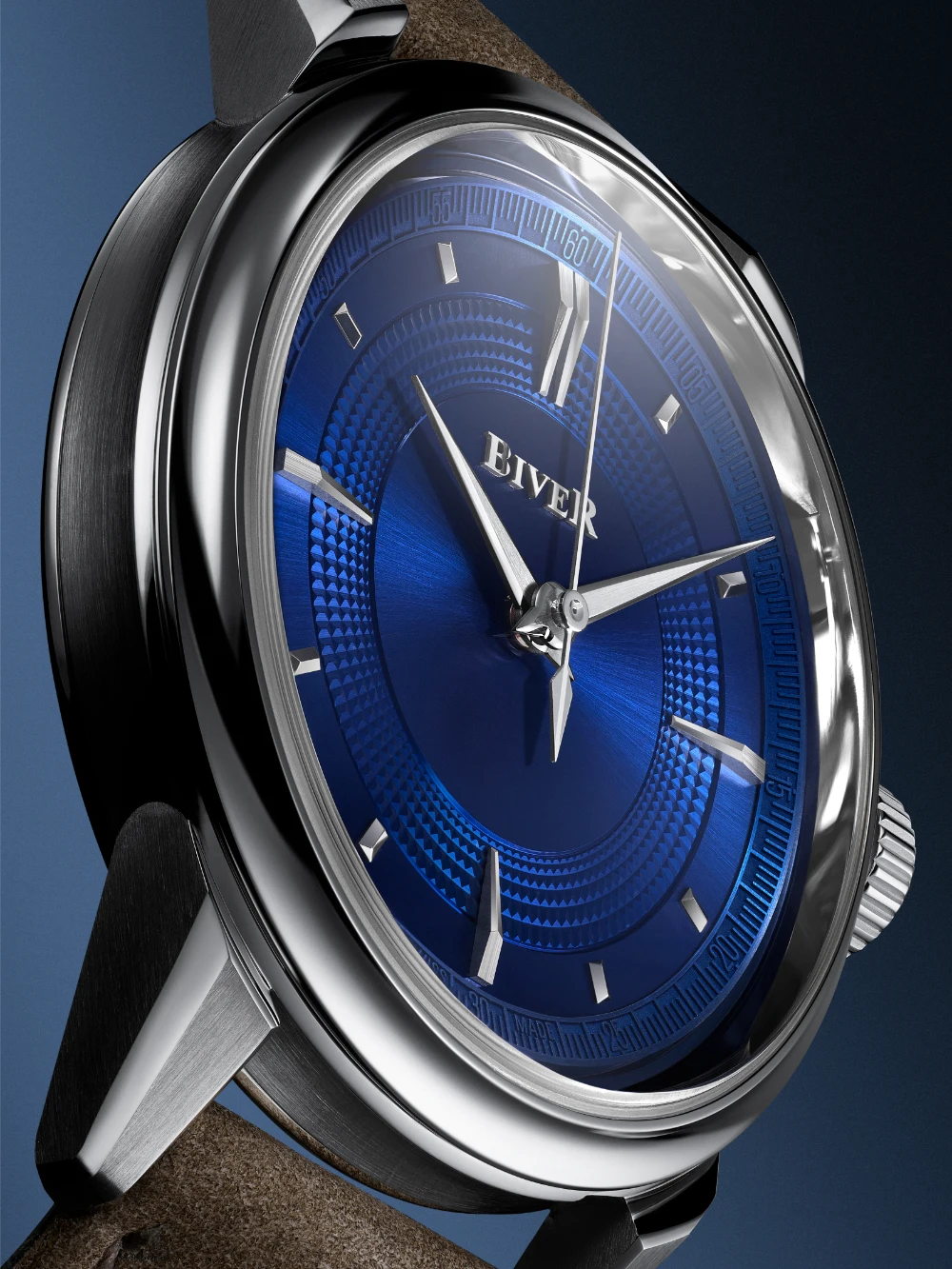
Continuing to move outwards, away from the centre of the dial, the ring of Clous de Paris is fringed with a circlet of fine sunray brush. This ring hosts multi-faceted white gold markers. The indexes at the cardinal points are elongated, spanning both this circlet and the neighbouring band of Clous de Paris.
Lastly, a track frames the scene, hugging the interior of the case. As you will have deduced by now, nothing is perfunctory at Biver. There is no simple pad-printing, instead, the track is endued with a combination of crisp markings and Arabic numerals, presented in relief.
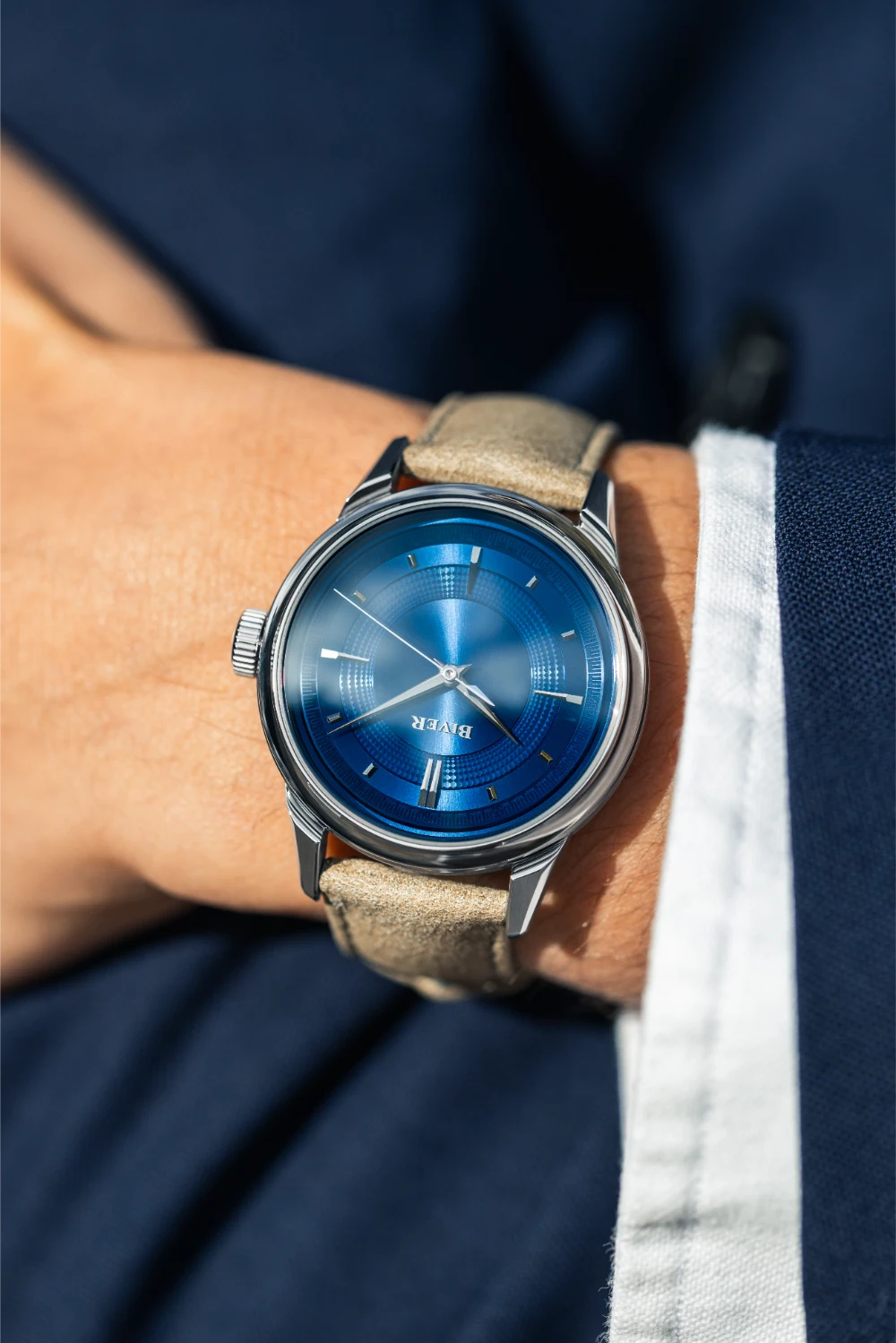
Hours, minutes and seconds; three co-axial hands that say everything you need to know. The dauphine-style hour and minute hands are formed of 18-carat white gold, satin-finished and hand-bevelled, exhibiting a classical appearance. The centre seconds hand features a fletching-style counterweight that reaches the aforementioned track.
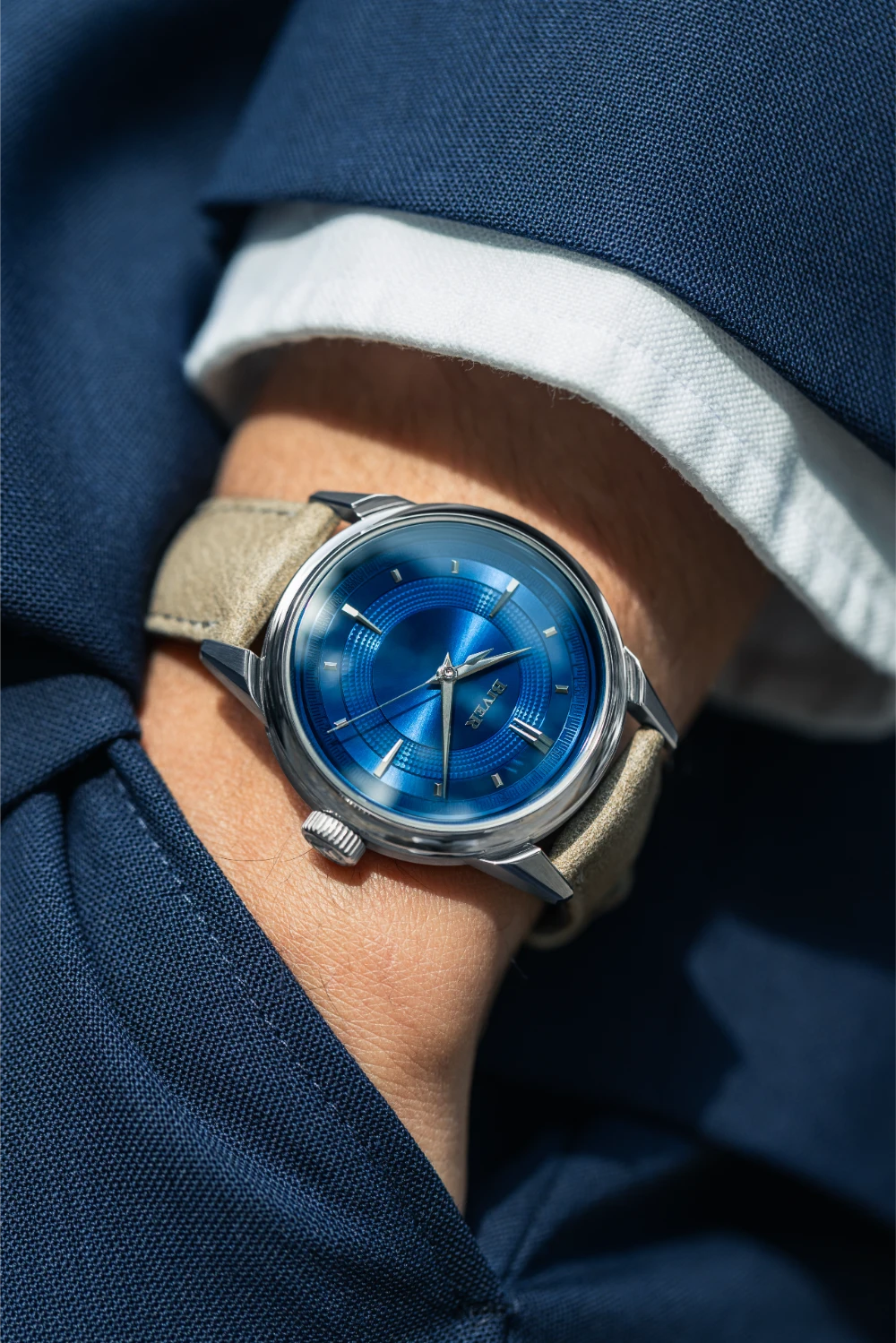
Incidentally, the central seconds hand proffers an additional feature seldom seen on most mainstream watches. Some watches feature a hacking seconds, allowing the wearer to pull the crown and stop the balance, enabling the wearer to synchronise the watch with a reference clock. However, with a hacking seconds, the position of the hand is determined by when the crown is pulled out. Biver goes further, with its zero-reset mechanism, pulling the crown not only stops the balance but causes the central seconds hand to return to the midnight hour. Push the crown home and the seconds hand commences its journey anew. It’s a subtle detail, but then again, in the esoteric world of Haute Horlogerie, ‘subtle’ is important.
Biver Automatique Clous de Paris – case
The Biver Automatique Clous de Paris is housed in a platinum case, measuring 39 mm in diameter with a case thickness of 10 mm. The pale, slightly whitish tones of the case assume a deferential role, allowing the adjacent blue dialscape to grab the limelight. However, don’t be fooled, the housing of this timepiece is a labour of love.

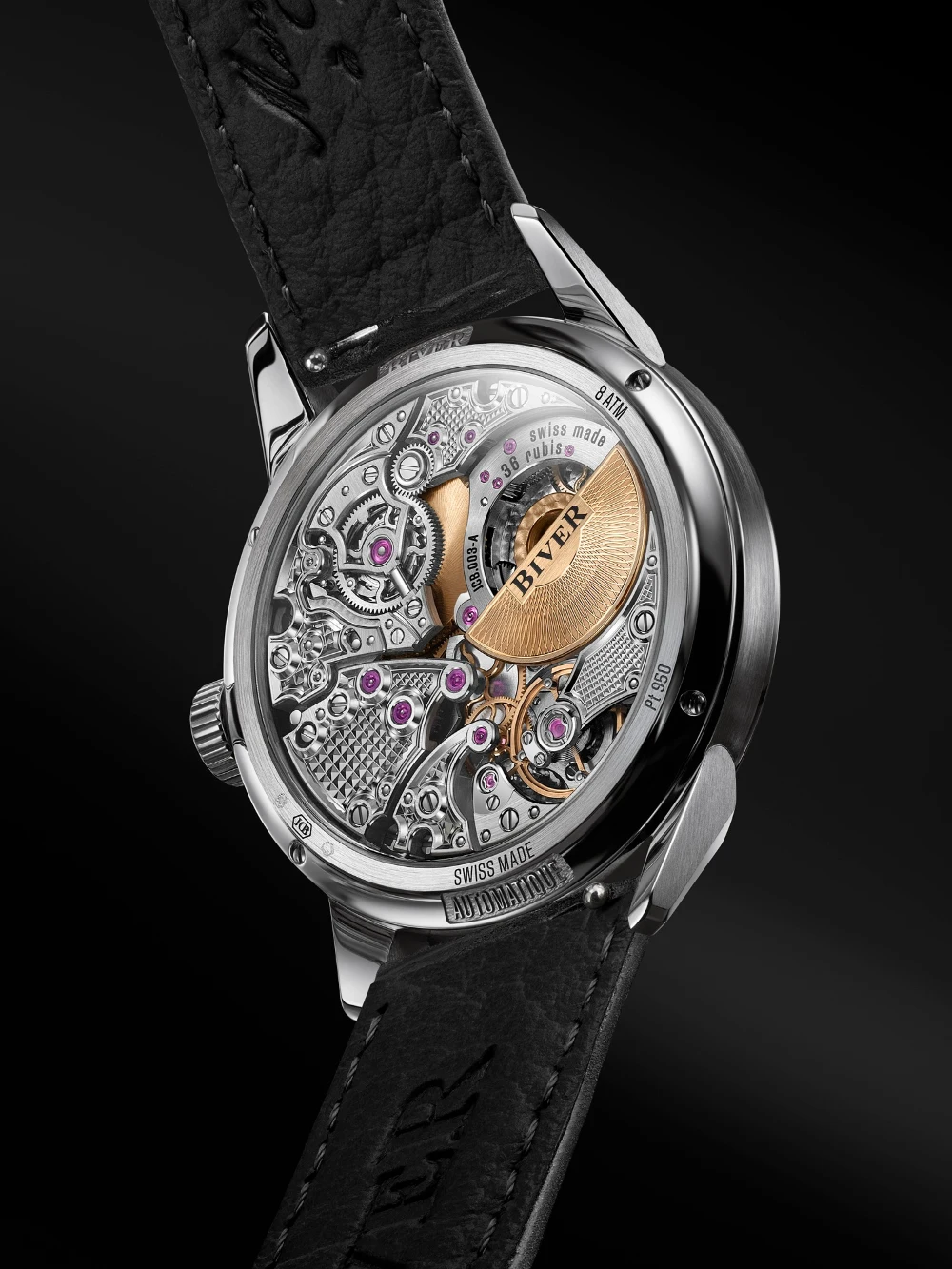
Look closely at the sapphire crystal and then allow your gaze to move downwards towards the crown and note how the bezel features concave sides. A subtle detail that, once again, toys with light. The caseband features a finely brushed, concave flank, framed by two slivers of highly polished platinum. The crown is embellished with the initials ‘JCB’ (Jean-Claude Biver), presented in relief against a brushed backdrop. Upholding fine watchmaking tradition, the lugs are soldered to the case. This approach allows the brand to imbue the lugs with wonderful, bevelled edges in isolation before they are united with the main body of the case. It would be impossible to achieve such crispness with the lugs in situ. To the rear of the watch, a pane of sapphire crystal, framed by a concave section of platinum, grants sight of the self-winding movement, the Calibre JCB-003-A.
Once you have reflected on the complexity of the case, consider that platinum is a nightmare to work with. It is incredibly hard, hence when milled using a CNC machine, the tools wear out more readily. For this reason, costlier tools are used, usually made of polycrystalline, a combination of hard metals, graphite and monocrystals. The milling speeds are reduced to avoid overheating the metal. Lastly, platinum is more difficult to polish than stainless steel or gold.
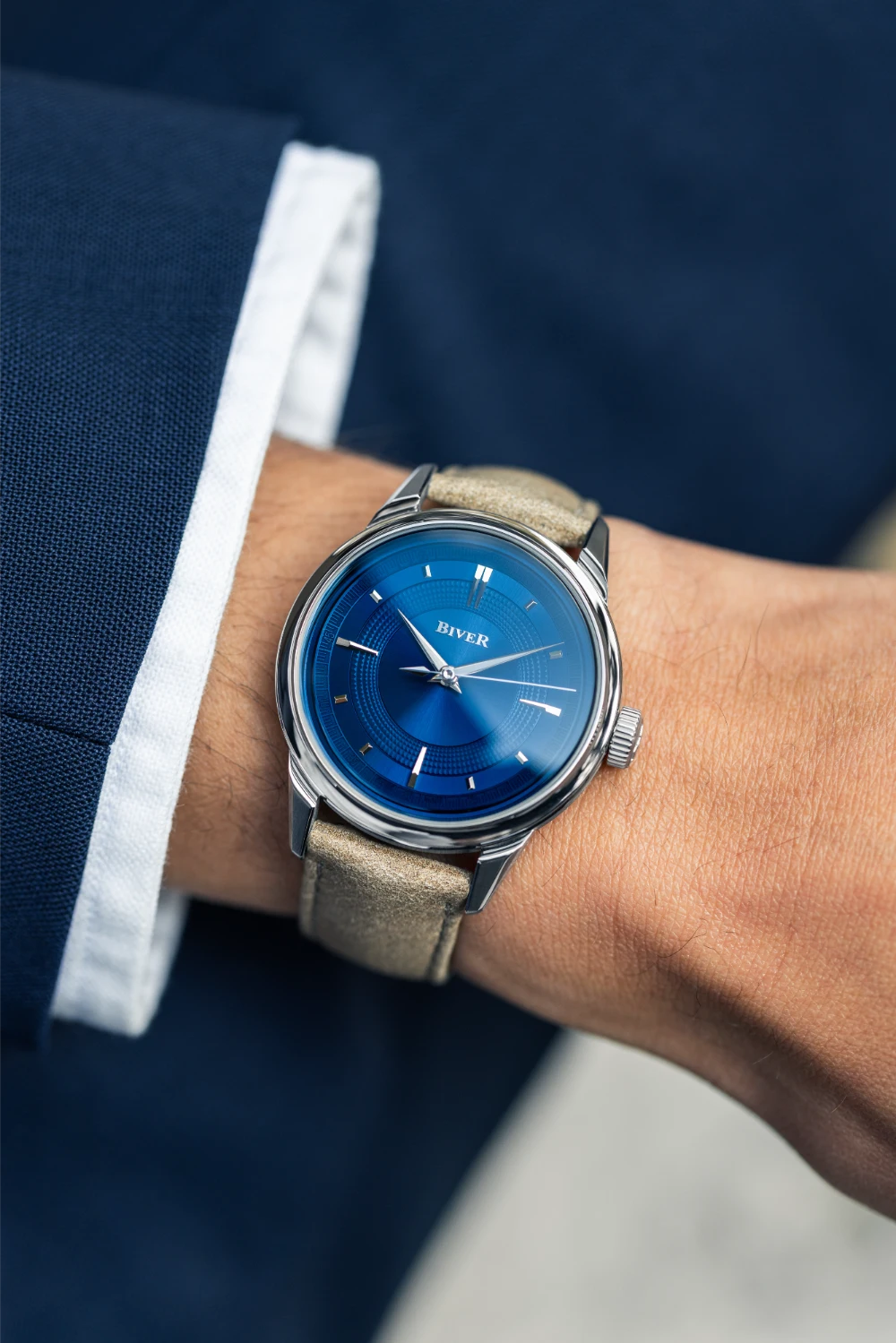
The brand’s founders were keen that Biver timepieces be worn and don’t spend their lives languishing in a safe. For this reason, the watch is water-resistant to 80 metres (8 ATM). While this doesn’t qualify the Biver Automatique Clous de Paris as a divers’ watch, it does confer a useful degree of practicality. But, once again, consider the attention to detail. The crown on this watch features a double seal. If the owner pulls out the crown, adjusts the indications, forgets to push the crown home and then has a shower, there is no risk of water ingress. Over-engineered? Maybe, but that’s what makes Haute Horlogerie special.
The Biver Automatique Clous de Paris is supplied on a ‘Rustico nubuck calf leather strap’, fitted with a platinum pin buckle. It is equipped with an easy change system, allowing the owner to easily swap the strap for an alternative without the need for tools. In addition, a platinum bracelet, paired with a platinum deployant buckle, is also available for an additional fee.
Biver Automatique Clous de Paris – Calibre JCB-003-A
The Biver Calibre JCB-003-A was ‘developed in close collaboration with Dubois Depraz’, a specialist in making movements and mechanisms and is equipped with an array of refinements.
Micro-rotor
As previously stated, the movement is equipped with a bi-directional 22k gold micro-rotor. The technical challenge with a diminutive rotor is being able to harness sufficient energy from the natural motion of the wrist to energise the mainspring. It is far easier to create inertia using a large semi-circular mass; hence this latter approach is the norm. However, if the aforementioned obstacle can be surmounted, the micro-rotor offers two notable benefits. Firstly, as the micro-rotor sits flush with neighbouring bridges, the movement has a tendency to be slimmer. In this instance, the Calibre JCB-003-A has a modest thickness of 4.0 mm. Secondly, with no oscillating mass above the bridges potentially obscuring the view, the wearer is able to see more of the beautifully decorated movement.
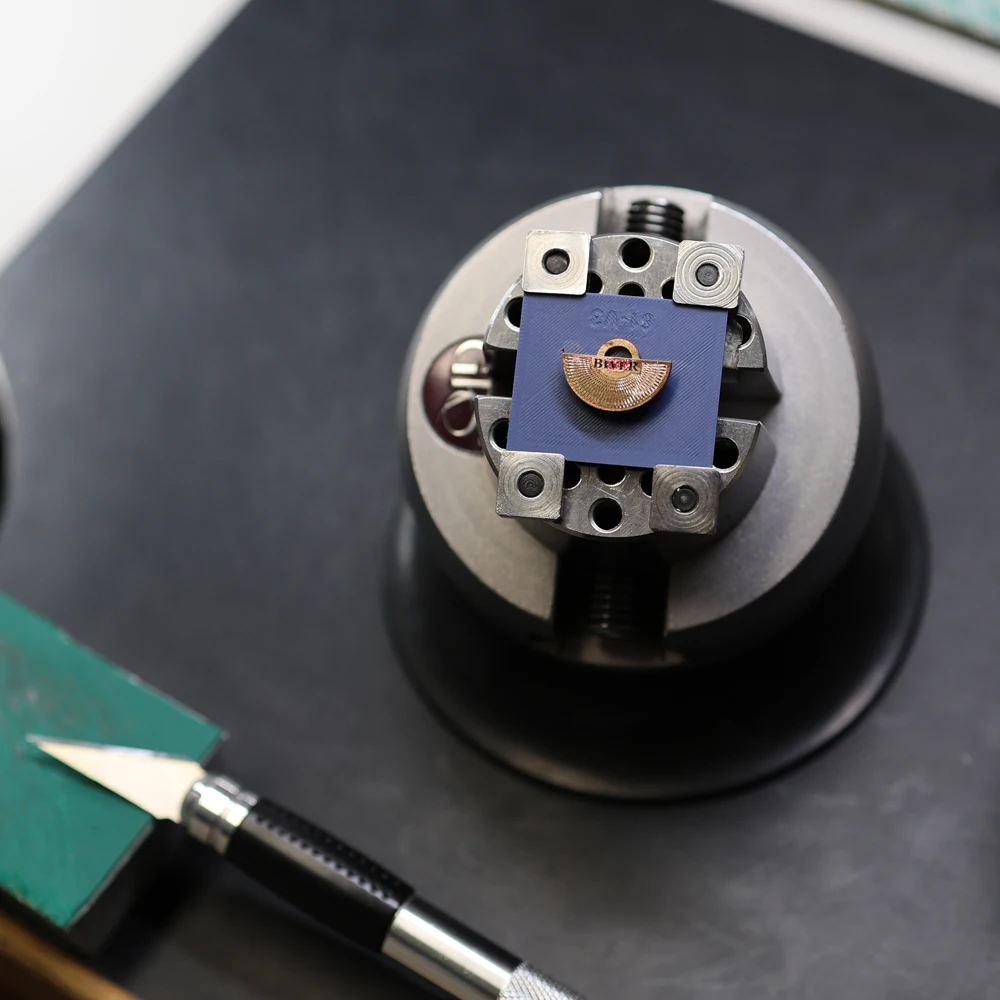
Image – micro-rotor in the process of being finished
Variable-inertia balance
Moving to the regulating organ, the Calibre JCB-003-A features a variable-inertia balance. Most watches feature an index-adjusted balance, which involves moving a raquette towards or away from the stud, altering the effective length of the hairspring, making the watch run faster or slower.
With the variable-inertia balance, the length of the hairspring is fixed. The rate is adjusted by turning the masselottes (weights) fitted to the balance wheel, altering the moment of inertia, making the watch run faster or slower. This is technically superior as the balance is less prone to positional influence and is less likely to require remedial regulation after being subjected to a minor shock. Rather than use traditional timing screws fitted to the exterior of the balance wheel, Biver has cleverly placed the masselottes inboard. This approach mitigates air turbulence, enhancing isochronism. It does take longer to regulate a variable-inertia balance, but production time seems of little concern to the team of perfectionists working at the Biver atelier.
Gold bridges and mainplate
Biver has taken the unusual step of making the mainplate and bridges from gold. This material is very challenging to work with as an absent-minded slip of the hand can scar a component, resigning it to the ‘recycling’ container in the corner of the room. However, if the watchmaker is careful during the assembly process, gold offers a significant benefit. It is one of the least reactive metals, hence it does not require plating. When a watch has a plated movement and requires remedial work in, say, 20 years’ time, it is quite feasible that the plating will be damaged. If this component is replaced with a newly plated item, it is unlikely to match. No such issues will afflict gold components.
Mindful of the delicate nature of gold, artisans apply a layer of red lacquer to components to prevent them from becoming scratched, save for the area to be worked on.
Finishing
As you may have already ascertained, Biver operates within the rarefied world of Haute Horlogerie. An important aspect of operating in this esoteric world is that movements are imbued with refined finishes. Biver doesn’t disappoint.
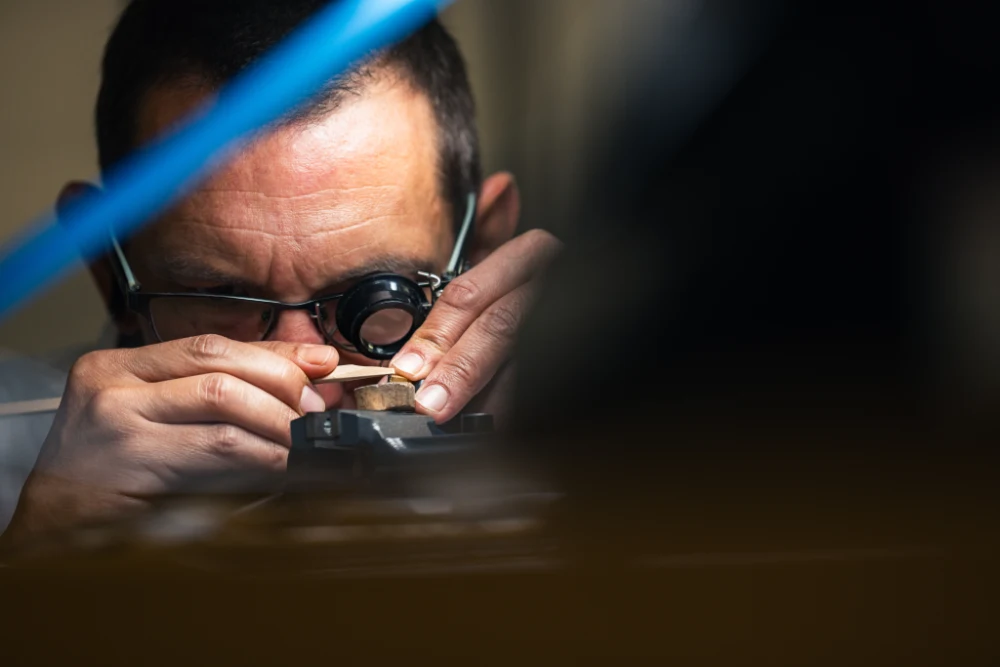
Image – artisan using a cabron – credit Tom Shaxon ©️
Anglage involves removing sharp edges between the surface and the flank and creating a 45° chamfer. Thereafter, a series of abrasive wooden tools, termed ‘cabrons’, are used in combination with diamantine paste to smooth the surface. The cabrons vary in coarseness, with the artisan progressively using finer grades as the finishing process nears completion.
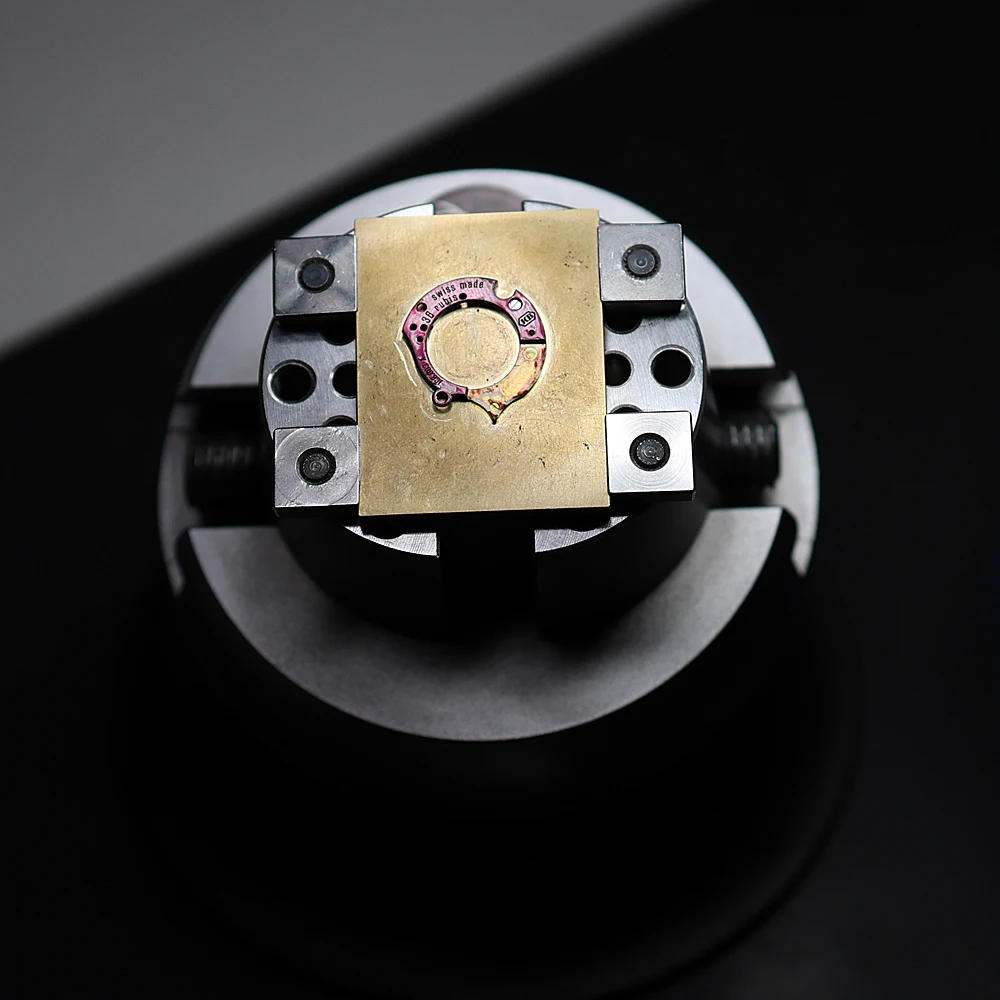
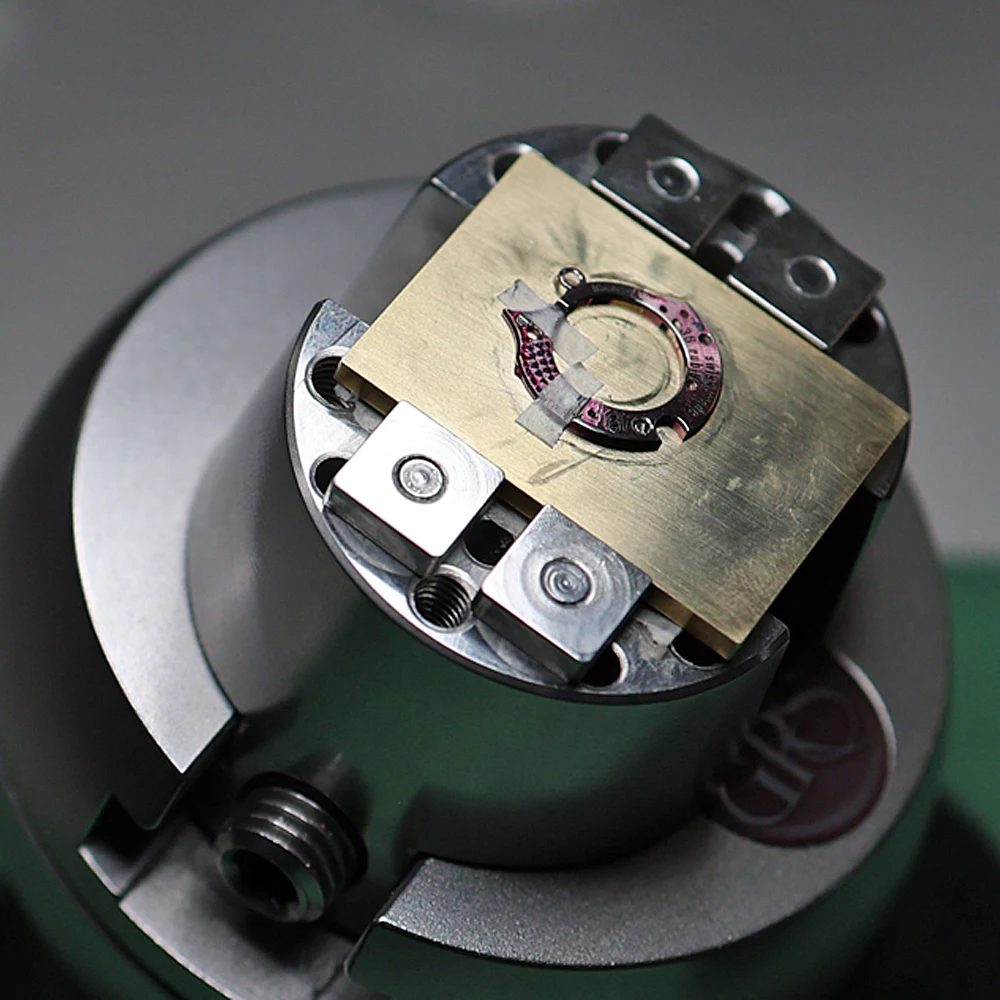
Image – before and after perlage is applied
I also observed perlage being applied to the ‘pont roue de seconde’ (second wheel bridge). While this decoration, formed of overlapping circles, is extensively used in the watch industry, I have seldom seen the pearls presented in such minuscule form. Again, Biver’s approach is far more challenging and requires its artisans to employ an inordinate amount of skill and patience.
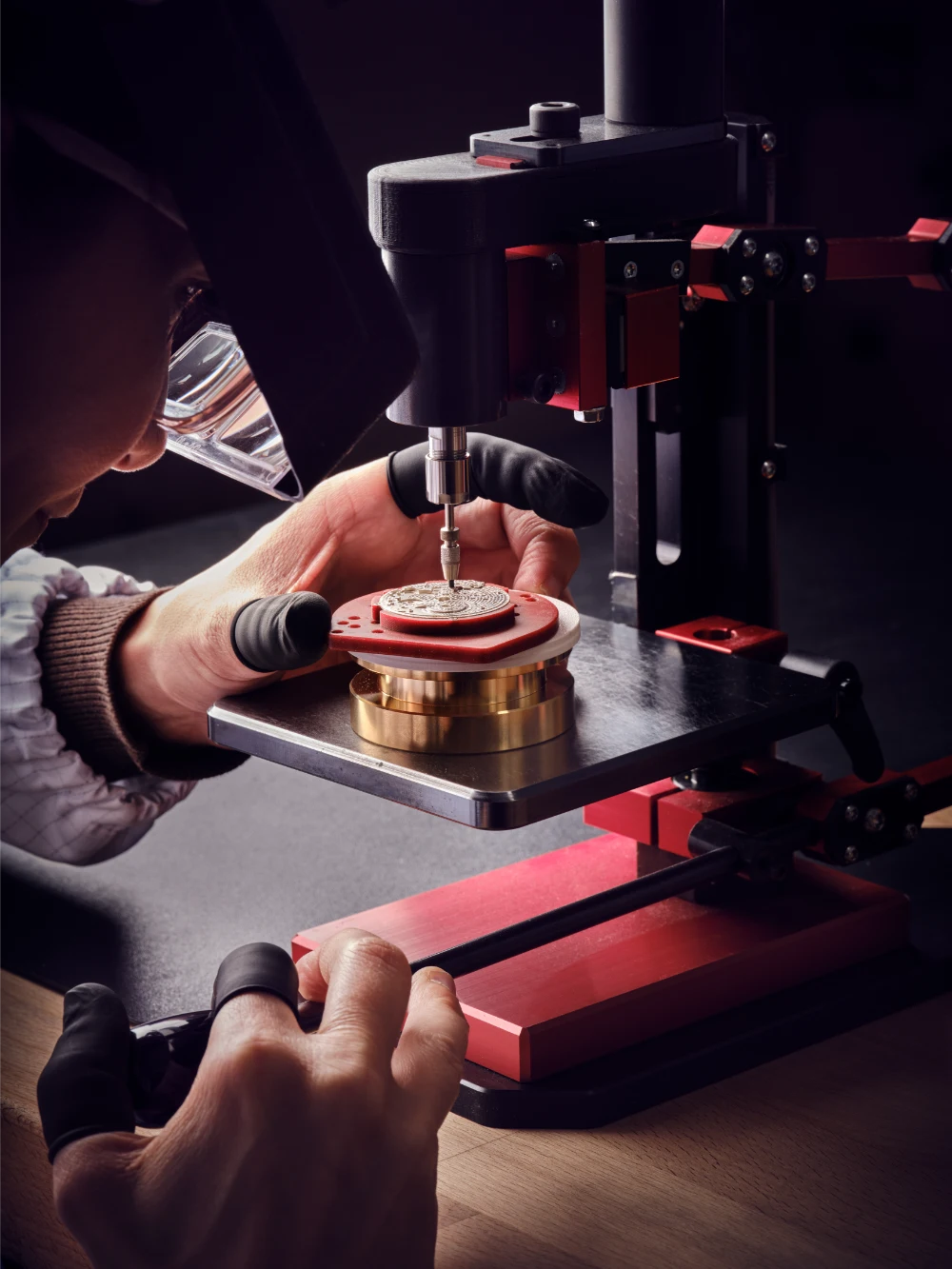
Image – artisan applying perlage to a component – credit Sebastien Agnetti ©️
On the Biver Automatique Clous de Paris, the micro-rotor and wheels exhibit a rose gold hue; however, on those models encased in a yellow gold case, the Swiss marque has chosen to present the parts in a matching tone.
When viewing the movement components, I noted that the bridges were not adorned with the usual Côtes de Genève motif but enriched with a Clous de Paris guilloché. Again, the pyramidal structures increase in magnitude, a technical feat which would be difficult to achieve using hand-crafting techniques, hence the brand has employed CNC. Biver is refreshingly open about the approach it has taken, a degree of honesty that I found endearing. The jewel and screws reside in highly polished sinks and black polishing abounds. Every detail is designed to coax light and ensure longevity.
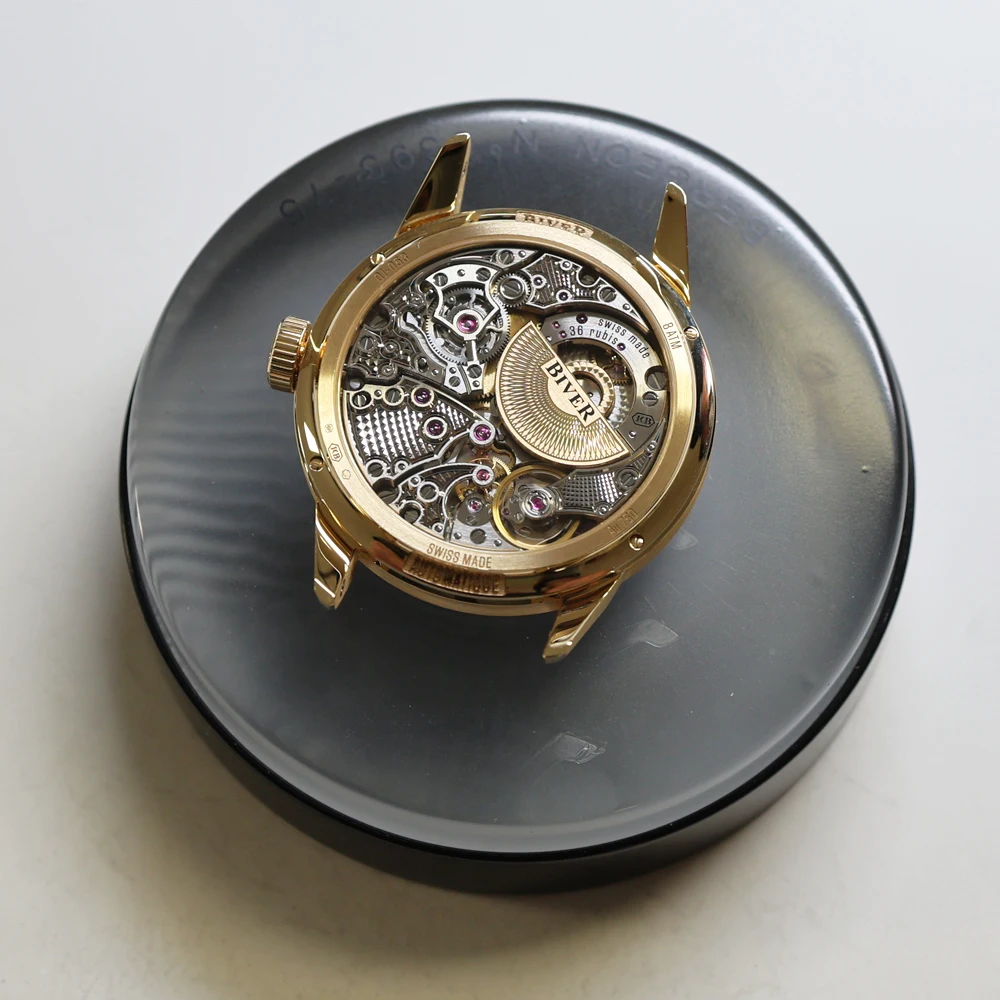
Image – encased movement, enriched with numerous finishes (18k yellow gold case)
Closing remarks
After leaving the Biver atelier, I boarded a train in Nyon and travelled back to Geneva. I reflected on everything that I had seen during my visit. I thought about the beautiful timepieces I had viewed close up and considered the remarkable artisanal practices I’d witnessed. Some components will never be seen by the wearer and yet time-served artisans expend much time and energy decorating them to a flawless conclusion. In my opinion, this is authentic luxury that transcends clever marketing.
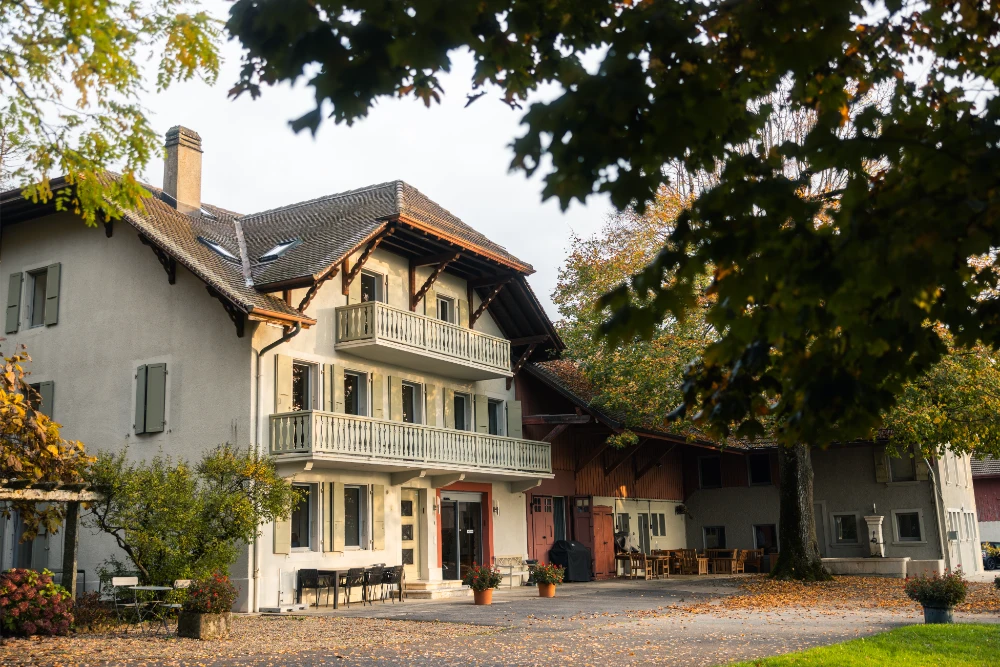
Image – Biver atelier – credit Tom Shaxon ©️
And finally, I thought about the Automatique. At Dubai Watch Week, Biver will display nine new versions of this model, several of which I find highly appealing; however, my favourite remains the Clous de Paris. It exhibits a charming simplicity but is blessed with a brilliant mind and an array of subtle features; seemingly simple, yet anything but.
Further reading
Technical specifications
- Model: Biver Automatique Clous de Paris
- Case: platinum (Pt 950), diameter 39 mm, height 10 mm, water resistant to 8 bar (80 metres), sapphire crystal to front, exhibition case back.
- Functions: hours, minutes, centre seconds with zero-reset
- Movement: Calibre JCB-003-A, self-winding movement, frequency 25,200 vph (3.5 Hz), 36 jewels, power reserve 65 hours
- Strap: Rustico nubuck calf leather strap with platinum pin buckle. Platinum bracelet with platinum deployant buckle (for additional fee)
- Price: CHF 85,000 excluding tax and local duties (as of 19.11.2025)