
Girard-Perregaux Constant Escapement (Part Two) in-depth review
The Girard-Perregaux Neo Constant Escapement is the latest expression of Haute Horlogerie to emanate from the prestigious Manufacture based in La Chaux-de-Fonds. In a series of three articles, Angus Davies looks at constant force and how it confers rate stability. In addition, he provides an insight into this latest creation from the Swiss marque, pointing out the model’s numerous details and the various benefits these confer.
This particular part looks at different types of escapement, explaining their characteristics as well as their advantages and disadvantages. Thereafter, the article looks at Girard-Perregaux’s pursuit of chronometry including the release of Constant Escapement L.M. in 2013 and the making of its unique silicium escapement spring and buckling blade.

Verge escapement
Invented in 13th century Europe, the verge escapement is the oldest form of escapement and was typically used for clock towers, table clocks and pocket watches and comprises of an escape wheel or balance and the verge or balance axis. This is a form of ‘frictional rest escapement’ where the escape wheel and balance are always in contact.
There are primarily two disadvantages with a verge escapement. The gear train momentarily goes backwards as the balance rotates to and fro, heightening wear and impairing precision. Early examples of the verge escapement worked without a balance spring, a characteristic that differentiates them from other escapements.

Image – Girard-Perregaux Neo Constant Escapement Only Watch Edition
Cylinder escapement
In 1695, Thomas Tompion (1639-1713) invented the cylinder escapement. Thereafter, it was improved by George Graham (1673-1751). The mechanism consists of a cylinder featuring a cut away section. The escape wheel engages with the aperture, receiving an impulse. The balance sits atop the cylinder. Like the verge escapement, the cylinder escapement is a frictional rest escapement ie the escape wheel and cylinder are always in contact, leading to excessive wear. However, high quality versions addressed this issue by using ruby cylinders. Another problem was that the cylinder escapement is that they are vulnerable to shocks.
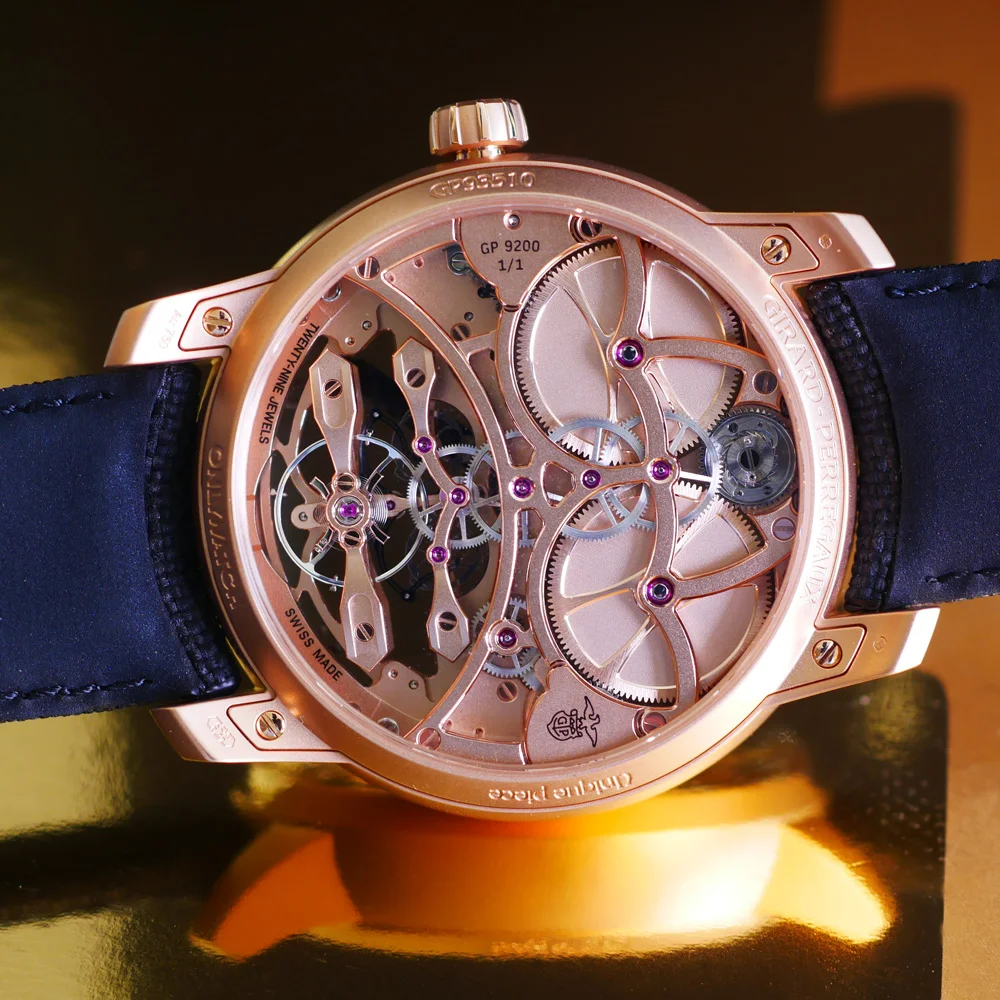
Image – Girard-Perregaux Neo Constant Escapement Only Watch Edition
Detent escapement
In 1748, Pierre Le Roy invented the ‘detent escapement’, also known as the ‘chronometer escapement’. It was widely used in marine chronometers of the time and held in high regard for its efficiency and precision. British watchmakers, John Arnold (1736-1799) and Thomas Earnshaw (1749-1829) also spent much time developing their own versions of the detent escapement. Arnold, Earnshaw and Le Roy recognised that friction is detrimental to creating a precision timekeeper.
The escape wheel is supported with a fine blade spring and a jewel. As the balance rotates it nudges the spring as it passes, releasing the escape wheel, allowing it to advance. The escape wheel impulses the balance directly before locking again as the spring returns to its starting position.
As the escape wheel transmits force directly to the balance wheel it is only momentarily in contact with it. In an ideal world, the balance wheel should be left alone as much as possible to ensure the hairspring breathes concentrically. The problem with detent escapements is that they are complex to set up, not always reliable and are easily affected by shocks. Furthermore, detent escapements are not self-starting making them relatively impractical for use in wristwatches. There are a few exceptions; however, the complexity of such watches means they are often accompanied with commensurate pricing.
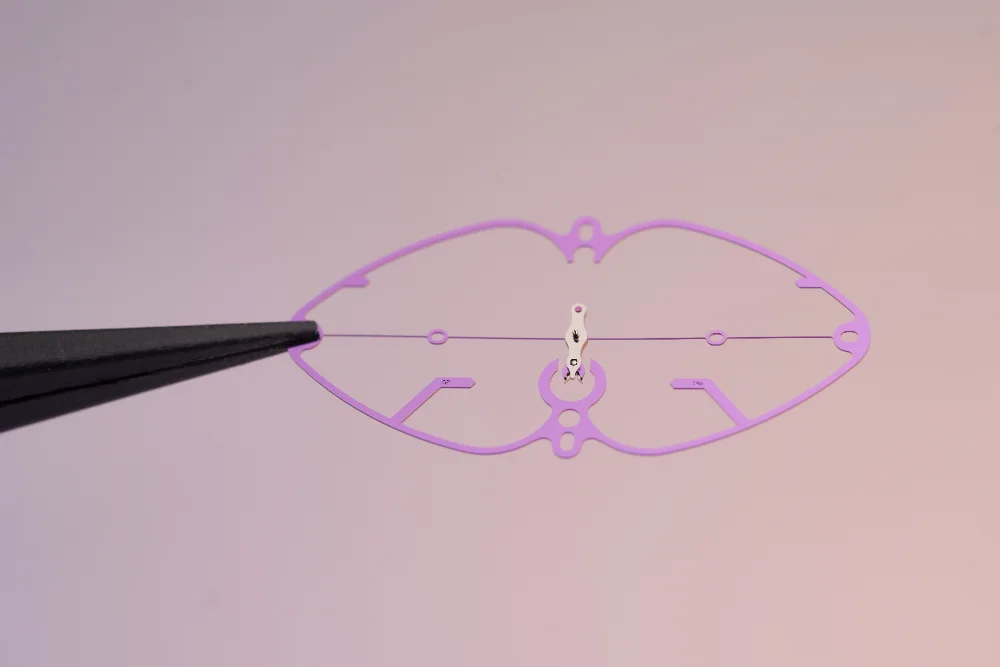
Image – Girard-Perregaux Neo Constant Escapement silicium escapement spring with a buckling blade at its centre
Lever escapement
About 1755, Thomas Mudge (1715-1794) invented the lever escapement. It has subtly evolved over the years, but it is essentially the same type of mechanism used today, most commonly referred to as a ‘Swiss lever escapement’. As stated in Part One, the force from the mainspring, transmitted via the gear train, serves the escape wheel. The escape wheel via the pallet lever provides an impulse to the regulating organ which in turn allows the escape wheel to unlock, thereby controlling the flow of time.
One benefit of the lever escapement is that the pallet lever is only in contact with the escape wheel momentarily unlike frictional rest escapements ie it is a detached escapement. This mitigates wear and enhances precision. Unlike some mechanisms, the lever escapement is also self-starting.
The lever escapement offers additional benefits, for example, it is reliable, simple to manufacture and much easier to adjust than earlier escapements. With the fitment of a shock protection device such as an Incabloc® (1928), a shock absorber that protects the balance staff from the influence of impacts, the Swiss lever escapement has become known for its comparative robustness.
The primary weakness of the lever escapement relates to the sliding action of the pallets against the teeth of the escape wheel. These parts require lubrication which will inevitably deteriorate with time, impairing precision.
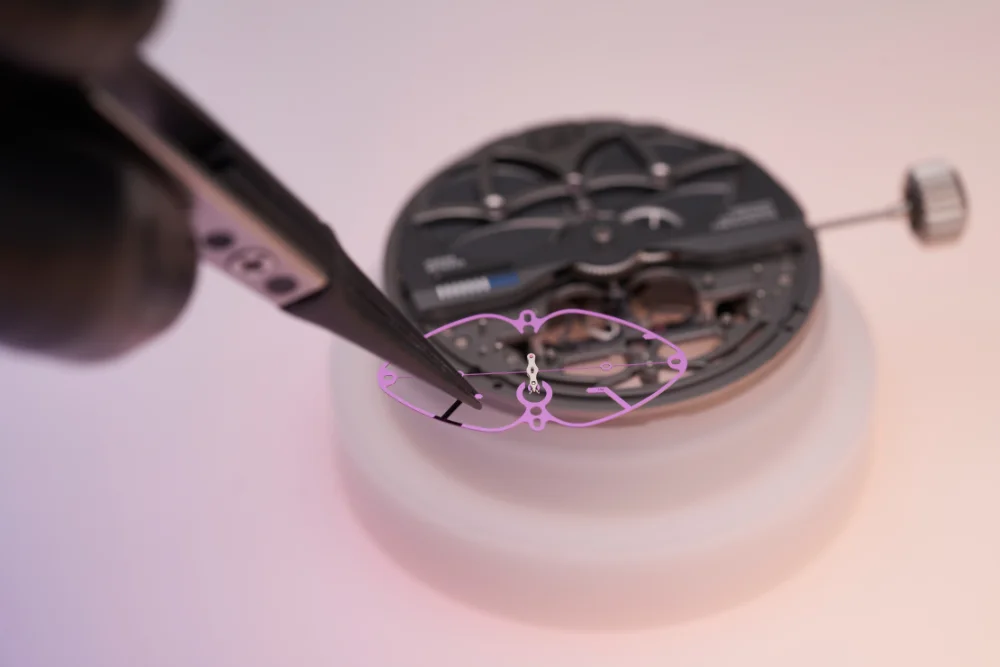
Image – Girard-Perregaux Neo Constant Escapement
Other types of escapement
The types of escapement listed above are some of the most well-known means of proportioning force into discrete and equal pulses of energy that ensure the indications shown are accurate. However, there are other forms of escapement, including the Robin escapement, natural escapement, the co-axial escapement, etc.
Each form of escapement offers advantages and disadvantages, but on balance (no pun intended), the lever escapement, in its various forms, has dominated the watch scene for over 250 years. As stated earlier, it delivers many wearer benefits.
Nevertheless, in its quest to achieve superior rate stability and precision, Girard-Perregaux looked at an alternative approach, culminating in the creation of the Constant Escapement. Before I explain this mechanism in detail, I think it is important to look at the Manufacture’s rich history of chronometric excellence.
Girard-Perregaux – at the vanguard of chronometry
Constant Girard (1825-1903), a son of La Chaux-de-Fonds, served his apprenticeship as a watchmaker before establishing his own business, Girard & Compagnie in 1852. Later, he married Marie Perregaux (1831-1912), a young lady from the nearby city of Le Locle. In 1856, two years after they were wed, the couple formed Manufacture Girard-Perregaux, the marque being an amalgamation of their two surnames.
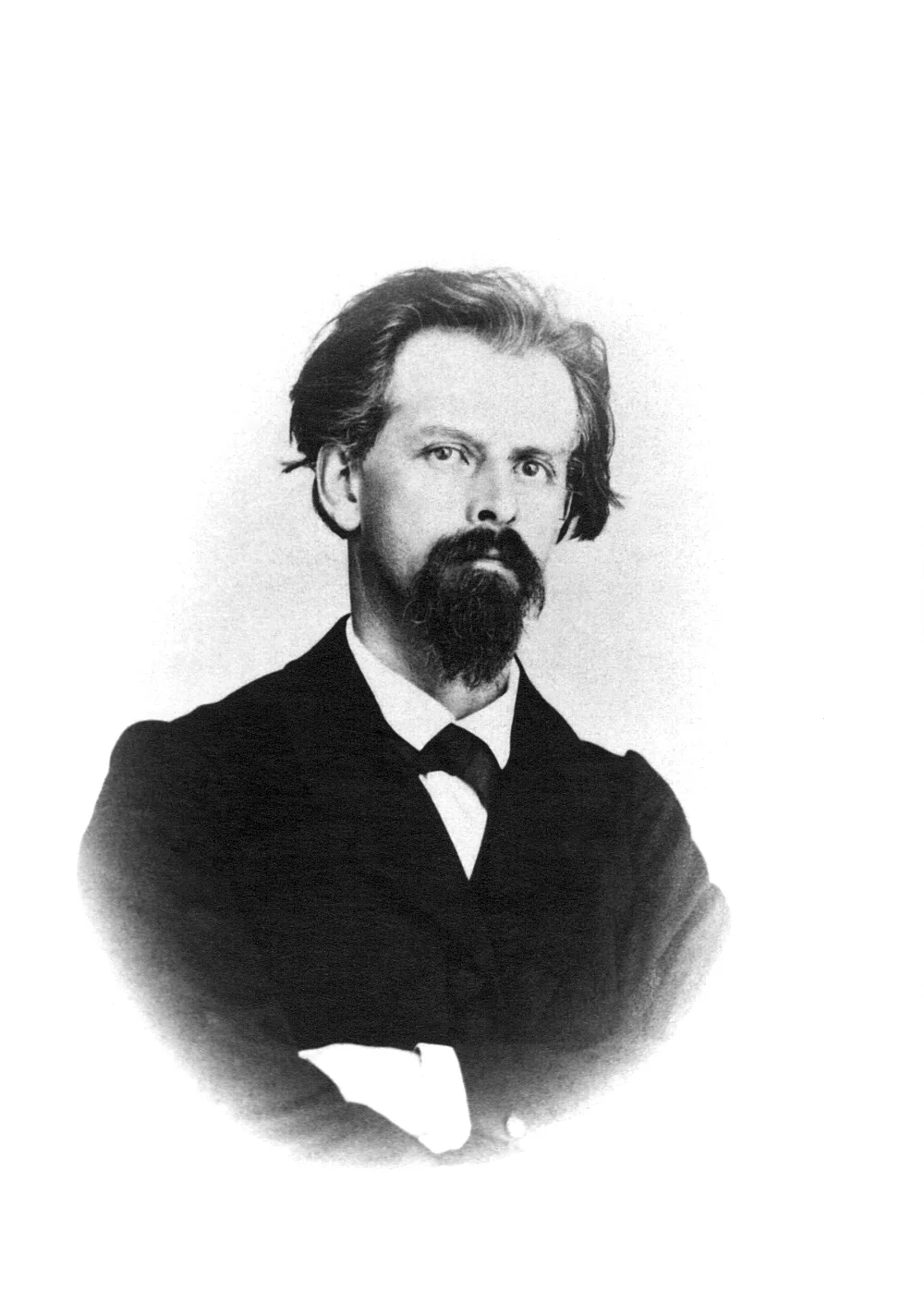
Image – Constant Girard
Constant Girard-Perregaux (the name he used after marrying Marie), was known for his work on escapement mechanisms, especially the tourbillon (patented by Abraham-Louis Breguet in 1801). Constant worked tirelessly in his quest to advance chronometry and soon after establishing the Manufacture, his work came to the attention of many experts, culminating in the young firm receiving numerous awards and prizes.
As well as being passionate about chronometry, Constant was an aesthete, something that came to prominence with his pocket watch endued with three nickel silver bridges (1867). The bridges, once thought of as merely functional parts suddenly became artistic design elements as well. Later, in 1889, the three bridges became more stylised and they continue to feature in the brand’s present day ‘Bridges collection’. Indeed, Clémence Dubois, Chief Marketing Officer of Girard-Perregaux, recently remarked, “The Bridges collection is one of the oldest mechanical signatures in watchmaking and is an important pillar of our Manufacture.”
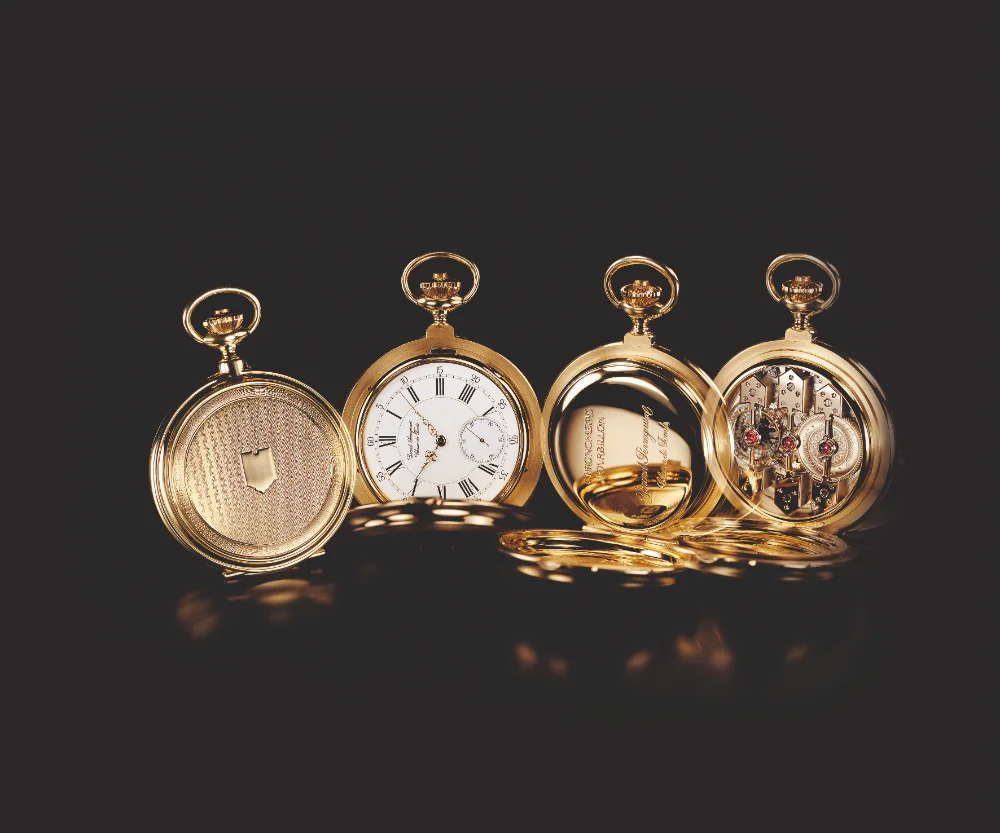
Image – Girard-Perregaux pocket tourbillon watch with three gold bridges
Returning to the matter of chronometry, the aforementioned pocket watch of 1867 won a first-class prize at the Neuchâtel Observatory later that year. Its precision remained unsurpassed for 17 years thereafter. The watch, subsequently dressed in a suit of gold, won a gold medal at the Universal Exhibition in Paris in 1889.
The pursuit of chronometric excellence has remained an important part of the Manufacture’s DNA ever since. While the company has respected traditions and historical watchmaking techniques, it has not languished in the past. On the contrary, in 1966, Girard-Perregaux produced the Gyromatic High Frequency automatic movement. In this instance, the balance oscillated at 36,000 vph (5Hz), a cadence that proffered superior precision. A world-first, the Swiss marque later received the centenary prize of the Neuchâtel Observatory for its high-frequency calibre.
In 1971, the forward-looking Maison was at the cutting edge of quartz timekeeping releasing Switzerland’s first industrially-produced quartz wristwatch. The frequency of 32,768 Hz was set by the Maison and was subsequently adopted as the universal standard for wristwatches.
Despite having an enviable reputation for its inventiveness, few watch aficionados could have predicted the brand’s showstopping release in 2013 of the Constant Escapement L.M.

Image – Girard-Perregaux Constant Escapement L.M
Girard-Perregaux Constant Escapement L.M.
Up to this point, constant force devices were always positioned ahead of the escapement, serving it with a uniform supply of energy. However, with the advent of the Girard-Perregaux Constant Escapement, the constant force device is actually part of the escapement itself.
Indeed, the Girard-Perregaux Constant Escapement L.M. set aside the ubiquitous Swiss lever escapement, a mechanism that has changed little over the previous 250 years. Instead, this watch featured a wholly new escapement, the Constant Escapement, a mechanism employing a buckling blade made of silicium (see later).

Image – Girard-Perregaux Constant Escapement L.M
There is an interesting story behind the ‘buckling blade’ which all started with a watchmaker holding a train ticket. He observed that when a train ticket is placed between forefinger and thumb and flexed it assumes a ‘C’ shaped form and becomes unstable, a scenario termed ‘buckling’. Lateral pressure will cause the card to accumulate a uniform amount of energy up to a point of instability before snapping back, effectively creating an inverted-C-shaped profile. It’s this dynamic behaviour of switching from a state of compression to that of bending that lies at the heart of the Constant Escapement.
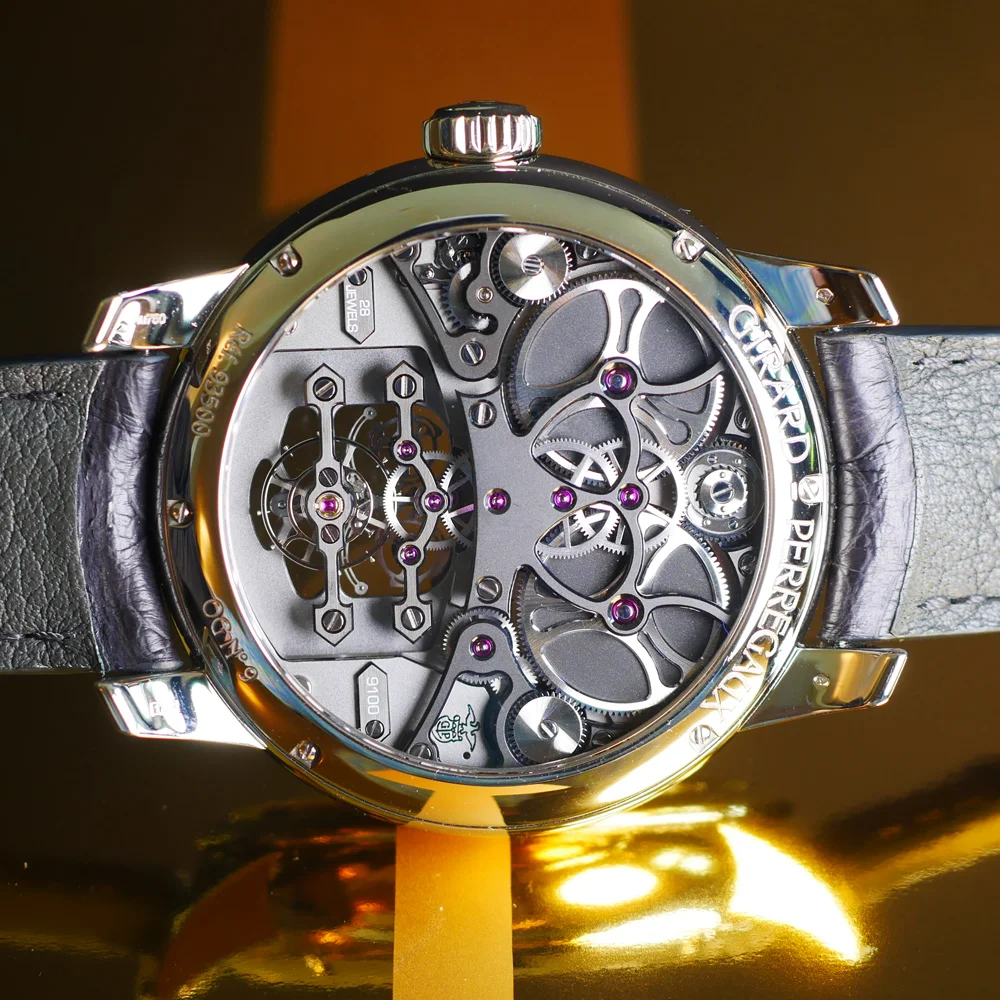
Image – Girard-Perregaux Constant Escapement L.M
Managing force with a constant escapement
The gear train found in most conventional watches has four wheels; however, the Constant Escapement has five. This additional wheel transfers energy to two escape wheels instead of the customary single escape wheel. Each wheel features three teeth, matching the frequency of the movement (3Hz). Energy is received from the escape wheels alternatively ie not simultaneously. Thereafter, the energy is sent via a rocking lever to the buckling silicium blade.
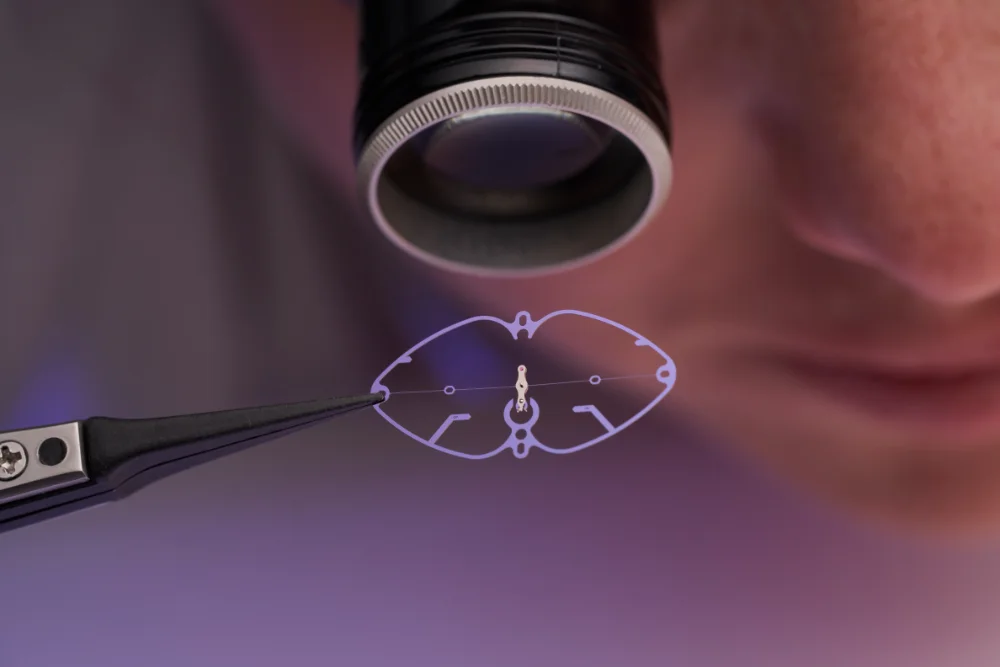
The Constant Escapement exploits the ‘elastic and bi-stable’ properties of the buckling silicium blade. Six times thinner than a human hair, the blade engages with a lever that serves an impulse to the balance wheel. This precisely choreographed performance features 20 sequences per oscillation. It’s a highly inventive arrangement that delivers constant force and ensures the amplitude always remains consistent. The symmetrical shape of the blade and the positioning of the escape wheels either side of the balance wheel ensure the forces act upon the centre of the regulating organ to bestow a smooth rotational motion, free of any impediment.
This method of controlling the flow of time delivers extraordinary rate stability and chronometric performance. As stated in Part One, after the Manufacture unveiled the Constant Escapement L.M. in 2013, the watch was awarded the GPHG ‘Aiguille D’Or’ later the same year.
How the advent of DRIE made the Constant Escapement possible
A key factor underpinning the success of the Constant Escapement is the innovative use of silicium, an approach that was only made possible with the advent of DRIE (Deep Reactive Ion Etching) back in the 1990s. Girard-Perregaux, working in collaboration with the specialist firm Sigatec, exploited this new technology to make the silicium blade. To provide context, this blade has a thickness of just 14 microns, six times thinner than a human hair.
Founded in 2006, Sigatec is a trusted partner of Girard-Perregaux and a leading producer of silicium components for the watch industry. Sigatec is jointly owned by Sowind Group (Girard-Perregaux’s parent company) and Mimotec, a leading name in UV-LIGA technology.
Sigatec’s production facility includes a clean room where parts are produced in a controlled environment in order to mitigate the risk of product contamination. The specialist firm has conducted numerous product trials, experimenting with different shapes, coatings and sizes, to achieve the perfect result.
Silicium is extracted from silica by using electrometallurgy and subsequently formed into highly pure silicium crystals. The cutting-edge material is light, not liable to corrode and friction free, all of which are useful attributes in the field of watchmaking. The material can be formed into intricate shapes that are not achievable using traditional milling or stamping techniques. In this instance, Girard-Perregaux has exploited the high elasticity of silicium, the only material that allows the blade to repeatedly buckle and, in so doing, serve the balance with a constant force.
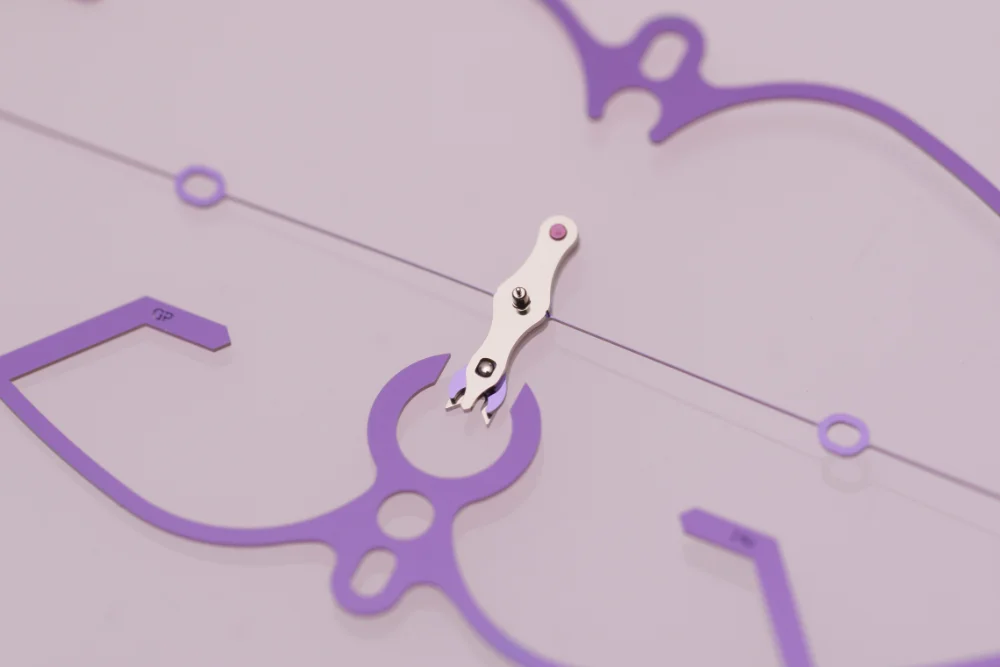
Making the silicium blade
The manufacture of silicium blades does not take place in a traditional watchmaker’s workshop but instead in an ultra-clean, high-tech laboratory. A technique called ‘photolithography’ is used to impart geometric shapes onto the wafers. Below, I have provided, the key stages of the manufacturing process, kindly provided by Girard-Perregaux.
- The silicium wafer is bonded to a silicium support courtesy of an oxidation layer. The depth limit of the material can be ascertained during the subsequent etching phase.
- Whilst rotating the wafer at high-speed, a liquid polymer, called ‘photoresist’, is applied to the surface. The centrifugal action caused by rotating the wafer displaces surplus liquid leaving a smooth, thin and uniform layer of the resin material.
- A mask, formed in the shape of the escapement spring, similar to a stencil, is positioned on top of the wafer and then everything is subjected to an intense treatment of UV-light. A chemical reaction then takes place and, thereafter, a special solution is used to remove any residues of the photoresist.
- After it is cleaned, the surface of the wafer reveals a series of escapement springs. These are cut from the wafer using an etching process called DRIE (Deep Reactive Ion Etching). The technique, effectively 3D printing in reverse, removes the silicium and resin, micro-layer by micro-layer, until it reaches the aforementioned oxidation layer.
- The silicium support and oxidation layer are removed using a ‘stripping’ process. Thereafter, the wafer is subjected to thermal treatment, a step that creates an oxidation layer onto the silicium components. This improves the component’s mechanical resistance and endows it with a specific colour, in this instance, the hue appears to transition from blue to purple. Each escapement spring, with its buckling blade positioned centre stage, is carefully detached by hand from the wafer.
- The resultant escapement spring is 120 microns thick, while the blade is a mere 14 microns wide. By comparison, a human hair is typically 50 – 90 microns in thickness.
- When making conventional hairsprings, it is possible to fit 500 pieces on a single wafer. With the Constant Escapement, a wafer can only accommodate 30 escapement springs, heightening production costs.
Coming next
In the final part of this in-depth review of the Neo Constant Escapement, Angus appraises the dial of the watch as well as other components shown front of house, the model’s case, the Calibre GP09200 and reflects on the overall composition of the watch.