
Girard-Perregaux Laureato FIFTY Steel Watch Review
The Girard-Perregaux Laureato FIFTY Steel is the latest chapter in a story that began in 1975 when the Swiss Manufacture unveiled the Quartz Chronometer. An elegant sports watch, which subsequently became known as the Laureato, the model is widely considered an icon. Angus Davies begins by discussing legendary watches before talking about this latest iteration of the Laureato, incorporating the highly impressive Calibre GP4800.
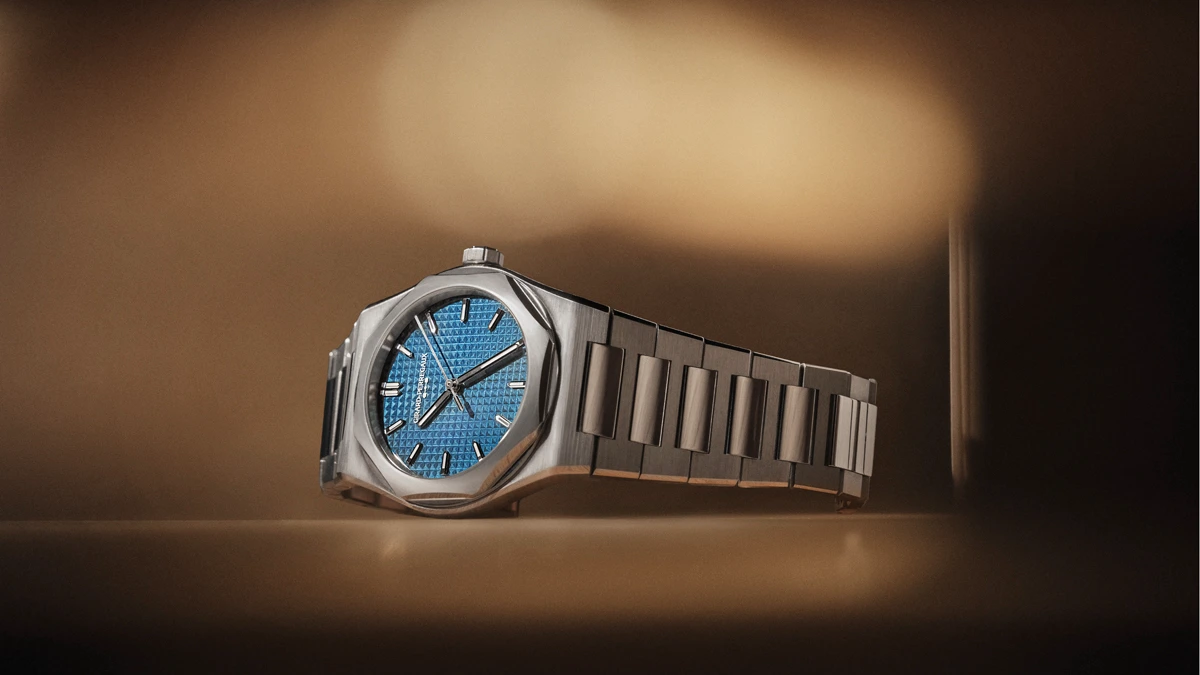
Above image – Laureato FIFTY 39 mm steel with blue enamel dial
Iconic products
Having invented the ‘first practical 35 mm camera’ (1914), Leica went on to launch the first serially produced 35 mm camera, the Leica 1, in 1925. Compact and light, the Leica 1 was highly portable and with a selection of impressive lenses available, it was the perfect tool for capturing moments in history. But of all Leica models produced, the M3 (1954) is most likely to evoke the greatest affection among brand devotees. A wonderful example of ‘form follows function’, photojournalists and artists raved about its design, describing how the Leica M3 ergonomically fit in the hand and felt like a natural extension of the arm. Over the years, the appearance of Leica models has evolved, incorporating new technology, but the ethos remains the same and the iconic looks endure.
Throughout the 20th century, companies created products that were not only revolutionary at the time they were released, but also went on to acquire iconic status. Indeed, we now look back at these items decades later with a sense of fondness and respect. Often these objects were human-centred designs, giving due consideration to people’s needs and thinking about how individuals would engage with them. Iconic products include the Volkswagen Beetle, the Bialetti Moka Pot, Eames Chair and the Porsche 911.
In the world of fine watchmaking, the words ‘icon’ and ‘legendary’ are liberally employed; however, in reality, there are only a few genuine icons. Consider the following list, arranged in alphabetical order: Audemars Piguet Royal Oak, Girard-Perregaux Laureato, Jaeger-LeCoultre Reverso, Omega Speedmaster Moonwatch, Patek Philippe Nautilus and Rolex Submariner. When typing these names, I did not need to look to the heavens for inspiration, there was no hesitation, their identities readily came to mind, a clear sign that each one is a genuine icon.
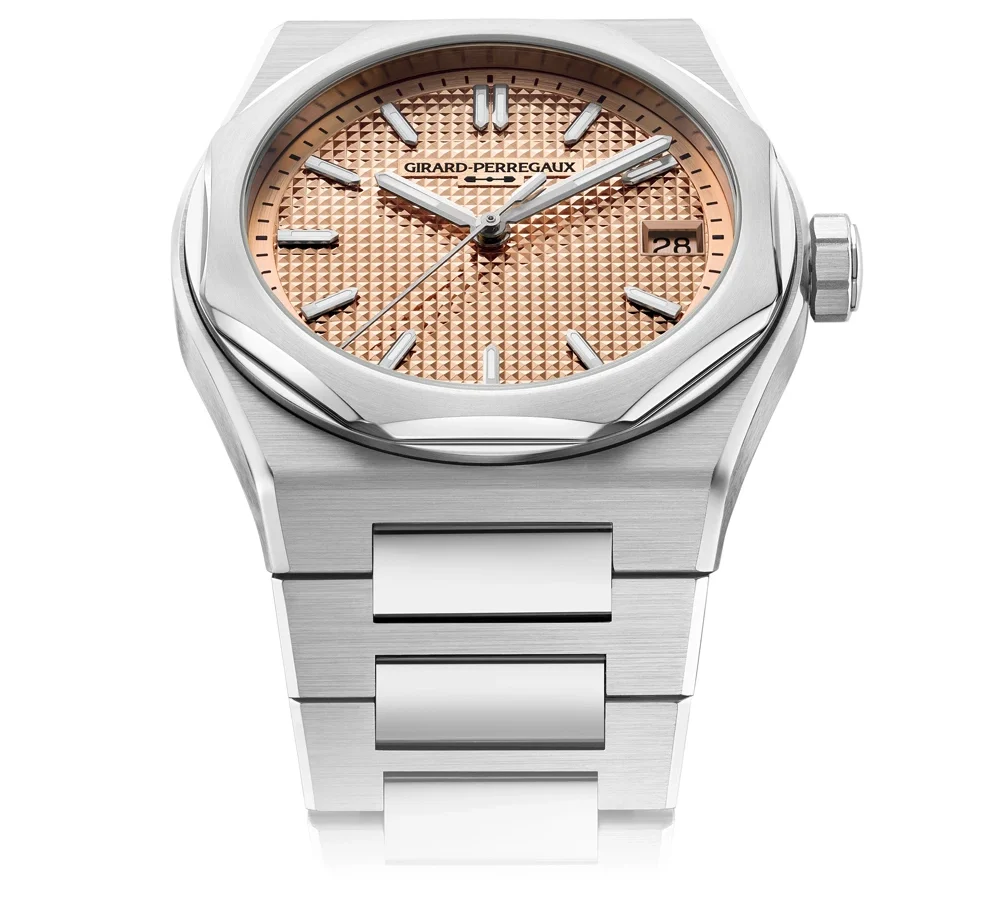
Above image – Laureato FIFTY 36 mm steel with 18k rose gold dial
The inaugural Girard-Perregaux Laureato was launched in 1975, but in some respects, the story began several years before. Allow me to elaborate.
Quartz movements
In 1969, Seiko released the Quartz Astron 35SQ, the world’s first quartz wristwatch. Its arrival knocked the traditional watch industry off its axis. Early examples were not cheap, but the level of precision the Astron offered, reputedly ± 0.2 seconds per day, was unprecedented.
The CEH (Centre Electronique Horloger) brought together several Swiss watch brands keen to develop a Swiss quartz movement. Despite being invited to join this collaborative effort, Girard-Perregaux, always a fiercely independent Manufacture, chose to go it alone. At Baselworld 1971, two prototype quartz watches were on display, each equipped with a prototype CEH Beta 21 Quartz movement. However, Girard-Perregaux ‘went one better’, simultaneously unveiling the GP 350, a serially produced quartz movement. Interestingly, the Quartz Astron 35SQ and the Beta 21 Quartz both operated at a vibration frequency of 8,192 Hz; however, the GP 350 had a frequency of 32,768 Hz, making it more precise, stable and energy efficient. Ultimately, the higher frequency was universally adopted as the standard for quartz watches.
Girard-Perregaux Quartz Chronometer (1975)
With its own proprietary quartz movement, 100% developed in-house, it was perhaps inevitable that the inaugural Laureato would feature the state of the art technology (the movement was an evolution of the GP 350). After all, at this time, traditional mechanical watches seemed outdated, resulting in many Maisons going out of business and the term ‘quartz crisis’ entering watch industry parlance.

Image – Girard-Perregaux Quartz Chronometer (1975)
Interestingly, when the Laureato was unveiled in 1975, it was actually named the ‘Quartz Chronometer’. During this period, Italy was the most important market for the Swiss Maison and it warmly received the watch. Indeed, it attracted much praise from collectors, appreciative of the model’s avant-garde styling and its extraordinary chronometric performance, leading to the nickname the ‘Laureato’. According to the Swiss Manufacture, collectors referred to the Quartz Chronometer as ‘the graduate (Laureato in Italian) of the school of Girard-Perregaux’. Eventually, the watch brand adopted the soubriquet Laureato, a name that lives on some 50 years later.
Launched at a time when elegant sports watches with integrated bracelets were a must-have for all sophisticates, the Laureato was on point. The case and bracelet combined steel and 18K yellow gold, while the bezel was formed of just 18K yellow gold. The bezel, octagonal in form, sat atop a circular plinth, which in turn rested upon a tonneau-shaped case, while the dial was endued with a Clous de Paris pattern. This intricate marriage of shapes imbued the Laureato with a unique mien, differentiating it from rivals. With its dial endowed with a myriad of pyramidal projections and a case incorporating numerous facets, the Laureato wonderfully toyed with light, augmenting its visual allure.
Girard-Perregaux Laureato – respecting the legend
Since it burst onto the watch scene in 1975, the Girard-Perregaux Laureato has continuously evolved. For instance, in 1995, the Manufacture equipped the model with a mechanical movement for the first time, the GP3100 automatic calibre.
Later, Girard-Perregaux introduced Laureato models equipped with additional complications such as the chronograph and the tourbillon (1997). Moreover, the Swiss marque has released the Laureato in different case sizes, various case materials and executed dials in a multitude of colours and yet, most pertinently, each iteration has managed to retain the essence of the original design.
In September 2025, Girard-Perregaux unveiled a new movement, the Calibre GP 4800. A few weeks later (October 2025), the Maison launched the Laureato FIFTY, a bi-metallic limited edition model (200 pieces) containing the new automatic movement.
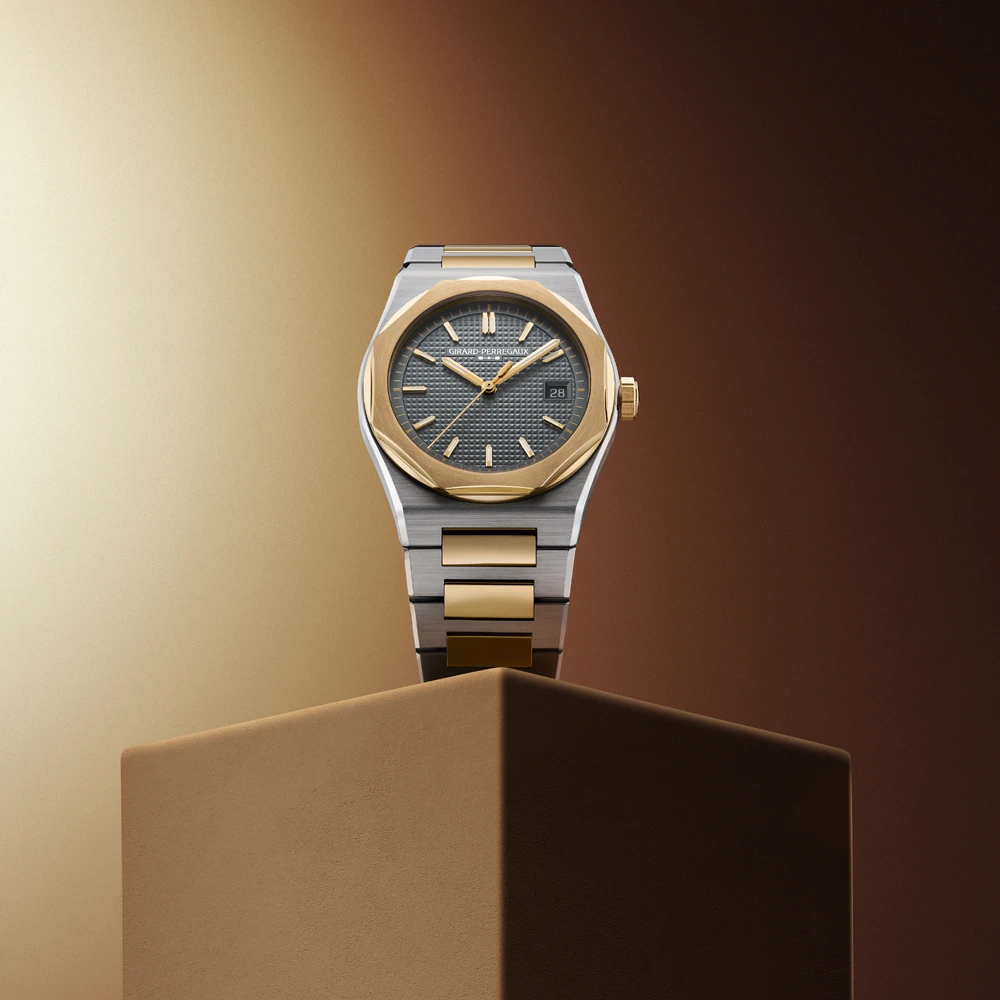
Above image – Laureato FIFTY 39 mm steel & 18K gold (limited edition of 200 pieces)
An inherent danger of revisiting an iconic design is that during the creative process, distillation can remove some of the original’s unique flavours. There are several examples of products, such as cars, cameras, and watches, where the updated product proves a poor imitation of the original. Thankfully, as I reported at the time, the Laureato FIFTY was wonderfully judged. The familial likeness with the 1975 original was clear to see and yet somehow everything felt slightly more refined.
Now, the Manufacture has announced the release of four new expressions of Laureato FIFTY ownership.
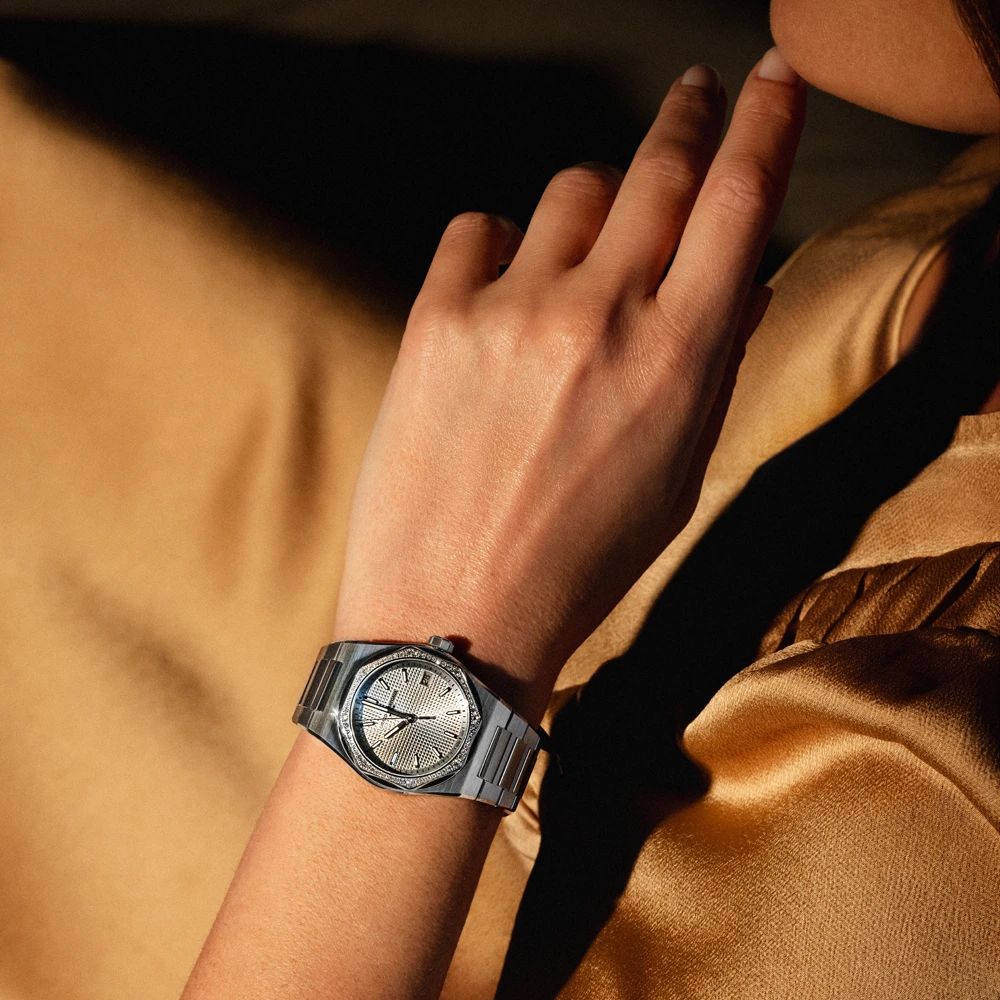
Above image – Laureato FIFTY 36 mm steel with silver dial and 64 diamonds
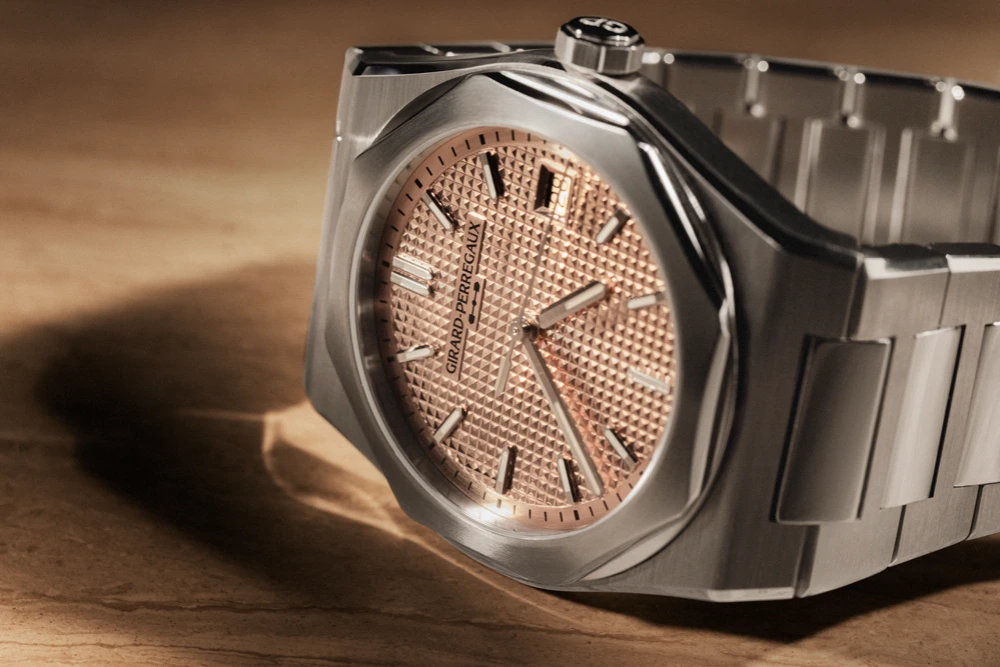
Above image – Laureato FIFTY 39 mm steel with 18k rose gold dial
Girard-Perregaux Laureato FIFTY Steel – 36 mm and 39 mm options
Unlike the aforementioned Laureato FIFTY, released in October 2025, the new FIFTY Steel is not limited and is offered in a choice of two case sizes, 36 mm or 39 mm. As stated earlier, back in 1975, the inaugural Quartz Chronometer was a bi-metallic watch and last year’s FIFTY embraced this historical look with its sumptuous two-tone composition.
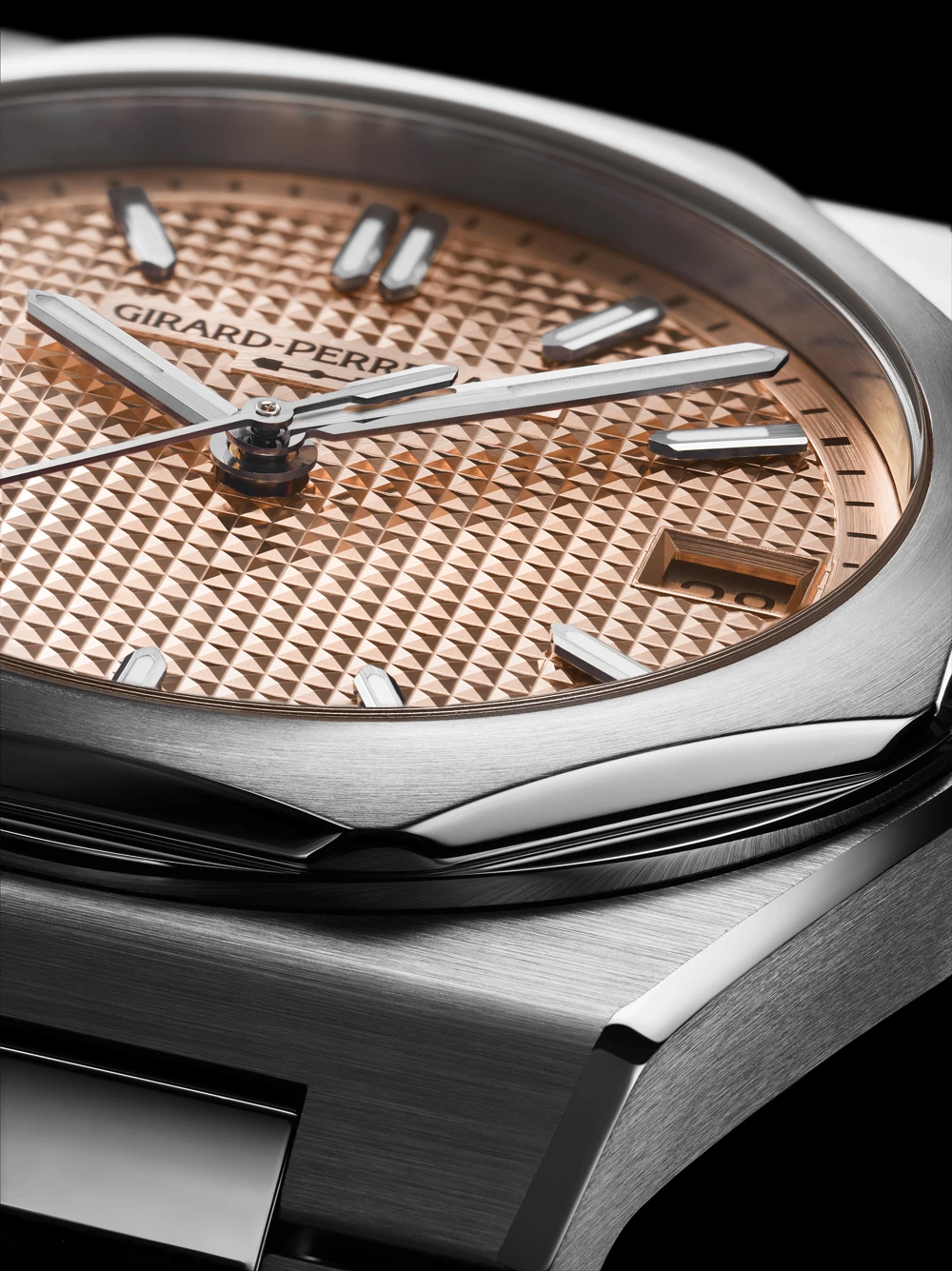
Above image – Laureato FIFTY 36 mm steel with 18k rose gold dial
Now, the new Laureato FIFTY Steel references present the case and bracelet in a comparatively restrained monochromatic silvery-grey hue. By eschewing colour, the housing acts as a foil, allowing the dial to sing in full voice. Hereafter, I will look at each constituent element of the new FIFTY Steel and point out some of the refinements that are deserving of your attention.
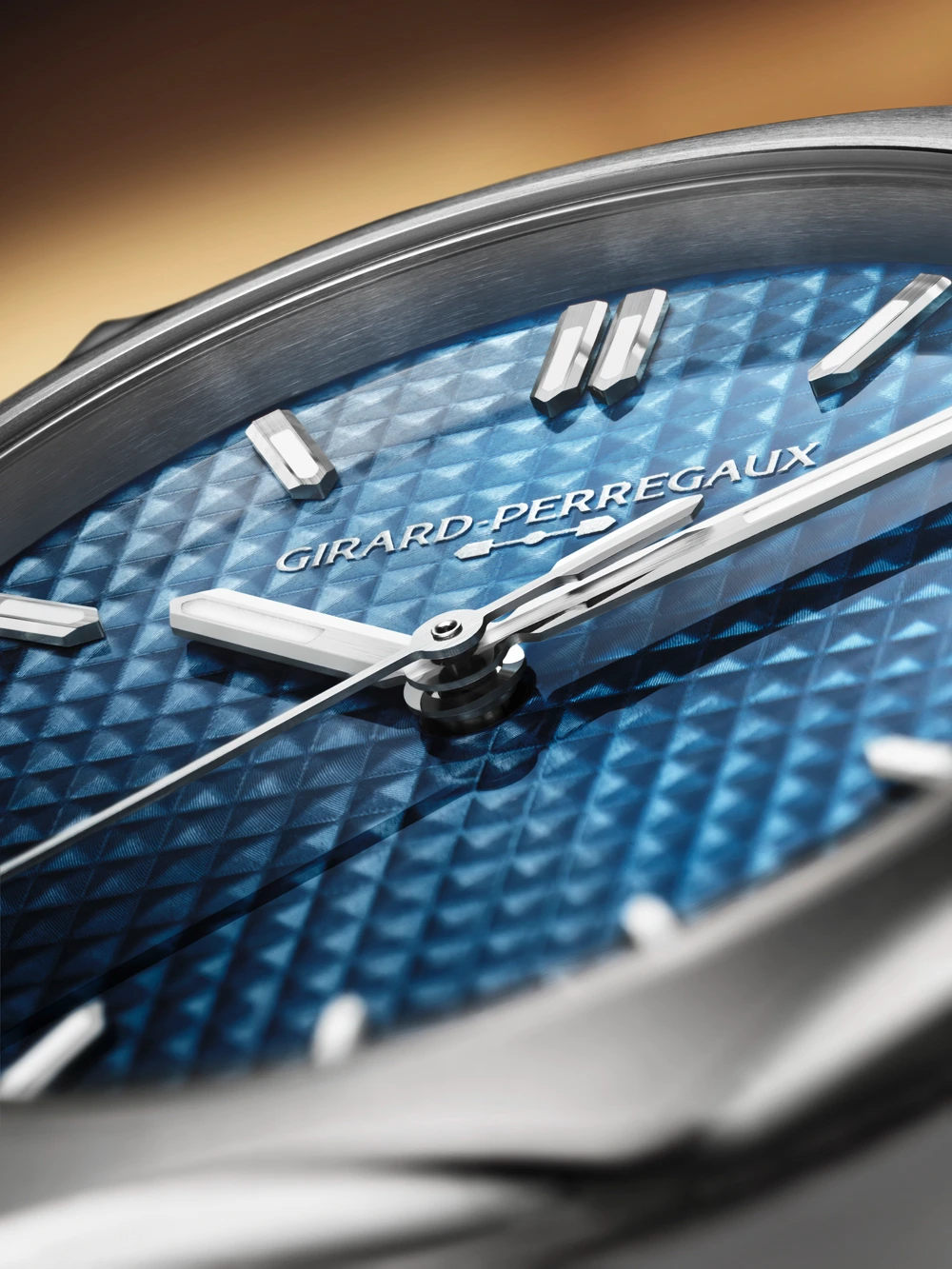
Above image – Laureato FIFTY 39 mm steel with blue enamel dial
Girard-Perregaux Laureato FIFTY Steel – dial
Two case sizes, four different references. The rose gold-toned dial is formed of 18K solid gold and is enriched with a Clous de Paris pattern and is available in both 36 mm and 39 mm sizes. Alternatively, the new FIFTY Steel 39 mm is available with a blue dial where the Clous de Paris motif is suffused with a rich layer of enamel, a métier of the house. The final option is a 36 mm model featuring said dial pattern, but executed in a silver hue and complemented with 64 diamonds gracing its bezel.
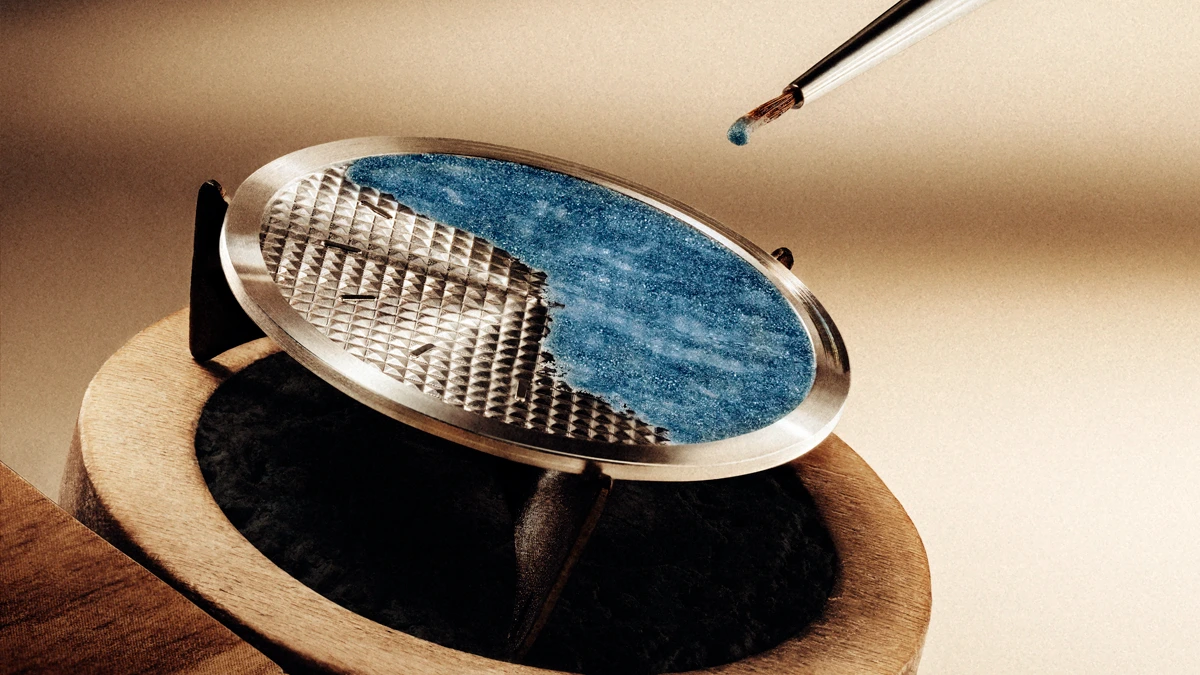
Above images – Laureato FIFTY 39 mm steel with blue enamel dial
Eminently legible, each dial option is blessed with a prepossessing appearance. However, look closely and you discover more details that elicit nods of appreciation. The baton-type hour and minute hands, formed of 18K solid gold, are lined with luminescent material and emit a blue glow in restricted light. The centre seconds hand incorporates an arrow-shaped counterweight inspired by the brand’s logo. Each hour is denoted with a baton (two batons at 12 o’clock), echoing the shape of the hour and minute hands, once again, lined with luminescent treatment.
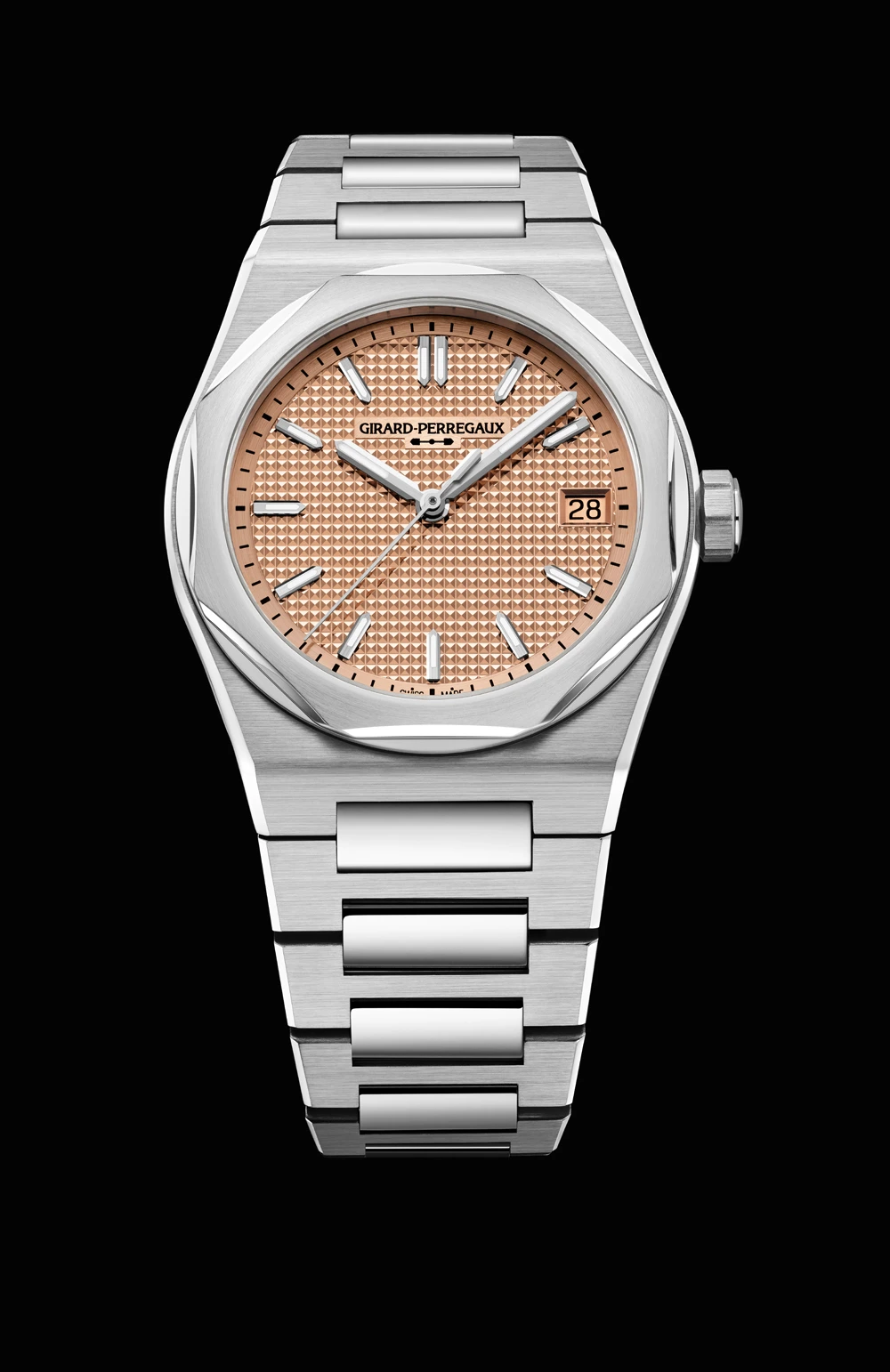
Above image – Laureato FIFTY 39 mm steel with 18k rose gold dial
The blue enamel reference eschews a date display; however, the rose-gold and silver-toned dials are endowed with an aperture at 3 o’clock, indicating the prevailing date. The date disc shares the same colour as the dial, upholding fine watchmaking practice.
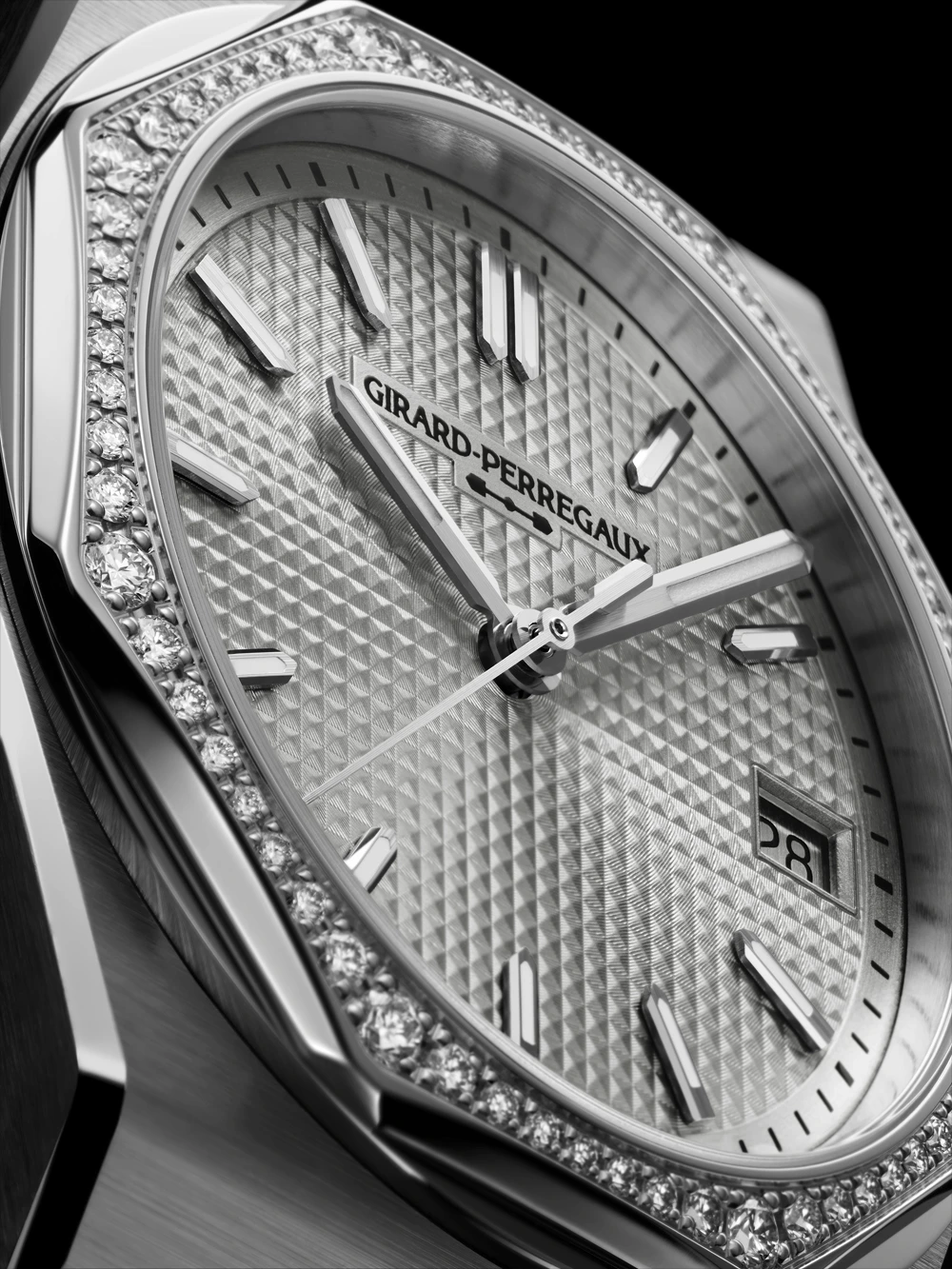
Above image – Laureato FIFTY 36 mm steel with silver dial and 64 diamonds
Girard-Perregaux Laureato FIFTY Steel – case
When contrasting the Laureato FIFTY with its antecedent of 1975, the profile of the case has subtly changed. The original Quartz Chronometer measured 35 mm in diameter, whereas these modern-day models are larger. The tonneau-shaped case middle is, well, more tonneau-shaped and the interface between the case and bracelet is more angular and defined.
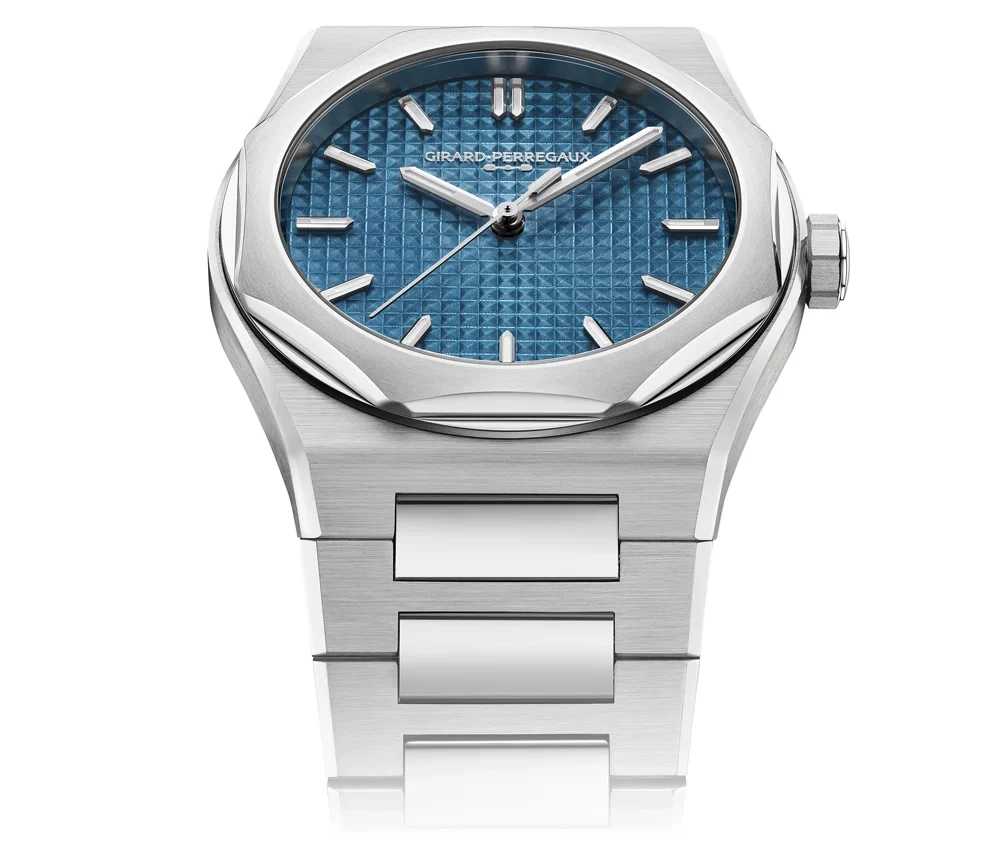
Above image – Laureato FIFTY 39 mm steel with blue enamel dial
The bezel now features angled facets that engage more readily with light. Moreover, the bezel and plinth have been extended, almost lining up with the vertical flanks of the case.
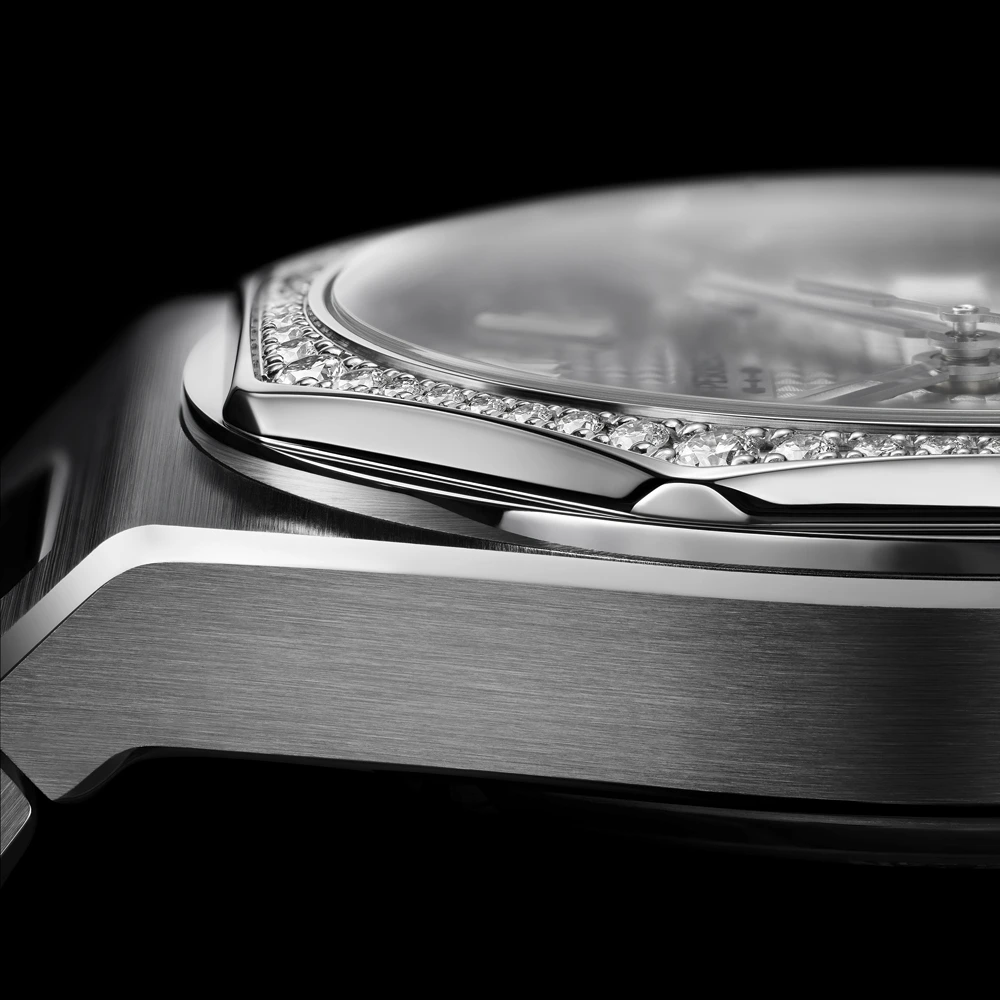
Above image – Laureato FIFTY 36 mm steel with silver dial and 64 diamonds
Brand devotees will know that Girard-Perregaux has always been skilful at working with different shapes to comely effect. While the eyes may initially fixate on the octagonal bezel, there are many other shapes and angles at play, each imbuing the model with a jewel-like brilliance. Take the integrated bracelet, with its central row of high-gleam polished links, and note the contrasting brushed outer links with their highly polished chamfered edges.
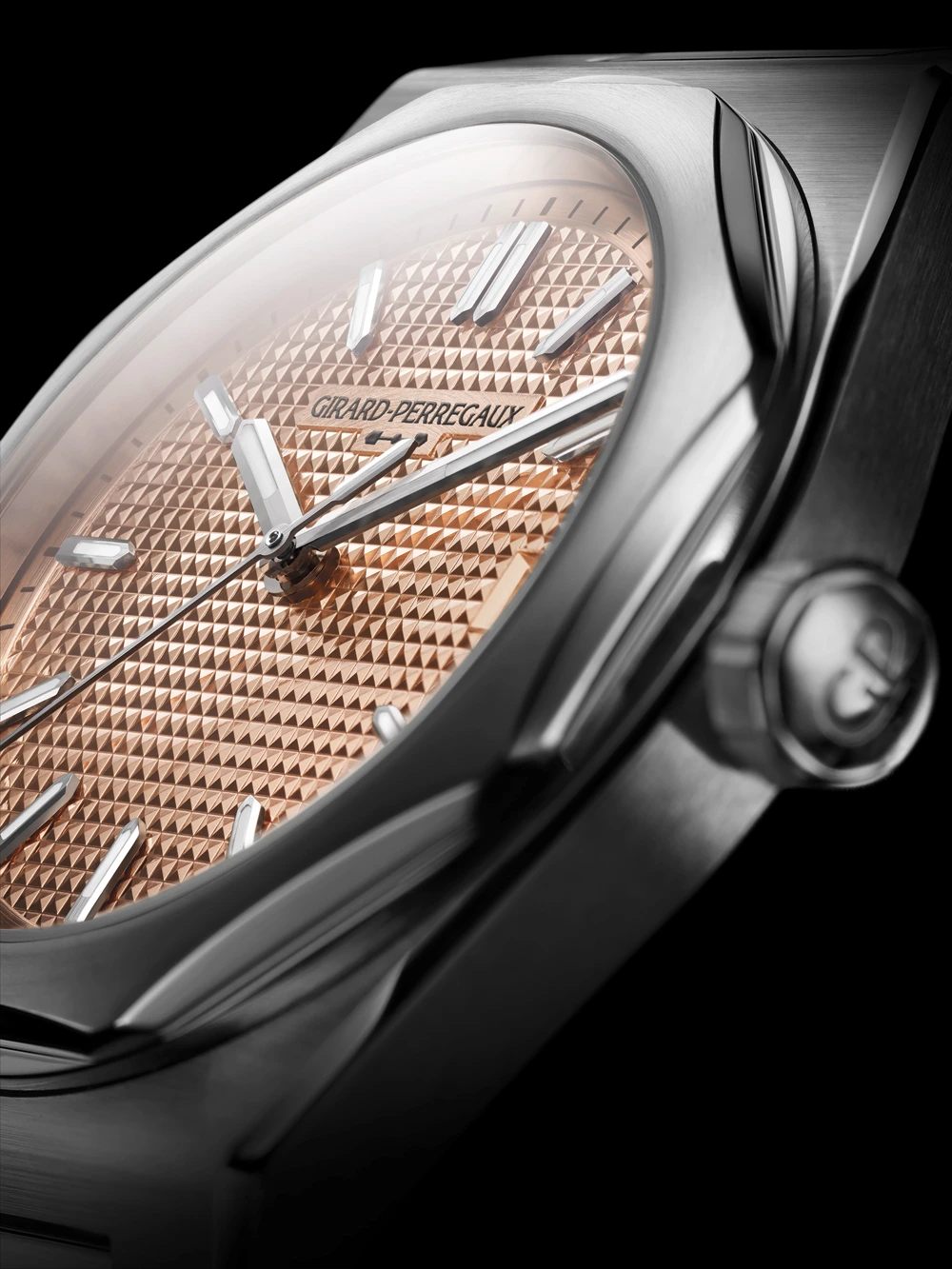
Above image – Laureato FIFTY 36 mm steel with 18k rose gold dial
A refinement found on these latest models is the bracelets feature triple folding clasps incorporating a clever adjustment system, allowing the wearer to fine tune the wrist-fit. While the Quartz Chronometer was fitted with a solid caseback, the Laureato FIFTY Steel is equipped with an exhibition caseback, affording views of the Manufacture Calibre GP4800.
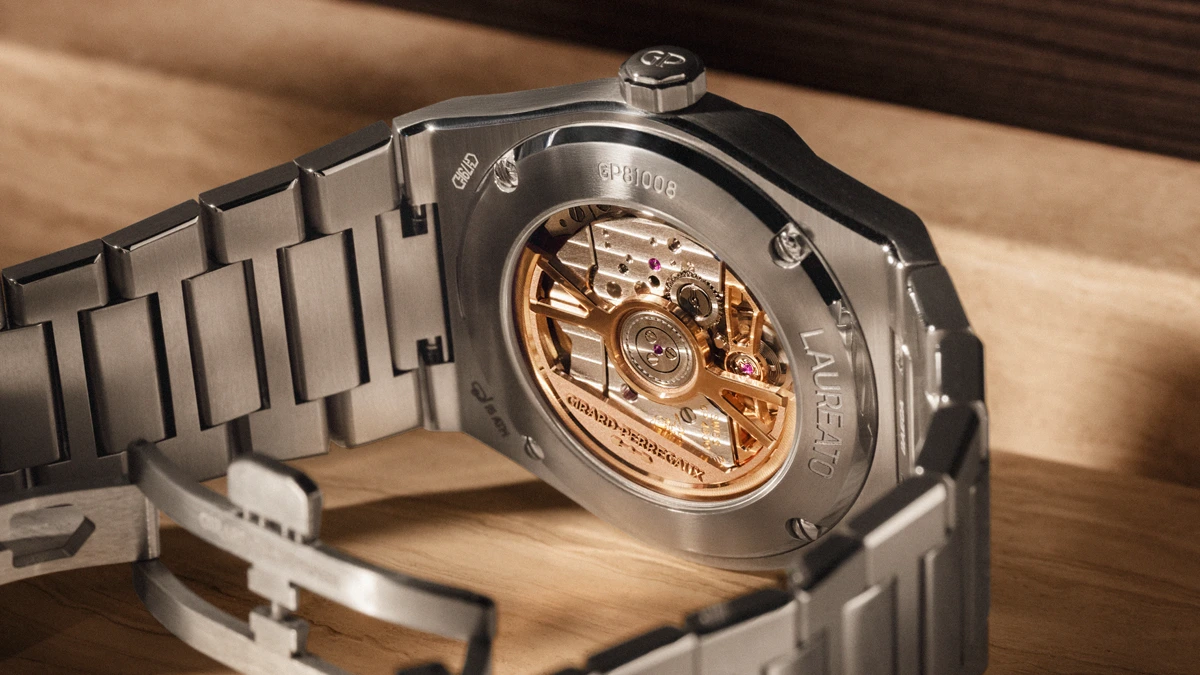
Above image – Laureato FIFTY 36 mm steel with 18k rose gold dial
Girard-Perregaux Laureato FIFTY Steel – Calibre GP4800
In recent months, Girard-Perregaux has released several remarkable movements, including the Calibre GP9620 (Laureato Three Gold Bridges), Calibre GP9530 (Minute Repeater Flying Bridges) and, as previously mentioned, the Calibre GP4800 (Laureato Fifty).
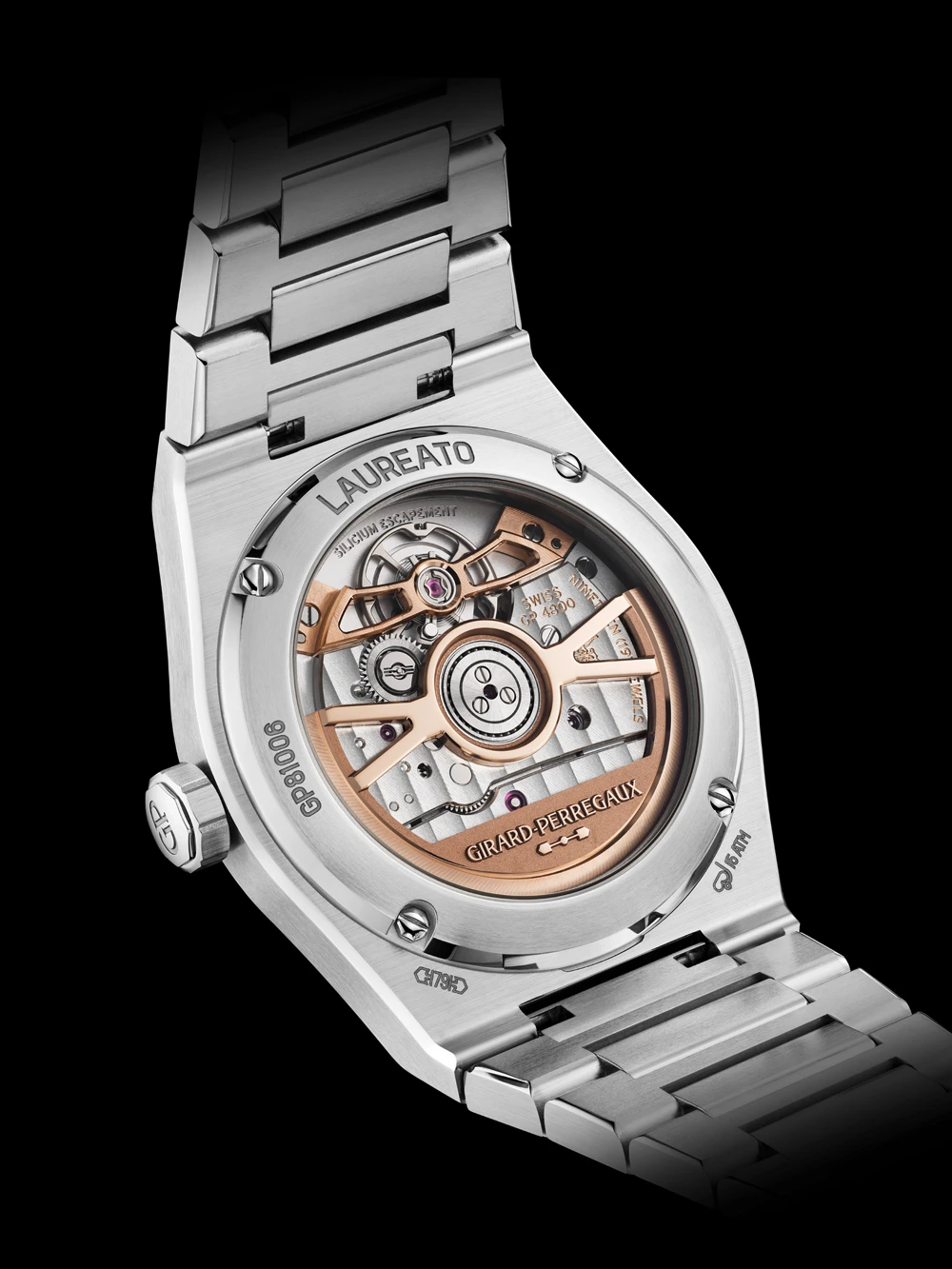
The new Calibre GP4800 is beautiful to behold, something you will appreciate should you remove the watch from the wrist and take advantage of the dorsal glazing. If you view the movement, with the balance at 12 o’clock, you will note its agreeably symmetrical design.
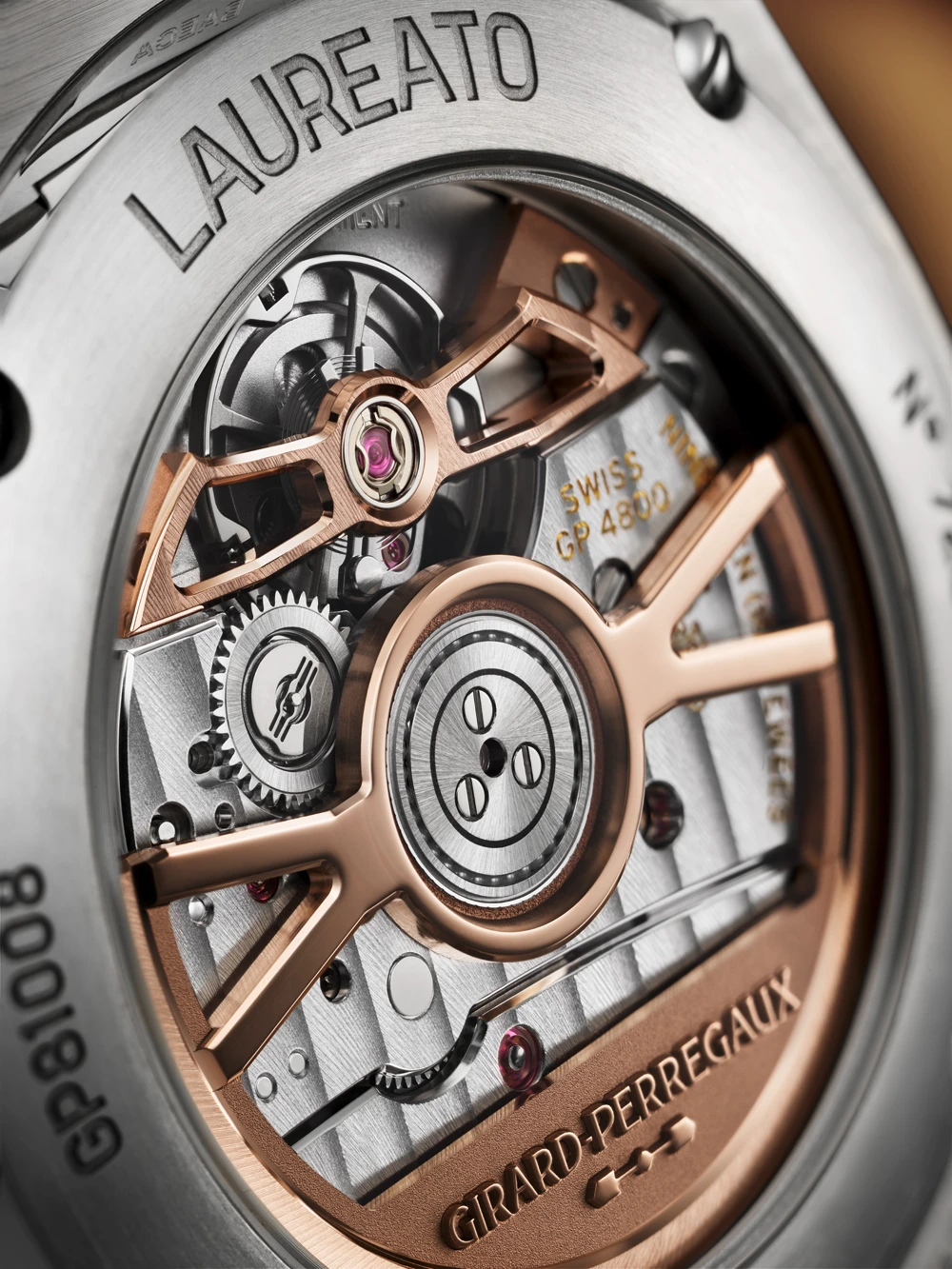
I have previously talked at length about the Calibre GP4800, but I will take this opportunity to point out some of its technical highlights. Instead of the customary index-regulated balance, Girard-Perregaux has chosen to equip this watch with a superior variable-inertia balance, conferring better precision. The Calibre GP4800 is fitted with a whisper-quiet winding system mounted on a ball bearing set with ceramic balls. It also incorporates a silicium escapement and benefits from ten different types of finishing. With the Laureato FIFTY Steel, Girard-Perregaux has introduced a further refinement – the balance bridge is crafted in rose gold. It seems the Laureato just keeps getting better.
Closing remarks
Often, an iconic product incorporates cutting-edge or revolutionary technology. Its design will often give due consideration to functionality, ease of use, ergonomics and timeless styling. The Quartz Chronometer of 1975 had all of these qualities and, despite being updated over the years, its lustre never faded.
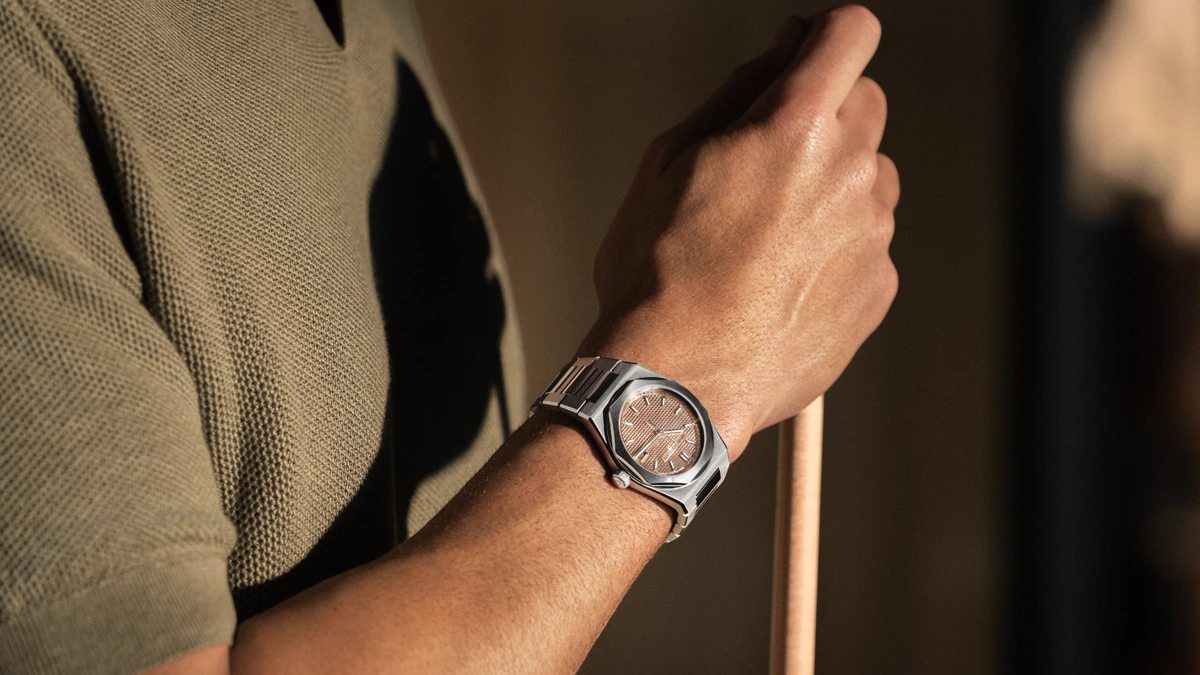
Above image – Laureato FIFTY 39 mm steel with 18k rose gold dial
When placing an icon in a wind tunnel and honing its shape, great care must be exercised not to lose what made it special in the first place. The present-day custodians working at the Manufacture will forever be mindful of destroying the legacy and by default, harming the cash cow. Last year, when Girard-Perregaux released the limited-edition Laureato FIFTY in steel and gold, I was very impressed and stated at the time, ‘the Laureato FIFTY clearly respects the beloved design codes of the original model’.
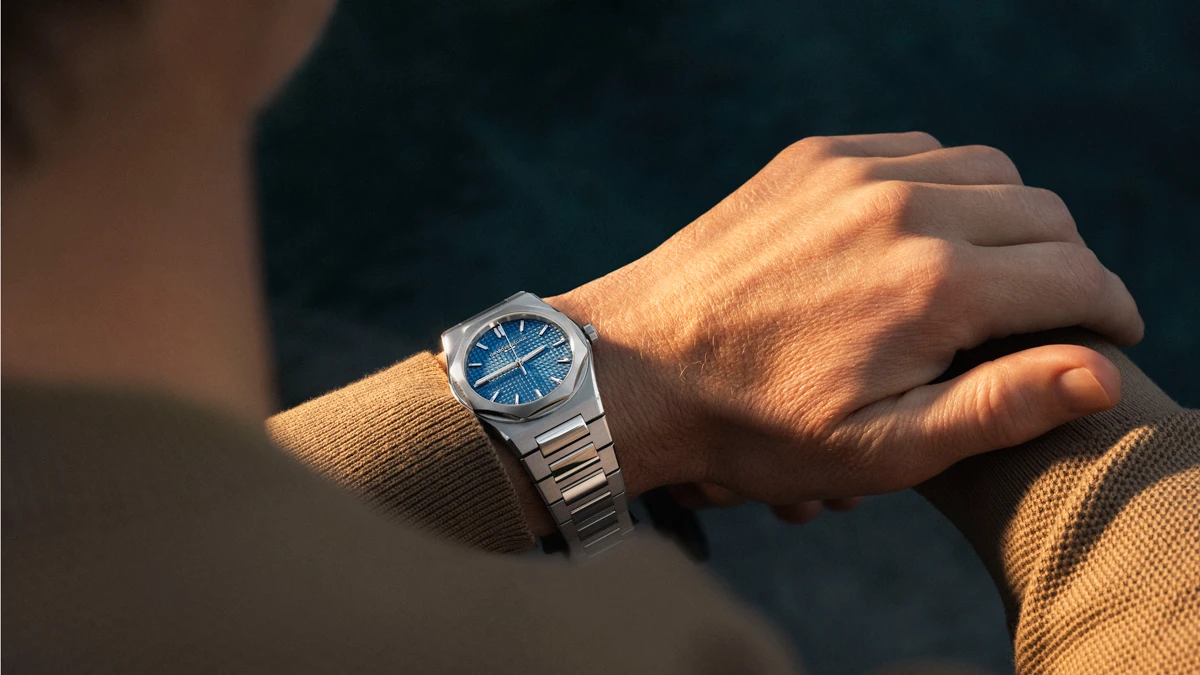
Above image – Laureato FIFTY 39 mm steel with blue enamel dial
However, despite coveting many Laureato models over the years, the new Laureato FIFTY Steel 39 mm is my favourite to date and it joins a select list of watches that I would dearly love to own. The only question that remains unanswered relates to the dial; blue enamel or 18-carat rose gold? It would be a tough decision.
Further reading
https://www.girard-perregaux.com/
Technical specification
- Model: Girard-Perregaux Laureato FIFTY Steel
- Case: stainless steel, water resistance 15 ATM (150 metres), sapphire crystal to front, exhibition case back.
- Functions: hours, minutes, central seconds, date (enamel dials don’t have date)
- Movement: Calibre GP 4800, self-winding movement, frequency 28,800 vph (4 Hz), 19 jewels, 163 components, power-reserve 60 hours
- Strap: steel bracelet fitted with a triple-folding clasp with up to 4 mm of fine adjustment
- Reference & Price: 81006-11-3530-1CM – 39 mm steel with blue enamel dial – £19,400 (RRP as of 4.6.2026)
- Reference: 81008-11-3627-1CM – 39 mm steel with 18k rose gold dial – £18,200 (RRP as of 4.6.2026)
- Reference: 81006-11-3626-1CM – 36 mm steel with 18k rose gold dial – £18,200 (RRP as of 4.6.2026)
- Reference: 81006-11S-3597-1CM – 36 mm steel with silver dial and 64 brilliant-cut diamonds – £19,100 (RRP as of 4.6.2026)