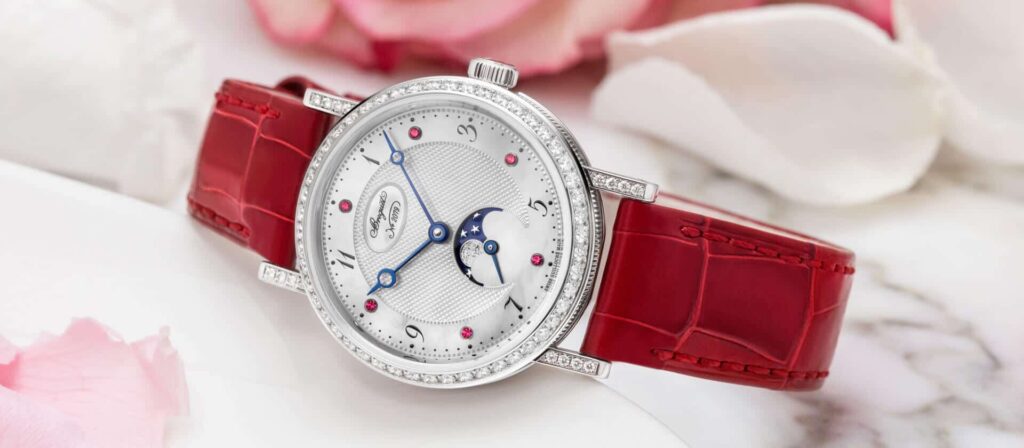
Breguet ladies’ watch – Classique Phase de Lune 9085
Breguet ladies’ watch – Classique Phase de Lune 9085 As Valentine’s Day edges nearer, another Breguet ladies’ watch…

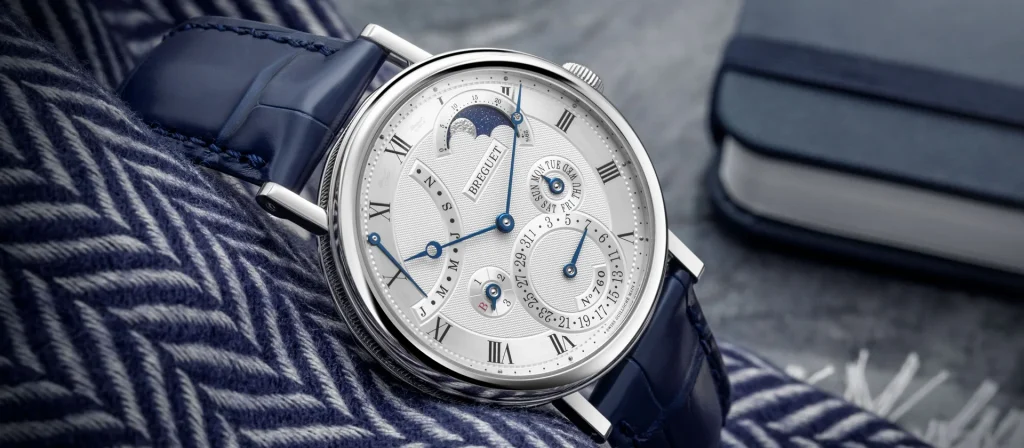


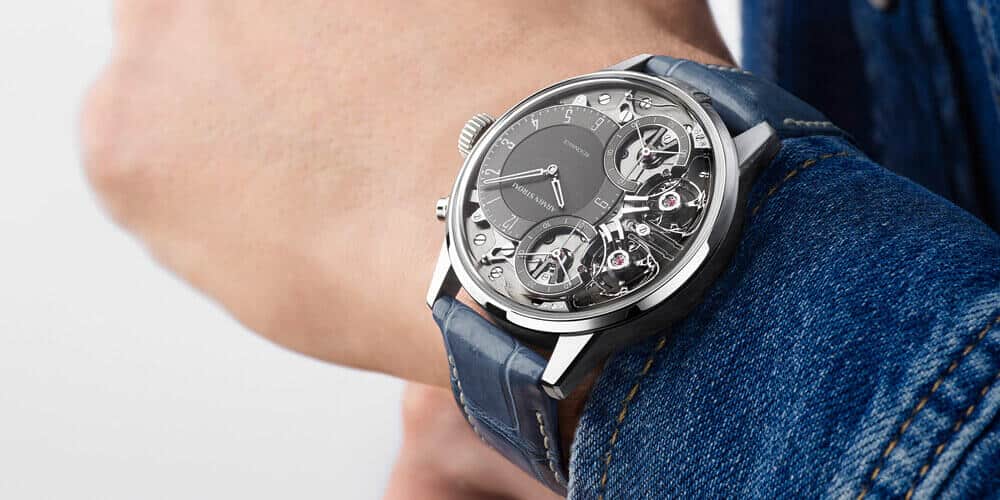
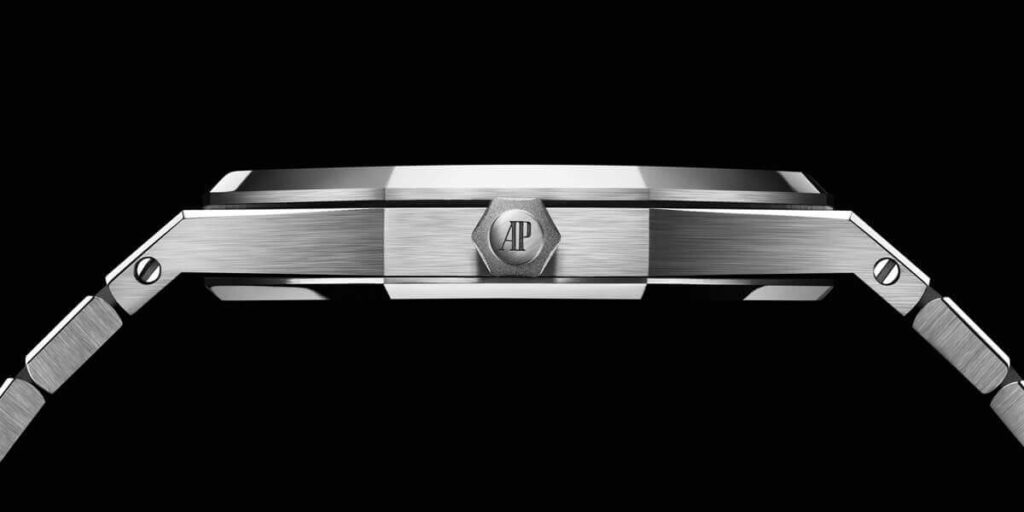
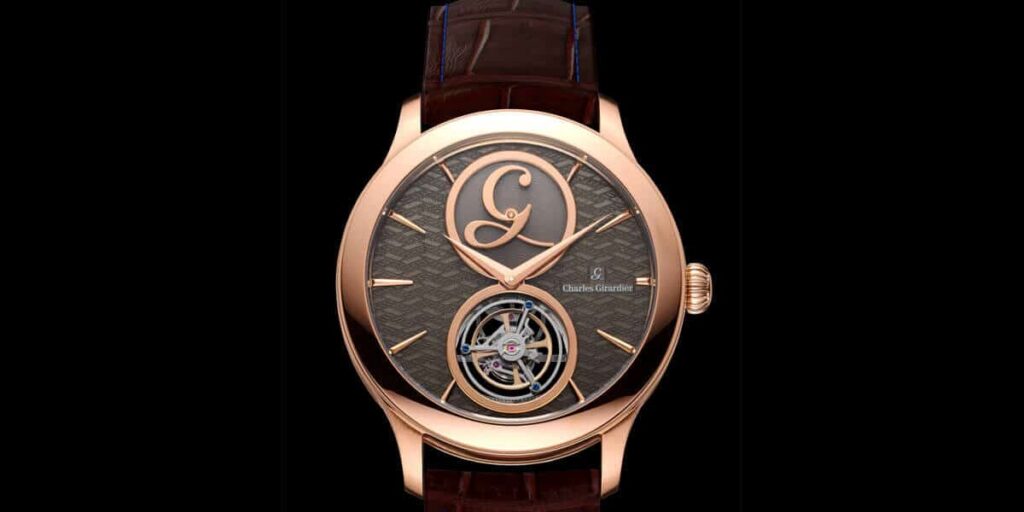
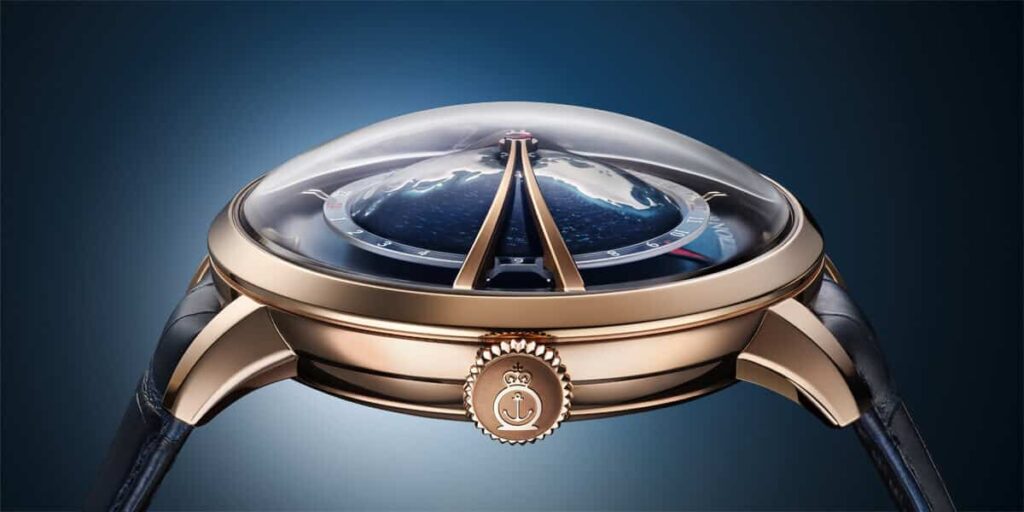
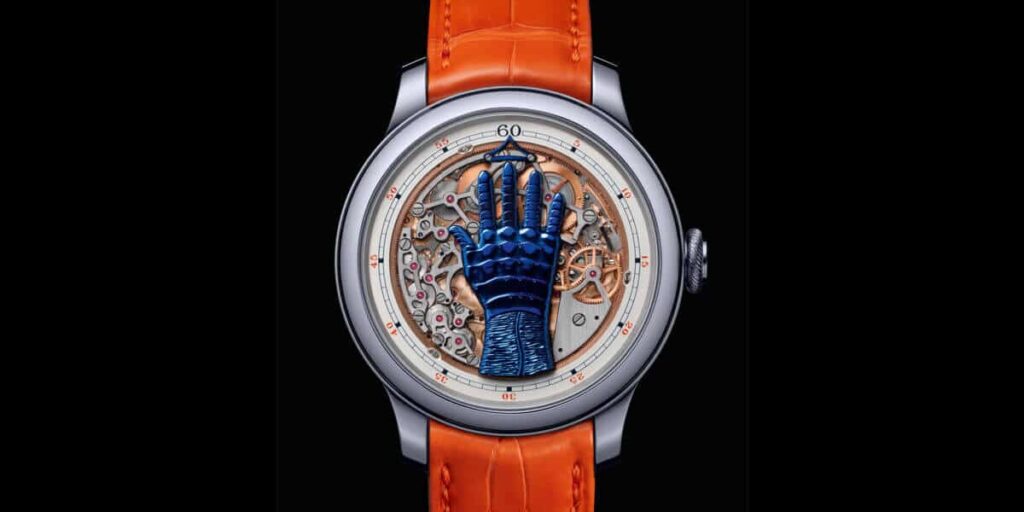
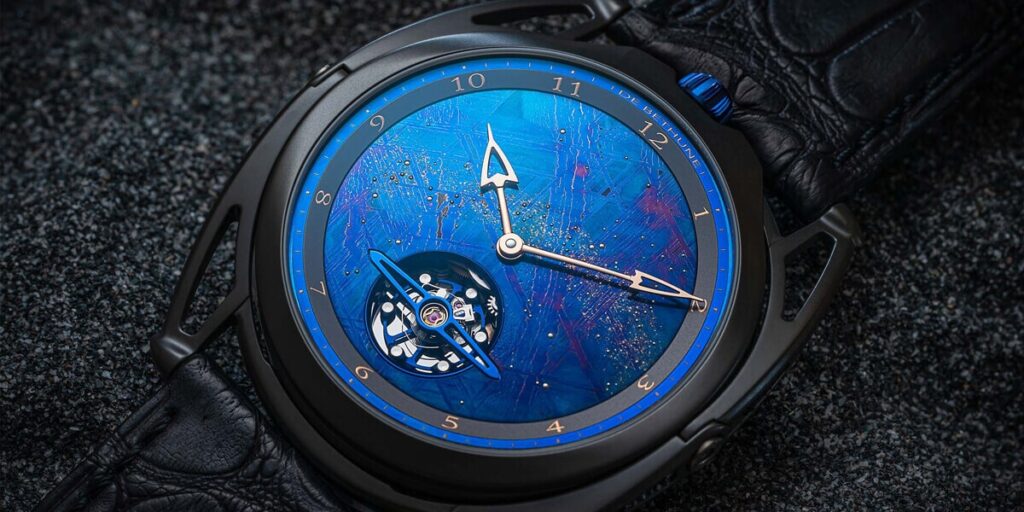
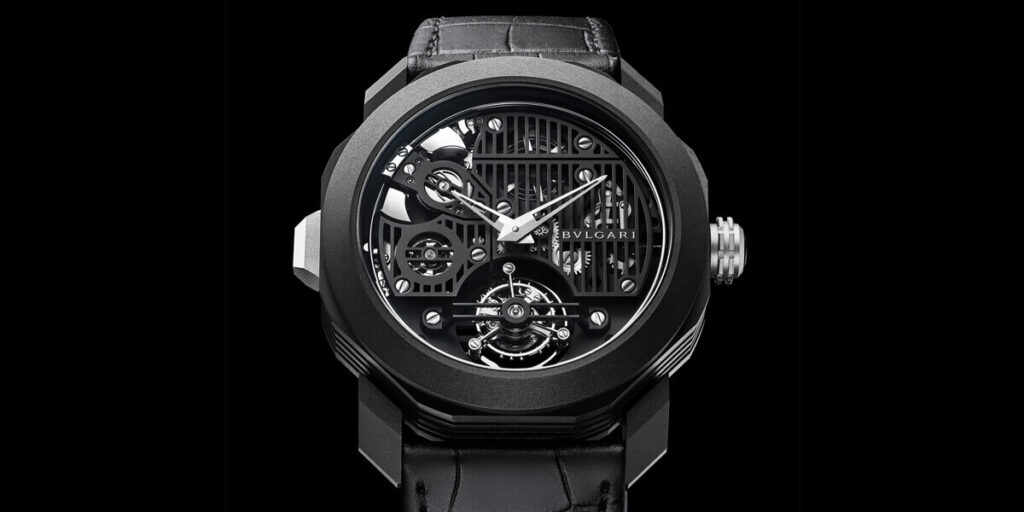
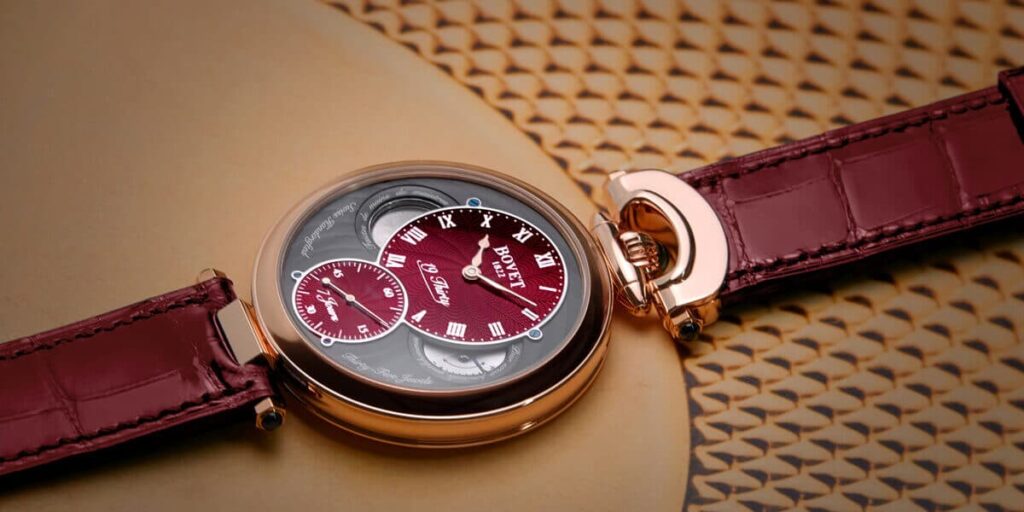
Watches priced over £20,000 are typically luxury timepieces that incorporate high-end materials, intricate craftsmanship, and often complex movements. These features, combined with brand reputation and limited production, contribute to the elevated price point.
Explore our wide range of in-depth reviews of watches for £20000+ here on Escapement Magazine.
In addition to Grade 5 titanium, premium stainless steel and gold watch cases, there are other options to tempt the well heeled watch buyer. A case formed of ultra-hard sapphire crystal often affords lateral views of the dial and movement. Alternatively, forged carbon, a material used in motorsport, promises strength and is notably light. For those individuals seeking understated luxury, platinum is a wonderful choice. The dense metal has a whitish appearance that looks different to white gold and is typically considered the ultimate noble metal.
With a regular index-adjusted balance, the effective length of the balance spring is adjusted using an index (aka ‘raquette’), making the watch run faster or slower. However, a variable-inertia balance (aka ‘free sprung balance’) offers a superior form of regulation. With this type of system, the length of the balance spring is fixed and the rate is adjusted by rotating small weights (aka ‘masselottes’) fitted to the balance wheel. This makes it more precise, stable and gives the timepiece superior shock resistance. The F.P.Journe Souverain, a purist’s watch, is a good example of a timepiece fitted with a variable-inertia balance.
In 1795, Abraham-Louis Breguet invented the Breguet Overcoil. By upraising the outer coil of the balance spring and reducing its curvature, it ‘develops’ more concentrically, thereby enhancing isochronism. The Petermann Bédat
Reference 1825 is another exquisite expression of Haute Horlogerie, featuring a hand-wound movement equipped with a Breguet Overcoil.
There are various examples of constant force mechanisms, including the fusée-and-chain transmission and remontoir d’égalite. The purpose of a constant force device is to ensure that the energy from the barrel(s) serves the escapement with a linear force, thereby conferring rate stability. Launched in 2015, the Chronometrie Ferdinand Berthoud FB1 stunned the watch collecting community with its technical virtuosity. The hand-wound movement was equipped with a fusée-and-chain transmission, featuring a 28 cm chain comprising 790 components. The brilliance of the watch was recognised by the jury of the GPHG (Grand Prix d’Horlogerie de Genève) with the award of the prestigious ‘Aiguille d’Or’.
Complications are defined as those functions additional to indicating the prevailing time. They come in many forms, including a power-reserve indicator that displays the amount of energy stored within the barrel(s), a moon phase indicator, or an alarm.
However, added complexity requires the skills of the most accomplished master watchmakers. These skills command a premium, a factor that is often reflected both in the sale price and the ongoing maintenance required. Termed ‘high complications’, these complex mechanisms include the:
A ‘grand complication’ is a term usually applied to a watch featuring at least three of these ‘high complications’.
Finissage is defined as ‘peerless finishing’, imbued by only the finest watches. This will extend to many areas of the movement which will never been seen by its owner.
One such example includes mirror-polishing (aka ‘black polishing’), which involves polishing flat, steel parts on a ‘tin plate’ smeared with an abrasive paste. The skilled artisan, or ‘finisseur’, will endue a component with a finish that wonderfully transitions from white to black, depending on the angle it is viewed from.
Requiring an inordinate amount of time to execute, mirror-polishing is usually only found on exemplars of Haute Horlogerie. Laurent Ferrier is one of the finest practitioners of high-end finishing, employing a myriad of techniques when crafting movements.