
Thomas Gronenthal – DuBois et fils in-depth feature
In July 2024, DuBois et fils opened a new workshop in Muttenz, close to its Basel-based HQ. The Swiss marque appointed Thomas Gronenthal, a self-confessed ‘watch enthusiast’, to oversee the new facility. Angus Davies chats to Gronenthal, eager to discover more about his professional journey and his fondness for historical watch movements. Moreover, he asks about the new workshop at Muttenz and the work undertaken at the site.
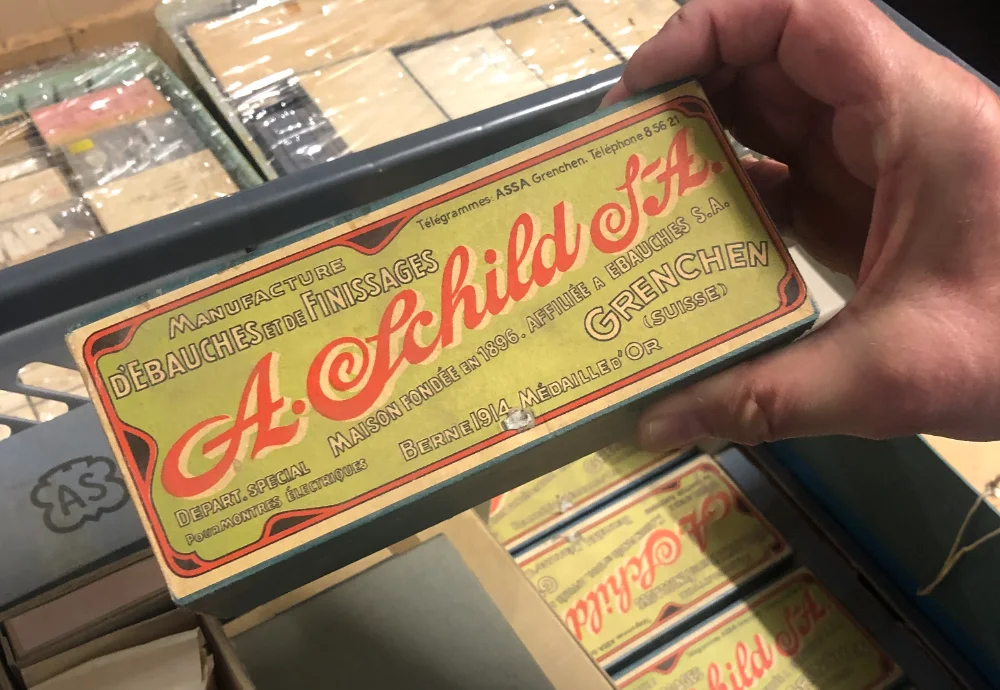
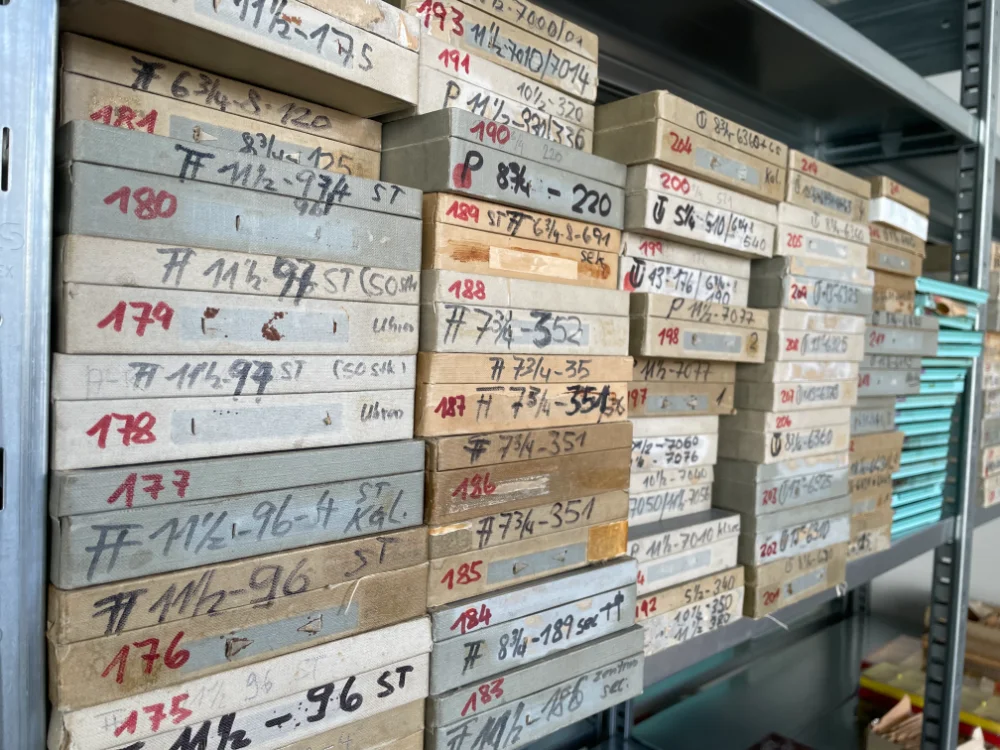
Image – historic A. Schild movements
DuBois et fils watch
The historical brand Dubois et fils was revived in 2010 after Thomas Steinemann, an entrepreneur and watch industry veteran, acquired the firm. Dubois et fils was founded in 1785 and its original factory still stands in Le Locle, where it remains under the aegis of the modern-day brand, preserved for posterity.
Over the years, Steinemann has repeatedly demonstrated remarkable creativity. For instance, eager to raise funds to expand his newly acquired business, he looked to crowdfunding. While several fledgling watch firms have since adopted this means of funding, back in 2012 DuBois et fils was an early pioneer of the concept. Moreover, in 2015, Steinemann’s prowess for ‘blue-sky thinking’ saw him unveil the DBF004, a contemporary watch fitted with a historic Record movement, released to mark the company’s 230th anniversary. Functional packaging, ‘tokenization’ and NFT diaries are further examples of Steinemann following his own, unique path to success.
While Steinemann has demonstrated a willingness to embrace groundbreaking ways of growing Dubois et fils, he has also shown a profound respect for Swiss watchmaking tradition. He has strived to procure components from his home nation rather than merely meeting the criteria of ‘Swiss Made’ (minimum 60% of Swiss value). But most notable of all, no doubt inspired by the popularity of the DBF004, he has continued to use historic movements, uniting them within modern-day habillage.
In July 2024, the company opened a new workshop in Muttenz on the outskirts of Basel. It is here where the company now assembles, services and repairs DBF models under the watchful eye of Thomas Gronenthal, a self-confessed watch enthusiast.
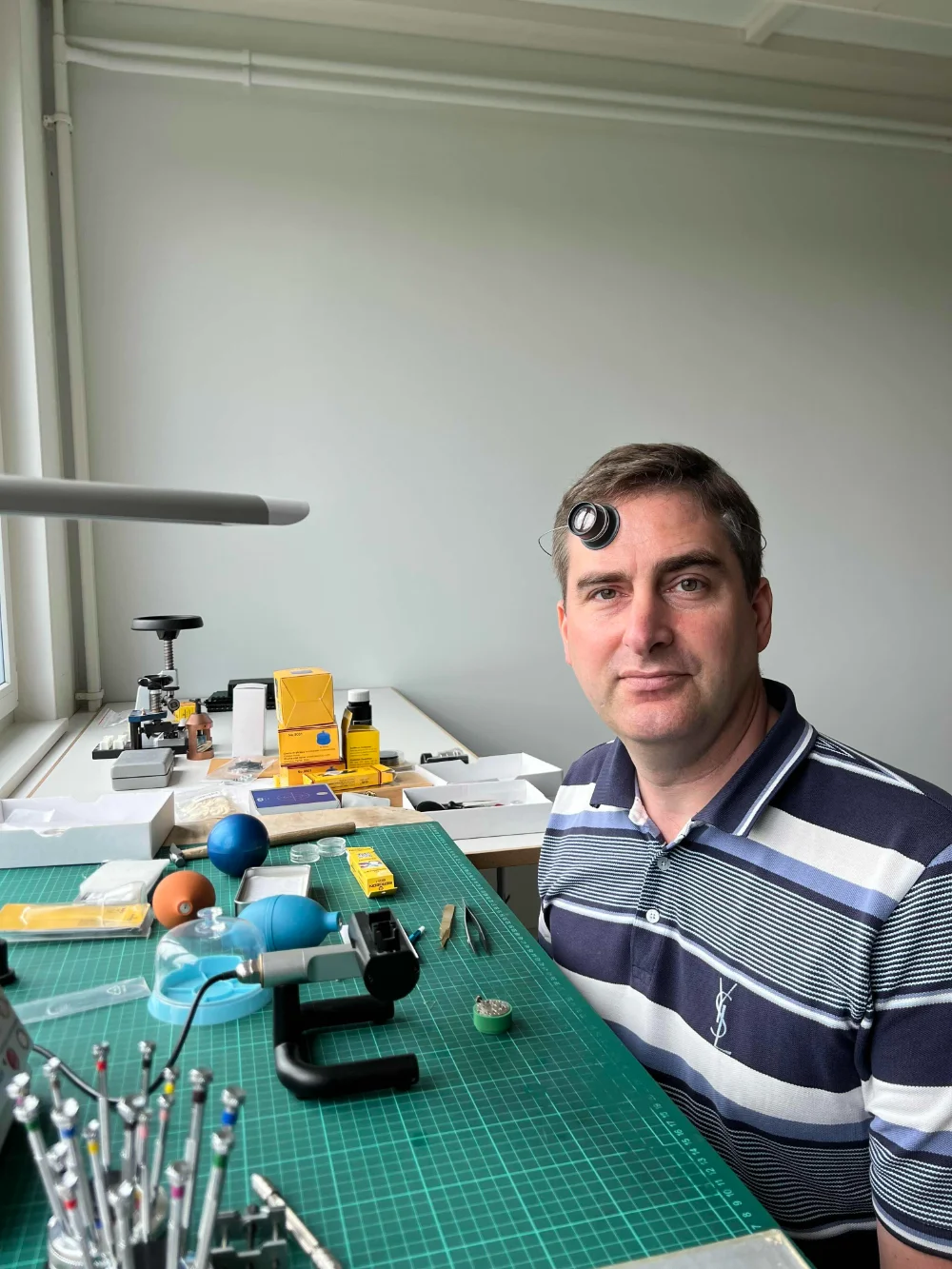
Image – Thomas Gronenthal
Thomas Gronenthal – working on watches at the age of 12
Gronenthal was born in Aachen, Germany. At the tender age of 12, Thomas’s father, a watch collector, passed him a defunct pocket watch and tasked him with repairing it. At the time, the young boy had already proved very adept at dismantling his toys, keen to see how they worked. Therefore, when he was assigned his first horological mission it did not faze him in the least. Within a few hours, young Gronenthal had repaired his father’s watch and, most pertinently, gained an insight into how it worked.
The son of Aachen remained fascinated with all things mechanical, including tinkering on old cars. Eventually he embarked on a career in engineering. At the time, he envisaged a future working in Germany’s automotive industry, but after graduating from university he chose a career in ‘measuring technology’. This led to various roles in marketing and ultimately public relations. However, despite successfully ascending the professional ladder, he always harboured the desire to become a watchmaker. Over the years, he became friendly with legendary watchmakers such as Gerd R. Lang and the team of Marcell Kainz, especially his long-term master watchmaker Asmus Prager.
In 2007, having amassed much knowledge about watchmaking, Gronenthal contacted the editor-in-chief of Uhren-Magazin, part of Ebner Media Group, and began writing for the German publication. Later, he established a blog, becoming an expert in identifying replica/fake watches and now lectures at the Bavarian Watchmaking School.
Thomas Gronenthal – a love of vintage watch movements
Shortly after acquiring DuBois et fils in 2010, Steinemann was sat in an office chatting to Tim Stracke, the Founder and Chairman of Chrono24. It was here that Stracke introduced Steinemann to Gronenthal, knowing that both men shared a fascination for historic watch movements. Thereafter, the two men remained in contact and became firm friends.
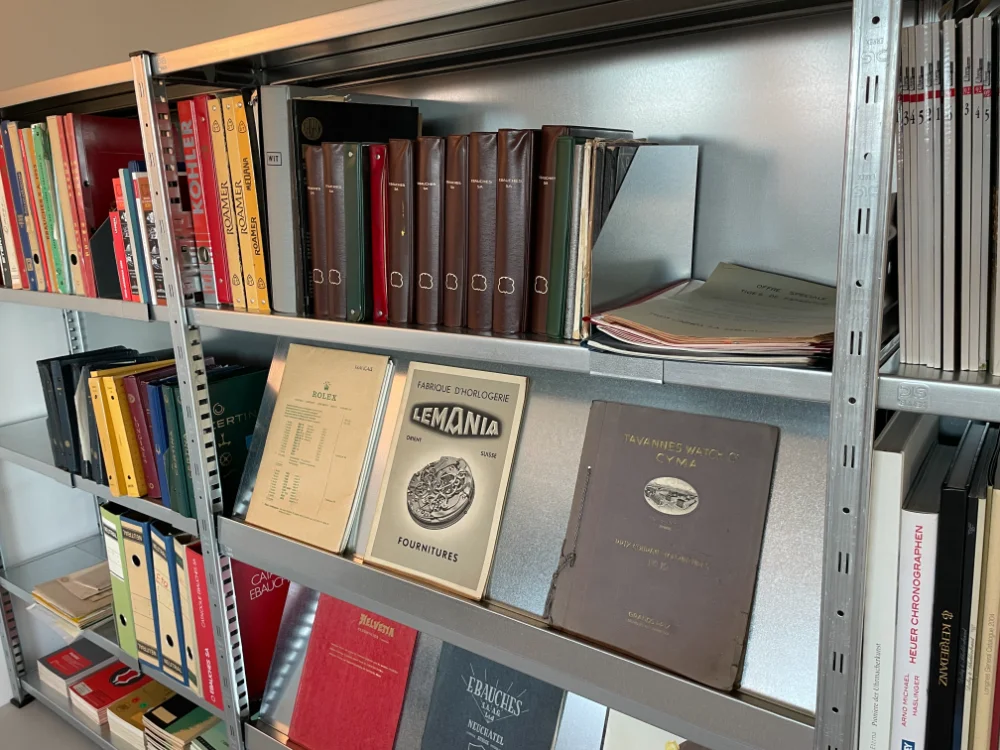
Image – Muttenz workshop
In the early days of DuBois et fils, whenever Steinemann received a vintage DuBois et fils timepiece, he would send Gronenthal a couple of images via WhatsApp, one of the watch and another of the movement. It became a form of sport, where Gronenthal would fire back a reply in minutes with details of the calibre, including the maker, the date of manufacture, characteristics of the movement, value, etc.
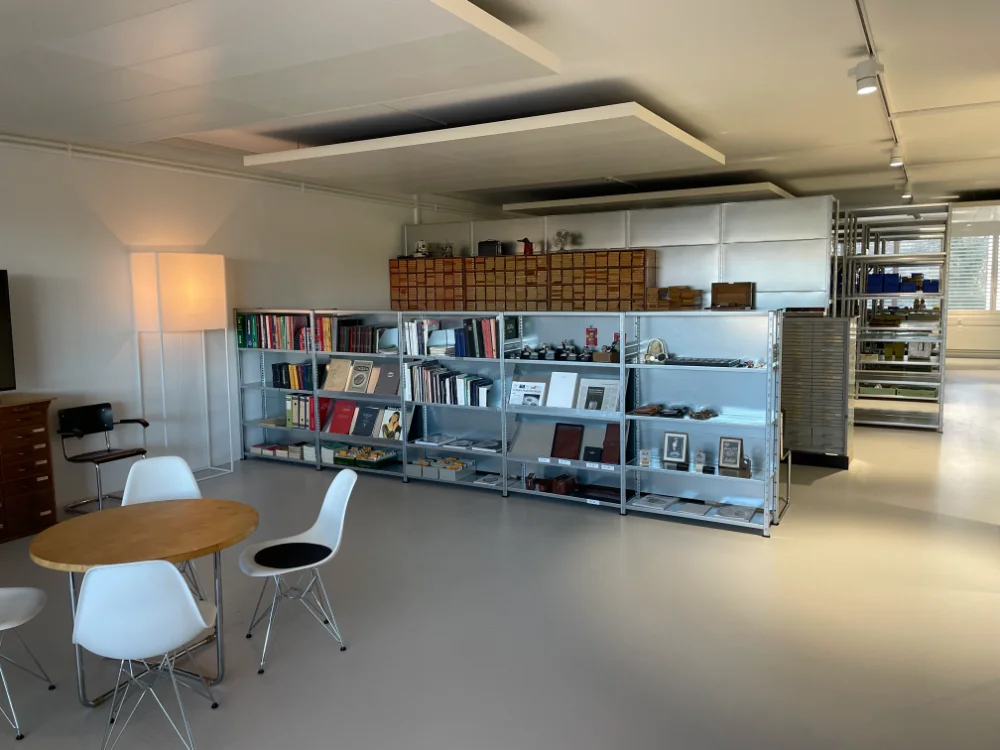
Image – Muttenz workshop
With both men in regular contact, it was perhaps inevitable that Gronenthal would join DuBois et fils where he is now responsible for managing the new Muttenz facility. Recently, I was offered the opportunity to chat with Gronenthal and I readily accepted.
Thomas Gronenthal – Angus Davies (AD), asks a series of questions
Angus Davies (AD): I’ve heard some watchmakers remark that the quality of steel used in the past was superior to that typically used today. Do you share this opinion?
Thomas Gronenthal (TG): Yes, I do. But also, with older movements you can see that the design was made by a watchmaker for a watchmaker and the movements were developed to run for long periods in between services. They were also designed to be easily serviced.
If you consider a broken mainspring, which can happen from time to time…on an old Adolf Schild or Felsa movement, you can loosen two screws, remove the barrel bridge, remove the barrel, replace the mainspring and then reassemble everything. Within 30 minutes, assuming the watch does not require a service, you’ve completed the repair. However, on a modern movement, you must fully dismantle everything.
Modern movements are designed for automated production which is not something I particularly like and is the reason why I prefer historic movements.
(AD): Are there any other reasons you prefer vintage movements?
(TG): Yes. The dimensions of the gear train wheels are bigger, making the transmission of energy from the barrel to the escapement more efficient. The wheels are typically stronger. For example, with an old Felsa calibre, you could throw the movement against a wall and it will probably be fine. However, on some new movements, such treatment is likely to bend a gear train wheel because they are much thinner to reduce built height.
On older movements, there is also more torque in the geartrain – those calibres are real workhorses, made to last instead of acquiring an award.
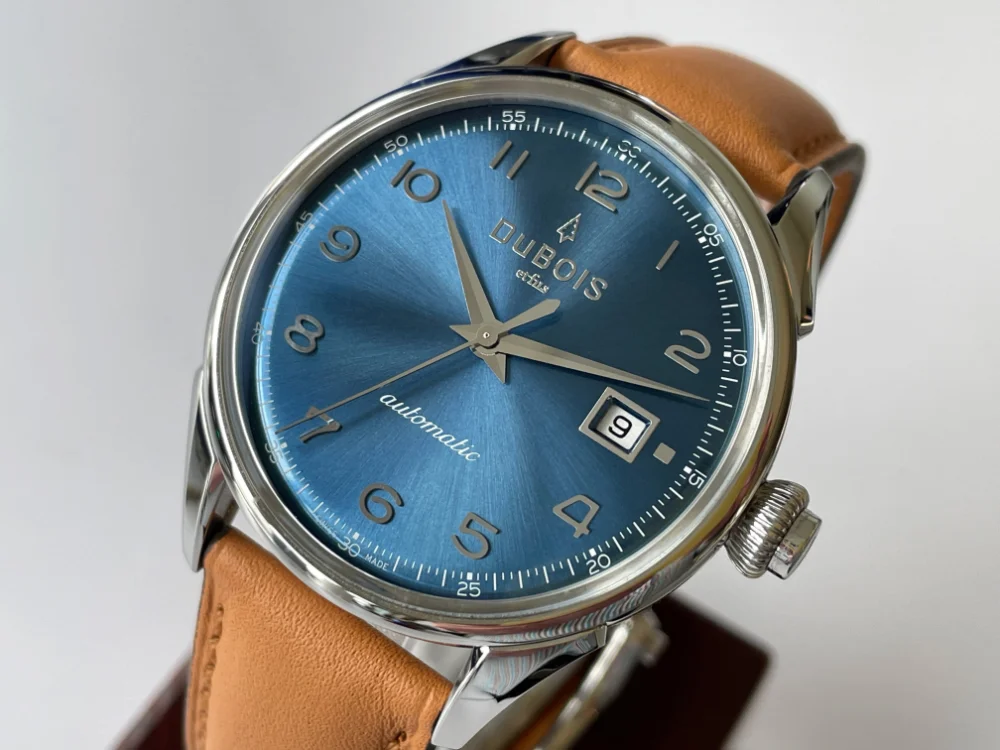
Image – customised DBF 008 belonging to Thomas Gronenthal
The best combination is a vintage movement paired with modern lubricants. I recently built my own DBF 008. I had a Calibre AS-1895 at home and Thomas (Steinemann) gave me a prototype dial and case. I did a bit of work on the movement and even blued all the screws. Now, the watch runs superbly and would easily pass the criteria for chronometer certification.
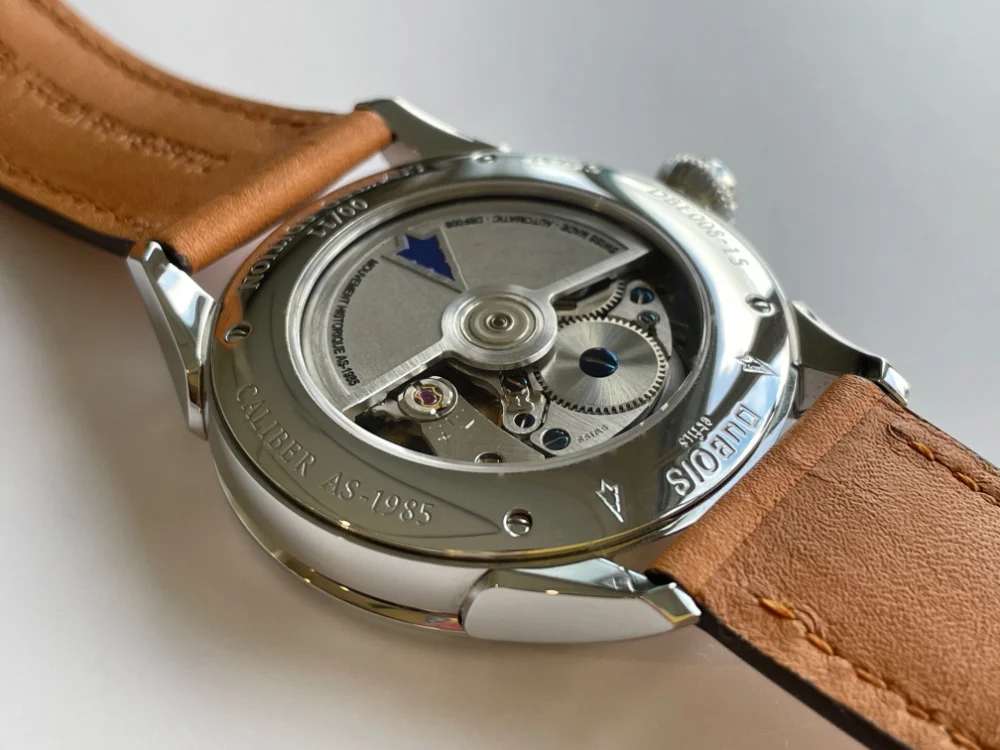
Image – customised DBF 008 belonging to Thomas Gronenthal
(AD): Can you tell me about your new workshop?
(TG): Four months ago (July 2024) there was nothing here. It was just 260m² of space, featuring blue carpet and green walls. We ripped up the floor to create a clean surface, repainted the walls, and installed new shelving, purchased new equipment, etc. I also relocated my workshop from Germany, including all of my equipment and hundreds of tools.
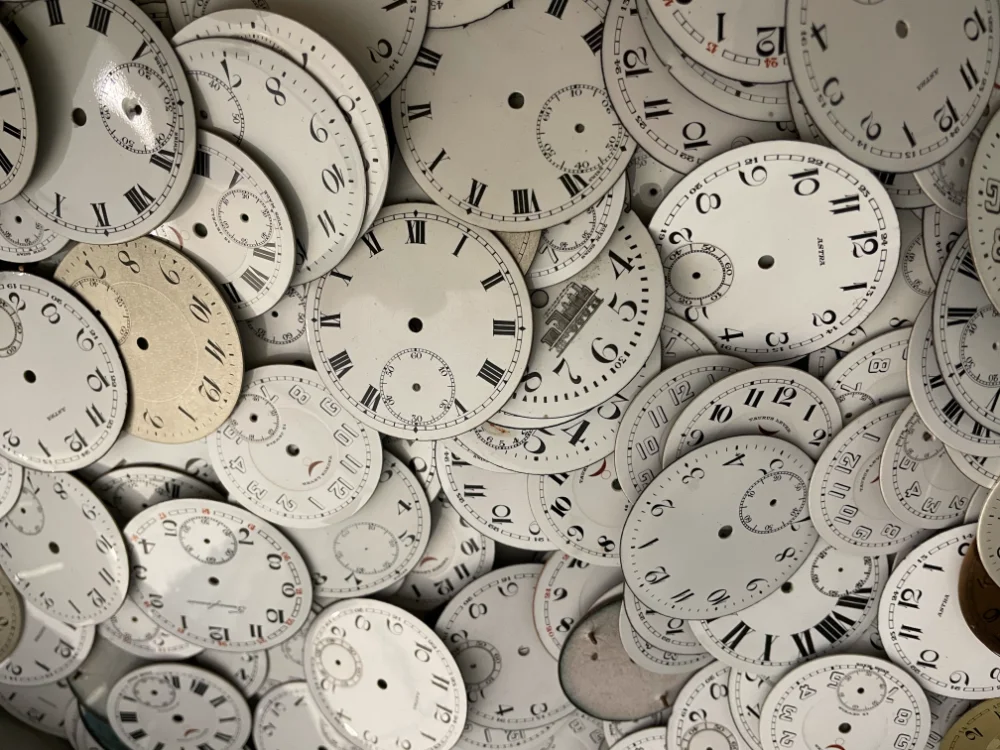
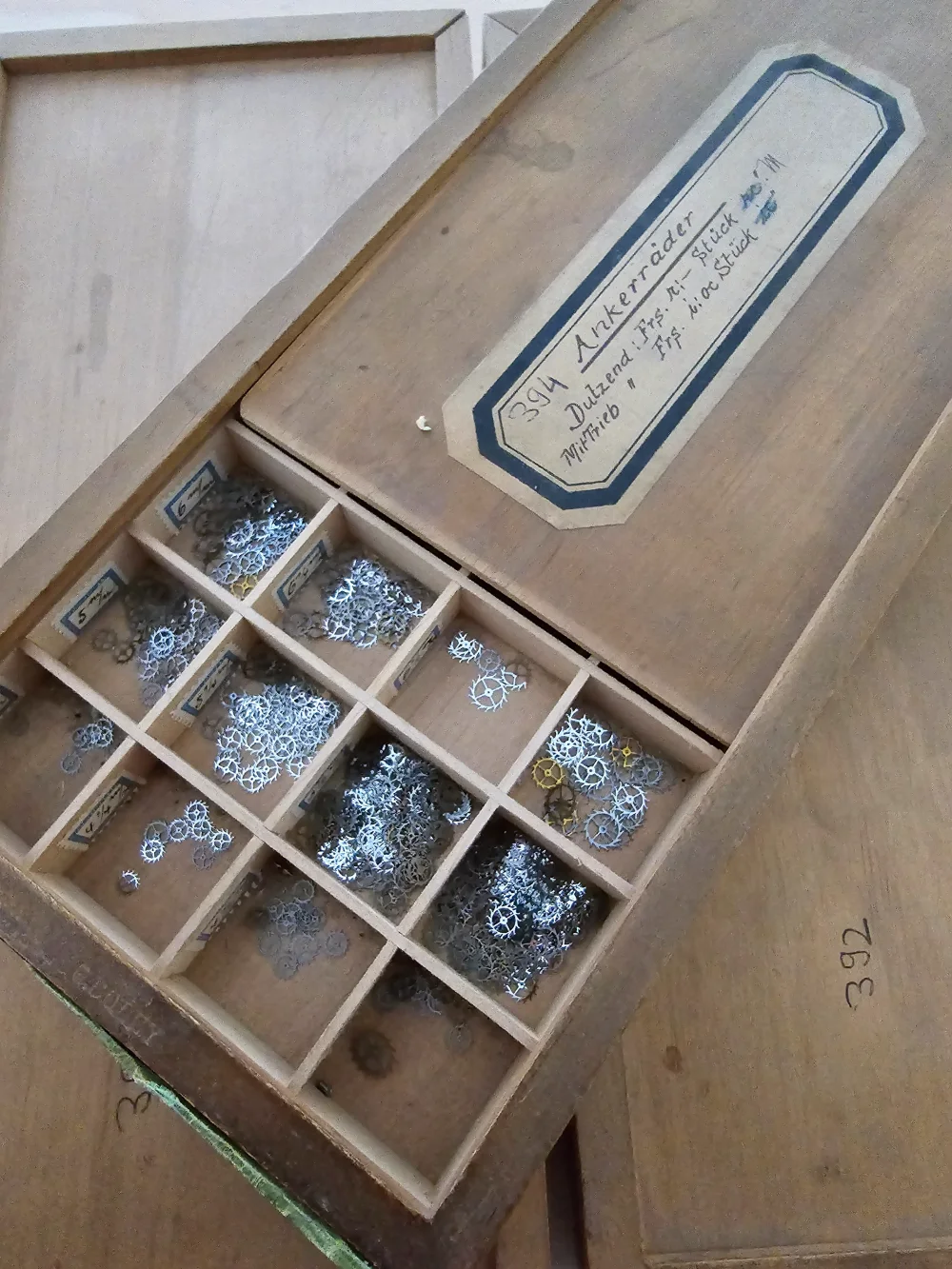
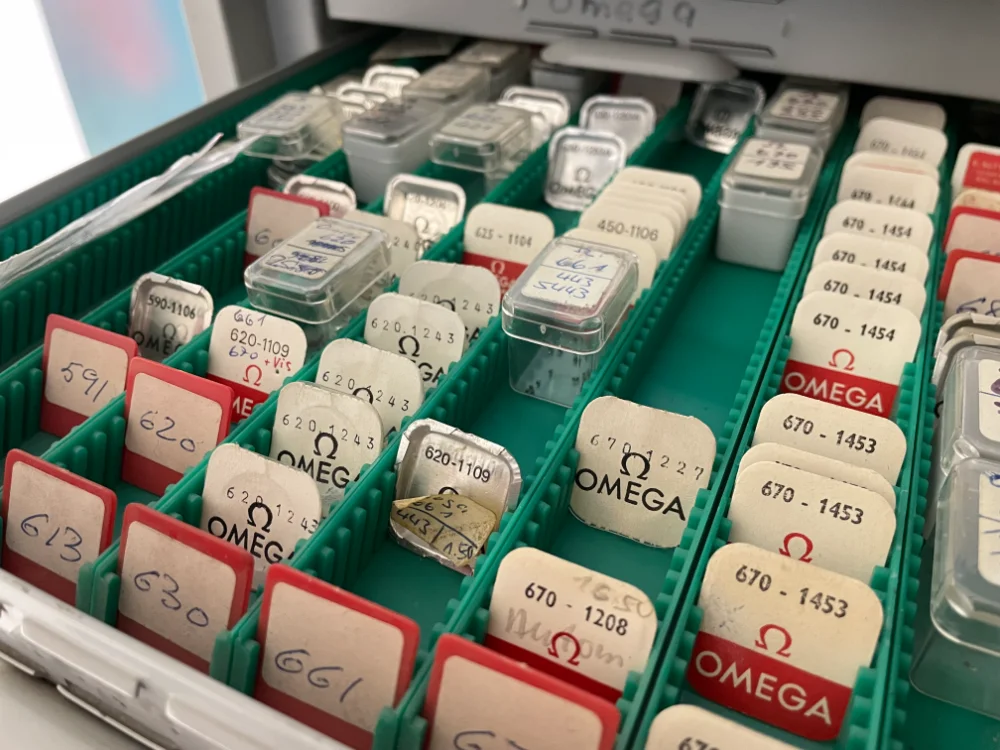
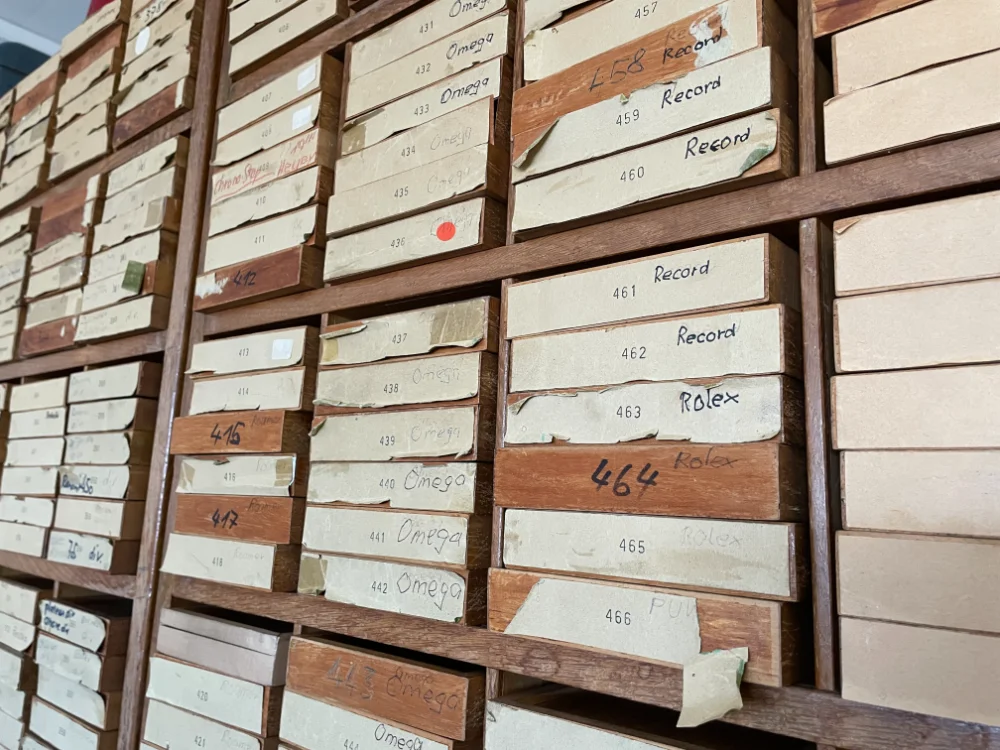
Recently, we acquired 18,000 historic movements and millions of spare parts. This is in addition to the vast amounts of movements and components we already owned. The inventory includes items such as crystals for IWC watches and also parts for Jaeger-LeCoultre, Omega and Rolex Bubblebacks. We even have blued steel hands for Longines pocket watches from the 1890s and wooden storage boxes made in 1894 containing parts that were traded by the first company being allowed by Swiss officials to independently trade watch parts.
In terms of the workshop, I have great views from my bench….I can see the trains travelling to Basel (smiles) and the large windows provide an abundance of natural light; perfect conditions for working on watches (smiles again).
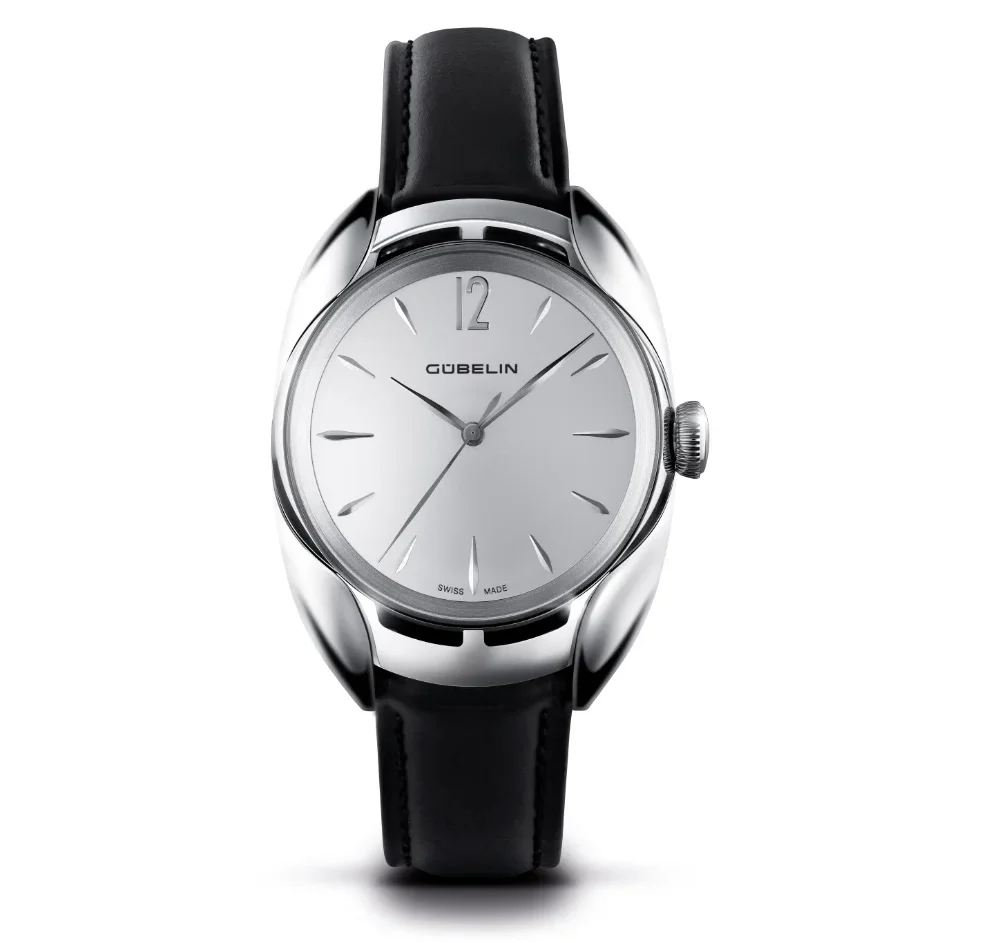
Image – Gübelin Ipsomatic
After four months, we now do all the aftersales service on site. We also assemble and regulate all of our watches in the new workshop. Recently, I’ve been working on the Gübelin watches (Gübelin Ipsomatic) which is equipped with a Felsa calibre 1560.
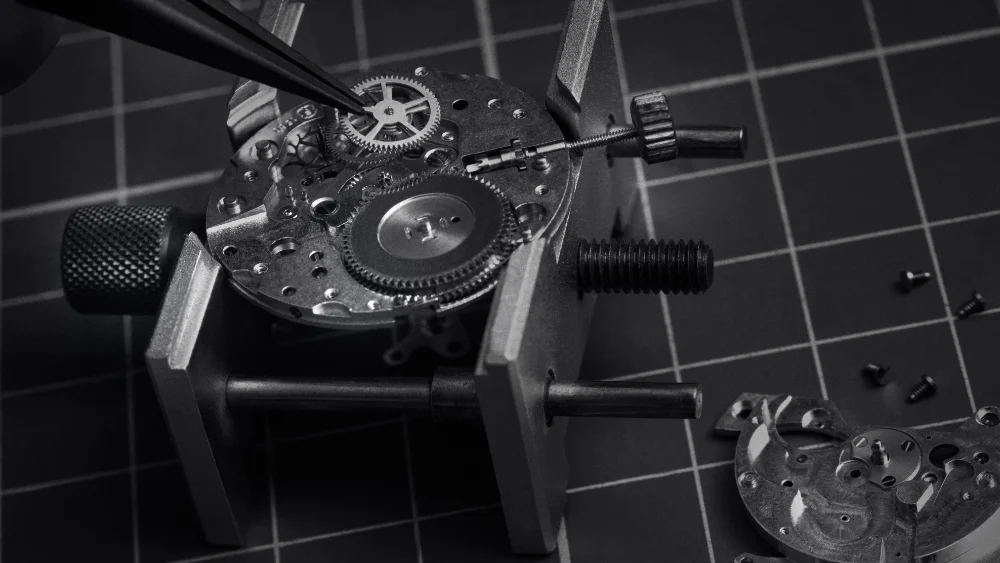
Image – Felsa calibre 1560 for use in the Gübelin Ipsomatic
This watch was made for the 170th anniversary of Gübelin. The case measures 39 mm and is formed of platinum. We oversee the project, liaising with the case and dial suppliers. I’m responsible for restoring the movements as well as assembling and regulating the watches.
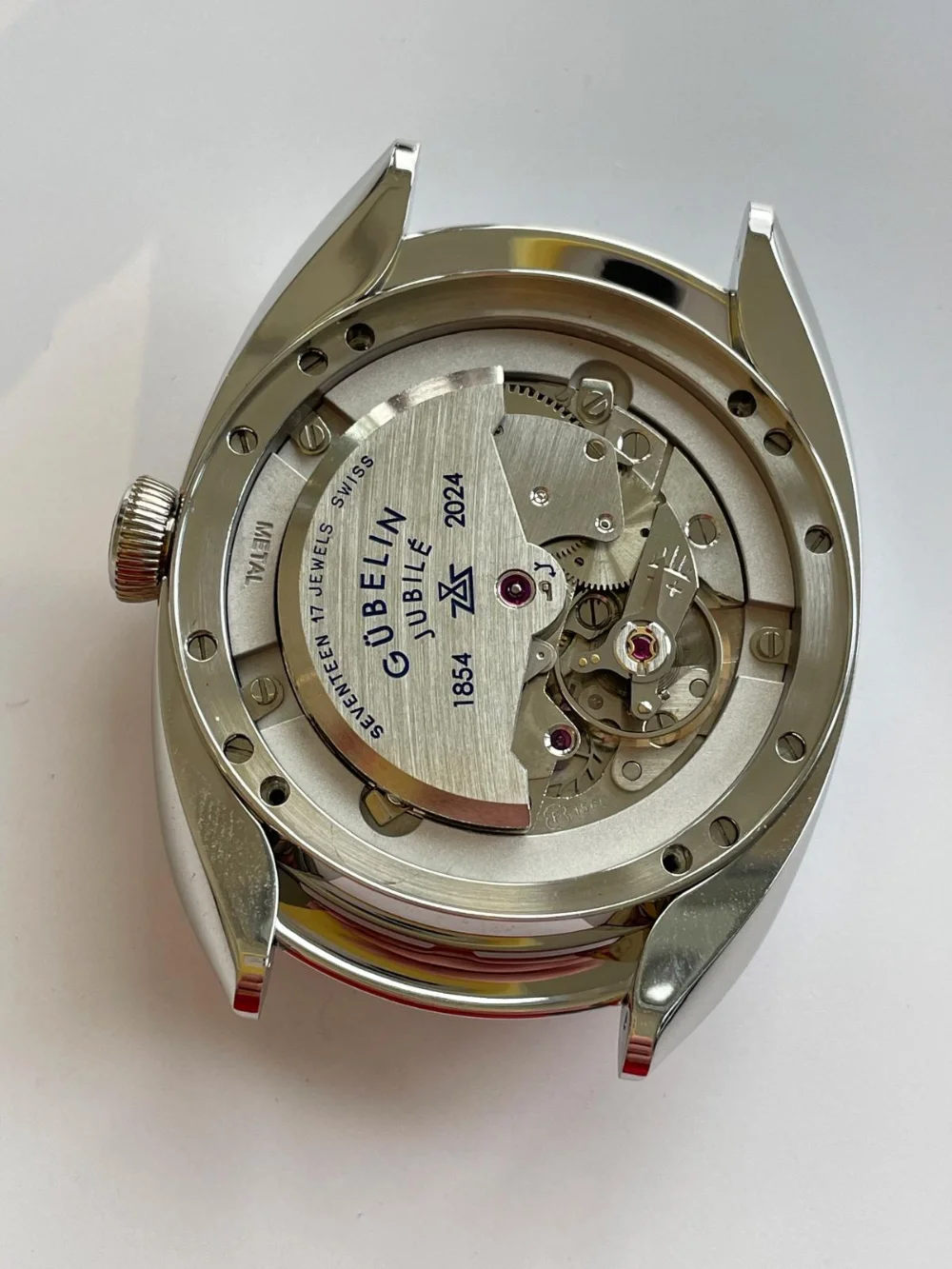
Image – Gübelin Ipsomatic
It was very important to Gübelin that we use the Felsa calibre 1560. Back in 1954, the company released a 100th anniversary watch fitted with the same movement, featuring a rotor engraved with the dates 1854-1954. The rotor on the new Ipsomatic is engraved with the dates 1854-2024.
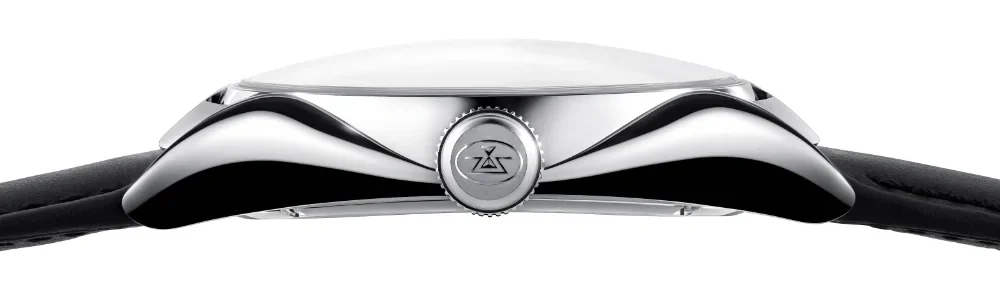
Image – Gübelin Ipsomatic
Thomas Gronenthal – conclusion
Thomas is a rare individual whose career path has encompassed engineering, marketing, journalism and watchmaking. While his professional journey has embraced a variety of disciplines, he possesses an innate passion for watchmaking history, especially vintage movements. It is this passion which he embraces in his current role at DuBois et fils.
As we near the end of our interview, we engage in a spot of small talk and return to Gronenthal’s original intention of becoming an automotive engineer. I suggest that watches and cars are very similar, citing the notable robustness and dependability of the Audi 100 and the Mercedes W123, produced back in the 80s. He readily agrees, nodding profusely with my comments. While I would not consider myself a ‘laggard’ and recognise the benefits of some modern-day technologies, I still appreciate the engineering integrity found in these historic cars, the same qualities that are manifest with the A. Schild, Felsa, Peseux, Valjoux movements of yesteryear.
Sadly, despite widespread talk of ‘environmental concerns’, modern-day society still has a propensity for discarding objects to make way for new and shiny goods. With this in mind, the rationale for restoring historic movements makes a lot of sense and shows a forward-thinking approach to watchmaking; an approach taken by DuBois et fils.